
Europe's energy tech playbook: Putting nuclear reactors on drones for lazy users?
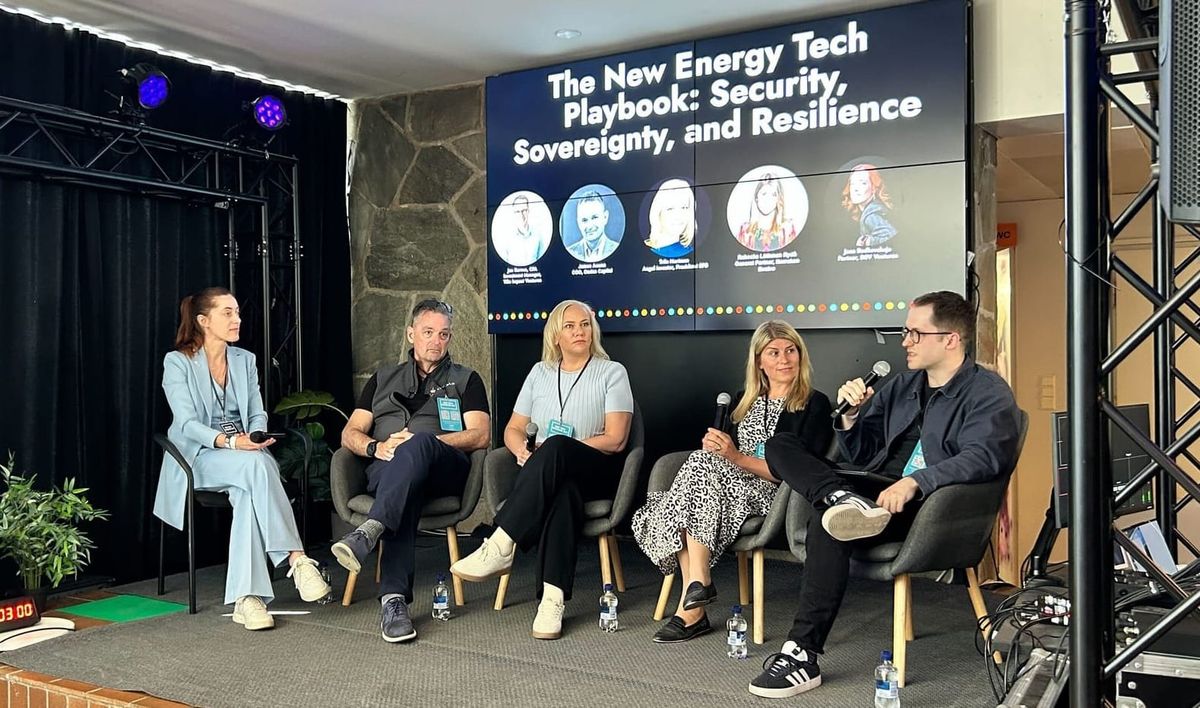
HELSINKI – Europe finds itself at a critical juncture in the energy sector, grappling with issues of security, sovereignty, and the urgent need for scalable innovation, said investors at this week’s Deep Tech Investor Day panel discussion, "The New Energy Tech Playbook: Security, Sovereignty and Resilience"
The consensus at the discussion, moderated by Jana Budkovskaja of BSV Ventures, was clear: energy is not merely a commodity but a fundamental pillar of national strategy and security. Rebecka Löthman Ryda, from Norrsken, underscored Europe's precarious position, stating, "The truth is our industries are paying double the price of electricity than in China and in the US, which means they can't compete." She highlighted a stark reality: only a quarter of Europe's industry is currently electrified, a figure that should be closer to 90% given existing technologies. Löthman Ryda further warned that energy would become the "biggest bottleneck for AI development," making it more strategic than ever.
Triin Hertmann, an angel investor and President of the Estonian Founders Society, echoed this sentiment, emphasising the foundational role of energy. "Without talking about energy, we cannot talk about AI, we cannot talk about resilience or security or anything basically. So it's all over the place and it's the basis of everything." Hertmann noted the increasing complexity of energy systems, moving beyond traditional sources to a layered approach with numerous variables.
James Acuna, from Ondas Capital, brought a unique perspective from the defence sector, where energy is the ‘Achilles heel’. He explained that even small AI models on unmanned systems like drones require significant power.
"Alternative energy sources, and typically you guys were talking about renewables and things like that, they just don't work because of the amount of energy."
Acuna highlighted the lack of basic research in alternative energy for defence applications, suggesting a need for disruptive solutions, even humorously mentioning "little tiny nuclear reactors" for drones.
The discussion also delved into the evolving landscape for energy investors. Jan Korous, from Tilia Impact Ventures, pointed out a significant shift: "Being an energy investor five years ago is completely different from being an energy investor now." He stressed that the era of "green premiums" is over, with the focus now squarely on being "cost competitive with the best existing solutions on the market." Korous also touched on the critical role of government subsidies, particularly given China's substantial support for its energy companies. "We kind of need those subsidies to be competitive when it comes to actual manufacturing and the infrastructure... we need way more government funding going into Europe because otherwise we have no chance of… getting to that cost-competitive level."
Scalability emerged as a recurring theme. Hertmann distinguished between venture-backable and infrastructural projects, noting that solutions that scale through software and grid orchestration are more attractive to venture capital than those requiring heavy capital expenditure on concrete and wires. Löthman Ryda added that while some models are not venture-backable, the shift from "investing in bits to investing in atoms" is accumulating value in hardware-focused energy bets, provided they fund repeatability rather than just capex-heavy projects.
Brajer emphasised that, for European venture capital, the focus should be on developing new technologies and innovations from university research rather than on scaling proven technologies such as EVs or solar, where China holds a significant lead. Löthman Ryda cited Norrsken's investments in novel sodium-ion battery technology and a new approach to hydrogen electrolysis as examples of this strategy.
The panellists offered advice for founders and investors navigating this complex environment:
- Jan Korous: Advised founders "not to self-limit your ambition and just go for really hard problems." He encouraged a long-term vision for energy markets and a strong belief in one's ideas, even if they are contrarian.
- Rebecka Löthman Ryda: Stressed the importance of early customer engagement, urging founders to have "50 conversations with potential customers early on" and to be "obsessed about the future commercial pathway." She also highlighted the need for compelling storytelling to engage investors and customers emotionally.
- Triin Hertmann: Reinforced the importance of understanding customer needs, humorously stating that "customers are greedy and lazy," which should drive the creation of products that are significantly cheaper and better. She also cautioned against treating VC money like grants, emphasising the need for commercialisation.
- James Acuna: Advised founders in the unmanned systems space not to assume customers understand their needs, but rather to "build the ecosystem with them." He extended this advice to VCs, stating, "We have no idea. So don't take a no from us too seriously. Everything looks like a bad idea until it isn't, right?"
The panel concluded with a call for greater maturity in Europe's public markets, deeper capital pools, and more strategic buyers to facilitate exits. The future of energy tech in Europe, while challenging, presents immense opportunities for those who can innovate, scale, and effectively navigate the intricate interplay of technology, finance, and geopolitical realities.
Comments ()