
Estonia's TOP10 healthtech startups in 2026
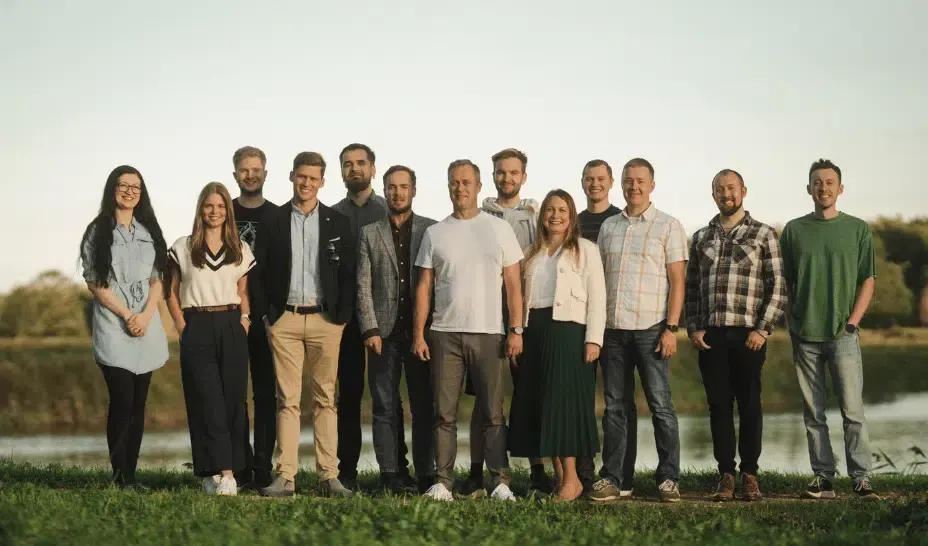
Estonia's healthtech companies are built to scale internationally from day one, regardless of the application. Some deliver nanoparticle-based wound care; others deliver platforms for managing migraines. Some are translating genetic findings into personalised medicine; others are building the microfluidic instruments that will yield the next round of scientific discoveries.
Across the board, Estonian healthtechs are a diverse hodgepodge of specialities, sub-sectors, and geographic to-do lists. Some focus on the UK, others have cast their lot with the United States. Founders also come from as far as Brazil, Colombia and Japan. There are pilots and partnerships in Spain, Germany, and Portugal, though the technical teams often remain in Estonia.
So what unites Estonian healthtech? Where is it going? And what can be done to get there?
According to Olesja Bondarenko, CEO of Nanonordica Medical, the sector is collectively chasing a definitive breakthrough — a Skype-like threshold moment that will permanently redefine the industry's trajectory.
"What motivates us as founders is that there haven't been a lot of success stories in healthtech here yet," Bondarenko said, noting that a major exit or scaling milestone would fundamentally alter the local landscape. "We feel it's important to have some. That would elevate the sector and bring in more investors. There would be more scientists and physicians willing to do business."
While the hunger for a flagship success story remains, founders point out that Estonia's infrastructural foundation is already highly advanced. Siim Saare, co-founder and CEO of Lifeyear, noted the country possesses a potent mix of digital health infrastructure, engineering talent, and an unusually flat ecosystem that allows entrepreneurs to easily connect with key stakeholders.
However, the constraints of a small domestic market mean Baltic boundaries must be bypassed almost immediately. An early sign of this international viability came when Lifeyear secured a top-three finish at the prestigious Slush 2023 pitching competition, proving that Estonian health concepts resonate with global investors.
"Healthtech founders must build for scale from day one," Saare said, reflecting on the necessity of looking outward. "That's why we anchored our commercial strategy in the UK early."
This necessity for seamless integration — both across borders and within institutional systems — is a defining characteristic of the local ecosystem. Katrina Laks, co-founder and CEO of Migrevention, argues that the true unifying thread of Estonian innovation is not technical capability but a collective cultural approach to systemic integration.
"What unites Estonian healthtech isn’t a specific technology or even the fact that we’re a digital country. It’s a shared understanding that healthcare innovation only works when the whole ecosystem moves together," Laks said.
Laks noted that Estonia’s global reputation for digital health frequently misidentifies the country's actual competitive advantage. "Our real advantage wasn’t having better technology."
"We started with a clear vision: data should follow the patient, not the institution. That required interoperability, but more importantly, it required trust and the collective will to make systems work together."
As the sector looks to validate its innovations on an international stage through artificial intelligence and data-driven, personalised medicine, Laks maintains that the ultimate metric of success will remain human rather than digital.
"Transparency creates confidence, and without confidence, no digital health solution—no matter how innovative—will achieve meaningful adoption," Laks said. "Success won’t be defined by technology alone. It will be defined by whether these solutions are implemented in a way that improves outcomes for patients and supports clinicians."
But to the list of the top 10 healthtech startups.
Nanordica Medical
Fresh from raising €1.6 million in June, Nanordica Medical is moving closer to launching its first product. Founded in 2021, Nanordica is a spin-off of the Estonian National Institute of Chemical Physics and Biophysics (KBFI), where its cofounder and CEO, Olesja Bondarenko, was a senior researcher and group leader. The company's lead offering is its Advanced Antibacterial Wound Dressing, which uses antibacterial nanoparticles blended into silk nanofibers to promote healing of diabetic foot ulcers as well as surgical, traumatic, and inflamed wounds.
The company recently concluded a randomised controlled trial on 30 patients with diabetic foot ulcers in partnership with North Estonia Medical Centre (PERH), which demonstrated a 43 percent reduction in wound area size after a week of treatment, compared to a 13 percent reduction using conventional silver dressings. A multicenter clinical trial is now underway. Such evidence is needed not only to convince regulators of the efficacy of Nanordica's product but also to sway early adopters and drive an eventual shift in treatment recommendations.
Bondarenko said that the new funding will help Nanordica Medical achieve these aims, including the CE marking of the test, expected by year-end. She acknowledged that the number of steps required to bring a new health tech product to market can make it a "challenging place" to operate, but said it can also be rewarding, not only financially but also in terms of impact.
"These are real problems, real patients, and real data," said Bondarenko. She noted that an investor recently used Nanonordica's dressings to heal a wound on her pet dog (the company has offered veterinary wound dressings since 2023). Nanordica Medical is interested in expanding its portfolio and has several Enterprise Estonia-backed projects underway to do so.
 Fiona Alston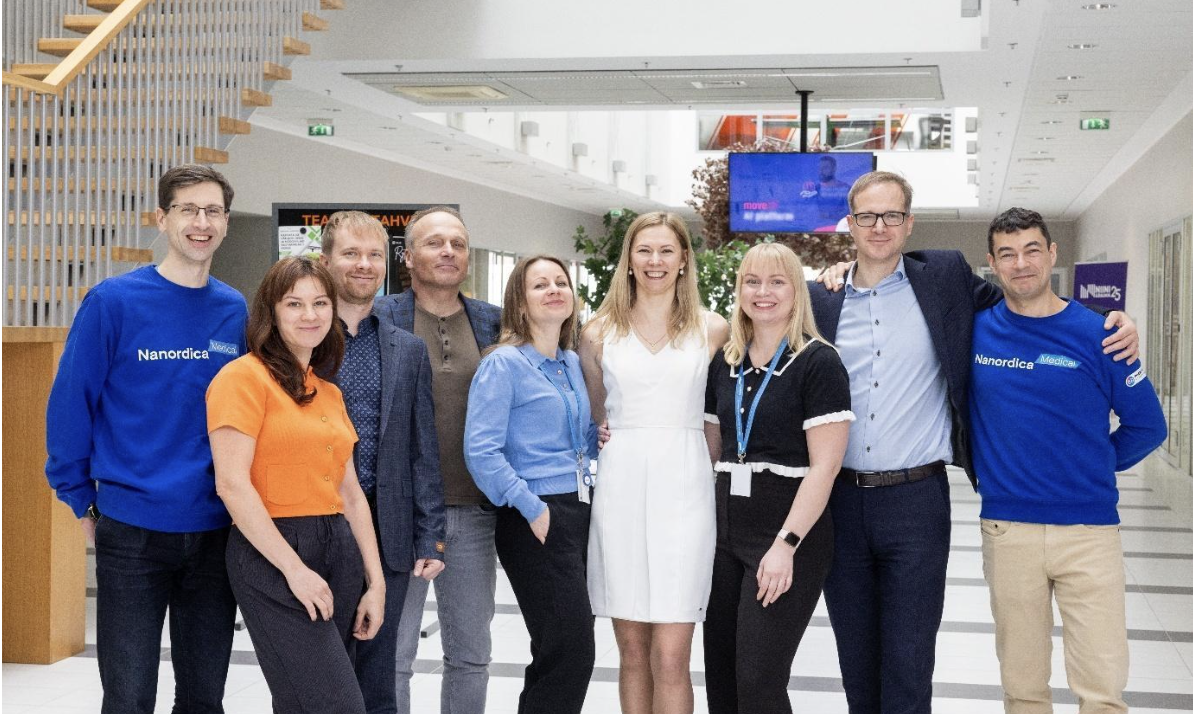
Guardian
Founded by Estonian Business School graduates just over two years ago, Guardian has quickly immersed itself in the agetech market by developing technologies to support elderly care and independent living. The ingredient in its secret sauce? Artificial intelligence.
The company hopes to offer care homes and home-care providers tools to support real-time indoor location tracking; digital floor plans for care facilities; staff management tools; fleet tracking for home-care workers; proof-of-service verification; and operational dashboards and analytics for care teams. By relying on sensor technology coupled to AI-powered dashboards, Guardian aims to "help care providers make better decisions, improve elderly safety, and reduce the manual workload of care staff," said CEO Aleks Timm.
Timm co-founded the company in 2024 with Alonso Solis and Tristan Erik Nõmm. Over the next year, Guardian aims to demonstrate the utility of its platform and scale it in Estonia. Timm said that Guardian is engaged in a pilot study with one of Estonia's largest government service providers and is also part of a project connected to the Estonian Ministry of Social Affairs.
"The longer-term vision is to support the country-wide adoption of Guardian’s technology over the coming years, helping local municipalities provide home care more efficiently and safely," said Timm. While municipalities often have limited purchasing power and lengthy decision-making processes, Timm believes that with public-sector support, such as via the Ministry of Social Affairs, it can "build a care system where elderly people are safer, caregivers are better supported, and municipalities can serve more people with the same resources."
Antegenes
Among Estonian healthtech companies, Antegenes could be considered a more established player. The company was founded in Tartu in 2018 by oncologist Peeter Padrik, with a focus on personalised cancer prevention based on polygenic risk scores crafted from genetic variants and other factors such as age, sex, and ancestry.
Antegenes currently offers a menu of tests tailored for different customer segments. For €225, women can order AnteCancerW and be screened for their risk of developing breast cancer, colorectal cancer, and skin melanoma. AnteCancerM is targeted to men at risk of developing prostate cancer, colorectal cancer, and skin melanoma.
According to Padrik, the company's CEO, its current focus is clinical implementation: bringing genetics-based screening into routine healthcare. He said that Antegenes is advancing this work through different collaborations. In the past year, it announced partnerships with Meliva in Estonia, Palex in Portugal, and Germany's Doctor Box to make its tests available to their clients.
Another priority is gaining reimbursement from the tests, which are currently paid out of pocket, so that genetic risk assessment can become part of public healthcare and insurance-covered prevention pathways.
"Next-generation cancer prevention must be based on individual risk," Padrik said. "Our goal is to make prevention more precise, convenient and medically actionable – so that high-risk people can be identified earlier and guided to timely screening or follow-up."
Migrevention
Another longer-term player on the emerging Estonian healthtech landscape is Migrevention, which was founded in March 2020, at the start of the COVID-19 Pandemic. In a way, the societal shift toward digital health coincided with Migrevention's aim of using technology to improve the management of migraine and chronic pain conditions. According to founder and CEO Katrina Laks, the company's Digital Headache Clinic platform connects patients and clinicians through a smartphone-based headache diary application. A clinical workflow solution helps providers deliver faster, more evidence-based migraine care. The company achieved a CE Mark for its offering as a medical device in May 2022.
While Migrevention has worked to deploy its platform in Estonia, it is now pivoting to the UK, a much larger market and one that might be primed to adopt its technology. "In the UK, the understanding of migraine is more specific and has existed longer, meaning the healthcare system is better prepared to adopt new management solutions," said Laks. She noted that the first UK headache clinics were set up in the mid-1950s. Migrevention is now working with Spire Healthcare, a major UK private hospital network, and is onboarding several National Health Service hospitals through service evaluations. As such, 2026 is expected to be the company's first year of commercial revenue from the UK. From the UK, Migrevention would like to continue its global trajectory. "Looking ahead, our priority is to establish a strong position in the UK and use that as a foundation for international expansion into other healthcare markets," said Laks.
Back in Estonia, the company continues to innovate and in 2024 began developing a Digital Chronic Pain Clinic in partnership with Viljandi Hospital and Tartu University Hospital. Laks said that Estonia is "definitely a good testing ground" for healthtechs, but with a population of 1.3 million, it has its limits in terms of scaling.
"Estonia built the world's best health tech infrastructure, but companies quickly discovered it had also accidentally built the world's best launchpad for companies that immediately had to leave Estonia to survive," she remarked about this trend. "Whether that's a success story or a missed opportunity depends on how you look at it."
Lifeyear
Another Estonian company targeting the UK market is Lifeyear. While it is targeting an entirely different space from Migrevention -- providing a remote patient management platform for cardiometabolic care -- it is also looking to export Estonian digital savvy to a larger market at a time when British policymakers are eager to streamline and update the National Health Service.
"Lifeyear is building an intelligent operating system for digital cardiology," said Siim Saare, the company's co-founder and CEO. Using its platform, cardiology teams can manage patients between appointments, titrate medication to guideline targets, and catch deterioration before it becomes a hospital admission, he said. Lifeyear therefore offers support for management and treatment, not just monitoring.
The company's team is Estonian-British – Eleanor Wicks, its chief medical officer and cofounder, is an NHS-trained consultant cardiologist. Lifeyear is backed by Oxford University Hospitals NHS Foundation Trust, one of the UK's leading clinical centres. The trust also invited Lifeyear to join its market access program and is a shareholder in the company.
Lifeyear is not solely UK-focused, though. According to Saare, its platform is live in Estonia's largest hospitals, is starting multiple UK pilots this year, and is engaged in some early conversations in the US. The company raised €1.3 million in a pre-seed round last year and is now raising a seed round, Saare added.

DrHouse
Rather than spending time incubating in its home market, DrHouse decided to go straight to the US. The company was founded in 2022 by Ergo Sõõru and Sten Tarro, with Einar Roosileht later joining as a co-founder. Sõõru was previously the CEO and founder of Mercurio, a Tallinn-based medical devices company. But DrHouse is headquartered on New York's Fifth Avenue. In reality, while the US market is its target, the company's technical team remains Estonia-based, and the company has benefited from Estonia's culture of digital innovation.
"I think Estonia has a real advantage because founders here are used to building digitally native products from day one," said Sõõru. "Healthcare is a very complex and regulated market, especially in the US, but Estonian teams often have a strong engineering culture, move quickly, and are comfortable building infrastructure-heavy products with relatively lean teams," he noted.
The company's concept was to create a DoorDash for healthcare, offering American customers the ability to see a licensed doctor online within minutes and, when appropriate, receive their prescribed medication at home, often within about an hour of the visit. "The goal has been to make urgent care simpler, faster, and more accessible, without the patient needing to leave home," said Sõõru. Today, DrHouse operates in every US state with a network of 500 doctors. It has also entered into contracts with most major insurers, after primarily being a direct-to-consumer play.
While DrHouse has been business-to-customer, it would like to serve the business-to-business and B2B2C markets, Sõõru said. And there are no current plans to go beyond the US, given its complexity and size. "International expansion is not impossible," said Sõõru, "but the US opportunity is large enough to keep us focused for a long time."
Better Medicine
Tallinn might be the Estonian capital, but Tartu is arguably Estonia's deeptech capital. It is here that a group of Estonian and Ukrainian founders, including Priit Salumaa, Dmytro Fishman, Bohdan Petryshak, Martin Reim, and Helena Ije, set up Better Medicine at the end of 2020. The company's aim has been to use artificial intelligence to help radiologists more quickly detect cancer in imaging data, such as CT scans. Instead of relying on time-consuming, potentially error-prone image-based analysis, Better Medicine's platform uses AI to spot lesions in patients' kidneys or lungs.
Salumaa told Fomo Observer earlier this year that the company is currently engaged in expanding internationally. Better Medicine saw its first two deployments in Germany early this year and plans to expand further in the German-speaking countries of Germany, Austria, and Switzerland in '26. The company is also seeking an additional EU Medical Device Regulation certification for its platform and plans to continue its work on AI imaging and clinical research.
Better Medicine has raised about 6 million euros to date in pre-seed financing and public grants, and Salumaa said that one of Better Medicine's goals for 2026 will be to complete a seed round.
Evie Health
While some founders dream of expanding internationally, Estonia's health tech sector has also attracted talent from outside the country. Evie Health was founded earlier this year by Tatiana Chavarriaga Arteaga, a physical therapist, and Juan David Giraldo, a software engineer, both from Colombia. The pair founded an earlier digital physiotherapy venture, HealthPhy, there in 2019.
The company's flagship product, Evie, is an AI-powered digital companion that supports women from pregnancy through postpartum with evidence-based pelvic floor care, personalised education, symptom monitoring, and early risk detection. "We are building the missing layer between women and the healthcare system, making prevention and continuous maternal care accessible, scalable, and integrated into clinical practice," said Chavarriaga Arteaga.
She noted that since its launch, more than 10,000 women have completed onboarding through its platform, sharing symptoms they had never discussed before. Evie users continue to use the platform, leading to improved outcomes, she claimed, including a reduction in pelvic floor pain.
Over the next year, Evie Health plans to expand its clinical partnerships, strengthen clinical validation, and integrate Evie into routine maternal care pathways. The company is courting clinics, insurers, and occupational health providers. Chavarriaga Arteaga said that Estonia has made sense as a hub, because it allowed Evie to get started as a European company, removing a barrier other Latin American femtech companies have faced when trying to enter the European market. "e-Residency and Estonia's digital-first bureaucracy also mean we can operate lean, cross-border, and fast," she said. "It is a good place to test and expand from."
Salu
"Salu" means "forest grove" in Estonian and alludes to the Spanish word for health, "salud." It is no wonder, therefore, that this four-year-old company, which offers digital healthcare services, has customers in Estonia, Finland and Spain. CEO Andreas Kotsjuba founded the company with Chief Technology Officer Andres Kukk to launch a subscription-based service for professionals on the move.
"As a parent of three boys who travels frequently, I often found that when something happened abroad, I could take my bank with me, but not my doctor," Kotsjuba said. The company began offering its services primarily to expatriates and to those who wanted to proactively take care of their health, such as solo entrepreneurs without public health insurance or employers who wanted to provide benefits to employees. Currently, about a third of the users of its SaluMD platform are expats; the remainder are locals.
Salu subscribers get access to different health plans, provided via Salu's licensed medical team of around 20 professionals. It also offers in-person services through partner clinics, including Meliva, Fertilitas, Confido, Medicum, and Läänemere Hambakliinik. The company saw more than €1 million in recurring subscription revenue in 2025, and its advertising spend has been negligible; 85 percent of users are acquired organically, via word of mouth or other channels.
The company is now focused on improving the experience for patients with private health insurance by designing tools to assist them throughout their journey. It also recently launched a strategic partnership with Compensa, one of the leading private health insurance providers in the Baltics, and part of the Vienna Insurance Group. Similar partnerships are in progress, Kotsjuba said.
Psycron
Evie Health is not the only Estonian healthtech founded by Latin Americans. Psycron, a Tallinn-based startup, was set up in 2024 to offer independent care professionals an all-in-one administrative operating system. The company's app is particularly geared toward therapists and other outpatient practitioners, and was designed to replace the fragmented set of tools used in private practice with a centralised platform for scheduling, patient management, payments, reminders, and other records.
Its founders, Gustavo Magnago and Eduardo Ferraz, are both originally from Brazil. Magnago, a software engineer, relocated from Brazil to Estonia to participate in its startup ecosystem, where he connected with Ferraz. The company recently took part in the Health Founders Estonia accelerator, after which Ferraz said Psycron had emerged with a pilot-ready minimally viable product and refined its compliance approach, including General Data Protection Act readiness. The company has just started a pilot study and plans to raise pre-seed funding.
Five More to Watch
Estonia's health tech sector continues to expand. Here are five more companies to keep an eye on:
SkipEat: This Tallinn-based medtech nutrition startup is developing a microneedle-based nutrient delivery device designed to maintain energy levels without traditional food intake. Its wearable nutrition tech is being targeted to frontline and high-performance workers.
LSMedical: Founded in 2020 by Liis Seinberg, a material scientist and researcher, LSMedical is developing rare-earth-free precision magnets and next-generation nanoparticle systems for MRI and CT contrast imaging.
CogniFlow: This TalTech spinout offers droplet-based biotech laboratory instrumentation to make droplet microfluidics more accessible to researchers.
Asvel: Founded by researcher Ritesh Soni in 2022, this deep tech is developing AI-powered robotic systems to enable more precise, minimally invasive surgical procedures and improve outcomes in operative care.
Muun Health: Established in Tallinn in 2023, Muun Health is an early-stage deeptech developing next-generation wearable biosensors for continuous hormone monitoring.
 Fiona Alston



Comments ()