
PAIDE - Thirty years after the launch of the landmark Tiger Leap initiative laid the groundwork for Estonia’s world-renowned e-governance and even tech ecosystem, leaders and youth representatives warn that maintaining the region’s competitive edge requires bridging a widening divide between those digital pioneers and the rising generation of founders.
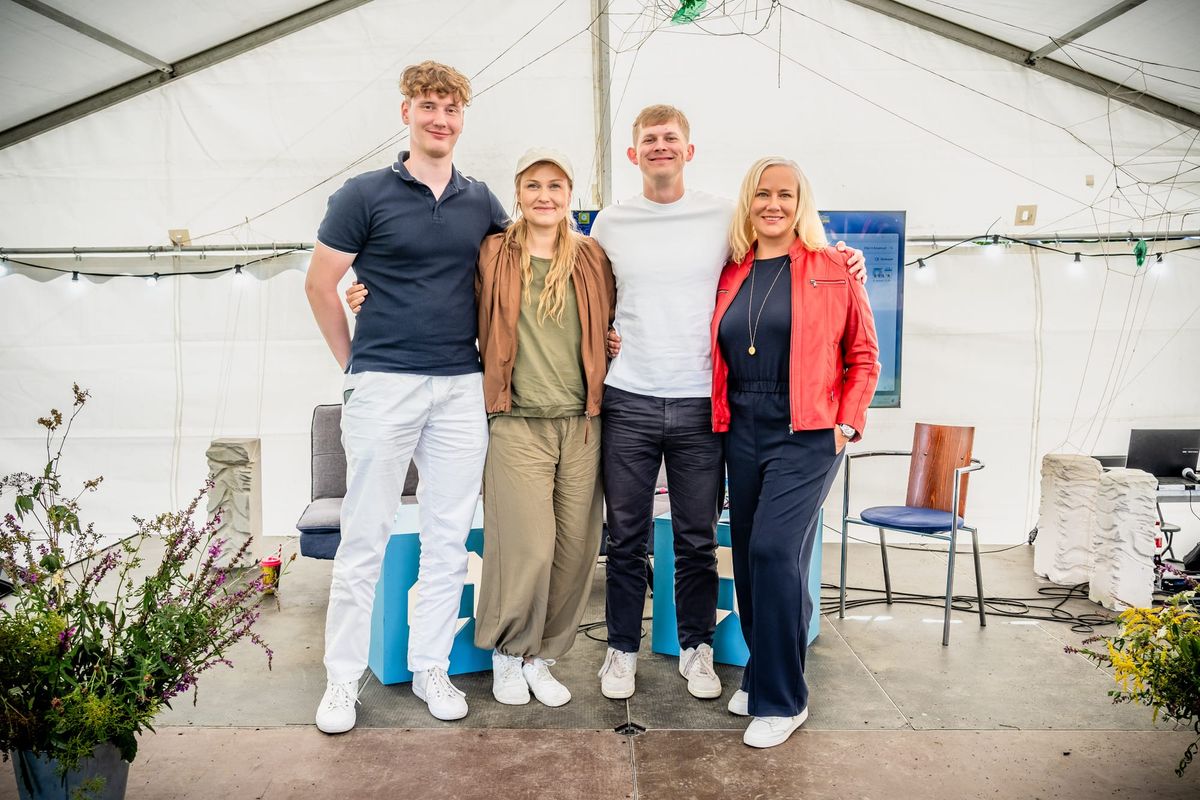
Speaking at Arvamusfestival (Opinion Festival) during a panel titled “Tiigri üleandmine. Kes kannab Eesti digilugu edasi?” (“Handing over the Tiger: Who will carry Estonia’s digital story forward?”) angel investor and early Wise executive Triin Hertmann joined young voices Enel Teinemaa, Uku Joost Annus, and Jaanek Sildam to dissect whether the nation’s celebrated "e-Estonia" identity still resonates with the youth tasked with driving it forward.
The consensus on stage pointed to a distinct cultural shift: while Estonia’s brand as an agile digital nation remains strong globally, the domestic ecosystem risks stagnating if young talent is treated merely as end-users rather than co-architects of its next chapter.
A heritage learned in history lessons
For the generation that built Estonia’s early infrastructure, the digital transition was a grassroots national project born out of post-Soviet necessity.
But for the young operators and founders entering the workforce today, the nation's iconic tech leap is less of a lived memory and more of a textbook reference.
“Tiger Leap is 30 years old this year, so my young panellists heard about it probably from their parents or in a history lesson,” Hertmann said, reflecting on the generational passage of time since the state first pushed to connect schools to the internet and digitise public services.
This shift in perspective presents both a structural hurdle and an opportunity for the startup ecosystem, which functions alongside traditional business and state infrastructure as a key economic engine.
Panellists emphasised that younger Estonians take frictionless digital interactions for granted, meaning the bar for future innovation is significantly higher than it was three decades ago. Simply digitising paper forms is no longer perceived as revolutionary; the next wave of builders demands hyper-personalised, modern user experiences that match global consumer platforms.
From passive users to active builders
A major focus of the debate centred on the gap between young people's daily usage of tech and their actual agency in shaping public and private digital strategies.
Panellists Teinemaa, Annus, and Sildam highlighted that while young Estonians are digital natives by default, their feedback loops into state developments and legacy enterprise platforms remain limited. Government services built a decade or two ago do not always align with contemporary product design standards, creating unnecessary friction for users who grew up on intuitive software interfaces.
To ensure continuity across the local startup and public technology sectors, the discussion pointed toward several concrete moves:
First, institutions must lower barriers to entry by establishing structured pathways, such as youth advisory bodies and early-stage founder mentorship, integrating younger operators directly into digital product planning.
Second, the ecosystem must reframe its core narrative away from the nostalgia of 1990s breakthroughs, focusing instead on active technological frontiers including artificial intelligence, deeptech, and green transitions.
Finally, entrepreneurial mindsets must be fostered earlier in secondary and higher education, ensuring that building a scalable venture is viewed as an accessible and practical career path rather than an abstract concept.
The stakes for the ecosystem
For founders, investors, and public sector partners, the discussion highlighted a clear reality: brand equity built over thirty years cannot sustain an ecosystem on reputation alone.
"If we want the next generation to take real ownership of Estonia's tech story, we have to give them the keys to build it, not just the credentials to log in," Hertmann noted during the exchange, emphasising the need for direct inclusion.
As the regional tech sector navigates evolving market conditions, sustaining Estonia's reputation relies heavily on a deliberate transfer of ownership and initiative. Without structured efforts to include emerging builders in designing future digital infrastructure, the ecosystem risks resting on the laurels of a leap taken a generation ago.
 Fiona Alston
 Triin Hertmann
Comments ()