
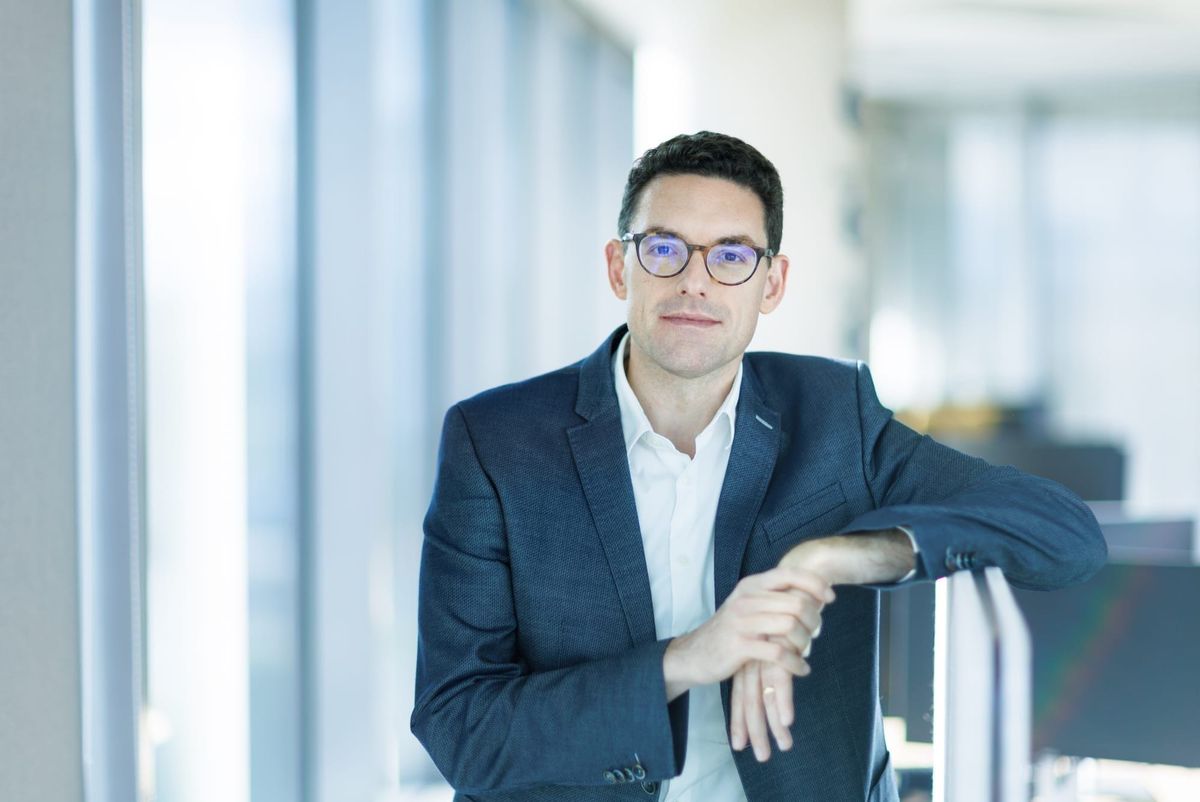
At last week's J.P. Morgan European Leveraged Finance Conference in London — a premier, invite-only gathering designed to connect major private lenders with corporate borrowers — geopolitics eclipsed traditional credit discussions as a primary concern.
In a room dominated by institutional heavyweights like Blackstone, KKR, and Ares, Baltic representation was sparse: TriHeritage Global Capital stood as the sole Baltic private lender, joined only by a single corporate borrower from Lithuania.
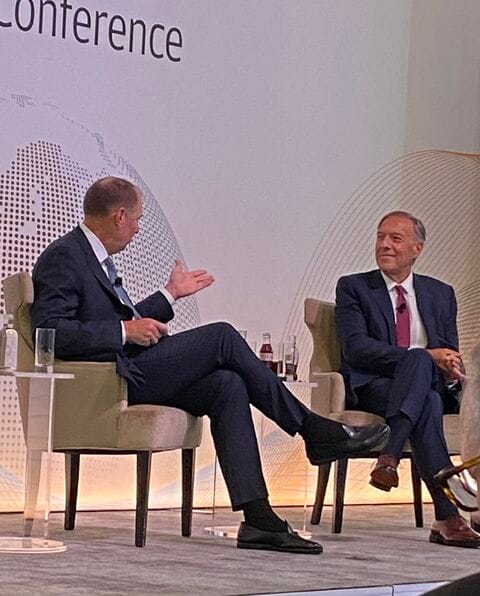
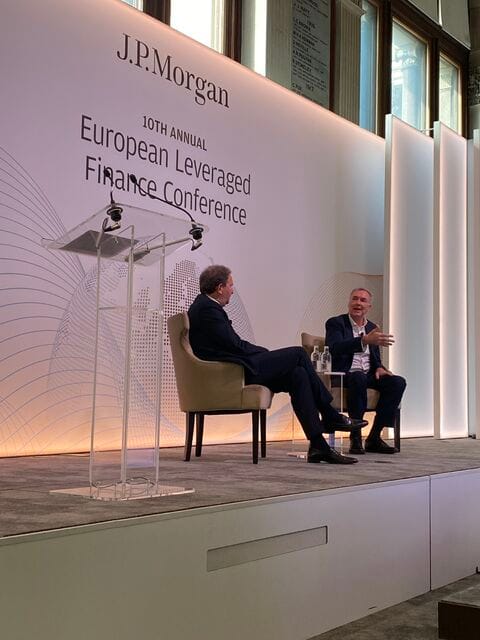
Taking the floor, I popped the question directly to Admiral Sir Tony Radakin, Head of the British Armed Forces (2021–2025): "I live in Estonia. For people worried about a Russian military incursion in the Baltics, what should I tell them?"
Radakin offered firm assurance of the alliance's commitment to frontier nations.
"Be confident that Britain and NATO will defend its members, even the small ones like Estonia. If Russia hits NATO, we will hit them back much harder," Radakin told me.
He outlined a broader strategic shift, noting that the conflict has inadvertently strengthened Western defences. According to Radakin, "Putin woke Europe up from complacency," resulting in a larger and stronger NATO following the accession of Finland and Sweden.
He characterised the Russian military position as weakened, noting that Ukraine is currently driving rapid military innovation, particularly in cost-effective drone and missile systems.
Washington's Perspective on European Readiness
Mike Pompeo, former CIA Director (2017–2018) and US Secretary of State (2018–2021), echoed the sentiment that Europe has reawakened. Addressing historical US administration frustrations over European defence spending, Pompeo expressed satisfaction with recent regional progress.
- "Europe was asleep for 40 years. I am glad you finally woke up militarily."
- "Europe is showing the US how it should support Ukraine."
- "In one year, the Russia-Ukraine war will be exactly where it is today."
- “Putin's invasion of Ukraine will go down as one of the worst military incursions in the history of civilisation.”
Pompeo urged the West to stop allowing nuclear threats to dictate policy, pointing to severe daily Russian casualties as evidence of their tactical struggles.
Side note: Why is J.P. Morgan, the world’s biggest bank, supportive of private lenders like TriHeritage? Because banks don’t have the willingness or capacity to issue every possible loan. Since they use customer deposits to fund loans, banks face strict regulations and high capital reserve requirements. This keeps customer deposits safe, but increases banks’ costs and makes issuing some loans unprofitable. Private lenders, which use investor money instead of deposits, face less regulation and can take higher risks for higher returns.
Alejandro Jimenez is the Founding Partner of TriHeritage Global Capital, an Estonia-based firm providing loans to scaleups and small companies. He previously held roles at J.P. Morgan, Enefit, and Grünfin.

Comments ()