
HELSINKI — The hardest part of launching a deeptech company is rarely the complex science inside the lab. Instead, the true bottleneck is a chronic lack of commercial expertise, leaving highly technical founders struggling to navigate the treacherous path from university spinout to scaled enterprise.
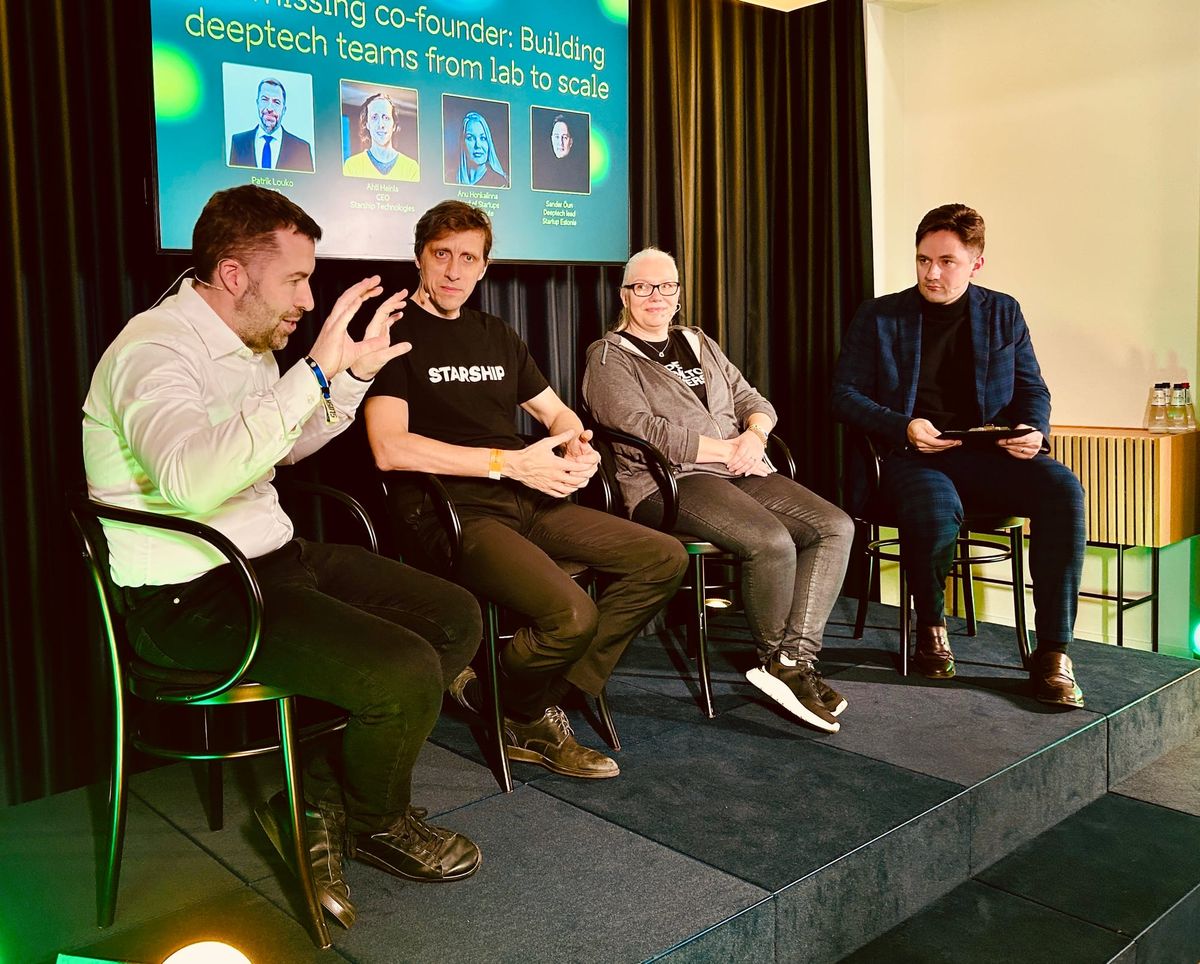
At a Slush side-event in the Estonian embassy in Helsinki, industry veterans convened to dissect what they called "The Missing Co-founder" dilemma. The panel, moderated by Sander Õun of Startup Estonia, featured Ahti Heinla, CEO and co-founder of Starship Technologies; Patrik Louko, CEO of Estonian government venture capital investor SmartCap; and Anu Honkalinna from Aalto Startups.
The panel discussion highlighted the ongoing challenge of building deeptech teams from lab to scale.
The consensus among the panellists was stark: brilliant science does not automatically translate into a viable business, and the mindset required to invent deeptech is often fundamentally at odds with the mindset needed to commercialise it.
"Peter Thiel said once that engineers are terrible at business, and scientists are even worse," Heinla, who co-founded Skype before spending the last decade building autonomous delivery robots, told the audience. "I fully agree with that. My background is engineering."
According to Heinla, technical founders routinely fall into the trap of believing their breakthroughs will sell themselves. "Usually what happens is that they underestimate the business and commercial aspect of it," he explained. "They tend to think that, hey, my technology is so great - I developed this new nano material that helps batteries or whatever, and it's 30 percent better than any competition, so I'm going to conquer the world, and the business side of it and the capital side of it just fall in place. That is not true."
The 'chicken and egg' capital crunch
For deeptech startups, the stakes are inherently higher. Unlike software-as-a-service (SaaS) companies that can iterate cheaply, deeptech requires massive, front-loaded capital expenditures. This creates a structural funding gap, particularly in the Baltics and Nordics, where later-stage Series A capital for capital-intensive hardware and deeptech can dry up quickly.
SmartCap’s Louko characterised the early-stage team-building challenge as a "chicken and egg problem". Technical founders emerging from university labs need to raise pre-seed capital, which requires enough business acumen to pitch investors effectively. If they lack that aptitude, they need a commercial co-founder— but without funding, they often cannot afford to hire one.
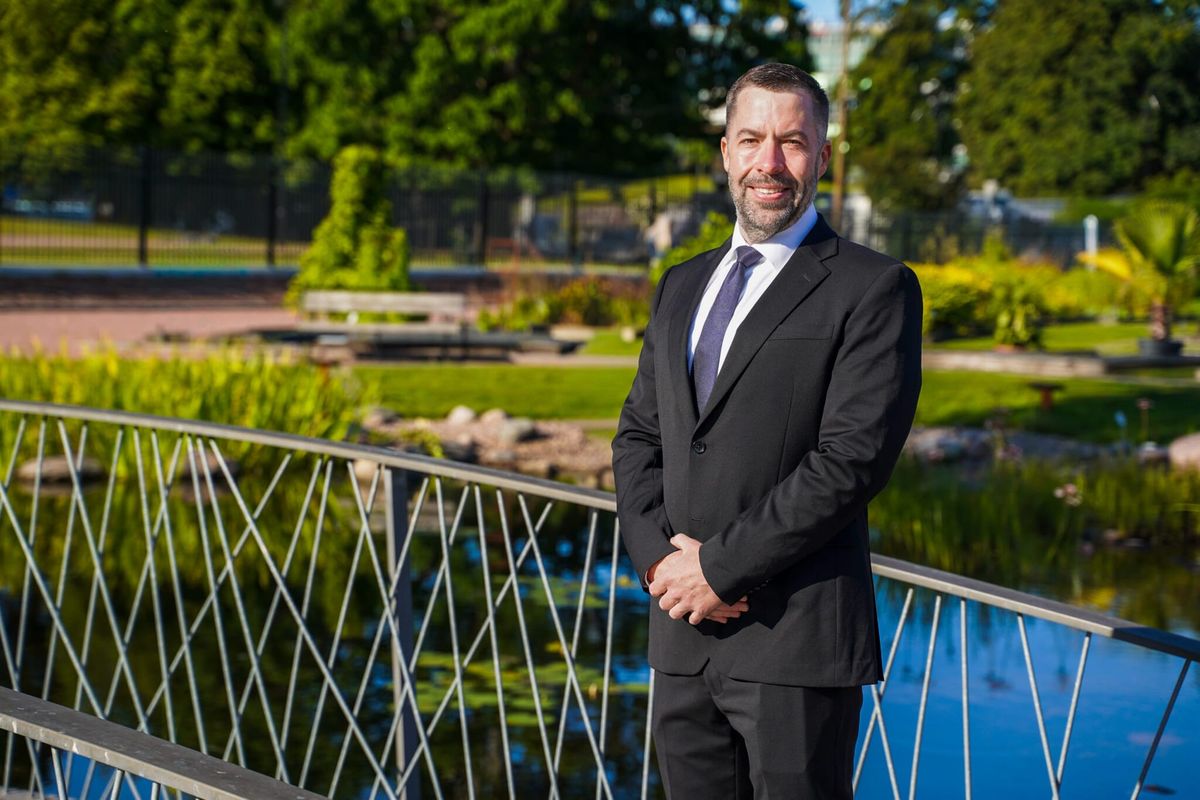
"In every stage, you need more and more business expertise," Louko said, noting that while technical founders might secure pre-seed money, graduating to Seed and Series A rounds demands a sophisticated commercial strategy that scientists rarely possess. Louko noted that his current mandate at SmartCap is to accelerate the creation of fully funded spinouts in Estonia by bridging this exact gap and fixing broken tech transfer programs.

The university blueprint
To solve the co-founder deficit, ecosystem leaders are increasingly looking toward universities to institutionalise the commercialisation process. Aalto University in Finland has emerged as a regional blueprint for this model.
Honkalinna, a recovering serial entrepreneur who now helps bring Aalto's science-based deeptech to the global market, noted that the cultural shift takes time but ultimately yields repeatable success. She pointed to the rise of "star professors" who have successfully navigated the spinout process, creating a proven playbook for the university's postdocs and PhD students to follow.
However, Honkalinna and Louko both warned that the speed of institutional tech transfer is critical to survival. At Aalto, the spinout process typically takes between three and twelve months.
"If you're trying to raise funding and just to transfer the tech from the university takes over six months, you're going to be dead before you get the funding," Louko warned, emphasising the need for universities to overhaul their administrative processes so startups can survive their most fragile early days.
Ultimately, unlocking the region's deeptech potential will require the ecosystem to stop treating commercial talent as an afterthought. For the scientists aiming to build the next globally scaled hardware or deeptech venture, the underlying message is clear: the technology is only half the battle.

Comments ()