
The €75 billion awakening: Atomico’s 2026 report told Europe what we’ve known for years
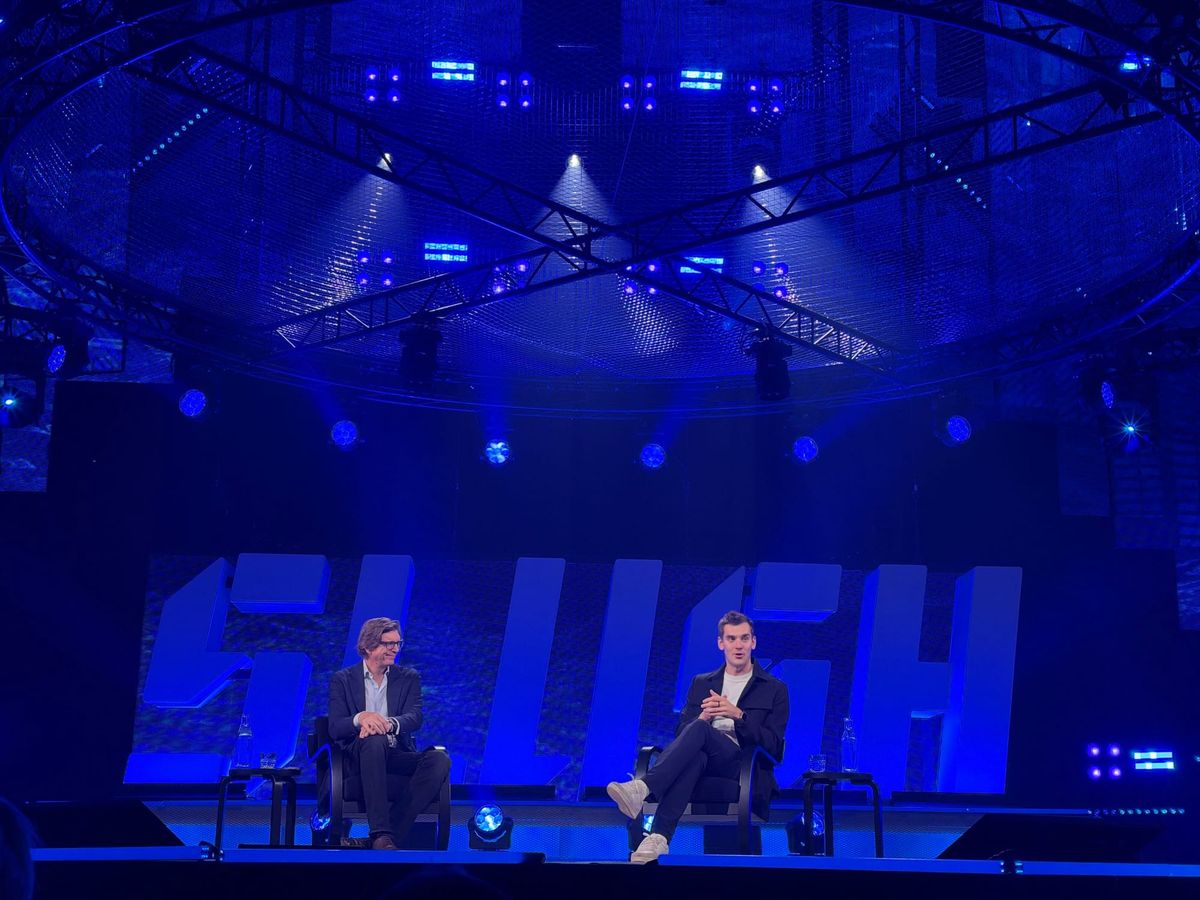
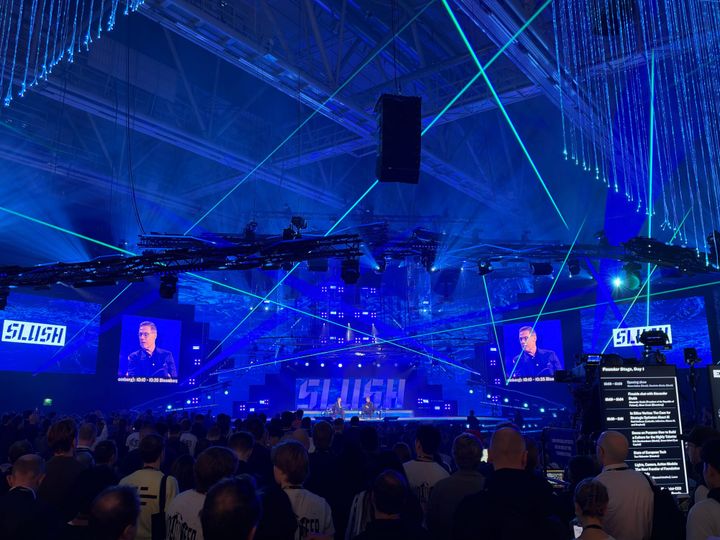
HELSINKI - When Tom Wehmeier took the stage at Slush to present the 2026 State of European Tech report, the overarching message was clear: European tech is finally done apologising. With a projected €75 billion flowing into the ecosystem by year’s end — a massive 62% jump from last year — we are looking at the continent’s second-best year on record.
But if you’re reading this in Tallinn, a lot of Atomico’s "revelations" this year sound suspiciously like the things we’ve been yelling across the Baltic Sea for the last decade.
Wehmeier’s core thesis for 2026 is a blunt three-step mandate: "Build it. Scale it. Own it." Europe is currently crushing step one. A record 40,000 new tech founders launched companies here this year, meaning 29% of the world’s new entrepreneurs are building in Europe, officially overtaking the US.
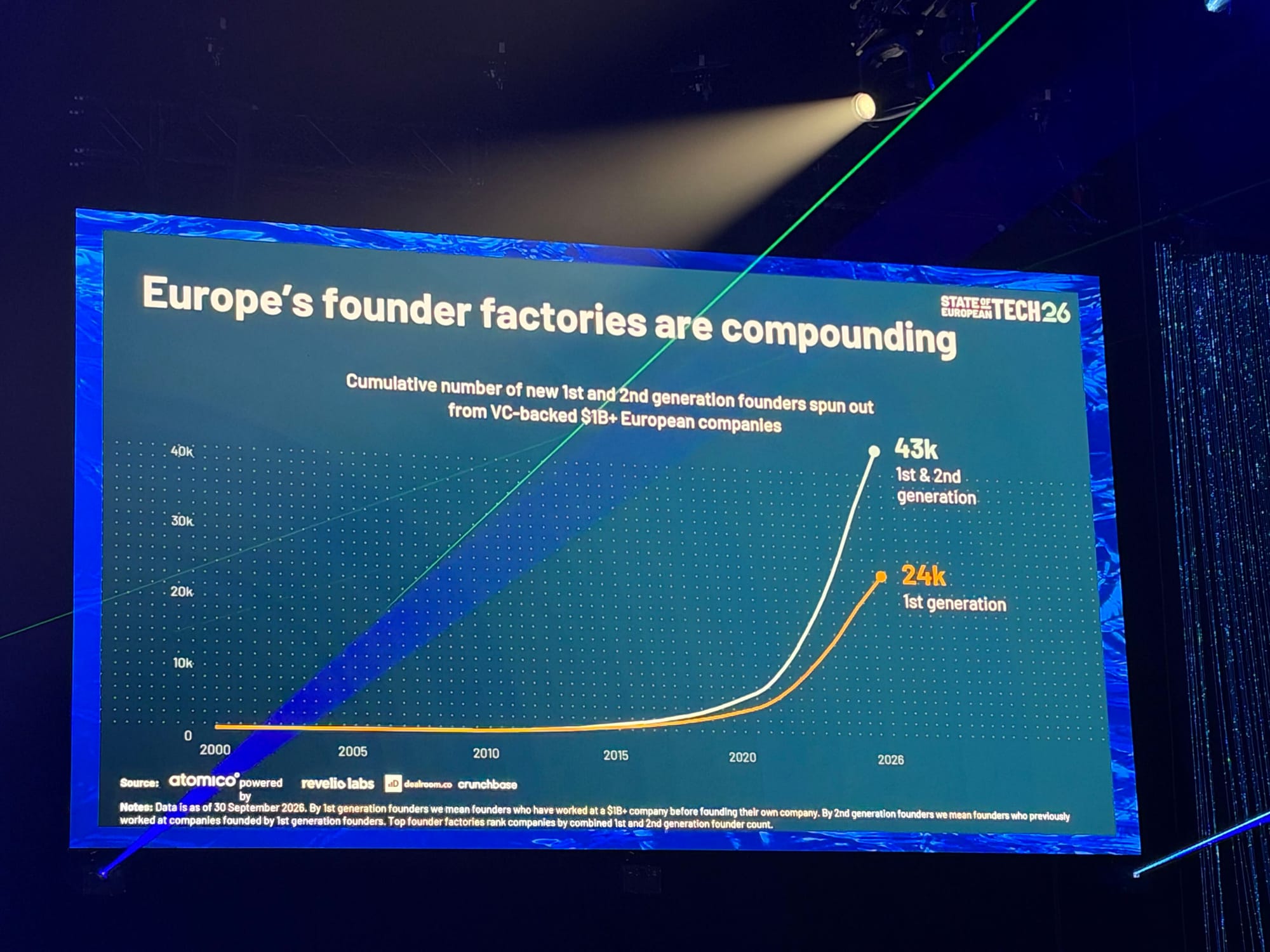
But the report’s deep dive into how that happens reads like a love letter to the Estonian mafia model. Atomico explicitly crowns Skype as the ultimate "founder factory" in European history. (After all, Skype founder Niklas Zennström founded Atomico later.)
We all know the lore, but seeing the hard data mapped out is still a flex: the double-exits from Skype have now spun out 250 first-generation founders and an absurd 1,500 second-generation founders, outpacing giants like Spotify and Zalando. Taavet Hinrikus’ leap from employee number one to building Wise wasn't a fluke; it was the blueprint for an ecosystem where unicorn-building is now a scalable commodity.
Bolt founder Markus Villig made this point vividly while sharing the Slush stage with Zennström. Noting that "technology tends to go in generations," Villig pointed out that watching Skype's rise as a teenager — where his brother Martin worked — gave local founders the audacity to build. "Looking at the first 10 people we hired, I think four of them were from some type of Skype roots," he recalled.
Where the 2026 report gets truly interesting, though, is how it exposes the massive gap in urgency between our local ecosystem and the rest of the continent.
Right now, 88% of European venture capital is pouring into "resilience" categories like compute, energy, and critical systems. But while 40% of the broader European ecosystem politely views defence tech as a "good opportunity for global leadership," a massive 66% of Estonian respondents are actively betting the house on it.
We don't view defence tech as a geopolitical thought experiment; we view it as a mandatory survival mechanism. We are already building the deterrents the rest of Europe is just now writing policy papers about.
Speaking of policy, the report also highlights the regulatory friction keeping European founders awake at night. Across the continent, 42% of founders are begging their governments to fix the tax treatment of stock options so they can actually attract talent. In Estonia? Only 8% even flagged it as an issue. We fixed that ages ago. The rest of Europe has been desperately pushing for scaled-down "EU Inc" to cut red tape, while we’ve been running borderless digital companies from our phones since the 2010s.
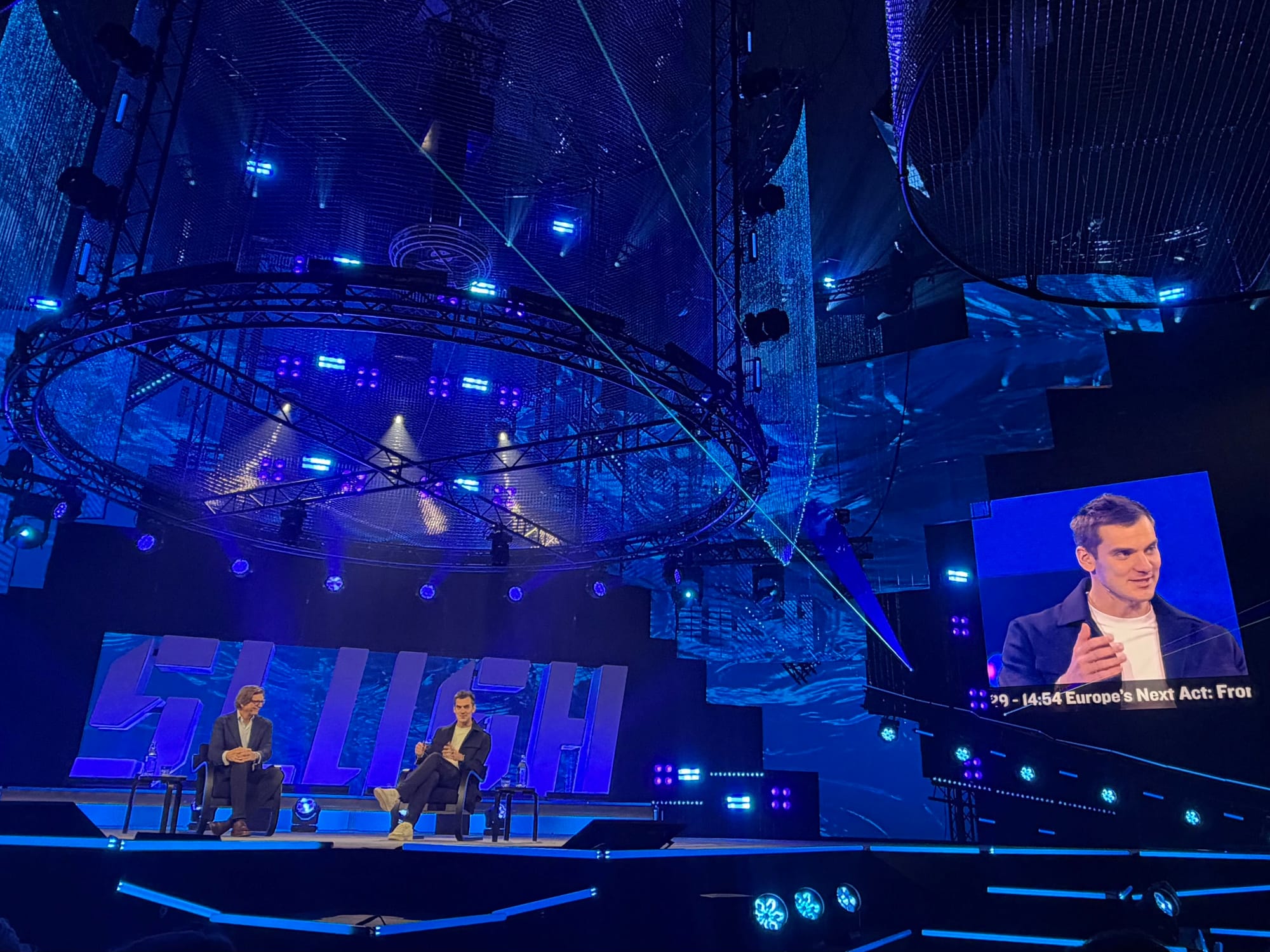
On stage, Villig addressed this regulatory friction with characteristic bluntness: "We don't need policymakers to tell the companies what to do, they are figuring it out. We just need to make sure we create the best environment for them."But he also put the onus back on the ecosystem, reminding the crowd that founders can't just complain—they have to actively educate politicians who are finally waking up to the fact that tech drives the economy.
But before we pat ourselves on the back too hard, Wehmeier’s keynote delivered a reality check that hits just as hard in Ülemiste City as it does in London or Paris: the capital trap.
We are birthing category-defining companies at record speed. (Wehmeier even shouted out Stockholm’s Lovable hitting €550 million in ARR just nine months after crossing the €90 million mark). There is clearly no fundamental constraint on scaling from Europe anymore.
The bottleneck is the money. As our companies mature, the European capital pool dries up. By the time a local startup hits Series C, there is a 76% chance an overseas investor is leading the round.
Bolt's Markus Villig put it perfectly in the report: European startups don't lose to US rivals because they are less capable; they lose because they are systematically under-capitalised.
He hammered this home on the Slush stage, warning that despite Europe's compounding talent factories, the continent is actually "getting behind relatively speaking" at the late stage. The culprit? Institutional cowardice. "The pension funds are allocating 0.006% of their assets into European venture... US pension funds are allocating at least four times more," Villig pointed out.
Although, signs like this week's 1 billion fund from Plural do point in the right direction.
 Fiona Alston
The most frustrating part? The money is sitting right here. European households are hoarding nearly €16 trillion in lazy, low-yield bank deposits while our best companies are forced to cross the Atlantic to fund their growth stage.
"Too much of our capital stack today is still set up to protect what we have and not to invest in what comes next," Wehmeier warned at Slush. "If Europe builds it, but others own it, we've really only done half the job."
We’ve nailed the "Build it" part. We’ve rewritten the playbook on "Scale it." But until we figure out how to mobilise our own capital and buy into our own hype, "Own it" is going to remain the hardest stage of the game. If we don't write the growth checks for the ecosystem we built, American and Asian funds will gladly do it.
Comments ()