
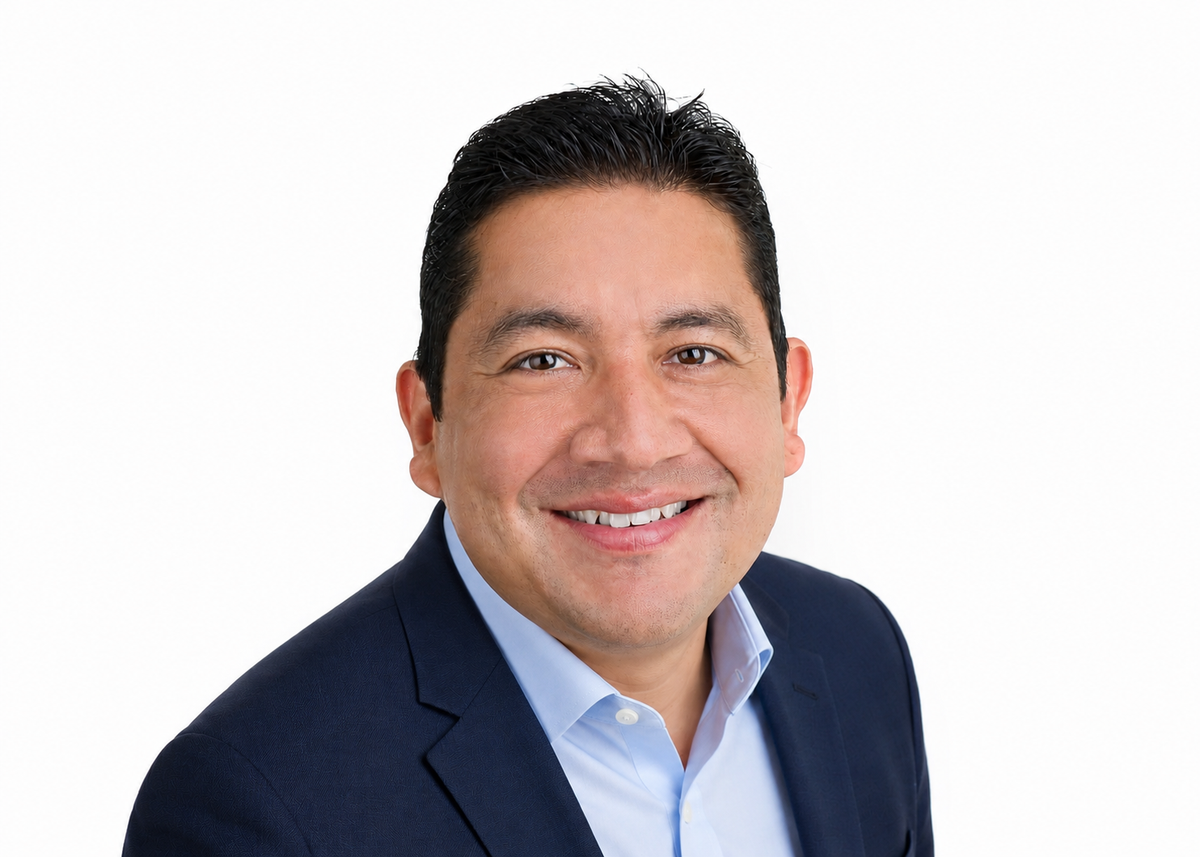
Eli Velasquez, founder and CEO, Capital Stack Investors was in Tallinn a few weeks ago as part of a whirlwind tour of events and visits during Health Tech Week. We managed to catch up with him for a quick chat during the Tallinn Summit to find out what he thought of Estonia's tech community.
You are based in Valencia now, what’s the tech scene like there?
Valencia is an emerging ecosystem - it's the third largest city in Spain, and it's really rallying around the tech sector, and then more specifically around mobility and digital health. They started organisations like Startup Valencia, Valencia Innovation Capital, and a very large incubator called Lanzadera. Then they have the family offices, the VCs. It's still nascent, but it's still growing.
You were part of the team that brought TechStars to Valencia. How important do you think having communities like TechStars are in the ecosystem?
I think they have their place, but they can't be cookie-cutter, right? So one of the challenges that I've seen as I've done this work all over the world is people try to just implant it as is, and it doesn't always work because you don't have all of the components there, and so it's kind of a square peg in a round hole type of situation.
And sometimes there are friction points when that programme starts to get going or to scale, and so the idea is you don't have to do it this way or that way. You can learn and then begin to adapt it and grow it over time. So I think it has its positives and negatives, but I just think it depends on each ecosystem also.
What are the key points that people need to be thinking about when they're building communities? Particularly in Estonia.
I'll speak to this from actually seeing a few kinds of organisations in this last week. So, one, it has super-rich innovation, extremely deep science, hard science, what in some cases we'll call tough science. And so, from that perspective, there's a bank of IP that's there, or that can be created. What's missing is some of the frameworks and processes to start moving that intellectual property towards a commercialisation pathway.
Then, on the other hand, I participated in the Baltic VCA summit yesterday. I said, "Well, how many VCs are in Estonia? They said about twelve. So twelve VCs for a population of 1.3 million-that's a lot of VCs for one ecosystem. They want to collaborate, but I think they're trying to figure out how they collaborate amongst themselves, and then where exactly they start looking for deals. So you have, I would say, ideas on one side that aren't fully translating into business opportunities in a very rich capital ecosystem that is trying to find its way amongst itself and doesn't have a bridge to connect to those commercial opportunities.
It feels like it needs to move or wants to move, but it needs a little bit more fluidity or maybe some frameworks, programmes, processes to start getting closer to each other.
Why did you take this trip?
For me, because I'm based in Europe, one of the friction points as an American trying to do business in Europe, is noticing how fragmented these ecosystems are, and so what I realise is I have to go into each one, learn about each one, and figure out where the connection points are, where I can be helpful in connecting that to maybe U.S. partners, U.S. opportunities, U.S. investment.
They have the ideas, they have the people, they just don't have the access point. And so, if you are able to provide that, that could potentially create that flywheel that gets it going.
Is there a decent market in Europe, or do you think that Estonians should always be looking towards the US?
One of the big things that I took away [from this week] was that between Estonia, Lithuania, and Latvia, that's a market right there. Those are good partners. They get along. They want to find ways to collaborate. I don't think everybody always needs to look at the U.S. as the endpoint. I think that there's a lot here that can be developed with the right collaborative partnerships, and that's what I like - the energy's there.
What do you think the Estonians are doing really well?
They are communicating really, really well amongst the partnerships in the ecosystem, and that's really important - they show up.
You do see this friendliness, you see an openness, you see a willingness to try to find a way to solve problems, and then try to find a way to advance them. And then there's a lot of openness to ideas - I feel like that goes a long way as to the intellectual honesty of an ecosystem.
Also, the rapidity of their growth from the late '90s to now - imagine what they're gonna do in the next generation - to me, that's fast; it's gonna be fascinating to watch.
Will you come back?
Absolutely!

Comments ()