
MARI LUUKKAINEN: ChatGPT knows what your startup does. It just didn't learn it from you
I have read more pitch decks than is healthy for one person. Every one has a slide that says what the company does, and every founder has rewritten it 40 times, argued about it with a co-founder at 1 AM, and tested it on an advisor who said, "Love it, but what do you actually do?" That sentence is the most expensive sentence in the company. It is the one the term sheet is written against.
So here is a (stupid) experiment. I took 14 startups from fomo.observer's coverage this year, the ones that raised money or made news, and asked ChatGPT and Gemini one question each. What does this company do? Web search on, Estonian locale, one paragraph, no hints or follow-up. The question every customer, every hire, every angel who has not read the deck asks the machine now, because asking a machine is faster than asking a founder. Plus you get an answer you might actually understand.
I expected carnage. Small companies, new names, one of them called Enola, which is also a bomber, a film, and a Sherlock Holmes character. Instead, both assistants got thirteen of fourteen right. Creem is a merchant of record for AI-native software. Wisby is a label marketplace for drink and food producers in Tartu. Nanordica makes antibiotic-free wound dressings. UP Catalyst turns CO2 into graphite. Handhold builds AI account managers for B2B software. Every description would survive a partner meeting. Some are better than the deck.
Which means the question founders should be asking is not "does the assistant know us?" It does. The question is whose words it is repeating. That is where the fourteen split into a group that owns its own story and a group that has outsourced it, without noticing, to a government directory.
Ten own their sentence. Four have lent it out.
For each answer, I looked at the citations, not the prose. Prose is what the machine writes. Citations are where it went to learn.
ChatGPT cited the startup's own website for ten of the fourteen. Gemini for eleven. For the rest, the assistant described the company correctly, fluently, in the words of somebody who has never sold the product.
Granarium Technologies, the Finnish supercapacitor company that won Latitude59 and raised a million. Both assistants described it from VTT's research page and a press release on PR Newswire. Granarium's own homepage, fetched the way a crawler fetches it, contains zero words. Not few. Zero. It is a JavaScript shell that paints a beautiful site onto a human's screen and hands a bot an empty div. A million euros of pre-seed, and a research institute's communications team maintains the company's public description.
 Fiona Alston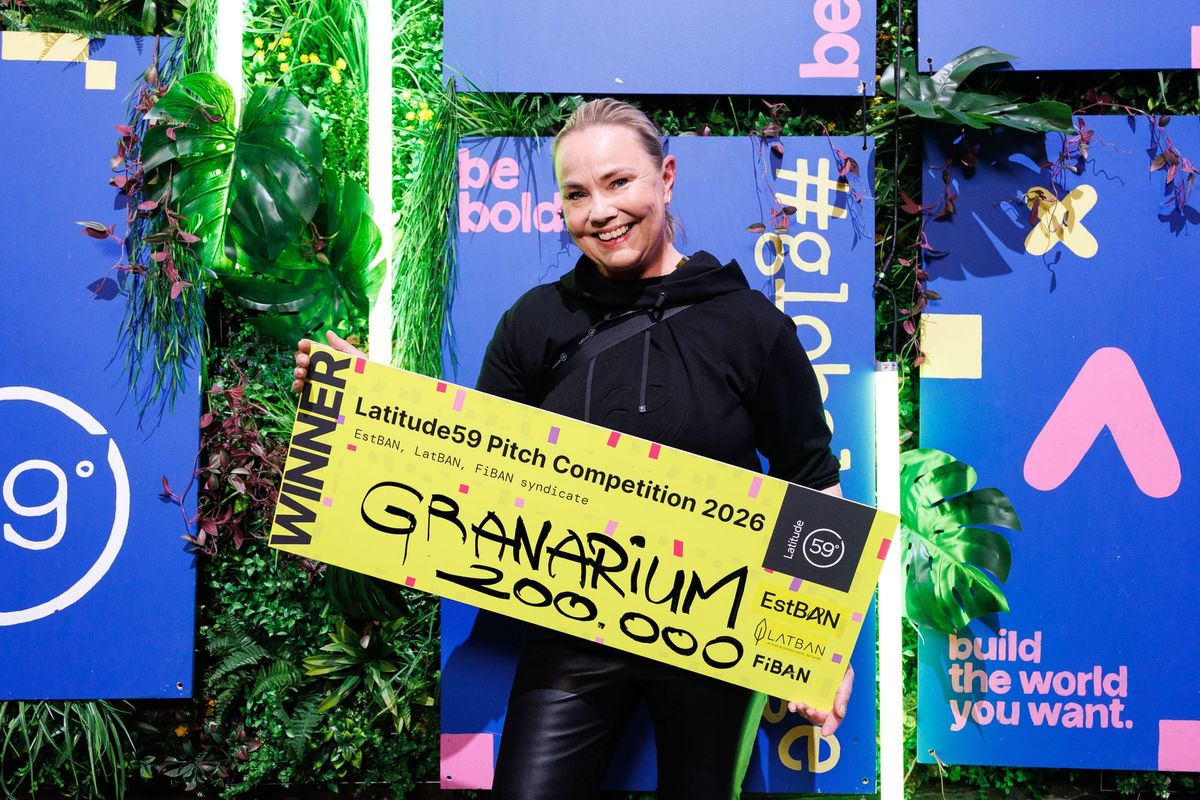
Velmenni, the LiFi company out of Tartu with the 3.3 million round. ChatGPT described it from Startup Estonia's ecosystem directory. Gemini from Invest in Estonia and an Indian business daily. Velmenni's homepage is not empty, it has 938 perfectly readable words. The first heading says "We're reimagining the role light plays in the universe". I have seen that slide. I have probably applauded that slide. It answers no question a buyer, a telecom procurement officer or a machine has ever asked. Startup Estonia's entry says LiFi, Tartu, telecom backhaul, indoor networks. The assistant took the plain one. It will take the plain one every single time.
 Tarmo Virki
Handhold, the AI sales agent startup with the 3 million round. ChatGPT cited LinkedIn. Gemini cited ArcticStartup and EU-Startups. Handhold's homepage opens with "A dedicated guide for every buyer". Lovely. Also a riddle. The description of Handhold that ChatGPT gives its users is whatever a LinkedIn company page said, on whatever day LinkedIn's crawl happened.
 Tarmo Virki
And then Enola. The homepage at getenola.ai serves seven words of HTML and a meta description that reads "the private detective that turns data into actionable context". ChatGPT gave up on the startup entirely and described a different company called Enola, in a different country. Gemini got it right, an OSINT and due diligence platform founded in Estonia out of Vilnius, and its two sources were the startup's own site and the fomo.observer interview with the founder. Read that again. A journalist's write-up was the only thing standing between a funded startup and being mistaken for a stranger by the most used piece of software on earth.
 Gert Lõhmus
The pattern is embarrassingly simple
The ten homepages that got cited directly share three features, and none of them cost money.
The first heading says what the company sells, in the buyer's words. Wisby says "Order labels for craft beer, soft drinks, food". SkySelect says "Procurement AI". Messente says "Hassle-free business messaging". Boring, specific, quotable.
The meta description is a sentence a stranger could repeat at a dinner party. Creem's says "the money platform for the AI era, sell software and digital products globally". You can lift that whole.
And the text is in the HTML the server sends, not painted on afterwards by a script. A bot reads what the server returns. If the server returns a loading spinner, the bot has learned that your company is a loading spinner.
The four that lost the citation to a directory, a research institute, LinkedIn or a news site each break one of those. Empty HTML. A heading written for a billboard on the Tallinn ring road. A description written for a founder's mother.
None of this is about domain authority, budgets, or the dark arts. Startup Estonia's directory beat Velmenni's own site because the directory entry reads like an answer and the homepage reads like a manifesto. The assistant is not judging your brand. It is not moved by your vision. It is looking for one sentence it can cite without embarrassment, and it will take that sentence from the intern who filled in the directory form before it takes a poem from the founder.
Zoom out and it gets worse
I ran a second panel the same day, ten questions an investor or a founder would ask about the Baltic ecosystem itself. Latest Estonian funding rounds. Most active Baltic VCs. Is the ecosystem slowing down. Where to follow Baltic startup news. 20 answers, 87 citations.
The most cited source was Startup Estonia, 10 times. Invest in Estonia 6. EU-Startups, which is Spanish, 6. BalticVC 5. Dealroom 4. Firstpick 4, mostly from its own portfolio page. The actual regional press, the people who phone founders and confirm the round size, held about a quarter of the citations between them. Fomo.observer got 2, one of them on the freshest question, this month's rounds, where a news site should win and a directory cannot.
So the Estonian state describes the ecosystem. Venture funds describe themselves. Research institutes describe their spinouts. Directories describe everyone. And the founders, who have the strongest possible incentive to own the sentence, are the weakest link in their own description, because the answer comes back correct and nobody checks who wrote it.
What I would put in the Monday portfolio email
If I ran a fund, this would go to every portfolio company this week, above the fold, before the KPI reminder.
Ask ChatGPT and Gemini what your company does, web search on, and read the citations. Not the answer. The citations. If they point at your domain, you own your sentence. If they point at a directory, a press release, VTT, or your own LinkedIn page, you have handed your positioning to whoever wrote those, and they wrote it in 2024 from a form.
Then fix the homepage in three moves, one afternoon, no agency needed.
Put the plain sentence first, who you sell to and what they get, in words a buyer would type into a search box.
Make the meta description that same sentence.
Check the sentence exists in the HTML your server actually sends, which for a lot of Framer, Webflow and Next.js sites is not a given.
View source, or fetch the page with curl, and search for your own product name.
If it is not there, your site is a picture of a website.
Keep the manifesto. Founders need the manifesto. Put it second.
And measure it monthly. Ten questions, two assistants, count the citations. I ran both panels above for a little over one euro in API fees. It is the cheapest diligence you will ever do on yourself, and the only one where fixing the finding takes less time than reading the report.
The genuinely uncomfortable bit
The reason this is urgent and not just tidy is that the assistants are about to become a paid channel. ChatGPT ads opened in Europe in late August. Very soon a competitor with a plainer homepage and a small budget will appear inside the exact conversation where a buyer asks what your category does. If the organic answer already describes you from a directory entry, you are fighting for the sponsored slot to correct your own story. That is a bad place to spend money.
The Baltic ecosystem describes its startups well because the ecosystem around them writes well. Startup Estonia keeps a directory. VTT writes research pages. Fomo.observer interviews founders and prints what they actually build, which, in Enola's case, was the difference between existing and not. The infrastructure is doing the founders' job for them.
Correct is not the same as yours. When the buyer asks the machine and it recites a directory entry, your company has been described by someone who has never sold the product, never lost a deal, never sat through the 1 AM argument about the sentence. For the price of one honest heading, the description could be yours. Most founders will not do it, because the answer already looks fine. That is the entire opportunity.
Mari Luukkainen builds own AI products, and AI agents for Parvi. Earlier: AI didn't kill your SEO, your low-quality content did.
Method: 14 startups from fomo.observer's 2026 funding and AI coverage (Creem, Wisby, Display.dev, Nanordica Medical, Granarium Technologies, Handhold, Velmenni, Better Medicine, Enola, UP Catalyst, Farsight Vision, SkySelect, Messente, TooEarly Ventures). Prompt "What does the startup X (country) do? One paragraph." to ChatGPT (gpt-5.6-luna) and Gemini (3.6-flash), web search on, Estonian locale, 17 September 2026. Each homepage fetched with curl as a crawler would, counting words in the server HTML. Second panel: 10 questions about Baltic and Nordic startups, funding and VC, same two assistants, Finnish locale, same day, 20 answers, 87 citations, Gemini redirect links resolved to real domains. Single pass on one day.


Comments ()