

TALLINN — The Estonian startup ecosystem, which has seen an 83% drop in direct angel investments over the last few years, could follow Lithuania's lead in seeking a solution to get angels off the sidelines.
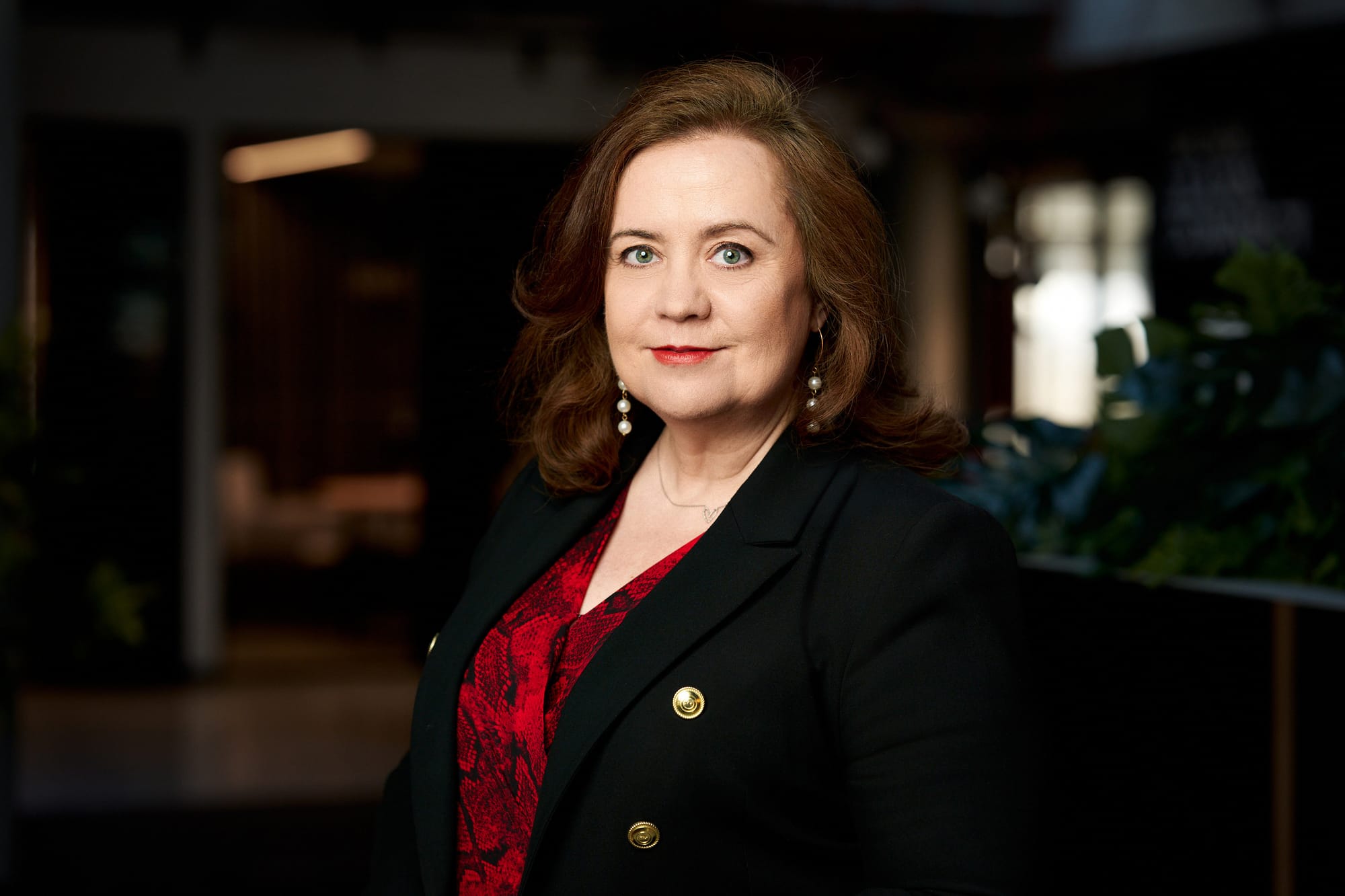
Fomo.Observer caught up with Viktorija Trimbel, Managing Director of Lithuania's state-backed fund Coinvest Capital, while she was in town for Latitude59. Trimbel told us how targeted public co-investment systems and profit-sharing mechanisms can actively catalyse private capital into high-risk sectors such as DeepTech and Defence.
It’s a hot topic at the moment as Jana Budkovskaja, board member of the Estonian Business Angels Network (EstBAN) recently wrote about in Fomo.Observer, issuing a direct challenge to Estonian policymakers: "Please put five million on the table" for a dedicated angel co-investment vehicle to reverse a multi-year funding decline.


Catalysing private capital, not crowding it out
Coinvest Capital was established in 2018, and was designed to help business angel co-investments by leveraging private capital through a structured, market-driven model. The beauty of its primary scheme is the fund can assume a significant share of an investment round while relying entirely on private sector due diligence.
"The original concept was really to facilitate business angel co-investment," Trimbel said. "Under that, we can take up to 75% of the round. We need a minimum of two or three private partners for this investment. If they want to put in more money, we are always happily reducing our share. We never compete with private funds, we don't crowd out private capital — we catalyse private capital."
Trimbel emphasised that this design ensures every deal carries explicit market justification. To prevent distorting the ecosystem, the fund enforces a strict policy of neutrality during round formation.
"I also made a rule that we do not indicate to other private investors whether we are going to invest or not unless we already have our investment committee decision," Trimbel explained. "The logic behind this is that we want private investors to make their own independent decision whether they like the company or not, because they are risking their own personal money. In addition to that, we are not automatically matching [them]. We are still doing our own due diligence."
Aligning incentives: The profit-share mechanism
Unlike traditional public funds, Coinvest Capital caps its financial returns on successful exits, leaving the surplus upside entirely to its private co-investors - what an incentive!
"We only share public returns or public profits if there is a successful exit and if the profits from investment are above our cap," Trimbel noted. "Right now, it's either 4%, 6%, or 8% annual IRR. The 4% is for university spin-offs, because this incentive is even more generous—we want to facilitate commercialisation of scientific research."
For most startups, the return cap is set at 8%, and a 6% cap applies if a portfolio company becomes publicly listed.
This asymmetric risk-reward structure has yielded some very positive real-world outcomes for angel investors. Trimbel pointed to exit from Interactio just 18 months after initial investment.
"The exit was valued at 9X. Great result, an outlier also," Trimbel said. "And then, because of our profit-sharing arrangement, we picked our three years of minimum cap, and the surplus was distributed to business angels. We enhanced their returns from 9X to 34X. And that's just in one year and a half. So this is definitely a great success story."
The shift to single-use
In 2023, Coinvest Capital’s fund mandate was adapted to fit the more pressing geopolitical environment; it became the first state-backed fund in the Baltic region fully authorised to invest directly in single-use defence technologies.
Originally the fund centres around what Trimbel terms "green capital"—patient, non-predatory funding designed for research-and-development (R&D) intensive sectors where commercialisation cycles are long.
"We are very well positioned for R&D and procurement-intensive industries like life sciences and defence, because we don't force founders to sell too early," Trimbel stated. "Usually, with the first ticket, we go into through the equity instrument, we have shareholders' agreements. Our concept is that we want to strengthen the equity base and then facilitate our startups obtaining non-dilutive funding like grants, loans, etc., giving them through a green structure."
Trimbel added with a touch of humor that this mission-driven approach sets it apart from typical venture capital trends, "I even have a joke that I drive investments in space technology rather than another dog tinder... That's for traditional VCs. It's quick, scalable. We have a mission, like mission-driven capital."
High deployment and high impact
Another benefit of the state-owned fund is Coinvest Capital's portfolio companies generate more in employment and corporate taxes than the state deploys in capital.
The strategy reached an operational milestone in recent performance metrics.
"Last year [2025] was a record year in terms of deployment and impact generated," Trimbel revealed. "We deployed more than €9.3 million and we attracted more than €14 million. So we had the largest ever volume, and at the same time, the smallest ever share in the rounds. So I consider that a very, very healthy indicator."
This efficiency stems in part from the fund's agility. While traditional institutional funds backed by the European Investment Fund (EIF) often require up to two years of market consultations, beauty contests, and private fundraising rounds before capital hits the ground, Coinvest Capital operates within an existing legislative framework.
"We are an existing structure. So if the government wants to make a quick impact into the ecosystem, it's basically a matter of a couple of legal acts," Trimbel said. "Our mandate is adjusted and we can deploy from the first minute. So we are a very efficient tool to accelerate impact."
Implications for the Baltic region
The Lithuanian experience adds weight to the arguments being made by ecosystem players in Estonia. Facing structural bottlenecks—including an aging founder demographic and a narrowing pre-seed pipeline—Estonia's lack of angel-specific investment incentives stands out in an otherwise highly competitive digital economy.
As public capital increasingly looks to anchor critical infrastructure, dual-use technology, and scientific innovation across Europe, the choice facing policymakers is shifting. As Trimbel’s data indicates, a structured co-investment fund is less of a State subsidy and more of an operational multiplier, one which leverages private sector discipline to scale companies that are vital to regional security and economic resilience.



Comments ()