
LIINA LAAS: AI did not make your sales email better, it just made more of them
Everyone is talking about AI.
We need AI everywhere. AI will replace your sales team, your HR team, your finance team, your co-founder, your therapist, and probably your mum. At this point, if your toaster does not have a Claude integration and a “strategic reasoning layer”, investors might ask whether you are even serious about breakfast.
And yet, for all this promised intelligence, what many of us are experiencing is not a beautiful new age of productivity. It is just a higher volume of bad stuff.
More bad emails, content, outreach. More ‘personalised’ messages that open with ‘I saw your impressive work at company’ and how they loved my random comment about x on y.
We were told AI would make things better. Instead, a lot of the internet currently feels like someone took the worst intern you ever had, gave them unlimited credits, and removed supervision.
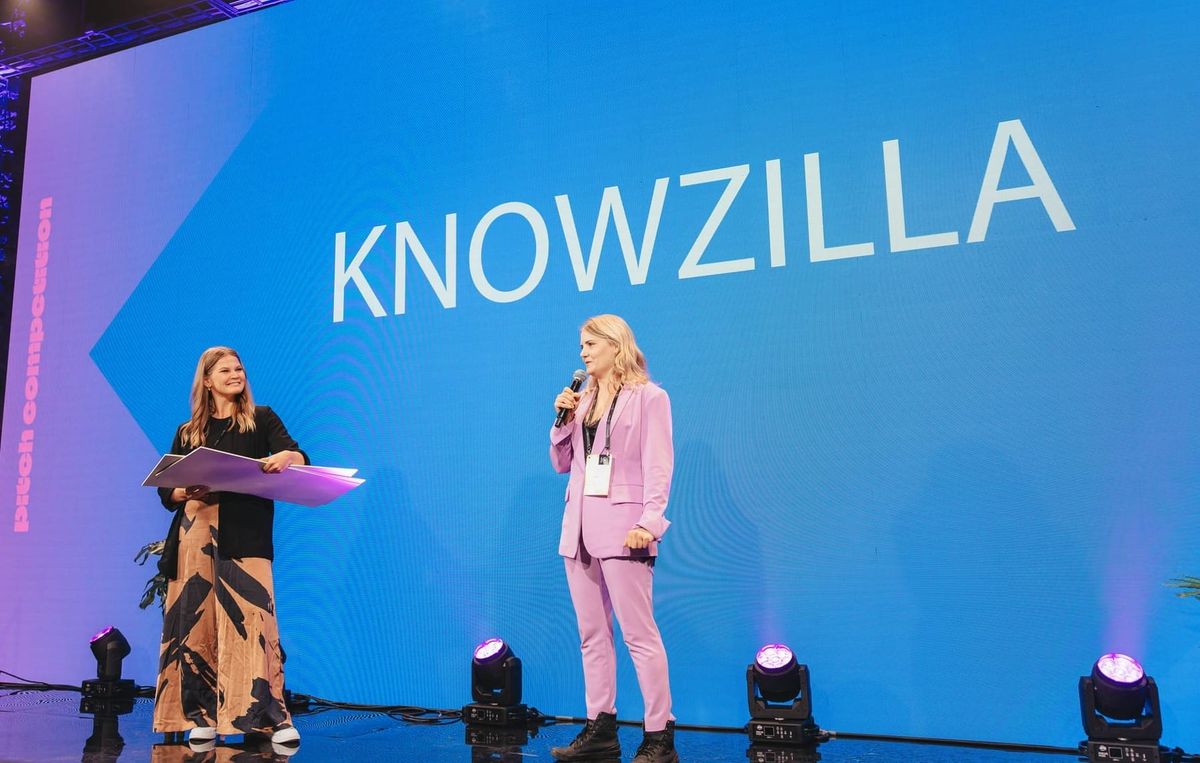
These thoughts came up during two events I took part in last week at Latitude59. Oh what a year that week was indeed!
One of them was my podcast, The Revenue Ramp, with Kadri Haufe, Valeriia Holubytska and Gerri Kodres. The topic of AI in revenue teams quickly became the talk of the afternoon.
In theory, AI should help us create messaging so tailored that it feels like it was written specifically for one person, one company, one pain point, one buying moment. In practice, what we are getting is 100 times more emails. And somehow, many of them are 100 times worse. This is impressive in the same way a toddler covering a white couch in Nutella is impressive. Technically, a lot happened. Spiritually, we are worse off.
Of course, sales automation has been around long before AI. We had sequences, templates, variables and ‘Hi {{first_name}}’ disasters before anyone was asking ChatGPT to ‘make this punchier’.
Mine has also recently gone rogue, by the way. Apologies to anyone affected.
It was not AI in that case. Software has glitches. Something went wrong with the software that is running my sequences and it seemed to send messages basically whenever it felt like it. I got a few replies saying, “Hey, your AI has gone rogue.” Sorry, I wrote it myself actually. Which is worse, somehow.
But that is also the point. Technology breaks. Even the biggest companies ship bugs, platforms go down, automations misfire, and occasionally your sales sequence develops the emotional stability of a raccoon in a bin.
The problem is not that tools sometimes fail. The problem is that we are now giving bad systems much bigger microphones.
AI has made it extremely easy to produce more. More emails, more posts, more reports, more summaries, more ‘thought leadership’. But more is not the same as better. Faster is not the same as smarter. 100x is not the same as useful.
And because everyone is producing more, everyone is reading less. We are drowning each other in content while wondering why nobody pays attention anymore.
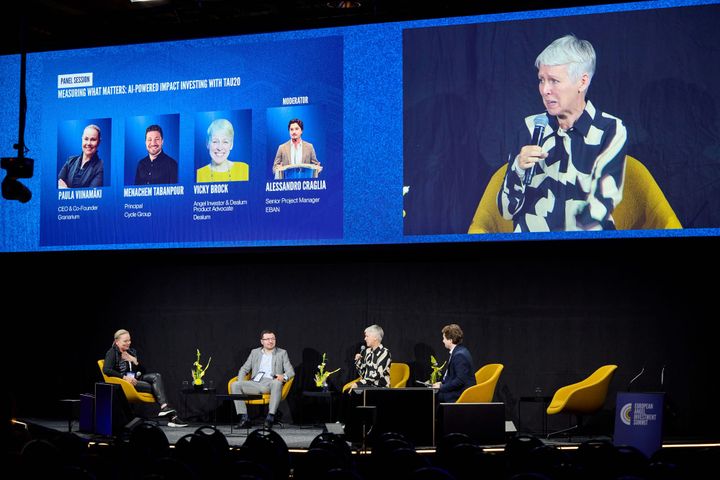
On another panel last week, Eric Bhullar, partner at BSV Ventures, said something that stuck with me: if you think AI-generated content is good enough, you are probably not the expert on that topic. That is painfully accurate.
AI is fantastic for research. It is helpful for improving your structure, finding blind spots, sharpening an argument, summarising messy notes, or helping you get from ‘I have 14 chaotic thoughts and one of them might be good’ to ‘there is an article here’.
But it is not yet good enough to consistently write truly insightful work on its own.
Insight still comes from taste. From experience. From having sat in enough awkward sales calls, hiring processes, board meetings, customer interviews and ‘quick syncs’ that turned into emotional group therapy.
AI can help you write. It cannot yet give you a scar. That reminds me, this is also a weird new trend: hey before you can join this event write in our form what or who hurt you. Sounds like someone asked ChatGPT to give you new and edgy ideas on how to find the best founders. (Although it may be the same case where people think my messages are AI slop and the idea was someone’s original one. Oops).
And this is where a lot of AI adoption is going wrong. We are using it to replace effort in the exact places where effort is the point.
A generic sales email was already bad before AI. Now it is longer, more confident, and includes three fake compliments. A mediocre LinkedIn post was already forgettable. Now it has better formatting and the emotional depth of a hotel lobby playlist.
Meanwhile, the tools themselves are getting stranger too. Some AI products now seem determined to keep you in the chat forever. You ask, “How long should I cook 1kg of chicken?” and suddenly you are reading a 47-page moral philosophy of poultry, including a comparison table, risk framework, and a closing paragraph on your ‘culinary journey’.
Thank you, but I simply wanted not to poison my family.
The exciting part of AI is not this. The exciting part is not making everything longer, louder, or more automated.
The exciting part is building technology that removes tedious admin, yes, but then goes further. Technology that surfaces signals humans might miss in their normal workflow. Patterns they did not have time to notice. Customer insights buried in calls. Sales objections appearing across segments. Onboarding gaps hidden in repeated questions. Internal knowledge that exists somewhere, but apparently only in the brain of Anna from customer success, who is on holiday.
That is where AI gets interesting. Not ‘replace the team’ but help the team see better.
Because most companies do not suffer from a lack of information. They suffer from a lack of usable insight. The data exists. The calls happened. The notes were written. The CRM fields were half-filled in a moment of optimism. The Slack threads are there, somewhere between a meme and someone asking who has the Zoom link.
The question is: can we build tools that capture the right signals, connect the dots, and put better context in front of people when decisions are being made? That is much more valuable than sending 10,000 bad emails while calling it pipeline generation.
So when will we stop celebrating headlines saying, “We fired our whole HR team and now we have a Claude MCP and one person in the basement”? When will we stop treating AI like a magic replacement machine and start treating it like what it is: a tool?
Sure it could be a powerful one. A messy one. Somedays useful. And, a dangerous one when pointed at lazy thinking.
The companies that win with AI will not be the ones who automate the most people away. They will be the ones who use it to make their people sharper, faster and better informed.
Less spam. More signals. Less slop. More taste. Less “your AI has gone rogue”. More “your team just made a better decision because the right insight showed up at the right time.”
And maybe, just maybe, fewer emails beginning with “I was impressed by your recent work”, sent to someone whose name is still written as {{first_name}}.
Liina Laas | The Builder Liina didn’t start Knowzilla to launch another SaaS tool; she started it because she was tired of playbooks nobody read and knowledge that lived only in a founder’s head. With a career spanning from early-stage chaos to Deel's hyper-growth, she now focuses on making sales enablement impossible to ignore. She brings a "no-BS" approach to turning messy founder knowledge into systems that actually scale.


Comments ()