
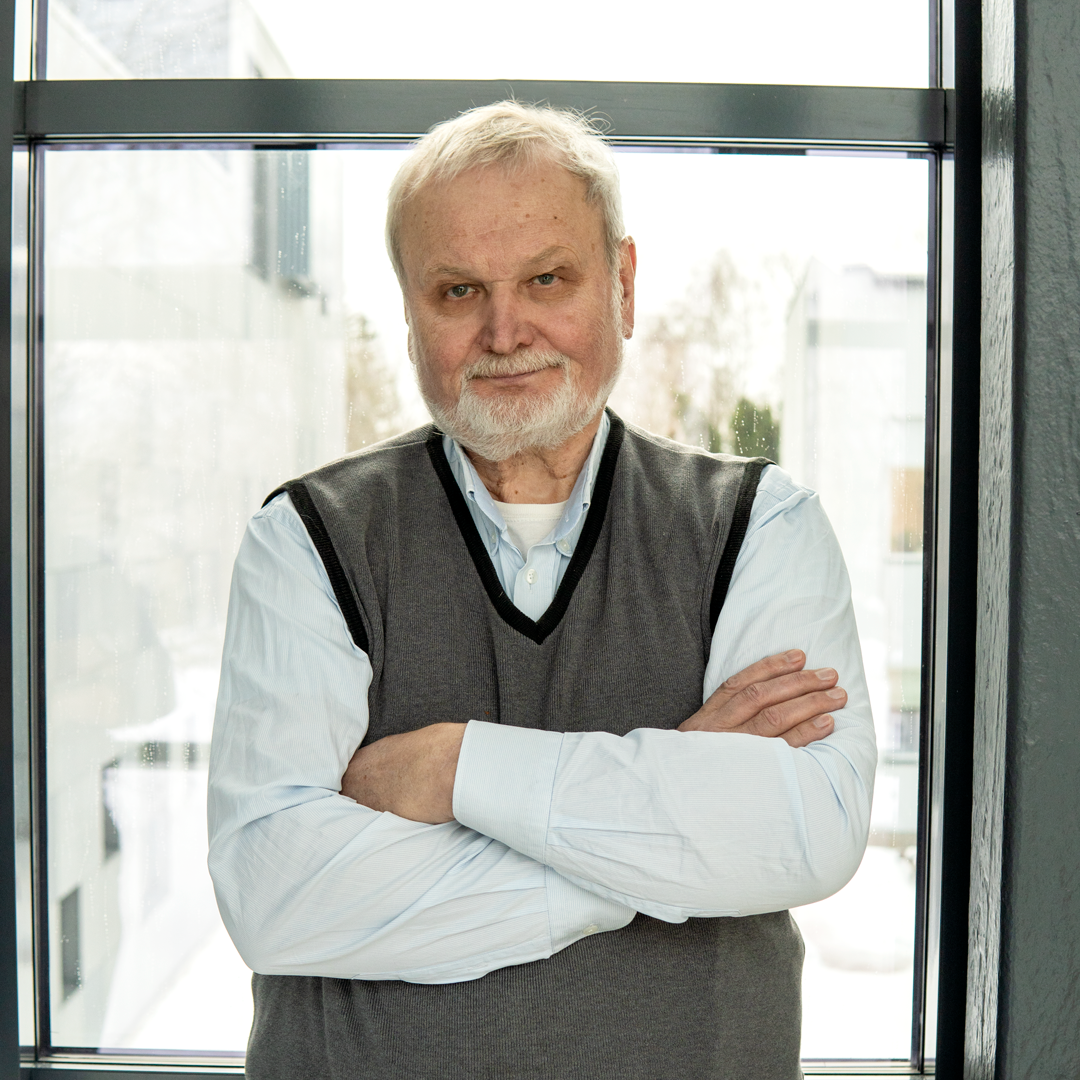
TARTU – Autumn blows through Tartu on a Friday morning, tossing raindrops and red and golden leaves every which way, and Mart Ustav is in his office at Icosagen on the city's edge, ready to talk.
There's nothing remotely startup here, from the watercolours on the walls to the receptionist bearing coffee. Icosagen was founded in 1999.
It's old school. When it entered the world, Estonia had no startup ecosystem. Skype was not born yet. It was a dozen years away from being acquired by Microsoft. Everything had to be built from scratch, and so that is what this biotech has done.
From day one, Icosagen – Estonian biotech pioneer – has been a bootstrapping operation.
There have been no angels.
There have been no exits.
But it has had a steady revenue stream and strong growth.
For Ustav, that has always been the vision.
In June, Icosagen announced a €45 million expansion, with €18 million coming as a European Investment Bank loan and the company putting up the rest. It allowed Icosagen to build out a state-of-the-art, single-use Good Manufacturing Practice-compliant facility, one that could maintain early-stage biologics discovery, development and clinical manufacturing under one roof here in Tartu, providing complex protein therapeutics to Icosagen customers from start to finish.
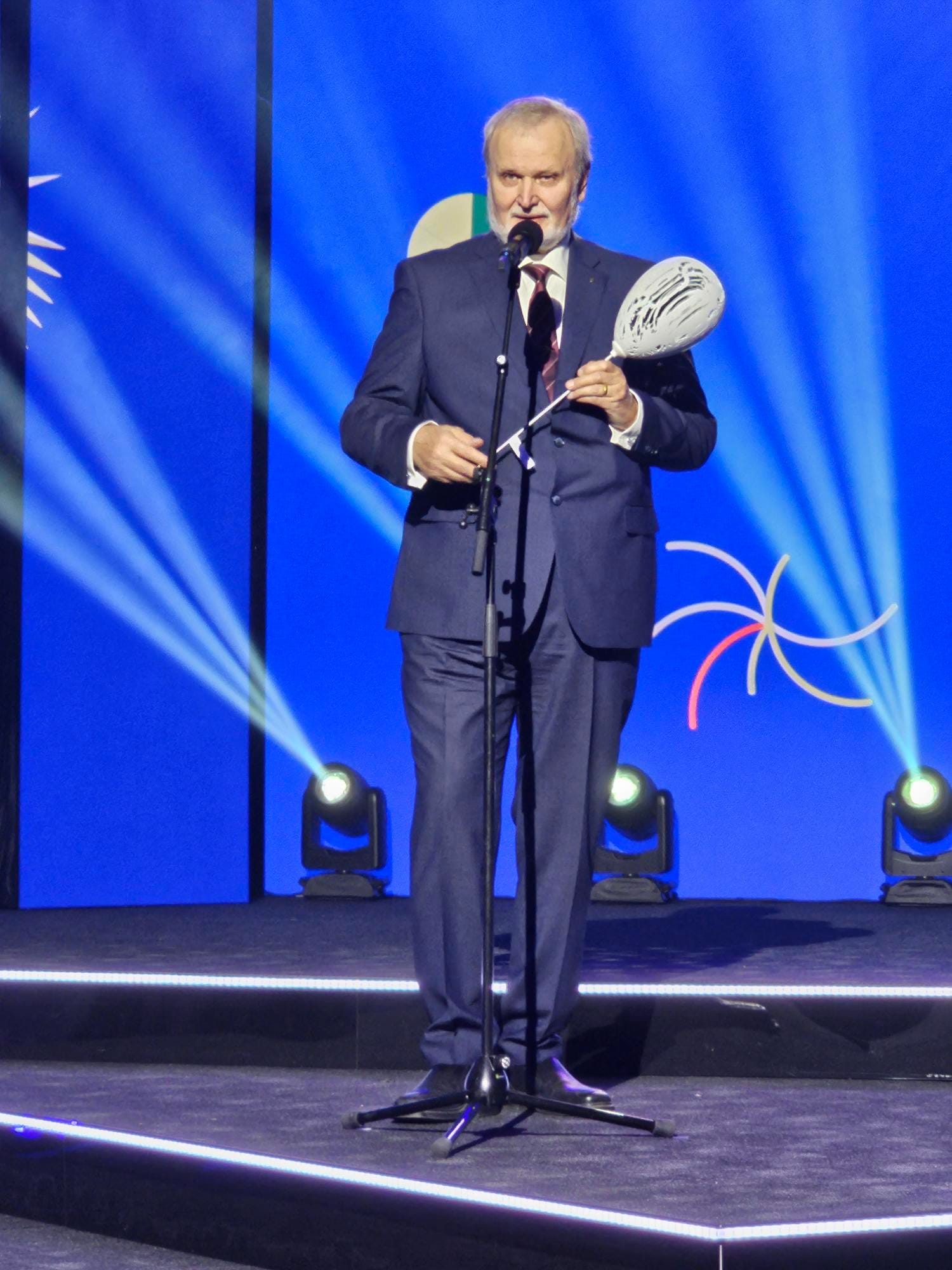
The fact that more than half of the expansion was internally funded aligns with the company's philosophy of organic growth, and of using the company's own income rather than VC funds.
"Investors want to put their excess money into a project and see a return. That's a nice idea, especially when you're risking other people's money," says Ustav. "But if it's your own money on the line, that's actually the beneficial part."
The only choice
Ustav was not born in Estonia. He first saw the sun in the village of Cherlak outside the city of Omsk in western Siberia. His family was among the tens of thousands of Estonians deported by Comrade Stalin in the 1940s. He remembers the expanses of the prairie, its open spaces and rivers. When Stalin died and new Soviet Premier Nikita Khrushchev granted deportees amnesty, Ustav's family could return home. They travelled from Omsk to Moscow, from Moscow to Tartu. He arrived by train in Tartu on May 31, 1956. Ustav had not yet turned seven.
He eventually became a professor of microbiology and virology at the University of Tartu. The idea for Icosagen, then part of QuattroMed, developed at the tail end of the 1990s, when Estonia, again independent and with its borders open, had to contend with diseases like HIV, hepatitis C, and other infectious diseases its medical system had no diagnostic capacity for.
He felt a responsibility, as a professor in a relevant speciality, to set up in-house diagnostic methods to fill that gap. There were no mentors, no incubators, and no accelerator program.
Ustav had to learn on the go and, by his admission, he had no experience running a business.
"I didn't know this would be a successful undertaking," Ustav says, "for the very simple reason that I didn't know how businesses functioned. I was just a professional scientist."
At this juncture, he faced the same issue most scientific founders face. But to hear him tell it, it's not a difference in temperament or mindset. There just simply were so many hours in the day.
And if you're spending those hours setting up and running labs and doing experiments, it's hard to squeeze in bookkeeping, hiring new personnel, and setting up quality control systems.
"The biotech business is a serious commitment," notes Ustav. "There are rules and regulations."
Building an organisation
Ustav also didn't have a role model. He was trying to solve an unmet need, in an area where he had competence. He wasn't out to establish the next Genentech, and he didn't try to transplant Silicon Valley into Tartu. He did have certain ideas, though, about how to build a business.
"When you are in a company, nobody is giving you money," he says. "You have to fight for everything, and if you want to run a biotech business, you have to have your own income."
Ustav points out that the same applies to software companies that launch quickly, at least in part. "If there is a market, there's cash flow," he says. "If there's cash flow, there's growth."
The other option is investment, but no income. A situation that is not sustainable, he says.
Icosagen was never supposed to be just a one-trick company, though. Originally, it was the biotech and protein production arm of QuattroMed, but when the diagnostics division was divested in 2008 and became SynLab, Icosagen was formed a year later to continue in biotech.
Over time, it has expanded into a contract research, development, and manufacturing organisation. It offers antibody discovery, antigen production, and protein engineering. It partners with global drug and vaccine developers. And its team has swelled to 200 employees.
Building that organisation took time, but in Ustav's mind, it was preferable to a single-project vision, where a small team rents lab space and equipment, gets the job done, and sells it off.
"In our business, if you want to have a balanced, well-organised organisation, you have to do it the way we did," he said. "That means organic growth, your own income, and your own cash."
Of unicorns and success stories
Since Icosagen was founded, a new Estonian tech reality has emerged.
As has the idea of what makes a company successful. From Skype to Playtech, from Wise to Pipedrive, and from Bolt to Veriff, the landscape is dotted with new generations of founders. The life sciences have yet to yield a unicorn. Ustav is not necessarily interested in unicorns at all.
"Of course, we dream that one day we will invent a drug that treats certain diseases," he says. "But unmet medical need is our most important motivation."
"If we can develop the molecules and identify the right target that can be used to treat a condition, that's the right way to go," says Ustav. "Because if it works, it works."
Smaller startups also have a role to play in the sector, he notes. "There's nothing wrong in running a single-project company," says Ustav. "You have the IP and target your work toward a narrow field, and if you are successful, then you're a winner."
Turning a startup into a large organisation like Icosagen is another story. "We have many, many competencies," he points out.
For Ustav, Icosagen's most recent success story has been a partnership with Tartu University Hospital and the North Estonia Medical Centre to provide CAR-T therapy to patients with blood cancers in Estonia. CAR-T therapy uses a patient's own immune cells, modifies them genetically and programs them to recognise and destroy cancer cells. For its part, Icosagen will manufacture and produce the therapy-grade cells, while its partners will deliver them clinically, starting with leukaemia and lymphoma patients before adding those with solid tumours and autoimmune disease. The effort will make Icosagen a regional tech hub for CAR-T therapy.
"It's clear that CAR-T is a success story," says Ustav. He notes that the procedures and facilities are in place to begin production once regulators permit it. "All the haematologists are waiting for the okay from the medical agency," he says. This is the company's primary strategic focus. It's also helping to incubate and train employees who might go on to found their own biotechs. While Tartu is a ways off from Paris, London, or Brussels, it is Ustav's home.
"I raised four kids here; it's got four nice seasons; it's an intellectually stimulating environment," Ustav says. "I have lived in Sweden, I've lived in Finland, I've lived in the US, and I've lived in Russia," he says. "But I still like this place the most."
Comments ()