
British Ambassador reflects on tech collaboration and security as Estonia term concludes
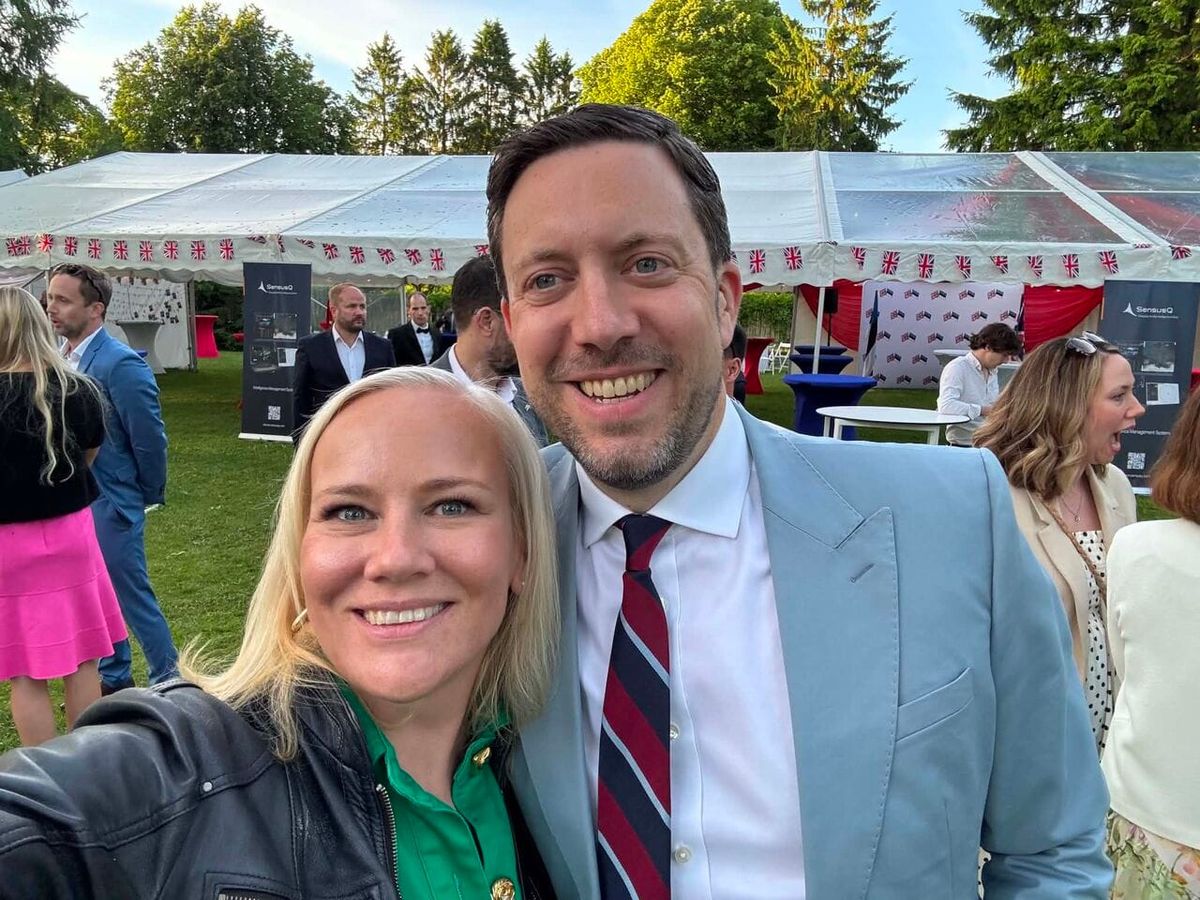
TALLINN — As his five-year tenure as the United Kingdom’s Ambassador to Estonia comes to an end, Ross Allen reflected on the deep geopolitical and technological ties binding the two nations, shifting perspectives on defence investment, and his own unexpected foray into Estonian publishing.
Speaking on the FOMO Observer podcast, Allen, who arrived in Tallinn in 2021, described a diplomatic mission that evolved rapidly alongside regional security shifts. His departure comes at a time when the strategic alignment between London and Tallinn has grown increasingly integrated, particularly across the defence and technology sectors.
A shift in the venture capital paradigm
A central theme of Allen’s tenure has been the cross-pollination of the British and Estonian tech ecosystems. Estonia, widely recognised for its high density of tech unicorns and robust digital governance, has increasingly looked to the UK as a secondary staging ground for global scaling.
However, the nature of those tech investments underwent a profound cultural shift following Russia’s full-scale invasion of Ukraine in February 2022. Allen noted that prior to the conflict, the European venture capital community maintained a strict distance from defense technologies.
"When I first arrived here, I remember asking this question of one of the people in the sort of VC world," Allen said. "And they said, 'Oh yeah, unfortunately for us now, defense companies are on the list along with things like gambling and pornography and tobacco and other things that we won't invest in.' And that was... a fairly widespread view, I think, in European VC world in general."
That framework collapsed almost overnight as regional realities set in. According to Allen, Estonia's tech ecosystem adapted faster than most, with prominent founders pivoting their entire focus toward national resilience and defense capability.
He pointed to local successes like Frankenberg, which specializes in short-range air defense and low-cost drone interception, and Milrem Robotics, a developer of unmanned ground vehicles, as prime examples of Estonian innovation scaling with British cooperation.
"I think people realised very quickly after February 2022 that that needed to change," Allen observed. "And then I think it didn't just sort of change reluctantly. I think loads of people kind of went all in on defence."
Geopolitical foresight and defence realities
The ambassador praised Estonia’s long-standing geopolitical foresight regarding the threat posed by the Russian Federation—a position that many Western European nations historically downplayed.
"Estonia has been accurately saying, talking to the rest of the world about the threat posed by Russia for a long time," Allen said. "And sadly, for quite a long time, lots of countries weren't listening to Estonia enough. But actually, if you look at sort of geopolitics as a whole, Estonia is a top performer."
With Estonia currently spending over 3% of its GDP on defense, Allen highlighted the country as a model for the rest of the international community. This domestic commitment is mirrored by the public's civilian mobilisation. Allen recalled his astonishment at the surge of volunteers joining the Estonian Defense League (Kaitseliit) shortly after the invasion of Ukraine began.
"Someone told me... that there had been an extra 5,000 people here joining the Defence League," Allen said, contextualising the scale of the mobilisation. "In terms of scale, if that was the same but in the UK, that would be like 250,000 British people joining our reserves, which is just incredible."
An accidental author and 'intrinsic pessimism'
Beyond formal statecraft, Allen's departure is marked by an unusual literary success. Prompted by his experiences, he authored a book detailing the various societal lessons the rest of the world could glean from Estonia—ranging from education systems to environmental performance.
The book’s rollout, he joked, provided a firsthand lesson in what he termed "Estonian intrinsic pessimism."
"The two main bookstore chains here initially, I think, ordered 30 copies each. And those sold out in about two days," Allen laughed. "I think initially they were skeptical that that many Estonians would want to read a book about how great Estonia is... but it turns out people do."
The literary endeavor was not without minor diplomatic hazards. Allen admitted that local readers were quick to politely correct his language skills, pointing out a mistake he made regarding a national holiday.
"Mother Tongue Day (Emakeelepäev) is a day when Estonians celebrate their Estonian language... and I've accidentally called it Emadekeelepäev, which is 'Mothers' Tongues Day,'" Allen joked, noting that the Defence Minister was among those who pointed out the multi-tongued confusion. "The way I've referred to it is quite confusing. But I'm appreciative of all the people coming to find me to tell me."
Looking ahead
As Allen prepares to return to the United Kingdom, he emphasised that the standard for safety, digital efficiency, and community-driven defence established in Estonia would remain a benchmark for his future career.
For the regional startup community, Allen’s parting advice was to continually push back against the perception that geographical proximity to Russia equates to investment risk, reiterating that Western integration via NATO and the EU makes the Baltic state as secure a destination for capital as any in Europe.
Comments ()