
The TOP15 of Latitude59 Pitching Competition
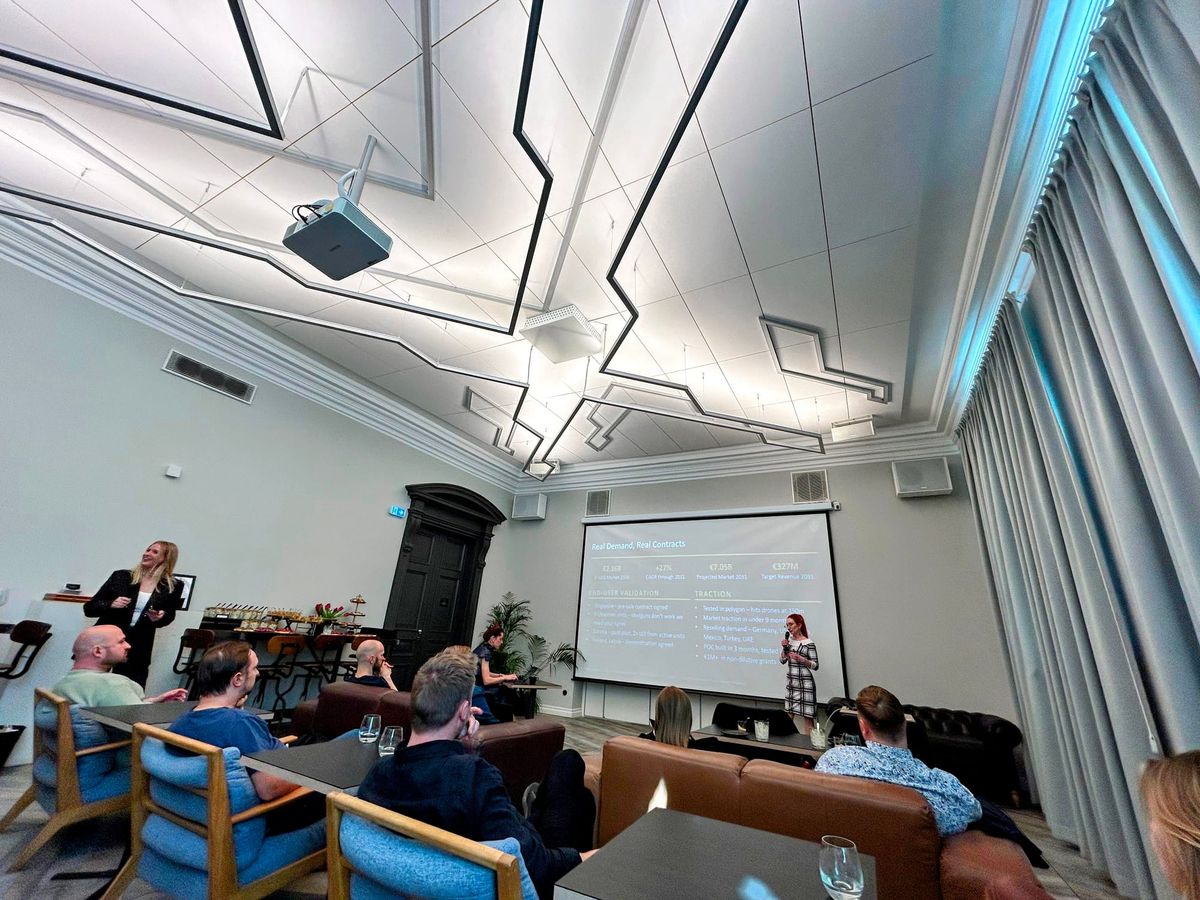
The competition drew 465 startup applications from 53 countries across five continents. These were the 14 best teams that pitched at the semi-final event on Friday evening:
Energy and Environment
Granarium
A spin-out from the VTT Technical Research Centre of Finland, Granarium is tackling grid volatility caused by renewable energy. The company builds small-unit supercapacitors for balancing the grid in seconds, acting as "shock absorbers of the energy system". With a target market valued at €10 billion, the startup is closing a €1 million pre-seed round led by BSV Ventures, with 80% already committed.
"Batteries store energy well, but they are too slow for these fast changes."
Blue Auditor
Addressing the capital-intensive real estate sector, Blue Auditor provides a platform for environmental risk assessment and EU Taxonomy alignment. With €1.2 million in ARR and 2,000 buildings already on their platform, they help owners avoid "stranding risks" where assets are devalued due to poor environmental transparency. The founder highlighted that €700 billion in property debt is set to mature by 2027, making audit-grade data critical for refinancing.
"If you cannot show the transparency, then you're going to be at a riskier level with cost of capital"
Ciklo
Ciklo focuses on a hidden healthcare crisis: exposure to environmental chemicals in clinics and hospitals. The startup offers an assessment tool for doctors to track patient exposure to toxins found in cosmetics, food packaging, and plastics. They are currently raising €1.2 million to expand their active pilot across 15 countries and move toward EU and FDA medical certification.
Defence and Security
Thistle
Born of the exigencies of the war in Ukraine, Thistle has developed an autonomous multi-rifle turret to counter FPV drones. The system uses AI and computer vision to detect and neutralise drones at ranges up to 150 meters in test environments. Seeking €1.5 million, the company plans to deploy six systems to Ukraine for active combat testing.
"300 euro drones can destroy targets that are worth more than a million."
FPV Battleground
A software-first approach to drone warfare, FPV Battleground provides a high-fidelity training simulator for drone pilots. The platform has already attracted 9,000 paid users across 80 countries and secured a contract with Killhouse, Ukraine’s largest drone school. Raising a €500,000 pre-seed round, the startup focuses on teaching pilots "what to do when the flight stops working" under electronic jamming. Every trained pilot saves an estimated 3.5 real drones on their first mission.
Milmech Systems
Milmech Systems is developing a modular ground robot designed for field operations, priced similarly to a new car at roughly €40,000. The startup is raising €250,000 to finalise a "battle-ready" product, building on €150,000 in existing grants. Co-founder Mehis Vinni dismissed concerns about market saturation, stating:
"I don't see sales could be a problem, it is a growing market".
The robots are currently being tested with the Estonian Defence Forces.
Artificial Intelligence and Software
Bruukki
Bruukki is building an AI "personal secretary" for teachers to combat burnout and administrative overload. According to their data, teachers spend only 17 hours of a 40-hour work week on actual teaching, with the rest consumed by lesson planning and grading. Their pilot program reduced lesson planning time from six hours to just one. The founders, who have a decade of EdTech experience, are targeting a global market of 100 million teachers.
Alpha3D
The 2018-founded Alpha3D aims to decentralise 3D asset creation by allowing users to generate high-quality 3D models from 2D images or text prompts. Having already raised €2 million and secured 700,000 early adopters, the company is now seeking a €3 million round to satisfy growing demand. Their objective is to build an "infrastructure layer" for the 3D industry, similar to what Canva did for 2D design.
"You don't need to be a technical person anymore to generate all those assets."
Mindchip
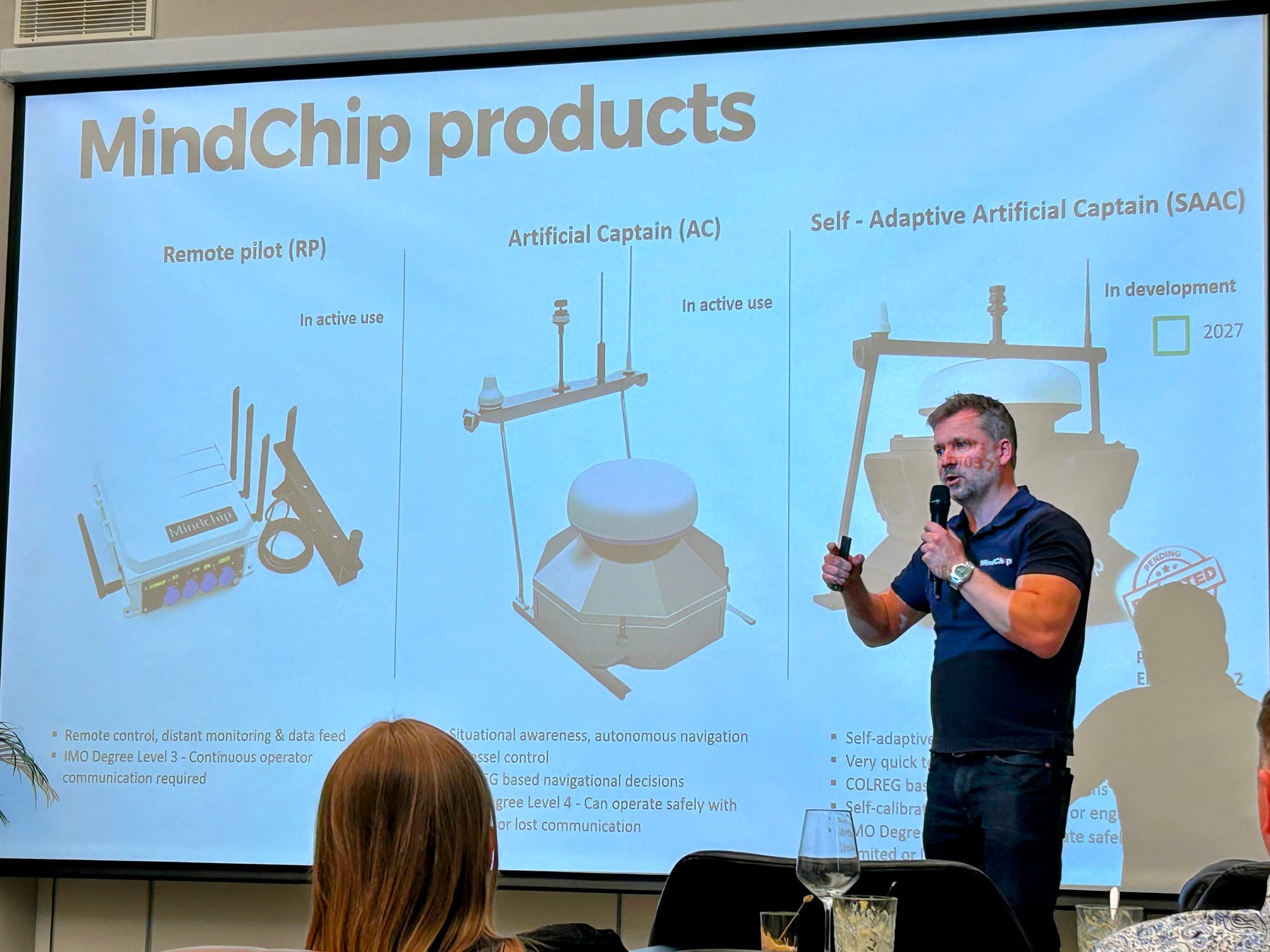
Mindchip presented an "artificial captain" — an autonomous navigation system for the marine sector. The self-adaptive system uses machine learning to "learn" the vessel it is placed on, requiring only two hours of training to reach full autonomy. Despite their technical success with border guard vessels and harbor cleaning robots, investors pressed the team on their financials. The company is currently seeking €3 million at a €30 million valuation.
Getpin.ai
Getpin.ai is an AI-powered local growth system that acts as an automated marketing team for SMBs. The startup helps businesses stay visible across search engines, maps, and AI recommendation systems like ChatGPT. Claiming to be a market leader in Central and Eastern Europe with €1 million in ARR, they are raising €1.5 million to reach €4 million in ARR by the end of 2025.
"Businesses don't compete for clicks anymore; they compete to be chosen by AI."
Callsy.ai
In a pitch that stirred both interest and alarm, Callsy.ai introduced an autonomous AI agent that calls shoppers who abandon their online carts. The agent handles objections and offers personalised discounts in natural-sounding local accents. With 260 merchants onboarded and a €54,000 ARR, the startup is raising a €1 million pre-seed round. "Your AI agents... can book meetings for you, it can book your restaurants... only with two clicks," the founder explained.
Fleetfox
The 2017-founded Fleetfox is building an "execution layer" to put business fleet operations on autopilot. Their platform manages the logistics of fleet maintenance and cleaning through a network of independent contractors. Growing 100% year-over-year with a €4 million run rate, they are seeking €690,000 to accelerate their expansion into new European markets.
Niche and Specialty
Dogbase
Dogbase aims to be the "operating system" for the $50 billion working dog industry. The platform digitises training, health records, and certifications for search-and-rescue, military, and police dogs. Founder started the company from a hospital bed while on kidney dialysis, inspired by his own service dog, Echo. They are seeking €750,000 to reach €1 million in revenue and achieve profitability.
Optonics
Optonics is a software intelligence platform designed to make 3D printing reliable for high-stakes production. By capturing every sensor signal during a build, the software creates a "digital passport" for each part, ensuring quality without manual oversight. The company aims to decentralise production, allowing parts to be printed locally and trusted immediately. They are currently incubated at the European Space Agency Business Incubator in Latvia.
UPDATE: There is also a Lithuanian startup, BackOffice, among the semifinalists, but they could not attend the live event. They are building a workforce management solution for restaurants.
The winners will be announced at Latitude59 on May 22.
 Justin Petrone



Comments ()