
AI shortlists Estonia’s top tech companies only 50% of the time: Lessons from the era of new SEO
TALLINN — For years, startups optimised their websites for search engines. Now, a comprehensive study of Estonia's most valuable tech companies indicates that securing an AI assistant recommendation requires a playbook strikingly similar to traditional Search Engine Optimisation (SEO).
As generative AI becomes a primary tool for business-to-business procurement, Generative Engine Optimisation (GEO) is mirroring the foundational tactics of SEO: keyword research, gap analysis, and on-page content optimisation.
Estonian startup Rankfor.AI tested 240 buyer questions across the 30 companies featured on the Toptech 2026 ranking, posing scenarios to AI models GPT-5.6 Sol and Gemini 3.7 Flash.
 Tarmo Virki
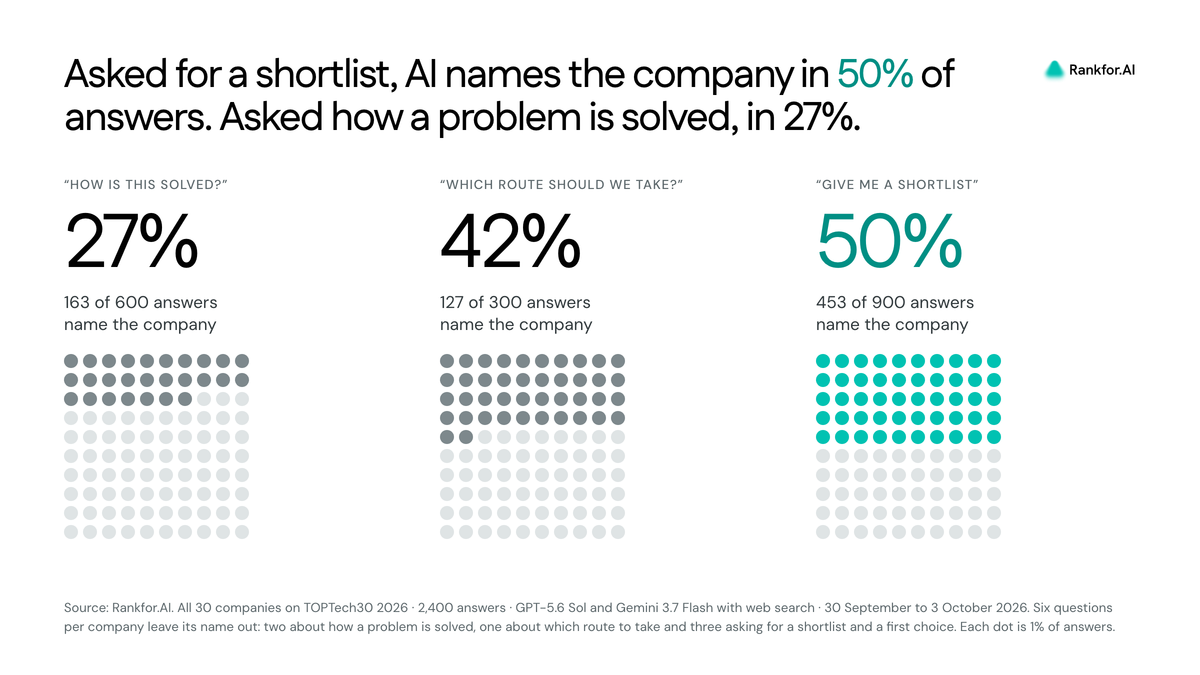
The results revealed a landscape where visibility is heavily dependent on specific, localised query matching. When a buyer asks for a product shortlist without naming a specific provider, the AI named the relevant Estonian tech company in 453 of 900 cases (50%).
The parallel playbook
The actionable takeaways for marketing teams outlined in the study directly parallel traditional SEO workflows:
- Keyword and Intent Research: Companies must test the exact questions buyers ask before they know a brand name, utilising the buyer’s specific market and language.
- Gap and Competitor Analysis: Marketing teams need to list the specific buyer use cases where AI never names them to identify which competitors and sources are filling that informational void.
- On-Page Optimisation: Companies must audit their own website copy. AI models cited company pages in a third of the answers read in full, confirming that their content is within the engines’ reach and must be written with an AI "buyer's assistant" in mind.
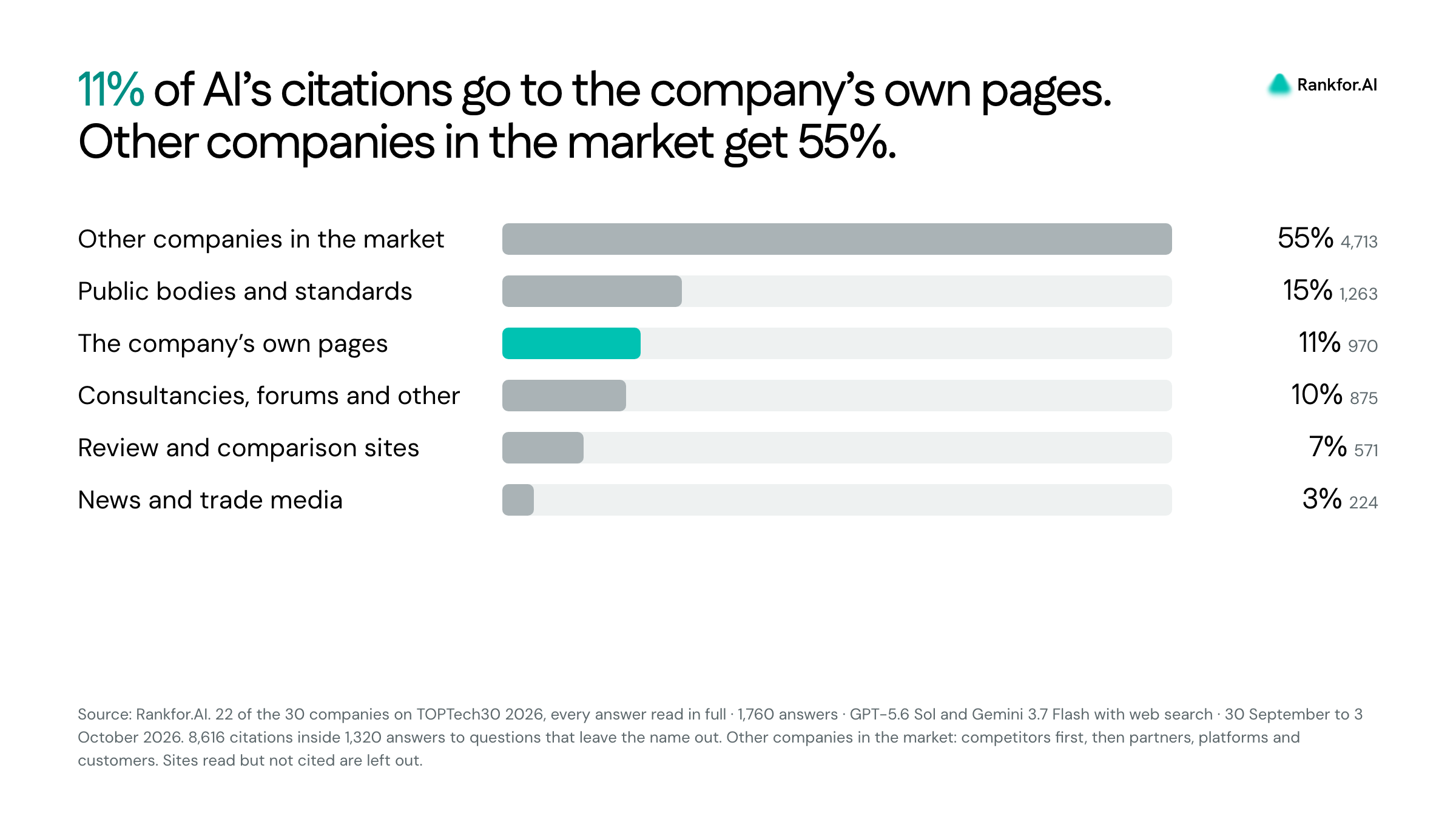
Despite the accessibility of company websites, AI models currently favour external validation. Out of 8,616 total citations analysed across 22 companies, 55% directed users to other companies in the market — such as competitors and partners — while only 11% linked to the target company’s own domain.
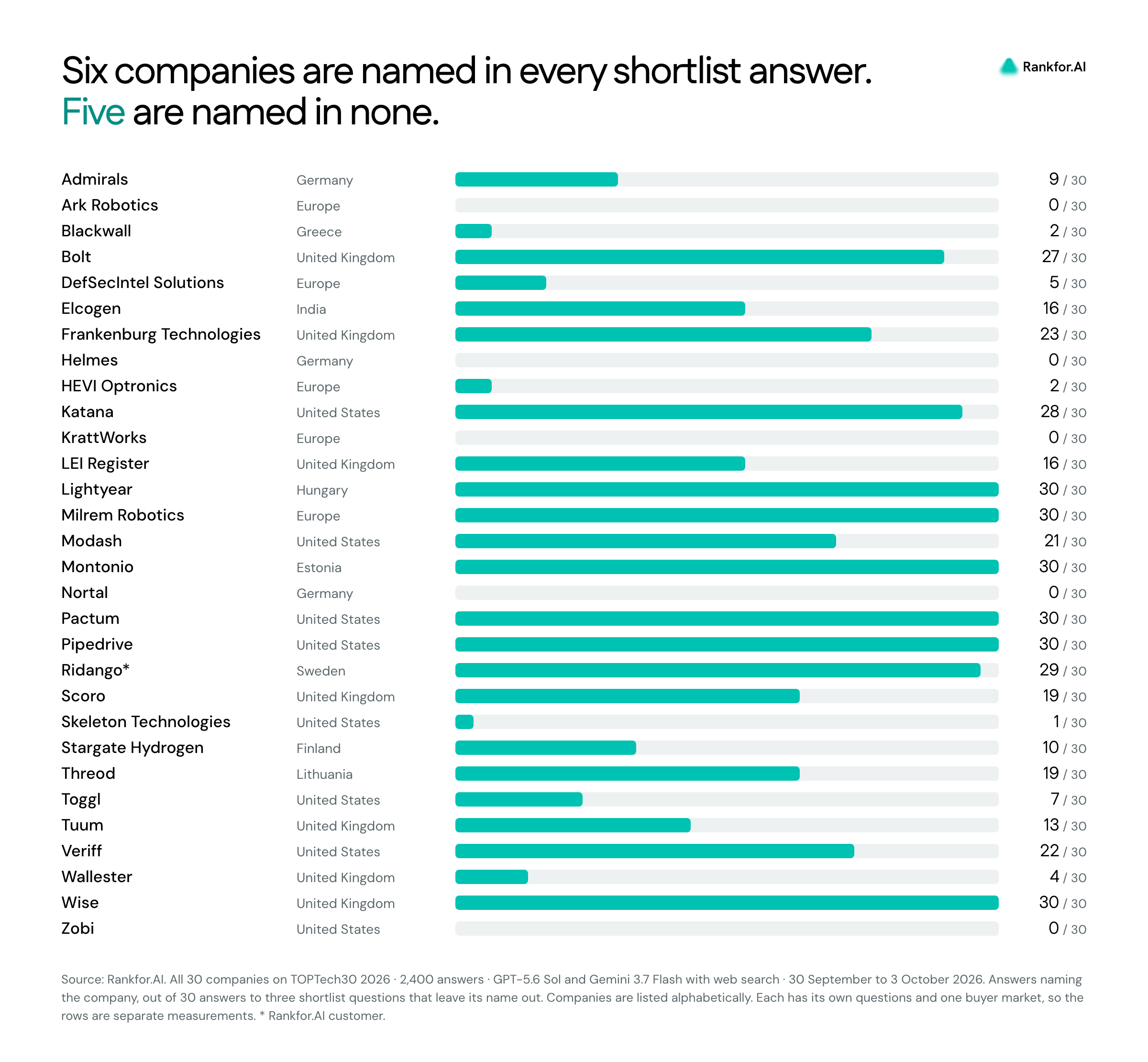
“What surprised me is how much depends on the exact question," said Dmitrij Żatuchin, PhD, Founder & CEO of Rankfor.AI. "The same company can be in ten of ten answers for one buyer and in none for the next. A company that tests one question learns very little.”
This high variance underscores the need for continuous, query-by-query optimisation — a reality long familiar to SEO professionals.
For example, business management software provider Scoro was named in all 10 answers when a marketing agency asked for a professional services platform, but in zero out of 10 answers when an architecture and engineering practice asked for identical capabilities.

Comments ()