

TALLINN — In hacker space ruum, six startup teams presented to an audience of founders, investors, and peers at the summer residency’s final pitch session.
Showing the growth of ruum, the event moved out of ruum to a parking hall next door, a space 4-5 times larger than at the end of the first ruum.
Out of a gruelling programme designed to pressure-test early-stage concepts, only six teams bagged a spot to present at the final showcase: Hivemind, Display.dev, Artopia, JuvoLegal, Skillcard, and Robots in Construction (RIC).
Introduced individually by alumni founders from ruum’s first cohort, the pitching session offered a candid look into the reality of building early-stage companies — stripping away Silicon Valley polish in favour of raw execution.
The alumni view: 'Eating glass' and bad coffee
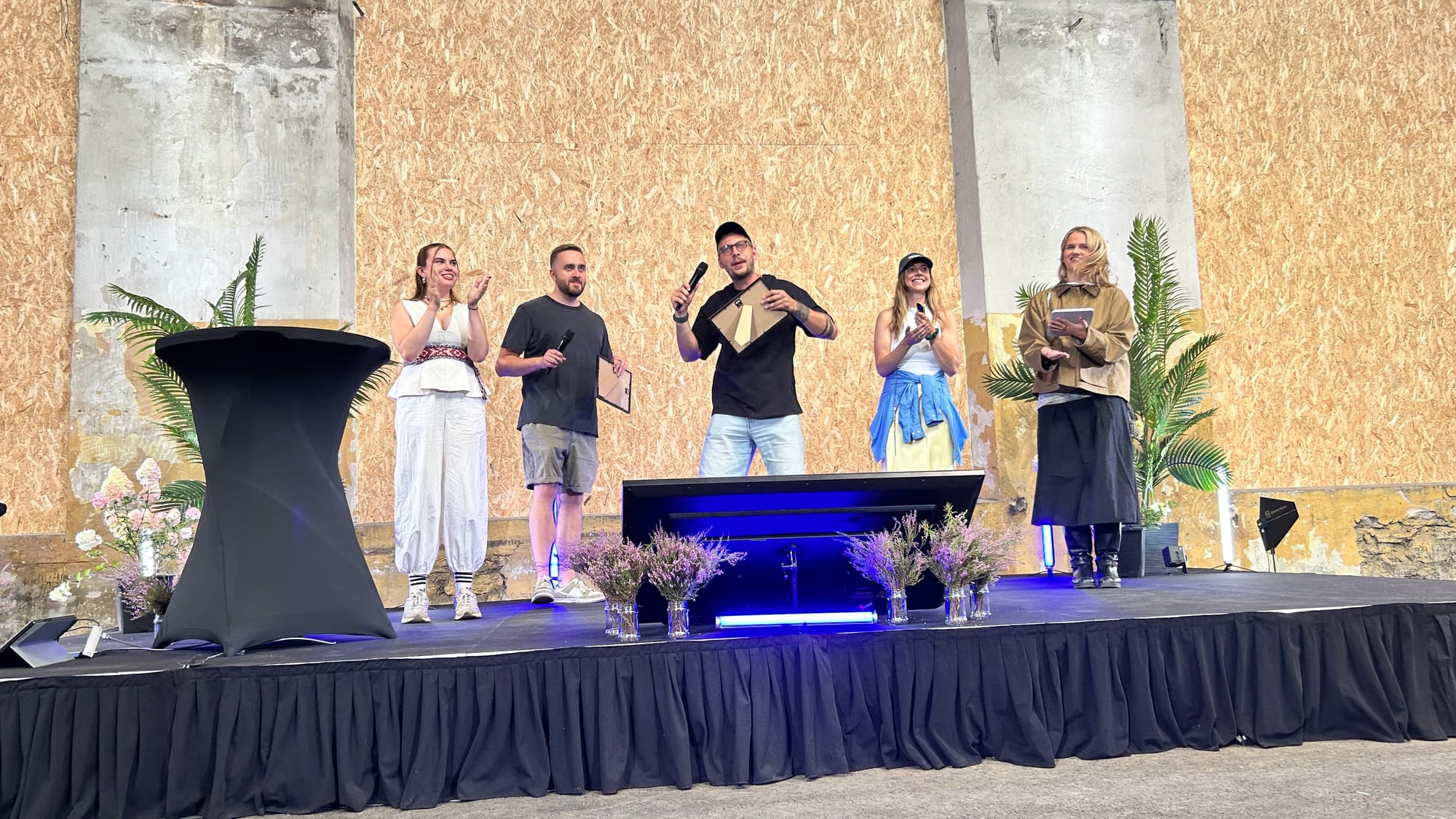
Before introducing the finalists, alumni from ruum’s inaugural batch reflected on their own post-residency journeys, offering unvarnished advice to the graduating teams.
"Is building a startup hard? Elon calls it eating glass while staring into the abyss," said Joosep Sibul, co-founder of Hertwill (Batch 1 alumni). "I prefer a scene from The Wire... Every day someone brings you another bowl of shit, and your job is to eat it. Great founders might not enjoy the taste, but they will still eat it."
Presenters shared the sentiment of gruelling persistence, along with praise for ruum's culture of unprompted peer-to-peer help.
"The coffee tastes absolutely horrible, and someone broke the coffee machine yesterday, but the people here are one of the brightest and smartest in Europe right now," noted Markus Trasberg, CTO and co-founder of Mindsera.
"The most 'ruum' thing there is, is moments when everyone's over-exhaustion hits and all anyone can think of are just jokes," added Bilt.me's Uku Joost Annus, a Batch 1 winner. "San Francisco's biggest advantage is their community, which is exactly the same reason ruum is being built for us: helping others build without expecting anything back."
The final six: Introductions and pitches
1. Artopia: Art collection management and marketplace
Artopia is building an inventory management platform designed specifically for individual art collectors, addressing an underserved segment between Excel and small galleries.
"It all started with my own frustration," explained co-founder Iida Kaisa Urm. "Once my collection grew past 20 artworks, I wanted one central place to gather all the documents, certificates, invoices, high-resolution images, as well as all the data that comes together with an artwork."
- Traction & progress: Launched four months prior to joining ruum, Artopia has expanded to over 300 collectors and nearly tripled its paying customer base. Over 1,500 new artworks were cataloged during the six-week residency.
- Institutional validation: Poco — the private art collection owned by Linnar Viik operating as a museum in Tallinn — adopted Artopia as its central source of truth, replacing traditional spreadsheets.
- Market opportunity: The team targets 1% of the estimated $150 million global collection inventory management market over the next five years, with plans to unlock the broader $60 billion annual art transaction market through a peer-to-peer marketplace.
2. Skillcard: AI sports analytics and youth football assessment
Skillcard evaluates real-world football skills on the pitch and converts performance data into standardised, FIFA-style digital player cards using an automated setup of AI cameras and sensor cones.
"Becoming a pro doesn't happen alone, but unfortunately a vast majority of players don't get the attention they need," said co-founder Ralf Jürgenson. "Coaches have a lot of groups to deal with, and individual focus is few and far between. That's where we step in. We give players all the data they need to start training the right things."
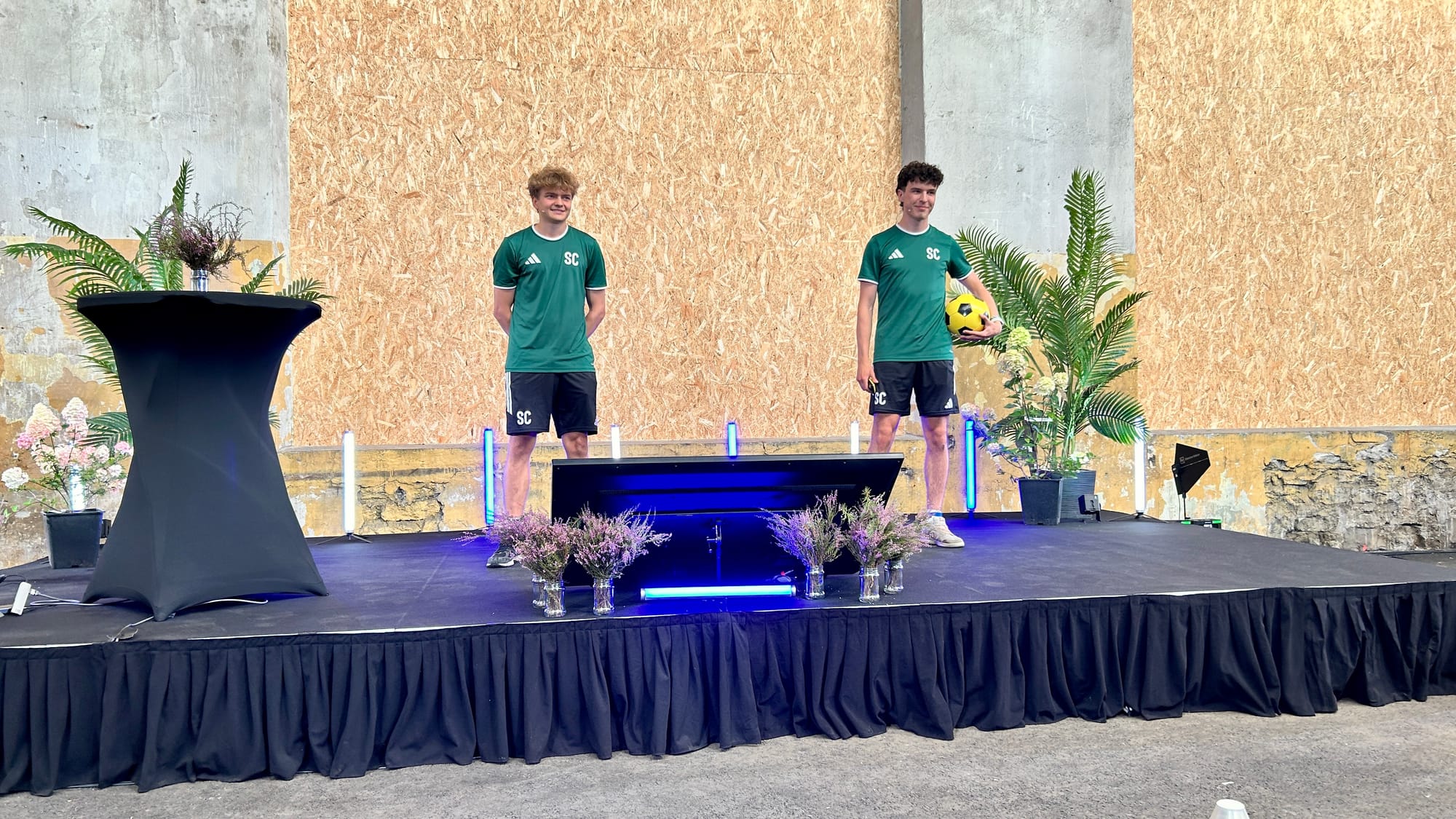
- Traction & Progress: Parents pay €12 per month for performance tracking, with local youth teams like Nõmme Kalju U15 using the system for paid recurring testing. At the Pärnu Summer Cup, over 250 players across the Baltics and Finland completed more than 1,000 test runs.
- Next Steps: The team is raising €600,000 to deploy 50 automated devices across Europe, aiming to reach 1,700 active players within 18 months.
3. Display.dev: Developer tools and AI agent workspace
Described as "Google Drive for AI agents," Display.dev is a collaboration workspace where teams can publish, review, and iterate on interactive documents, clickable prototypes, and presentations generated by autonomous AI agents.
"Think about us as a Google Drive for AI agents," said CEO Ott Ilves. "You use agents... they create incredibly helpful and interactive docs. Now, how do you collaborate and iterate on those docs with your team or your clients? That's exactly the problem we solve."
- Traction & progress: Launched in May, Display.dev has amassed over 1,300 users. During ruum alone, they onboarded 250+ companies and 750 users.
- Key customers: Key accounts include Kogan (a major Australian/NZ e-commerce retailer) and UK healthtech company HeliosX, which has 179 daily active users on the platform.
- Business model: Charges flat organisation-based subscription fees with a 90%+ gross margin. The company is aiming to reach $2 million in ARR over the next 12 months.
 Tarmo Virki
4. Hivemind: Autonomous AI co-workers for D2C brands
Hivemind creates specialised AI co-workers that integrate directly into team communication channels (Slack, Discord, or Microsoft Teams) for direct-to-consumer (D2C) brands, moving beyond simple Q&A search to active task execution.
"We don't want to buy a Wikipedia. We want work done," said co-founder Hans-Hendrik Karro, quoting feedback from over 20 prospective clients. "Businesses don't pay for answers. They pay for work getting done."
- Operational example: Co-founder Rasmus Sikk demonstrated their AI agent "Quinnbee," which ingested thousands of customer support tickets, identified a sizing bug across five backend systems during a simulated Black Friday surge, executed the code fix, and presented it to human supervisors for one-click deployment.
- Commercial strategy: Operating internally from day one, Hivemind secured €70,000 in revenue across two accounts for custom builds. The team is currently recruiting five D2C brand design partners with revenues exceeding €5 million.
5. JuvoLegal: Legaltech and regulatory compliance engine
JuvoLegal is an AI-powered legal processing engine built for law firms and in-house legal departments. Rather than acting as a generative text writer, it operates strictly as a context and compliance verification system to avoid hallucinated legal advice.
"Legal AI already has Harvey... We'll just be Mike Ross," said founder Taavi Vahter, referencing the character from the TV show Suits. "Young, fast, and remembers everything it reads."
- Technical core: JuvoLegal does not generate synthetic text; instead, it processes ingested statutory databases. To date, the engine has indexed 20,000 local laws, over 450,000 court orders, 40,000 EU acts, and 2.5 million individual legal paragraphs.
- Commercial progress: Secured its first paying client within weeks of development, with two institutional pilots underway targeting Europe's market of over 1 million practicing lawyers.
6. Robots in Construction (RIC): Construction robotics database and marketplace
Robots in Construction (RIC) is a data and matching platform connecting construction contractors with robotics original equipment manufacturers (OEMs) to address severe labor shortages across job sites.
"Construction has a growing labor crisis. Skilled labor is retiring, and fewer young people are entering the trades," explained founder Cristof Neuman. "Robots will soon complete up to 60% of the physical manual labor on a job site... Similar to how Bolt dispatches the right driver to the right rider, Robots in Construction will dispatch the right robot to the right job."
- Marketplace data: RIC has mapped over 220 construction robots across 400+ documented job site deployments.
- Proprietary insights: The platform has gathered proprietary deployment data from 51 active contractors across Europe.
- Monetisation: OEMs pay annual subscription fees (€5,000–€10,000) for verified deployment listings, lead generation, and market intelligence across the $13 trillion construction industry.
Community awards
Before things on stage wrapped up there were some community-voted recognition awards handed out.
The biggest cheerleader and hypeman award went to Leonardo Romanello. The team everyone wants to join was Display.dev. Facilitator favourite award went to Integrit and the revenue hack award went to ApexMake. The ruum one cohort voted Hivemind as their favourite team.

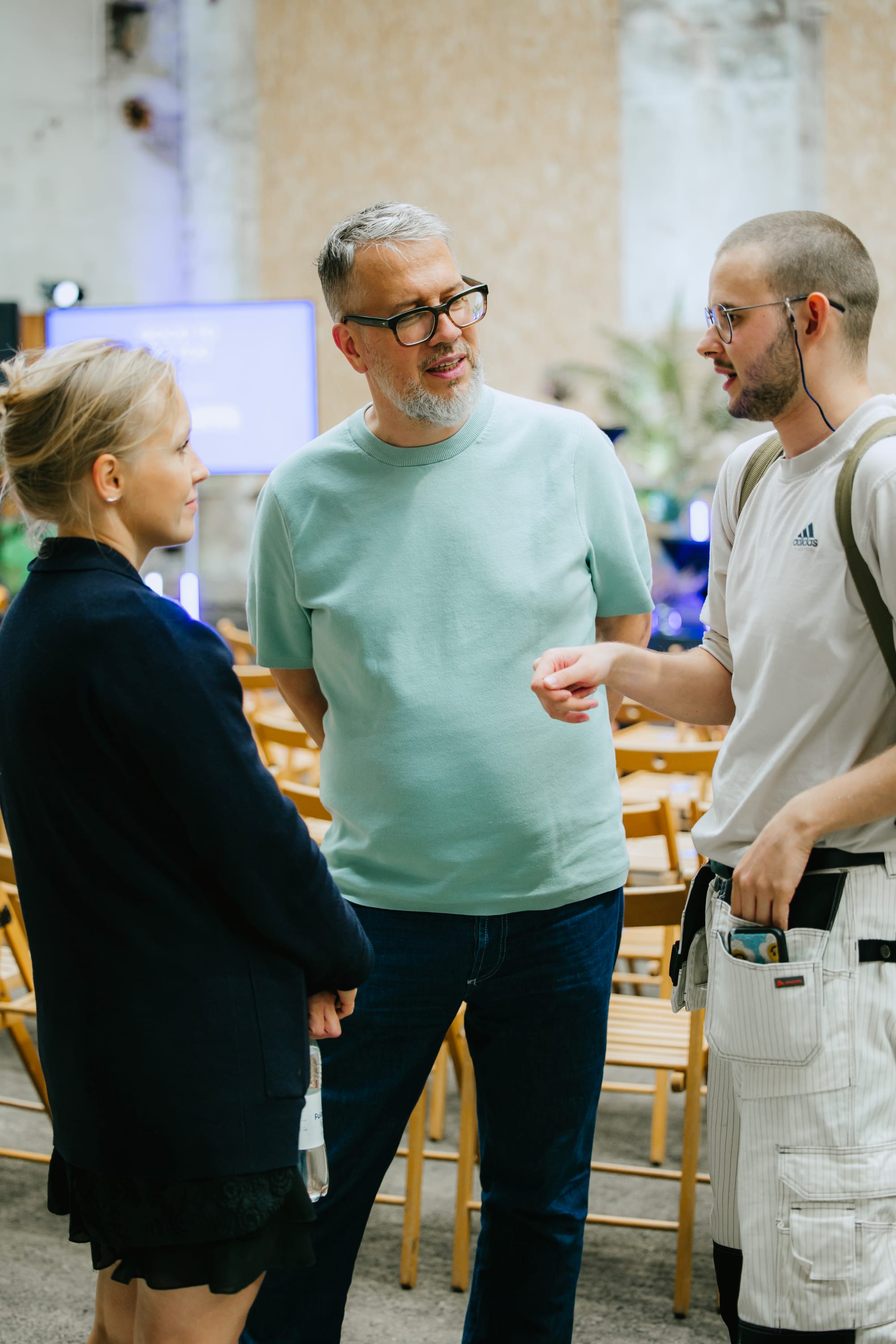





Images by Agurliina Photography
| Startup | Sector | Key Value Proposition | Key Metric / Progress |
| Artopia | Arttech | Collection inventory management & trade | 300+ collectors; 1,500+ artworks cataloged |
| Skillcard | Sportstech / AI | FIFA-style player ratings via AI vision on field | 250+ players tested; raising €600k seed |
| Display.dev | DevTools / AI | Collaborative workspace for AI agent docs | 1,300+ users; $2M ARR target |
| Hivemind | Enterprise AI / D2C | Autonomous AI co-workers for Slack/Teams | €70k in custom deployments secured |
| JuvoLegal | Legaltech | Deterministic compliance search for lawyers | Ingested 2.5M+ legal paragraphs |
| Robots in Construction | Contech / Robotics | Matching robotics OEMs to job site deployments | 220+ robots mapped; 51 contractor data partners |


Comments ()