
HEDI MARDISOO: EU Inc. Is it for the startups or for everyone?
If the Council is serious about making EU Inc. work, the logical next step is to pilot it in Estonia, see results, and then take the case back to Brussels with numbers instead of slides.
A follow-up to Stopping the Brain Drain
A few months ago, I wrote in Fomo.Observer that Europe’s scale-up problem was not really about money, talent, or ideas — it was about fragmentation, and that EU.inc was the flagship response worth paying attention to. I ended that piece with a line I keep coming back to: Stay. Lean in. Build.
Since then, the EU.Inc / 28th Regime draft has landed. The Commission has proposed a regulation that would finally allow a founder to incorporate a single European company online that operates across all 27 Member States. Now the next wave of work has started — the one that takes place inside 27 capitals over the coming months, before the file goes to Parliament for a vote.
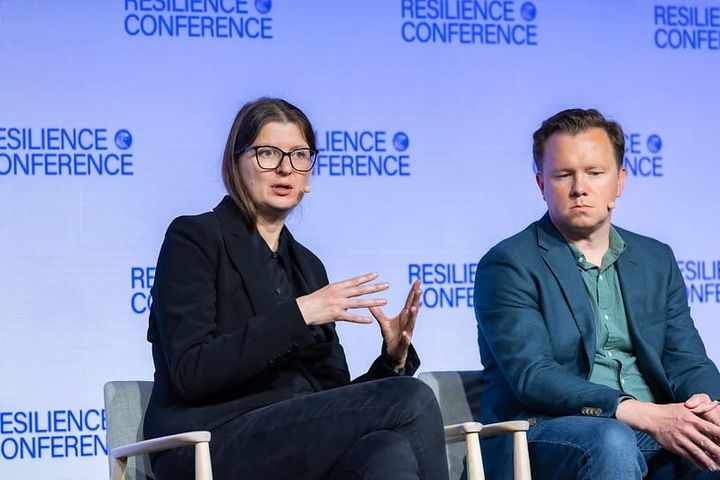
A few weeks ago, a panel was held in Tallinn to look at the proposal through an Estonian lens, because here you can point at a live system and say: " This already works." e-Residency alone has created close to 40,000 companies.
What Brussels is now trying to standardise across the EU, we have been running since 2014.
With me on stage were Simon Schaefer, co-founder of EU.Inc and the person behind Allied for Startups — the advocacy engine that has dragged this idea from the margins of policy debates into an actual Commission proposal; Liina Vahtras, who runs e-Residency and has been operationally delivering most of what EU Inc. is now promising, in production; and Tõnu Grünberg, who leads the relevant policy work at the Ministry of Justice and Digital Affairs, and whose team will actually write Estonia’s position and carry it into the Council.
My verdict, after ninety minutes of digging into the text with them? A step forward. But not the leap we need.
It is a regulation, not a directive — and that matters more than it sounds. Founders will finally be able to choose their country of incorporation, creating something Europe has never really had: real competitive pressure between Member States.
For any investor who has tried to assemble a cap table across three European jurisdictions, that alone is meaningful. But dispute resolution still lands in 27 national courts. Labour law is out. There is no central court. There is no central register. Compared to what Estonia has already built, in several key places, EU Inc. is not yet an improvement.
A startup reform, not a corporate one
There is one thing I want to be clear about, as it is the most important to understand over the next few months. EU Inc. is primarily for ambitious, innovative, fast-growing startups and scale-ups — not for the large incumbents that already have a continental footprint and an army of in-house lawyers. Those companies do not need it. They are not asking for it, and some may even see it as a threat to the market share they have already won.
EU Inc. is primarily for the founders of fast scaling innovative companies in Tallinn, Lisbon, Warsaw, or Milano who want to hire an engineer in Berlin, raise a Series A from a French fund, and give equity to everyone on the team — without three law firms, four tax opinions, and a corporate restructuring in between.
That distinction matters right now, because of how consultations work. The loudest voices in any Member State capital tend to be the established industry federations, and their members are mostly not scale-ups.
What we are asking for
The Estonian Founders Society has sent its position to the Ministry — a list any founder who has tried to build across Europe will recognise.
A company you can start in 48 hours, anywhere in the EU, with a real deadline — not a 'best effort.' Normal in Estonia. In most of the EU, it still takes weeks, a notary, and a local lawyer.
A company you can run online. Board meetings over video. Resolutions signed digitally. Filings made once, read everywhere. In many Member States, you still have to stand in front of a notary to transfer a single share. That should end.
Share transfers without a notary. In Germany, France, or Belgium they take two to ten weeks and cost €2,000–€10,000 each. For a cap table that changes with every hire and every round, that is not a cost — it is a blocker.
Employee stock options work the same way across Europe. Today, the same grant to three engineers in three cities produces three different tax bills. In some countries, employees are taxed the moment options vest — before they own a share or have cash to pay. This 'dry tax' is a top reason European startups lose engineers to American rivals. Europe should adopt what Estonia already has: tax when you sell.
Investors and startups go hand in hand, so we also support aligned share structures, SAFEs and convertible notes — the default for early-stage rounds everywhere except, somehow, much of Europe.
And an end to the silent discrimination where a founder in Tallinn is locked out of a Madrid innovation programme because she has no Spanish subsidiary.
A real European company register. The Commission plans to use BRIS — the network linking 27 national registers. That can work, but only if, to a founder or investor looking up a company, it behaves like a single, real-time European system. If it cannot, we should build one that does. 'BRIS exists' is not 'BRIS works.'
Many of you might read... well, we have that in Estonia. That’s true, but having this here doesn’t solve the scaling issue. So we need the Ministry's position to be straightforward: do not tune Estonia’s submission to the European average. Our advantage is the standard we have already built. Pull the EU up to ours — do not let it be tuned down to theirs.
The Delaware test
All of this comes down to a single question — the one every founder and every investor will ask on day one of EU Inc.: is it on par with Delaware, and does it offer something more than the other global options on the table?
The real obstacle is not technology. It never was. It is a political ambition. Some of the infrastructure to beat Delaware already exists — in Tallinn. Digital incorporation, eID, e-Residency, and a government that has actually shipped products founders want to use. If the Council is serious about making EU Inc. work, the logical next step is to pilot it here, let the results speak, and then take the case back to Brussels with numbers instead of slides.
So — if you know any relevant ministers responsible for that portfolio, and you can convince one of them to try incorporating a company online before their next vote, now is the time. 😄
Because Delaware is not waiting. And neither are our best founders.
Stay. Lean in. Build — and make sure what we build passes the Delaware test.
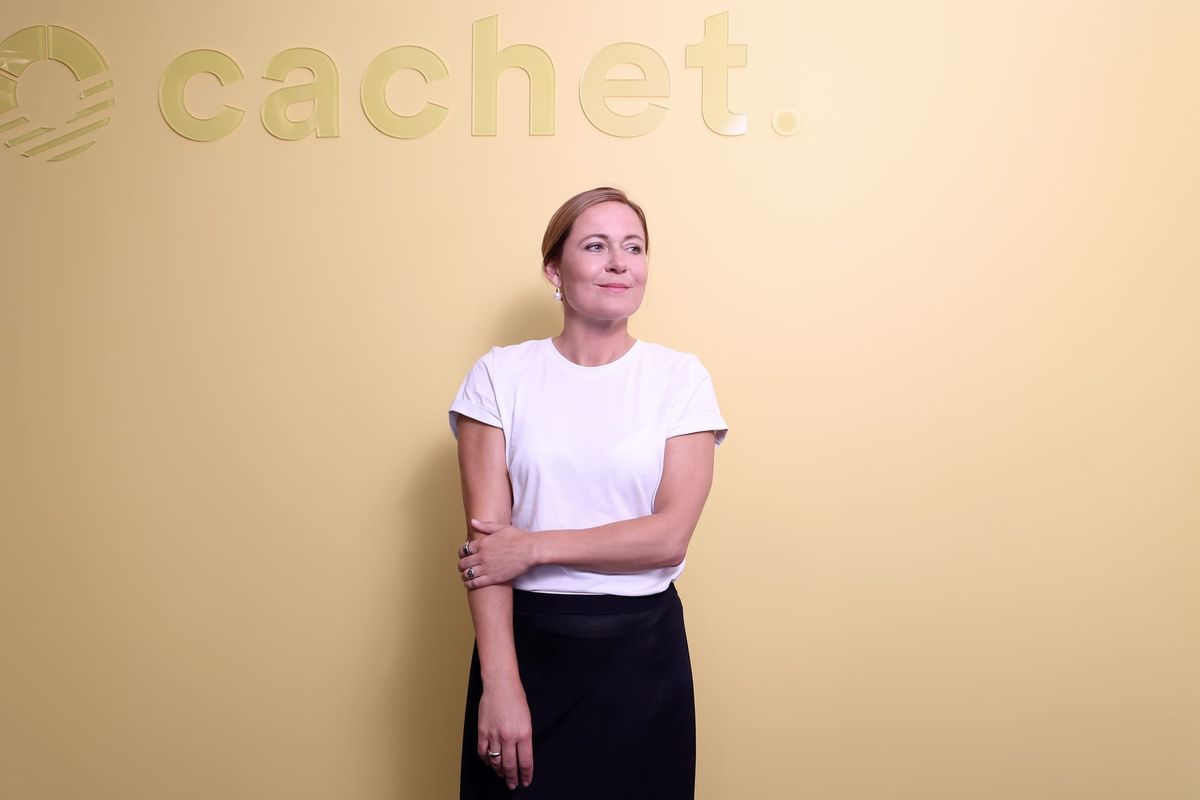
Hedi Mardisoo is CEO and co-founder of Cachet, and a board member of the Estonian Founders Society. She represents the Estonian Founders Society in the Estonian consultation on the EU Inc. / 28th Regime.


Comments ()