
FOMO.13: Estonia's TOP10 AI startups in 2026
Starship robots and agent armies unite as Estonia's Top 10 AI startups aim for global domination.
Just a few years into the global AI boom, and it can feel, at times, in Estonia like AI is everywhere. Starship robots roll past you as they deliver Bolt orders in town, cameras surveil your behaviour at Ülemiste City, feeding the (anonymised) data to Fyma's app to optimise the use of commercial space.
AI helps Elering optimise power flow with Grindraven, or gives your friend the opportunity to build the app of his dreams with a little help from Bilt. And even if you're not using it yet, your friend is probably working at Pactum or Better Medicine.
This is not at all by chance, according to Evelin Ebruk, a spokesperson for AI & Robotics Estonia (AIRE). Rather, there is support for the ecosystem at every turn, aimed at making the whole sector viable. "The gaps that hold the success of AI companies back are consistently looked to be filled with additional measures, whether from private or public funds," she says.
That ecosystem support, along with a certain sense of "we're all in this together" camaraderie, has been an important factor in Estonia's fast-growing ecosystem. It's also allowed these companies – the top 10 of which are profiled below – to attract early-stage investments, scale fast, and branch out accordingly.
Estonia's AI sector is increasingly international, with offices popping up in Leeds, Austin, Salt Lake City, London, San Francisco, and Mountain View. When asked what they want to accomplish this year, the response has been a resounding "more." Or, in the words of Bilt.Me CEO Uku Joost Annus, 2026 might just turn out to be "the most awesome year" yet.
We interviewed a large number of investors to compile the list of the top 10 AI startups. Our list features a mix of 'pre-hype' veterans and fresh startups - including several healthcare innovators - presented in no specific order.
Starship Technologies
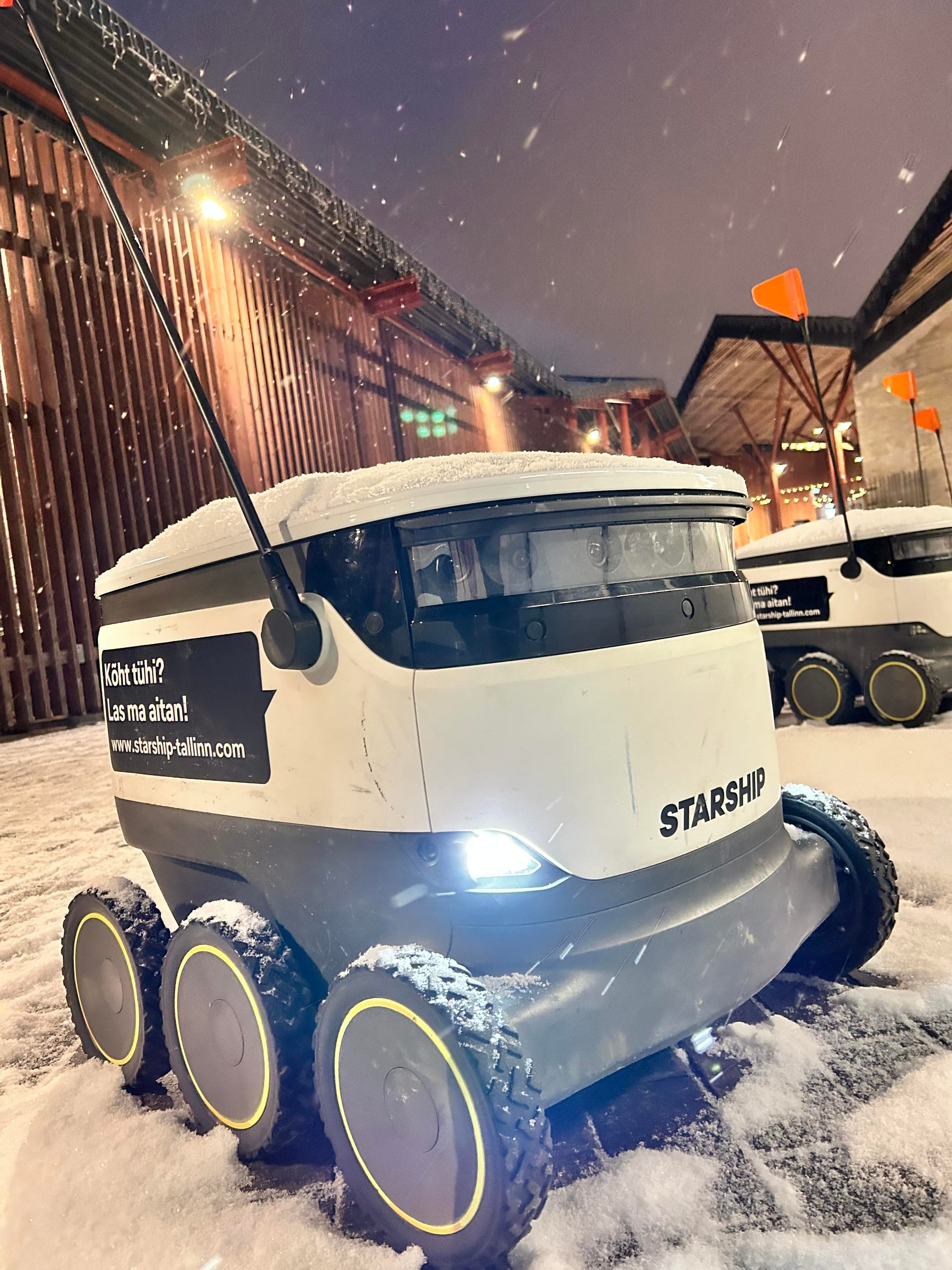
Chances are you've stumbled across one of the autonomous Starship robots out on the streets. These compact, R2D2-looking characters deliver groceries, food takeaway, and packages in many towns around the globe. The company – established in 2014 by Skype co-founders Ahti Heinla and Jaanus Friis – is now headquartered in San Francisco and maintains a fleet of more than 2,700 robots that have driven over 12 million miles and completed 9.5 million deliveries. But Estonia is still home to its engineering team, and Helsinki serves as Starship's R&D hub.
AI is at the heart of Starship Technologies' robots. They use it to navigate pavements, avoid obstacles, and cross roads. Starship has also amassed a dataset of around 200 million crossings, which is used to improve its models.
When asked about 2026, CEO Heinla forecasts more expansion.
"We have plans to bring our robots to new countries, areas, and brands," he said. Starship currently operates in Estonia, the US, the UK, Finland, Sweden, Switzerland, the Czech Republic, and Germany.
So far this year, it has announced a partnership with Just Eat Takeaway in the UK, following a partnership with Uber Eats in 2025. To meet demand, Starship is also scaling robot production.
 Tarmo Virki
Better Medicine
Priit Salumaa helped co-found Better Medicine in Tartu at the tail end of 2020 with five other cofounders, aiming to deploy an AI platform to help radiologists more accurately detect cancer from imaging data, such as CT scans. Rather than making diagnoses manually, Better Medicine's tool can help spot lesions in patients' kidneys or lungs using AI.
In some ways, Salumaa's transition from Mooncascade, the software development company he previously founded, into healthtech was part of a general move toward deeptech in the Estonian IT sector.
According to Salumaa, Better Medicine saw its first two deployments in Germany early this year and plans to expand further in the German-speaking countries of Germany, Austria, and Switzerland. The company is also seeking an additional EU Medical Device Regulation certification for its platform and plans to continue its work on AI imaging and clinical research. Better Medicine has raised about 6 million euros to date in pre-seed financing and public grants, Salumaa said that one of Better Medicine's goals for 2026 will be to complete a seed round.
Muun Health
Founded in Tallinn in 2023, Muun Health is an early-stage deeptech developing next-generation wearable biosensors for continuous hormone monitoring. Its core technology enables the measurement of key hormones from interstitial fluid using a non-invasive wearable device. This shift from single-point testing to continuous monitoring should reduce uncertainty in clinical decision-making and support precision medicine in fertility care, according to CEO Kerli Luks.
AI is a "core enabler in Muun's technology stack," she noted, helping accelerate its sensing components, support faster iteration cycles, and enable faster processing. In the future, AI will help Muun Health validate its devices, shortening its transition time from the lab to the clinic. Once hormone data becomes available at scale, it can be used to train advanced models for personalised hormone health, she adds, allowing for early detection of imbalances, for example.
Elnora AI
Estonian tech company Elnora AI comprises founders and a self-described "AI agent army." The firm's agent generates and optimises biomedical laboratory protocols for pharma and biotech teams. She (founder Carmen Kivisild, refers to Elnora as "her") is capable of designing experiments, troubleshooting issues, and learning from both successful and failed experiments.
Founders Kivisild and Risto Jamul set up Elnora AI in Estonia in 2023 and followed suit in the US in 2024. They are now both living and working from their US headquarters in Salt Lake City. Kivisild discussed on her Substack last summer how she raised $100,000 in venture capital, which helped fund Elnora AI's relocation.
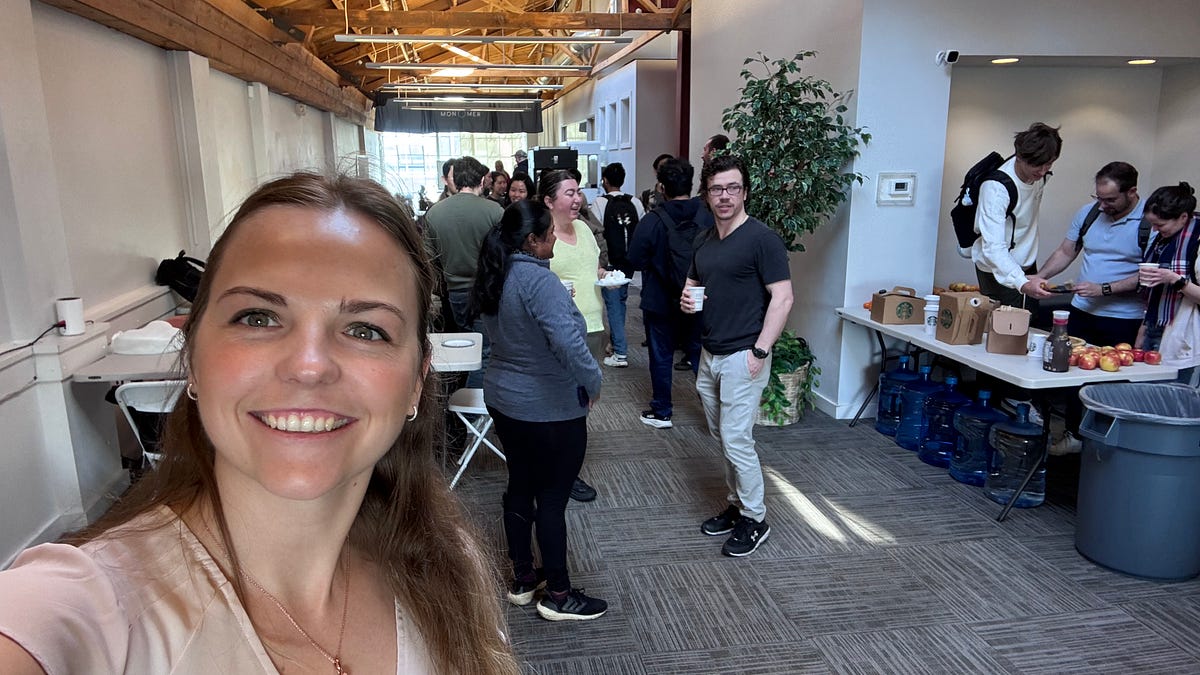
To support the uptake of AI by scientists for designing experiment protocols. Elnora AI has been working on its platform, which is currently a CLI-based multi-agent system with 2,100 specialised tools. The company is also training scientists to work with Elnora AI and deploying a consulting model that advises pharma and biotech teams on Elnora. The company is also involved in organising hackathons, such as a 24-hour AI science hackathon at Monomer Bio in San Francisco last month. Kivisild said that Elnora AI will bring the same hackathon format to Estonia this summer.
Fyma
Fyma is another one of those Estonian tech firms that quickly moved its headquarters abroad. In its case, it made complete sense – there are more clients there. CEO Karen Burns cofounded the firm in Tallinn with CTO Taavi Tammiste in 2019, but in 2024 relocated to London and Burns made the move with it.
"The team we've built here is strong," she says, "and the UK is very much where we're focused on growing."
Fyma's technology turns cameras into decision-grade sensors, allowing them to relay detailed, anonymised data to clients on how spaces are being used, by whom, when, and for how long. There's also no facial recognition involved nor stored footage, just GDPR-compliant statistical metadata. Fyma has been targeting the build-to-rent and health and fitness sectors with its offering, hoping to help them optimise their space usage.
In one case, Fyma's tech identified £80,000 worth of equipment that was essentially never used. Burns said that Ülemiste City in Tallinn is Fyma's longest-standing client, one that has embraced this data-centric approach to managing real estate. The company has raised about $5.8 million to date.
Looking ahead, international expansion is a company goal. Fyma is currently live in New York and Washington, DC, and Miami will be added soon, too.
"The focus for 2026 is deepening our UK presence and continuing to build out North America," said Burns.
Pactum AI
Topping the list is Pactum AI, which builds AI agents for enterprise procurement. These agents help users by correcting data, approving requisitions, negotiating with suppliers autonomously, and signing contracts, saving them time and, let's be honest, the headache of mind-numbing, tedious work. Customers have adopted Pactum AI's platform with enthusiasm. While there's still a human in the loop at every stage, Pactum's tools help them handle the grunt work.
Walmart and BMW are just two big-name clients, and there are many others. To manage its global footprint, Pactum AI is now headquartered in Mountain View, California, though its engineering hub remains in Tallinn. The company has raised €100 million to date and has about 170 employees at last count. But it started in 2019 with the premise of implementing agentic AI in the procurement field, based on advances in negotiation science. The company now leads the business category it created.
"Pactum builds AI agents that actually do the work," said CEO Kaspar Korjus. "That's a fundamentally different approach, and it's why large enterprises are adopting Pactum at the rate they are."
When asked about the company's plans for 2026, Korjus said that Pactum plans to expand its end-to-end procurement support. "Pactum started as an autonomous negotiations agent," he said. "This year, we will build out all the other functions of operational procurement."
Gridraven
With its intriguing name and an Anton Corbijn-inspired photograph of its founders on its website, one might be forgiven for mistaking Tallinn's Gridraven for an up-and-coming indie rock band. But the three-year-old company, with its focus on improving the electricity grid's efficiency using AI, might just be cooler than that. Started by Georg Rute, Henri Manninen, and Markus Lippus in 2023, Gridraven offers a software platform for power grid operators that enables them to transmit more electricity through existing infrastructure.
It does this by combining internally developed AI with its Dynamic Line Rating solution and weather forecasts, which enables power lines to carry up to 30% more electricity without constructing new lines. Investors have been positively persuaded to invest in the firm, which raised about €4 million last year. It's also racked up about €1.5 million in grants to date, and has opened an office in Austin, Texas. Gridraven's technology is already being used by Elering in Estonia and Fingrid in Finland.
"As electricity demand surges from electrification and data centres, transmission has become the grid's biggest bottleneck," says CCO Tuuli Jevstignejev. Gridraven's software enables operators to safely increase power flow on a line-by-line basis, accounting for differences in weather and terrain. When asked about the company's future plans, she said Gridraven aims to increase the global grid by 30% by 2030.
Bilt.me
At first glance, Bilt looks like one of those archetypal Estonian startup stories about a bunch of high school grads who build a successful business from the couch in their parents' basements. In the case of founders Uku Joost Annus and Kevin Akkermann, this might not be far off the mark. Just months into its existence, Bilt won a Ruum-hosted competition, and its team received a trip to San Francisco as a reward. The company offers a vibe coding platform for creating mobile application businesses. "Anyone can prompt, test, share, and publish a mobile app using natural language, with no coding required," says Annus. Users just have to tell Bilt what they want, and Bilt will build it. They can then share it or submit it for inclusion by an app store.
The company already has five-figure revenue and hopes to reach €5 million in annual recurring revenue by the end of this year. After their Bay Area pilgrimage, Annus says that Bilt wants to create repeatable sales and distribution workflows for end users to minimise the time to first revenue for each app. The company's platform relies on an internal agent and orchestration layer, and it also has another internal AI in its Discord chat that has replaced Notion, Jira, Linear, and n8n. "It distributes tasks, follows up, and makes sure things ship," says Annus. When asked about future plans, he predicts that '26 will be "the most awesome year."
Supersimple
Established in Tallinn in 2021, Supersimple offers an AI-based business intelligence tool that allows companies to explore data and answer questions. It combines two previous AI products – business intelligence, based on databases, and enterprise search, focused on documents, conversations, and other text or files. Using Supersimple's explainable AI, customers can sift through vast datasets of tables and text to find what they need to make the right decisions.
"We started the company before ChatGPT's release," says CEO and co-founder Marko Klopets. "It was clear that AI was going to change what was possible in the world of productivity and data." To make its tool more accessible to users, Supersimple invested heavily in explainability, building a technically complex foundation rather than pushing a "thin AI wrapper" to market. Investors invested likewise, committing €2 million to the firm in 2024.
Klopets says that Supersimple has been rapidly onboarding customers, fending off competition in a "very crowded market of slightly faster horses," which he calls analytics tools with AI bolted on. He believes that Supersimple's investment in bridging unstructured and structured data and in AI explainability will put the company ahead.
"In a few years, people will think of this as a new category of products," he says. "Right now we have the luxury of being far ahead of the curve."
Handhold
Handhold is on a mission to end the era of the sales pitch. Humans should only step into a sales conversation when the AI has already done the heavy lifting. The company unveiled a €3 million seed round in April to accelerate growth.
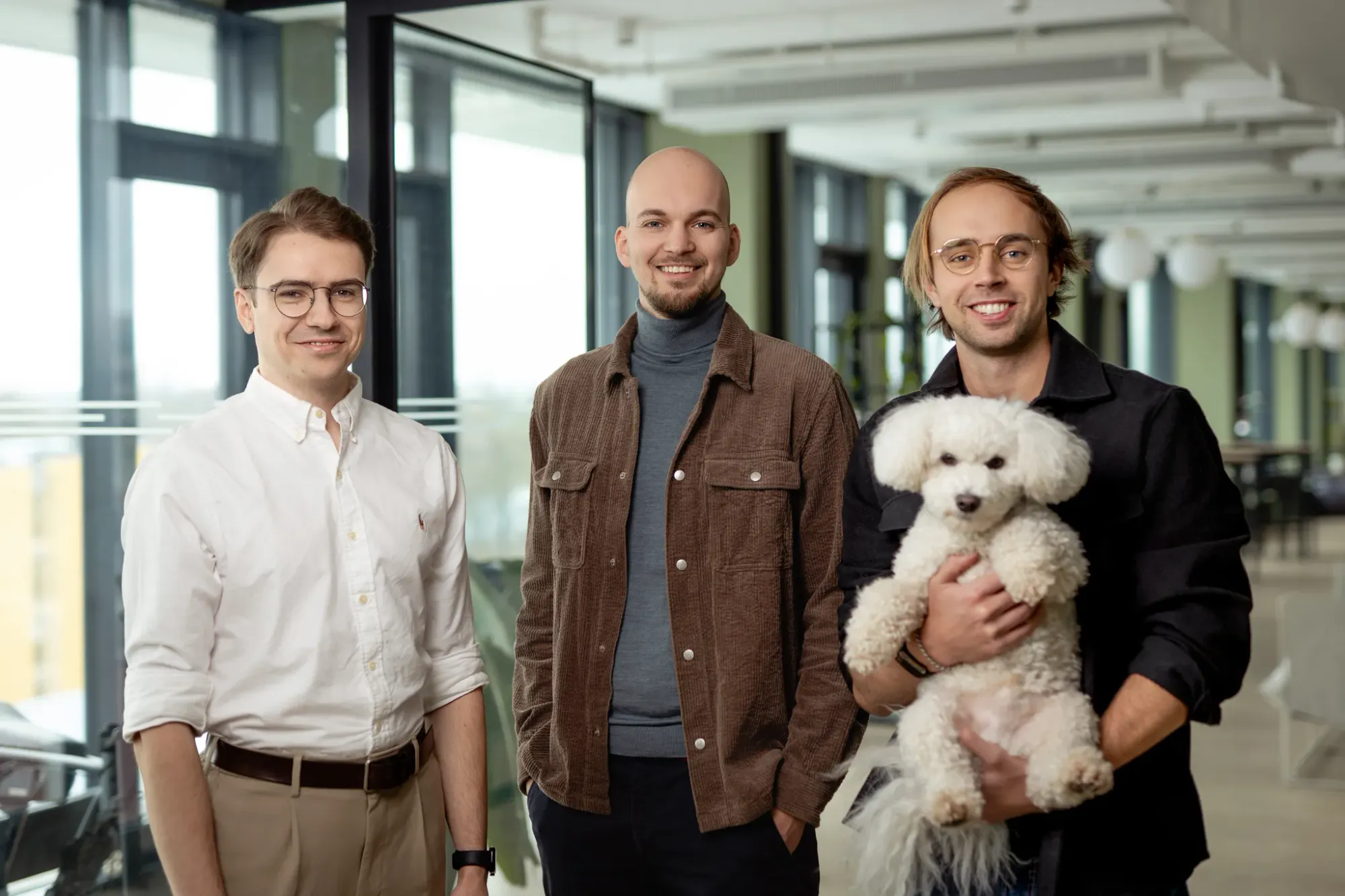
By using AI agents, Handhold is essentially “downloading” that high-level expertise into a digital account manager that never sleeps, speaks every language, and - crucially - doesn’t increase the company’s headcount.
Handhold said the results are already showing up in the data. Parim, a workforce management firm, saw a 60% drop in bad-fit demos since letting Handhold’s agents take the lead. This allows human sales teams to stop acting like “automated” presenters and start acting like strategic partners for enterprise-level deals.
With a six-figure ARR run rate achieved only months after their soft launch, the market seems to agree: if a machine can explain it better, faster, and at 3:00 AM, why wait for a human?
No one in this space seems to be waiting for humans; the AI space is moving too fast.
Elsewhere this week, our columnist Liina Laas ripped to pieces the government's plan to drop the EU Pay Transparency Directive.
For a country that sells itself to the world as a digital pioneer, calling pay transparency a "bureaucratic burden" is pathetic. Estonia’s pushback against it is a total mask-off moment. The government’s line is that there’s "no urgent need to change" because "things have been working so far," at a time when the gender pay gap in the EU is largest in Estonia.
Go and read. And share.
If Fomo.Observer provides value or helps you navigate the startup ecosystem, please consider supporting our mission. We serve as the independent pillar of the region’s new economy, delivering the unvarnished truth of startup life - free from hype and gloss.
Support FOMO and our independent journalism here.
Spread the word. If you know someone who would benefit from these insights, invite them to join the list or forward this email to them.
Join the conversation. If you have a rebuttal, a strategic insight, or a question, simply reply to this email. Your feedback goes directly to our core team of professional journalists and entrepreneurs.
Comments ()