
Building cognitive defence: Inside President Karis's vision for Estonia's AI shift

TALLINN — Estonia is embedding artificial intelligence natively across its high school network, marking a massive public-private shift designed to redefine the country’s digital workforce in the coming years.
Under the banner of the national AI Leap initiative (AI Hüpe), an ambitious pilot phase has rolled out to thousands of students and teachers across the country.
The project, which intentionally channels the legacy of Estonia’s transformative 1990s "Tiger Leap" programme, aims to deploy specialised, curriculum-aligned AI applications developed in collaboration with global tech partners such as OpenAI.
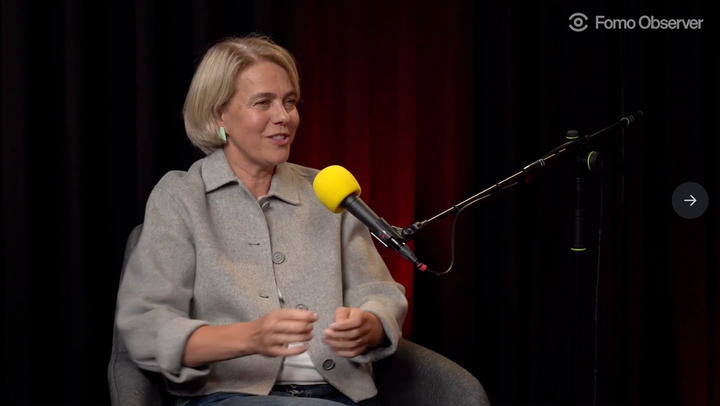
Appearing on the inaugural episode of Fomo.On the Observer Podcast, initiative CEO Ivo Visak and Estonian President Alar Karis, who is the programme's initiator and patron, discussed the real-world friction of deploying algorithmic tools in traditional classrooms.
Visak revealed that early feedback from student cohorts using the platform — which utilises a text-based, question-only 'Socratic model' designed to prompt critical thinking rather than simply writing essays—was mixed but highly encouraging.
"Young people see massive potential, but they also find it 'really annoying' because it forces them to reflect rather than spitting out immediate homework answers," Visak noted.
A core focus of the national strategy is closing a looming digital skills gap. While state metrics indicate 70% to 80% of Estonian high schoolers have independently experimented with consumer LLMs, equality remains a major bottleneck. The state's strategy is to prevent AI from becoming a source of educational inequality by shifting focus from minor, isolated pilot projects to institutional, system-wide adoption.
"We won't use artificial intelligence the most, but we'll use it the smartest," President Karis emphasised during the discussion, reiterating that the baseline of international economic competitiveness relies entirely on equipping the next generation with cognitive defence and source criticism.
The focus on digital resilience and institutional responsibility also touched on the legal boundaries of tech governance. When pressed by hosts Tarmo Virki and Triin Hertmann on the state’s potential legislative manoeuvres regarding the weaponisation of synthetic media and malicious deepfakes ahead of upcoming election cycles, the President pointed to his ultimate executive safeguard.
"I can veto laws," Karis stated, framing his role as a balance against reactionary lawmaking that could inadvertently choke the domestic startup ecosystem. "That’s all I can do, but I can veto laws if they are against the Constitution."


Comments ()