
Meet the unconventional Dutchman who open-sourced ESTonia
TALLINN - When destination marketing veteran Peter Kentie arrived in Tallinn on a cruise a decade ago, his initial impression was far from digital. "For me, it was like medieval," Kentie recalls.
Yet, after meeting Enterprise Estonia representative Shardee Rebas at a conference in Finland, he was introduced to a parallel reality: a top-notch tech nation pioneering e-governance.
"It turned out to be me who was wrong," Kentie admits with a laugh. "The Estonia 'digital-medieval' is a really interesting brand and marketing start."
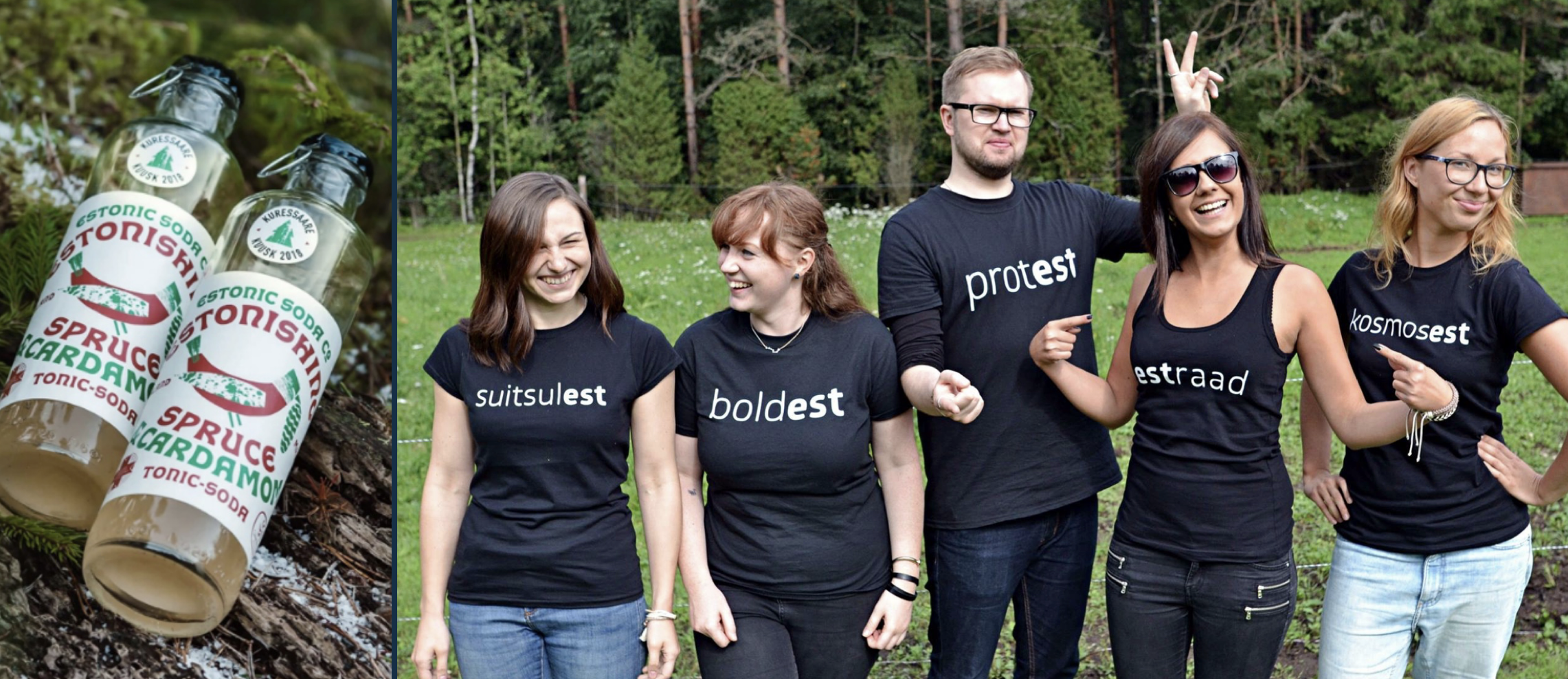
That realisation sparked a two-year pro-bono passion project that would fundamentally alter how Estonia markets itself to the world. Kentie, the former managing director of the city marketing agency Eindhoven365, designed the '-est' concept — a highly adaptive visual and linguistic framework rooted in the slogan "Just ESTonishing."
Ten years after its launch, the design philosophy behind the campaign continues to challenge standard bureaucratic corporate branding, offering a blueprint for community-led ecosystem growth.
The platform metaphor: Shifting from rules to freedom
A trained graphic designer and marketeer, Kentie's philosophy is rooted in a deep fondness for technology and the principles of open-source software. When tasked with rebuilding Eindhoven's image following massive layoffs at Philips in the early 2000s, Kentie's team bypassed traditional marketing frameworks.
Instead of creating strict corporate guidelines, they built a city brand designed like a software platform.
"Usually, when people build municipal identities, it’s with a really thick brand manual, rules, and things you cannot do," Kentie explains, pointing to the standard approach. "You have a kind of brand police. By thinking the other way around, we say: we have this core brand — it's a logo, but it's also a mentality — and you share that with your citizens, your companies, and local designers."
Kentie explicitly compares this method to Linux. Linus Torvalds from Helsinki had to create the base operating system and make it open so that a global community could add to it.
"The lesser rules you create, the more freedom you create," Kentie says. "But it's a scary thing. You let something loose, so there is less control. You have to be really careful how you do that, but this thinking is very interesting."
The Anatomy of '-est'
Returning to the Netherlands from his travels, Kentie set out to test whether this decentralised, collaborative approach could scale to an entire nation. He discovered his visual anchor in a simple linguistic coincidence: the English name for Estonia naturally contains the superlative suffix.
He curated roughly 20 specific use cases showcasing where the country stood out globally, attaching modifiers like smartEST, wisest, and coolEST.
The concept, however, initially faced cultural scepticism back in Estonia.
"People from Estonia said, 'Why can't we claim we are the best?'" Kentie notes. "That was a stupid remark. Of course, you claim that you are the best. That’s the only way people notice you and think, Who are they? What are they doing?"
Breaking the 'Estonian black box'
For months, Kentie's detailed nation-branding proposal languished in what he playfully calls the "Estonian black box" of official communication. "We are accustomed in Eindhoven that you react within five minutes," he jokes.
The breakthrough came via a chance encounter when tech entrepreneurs Sten Tamkivi and Kristjan Lepik visited Eindhoven to study high-tech campus community building.
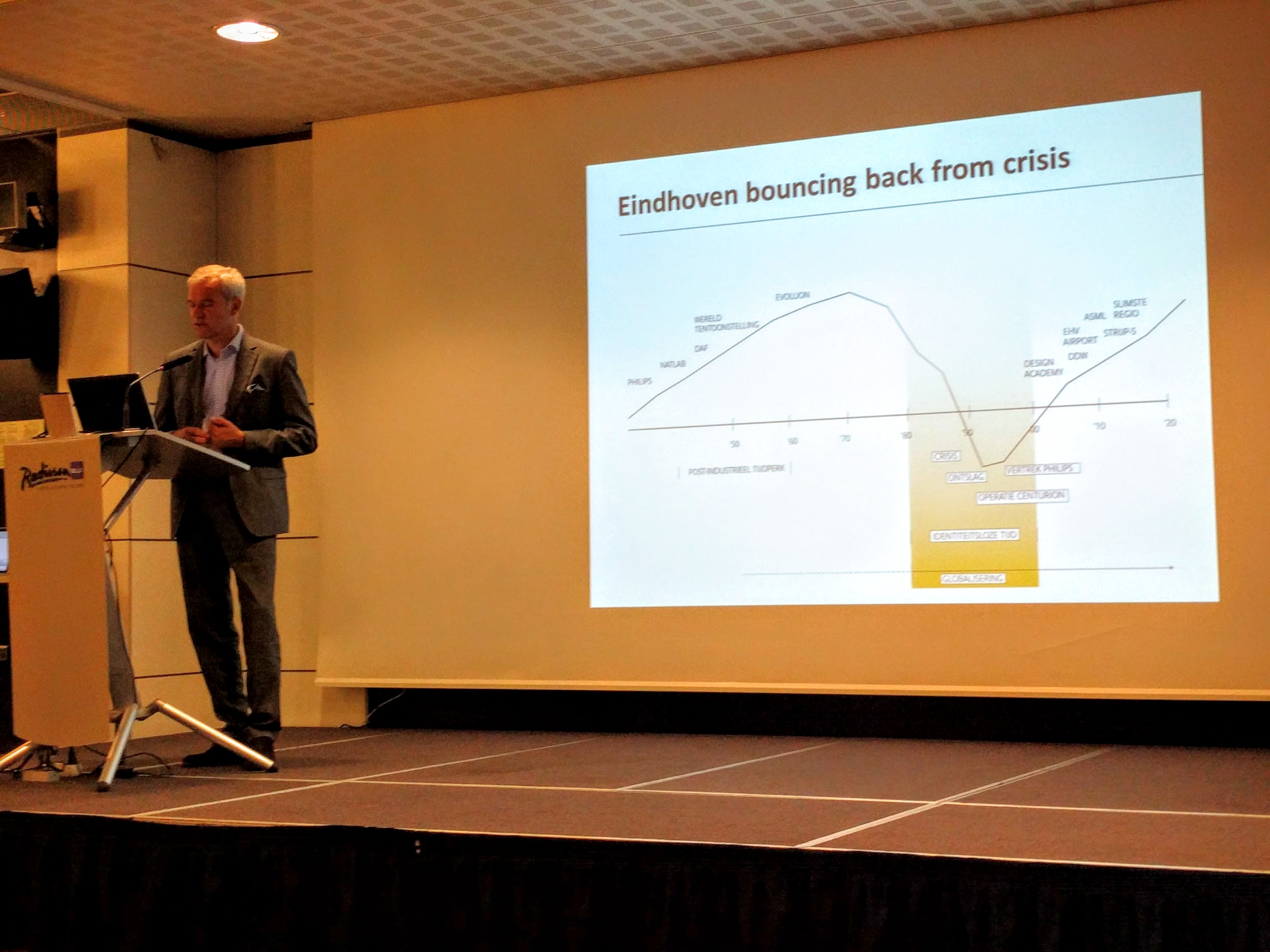
Kentie, their host, showcased the campus's unconventional ecosystem rule: 15,000 employees are barred from having in-house company canteens, forcing a startup founder to rub shoulders with executives from global tech giants in a single dining area.
At the end of the trip, Kentie handed over his branding deck. The reaction was immediate. "They were... 'what the fuck?'" Kentie recalls. "They said, 'This is worth a million.'"
Tamkivi and Lepik bypassed government red tape by publishing an interview with Kentie on the community blog Memokraat, which was quickly picked up by Postimees.
The nation's largest newspaper attached a public poll asking readers if the Dutch marketeer's open-source concept should be adopted. Out of a population of 1.3 million, more than 10,000 citizens voted within days, representing roughly one percent of Estonian language speakers globally.
Ninety-five percent voted yes.
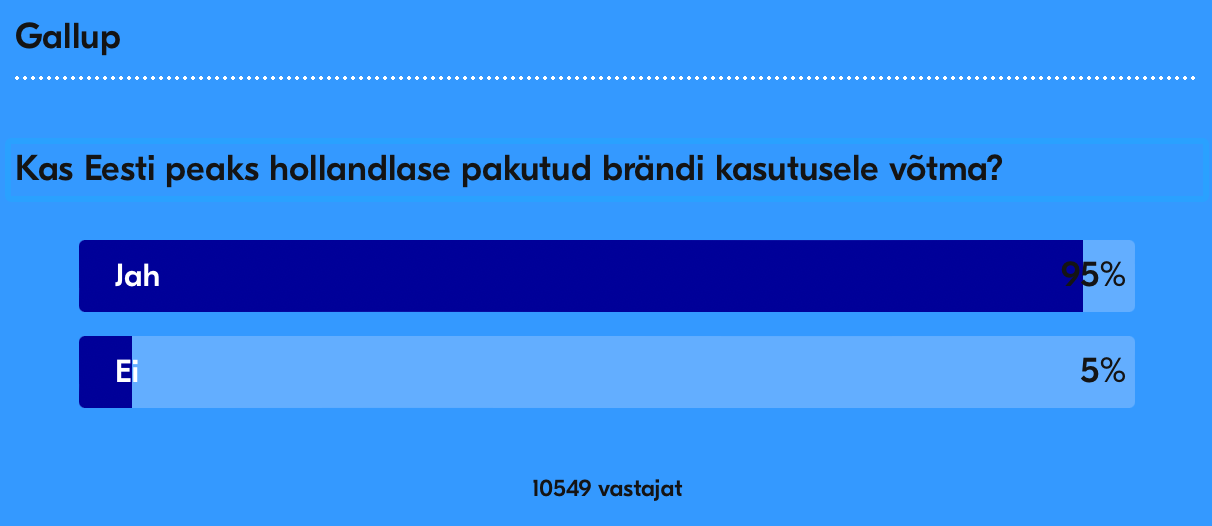
"I know a boss who once said, 'Peter, there's no time for democracy,'" Kentie reflects. "But for me, this was a very democratic decision. To put it in perspective, if our national newspaper in the Netherlands runs a poll on who should be the head coach of the Dutch football team, they get maybe 5,000 reactions. This 10,000 was enormous."
The ultimate validation: Uncontrolled adoption
The true validation of Kentie’s design approach was its organic, frictionless adoption across the tech sector and broader society. By signing the rights over to Enterprise Estonia completely free of charge, he removed the intellectual property barriers that usually stifle corporate branding execution.
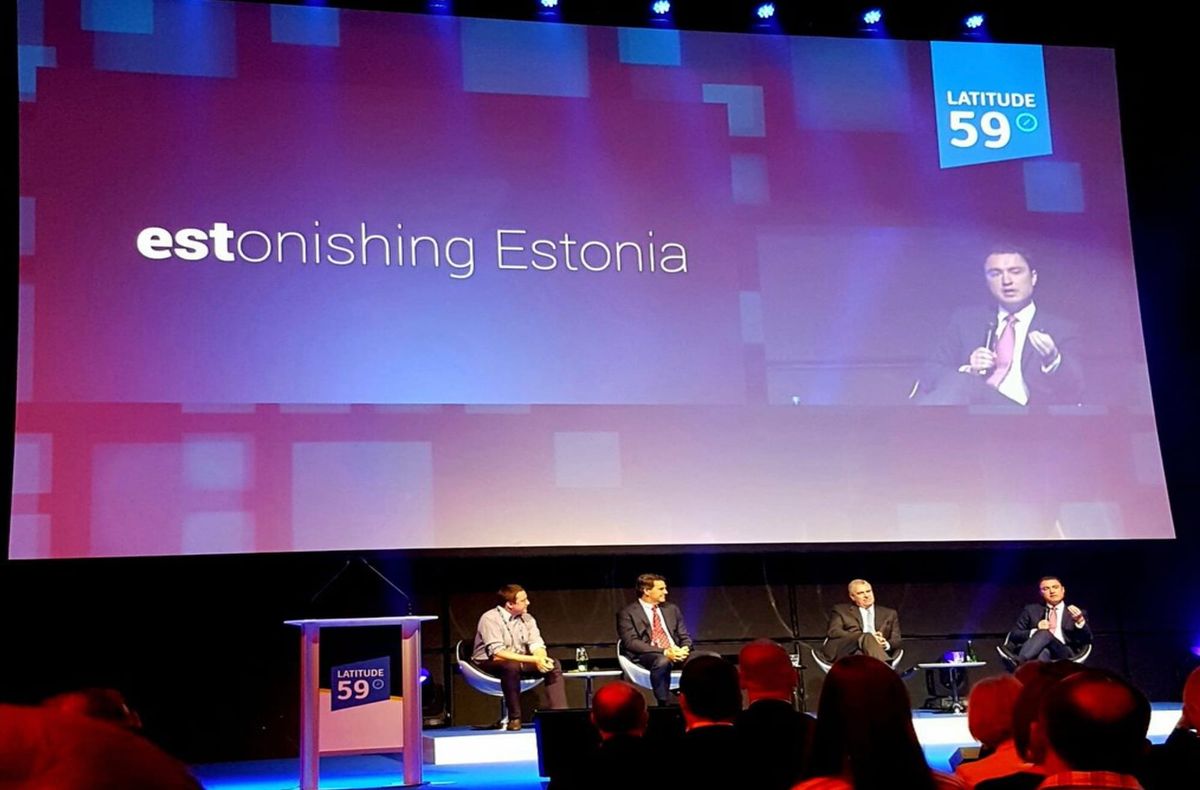
At the Latitude59 tech conference in 2016, Kentie sat in the main hall as then-Prime Minister Taavi Rõivas walked on stage. The presentation slides behind the head of state read: "ESTonishing Estonia."
====================================================================
               TRADITIONAL VS. OPEN-SOURCE BRANDING
====================================================================
METRIC             TRADITIONAL MANUAL        KENTIE'S PLATFORM LOGIC
--------------------------------------------------------------------
Control            Strict "Brand Police"     Decentralized Trust
Cost               High Taxpayer Capital     Pro-Bono / Open-Source
Adaptability       Rigid Guidelines          Infinite Modifiers
Friction           Licensing & Approvals     Zero-Friction Sharing
====================================================================
From there, many (tech) companies have fully integrated the brand into their global pitches. Even corporate entities like Tallinn Airport and commercial hospitality brands deployed the visual pun seamlessly.
For Kentie, the lesson for destination marketeers and startup ecosystems alike remains clear: a brand is not a static piece of corporate graphic design; it is a shared utility.
"Brand is a platform," Kentie concludes, echoing a famous business maxim. "Jeff Bezos once said, 'Brand is what people think of you when you're not in the room.' That is a brutally honest thing. You can't do without a brand basis, but the real hard work is the proactive marketing that follows."
Postscript: The changing landscape of identity
Looking ahead, Kentie – now also an honorary councillor of Estonia – notes that the rise of agentic AI will only increase the value of clear, programmatic, open-source brand architecture.
"Now we live in a world where synthetic agents are stepping in between the brand and the consumer," Kentie observes. "A friend of mine says a brand nowadays has to be lovable, fair, but also readable. It has to be easily interpreted by digital agents. When you shift your framework to a clean platform architecture, it works wonderfully for this new era."
Comments ()