
From Veriff to lockers: Taavi Lindmaa's quest to eliminate a receptionist (or two)
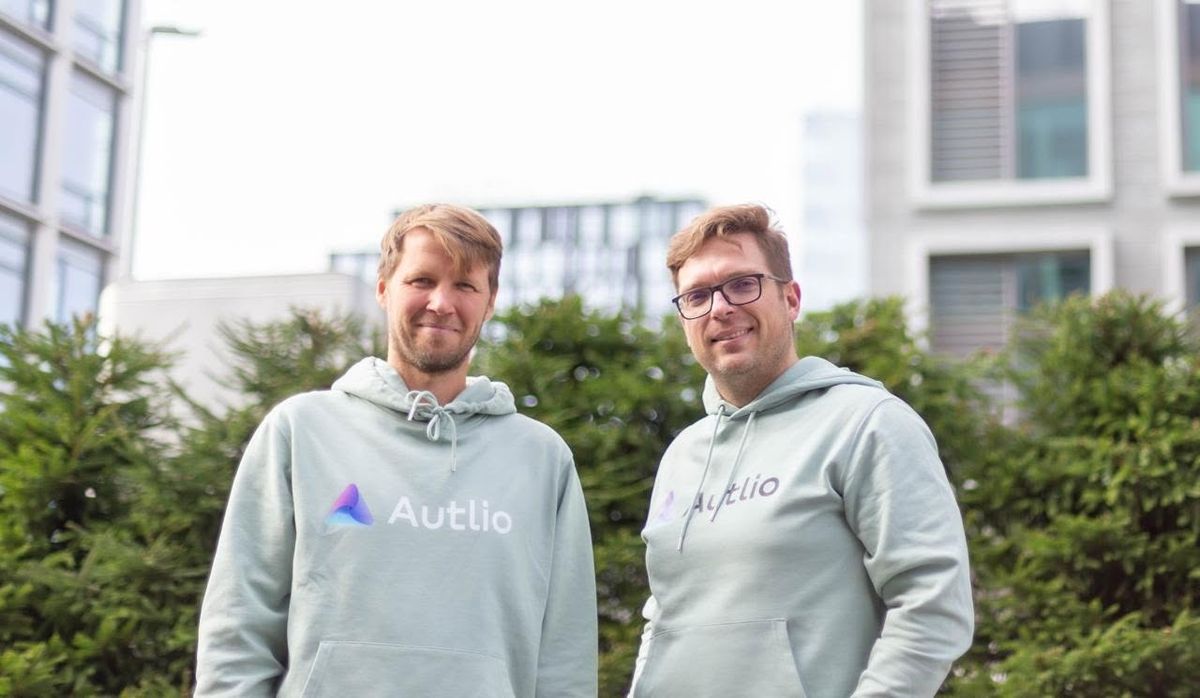
TOOSIKANNU, Estonia — For more than a decade, Taavi Lindmaa helped fuel the rapid rise of some of Estonia’s most prominent financial technology and healthtech platforms. But after years of shaping early-stage corporate growth for others, the veteran operator is betting on a new direction: eliminating human intervention from global rental and automotive logistics through software.
Lindmaa, an early business development force at identity verification giant Veriff and compliance platform Salv, is now focusing his efforts on a new software startup, Autlio, aiming to automate key handovers and operational workflows for car dealerships and rental companies globally.
"At some point, you realise that forging your own path, breaking new ground, is incredibly hard work," Lindmaa said in an interview on the sidelines of the Investment Festival in central Estonia. "But I have this ambition. I don't need to lead hundreds of people. I prefer very small, compact teams. But I wanted to be an entrepreneur and build my own thing."
From California mustangs to Estonia's garage culture
Lindmaa's path to tech operations began roughly thirteen years ago following a stint working in New York. Upon returning to Tallinn, he crossed paths with Martin Villig, co-founder of what was then a nascent ride-hailing app called Taxify (now Bolt).
"I ended up at the Garage48 hub in Rävala, where Martin Villig was managing things," Lindmaa recalled. "It was basically a one-man show back then. I asked him what he was working on, and he said some sort of taxi application. I had just come back from California, where I was driving a Mustang and a Lincoln with my own personal driver, feeling quite proud. I thought, 'Ah, that taxi thing is so yesterday. I need something new and exciting'."
Instead, Lindmaa joined Veriff in its early ranks as its tenth employee, followed by a foundational business development role at Salv, where he re-utilised his network to establish the company's initial business models and client relationships. Later, he transitioned to healthtech, managing microbiome and gut-health testing tools at Elsavie.
Despite the high-growth environment of Estonia's booming startup ecosystem, Lindmaa felt the pull of independent execution.
"Selling your own hours as a consultant has never appealed to me," Lindmaa noted. "The initial question was always driven by passion—the desire to do something myself, to be an entrepreneur, and to build my own product."
Disrupted logistics: The digital key box
Lindmaa’s current venture targets a historically rigid sector: the brick-and-mortar automotive service industry. The company develops software designed to integrate with physical smart locker systems and key boxes, allowing car dealerships and repair shops to facilitate 24/7, contactless vehicle drop-offs and pick-ups without needing a physical receptionist.
While the hardware components resemble traditional parcel lockers, Lindmaa insists the value lies entirely in the software layer that coordinates post-service processing and automated client communication.
"If you look at the big picture, like grocery stores today — if a store doesn't have self-checkout, I most likely won't go in. I don't want to stand in a traditional queue," Lindmaa said.
But the automotive service world is still in its infancy. It hasn't caught up. If you want service, you're bound to an 8-to-5 window. Dealers have been incredibly service-centric, but in a way that forces the customer to adapt to them."
The startup's primary focus is streamlining the backend communication after a customer drops off their keys. "The typical use case is a customer arriving after hours, leaving their keys in a basic dropbox. The workshop has no immediate data context on what needs to happen, creating security risks and administrative friction," Lindmaa explained. "We are connecting this physical piece to the entire after-sales service process."
Keeping the team lean
Currently operating with a lean team of four people alongside specialised consultants, the company is preparing for international expansion later this year after validating the product within its domestic sandbox.
The strategy relies heavily on the evolving capabilities of artificial intelligence to maintain a minimal headcount while serving a global client base — a shift Lindmaa believes redefines early-stage startup scaling.
"In the current AI landscape, you see that with a team of three to five people, you can easily pull off a multi-million dollar exit. It's more than enough," Lindmaa said. "We want to reach a point in the next couple of months where the software handles everything seamlessly from product management to basic customer support."
Comments ()