# Fomo.Observer
> Stories from Estonia — home of Skype, Bolt, Wise, Veriff and 1,000+ more startups. Free weekly newsletter.
Public Ghost content for AI and LLM tooling. This file includes a bounded export of public pages first, then recent public posts.
Append `.md` to any post or page URL to get the content in Markdown (for example, `/example-post.md`).
## Pages
### About this site
URL: https://fomo.observer/about/
Last updated: 2026-05-02T18:13:48.000Z
Fomo.Observer is an independent publication launched in January 2026 by Triin Hertmann and Tarmo Virki.
If you subscribe today, you'll get full access to the website and free weekly email newsletters. Our Sunday newsletter is delivered by email to your inbox, and an abbreviated version is published on LinkedIn a day later.
Your subscription makes this site possible and allows Fomo.Observer to continue to exist. Thank you!

### Access all areas
By signing up, you'll get access to the full archive of everything that's been published before and everything that's still to come. Your very own private library.
### Fresh content, delivered
Stay up to date with new content sent straight to your inbox every Sunday morning! No more worrying about whether you missed something because of a pesky algorithm or news feed.
### Meet people like you
Join a community of other subscribers who share the same interests.
### Startup Events Calendar
URL: https://fomo.observer/startup-calendar/
Last updated: 2026-09-16T09:42:22.000Z
We list the most important events in Estonia and the surrounding region.
To add your own events, use this [form](https://docs.google.com/forms/d/e/1FAIpQLSdypgDfoyyZB8-thBuYTLM9jG951cbmG%5FzFEIGOzN8HVz5tVA/viewform?ref=fomo.observer).

### **Sept 16-17**
[**Startup Fair**](https://www.startupfair.lt/tickets?ref=fomo.observer)**, Vilnius**
Startup Fair has brought together ambitious startups, global investors, accelerators, and tech-curious minds since 2011\.
Last year, their pitching competition offered the largest award pool ever.
### Sept 21-25
Estonian Defence Week, Tallinn
Defence technology, defence forces and policymakers meet in Tallinn for a number of seminars, hackathons and meetups.
### **Oct 12-16**
[**Gothenburg Tech Week**](https://gothenburgtechweek.com/?ref=fomo.observer)
Every October, Gothenburg Tech Week convenes startups, industry, academia, investors, and the public sector around applied technology, how it is built, implemented, and scaled under real-world conditions.
### **Nov 18-19**
[**Slush**](https://slush.org/?ref=fomo.observer)**, Helsinki**
The biggest startup event in the region. Slush is meant to be a human accelerator—giving young people their first step into the startup world, whether they become founders, operators, or VCs. To this day, students and recent graduates organise Slush, and a team of 1,600 volunteers makes the main event possible.
The no-strings-attached award for pitching competition winner is 500,000 euros in 2026.
### Feb 3-4, 2027
[TechArena](https://techarena.se/?ref=fomo.observer), Stockholm
Scandinavia's biggest tech & business event - the flagship two-day gathering of founders, investors and operators.
### **March 17-19, 2027**
[**TechChill**](https://www.techchill.co/?ref=fomo.observer)**, Riga**
TechChill, one of the largest Baltic Tech events, is taking place again in March 2027, bringing international and local investors, founders and ecosystem players for 3 days in Riga.
### **April 15-16**
[**Deep Tech Atelier**](https://deeptechatelier.com/?ref=fomo.observer)**, Riga**
Northern Europe’s largest deep tech event, Deep Tech Atelier, brings together entrepreneurs, scientists, investors, and industry leaders. Over two days, the conference will feature outstanding international speakers, pitch sessions, and practical workshops. Access is free, but participants must register.
### **May 19-21**
[**Latitude59**](https://latitude59.ee/?ref=fomo.observer)**, Tallinn**
The main Estonian startup event chose The Global Village Experiment as its theme, testing the hypothesis that the most valuable connections occur when ecosystems collide. The ambition is to bring founders and ecosystem builders from around the world to Estonia, positioning Tallinn as a gateway to the New Nordics.
### **Aug 17-19**
[**Startup Day**](https://www.startupday.ee/?ref=fomo.observer)**, Tartu**
**(Note! Moved from original Jan 2027 plan)**
Startup Day is the most startup-minded business festival, bringing together startups, traditional entrepreneurs, investors, innovators, and students, with a strong focus on deep tech and early-stage entrepreneurship. The aim of the event is to connect like-minded people and celebrate science-based innovation and entrepreneurship in the smart city of Tartu.
Tickets: [https://www.startupday.ee/tickets](https://www.startupday.ee/tickets?ref=fomo.observer)
### Tags
URL: https://fomo.observer/tags/
Last updated: 2026-08-12T12:49:57.000Z
_No content available._
## Posts
### Finding future founders at a youth summit in TalTech
URL: https://fomo.observer/finding-future-founders-at-a-youth-summit-in-taltech/
Last updated: 2026-10-27T13:05:18.000Z
Last week at a hall in TalTech the future of Estonia’s tech startup ecosystem gathered. It's not hard to imagine that we may have had some of Estonia’s next top tech founders filling the seats. They were certainly provided with plenty of advice on how to build, and build well!
With a few laptops open in the crowd during the talks, it was likely some were actually building as they were listening!
[Startup Garage,](https://startupgarage.ee/?ref=fomo.observer) the TalTech-based student startup community, together with [TalTech Student Fund (Tudengifond)](https://www.linkedin.com/company/taltechstudentmanagedfund/home/?ref=fomo.observer), put on a great show with their Youth Startup Summit 2026, a startup conference for high schoolers and students.
This was the third renewal of the event and the biggest yet. With over 330 attendees there really was a full house. The event was sponsored by Specialist VC.
Some of the panels that Fomo managed to catch included some of the Estonian ecosystems finest champions. Organiser and Startup Garage CEO [Alan Sakson](https://www.linkedin.com/in/alan-sakson/?ref=fomo.observer), alongside his team, managed to pull in some great people for informative chats.
Many of Estonia’s founders took to the stage to tell their stories including chats with [Eliise Lehtsaar](https://www.linkedin.com/in/eliise-lehtsaar/?ref=fomo.observer) (Voon), [Mikko Leo Selg](https://www.linkedin.com/in/mikkoleoselg/?ref=fomo.observer) (Bilance), [Markus Palm](https://www.linkedin.com/in/markus-oliver-palm/?ref=fomo.observer) (Featurebase) and [Kevin Akkermann](https://www.linkedin.com/in/kevin-akkermann/?ref=fomo.observer), [Karl Kiilaspää](https://www.linkedin.com/in/karlkiilaspaa/?ref=fomo.observer) & Gren Paut told the [Bilt.me](http://bilt.me/?ref=fomo.observer) story.
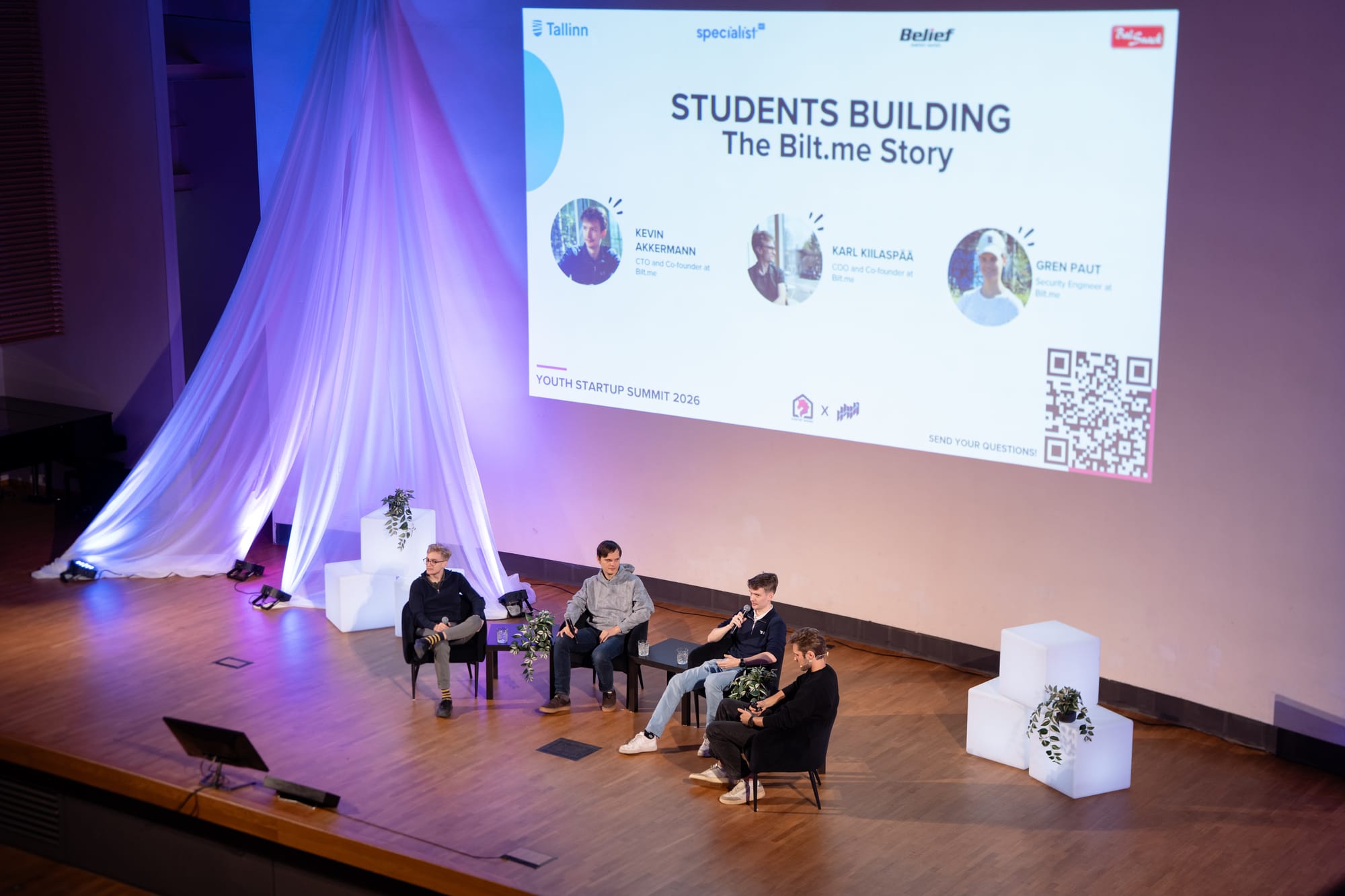
**Image credit: Kantisk Photography*
A few bits of advice that stood out for those starting out as life of a founder, or getting involved in startup life included:
[Linda Voeras](https://www.linkedin.com/in/linda-voeras/?ref=fomo.observer), who is settling into her new role as Partner at Metaplanet, told the audience that the most important decision you’ll make is who you’ll found your startup with. She advised looking at what skills you need, see where you are lacking and add someone with those skills to your team. Also, find one thing that you are truly interested in - what stimulates your brain?
> Another great point she made for Gen Z founders…”you need to talk to each other more”. Learn the art of conversation and networking.
[Mihkel Annus](https://www.linkedin.com/in/mihkelannus/?ref=fomo.observer), who was on the same stage, flew the flag for hackathons, suggesting that founders don’t try it alone and that everyone should try hackathons to fund their people and their ideas. To be fair, he is the head organiser at Hüppelaud ‘hackathons for young people’.
> [Kristiina Libe](https://www.linkedin.com/in/kristiina-libe-b62b12122/?ref=fomo.observer) the Deeptech Project Manager at Tehnopol recommended young founders “build up your community, surround yourself with good people.”
She also suggested that they start attending the Tehnopol coffee mornings. The next one is *From Ready Player Me to Netflix: The wins, the risks and the lessons* on Nov 12\. (Details [here](https://www.tehnopol.ee/en/event/from-ready-player-me-to-netflix-the-wins-the-risks-and-the-lessons-210353/?ref=fomo.observer))
Closing out the event was a fireside with [Sten Tamkivi](https://www.linkedin.com/in/stentamkivi/?ref=fomo.observer), Partner as Skaala and Plural Platform. In an engaging chat, that he somehow managed to make understandable for the complete novices in the crowd, he gave advice on founders finding a large potential market and creating a hard-to-copy solution. He told the audience founders need persistence, the ability to sell, and the ability to build a team.
Grabbing a chat with Sakson after the event he told Fomo.Observer that the plan was to cover all the main questions they usually get from student founders starting out, within the day’s programme. Looks like they nailed it.
“I already got some feedback from some of the participants that they got very good insights and an overview of what it's like to build in Estonia - where they should start and what type of support there is in Estonia. So far it's very positive feedback - so right now, I'm very glad,” he said.
*If you want to know more about Startup Garage check out their event on Oct 28* [*Startup Garage Kick-Off: Link Up!*](https://luma.com/qvcg4rl1?ref=fomo.observer) *Also stay tuned to Fomo.Observer as we’ll have a sit down with the CEO really soon!*
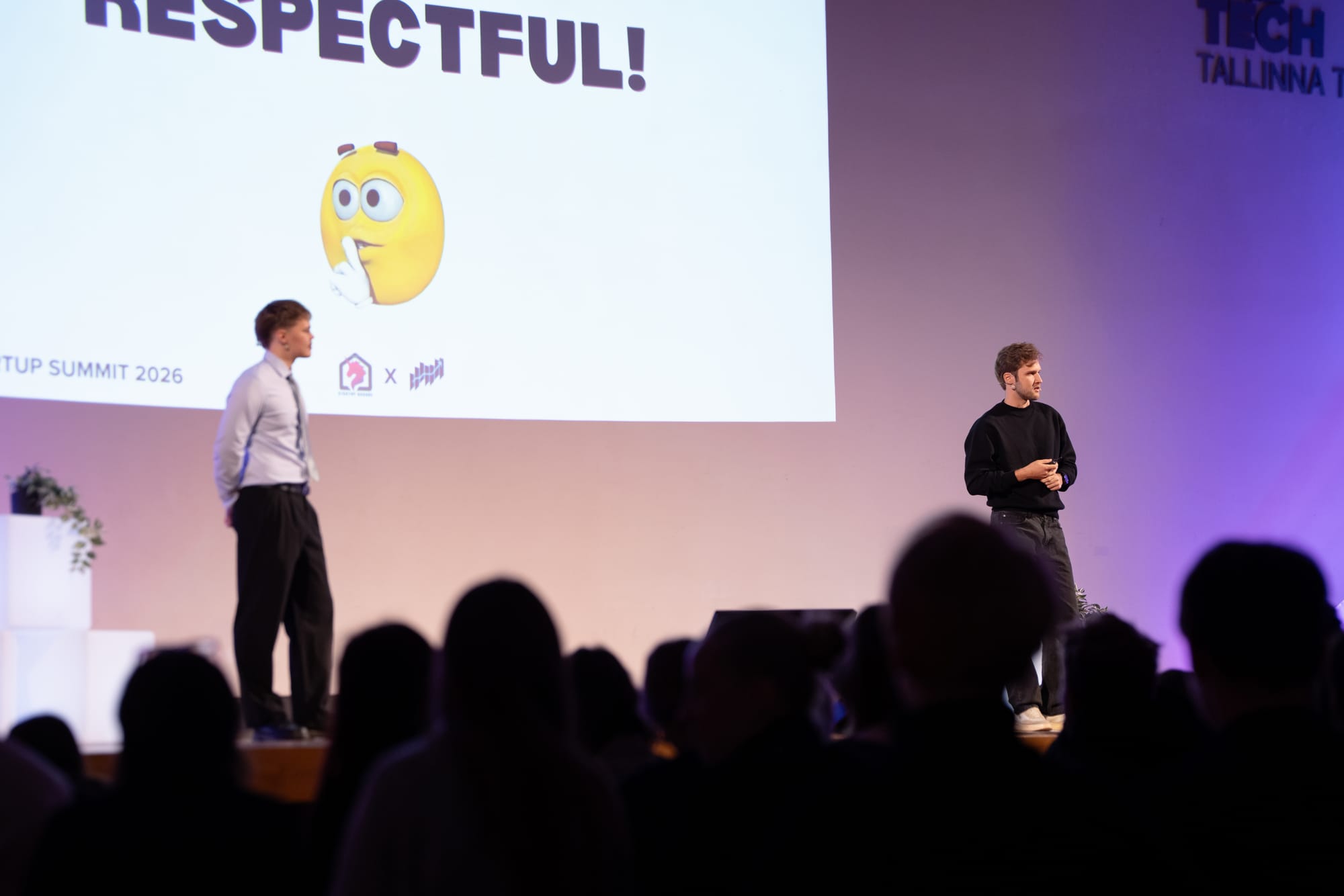
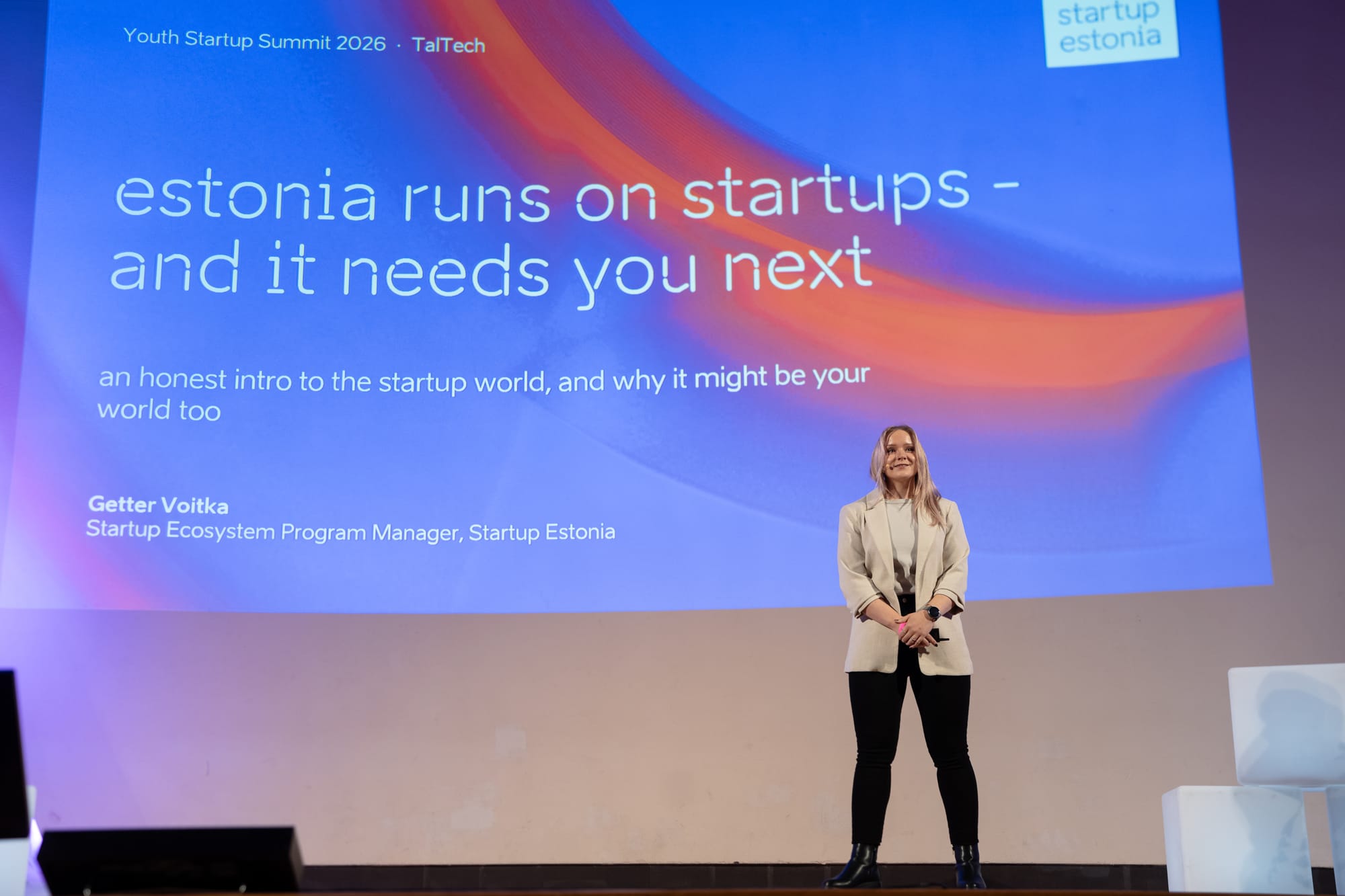
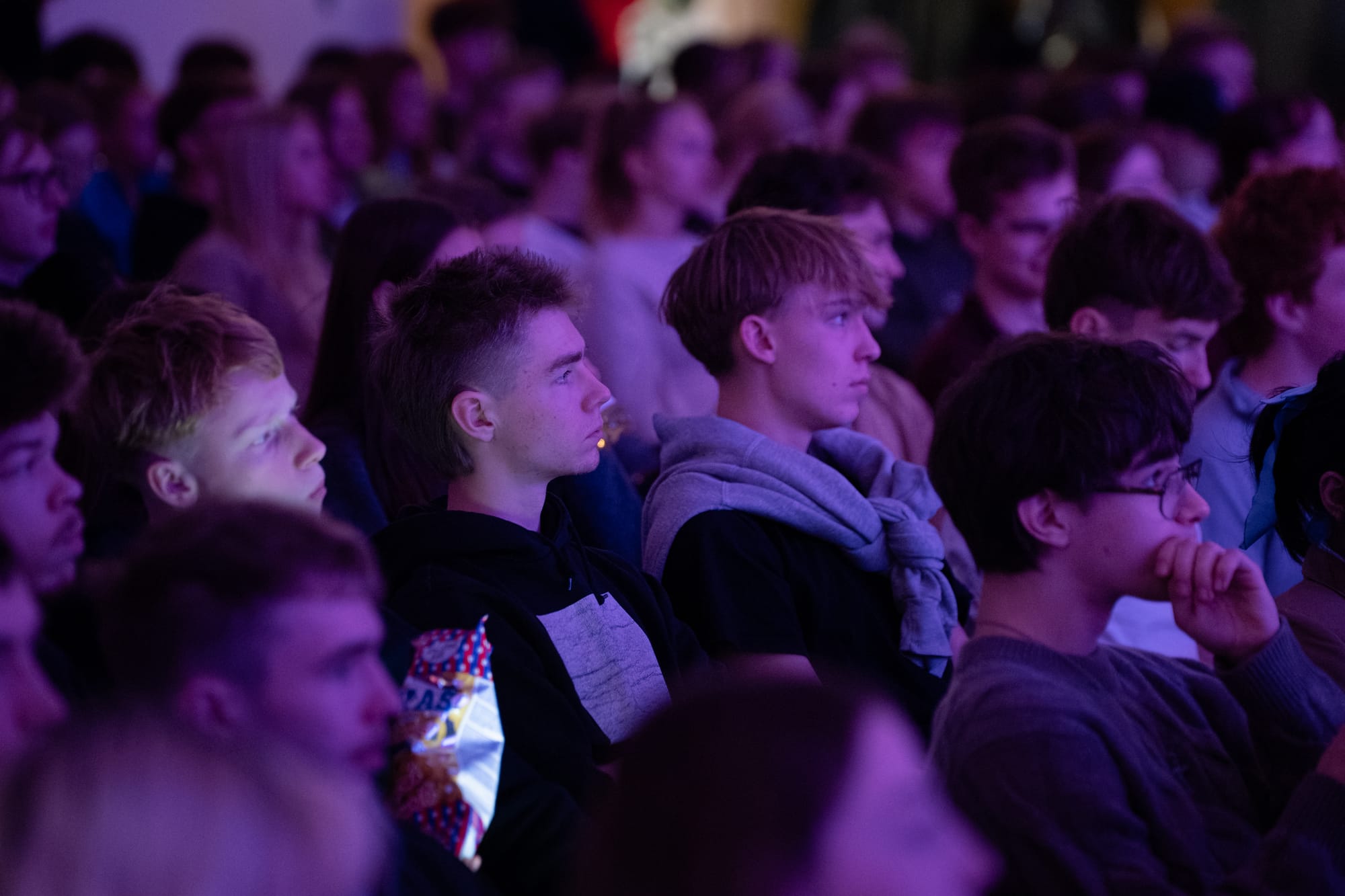
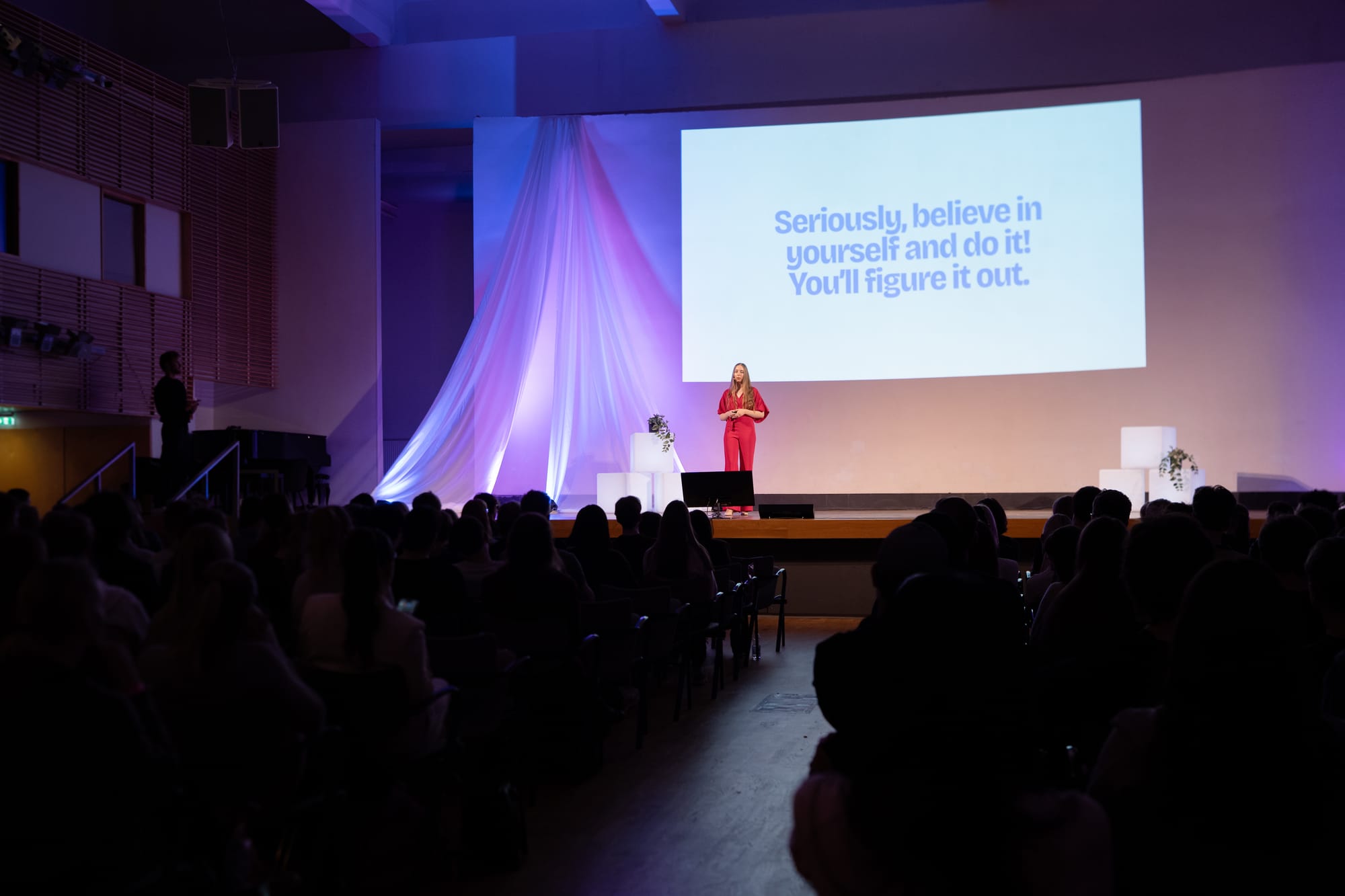
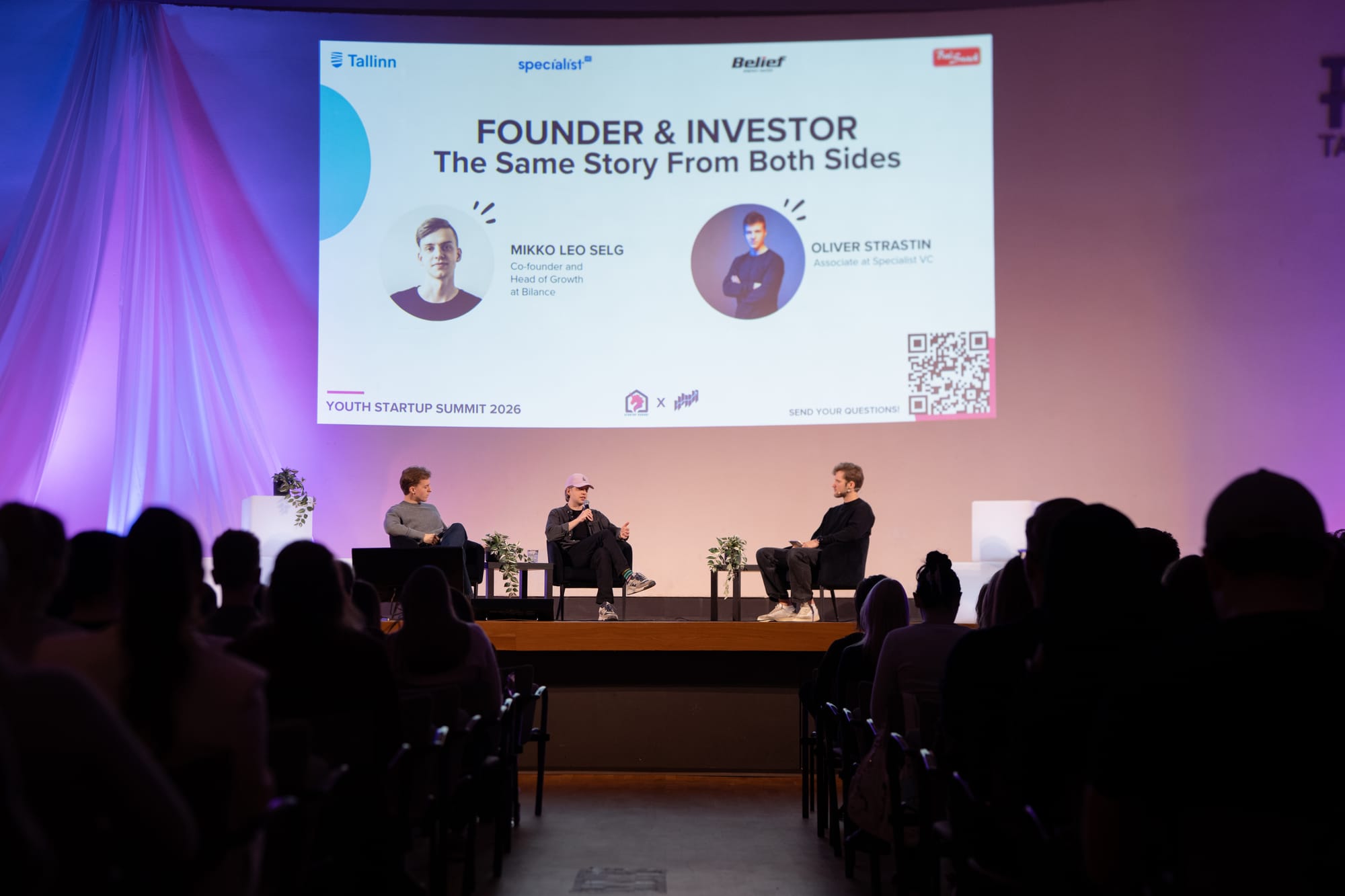
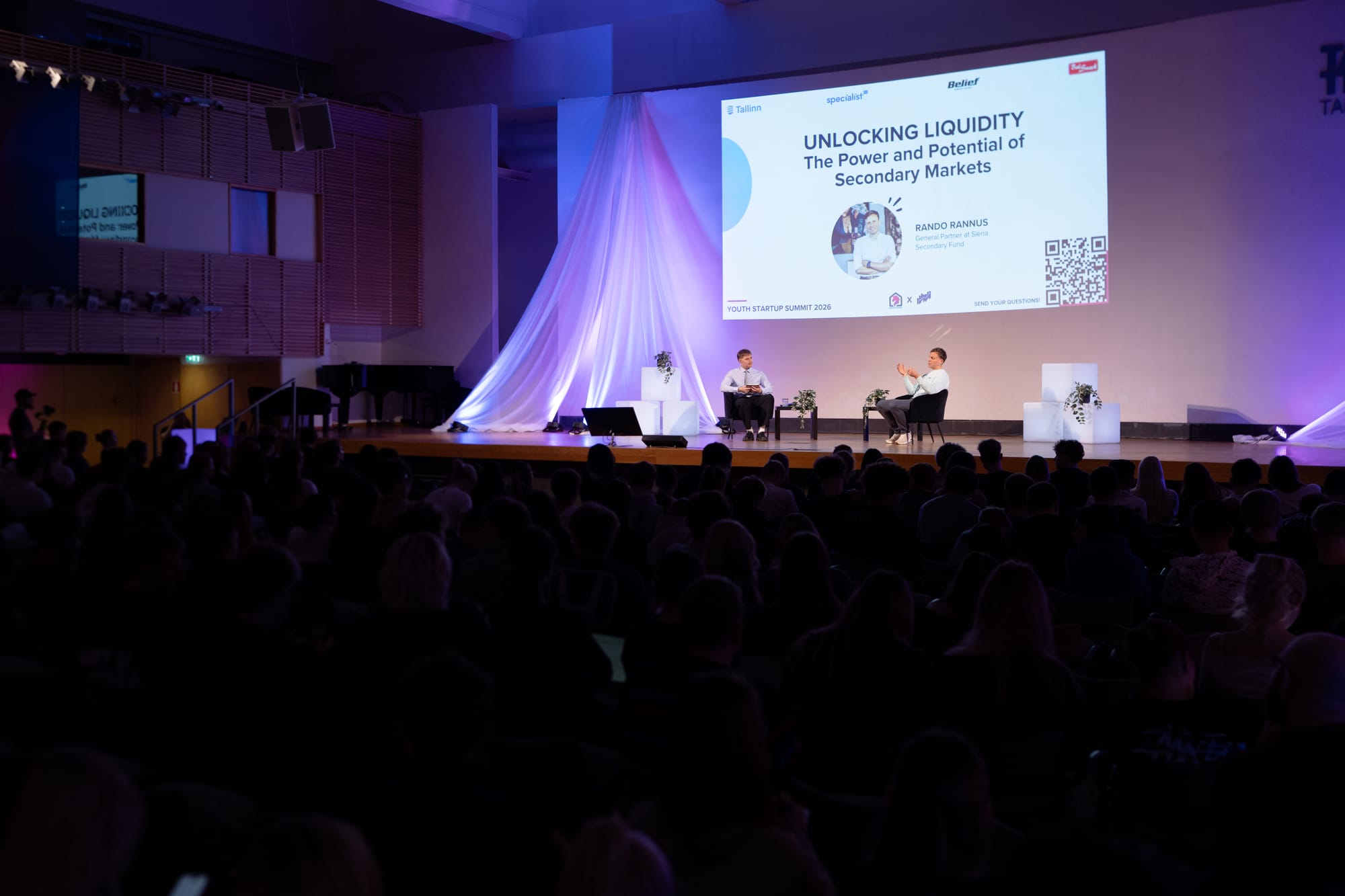
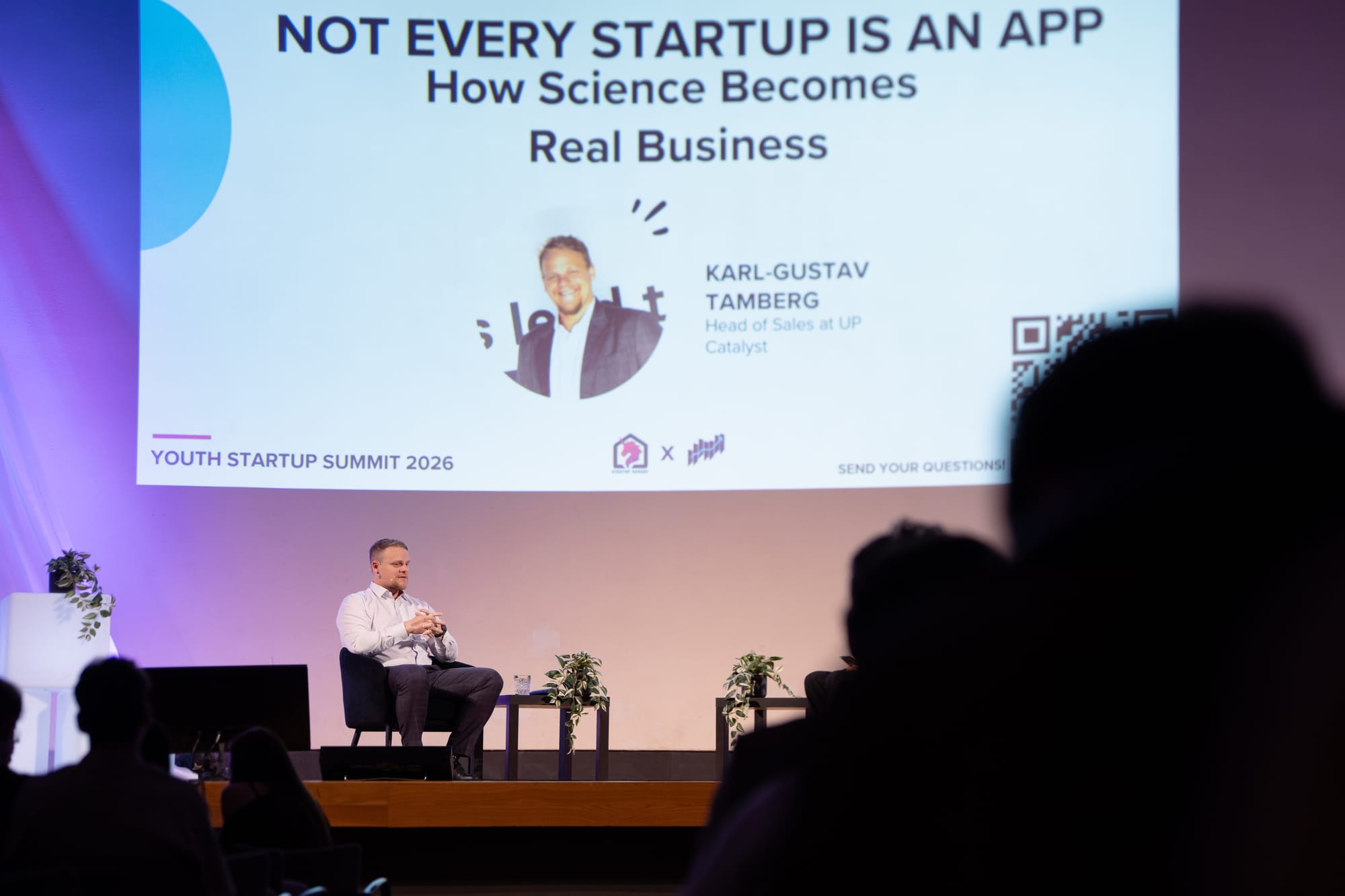
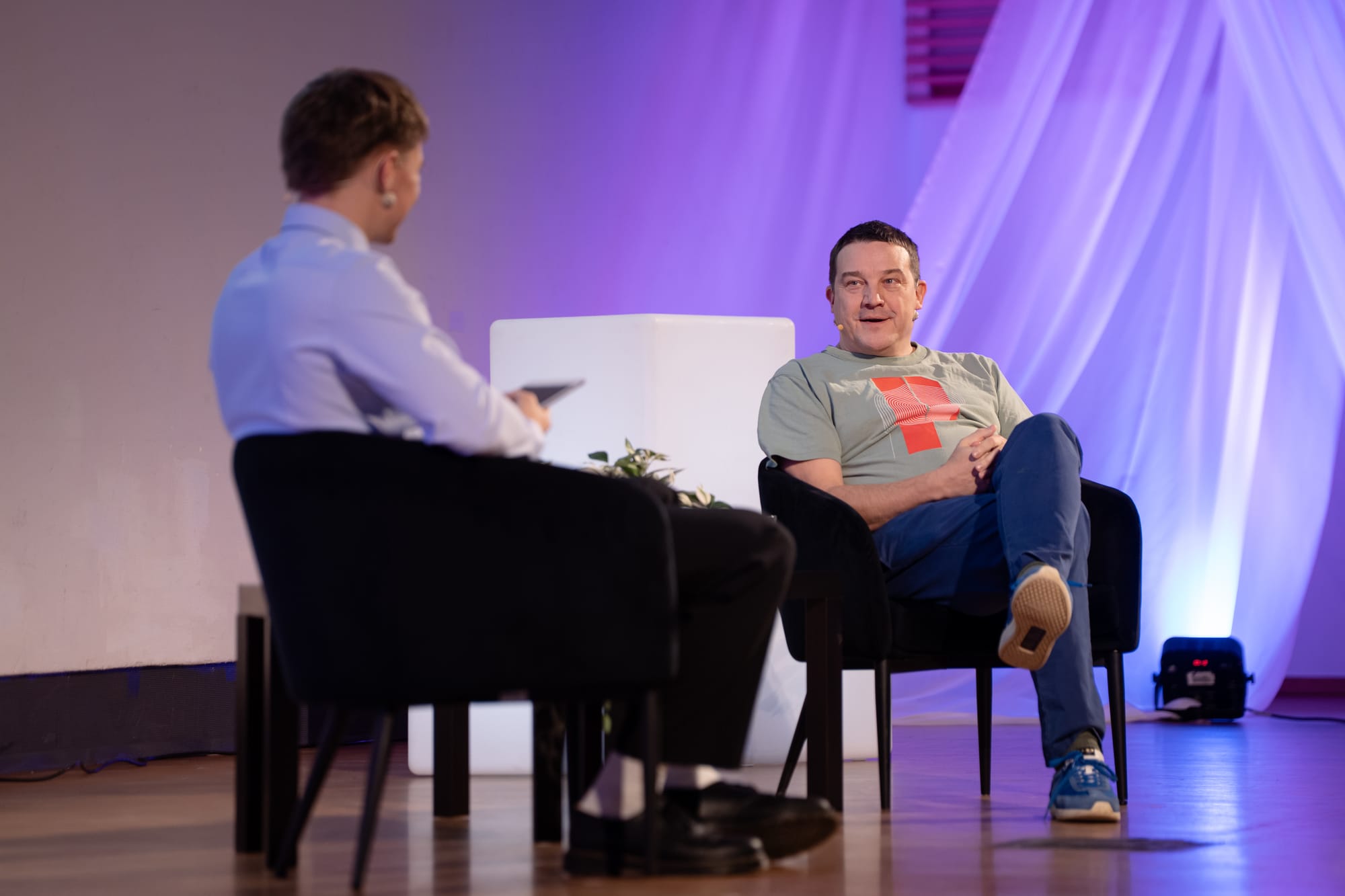
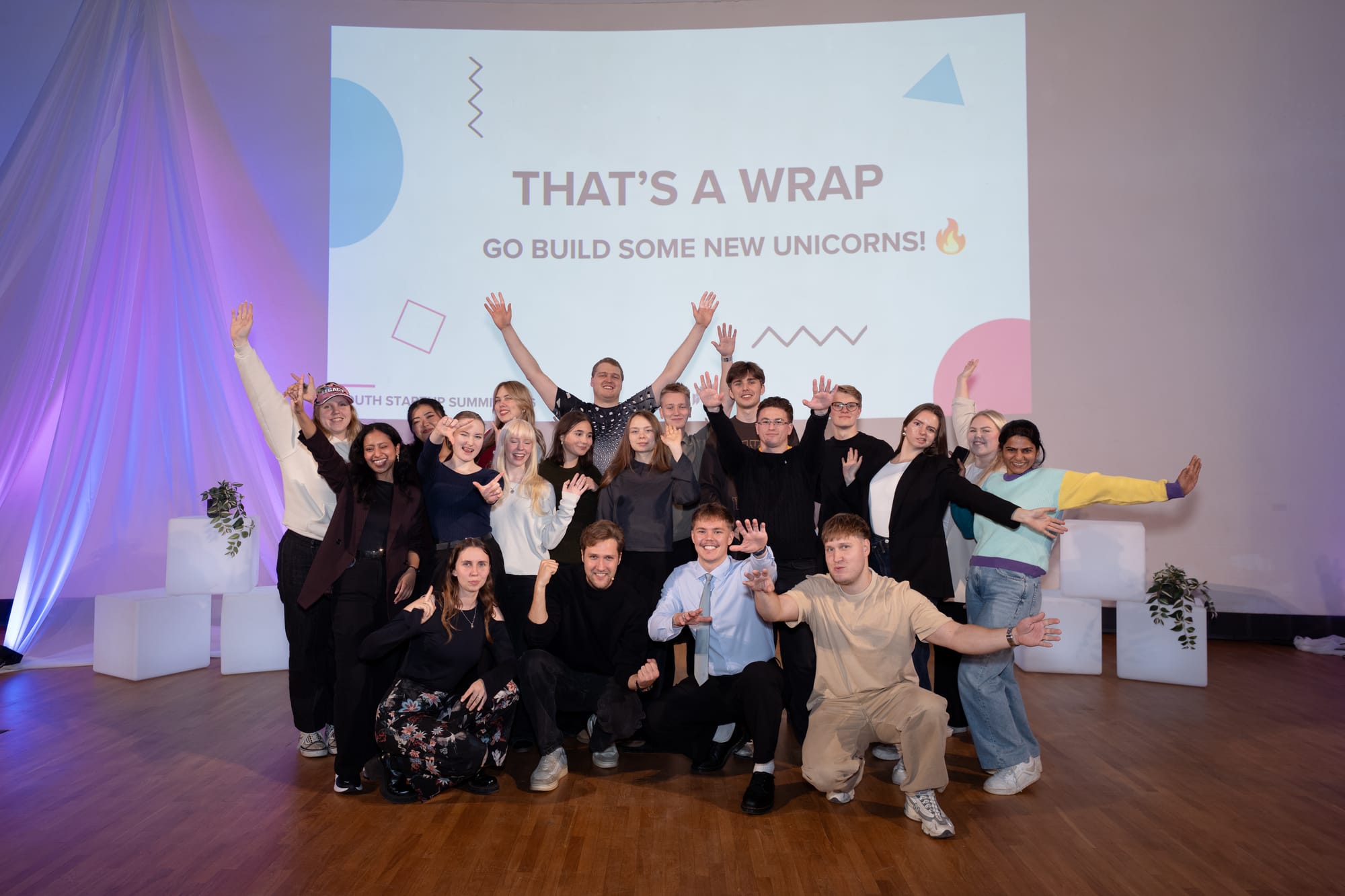
**Image credit: Kantisk Photography*
## Sign up for Fomo.Observer
Startup stories from Estonia. Free weekly newsletter.
Subscribe
Email sent! Check your inbox to complete your signup.
No spam. Unsubscribe anytime.
### How a $2,000 fee birthed Garage48 and AI is rewriting the hackathon playbook
URL: https://fomo.observer/how-a-2-000-fee-birthed-garage48-and-ai-is-rewriting-the-hackathon-playbook/
Last updated: 2026-10-26T06:59:59.000Z
TALLINN — In the late 2000s, a 54-hour event format changed how entrepreneurs launched companies, scaling to thousands of events globally before evolving into new corporate entities. Today, the rise of artificial intelligence is prompting a resurrection of the rapid-launch model, with founders no longer needing large teams to build products.
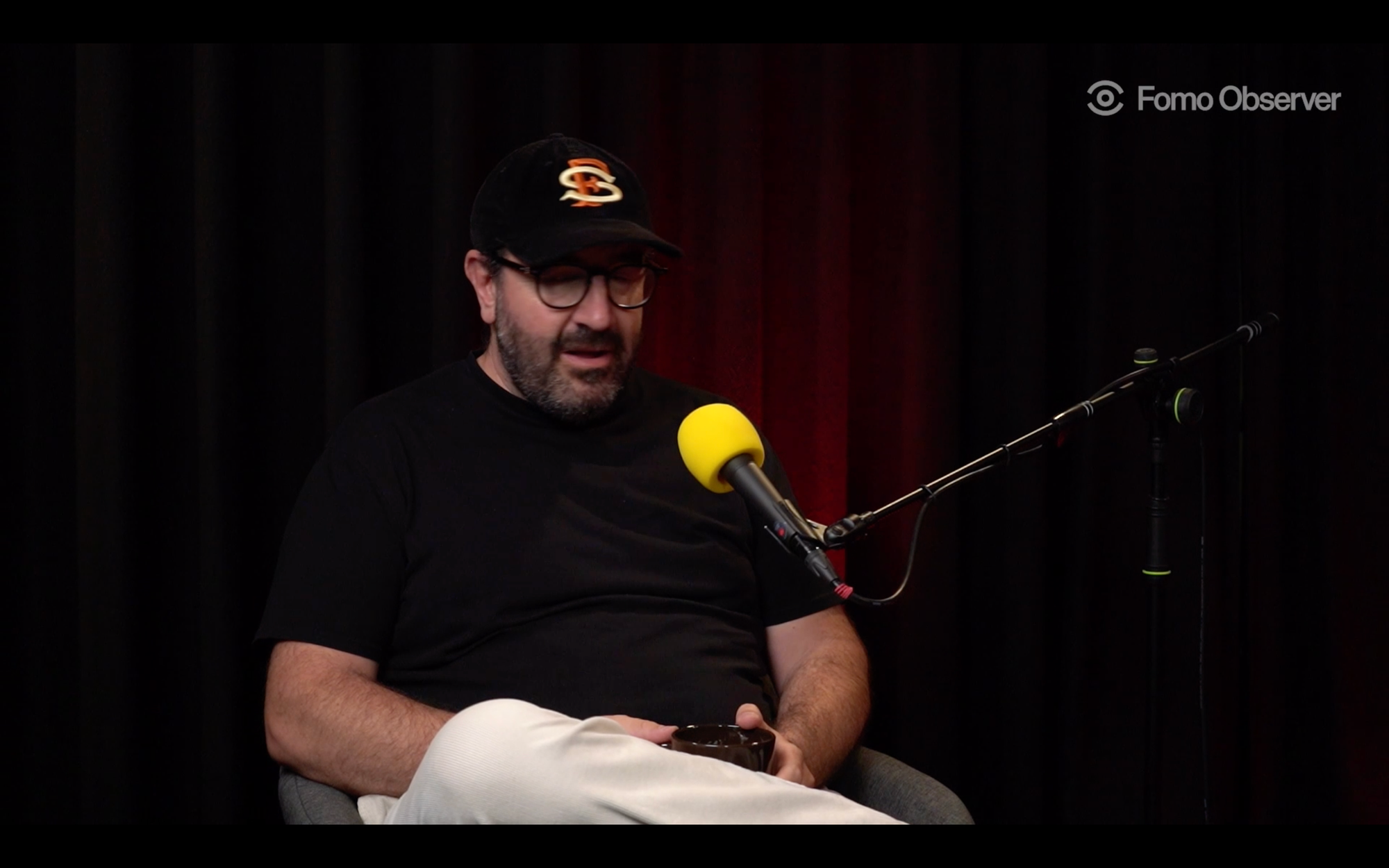
In Fomo.Observer's latest podcast episode, Startup Weekend co-founder Franck Nouyrigat discusses the movement's (sometimes) chaotic history, an unintended collision that birthed Estonia's Garage48, and his vision for the future of hackathons.
### The Garage48 collision
Startup Weekend began in Colorado in 2007 under founder Andrew Hyde, originally bringing 100 people into one room to develop a single idea. After taking over, Nouyrigat and his co-founders shifted the model to a non-profit format where participants pitched ideas on Friday and worked through Sunday.
In the early days, the organisation asked local event organisers to pay a $2,000 licence fee to host a Startup Weekend.
This fee led to a direct collision in Estonia. When asked to pay, local organisers pushed back. "I forgot who it was, but pretty much they said 'fuck you guys, I'm gonna do my own version,' and then it became Garage48," Nouyrigat relays on the podcast.
This rejection of the $2,000 licence fee helped to push the creation of Garage48, which became a staple of the Estonian startup ecosystem.
Check out the full episode:
## Scaling a non-profit empire
Despite the friction in certain markets, Startup Weekend successfully scaled to host events in 160 countries. The founders used a promotional flight pass from JetBlue and slept on couches to keep costs down and run events internationally in their first year. Eventually, they secured investment from the Kauffman Foundation, a major entrepreneurship-focused organisation that helped fund the expansion.
From there, the non-profit merged with Startup America to form UP Global, and the assets were eventually acquired by Techstars. Nouyrigat talks about exiting a non-profit structure, selling assets, and donating the proceeds to charity.
### The resurrection: Cafe 2035
After exploring different ventures and launching several startups, Nouyrigat is now building Cafe 2035, an initiative designed to reboot the startup launch format for an era dominated by artificial intelligence.
Nouyrigat believes the traditional venture capital model is broken and that the industry requires a massive new wave of founders. However, the mechanics of building a company have fundamentally changed. With AI capable of acting as a developer, marketing expert, and data analyst, the barrier to entry has shifted away from needing a large human team.
> "The idea now is you don't need a team," Nouyrigat says, adding that solo founders can begin working on ideas immediately with AI assistance.
While AI replaces the technical need for co-founders, Nouyrigat warned that humans still require social connection. Cafe 2035 aims to bring these solo founders together in physical spaces to foster human connection and collaboration, while relying on AI to handle the technical tasks required to launch a business.
"Solo founders don't have to be lonely," Nouyrigat notes, outlining a vision where physical events remain crucial for human networking, even as AI handles the heavy lifting of product development.
## Sign up for Fomo.Observer
Startup stories from Estonia. Free weekly newsletter.
Subscribe
Email sent! Check your inbox to complete your signup.
No spam. Unsubscribe anytime.
### VICKY BROCK: During Luxembourg talks, Estonia already has some of the answers
URL: https://fomo.observer/vicky-brock-during-luxembourg-talks-estonia-already-has-some-of-the-answers/
Last updated: 2026-10-23T13:24:14.000Z
Last week I was in Luxembourg for EBAN’s European Angel Investment Summit and Luxembourg Venture Days. Two days, hundreds of founders, angels, network leads, fund managers and policymakers from the European Commission and the EIF, all in one building. EBAN had brought the early stage investment community together to ask one question: what would it take to build a real single market for European angels and startups?
Two themes kept coming up. One was EU Inc. The other was cross-border investing. On both, Estonia had something to say.
### A solution that exists, and one that doesn’t yet
In nearly every mainstage and breakout room conversation, EU Inc was presented as an “either or choice”. Wait for the 28th regime, or go to Delaware.
I understand why. Founders and investors are tired of 27 sets of corporate rules. But as Tarmo wrote here this week, [EU Inc is on the ropes](https://fomo.observer/eu-inc-in-fear-of-being-stripped-of-its-essence/). The founders’ open letter says it has been watered down to “just fast incorporation”.
Just fast incorporation. I read that line twice. Many of the founders I met in Luxembourg would love just fast incorporation. I talked to startups from Luxembourg, Germany, France and Switzerland who had lost months just getting their company set up. Not building product. Not selling. Not raising. Months of runway and momentum, gone on paperwork.
Meanwhile Estonia has offered fast, fully digital EU incorporation since 2014\. I became an e-resident in 2019 and registered my company, Vistalworks OÜ, the same year. It changed my life and my business.
I’m not the only one. Last year alone 13,828 people became e-residents and they founded 5,556 new companies. More than 39,000 companies have now been set up this way, by people from 185 countries. In 2025 e-residents and their companies brought the Estonian state nearly €125 million, up 87% on the year before. This isn’t a pilot. It’s infrastructure.
A proper European standard, with free choice of registration and stock options that work across borders, would be good for all of us, and I hope it gets there. e-Residency doesn’t solve all of that, and it isn’t for everyone. My frustration was simply that so many founders and angels in the room had never heard of something that already works. That’s an awareness problem, and awareness problems can be fixed.
I’m a proud e-Residency Envoy. It’s unpaid, and I do it because I’ve seen what impact the programme can have first hand. So here’s my ask to Estonia. Let’s stop being so polite. Let’s actively go after these high-potential startups now, especially ones bringing future venture funding and job creation with them, and tell them and their angel investors that they don’t have to wait.
### An Estonian voice on the EBAN board
The second theme was cross-border angel investing, and Estonia was on stage for this one too. [Lauri Antalainen](https://www.linkedin.com/in/lauriantalainen/?ref=fomo.observer), President of EstBAN, spoke on the Angel Investing Across Borders panel with France Angels, SIA Angel Hub and the Axel Network, moderated by EBAN’s Director General Martin Skea.
Lauri’s point was simple and I agree with it completely. Estonian angels invest across borders because it gets them better deal flow. A small market that only looks at itself sees a small slice of the opportunities out there.
Everyone says they want cross-border investment when it means inward investment. Fewer are comfortable when the money flows the other way. EstBAN actively looks at international deal flow, and seems comparatively unafraid of cross border investment deals.
The proof was right there at the summit, where Skeleton Technologies was [announced](https://fomo.observer/skeleton-technologies-becomes-estonias-latest-unicorn/) as Estonia’s 12th unicorn. For a country of 1.3 million people, that isn’t luck - and the power of that statistic wasn’t lost on the pan-European investment community.
[Skeleton Technologies becomes Estonia's latest unicornIt appears that Estonia has a new unicorn...and its deeptech! The coveted title goes to supercapacitor and energy storage firm Skeleton Technologies. Its status has been raised due to a strategic investment from Siemens. Now valued at over $1 billion, Lift99 will have to get the glue gun outFomo.ObserverFiona Alston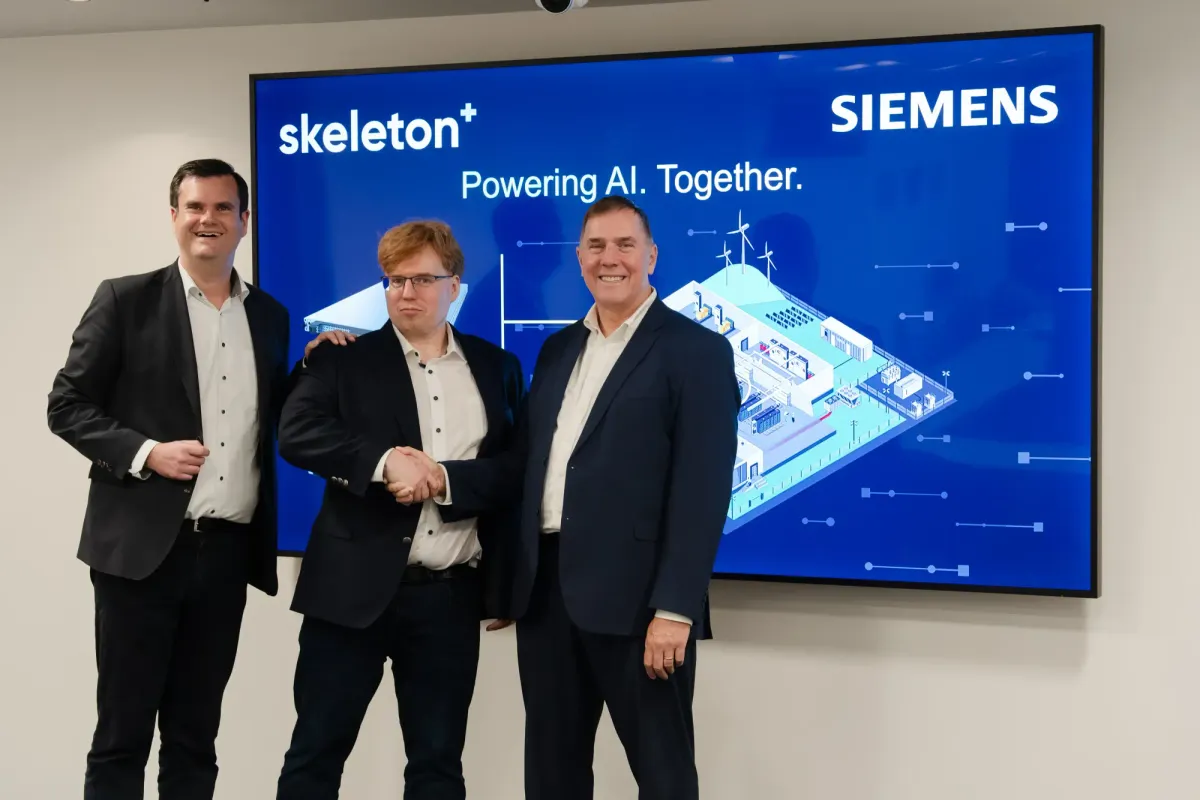](https://fomo.observer/skeleton-technologies-becomes-estonias-latest-unicorn/)
In another big announcement for Estonia, EBAN’s members elected Lauri to the EBAN board for 2026 to 2028\. He has led EstBAN for three and a half years, and goes in with three clear priorities. He wants to make it easier for angels to invest together across borders, to turn relationships between angel networks into actual investments, and to encourage more public co-investment schemes alongside private angels.
As a founder turned angel investor, I previously raised my investment in Scotland, where public co-investment has transformed and harmonised angel investing with impressiive economic impact. So I fully agree these are the right priorities.
Congratulations, Lauri. It matters that a small, connected ecosystem like ours has a voice where Europe’s angel agenda gets set. Now let’s make the most of it.
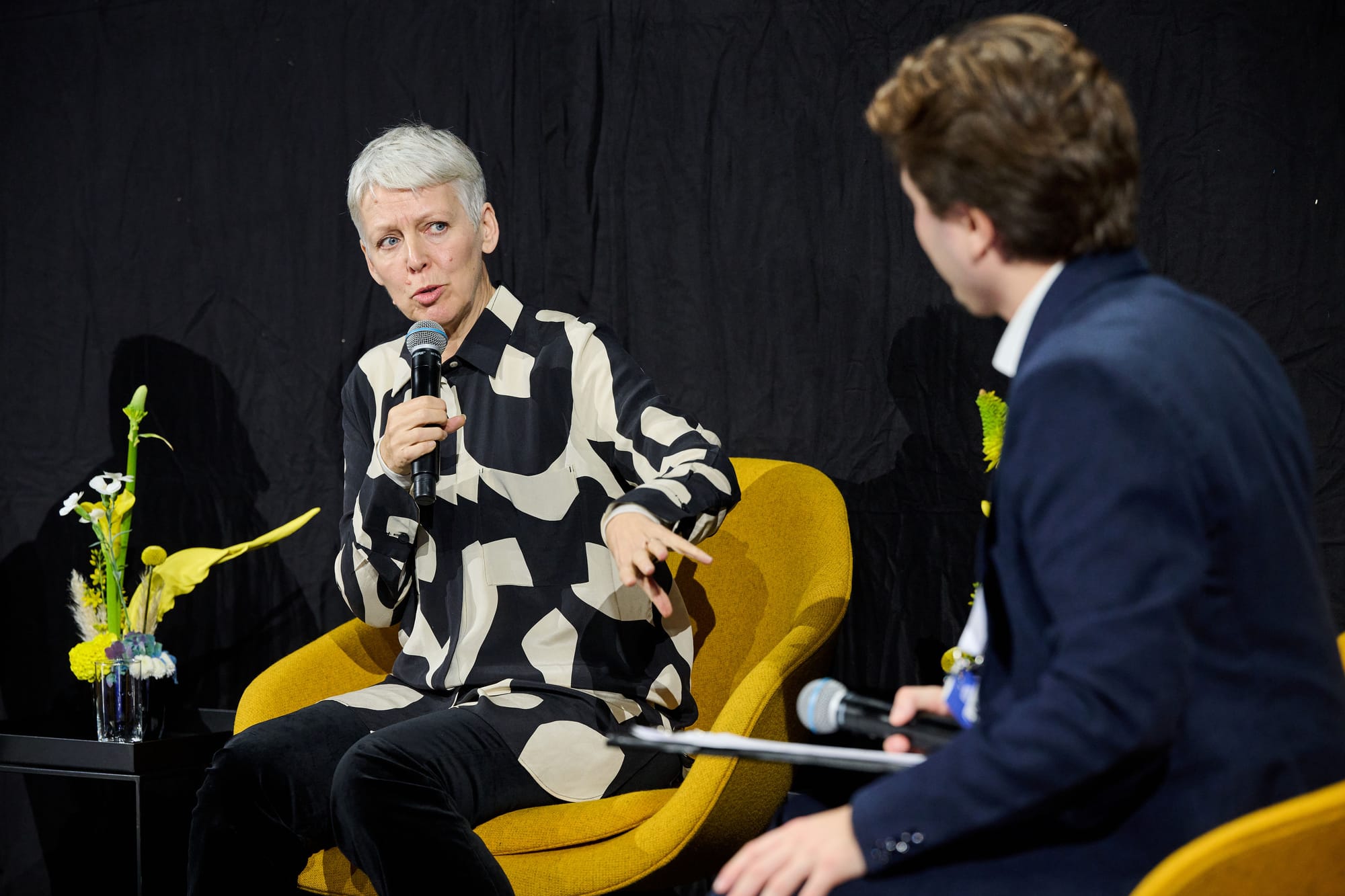
Vicky Brock speaking at EBAN’s European Angel Investment Summit in Luxembourg. **Image credit: Pryzm*
### What I measure, and why
I was in Luxembourg to speak on the Measuring What Matters panel. I invest for positive impact. For me that means local jobs and economic growth, and for-profit businesses that do real good in their community or for society as well as making money. Impact and returns can go together, but I refuse to chase profit at any cost.
But “for good” isn’t a free pass. The first thing I measure is whether this is really an investable business. The second is whether it’s really doing good, or just making the claim as an after thought. Once I’m in, I keep asking the questions I can act on. Does this founder need my help? Does it need money? Is it still on mission? Is there a decision waiting for me? Has it gone quiet?
As an angel I can’t watch a share price and sell when I’m nervous. My portfolio is illiquid and most of my companies won’t have a valuation event for years. So I worked with Dealum, the Estonian-built platform that many of Europe’s angel networks already use, to create Investor Plus. I use it to run my own angel portfolio and talked about this in Luxembourg and wrote more on the [Dealum blog](https://blog.dealum.com/measure-what-you-can-act-on/?ref=fomo.observer).
### What I brought home
Under all the policy talk, Luxembourg was really about one thing. Europe wants its early-stage investors, angels and VCs alike, to compete with the US. It wants to keep its successes here, and the returns that come back from them.
There’s a vague hope in the room that EU Inc will stop companies leaving for the US. It won’t. A company structure doesn’t keep a company in Europe. Capital, talent and ambition at home do.
EBAN recognised the tension too. Everyone wants cross-border investment, as long as it flows towards them and not away from them.
This is where Estonia is well placed. e-Residency reaches founders early, long before the VC stage, while where they build is still an open question. And Estonia knows what to do with them. Twelve unicorns from 1.3 million people is remarkable, and it’s repeatable, because so much of the talent and money from each success gets recycled back into the next generation of Estonian startups. That’s how you keep the money and the talent in Europe.
So if the EU wants to hold its own against the US, it doesn’t need to wait for Brussels. Estonia is already showing the rest of Europe how to do it.
If you’re a founder stuck in months of paperwork, or an angel whose portfolio companies are, look at [e-Residency](https://www.e-resident.gov.ee/?ref=fomo.observer). Bring the funding, bring the people, and come and build here.
---
[*Vicky Brock*](https://www.linkedin.com/in/vickybrock/?ref=fomo.observer) *is a five-time tech founder, angel investor, Estonian e-Residency Envoy and Golden Aurora Award winner 2026\. She leads product for Investor Plus at Dealum.*
## Sign up for Fomo.Observer
Startup stories from Estonia. Free weekly newsletter.
Subscribe
Email sent! Check your inbox to complete your signup.
No spam. Unsubscribe anytime.
### TRIIN HERTMANN: Impact investing stopped selling guilt. That might be the best thing that happened to it
URL: https://fomo.observer/triin-hertmann-impact-investing-stopped-selling-guilt-that-might-be-the-best-thing-that-happened-to-it/
Last updated: 2026-10-23T13:57:18.000Z
I came back from Norrsken Impact Week in Barcelona with a few thoughts that sit uncomfortably next to each other. Impact investing is growing up and becoming more commercial, which I like. And AI is moving faster than anyone’s ability to check it, which makes me anxious. [Norrsken](https://www.norrsken.vc/?ref=fomo.observer) is always digging deeper in their events and that’s why I love joining in their discussions.
### Where the impact investing market stands today
Let’s start with the size and snapshot. The GIIN estimates the global impact investing market at $1.6 trillion, up more than $400 billion since 2022 and growing 21% a year since 2019\. Surprising, right? Looking around, it looks like the people have forgotten that we only have one planet to live on and are burning it like there is no tomorrow.
The money comes from big, boring places: pension and insurance funds and investors in developed markets manage 95% of it. So this is not a niche for idealists, really. It is mostly institutional money in Europe and North America. Impact investing market has grown by more than $400bn since 2022\. But at the same time, the mood is sour. Morningstar counted about $55 billion of net outflows from global sustainable funds in Q3 2025 and about $27 billion in Q4\.
In the first quarter of 2025, an estimated 335 European funds rebranded, and 116 of them dropped ESG-related terms from their names. My reading is that ESG as a marketing sticker is tired. But drive for energy, grids and physical-world technology is not.
The venture numbers point the same way. Climate tech VC reached $26.1 billion in the first half of 2026, up 55% on last year and the strongest first half since 2022, although data-center technologies made up 34% of it, against 3% a year earlier. The direction is the same: money is coming back, it is concentrated, and AI’s hunger for power is a big reason why.
### What Norrsken is betting on
Being one of the hottest impact investors in Nordics, I am always keen on hearing their ideas about the market. This time one line really stuck with me: the green premium is dead, the best products win, and the impact is something that just comes with them.
You can see the logic in how they frame the biggest problems: AI’s energy appetite, industrial energy waste and the shortage of healthcare workers are all presented as bottlenecks, and every bottleneck is a market. Nobody asked for a subsidy.
One more thing I noticed is the mood about Europe. In Norrsken’s survey of 750 European investors and founders, 51% of investors and 42% of founders said Europe has become a more attractive place to invest or build than it was twelve months ago. I think that surveys of the people already onboard should be read with a grain of salt. Still, a more volatile world seems to be making Europe look more stable by comparison, and that is not something I would have predicted two years ago.
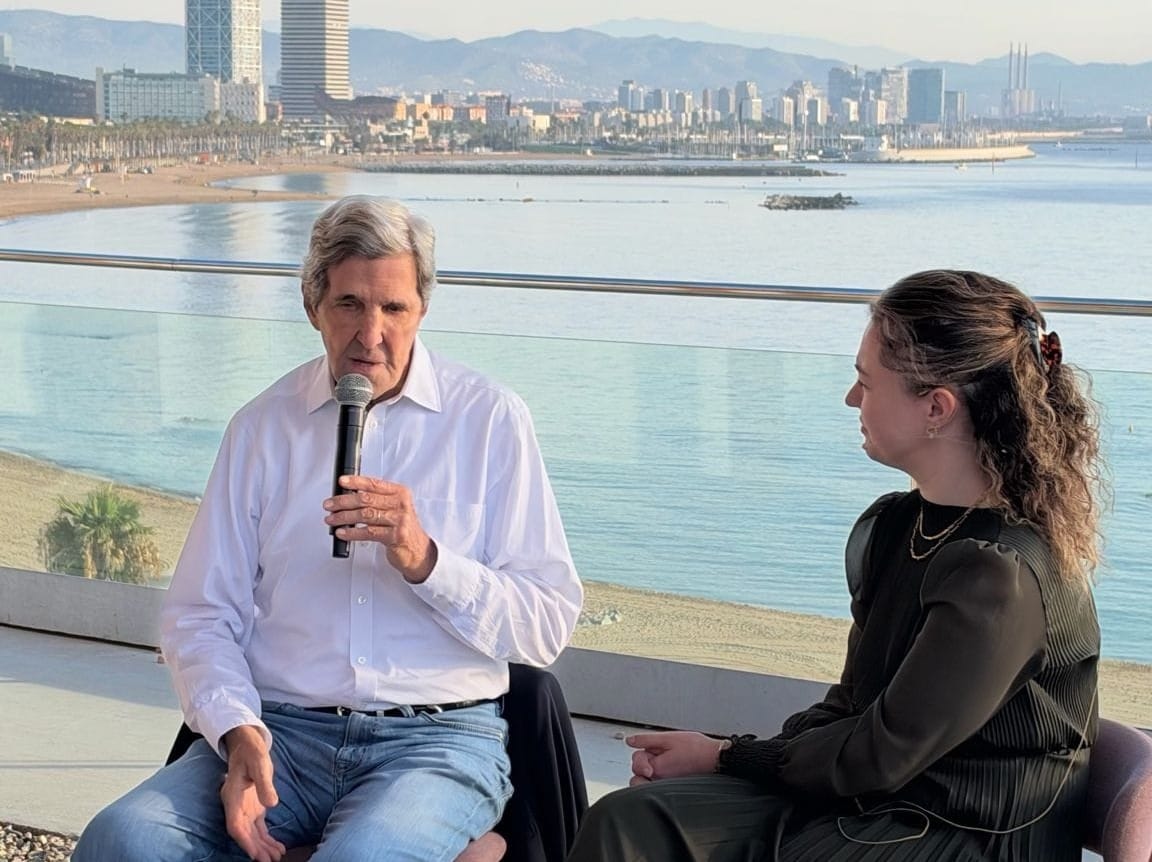
John Kerry's ask-me-anything
### John Kerry: stop selling climate guilt
One of the main speakers I was really looking forward to hearing was John Kerry (former United States Secretary of State) who gave us a lovely ask-me-anything session on the rooftop terrace. Being 82 years old, jetlagged and apparently also with a little flu, he seemed 100x sharper and more logical than the US' current head of state. It felt that he is deeply concerned about how the biggest democracy in the world is currently behaving and treating their allies. But he asked us to just be patient and smart and eventually there will be better days.
His message to the room was to stop selling climate guilt and start selling returns. The strongest climate businesses will win because they save money, not because they save polar bears. Also he called the energy transition potentially the biggest investment opportunity in history, bigger than the Industrial Revolution. Energy independence is also a matter of national security. He said that China understood this years ago and Europe needs to catch up.
He also warned that AI really needs international rules of the game. A US-China race without cooperation or guardrails could become dangerous. The part that made me uneasy and several next sessions during the following days only added to that feeling.
### Feels like AI is moving from our computers to our brains
In my experience, six to twelve months ago, the typical AI startup pitch was about making company systems and processes easier and tying them to company-wide data. Plainly useful: our everyday work, just better informed and faster.
Now I see more and more startups going straight after our brains. AI wearables that record every thought and conversation, that are supposed to make you a better person, take decisions for you and manage your relationships. Self-help, self-development and personal growth are the new categories. I find that scary.
Think about an honest business or personal conversation with someone. I would probably remember 10-20% of it the next day and walk on blissfully without remembering every stupid joke and maybe a remark about a third person that was supposed to stay within the room. But apparently the other person’s AI would remember 100% + making some analysis, decisions and proposals based on that. Possible long time personal relationship history will have no meaning. It’s recorded black and white and also analysed through the whole wide world's knowledge of psychology.
And to build from there – who eventually owns my inner thoughts and struggles?
### Trust came up everywhere
In Norrsken’s survey, both investors and founders named trust and reliability as the biggest barrier to scaling AI. Among startups, 80% believe companies with strong responsible data and AI practices will be more financially successful, and 73% of VCs agree.
In the corridors, the same themes came up from other angles: safety layers, AI insurance, and the idea that every agent you let into your company systems is a new way to attack you. One more idea made me smile and wince at once. Maybe your old SaaS company’s biggest asset today is years of customer behavior data, not the software. If so, sell fast.
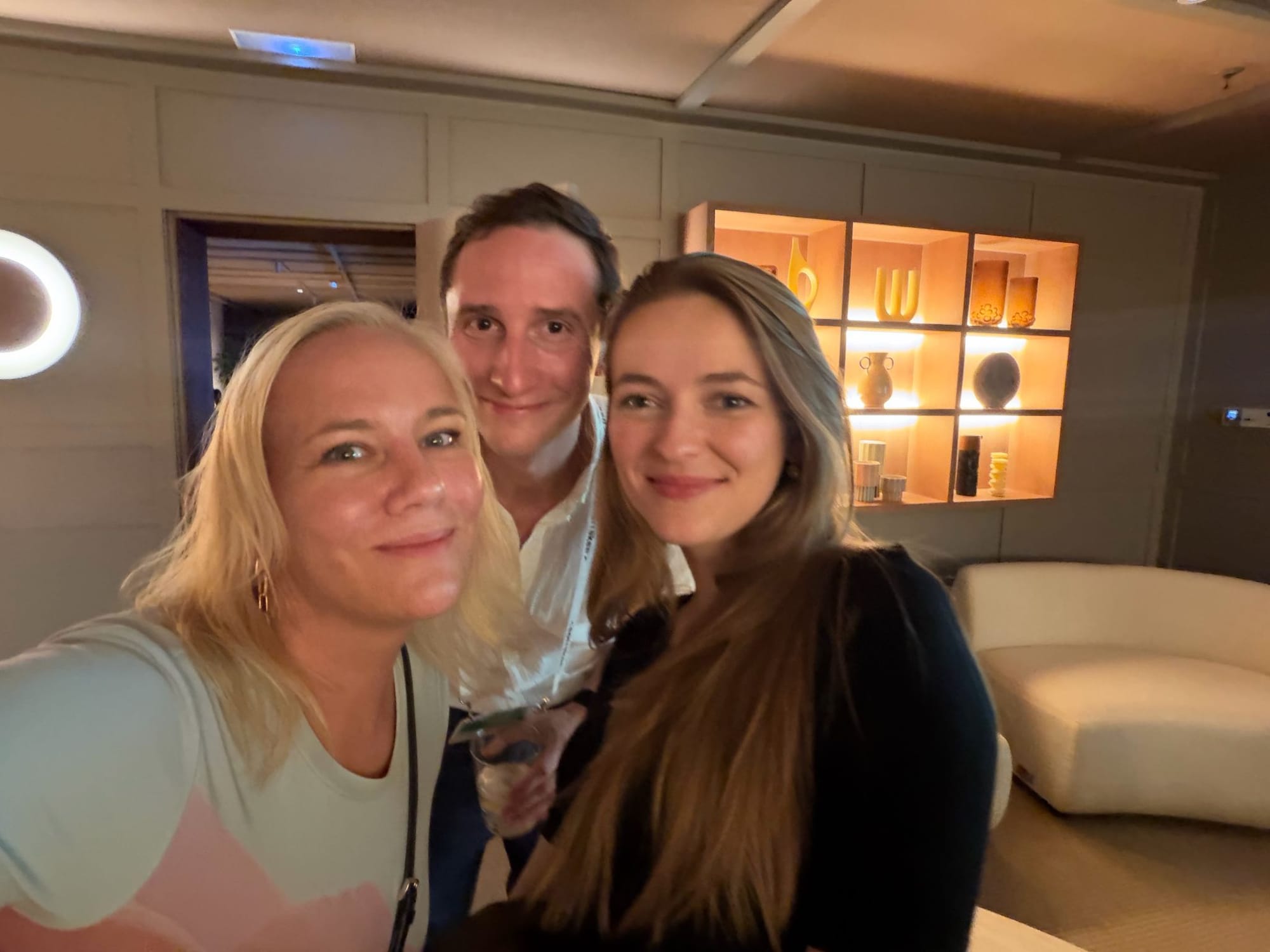
Estonia representing!
### The investor side has its own problems
I talked to a bunch of investors about how they evaluate startups now when pitch decks come from Claude and look identical, ARR proof can be really difficult to value, for startups creating any kind of analysis that proves the point (as ordered) is easy, future is so uncertain that it’s hard to predict next month, much less the next years.
They mentioned that it is also getting harder to tell whether reported revenue is real. The pressure for speed is so strong, and the temptation to be creative with numbers grows with it. Also there are many AI startups whose revenue is dependent on 1-3 large customers. So the question to ask: is the product itself easily replaceable when the next startup, building even faster, shows up?
Investors themselves need to figure out their own competitive advantage. The anxiety is real also in this room. It is reality that the next best deals will only be accessible by the largest, fastest and most aggressive VCs. What is the strategy the rest have to adapt? It is for them to look inside and figure out if it is their field of (narrow) expertise, being super well connected, managing their own accelerators or similar programs or being the capital aggregator via syndicates or having large angels co-investing?
### What now?
Barcelona left me with a clearer test for impact: does this business make a real problem cheaper, safer or easier to solve, and can it show who benefits? The language may shift from sustainability and ESG to resilience, energy independence and responsible AI. The labels can change; the need for evidence and trust cannot.
I remain optimistic about what founders, technology and capital can achieve together. But as AI moves closer to our most personal decisions, growth alone is not enough. The companies worth backing will build things people choose because they work and earn the trust as well.
## Sign up for Fomo.Observer
Startup stories from Estonia. Free weekly newsletter.
Subscribe
Email sent! Check your inbox to complete your signup.
No spam. Unsubscribe anytime.
### ANTTI PERLI: Startup Estonia model documents 2026: What changed
URL: https://fomo.observer/antti-perli-startup-estonia-model-documents-2026-what-changed/
Last updated: 2026-10-22T12:48:56.000Z
Startup Estonia has published the 2026 edition of its free model legal documents, the fourth revision of a template pack first released in 2017 and updated every three years since. Let's take a look at the latest updates...
The pack now runs to 30 templates and follows a company from incorporation to its first priced round:
- **Founding team:** a founders' agreement with matching articles of association in English and Estonian.
- **Building the team:** employment, management board member and advisor agreements, and an option agreement for employee equity.
- **Protecting the business:** IP assignment and licence agreements in a simple and a comprehensive version, and unilateral and mutual non-disclosure agreements.
- **Raising money:** term sheets and agreements for convertible loans from one or several investors, two post-money SAFEs, an equity investment term sheet and agreement, shareholders' agreements with and without a supervisory board with the corresponding articles in both languages, and a simple share purchase agreement.
- **Working tools:** a cap table model and a simplified one, a legal due diligence checklist and forms of spousal consent.
The pack is used across the Estonian tech scene, from companies founded last month to unicorns that raised on these templates from their first pre-seed round.
The 2026 rewrite was led by [Ellex Raidla](https://ellex.legal/et/?ref=fomo.observer) together with Cobalt, Triniti, Sorainen, PwC Legal, TGS Baltic and Eversheds Sutherland, supported by Njord and Walless, and promoted by Startup Estonia and EstVCA.
Most of the changes come from practice, not from new legislation. Three years of daily use showed where the templates had become tight, and the working group rewrote those parts first.
## What changed
### Options: fairer for part-timers, clearer on when options can be exercised
The option agreement got the biggest rewrite. Vesting now adjusts for part-time work: a team member who moves to 60% for a year vests at 60% for those months, keeps what has already vested, and the shortfall lapses instead of extending the vesting period.
When the option can be exercised is reframed. The 2023 template offered three triggers: an exit, after a fixed calendar date at least three years from grant, or death. The 2026 template gives the company a clear choice between two models. In the first, the option is exercisable only on an exit or liquidation. In the second, it is exercisable on an exit and, in addition, during a window that opens once no further shares can vest, whether because the vesting period has run its course or because the optionholder has left as a Good Leaver. That window never opens earlier than three years from grant and runs until the option's long-stop date, by default the tenth anniversary of the grant. The company can still narrow it for a Good Leaver by giving at least 30 days' notice.
The template also adds two alternatives to paying the exercise price in cash. With the company's consent, the exercise price can be settled in shares, so the optionholder receives fewer shares but pays only their nominal value. On an exit, the company may settle the option without issuing shares at all, deducting the exercise price and taxes from the sale proceeds.
A new rule is the Retrospective Bad Leaver. If within 12 months after someone's departure the company discovers pre-exit misconduct that would have made them a Bad Leaver, such as a material breach, a criminal conviction or material damage to the company, they are reclassified: the option lapses, any shares already acquired go back to the company free of charge, and any cancellation payment they received is repaid within 30 days. The same free call applies to a leaver who breaches post-termination confidentiality, non-compete or non-solicit obligations, even after vesting has ended.
### Former founder concept
The new piece here is the Former Founder. Until now the templates named the founders and stopped there, so when a co-founder stepped back from the day-to-day, nobody quite knew what their status was. Now a founder whose role ends automatically becomes a Former Founder: they keep their shares, stay a party to the shareholders' agreement with the founder obligations that still make sense, and the cap table and articles are updated without a fresh round of signatures. The same logic runs through the shareholders', founders' and option agreements.
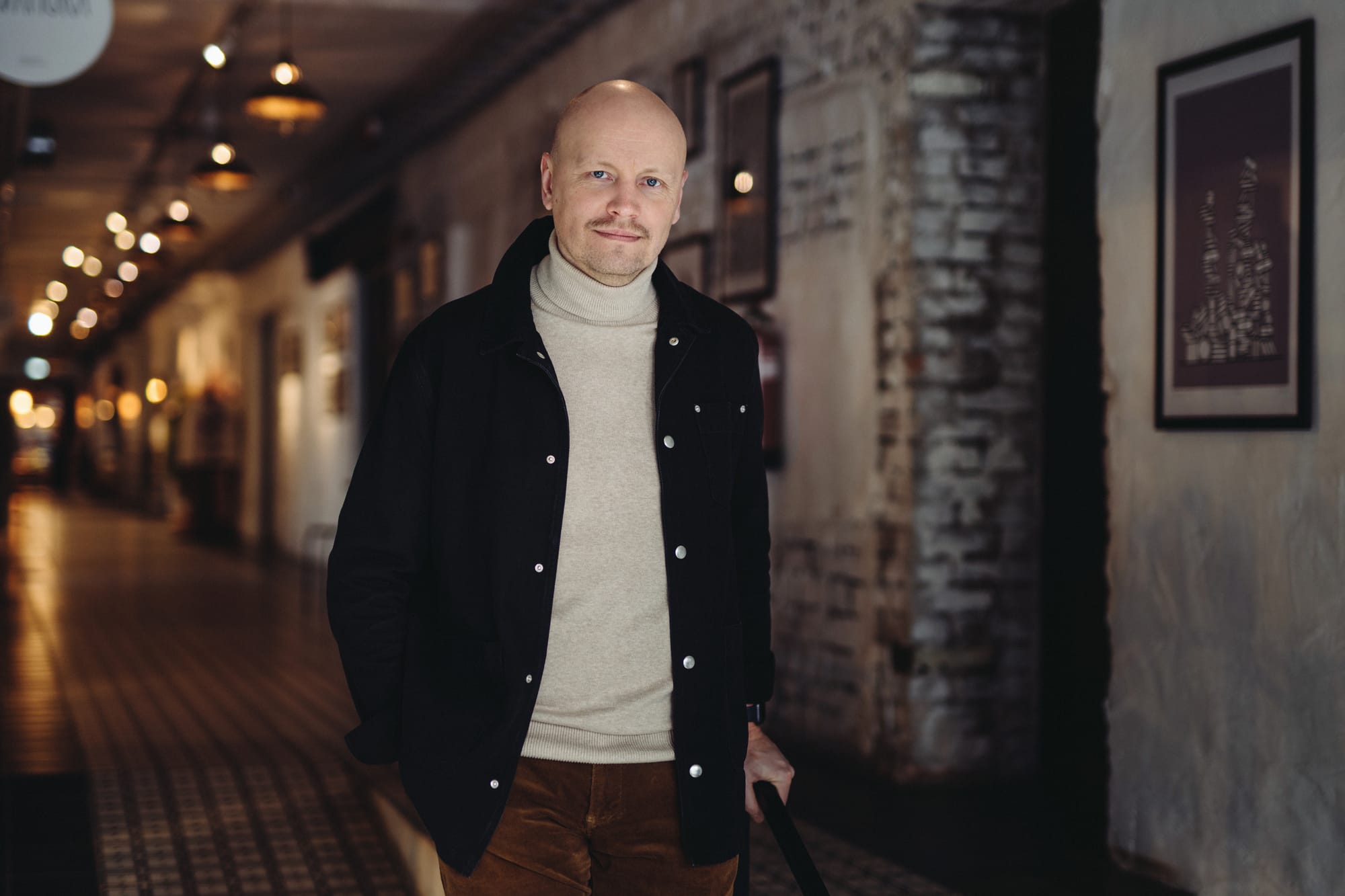
Antti Perli, Partner at Ellex
### Non-compete
A non-compete is only worth as much as its enforceability, and restrictive covenants fail in court when they are vague or broader than the interest they protect. The 2026 non-compete and non-solicit clauses are therefore drafted with more precision on each element a court examines: duration, territory, the restricted activity and the consideration. Duration is now a single Restricted Period for both covenants: the term of the founder's management-level engagement plus 12 months after it ends, replacing a bracketed period that in practice was often tied to the founder's shareholder status. A Former Founder who retains control of the company remains bound until 12 months after that control ends.
Territory and scope are tied to the founder's actual involvement: the restriction extends to new markets only where the founder approved the expansion, whether by a board decision or in the course of their duties. A purely financial holding in another company, without a management role or material influence, is expressly carved out. Where the shareholders' agreement and the founder's service contract both restrict the same activity, the stricter provision prevails, but a contractual penalty for the same breach may be claimed only once. Where applicable law conditions a post-termination non-compete on compensation, the agreement now obliges the company to pay it, and a severability provision lets a court narrow a restriction rather than strike it out.
### AI, cyber and sanctions
Founders should expect three new questions in their next round. The equity investment and convertible loan agreements add warranties on sanctions (no listed persons, no breaches or investigations in the past three years), cybersecurity (safeguards in place, no incident that had to be reported) and AI. The AI warranty comes in two sizes: a light one for companies that only use AI tools for internal productivity, and a full one for companies with AI in their product, covering lawful use, rights to the outputs and training data, and internal policies. Export control, anti-bribery and foreign direct investment clearance are optional extras. The legal due diligence checklist asks for the matching documents, so the data room can be prepared before the questions arrive.
The IP assignment agreements close the same loop on the team side. Nobody may put AI-generated code, text or images into what they deliver unless the company permits it, and they must disclose which tools they used. That keeps the company's IP clean when the next investor's lawyers go through it.
### Raising the round
The equity investment agreement lets the company add investors after the first closing, by a deadline and up to a cap, on the same price and no better terms, without reopening the round.
The post-money SAFE, the convertible instrument Y Combinator standardised for US seed rounds and Startup Estonia adapted to Estonian law, is updated from YC's version 1.1 to version 1.2 and now comes in two forms, valuation cap or discount, instead of one template combining both.
### New in the pack
- **Simple share purchase agreement.** A new template for secondary sales of existing shares, as opposed to the issue of new shares in a funding round. Typical uses include an early investor, a departing founder or an employee selling their shares to another investor. It is built for transfers that do not require a notary, which Estonian law allows where the company has waived notarial form in its articles. The template covers the usual conditions (waivers of the other shareholders' pre-emption and co-sale rights, the buyer's adherence to the shareholders' agreement, board approval and spousal consent), the closing steps, basic seller warranties and liability capped at the purchase price.
- **IP assignment in two versions.** The single 2023 agreement is replaced by two forms, chosen by who is signing. The simple form is for individuals: founders, employees, board members, advisors and freelancers. It assigns everything the person creates for the company under any professional relationship, whatever contract it rests on, and can reach back to a founder's work from before incorporation. The comprehensive form is for contractors and agencies working under a specific agreement. It keeps the fuller structure: work created for the company is assigned, the contractor's pre-existing IP is licensed, the company grants the contractor a limited licence to its own IP for the purpose of the engagement, and the contractor undertakes to bind its personnel and subcontractors to the same obligations. Both forms bar AI-generated elements from deliverables unless the company permits them and require disclosure of the AI tools used.
Smaller fixes follow the same logic. The IP clauses in the employment and board member agreements now reach back to work done before the contract was signed. Personal data clauses are gone from the employment, board member and advisor agreements. The spousal consent forms are shorter, and the cap table example follows the EUR 0.01 notional share used in the investment agreement.
### Why every three years
"The model documents don't gather dust on a shelf. They are the everyday tool of Estonia's tech sector," says Antti Perli, partner at Ellex Raidla, who led the working group. "Some of our unicorns raised on these templates from their first pre-seed round all the way up. A tool in constant use shows where it needs sharpening, and this round of changes came straight from practice, from the places where the documents had become tight over three years. That is why updating them at least every three years is essential."
All documents are free to download at [startupestonia.ee/model-documents](https://startupestonia.ee/model-documents/?ref=fomo.observer).
*Sources: the 2023 and 2026 versions of the Startup Estonia model documents;* [*Startup Estonia model documents page*](https://startupestonia.ee/model-documents/?ref=fomo.observer)*.*
---
*Attorney* [*Antti Perli*](https://www.linkedin.com/in/antti-perli-8b31095b/?ref=fomo.observer) *is one of the most experienced venture capital and technology startup lawyers in Estonia. He advises clients on the formation of venture capital and private equity funds, venture capital and private equity transactions, founder, employee and management issues, the development of option programs, intellectual property, information technology and general business law issues, as well as other day-to-day matters.*
## Sign up for Fomo.Observer
Startup stories from Estonia. Free weekly newsletter.
Subscribe
Email sent! Check your inbox to complete your signup.
No spam. Unsubscribe anytime.
### Blackwall raises $100M to become Estonia's latest (official) unicorn
URL: https://fomo.observer/blackwall-raises-100m-to-become-estonias-latest-official-unicorn/
Last updated: 2026-10-25T01:35:56.000Z
Blackwall, the Estonia-based firewall company has raised a $100 million Series C round at a $2.2 billion valuation. The round was led by AVP, who join existing investors Dawn Capital, MMC Ventures and Tallinn-based Tera Ventures. Tera Ventures still holds the largest [investment ticket](https://www.unicorns.ee/c/14847036?from=ecosystem&ref=fomo.observer).
Blackwall (formerly known as BotGuard) was founded in 2019 by Nikita Rozenberg (CEO) and Denis Prochko (CTO).
“Nik and Denis combine real grit, deep technical knowledge and a rare grasp of where the opportunity lies and how to capture it. Blackwall, now protecting millions of websites, is exactly the kind of born-global company Tera exists to back. We were their first believers, backing them from day one through the early years of building the product and winning its first partners and customers. This round shows we’re far from the last,” said Stanislav Ivanov, Founding Partner, Tera Ventures.
Blackwall will use the investment to scale its global presence across the web traffic management market, establishing and expanding operations across twelve strategic regions spanning North America, Europe, Asia-Pacific and the Middle East.
Currently spanning bot mitigation, DDoS protection, web application firewall, load balancing, server-side encryption and management of agentic AI traffic which is rapidly taking over the Internet, Blackwall is deployed inside the web hosting providers’ own infrastructure, identifying real visitors and legitimate automated traffic from malicious bots, attacks and traffic abuse, filtering billions of requests per day.
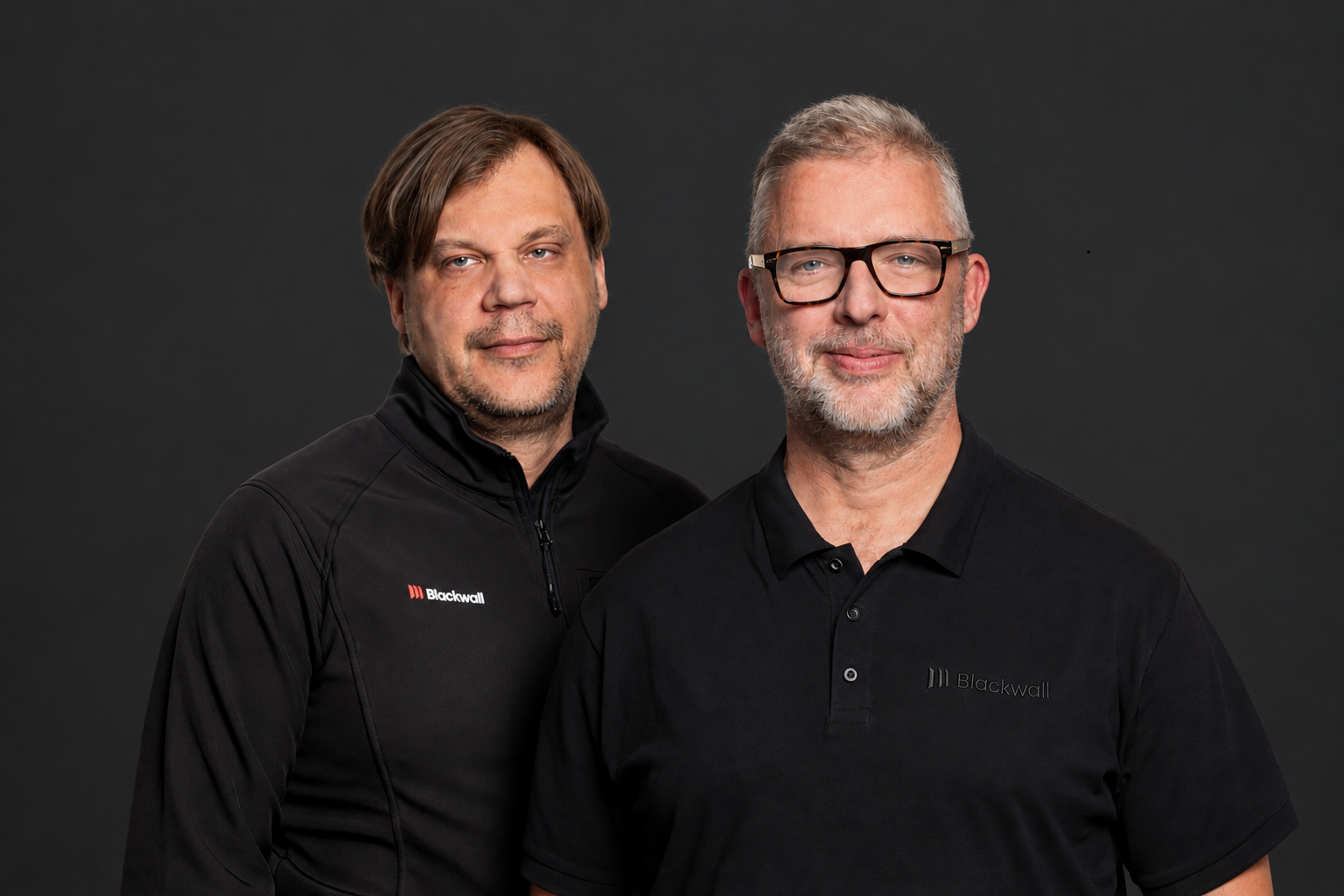
Denis Prochko and Nikita Rozenberg, Blackwall's founders
"The web is becoming more automated, more distributed and more complex, but the infrastructure that powers it remains highly fragmented," said Nikita Rozenberg, co-founder and CEO of Blackwall. "Our ambition is to build the traffic management ecosystem that brings those worlds together. This funding allows us to expand globally, deepen our platform and give hosting and infrastructure providers the technology they need to participate in the next generation of the web."
### TopTech listing
Previously touted as one of Estonia’s newest unicorns due to its results in the [TopTech list](https://fomo.observer/blackwall-toptech/), this funding round confirms it as it joins [Skeleton Technologies](https://fomo.observer/skeleton-technologies-becomes-estonias-latest-unicorn/) in the coveted rankings.
Blackwall value was estimated at €1.03 billion in the [TopTech 2026 r](https://top101.ee/tech?ref=fomo.observer)ankings.
The AI-enabled security and web infrastructure company, which raised a €45 million Series B last year to protect small and medium-sized businesses from malicious online traffic, saw its valuation surge 368% from roughly €221 million the previous year.
Its $2.2 billion valuation makes Blackwall the country's third-most valuable company after Wise and Bolt. And it blows the 1.03 billion estimate out of the water.
### Latitude59 goes global with four more events
URL: https://fomo.observer/latitude59-goes-global-with-four-more-events/
Last updated: 2026-10-20T13:04:54.000Z
Not satisfied with being the largest startup and technology event in the Baltics, [Latitude59](https://latitude59.ee/?ref=fomo.observer) is continuing to expand its presence around the globe with events in Singapore, Kenya, Uganda and Zambia.
Latitude59 is returning to Nairobi for Latitude59 Kenya Edition 2026 on December 3-4\. This will mark the fourth year of Latitude’s African endeavours. Bringing together African startup founders, international investors, and technology companies operating across African and global markets to connect, exchange ideas, and explore opportunities for international growth. Last year's event attracted around 2,000 participants, and organizers expect a similar turnout this year, including 600 investors from Africa, Europe, the Nordics, and Asia.
> “Rooted in Estonia, Latitude59 is building bridges between countries, continents, and startup ecosystems. Today, we connect startup communities across the Nordics, Europe, Africa, and Asia. Our international initiatives are driven by a genuine ambition to bring Estonia’s success story to the world and connect innovators, entrepreneurs, and investors, creating opportunities for the next global success stories to emerge,” said **Latitude59 CEO Liisi Org.**
It will also host pre-events in Uganda and Zambia, ahead of the Kenya conference, aimed at engaging local startup communities and strengthening connections between startup ecosystems across the continent.
### A Singapore special
On October 28, Latitude59 will host [Singapore x New Nordics Night of Innovation & Investment](https://latitude59.ee/singapore/?ref=fomo.observer) \- organised in collaboration with the Embassy of Estonia in Singapore, Nordic Singapore Innovation Days, and the Swedish Energy Agency as an official side event of SWITCH technology and innovation conference.
“Singapore has made remarkable progress in developing its knowledge-intensive and high-tech startup ecosystem. Today, the country is home to more than 1,200 deep tech startups and has become a major hub for international investors. This year, we expect more than 100 delegates from nine Nordic countries to join us in Singapore, where we aim to connect them with the local and Southeast Asian investment communities and create new opportunities for international collaboration,” said Org.
*Fomo.Observer will have a report from the event in Singapore…you know, in case you are experiencing fomo!*
## Sign up for Fomo.Observer
Startup stories from Estonia. Free weekly newsletter.
Subscribe
Email sent! Check your inbox to complete your signup.
No spam. Unsubscribe anytime.
### LIINA LAAS: Estonia has 1,500 Startups. Silicon Valley made me wonder what the hell we're doing with them
URL: https://fomo.observer/liina-laas-estonia-has-1-500-startups-silicon-valley-made-me-wonder-what-the-hell-were-doing-with-them/
Last updated: 2026-10-20T05:59:59.000Z
There is something quite ridiculous about San Francisco.
Everything is bigger, louder and more expensive. The hills are absurd, the networking never stops, and you can't even queue at Safeway to buy toothpaste without overhearing someone discussing their latest funding round or how they're going to disrupt an industry you didn't know needed disrupting.
Some of it is a bit much. Quite a lot of it, especially being an Estonian.
But after a week with [Mesh Collective](https://www.meshcollective.co/?ref=fomo.observer) during Tech Week, meeting founders, investors and visiting the offices of a16z, Accel, Creandum and General Catalyst, I started to understand why this place keeps producing companies that change the world.
It's not that the founders are necessarily smarter. Estonia has exceptional talent. The difference is what people believe is possible, and what everyone around them expects them to achieve.
In Estonia, reaching €1 million in annual revenue is a significant achievement. In San Francisco, someone might ask why you're not aiming for €10 million. And they genuinely believe you can do it, because the bloke sitting next to you at WeWork is doing it. His friend did it last year. Someone else just raised $20 million to do something similar. When extraordinary outcomes become part of your everyday environment, they stop feeling extraordinary.
### In Europe, they question your valuation. In America, they question your ambition
One of the biggest differences I noticed was in conversations with investors. First, the speed. You reach out, they respond, you have a proper discussion and quite often know relatively quickly whether there's interest.
But what impressed me more was the quality of the questions. I met exceptionally sharp investors who challenged our assumptions about positioning, distribution and long-term competitive advantage.
In Europe, I've been asked whether someone could simply vibe-code our product over the weekend. It's a legitimate concern, but there's a considerable difference between asking whether someone can build similar software and asking **why your company will win when everyone can build similar software.** One challenges your ability to build a product. The other challenges your ability to build a business.
The approach to ambition was equally interesting. In Europe, conversations often revolve around whether valuations are too high or revenue targets unrealistic. In San Francisco, I heard a different perspective: What if you raised more money? Hired faster? Why aren't you aiming higher?
I've met outstanding European investors too, but the difference in the conversations I experienced was striking. In Europe, we spend a lot of time discussing why something might not work. In Silicon Valley, they seem more interested in how big it could become if it does.
### Estonia has 1,500 startups. Why aren't we buying from each other?
Perhaps the most impressive thing about Silicon Valley isn't the money or ambition, but the concentration of talent and people's willingness to help.
Some of the smartest people from around the world have deliberately moved there to build companies. And rather than keeping to themselves, they make introductions, offer advice, test each other's products and genuinely help others get ahead. I was even offered a place to stay on my next visit by someone who had received the same help when they first moved there and wanted to pay it forward.
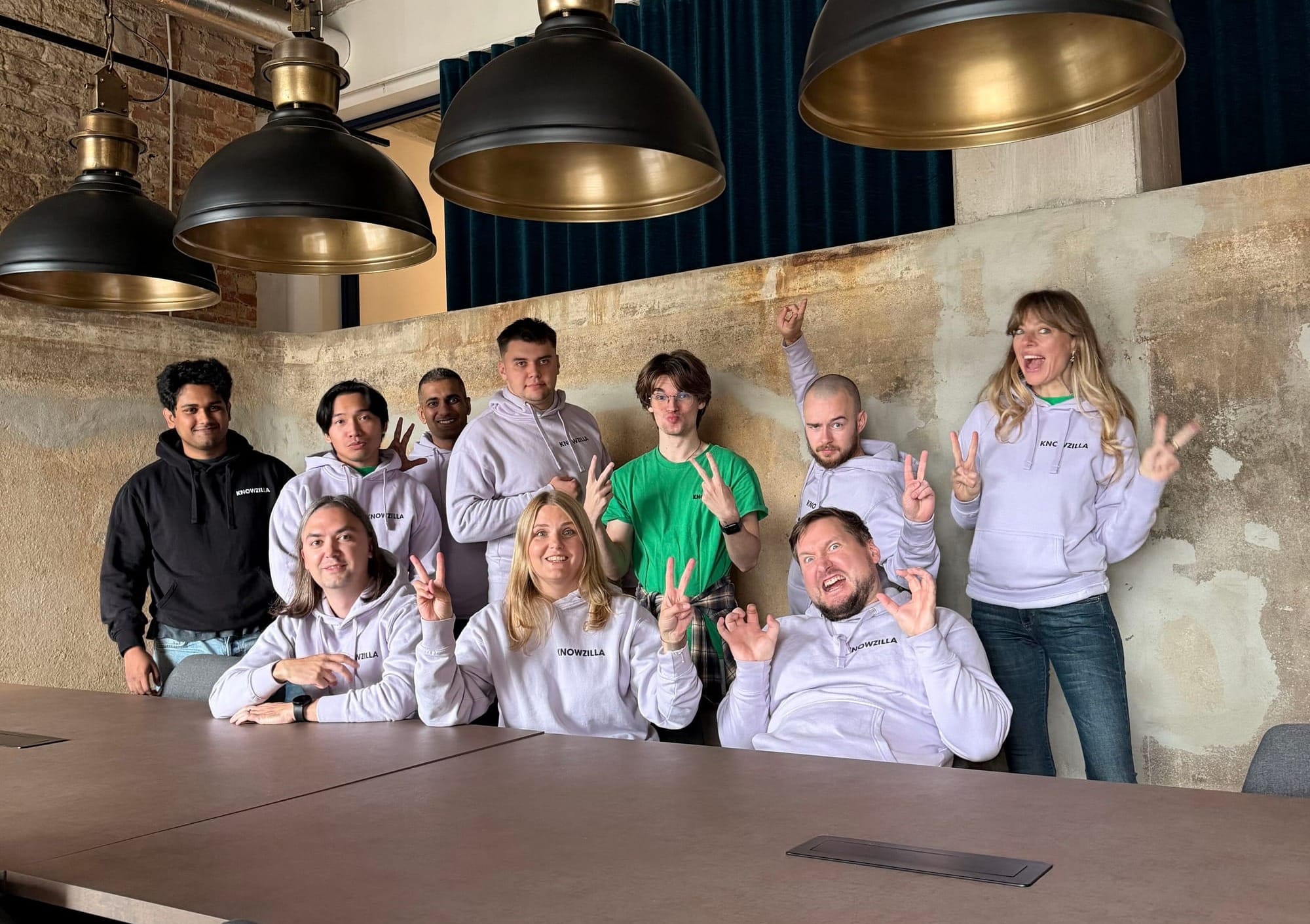
Knowzilla team
Which brings me to something that's been bothering me since coming home.
I love the Estonian startup ecosystem. We've built something extraordinary for a country of our size. But I think we're missing something rather obvious: **Why aren't we each other's first customers?**
One of the biggest attractions of communities like Y Combinator and a16z, beyond capital and reputation, is access to other portfolio companies. These companies become each other's early customers, testers and champions.
Imagine you've just launched a product. Instead of spending months convincing strangers to take a meeting, you have hundreds of founders willing to give it a try. Some become paying customers. Others tell you why your product sucks. Both are incredibly valuable. If it's good, they'll introduce you to others. If it's terrible, you'll find out quickly enough to fix it.
It's not charity. Nobody should buy bad software just because they share an investor. It's about giving each other a genuine opportunity.
Estonia has around 1,500 startups. Imagine if even a fraction actively tested and bought products from each other. How many companies could find their first 50 customers faster? Yet I don't see us doing this systematically.
Perhaps it's cultural. Estonians aren't exactly famous for enthusiastically approaching strangers and offering to help. Or perhaps I've been excluded from a very successful secret club. If so, please send me an invitation.
We attend events, congratulate each other on funding announcements and like each other's LinkedIn posts. That's nice, but **LinkedIn likes don't pay salaries. Customers do.**
I'd love to see our accelerators, investors and startup communities actively connecting companies commercially. Every portfolio company should know what the others are building. Every founder should have an easy way to find testers, customers and introductions. Not another networking event, but actual business.
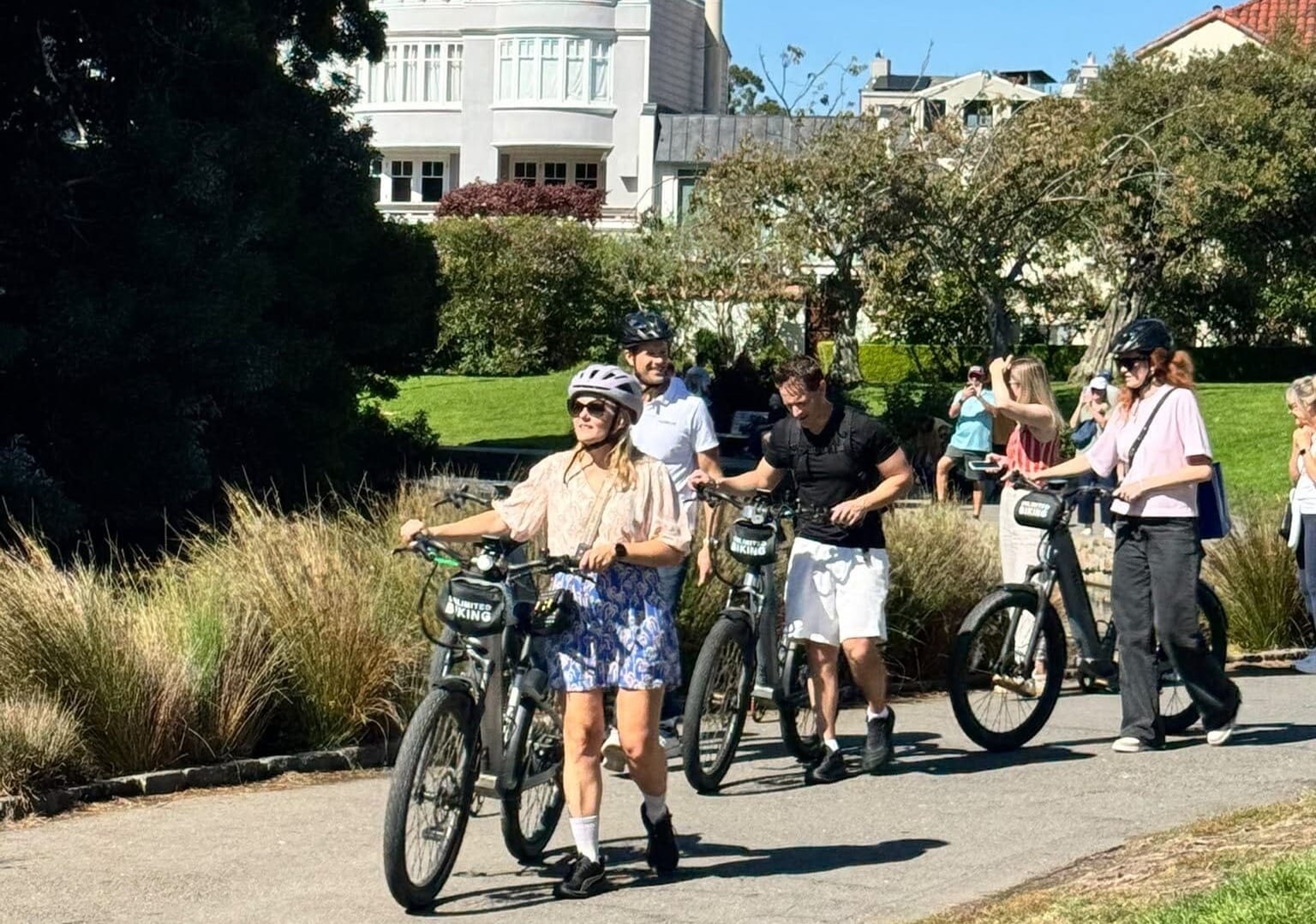
Cycling with the Mesh Collective
### Mesh Collective understood what networking should be
One of the highlights of the trip was spending several days with Mesh Collective. We went cycling, surfing, running up San Francisco's ridiculous hills, doing sauna and cold plunges, meeting investors and having dinners together. My flat-country feet were not prepared for those hills. Estonia is very flat, not my feet, in case anyone was wondering.
But the clever part was how the experience was structured. Most networking events consist of asking someone what they do, explaining what you do, exchanging pleasantries and moving on. With Mesh, you kept meeting the same people in different situations. You might discuss fundraising in the morning, cycle together in the afternoon and end up talking about life over dinner.
By the third conversation, you've stopped repeating your elevator pitch and started getting to know the person.
That's particularly important with investors. A VC relationship can last ten years or longer. You'll have disagreements, missed targets and difficult board meetings. You should probably know whether you actually like and respect each other before getting married financially.
Mesh created the space for those relationships to develop. I also came home with a Legend Award and the title of Ice Plunge Queen. Not sure how useful that will be for fundraising, but I'll take it.
### We don't need to become Silicon Valley
For all my enthusiasm, I don't think Silicon Valley is paradise. The costs are absurd, the intensity exhausting, and the obsession with growth can come at the expense of things that matter. There's something strange about discussing billion-dollar valuations while stepping around very visible social problems outside the office.
I prefer many things about Europe. We place greater emphasis on quality of life, social responsibility and building societies where success isn't measured exclusively by the size of your bank account. I want to build a successful global company without believing that winning justifies every sacrifice.
But we shouldn't confuse our values with our limitations. Wanting a good quality of life doesn't mean we should build smaller companies. Being thoughtful doesn't mean we need to move slowly. And being humble doesn't mean we should be afraid to say we intend to win.
And let's not forget that we have some very real advantages over Silicon Valley, starting with costs. When I shared Knowzilla's monthly burn rate with people in San Francisco, the reaction was genuine disbelief. How is it possible to build what we're building with so little money?
Well, for starters, our rent isn't $5,000 a month and coffee doesn't cost $9\. Although, admittedly, we're making steady progress towards both.
Jokes aside, our cost structure is a massive competitive advantage. We can build with exceptional talent, operate leaner and make investment capital last considerably longer. If we combine that efficiency with Silicon Valley's ambition, we have a pretty compelling proposition. **We don't need to spend like Silicon Valley to build companies that compete with Silicon Valley.**
I came home with new contacts, excellent feedback on Knowzilla and more ideas than my team probably wants to hear about. But the biggest takeaway was simple: we already have an extraordinary startup ecosystem. We just need to make better use of it.
Next time someone in your network launches a product, don't just congratulate them. Try it. If it's good, buy it. If it's bad, tell them why. If you know someone who could benefit, introduce them.
And if you're an investor with dozens of portfolio companies, perhaps the most valuable thing you can do this week isn't another mentoring session about pitch decks. It's helping two of your companies do business together.
Silicon Valley has plenty of things we shouldn't copy. But the belief that everyone around you can win, and that helping them win might help you too, is something we could use a lot more of.
**Estonia doesn't lack ambition when it comes to talking about unicorns. We need to get better at turning that ambition into everyday action. And that seems like a rather stupid problem for a country as smart as ours to have.**
**P.S. I mean it, let’s collaborate. Reach out to me with your product, I will try it!**
---
[***Liina Laas***](https://www.linkedin.com/in/liinalaas/?ref=fomo.observer) **| The Builder* Liina didn’t start Knowzilla to launch another SaaS tool; she started it because she was tired of playbooks nobody read and knowledge that lived only in a founder’s head. With a career spanning from early-stage chaos to Deel's hyper-growth, she now focuses on making sales enablement impossible to ignore. She brings a "no-BS" approach to turning messy founder knowledge into systems that actually scale.*
## Sign up for Fomo.Observer
Startup stories from Estonia. Free weekly newsletter.
Subscribe
Email sent! Check your inbox to complete your signup.
No spam. Unsubscribe anytime.
### Estonian hydrogen startups scale globally as Stargate lands Cummins deal, PowerUP targets yachts
URL: https://fomo.observer/stargate-takes-over-a-legacy-product-line-from-cummins/
Last updated: 2026-10-20T09:00:34.000Z
TALLINN - Estonian hydrogen startup Stargate Hydrogen said it has signed an agreement with global power solutions company Cummins to manufacture and supply replacement stacks and provide related services for more than 400 installed HySTAT alkaline electrolysers without disclosing financial details of the deal.
> "This agreement is first and foremost about maturity," Marko Virkebau, Chief Executive Officer of Stargate Hydrogen, said in a statement. "We are proud to continue the legacy of the HySTAT platform, which has served customers reliably over multiple decades and has been proven through hundreds of thousands of operating hours in real industrial conditions."
Virkebau added that the selection by Cummins highlights widespread confidence in the startup's engineering, manufacturing capabilities, and long-term customer support.
For Stargate, founded in 2021, the contract creates recurring demand for replacement stacks and strengthens its position among globally recognised industrial gas companies.
The firm specialises in precious-metal-free alkaline electrolysers for energy-intensive industries—such as refining, ammonia, and steel production — that are transitioning away from grey hydrogen.
Cummins expressed confidence in handing over its legacy fleet.
> "We selected Stargate Hydrogen because we believe they have the technical expertise, commitment, and long-term perspective required to support the customers," Tim Proctor, Executive Director of Electrolyser Engineering at Accelera by Cummins, said in a statement.
Separately, highlighting the expanding reach of Estonian hydrogen technology, PowerUP Energy Technologies announced a strategic partnership with Italian marine technology firm H2Boat to provide fully integrated, zero-emission energy solutions for yachts and the broader maritime industry.
The alliance will combine H2Boat’s onboard hydrogen production and advanced metal hydride storage with PowerUP’s highly efficient proton exchange membrane (PEM) fuel cell generators.
> "For too long, there has been a glaring contradiction in our industry. You enjoy this silent, green yachting experience, yet the moment you need to manoeuvre into the harbour or require backup power, you have to fire up a noisy, polluting diesel generator that instantly ruins the magic," said Ivar Kruusenberg, CEO and Founder of PowerUP, adding that the partnership eliminates this compromise by delivering clean, silent electricity that emits only pure water.
## Sign up for Fomo.Observer
Startup stories from Estonia. Free weekly newsletter.
Subscribe
Email sent! Check your inbox to complete your signup.
No spam. Unsubscribe anytime.
### EU Inc. is on the ropes
URL: https://fomo.observer/eu-inc-in-fear-of-being-stripped-of-its-essence/
Last updated: 2026-10-19T11:21:05.000Z
All is not well with the proposed EU Inc. There has been an urgent public appeal to EU leaders to save the initiative, warning that political compromises have effectively gutted the proposed ‘EU Inc.’ corporate framework.
In an open letter published on October 15, founders and investors argue that the initiative, originally designed to help European startups scale globally by creating a unified legal standard, has been reduced to a mechanism for "just fast incorporation".
"The EU Inc you championed - one that will enable Europe to compete at scale - no longer exists," the public statement read. The letter notes that months of negotiations have removed the core of the proposal, leaving a compromised framework that "will do nothing to improve Europe's competitiveness".
At the heart of the founders' frustration is a persistent structural disadvantage: American startups benefit from operating under a single, unified legal standard —often rooted in Delaware — while European founders must navigate 27 distinct, fragmented corporate legislations.
---
*You can get a more thorough take on EU.Inc in our coverage:*
[HEDI MARDISOO: EU Inc. Is it for the startups or for everyone?If the Council is serious about making EU Inc. work, the logical next step is to pilot it in Estonia, see results, and then take the case back to Brussels with numbers instead of slides.Fomo.Observer](https://fomo.observer/hedi-mardisoo-eu-inc-is-it-for-the-startups-or-for-everyone/)
[HEDI MARDISOO: Stopping the Brain Drain: Can the 28th Regime Save European Tech?From e-Residency to Startup Residency and the Laboratory of EU.incFomo.Observer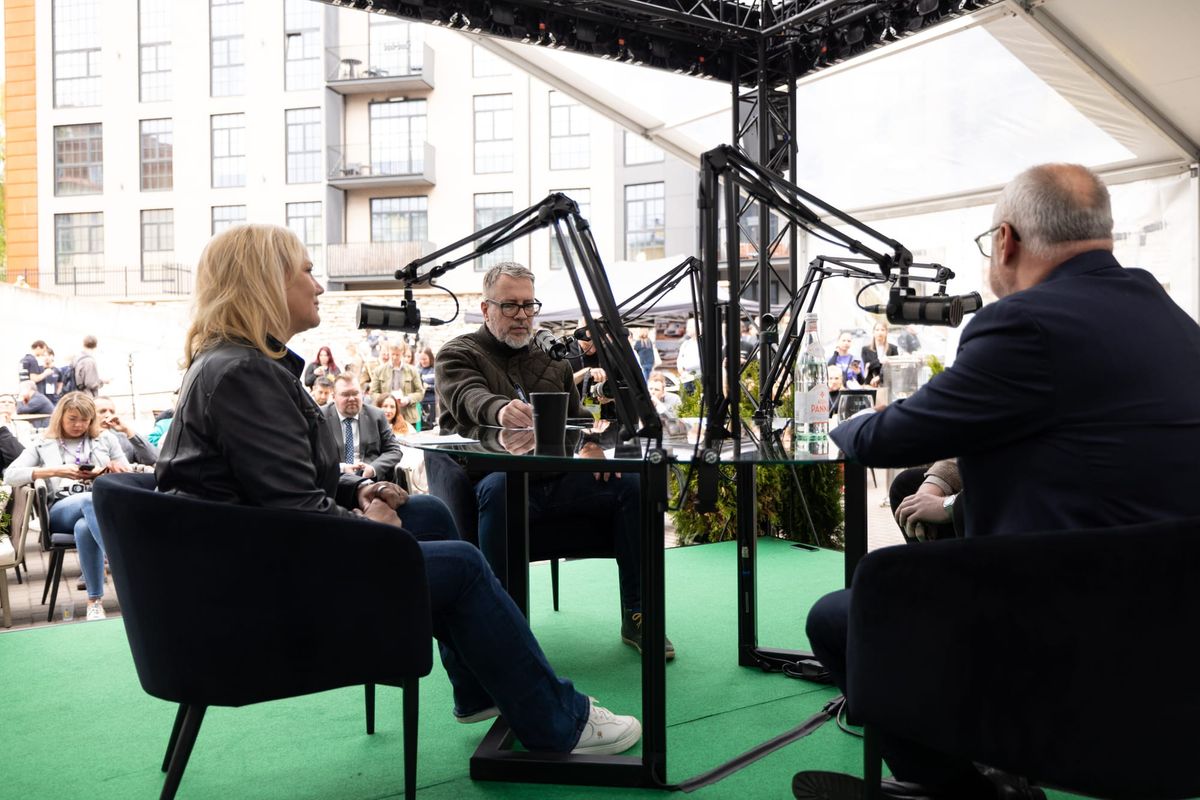](https://fomo.observer/hedi-mardisoo-should-i-stay-or-should/)
[LIISI KIRCH: Kui ühisturg valmis sai, olid ükssarvikud juba AmeerikasAprilli alguses mõistsin, et EU Inc-i (varemalt 28\. režiim) üle käib arutelu kahes täiesti erinevas tempos. Ühelt poolt ei saa iduettevõtluse ökosüsteem aru, miks sellega on nii kaua venitatud. Nende jaoks on teema juba ammu selge ning tundub arusaamatu, miks midagi, mis on paberil valmis, on nii keeruline päriseltFomo.Observer](https://fomo.observer/liisi-kirch-eu-inc-eesti)
---
To save the legislation, the startup coalition outlined five critical pillars to retain, emphasising the absolute necessity of "free choice of registration".
Founders insist they must be permitted to choose their state of incorporation without restriction, regardless of where their operations are based. “Without that free choice and mutual recognition, no standard will emerge - making the proposal pointless,” the letter stated.
A unified, cross-border framework for stock options is another major friction point. The coalition argues that stock options are a primary lever used by startups to recruit top talent and compete with massive US tech corporations. "Without a broad stock option framework, Delaware will remain the preferred choice for most fast-growth companies," the founders warned.
The founders' desperate appeal arrives on the heels of severe pushback from European trade unions, which have attacked the 'EU Inc' draft, claiming the so-called "28th company regime" lacks legal safeguards and would allow bad-faith actors to bypass national labour laws, collective bargaining agreements, and corporate tax obligations.
Addressing these labour concerns directly in their appeal, the startup coalition maintained that "EU Inc doesn't change" the fundamental reality that employees remain covered by the specific labour laws of the country where they actually work.
The founders stressed that registering a company in a different member state under EU Inc "does not diminish local protections or change where the company and its employees pay taxes".
If the broader 'EU Inc' initiative is ultimately killed by gridlock and union opposition, regional alternatives may rapidly gain momentum. Industry discussions have increasingly turned toward concepts like a 'Nordic.Inc' framework.
Given that legislation, governance standards, and business cultures across the Nordic countries already share significant similarities, establishing a regional single market for startups could serve as a highly functional, pragmatic fallback if a continent-wide 27-state agreement proves impossible.
For Europe's startup ecosystem, however, the current stakes feel existential. “If Europe's leaders cannot even align on a solution like EU Inc, Europe's founders will lose more than a proposal," the letter concluded. "They will lose faith in Europe's ability to face the challenges of our time”.
## Sign up for Fomo.Observer
Startup stories from Estonia. Free weekly newsletter.
Subscribe
Email sent! Check your inbox to complete your signup.
No spam. Unsubscribe anytime.
### Skeleton Technologies becomes Estonia's latest unicorn
URL: https://fomo.observer/skeleton-technologies-becomes-estonias-latest-unicorn/
Last updated: 2026-10-17T07:17:10.000Z
It appears that Estonia has a new unicorn...and its deeptech! The coveted title goes to supercapacitor and energy storage firm Skeleton Technologies.
Its status has been raised due to a strategic investment from Siemens. Now valued at over $1 billion, Lift99 will have to get the glue gun out and stick Skeleton in its rightful position on the wall of fame.
While the financial details of the investment have not been disclosed at this stage, Taavi Madiberk co-founder and CEO of Skeleton Technologies has described it as a nine figure round. The investment will primarily accelerate the expansion of Skeleton’s US manufacturing footprint and R&D activities in Silicon Valley to meet growing demand from hyperscalers for AI data-center power systems.
The investment deepens a long-standing relationship between the pair as Siemens supported Skeleton’s expansion in 2023, while Siemens Digital Industries designed and automated the company’s Leipzig SuperFactory in Germany.
> Announcing the deal on [LinkedIn ](https://www.linkedin.com/posts/madiberk%5Fdeeptech-aiinfrastructure-datacenters-share-7516076461498376192-MFKX/?ref=fomo.observer)earlier Madiberk remarked, "When we started Skeleton in 2009 in a small lab in Tartu, Estonia, I would never have thought that I would still be building it 17 years later. Or that my co-founders Oliver Ahlberg, Jaan Leis and Anti Perkson would still be at it with me. Hardware is hard. Deeptech is deep. There are no shortcuts to building something that truly matters."
### Making the most of your GPUs
“AI is scaling faster than the power infrastructure behind it. The constraint is not how many GPUs you can buy, but how much compute you can extract from every GPU and every megawatt available,” said Madiberk.
“In AI infrastructure, supercapacitors are becoming the new semiconductors. They will determine how much performance hyperscalers can deliver from their GPUs. Our systems remove power fluctuations as a constraint, enabling more compute faster while delivering up to 40% energy savings and double-digit improvements in GPU performance," he added.
At the end of September, independent Toptech research estimated Skeleton's valuation at 499 million euros.
[Security firm Blackwall tops €1 bln value on paper amid sector M&A frenzyCybersecurity provider Blackwall has achieved a €1.03 billion valuation in the TopTech 2026 rankings, riding a massive wave of global consolidation in the cybersecurity sector to become Estonia’s newest billion-euro tech firm on paper. Despite crossing the threshold in the independent ranking compiled by M&AFomo.ObserverTarmo Virki](https://fomo.observer/blackwall-toptech/)
Shares in Skeleton's publicly listed shareholder Harju Elekter – which invested back in 2015 – rose 5% on a flat Tallinn bourse on Wednesday. The deal would make the 5.45% stake worth more than half of Harju Elekter's market cap.
Harju Elekter said it would also sell part of its stake in Skeleton to Siemens International Holding B.V. for 5.7 million euros, covering its initial investment fully.
"Following the partial disposal of its holding, Harju Elekter will remain a shareholder in Skeleton but sees the possibility of fully exiting the investment during 2028, subject to suitable opportunities and conditions," the company said in a stock exchange release.
### A run of unicorns lately
The jury is still out on whether Blackwall beat Skeleton to become a unicorn; perhaps we could say that Blackwall entered through the back door and Skeleton came charging in the front?
You decide. Read our write-up on Blackwall below.
[Security firm Blackwall tops €1 bln value on paper amid sector M&A frenzyCybersecurity provider Blackwall has achieved a €1.03 billion valuation in the TopTech 2026 rankings, riding a massive wave of global consolidation in the cybersecurity sector to become Estonia’s newest billion-euro tech firm on paper. Despite crossing the threshold in the independent ranking compiled by M&AFomo.ObserverTarmo Virki](https://fomo.observer/blackwall-toptech/)
## Sign up for Fomo.Observer
Startup stories from Estonia. Free weekly newsletter.
Subscribe
Email sent! Check your inbox to complete your signup.
No spam. Unsubscribe anytime.
[Skeleton sets eyes on US IPO after €33 million roundBloomberg reports that Skeleton Technologies is setting its sights on a U.S. public debut following a fresh €31 million funding round led by Taiwania Capital.Fomo.ObserverTarmo Virki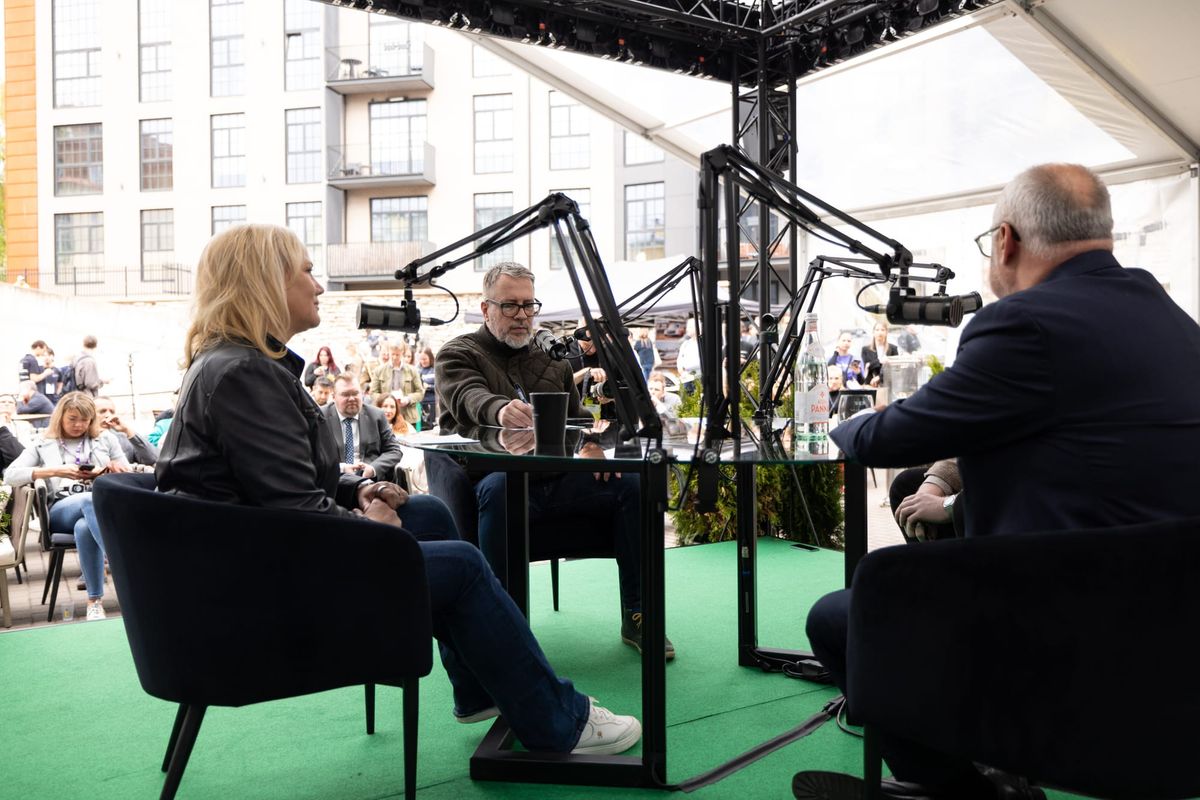](https://fomo.observer/skeleton-sets-eyes-on-us-ipo-after/)
[Estonia needs to find its next advantageFor a country synonymous with tech unicorns, they have been pretty thin on the ground lately. We’ve been searching high and low for our next unicorn for several years now - circling Starship and Pactum for a while, and lately even tried giving Skeleton and Frankenburg a nudge too, butFomo.ObserverTriin Hertmann](https://fomo.observer/estonia-needs-to-find-its-next-advantage/)
### Cachet raises €4.5 million round
URL: https://fomo.observer/cachet-raises-new-round/
Last updated: 2026-10-17T18:34:44.000Z
TALLINN - The insurtech for the platform economy, whose customers include Bolt, Ryde and Turo, will use the funding to further expand its product offering and grow its sales team in Europe.
[Cachet](https://cachet.me/en?ref=fomo.observer)saidit has now raised a total of around €11 million following the 4.5 million round, which was led by Nordic venture capital firm Spintop Ventures, with existing investors Truffle Capital and [Icebreaker.vc](http://icebreaker.vc/?ref=fomo.observer) also taking part.
> "There is a lot of noise right now from insurance start-ups burning capital to buy growth at high valuations. Cachet has taken the opposite route: build the infrastructure, reach profitability, then raise to go further and faster," said Erik Wenngren, Partner at Spintop Ventures.
Shared mobility and gig platforms have grown faster than the insurance built to cover them, it said.
Traditional policies are priced once a year and arranged country by country, while a platform's risk changes with each trip. Cachet designs coverage around how people work or which vehicles they actually use, builds it into operators' systems, and runs policies and claims, while established insurers carry the risk.
> "We are building the adaptive insurance infrastructure for what comes next, from shared and autonomous vehicles to distributed work and AI liability," said co-founder and CEO Hedi Mardisoo. "We've built a strong foothold, supporting over 50 platform economy partners to control their risk and reduce their losses.
Cachet said it has grown more than twofold year on year, and 2025 was its first full year of positive EBITDA. Growth has come from several segments across the 16 European markets where it is licensed. Since launch, Cachet has insured nearly 2 billion minutes of mobility, and its platform now covers more than 310,000 assets.
## Sign up for Fomo.Observer
Startup stories from Estonia. Free weekly newsletter.
Subscribe
Email sent! Check your inbox to complete your signup.
No spam. Unsubscribe anytime.
### Former Tallinn deputy mayor swaps politics for AI, joins urban mapping startup StreetVision
URL: https://fomo.observer/former-tallinn-deputy-mayor-swaps-politics-for-ai-joins-urban-mapping-startup-streetvision/
Last updated: 2026-10-14T17:32:14.000Z
TALLINN — Pärtel-Peeter Pere, a former Member of Parliament and Deputy Mayor of Tallinn, has stepped out of the political arena to join British urban intelligence startup [StreetVision](https://www.streetvision.tech/?ref=fomo.observer) as a late co-founder.
He joins co-founders Ellis Barker and Dominic Taylor as Head of Strategy and Market Expansion, helping build a platform that uses purpose-trained AI models and agent orchestration to digitise and assess street-level infrastructure.
The transition stems from a frustration well-known to civil servants: the agonisingly slow pace of municipal data collection. During his tenure as Deputy Mayor, Pere oversaw the city's successful takeover of snow-clearing operations, a process derailed by fragmented data on pedestrian walkways and bike paths.
> "The city ordered a digital street survey. It was expensive, but limited. Creating an overview took unreasonably long," Pere said. "Or when we created Tallinn’s strategic four-year street renovation plan, a tool like StreetVision would have been really useful."
When Barker and Taylor — whose backgrounds span finance, economics, and civil engineering — presented an engine capable of condensing six months of traditional street assessment into a single week, Pere saw the exact tool he had lacked in office.
He subsequently rejected the typical post-political path of acting as a passive advisor. "I like to build. I enjoy leading and executive roles," Pere noted on his decision to take an operational role. "I'm driven by pace and results, not long meetings and herding cats. Herding AI agents is another matter."
The 2025-founded StreetVision positions itself in a European market driven by climate and mobility mandates. With civil servants in 431 European metropolitan areas required to adopt a Sustainable Urban Mobility Plan by the end of 2027, the startup targets a massive workflow bottleneck. By measuring current streets and future CAD designs objectively against local safety standards, the company claims to reduce engineers’ baseline assessment time by 80 to 95 percent.
Despite the technological leap, Pere remains pragmatic about his former public-sector colleagues.
> "The hardest truth is that while we all wish to improve cities, municipalities will remain necessary, although often slow decision-makers," he said.
To hedge against public sector unpredictability, StreetVision is targeting the private sector, specifically engineering giants and infrastructure consultancies operating within the €9.4 billion construction design software market. Pere said that while the company's growth is dominated by scalable tech capable of currently mapping 250 kilometres of streets a week, human civil engineers remain vital to review and validate the AI's findings.
Pere also pointed out a critical misalignment between tech founders and public procurement. Startups often operate under the blind spot that the public sector wants to buy technology. "It doesn't," Pere said.
> "It wants to buy less risk and more time," Pere warned, noting that this disconnect often leads to trophy pilot projects that die once funding runs dry.
For the local startup ecosystem, Pere’s transition and his critique of public procurement serve as a practical lesson in navigating GovTech. Public procurement, Pere argues, often defaults to the lowest known price, yielding cheap solutions that fail to move the needle and ultimately cost taxpayers vital time.
> "To motivate the public sector to go beyond pilot projects, offer a scalable product that saves time and reduces risk and cost," he said.
## Sign up for Fomo.Observer
Startup stories from Estonia. Free weekly newsletter.
Subscribe
Email sent! Check your inbox to complete your signup.
No spam. Unsubscribe anytime.
### Meeting Byro's GenZ founders
URL: https://fomo.observer/meeting-byros-genz-founders/
Last updated: 2026-10-13T11:45:50.000Z
It appears that we might have stumbled upon some of the busiest founders in Tallinn, lately. [Fathin Dosunmu](https://www.linkedin.com/in/fathindos/?ref=fomo.observer) and [Rico Soots](https://www.linkedin.com/in/ricosoots/?ref=fomo.observer) are building [Byro](https://byro.ee/?ref=fomo.observer), a content producing platform for B2B teams where they say it turns ‘company expertise into trusted content and conversations’.
One is studying at university, and the other has been building several other startups; both are Gen Z builders. They are preparing to raise their first capital.
[TooEarly Ventures ](https://tooearly.eu/?ref=fomo.observer)has just picked up Byro, and it's currently going through its validation programme. We caught up with the team to learn more about them.
### Who were you before you became the founders of Byro?
Fathin: Over the past five years, I’ve been involved in startups, entrepreneurship, and tech. Academically, I have a background in cybersec. I'm Nigerian, born and raised, and moved to Estonia when I was seventeen to study on a scholarship and I have been here since (nine years).
I was working on three startups at the same time - Code Devs, an IT consultancy business; AgentSIM, infrastructure for authentication walls for agents; and Solitude. I was a founding engineer there - the market was in logistics, where we were automating back-office systems. We were able to raise a pre-seed round, but then as the business grew further, and we wanted to scale up, the runway couldn't catch up.
Rico: I'm nineteen. I graduated high school this year and am going to university at TalTech right now, studying business IT. I started a venture capital internship when I was seventeen, did three months in venture capital (Tera Ventures), got a part-time return offer to be an analyst, and I did some LP research and investor relations when I was in 12th grade.
The winter prior to that, I was in commercial real estate for a bit - then realised that yeah, real estate is not the industry where I want to be.
### Where did Byro come from?
Rico: When I was in venture, I noticed the problem of our portfolio company founders hitting great milestones - huge achievements that could be spoken about on social media, but no one kind of did it. So I decided that I'd start a personal branding agency. I did it all across Europe - I worked with ten founders across different industries and reached a stable MMR of 10k. We wanted to build a software out of it.
At first it was just the two of us, but then we saw a lot of traction so we expanded the team and hired four software interns. Everyone is part time. The company has ten people now.
Fathin: It's growing quite fast, we have lots of interest from our potential customers and clients, and then we have a waitlist with name brands in the space.
### You are in the validation programme of Too Early, how are you finding it?
Rico: Usually the validation programme is two months, but since we kind of have the research done on all of the market competitors, we're gonna do it at 2x speed.
Fathin: Joining too early is a stepping stone to stress-test Byro's mission to sharpen its weakest assumptions and help deliver a world-class venture. In a world five years from now, where machine intelligence is abundant, Byro aims to provide companies and people with an accountable self across humans and machines representing them to create the reputation needed for growth.
### Who do you admire in tech?
Rico: I would say Harry Stebbings. I personally love his story of building a personal brand into a well-known VC fund.
Fathin: I've always admired the story behind Elon Musk - the story is quite inspiring. I look up to him in that sense of startups and building things that don't exist to create solutions for problems and solve them.
### What’s the plan for Byro?
Rico: I guess you could say to be known as the best marketing software in the market. We obviously see huge potential here in Europe, but we also see an untouched market in Asia. The Middle Eastern market is also untouched, so we're trying to kind of also set our scope towards those markets.
### Do you ever feel like your young age restricts you in anyway?
Rico: I think age doesn't matter - everyone has the same resources now. It's just a case of who has the drive for it, who can ship the best product, the perfect product, the fastest. That's the person who's going to win.
I see the problem that people our age make is that they have a great idea, they start building it right away without any validation or research. They spend three months building, and then an investor or an angel tells them that it's worthless, they’ll never go anywhere with it, and most of them scrap the idea and go back to searching for another idea. I think validating and researching will fix that problem in the Gen Z founder era.
### What is very important to you in building your startup?
Rico: The trust factor. I think the key word that plays a role in 2026, and all the upcoming years, is trust.
Fathin: Security is at the backbone of everything we do. Also, one of the goals for Byro is to help founders and B2B teams get better sales conversations. And how do you do that? You make content that's highly relevant to the context of the business with cited sources, and over time you build the trust and reputation in your industry, which will help you drive better sales conversations forever for whatever offer your business offers.
### What’s the dream?
Rico: If we're talking about Byro, I’d like to get on the market with a big bank. To be known for the best marketing software out there in every single market. My dream and goal is to also start my own fund.
Fathin: I've always been drawn to complex problems, and the more complex it is, the more fired up I get - that's just what drives me.
## Sign up for Fomo.Observer
Startup stories from Estonia. Free weekly newsletter.
Subscribe
Email sent! Check your inbox to complete your signup.
No spam. Unsubscribe anytime.
### TRIIN HERTMANN: Bringing some of San Francisco’s ambition home
URL: https://fomo.observer/triin-hertmann-bringing-some-of-san-franciscos-ambition-home/
Last updated: 2026-10-12T05:59:59.000Z
I came back from San Francisco this week with my head a little dizzy. The race to build more and faster seems to keep accelerating, and spending a few days around that energy was both exhausting and super inspiring. It also made me want to bring some of that ambition home.
I was there with [Mesh Collective](https://www.meshcollective.co/?ref=fomo.observer), which brought together more than 120 founders and investors from the Nordics and the US. I had already experienced their recipe in Lofoten earlier this year: put interesting people somewhere beautiful, give them things to do together and let the conversations develop. In San Francisco, that recipe came with access to some of the best-known local names in tech.
Over three days, the programme took us from Creandum to Accel, a16z and General Catalyst, with tech sessions at Google and AWS. There were bike rides, surfing, a hike in Sausalito, sauna and cold plunges, dinners and a great party the last night to kick off SF Tech Week - it also gave us a last chance to use our final bits of energy with a great Nordic vibe. Some participants apparently managed more than 65 kilometres of running. I am happy to leave that particular achievement to them!
What stayed with me was the feeling that the whole city was urging everyone to move faster. From a distance, you can follow the announcements and read about the latest AI companies. Being there, surrounded by people building and investing, makes that pace feel much more immediate. It is exciting, but it can also leave you wondering whether you are already behind.
As General Catalyst’s Managing Director Yuri Sagalov put it, great engineers used to outperform the average by 10x. Now, AI enables the average engineer to do 10x the work, while the exceptional ones are reaching 100x. Those are the builders General Catalyst wants to find. For startups 10x growth is no longer expected in the first few years, but first few months.
For those of us coming from small countries, there is something useful in being around people who are comfortable with enormous ambitions. We are good at building things and getting on with the work. We could sometimes be better at explaining just how big those things could become. I would love to see more Estonian founders carry that confidence into their conversations with customers and investors. Like Liina Laas put it – when you are already tired then go even faster and uphill!
And then there were the people. Old friends, new friends, cool conversations and enough time together for a discussion to continue beyond the usual introduction. This is where Mesh gets something very right. A bike ride or a dinner gives you room to discover who someone is, what interests them and whether you enjoy their company.
Our Estonian group included Anna-Liisa Palatu (Woola), Kristel Kruustuk (Testlio), Liina Laas (Knowzilla), Ergo Sooru (Dr House) and Gabriel Ferraz (Creem). It was such a pleasure to experience the trip with this bunch, while also spending time with founders and investors from across the region. We talk a lot about connecting our ecosystems. Trips like this give those connections names, faces and shared memories. From this distance Estonia is absolutely at the same corner of the world like all the Nordics and we are really eager to do our fair share of lifting the region higher (and faster)!
Anders Mjåset, Aya Mans Fabricius and Rosalie Klein deserve a huge thank-you for creating that opportunity, and Jørn Lyseggen for hosting us at Ferry Building’s SHACK15\. Bringing this crowd together takes care and effort, and you could feel both.
I would love to look back in a few years and see what came out of these days. Which conversation led to an investment? Which introduction helped a founder enter a new market? Who ended up building something together? From last year’s event I have heard many bits and pieces about new customers, term sheets and even new startups founded with cofounders found from SF hills and waves.
For now, I came home inspired, a little overwhelmed by the speed of everything, and very happy about the real connections made along the way. I hope there will be plenty of domino and butterfly effects coming out from these shared stories.
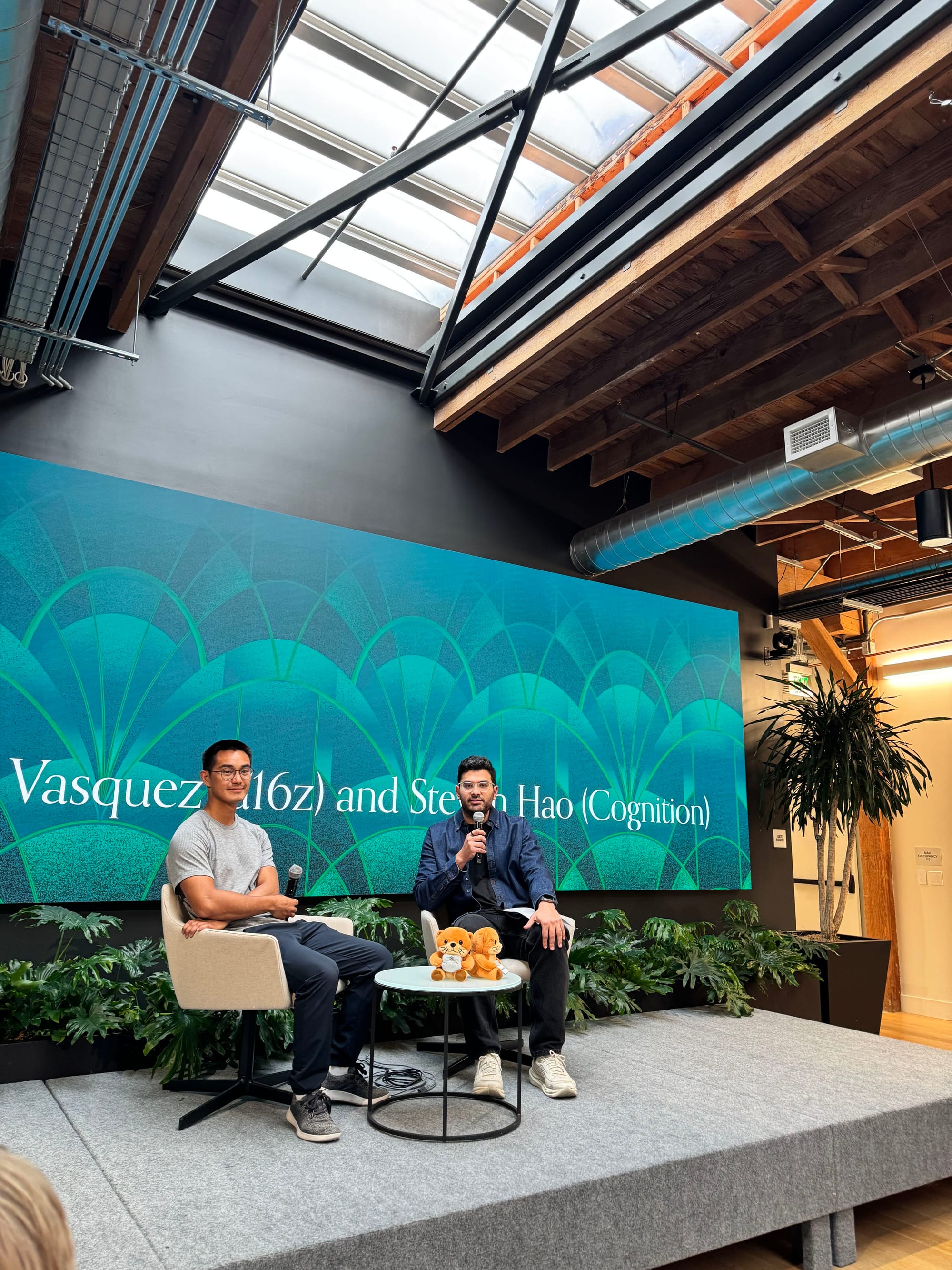

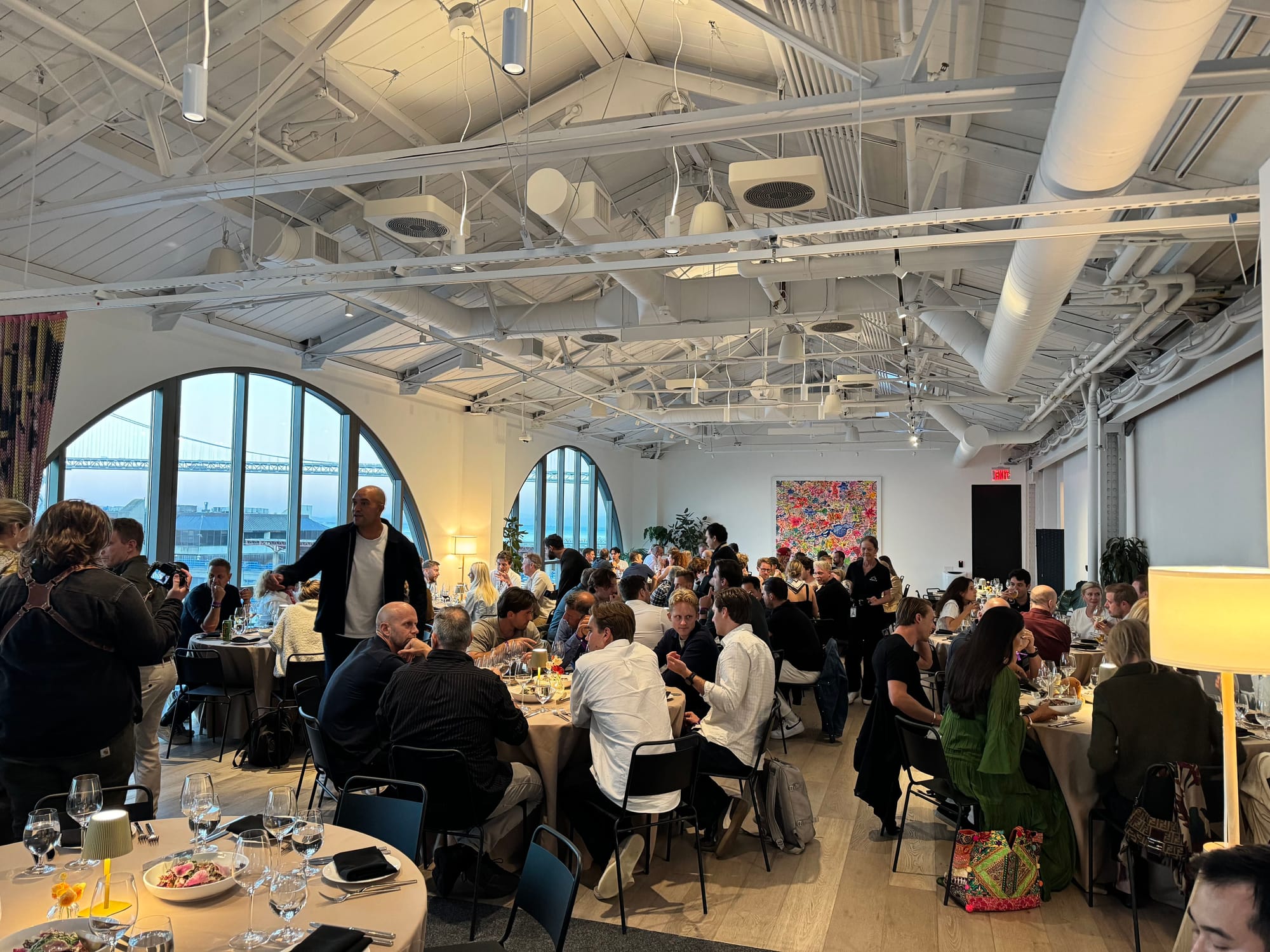
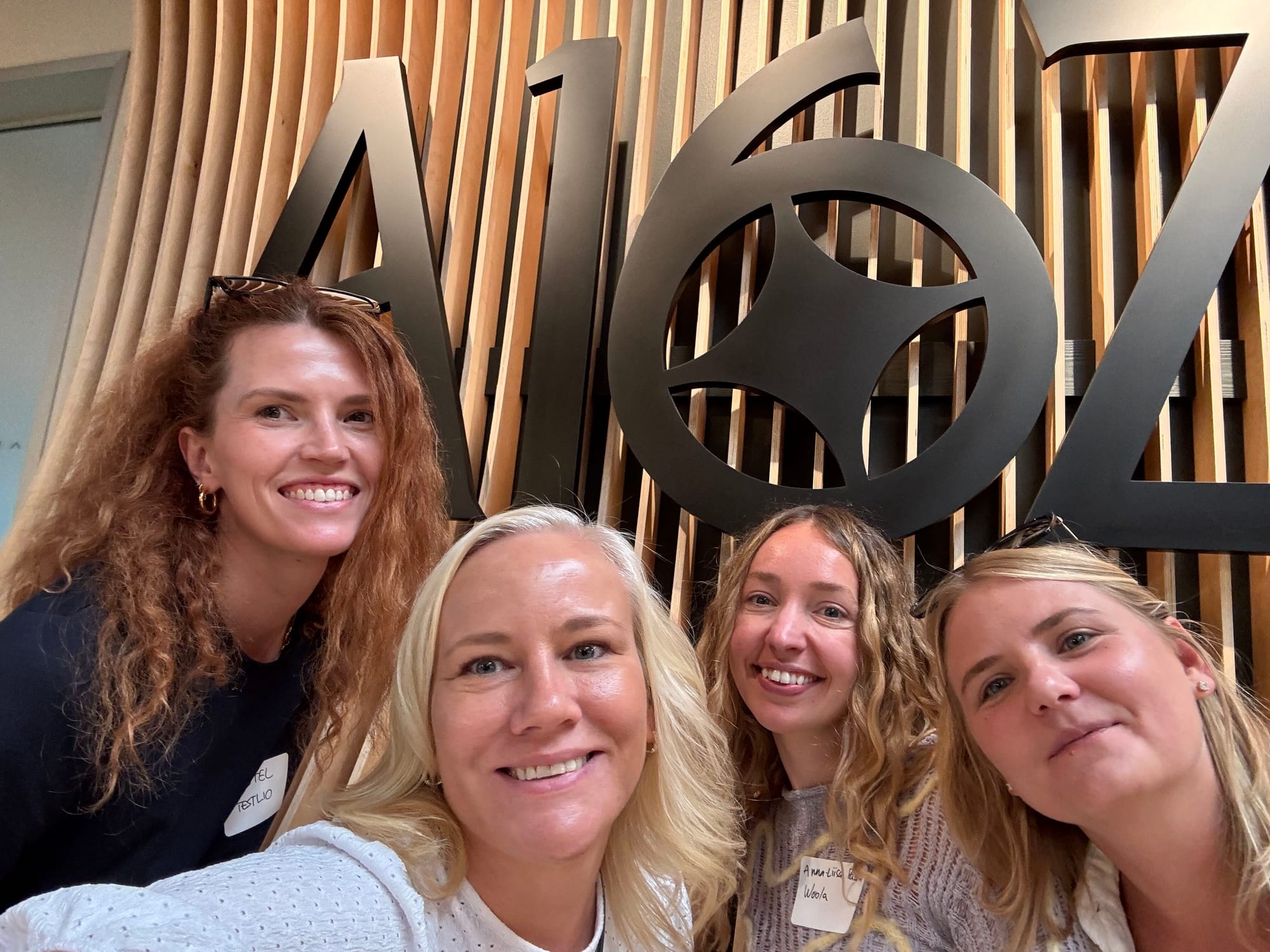
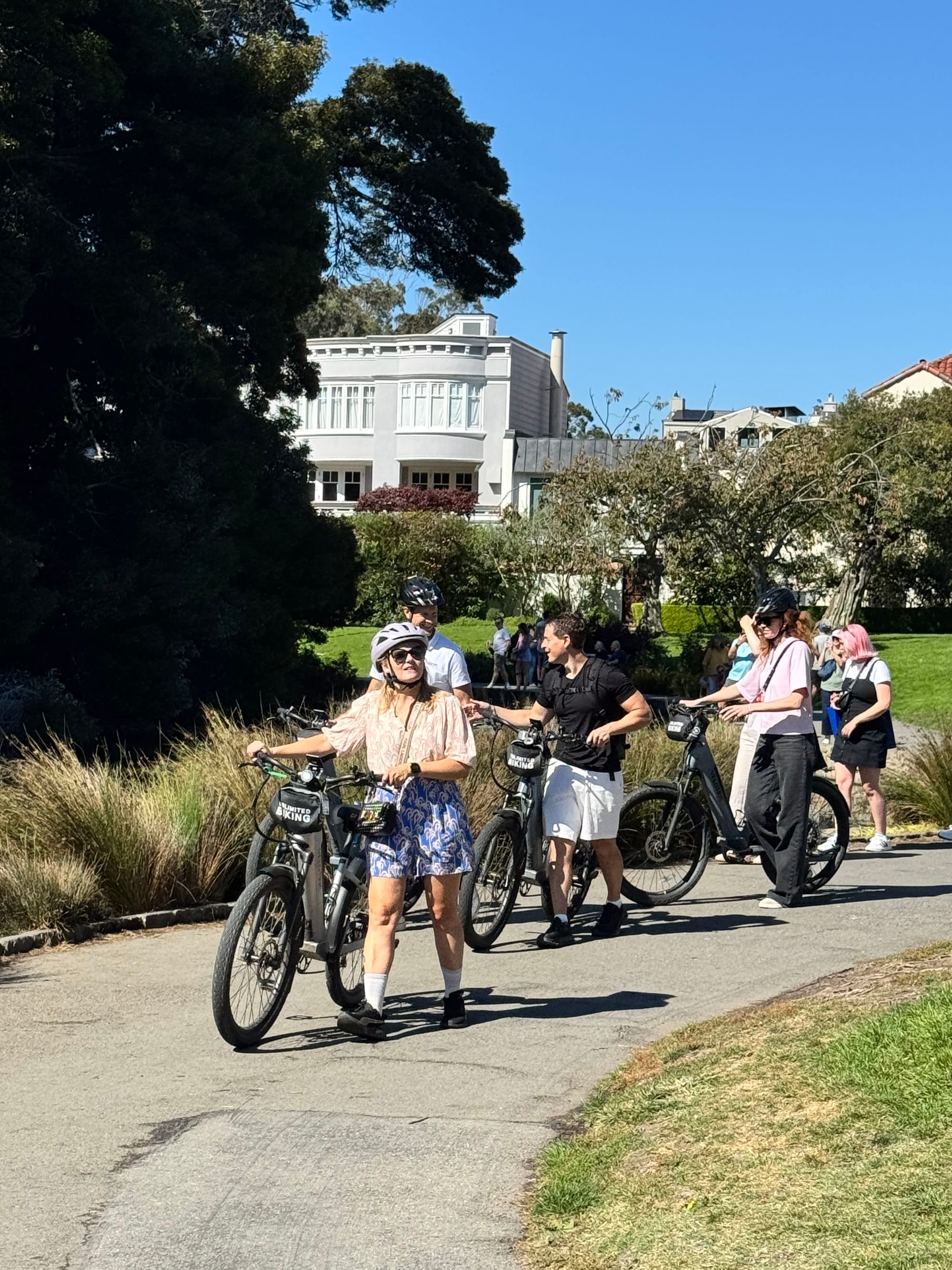
### AI shortlists Estonia’s top tech companies only 50% of the time: Lessons from the era of new SEO
URL: https://fomo.observer/ai-shortlists-estonias-top-tech-companies-only-50-of-the-time-lessons-from-the-era-of-seo/
Last updated: 2026-10-09T15:46:22.000Z
**TALLINN** — For years, startups optimised their websites for search engines. Now, a comprehensive study of Estonia's most valuable tech companies indicates that securing an AI assistant recommendation requires a playbook strikingly similar to traditional Search Engine Optimisation (SEO).
As generative AI becomes a primary tool for business-to-business procurement, Generative Engine Optimisation (GEO) is mirroring the foundational tactics of SEO: keyword research, gap analysis, and on-page content optimisation.
Estonian startup Rankfor.AI tested 240 buyer questions across the 30 companies featured on the Toptech 2026 ranking, posing scenarios to AI models GPT-5.6 Sol and Gemini 3.7 Flash.
[Security firm Blackwall tops €1 bln value on paper amid sector M&A frenzyCybersecurity provider Blackwall has achieved a €1.03 billion valuation in the TopTech 2026 rankings, riding a massive wave of global consolidation in the cybersecurity sector to become Estonia’s newest billion-euro tech firm on paper. Despite crossing the threshold in the independent ranking compiled by M&AFomo.ObserverTarmo Virki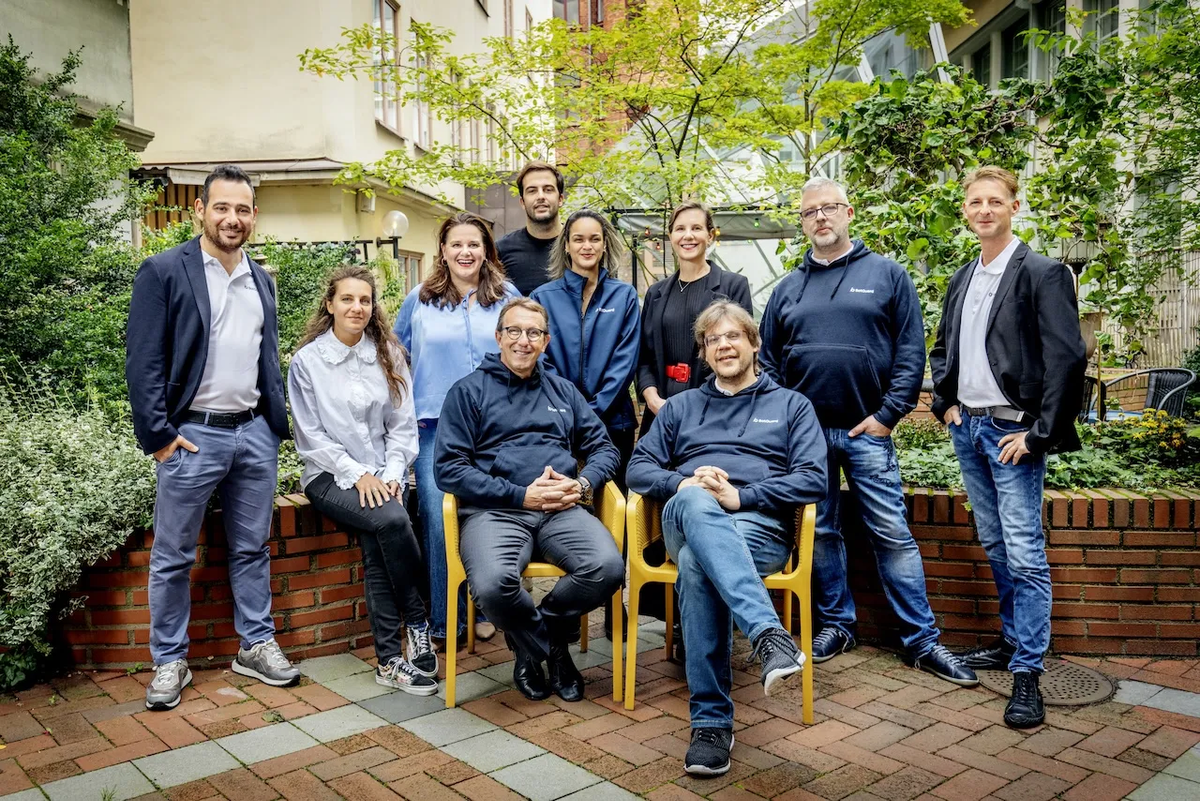](https://fomo.observer/blackwall-toptech/)
The results revealed a landscape where visibility is heavily dependent on specific, localised query matching. When a buyer asks for a product shortlist without naming a specific provider, the AI named the relevant Estonian tech company in 453 of 900 cases (50%).
### The parallel playbook
The actionable takeaways for marketing teams outlined in the study directly parallel traditional SEO workflows:
- **Keyword and Intent Research:** Companies must test the exact questions buyers ask before they know a brand name, utilising the buyer’s specific market and language.
- **Gap and Competitor Analysis:** Marketing teams need to list the specific buyer use cases where AI never names them to identify which competitors and sources are filling that informational void.
- **On-Page** Optimisation**:** Companies must audit their own website copy. AI models cited company pages in a third of the answers read in full, confirming that their content is within the engines’ reach and must be written with an AI "buyer's assistant" in mind.
Despite the accessibility of company websites, AI models currently favour external validation. Out of 8,616 total citations analysed across 22 companies, 55% directed users to other companies in the market — such as competitors and partners — while only 11% linked to the target company’s own domain.
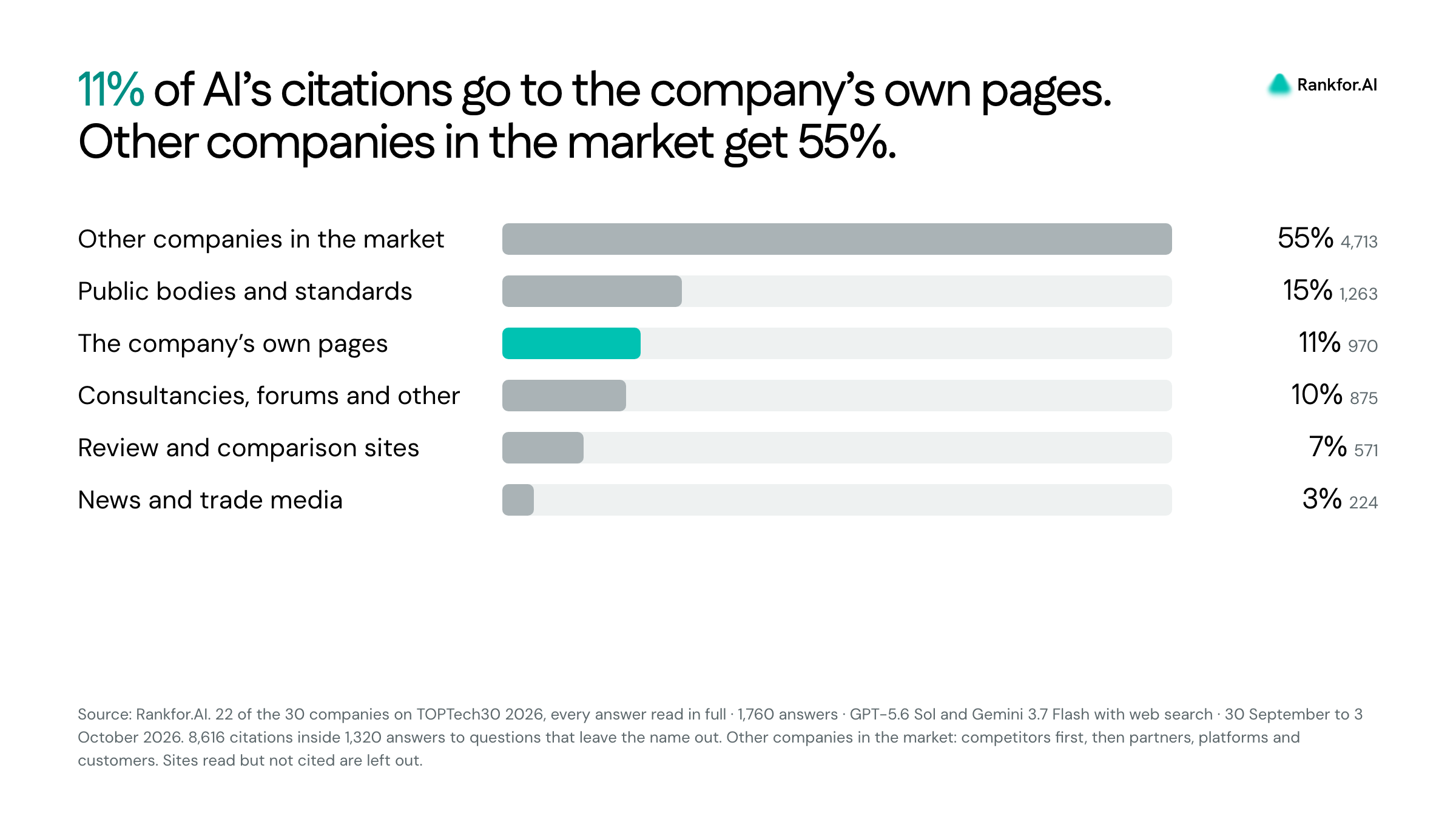
“What surprised me is how much depends on the exact question," said Dmitrij Żatuchin, PhD, Founder & CEO of Rankfor.AI. "The same company can be in ten of ten answers for one buyer and in none for the next. A company that tests one question learns very little.”
This high variance underscores the need for continuous, query-by-query optimisation — a reality long familiar to SEO professionals.
For example, business management software provider Scoro was named in all 10 answers when a marketing agency asked for a professional services platform, but in zero out of 10 answers when an architecture and engineering practice asked for identical capabilities.
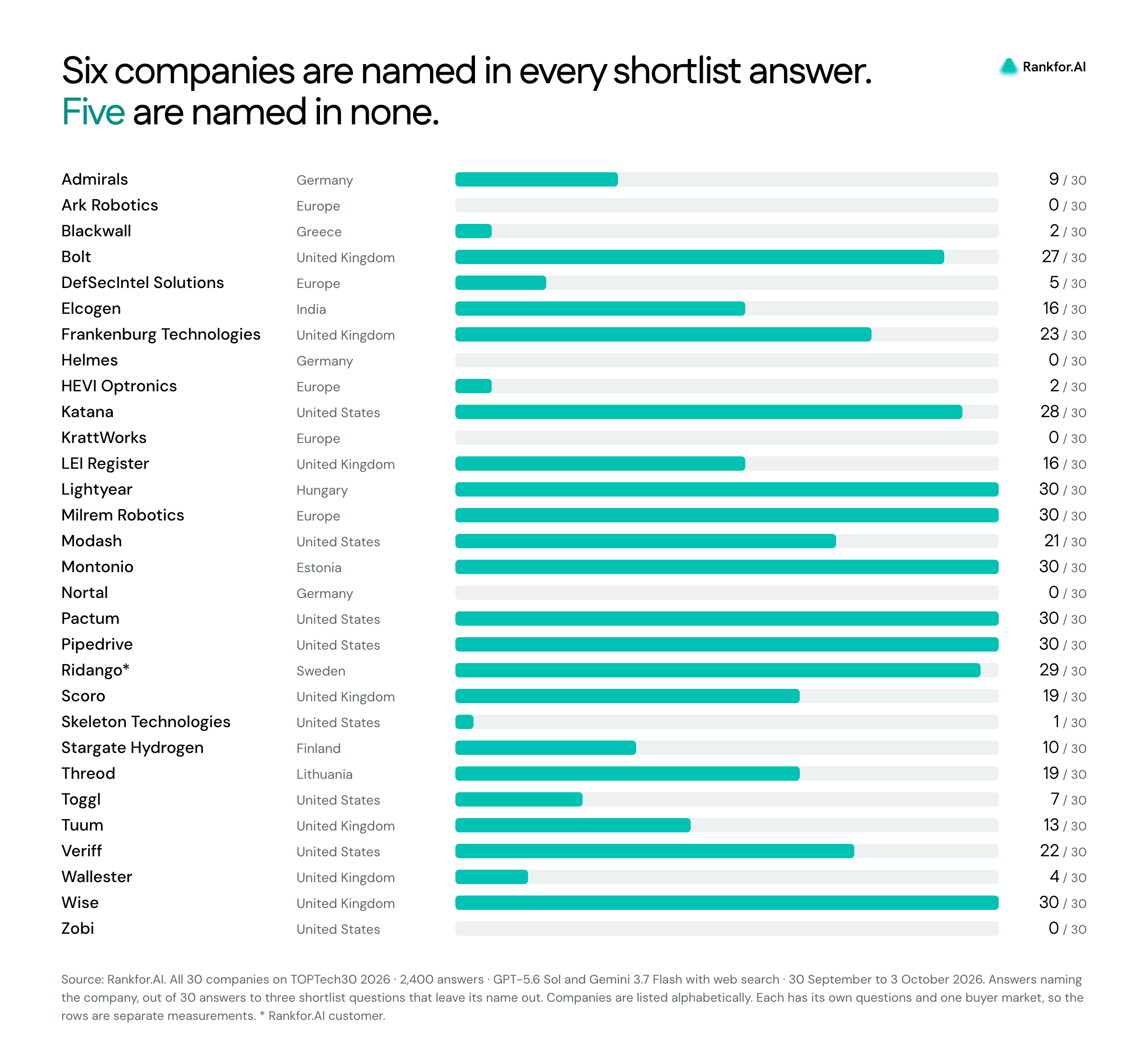
## Sign up for Fomo.Observer
Startup stories from Estonia. Free weekly newsletter.
Subscribe
Email sent! Check your inbox to complete your signup.
No spam. Unsubscribe anytime.
### Golbriak Space announces €4 million round to scale laser communication terminals
URL: https://fomo.observer/golbriak-space-announces-eur4-million-round-to-scale-laser-communication-terminals/
Last updated: 2026-10-09T15:40:29.000Z
**TALLINN** \- Golbriak Space, the space tech company, has secured a €4 million Seed funding round to scale its laser communications systems for satellite and non-terrestrial networks. The round was co-led by Join Capital and PhotonVentures and includes funding from Takeoff’s accelerator programme, managed by Plug and Play.
The funding will help to accelerate the industrialisation of its technology and expand production capacity. The company is set to move office and production facilities to the Mustamäe area of the city later this year.
“Golbriak combines advanced photonics with a highly scalable architecture. With demand moving towards constellation-scale deployments, we see significant potential for Golbriak to become a leading supplier of optical communication terminals for the global space industry,” said Pieter Klinkert, Co-founder and General Partner at PhotonVentures.
The company is scaling production of two principal product families: ERMESAI+ for space applications and ARES for airborne platforms. Both are built on a common, software-defined architecture designed to make high-capacity optical communications easier to integrate, operate and deploy across different platforms and networks.
“Closing this round marks a turning point for Golbriak,” said Nicola Garzaniti, founder and CEO of Golbriak Space. “Years of research, specialised engineering and customer validation have gone into solving the practical challenges that determine whether laser communications can operate reliably at scale. We have addressed the key challenges required for large-scale deployment of optical communications. We have functioning products, paying customers and demand that is now expanding towards programmes involving thousands of terminals.”
### KÄRT SIILATS: Building Europe's late-stage defence capital
URL: https://fomo.observer/kart-siilats-building-europes-late-stage-defence-capital/
Last updated: 2026-10-07T10:36:22.000Z
This week I spoke at [Resilience Conference](https://resiliencemedia.co/?ref=fomo.observer) London about late stage defence tech investing in Europe. Here are a few of my thoughts after the panel.
The first thing any company needs besides team and product is revenue and here Estonia is showing the way for defence techs, with a €100 million programme to purchase defence tech products and donate them to Ukraine, part of the ongoing annual 0.25% of GDP commitment. Not only do we have this programme, but we also make it visible, our Prime Minister, Kristen Michal, speaks regularly at tech conferences about it.
Europe does not have a lack of money problem, it's about where the money is going - European pension funds invest much less in venture capital than the American ones, and even if they do, that money goes to America, not to support Europe's own companies.
Estonia’s sovereign fund, [SmartCap](https://www.linkedin.com/company/smartcap/?ref=fomo.observer), is a pioneer in Europe in investing in pure defence tech (non dual use) and its €100 million fund has already catalysed private capital into funds like the Estonian defence tech VC [Darkstar](https://www.linkedin.com/company/darkstar/?ref=fomo.observer).
In places like Estonia, where the pension systems are still new and small, it is understandable they may not have enough scale for much illiquid investing yet (although they do fully understand the contribution to the local economy they could make through that as soon as they are allowed to grow big enough), but the older Western economies do not have that excuse.
The Americans step in to fill the gap. Which is great to some extent - investors like [Chris Morales](https://www.linkedin.com/in/chrisjmorales/?ref=fomo.observer), Partner at Point 72 Ventures, bring valuable knowledge and they bring more risk appetite which allows them to give founders higher valuations and lower dilutions, which benefit the local early stage ecosystem.
But there's also costs:
Local capital and local revenues allow European companies to keep their headquarters local. It used to not matter much - if American funds required a Delaware registration, everyone complied and we still considered them European startups if the founders and team sat mostly here. But after the US government demonstrated how it can force Anthropic to turn off their products for the rest of the world, European headquarters became much more important for tech sovereignty.
If we want guaranteed access to advanced AI models, we need our own versions and we need to support companies, like [Mistral](https://www.linkedin.com/company/mistralai/?ref=fomo.observer), who are building them.
It goes beyond models as well - we cannot talk about European tech sovereignty in any sector if all European startups have no choice but use AWS and hold their data in American servers. We need a fully functioning European cloud infrastructure as an option for our founders.
And finally - we need functioning exit infrastructure - new great founders tend to come from employees of great prior exits (like Wise and Bolt from Skype, Veriff and Lightyear from Wise, etc. etc.). But unlike America, with its functioning Nasdaq market where ultimate capital holders dare to take some risks, European stock markets are fragmented, illiquid and risk averse, cutting off a crucial lifeline for the founders and again reducing our potential for scalable homegrown startups, in both defence tech and elsewhere.
*\*this post originated as a LinkedIn post*
---
[Estonia needs to find its next advantageFor a country synonymous with tech unicorns, they have been pretty thin on the ground lately. We’ve been searching high and low for our next unicorn for several years now - circling Starship and Pactum for a while, and lately even tried giving Skeleton and Frankenburg a nudge too, butFomo.ObserverTriin Hertmann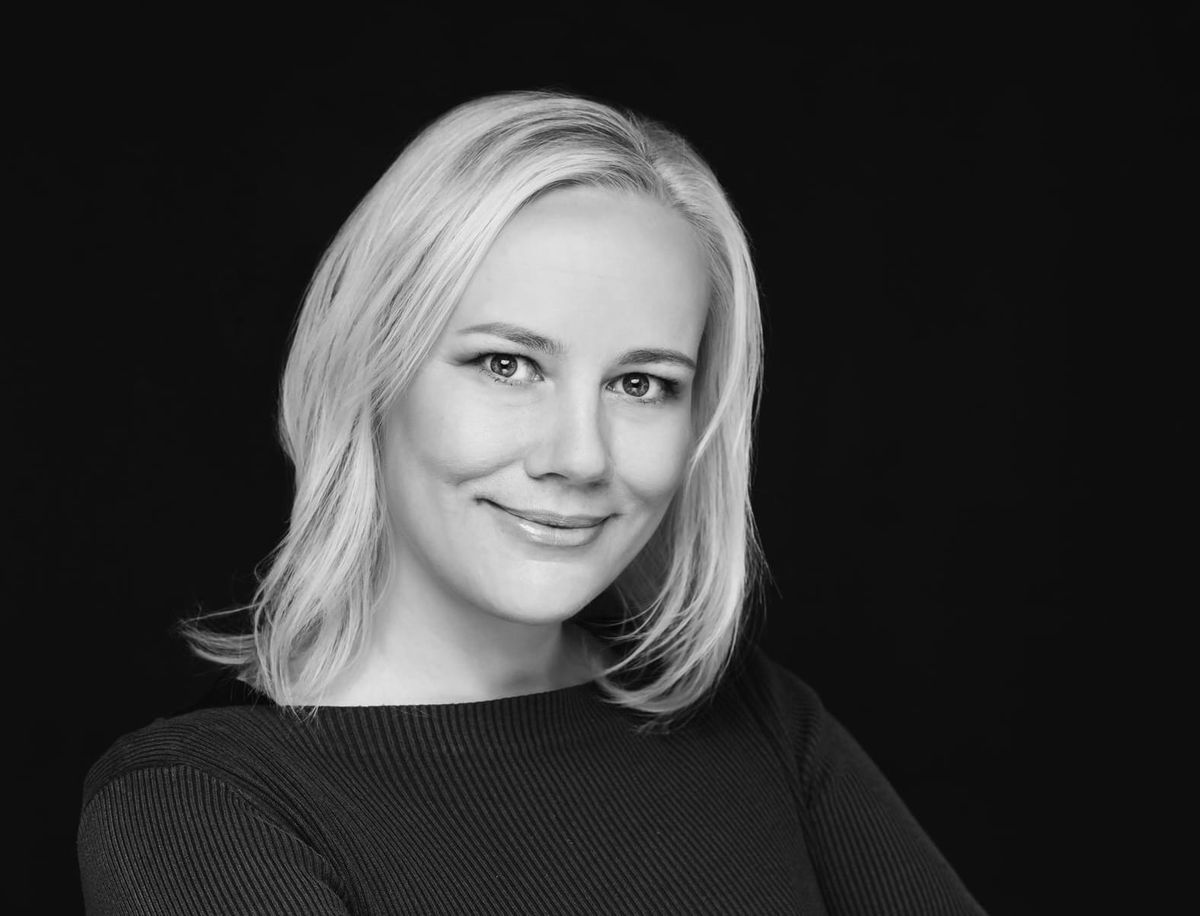](https://fomo.observer/estonia-needs-to-find-its-next-advantage/)
## Sign up for Fomo.Observer
Startup stories from Estonia. Free weekly newsletter.
Subscribe
Email sent! Check your inbox to complete your signup.
No spam. Unsubscribe anytime.
### The most expensive hiring mistake: Hiring someone average
URL: https://fomo.observer/the-most-expensive-hiring-mistake-hiring-someone-average/
Last updated: 2026-10-06T06:00:18.000Z
When companies talk about expensive hiring mistakes, they usually mean a bad hire: someone who clearly can't do the job, doesn't fit the team or underperforms badly enough that eventually everyone agrees it isn't working.
It's painful and expensive, but there's one advantage: you usually notice. Maybe after two months, maybe after six. You have the difficult conversation, take the loss and start again.
I think there's a much more expensive hiring mistake: hiring someone average.
This is the person who is never bad enough to fire, but never good enough to really move things forward either. They do maybe 60–70% of what a great person in the role could do. They need more management, decisions take longer and someone else tends to pick up the difficult things.
Their manager knows they're not amazing, but replacing them feels like a lot of work. And the employee? They're often perfectly comfortable.
So they stay. Not six months, but three years.
And *that* is where the maths gets interesting.
## First, let's calculate what one employee actually costs
Let's take a fairly typical senior hire in Estonia earning €5,000 gross per month. The obvious calculation is €5,000 × 12 = €60,000.
Except that's not what the company pays.
With Estonia's employer taxes, that €5,000 salary costs the company approximately €6,690 per month, or €80,280 per year.
Now let's add some very reasonable costs around employing that person: €2,000 for equipment and setup, €2,000 a year in benefits and €1,500 for training. There is also the cost of finding the person in the first place, whether that's internal recruitment time, hiring managers interviewing candidates, job advertising, sourcing or external support.
But the bigger costs start after the person says yes.
## Your manager's time isn't free either
Let's say our employee's manager earns €7,000 gross per month, making their employer cost roughly €9,366 per month.
Now imagine that during the first three months, around 15% of the manager's time goes into preparing, onboarding, reviewing work, answering questions and getting the new hire up to speed. That's another roughly €4,200 worth of management capacity.
And we haven't counted HR, IT or all the colleagues who answer questions, explain systems and share context.
So our “€5,000 employee” is already getting surprisingly close to a €100,000 first-year investment, and that's before we talk about productivity.
## Because you're not actually buying 12 months of output
People take holidays. They get sick. They attend training and company days. As they should.
In Estonia, employees receive at least 28 calendar days of paid annual leave. Let's also assume ten calendar days of sickness during the year.
Those costs shouldn't simply be added on top of annual salary — paid holiday, for example, is already included in payroll cost. But they matter when we think about what the company is actually buying.
You aren't buying 365 productive days. You're buying something closer to 220–225 available working days, and even those aren't all fully productive.
## Now comes the really expensive part
Imagine we make a great hire. After onboarding, this person operates at 100% of what the role requires — perhaps eventually 120%. That's what we hope to get from a €100,000 investment.
Now imagine we make a terrible hire who operates at 30%. Within four months it's obvious. It's painful, we've burned tens of thousands of euros and a lot of time, but we end the employment relationship and start again.
Expensive mistake.
Now meet the person I worry about much more: the 60% hire.
They do their job, mostly. Deadlines are usually met, mostly. Nothing is catastrophic, but their manager needs to check more things. Someone else takes the difficult customer, solves the messy problem or pushes the project over the finish line.
The employee isn't failing. They're just not creating the output you hired them to create. And because nothing is *really* broken, nobody does anything.
## Now leave them there for three years
This is where “average” becomes incredibly expensive.
Our employee costs roughly €80,000 a year in salary and employer taxes alone. Over three years, that's €240,840\. Add benefits, training, equipment and all the other costs around employing someone, and you're comfortably beyond €250,000 invested in one person — before calculating the additional management overhead.
Now imagine you're receiving something like 60% of the output the role could reasonably produce. You're paying 100% of the cost and carrying 100% of the risk, but getting 60% of the expected return.
That's not a €5,000 salary problem anymore. That's a quarter-million-euro capital allocation problem.
## Think about it like any other investment
This is perhaps the strangest thing about hiring. If you told a founder, *“We're going to invest €100,000 this year and we expect to get €60,000 worth of value back,”* nobody would be excited about that investment.
When a business invests €100,000, the goal isn't simply to recover €100,000\. The investment needs to create additional value.
Exactly how much depends enormously on the role. A salesperson, engineer, CFO and HR manager create value in very different ways, and trying to reduce every employee to a neat ROI percentage would be silly.
But the basic economics still matter: a €100,000 investment in a person needs to create considerably more than €100,000 of value over time.
If you're paying 100% of the cost but consistently getting something closer to 60% of the output the role requires, you're not saving money by keeping that person. You're extending the loss.
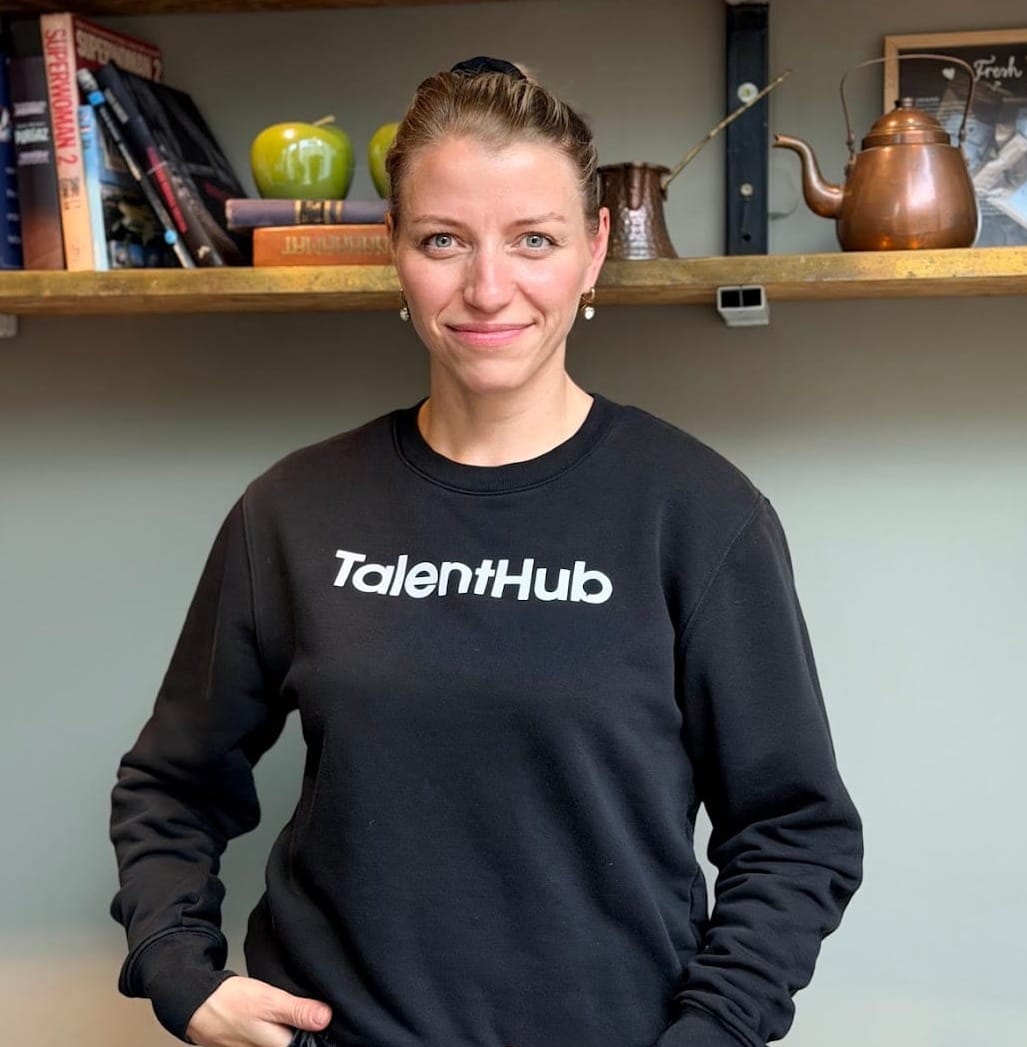
Reet Kaurit, co-founder of TalentHub
## Average performance has another cost
And this one is even harder to calculate: the missing 40% doesn't simply disappear. Someone often picks it up.
Usually your best people.
Your strongest engineer fixes the problem. Your best salesperson takes the difficult client. The manager gets more involved. The founder steps back into something they thought they'd delegated six months ago.
So the cost of an average hire isn't only their lower output. It's also the productivity they quietly consume from your strongest people.
That's why a team of ten people operating at 60–70% isn't necessarily just 30–40% less productive than a great team. The management burden, dependencies and compensating work can compound. You can end up paying ten salaries while your strongest four people carry the company.
## And average employees rarely leave quickly
A truly bad hire creates friction. Eventually the company or the employee makes a decision.
Average is different.
The company thinks: *They're actually quite nice. They know our systems. Finding someone new will take months. Maybe with a little more coaching… They're not THAT bad.*
Another performance review passes. Then another year.
Meanwhile, from the employee's perspective, things may be perfectly fine. They know the job, expectations are manageable and the salary arrives every month. Why leave?
Suddenly, the hiring decision you made in 2026 is still sitting on your payroll in 2029.
## We pay a lot of attention to the cost of people. Maybe not enough to their return
Salary budgets are discussed. Headcount is discussed. Benefits are discussed. Whether we can afford another person is definitely discussed.
But once someone is hired, something interesting happens: the cost becomes normal.
€6,690 leaves the company every month and becomes part of the baseline. What we don't necessarily keep asking is whether we're still getting the return we hired this person to create.
Not: *Are they busy?* Not: *Are they nice to work with?* Not even: *Are they completing their tasks?*
**But: Is this role creating the value we expected when we decided to invest in it?**
That question is harder because it forces us to look not only at the employee, but also at ourselves. Maybe we hired the wrong person. Maybe we hired the right person into the wrong role. Maybe expectations were never clear. Maybe the manager isn't giving them what they need. Maybe the company changed and the role didn't.
And sometimes, yes, the person is simply average in a role where you need someone exceptional.
## The most expensive hire might be the one who is doing… fine
A bad hire hurts. You notice and eventually you fix it.
An average hire is much quieter. They can be good enough to stay, comfortable enough not to leave and expensive enough to slowly consume hundreds of thousands of euros without ever triggering an obvious crisis.
There is no line in your P&L saying, “Potential we paid for but never received: €97,000.” There is no invoice for the extra 200 hours your manager spent compensating, the project that could have moved faster or the great employee who got tired of carrying everyone else.
You just get slightly less output, every week, for years.
So maybe the biggest hiring risk isn't *“What if this person is terrible?”*
Maybe it's:
“What if they're just good enough?”
Because when you're making a €100,000+ investment in a person, “fine” can be incredibly expensive.
---
[*Reet Kaurit*](https://www.linkedin.com/in/kaurit/?ref=fomo.observer) *is the co-founder of* [*TalentHub*](https://www.talenthub.eu/?ref=fomo.observer) *and one of the first recruiters at Wise. Over the past decade, she has helped hundreds of startups and scaleups hire technical specialists, leaders and executives across Europe. She regularly shares practical insights on recruitment, leadership and the future of work.*
## Sign up for Fomo.Observer
Startup stories from Estonia. Free weekly newsletter.
Subscribe
Email sent! Check your inbox to complete your signup.
No spam. Unsubscribe anytime.
### From kettle switches to defence drones: Why European deeptech needs manufacturing
URL: https://fomo.observer/from-kettle-switches-to-defense-drones-why-european-deeptech-needs-manufacturing/
Last updated: 2026-10-05T10:47:20.000Z
In an era defined by fragmenting supply chains, tightening geopolitical tension, and strategic autonomy directives, European deep tech startups face an existential fork in the road: should they build their manufacturing capabilities at home, or rely on global contract producers to scale fast?
During a recent fireside discussion in Tallinn, Professor Tim Minshall, Head of the Institute for Manufacturing (IfM) at the University of Cambridge, and Dr. Ivar Kruusenberg, Founder and CEO of [PowerUP Energy Technologies](https://www.powerup-tech.com/?ref=fomo.observer), explored the realities of scaling physical products in Europe, supply chain vulnerabilities, and the missing link in national innovation strategies.
## Leaving Silicon Valley to build in Europe
For many hardware founders, the default playbook has long been to seek venture capital and market access in the United States. However, Kruusenberg’s trajectory with PowerUP — a company developing hydrogen fuel cell generators — took an unconventional turn. Founded while he was working at UC Berkeley in California, the company ultimately decided to shift its core operations back to Estonia.
> “We understood in the US that the American Dream is not so beautiful as we see here from Europe,” Kruusenberg said. “The market was opening up much faster over here, and I didn’t have a green card or US citizenship, which meant that right when we started PowerUP, national funding rules tightened. So we moved it to Europe to get it going.”
The move highlighted Estonia’s distinct structural advantages as an agile testing ground. Born out of the need to rebuild state infrastructure after 1991, the Baltic nation skipped legacy systems altogether to create an integrated digital society.
> “Estonia is just such a small country where people know each other,” Kruusenberg noted. “After the Soviet Union collapsed, we had to build everything up from scratch, learning from others’ mistakes. This has allowed us to digitalise faster — everything from tax declarations is automatic. It makes things move much easier and faster.”
Professor Minshall emphasised that European entrepreneurs often underappreciate local scaling speed, defaulting to Silicon Valley out of habit.
> “We have so many of our younger entrepreneurs — coming from Cambridge, there’s a lot of them — who head straight to the US,” Minshall observed. “The belief is: ‘If I want to scale my business, I can mess around in the UK, and it will be okay, but if I really want to move fast, I have to be in the US.’ Hearing someone who has gone there, seen it, and said, ‘No, the faster route to market is in Europe’ is extraordinary.”
## The kettle switch lesson: Retaining the core
When deep tech startups begin scaling physical products, one question dominates boardrooms: *Should manufacturing be kept in-house or outsourced?*
To answer this, Minshall brought out a deceptively simple piece of hardware: a bimetallic control switch invented by Dr. John C. Taylor, the mechanism present inside billions of electric kettles worldwide.
> “This is the technology that switches off your kettle,” Minshall explained, demonstrating the small metallic blade. “It’s a fail-safe, 99.999% reliable technology that cannot fail. John C. Taylor designed the product, but then he worked out that the value is in the manufacturing. He built the custom machines that make this. Those machines, designed in the 1980s, still operate today on an island in the Irish Sea — the Isle of Man.”
While plastic enclosures and copper bending are assembled via contract partners in Shenzhen, the core bimetallic manufacturing process is never allowed to leave the proprietary factory.
> “The value of the business is not just in the technology; it is absolutely in the knowledge that goes with the production of that, and they will not release that,” Minshall stressed. “For startups, the core technology must be manufactured in-house because that is where your value sits.”
## Geopolitics, space, and the (not too-) hidden risk in batteries
The argument for localised, secure manufacturing becomes even sharper in dual-use, space, and defence markets. PowerUP has derived significant revenue from European Space Agency (ESA) contracts, but also from defence-related applications — sectors with stringent supply chain sovereignty mandates.
> “Space is a big part of our business because we have five ongoing projects with ESA,” Kruusenberg said. “ESA has heavy restrictions on getting materials and equipment from outside Europe, and specifically, they are not happy about anything ordered from China.”
This creates severe friction for hardware producers relying on standard components, particularly lithium-ion battery packs.
> “We are battery-agnostic, but the lithium-ion battery supply chain is a major concern,” Kruusenberg warned. “Batteries today are not just simple cells; they have fancy control electronics inside that monitor them from your phone. Which means that this battery pack can potentially be controlled by whoever manufactured it. I don’t believe our society has truly understood what we are tied to and how fragile this supply chain is.”
Minshall concurred, noting that software supply chains and component compliance now represent equal threats:
> “It’s not just the bill of materials, assembly, and hardware components—there is the parallel software stack as well. Issues of compliance, checking where the code in a battery pack comes from, and who has access to it is a massive vulnerability.”
## Breaking the bottleneck: Defence demand and the Swedish Blueprint
Why have European deep tech companies historically struggled to scale into global manufacturing powerhouses? Minshall attributes part of the problem to a long-standing cultural narrative around industry, particularly in the UK.
> “If the word ‘manufacturing’ appeared on the news in the 1970s or 80s, it was about a factory being shut down, industrial action, or dirty, miserable unhappiness,” Minshall said. “That is a cultural legacy we carry. But the reality is simple: if you want products and systems that make life better, the way you translate science and technology into those products is through manufacturing.”
Today, defence requirements are forcing a rapid re-evaluation of industrial capacity across Europe. Minshall cited UK startup Cambridge Aerospace, which developed high-speed interceptors and secured direct procurement contracts from the Ministry of Defence.
> “They got a contract saying ‘you make, we buy’. Suddenly, they went to venture capitalists and raised €300 million to build manufacturing locally in the East of England. A guaranteed customer with a chequebook reduces investment risk instantly.”
Kruusenberg pointed to Sweden’s industrial history as a model for holistic ecosystem planning:
> “Sweden has been so successful because they look at the broader picture,” Kruusenberg explained. “From mining raw materials down to local refineries, building the trains, and having local companies develop drilling equipment. They didn’t focus on just one isolated startup, but on the surrounding industrial ecosystem.”
## The missing component: Strategic skills roadmaps
To replicate integrated industrial success, both speakers agreed that European states must address human capital constraints.
> “We need to stop being so passive and giving so much unrestricted freedom in university quotas,” Kruusenberg said. “We need a broader plan to see where we will need people five years from now. If we know an engineering or defence firm is expanding in three years, we need to fund and direct students toward mechanical engineering and advanced manufacturing operations today.”
Minshall highlighted that tech development strategies fail without corresponding talent pipelines.
> “Alongside technology roadmaps, there needs to be a skills roadmap,” Minshall concluded. “If we wish a capability to exist in three to five years, we must train the workforce now. Countries like Singapore and China move in an agile way because they align state education directly with industrial planning. Europe must build that same long-term vision if its deep tech sector is to thrive.”
## Sign up for Fomo.Observer
Startup stories from Estonia. Free weekly newsletter.
Subscribe
Email sent! Check your inbox to complete your signup.
No spam. Unsubscribe anytime.
### Euroopa idufirmad lõid Brüsselis uue katusorganisatsiooni vältimaks vana majanduse lobbi teerulli alla jäämist
URL: https://fomo.observer/euroopa-idufirmad-loid-brusselis-uue-katusorganisatsiooni-valtimaks-vana-majanduse-lobbi-teerulli-alla-jaamist/
Last updated: 2026-10-03T19:04:39.000Z
TALLINN – Uus üleeuroopaline idufirmade organisatsioon koondab jõud, et toetada Euroopa tehnoloogiasektori arengut, pakkumaks Euroopa institutsioonidele tugevat startupi ja innovatsiooni valdkonna esindajast partnerit.
Cacheti asutaja ja uue Startups for Europe ühenduse värske asepresidendi Hedi Mardisoo sõnul on asutajate hääl Euroopas praegu olematu ning uue organisatsiooni eesmärk on aidata idufirmadel Euroopas paremini kasvada.
Kahe varasema organisatsiooni – Allied for Startups ja European Startup Network (ESN) – liitmisel sündinud uus esindusorganisatsioon püüab tuua Brüsselisse ühe tugeva ja konkreetse missiooniga esindaja idufirmadele.
> "Reaalsus on täna selles, et startupide häält Euroopas ei ole kuulda. Ametnikud räägivad olulisusest, aga tegelikult kaome me see muu lobbi alla ära.," ütles Mardisoo intervjuus.
Tema sõnul on seni otsustusprotsessides idufirmadest tihtilugu lihtsalt "teerulliga üle" sõidetud. Uus ühendus on katusorganisatsiooniks 43 erinevatest riikidest tulevatele asutajate seltsile, sealhulgas Eesti Asutajate Seltsile.
Esindatuse puudumine on Mardisoo hinnangul viinud olukorrani, kus idufirmad ei suuda konkureerida suurkorporatsioonide ja ametiühingute professionaalse lobitööga.
> "Startupid ei viitsi, neil ei ole aega ja neil ei ole jõudu, et regulaatoreid nii-öelda veenda," märkis ta, lisades, et see võimaldab suurte huvigruppide juristidel dikteerida seadusloomet, mis ametnike poolt sageli otse siseriiklikesse seadustesse kopeeritakse.
Probleemi ulatust ilmestab drastiline statistika: kui aastal 2000 moodustasid Euroopa idufirmad globaalsest turust 28 protsenti, siis aastaks 2024 on see osakaal langenud vaid kaheksale protsendile. Mardisoo toob esile, et mitmed olulised initsiatiivid, nagu üleeuroopalise ettevõttevormi (EU Inc) loomine, seisavad tugeva vastuseisu taga – näiteks töötavad sellele vastu üleeuroopalised ametiühingud.- “Sink EU.inc”.
Riskiraha vähesuse ning Euroopas kasvu pärssiva sbürokraatia tulemusena liiguvad suuremad idufirmad Euroopast välja, nad ostetakse üles või raha kaasamisel Ameerika Ühendriikidest viiakse sinna ka intellektuaalomand, tõdes Mardisoo.
Uue organisatsiooni presidendiks valiti üks EU-Inc liikumise eestvedajates Simon Schaefer ning asepresidentideks Hedi Mardisoo ja David Hanf ESN-ist. Igapäevase poliitikakujundamise ja seadusloome kontrolliga hakkab tegelema kümnepealine meeskond.
Organisatsiooni ametlik ja laiem lansseerimine on planeeritud Slushi raames toimuvaks. Organisatsiooni fookuses jääb rahvuslike organisatsioonide esindamine, kuid liituda saavad ka idufirmad.
[HEDI MARDISOO: Stopping the Brain Drain: Can the 28th Regime Save European Tech?From e-Residency to Startup Residency and the Laboratory of EU.incFomo.Observer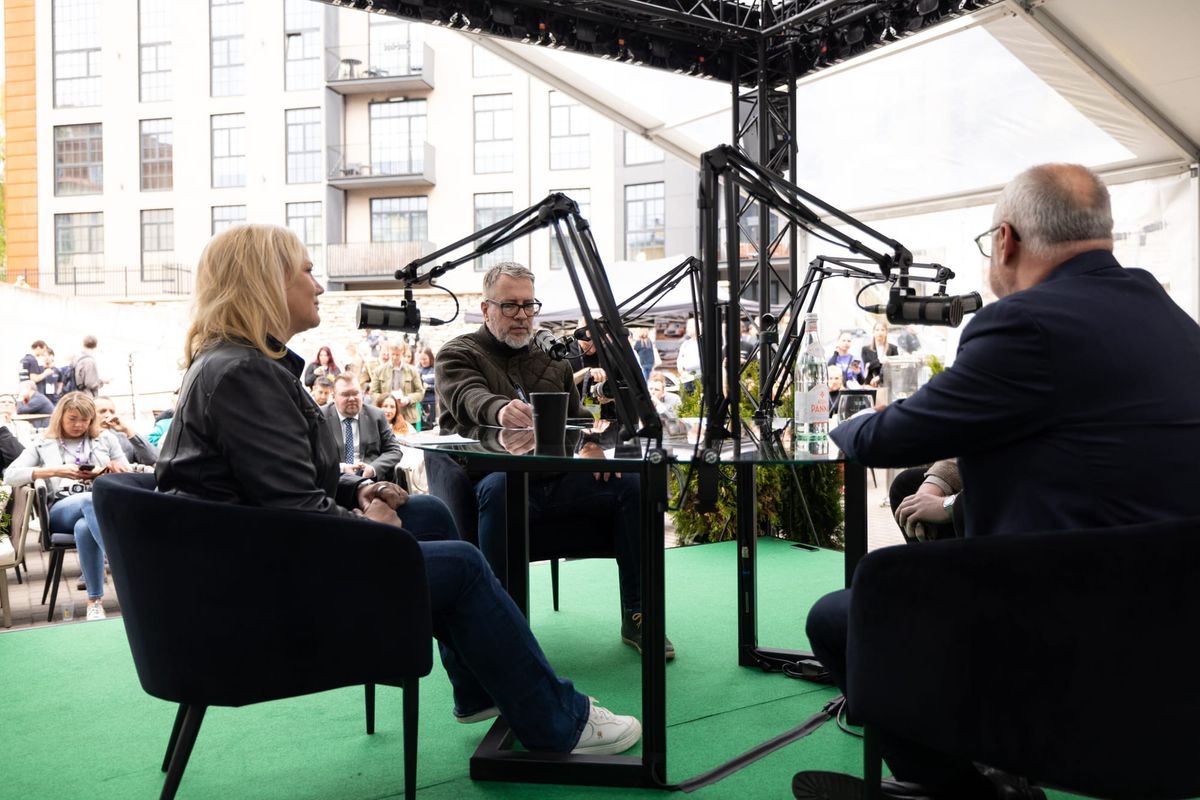](https://fomo.observer/hedi-mardisoo-should-i-stay-or-should/)
[HEDI MARDISOO: EU Inc. Is it for the startups or for everyone?If the Council is serious about making EU Inc. work, the logical next step is to pilot it in Estonia, see results, and then take the case back to Brussels with numbers instead of slides.Fomo.Observer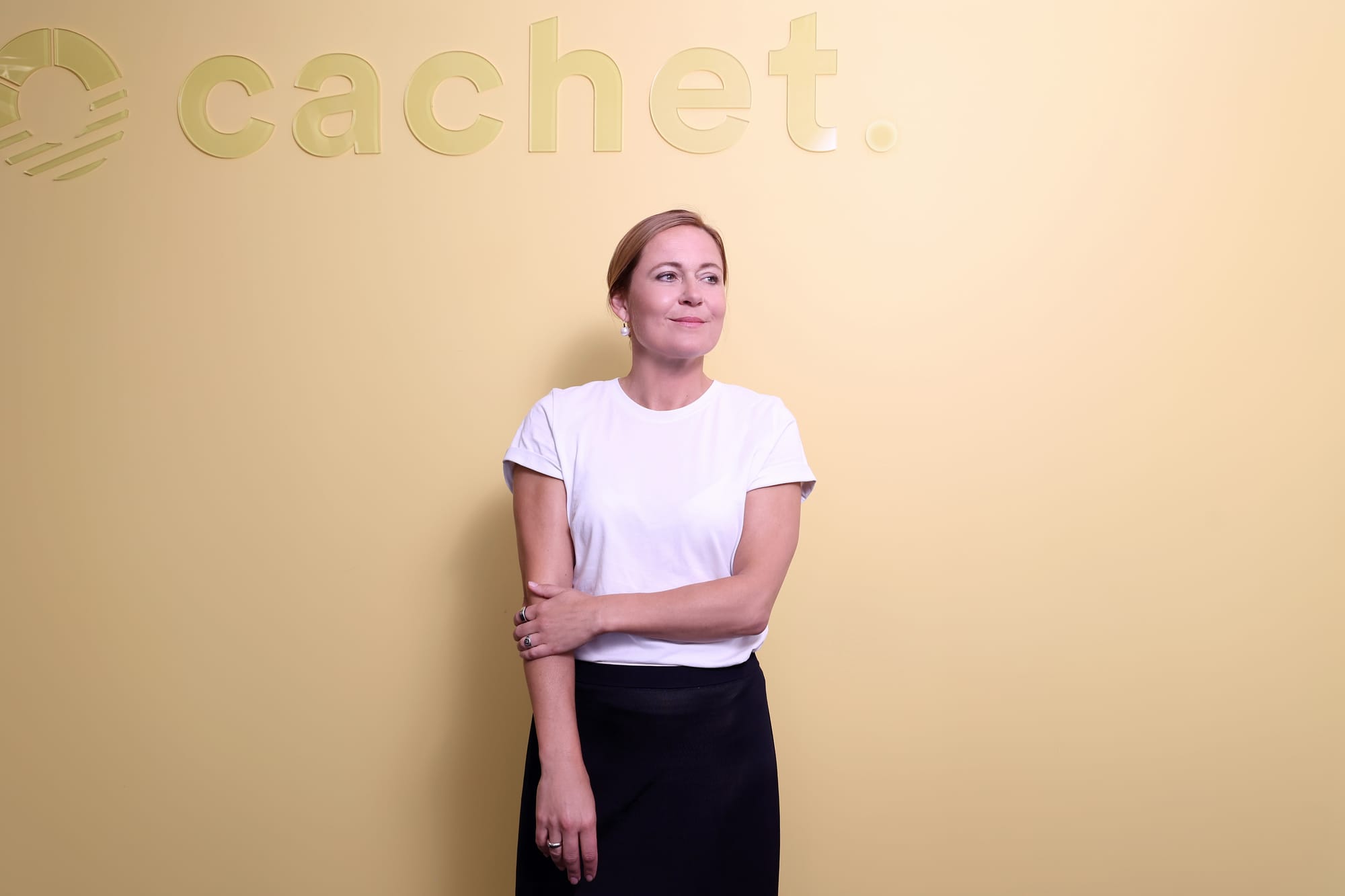](https://fomo.observer/hedi-mardisoo-eu-inc-is-it-for-the-startups-or-for-everyone/)
## Sign up for Fomo.Observer
Startup stories from Estonia. Free weekly newsletter.
Subscribe
Email sent! Check your inbox to complete your signup.
No spam. Unsubscribe anytime.
### DOD Solution raises €1.8 million to scale its Aura
URL: https://fomo.observer/dod-solution-raises-eur1-8-million-to-scale-its-aura/
Last updated: 2026-10-01T11:01:15.000Z
TALLINN - Estonian-Ukrainian defence tech company, [DOD Solution](https://dodsolution.com/?ref=fomo.observer), has raised a €1.8 million pre-seed funding round. Investors from Ukraine, France, Germany, the US and Canada got in on the round. Canadian drone technology company Draganfly joined the round as a strategic investor.
Backing the startup, which develops onboard autonomy for unmanned systems, are Angel One Fund, Better Angle, Defence Builder Fund, Network VC, Newfund, UAID Fund, WildField Ventures and 4C-Next Holding AG, as well as a number of angel investors.
The funding will help accelerate the development and scaling of its AURA AI autonomy platform. The onboard autonomy platform combines the AURA SBC onboard computer with AURA OS, the company’s autonomy software stack. It has already been used in combat in Ukraine.
Integrating with different types of UAVs, including FPV drones, interceptor drones and fixed-wing UAVs the platform enables autonomous navigation, perception, target recognition and tracking, and terminal guidance when GPS or communications are degraded or unavailable. It is designed for integration into different types of UAVs, including FPV drones, interceptor drones and fixed-wing UAVs.
"Autonomy needs to work across different unmanned systems and operational environments, rather than remain a capability tied to a single platform. Our focus now is to make AURA AI easier to integrate, faster to scale and capable of supporting increasingly demanding onboard applications. This round gives us the resources and the right partners to accelerate that transition,” said Roman Hapachylo, CEO of DOD Solution.
DOD Solution has already built a network of technology and industry partnerships around this strategy, including Lantronix, Axelera AI and Defsecintel Solutions. The partnerships span onboard computing, AI acceleration and integrated counter-drone capabilities, supporting the company’s efforts to scale the integration of its autonomy technology across different unmanned platforms.
## Sign up for Fomo.Observer
Startup stories from Estonia. Free weekly newsletter.
Subscribe
Email sent! Check your inbox to complete your signup.
No spam. Unsubscribe anytime.
### Rebecka Löthman Rydå on why venture capital must risk being first
URL: https://fomo.observer/rebecka-lothman-ryda-on-why-venture-capital-must-risk-being-first/
Last updated: 2026-10-01T07:21:24.000Z
*When Rebecka Löthman Rydå talks about early-stage investing, she reaches for an unexpectedly lovely comparison. A local VC should give a founder a “first-love moment”: the feeling that somebody sees the possibility before there is enough evidence for everyone else to see it too.*
Her own career has been built on accepting jobs slightly before she felt ready, from becoming a young CFO to taking over as CEO and later spending more than a decade in venture capital. Today she is a General Partner at Norrsken Evolve, a European pre-seed fund focused on resilience and sustainability. She is equally direct about timid investors, small ambitions and the 10,000 small cuts that still make tech harder for women.
### **Before venture capital, you described yourself as a nerd from Stockholm. What shaped you?**
I grew up in Södermalm before it was gentrified. Neither of my parents had a university degree, and we did not have much money when I was little. For a while we received a housing subsidy. My parents planned every meal carefully to make the money last.
Both of them rose above their circumstances. My father built a successful career in the Navy. My mother went to university when we were older, became a teacher and found work she loved. They showed me how fulfilling it can be to serve something you genuinely care about.
I was very good at school and a complete nerd: science fiction, board games, a few equally nerdy friends. Being good at school was not considered cool where we lived. Then my father was posted to Australia as a diplomat and the whole family moved.
I arrived as an introverted Swedish teenager and met Australians, who are extremely extroverted. I had to build a new group of friends from scratch, so I learned to be much less afraid of meeting people. I still carry that with me. I am fearless about approaching someone new, and I like the Australian habit of being socially generous.
After high school, I worked in a bar, a hostel and a café, then travelled alone through Southeast Asia and Central America. In El Salvador I reached a small town with no hotel, and a family let me sleep on their sofa. That gave me a fundamental belief that most people want to help. You just have to ask.
### **You studied finance. Was becoming an investor always the plan?**
Not at all. When I studied at Uppsala University, entrepreneurship was not particularly cool. One friend started a company, and the rest of us thought, “Oh, he cannot get a real job.” We still talk about it. He was incredibly brave, and we were the idiots.
Nobody around me knew what venture capital was. People wanted to join the Big Four auditing companies, so I went into audit at Ernst & Young. It taught me to handle pressure and gave me early responsibility for teams. I don't believe people should work like that forever, but it helps to know you can survive a difficult stretch.
I wanted to be closer to the business, so I accepted a job as CFO of a financial group. I was young, and the job was probably slightly beyond me. My attitude was: what is the worst that can happen? I will learn a huge amount, and I will probably survive.
I think of those jobs as interval training. You push until you can taste blood, but afterwards you become faster on the long runs. The assignments that stretched me most did the same thing.
We began preparing the company for a listing. Then the owners changed their minds, parted ways with the CEO and asked me to take over. So I became CEO. By the end, I was nine months pregnant and had discovered that being CEO of a financial group can be glorified administration. A lot of shit flows to the top.
Before I went on maternity leave, the Chair told me he was starting a venture fund and asked whether I might consider joining. I thought the private companies in our portfolio had always been the most fun: passionate founders building strange and interesting things. I said yes, returned from leave and went straight into venture.
### **What eventually made you walk away from generalist investing?**
I learned venture at Zenith, then moved to Industrifonden and later Inventure. But after almost ten years, I was sick of seeing another incremental B2B SaaS product. Yet another “next-generation AI CRM” or “AI business-intelligence platform” began to feel soul-crushing.
Around the same time, my son became seriously ill. He was five, and we almost lost him. That makes you examine what deserves your time. Venture requires travel, long hours and a lot of grinding to find deals. If I was going to give the job that much of my life, I wanted the work to mean something.
I also knew that I had gaps. I understood investing, fundraising, finance and boards, but I had never been a startup founder. The right partners would bring what I lacked.
Johan Attby had spent 20 years as a founder, and I knew him from Fishbrain's board. He has the optimism founders need. If someone says no, his immediate reaction is to work out how to turn it into yes.
Alex Bakir brought a different kind of experience. He had invested for Pierre Omidyar and later became VP of Product at Planet Labs, staying through its IPO. He knows how to raise money while satellites are still blowing up and how to sell when the product barely works.
The three of us have very different strengths. That is what I wanted in a venture team, because identical people tend to share identical blind spots.
### **What kinds of companies do you now want to fund as an investor?**
Norrsken Evolve invests at pre-seed in founders building a more resilient and sustainable Europe. Resilience does not mean weapons or kill chains. It means helping society function through shocks.
> Europe needs secure access to critical materials, better healthcare for an ageing population and energy grids that survive repeated crises. These are enormous business opportunities.
People sometimes ask whether climate tech is dead. It is not. What died was the ability to raise money merely by saying “We are ESG.” A founder can now say, “We will supply Europe with copper wire,” and explain why the product is cheaper and more reliable. If the best process is also the greenest process, great. The commercial need comes first in the pitch, but the environmental value has not disappeared.
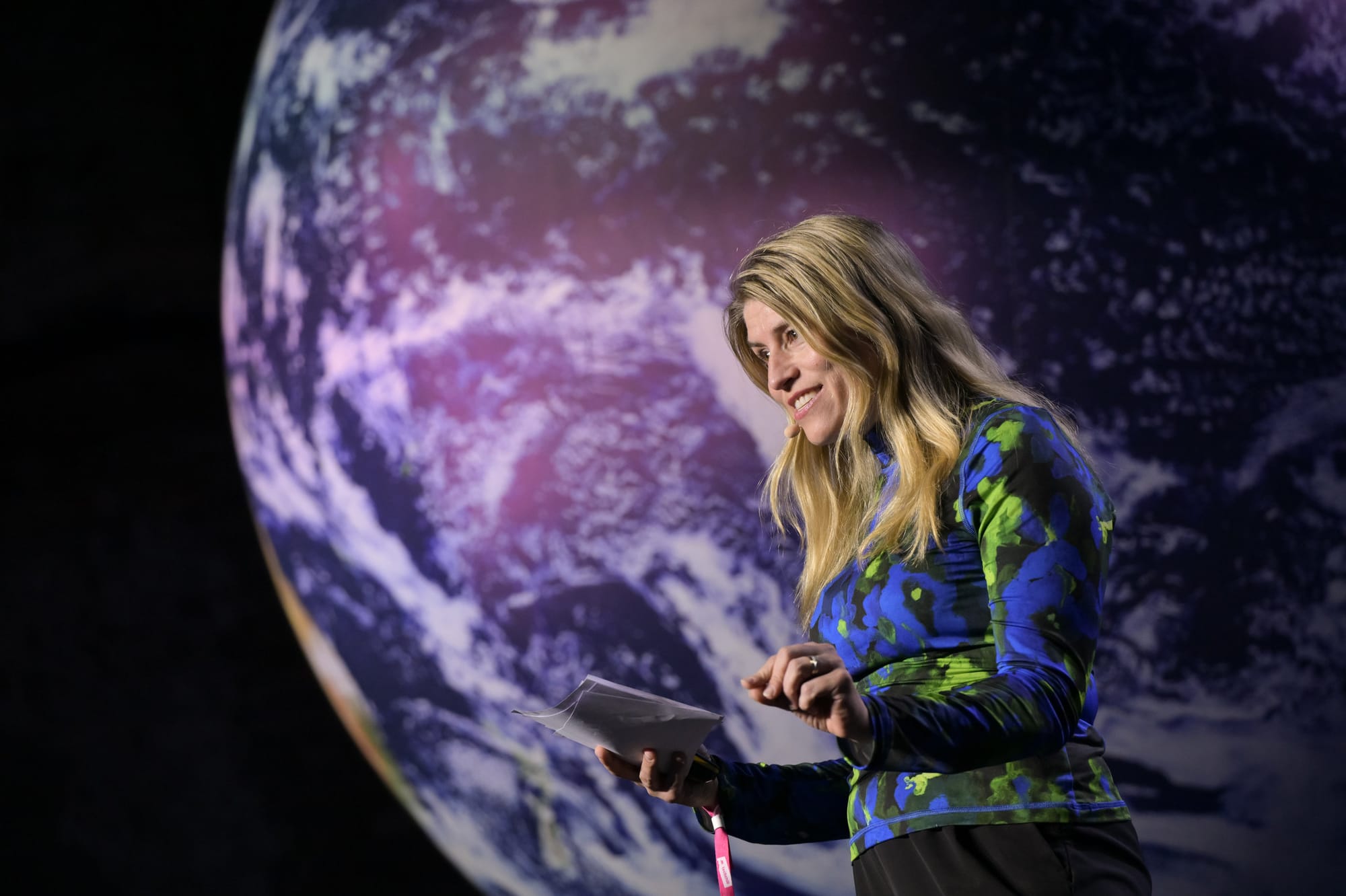
### **Why has Estonia become important to a Swedish fund?**
I have been coming here for five or six years and fell in love with the ecosystem. Estonian founders are scrappy and hard-working. Startup events begin at six in the evening because people spend the day working. In Sweden, we can apparently sacrifice an entire workday to talking at an event.
There is also a real pay-it-forward culture. Ministers and unicorn founders are accessible. Successful people give their time, money and attention back to the community. Plural has helped push the ambition level, and the Kasvuhoone tech hub is the kind of bold project the region needs.
Norrsken Evolve wants to make roughly three to five Estonian investments each year. Twice a year, we bring founders from our portfolio into an intensive sprint. It is not an open program; we have already invested in the companies. We identify what blocks each one from selling more or raising the next round, then design support around those bottlenecks.
We connect them with around 100 specialist advisers. Most VCs are half-smart generalists. Sometimes a founder needs somebody who has solved that exact technical, hiring or sales problem before.
### **What is Estonia still getting wrong?**
There are not enough women among VC partners or angels, and that has barely changed. I also worry about local funds. Estonia depends heavily on public capital; pension reform did not help, and SmartCap can only do so much. Too few exits have returned too little liquidity.
I would also like to see founders attack bigger problems. There are too many me-too ideas: another AI app for accounting, another one for legal work. I am always happy when people build, because their second or third company may be amazing. But the world is not short of serious problems, and a serious problem often comes with a serious market.
Energy is an obvious Estonian opportunity. You have disconnected from Russia, added renewables and created difficult new problems for the grid. That makes Estonia a fantastic sandbox for energy technology. We met the former energy minister and the head of Enefit and heard how much needs to be solved. Yet I still do not see enough energy startups.
### **Sweden has produced several generations of unicorn founders. What can Estonia learn?**
Sweden is perhaps on its fourth generation now, so it has a much larger mass of experienced founders and operators ready to invest and help. Estonia cannot manufacture that history overnight.
One lesson is to make failure survivable. Daniel Ek once explained why he kept pushing record companies with Spotify even though his proposal should have sounded impossible. They had a profitable CD business, and he wanted music to become almost free. He could take that risk because if Spotify failed, the Swedish state would make sure he landed somewhere. Bankruptcy would not destroy his life.
That safety allows people to try, fail and build again. Founders also need optimism. In Estonia, Russia and the war feel physically close, and I sense more fear about the future. To build an ambitious company, you still have to believe there will be a future worth building for.
### **With AI changing the market every month, how can you still choose a company for a ten-year journey?**
I go back to basics. Predicting the future has always been freaking hard. I am not smart enough to tell you what happens next year. Anyone who claims to know what the world will look like in ten years is lying.
So I bet on the founder. Do I believe in this person’s obsession, drive and ability to keep learning? The founder will help shape the future, whatever it becomes.
Then I look at the problem. It needs to be huge, with a market worth tens of billions, and the founder needs an insight that comes from genuinely obsessing over it. For us, the problem must also matter. Helping someone make email marketing slightly better is not the kind of change we exist to fund.
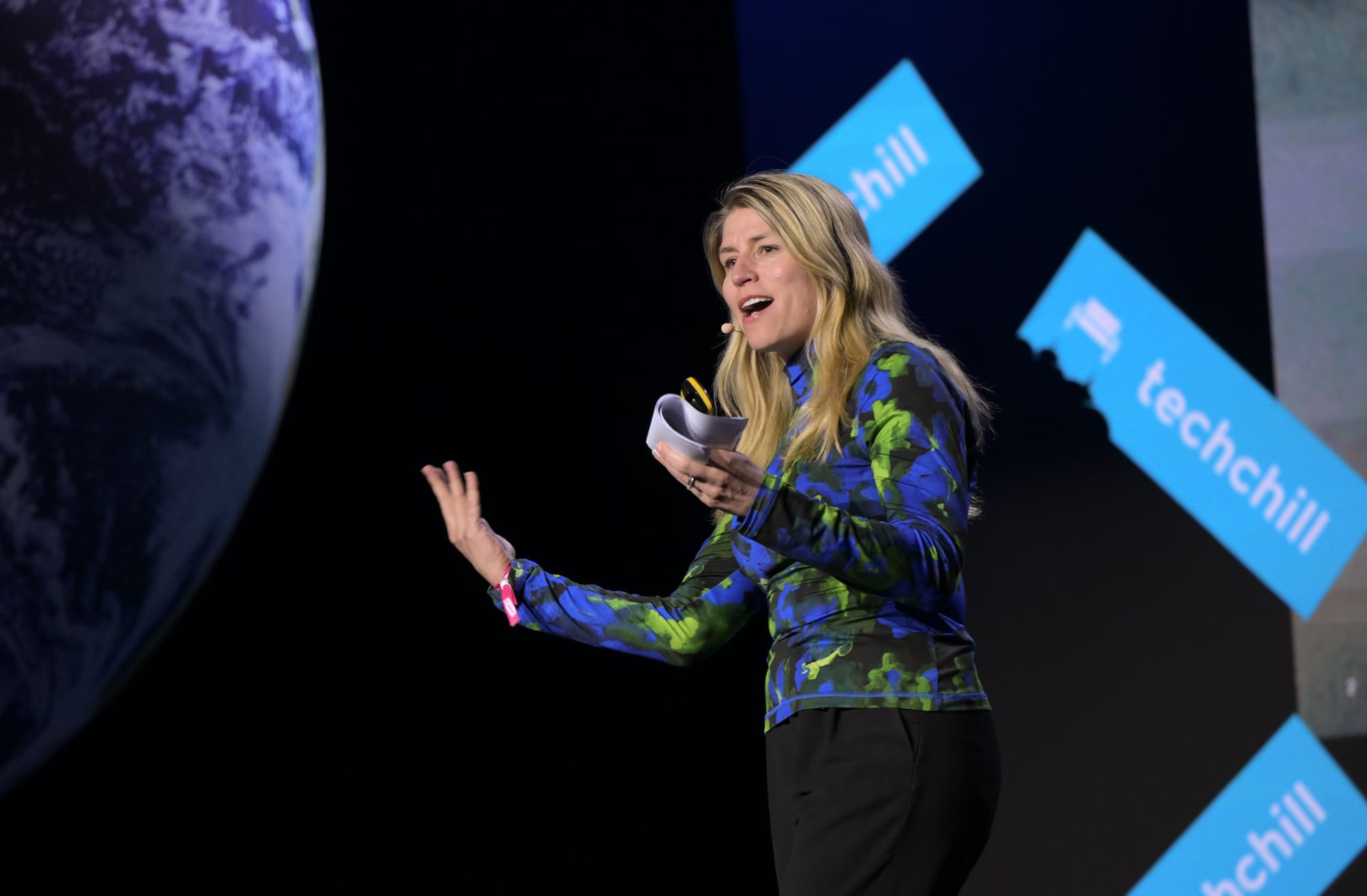
### **Has venture capital become afraid of doing its actual job?**
Sometimes, yes. I see early-stage funds tell founders, “We might invest if another fund comes first,” or give a commitment that only becomes real when somebody else joins. But being first is the job.
Being the first believer is the magic of venture. It is like first love, which sounds cheesy, but something happens when you tell a founder you believe before everybody else does. That conviction may help them make the first hire or persuade the next investor. Local funds should give founders that spark, not wait for an international brand to validate them.
High risk should correlate with high reward. We manage risk by building a larger portfolio, not by being fearful about every individual investment. If you remove the risk and still expect venture returns, you are kidding yourself.
### **You have described life as a woman in venture as 10,000 paper cuts. What do you mean?**
It is rarely one dramatic case of harassment or open discrimination. It is the accumulation of small comments. “We are so glad you joined this SaaS board because you are a woman.” Not because I have spent ten years investing in software and served on 20 boards? Or: “At least you are good-looking, so if you fail as CEO, that is something.” Or introducing me as “the good-looking investor.” Each comment is small enough to dismiss, but they keep coming in an industry that is already difficult.
My advice to women is to become unfuckwithable. Stay grounded in what you know and in the experience you have earned. Call people out when they diminish you. I am old enough now to say: stop fucking with me. Talk about what I bring to the table.
I wish the next generation had solved this, but I see more tech-bro communication, anti-equality rhetoric and rooms full of men whose organisers do not ask why. Successful founders and investors set the tone. If they decide equality is boring or “woke,” the paper cuts continue, and talented women will find better ways to spend their lives.
## Sign up for Fomo.Observer
Startup stories from Estonia. Free weekly newsletter.
Subscribe
Email sent! Check your inbox to complete your signup.
No spam. Unsubscribe anytime.
### Estonia needs to find its next advantage
URL: https://fomo.observer/estonia-needs-to-find-its-next-advantage/
Last updated: 2026-09-30T06:22:53.000Z
For a country synonymous with tech unicorns, they have been pretty thin on the ground lately. We’ve been searching high and low for our next unicorn for several years now - circling Starship and Pactum for a while, and lately even tried giving Skeleton and Frankenburg a nudge too, but none of them has brought the title home just yet. Let’s hope it happens soon, but we do have a new kid on the block.
That wait may be over with a company that makes little noise about being here in Estonia but is showing rapid growth. Blackwall, which protects websites from malicious bots, cyberattacks and unauthorised data scraping, has been valued at over a billion euros in the TopTech rankings. Providing a service that almost every company in the world increasingly needs, Blackwall sells its solution through web hosting providers, helping them filter out harmful web traffic and reduce server loads and costs. This news should excite our ecosystem.
[Security firm Blackwall tops €1 bln value on paper amid sector M&A frenzyCybersecurity provider Blackwall has achieved a €1.03 billion valuation in the TopTech 2026 rankings, riding a massive wave of global consolidation in the cybersecurity sector to become Estonia’s newest billion-euro tech firm on paper. Despite crossing the threshold in the independent ranking compiled by M&AFomo.ObserverTarmo Virki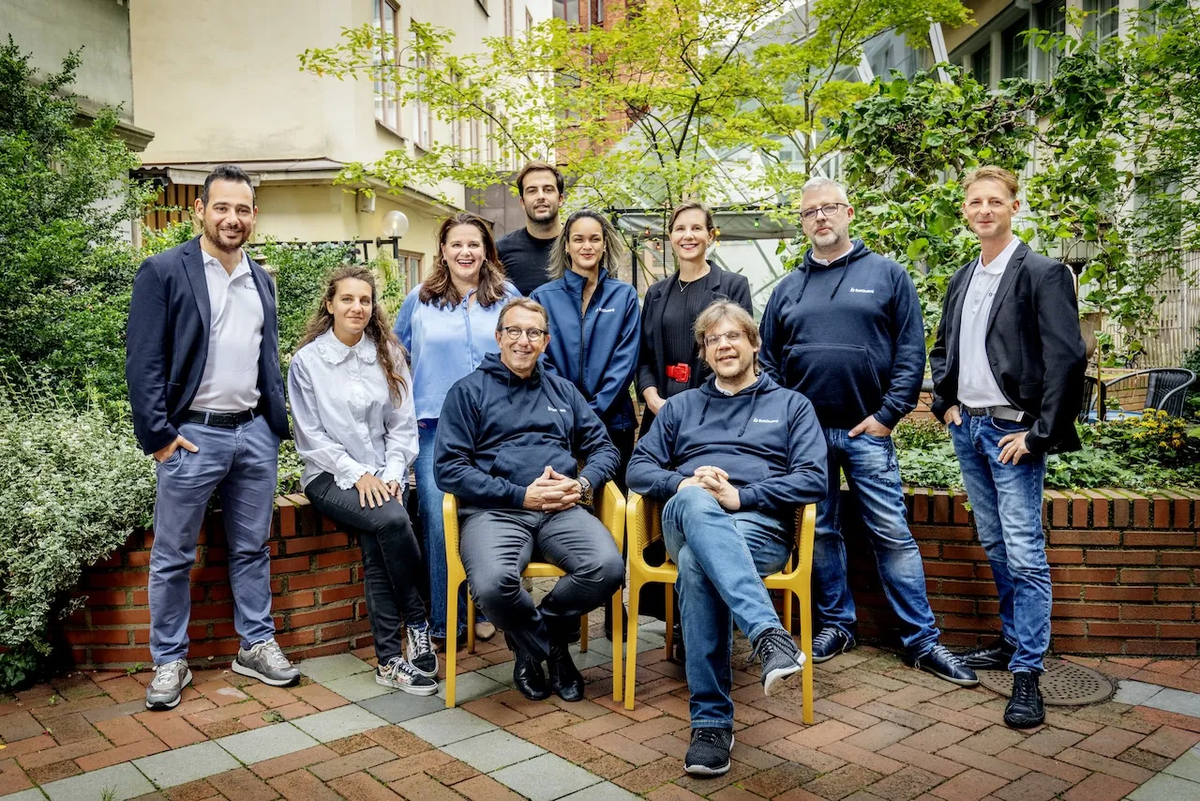](https://fomo.observer/blackwall-toptech/)
### **Holding out for an IPO**
Wise and Bolt have held firmly on to the top two spots for years. Although both are valued slightly lower this year than last, they still account for 68% of the combined value of the companies in the rankings. They therefore have a strong influence on the overall picture too.
Building on that - we have been eagerly awaiting Bolt’s IPO for years to release some of that value to the market. It could cause a small earthquake, freeing up capital for new investments and bringing a breath of fresh air to the movement of talent too. Surely there are some future founders sitting at their desks in the Vana-Lõuna - Veerenni triangle just waiting for their big pay day.
There have been no other major liquidity events with the potential for a similar impact recently either. We have seen some smaller companies have achieved successful exits, but we have seen no market-shaking deals in recent years since Pipedrive changed hands.
### **Estonia’s edge has moved**
We’ve now reached a point where the pace of starting and building a company has accelerated beyond what we can easily grasp. Having software already built used to give you a definite advantage: six months spent building it meant that competitors starting today were six months behind you. That’s no longer true, and we have to look elsewhere for an edge. Could it be in distribution, the team’s domain expertise, regulatory barriers and data that others do not have? That is why I am curious to see how these rankings will be shaken up in the years ahead.
Surprisingly it stands out that there are still relatively few AI success stories among our most valuable companies despite the push to make Estonia an AI leader in Europe. Good old Pactum remains a steady presence, while Zobi’s interesting, if slightly baffling, sprint to 17th place gives us another example.
Looking at the AI-powered rockets taking off around the world in just a few short months, Estonia’s field of strong AI companies still looks rather sparse. Rapid experimentation is certainly a good thing, but the more interesting question is how many of these companies can build a business and a product that customers are willing to keep paying for.
### **Defence and resilience establishing a stronghold**
Shining the beacon for Estonian tech is the defence industry - it has strengthened its position, bringing hardware and robotics along with it. Only a few years ago, investors saw both hardware and robotics as niche areas. Now I have not heard anyone say, “Hardware is hard” in quite some time. It’s doubtful that building hardware has become easier in the meantime, but it does offer a competitive edge that has become far less predictable for software-only products.
A third area with high expectations for the future is energy and storage technology, and some very strong companies have already emerged here in Estonia too. Energy and security are increasingly seen under the same broad umbrella of resilience, and we are also seeing more new companies emerge at the intersection of the two.
### **Create the environment for success**
If we want to keep producing new billion-euro companies, we also need to ask ourselves, as a country, whether we truly want to help new startups and technology companies thrive, and whether we are willing to put our weight behind them as a state. We increasingly see our neighbours making a very deliberate commitment to supporting and developing technology businesses, and devoting substantial resources to doing so.
We have enjoyed a great deal of success, and as a digital nation we have plenty to be proud of. Estonia also remains an excellent place to start and grow a company. But we need to recognise that, even in economics, the soup is thicker in one corner of the pot. If we want to accelerate economic growth, we need to create the right conditions for, and invest in, those capable of achieving substantial international growth.
## Sign up for Fomo.Observer
Startup stories from Estonia. Free weekly newsletter.
Subscribe
Email sent! Check your inbox to complete your signup.
No spam. Unsubscribe anytime.
### Security firm Blackwall tops €1 bln value on paper amid sector M&A frenzy
URL: https://fomo.observer/blackwall-toptech/
Last updated: 2026-09-30T14:01:44.000Z
**TALLINN** — Cybersecurity provider Blackwall has achieved a €1.03 billion valuation in the TopTech 2026 rankings, riding a massive wave of global consolidation in the cybersecurity sector to become Estonia’s newest billion-euro tech firm on paper.
Despite crossing the threshold in the independent ranking compiled by M&A advisory firm Prudentia Tallinn and Siena Secondary Fund, Blackwall is not yet officially a unicorn.
A technology startup is minted as a unicorn only when its valuation tops €1 billion during a formal equity financing or official valuation event. Because the [TopTech list](https://www.toptech.ee/?ref=fomo.observer) relies on an analytical model that draws on public market capitalisations and investor fair-value estimates when market data is unavailable, as in Blackwall's case, the milestone remains an on-paper valuation rather than an official market capitalisation.
Nevertheless, Blackwall's rapid ascent — formerly known as BotGuard OÜ —illustrates a radical decoupling of private security software valuations from standard market baselines. The AI-enabled security and web infrastructure company, which raised a €45 million Series B last year to protect small and medium-sized businesses from malicious online traffic, saw its valuation surge 368% from roughly €221 million the previous year.
Many enterprise security scaleups like Blackwall have seen their valuations effectively triple or quadruple over the past year, as new threats from the AI space have driven aggressive industry consolidation and unprecedented acquisition premiums.
The market frenzy was most notably highlighted by blockbuster deals like Google’s $32 billion acquisition of Wiz. As a result of these high-profile takeovers — which helped drive a 270% year-over-year surge in cybersecurity M&A deal value — valuation expectations for top-tier scaleups have fundamentally shifted.
"Blackwall shows that valuing a technology company means looking at the product, the sales channel and the economic value it creates for customers, all at once," Indrek Uudeküll, Partner at Prudentia Tallinn and lead compiler of the ranking, said in a statement. Blackwall’s flagship product, GateKeeper, proactively filters malicious traffic before it reaches customer applications.
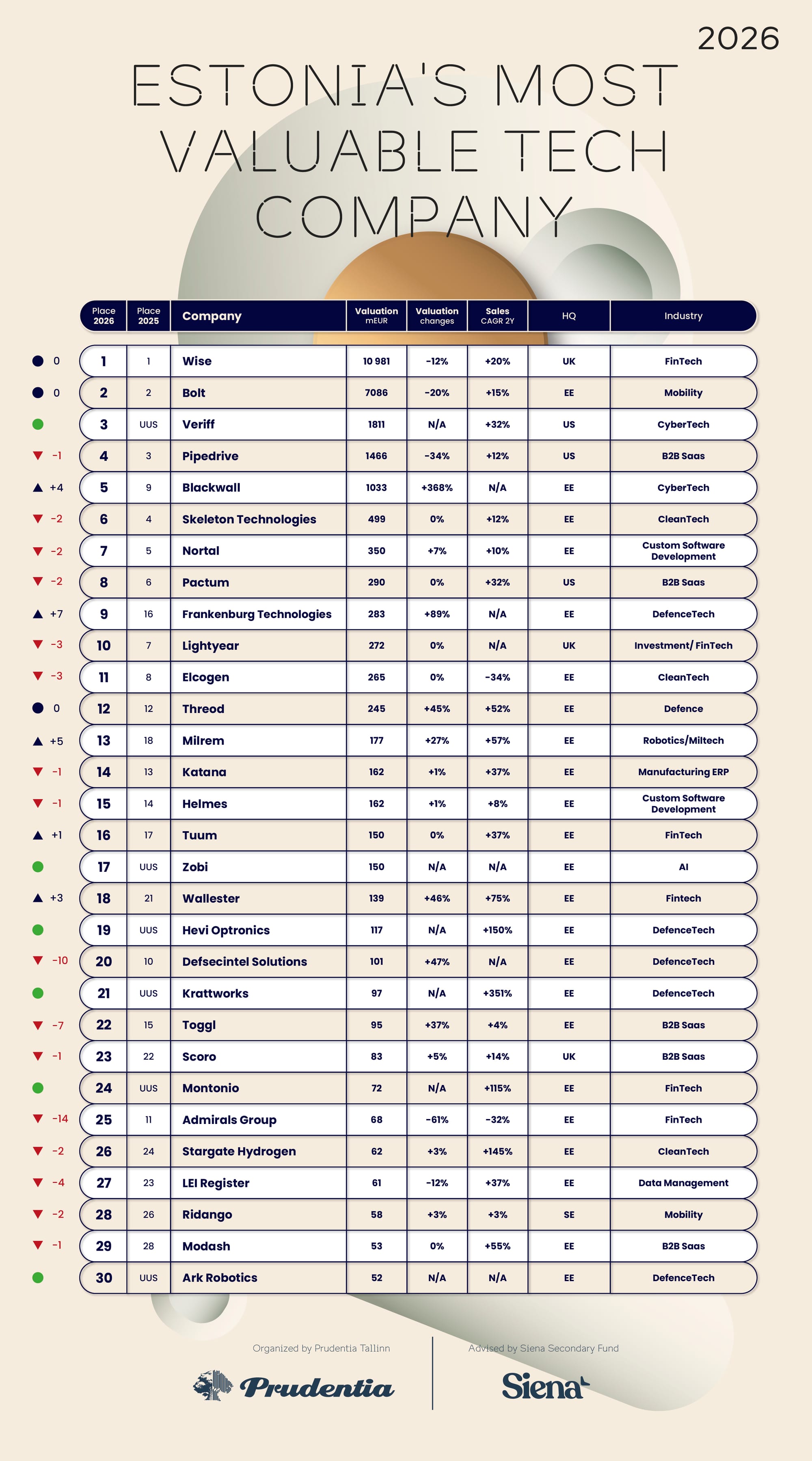
Blackwall's rise comes as the broader Estonian tech ecosystem experiences a slight market correction at the very top.
The combined value of Estonia's 30 most valuable tech companies fell to €26.4 billion from €27.7 billion a year earlier. This decline was largely driven by a 15% combined valuation drop for the country's two largest legacy players: Wise, which retained the top spot at €11 billion, and Bolt, which ranked second at €7.1 billion. Because the top five companies account for 84.6% of the table's total value, revaluations of these legacy giants heavily influenced the overall index. Identity verification firm Veriff placed third at €1.8 billion.
Beyond cybersecurity, defence technology emerged as a dominant growth sector. Frankenburg Technologies rose 89% to €283 million (still far from the unicorn valuation touted in the media), while Threod grew 45% to €245 million. Newcomers Hevi Optronics, KrattWorks, and Ark Robotics also joined the list.
Underpinning these sectoral shifts is a profound change in how Estonian startups are being built. Rando Rannus, Partner at Siena Secondary Fund and co-author of TopTech, highlighted the rise of AI-native founders who are prioritising extreme capital efficiency.
> "They don't ask how many people they need, but how few," Rannus said, describing founders in their twenties who have never built companies without artificial intelligence.
> "A new hire only comes on board when the machine can no longer keep up. That is a very different mindset from the 'growth at all costs' of 2021."
Rannus noted that this leaner approach lets companies reach significant scale with just five to fifteen employees and minimal funding, enabling founders to retain larger equity stakes and keep cap tables simpler.
"Estonia's startup DNA is intact: substance, resilience and a refusal to give up," Rannus said.
## Sign up for Fomo.Observer
Startup stories from Estonia. Free weekly newsletter.
Subscribe
Email sent! Check your inbox to complete your signup.
No spam. Unsubscribe anytime.
### Let the growth be organic: Icosagen's Mart Ustav
URL: https://fomo.observer/let-the-growth-be-organic-icosagens-mart-ustav/
Last updated: 2026-09-29T09:49:47.000Z
TARTU – Autumn blows through Tartu on a Friday morning, tossing raindrops and red and golden leaves every which way, and Mart Ustav is in his office at Icosagen on the city's edge, ready to talk.
There's nothing remotely startup here, from the watercolours on the walls to the receptionist bearing coffee. Icosagen was founded in 1999\.
It's old school. When it entered the world, Estonia had no startup ecosystem. Skype was not born yet. It was a dozen years away from being acquired by Microsoft. Everything had to be built from scratch, and so that is what this biotech has done.
From day one, Icosagen – Estonian biotech pioneer – has been a bootstrapping operation.
There have been no angels.
There have been no exits.
But it has had a steady revenue stream and strong growth.
For Ustav, that has always been the vision.
In June, Icosagen announced a €45 million expansion, with €18 million coming as a European Investment Bank loan and the company putting up the rest. It allowed Icosagen to build out a state-of-the-art, single-use Good Manufacturing Practice-compliant facility, one that could maintain early-stage biologics discovery, development and clinical manufacturing under one roof here in Tartu, providing complex protein therapeutics to Icosagen customers from start to finish.
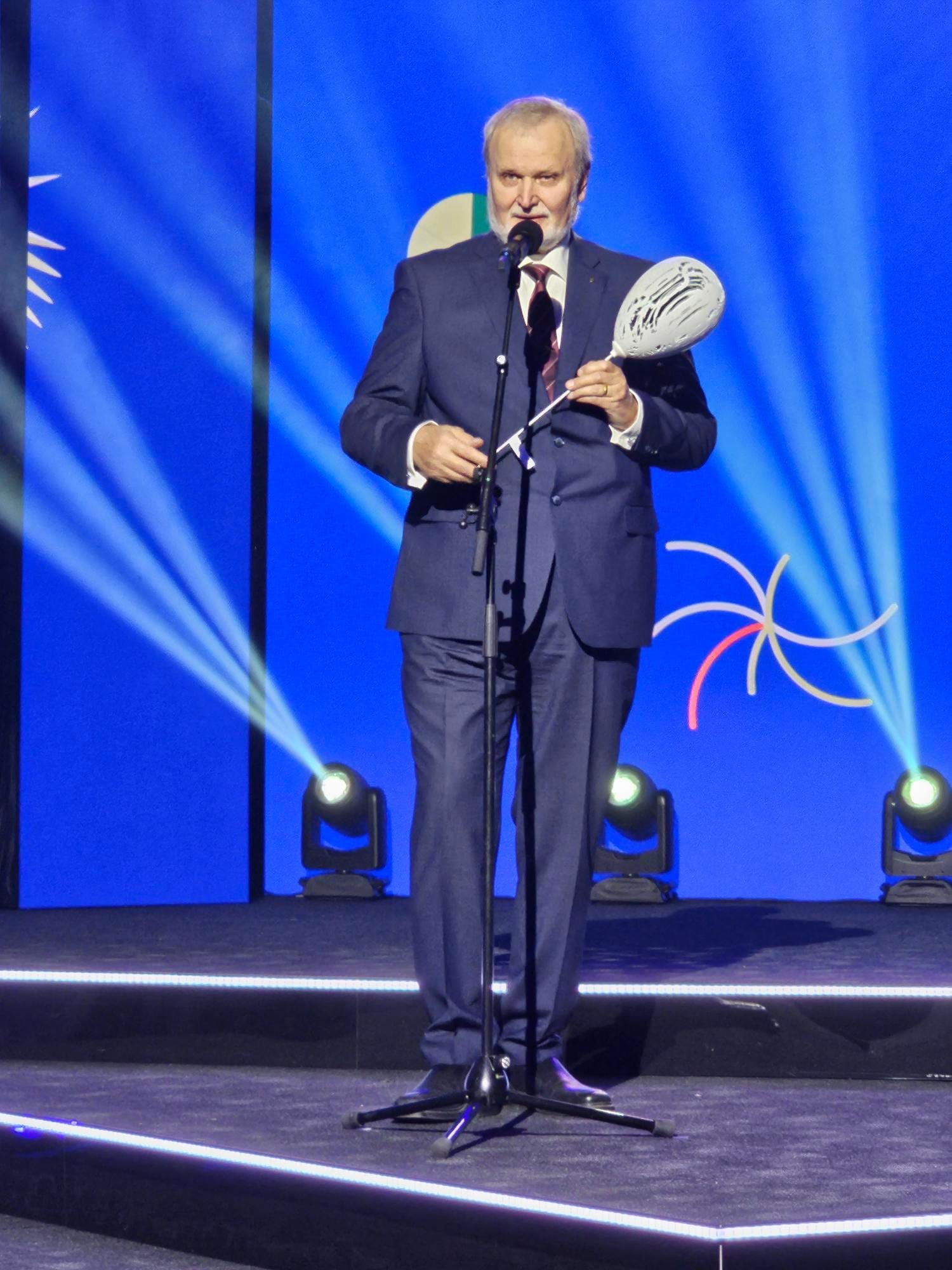
Icosagen was named Estonia's Company of the Year (Aasta Ettevõte) in November 2023.
The fact that more than half of the expansion was internally funded aligns with the company's philosophy of organic growth, and of using the company's own income rather than VC funds.
> "Investors want to put their excess money into a project and see a return. That's a nice idea, especially when you're risking other people's money," says Ustav. "But if it's your own money on the line, that's actually the beneficial part."
### The only choice
Ustav was not born in Estonia. He first saw the sun in the village of Cherlak outside the city of Omsk in western Siberia. His family was among the tens of thousands of Estonians deported by Comrade Stalin in the 1940s. He remembers the expanses of the prairie, its open spaces and rivers. When Stalin died and new Soviet Premier Nikita Khrushchev granted deportees amnesty, Ustav's family could return home. They travelled from Omsk to Moscow, from Moscow to Tartu. He arrived by train in Tartu on May 31, 1956\. Ustav had not yet turned seven.
He eventually became a professor of microbiology and virology at the University of Tartu. The idea for Icosagen, then part of QuattroMed, developed at the tail end of the 1990s, when Estonia, again independent and with its borders open, had to contend with diseases like HIV, hepatitis C, and other infectious diseases its medical system had no diagnostic capacity for.
He felt a responsibility, as a professor in a relevant speciality, to set up in-house diagnostic methods to fill that gap. There were no mentors, no incubators, and no accelerator program.
Ustav had to learn on the go and, by his admission, he had no experience running a business.
> "I didn't know this would be a successful undertaking," Ustav says, "for the very simple reason that I didn't know how businesses functioned. I was just a professional scientist."
At this juncture, he faced the same issue most scientific founders face. But to hear him tell it, it's not a difference in temperament or mindset. There just simply were so many hours in the day.
And if you're spending those hours setting up and running labs and doing experiments, it's hard to squeeze in bookkeeping, hiring new personnel, and setting up quality control systems.
"The biotech business is a serious commitment," notes Ustav. "There are rules and regulations."
### Building an organisation
Ustav also didn't have a role model. He was trying to solve an unmet need, in an area where he had competence. He wasn't out to establish the next Genentech, and he didn't try to transplant Silicon Valley into Tartu. He did have certain ideas, though, about how to build a business.
> "When you are in a company, nobody is giving you money," he says. "You have to fight for everything, and if you want to run a biotech business, you have to have your own income."
Ustav points out that the same applies to software companies that launch quickly, at least in part. "If there is a market, there's cash flow," he says. "If there's cash flow, there's growth."
The other option is investment, but no income. A situation that is not sustainable, he says.
Icosagen was never supposed to be just a one-trick company, though. Originally, it was the biotech and protein production arm of QuattroMed, but when the diagnostics division was divested in 2008 and became SynLab, Icosagen was formed a year later to continue in biotech.
Over time, it has expanded into a contract research, development, and manufacturing organisation. It offers antibody discovery, antigen production, and protein engineering. It partners with global drug and vaccine developers. And its team has swelled to 200 employees.
Building that organisation took time, but in Ustav's mind, it was preferable to a single-project vision, where a small team rents lab space and equipment, gets the job done, and sells it off.
> "In our business, if you want to have a balanced, well-organised organisation, you have to do it the way we did," he said. "That means organic growth, your own income, and your own cash."
### Of unicorns and success stories
Since Icosagen was founded, a new Estonian tech reality has emerged.
As has the idea of what makes a company successful. From Skype to Playtech, from Wise to Pipedrive, and from Bolt to Veriff, the landscape is dotted with new generations of founders. The life sciences have yet to yield a unicorn. Ustav is not necessarily interested in unicorns at all.
"Of course, we dream that one day we will invent a drug that treats certain diseases," he says. "But unmet medical need is our most important motivation."
"If we can develop the molecules and identify the right target that can be used to treat a condition, that's the right way to go," says Ustav. "Because if it works, it works."
Smaller startups also have a role to play in the sector, he notes. "There's nothing wrong in running a single-project company," says Ustav. "You have the IP and target your work toward a narrow field, and if you are successful, then you're a winner."
Turning a startup into a large organisation like Icosagen is another story. "We have many, many competencies," he points out.
For Ustav, Icosagen's most recent success story has been a partnership with Tartu University Hospital and the North Estonia Medical Centre to provide CAR-T therapy to patients with blood cancers in Estonia. CAR-T therapy uses a patient's own immune cells, modifies them genetically and programs them to recognise and destroy cancer cells. For its part, Icosagen will manufacture and produce the therapy-grade cells, while its partners will deliver them clinically, starting with leukaemia and lymphoma patients before adding those with solid tumours and autoimmune disease. The effort will make Icosagen a regional tech hub for CAR-T therapy.
"It's clear that CAR-T is a success story," says Ustav. He notes that the procedures and facilities are in place to begin production once regulators permit it. "All the haematologists are waiting for the okay from the medical agency," he says. This is the company's primary strategic focus. It's also helping to incubate and train employees who might go on to found their own biotechs. While Tartu is a ways off from Paris, London, or Brussels, it is Ustav's home.
"I raised four kids here; it's got four nice seasons; it's an intellectually stimulating environment," Ustav says. "I have lived in Sweden, I've lived in Finland, I've lived in the US, and I've lived in Russia," he says. "But I still like this place the most."
## Sign up for Fomo.Observer
Startup stories from Estonia. Free weekly newsletter.
Subscribe
Email sent! Check your inbox to complete your signup.
No spam. Unsubscribe anytime.
### Bilt.me raises $700k, backed by Superhero Capital, Villig and Sokk
URL: https://fomo.observer/bilt-me-raises-700k-backed-by-superhero-capital-villig-and-sokk/
Last updated: 2026-09-28T08:18:14.000Z
**TALLINN -** AI-native mobile app developer, [Bilt.me](http://bilt.me/?ref=fomo.observer) has raised $700,000 in a pre-seed funding round led by Superhero Capital, including Bolt founder Markus Villig and Lightyear founder Martin Sokk.
The app for creating apps was founded in August 2025 by three guys in their 20s - Uku Joost Annus, Kevin Akkermann, and Karl Kiilaspää. What was a project during a hackathon to help fight Apple's app-testing restrictions soon became an AI agent that takes its users from idea right through to live app.
The company claims it has passed six figures in annual recurring revenue, with revenue doubling month over month for three straight months. The team won the inaugural cohort of ruum, the hacker space in Tallinn's Krulli Quarter and since have been located in up and coming space for startups.
Earlier this year Fomo.Observer caught up with Annus to find out more about the company and its drive.
[Bilt.me: Built in ruum, helping entrepreneurs worldwideIn a room called ruum, one of Estonia’s promising young startups is being built. And while it’s being built, it’s helping others “build mobile apps and make money with them,” Uku Joost Annus, co-founder and CEO of Bilt.me tells me. Annus co-founded the companyFomo.ObserverFiona Alston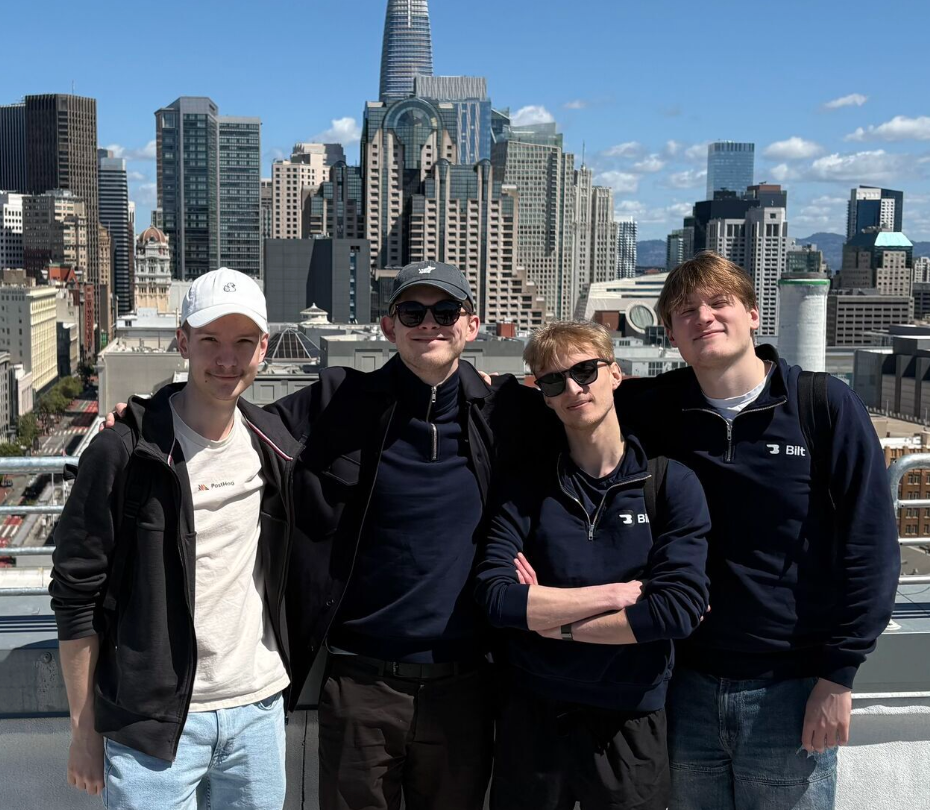](https://fomo.observer/bilt-me-built-in-ruum-helping-entrepreneurs-worldwide/)
Speaking about where the company is positioned to do well in Europe, Annus said, “there's one layer where Europe is still world-class: the application layer, turning AI into things real people use and pay for. That layer runs on builders, and we don't have nearly enough of them. Everyone told us the magic was in San Francisco. We went, and came home more convinced than ever that the builders are already here."
“Our bet is that apps, not websites, are where the next generation of businesses gets built,” he said.
The whole company is six engineers. The new capital goes toward a world-wide expansion and further development of the applications capabilities.
"When I was 19, building an app was one of the biggest barriers to turning my idea into a company," said Villig. "Bilt.me is removing that barrier for the next generation of entrepreneurs. If anyone with an idea can build and launch a real product, we unlock far more people to start companies, solve problems, and create something valuable."
## Sign up for Fomo.Observer
Startup stories from Estonia. Free weekly newsletter.
Subscribe
Email sent! Check your inbox to complete your signup.
No spam. Unsubscribe anytime.
### Kolm Eesti edtechi, kolm teed liivakastist maailma
URL: https://fomo.observer/kolm-eesti-edtechi-kolm-teed-liivakastist-maailma/
Last updated: 2026-09-26T17:29:37.000Z
Madle Timm
TALLINN – ALPA Kids õpetab lapsi enam kui 170 riigis, 99math on jõudnud miljonite USA koolilasteni ning DreamApply aitab 300 ülikoolil tudengeid vastu võtta. Kolm väga erinevat Eesti edtech-ettevõtet on jõudnud üsna sarnase järelduseni: Eesti on hea koht, kus toodet katsetada, aga kasvamiseks tuleb üsna kiiresti piiri taha vaadata.
99mathi kaasasutaja Timo Timmi käis 11ndas klassis, kui hakkas mõtlema, kuidas teha nii, et matemaatika ülesanded tekitaksid õpilastes sarnast elevust kui videomängude mängimine. ALPA Kidsi kaasasutaja Kelly Lilles elas perega Kanaari saartel ning otsis oma lapsele eestikeelset harivat mängu. Sobivat lahendust ta enda sõnul ei leidnud. DreamApply kaasasutaja Märt Aro oli aga aastaid ülikoolidega töötades näinud, kui keeruline ja mahukas on tihti kulisside taha jääv ülikoolide vastuvõtuprotsess.
„Eestlastele meeldib lahendada kõiki maailma probleeme tarkvara abiga,“ naerab Aro. Kõik kolm tarkvara on nüüdseks Eesti piiridest kaugele välja lennanud.
## **99math: matemaatika peab kõigepealt Robloxiga võistlema**
Timmi mängis enda sõnutsi lapsena ja teismelisena palju videomänge. „Miks meil ei võiks koolis või hariduses üldiselt olla sellist lahedat platvormi, kus lapsed päriselt tahavad asju teha, katsetada koolis ja võib-olla hiljem kodus edasi mängida?“ kirjeldab Timmi aastal 2018 tekkinud mõttekäiku, millest kasvas välja 99math.
Ettevõte nimetab ennast haridusmängude platvormiks. „Me ei õpeta matat,“ ütleb Timmi, „me oleme selline harjutusplatvorm.“ Ta lisab, et laps ei õpi ainult 99mathi kasutades matemaatikat selgeks. Õpetaja õpetab, aga 99math saab panna lapse elevusega harjutama ja anda õpetajale pildi sellest, kes vajab abi. Timmi sõnul on nende üheks eesmärgiks tõmmata kaasa ka laps, kelle jaoks matemaatika pole seni olnud ehk lemmikaine. Mängides ja ülesandeid lahendades ei tunnustata ainult kõige kiiremat või tugevamat lahendajat, vaid ka näiteks kõige rohkem arenenud mängijat. Klass võib seada ka ühise eesmärgi – saavutada 90-protsendiline täpsus või lahendada üheskoos tuhat matemaatikaülesannet.
Esimest prototüüpi katsetas 99math Eestis, kuid Timmi sõnul vaatas tiim juba kolmandal kuul USA poole. „Tahtsime ikkagi ehitada sellist globaalset platvormi, äriliselt on Eesti turg kahjuks ikka liiga väike,“ ütleb ta. USA kasuks rääkisid tema sõnul turu suurus ja maksevõime, aga ka see, et koolides olid õpilastel juba vajalikud seadmed olemas. Euroopa tundus samal ajal killustatum.
„USA turule sisenemine ei olnud väga lihtne. Esimesed kuud ja võib-olla isegi aasta me tegime seda ikkagi suhteliselt manuaalselt. Postitasime Facebooki gruppidesse, saatsime e-maile ja samal ajal käis meie meeskond klassiruumides toote kasutamist jälgimas ja õpetajatega rääkimas,“ selgitab Timmi ja lisab, et kogu tagasisidet ei saa lihtsalt õpetajaga kõne tehes. Klassiruumis on õpetaja kõrval veel 30 last, kes võivad tootest hoopis teisiti aru saada.
99mathi aktiivsete kasutajate arvuks on umbes neli miljonit õpilast kuus ja ligi 90 protsenti neist elab USA-s. Päevas mängitakse 99mathis umbes 1,5 miljonit mängu ning läbi aja on platvormil lahendatud umbes 11 miljardit matemaatikaülesannet.
[Eesti ei saa jätta hariduse võtmetehnoloogiate arendamist teiste riikide hooleksKooliaasta on taaskord käes. Sellega koos ka võimalus jälle midagi uuesti alustada, paremaks muuta ja värske pilguga üle vaadata. Aga võib-olla võiksime 1\. septembril korraks vaadata otsa ka tänasele haridussüsteemile ning astuda mõttes tulevikukooli radadele. Milliseid samme peame astuma, et tagada Eesti lastele parim haridus? EdTech Estonia nõukogu liikmeFomo.ObserverInge-Helene Pello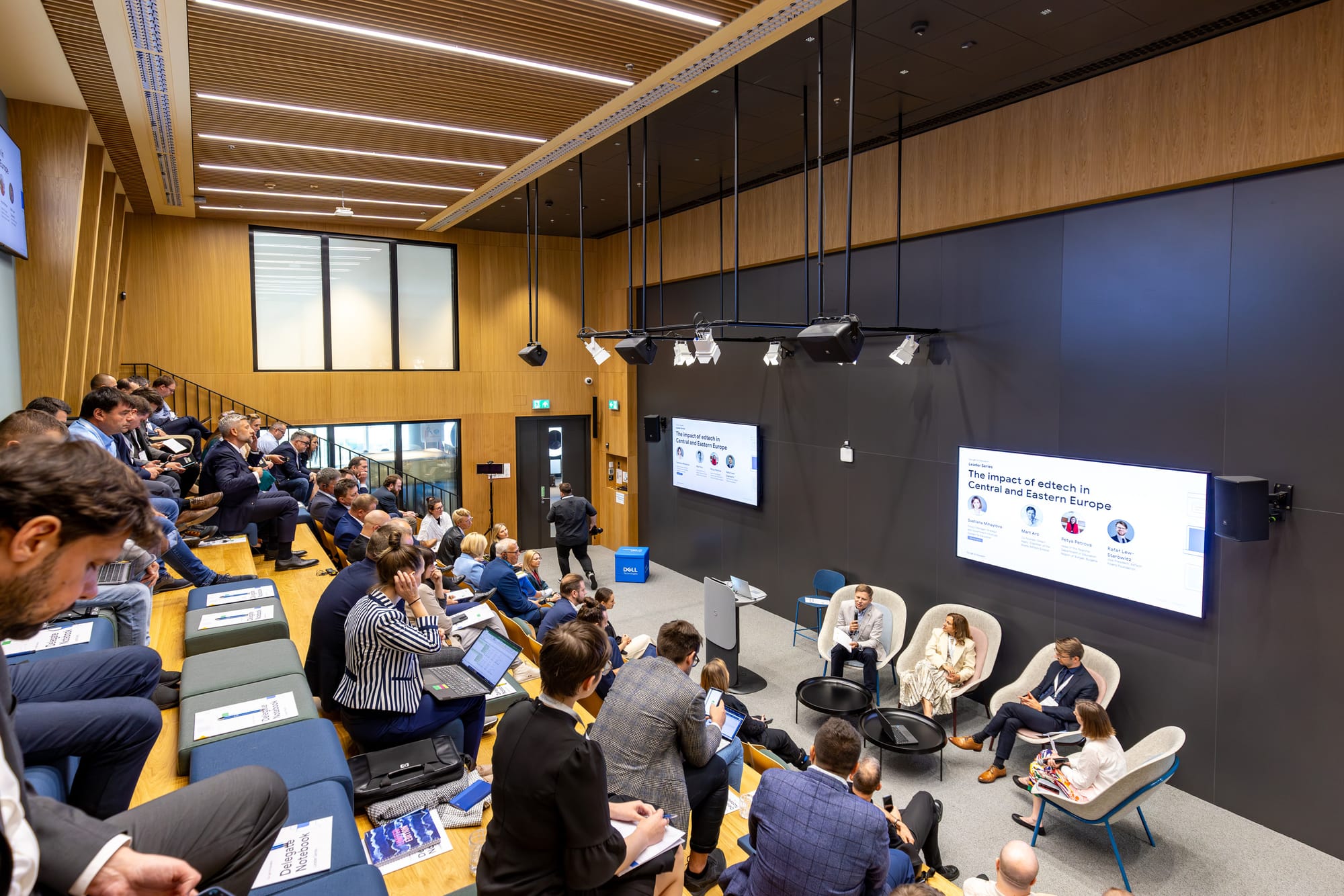](https://fomo.observer/eesti-ei-saa-jatta-hariduse-votmetehnoloogiate-arendamist-teiste-riikide-hooleks/)
### Kasutajad enne raha
“Meie strateegia on olnud kasutajate kasv enne, ja käive ehk võimalus soetada *premium*\-kontod, pärast. Praegu jõuab meie platvormile orgaaniliselt läbi õpetajate 200-700 000 uut õpilast kuus,” ütleb Timmi.
99mathi klassiruumitoode on õpetajatele tasuta. “Viimasel ajal oleme võtnud suuna kodukasutuse poole, kus oleme tegemas head arengut: üle 100 000 lapse mängib vabatahtlikult kodus. Meie ambitsioon on seda kümneid kordi kasvatada. Mõned lapsed teevad siin 3000 mataülesannet päevas ja päriselt terve õhtu mängivad,“ räägib Timmi.
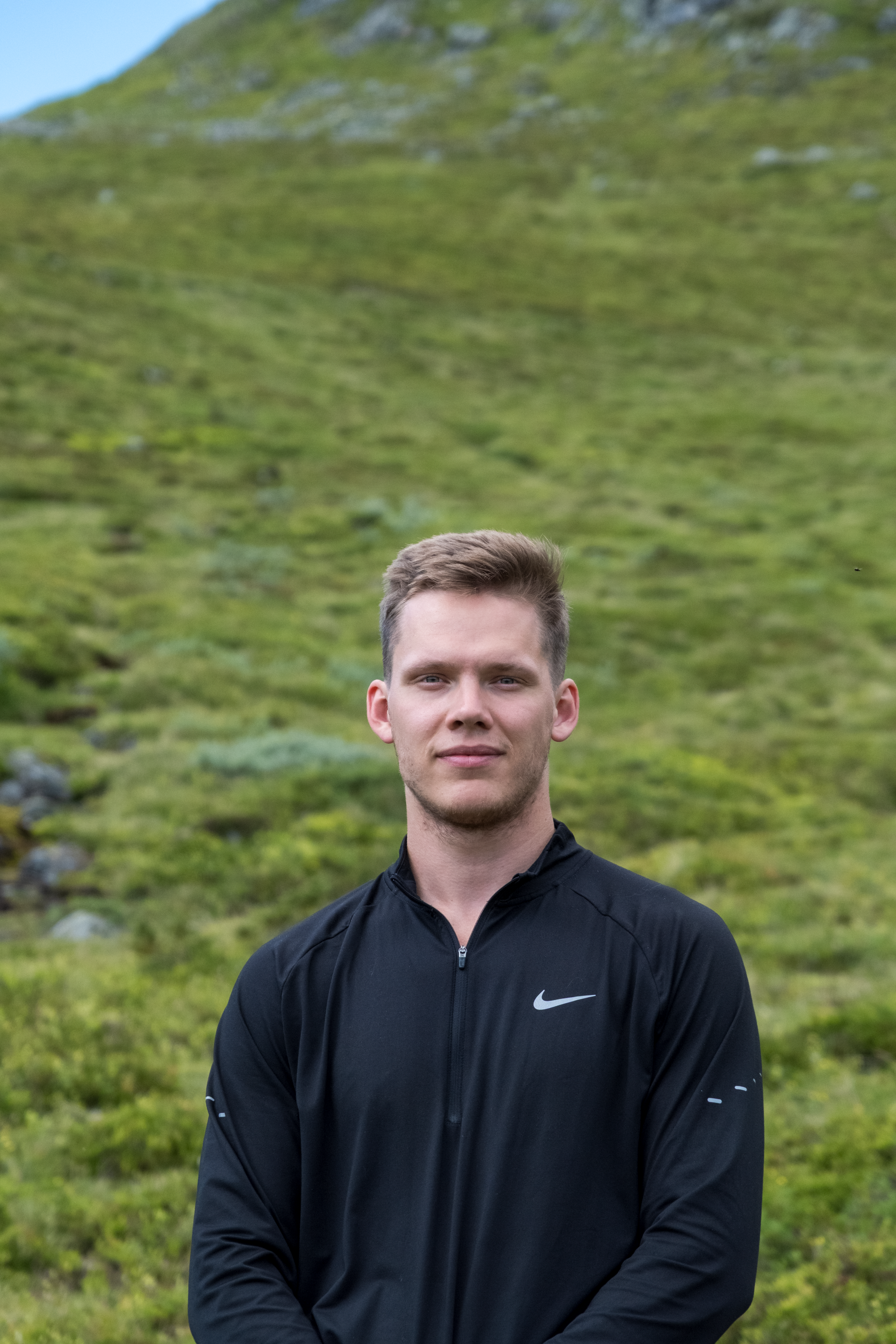
99math konkureerib kaasasutaja sõnul teadlikult mitte ainult teiste õppeplatvormidega, vaid kogu lapse vaba ajaga. „Kodus on Roblox, YouTube, Fortnite, kõik su asjad,“ ütleb Timmi.
Ettevõtte järgmine suur siht on konkreetne: tahetakse jõuda USA-s vähemalt kümne miljoni aktiivse kasutajani enne, kui hakatakse uusi turge sihtima.
## **ALPA Kids: „Eesti on suurepärane liivakast“**
Kelly Lilles elas perega Kanaari saartel, kus kodus räägiti eesti keelt, ümberringi hispaania keelt ning meediast tuli inglise keel. Lilles otsis oma lapsele tahvelarvutisse eestikeelset harivat mängu, kuid sobivat lahendust turul ei olnud. Sellest inspireerituna sündis aastal 2018 ALPA Kids, 3–8-aastastele lastele mõeldud hariv digimängude platvorm.
„Me teadsime, et ainult Eesti turul toimetamine pole jätkusuutlik. Eesti on hea liivakast ja suurepärane test-turg,“ ütleb keeleteaduse taustaga Lilles. Ka alpaka valiti Lillese sõnul tegelaseks osaliselt seepärast, et see võiks töötada ükskõik millises maailma otsas.
## Sign up for Fomo.Observer
Startup stories from Estonia. Free weekly newsletter.
Subscribe
Email sent! Check your inbox to complete your signup.
No spam. Unsubscribe anytime.
### COVID avas maailma
ALPA esimesed aastad langesid kokku pandeemiaga. See võinuks noore ettevõtte plaanid segi paisata, kuid juhtus vastupidine. Kui koolid ja lasteaiad läksid COVID-19 ajal distantsõppele, liitus ALPA Kids tasuta haridusteenuseid pakkunud algatusega.
„See oli hea võimalus peredele ajutiseks haridusasutuste sulgemise ajaks tuge pakkuda,“ meenutab Lilles. Paarist nädalast sai aga ootamatult pikem periood ja algatus muutus rahvusvaheliseks. Ettevõttele hakkas saabuma päringuid riikidest, mida meeskond polnud oma esimeste eksporditurgudena isegi kaalunud.
„Päringuid ALPA lokaliseerimiseks tuli väga paljudest riikidest, alatest Põhja-Makedooniast kuni Indiani,“ räägib Lilles, „alles siis hakkasime mõistma selle vajaduse skaalat.“
See oli ettevõtte jaoks esimene suur tõestus, et emakeelse digitaalse õppesisu puudus ei ole Eesti eripära. Tänaseks tegutseb ALPA 17 keeles, kuid Lilles rõhutab, et uue turu avamine ei tähenda lihtsalt olemasoleva sisu tõlkimist. „Kui meil on ristküliku näitena Eesti lipp, siis me ei saa minna teise riiki sama lipuga,“ toob ta lihtsa näite. Kohandada tuleb ka loomi, taimi, kultuurilisi viiteid ja kõnet.
Saksamaale sisenemine näitas Lillese sõnul, kui kiiresti võib selline investeering tagasi tuua. Seal kasutati lokaliseerimisel kõnesünteesi ning tema sõnul teeniti tehtud investeering tagasi kümne päevaga.
India kogemus on olnud aga teistsugune. Kasutajaid on palju, kuid Lillese sõnul on neid oluliselt raskem maksvateks klientideks konverteerida.
„Euroopas on ikkagi see harjumus kvaliteetse sisu eest maksta palju kõrgem,“ ütleb ta. Tema sõnul pööravad Euroopa lapsevanemad rohkem tähelepanu ka sellele, kas lastele mõeldud digitoode on reklaamivaba, kvaliteetne ja ehitatud nii, et see ei üritaks last võimalikult kaua ekraani ees hoida.
Leedu on Lillese sõnul omakorda olnud üllatus teises suunas: haridusasutuste digivalmiduses peab ta seda kohati isegi Eestist edumeelsemaks.
Kõiki uusi turge pole ALPA valinud ärilise potentsiaali järgi. Uus oluline pöördepunkt saabus pärast Venemaa täiemahulise sõja algust Ukrainas, kui ettevõte otsustas luua ukrainakeelse versiooni ja anda selle esimeseks aastaks tasuta kasutusse. Lillese sõnul oli intervjuu ajaks ukrainakeelsel ALPAl umbes 700 000 kasutajat 130 riigis.
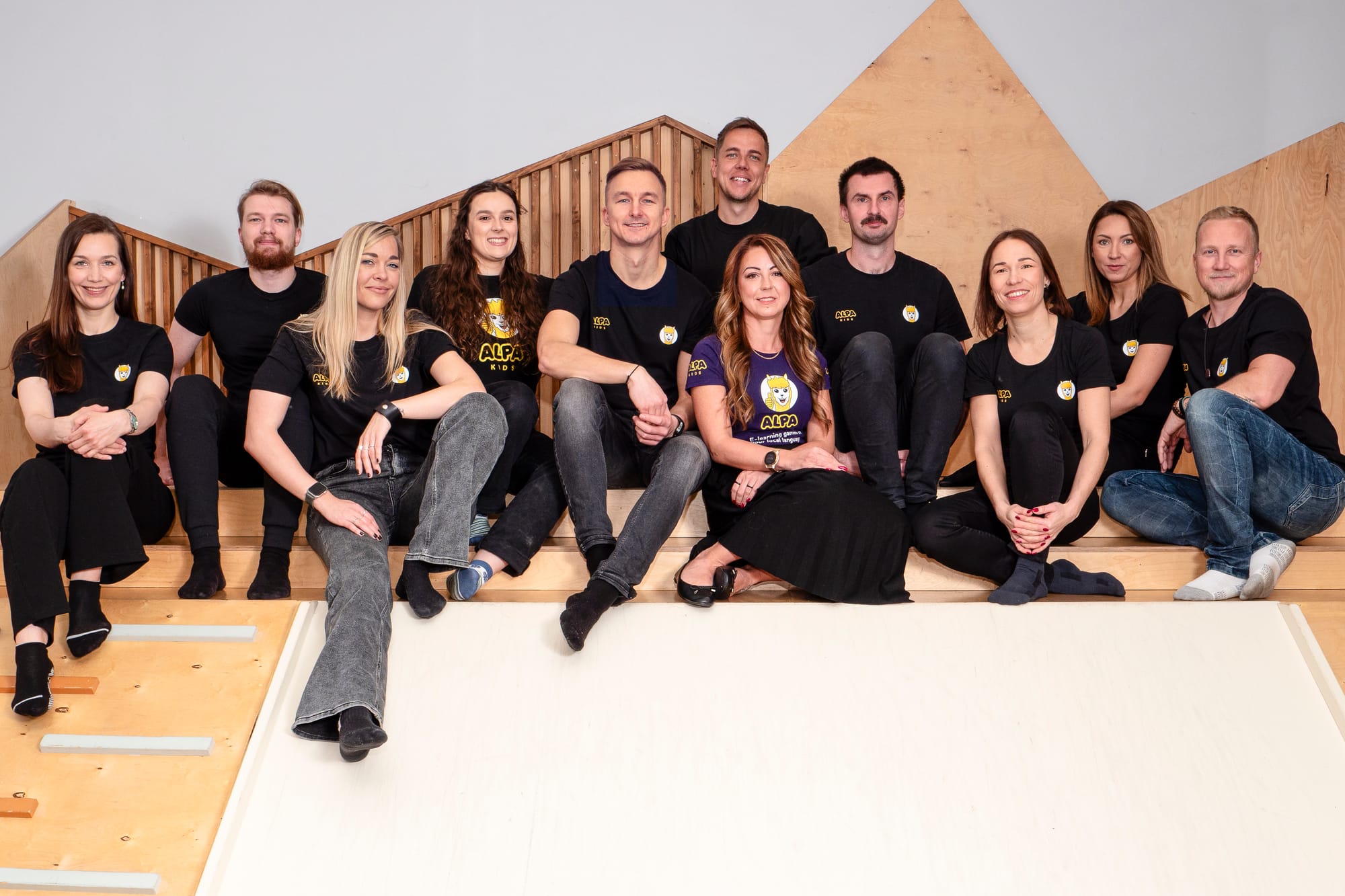
„See on hästi kurb ja emotsionaalne lugu, aga samal ajal ka äriline edulugu,“ ütleb ta. Ukraina projekt on talle ka isiklikult oluline. „Kui mul motivatsioon ära läheb, teen Google Analyticsi lahti ja vaatan, kui suur mõju meie tegemistel peredele on,“ ütleb ta.
Samal ajal on tehnoloogia muutnud uutele turgudele laienemise märksa kiiremaks ja odavamaks. Lillese sõnul võttis ühe uue keeleversiooni tegemine varem kuus kuni kaheksa nädalat ning otsene lokaliseerimiskulu võis olla 7000–8000 eurot. „Täna teeme AI abiga selle ära seitsme päevaga ja otsene kulu on umbes 40 eurot,“ ütleb ta.
AI teeb esimese tõlke, aitab leida kultuuriliselt kohandamist vajavaid kohti ja paljude keelte puhul saab kasutada naturaalselt kõlavat kõnesünteesi. Kohalik õpetaja jääb protsessi siiski alles ning valideerib rakenduse sisu enne avaldamist.
### Järgmine panus on lapse hääl
AI ei tähenda ALPA jaoks ainult soodsamat lokaliseerimisprotsessi. Lilles räägib, et ettevõtte üks suuremaid järgmisi panuseid on laste kõnetuvastus. Tema sõnul saavad praegused kõnetuvastussüsteemid täiskasvanutest oluliselt paremini aru kui väikestest lastest. Väikeste keelte puhul on probleem veel suurem.
ALPA lastekõne korpuse abil treenitakse just laste kõnet paremini mõistvaid mudeleid. Lilles räägib, et eestikeelse mudeli täpsus on koostöös TalTechi keelelabori juhataja Tanel Alumäega paranenud ligi kolm korda. Järgmine eesmärk on mitmekeelne laste kõnemudel. “Vajadus on väga praktiline: väike laps ei pruugi osata kirjutada, kuid tema uudishimu maailma osas on suur. Kui tehnoloogia suudab temast aru saada, saab laps tulevikus ALPAga ka lihtsalt rääkida,” selgitab Lilles.
Siis tekib aga järgmine probleem. Mida AI lapsele öelda tohib? Lilles toob näite ALPA katsetest, kus mudelile anti olukord, et kass hüppas aknast välja. Üldine keelemudel võib soovitada lapsel kassile järele minna või teda päästma hakata. „Aga me ei tea, äkki see laps on kümnendal korrusel,“ ütleb Lilles.
Oluline on arendada turvapiirdeid, et süsteem teaks, millal ise vastata ja millal suunata laps küsimusega täiskasvanu juurde. Lilles räägib ka sellest, et ALPA ei taha ehitada toodet, mille edu mõõdupuu on lihtsalt võimalikult pikk ekraaniaeg. Tema hinnangul ei saa ekraaniaega vaadata ainult minutites – oluline on see, mida laps ekraani taga teeb ja mis sisu ta kasutab. ALPA on tema sõnul teadlikult ehitatud nii, et see ei prooviks last ülestimuleerida või sõltuvuslikult enda küljes hoida.
Järgmise kolme aasta ambitsioonist rääkides nimetab Lilles kahte suurt eesmärki: jõuda kõigisse Euroopa riikidesse ja keeltesse ning saada laste kõnetuvastus piisavalt heaks, et seda oleks võimalik digiõppesse integreerida.
## **DreamApply: lahendus probleemile, mida teised polnud veel uneski näinud**
DreamApply lugu algas probleemist, mis on 99mathi matemaatikamängust ja ALPA alpakast märksa vähem nähtav: ülikoolide vastuvõtt.
Märt Aro ja teised kaasasutajad tegelesid ülikoolide turundusega juba alates 2005\. aastast. Aro sõnul olid nad enne DreamApply turuletulekut töötanud suurusjärgus saja ülikooliga ja korraldanud tippajal ligikaudu 500 üritust aastas.
Selle töö käigus hakkas neile järjest selgemaks saama, kui keeruliseks võib osutuda rahvusvaheline tudengite vastuvõtt. “Rahvusvahelisel ja kohalikul vastuvõtul on ülikoolides suur vahe, sest sageli on kohalikuks vastuvõtuks riik süsteeme loonud, rahvusvaheliseks aga eraldi mitte,” selgitab Aro. Tema sõnul tuleb selleks, et üks noor jõuaks ülikooli ustest sisse, teha umbes 50 erinevat sammu. Nõuded sõltuvad sellest, kust kandidaat tuleb, mida ta õppida tahab ja millal ta kandideerib. Lisanduvad dokumendid, tähtajad ja hulk erandeid. “Rahvusvahelised tudengid on koolidele ja riikidele olulised, seda hinnatakse näiteks koolide pingeridades,” rõhutab Aro.
2011\. aastal turule tuldud tootega hakati just seda probleemi lahendama – et vastuvõtutöötajatel oleks kasutada modifitseeritav, skaleeritav ja jätkusuutlik programm, ning tudengi vaatest loogiline kandideerimise teekond.
Aro meenutab esimesi aastaid üsna paradoksaalsena. „Sa tead, et sul on üliäge toode, mida kõigil vaja on, aga keegi ei taha väga osta.“ Ülikoolid on tema sõnul konservatiivsed organisatsioonid. Neil on maine, olemasolevad süsteemid ja väga vähe põhjust usaldada oma vastuvõtuprotsessi tundmatule startup’ile, pigem tahetakse luua midagi oma majas sees. “Aga just see oma süsteem ei pruugi kõige lihtsam näida teisest riigist kandideerijale,” ütleb Aro.
Üks esimesi kohtumisi toimus Eesti ülikoolide konsortsiumiga, kus DreamApply meeskond toodet presenteeris. Pärast kohtumist tunnistas konsortsiumi juht Aro sõnul, et ega nad startup’ilt eriti palju oodanud. Pigem loodeti saada mõned ideed olemasoleva süsteemi parandamiseks. Tänu presentatsioonile läks pilt aga selgemaks. „Te olete juba lahendanud probleeme, mida me pole veel uneski näinud, ja seetõttu soovime leida viisi koostöö tegemiseks,“ meenutab Aro talle öeldut.
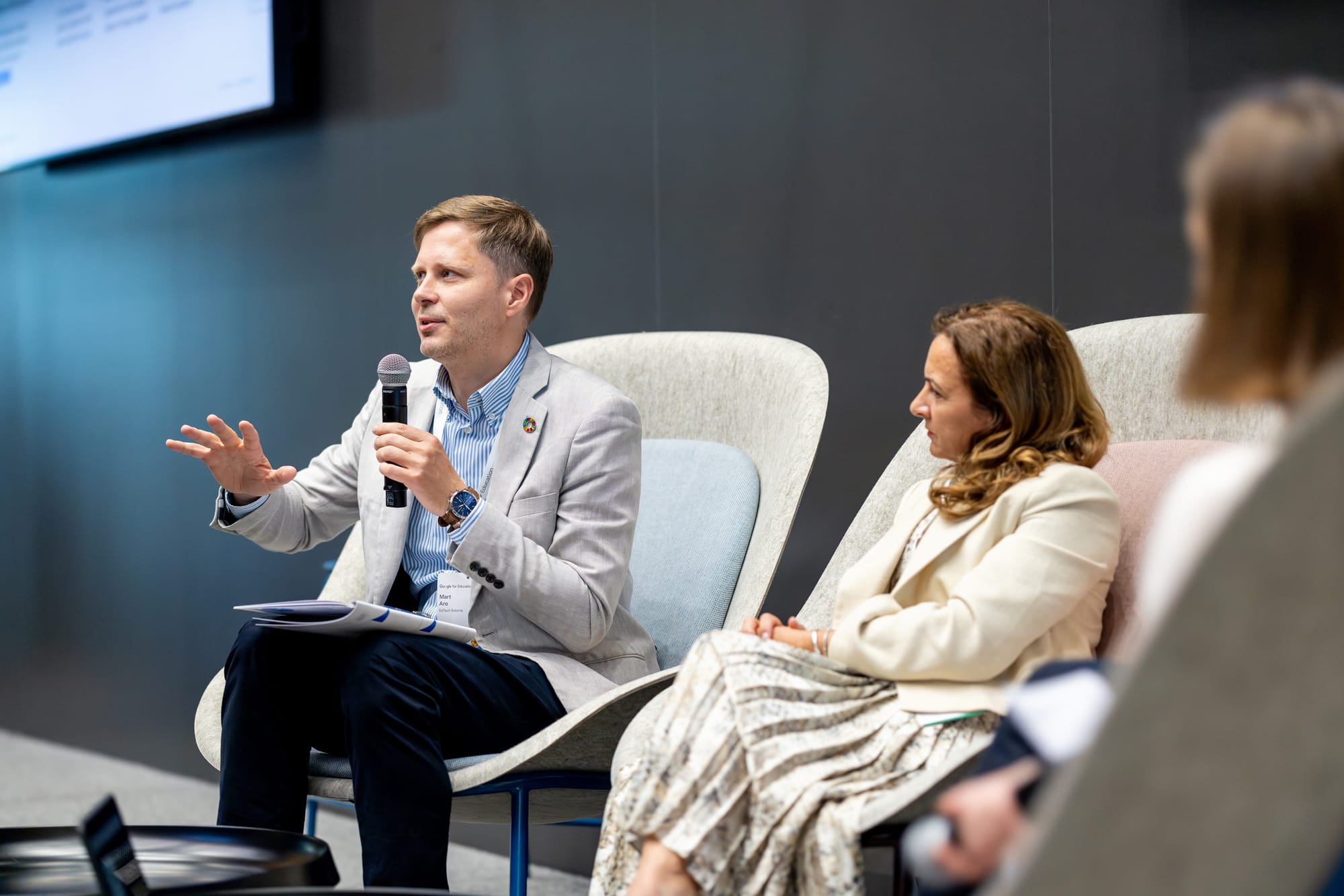
### Nähtamatu mootor
Aro kasutab ülikoolide vastuvõtu kirjeldamiseks metafoori: „See on nagu nähtamatu mootor.“
Kui see töötab, ei mõtle sellele keegi. Kui midagi läheb valesti, saavad kõik kiiresti aru, kui oluline see on, selgitab ta. „Kui sa astud vastuvõtuosakonda sisse, kus eriti rahvusvaheliste tudengitega tegeletakse - ja neil pole head tarkvara abis -, siis võib seal olla selline hall energia,“ räägib Aro. Tipphooaja töökoormust „ei sooviks oma vaenlasele ka“ ning iga väiksemgi apsakas võib mõjutada kellegi elu.
Aro sõnul ehitati DreamApply algusest peale tudengi vaatenurgast. Kandidaat peab aru saama, kus ta protsessis asub, mida temalt oodatakse ja mis edasi juhtub. Samal ajal peab ülikooli vastuvõtuspetsialist saama süsteemi võimalikult palju ise endale käepärasemaks seadistada. Aro meenutab kogemusest, kuidas mõni kuu pärast DreamApply kasutuselevõttu samasse vastuvõtuosakonda sisse astudes on seal hoopis teistsugune energia. „Nagu päike oleks välja tulnud. See osa on mu töös absoluutne lemmik – näed, kuidas teed inimeste elu käegakatsutavalt paremaks,“ avab ta.
Seda seostab Aro ‘minimum lovable product’i mõttega. „Ma unistan sellest, et kõik lahendused, mida hariduses kasutatakse, oleksid sellised, et inimesed ütlevad: ma armastan seda lahendust ja see teeb mu elu nii palju paremaks,“ ütleb ta. Tema sõnul ei peaks haridustehnoloogia eesmärk olema lihtsalt tarkvara, mis kuidagi oma töö ära teeb.
### Automatiseerida võib palju, eksida mitte
DreamApply hakkas vastuvõttu automatiseerima ammu enne praegust generatiivse AI lainet. Aro sõnul ehitas ettevõte juba umbes 12 aastat tagasi lahenduse, mis oskas lugeda passiandmeid. Eesmärk oli vähendada käsitsi sisestamisel tekkivaid vigu. Tema sõnul võib üks pisike näpukas passiandmetega tähendada tudengile probleeme viisaprotsessis ja ülikooli töötajatele hulga lisatööd.
Aro räägib, et ülikoolide tagasiside baasil on protsesside automatiseerimine muutnud kõrgkoolide vastuvõtutöö keskeltläbi 40 protsenti efektiivsemaks. Vabanenud aega saavad töötajad tema sõnul kasutada nende kandidaatide toetamiseks, kelle puhul on inimese sekkumist päriselt vaja. DreamApply arendustempo on tema sõnul samal ajal püsinud kõrge. Eelmisel aastal tehti süsteemile umbkaudu 600 uuendust. Näiteks sai valmis LLM-põhine lahendus, kuid Aro kirjeldab ettevõtte suhtumist pigem konservatiivsena. „Eelistame tehnoloogiaid, mis on ennast tõestanud, et head töökindlust pakkuda.“ Kui süsteemi otsused ja vead võivad mõjutada kellegi ülikooli pääsemist, ei piisa tema sõnul sellest, et tehnoloogia töötab enamasti õigesti.
### Viis miljonit noort ja järgmine ülikool
DreamApply on praeguseks oma valdkonna lipulaev Euroopas: tegutsetakse 40 riigis ja lahendus on töös enam kui 300 ülikoolis. Aro sõnul puutub DreamApply süsteemidega aastas kokku enam kui viis miljonit noort. „Värskelt liitus Tokyo ülikool. Ja DreamApply’d on rakendanud ka kolm maailma kümnest vanimast ülikoolist, Rootsi on aga valinud meie platvormi oma stipendiumide haldamiseks,“ toob ta näiteid.
Platvorm on ehitatud modulaarselt – Aro võrdleb seda šokolaadikarbiga, kust ülikool saab valida talle vajalikud osad. AI võib tema hinnangul aidata tulevikus kulusid veel vähendada ja muuta süsteemi soodsamaks, aga DreamApply ambitsioon ei ole lihtsalt võimalikult palju ülikoole kliendiks saada. „Me tahame ehitada maailma kõige paremat tudengite vastuvõtu süsteemi ja pakkuda seda võimalikult laialt,“ ütleb ta.
## Sign up for Fomo.Observer
Startup stories from Estonia. Free weekly newsletter.
Subscribe
Email sent! Check your inbox to complete your signup.
No spam. Unsubscribe anytime.
### Tehnopol's Defence Innovation Day kick started defence influx to Tallinn
URL: https://fomo.observer/tehnopols-defence-innovation-day-kick-started-defence-influx-to-tallinn/
Last updated: 2026-09-25T14:52:04.000Z
It was [Estonian Defence Week](https://edw.ee/en/estonian-defence-week/?ref=fomo.observer) this week and Tallinn played host to events across the city, with a large part of the action happening in Kultuurikatel. The opening day belonged to Tehnopol, for the second edition of its Defence Innovation Day.
It held a packed schedule with over 30 speakers from all corners of the defence tech ecosystem. The event was opened by Undersecretary for Defence Industry and Innovation at the Estonian Ministry of Defence, Siim Sukles.
Followed up by Anne-Liisa Elbrecht, Head of Tehnopol Accelerator and the[ NATO DIANA Estonian Accelerator](https://www.tehnopol.ee/en/accelerator/nato-diana-estonian-accelerator/?ref=fomo.observer), the crowd of over nearly 900 attendees were treated to a keynote on why stronger connections between companies, end users, public institutions, investors and international partners matter in the current security environment proving the need for a Defence Innovation Day.
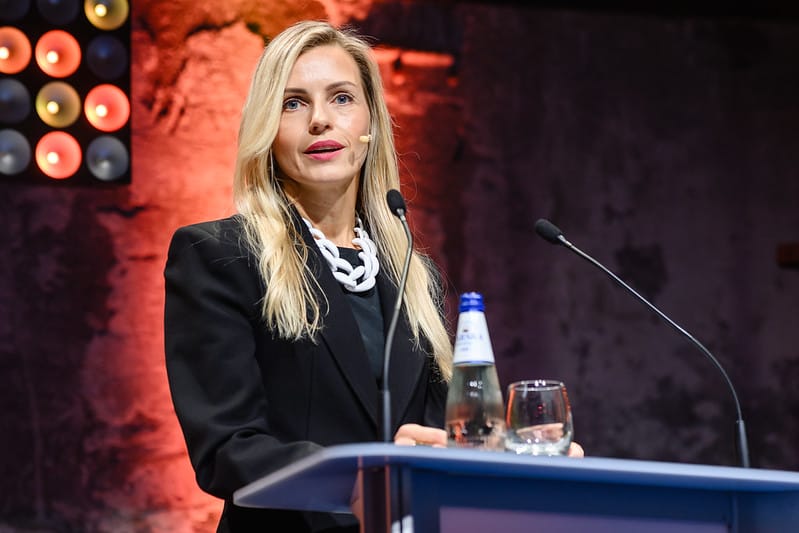
Taking to the stage for the first of what seemed like a lot of Major Ivo Peets appearances over the week, the Commander of the Force Transformation Command of the Estonian Defence Forces, focused his keynote on what happens when a promising technology reaches a military organisation.
His presentation covered the force’s ability to absorb change through people, training, integration, logistics, sustainment and clear ownership of decisions.
### Pitches
We saw pitches from four NATO DIANA companies: SkyFi, DATAMBIT, IS-Wireless and Spacedrip. After their three minute pitches they were subjected to questions from Gabrielle Dunn of In-Q-Tel, Hugo Urbla of the Estonian Defence Forces’ Force Transformation Command and Air Brigadier General Jean-Luc Daroux of DELAIR.
You can find more information on the panel discussions from the day, [here](https://www.tehnopol.ee/en/defence-innovation-day-2026-from-frontline-experience-to-capability-at-scale/?ref=fomo.observer).
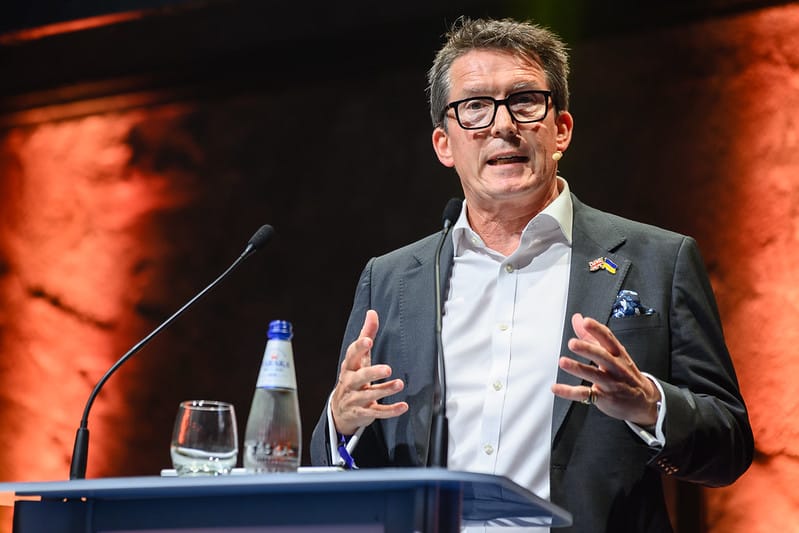
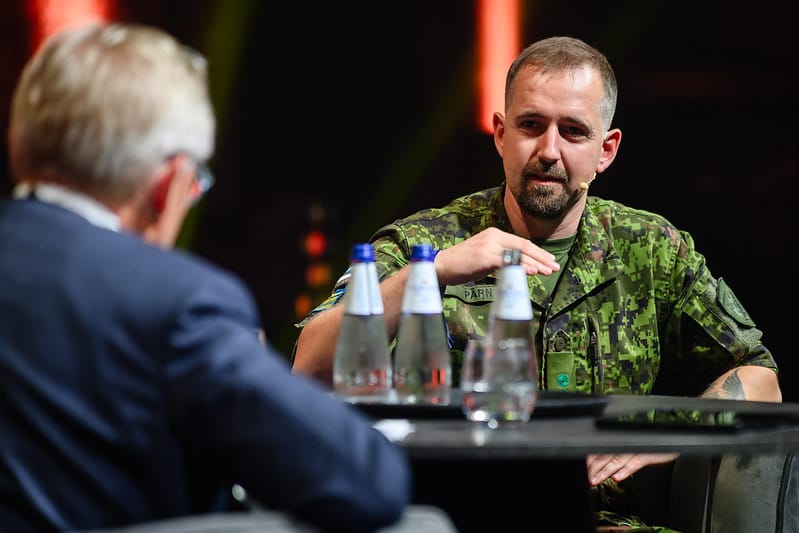
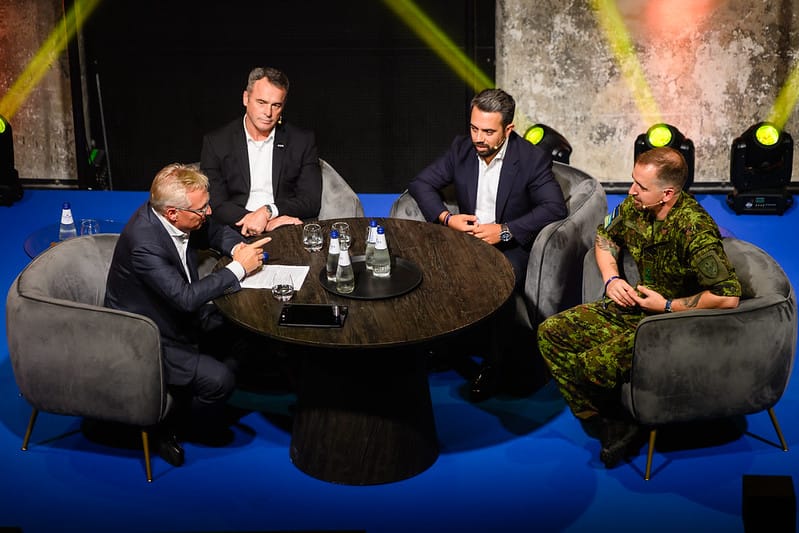
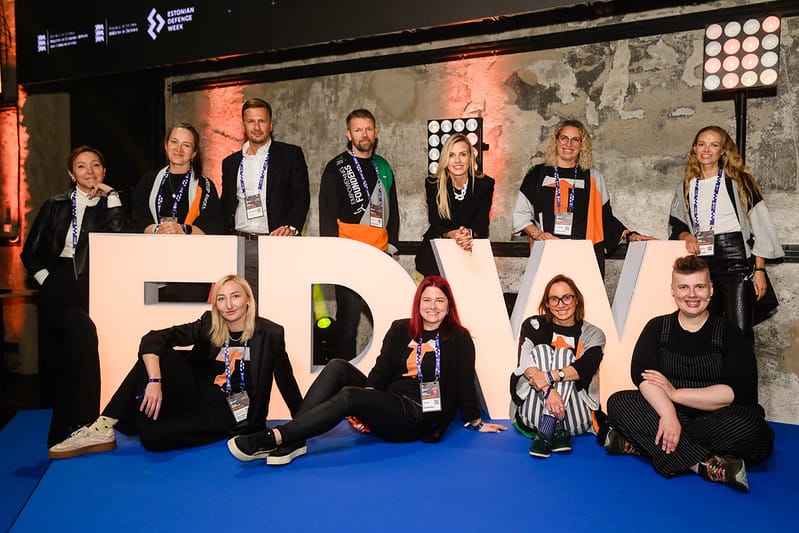
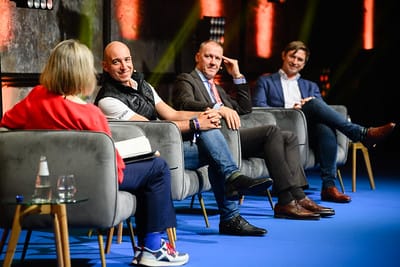
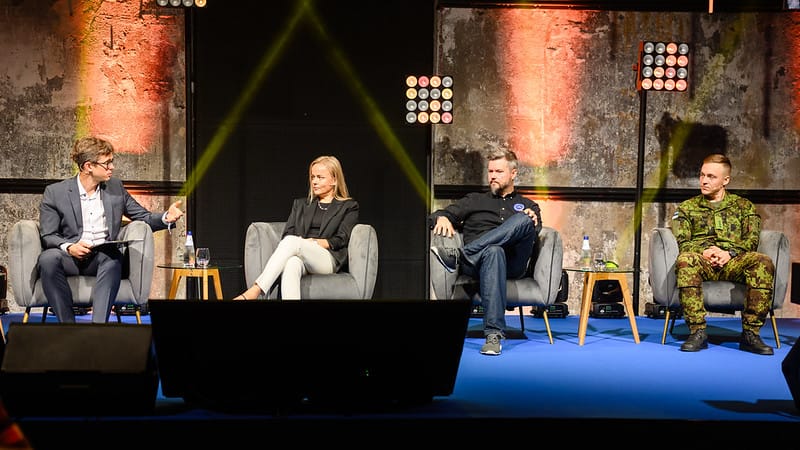
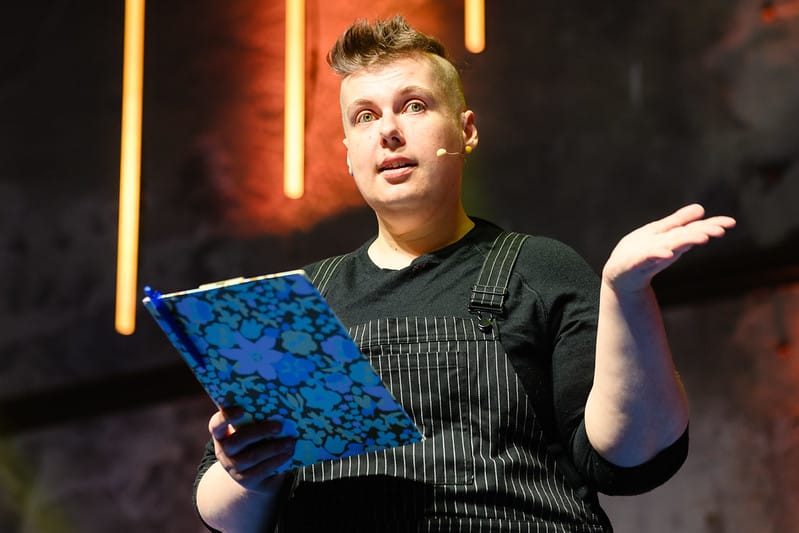
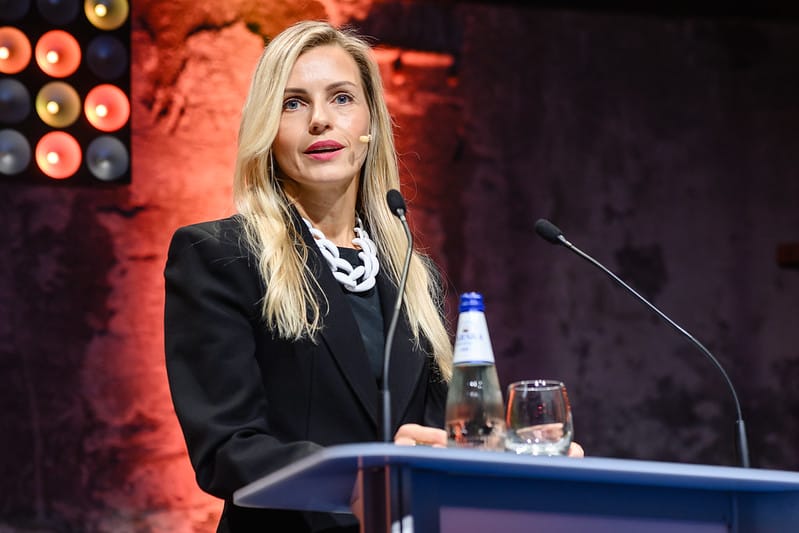
### Droonifirma Threod Systems sõlmis partnerluse uue kaitsetehnoloogiahiiuga
URL: https://fomo.observer/droonifirma-threod-systems-solmis-partnerluse-uue-kaitsetehnoloogiahiiuga/
Last updated: 2026-09-25T08:51:15.000Z
TALLINN – Eesti mehitamata õhusõidukite (UAV) arendaja Threod Systems allkirjastas strateegilise koostöömemorandumi rahvusvahelise kaitsetehnoloogia ettevõttega TEKEVER.
"Memorandumi alusel hakkavad ettevõtted kaardistama ühiseid huvivaldkondi ning hindama võimalusi ühendada oma tehnoloogiad, oskusteave ja operatiivkogemus," ütles TEKEVER pressiteates.
Sel aastal Tallinnas uue kontori avanud TEKEVER teatas hiljuti 580 miljonit dollarit suurusest investeerimisringist.
Koostöö eesmärk on ühendada mõlema ettevõtte tehnoloogiline oskusteave – TEKEVERi tugevus tehisintellektil põhinevates luure- ja seiresüsteemides ning Threod Systemsi rikkalik kogemus mehitamata õhusõidukite ja missioonikriitilise riistvara tootmisel.
"Threod Systemsiga sõlmitud koostöömemorandum loob aluse pikaajaliseks partnerluseks, mida ühendavad ühised väärtused, teineteist täiendavad võimekused ja soov arendada uusi lahendusi, mis aitavad kaitsta meie klientide huve," ütles TEKEVERi tegevjuht Ricardo Mendes pärast leppe allkirjastamist.
Threod Systemsi tegevjuht Arno Vaik rõhutas, et lepe on oluline samm kahe sarnaste eesmärkidega ettevõtte koostöö tihendamisel. "Mõlemale ettevõttele on olulised innovatsioon ja kõrge operatiivne võimekus. Soovime koos TEKEVERiga leida valdkonnad, kus meie teadmiste ja kogemuste ühendamine võimaldab luua uusi võimekusi ning pakkuda rohkem väärtust klientidele nii Eestis kui ka mujal," märkis Vaik.
TEKEVERi Baltikumi turu juhi Tuuli Vorsi sõnul on fookuses eriti NATO idatiiva julgeoleku tagamine. "Meie eesmärk on pakkuda lahendusi ka kõige keerukamate julgeolekuohtudega toime tulemiseks ning seda eriti NATO idatiival. Partnersuhete toel suudame sihtideni jõuda kiiremini, efektiivsemalt ja tulemuslikumalt," lisas Vors.
## Sign up for Fomo.Observer
Startup stories from Estonia. Free weekly newsletter.
Subscribe
Email sent! Check your inbox to complete your signup.
No spam. Unsubscribe anytime.
### KARL-GUSTAV KALLASMAA: Jev changes the maths of marketing. Here's what to build.
URL: https://fomo.observer/karl-gustav-kallasmaa-jev-changes-the-maths-of-marketing-heres-what-to-build/
Last updated: 2026-09-25T08:24:42.000Z
*Most marketing ideas that sound impossible aren't limited by imagination. They're limited by cost. That limit just moved.*
A founder I know sells an AI ad optimiser. Her company has three people: a CEO, a CTO and one marketer. By her numbers, they do about $5 million in revenue and around $4 million in profit. They produce thousands of pieces of content, their cost per lead is a few cents, and they have almost no SaaS subscriptions.
They aren't smarter than you. They noticed earlier that nearly everything in marketing can be automated, and that the ideas you drop as "too expensive" are mostly just priced for last year.
This month the price dropped again.
### **The cost of a decision is going to zero**
On 15 September a lab called TypeSafe released a model called Jev. It doesn't write. It decides. You give it a messy situation and a narrow question — is this lead real, which of these twelve topics fits this founder, is this quote accurate — and it returns a structured answer with a confidence score in 70 to 500 milliseconds. Input costs about four cents per million tokens, and output is free. On TypeSafe's own benchmarks it's roughly 190 times faster and 440 times cheaper than frontier models on these tasks. Those are their numbers on their tests, but the direction is what matters.
A chatbot made writing cheap. Jev makes judgement cheap, and marketing is mostly judgement: which lead, which angle, which person, which channel, which version.
### **Lead agencies are in trouble**
Here's what that means for growth right now.
Tools like [Monid](https://monid.ai/?ref=fomo.observer) work like an app store with one checkout for AI agents. An agent describes what it needs in plain language, finds a tool, checks its price and runs it, paying per call from a single balance. The catalogue covers thousands of tools, including web search and scraping, people and company enrichment, social platforms, and image, video and voice generation. Many calls cost a fraction of a cent.
Put a fast decision model on top and your agent becomes a researcher who never sleeps. It finds a company, enriches the contact, verifies they still work there, decides whether they fit, and drafts the first message. In my experience, you can get that down to about a cent a lead, verification included.
So think about what you currently pay for per-seat subscriptions and list-selling agencies. My bet is that most of that category goes away. Your competitors will run the same pipeline, which is exactly why you can't skip it.
### **A thought experiment: FOMO at 100 stories a day**
Let's make this concrete with the publication you're reading.
FOMO published 150 stories in its first six months, which is good for a small newsroom. Now imagine that 130,000 Estonians (10% of the nation) have a story another founder could learn from. Revisit each of them every four or five years, and you need about 30,000 conversations a year. That's roughly 100 a working day. You wouldn't publish them all. Maybe the best ten.
Everyone deserves a chance. Not everyone gets published.
The ranking shouldn't come from an editor's mood on a Monday, either. A story's real audience often arrives months later, when an investor asks an AI assistant about a founder before a meeting, and your interview turns out to be the best source. You rank on the story's potential over time, not on who happened to open LinkedIn that morning.
A human newsroom can't do 100 interviews a day. A pipeline can. Here's how I'd build it.
**1\. Research the person before anyone talks to them.** A coding agent with search and enrichment tools pulls everything public about the founder: past interviews, their company's history, what they post, what they avoid. Then it proposes three or four topics that only this person can speak to, and prepares them. Being an expert in someone else's industry used to take days. Now it takes minutes.
**2\. Let AI do the interview.** This part makes people nervous, so here's the evidence. Economists at the London School of Economics found that [AI-led interviews](https://blogs.lse.ac.uk/impactofsocialsciences/2024/10/30/ai-can-carry-out-qualitative-research-at-unprecedented-scale/?ref=fomo.observer) were rated roughly on par with an average human expert interviewer by researchers who judged the transcripts blind. On sensitive topics, many participants preferred talking to an AI because it didn't judge them. A University of Chicago [study](https://arxiv.org/abs/2607.28222?ref=fomo.observer) of more than 70,000 job applicants found that an AI voice interviewer drew out richer, more interactive conversations than human recruiters. The honest caveat is that AI interviewers follow the script unless you design them to chase the interesting thread. That isn't a reason to avoid them. It's a design problem, and design problems have solutions.
It also helps that this is asynchronous. You're not on live television. The founder answers when it suits them, at 11pm, in their own words.
**3\. Turn one conversation into everything.** From one transcript: the article in Estonian and English, quote cards, short video clips, an audio version, and a clean profile page. Run a quick decision check on each output: does this quote match the tape, is the company name spelt consistently, does the headline claim anything the person didn't say?
**4\. The editor-in-chief decides.** They get a finished piece, not raw material. They kill it, publish it, or send it back with follow-up questions, and the AI goes back to the founder to ask. People read FOMO because they trust the people behind it and what those people choose to publish and cut. You're paying for that judgement. The machine just gives it far more to judge.
**5\. Learn who actually cared.** After publishing, an agent reads who reacted to the post on LinkedIn, researches them and tracks what happens in their world. Over time you build a small map of your real readers: who they are, what they want and how that changes. Give your agents access to that map, and the next round of topic choices gets sharper.
Every junction in that pipeline is a cheap decision: rank, route, verify, approve, escalate. That's where Jev earns its place. A thousand small judgments a day used to be unaffordable. Now they cost about the same as a coffee.
### **Build it like a software factory**
The best template for this doesn't come from marketing. It comes from software.
Earlier this year, the security company StrongDM described what it calls a software factory. Humans define what the system should do, the scenarios it must handle, and the constraints that matter. Agents do the rest: they build, test against real-world behaviour and iterate until the work passes. The key trick is a set of test scenarios the agents never see, so they can't game them.
Apply that to content, and you get the most important rule in this piece: a question can fail; the system shouldn't.
When the AI misses the real story in an interview, don't just fix the article. Ask why the system missed it. Was a skill missing, like how to push for a number? Was a tool missing, like access to the founder's old podcast appearances? Was the brief wrong? Fix that, then add the failure as a test so it never happens again. Every correction your editor makes becomes a permanent improvement to the machine.
StrongDM's team has a mantra for this that works for marketers too. For every task you're doing, ask: why am I doing this? The model should probably be doing it instead.
### **Vertical AI wrappers are in trouble**
This also explains why I'd be nervous selling a vertical AI product like a legal assistant or an AI sales rep. Open one up, and it's usually a model, some skills and a few tools. A capable team can now rebuild that to a good-enough standard in weeks.
The only lasting moat is data nobody else has. For a publication, that's the interview tapes, the reader map and the editor's taste turned into rules. For your business, it's whatever you know about your customers that isn't on the open web. Build the pipeline yourself, and that data compounds for you, not your vendor.
### **Practical rules for setting it up**
**Learn to code, and do it in a real tool.** Coding agents like Cursor or Claude Code are far better for this than no-code app builders, which in my experience fall apart the moment you need something custom. The interface rarely matters much. The pipeline behind it does. It takes less skill than you think, and it changes how you see every problem.
**Spend your own time on System 2.** Jev is System 1: fast, cheap, instinctive decisions. Your job is the slow thinking — what your brand stands for, what insight only you have, what you refuse to publish. If you hand that to a general-purpose chatbot, you'll get the median answer, and so will everyone else who asked.
**Write for agents, and repeat yourself.** Clicks from search keep falling, and agents now read your content many times more often than people do. They're the ones summarising you to your next customer. Say your core message clearly, in the same words, everywhere you appear.
**Pay growth people two to three times the market rate.** One person running a pipeline like this does the work of a department. Expectations are far higher, so pay should be too. Everyone on the team will code.
### **Why this matters for Estonia**
AI is excellent in English and noticeably weaker in Estonian. That's partly because the language is hard, which we can fix. Mostly it's because there isn't enough Estonian data to learn from. We can't make more Estonians. We will never have as many speakers as English or Chinese.
But we can make far more Estonian stories. We've punched above our weight before; Bolt has spent a decade out-executing Uber from a country the size of a large city.
If we want our language, culture and stories to still be heard in ten years, most of what we publish will be written by machines. That's fine, as long as Estonians are the ones judging, editing and deciding what's worth keeping. Nobody is stopping the AI revolution. We might as well teach it to speak Estonian properly.
\--
**Karl-Gustav Kallasmaa* is an AI maximalist and founder of* [*Attensira*](https://attensira.com/?ref=fomo.observer)*, an Estonian platform helping brands dominate AI search visibility.*
## Sign up for Fomo.Observer
Startup stories from Estonia. Free weekly newsletter.
Subscribe
Email sent! Check your inbox to complete your signup.
No spam. Unsubscribe anytime.
### Tech reclaims lead in Baltic M&A market as strategic buyers return despite uncertainty
URL: https://fomo.observer/tech-reclaims-lead-in-baltic-m-a-market-as-strategic-buyers-return-despite-uncertainty/
Last updated: 2026-09-24T15:59:50.000Z
TALLINN – The Baltic mergers and acquisitions (M&A) market remains active despite geopolitical and economic headwinds, with the technology sector reclaiming its role as the region's primary driver of deals, a new study showed on Wednesday.
According to the newly released "Baltic Private M&A Deal Points Study 2026," information technology and telecommunications emerged as the most active sector, accounting for 15% of all transactions completed between April 2024 and March 2026\. The industrial and construction sectors followed, each capturing 12% of the market volume.
The tech sector's resilient M&A performance offers founders, operators, and investors market liquidity.
"One of the most notable changes shown in this study is the growing sale of stakes among founders and family business owners," said Toomas Prangli, partner and head of M&A at law firm Sorainen. "We also see that strategic buyers remain very active, and larger deals have returned to the market."
While nearly 60% of transaction values remained under the €10 million threshold, the market experienced a proportional increase in larger transactions, specifically those valued between €50 million and €100 million, as well as mega-deals for the region, exceeding €100 million. Strategic investors dominated the landscape, expanding their overall share to 73%.
Conversely, the energy and utilities sector, which previously drove market activity, saw its share plummet from 23% to 11%. The report suggests this sharp decline reflects mounting political and regulatory uncertainty regarding the sector's future.
Regionally, Estonian buyers were the most active during the study period, accounting for 23% of the transactions, followed by Lithuanian (18%) and Latvian (16%) investors. Outside the Baltics, Swedish and British capital showed the highest interest in regional assets.
The maturing market has brought increased procedural complexity and longer timelines.
Prangli cautioned that transaction completion times have stretched, now averaging six to twelve months. Over the past two years, deal terms have increasingly favoured buyer protections, with specific indemnities and guarantees routinely required to ensure sellers meet their obligations.
Furthermore, a growing portion of deals now requires prior regulatory approval as states continue to expand the scope of foreign direct investment (FDI) controls. Despite these complexities, cash remains the dominant currency, utilised in 90% of all completed transactions.
## Sign up for Fomo.Observer
Startup stories from Estonia. Free weekly newsletter.
Subscribe
Email sent! Check your inbox to complete your signup.
No spam. Unsubscribe anytime.
### Meeting Eli: A US investor’s unvarnished look at the Estonian tech ecosystem
URL: https://fomo.observer/meeting-eli-a-us-investors-unvarnished-look-at-the-estonian-tech-ecosystem/
Last updated: 2026-09-22T11:40:58.000Z
Eli Velasquez, founder and CEO, Capital Stack Investors was in Tallinn a few weeks ago as part of a whirlwind tour of events and visits during Health Tech Week. We managed to catch up with him for a quick chat during the Tallinn Summit to find out what he thought of Estonia's tech community.
### You are based in Valencia now, what’s the tech scene like there?
Valencia is an emerging ecosystem - it's the third largest city in Spain, and it's really rallying around the tech sector, and then more specifically around mobility and digital health. They started organisations like Startup Valencia, Valencia Innovation Capital, and a very large incubator called Lanzadera. Then they have the family offices, the VCs. It's still nascent, but it's still growing.
### You were part of the team that brought TechStars to Valencia. How important do you think having communities like TechStars are in the ecosystem?
I think they have their place, but they can't be cookie-cutter, right? So one of the challenges that I've seen as I've done this work all over the world is people try to just implant it as is, and it doesn't always work because you don't have all of the components there, and so it's kind of a square peg in a round hole type of situation.
And sometimes there are friction points when that programme starts to get going or to scale, and so the idea is you don't have to do it this way or that way. You can learn and then begin to adapt it and grow it over time. So I think it has its positives and negatives, but I just think it depends on each ecosystem also.
### What are the key points that people need to be thinking about when they're building communities? Particularly in Estonia.
I'll speak to this from actually seeing a few kinds of organisations in this last week. So, one, it has super-rich innovation, extremely deep science, hard science, what in some cases we'll call tough science. And so, from that perspective, there's a bank of IP that's there, or that can be created. What's missing is some of the frameworks and processes to start moving that intellectual property towards a commercialisation pathway.
Then, on the other hand, I participated in the Baltic VCA summit yesterday. I said, "Well, how many VCs are in Estonia? They said about twelve. So twelve VCs for a population of 1.3 million-that's a lot of VCs for one ecosystem. They want to collaborate, but I think they're trying to figure out how they collaborate amongst themselves, and then where exactly they start looking for deals. So you have, I would say, ideas on one side that aren't fully translating into business opportunities in a very rich capital ecosystem that is trying to find its way amongst itself and doesn't have a bridge to connect to those commercial opportunities.
It feels like it needs to move or wants to move, but it needs a little bit more fluidity or maybe some frameworks, programmes, processes to start getting closer to each other.
### Why did you take this trip?
For me, because I'm based in Europe, one of the friction points as an American trying to do business in Europe, is noticing how fragmented these ecosystems are, and so what I realise is I have to go into each one, learn about each one, and figure out where the connection points are, where I can be helpful in connecting that to maybe U.S. partners, U.S. opportunities, U.S. investment.
They have the ideas, they have the people, they just don't have the access point. And so, if you are able to provide that, that could potentially create that flywheel that gets it going.
### Is there a decent market in Europe, or do you think that Estonians should always be looking towards the US?
One of the big things that I took away \[from this week\] was that between Estonia, Lithuania, and Latvia, that's a market right there. Those are good partners. They get along. They want to find ways to collaborate. I don't think everybody always needs to look at the U.S. as the endpoint. I think that there's a lot here that can be developed with the right collaborative partnerships, and that's what I like - the energy's there.
### What do you think the Estonians are doing really well?
They are communicating really, really well amongst the partnerships in the ecosystem, and that's really important - they show up.
You do see this friendliness, you see an openness, you see a willingness to try to find a way to solve problems, and then try to find a way to advance them. And then there's a lot of openness to ideas - I feel like that goes a long way as to the intellectual honesty of an ecosystem.
Also, the rapidity of their growth from the late '90s to now - imagine what they're gonna do in the next generation - to me, that's fast; it's gonna be fascinating to watch.
### Will you come back?
Absolutely!
### MARI LUUKKAINEN: ChatGPT knows what your startup does. It just didn't learn it from you
URL: https://fomo.observer/mari-luukkainen-chatgpt-knows-what-your-startup-does-it-just-didnt-learn-it-from-you/
Last updated: 2026-09-21T06:51:15.000Z
I have read more pitch decks than is healthy for one person. Every one has a slide that says what the company does, and every founder has rewritten it 40 times, argued about it with a co-founder at 1 AM, and tested it on an advisor who said, "Love it, but what do you actually do?" That sentence is the most expensive sentence in the company. It is the one the term sheet is written against.
So here is a (stupid) experiment. I took 14 startups from fomo.observer's coverage this year, the ones that raised money or made news, and asked ChatGPT and Gemini one question each. What does this company do? Web search on, Estonian locale, one paragraph, no hints or follow-up. The question every customer, every hire, every angel who has not read the deck asks the machine now, because asking a machine is faster than asking a founder. Plus you get an answer you might actually understand.
I expected carnage. Small companies, new names, one of them called Enola, which is also a bomber, a film, and a Sherlock Holmes character. Instead, both assistants got thirteen of fourteen right. Creem is a merchant of record for AI-native software. Wisby is a label marketplace for drink and food producers in Tartu. Nanordica makes antibiotic-free wound dressings. UP Catalyst turns CO2 into graphite. Handhold builds AI account managers for B2B software. Every description would survive a partner meeting. Some are better than the deck.
Which means the question founders should be asking is not "does the assistant know us?" It does. The question is whose words it is repeating. That is where the fourteen split into a group that owns its own story and a group that has outsourced it, without noticing, to a government directory.
### **Ten own their sentence. Four have lent it out.**
For each answer, I looked at the citations, not the prose. Prose is what the machine writes. Citations are where it went to learn.
ChatGPT cited the startup's own website for ten of the fourteen. Gemini for eleven. For the rest, the assistant described the company correctly, fluently, in the words of somebody who has never sold the product.
Granarium Technologies, the Finnish supercapacitor company that won Latitude59 and raised a million. Both assistants described it from VTT's research page and a press release on PR Newswire. Granarium's own homepage, fetched the way a crawler fetches it, contains zero words. Not few. Zero. It is a JavaScript shell that paints a beautiful site onto a human's screen and hands a bot an empty div. A million euros of pre-seed, and a research institute's communications team maintains the company's public description.
[Latitude59 winner Granarium Technologies raises €1 million Pre-seed roundBack in May at Latitude Finland’s Granarium, the maker of renewable supercapacitors for grid-scale power stabilisation, took home a €200,000 investment offer from an amalgamation of Estonian Business Angels Network (EstBAN), Latvian Business Angels Network, Finnish Business Angels Network (FiBAN). Now, they have announced an over €1millionFomo.ObserverFiona Alston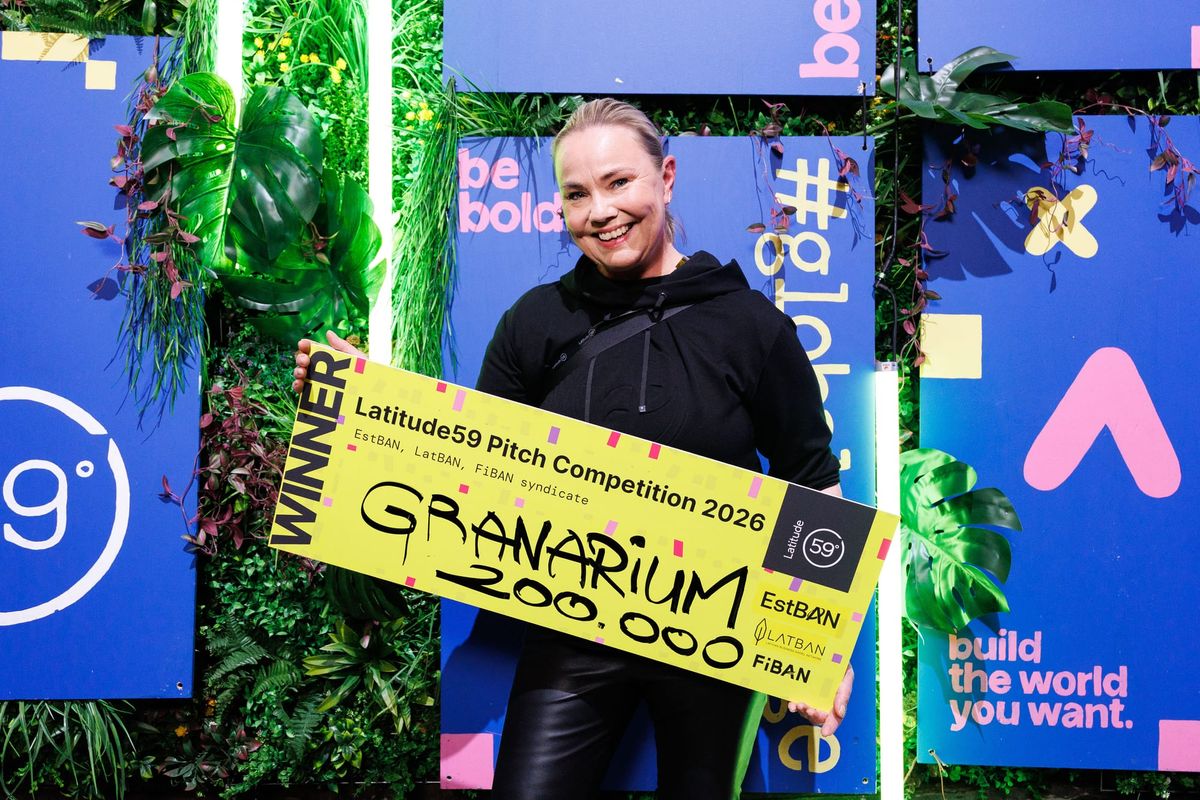](https://fomo.observer/latitude59-winner-granarium-technologies-raises-eur1-million-pre-seed-round/)
Velmenni, the LiFi company out of Tartu with the 3.3 million round. ChatGPT described it from Startup Estonia's ecosystem directory. Gemini from Invest in Estonia and an Indian business daily. Velmenni's homepage is not empty, it has 938 perfectly readable words. The first heading says "We're reimagining the role light plays in the universe". I have seen that slide. I have probably applauded that slide. It answers no question a buyer, a telecom procurement officer or a machine has ever asked. Startup Estonia's entry says LiFi, Tartu, telecom backhaul, indoor networks. The assistant took the plain one. It will take the plain one every single time.
[From India to Tartu and BackVelmenni raises 3.3 mln euros to scale its light-based WiFi alternativeFomo.ObserverTarmo Virki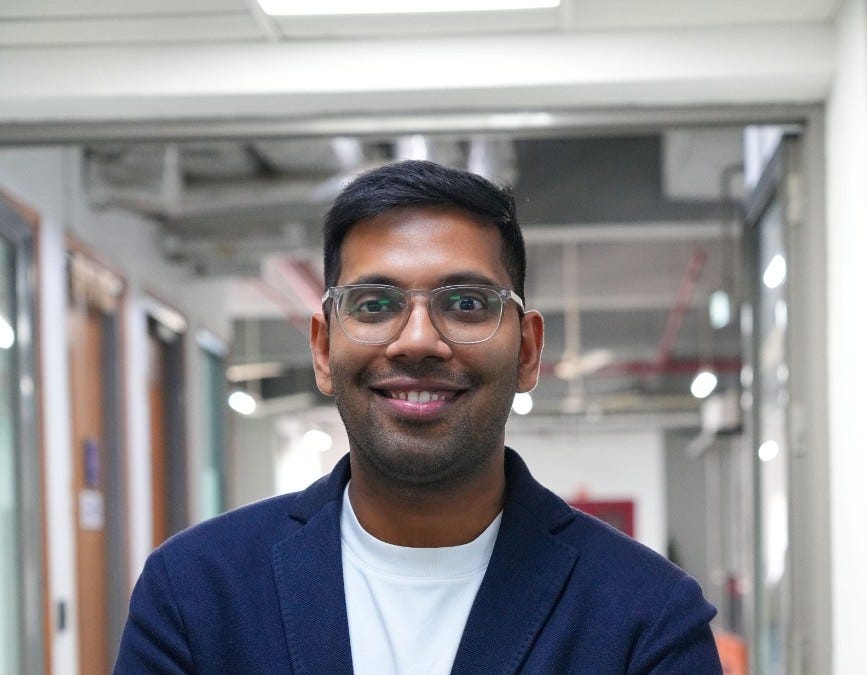](https://fomo.observer/from-india-to-tartu-and-back/)
Handhold, the AI sales agent startup with the 3 million round. ChatGPT cited LinkedIn. Gemini cited ArcticStartup and EU-Startups. Handhold's homepage opens with "A dedicated guide for every buyer". Lovely. Also a riddle. The description of Handhold that ChatGPT gives its users is whatever a LinkedIn company page said, on whatever day LinkedIn's crawl happened.
[Death of a Salesman?Handhold raises €3M to automate the “white-glove” experienceFomo.ObserverTarmo Virki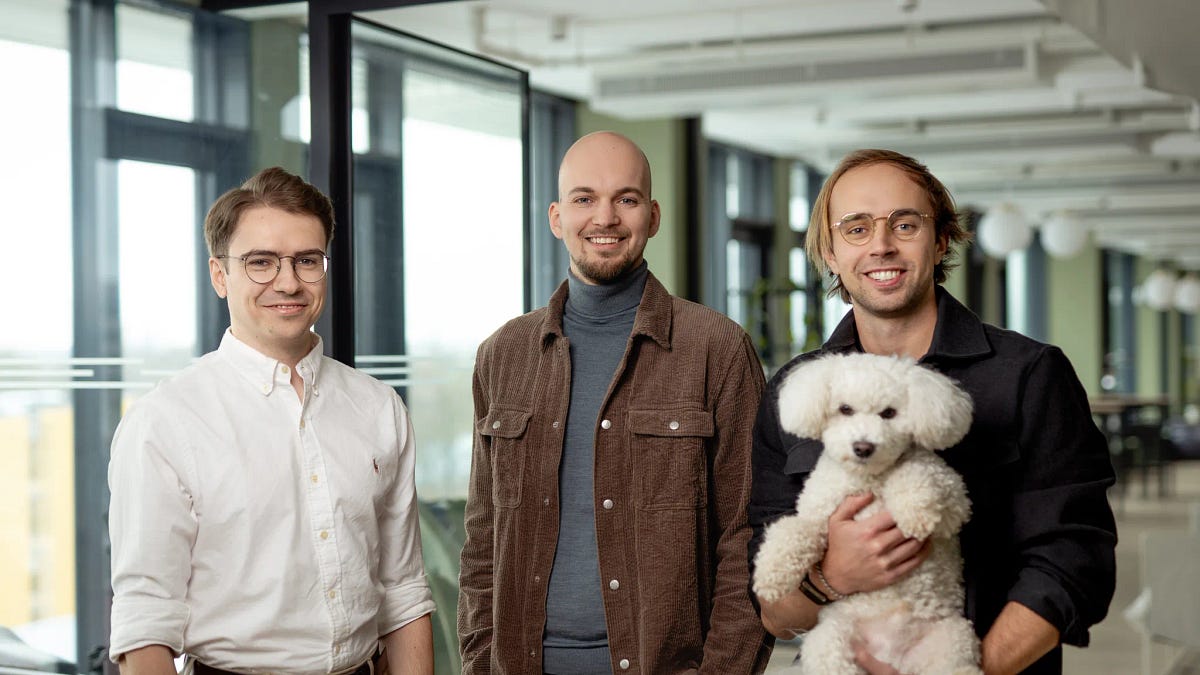](https://fomo.observer/death-of-a-salesman/)
And then Enola. The homepage at getenola.ai serves seven words of HTML and a meta description that reads "the private detective that turns data into actionable context". ChatGPT gave up on the startup entirely and described a different company called Enola, in a different country. Gemini got it right, an OSINT and due diligence platform founded in Estonia out of Vilnius, and its two sources were the startup's own site and the fomo.observer interview with the founder. Read that again. A journalist's write-up was the only thing standing between a funded startup and being mistaken for a stranger by the most used piece of software on earth.
[GERT LÕHMUS: From a coffee in Vilnius to a developer infrastructure toolEnola’s story started with a shared coffee in Vilnius, continued in Berlin, and eventually became a company founded in Estonia. Dejan and I met on a September day in Vilnius. We had coffee at Brew (a lovely cafe), talked about work and life, and, at some point, Dejan showedFomo.ObserverGert Lõhmus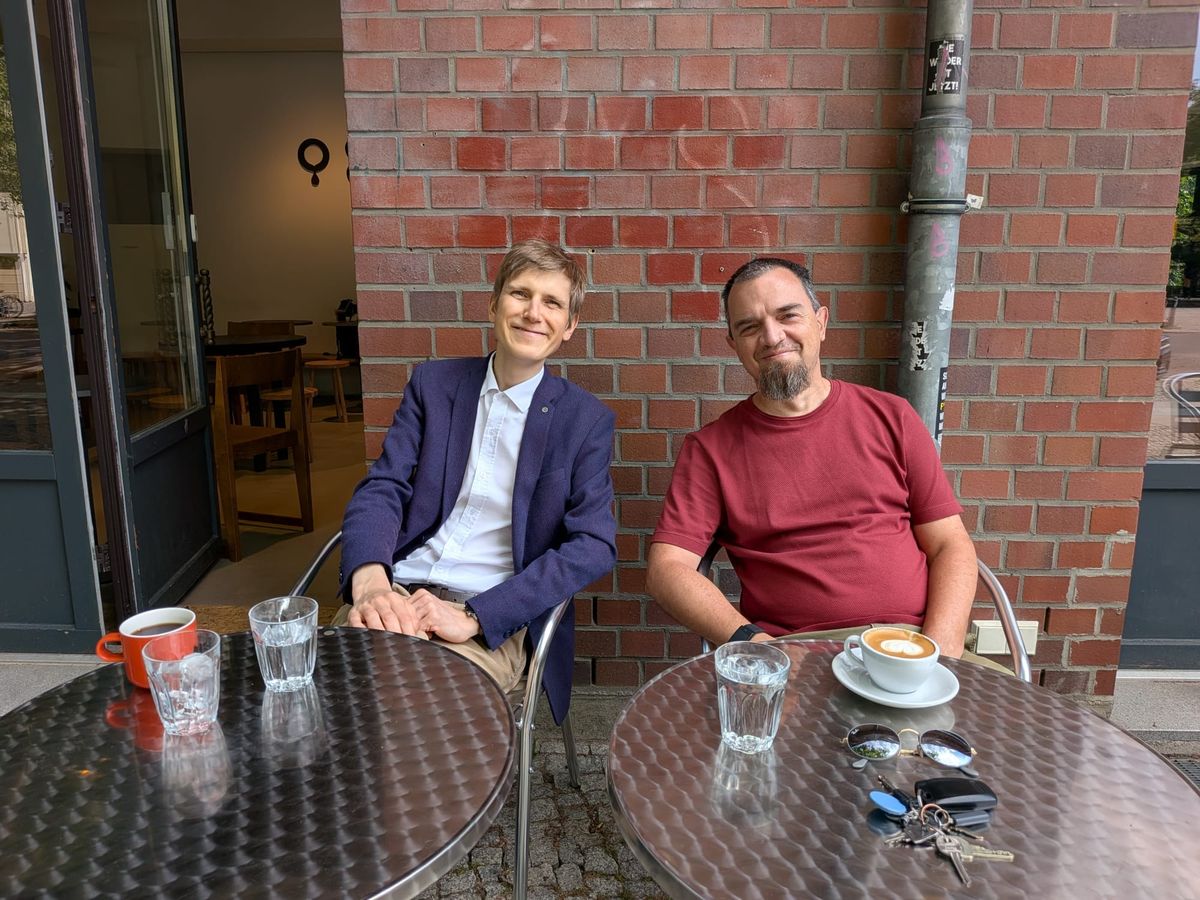](https://fomo.observer/gert-lohmus-from-a-coffee-in-vilnius-to-a-developer-infrastructure-tool/)
### **The pattern is embarrassingly simple**
The ten homepages that got cited directly share three features, and none of them cost money.
The first heading says what the company sells, in the buyer's words. Wisby says "Order labels for craft beer, soft drinks, food". SkySelect says "Procurement AI". Messente says "Hassle-free business messaging". Boring, specific, quotable.
The meta description is a sentence a stranger could repeat at a dinner party. Creem's says "the money platform for the AI era, sell software and digital products globally". You can lift that whole.
And the text is in the HTML the server sends, not painted on afterwards by a script. A bot reads what the server returns. If the server returns a loading spinner, the bot has learned that your company is a loading spinner.
The four that lost the citation to a directory, a research institute, LinkedIn or a news site each break one of those. Empty HTML. A heading written for a billboard on the Tallinn ring road. A description written for a founder's mother.
None of this is about domain authority, budgets, or the dark arts. Startup Estonia's directory beat Velmenni's own site because the directory entry reads like an answer and the homepage reads like a manifesto. The assistant is not judging your brand. It is not moved by your vision. It is looking for one sentence it can cite without embarrassment, and it will take that sentence from the intern who filled in the directory form before it takes a poem from the founder.
### **Zoom out and it gets worse**
I ran a second panel the same day, ten questions an investor or a founder would ask about the Baltic ecosystem itself. Latest Estonian funding rounds. Most active Baltic VCs. Is the ecosystem slowing down. Where to follow Baltic startup news. 20 answers, 87 citations.
The most cited source was Startup Estonia, 10 times. Invest in Estonia 6\. EU-Startups, which is Spanish, 6\. BalticVC 5\. Dealroom 4\. Firstpick 4, mostly from its own portfolio page. The actual regional press, the people who phone founders and confirm the round size, held about a quarter of the citations between them. Fomo.observer got 2, one of them on the freshest question, this month's rounds, where a news site should win and a directory cannot.
So the Estonian state describes the ecosystem. Venture funds describe themselves. Research institutes describe their spinouts. Directories describe everyone. And the founders, who have the strongest possible incentive to own the sentence, are the weakest link in their own description, because the answer comes back correct and nobody checks who wrote it.
## Sign up for Fomo.Observer
Startup stories from Estonia. Free weekly newsletter.
Subscribe
Email sent! Check your inbox to complete your signup.
No spam. Unsubscribe anytime.
### **What I would put in the Monday portfolio email**
If I ran a fund, this would go to every portfolio company this week, above the fold, before the KPI reminder.
Ask ChatGPT and Gemini what your company does, web search on, and read the citations. Not the answer. The citations. If they point at your domain, you own your sentence. If they point at a directory, a press release, VTT, or your own LinkedIn page, you have handed your positioning to whoever wrote those, and they wrote it in 2024 from a form.
Then fix the homepage in three moves, one afternoon, no agency needed.
Put the plain sentence first, who you sell to and what they get, in words a buyer would type into a search box.
Make the meta description that same sentence.
Check the sentence exists in the HTML your server actually sends, which for a lot of Framer, Webflow and Next.js sites is not a given.
View source, or fetch the page with curl, and search for your own product name.
If it is not there, your site is a picture of a website.
Keep the manifesto. Founders need the manifesto. Put it second.
And measure it monthly. Ten questions, two assistants, count the citations. I ran both panels above for a little over one euro in API fees. It is the cheapest diligence you will ever do on yourself, and the only one where fixing the finding takes less time than reading the report.
### **The genuinely uncomfortable bit**
The reason this is urgent and not just tidy is that the assistants are about to become a paid channel. [ChatGPT ads](https://parvi.ai/chatgpt-ads/?ref=fomo.observer) opened in Europe in late August. Very soon a competitor with a plainer homepage and a small budget will appear inside the exact conversation where a buyer asks what your category does. If the organic answer already describes you from a directory entry, you are fighting for the sponsored slot to correct your own story. That is a bad place to spend money.
The Baltic ecosystem describes its startups well because the ecosystem around them writes well. Startup Estonia keeps a directory. VTT writes research pages. Fomo.observer interviews founders and prints what they actually build, which, in Enola's case, was the difference between existing and not. The infrastructure is doing the founders' job for them.
Correct is not the same as yours. When the buyer asks the machine and it recites a directory entry, your company has been described by someone who has never sold the product, never lost a deal, never sat through the 1 AM argument about the sentence. For the price of one honest heading, the description could be yours. Most founders will not do it, because the answer already looks fine. That is the entire opportunity.
---
[*Mari Luukkainen*](https://mariluukkainen.com/?ref=fomo.observer) *builds own AI products, and AI agents for* [*Parvi*](https://parvi.ai/?ref=fomo.observer)*. Earlier:* [*AI didn't kill your SEO, your low-quality content did*](https://mariluukkainen.com/ai-didnt-kill-your-seo-your-low-quality-content-did/?ref=fomo.observer)*.*
*Method: 14 startups from fomo.observer's 2026 funding and AI coverage (Creem, Wisby, Display.dev, Nanordica Medical, Granarium Technologies, Handhold, Velmenni, Better Medicine, Enola, UP Catalyst, Farsight Vision, SkySelect, Messente, TooEarly Ventures). Prompt "What does the startup X (country) do? One paragraph." to ChatGPT (gpt-5.6-luna) and Gemini (3.6-flash), web search on, Estonian locale, 17 September 2026\. Each homepage fetched with curl as a crawler would, counting words in the server HTML. Second panel: 10 questions about Baltic and Nordic startups, funding and VC, same two assistants, Finnish locale, same day, 20 answers, 87 citations, Gemini redirect links resolved to real domains. Single pass on one day.*
### ALEJANDRO JIMENEZ: Are the Baltics safe? I asked the ex-head of UK Army
URL: https://fomo.observer/alejandro-jimenez-i-asked-the-ex-head-of-uk-army-are-the-baltics-safe/
Last updated: 2026-09-18T11:18:59.000Z
At last week's J.P. Morgan European Leveraged Finance Conference in London — a premier, invite-only gathering designed to connect major private lenders with corporate borrowers — geopolitics eclipsed traditional credit discussions as a primary concern.
In a room dominated by institutional heavyweights like Blackstone, KKR, and Ares, Baltic representation was sparse: TriHeritage Global Capital stood as the sole Baltic private lender, joined only by a single corporate borrower from Lithuania.
Taking the floor, I popped the question directly to Admiral Sir Tony Radakin, Head of the British Armed Forces (2021–2025): *"I live in Estonia. For people worried about a Russian military incursion in the Baltics, what should I tell them?"*
### Radakin offered firm assurance of the alliance's commitment to frontier nations.
> "Be confident that Britain and NATO will defend its members, even the small ones like Estonia. If Russia hits NATO, we will hit them back much harder," Radakin told me.
He outlined a broader strategic shift, noting that the conflict has inadvertently strengthened Western defences. According to Radakin, "Putin woke Europe up from complacency," resulting in a larger and stronger NATO following the accession of Finland and Sweden.
He characterised the Russian military position as weakened, noting that Ukraine is currently driving rapid military innovation, particularly in cost-effective drone and missile systems.
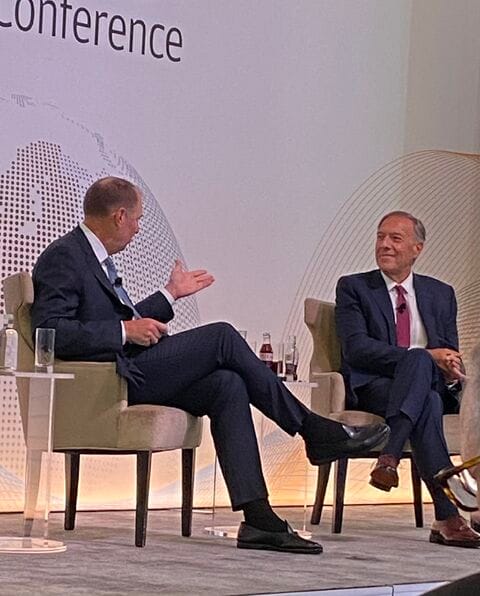
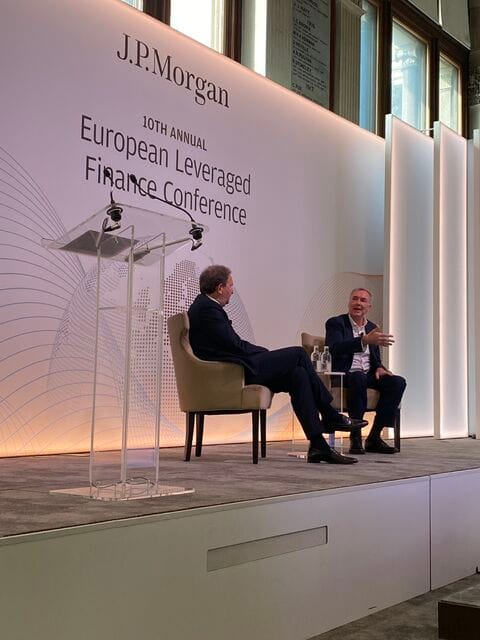
### Washington's Perspective on European Readiness
Mike Pompeo, former CIA Director (2017–2018) and US Secretary of State (2018–2021), echoed the sentiment that Europe has reawakened. Addressing historical US administration frustrations over European defence spending, Pompeo expressed satisfaction with recent regional progress.
- "Europe was asleep for 40 years. I am glad you finally woke up militarily."
- "Europe is showing the US how it should support Ukraine."
- "In one year, the Russia-Ukraine war will be exactly where it is today."
- “Putin's invasion of Ukraine will go down as one of the worst military incursions in the history of civilisation.”
Pompeo urged the West to stop allowing nuclear threats to dictate policy, pointing to severe daily Russian casualties as evidence of their tactical struggles.
---
*Side note: Why is J.P. Morgan, the world’s biggest bank, supportive of private lenders like TriHeritage? Because banks don’t have the willingness or capacity to issue every possible loan. Since they use customer deposits to fund loans, banks face strict regulations and high capital reserve requirements. This keeps customer deposits safe, but increases banks’ costs and makes issuing some loans unprofitable. Private lenders, which use investor money instead of deposits, face less regulation and can take higher risks for higher returns.*
---
*Alejandro Jimenez is the Founding Partner of TriHeritage Global Capital, an Estonia-based firm providing loans to scaleups and small companies. He previously held roles at J.P. Morgan, Enefit, and Grünfin.*
## Sign up for Fomo.Observer
Startup stories from Estonia. Free weekly newsletter.
Subscribe
Email sent! Check your inbox to complete your signup.
No spam. Unsubscribe anytime.
### Creem raises €5 million as it upgrades its toolset for AI native companies
URL: https://fomo.observer/creem-raises-eur5-million-as-it-upgrades-its-toolset-for-ai-native-companies/
Last updated: 2026-09-17T04:00:56.000Z
Estonian billing and monetisation platform for AI-native companies, [Creem](https://www.creem.io/?ref=fomo.observer), has raised a €5 million seed round led by Polish fund [Inovo VC](https://inovo.vc/?ref=fomo.observer) to fast-track its growth.
Existing investors Practica Capital and Antler participated in the round alongside founders-angel investors including Markus Villig (Bolt), Timmu Tõke and Kaspar Tiri (Ready Player Me), Fryd Wiatrowski (Viktor.com) and Adam Jafer (Voi). The round brings Creem’s total funding to €7 million.
Creem says it ‘lets startups sell globally without worrying about tax and compliance, and manages the affiliates, analytics and revenue infrastructure that come with growing a business’. And apparently, all that can be set up from a single prompt.
The company has had a stellar year, reporting that it more than doubled revenue to over €2M ARR, and has now launched Creem 2.0, where an AI agent can set up a startup's entire billing system from a single prompt, apparently.
Founded in Tallinn in 2024 by Gabriel Ferraz and Alec Erasmus it also recently completed its first acquisition. It bought fellow Estonian payments startup [Askel.ai](http://askel.ai/?ref=fomo.observer) last month, a deal that came purely by happenstance.
In conversation with Fomo.Observer, Cream’s CEO Ferraz told the story of how he met Joosep Kõljalg, co-founder of [Askel.ai](http://askel.ai/?ref=fomo.observer). He met Kõljalg at a dinner without knowing who he was. Their chats got deep into payments technology, and later, when Ferraz looked him up, he saw Kõljalg’s history with companies like Skype, Twilio and Checkout.com; it piqued his interest more.
The real happenstance came the following evening, while at another rather fancy dinner (with the Prime Minister, if you don’t mind), Ferraz declared he simply must have a Head of Payments (namely Joosep) and this time it turned out his table companion happened to be an investor in Askel … and well, you already know how that turned out!
[9 humans, 9 AI agents, and $2M ARR: Inside Creem’s automated “Merchant OS”Gabriel Ferraz grew up in Brazil, scaling a crypto payment gateway past $200 million in gross merchandise value (GMV). But when launching his next venture, he traded São Paulo for Tallinn, choosing to become a physical resident of Estonia rather than running a digital business from a distance. “There’Fomo.Observer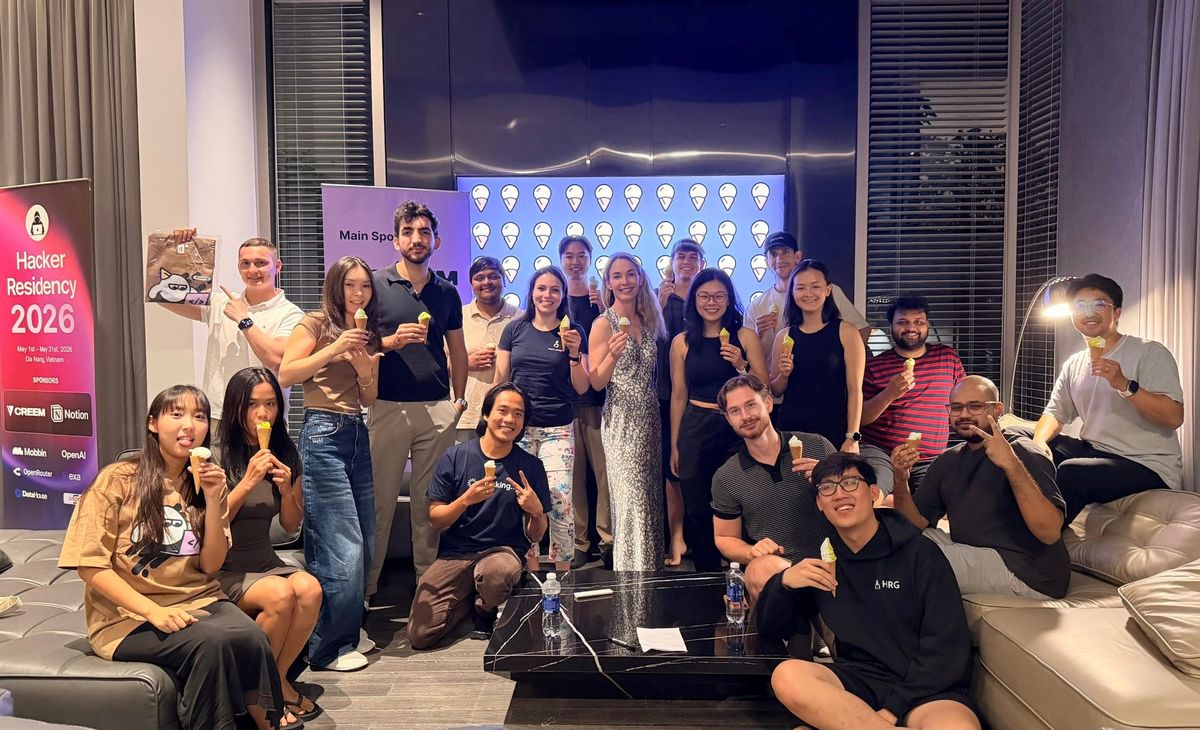](https://fomo.observer/9-humans-9-ai-agents-and-2m-arr-inside-creems-automated-merchant-os/)
### Meeting Ferraz
Another big move made this summer, by Creem, was a relocation to a lovely new office in Rotermanni. We popped along recently to check the place out and get to know more about Ferraz.
His educational background reads a little like a future Netflix documentary. He had his first job at twelve years of age where he worked the only card machine at a flea market for all the sellers - running between stalls, taking payments on the machine and doing their bookkeeping for them. It’s no surprise to find out where he’s ended up, simplifying payments.
He didn’t finish high school because at the age of fifteen he went to university to study computer science at UFU (Federal University of Uberlândia) and then earned himself the coveted title of university dropout, although technically he says he never quit, he just hasn’t gone back.
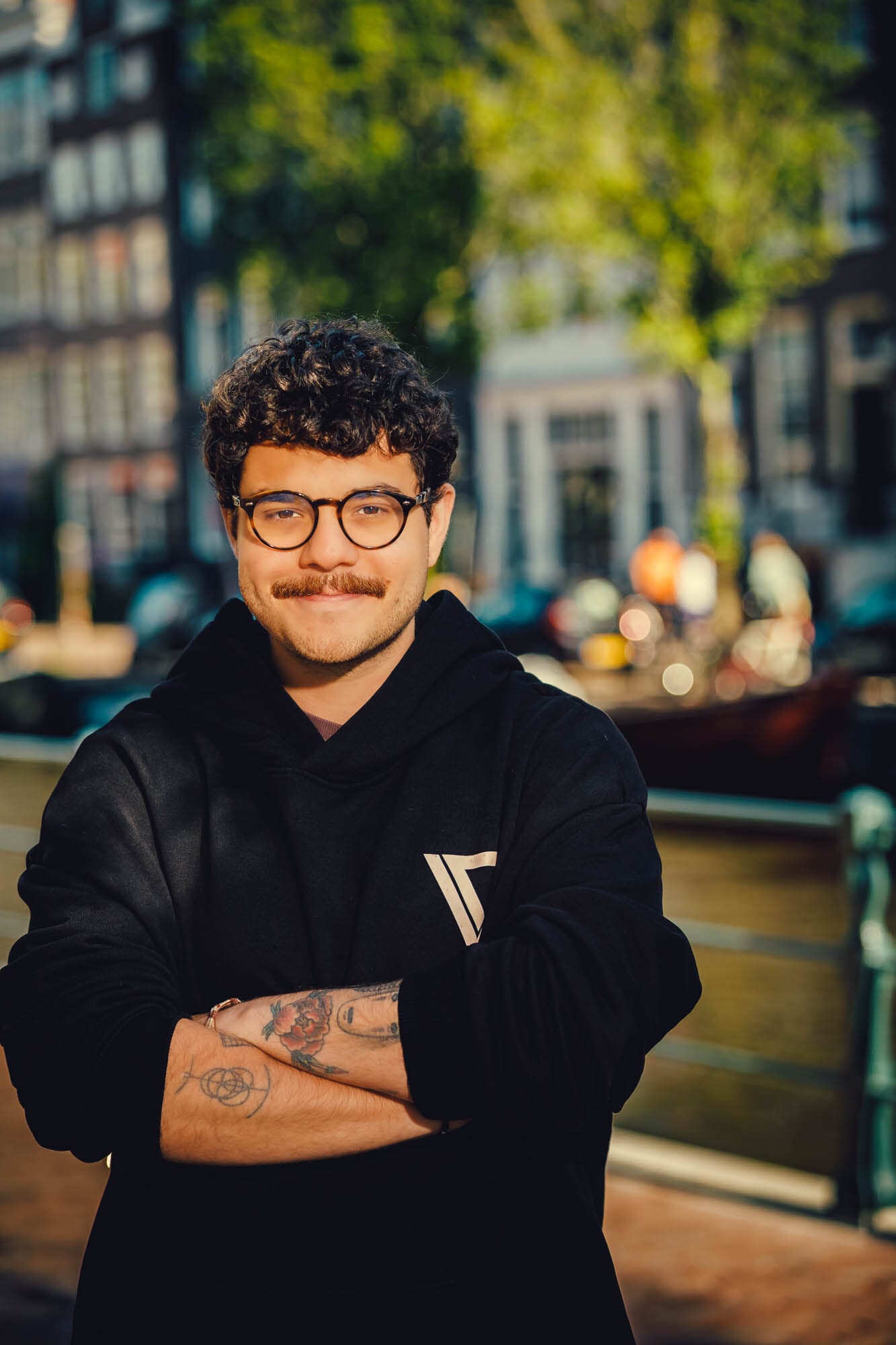
During a backpacking trip he came to Estonia to visit a friend who was working in Change Invest at the time. He visited him in the office one day and was so impressed by the set up he decided to get a job there. He moved himself to Tallinn in 2019 and six months later he met his wife. Oh, and one of the main factors for the move was the weather, he’s pretty fond of the cold.
"I actually love the winter. I love the cold weather. I struggle in the summer," he says.
### Building in public
Building Creem was done through social media channels, a decision which served the company well. "We started bootstrapping the company with YouTube — basically me doing vlogs on YouTube. 'Hey, we are building the company like this, this was the challenge that we had today.' And also on Twitter, literally seeing people complaining about competitors and sending an ice cream emoji on the reply of their tweet. That's how we bootstrapped the company," Ferraz explains.
### Creem 2.0
On September 17, 2024 Creem was launched and it gained its first customer on day one. Exactly two years later Creem 2.0 was launched, today.
This version is ‘going beyond a standard merchant of record. Handling global sales with tax and compliance built in, affiliate management, revenue splits, conversion analytics, short links and marketing channel tracking and abandoned cart recovery.'
Creem says it ‘also supports the pricing models modern software actually uses, including usage-based pricing, credit wallets, seat-based plans and prepaid credits.’
### Looking to the future
Ferraz tells me that he already knows the platform that they need to build for the future but it requires a ‘conscious step’ because the ‘markets and behaviours’ that they are betting on are yet to exist.
“We believe that in five to ten years, we're going to be looking at a very different way of working, where we're going to see much smaller teams, much more fluid teams,” he says.
“People are not going to work in only one product or only with one team. A lot of people are going to be in a much more fluid state between different products and different teams, and they are going to be able to translate these incentives or coordinate these incentives in a much more aligned way, and what I mean by that is that you are going to be able to receive your salary, your compensation, etc. based on specific results that are programmatic as well.”
With the latest funding the team will focus on extending the platform with agent-run billing and monetisation, so stores can be set up, monitored and optimised with minimal human input. Also growth and revenue tooling, including affiliates, analytics and marketing channel tracking, and global compliance and payouts across fiat and stablecoin rails.
## Sign up for Fomo.Observer
Startup stories from Estonia. Free weekly newsletter.
Subscribe
Email sent! Check your inbox to complete your signup.
No spam. Unsubscribe anytime.
### Defence and Deeptech lead Baltic funding as pre-seed surge offsets growth capital drought
URL: https://fomo.observer/defence-and-deeptech-lead-baltic-funding-as-pre-seed-surge-offsets-growth-capital-drought/
Last updated: 2026-09-16T11:02:48.000Z
**VILNIUS** — The Baltic startup ecosystem is experiencing a structural realignment in 2026: while growth-stage venture capital has contracted, early-stage activity is undergoing a renaissance driven by defence technology, deeptech, and an influx of pre-seed initiatives.
Data presented at StartupFair shows regional funding standing at €353 million year-to-date, trailing significantly 2025’s full-year total of €608 million. The pull-back is concentrated primarily in growth-stage rounds, which remain scarce across the Baltic states.
### Defence and Deeptech Outpace Traditional Verticals
Despite macro headwinds, capital allocation has concentrated heavily into security and deep technology:
- **Defence leads capital volume:** Defence startups secured the highest total funding, capturing €39 million across five rounds.
- **Deeptech secures second place:** Deeptech companies raised €38 million across four deals, establishing hard tech as a priority for institutional investors.
- **AI dominates deal count:** Artificial intelligence generated the highest transaction volume with 14 completed rounds, though totalling €22 million in capital raised.
Social commerce (€22 million) and food tech (€20 million) rounded out the top five funded sectors by capital volume.
[Baltic investments grew 20% in 2025, pre-seed investments in Estonia more than doubled -reportPractica Capital and FIRSTPICK published annual funding report for the regionFomo.ObserverTarmo Virki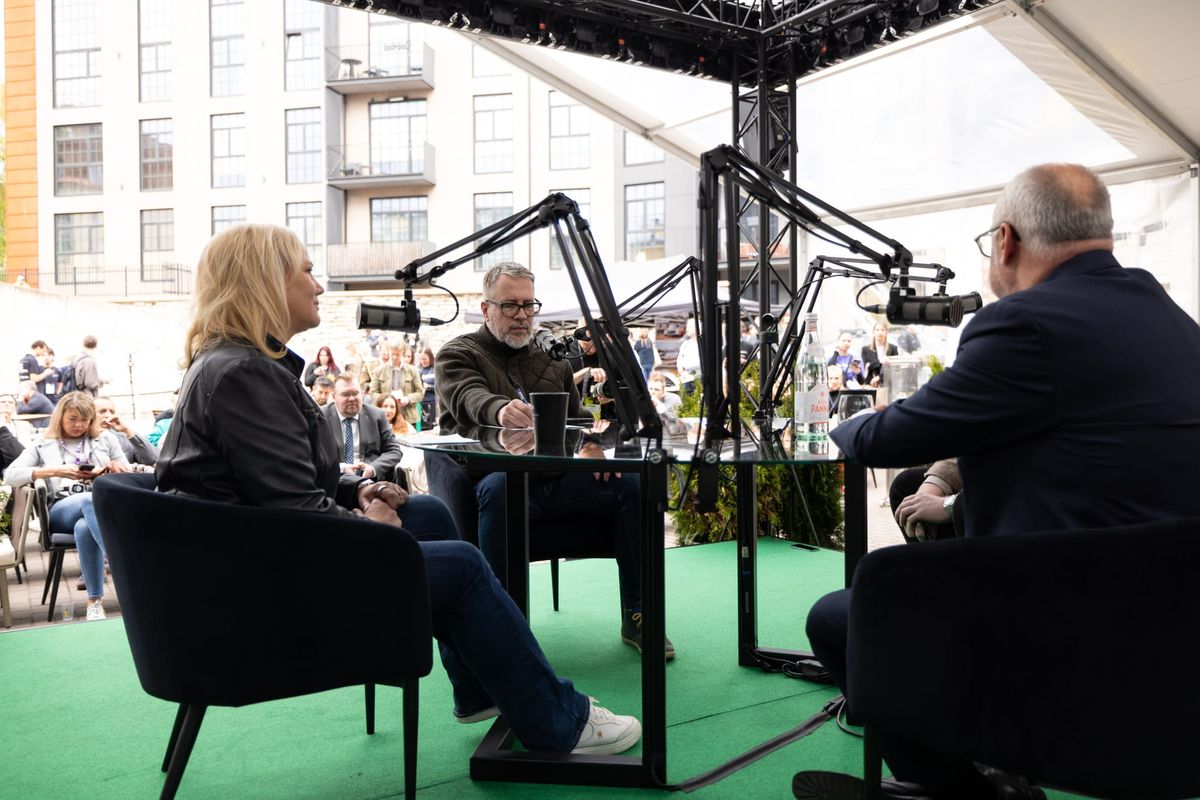](https://fomo.observer/baltic-investments-grew-20-in-2025/)
### Pre-Seed Surge Driven by Community Initiatives
At the foundational stage, the region is seeing renewed momentum driven by founder-led initiatives such as hacker houses designed to feed early deal flow:
- **Rising median round sizes:** The median Baltic pre-seed round reached €409,000 in 2026, a 3.1x increase from €132,000 in 2020.
- **Blurring boundary with Seed:** In H1 2026, 33% of pre-seed rounds exceeded €1 million, up from 16% in 2025.
- **Capital acceleration:** Pre-seed funding reached €30 million in H1 2026, representing 64% of the total capital raised in pre-seed throughout 2025.
Outlier transactions — such as Zobi’s €5 million pre-seed round in August 2026 —demonstrate that high-conviction teams are commanding larger valuations at earlier stages.
### Seed Stage Experiences Mid-Market Squeeze
In contrast to the pre-seed momentum, Seed-stage venture activity experienced a broad pullback across key metrics:
- **Capital reduction:** Total Seed capital dropped to €48 million in H1 2026, down from €132 million in 2025.
- **Fewer completed transactions:** Only 23 Seed deals closed in H1 2026, falling below the 2023–2025 historical baseline.
- **Lower median checks:** Median Seed rounds decreased to €1.8 million in H1 2026 from €2 million in 2025.
Active regional funds — led by FIRSTPICK, Practica Capital, and Coinvest Capital, each completing five or more deals in H1 — are relying on pre-seed pipeline initiatives to reactivate Seed-stage deal flow in upcoming quarters.
## Sign up for Fomo.Observer
Startup stories from Estonia. Free weekly newsletter.
Subscribe
Email sent! Check your inbox to complete your signup.
No spam. Unsubscribe anytime.
### ANDRES KÕIVA: The unplanned remote-work problem. Until someone's leaving
URL: https://fomo.observer/andres-koiva-the-unplanned-remote-work-problem-until-someones-leaving/
Last updated: 2026-09-16T05:30:54.000Z
I want to tell you about a specific retrieval we ran earlier this year because I think it illustrates something most growing companies don't think about until it breaks.
A global technology company with over two thousand employees had a remote worker in India. He had been working there on a tourist visa, which is not unusual. Many companies with distributed teams have people working from countries where they are not formal residents. It is one of those arrangements that works smoothly right up until it does not.
His employment ended. The company needed the laptop back. Raal was asked to handle the retrieval.
The initial plan was straightforward. The employee had the original packaging. We would send a return label, arrange a pickup, and ship the device back to the company's location in Poland. Standard process. Then we checked India's customs rules.
## The part nobody tells you about India
Indian customs law places specific documentation requirements on private individuals who want to export goods. For a foreign national on a tourist visa, meeting those requirements isn't simple. You typically need Indian citizenship, a valid residency permit, and a registered utility bill at a local Indian address.
He had none of these. He was in India temporarily, working remotely. No registered address, no residency documentation, nothing that would let him ship a device out of the country through the standard private export process without triggering a customs procedure that would take weeks, if it cleared at all.
And there was a harder constraint on top of that: he was leaving India within three days.
Once he left, the window for an India-based retrieval would close permanently. Any process that depended on Indian customs procedures, even an expedited alternative route, would have taken longer than the time available. The standard options had run out before we had even started.
> *"The problem was not the logistics. The problem was that we had three days and a hard regulatory wall between us and the device."*
## What we did instead
When the standard route is blocked, the question becomes: what other routes exist?
We asked a simple question: where was he going next? He was travelling to Sri Lanka. And Sri Lanka, it turns out, has different customs regulations for this kind of situation. The barriers that blocked the India route did not apply in the same way.
So we called him. Directly. Not through HR, not through a ticket system. We explained the India problem clearly: here is why the standard return cannot happen, here is the timeline, here is what we are asking. Would he be willing to carry the laptop with him to Sri Lanka as personal baggage?
He agreed. Because we explained it clearly and made the request easy to say yes to.
We dispatched a return kit to his Sri Lanka address before he arrived. Packaging, return label, instructions. He packed the device, a courier collected it, and the laptop arrived back in Poland a few days later. Wiped, confirmed, case closed.
## The thing that actually worked
The resolution here came from two things that are not technical at all.
First: finding the alternative route quickly. We knew about the regulatory barrier early enough to look for another path. If we had discovered it on the day of the scheduled collection, we would not have had time to pivot.
Second: treating the departing employee as a partner. He was not an obstacle. He was a person transitioning out of a job who still had the capacity to help if someone asked him clearly and made it easy. We contacted him directly, explained the situation honestly, and asked for something specific. He helped.
That model, identify the blocker early, find the alternative, communicate directly with the person involved, works across most of the hard retrieval cases we handle. It is not complicated. It just requires someone to own it.
In most distributed companies, that person doesn't exist. IT sends a form. HR sends an email. Nobody checks whether the employee is actually in the country the HR system says they are in. And then a laptop with company data ends up at a customs wall in India with three days on the clock and no one with a plan.
## Why I am telling this story
This is not primarily a story about Raal. It is a story about a category of problem that any company with globally distributed people will eventually encounter, and that almost none of them have a plan for.
Distributed work has created a new normal where your employees are not where your HR database says they are. Someone hired to work from Berlin is actually in Lisbon for a month. A developer in India on a work trip for a quarter. An engineer working remotely from a country where they have no formal status. These arrangements are common, they are often perfectly fine legally in terms of employment, and they create edge cases in your offboarding process that your standard procedures were not designed to handle.
The tourist visa problem is not unique to India. Brazil, several Southeast Asian markets, and parts of the Middle East have comparable complexity for device exports by non-residents. The pattern is the same every time: an employee in a country where they are not a citizen, leaving soon, with equipment that needs to come back. No plan for it. No one thinks about it until it becomes urgent.
---
*Andres Kõiva is the co-founder and CEO of Raal, an Estonian company that handles physical IT assets for local and distributed teams across 150+ countries, automating asset management, on/offboarding logistics, device retirement and soon procurement.*
### From tech pioneer to hospitality innovator: Kaidi Ruusalepp’s journey beyond the startup grind
URL: https://fomo.observer/from-tech-pioneer-to-hospitality-innovator-kaidi-ruusalepps-journey-beyond-the-startup-grind-2/
Last updated: 2026-09-15T13:42:49.000Z
Long before she became a trailblazer in tech regulation and the founder of global startup investment platform Funderbeam, Kaidi Ruusalepp was navigating the dense pine forests of South-Eastern Estonia. Growing up in the small town of Põlva during the late Soviet era, her childhood was shaped by sports, resilience, and an unexpected discipline: orienteering.
"Back then, it didn't matter if I was five years old or ten years old; we couldn't imagine a free world around us," Ruusalepp recalled on the Fomo.Observer podcast. "We couldn't imagine that one day, actually, we could travel, we could study abroad, we could do business abroad."
[View on Spotify](https://open.spotify.com/episode/5wbpvoZd6eqN9PrtmVNgCG?si=i3coY6r9TkKBqRBT11rH6g&ref=fomo.observer)
Yet, navigating the countryside with a map and compass instilled a pragmatic mindset that defined her future executive career. "Orienteering is about solving problems and finding solutions," she explained.
### Breaking new ground in tech and capital markets
After Estonia regained its independence, Ruusalepp went to university and became the nation's first tech lawyer. Her career trajectory rose rapidly. Over an eleven-year tenure working within financial market infrastructure, she led the project for Estonia's funded pension system, managed the central securities depository, and ultimately served as Chief Executive Officer of the Tallinn Stock Exchange under Nasdaq.
Leaving the corporate world to launch Funderbeam, a blockchain-backed funding and secondary trading platform for startups, marked a major pivot.
> "In a way, it's freedom, but I would call it a logistical freedom," Ruusalepp said of entrepreneurship. "When you're an entrepreneur, you're the master mainly of your own schedule or agenda. But at the same time, you're also a prisoner of your own company because you can't even go to the lavatory without this company setting you free. So there's this mental freedom which you don't get when you become an entrepreneur, but logistical freedom — this is definitely what you get."
Launching a platform aimed at solving liquidity in early-stage equity markets across Europe was ambitious. Ruusalepp acknowledges that time and location posed steep hurdles.
"For Europe, we were too early," she reflected. "We were like way too early. We started to build a secondary market at a time when investors just started to invest - in Europe, with its 27 member states and all their regulation, that was the hard part. If I were to start again, I would maybe start it in the US."
### Navigating adversity and the reality of founder burnout
Building a high-profile financial technology company came with extreme personal and professional strain, particularly as market dynamics shifted and public press scrutiny intensified.
> "I may also say that for the last three years of Funderbeam, I was working in totally red," Ruusalepp admitted. "When you wake up Saturday morning, and your stomach is burning, and it's like three years in a row, you can't get out. You're trapped. You're imprisoned."
When she eventually stepped down from her executive role at the firm, the toll was evident. "I had nothing left in me," she said. "For the first four months after leaving the company, I was brain dead. I couldn't think about anything. I killed all my emails, put out-of-office on everything, unsubscribed from wherever I could."
Reflecting on the intense public pressure that founders face when ventures struggle, Ruusalepp urged a shift in cultural perception regarding business failures.
"Media can be very cruel," she noted. "When you make peace with yourself that your personal success is different from the company's success - when the company fails, then you don't fail. I think Estonian society still has to learn that when some companies fail, then the founder doesn’t fail."
### A new chapter in hospitality: Forest
Rather than retiring from building ventures, Ruusalepp is applying her entrepreneurial drive to a tangible, physical sector: hospitality.
Her latest endeavour, the Metsa Collection group, centres around developing a Nordic nature hospitality brand, starting with Metsa 7 in Põlva, a project transforming the ageing six-floor site into a boutique wellness and active lifestyle hotel.
"You look at one real estate and you ask yourself, 'Hmm, can I scale it?'" Ruusalepp joked about transitioning from software to physical brick-and-mortar development. "To build any kind of software companies, if it doesn't work out, you simply close it. But in Põlva, you have a site, six floors, you look at it and say, 'Okay, it didn't work out, I can't delete it.'"
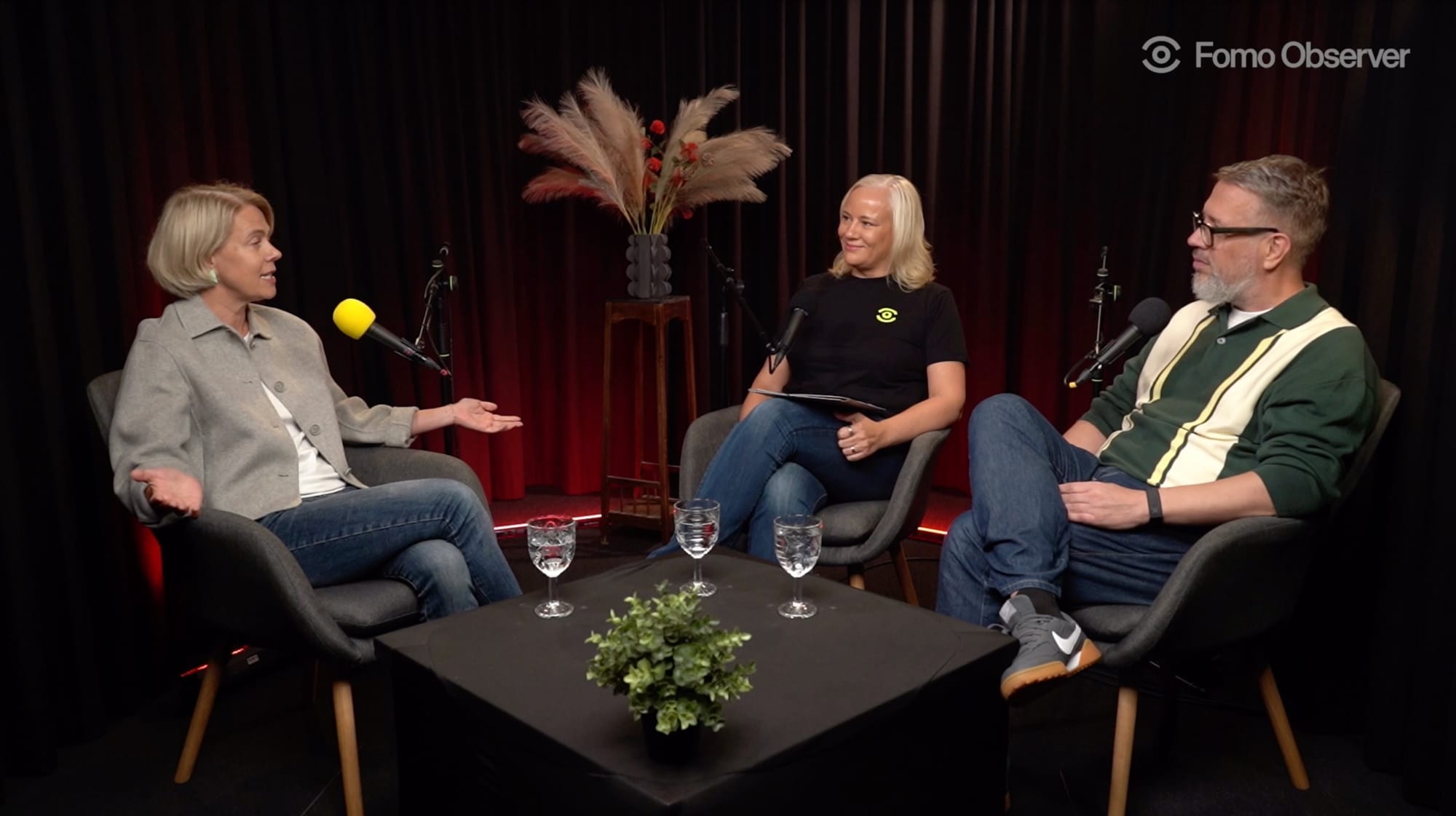
Her vision extends beyond one location. Ruusalepp and an international team are laying the groundwork for a broader portfolio across the Nordic region, eyeing potential expansion sites in Norway and Finland with an eventual franchise model.
For Ruusalepp, returning to her roots in South-Eastern Estonia reflects a commitment to building sustainable local value while maintaining a global perspective.
> "Despite the society, we still have, luckily, entrepreneurs and founders," Ruusalepp said. "I hope those who have the courage and this entrepreneurial animal in them will be brave enough to let this animal out."
## Sign up for Fomo.Observer
Startup stories from Estonia. Free weekly newsletter.
Subscribe
Email sent! Check your inbox to complete your signup.
No spam. Unsubscribe anytime.
### „Enamiku asjade tegemiseks ei ole sul kellegi luba vaja!”
URL: https://fomo.observer/enamiku-asjade-tegemiseks-ei-ole-sul-kellegi-luba-vaja/
Last updated: 2026-09-12T13:35:38.000Z
[Jaanek Sildam](https://www.linkedin.com/in/jaanek-sildam/?ref=fomo.observer) õpib esimesel kursusel informaatikat ja tehisintellekti, töötab finantstehnoloogiaettevõttes Salv, tegutseb teist aastat Mustamäe Riigigümnaasiumi õpilasfirmade mentorina ning pakub ettevõtetele turundus- ja brändinguteenuseid.
Seda nimekirja kuulates tekib paratamatult küsimus, millal ta magab. Jaaneki enda vastus on lihtsam: võistlussport õpetas talle varakult, et kui tahad mitut asja hästi teha, ei saa jääda ootama ideaalset hetke. Tuleb alustada, küsida ja õppida.
Rääkisime Jaanekiga sellest, miks võiks enne ülikooli päris tööd proovida, kuidas saada töövarjuks Eesti tippjuhi juurde, mida peaks koolis matemaatika kõrval õpetama ning miks ei tohiks algaja programmeerija lasta tehisintellektil kogu rasket mõttetööd enda eest ära teha.
**Sa õpid, töötad, mentordad õpilasfirmasid ja oled ise ettevõtja. Kuidas sa seda kõike jõuad?**
Minu jaoks oli murranguline see, et vanemad panid mind kuueaastaselt sporti tegema, aga ootasid samal ajal koolis neljasid ja viisi. Suur osa õhtutest kulus trennile, seega pidin kodutööd võimalusel juba koolipäeva jooksul ära tegema. Kui õhtul trennist koju jõudsin, ei olnud enam aega hakata mõtlema, mida homseks vaja on.
Tegin võistlussporti kokku peaaegu 12 aastat. Alustasin karatega, mängisin lauatennist ja kõige paremini läks võrkpallis, kus tulime Eesti meistriks. Mingil hetkel asendus seitse trenni nädalas ühe-kahega ja järsku tekkiski kooli kõrvalt vaba aeg. Mina ei oska eriti käed rüpes istuda, nii et täitsin selle töö ja teiste projektidega. Praegu käin hobi korras jõusaalis ja vahel mängin lauatennist, aga spordist saadud ajaplaneerimise harjumus on alles.
**Kas ettevõtlikkus tuli samuti kodust?**
Robootikahuvi tuli pigem filmidest ja multikatest. Vanemad andsid mulle võimaluse seda huvi robootikaklubis edasi arendada, aga ma ei kasvanud üles mõttega, et minust peab saama ettevõtja. 16-aastaselt vaatasin hoopis panganduse poole. Kujutasin ette klassikalist soliidset karjääri: pärast ülikooli lähen panka, töötan seal kümme aastat, liigun järgmisse panka ja ronin tasapisi finantsmaailma mäetipu poole.
Ettevõtluseni jõudsin üsna juhuslikult. Gümnaasiumis sai uurimistöö asemel valida õpilasfirma tegemise, mina ei tahtnud pikka akadeemilist teksti kirjutada. Iroonilisel kombel töötan nüüd turunduses, kus suur osa mu tööst on kirjutamine. Olen õppinud seda isegi armastama.
Sõber pakkus välja, et teeme magneesiumišokolaadi. Vaatasin talle otsa ja mõtlesin: päris naljakas idee, aga miks mitte? Alguses tundus see lihtsalt hea viis uurimistööst pääseda. Siis hakkas meil hästi minema. Võitsime laatadel müügiga auhindu ja avastasime, et edu tekitab sportlase kombel isu järgmise võidu järele. Ühel hetkel ei teinud me enam lihtsalt kooliprojekti, vaid tahtsime teada, kui kaugele selle asjaga jõuda saab.
**Kas 16–18-aastane peaks juba teadma, mis temast tulevikus saab?**
Ei pea. Sotsiaalmeedia tekitab väga kergesti tunde, et kõik teised on juba kohal. Näed lapsi, kes teevad YouTube'is mänguasjavideoid ja teenivad suuri summasid, või väga noori asutajaid, kelle ettevõte kasvab väga kiiresti. Siis hakkad enda elu võrdlema teiste hoolikalt valitud tipphetkedega ning mõtled, et ka sul peaks karjäär juba käima.
Tegelikult soovitan noortel teha rohkem *sidequest*'e ehk kõrvalmissioone, millel ei pea olema otsest kasu CV-le ega ettevõttele. Mina võtsin näiteks täiesti suvaliselt ette veelauasõidu ja hakkasin nullist õppima. Kas see aitab mu äri? Otseselt mitte. Aga see on toonud mu ellu uusi inimesi, vestlusi ja kogemusi. Hea ettevõtja ei ole ainult ühes kitsas valdkonnas kinni. Tal on lai silmaring ja päris elu, millest ideid ammutada.
**Mida gümnaasium sulle päris eluks andis ja mis jäi puudu?**
Kõige rohkem andis kool loogikat ja kriitilist mõtlemist. Mul olid väga head ajaloo- ja matemaatikaõpetajad. Matemaatika on minu arvates probleemilahenduse kõige puhtam vorm: sul on mingi olukord, reeglid ja eesmärk ning sa pead leidma tee ühest teiseni.
Puudu jäi arusaam, et peaaegu iga inimene peab elus oskama müüa. Mitte tingimata toodet, vaid oma ideed, oskusi ja iseennast. Isegi kui tahad sõpradega minna just sellesse restorani, mis sulle meeldib, pead neile selgitama, miks see on parem kui teine variant. See on samuti müük.
Minu koolis oli õnneks eneseväljenduse aine, kuigi riiklikus õppekavas seda ei ole. Mina paneksin kooli õppekavasse juurde nii müügi kui ka praktilise eneseväljenduse. Kaks kõige olulisemat oskust on osata oma mõtet hästi väljendada suuliselt ja kirjalikult. Kui need on olemas, avaneb väga palju uksi.
Veel võiks kool õpetada, et asjade tegemiseks ei ole enamasti luba vaja. Tahtsin 12\. klassis korraldada häkatoni. Küsisin mõnelt inimeselt ja direktorilt, kõik ütlesid, et tore mõte, tee ära. Nii lihtne see oligi. Tahad teha konverentsi, väikese valdkondliku kohtumise või ürituse kohvikus? Alusta lihtsalt küsimisest. Tõenäoliselt on kohvikuomanik rõõmus, kui tood talle korraga 15 klienti.
Turunduses öeldakse, et enne ostu võib inimesel olla vaja umbes 15 kontakti selle tootega. Paljud annavad alla pärast esimest: saadavad ühe kirja, vastust ei tule ja sinna see jääb. Tegelikult peab julgema uuesti proovida, muidugi viisakalt ja konkreetse ettepanekuga.
**Kuidas noor ilma kogemuseta üldse jala ukse vahele saab?**
Kõige lihtsam on minna töövarjuks. Kui pangandus mind huvitas, käisin ühel kõrgetasemelisel konverentsil, kus oli ka LHV juht Madis Toomsalu. Läksin tema juurde ja ütlesin: „Tere, minu nimi on Jaanek. Tahaksin tulla teile töövarjuks ja näha, mille kallal te töötate.” Ta vastas, et super, kirjuta sellele aadressile. Nii käisingi kümnendas klassis pangagrupi tegevjuhti varjutamas.
See päev õpetas mulle midagi väga olulist: ka tippjuht on samasugune inimene nagu mina. Küsimus on selles, kas sa jõuad temani ja teed talle „jah” ütlemise lihtsaks. Kui aitasin korraldada tüdrukute töövarjupäeva, kirjutasime väga tuntud naisjuhtidele. Umbes 95 protsenti olid valmis noori vastu võtma. Inimesed tahavad sageli aidata, aga noored ei julge küsida.
Kirjutada ei tasu lihtsalt: „Tere, rääkige mulle oma tööst.” Küsimus võiks olla spetsiifiline: mida tahad näha, miks just tema ja kui palju aega vajad. Isegi kui sellest kohe töökohta ei sünni, saad huvitava vestluse, kontakti ja loodetavasti ka lõbusa päeva. Eesti on nii väike, et siin on väga vähe inimesi, kelleni üldse ei jõua.
**Mis on noore eelis kogenud spetsialisti ees, kui mõlemad otsustavad idufirma luua?**
Noorel ei ole tihti veel palju kaotada. Ta võib elada vanematega, tal ei ole kodulaenu ega peret, kelle eest vastutada. Kui ettevõte ebaõnnestub, jäävad talle kogemus ja oskused, mida idufirmades väga hinnatakse. Kui läheb hästi, on ta loonud endale töökoha ja võib-olla midagi palju suuremat.
Suur puudus samas on valdkonnateadmiste nappus. Kui tegime magneesiumišokolaadi, teadsin toidutööstusest umbes nii palju, et šokolaad maitseb hästi. Pidime alles õppima, kuidas tootmine käib ja mida magneesium päriselt teeb. Inimene, kes on kümme aastat toidutööstuses töötanud, alustab teadmiste poolest palju paremast kohast. Samas on tal tõenäoliselt rohkem kohustusi ja seetõttu raskem kõike ühele ebakindlale ideele panna.
**Oled soovitanud enne ülikooli päris tööd proovida. Miks?**
Läksin pärast 11\. klassi praktikale Salvi. Olin alati arvanud, et minust saab finantsanalüütik, sest mulle meeldivad numbrid. Praktikal sain muu hulgas teha toote finantsanalüüsi. Umbes kolme-nelja tunniga mõistsin, et see ei ole üldse minu töö.
See oli väga kasulik avastus. Kui ma poleks enne töötanud, oleksin läinud ülikooli finantsanalüüsi õppima ja saanud alles seal aru, et tegin vale valiku. Paar aastat ei tundu terve elu vaates pikk aeg, kuid tasuta kõrghariduse võimalust ei maksa päris huupi kasutada.
## Sign up for Fomo.Observer
Startup stories from Estonia. Free weekly newsletter.
Subscribe
Email sent! Check your inbox to complete your signup.
No spam. Unsubscribe anytime.
Töö ei pea olema idufirmas ega uhke ametinimetusega. Kui sind huvitab turundus, paku mõnele kohvikule, et aitad neid alguses tulemuspõhiselt. Halvimal juhul saad portfooliotöö ja saad teada, mis sulle ei meeldi. Ettekujutus tööst ja töö ise võivad olla täiesti erinevad.
Minu praktika oli algul tooteuuringus. Tegin seda entusiastlikult ja mulle pakuti võimalust jätkata. Mu juht õpetas mulle lause: õpi asju tegema nullist üheni. Kui suudad võtta segase alguse ja viia selle esimese töötava tulemuseni, oled väga väärtuslik. Kõige keerulisem töötaja on inimene, kes jätab poolelioleva asja kellelegi teisele lõpetada.
Hiljem sain proovida turundust. Noores eas tasubki töötada eelkõige õppimiseks, mitte ainult palganumbri pärast. Õige töökoht annab sulle oskusi, kontakte ja kutseid ruumidesse, kuhu sa muidu ei satuks. Pikas plaanis võivad need uksed olla palju väärtuslikumad kui mõnes teises kohas paari aasta jooksul teenitud lisaraha.
**Mis sind idufirmas kõige rohkem üllatas?**
See meenutas sporditiimi: alati peab ootama ootamatut ja iga inimese panus loeb. Väikeses ettevõttes on vähe juhtimiskihte. Kui mul oli nõu või otsust vaja, läksin ülemuse juurde ja küsisin.
Lugesin kunagi, et kui üks Minecrafti arendaja tahtis teha mängus väikese muudatuse, pidi ta saama nõusoleku viielt juhtimistasandilt. Siis saad aru, miks suur organisatsioon ei suuda enam sama kiiresti liikuda nagu algusaegadel. Idufirma suurim pluss ja ühtlasi valu on see, et ülemusi on vähe. Iga inimene peab ise mõtlema ja vastutama.
Mind usaldati algusest peale. Juht ütles üsna otse, et tema ei taha praktikanti, kelle valvamiseks peab määrama teise täiskohaga inimese. Ta juhendab mind, aga enamiku oma töös sisust pean ise välja mõtlema. Mulle anti eesmärk ja öeldi sisuliselt: kuni su tegevus on seaduslik, vali ise, kuidas sinna jõuad. See oli noorele inimesele korraga nii hirmutav kui ka väga arendav.
**AI muudab praegu kiiresti nii õppimist kui ka töötamist. Mida peaks tänane 15-aastane õppima, et temast ka tulevikus kasu oleks?**
Kõigepealt peaks inimene leidma kaks asja, milles ta on hea. Need ei pea omavahel ilmselgelt sobima. Minu puhul on üks suhtlemine, müük ja turundus ning teine matemaatika ja informaatika. Just kombinatsioon võibki muuta inimese eriliseks. Arendaja, kes oskab oma tööd suurepäraselt selgitada ja müüa, erineb paljudest teistest. Kunstnik, kes mõistab inseneeriat, võib leida täiesti uue väljundi.
Ma ei usu, et terved ametivaldkonnad lihtsalt kaovad, küll aga muutuvad ametinimetused ja tööülesanded. Turunduse tuum on panna inimene läbi telefoniekraani midagi tundma. Praegu näevad kiiruga genereeritud AI-pildid ja esitlused sageli ühesugused välja. Mõne presentatsiooni puhul piisab vasakusse alanurka vaatamisest: seal on jälle „page 01” ja sa saad kohe aru, kuidas see tehtud on. Efektiivsus üksi ei tekita inimestes tundeid.
Õppimisel näen AI-d natuke nagu kalkulaatorit. Algklassides ei lasta sul kalkulaatorit kasutada, sest enne tuleb aru saada, kuidas arvutamine töötab. Hiljem on kalkulaator suurte arvude puhul väga kasulik. Samamoodi ei peaks algaja programmeerija laskma AI-l kohe lahendust ette anda. Õpime pingutades: proovid, ei saa aru, proovid uuesti ja lõpuks tekib päris arusaamine. Kui sul on ainult ülesanne ja AI antud vastus, aga puudub tee nende vahel, ei ole sa tegelikult õppinud.
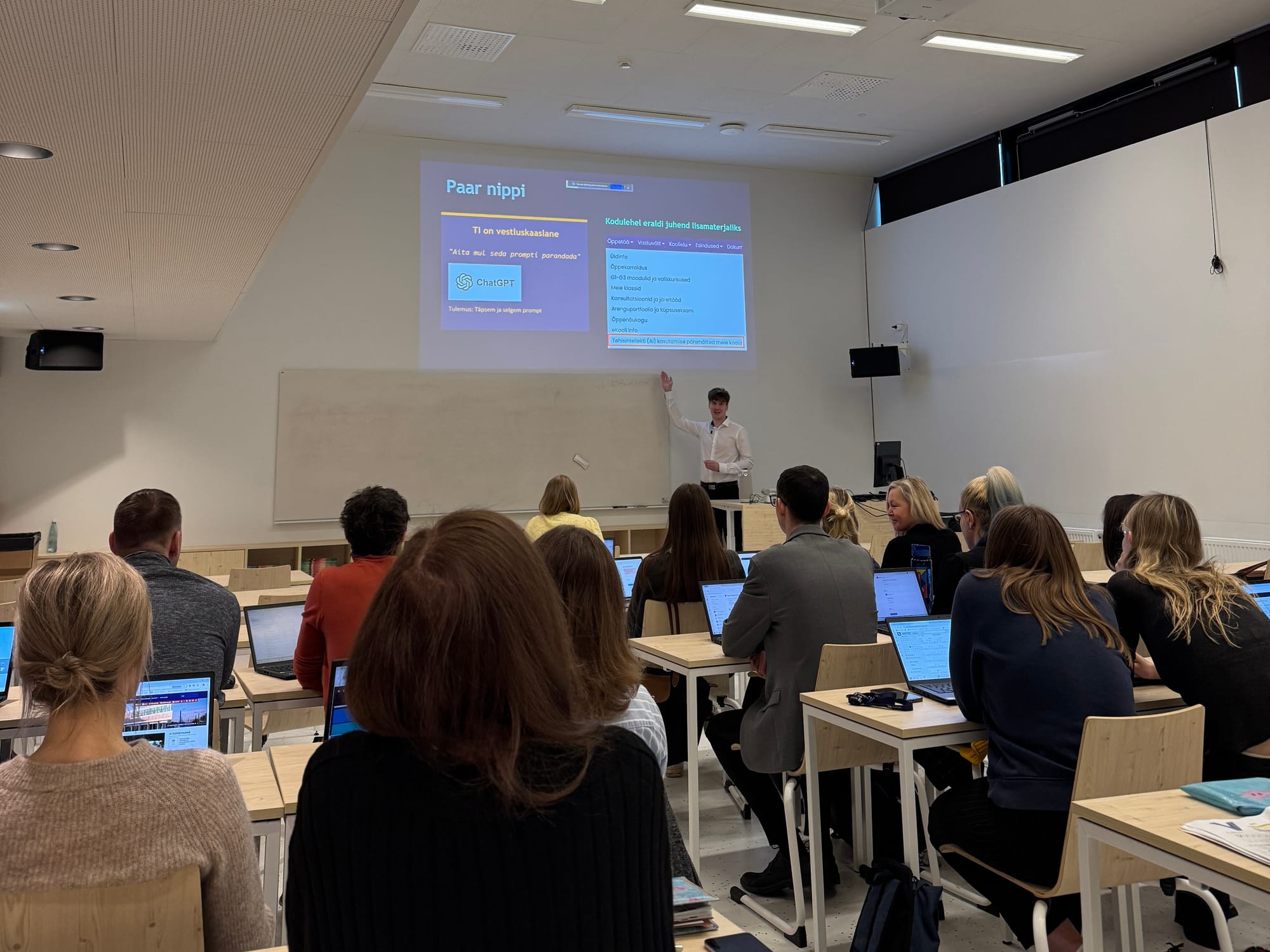
Kirjutamisega on sama. Kirjutamisoskus tähendab oskust oma mõtet selgelt formuleerida. AI võib lauseid lihvida, aga algus, lõpp ja mõte peavad sul endal olemas olema. „AI teeb mu kodutöö ära” ja „AI toetab mind akadeemilisel teekonnal” võivad kirjeldada sama tegevust, kuid kõlavad täiesti erinevalt.
Ja esinemine jääb minu arvates alles. Spotify on ammu olemas, ometi olen valmis lendama teise riiki, et artisti päriselt laval näha. Ekraan ei anna kõike edasi. Inimesed tahavad olla teiste inimestega samas ruumis ja tunda, et midagi toimub just praegu.
**Kui AI võtab aina rohkem töölõike üle, mida inimesed lõpuks tegema hakkavad?**
Praegu on olukord natuke tagurpidi: AI genereerib kunsti, samal ajal kui inimesed puhastavad ohtlikke kemikaale või kustutavad metsapõlenguid. Tuleviku maailmas võiks robot teha ohtliku ja emotsioonitu töö ning inimene loova töö.
Meil on masinad, mis suudavad toitu valmistada, aga mulle meeldib ikkagi kokata. See on üks mu *sidequest*'idest. Robot võib õhtusöögi valmis teha, kuid osa minu rõõmust tuleb sellest, et tegin selle ise. Metsatulekahju kustutamise kohta ütlevad ilmselt üsna vähesed, et just tegemisrõõm on põhjus, miks nad sinna lähevad.
**Mida vajab Eesti, et järgmine põlvkond saaks siin suuremaid tehnoloogiaettevõtteid ehitada?**
Rohkem riskijulgust ja rohkem raha, mis edust ökosüsteemi tagasi jõuab. Ameerikas on esimene investoritšekk tihti mitu korda suurem kui Euroopas. Siin võib ettevõttel olla toimiv toode ja maksvad kliendid, aga sama ideega endine Google'i või Anthropic'u töötaja saab USAs palju suurema stardikapitali. Raske on võistelda, kui teisel on pikem lennurada ja raha ei saa nii kiiresti otsa.
Seepärast on ingelinvestorid väga olulised. Wise'i ja Skype'i edu ei loonud ainult jõukaid inimesi, vaid uue põlvkonna investoreid, kes said järgmistele asutajatele raha, kogemuse ja kontaktidega appi tulla. Tahaksin näha Eestis rohkem suuri edulugusid, mille tulemusel sünnib omakorda uus põlvkond ingleid.
**Mida sa õpilasfirmade mentorina noortele kõige sagedamini ütled?**
„Winners keep winning.” See ei tähenda, et võitjad ei ebaõnnestu. Mõte on selles, et väikesed võidud hakkavad lumepallina kasvama. Julged teha esimese sammu, saad väikese tulemuse, sind kutsutakse järgmisele võistlusele, kohtad uusi inimesi ja sealt võib tekkida töövõimalus. Teed seal hästi, saad järgmise võimaluse ja ühel hetkel on sul oskused ning kontaktid, et ise midagi ehitada.
Ma ei kõnni ringi ega kuuluta, et võitsin õpilasfirmaga laadal suurima käibe auhinna. See ei olnud maailma mõistes tohutu saavutus. Aga just sellised väikesed võidud õpetavad, et sa suudad asju lõpuni teha. Ja isegi kui tulemus ei ole see, mida lootsid, jääb alles kogemus. Selles mõttes ei ole peaaegu ükski aus katsetus päris kaotus.
### CostPocket has been bought by Swedish fintech Mynt
URL: https://fomo.observer/costpocket-has-been-bought-by-swedish-fintech-mynt/
Last updated: 2026-09-10T10:55:53.000Z
Estonian expense management platform [CostPocket](https://costpocket.com/en?ref=fomo.observer) has been acquired by Swedish peer [Mynt](https://www.mynt.com/en?ref=fomo.observer). The deal financials have not been disclosed.
In what might be considered a perfect match in payments, the two firms had already been engaged for some time, with an existing technology partnership through which CostPocket launched its own business card powered by Mynt.
What attracted Mynt to CostPocket, aside from its AI-driven expense management solution, was its strong localisation and its decent foothold across the Baltics and Finland.
CostPocket was founded in 2016 by [Martin Sookael](https://www.linkedin.com/in/martinsookael/?ref=fomo.observer), [Joonas Sernjuk](https://www.linkedin.com/in/joonas-sernjuk-20556612a/?ref=fomo.observer) and [Eduard Kotov](https://www.linkedin.com/in/eduard-kotov-0b4a0870/?ref=fomo.observer) and apparently, despite the change in ownership, there will be no changes for its customers, employees or partners. It will continue to operate as a stand-alone company.

CostPocket founders
“Becoming part of Mynt gives us access to Mynt's proven and scaled payment infrastructure, while allowing CostPocket to remain CostPocket. We will continue operating as a separate company with the same product, brand, and team, focused on the customers and partners in our existing markets," Toni Kivinen, CEO of CostPocket, said in a statement.
"For our founders and early investors, this is also a proud milestone: proof that a product built in the Baltics can earn its place in the Nordic fintech landscape,” he adds.
The CostPocket platform connects with more than 40 accounting and ERP systems and supports businesses, accountants and software partners across the region.
In 2025, CostPocket group revenues grew 41% to 1.28 million euros, and its operating profit (EBITDA) was 132,800 euros, according to the firm's annual report. By year-end, 16.3 thousand companies used its software, up 24% over the year.
“CostPocket has built a strong AI-driven product, a broad integration ecosystem and a well-established position in Finland and the Baltics. We share the same product mindset and ambition to remove manual financial administration. Together, we can strengthen CostPocket’s offering and strengthen the market-leading position in the region,” says Baltsar Sahlin, CEO and co-founder of Mynt.
## Sign up for Fomo.Observer
Startup stories from Estonia. Free weekly newsletter.
Subscribe
Email sent! Check your inbox to complete your signup.
No spam. Unsubscribe anytime.
### Fomo Academy: Keeping things human while hiring in the haze of AI
URL: https://fomo.observer/fomo-academy-keeping-things-human-in-the-haze-of-ai/
Last updated: 2026-09-10T09:11:41.000Z
For years, one of the hardest parts of hiring was simply finding the right people. Companies spent enormous amounts of time searching LinkedIn, mapping competitors, building talent pools, and trying to identify candidates others hadn't already found. AI is changing that remarkably quickly.
Today, a startup can map a market, identify hundreds of potentially relevant candidates, and understand their backgrounds in a fraction of the time it used to take.
That's great news for hiring. But it has also created an interesting paradox: **finding talent is becoming easier at exactly the same time as hiring great talent is becoming harder.**
## **Everyone can find the same people**
Access used to be an advantage. A company with an experienced talent team, strong network and expensive recruitment tools could find people that a smaller startup simply couldn't.
That advantage is disappearing.
AI is democratising sourcing. Research that once took hours can now be done in minutes. Outreach can be created and personalised almost instantly. But if you can find that great engineer in Berlin, chances are ten other companies can find her too. And probably did.
So the competitive question is no longer simply:
**Can we find the right person?**
It is:
**Why would the right person choose us?**
## **Welcome to the age of fake personalisation**
AI has also dramatically improved candidate outreach. At least technically.
It can analyse someone's career, reference their previous companies, and write a message that looks as though someone spent 20 minutes researching them. Except nobody did. Multiply that by hundreds of companies, and we enter the era of mass-produced personalisation.
> The best candidates don't receive fewer messages. They receive more — and increasingly, all of them look personalised. Once everyone can personalise at scale, personalisation itself stops being an advantage. **Relevance does.**
The companies that stand out won't necessarily send the cleverest AI-generated message. They'll understand why this particular opportunity might genuinely be interesting for this particular person.
## **More candidates doesn't mean better hiring**
AI is changing the other side of the market too.
It has never been easier to apply for a job. Candidates can tailor CVs, write applications, and apply to significantly more positions with much less effort. Companies can reach more people. Candidates can apply to more companies.
The result is predictable: more volume. But more activity doesn't automatically create better hiring. I think one of the biggest challenges over the next few years will be **signal versus noise**.
The question won't be how to generate more candidates. It will be how to identify the few who genuinely fit, and then get them interested enough to choose you.

[**Reet Kaurit*](https://www.linkedin.com/in/kaurit/?ref=fomo.observer)**, co-founder of* [**TalentHub*](https://www.talenthub.eu/?ref=fomo.observer)
## **The bottleneck has moved**
This is the part founders should pay attention to. Technology is removing one bottleneck in hiring, but it isn't removing the others. You still need someone to want the job.
Great candidates rarely make career decisions because of a perfectly written outreach message. They choose companies because they believe in the founders. Because the problem is interesting. Because they see an opportunity to grow. Because they trust the people they'll work with.
This is especially important for startups.
> A startup often can't beat a large technology company on salary, benefits or brand recognition. But it can offer something else: ownership, speed, influence, learning and the chance to build something that doesn't exist yet.
When every company has access to essentially the same sourcing technology, the ability to communicate that story becomes much more important.
## **Your hiring process is part of your competitive advantage**
There is another uncomfortable truth for founders. You can have the best AI sourcing stack in the world and still lose every great candidate you meet.
Slow decisions lose candidates. Five rounds of repetitive interviews lose candidates. Founders who enter interviews unprepared lose candidates. A vague role loses candidates.
As sourcing becomes easier, the quality of the rest of the hiring process matters more. And employer brand isn't just a polished careers page or photos from the latest team event. It's what candidates actually discover about you.
> What are the founders like? What will I learn? Will I have real influence? Is the company going somewhere? Would the people already working there recommend joining?
The strongest candidates have options. Which means companies are being evaluated just as much as candidates are.
## **AI is raising the bar for hiring**
For founders, I think the interesting question isn't whether AI will replace recruiters.
It's this:
**What happens when every company has access to incredibly powerful hiring technology?**
Technology itself becomes less of an advantage. AI will make sourcing faster, research better, and hiring processes more efficient. Companies should absolutely use it.
> But when everyone has similar tools, the competitive advantage shifts elsewhere. To clarity. To reputation. To speed. To judgment. To relationships.
And ultimately, to the ability to make great people believe that joining your company is a better decision than staying where they are — or joining one of the ten other companies in their inbox.
AI is making it easier than ever to find talent.
**It isn't making talent any easier to win**
---
[*Reet Kaurit*](https://www.linkedin.com/in/kaurit/?ref=fomo.observer) *is the co-founder of* [*TalentHub*](https://www.talenthub.eu/?ref=fomo.observer) *and one of the first recruiters at Wise. Over the past decade, she has helped hundreds of startups and scaleups hire technical specialists, leaders and executives across Europe. She regularly shares practical insights on recruitment, leadership and the future of work.*
## Sign up for Fomo.Observer
Startup stories from Estonia. Free weekly newsletter.
Subscribe
Email sent! Check your inbox to complete your signup.
No spam. Unsubscribe anytime.
### Uue majanduse süda Kasvuhoone sai nurgakivi
URL: https://fomo.observer/uue-majanduse-suda-kasvuhoone-sai-nurgakivi/
Last updated: 2026-09-09T15:06:59.000Z
TALLINN - Krulli kvartalis pandi täna nurgakivi 59 miljoni euro suuruse investeeringuga rajatavale ettevõtlus- ja innovatsioonikeskusele Kasvuhoone. 2028\. aasta kevadel avatavast 15 000-ruutmeetrisest kompleksist saab Põhja-Euroopa suurim omalaadne keskus, mille ambitsioon on kujuneda lähiriikide mõjukaimaks idufirmade ja uue majanduse tõmbealaks.
Kasvuhoone projekti on ellu kutsunud investeerimisettevõte Skaala. Ajaloolisse, 1899\. aastal ehitatud mehaanikatsehhi rajatav keskus koondab ühise katuse alla idufirmad, tehnoloogiakiirendid, loomemajanduse, kogukonnaalgatused ning avaliku ühisala koos toidutänava ja näituseruumidega.
Tehnoloogiasektori kasvule hoo andmiseks kolib Kasvuhoonesse globaalsesse ladvikusse kuuluv varajase faasi investeerimisfond **Norrsken Evolve**, mille esimense kiirendiprogramm alustab Eestis tegevust juba sel sügisel. Lisaks saab ökosüsteemi osaks laste ja noorte loovus- ja tehnoloogialabor **Vivita**, mis ühendab tulevikuoskusete omandamise ja hariduse vahetult regiooni tippettevõtetega.
> „Euroopal on praegu unikaalne võimalus kasvatada oma sõltumatust ja konkurentsivõimet maailmas. Eesti oma soodsa ettevõtluskeskkonnaga ongi ideaalne koht, kus tulevikuäridel oleks võimalik kasvada ja areneda ning kuhu tasub seetõttu investeerida,“ sõnas Skaala asutaja **Taavet Hinrikus**. Ta lisas, et eesmärk on luua keskkond, kust võrsuksid Euroopa järgmised ükssarvikud.


Fotod: Triin Hertmann
Tänasel sündmusel asetasid nurgakivi paika Skaala asutaja Taavet Hinrikus, Krulli kvartali tegevjuht Indrek Hääl, Merko Ehitus Eesti juht Jaan Mäe, Taani arhitektiüroo Cobe arhitekt Ole Storjohann, KOKO partner Andres Kõresaar ning Tallinna linnapea Peeter Raudsepp.
### 107-miljoniline esimene etapp ja ringmajanduslik arhitektuur
Kasvuhoone ehitus moodustab enam kui poole Krulli kvartali esimesest arendusetapist, mille kogumaksumus on 107 miljonit eurot. Lisaks Kasvuhoonele hõlmab see etapp 63-korteriga **Bob W** korterhotelli, kolme kortermaja, elu- ja ärihoonet ning tööstusliku ärihoone rekonstrueerimist.
Kokku investeeritakse enam kui 10 hektaril laiuvasse Krulli kvartalisse 325 miljonit eurot ning terve piirkond peaks valmima neljas etapis 2035\. aastaks.
Ajaloolise mehaanikatsehhi on uueks keskuseks projekteerinud Taani arhitektuuribüroo Cobe koostöös Eesti bürooga KOKO, maastikuarhitektuuri loob KINO ning ehitustöid teostab Merko.
Projektis on kesksel kohal tööstuspärandi säilitamine ja süsinikujalajälje vähendamine. Arhitektide sõnul taaskasutatakse ehitusel ajaloolist fassaadi, betoonsambaid, treppe, kraanasid ja ferme. Sama põhimõtet rakendatakse ka näiteks vahetult Kasvuhoone kõrvale kerkiva Bob W korterhotelli puhul, mille kolme fassaadi paneelid pärinevad otse tulevase Kasvuhoone hoone laest.
Cobe arhitekti **Ole Storjohanni** sõnul annab endine tööstushoone identiteedi tervele kvartalile:
> „Meie eesmärk on säilitada väga palju algupärast, mis annab hoonele iseloomu, kuid samas võimendada inimeste kokkupuutepunkte, millel on oluline roll selles, et Kasvuhoonest kasvaks mõjukas tulevikuäride keskus.“
Ehitaja vaatest rõhutas Merko Ehitus Eesti juhatuse esimees **Jaan Mäe** ajaloolise väärtuse ja moodsate süsteemide põimimise keerukust, nimetades rajatavat keskust üheks olulisemaks maamärgiks, mis lähiaastatel Tallinnas valmib.
[Taavet Hinrikus: “If you don’t help the community grow, it’s going to be a really bad place to exist”Speaking at Norrsken Evolveevent at Latitude59, Wise co-founder and tech veteran Taavet Hinrikus laid out the fundamental vision driving Kasvuhoone, an ambitious 15,000-square-meter technology hub currently under construction in Tallinn’s Krulli quarter. For Hinrikus, backing the project isn’t just about real estate developmentFomo.ObserverTarmo Virki](https://fomo.observer/hinrikus-if-you-dont-help-the-community-grow-its-going-to-be-a-really-bad-place-to-exist/)
[Norrsken starts in Tallinn with key hires“That’s the team I want to work with.”Fomo.ObserverTarmo Virki](https://fomo.observer/norrsken-starts-in-tallinn-with-key/)
## Sign up for Fomo.Observer
Startup stories from Estonia. Free weekly newsletter.
Subscribe
Email sent! Check your inbox to complete your signup.
No spam. Unsubscribe anytime.
### One man and his dog, base themselves in Estonia
URL: https://fomo.observer/one-man-and-his-dog-base-themselves-in-estonia/
Last updated: 2026-09-08T13:12:12.000Z
During the summer, I travelled to North Tallinn to meet one man and his dog in the sunshine. Well, the Tallinn sunshine. [Almog Koren](https://www.linkedin.com/in/almogkoren/?ref=fomo.observer) remarks to me, “This is not summer," as we are outside a cafe with his dog Echo.
Koren is the founder and CEO of [Dogbase](https://dogbase.co/?ref=fomo.observer), a training and operations platform for dogs. The American-Israeli has been in Estonia for over a year and seems to be settling in quite well.
“He likes it a lot here; he likes the forest”, he tells me when I ask how Echo is adapting to life in Estonia. “The winter was really amazing. It was my first kind of 'winter, winter,' and Echo loved it. He loved the snow.”
His startup was already established before he came to Estonia; he built it remotely, and he tells me that at the moment it’s “doing well.”
Curious to know more about how he came to build Dogbase we delved a little into his background. “If you asked me a few years ago, would I do a startup with dogs? I'd be like, why?”
If you were at Latitude59 this year, you may have seen Echo on stage. After the conclusion of the pitch competition, a syndicated investment by angel investors from EstBAN, LatBAN, and FiBAN chose Dogbase to receive up to €100,000\.
### Finding Echo
Koren grew up in the U.S. but has also travelled the globe, living in places like Australia, Israel and Spain. He’s a software engineer by trade and is a bit of a serial entrepreneur. His first startup was in gaming, capitalising on the rise of mobile; the company developed APIs for game developers, which he tells me “did pretty well but didn’t succeed in the end.” Calling it a "successful failure”.
His second startup was an ERP for banana farming in the Dominican Republic. He sold his shares and got out of that company “Worked in corporate for a bit, running a development team, and then after that, Dogbase got started.”
Echo
Koren’s kidneys were failing. It came as a complete surprise as he went from being an active, fit man who enjoyed surfing and was part of a lifeguarding team to someone hooked up to dialysis. That's when Echo, as a puppy, entered his life.
“I ended up getting Echo as my service dog… and then after I got a transplant, six months to a year later, Echo was kind of bored. He's a Belgian Malinois,” he says.
Such an active dog needed something to do to keep his mind occupied, so Koren decided to train him as a search and rescue dog, and that’s where the idea for Dogbase came in.
### Building Dogbase
The trainer he went to was very disorganised, never remembering what training Echo had done, so Koren used his skills to design an app to track Echo’s training.
“I posted a bunch of screenshots of my app that I was developing, in different Facebook groups that I was part of - to learn about dog training because it wasn't a world that I was from,” he said.
Having served in both the US and Israeli military, he was aware of service dogs and had been on missions with them but had no training or handler experience.
“I started getting emails and Facebook messages. Can we use this? And I \[thought\] okay, well maybe there's something here. And then I just started developing it as a product. I didn't really care about the market size or investors. It was more about, ‘hey, I have a passion for this, and I really want to see what I can do with it’, and then it grew from there into being a product,” he explains.
He goes on to tell me that one of his first pilots was with a UK military unit, but Dogbase didn’t deliver on their promise; however, that didn’t deter him.
“We got into TechStars Australia in 2023, and then we launched the product, the first version, kind of a prototype or MVP, in TechStars,” he says.
### Built for purpose
“I didn't want to go and build a bunch of features that no one would use. I wanted to listen to people and how they would use it. So we spent a good six months to a year just listening to people, getting the customers, getting users, getting feedback, and developing what they wanted. So 90% of the product is what users actually want, and that took us about a year to actually go from a MVP to a full product - where we are now, which is completely different from where we started,” he says.
The plan for now is continued growth. During the summer, Dogbase onboarded Texas Search and Rescue and had one of its best months of sales.
Having seen him pitch before during a defence tech meet up I asked if thats a sector he’s keen to tackle.
“It's just a more complicated sales cycle, and as you can imagine, defence has its own requirements,” he says. But it sounds like he doesn’t need to define a sector right now. “The market size for service dogs, therapy dogs, and dog sports is very huge.”
*At the time of writing, the investment by the BANs promised during Latitude59 had not come to fruition.*
### UCHA VEKUA: "Give yourself a shot!" Hackathons are the new proving ground for creatives
URL: https://fomo.observer/ucha-vekua-give-yourself-a-shot-hackathons-are-the-new-proving-ground-for-creatives/
Last updated: 2026-09-12T10:05:42.000Z
I’m starting to understand that a hackathon event might be the best platform where the builders, creatives, and experts of different sorts can give themselves and their crazy ideas a real shot. Especially nowadays.
Trends always come and go. If you think about it, there have been too many trends over the past couple of years – blockchain, crypto, NFT, Metaverse, AI, vibe coding… all this stuff that attracted crazy noise in all the industries.
But one thing I strongly believe helps anyone stand out in this noise is the art of trying, a.k.a “giving your ideas a shot.”
From my experience, a hackathon is the best type of event to do that, plus meet other people who want to do the same. It’s sort of like a playground where different creative people come together to experiment with their ideas.
I think this is why hackathons are so relevant and important now: all the new tools that keep coming out. But let’s not forget that they were also relevant before all these AI builder themes became so trendy and accessible.
Let me give you some context.
I moved to Estonia 10 years ago as an international student at TalTech. Back then, the country was very different – Wise was Transferwise, Bolt was Taxify, and Veriff was a small startup nobody knew about.
One thing that really stood out for me in Tallinn was this unique entrepreneurial spirit everyone had in the city.
There was a reason for that, though – lots of startup and tech events were happening in different universities and other places around Tallinn.
One particularly popular type of event for the local community here was hackathons. It’s a three-day-long event where you form a team with strangers and build a working prototype of your startup idea with limited time and resources.
I loved going to hackathons. As a newcomer, these events helped me meet like-minded people in the community, improve my skills while building different solutions (or at least trying to), and test different ideas.
Those events and experiences really helped shape the first steps of my career here in Estonia.
Fast forward to 2024 and 2025; many things had changed in the local startup community here.
Many companies that were startups back then had already become so-called “unicorns”; the economy was growing as well, but sadly, this unique entrepreneurial spirit was almost gone. Or at least it wasn't like what I had experienced in 2016.
Not too many hackathons were happening anymore, and most of the startup events here were a bit more advanced than “some idea-people hanging out and building cool stuff.”
So, at the beginning of 2025, I wanted to tackle this problem – I went around the community, wrote to some interesting people, had some conversations, and put together a team to organise a hackathon that would bring back those old builder vibes to Tallinn.
That is how the idea for the first Techstars Startup Weekend in Tallinn was born.
## Let me recap the first Techstars Startup Weekend in Tallinn
Bringing back the old hackathon vibes in Tallinn wasn't easy.
We wanted to design an event that would give students and startup enthusiasts a platform to test their ideas, connect with each other, and improve their skills along the way.
So, we teamed up with Estonian Business School, Startup Garage, and other organisations from the Estonian startup ecosystem to make it happen. Everyone seemed enthusiastic and supportive throughout the process.
Hackathon kicked off!
From the 2nd to the 4th of May, the entire 4th floor of the Estonian Business School was transformed into a fancy atelier where individuals attempted to bring their craziest ideas to life.

And boy did it work! Check this out:
- 57 participants showed up on the first day
- They pitched a total of 19 ideas on the stage
- Formed 10 teams to develop products
- All 10 teams managed to present a live demo on Sunday
You just had to see the excitement all around the event during those days. Mentors, participants, volunteers, and other attendees were all discussing cool ideas with each other.
During the finals, it was fabulous to listen to all those teams passionately pitch their projects and showcase their demos.
All 10 teams successfully built high-quality prototypes and delivered strong pitches in front of an audience. We saw a wide range of solutions on stage, and that was the very goal of this hackathon from the beginning.
It felt like a celebration of creative approaches and bold ideas. But I just didn’t know that it would kick off something much bigger than one hackathon event.

I feel like we couldn’t have organised this hackathon at a better time, because it fell during the period when the term “Vibe Coding” and the whole process of building tools with AI started gaining popularity.
Throughout the summer of 2025, I saw some of our hackathon participants trying out these new tools and building interesting solutions with them.
So, we thought – maybe there is a way that these enthusiastic people could somehow come together every month to share their creative ideas and new approaches with each other? Maybe it's an interesting idea? Say no more!
## Enter the Vibe Code Atelier monthly meetup event series for builders
Tons of new and exciting tools launch every week in this world of vibe coding. The bar has never been lower for building your own tool and getting started with this so-called “one-person-startup.”
Different tools serve different needs too, people now can build their own SaaS solutions, platforms, automations, and everything else they can think of.
So now, a classic “builder” archetype can sit in their room and ship products in a matter of hours (well, minutes, actually).
Here’s where it gets challenging, though.
Yes, we can ship new products every day, but how do we make sure they have value? What’s the use of those tools? And will these “startups” get actual customers over time?
I think the key component is validating ideas and understanding whether there is an actual market for whatever vibe coders are building. In other words – are there people who would pay for these products? And do they solve real problems?
There are many ways to answer these questions, but one is meeting other like-minded builders and getting real feedback from them.
So, together with Skaala and LIFT99, we started hosting in-person monthly meetups where vibe coders can take the stage and demo a solution they’ve been developing lately.

We’re calling it Vibe Code Atelier, a community where builders, dreamers, and innovators come together, share ideas, and go home more inspired to build “cool stuff.”
The event typically kicks off with a fireside chat featuring a founder of a more established tech company who shares their experiences with the community. After that, we open up a stage for 3 vibe coders to come and share whatever they built – 8 minutes each.
We kicked off this event series in October 2025, and the community response was a resounding YES!
Companies that have joined the fireside chat part of this event include Pactum AI, Bilt me, Haut AI, Glassity, and more.
On average, about 70-90 attendees show up at each of our events. Vibes have always been top-notch, and it really feels like builders are connecting with each other on another level.

## And that’s when more builder focused hackathons come in handy…
As we have already organised 7 editions of Vibe Code Atelier meetups at LIFT99, it is only logical to bring our expanded community together and give them a space to lock in & build cool solutions over the weekend.
That’s exactly where the name of our brand new hackathon “Lock in & Build” is coming from – it’s literally a description of the process of what we will do on 26th and 27th of September.
Lock in & Build hackathon is for builders, founders, vibe coders, indie hackers, designers, marketers, Claude Code nerds, PhDs, lego fans, original tech bros, and everyone else who is just obsessed with building things.
Imagine a weekend at Tallinn Business Incubator, where all of us come together, connect with each other, share out ideas, team up, build prototypes, ask feedback, iterate, burn all of the AI credits, get vibes us, and leave with this proud feeling of – “*wow, I built some cool sh\*t last weekend.*”
And that’s really the whole idea.
Because new AI tools like Lovable, n8n, Eleven Labs, and others give us unlimited ways to experiment, create something valuable, and bring our crazy ideas to life. If you ever had an idea to build anything, now it’s the perfect time to do that.
But back to the first point in this article: experimentation is the key to understanding what types of projects and initiatives you want to work on.
The more you f\*ck around, the more you find out. Period. And what better place to f\*ck around than the event that is specifically designed for f\*cking around?
Yup, that's a hackathon for ya!
*Feel free* [*to register*](https://luma.com/b3o95mtn?ref=fomo.observer) *if it resonates with you. (Note Sept 16 deadline!)*
## Bottom line
I believe that now more than ever it is important to organise hackathons.
We need creatives to be creative. We need industry experts to share their expertise. We need builders to build. And we need students to share their fresh perspective.
This is a golden era to unite as a community and build solutions through joint effort. A hackathon is the perfect platform for all that.
This is like being in Paris in the 1920s, when the Hemingways, Picassos, Scott Fitzgeralds, Dalis, and other world’s most creative minds came together to share a drink or two.
Hackathon is undeniably a place where your unimaginable startup adventures could start.
If you want to be part of this journey, join us.
Let’s build the future we want together!
*Ucha is a writer and content marketer based in Tallinn, and loves to share his international stories and startup adventures. In his free time, he enjoys organising hackathons and vibe coding events that help builders bring their craziest ideas to life.*
## Sign up for Fomo.Observer
Startup stories from Estonia. Free weekly newsletter.
Subscribe
Email sent! Check your inbox to complete your signup.
No spam. Unsubscribe anytime.
### Tehnopol autumn kick-off & upcoming deadlines
URL: https://fomo.observer/tehnopol-kicks-off-autumn-season-by-bringing-alumni/
Last updated: 2026-09-02T07:42:06.000Z
Last week, founders and investors put conventional wisdom on trial at the Tehnopol Accelerator autumn kick-off. The premise was simple: much of what once counted as settled truth in entrepreneurship has been rewritten by AI, shifting investor expectations, sales models, and geopolitics.
For the first time, Tehnopol didn't keep their programmes in silos. They mixed current cohorts with alumni, using individual trivia rounds to break up cliques and force actual networking. No fluff, just builders sharing the real ground truth of startup life in 2026.
Fomo.Observer co-founder Triin Hertmann moderated the debate with Anne-Liisa Elbrecht, Natalja Napsep, and Kristjan Lind. Between an investor's read on the market, a founder's daily reality, and the accelerator's internal view, disagreement outweighed consensus.
The ecosystem is moving fast, and founders have to adapt.
If you are building right now, here are the hard deadlines you need to know from Tehnopol's upcoming season:
- **AI Accelerator (Applications Open):** A 6-month programme for early-stage startups, spin-offs, researchers, students, SMEs, and past alumni building AI technologies. It provides mentor-led support to accelerate market entry.
- **DeepTech Accelerator (Applications Open October 1):** A joint programme by Tehnopol and Sparkup Tartu Science Park for Estonian deep tech startups. It offers training, mentoring, development funding, and introductions to international investors to help validate business models and drive early growth.
- **City Resilience Hackathon (September 24–25):** Organised by the City of Tallinn and Tehnopol. Teams will address resilience challenges — such as crisis communication and critical infrastructure monitoring — posed by Helsinki, Valencia, Dnipro, and Lviv.
- **Prize:** A €75,000 prize fund, access to pilot projects in partner cities, and potential entry into Tehnopol's accelerator.
- **Deadline:** Applications close September 10.
- **IDA Hub Film and Multimedia Pre-Accelerator (Returning Autumn 2026):** A programme centred on a two-day TECH Bootcamp with workshops and mentoring. It is open to individuals at all experience levels interested in film or multimedia entrepreneurship.
## Sign up for Fomo.Observer
Startup stories from Estonia. Free weekly newsletter.
Subscribe
Email sent! Check your inbox to complete your signup.
No spam. Unsubscribe anytime.
### Eesti ei saa jätta hariduse võtmetehnoloogiate arendamist teiste riikide hooleks
URL: https://fomo.observer/eesti-ei-saa-jatta-hariduse-votmetehnoloogiate-arendamist-teiste-riikide-hooleks/
Last updated: 2026-09-01T07:43:58.000Z
Kooliaasta on taaskord käes. Sellega koos ka võimalus jälle midagi uuesti alustada, paremaks muuta ja värske pilguga üle vaadata. Aga võib-olla võiksime 1\. septembril korraks vaadata otsa ka tänasele haridussüsteemile ning astuda mõttes tulevikukooli radadele.
Milliseid samme peame astuma, et tagada Eesti lastele parim haridus?
EdTech Estonia nõukogu liikme Märt Aro sõnul peaksime Eesti hariduse tulevikku kujundades looma ise uusi lahendusi, mitte piirduma mujal maailmas loodud lahenduste kasutamisega.
Ootused õppijale on oluliselt teistsugused kui 200 aastat tagasi.
Tänase koolisüsteemi juured ulatuvad 1750\. aastatesse, kui ühiskond ja majandus vajasid tööstusrevolutsiooni tingimustes senisest erinevaid teadmisi ja oskusi. Haridussüsteem, kus õppijatele anti suures osas ühesuguseid teadmisi ning valmistati ette suhteliselt etteaimatavaks tööeluks, sobitus Industry 2.0 ajastusse väga hästi, aidates ühiskonnal kiirel tempol edasi areneda. Aga täna hakkame jõudma Industry 5.0 konteksti, kus majanduskeskkond on oluliselt muutunud ja sellega koos ka ootused kooli lõpetajale.
> „Huvitav on näha, et kuigi maailm meie ümber on nii palju muutunud, mõtleme haridusest tihti ikka selle meile tuttava, ajale jalgu jäänud filosoofilise paradigma kontekstis. Alternatiivselt mõelda on vahel aga keeruline, sest me kõik tuleme samast koolisüsteemist ja oleme selle süsteemiga harjunud. Kuid siin ongi oluline roll EdTech-lahendustel ja valdkonna fanaatikutel,“ leiab EdTech Estonia nõukogu liige Märt Aro, kes on ka EdTech-i Dreamapply asutaja.
Maailma Majandusfoorum toob iga viie aasta tagant välja oskused, mida peame järgnevatel aastatel arendama ning mida edukaks toimetulekuks vajame. 2025\. aasta raport toob esile nii analüütilise mõtlemise, kohanemisvõime, tehnoloogilise kirjaoskuse, kui ka enesejuhtimise oskused.
„Seda kõike võtavad arvesse ka Euroopa Liit ja Eesti ja need märksõnad on jõudnud meie haridusstrateegiasse ja õppekavasse. Meie väljakutse seisneb aga selles, kuidas toetada kogu haridussüsteemi, et need suurepärased mõtted, mis on haridusstrateegiasse ja õppekavasse kirjutatud, saaksid rakendatud ilma muudatustega kaasneva lisastressita. Ja kuidas toetada neid, kes loovad uusi materjale ja õppemetoodikaid, et häid tulemusi saavutada,“ selgitab Aro.
EdTech-sektori ja kogukonna jõustamine aitab Eestil püsida hariduse edendamise lipulaevana.
Mis on üldse EdTech-sektor? Lihtsalt öeldes on see hariduse uuendamise ja kaasajastamisega tegelev sektor, kuhu kuuluvad inimesed, kes näevad hariduses mõnda probleemi ja tahavad seda lahendada, rakendades eesmärgi saavutamiseks ka tehnoloogiat. Need on noored ise, lapsevanemad, teadlased, õpetajad, koolijuhid, ettevõtjad.
„Ma olen palju mõtisklenud, millise mudeli alusel uut haridust luua, ja ma ei näe ühtegi paremat lahendust kui EdTech-sektori ja sealse kogukonna jõustamine,“ ütleb Aro.

Tema sõnul saab innovatsioon alguse fanaatilisest huvist mõne konkreetse haridusliku väljakutse lahendamisel. Riik omakorda võiks luua rohkem võimalusi neile ettevõtetele ja olemasolevatele ekspert-tiimidele, kes juba suurest huvist neid lahendusi loovad. Küll aga näeb Aro tänases süsteemis mitmeid murekohti, eelkõige seda, et EdTech-ettevõtted peavad liiga sageli konkureerima riigi enda arenduste ja lahendustega.
> *„Näen, et kõige olulisem on see, et riik ise võimaldaks osaleda hangetel täisteenuste arendajatel. Kvaliteetseid tulemusi saame ikkagi siis, kui arendused lähevad fanaatikute tiimidele. Selliseid avalikke hankeid, kus nad aga osaleda saaksid, on paraku siiski vähe“.*
Samas on tehtud ka olulisi edusamme. Näiteks on Riigikantselei 2025\. aasta kevadel välja andnud uue avaliku sektori IT-soetamise juhise, mille järgi peaks riik eelistama koostööd olemasolevate teenuseid arendavate tiimidega ning vältima uute arenduste tellimist olukorras, kus vajalikud tiimid on juba olemas. Aro sõnul on positiivne ka see, et hariduse kaasajastamise olulisusest räägitakse ühiskonnas üha rohkem ning inimestel on endiselt soov ise midagi paremaks muuta.
## Sign up for Fomo.Observer
Startup stories from Estonia. Free weekly newsletter.
Subscribe
Email sent! Check your inbox to complete your signup.
No spam. Unsubscribe anytime.
Üheks parimaks näiteks peab Aro ühtlasi viimast Presidendi haridushäkatoni, kus osales oma institutsiooniga ka Eesti Vabariigi president. „See oli südantsoojendavalt võimas koostöö. Ausalt öeldes ei ole ma kusagil maailmas kuulnud, et sellisel tasemel tehakse riigi ja erasektori innovaatorite vahel koostööd. Eriti tore oli ka see, et häkatoni vedas hariduse innovatsiooni kogukond ise eest ning nad tegid seda super hästi! Ruumi astudes oli näha, kuidas inimeste ajud ragisesid. Häkatonil osales 30 tiimi, kes arendasid erinevaid hariduslahendusi,“ rõõmustab ta.
### Lahenduste “killustatus” ei võimalda õppijateni jõuda.
Samas ei piisa ainult headest lahendustest. Need peaksid jõudma ka kasutusse.
Loodusainete õpetamiseks terviklahendust pakkuva EdTech-startup’i Praktikal asutaja Omari Loidi arvates on lahenduste kättesaadavus täna üks olulisemaid lahendust vajavaid murekohti.
„Meil on täna palju võimalusi ise midagi luua ja tehisaru edasiarenguga tuleb neid võimalusi veelgi juurde. Kui aga keegi loob näiteks keeleõppimiseks mõne vahva lahenduse oma algoritmi või metoodikaga, siis peab ta tihtipeale hakkama selle ümber ise platvormi ehitama (tegema sisselogimissüsteeme jne.),“ selgitab Loid. See tähendab, et inimene peab uuesti leiutama midagi, mis ei pruugi üldse olla tema pärusmaa. Selle asemel et keskenduda tootele, kulub aeg hoopiski tehnilise taristu ülesehitamisele.
Teine probleem puudutab koole ja õpetajaid. Õpetajatel peaks olema võimalik häid lahendusi kooli eelarvest kasutada, kuid samal ajal on neid lahendusi tekkinud juba nii palju, et õpetajal või koolijuhil võib olla keeruline otsustada, mida valida ja kuidas erinevaid tooteid omavahel integreerida. Selleks puudub ühtne süsteem.
„Üks struktuurne probleem ongi see, kuidas koolidel on võimalik eelarveliselt selliseid tooteid tarbida. Mida võtta, mida jätta? See, et koolidel raha ei ole, on nagunii klassikaline probleem. Aga kui mõni õpetaja tahab midagi kasutada, näiteks kümne euro eest kuus, siis võib-olla ei taha ta kogu aeg direktori käest kümmet eurot küsimas käia. Ja kui kõik õpetajad hakkavad nende väikeste summadega käima, siis on see kõik juba bürokraatlikult keeruline,“ selgitab Loid.
Loidi sõnul seisneb probleem ka selles, et kuigi Eesti on tuntud digiriik, ei ole hariduses tekkinud veel terviklikku lahendust, mis tooks erinevad süsteemid ja teenused omavahel kokku. „Meil ei ole sellist hariduse X-teed, nagu tervishoius. Meil on igal pool erinevad taristu tükid, mis on väga väärtuslikud, kuid puudub terviklik lahendus. Uute terviklahenduste kallal aga juba töötatakse”.
Üheks näiteks, kuidas seda probleemi lahendada, on Praktikal. Ettevõte pakub loodusainete õpetamiseks terviklahendust, mis koosneb katsevahenditest, digiõppevarast ja digiplatvormist. Viimane pakub võimalust ka digitaristu külge lisada uusi lahendusi, ilma, et igaüks peaks hakkama uut süsteemi leiutama. „Me oleme natukene nagu WordPress ja sealsed pluginad. Meie digitaristu külge saab panna oma lahendused, et igaüks ei peaks hakkama oma taristut üles ehitama,” selgitab Loid.
Praktikali lahendust kasutatakse praegu juba enam kui 300 Eesti koolis ning ettevõte on alustamas laienemist Saksamaale.
Audentese e-gümnaasium otsib lahendusi ühest keskkonnast.
Sarnast tervikpilti näevad ka Audentese e-gümnaasiumi juhataja Katrin Kiilaspää ning haridustehnoloog ja informaatika õpetaja Kristiina Sirelpuu. Audentese e-gümnaasium on tegutsenud juba üle 20 aasta ning loodud eelkõige õppijatele, kelle elutempo või elukoht ei võimalda tavapärases päevakoolis õppida. Tänaseks õpib seal üle 400 väga erineva taustaga inimese: noored, täiskasvanud, sportlased, muusikud, ettevõtjad, välismaal elavad eestlased ning õppijad, kes ühendavad gümnaasiumiõpinguid mõne teise valdkonna või kooliga.
„Meil on võimalik õppida nii, et oled välismaal ja tuled kooli ainult riigieksamiteks või koolieksamiteks. Kontaktõpe on olemas, kuid see ei ole kohustuslik. Õpe toimub 100% *online*\-is,“ kirjeldab Kiilaspää.
Selline paindlikkus tähendab aga, et õppija peab ise oma aega planeerima, arvuti avama ja õppimisega alustama. Päevakoolis annab rütmi tunniplaan, e-gümnaasiumis peab õppija selle rütmi suuresti ise looma. Selle jaoks kasutatakse koolis Moodle’i õpikeskkonda, kus õppija saab kursust läbida omas tempos ning õpetajad ja õppenõustajad tema arengut jälgida.
„Meil ei ole ühtegi õppijat sama õppeplaaniga. Meie jaoks on eriliselt oluline, et õppija saaks aru, kus ta oma õpiteekonnal parasjagu asub, mida ta järgmisena tegema peab ja millised valikud tal on. Seetõttu lähtume oma digivalikutes põhimõttest, et kasutame ühtset Moodle’i keskkonda ja ehitame vajalikud lahendused selle sisse. Oleme nagu Moodle’i startupperid. Me ei taha õppijat sellest keskkonnast välja suunata. Kui ta ise soovib midagi proovida, on see muidugi väga teretulnud, kuid meie ei ole hetkel seadnud prioriteediks erinevate keskkondade vahel liikumist,“ kirjeldab Sirelpuu.
Selleks, et hinnata, millised digilahendused õppimist päriselt toetavad, töötavad koolis haridustehnoloog, õppedisainer ja Moodle’i administraator, kes teevad koostööd õpetajatega. Uusi lahendusi katsetatakse ja kogemusi vahetatakse ka ülikoolidega.
„Katsetame erinevaid lahendusi ning teeme tihedat koostööd ülikoolidega. Lahenduste seas kasutame näiteks “Edenemisriba,” mis tuli meile Moodle’i väliselt. See plugin on jäädavalt kanda kinnitanud. Eelmisel aastal proovisime ka “Õpirada,” mida suur osa õppuritest pidas enda jaoks kasulikuks,“ ütleb Sirelpuu.
Just siin ühilduvad Audentese kogemus ja EdTechi laiem probleem. Häid ja huvitavaid lahendusi tekib juurde, kuid kooli jaoks on oluline, et need sobituksid olemasolevasse süsteemi ega looks õppijale veel üht uut keskkonda, kasutajakontot või kohta, kus oma õpiteekonnal järge pidada.
Samuti ei ole küsimus ainult lahenduste loomises, vaid ka selles, kelle lahendusi me tulevikus kasutame. „Väikese riigina ei saa Eesti endale lubada olukorda, kus hariduse kõige olulisemad tehnoloogilised lahendused töötatakse välja kusagil mujal ning meie ülesanne on need lihtsalt kasutusele võtta. Kui tahame, et meie õpetajatel ja lastel oleksid lahendused, mis lähtuvad meie kultuurikontekstist, siis on ainus variant, et jõustame lahenduste loomist Eestis. Sest kui me seda ei tee, kasutame lõpuks USA ja Hiina lahendusi,“ võtab Märt Aro kokku.
*Eestis tegutseb tänaseks üle 100 EdTech-ettevõtte ja haridustehnoloogiliste lahenduste looja, kellest mõjuv osa toimetavad ka rahvusvaheliselt. Septembri jooksul tutvume lähemalt EdTech-maastiku põnevate tegijatega.*
### INTERVIEW: EIF’s Merete Clausen on Europe’s geopolitical awakening, risk allocation, and unlocking pension capital
URL: https://fomo.observer/interview-eifs-merete-clausen-on-europes-geopolitical-awakening-risk-allocation-and-unlocking-pension-capital/
Last updated: 2026-09-01T10:37:11.000Z
**HAAPSALU** — For European technology startups looking to scale into regional and global champions, the chronic shortage of late-stage growth capital remains a central challenge. Founders often face a difficult choice: seek Silicon Valley-aligned capital or risk stalling out on growth tickets.
Fomo.Observer sat down (literally, on a park bench!) with Merete Clausen, Deputy Chief Executive at the European Investment Fund (EIF), on the sidelines of the Baltic VCA Summit in Haapsalu.
Headquartered in Luxembourg, the EIF acts as the primary risk-capital arm of the European Investment Bank (EIB) Group. Channelling approximately €16 billion annually into small and medium-sized enterprises (SMEs), the fund operates primarily by anchoring venture capital, private equity, and infrastructure funds, while also providing guarantees to financial institutions.
At the Baltic VCA Summit in Haapsalu, Clausen spoke with Fomo.Observer about the geopolitical pressures reshaping European supply chains, why border proximity should not deter Baltic investment, and how the EIF intends to partner with pension funds to bridge Europe's growth-stage capital gap.
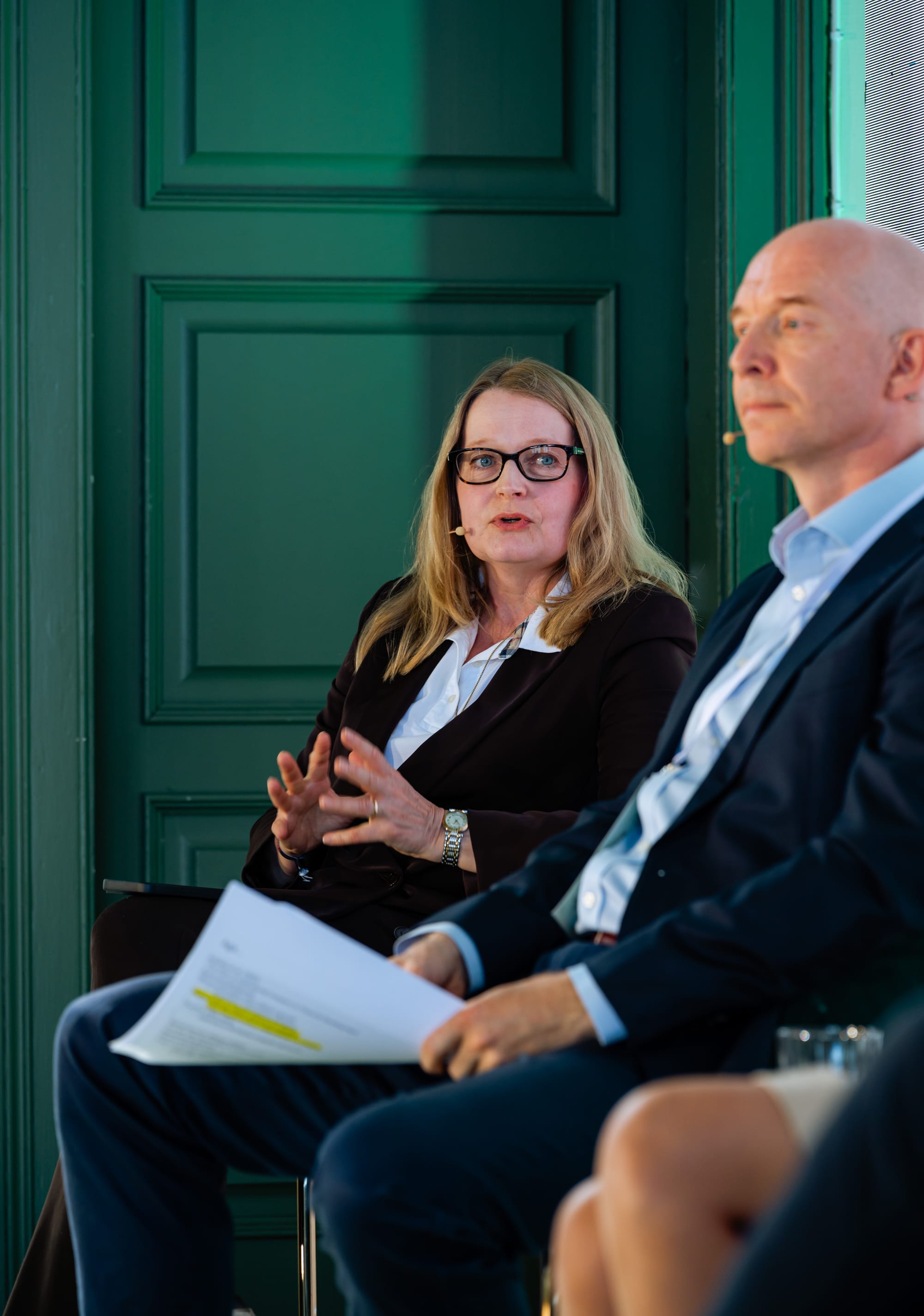
**What brings the European Investment Fund's senior management from Luxembourg to the Baltic VCA Summit in Haapsalu?**
**Merete Clausen:** It's important that we also get out to talk to founders, entrepreneurs, funds, fund managers, LPs, GPs. We need to thoroughly understand the challenges they face and what is going on. While many of the challenges are common to all European countries, there are also some differences across regions in Europe. We need to be aware of those differences so that we can adjust our strategies, instruments and products to support the European venture capital ecosystem.
**Does proximity to the Russian border negatively impact institutional risk assessments for Baltic startups?**
**Merete Clausen:** I don't think we should only stress the negative impact here. The ongoing war and the fact that you're on the eastern flank don't have to be a deterrent for investments in the region. What is key is the level of innovation, and there Estonia is at the forefront.
What is crucial is that companies already think internationally from the outset, because they have to when their domestic market is very small. However, they should not necessarily have to always feel that they need to go to the US or outside Europe to secure financing. In particular at the later stages of growth, it's key to ensure that the European companies have access to European-level funds.
[Europe’s sovereignty challenge: Can institutional capital bridge the growth gap?As geopolitical tensions accelerate the unbundling of global supply chains and capital flows, Europe’s tech ecosystem faces an existential challenge: building indigenous technological sovereignty while overcoming its chronic shortage of late-stage growth capital. At the Baltic VCA Summit in Haapsalu, venture capitalists and institutional policymakers converged onFomo.ObserverTarmo Virki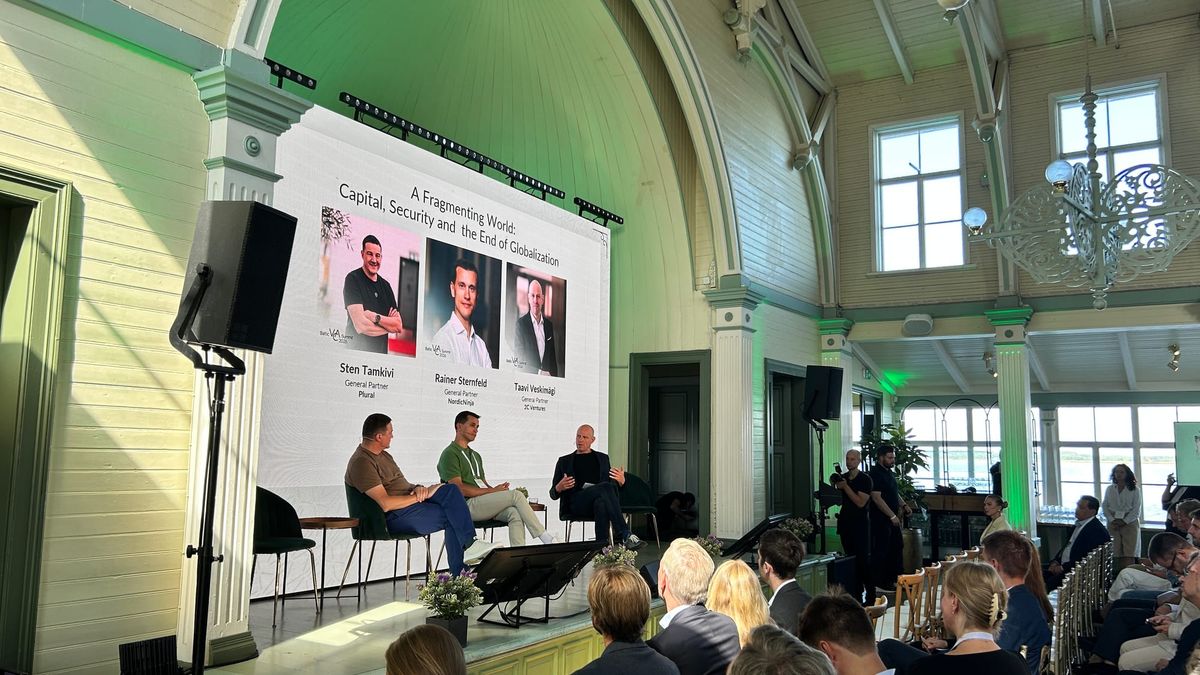](https://fomo.observer/europe-sovereignty-trap/)
**For founders and investors unfamiliar with the EIF, how exactly does the fund operate and deploy its annual financing?**
**Merete Clausen:** We are the risk capital arm of the EIB Group, and we channel some €16 billion a year into innovative businesses and SMEs. We do this either through equity investments in funds such as venture capital, private equity, private credit and infrastructure funds, or through guarantees.
So we don't invest directly into companies. I sometimes use this analogy: you can give a person a fish, or you can teach them how to fish. Rather than directly investing in companies, we make sure that there is someone helping them access financing.
**Is €16 billion a year sufficient to solve Europe's late-stage funding gap?**
**Merete Clausen:** We often act as an anchor investor in a fund, which sends a strong signal to other investors that the EIF has carried out its due diligence and considers it a sound investment. That in turn provides reassurance and helps attract additional capital.
The €16 billion is split between guarantees and equity. The €7 or €8 billion that we invest annually in equity and funds typically generates leverage of four to five times.
**How are shifting global dynamics — particularly concerning the US and China — affecting European tech investments?**
What changed for us over the last couple of years is that there is a much stronger sense in Europe that we need, at least to some extent, to be more self-sufficient and build resilience. And it's not only about the transatlantic neighbours, but it's also about the war in Ukraine and about major players in Asia, particularly China. There is a certain awakening in Europe that we need to be able, to some extent, to have our own production and supply chains within Europe. Let's take deep technologies, climate technologies, health tech and digital tech. In all of these areas, we cannot depend solely on getting these capabilities from outside.
[Escaping the local capital trap with global ambition and unified public marketsTo survive an increasingly competitive global fundraising environment, venture capital fund managers across the Baltics and Nordics must look beyond local private capital and embrace the unifying power of regional public markets, industry leaders warned. Speaking at the “From Baltics to New Nordics” panel at Baltic VCA Summit inFomo.ObserverTarmo Virki](https://fomo.observer/escaping-the-local-capital-trap-why-baltic-nordic-vcs-must-embrace-global-ambition-and-unified-public-markets/)
[Europe’s untapped capital: Baltic VCs eye €500 million pension windfall amid “Index bashing”As European venture capital scrambles to retain its top tech champions, local fund managers are turning their attention to the region’s largest, yet most cautious, pool of capital: pension funds. But unlocking these institutional billions is sparking fierce debate over political meddling, the rise of passive index investing, andFomo.ObserverTarmo Virki](https://fomo.observer/europes-untapped-capital-baltic-vcs-eye-eur500-million-pension-windfall-amid-index-bashing/)
**European pension funds currently allocate a fraction of their capital to venture compared to their US counterparts. How can the EIF help unlock that institutional capital?**
We have been investing in funds in Europe for 30 years now. We have data on the performance of these funds, which demonstrates that returns from European venture capital and private equity are commensurate with what investors can achieve in the United States.
Secondly, what we can also provide them with is a higher level of diversification. If you invest in a fund rather than directly in a company, you naturally benefit from greater diversification. You haven't put all your eggs in one basket. And that is what we can provide across geographies, and we also invest across a broad range of sectors.
**Are you increasingly managing mandates directly for these private institutional investors?**
We also receive mandates from Member States, either for instruments focused on a particular Member State or broader regional initiatives such as the Baltic Innovation Fund. We are also increasingly receiving mandates from private investors, although this is an area that we need to develop much further.
We have had some experience with mandates from pension funds that we have managed, but we seek to develop that much more in the future. Our objective is to partner with institutional investors and help them feel more confident and comfortable in investing in VC or private equity as an asset class.
## Sign up for Fomo.Observer
Startup stories from Estonia. Free weekly newsletter.
Subscribe
Email sent! Check your inbox to complete your signup.
No spam. Unsubscribe anytime.
### Europe’s untapped capital: Baltic VCs eye €500 million pension windfall amid “Index bashing”
URL: https://fomo.observer/europes-untapped-capital-baltic-vcs-eye-eur500-million-pension-windfall-amid-index-bashing/
Last updated: 2026-08-28T12:25:43.000Z
As European venture capital scrambles to retain its top tech champions, local fund managers are turning their attention to the region's largest, yet most cautious, pool of capital: pension funds.
But unlocking these institutional billions is sparking fierce debate over political meddling, the rise of passive index investing, and how to balance national economic growth against the ultimate mandate of retiree returns.
Speaking at the Baltic VCA Summit in Haapsalu during the panel “Europe’s Untapped Capital: Can Pension Funds Power Economic Growth?”, policymakers and asset managers outlined both the structural hurdles and a potential €500 million local capital injection awaiting the Baltic ecosystem.
### The macro imperative and the productivity gap
Estonia’s economic backdrop is sobering. After a 3% contraction in 2023 and flat growth in 2024, the economy is expected to recover slowly, at roughly 2% in 2025.
Madis Müller, former Governor of the Bank of Estonia, warned that the region’s core issue is not just cyclical, but structural. Labour productivity in Estonia remains stubbornly stuck at around 80% of the European average.
> *"It’s not because we work less, but because we don’t use technology as wisely or effectively as Western Europe,"* Müller explained, noting that bridging this gap requires massive capital investment.
However, Müller voiced concerns over current capital flight dynamics within the pension system. "I am actually also worried about whether it is sustainable... when we test still relatively little domestically, and then we've seen those flows leaving." He warned that "if everyone ends up investing in index funds... that will create further problems for the system."
### The pension dilemma: Returns vs. patriotism
For pension funds, the primary mandate remains clear: preserve and grow retirees' money.
Ene Õunmaa, Head of Pension Funds at Swedbank, emphasised that while Baltic alternative assets, like Private Equity and Venture Capital, are attractive, patriotism cannot override fiduciary duty.
> *"Investing locally is one of our values... but it doesn't mean we are ready to sacrifice returns,"* Õunmaa said.
She pointed out a growing behavioural challenge among clients: roughly one-third of Estonian pension assets are currently parked in passive index funds, driven by a consumer desire for low fees. Furthermore, she criticised the political volatility surrounding the pension system.
> *"We should have a stable system... political reform, not everybody trying to use the pension system in a populist way... about shopping tomorrow,"* she argued, noting that under stable conditions, Swedbank could easily increase its active local allocation to 20% from its current lower rate.
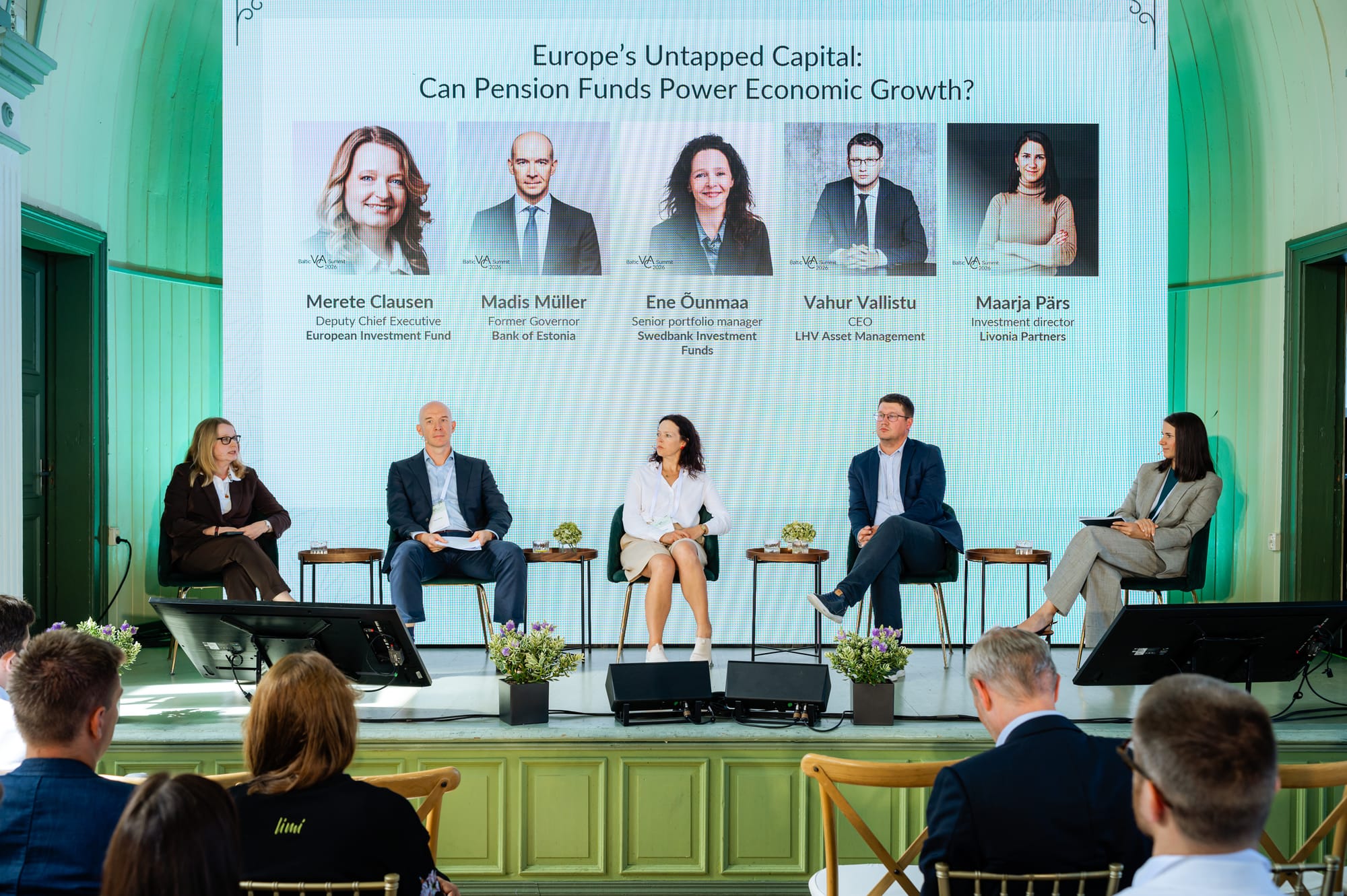
The scars of past political interference remain fresh. Next week marks the five-year anniversary of Estonia’s controversial pension reform, which allowed individuals to withdraw their pension savings.
Vahur Vallistu, CEO of LHV Varahaldus, offered a blunt assessment of that policy’s financial cost to regular citizens.
> *"Everybody who took their money out... €8,000 taken out would now be worth €25,000\. It was not the greatest decision,"* Vallistu said.
Despite prioritising returns — which sometimes means looking outside the Baltics because of geopolitical risks or a lack of local fund capacity — LHV has still invested about €350 million across local asset classes. Currently, about 9% of the total second-pillar market is invested locally, amounting to around €800 million.
The growth potential is massive. Vallistu calculated that with the market growing at 10% annually, shifting just an extra 1% per year toward Estonian assets would inject an additional €500 million into the local ecosystem over the next five years. However, he cautioned that the market currently lacks enough new, high-quality local VC and PE funds to absorb that capital, as LPs are waiting for existing funds to exit and return capital before redeploying.
### EIF’s solution: De-risking the asset class through diversification
Rather than forcing mandates, European institutions are trying to build structural bridges for risk-averse institutional capital.
Merete Clausen, Director at the European Investment Fund (EIF), pushed back against the frequent criticism the venture community levels at institutional investors.
> *"We should have less pension fund bashing and start instead finding solutions for them,"* Clausen said during the panel.
She noted that typical pension funds simply do not have the 20-to-40-person venture capital teams required to conduct adequate due diligence on early-stage funds.
Speaking to *Fomo.Observer* following the session, Clausen emphasised that institutional investors require structural de-risking through broad portfolio diversification and experienced co-investment partners.
> *"If you invest in a fund instead of investing directly into a company, you will naturally have a larger diversification,"* Clausen explained. *"You haven't put all your eggs in one basket."*
According to Clausen, the EIF mitigates this risk across geography and key technology verticals—spanning digital, biotech, health tech, climate, and defence tech. Under pan-regional structures like the Baltic Innovation Fund (BIF), institutional capital gets exposure to high-growth regional startups paired with the EIF’s rigorous due-diligence standard.
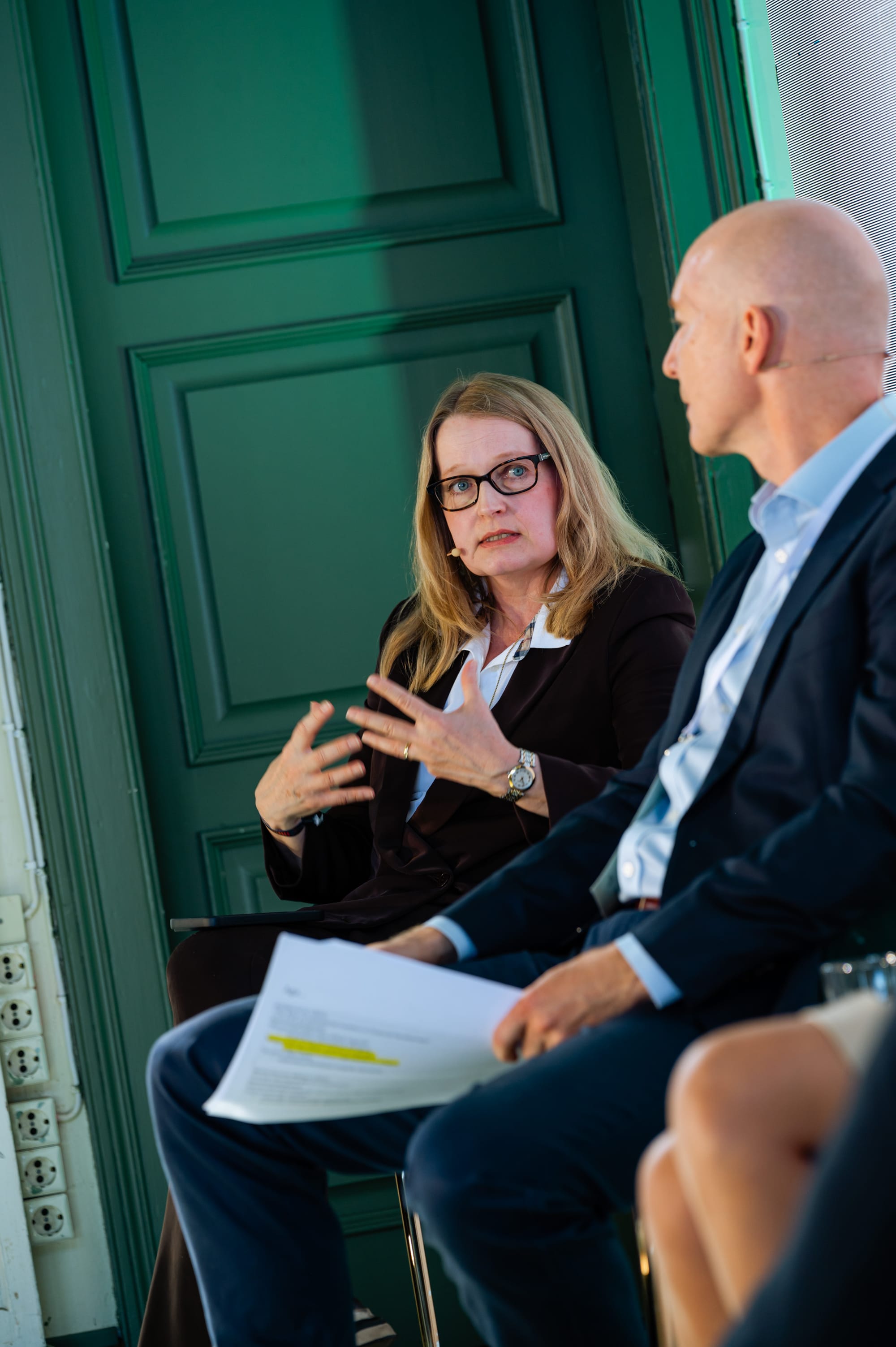
Merete Clausen and Madis Müller
Historically, EIF’s deployment capital has originated from public sources: risk capital mandates from the European Investment Bank (EIB), EU budget initiatives like InvestEU, and Member State contributions. However, Clausen said that the EIF is now actively expanding its capacity to manage mandates directly for private institutional investors like pension funds.
> *"We have had some experience with mandates from pension funds that we have managed, but we will seek to develop that much more in the future,"* Clausen said.
### The institutional reality on cap tables
This shift toward pan-regional structures comes at a crucial moment. During the summit, market observers noted the irony that massive foreign institutional capital, such as the Teacher Retirement System of Texas, has already entered the funding rounds of high-performing Baltic startups, while local pension funds remain hesitant.
However, it is important to clarify how this capital is deployed. While local ecosystem players might colloquially say these massive U.S. pension funds are on their cap tables, they are rarely directly on the cap table. Instead, they deploy capital as Limited Partners (LPs) via global mega-funds, fund-of-funds, or specialised co-investment vehicles that ultimately fund the startup.
Closing that gap between local institutional capital and regional growth stories requires giving European pension managers the same structural cover to enter private markets safely.
Clausen saw strong potential in pension fund integration. "So we hope we can partner up and that they will feel more confident and comfortable with investing into VC or private equity as an asset class when they go together with us."
## Sign up for Fomo.Observer
Startup stories from Estonia. Free weekly newsletter.
Subscribe
Email sent! Check your inbox to complete your signup.
No spam. Unsubscribe anytime.
[Escaping the local capital trap with global ambition and unified public marketsTo survive an increasingly competitive global fundraising environment, venture capital fund managers across the Baltics and Nordics must look beyond local private capital and embrace the unifying power of regional public markets, industry leaders warned. Speaking at the “From Baltics to New Nordics” panel at Baltic VCA Summit inFomo.ObserverTarmo Virki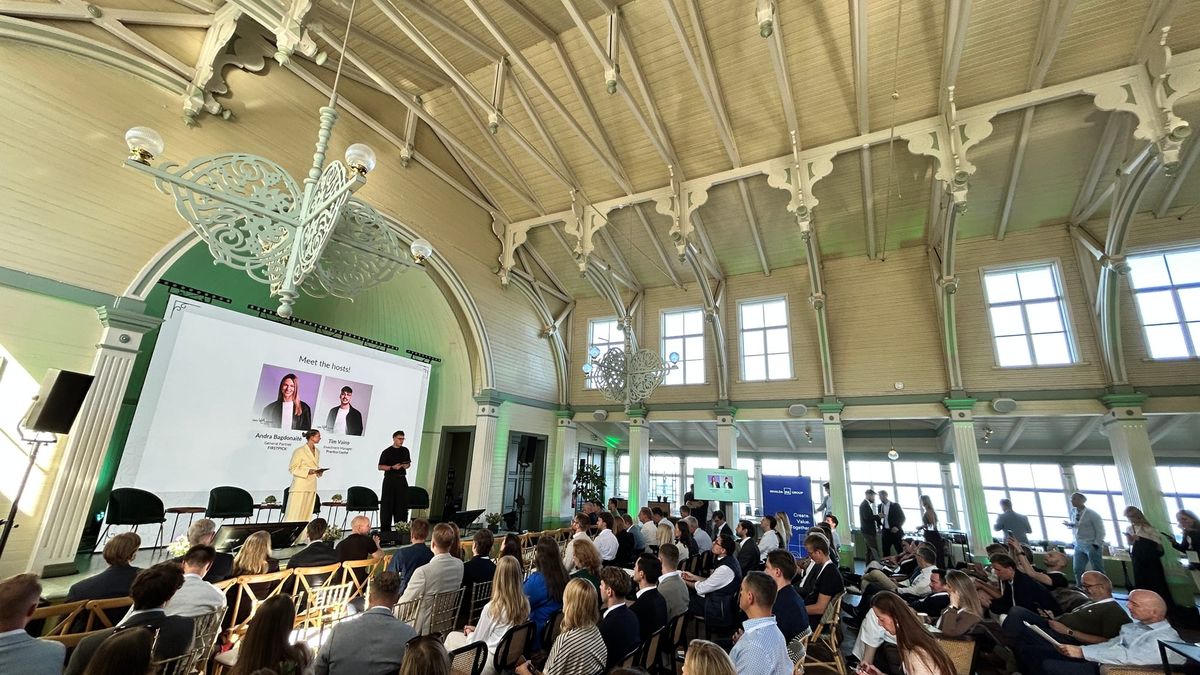](https://fomo.observer/escaping-the-local-capital-trap-why-baltic-nordic-vcs-must-embrace-global-ambition-and-unified-public-markets/)
### Escaping the local capital trap with global ambition and unified public markets
URL: https://fomo.observer/escaping-the-local-capital-trap-why-baltic-nordic-vcs-must-embrace-global-ambition-and-unified-public-markets/
Last updated: 2026-08-28T08:21:51.000Z
HAAPSALU - To survive an increasingly competitive global fundraising environment, venture capital fund managers across the Baltics and Nordics must look beyond local private capital and embrace the unifying power of regional public markets, industry leaders warned.
Speaking at the "From Baltics to New Nordics" panel at Baltic VCA Summit in western Estonia, experts argued that local VCs are stunting their international growth by relying too heavily on domestic comfort zones.
### The push for integrated bourses
The debate over venture scale placed public markets at the forefront, highlighting how closer stock exchange cooperation provides a crucial lifeline for regional scale-ups.
The Baltic stock exchanges already operate with a unified list across Estonia, Latvia, and Lithuania, streamlining capital access for international investors.
At the same time, the Nordics are pushing for tighter bourse cooperation to consolidate liquidity and prevent regional capital from fragmenting. However, structural friction remains a hurdle, as the region's exchanges are split between different corporate owners, such as Nasdaq and Euronext, which divides potential capital pools.
Panellists noted that leveraging increasingly integrated public markets can help mature tech startups to avoid the systemic "European discount" while stimulating the local financial ecosystem.
For Samuel Wendelin, Head of Fund Investments at Finnish state investment firm Tesi, functional local public markets are necessary to change the region's financial trajectory. Historically, he noted, Finnish companies seeking public capital had to look toward the U.S., the U.K., or Sweden.
> "The world order has been that if you want to go to the capital markets... you basically need to go outside of Finland," Wendelin explained. "But now we would want to see a narrative shift a bit... we'd love to see more of those listings here in the Nordics as well."
Wendelin pointed to the recent landmark move by Finnish quantum computing company IQM as a prime example of this desired shift. IQM achieved a dual listing on both Nasdaq New York and the Helsinki Stock Exchange via a SPAC merger, providing a blueprint for keeping high-growth tech capital rooted in the local ecosystem without sacrificing access to deep global liquidity pools.
## Sign up for Fomo.Observer
Startup stories from Estonia. Free weekly newsletter.
Subscribe
Email sent! Check your inbox to complete your signup.
No spam. Unsubscribe anytime.
### Comfort over ambition: The local VC trap
Despite boasting robust early-stage ecosystems, regional fund managers are struggling to attract major international limited partners (LPs). Wendelin pointed to a distinct lack of drive among local general partners.
"The statistics show very clearly that Finnish managers are poor in raising international capital," Wendelin said. He directly attributed this bottleneck to a lack of ambition, noting that comfortable domestic funding creates complacency.
> "If you have a better situation, like Finnish pension funds are deploying in Finnish funds... it doesn't force you to go outside to market your activities," Wendelin explained. "It might be the easier way out."
### The 'Nordic' halo effect vs. Baltic efficiency
The panel, moderated by Siena Secondary Fund's Rando Rannus, also scrutinised how regional branding impacts global fundraising. While a regional label can open doors, international allocators ultimately prioritise underlying performance over geography.
Michael Joyce, Principal at Isomer Capital, which has invested in over **100** European funds over 11 years, dismissed the notion that a specific regional brand guarantees success. While acknowledging that brand matters for attracting top-tier talent, the ultimate metric remains performance.
> "It doesn't really matter that you're the best Baltic VC," Joyce said. "It matters, did you get into the best companies, regardless of where it is?"
Isomer's data, covering approximately **3,000** portfolio companies, shows that while the Baltics offer a lower loss ratio, the highest venture returns in Europe remain heavily concentrated in legacy hubs like London, Paris, and Stockholm.
For the region's VCs, the mandate is clear: scale beyond local safety nets, utilise the unifying public markets, or risk obsolescence.
### Europe’s sovereignty challenge: Can institutional capital bridge the growth gap?
URL: https://fomo.observer/europe-sovereignty-trap/
Last updated: 2026-08-29T19:43:56.000Z
HAAPSALU - As geopolitical tensions accelerate the unbundling of global supply chains and capital flows, Europe's tech ecosystem faces an existential challenge: building indigenous technological sovereignty while overcoming its chronic shortage of late-stage growth capital.
At the Baltic VCA Summit in Haapsalu, venture capitalists and institutional policymakers converged on a shared reality — European innovators can no longer rely on foreign capital or external security guarantees.
### The scale-up bottleneck
Addressing the opening panel, Sten Tamkivi, a partner at Plural, noted that while Europe has built strong early-stage startup hubs, the late-stage growth capital remains heavily reliant on Washington-aligned investors.
> 'When you now need to raise 50 million, probably you can still find a lead in Europe to get it done,' Tamkivi said. 'If you need to raise 200 million, you have to call the Americans. 10 years ago you also called the Chinese—you don't do that anymore because of the geopolitics.'"
> *"It's not about building tech for Europe; it's about funding global tech champions that happen to come from Europe... so that the big red button remains with us."*
Rainer Sternfeld, partner at NordicNinja VC, framed this shifting geopolitical landscape as a necessary cycle of self-reliance.
> *"It’s not the end of globalisation; it’s just the bundling and unbundling cycle,"* Sternfeld said. *"If every country in Europe had their own ASML-sized impact company, that would be a pretty good deterrence."*
### Re-engineering institutional capital
Bridging this scale-up gap requires massive injections of non-bank capital. However, local institutional investors, particularly pension funds, have historically faced regulatory and operational hurdles in allocating to venture capital.
Merete Clausen, Director at the European Investment Fund (EIF), pushed back against industry criticism of institutional risk aversion during a panel on pension capital.
> *"We should have less pension fund bashing and start instead finding solutions for them,"* Clausen said. *"Not everybody can have a VC team of 20 or 30 people to do proper due diligence. Institutional investors need partners who can come along with them."*
To address this, the EIF is expanding its **European Tech Champions Initiative (ETCI)** beyond its initial €4 billion deployment in mega-funds.
> *"This is really where we see the gap across European countries—it's the scaling-up problem,"* Clausen noted. *"We are going to extend ETCI to mid-sized funds... and create an investment platform where we open up our portfolio to private and institutional investors."*
### The road ahead
While central bankers like Bank of Estonia Governor Madis Müller point to stabilising inflation and recovering Baltic exports, pension fund managers emphasise the need for long-term policy predictability.
For regional venture funds, the convergence of defence urgency, EIF co-investment structures, and expanded growth tickets offers a clear path forward if European capital can mobilise before its top innovators look across the Atlantic.
## Sign up for Fomo.Observer
Startup stories from Estonia. Free weekly newsletter.
Subscribe
Email sent! Check your inbox to complete your signup.
No spam. Unsubscribe anytime.
### SmartCap announces Patrik Louko as new CEO
URL: https://fomo.observer/smartcap-announces-patrik-louko-as-new-ceo/
Last updated: 2026-08-29T19:18:48.000Z
SmartCap, Estonia’s state-owned fund manager, has announced its new CEO. Patrik Louko will step into the vacant position, replacing [Sille Pettai. ](https://fomo.observer/sille-pettai-to-step-down-from-smartcap/)
Louko brings 20 years of experience in investment, venture capital, and growing technology companies. Since 2023, he has served as Chief Investment Officer at the University of Jyväskylä, one of Finland’s largest research universities, as well as running Unifund Jyväskylä, a university-affiliated venture capital company investing in early-stage companies emerging from academia.
“SmartCap plays an important role in supporting that ambition: being a strong partner to Estonian companies, helping open doors to international investment funds and contributing to the development of Estonia’s capital market. I am pleased to have the opportunity to contribute to this work,” Louko said.
SmartCap Supervisory Board Chair Kärt Siilats explains that the task to find a new CEO has not been an easy one with lots of boxes to tick. “As SmartCap’s fund terms place capital growth as the main priority, we were primarily looking for a fund investor, someone who has assessed fund managers’ track records and negotiated LPAs, but also someone who can manage a team and communicate with numerous stakeholders,” Siilats said.
“We saw many strong candidates, but Patrik’s experience matched these criteria best. He has invested in some of the world’s top VC funds, founded a startup and managed a sizeable team there, giving him a deep understanding of the market. At the University of Jyväskylä, he was also responsible for strategy and reporting, including impact reporting, and we expect him to make a meaningful contribution in these areas at SmartCap."
"He also brings strong deep-tech experience from Aalto University, where he oversaw the spinout process and helped create a world-class environment for research- and student-driven startups. Companies that emerged from this environment include ICEYE and IQM, both of which have since become unicorns. We expect Patrik to bring his global expertise to the Estonian capital market and help SmartCap continue to grow as a respected institutional investor,” Siilats said.
Louko will relocate to Estonia. He will begin as head of SmartCap on 1 September.
### ALEJANDRO JIMENEZ: You’re wrong about the Dot-Com crash, so stop saying AI-driven stocks will be a tragic repeat
URL: https://fomo.observer/alejandro-jimenez-youre-wrong-about-the-dot-com-crash-so-stop-saying-ai-driven-stocks-will-be-a-tragic-repeat/
Last updated: 2026-08-27T05:45:11.000Z
The financial press and “enlightened” social media influencers keep warning that today’s AI-driven stock market is a bubble ready to burst, comparable to the dot-com implosion in 2000\. They’ve warned us for years, yet the market keeps rising. Frustrated with the constant gloomy predictions, I’ll share some perspective, as someone who lived the dot-com era.
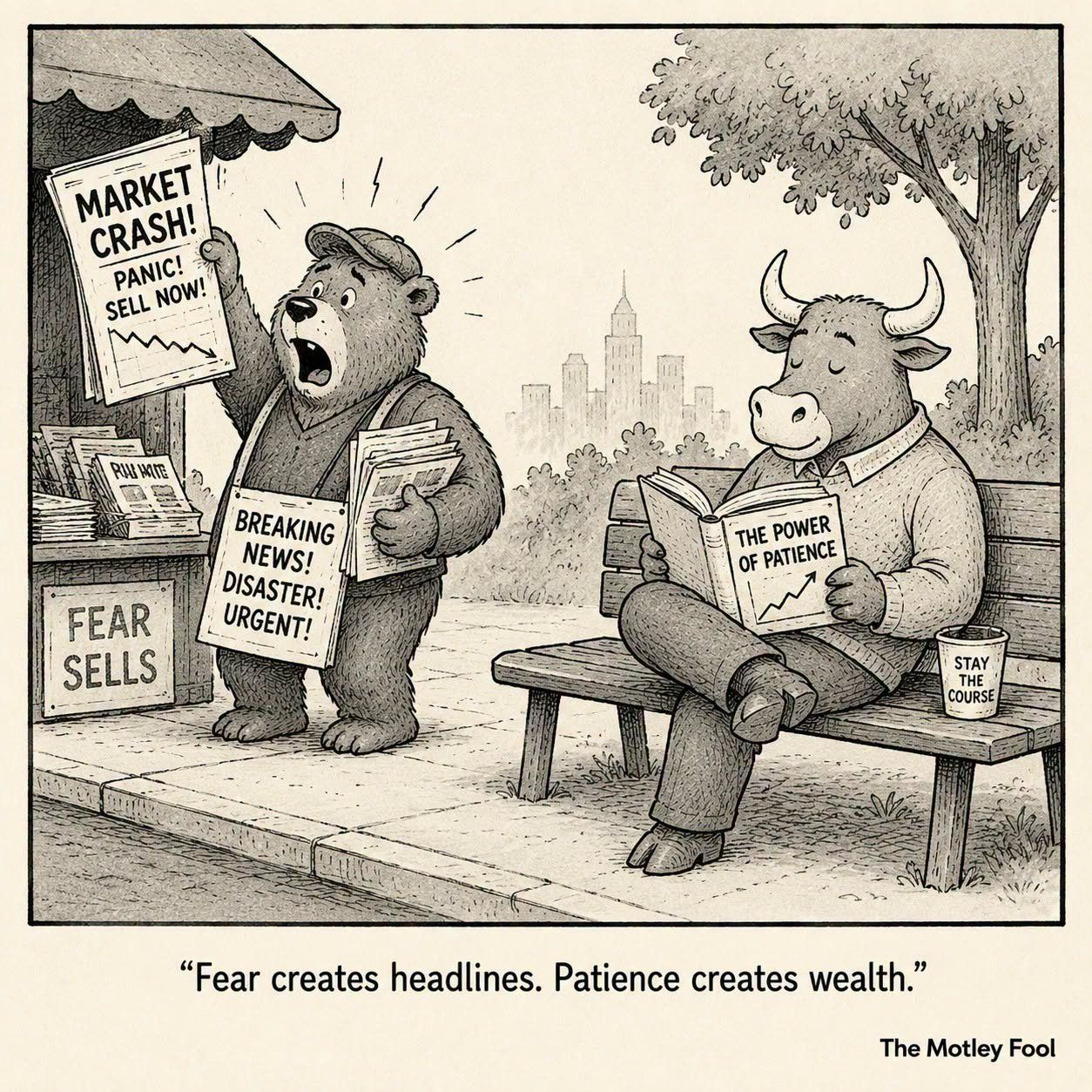
*If anything, the internet's eventual scale and impact were severely underhyped during the dot-com euphoria.*
You may wonder why I’m writing about stocks on a startup site. Today’s largest stock market companies were startups once, some not that long ago. I hope today’s brightest Estonian startups get to IPO too.
**Why the constant comparisons between today’s AI euphoria and the dot-com era?**
The world’s largest companies today are predominantly in tech. Microsoft, Amazon, Alphabet and Meta are all valued in the trillions. Nvidia, the most valuable, is worth over $5 trillion. Astronomical numbers compared to a decade ago when no US company had reached the trillion mark.
This decade’s rise in valuations has largely been driven since the launch of OpenAI’s ChatGPT in 2022 on the expectation that AI will revolutionise the way we live and work. Tech companies are generating huge profits from the AI transformation through chip production, cloud services, data centre buildouts, etc.
Big tech companies are projected to invest $1.1 trillion next year, mainly in AI infrastructure. That’s an enormous 3.4% of US GDP or 22x the entire GDP of Estonia!

Anthropic and OpenAI, the main AI labs, might IPO already this year. Chatter is that Anthropic could fetch a $2 trillion valuation, making it the highest-valued IPO in history.
Concerns are brewing that the tech sector’s growth increasingly depends on the AI labs’ hyper-spending, some of which is financed by the same tech companies collecting the revenues, like Alphabet and Nvidia, creating a complex, interdependent chain.
Moreover, rising valuations have pushed the tech sector’s concentration in the S&P 500 to 37%, a historic high for the main US stock index.
The dot-com era was similarly about tech. A time when the internet was new. There was tremendous optimism on its potential, but also confusion on what to do with it.
The dot-com period’s birth is widely considered August 1995, when Netscape IPO’d. Netscape launched the first mass-market internet browser. As households began getting personal computers and dial-up connections, investors poured billions into virtually any company having a ".com" address.
Traditional investing rules were thrown out. Companies were IPO’ing after just a few months of existence — often with no profits, no proven business model and sometimes no real product. Valuations skyrocketed on flimsy metrics like “eyeballs,” with the hope that web traffic would eventually lead to profits.
The euphoria was fleeting, and many went bankrupt by the dot-com end in October 2002, the stock market’s lowest point of that era.
**However, was the dot-com era really that bad?**
The Nasdaq index, which represented the dot-coms given its heavy weighting in tech stocks, appreciated roughly 400% from the dot-com start to its March 2000 peak. It then collapsed nearly 80%, bottoming in October 2002\. It then took roughly 13 years to recover to its 2000 peak.
Zooming out with the benefit of hindsight, the dot-com era made a fool of both pessimists and optimists. It felt horrible to miss the boom years of the ‘90s just as much as to suffer the implosion of the ‘00s.
Losing 80% is painful. However, the probability that anyone bought the Nasdaq exactly at the top and sold at the bottom is extremely low. Just like it’s nearly impossible for anyone to perfectly buy at the bottom and sell at the top. Most investors invest consistently over the years, riding the ups and downs.
The 2002 bottom retraced the Nasdaq to its 1996 levels. Therefore, those who had invested by 1996, perhaps didn’t lose money.
**By the time the bubble was done, it still hadn’t paid to go against the internet**
Between the start of 1995 and the end of 2002, the Nasdaq delivered a respectable annual return of +7%.
Some of today’s most valuable companies IPO’d during that time. Nvidia and Amazon are good examples.
**Fun fact:* $10k invested in Nvidia’s IPO would be worth $85 million today. It IPO’d in 1999 at the heart of the mania. Not bad.*
Missing long-term trends can be far more painful than enduring drawdowns.
In the ‘90s, I read a *Fortune* magazine article about the internet’s potential. It predicted the emergence of e-commerce, but not much else. We had no clue how the internet would change the world. It eventually disrupted all industries from travel to advertising to finance to healthcare. Social media radically changed how humans interact.
If anything, the internet was underhyped versus what it ultimately achieved.
No investment boom in history has seen capital expenditures perfectly match future demand. Railroads in the 1800s, electricity at the turn of the 20th century, the internet in the 1990s and shale oil in the 2010s. All had winners and losers. All had company bankruptcies, but industries that endured.
**How comparable is it this time?**
Like the dot-com period, AI will have winners and losers. Expect overinvestment and high-profile bankruptcies.
However, the publicly traded tech companies leading today’s stock market are cash-making machines, unlike many of the dot-com dogs. At the start of this year, big tech companies held roughly $600 billion in cash, their highest combined amount ever. Their net profits are growing astronomically at 67%, and profit margins are at historical highs.
Big tech companies fund most of their AI spending with internal cash flow. Some are increasing borrowing, but their debt levels are close to zero relative to operating profits.
Therefore, even if the AI euphoria bursts after severe over-investment, large tech companies will generally have the financial strength to recover. Stock prices and profits could fall, but it won’t be the end of big tech or AI. It surely won’t be the end of the stock market.
The soaring stock market is actually the cheapest it’s been in three years, validated by rising profits. The S&P’s price-to-earnings multiple is at 19.6x vs the last high of 23x, despite the strong rise in valuations. When profits grow faster than the stock market’s appreciation, the market’s multiple gets cheaper.
The stock market declines by 14% on average at some point every year, but 3/4 of the time it quickly recovers and ends the year positively. Next time a decline happens (and it will), it doesn’t automatically mean a bubble has burst. Sometimes the market is just catching its breath. Don’t confuse common intra-year falls with a severe crisis, as the media often does.
ChatGPT launched four years ago. Commentators have been warning of an AI stock bubble burst since then. The Nasdaq and S&P 500 have doubled in value over that period. If you listened to these “experts”, you painfully missed the gains.
As time passes, even a dot-com crash can look like a blip on a graph. I began investing in 1999, at the peak of the mania. 27 years have flown by. I’m grateful to have stayed invested.

\----------------
*Alejandro Jimenez is Founding Partner of TriHeritage Global Capital, an Estonia-based firm providing loans to scaleups and small companies. Previously, Alejandro was a partner in New York and Geneva at J.P. Morgan, the world’s largest financial institution. He also ran the energy trading desk at Enefit and managed sustainable investment portfolios at Grünfin.*
Disclaimer: This message is for informational purposes only and is not intended as advice or recommendation for any financial product, service, strategy or other purpose. Past performance does not guarantee future results.
### Wisby raises €250,000 to fuel growth after restructuring
URL: https://fomo.observer/wisby-raises-eur250-000-to-fuel-growth-after-restructuring/
Last updated: 2026-08-26T15:44:32.000Z
**TALLINN** — Label-ordering platform Wisby has raised €250,000 in strategic growth capital to validate its market valuation after a successful pivot from survival mode to profitability, and to scale product and business development across the company's primary markets in Scandinavia and Western Europe.
Wisby needed to convert existing convertible loans into equity, which required establishing a fair market value tested by real investor capital.
Buildit VC led the round with a €200,000 investment, with an additional €50,000 from an EstBAN angel investor syndicate led by Martin Goroško.
Facing a tightening venture capital market, Wisby previously executed radical cost-cutting measures, reducing its team from eight employees down to three. During this period, the company adopted a strict operational rule: any activity that did not generate revenue within 1 to 90 days was discarded.
> "When the account balance started approaching zero, I was asked a couple of times if we were going to pack it in," said Kaspar Päll, founder and CEO of Wisby. "
The aggressive restructuring allowed Wisby to reach profitability in the first half of 2024\. Wisby forecasts sales revenue between €2.2 million and €2.4 million for the current year, and it has grown the team back to 6 employees.
### Estonian cancer AI caught four tumours radiologists had missed
URL: https://fomo.observer/estonian-cancer-ai-caught-four-tumours-radiologists-had-missed/
Last updated: 2026-08-26T13:01:53.000Z
TARTU - During a six-month deployment at Tartu University Hospital, an Estonian-built artificial intelligence tool flagged suspicious kidney lesions in four patients whose tumours had been overlooked in the original radiology reports.
Now, [Better Medicine,](https://bettermedicine.ai/?ref=fomo.observer) the company behind the technology, is raising a seed round to take the same idea beyond the kidneys.
Over six months, BMVision Kidney analysed abdominal CT scans from 4,276 patients. Preliminary results show the AI flagged findings with signs of potential malignancy in 171 cases. In four, it highlighted kidney lesions that neither the initial assessment nor the radiologist’s report had identified.
For Better Medicine, those four cases are perhaps the clearest measure of what the technology is supposed to achieve.
“We do not measure the success of BMVision Kidney solely by the accuracy of the technology or its contribution to radiologists’ work, but also by the number of patients whose diagnosis and treatment journey we have directly influenced,” said CEO Priit Salumaa.
### **A second pair of eyes**
Kidney cancer presents an unusual diagnostic challenge: it is often discovered by chance. According to a 2021 study published in Clinical Radiology, more than 60% of renal cancers are diagnosed incidentally, often during imaging performed for an unrelated medical reason.
This is precisely where Better Medicine sees a role for AI - not replacing the radiologist, but re-using the scans and adding another layer of scrutiny to scans that are already being taken.
Professor Pilvi Ilves, head of the Radiology Clinic at Tartu University Hospital, said radiologists assess a CT examination as a whole, rather than focusing solely on the condition that brought the patient to hospital. She added that in an emergency setting, an AI tool working alongside the radiologist can provide additional reassurance by highlighting possible tumour findings.
For Better Medicine, this idea has already moved beyond development. BMVision Kidney is CE-certified under the EU Medical Device Regulation and is deployed in hospitals in Estonia and Germany, with pilots underway in the UK and South Africa.
## Sign up for Fomo.Observer
Startup stories from Estonia. Free weekly newsletter.
Subscribe
Email sent! Check your inbox to complete your signup.
No spam. Unsubscribe anytime.
### Kidney is only the opening move
Better Medicine’s bigger bet, however, is that kidney cancer is a starting point, not a product category.
The company is now raising a €5 million equity Seed round, with up to half of the round already committed by the European Innovation Council.
The capital is intended to move Better Medicine from a certified kidney cancer product towards a certified multi-organ abdominal cancer suite.
Liver, pancreas and lymph node modules are next on the company’s roadmap.
Behind that expansion is a patent-pending multimodal foundation model trained on CT images. Better Medicine says the technology should shorten the development cycle for each additional organ-specific model rather than forcing the team to start from scratch every time.
Its ambition also stretches beyond the models it builds itself.
Instead of trying to win every organ one by one, Better Medicine plans to license third-party AI for areas including lung, breast, prostate and brain cancer and combine those tools with its own products.
In other words, some of its potential competitors could eventually become suppliers to the same platform.
The endgame is a system capable of opportunistic full-body cancer screening through incidental findings from medical imaging scans that are already being taken anyway. Thus re-using the data for a secondary purpose.
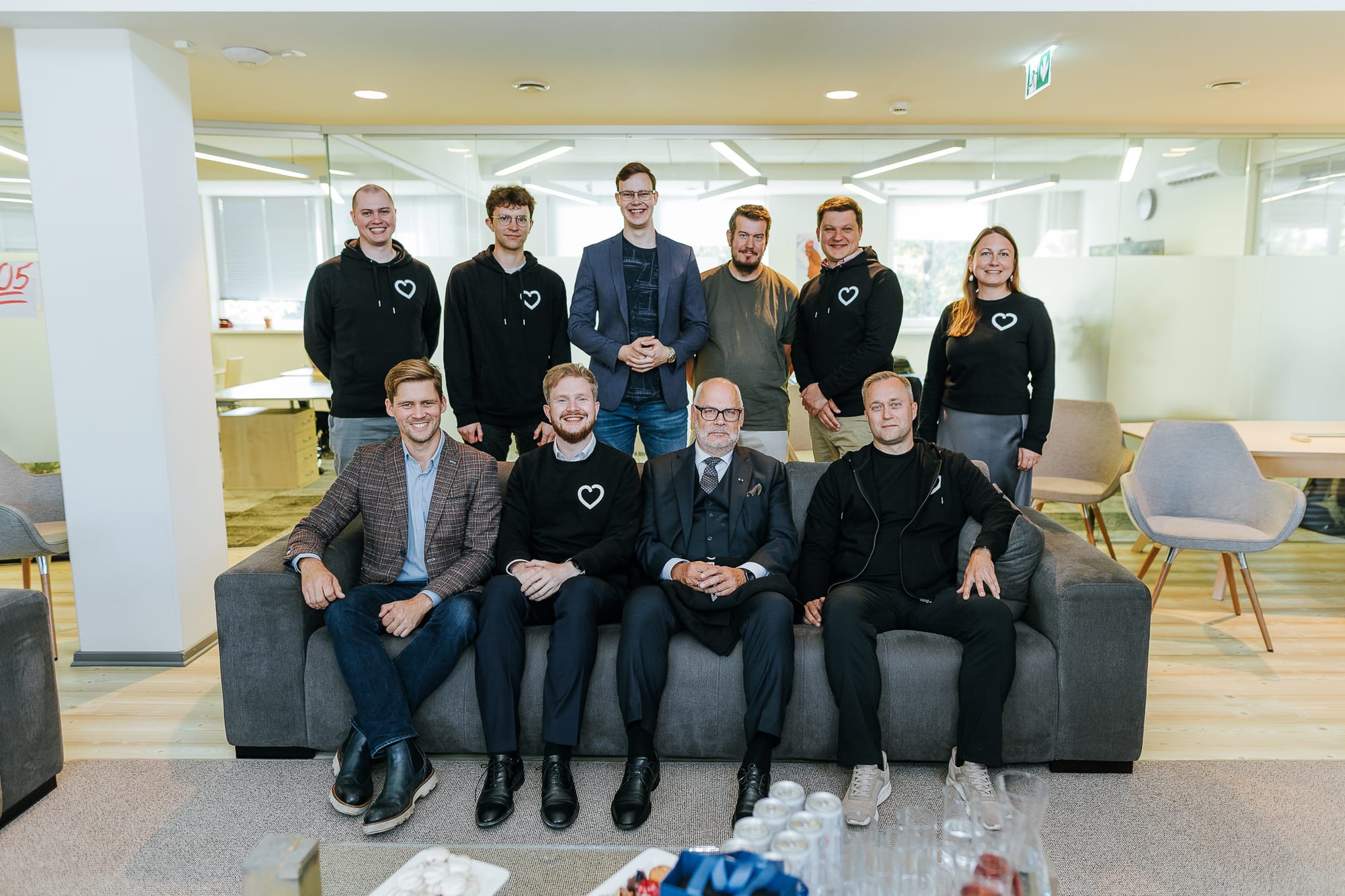
### From Tartu to a much larger market
That ambition addresses a problem considerably larger than kidney cancer.
More than 400 million CT examinations are performed globally each year, many for reasons unrelated to cancer. Better Medicine argues that some abdominal cancers can already be visible in those images before the disease becomes symptomatic.
The company’s investor thesis is therefore built around extracting more diagnostic value from scans healthcare systems already produce.
The new funding would be used to expand across the DACH region and the UK, build further health-economic evidence and take the company’s first steps into the US. Better Medicine is also exploring markets in the Middle East, India and Africa.
There is an economic argument alongside the clinical one.The case for earlier detection is economic as well as clinical. A health-economic model developed by Better Medicine with support from the Estonian Health Insurance Fund’s Innovation Grant estimates that treating kidney cancer detected at an early stage costs around €7,300\. At a late stage, that figure can rise to as much as €109,000.
For Salumaa, however, the more immediate proof is already sitting in four patient files in Tartu.
The company set out to build software that could notice something a busy human might not.
For four people, it did.
https://fomo.observer/estonias-top10-healthtech-startups-in-2026/#/portal/signup
### Fomo Academy: Exit routes: Why startups get bought (or don't)
URL: https://fomo.observer/fomo-academy-exit-routes-why-startups-get-bought-or-dont/
Last updated: 2026-09-01T10:41:47.000Z
Founders talk about ‘exits’ like it's one thing. It’s not. Who buys you, why, and what happens after depends on what they're actually buying, and on how much work you put into finding them before you need to.
Here are the routes that actually happen. Plus the one nobody wants to write about - no exit at all.
By the way, most acquisitions don't work out for the buyer. A 2024 analysis of 40,000 acquisitions over 40 years by [NYU researchers](https://www.fortune.com/2024/11/13/we-analyzed-40000-mergers-acquisitions-ma-deals-over-40-years-why-70-75-percent-fail-leadership-finance?ref=fomo.observer) found 70-75% failed to deliver the sales growth, cost savings, or share-price gains the buyer expected. Getting bought is just the start of a process that fails more often than it succeeds, for reasons mostly outside the founder's control.
## The synergy buy
A bigger player acquires you because your growth trajectory tells a story they want to be part of, not because your revenue justifies the price today. This was eBay buying Skype: enormous user growth, thin revenue, but momentum that made eBay believe the combination would unlock something bigger. In hindsight, eBay overpaid, and the strategic fit was weaker than they'd hoped.
Skype later ended up at Microsoft, which on paper was the better fit: communications infrastructure, enterprise reach, natural synergies. It still ended badly. Microsoft had competing internal products and, years later, chose to kill Skype.
The lesson: being acquired for synergies doesn't mean the synergies materialise, and ‘better fit on paper’ can still lose to internal politics years down the line. Getting bought and the acquisition succeeding are two separate events.
**Scenario:** Standout growth metrics. A strategic buyer with a bigger platform wants to own the curve before a competitor does.
## The capability buy
Sometimes a buyer isn't chasing your growth chart. They're buying something they can't build internally: an algorithm, a community, a workflow, a way of getting users to behave differently.
GrabCAD was acquired by a legacy industrial player who saw we'd activated the mechanical engineering community around crowdsourced design and collaboration tools that didn't exist inside their walls. They didn’t buy the revenue (there was still very little of it) but rather a capability, an audience they had no organic path to, and a team who had figured it out.
**Scenario:** Genuine engagement in a niche a legacy incumbent serves but can't innovate inside. The incumbent buys the shortcut.
## The financial engineering buy
Not every acquirer wants to grow you. Some want to optimise you: squeeze… sorry, optimise the backend, manage a controlled decline, use your revenue to spike their topline numbers.
For me this was Applift in Berlin: a declining but cash-generative business, acquired by a publicly traded buyer using bond financing to fund a roll-up strategy.
The job shifted from building to managing decline efficiently, while the parent company used the results to tell a bigger story about portfolio synergies and raise more capital.
The energy inside the company is completely different from a growth acquisition. You're not shipping new things. You're a cash-flow line item in someone else's fundraising narrative. Adjust team attitudes accordingly.
**Scenario:** Growth has plateaued, but the business still throws off cash. A buyer running a leveraged portfolio strategy acquires you to optimise margins and juice the topline.
## The distressed sale
The hardest to pull off, and the one founders assume is impossible: selling a company that's out of money and in debt, with a messy cap table. It can be sold if there's something real underneath, like a hard-won contract pipeline, unique IP, or a team that's proven it can execute.
It means walking a tightrope:
- Staying honest about the real situation, because there's no choice, the buyer will find out.
- Still making a credible case for the upside that isn't obvious from the balance sheet.
The valuation won't be what it could have been in better times. But \\less than it could have been’ and ‘nothing’ are very different outcomes. What you need is a little competition on the buyer side to create leverage from a weak starting position.
**Scenario:** Insolvent or close to it, but with one asset a buyer genuinely can't get elsewhere. Worth a real conversation before assuming the answer is liquidation.
## The plateau sale
Not every sale is dramatic. Sometimes a company just stops growing: not dying, not booming, cash flow positive, going sideways.
That's arguably the hardest exit to force, because there's no urgency on either side. It tends to happen only because a founder personally worked their own network for years until the right buyer, often someone they already knew from a past role or deal, was ready to move.
Returns for investors are usually modest. Still a real outcome, not a failure, and better than either a slow bleed or a wind-down.
**Scenario:** Growth has flattened, the business is stable but unexciting, no banker or process will manufacture urgency. The founder's own relationships are the only real path, and it can take years.
Siim Teller
## The soft landing
A company that stops being a venture-scale bet does not need to die or sell.
The right outcome might be founders buying out investors and running the business as what it now actually is: a smaller, sustainable company, not a startup.
Nobody pitched this at Seed stage and nobody writes it up as an exit. But it returns some capital, keeps a real business alive, and lets founders keep something they built instead of watching it sold for parts or wound down.
For investors: unglamorous, not a loss, not a win, just closure with dignity.
## The cultivated buyer
The single highest-leverage thing a founder can do is start earlier than feels necessary. The buyers who move fast and pay well rarely come from cold outreach.
They're existing customers or partners the founder has had a real commercial relationship with for months or years before ‘exit’ was ever the word in use. A distribution deal, a pilot, a joint project: these build the trust and internal champions that later let someone at the buyer's company argue for the acquisition from the inside. By the time a founder starts actively looking for a buyer, it's often too late to build that kind of relationship from scratch.
Three more things matter here:
- Consider bringing in a professional. The right M&A advisor can turn a middling opening offer into several multiples more, because founders negotiating their own exit are (understandably) not objective and rarely do this more than once or twice in a career.
- Don't let leverage collapse to a single buyer. Running several conversations in parallel is what gives you power. It’s very similar to fundraising in this sense.
**Scenario:** Real commercial relationships with companies larger than you: customers, partners, sometimes competitors. Nurture those on their own merits, years before you need an exit. Some will convert into the fastest, best-priced conversations you'll ever have.
## The exit that doesn't happen
Most exit-articles stop at the routes that work. The more common outcome for many founders is the one that doesn't. A genuine process, real conversations, real effort, but not enough traction or revenue to create urgency on the buyer side.
We experienced this at Grünfin, even after doing everything I recommend here: talking to founders who'd sold before, building a real pipeline, and timeboxing the search from the start. When it doesn't produce a deal, the company winds down. Investors get some money back, founders get to take a breath and try again.
The core lesson, one that keeps surfacing independently across very different founders: companies aren't bought; they are sold. If nobody has urgency to buy you, no amount of hoping changes that.
The variables you control are how early you start selling, and how honestly you timebox the search against returning capital while there's still capital left to return.
## The uncomfortable advice
Telling a founder to spend time on relationships that might someday produce a buyer runs counter to the advice they hear everywhere else: heads down, focus on the customer in front of you. Both pieces of advice are right, which is what makes this hard.
The founders who navigate it best don't treat ‘cultivate the buyer relationship’ as a separate task. They build real partnerships and real customer relationships because those are good for the business anyway, and let the optionality be a side effect, not the point.
---
[*Siim Teller*](https://www.linkedin.com/in/siimteller/?ref=fomo.observer) *is an early-stage tech investor with a focus on impact and B2B startups across the Baltics and Central Eastern Europe. Before stepping into investing, he spent 20 years building several high-growth companies, including Skype and GrabCAD during their formative years. Now a Venture Partner at* [*Norrsken Evolve*](https://www.linkedin.com/company/norrsken-evolve/posts/?feedView=all&ref=fomo.observer)*, an early-stage impact fund from Sweden, and a business mentor for NATO Diana and Creative Destruction Lab startups, he also runs Lemonade Stand, an investment firm that has backed over 45 startups and several VC funds since 2019\.*
### 'Nagu Naksti!' Ringy's Upgreat takeover marks a new chapter for circular economy startup
URL: https://fomo.observer/nagu-naksti-ringys-upgreat-takeover-marks-a-new-chapter-for-circular-economy-startup/
Last updated: 2026-08-24T06:00:44.000Z
TALLINN - Ringy CEO Kristo Kraft stood at the counter of Upgreat, the largest retailer of used and refurbished electronics in the Baltics, wearing shorts and a white polo shirt embroidered with his company's name. It was 10 am on a cool August morning at T1, one of the city's largest shopping centres, and Kraft was something of a conqueror in this scene. Just 10 days prior, Ringy had acquired Upgreat for an undisclosed sum. Trind Ventures, a long-term investor in the six-year-old circular economy startup, supported the transaction.
Kraft was now the man in charge. This was his new domain. The refurbished iPhones, the restored laptops, the array of secondhand Apple watches, the workers unloading boxes: it was all Ringy. Rather than inspiring the fear and awe that one associates with any acquisition, Kraft was received in a friendly manner by the staff, though. It would be business as usual. There would be no changes. Upgreat would stay Upgreat. Ringy would stay Ringy. Life would go on.
If it isn't broken, Kraft said, looking around, a slight spring in his step, there's no need to fix it.
Friction in mergers and acquisitions is the norm in any industry. There might also be a quiet period before the restructuring starts and the blood starts leaking under the office doors. Concerning the Ringy and Upgreat deal, Kraft said that the latter's C-level executives were "super happy." The merger would allow them to grow the brand, open shops, and expand the factory.
Founded in 2020 – the same year that Kraft and three cofounders set up Ringy – Upgreat built its business through buying and reselling refurbished Apple devices across the Baltics, with stores at T1 and Lasnamäe Centrum in Tallinn as well as the Sāga Shopping Centre in Riga. At the time of Ringy's acquisition, the company reportedly had about 30 full-time employees.
While Upgreat's presence in Latvia and Lithuania is smaller, Kraft estimated that it had a 60 percent share of the Estonian market.
> "What was attractive for us was that they have a working and well-known brand with physical stores," he said. "They have good sourcing contracts and a repair team. It was a good match."
Discussions around the Upgreat deal commenced in February. Kraft admitted that due diligence took months and was a "true rollercoaster" at times. "But the whole thing moved very quickly and then just like that, *nagu naksti*, here we are six months later."
There is a subtle irony to the deal too. Because, for some time, Kraft thought that Upgreat might be the company that would acquire Ringy. They were kind of different. Ringy sourced and sold internationally. Upgreat sourced and sold within the Baltics. But a combination did make sense.
"We always thought, maybe this is our exit strategy," said Kraft. Now Ringy owns Upgreat. Ringy probably won't stop there. Kraft sees the acquisition as potentially repeatable.
### **From Mõisaküla to the world**
Officially, Ringy is headquartered in Mõisaküla. Located on the Latvian border, with a population of about 750 souls, it could barely be considered a town. Because of its address, though, Ringy has been featured several times as living proof of Viljandi County's thriving startup sector.
If one were to imagine a busy factory set back among the pines of the countryside, though, they would be mistaken. Mõisaküla is where Ringy cofounder Oliver Läll was born and raised, and he registered the company there in 2020\. Läll, who previously was the CEO and cofounder of Streetbrand, an e-commerce platform, serves as Ringy's COO, and Ringy's operations are mostly in Tallinn these days. One reason Kraft chose to meet at T1 is that a wall is about to come down at Ringy's Mustamäe location. We'd all be covered in grey dust.
When Läll registered with Ringy six years ago, Ringy had no office at all. Kraft, Läll, and fellow cofounders Taavi Tuisk and CTO Ionut Iordachescu met to discuss a new startup during the pandemic. The quarter gathered at the Pirita Top Spa Hotel to share ideas. It was very discreet.
Then things started to move. Even before Ringy was incorporated, they were accepted into the Startup Wise Guys' first sustainability accelerator. Everybody brought something to the table. Kraft had been head of retail sales at LHV and an analyst and relationship manager at Nordea. Tuisk had been involved in logistics and waste management. Iordaschescu had been the CTO of a large Romanian media company. They had families and lives and didn't have time to build Ringy into a Silicon Valley-inspired startup, with matching t-shirts and table tennis matches. Instead, they had many sleepless nights and long calls after the kids were put to bed.
At first, they wanted to create a lifecycle app for electronics, giving users access to manuals, warranty information, repair links, and recycling guidance. The initial idea was to reduce electronic waste. As their vision for the firm wobbled, an accelerator evaluator wrote, "these guys are never going to make it." For Kraft and his fellow cofounders, that scepticism was welcome. "I think that was one of our biggest motivations throughout the years," he said.
By the spring of 2021, though, the company pivoted to reselling phones, laptops, tablets, and watches. At first, they saw themselves as a middleman, buying old devices from consumers and reselling them to partners like Foxway, which maintains a large factory in Tartu for refurbishing old devices. Something funny happened along the way, though. While negotiating with a major European marketplace for second-hand electronics, Ringy received a seller contract, even though their volumes at the time were well below the threshold for one. When they were offered the opportunity, the founders took it, and Ringy became a reseller too.
By the end of 2021, Ringy was running a small logistics hub in Tartu in an old building where, as Kraft remembers, the windows were so high no one could see out of them, and the toilet froze in the winter. The company was scaling, though. Läll even relocated to Tartu to oversee operations. Ringy started buying at scale.
### **Learning new languages**
In retrospect, one must admire the hard-headedness of a group of founders who, Kraft admits, didn't know exactly what they were doing. If he has one regret, Kraft said that Ringy should have onboarded someone with experience in a business like the one it set out to create. During the initial business accelerator, he would jot down unfamiliar English business jargon at meetings and Google them later. "I didn't know what MRR was," he says, referring to monthly recurring revenue, "and all this stuff about 'runways.'"
Europe also began to open up for Ringy, as well as the world. Ringy partnered with a large French telecommunications firm. Doing business with the French was no different from doing business anywhere else in Europe, Kraft joked, "Only that all the contracts were in French." But, he added, there was more to the story. Ringy's team saw firsthand how busy the French market was for refurbished devices. Trade-in volumes in Estonia are small, Kraft said, and Ringy sells a yearly volume in just two months. In France, where refurbished phones account for nearly a third of devices sold, over 2,000 devices are processed per day. In Estonia and the Baltics, that share remains in the single digits for now.
Kraft believes that will change.
While observing how other markets operated inspired Ringy, it also got advice from companies that might one day be competitors. The head of sourcing from another industry firm gave Ringy pointers that it otherwise would have taken years to learn.
> "In a way, we're the underdogs," Kraft said of Ringy, "but at the end of the day, the real competitor is the company selling new devices. There's room for more Ringys and Foxways."
Kraft added that attending conferences has also been important for the company's growth trajectory. The informal networking that arose had led to some of Ringy's breakthroughs. "Someone might simply say, after a few tequilas, 'Hey, I like you, let's make a deal," Kraft said.
Kristo Kraft. Photo: Silver Guttmann
Those deals have paid off, and the days of a cold warehouse with a frozen toilet are behind it. Ringy has matured into a business-to-business-to-consumer operation, with Central and Eastern Europe as its core market. It now sells to 28 countries with 24-hour delivery options.
Phones are about 90 percent of its trade volume, and it achieved profitability before the Upgreat deal. Its company culture remains small and homey. About 20 employees work there, many of whom are family members helping with packing. It continues to work with Foxway. Both firms buy and sell to each other, underscoring the sense of camaraderie among device refurbishers.
There is more to do, though, if Estonia is to become a little France, a country where a third of devices bought are refurbished. To make that happen, Kraft believes there are different stories to tell. An early and continuous selling point is that buying refurbished devices is a form of urban mining, one that can help greatly reduce carbon emissions as well as child labour.
> "A smartphone contains 17 precious metals, 15 of which end up in the device," he noted. "All of these metals could be recovered from the millions of phones sitting unused in people's drawers."
Another story that needs to be told is that refurbished devices are trustworthy. That's where a physical presence matters, since it's easy to be suspicious of online warranty promises. "I could claim to be the king of Scotland, but that doesn't mean it's true," said Kraft. By having a store, customers have someone to talk to and, if necessary, yell at if something goes wrong. He's seen that impact in Latvia, where Upgreat has a site, than in Lithuania, where it doesn't. Upgreat had the same marketing budget for both countries, but Latvia has more customers.
Many resold devices have minimal issues. Sometimes they are gifts that the person didn't want, being resold straight out of the box. The most common issue is scratched screens, often caused by jewellery rubbing against them. These can easily be fixed. Kraft is, of course, a Ringy customer as well. He uses a refurbished iPhone 15 and a 2021 laptop that works like a charm, especially when negotiating a deal like the Upgreat transaction.
Which begs the question, what's next for the circular economy startup from Mõisaküla, Estonia? Expansion plans do exist. France could be an attractive market. The UK less so, because of post-Brexit tax complications. "I need to do everything by the book," Kraft said. The Upgreat model could be repeated, though, as physical shops give clients a certain peace of mind.
"We could be looking into something similar in some other geographical location at some point," Kraft noted, "but it's too early to say."
## Sign up for Fomo.Observer
Startup stories from Estonia. Free weekly newsletter.
Subscribe
Email sent! Check your inbox to complete your signup.
No spam. Unsubscribe anytime.
### Kärt Klein takes over as head of EstVCA
URL: https://fomo.observer/ka/
Last updated: 2026-08-21T08:07:00.000Z
**TALLINN** — The Estonian Private Equity & Venture Capital Association (EstVCA) has tapped Kärt Klein as head of the organisation from September, taking over from [Madis Lehtmets](https://fomo.observer/author/madis/), who ran the operations for the last two years.
Klein brings a comprehensive background spanning community management, foreign direct investment, and venture capital to her new role in Tallinn.
"The Estonian private equity and venture capital fund market has grown into a comprehensive and mature ecosystem today, and as the head of its representative organisation, I will focus on strengthening cooperation between market participants and the state, as well as increasing the attractiveness and credibility of the local capital market in the eyes of international entrepreneurs and investors," Klein said in a statement.
After managing the LIFT99 community from 2019 to 2021, she worked with BuildIT and Change Ventures before taking the role of Deputy Head of Global Business Development at EIS (2023–2025), where Klein facilitated vital foreign direct investment initiatives, specifically driving capital from Denmark and Southern Europe into Estonian cleantech, wind energy, and defence sectors.
Klein starts in September, but she already leads the [Baltic VCA Summit](https://www.balticvcasummit.com/?ref=fomo.observer), which takes place next week in Haapsalu.
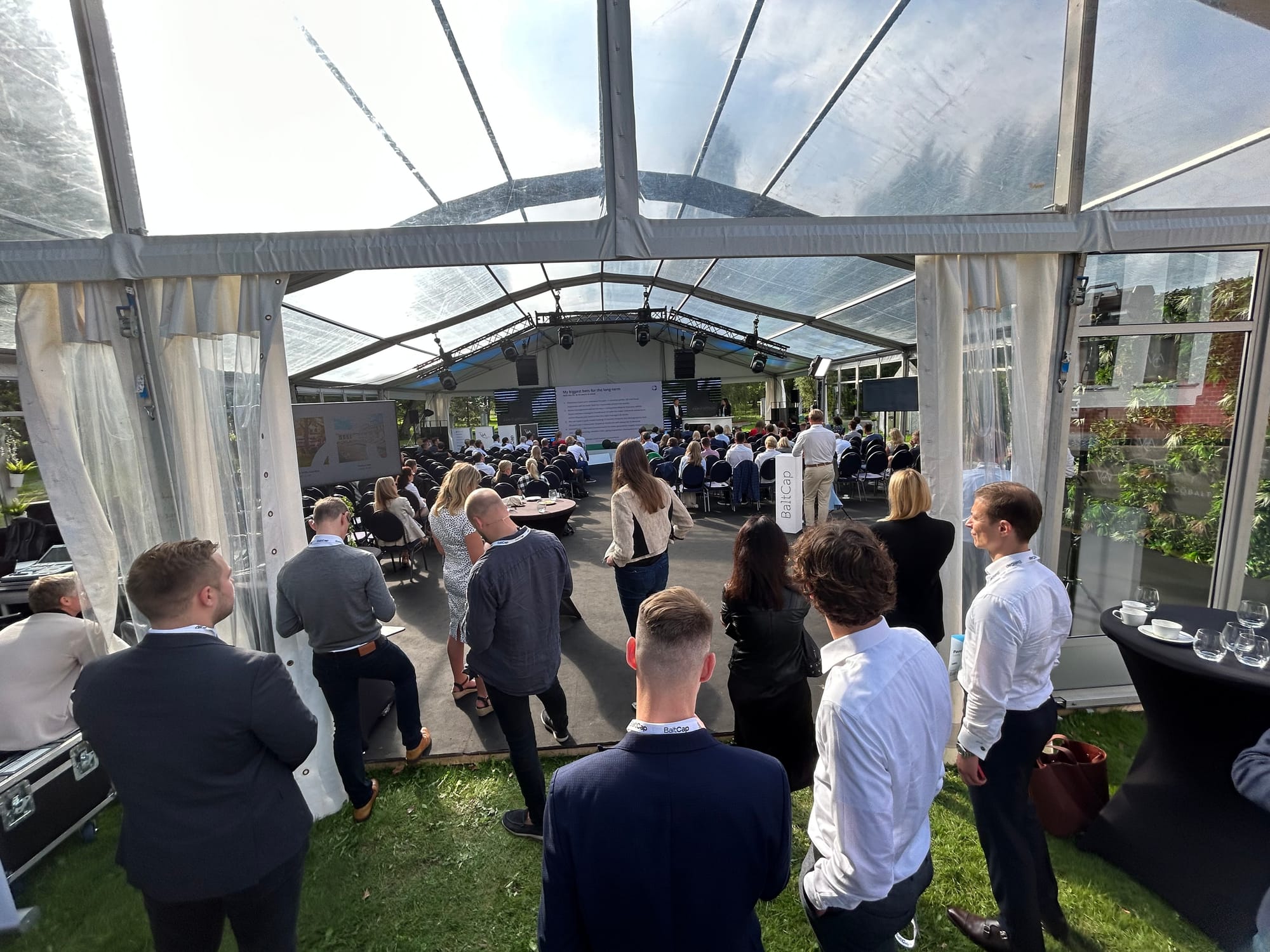
A few years ago, the Baltic VCA Summit was held in Pärnu.
## Sign up for Fomo.Observer
Startup stories from Estonia. Free weekly newsletter.
Subscribe
Email sent! Check your inbox to complete your signup.
No spam. Unsubscribe anytime.
### Inside ruum's summer residency finals: Six startups pitch as alumni reflect on grit, bad coffee, and community
URL: https://fomo.observer/inside-ruums-summer-residency-finals-six-startups-pitch-as-alumni-reflect-on-grit-bad-coffee-and-community/
Last updated: 2026-08-27T18:15:29.000Z
TALLINN — In hacker space **ruum**, six startup teams presented to an audience of founders, investors, and peers at the summer residency’s final pitch session.
Showing the growth of ruum, the event moved out of ruum to a parking hall next door, a space 4-5 times larger than at the end of the first ruum.
Out of a gruelling programme designed to pressure-test early-stage concepts, only six teams bagged a spot to present at the final showcase: Hivemind, Display.dev, Artopia, JuvoLegal, Skillcard, and Robots in Construction (RIC).
Introduced individually by alumni founders from ruum’s first cohort, the pitching session offered a candid look into the reality of building early-stage companies — stripping away Silicon Valley polish in favour of raw execution.
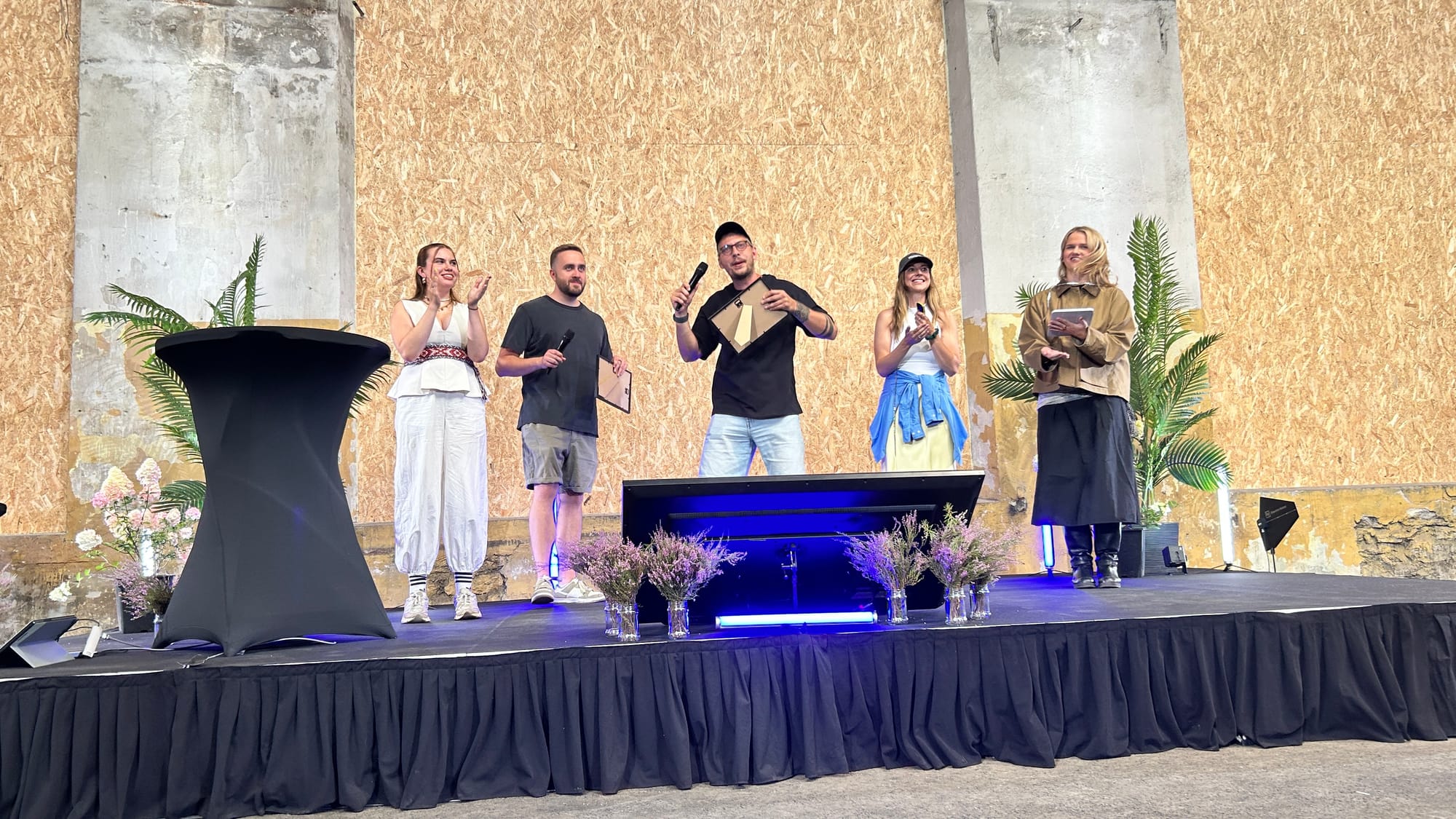
The team behind ruum. Kaja Aulik, Marko Klopets, Tim Vaino, Helery Pops and Liisa Jõerüüt
## The alumni view: 'Eating glass' and bad coffee
Before introducing the finalists, alumni from ruum’s inaugural batch reflected on their own post-residency journeys, offering unvarnished advice to the graduating teams.
> "Is building a startup hard? Elon calls it eating glass while staring into the abyss," said Joosep Sibul, co-founder of [Hertwill](https://hertwill.com/?ref=fomo.observer) (Batch 1 alumni). "I prefer a scene from *The Wire*... Every day someone brings you another bowl of shit, and your job is to eat it. Great founders might not enjoy the taste, but they will still eat it."
Presenters shared the sentiment of gruelling persistence, along with praise for ruum's culture of unprompted peer-to-peer help.
> "The coffee tastes absolutely horrible, and someone broke the coffee machine yesterday, but the people here are one of the brightest and smartest in Europe right now," noted **Markus Trasberg**, CTO and co-founder of Mindsera.
> "The most 'ruum' thing there is, is moments when everyone's over-exhaustion hits and all anyone can think of are just jokes," added **Bilt.me's** Uku Joost Annus, a Batch 1 winner. "San Francisco's biggest advantage is their community, which is exactly the same reason ruum is being built for us: helping others build without expecting anything back."
The partners behind ruum
## The final six: Introductions and pitches
### 1\. Artopia**:** Art collection management and marketplace
[Artopia](https://art-opia.com/?ref=fomo.observer) is building an inventory management platform designed specifically for individual art collectors, addressing an underserved segment between Excel and small galleries.
> "It all started with my own frustration," explained co-founder **Iida Kaisa Urm**. "Once my collection grew past 20 artworks, I wanted one central place to gather all the documents, certificates, invoices, high-resolution images, as well as all the data that comes together with an artwork."
- **Traction & progress:** Launched four months prior to joining ruum, Artopia has expanded to over 300 collectors and nearly tripled its paying customer base. Over 1,500 new artworks were cataloged during the six-week residency.
- **Institutional validation:** Poco — the private art collection owned by Linnar Viik operating as a museum in Tallinn — adopted Artopia as its central source of truth, replacing traditional spreadsheets.
- **Market opportunity:** The team targets 1% of the estimated $150 million global collection inventory management market over the next five years, with plans to unlock the broader $60 billion annual art transaction market through a peer-to-peer marketplace.
## Sign up for Fomo.Observer
Startup stories from Estonia. Free weekly newsletter.
Subscribe
Email sent! Check your inbox to complete your signup.
No spam. Unsubscribe anytime.
### 2\. Skillcard**:** AI sports analytics and youth football assessment
Skillcard evaluates real-world football skills on the pitch and converts performance data into standardised, FIFA-style digital player cards using an automated setup of AI cameras and sensor cones.
> "Becoming a pro doesn't happen alone, but unfortunately a vast majority of players don't get the attention they need," said co-founder **Ralf Jürgenson**. "Coaches have a lot of groups to deal with, and individual focus is few and far between. That's where we step in. We give players all the data they need to start training the right things."
- **Traction & Progress:** Parents pay €12 per month for performance tracking, with local youth teams like Nõmme Kalju U15 using the system for paid recurring testing. At the Pärnu Summer Cup, over 250 players across the Baltics and Finland completed more than 1,000 test runs.
- **Next Steps:** The team is raising €600,000 to deploy 50 automated devices across Europe, aiming to reach 1,700 active players within 18 months.
### 3\. Display.dev**:** Developer tools and AI agent workspace
Described as "Google Drive for AI agents," Display.dev is a collaboration workspace where teams can publish, review, and iterate on interactive documents, clickable prototypes, and presentations generated by autonomous AI agents.
> "Think about us as a Google Drive for AI agents," said CEO **Ott Ilves**. "You use agents... they create incredibly helpful and interactive docs. Now, how do you collaborate and iterate on those docs with your team or your clients? That's exactly the problem we solve."
- **Traction & progress:** Launched in May, Display.dev has amassed over 1,300 users. During ruum alone, they onboarded 250+ companies and 750 users.
- **Key customers:** Key accounts include Kogan (a major Australian/NZ e-commerce retailer) and UK healthtech company HeliosX, which has 179 daily active users on the platform.
- **Business model:** Charges flat organisation-based subscription fees with a 90%+ gross margin. The company is aiming to reach $2 million in ARR over the next 12 months.
[AI agents’ collaboration tool raises €470KEstonian startup Display.dev has raised €470,000 in pre-seed funding to grow its publishing and collaboration platform for AI agents. Display.dev gives every agent the ability to publish documents with a shareable URL – colleagues comment, agents read the comments and publish updated versions, and it worksFomo.ObserverTarmo Virki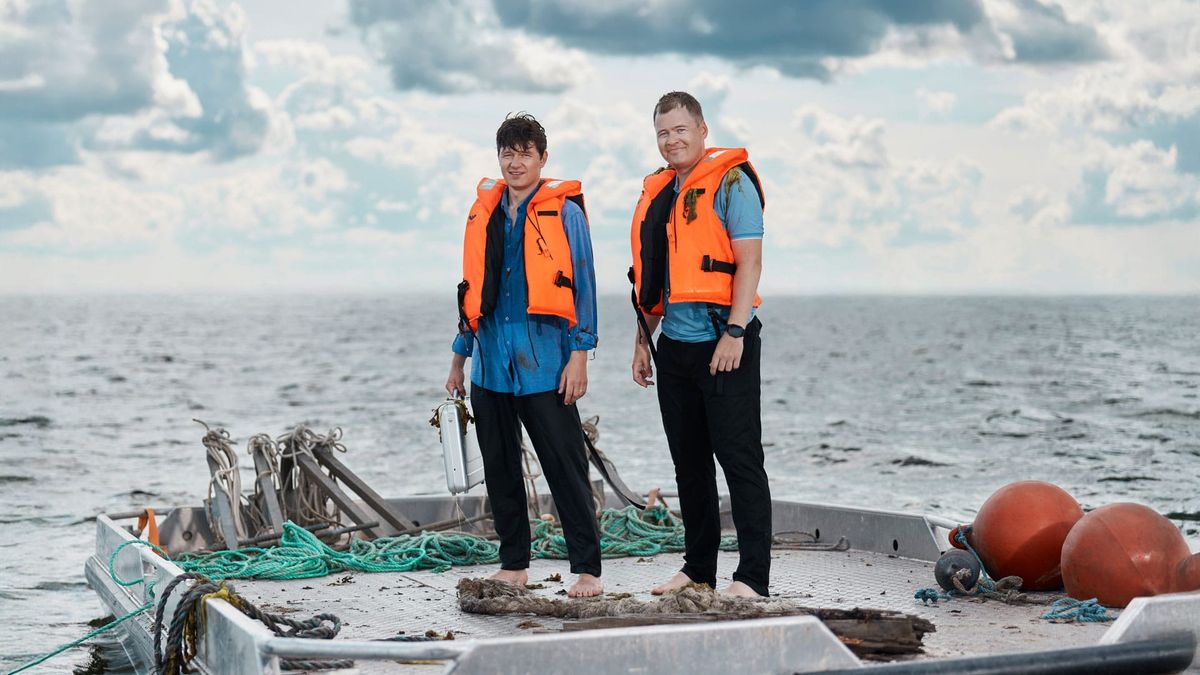](https://fomo.observer/ai-agents-collaboration-tool-raises-eur470k)
### 4\. Hivemind**:** Autonomous AI co-workers for D2C brands
Hivemind creates specialised AI co-workers that integrate directly into team communication channels (Slack, Discord, or Microsoft Teams) for direct-to-consumer (D2C) brands, moving beyond simple Q&A search to active task execution.
> "We don't want to buy a Wikipedia. We want work done," said co-founder **Hans-Hendrik Karro**, quoting feedback from over 20 prospective clients. "Businesses don't pay for answers. They pay for work getting done."
- **Operational example:** Co-founder **Rasmus Sikk** demonstrated their AI agent "Quinnbee," which ingested thousands of customer support tickets, identified a sizing bug across five backend systems during a simulated Black Friday surge, executed the code fix, and presented it to human supervisors for one-click deployment.
- **Commercial strategy:** Operating internally from day one, Hivemind secured €70,000 in revenue across two accounts for custom builds. The team is currently recruiting five D2C brand design partners with revenues exceeding €5 million.
### 5\. JuvoLegal**:** Legaltech and regulatory compliance engine
JuvoLegal is an AI-powered legal processing engine built for law firms and in-house legal departments. Rather than acting as a generative text writer, it operates strictly as a context and compliance verification system to avoid hallucinated legal advice.
> "Legal AI already has Harvey... We'll just be Mike Ross," said founder **Taavi Vahter**, referencing the character from the TV show *Suits*. "Young, fast, and remembers everything it reads."
- **Technical core:** JuvoLegal does not generate synthetic text; instead, it processes ingested statutory databases. To date, the engine has indexed 20,000 local laws, over 450,000 court orders, 40,000 EU acts, and 2.5 million individual legal paragraphs.
- **Commercial progress:** Secured its first paying client within weeks of development, with two institutional pilots underway targeting Europe's market of over 1 million practicing lawyers.
### 6\. Robots in Construction (RIC)**:** Construction robotics database and marketplace
Robots in Construction (RIC) is a data and matching platform connecting construction contractors with robotics original equipment manufacturers (OEMs) to address severe labor shortages across job sites.
> "Construction has a growing labor crisis. Skilled labor is retiring, and fewer young people are entering the trades," explained founder **Cristof Neuman**. "Robots will soon complete up to 60% of the physical manual labor on a job site... Similar to how Bolt dispatches the right driver to the right rider, Robots in Construction will dispatch the right robot to the right job."
- **Marketplace data:** RIC has mapped over 220 construction robots across 400+ documented job site deployments.
- **Proprietary insights:** The platform has gathered proprietary deployment data from 51 active contractors across Europe.
- **Monetisation:** OEMs pay annual subscription fees (€5,000–€10,000) for verified deployment listings, lead generation, and market intelligence across the $13 trillion construction industry.
## Community awards
Before things on stage wrapped up there were some community-voted recognition awards handed out.
The biggest cheerleader and hypeman award went to Leonardo Romanello. The team everyone wants to join was Display.dev. Facilitator favourite award went to Integrit and the revenue hack award went to ApexMake. The ruum one cohort voted Hivemind as their favourite team.
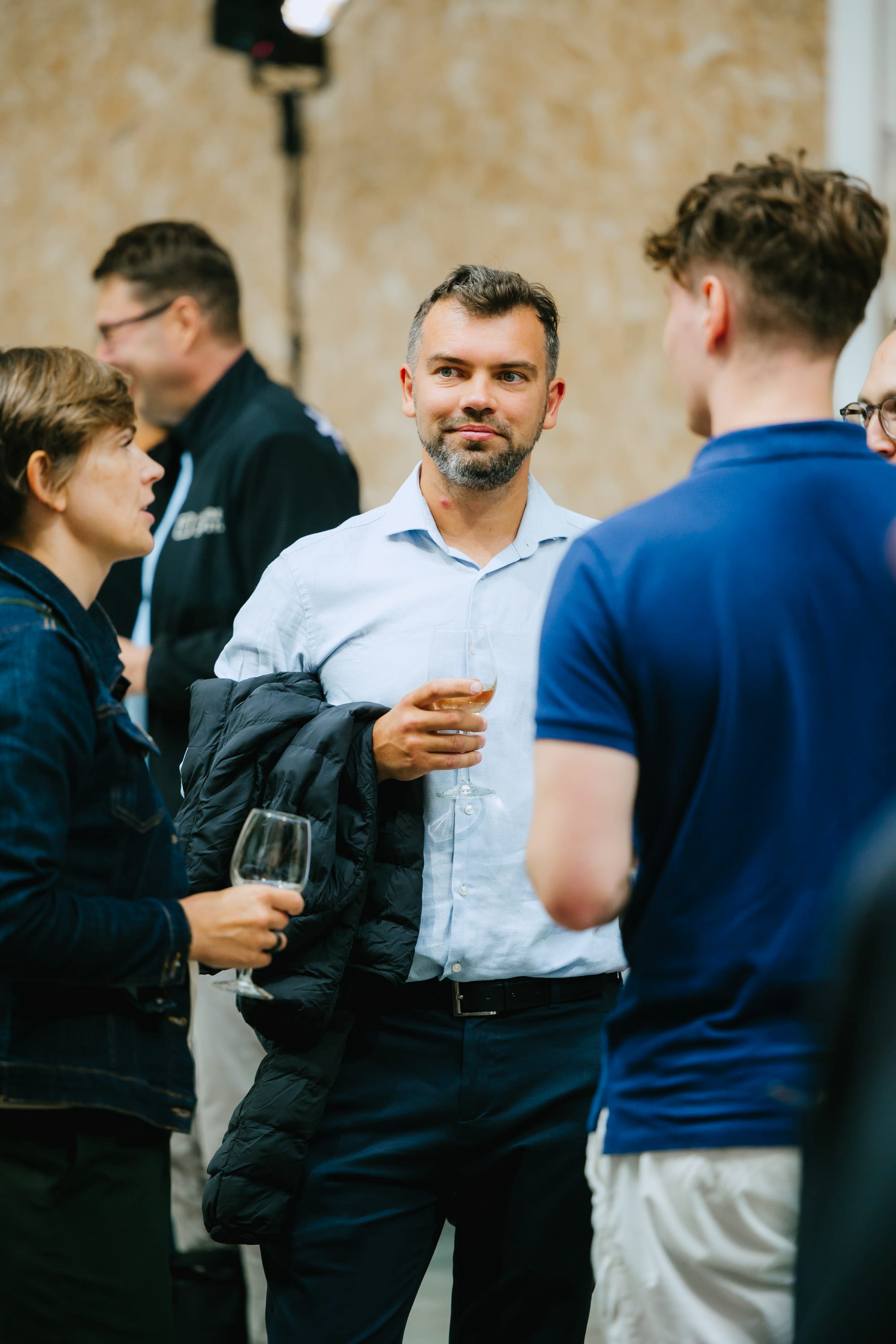
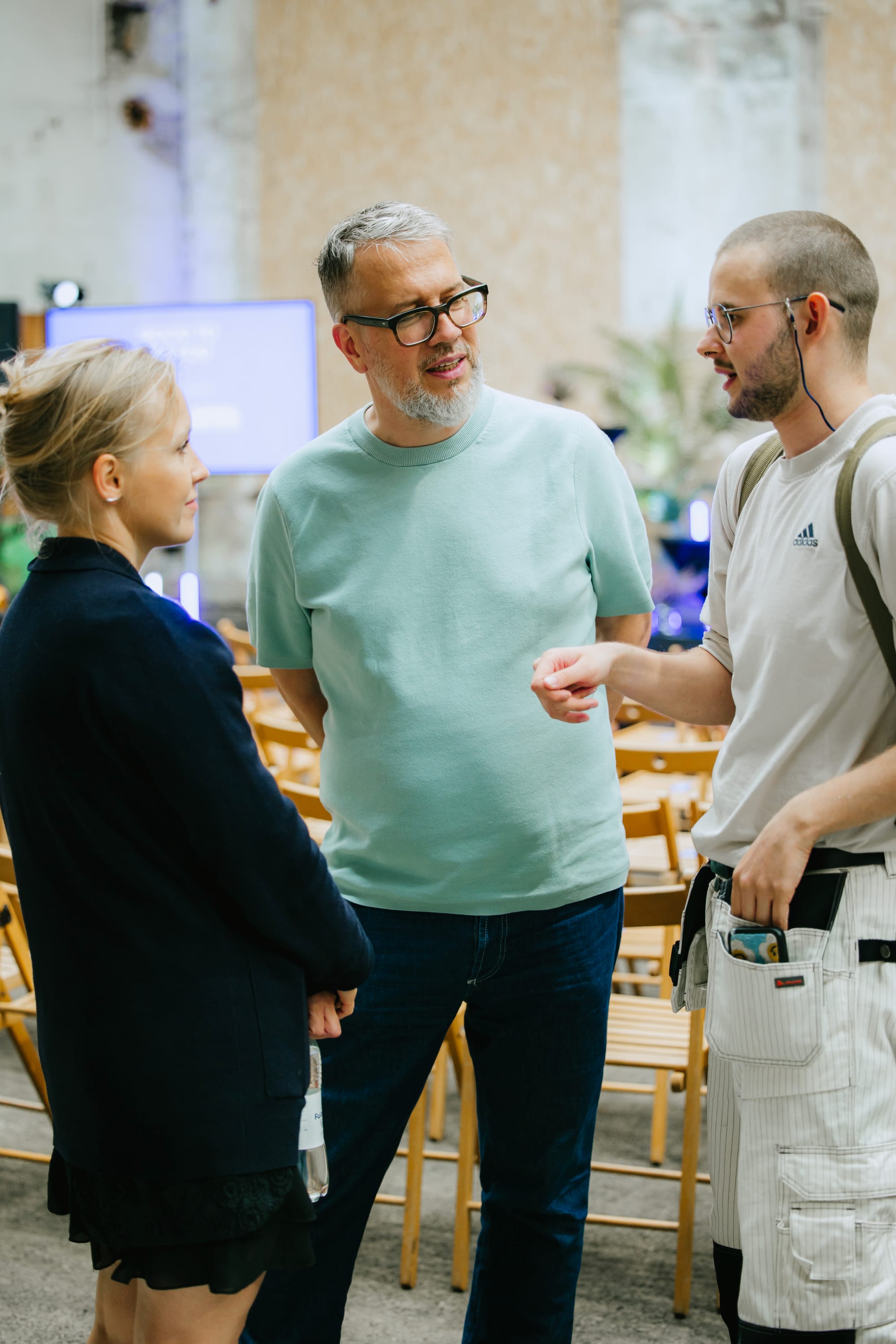
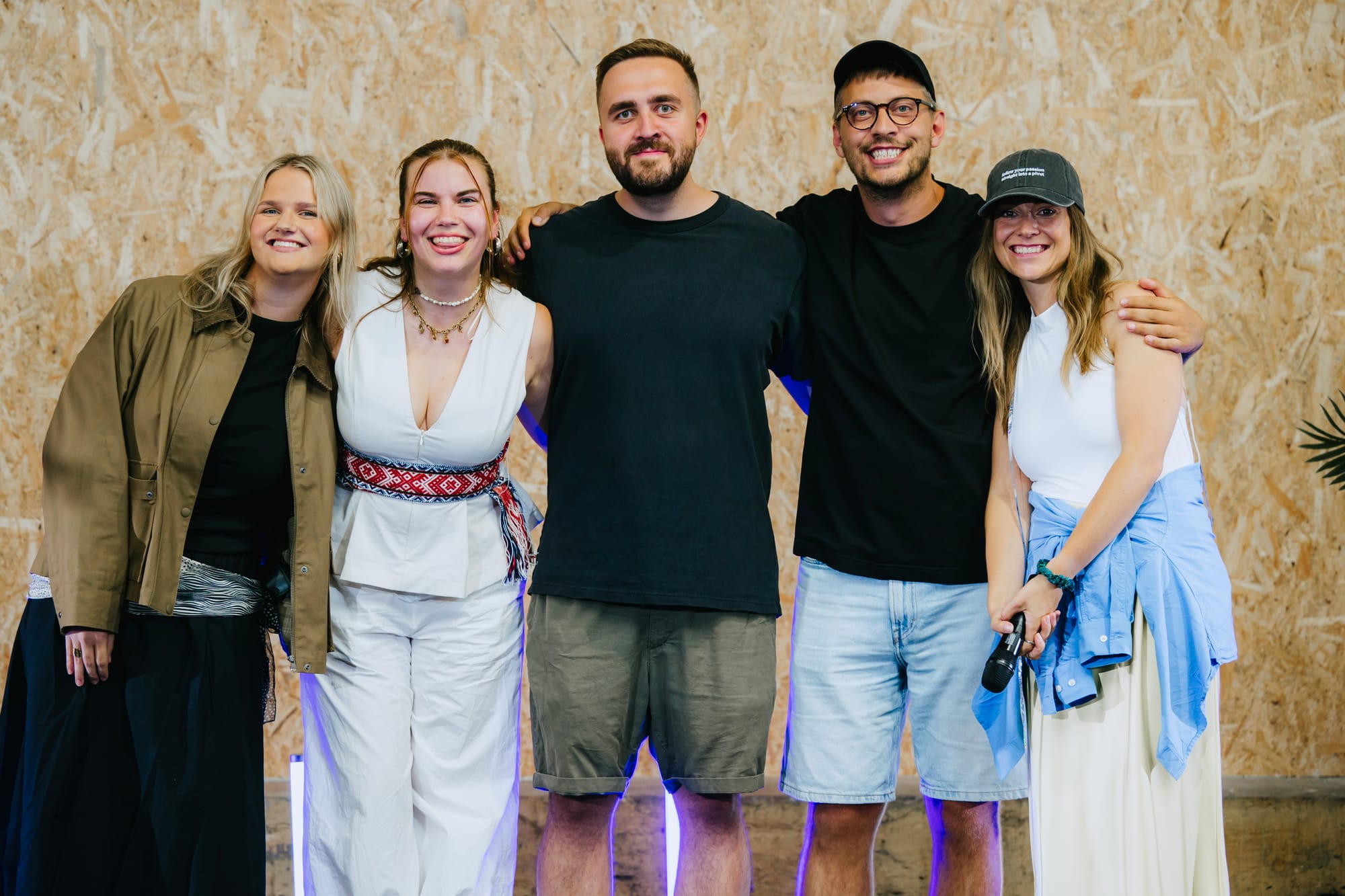
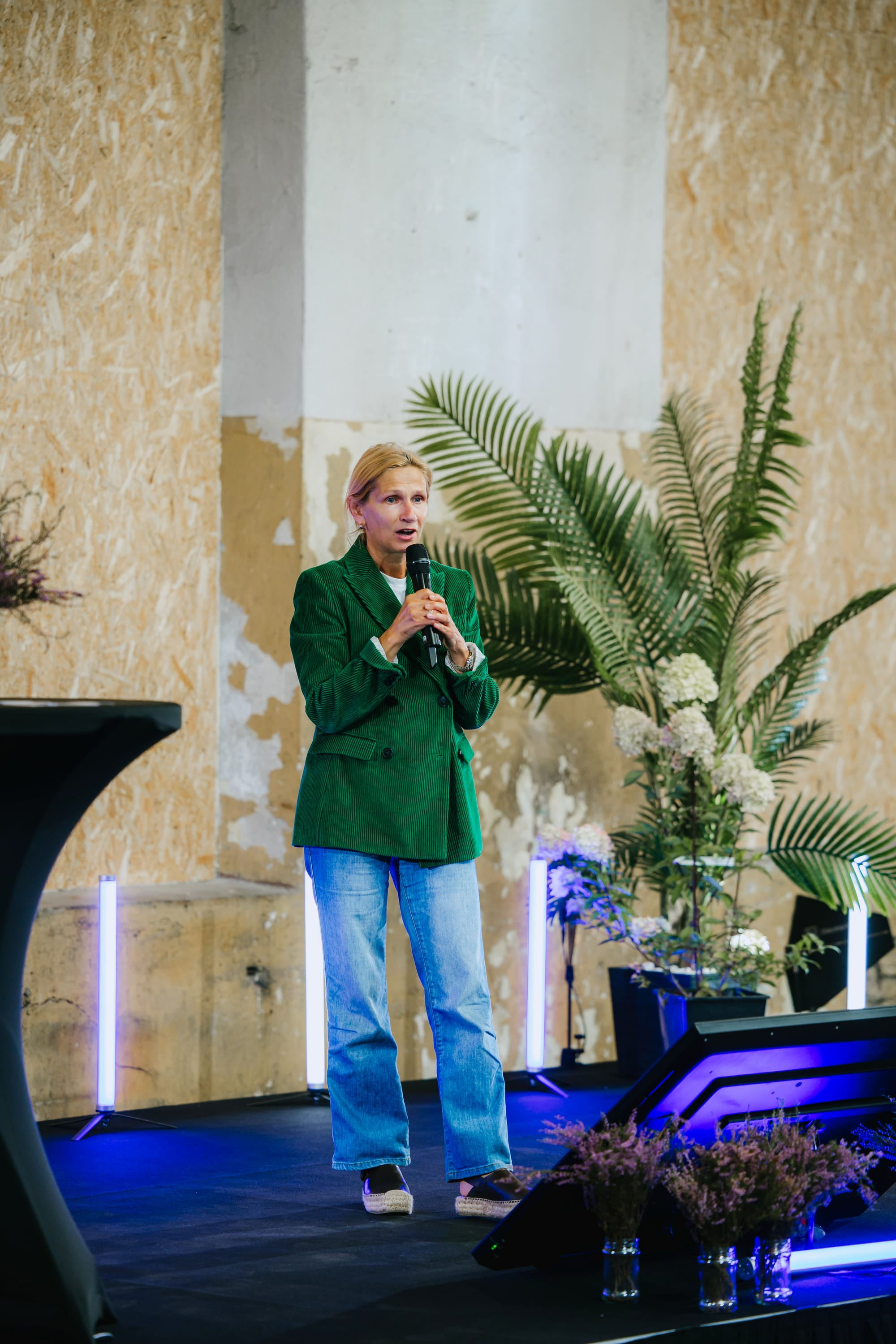
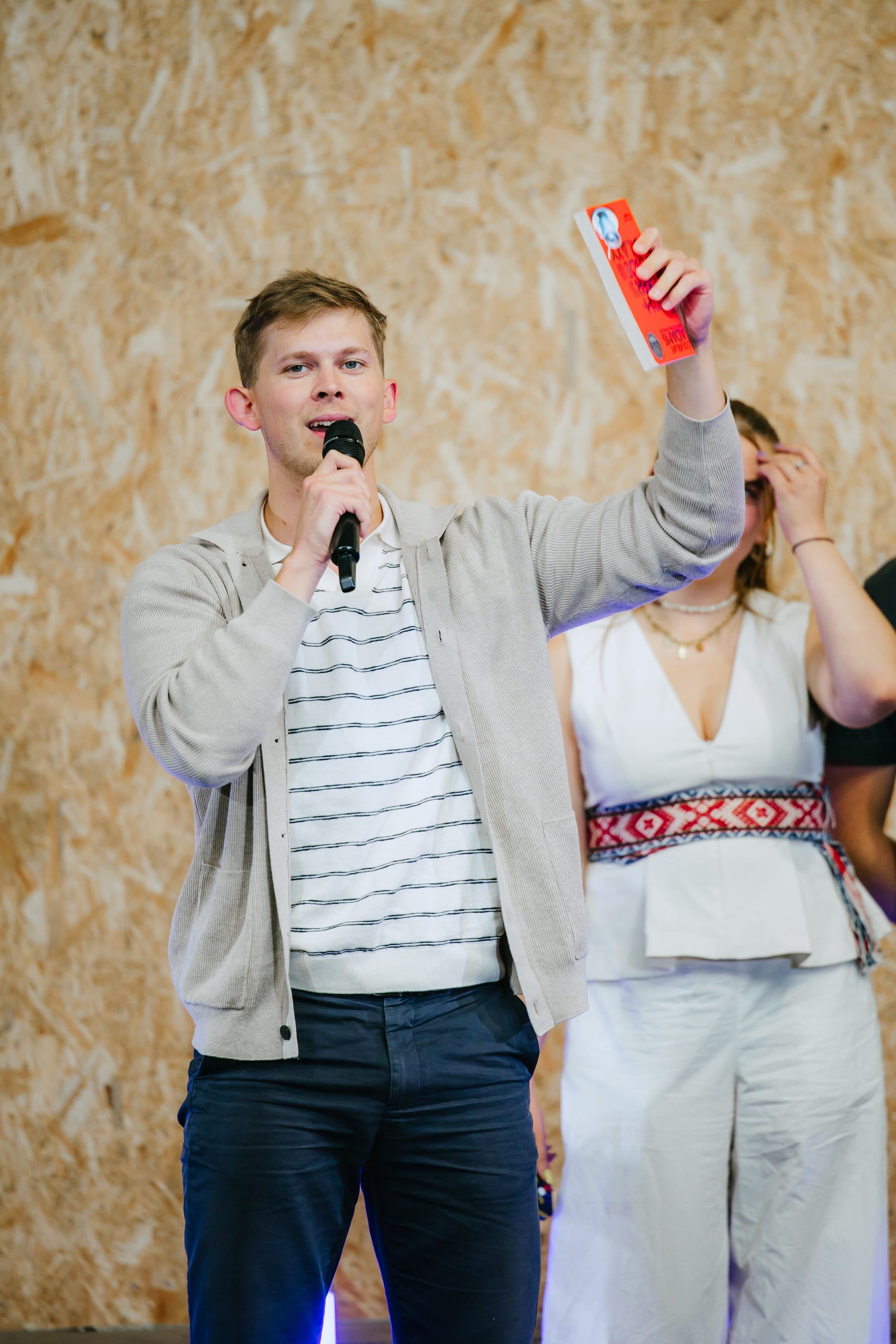

Images by Agurliina Photography
| **Startup** | **Sector** | **Key Value Proposition** | **Key Metric / Progress** |
| -------------------------- | ------------------- | ------------------------------------------------ | ----------------------------------------------- |
| **Artopia** | Arttech | Collection inventory management & trade | 300+ collectors; 1,500+ artworks cataloged |
| **Skillcard** | Sportstech / AI | FIFA-style player ratings via AI vision on field | 250+ players tested; raising €600k seed |
| **Display.dev** | DevTools / AI | Collaborative workspace for AI agent docs | 1,300+ users; $2M ARR target |
| **Hivemind** | Enterprise AI / D2C | Autonomous AI co-workers for Slack/Teams | €70k in custom deployments secured |
| **JuvoLegal** | Legaltech | Deterministic compliance search for lawyers | Ingested 2.5M+ legal paragraphs |
| **Robots in Construction** | Contech / Robotics | Matching robotics OEMs to job site deployments | 220+ robots mapped; 51 contractor data partners |
### ANDRES KÜTT: Estonian planned approach to agents, services and identity
URL: https://fomo.observer/andres-kutt-estonian-planned-approach-to-agents-services-and-identity/
Last updated: 2026-08-17T11:54:03.000Z
Your human-oriented service being consumed by agents represents a service design failure. The same goes for your documents or knowledge sets that, before AI, were designed for human consumption. If your customers need a piece of software to interact with your software, why isn't that software part of your software? If your documents or knowledge sets are no longer fit for human consumption, how did you get there and how long has that been going on? Has your service, in fact, evolved into something entirely unusable?
That's not a very comforting thought. Sometimes there's a good reason for that service design failure, and sometimes that reason cannot be removed easily. The Estonian set of laws has grown more complex [over time](https://link.springer.com/chapter/10.1007/978-981-15-5856-6%5F7?ref=fomo.observer) and is probably nearing a point where it can no longer be understood holistically without something like an LLM.
### The plateau of decent design
While Estonian electronic services are overall quite sensible and the famous use cases of establishing a business or filing your taxes in a few minutes are true, we have hit a plateau a while ago. Many of our services are still mind-bogglingly difficult to use, and many of our support structures (e.g., services for physical or medical health patients) are incomprehensible. This has been the case regardless (or maybe because of) the money or talent poured into the problem over the past decade or more.
While the engineer in me gets frustrated every time I meet a badly designed service with an apparently trivial fix, the system architect in me must concede that I have no good idea how to stop the public sector from producing such failures at an alarming rate.
> So it would seem our digital state indeed needs to compensate for our apparent inability to provide a sensible service to our citizens.
Various LLM-based agents fit the bill. A person could send their minions to do the frustrating work and get back a clear guide on how to navigate the bureaucracy to get the specific service they need. An agent could have a corporate annual report filed or wrestle with the notoriously complex administrative processes surrounding building a house. Something would get done with less frustration and time spent.
Unfortunately, these minions, much like the yellow ones in the movies, are adorable but not perfect and could be bent to a nefarious will with relative ease. Also, it doesn't really matter what shape these minions are. Some folks would prefer to prompt an LLM-based agent, while others would rather craft a more limited but easier-to-control piece of code.
The problem of control exists beyond the current revolution in LLM capabilities. There is a broader need to control the actions of software operating on your behalf, and for the service provider to recognise them as such. People usually want their minions on a leash, the other end of which is firmly in their grip.
This authentication and authorisation problem is not new. I don't know about you, but I personally can't directly communicate with a server; we all use software and hardware to act on our behalf daily, and we have for a long time.
Protocols like OAuth and OpenID Connect were explicitly designed to solve the technical part of this issue and are used right now to let agents prove their right to do something. So why can't we just plop these on top of our existing service base of thousands of services across hundreds of agencies and call it a day?
Because all technical solutions to this challenge, regardless of the technology used, suffer from the complementary-products problem. Who in their right mind would buy the Apple Vision Pro that, in the absence of dedicated software making use of its amazing capabilities, just acts as a glorified monitor? And who would take on the considerable expense of tailoring their software's user experience to a device modality with a nonexistent user base? There are no users because there is no software, and there is no software because there are no users.
The same goes for [identity products](https://www.sciencedirect.com/science/article/pii/S1877050925025219?ref=fomo.observer): services have no reason to integrate whatever agent-based identity and access management mechanism is agreed upon if no one uses it. And it is hard to see a vibrant ecosystem of agents using any IAM solution emerge without wide service support. No services exist because the use case doesn't make sense, and the use case makes no sense because (at least we hope so) no services exist. The problem is both figuring out the technical solution and getting it adopted. Solving just one isn't enough; both are complicated.
> There are several ways to overcome this deadlock and to solve the adoption problem. The approach Estonia is seriously considering right now is to make the agents look like people. Estonia's digital services already support delegation between people and have done so for several decades.
The population registry maintains my right to act on behalf of my children. The business registry allows me to act on behalf of my company. More complex services have built additional delegation features on top. It's not perfect, but it does work. If we could use the existing authentication and authorisation mechanisms, we'd instantly gain 100% support from the services, and the deadlock would be broken.
### Imitation
The key point is that the agents would look like people rather than become them. Computer-based agents are ephemeral; a code change, a shift in an LLM's training data, or any update to the massive software stack we all rely on can dramatically change their behaviour. So we are not considering issuing agents' identities. Instead, we're issuing people additional identities they can control. The state gives you a numbered leash you can put on a minion of your liking. It's the same basic idea of using different accounts on your computer for everyday work and for deep system updates. It's still you, but the identifiers are different.
> This approach is not without its issues. Many people baulk at the mere idea of agents looking like humans. There's the limited address space for Estonian identity codes, and the scalability challenge of tracking tens of these subordinate identities.
We also face technical challenges. But the important bit here is that we are not content with the status quo. We'd like our state to be more open, more accessible, more convenient for both our citizens and for the world. Let's see if we can make it work.
---
[*Andres Kütt*](https://www.linkedin.com/in/andreskytt/?ref=fomo.observer) *is a system architect helping organisations execute their digital strategies. Over the past 35 years, he has built websites, internet banks, energy and government systems. He was an architecture team lead at Skype. A passion for architecting things led him to the MIT, where he received a MsC from the System Design and Management program. Andres subsequently applied the knowledge gained at as a Chief Architect of Estonia, the leading digital nation, and now continues the same mission internationally.*
*He is a published writer and a researcher. Andres taught a unique system architecture approach to enterprise architecture at TalTech and an is teaching an e-government masterclass at the University of Tartu. Andres lives in Tallinn, Estonia, with his lovely wife, two teenagers and probably too many guitars.*
## Sign up for Fomo.Observer
Startup stories from Estonia. Free weekly newsletter.
Subscribe
Email sent! Check your inbox to complete your signup.
No spam. Unsubscribe anytime.
### GERT LÕHMUS: From a coffee in Vilnius to a developer infrastructure tool
URL: https://fomo.observer/gert-lohmus-from-a-coffee-in-vilnius-to-a-developer-infrastructure-tool/
Last updated: 2026-08-14T11:44:14.000Z
[Enola](https://enola.tech/?ref=fomo.observer)’s story started with a shared coffee in Vilnius, continued in Berlin, and eventually became a company founded in Estonia.
Dejan and I met on a September day in Vilnius. We had coffee at Brew (a lovely cafe), talked about work and life, and, at some point, Dejan showed me one of his side projects, called Mulligan. It was a management system for golf clubs.
I saw quite a lot of potential in it! Golf is an underserved market for software, and, more importantly, Dejan had already built something real. By the end of that conversation, we agreed on a simple next step: let’s work on it together for two weeks and see what happens.
That soon became FairwayHub.
We started with software for golf clubs and later built mobile applications for golfers. Around the same time, I moved to Berlin, where Dejan lives, so our Vilnius coffee turned into many more coffees in Berlin. A lot of our product development happened that way: meet, discuss an idea, build it, see if it works, repeat.
We also both liked using the latest development tools. Claude and Codex quickly became part of how we worked. They helped us move faster, but as FairwayHub grew, the limitations also became more obvious.
Our codebase was getting more complex. A change in the backend could affect the mobile application. A new module could introduce a dependency we did not want. Understanding how everything connected started taking more time.
AI agents had the same problem, only more visibly. Every time they started working on something, they had to inspect the repository again, search through files, follow imports and calls, and rebuild an understanding of the codebase before they could do useful work.
That did not make much sense to us.
Codebase relationships are static until the code itself changes. If one module imports another, that is a fact. If one service calls another service, that is a fact. If a mobile application calls a particular backend endpoint, that relationship can be extracted from the source code.
We were spending tokens and time asking AI to rediscover things that could simply be computed once and reused.
For Dejan, this became a technical problem to solve. In early 2026, he built a small tool called archmcp. It was a local MCP server that extracted deterministic facts and relationships from the repository and made them available to coding agents. Initially, it was just something we used ourselves as we continued to build FairwayHub.
But we kept using it.
It became useful when we wanted to understand what depended on a particular part of the system, what could be affected by a change, or how different repositories connected. It also meant our coding agents could start with structural context rather than rediscovering the same repository each time.
For a few months, archmcp remained a side project next to the golf products. We knew it was useful, but we had not yet worked out how far the idea could go. Is it a product?
Eventually that part became clearer. The graph itself was not really the product. It was the underlying data that allowed us to answer a more important question: what happens to software architecture when more and more code is written by agents?
Today we have tests for behaviour, linters for code quality, and CI pipelines to verify that software builds. But when an agent changes several modules, introduces a new dependency or modifies something across repositories, there is still a harder question to answer: what did that change do to the architecture?
That became Enola.
Enola is now an architectural quality gate for AI-assisted software development. It takes the existing codebase and builds a deterministic architectural model of the system: modules, symbols, dependencies, routes, services and the relationships between them.
Developers and coding agents can use that model before making a change to understand the impact of the change they are about to make. After the change, Enola compares the new structure against the previous architectural state and identifies what changed.
That can include new dependencies, dependency cycles, architectural boundary violations, coupling between parts of the system or structural changes across repositories.
The same information is available to coding agents through MCP, to developers through the command line and inside CI pipelines. Teams can decide which findings they simply want to see and which ones should actually block a change.
Enola also works across repositories. A client in one repository can be connected to an API route in another. Producers and consumers can be linked. Services can be analysed as part of the same architectural system instead of as isolated codebases.
Importantly for us, the analysis remains deterministic. We do not use an LLM to guess the architecture. Enola extracts facts from source code and builds the graph from those facts. The AI layer can reason on top of that structure, but the underlying architectural model does not depend on probabilistic interpretation.
It also runs locally, so source code does not need to leave the developer’s environment for Enola to build that model.
We describe Enola as developer infrastructure for the agentic era. As coding agents become capable of writing more code and working for longer periods without direct supervision, we think teams will need a stronger layer around them that understands the architecture and can tell both the developer and the agent when a change is taking the system in the wrong direction. While developers sleep, you still keep building.
We did not arrive at that idea by sitting down to invent a developer-tooling company. We arrived there while building another product and running into the problem ourselves.
It started with FairwayHub, a few weeks of experimentation and a coffee in Vilnius. Then came many more coffees in Berlin, a small internal tool called archmcp and eventually Enola.
We are still building together in Berlin.
The coffee part has not changed much.
\--
*Gert is building dev infrastructure for the agentic era as Enola's co-founder. A Senior Engineering Manager at N26, he has scaled data systems at tech companies like Vinted and Luminor.*
### Estonia’s digital narrative facing generational shift as Tiger Leap hits 30
URL: https://fomo.observer/estonias-digital-narrative-facing-generational-shift-as-tiger-leap-hits-30/
Last updated: 2026-08-17T11:51:30.000Z
**PAIDE** \- Thirty years after the launch of the landmark Tiger Leap initiative laid the groundwork for Estonia’s world-renowned e-governance and even tech ecosystem, leaders and youth representatives warn that maintaining the region’s competitive edge requires bridging a widening divide between those digital pioneers and the rising generation of founders.
Speaking at [Arvamusfestival](https://arvamusfestival.ee/?ref=fomo.observer) (Opinion Festival) during a panel titled *“Tiigri üleandmine. Kes kannab Eesti digilugu edasi?”* (“Handing over the Tiger: Who will carry Estonia’s digital story forward?”) angel investor and early Wise executive Triin Hertmann joined young voices Enel Teinemaa, Uku Joost Annus, and Jaanek Sildam to dissect whether the nation’s celebrated "e-Estonia" identity still resonates with the youth tasked with driving it forward.
The consensus on stage pointed to a distinct cultural shift: while Estonia’s brand as an agile digital nation remains strong globally, the domestic ecosystem risks stagnating if young talent is treated merely as end-users rather than co-architects of its next chapter.
### **A heritage learned in history lessons**
For the generation that built Estonia’s early infrastructure, the digital transition was a grassroots national project born out of post-Soviet necessity.
But for the young operators and founders entering the workforce today, the nation's iconic tech leap is less of a lived memory and more of a textbook reference.
“Tiger Leap is 30 years old this year, so my young panellists heard about it probably from their parents or in a history lesson,” Hertmann said, reflecting on the generational passage of time since the state first pushed to connect schools to the internet and digitise public services.
This shift in perspective presents both a structural hurdle and an opportunity for the startup ecosystem, which functions alongside traditional business and state infrastructure as a key economic engine.
Panellists emphasised that younger Estonians take frictionless digital interactions for granted, meaning the bar for future innovation is significantly higher than it was three decades ago. Simply digitising paper forms is no longer perceived as revolutionary; the next wave of builders demands hyper-personalised, modern user experiences that match global consumer platforms.
## Sign up for Fomo.Observer
Startup stories from Estonia. Free weekly newsletter.
Subscribe
Email sent! Check your inbox to complete your signup.
No spam. Unsubscribe anytime.
### **From passive users to active builders**
A major focus of the debate centred on the gap between young people's daily usage of tech and their actual agency in shaping public and private digital strategies.
Panellists Teinemaa, Annus, and Sildam highlighted that while young Estonians are digital natives by default, their feedback loops into state developments and legacy enterprise platforms remain limited. Government services built a decade or two ago do not always align with contemporary product design standards, creating unnecessary friction for users who grew up on intuitive software interfaces.
To ensure continuity across the local startup and public technology sectors, the discussion pointed toward several concrete moves:
First, institutions must lower barriers to entry by establishing structured pathways, such as youth advisory bodies and early-stage founder mentorship, integrating younger operators directly into digital product planning.
Second, the ecosystem must reframe its core narrative away from the nostalgia of 1990s breakthroughs, focusing instead on active technological frontiers including artificial intelligence, deeptech, and green transitions.
Finally, entrepreneurial mindsets must be fostered earlier in secondary and higher education, ensuring that building a scalable venture is viewed as an accessible and practical career path rather than an abstract concept.
### **The stakes for the ecosystem**
For founders, investors, and public sector partners, the discussion highlighted a clear reality: brand equity built over thirty years cannot sustain an ecosystem on reputation alone.
"If we want the next generation to take real ownership of Estonia's tech story, we have to give them the keys to build it, not just the credentials to log in," Hertmann noted during the exchange, emphasising the need for direct inclusion.
As the regional tech sector navigates evolving market conditions, sustaining Estonia's reputation relies heavily on a deliberate transfer of ownership and initiative. Without structured efforts to include emerging builders in designing future digital infrastructure, the ecosystem risks resting on the laurels of a leap taken a generation ago.
[Bilt.me: Built in ruum, helping entrepreneurs worldwideIn a room called ruum, one of Estonia’s promising young startups is being built. And while it’s being built, it’s helping others “build mobile apps and make money with them,” Uku Joost Annus, co-founder and CEO of Bilt.me tells me. Annus co-founded the companyFomo.ObserverFiona Alston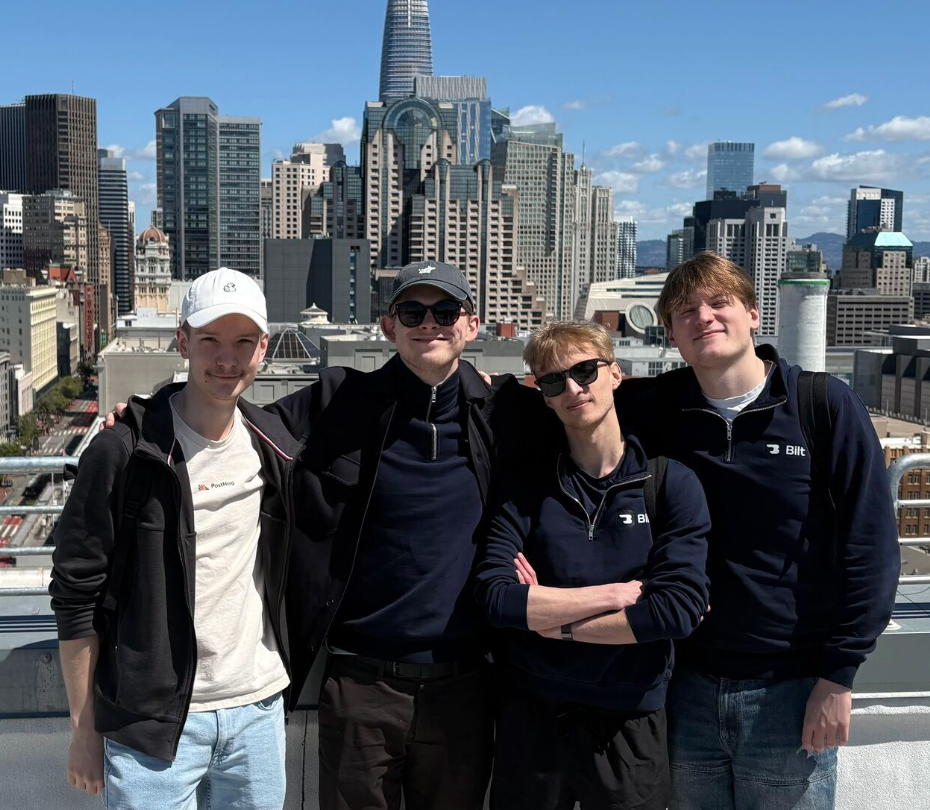](https://fomo.observer/bilt-me-built-in-ruum-helping-entrepreneurs-worldwide/)
[Asutajate kogukonna pikaaegne hing lubab peagi naasta klubisseMõni kuu pärast seda kui mind valiti Asutajate Seltsi presidendiks kohtusin ilusal suvepäeval Enel Teinemaaga, kes oli kolm aastat Eesti Asutajate Seltsi tegevjuht ning viis organisatsiooni tegevused täiesti uuele tasemele. Tänaseks on ta edasi liikunud, kuid naudib praegu suvepuhkust. Eneli panus on olnud väga suur ning kogukonnas on ta tõelineFomo.ObserverTriin Hertmann](https://fomo.observer/asutajate-kogukonna-pikaaegne-hing-lubab-peagi-naasta-klubisse/)
### Tartu Startup Day moves to August 2027
URL: https://fomo.observer/tartu-startup-day-moves-to-august-2027/
Last updated: 2026-08-12T06:24:49.000Z
The organisers of the Tartu [Startup Day](https://www.startupday.ee/?ref=fomo.observer) conference said they have moved the event from planned end-January dates to August 17-19, citing a scheduling clash with the Ukraine Recovery Conference (URC).
"It became clear that delivering Startup Day at the scale, quality and format our community deserves would put significant pressure on the same technical, logistical and local service resources," the organisers said.
"By stepping aside in January, we can give URC the resources and focus it needs, while giving Startup Day the space to be what it should be," they said.
URC 2027, co-hosted by the Government of Estonia and the Government of Ukraine, is in Tallinn on Jan 28-29\.
Startup Day, which on and off has marketed itself as sTARTUp Day, is the second large startup event in Estonia alongside Latitude59.
[The Tartu deeptech dispatchThe town is known for its colourful university student life, green parks, and shady cobblestone streets. Following the Emajõgi River, one can cross its bridges and get lost, whether it’s into the Botanical Gardens or down to the Lodjakoda shipbuilding hall. For centuries, academics have roamed these streets.Fomo.ObserverJustin Petrone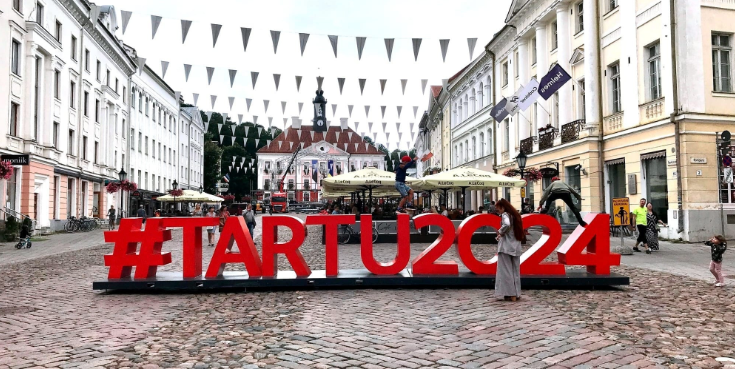](https://fomo.observer/the-tartu-deeptech-dispatch/)
## Sign up for Fomo.Observer
Startup stories from Estonia. Free weekly newsletter.
Subscribe
Email sent! Check your inbox to complete your signup.
No spam. Unsubscribe anytime.
### An exited founder: getting to know Andrus Purde
URL: https://fomo.observer/an-exited-founder-getting-to-know-andrus-purde/
Last updated: 2026-08-10T06:00:25.000Z
Last week Outfunnel announced that it had been [acquired](https://fomo.observer/pipedrive-acquires-outfunnel/) by Pipedrive. The sales and marketing workflow platform was founded in 2018 by [Andrus Purde](https://www.linkedin.com/in/andruspurde/?ref=fomo.observer), Markus Leming and Andris Reinman and during those eight years Outfunnel has gone through a few different iterations of itself.
Purde had written in Fomo a few months ago about feeling like a [small business CEO](https://fomo.observer/andrus-purde-rocketships-hair-salons-and-being-a-small-business-ceo/). What was once a team of fifteen was a team of five, describing Outfunnel as “not a unicorn but an honest workhorse.” Well now that workhorse is joining the unicorn’s stable.
[ANDRUS PURDE: Rocketships, hair salons, and being a small business CEORecently, I woke up with the realisation that I’m a small business CEO. I never set out to be a small business CEO. The plan was to be the CEO of a rocketship, the next really big thing. Evidently, these plans haven’t materialised. At Outfunnel, a data syncingFomo.Observer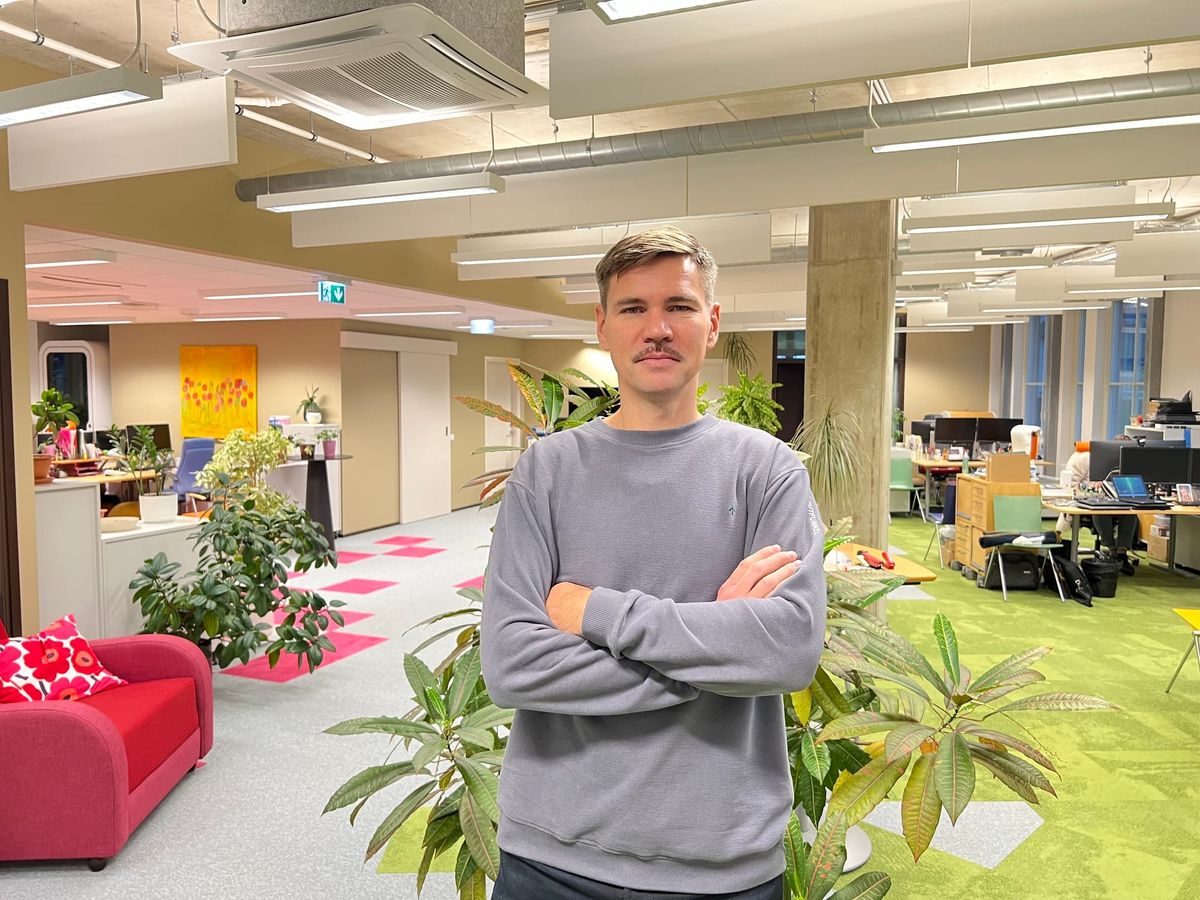](https://fomo.observer/andrus-purde-rocketships-hair-salons-and-being-a-small-business-ceo/)
Given the news was out this week I took it as my opportunity to interview Purde. I’m a blow-in in these parts so my knowledge of Purde is mostly through other people, it's about time I found out myself.
Incidentally, the worst time to actually interview an exited founder is soon after the deal is done. As with any big life altering decision, it takes a whole lot of processing - what someone tells you now may well change in six months time. So I'll hold my hands up and say this is not my finest journalistic decision, but I’m not here for the tech talk, or to dissect the inner workings of the company - I’m here to find out who this guy is, in this moment.
### Who is Andrus Purde?
He tells me that he’s a “consultant at Pipedrive right now”. But I can tell you he’s much more multi-faceted than that career update. He’s an exited founder, consultant, investor, father and comedy provider. His CV, previous to Outfunnel, is heavily in marketing and he spent time in London with Skype which is where the comedy factor comes in. Upon returning to Estonia he started to bring comedy acts from the UK to an Estonian audience to enrich the comedy scene here.
The new gig at Pipedrive is actually a return for him as prior to Outfunnel he was Head of Marketing at the CRM platform for SMEs. He joined the company in its early days as an advisor on a sweat equity basis before it turned into a job. That sweat equity graft worked out! His reason for leaving the firm was in the pursuit of entrepreneurship, which was either “delusion or idea,” he says.
“I mean, product-wise, it makes sense \[with Outfunnel\] to go back to Pipedrive because that's the missing piece that they don't have - it's logical, but it's also surreal because I am going back to a company I had worked at before, and then it's the company my brother co-founded, so there's all these nostalgic elements and memories which come back,” he shares.
### The catalyst
At the time of leaving Pipedrive he hadn’t quite nailed down his idea but it did turn out to be Outfunnel. His co-founder Markus Leming shared their ‘meet-cute' on [LinkedIn](https://www.linkedin.com/posts/markusleming%5Foutfunnel-has-been-acquired-by-pipedrive-share-7490797581237915652-Tatf/?utm%5Fsource=share&utm%5Fmedium=member%5Fdesktop&rcm=ACoAAA-ik2UB014KEBmH-ses6WK2Tqee8IkNeP8) this week.
*Before Outfunnel I was working for a company in the Netherlands and Pipedrive was one of the companies I was trying to sell to. My contact there was a guy called Andrus but the deal never happened (maybe I was just lousy at sales?).*
*When I moved back to Estonia, I walked into LIFT99, a coworking space and ended up sitting directly across the table from... Andrus. He'd just left Pipedrive and was itching to build something of his own. We're both tall so our feet kept touching each other under the table and neither of us would move so eventually we had to start talking. A few lunches later, we decided to build something together,* he wrote.
The rest of the Outfunnel team join Pipedrive as full time employees but Purde admits that his consulting role is “more temporary in nature for both parties.” Maybe he’s not built for full-time in a large enterprise, although he thought that the last time he was in Pipedrive he ended up spending seven years, so all bets are off. Mind you, he is convinced his life works well in seven-year cycles.
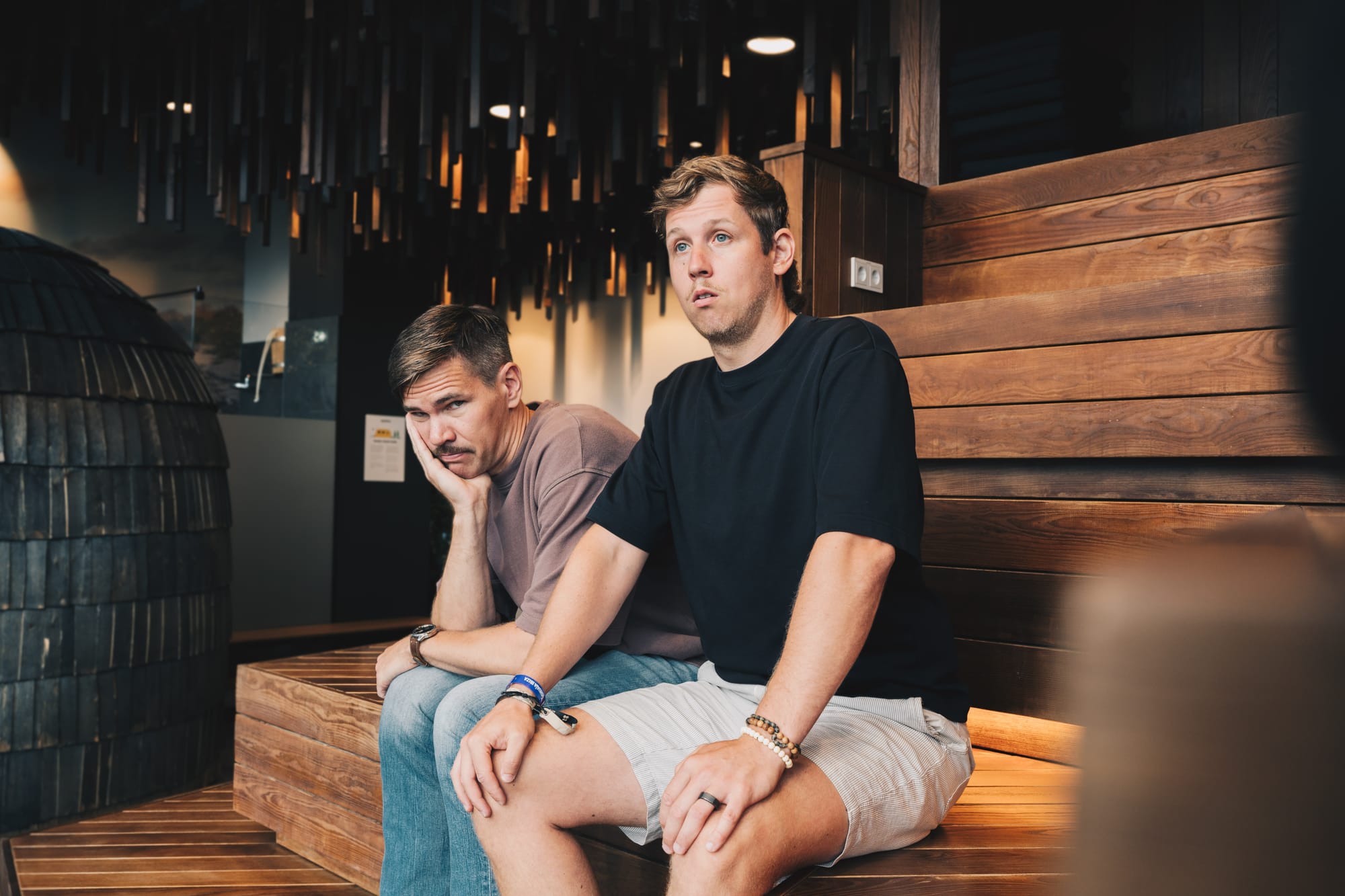
Two exited founders...Andrus Purde and Markus Leming
### Entrepreneurship
I’m curious to know if his pursuit of entrepreneurship in tech met with the expectations he had when he walked away from a full-time job. “No, I expected things to be much faster and easier,” he replies.
But then goes on to say that he is grateful for the experience the last eight or so years has given him. “I learned so much about entrepreneurship, and mostly about myself - how I operate and what I like and what I don't - I think in life you tend to regret the things you don't do rather than the things you do… I got offered some really sweet jobs in great Estonian and non-Estonian tech companies when I left Piperdrive,” he tells me, and those would have made “much more sense, I think, career-wise and financially, potentially.”
> “But so glad I didn't take these \[opportunities\] because I got to do my thing and then learn about myself, as a person, doing my thing,” he adds.
At the time of the announcement I had asked him how he’d felt immediately after closing the deal and he said it was a ‘cocktail of emotions’, this time I ask him if Outfunnel took a toll on his his personal life and he said “It gave me experiences, connections, some different emotions that I wouldn't have gotten as a marketing guy.”
Then he talks about being that person who is responsible for the whole team, who is responsible for the money etc… “I think I needed that experience. I'm very, very glad I had it,” he says. I can feel he really means it because something in his face says it too, so I break eye contact and look out the window.
I want to go back to this notion of why he expected building a start up to be ‘faster and easier’ than it was. Where does that idea come from?
> “I think you need to be delusional as an entrepreneur to start things because things are always harder and take longer - thinking “this is going to be easier” because that's the only way to get started. Otherwise, I would have just been afraid to start something in the first place …so I think I was appropriately delusional to start,” he says.
### Stress management
Stress really is part and parcel of a founder's life and everyone has different ways of dealing with it. Outfunnel, and its twists and turns over the past eight years, did throw up some stressful periods so I ask Purde how he manages stress. He says, “keep up the habits of eating well, sleeping well and moving.”
Now he doesn’t mean packing your bags and moving your life to a new country to avoid it, he of course means exercise. He also thinks it important not to cut your social life during stressful periods either.
He starts to tell me about this “particularly rocky period where the revenue growth was stuck.” They didn’t have the money to hire more people and actually ended up having to let people go, “that was the toughest part,” he says.
He goes on to tell me about this coach he had by way of byFounders VC, one of Outfunnel’s investors, who gave him a ‘golden rule’. That being… if his daily tasks that he found ‘uninspiring’, or that he didn’t want to do, reached over 40% of his workload then that could have a long term impact on his mental health.
“She gave me permission to not work,” he says, explaining that meant to delay the task, and he found by working less, and stepping away from the tasks that were impinging on his enjoyment of work, he actually found himself wanting to tackle the tasks once he ‘got back on track’.
### Comedy
We speak about his comedic endeavours and he says he hasn’t done anything in this vein over the last few months but that doesn’t mean he hasn’t been funny during that time! Standing on stage and being funny was not something that was really his intention when he started to bring comedians to our shores.
> “At some point, I realised that if I always invite both the comedian and the host or compare, then I always lose money. So I wanted to not lose money every time - I did the comparing myself… I was terrible at first, but then I fairly quickly became less terrible. I enjoyed making people laugh,” he says.
He has even married two of his passions together (comedy and investing) as one of the characters he’s invented is an investor who makes investment decisions whilst drunk.
I hope to meet this investor guy sometime, he sounds like a blast, but first I need to improve my Estonian as the character doesn’t sound bilingual! But for now the conversation I had with Purde has scratched my itch. Maybe next time we will dissect his learnings from Outfunnel, when I start doing my job properly!
## Sign up for Fomo.Observer
Startup stories from Estonia. Free weekly newsletter.
Subscribe
Email sent! Check your inbox to complete your signup.
No spam. Unsubscribe anytime.
### TRIIN HERTMANN: How your AI agent makes me feel
URL: https://fomo.observer/triin-hertmann-how-does-your-ai-agent-make-me-feel/
Last updated: 2026-08-06T06:00:55.000Z
Ever pour your heart and soul into a presentation or a project just to be told it was 'ok'? It is so deflating.
Recently, I had to present in a large important meeting. I prepared well, wrote the text, including personal jokes, fun metaphors, professional bullet points and practiced my speech. I felt it went well, I believe I came across warm and informative… but there were very minimal reactions from the listeners, like they were not actually present. Then I realised – half of them were AI agents and assistants. It stunned me.
How did it make me feel? At this moment I was confused and disappointed, I guess. Like my properly heartily prepared dinner was put into a blender and mixed into colorless mush, that nobody really wants to eat later anyway. I am sure that in those AI summaries that were sent to the original invitees none of the warmth and jokes came across the way they were delivered.
> We are social creatures and connection makes us feel good, belonging and understood. This need is not going anywhere and now, when we use AI every day, we also need to be aware of how it makes other people feel.
### AI everywhere
Increasingly, like most people, I find myself reading emails, documents and reports that are clearly AI-generated and, more importantly, almost completely untouched by the person who sent them. Of course, on paper, they look flawless, but also incredibly hard to digest and feel anything about them. Somewhere along the way the author forgot to do the one thing that still matters most: decide what actually deserves another person's attention.
It is surprisingly draining. Instead of helping me understand something more quickly I have to separate the important info from the fluff, identify what is actually being proposed, check whether the facts make sense and often rewrite the argument in my own head before I can even respond. When that happens, the reaction in my head is quite simple: *Did you really think my time was less valuable than yours?*
> As an angel investor, I receive investment seeking emails from startups every week. 95% of them today are AI generated.
One startup who actually bothered to send me a clearly personal and ‘handwritten’ email to ask for a call, I replied, “respect for personally written email, happy to hear more about what you are building!” I ended up investing and hopefully have good clear human correspondence with them for many happy years to come.
### Workslop
In many cases, when used carelessly, AI does not eliminate work, it simply transfers it to someone else. Harvard Business Review recently described this phenomenon with a nicely fitting term: **workslop**. It refers to AI-generated work that looks professional but quietly shifts the cognitive burden onto someone else. Instead of reducing effort, it relocates it.
Actually, workslop existed even before AI. I had a coworker whose texts were always full of grammar mistakes, weird repetitions and poorly worded paragraphs. I had to spend hours correcting her documents before I dared to put my name under it and send it out. She simply said, “thanks for reviewing!” My eye still starts twitching when I think about it.
At first glance workslop seems like a quality problem, but I don't think quality is actually the issue. I've read brilliant AI-assisted writing and terrible human writing. The difference is whether the person using AI respected the next person's time.
Can we just agree that we ask ourselves this question before we send anything out: *Would I want to read this if someone else sent it to me?*
### The social evaluation penalty
To build on that - are we able to control and actually understand how the use of AI changes the way other people perceive **me**? It is fascinating that nobody thinks less of someone for using Excel instead of a calculator or GPS instead of a paper map. But with AI, it turns out, it’s different.
I wanted proof of my intuition and found a [study](https://www.pnas.org/doi/10.1073/pnas.2426766122?ref=fomo.observer), **Evidence of a social evaluation penalty for using AI,** that explored this question. Across four experiments involving more than 4,400 participants, researchers found that people who use AI at work worry about being perceived more negatively, and those fears are justified.
AI users were judged as less competent, less diligent and less independent than people who completed the same work without AI assistance. They were also more likely to assume that AI users were lazy or simply less capable of doing the work themselves.
What is the logic behind it? When we see someone produce excellent work, we instinctively try to explain where that performance came from. If we believe a person has heavily relied on technology, we shift the credit for the results to AI and try to evaluate how much of it we believe belongs to the human. The work may be exactly the same quality, but our judgement on the person changes.
The researchers describe this as a **social evaluation penalty**. In other words, AI can increase your productivity while simultaneously decreasing how competent other people believe you are.
I have this amazing friend who multitasks in many fields so is super busy all the time. She is smart, talented and caring. But she also had a really annoying AI assistant that sent random requests, barged into meetings and just made people say, “she should really restrain her AI assistant.” The frustrating feeling started to, unfortunately, mirror into her personal image, too. Now she has put her AI assistant on a shorter leash and things are getting normal.
> But I wanted to dig a bit deeper. As a woman, I see all kinds of gaps and judgements in our lives. So I wanted to know: Is the AI social evaluation penalty also dependent on gender? The answer is quite blunt: yes.
Forbes recently published an [article](https://www.forbes.com/sites/michelletravis/2026/06/25/women-who-use-ai-seen-as-incompetent-men-who-use-ai-seen-as-pragmatic?ref=fomo.observer), **Women Who Use AI Seen As Incompetent; Men Who Use AI Seen As Pragmatic**, that describes how even with identical results, women are facing more **competence penalties** than men.
This article points out a study where engineers were evaluated on their code quality. They compared AI users with none-AI users and later the gender of a programmer was revealed.
> While male AI users received 6% lower competence ratings than non-AI users, female AI users received 13% lower competence ratings, even though they all produced identical computer code. The gap is real and women feel it. That has also been seen as one of the reasons women tend to use AI less, more carefully and also worry about the judgment.
So, we subconsciously assume people are somewhat lazier, less caring and stupider when it’s clear they are using AI for completing tasks. And that women, yet again, pay more of the price. Feels like we are living in this interesting and hopefully temporary cultural transition.
In time we need to learn new signals and re-evaluate the ways we judge work that combines human and machine effort. But also be really aware how our output feels for other people. How the group perceives me is crucial for my own well-being and success. After all, we are social creatures with instincts developed in thousands of years that can’t be turned off in a couple of months.
## Sign up for Fomo.Observer
Startup stories from Estonia. Free weekly newsletter.
Subscribe
Email sent! Check your inbox to complete your signup.
No spam. Unsubscribe anytime.
### Pipedrive acquires Outfunnel
URL: https://fomo.observer/pipedrive-acquires-outfunnel/
Last updated: 2026-08-05T13:50:27.000Z
“Mostly relief and joy, a slice of pride, but also side tastes of regret and even fear,” says [Andrus Purde](https://www.linkedin.com/in/andruspurde/?ref=fomo.observer) about his ‘cocktail of emotions’ upon closing the deal to sell [Outfunnel](https://outfunnel.com/?ref=fomo.observer) to [Pipedrive](https://www.pipedrive.com/?ref=fomo.observer). “I added the last signature to the last document to be signed, went for a quick swim, and had cheap celebratory prosecco with my sister.”
Purde, [Markus Leming](https://www.linkedin.com/in/markusleming/?ref=fomo.observer) and [Andris Reinman](https://www.linkedin.com/in/andris-reinman/?ref=fomo.observer), founded the sales and marketing workflow platform in 2018, and the acquisition provides somewhat of a ‘second coming’ for Purde, having been Head of Marketing at Pipedrive in a life before Outfunnel.
> “My immediate future is joining Pipedrive as a consultant to help integrate the team and the product into Pipedrive. We’re currently helping hundreds of companies connect sales and marketing data with our technology; this could quickly change to helping tens of thousands of companies as part of Pipedrive. Once this is done, I’ll probably have cheap celebratory prosecco and go for a quick swim,” he tells Fomo.Observer.
### In the pipeline
It’s likely that Pipedrive, the CRM platform for SMEs, needs no introduction. Founded by Timo Rein, Urmas Purde, Ragnar Sass, Martin Henk, and Martin Tajur, it’s one of Estonia’s unicorns. It got the horn in 2020 and has produced many of Estonia’s founders including Martin Kõiva and Kair Käsper, founders of Klaus, and Ott Ilves and Carl Rannaberg founders of [Display.dev](https://fomo.observer/ai-agents-collaboration-tool-raises-eur470k/).
“A CRM that doesn’t connect with your marketing tools is only solving half the problem,” said Paulo Cunha, CEO of Pipedrive. “Outfunnel had already solved the hardest part: keeping sales and marketing data synchronised in real time. But it remained a separate app that customers had to discover, set up, and manage. For small businesses, every additional tool adds complexity. By bringing Outfunnel directly into Pipedrive, we’re removing that burden and making connected sales and marketing a seamless part of the core experience.”
Outfunnel will keep operating during a transition period, with no disruption to existing customers. Pipedrive plans to rebuild the platform’s core capabilities natively over the coming months. No figures of the deal have been disclosed.
Outfunnel previously raised a $2.4 million pre-seed round led by SquareOne VC and byFounders, with participation from United Angels, Spring Capital and Lemonade Stand and a smorgasbord of angel investors including Markus Villig, Martin Villig, Robin Daniels, Sten Tamkivi, Rytis Lauris, Taavi Kotka and Pipedrive co-founders Timo Rein and Ragnar Sass.
## Sign up for Fomo.Observer
Startup stories from Estonia. Free weekly newsletter.
Subscribe
Email sent! Check your inbox to complete your signup.
No spam. Unsubscribe anytime.
### Ross Allen joins Hypersonica in defence tech move
URL: https://fomo.observer/ross-allen-joins-hypersonica-in-defence-tech-move/
Last updated: 2026-08-04T11:50:50.000Z
The much beloved former UK Ambassador to Estonia, who left our shores only a month ago, has announced his new gig and it’s in a defence tech startup.
Taking to [LinkedIn](https://www.linkedin.com/feed/update/urn:li:activity:7490030706988023808/?ref=fomo.observer) yesterday Ross Allen said that his new role is Government Affairs Director UK [Hypersonica](https://www.hypersonica.com/en/company/?ref=fomo.observer), an Anglo-German defence and aerospace company which develops hypersonic missiles.
His time in Estonia seems to have influenced his move into a defence firm as he said in his post “I was particularly drawn to the ambition and pace of the team, and the mission. Having spent the past five years in Estonia working on defence, security, deterring Russia, supporting Ukraine, and strengthening UK-European cooperation, it felt like a perfect next step.”
“A hugely motivating mission, and I’m excited to get started,” he added.
**Estonian lessons**
Before departing Estonia, Allen, who had spent five years in Estonia in his ambassador role and fell in love with the country during that time, launched a book about the country called [Estonian Lessons: What the World Can Learn from a Brilliant Baltic State](https://rahvaraamat.ee/en/books/history-and-politics/estonian-history/estonian-lessons-what-the-world-can-learn-from-a-brilliant-baltic-state/2262283?ref=fomo.observer).
Fomo.Observer spoke with him about the book, his life in Estonia and interests in defence before he left. You can listen to the podcast [here](https://open.spotify.com/episode/19rbOKtuKOB8P3gdMycO8b?si=96gL6uw3SfGQBJFk8UjFNg&ref=fomo.observer).
### The Tartu deeptech dispatch
URL: https://fomo.observer/the-tartu-deeptech-dispatch/
Last updated: 2026-08-03T09:47:45.000Z
TARTU - The town is known for its colourful university student life, green parks, and shady cobblestone streets. Following the Emajõgi River, one can cross its bridges and get lost, whether it's into the Botanical Gardens or down to the Lodjakoda shipbuilding hall. For centuries, academics have roamed these streets. Think of Struve's geodetic arc, or von Baer, the father of embryology. The facades in Tartu are covered with plaques commemorating dozens of scientific overachievers.
To hear [Pille-Riin Meerits](https://www.linkedin.com/in/pilleriinmeerits/?ref=fomo.observer), the head of incubation services at Sparkup Tartu Science Park, tell it, not much has changed in the startup era. Tartu has become such an intellectual powerhouse that two-thirds of Estonian deep techs are created here, she says. Some of this success has to do with the university and the ecosystem put in place to nurture startups. Living in a nice city helps too.
"I think for academics and scientists, it's a good hub to be in," says Meerits.
Tartu is never short on big ideas, whether they be Better Medicine's AI-powered radiology software or Click & Grow's automated indoor gardens, but translating them into business can be something. Meerits works with teams that have come straight out of university and want to commercialise and scale their tech. But just having a brilliant idea doesn't make one an instant entrepreneur. That requires more.
> "The biggest challenge is moving from a scientific mindset to a business mindset," says Meerits. Tartu Science Park, which has existed since 1992, is heavily involved here. "We are very hands-on, and take the progress of our teams personally," she says.
The science park, for its part, offers incubation and acceleration services, office space, mentoring, and funding support. It can also advise on tech transfer and offer access to international networks. It's also become a sort of district within the city, maintaining five houses that serve as home to about 70 companies, with specific focuses on defence tech, green tech, AI, biotech, and space tech.
Its goal is the same. "We want to help science-based startups reach the market," Meerits says.
Pille-Riin Meerits, head of incubation services at Sparkup Tartu Science Park
### **'A good sandbox community'**
Standing in line at sTARTUp Day each January, it's easy to forget that there was a time in the not-too-distant past that this annual startup conference in Estonia's second city didn't even exist. There was no exhibition hall, no DeepTech lounge, no roving robotic dogs or packed seminars on applying for Horizon Europe funds. There was no food court serving vegetarian poke bowls.
None of this, simply, existed.
The first ever Startup Day was held at the Estonian National Museum on the edge of Tartu in 2016, and this year's event was also held within the museum's halls to celebrate the anniversary.
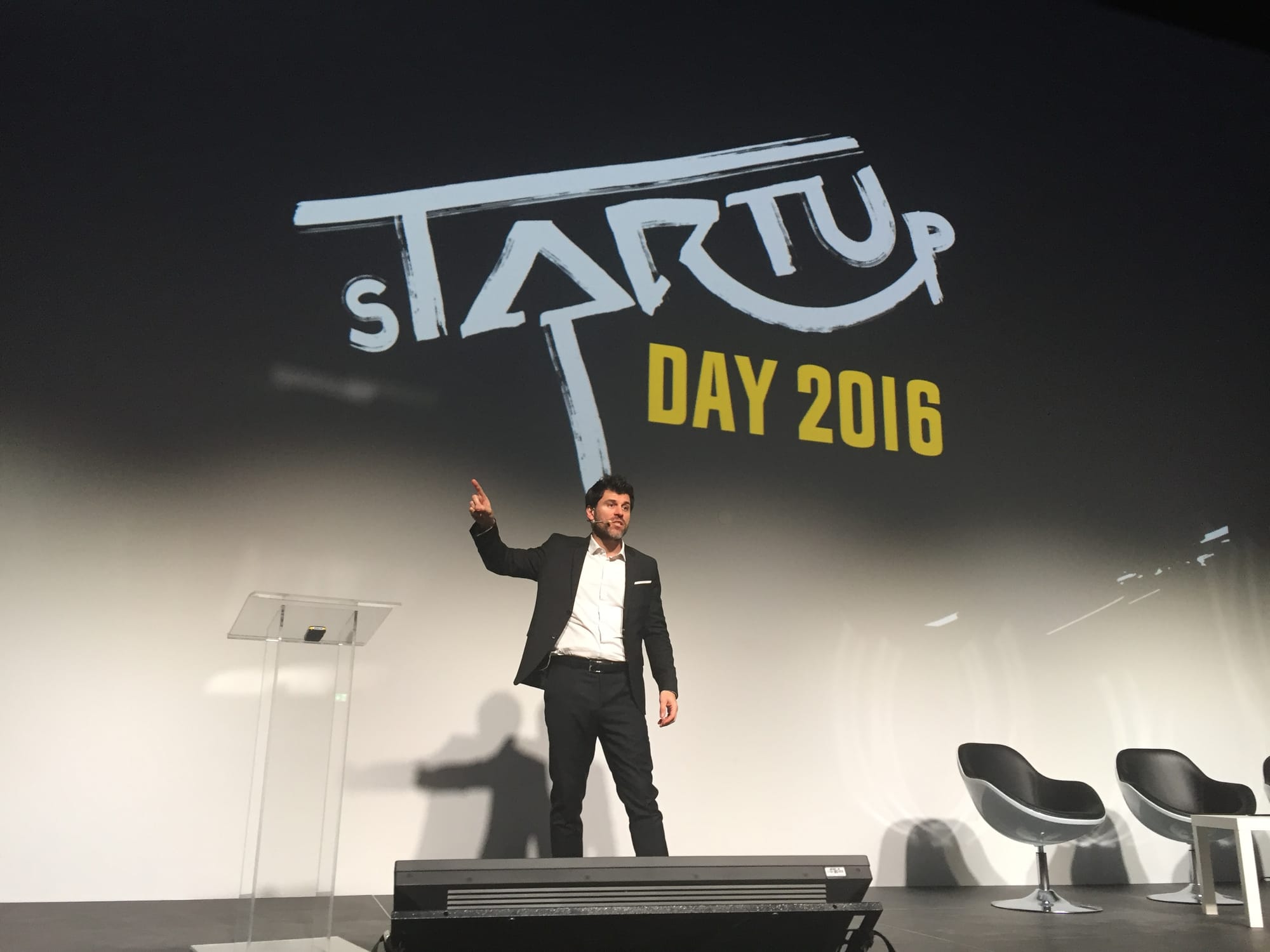
The beginning. Photo: Tarmo Virki
But that was just a decade ago, and if one were to really look at the dawn of the Tartu startup ecosystem, they might just head back to the turn of the century, when Playtech was founded in 1999\. In some way, Playtech, the online technology gambling company, embodied what people at the time thought the Estonian tech landscape would become: the back end, a development hub.
But over the next decade, things changed a lot. Dozens of new companies began to sprout up. Hackathons were held, source code was generated. An ecosystem came into place. Startup Day has become the flagship event, a collegial-feeling, low-key gathering that lacks some of the flamboyance of Latitude59 or Helsinki's Slush. But it's just one feature on Tartu's startup terrain.
Jana Saastamoinen is the managing director of EstBAN and recently relocated to Tallinn to lead it, after some years spent running Startup Day. She says that the Tartu ecosystem has become very strong.
> "It's a great sandbox community, and especially good for science-based startups."
She describes the Tartu startup sector as supportive, one where people genuinely work together, and have a shared goal of bringing more attention, investment, and community to the city. The universities – including the University of Tartu and the Estonian University of Life Sciences – generate new startups, but the Tartu Centre for Creative Industries also plays a role, she notes. Startups enjoy a general ease of doing business in a city of 100,000 people, where setting up a meeting with a potential investor can be as easy as, "Meet me at Werner Cafe in 30 minutes."
But there are drawbacks. Government funding often finds its way to the capital or regional development programs, but Tartu, which is not regional, is not always eligible for such funding.
Then there is just getting to the city, a two-and-a-half-hour train ride south from Tallinn, though some daredevil drivers claim they can make it in two hours. Finnair does fly here too.
"Even with Startup Day, attracting international visitors can be difficult," says Saastamoinen. "People look at the map and think, 'Oh, it's on the other side of Estonia.'" People from Tallinn are even known to be averse to making the trip down south. "There is a saying, 'Tallinn is closer to Tartu than Tartu is to Tallinn,' and having lived in both places, I can say this is true," she adds.
So what are the advantages of staying in Tartu? "The work-life balance is better," says Saastamoinen. "It's greener, calmer, and you don't have to spend an hour sitting in traffic there."
### **Where there's (no) smoke, there's fire**
One day in Tartu, I come face to face with two intrepid entrepreneurs on one of the upper floors of the Sparkup Tartu Science Park. This is tucked behind the Lõunakeskus shopping center, and from the windows on a July day, one can see drivers making orderly turns around a roundabout.
When Meerits put me in touch with Martin Timusk, the CEO and cofounder of FireSand, and his fellow founder, Martin Kannel, now COO of the startup, I imagined FireSand might be a biotech or space tech. But the company's main product is indeed *fire sand*, a solid fuel tablet designed for outdoor, military, and emergency applications. In a meeting room, the two Martins present me with a sealed cylinder containing FireSand, which is made from a silica-based gel material that immobilises ethanol, allowing it to be used as a solid, portable fuel.
These fuel tablets ignite in cold and damp conditions, burn cleanly, can be used for lighting fires in different scenarios, and leave behind a small amount of environmentally friendly sand-like material after burning. Each tablet burns for about fifteen minutes. Timusk, a physicist and associate professor of material science at the University of Tartu, invented the fuel tablet technology. Kannel, who is also head of IT at Cybernetica, liked the concept and joined in.
The company was registered in Tartu in 2025\.
In some ways, FireSand has been 25 years in the making. Kannel and Timusk, plus a co-founder, Raido Rõivas, now CBDO, have all known each other since they were undergraduates. When asked, Timusk, who is also FireSand's CTO, shies away from calling FireSand a deep tech.
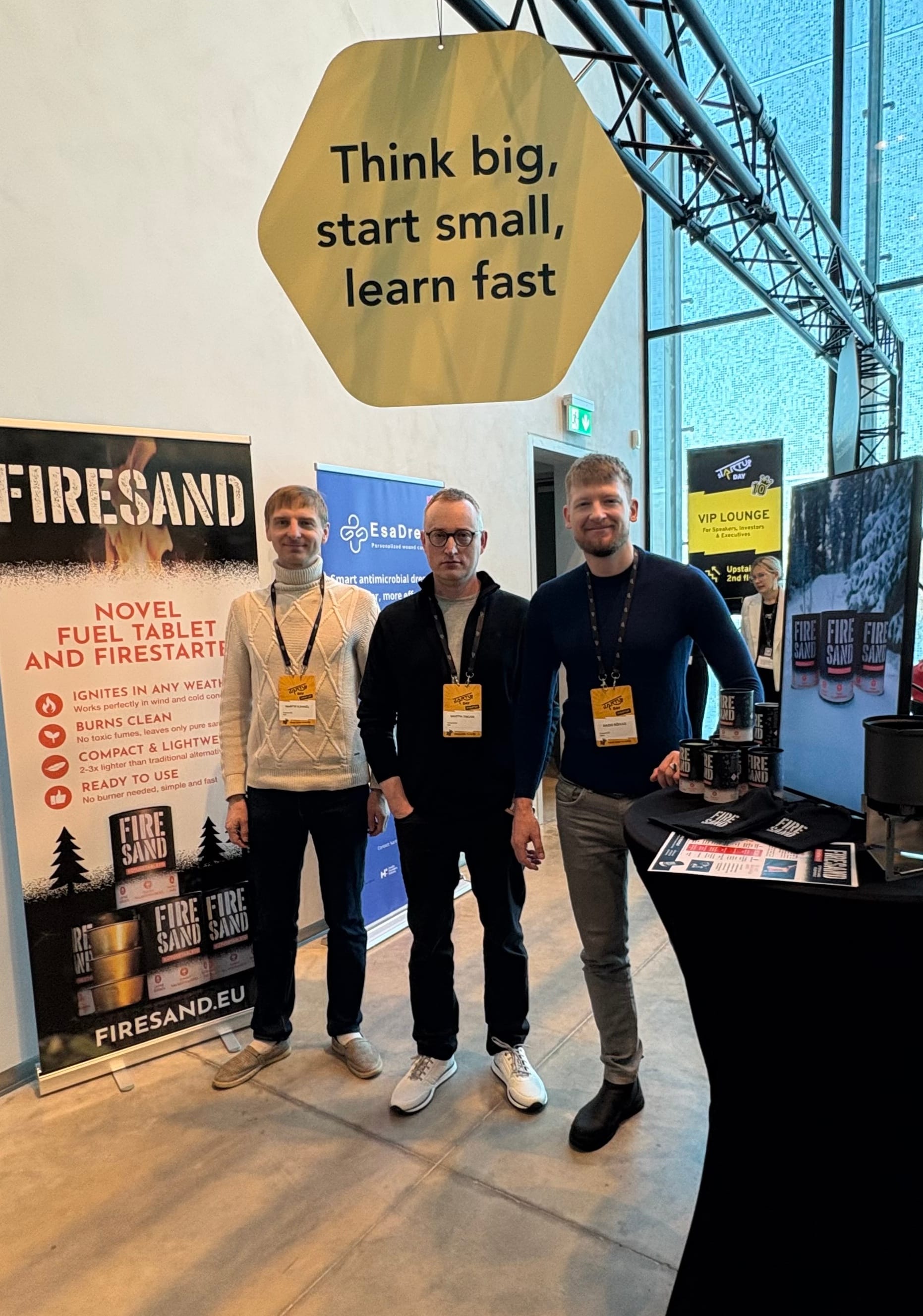
"My impression is that deep techs need a lot of money to reach commercialisation," he says. FireSand, in contrast, is looking for investments that will help it to scale production, optimise manufacturing, and accelerate market adoption. It is a technology company nevertheless, he says, one that showcases how Tartu technology is being commercialised and in a popular way. Because the end users of FireSand are not programmers or radiologists. They are hikers, soldiers; everyday people who need to start fires.
"The product has been trialed on the frontline in Ukraine and got good feedback," says Kannel. "From that perspective, you could say we are more of a defense tech company than a deep tech."
Kannel is, as could be expected, pleased with Tartu. "What makes doing business here good is that everything is within a 15-minute driving distance," he says. "Logistics, in the end, is time, which is never unlimited, and that is a clear benefit for us." He also credits the science park with helping the company get off the ground, putting in touch with mentors who have consulted FireSand on everything from product packaging to its business plans. They also got to take part in Startup Day in January. "We got a lot of contacts in Estonia and internationally," he says.
As cozy and compact as Tartu is, it is just a starting point. FireSand is active in Estonia only at the moment, but will expand south, into Latvia and Lithuania, where its founders have scientific collaborators, as well as into Finland, Sweden, and Norway, where a target customer base awaits.
"We have identified active hiking communities there," says Kannel, "and already have contacts with some of these groups."
## Sign up for Fomo.Observer
Startup stories from Estonia. Free weekly newsletter.
Subscribe
Email sent! Check your inbox to complete your signup.
No spam. Unsubscribe anytime.
### Fomo Academy: 8 book recommendations from the Fomo community
URL: https://fomo.observer/fomo-academy-8-book-recommendations-from-the-fomo-community/
Last updated: 2026-07-31T07:39:12.000Z
Looking for a book to read or listen to on your next vacation? Or need something keep you company on your work trips, or simply to inspire or educate you during a quiet moment?
Fomo Academy is putting together a reading list of recommended books from our startup community. Read on for a few to add to your reading list...
I’ve been asking some people from the Fomo community to give me the title of a book (business or other) that has either changed their life or impacted them in some way, and to tell us why.
### Triin Hertmann
Trauma is a big word, so I picked up [**The Body Keeps the Score**](https://amzn.to/3TJxI1d?ref=fomo.observer) by famous psychiatrist Bessel van der Kolk, thinking I'd learn a bit more about the actual brain mechanisms behind how it affects our feelings, triggers and behaviours.
I got so much more, as the book proceeded to explain half of my own and other people’s lives around me. It completely changed how I interpret reactions, relationships, and those moments when your brain says, "Everything's fine," while the body is clearly reacting the opposite.
Since reading it, I've become less judgmental of others, a little kinder to myself, and considerably more suspicious of anyone claiming we should all just "move on." It's one of those books I think every founder, manager, investor, and honestly, every adult, should read.
### Kärt Siilats
I have two books I keep coming back to and recommending constantly. [**Educated**](https://amzn.to/4wpH4xE?ref=fomo.observer) by Tara Westover is about how you can make yourself from absolutely nothing or even less than nothing, despite active obstacles from your surroundings.
And a business book, **Fundraising Field Guide** by Carlos Espinal. Not only a super practical guide from someone who has been doing it at a high level for a long time, but it also taught me a lot of what I know about startups and how investors look at them, and how he distributes it. Carlos allows founders to download it for [**free**](https://www.slideshare.net/slideshow/fundraising-field-guide/51492753?ref=fomo.observer), but encourages everyone to donate to his recommended charities if they find value in the book. Which I think is truly admirable.
### Liina Laas
[**Lessons in Chemistry**](https://amzn.to/4bkB2WC?ref=fomo.observer)by Bonnie Garmus is really sweet, sad, at times enraging, but also a very well-written story about a scientist (a woman) in the 50s…and all the kinds of stupid shit women had to go through and how she became a star on TV, staying true to her values. Heartwarming love story that turned into a grieving story, then survival, and winning against all that life threw at her.
[**The Power of Habit**](https://amzn.to/4w3xdgb?ref=fomo.observer)by Charles Duhigg is a super actionable book that explains why you need a framework to build habits. It has interesting anecdotes and research. I vibecoded a habits app for myself and family after that, so it seems to have worked!
### Karmen Jürisoo
I’d recommend reading [**Essentialism: The Disciplined Pursuit of Less**](https://amzn.to/3TNt1U6?ref=fomo.observer)by Greg McKeown.The reason why it changed my life was that I was the type of person who thought doing more meant achieving more. So my attention was split everywhere between many different business ideas, many different projects, etc., and the book talks about how to do fewer things but better, with better quality, which takes you further.
### Tarmo Virki
During high school, while studying in Finland, I read Garry Kasparov’s Maailmanmestari in Finnish, a book about winning and chess that left a profound mark on me. In English, I would pick up his [**How Life Imitates Chess**](https://amzn.to/4bgwFMo?ref=fomo.observer).
When I got into news reporting, I was completely captivated by the other side of journalism - Hunter S. Thompson and his wild, unapologetic gonzo stories. I would recommend not only Fear and Loathing in Las Vegas, but also [**The Great Shark Hunt**](https://amzn.to/451XQa7?ref=fomo.observer)**,** a collection of some of his best articles, true examples from a master in storytelling.
---
*Have you got a book that you would like to recommend for our Fomo Academy book series?* [*Get in touch*](https://www.linkedin.com/in/fionaalston/?ref=fomo.observer) *and tell us all about it.*
*Please note: There are affiliate links. They will not increase your cost, but will generate revenue for Fomo.Observer*
### REET KAURIT: Why salary transparency is good news for startups
URL: https://fomo.observer/reet-kaurit-why-salary-transparency-is-good-news-for-startups/
Last updated: 2026-08-17T11:58:29.000Z
For years, hiring has started with the same awkward dance. Candidates wanted to know the salary. Employers preferred to discuss everything else first. So both sides spent weeks avoiding the question everyone knew would eventually come.
*"What's the salary?"*
That dance is now over.
Under the EU Pay Transparency Directive, employers are expected to share salary information before the first interview. Just as importantly, they can no longer ask candidates about their current or previous salary.
Many founders see this as another compliance requirement, but I see it differently. I believe salary transparency has the potential to make startup hiring better, not because publishing a salary range magically improves recruitment, but because it forces companies to focus on what actually matters.
## **Transparency removes friction**
One of the biggest misconceptions is that salary transparency makes hiring harder. In reality, it removes one of the biggest sources of wasted time.
Imagine a startup refusing to reveal the price of its product until after three sales meetings. Most customers would simply walk away.
Yet that's how recruitment has worked for years. Candidates have gone through multiple interviews only to discover the salary was nowhere near their expectations. Hiring teams have invested weeks in people who were never realistically going to accept the offer.
Nobody wins.
Salary transparency doesn't raise expectations. It reveals them earlier. And that's a good thing.
## **Salary isn't what scares great candidates away**
One concern I hear repeatedly is that publishing salary ranges will reduce applications. I don't buy it. In my experience, salary ranges rarely scare away strong candidates. Poor hiring processes do.
Slow communication, five interview rounds without a clear reason, weeks without feedback, interviewers who aren't aligned.
That's what candidates remember. That's what they tell their friends. A salary range won't fix a broken hiring process, but hiding it won't save one either.
## **Startups have never won by paying the most**
Many startup founders worry they simply can't compete with big tech salaries. The truth is, they never could. And yet, great startups have always managed to attract exceptional people.
Not because they offered the biggest pay cheques, but because they offered something different: **ownership, responsibility, learning, speed, equity and the chance to build something meaningful.** Salary transparency actually strengthens that story.
When compensation is clear from the beginning, candidates make decisions based on the whole opportunity, not just the number. The people who still choose your startup despite knowing the salary are often exactly the people who will thrive there.
## **One of the best changes nobody talks about**
For me, one of the most important parts of the new legislation isn't salary ranges. It's the fact that employers can no longer ask candidates about their previous salary.
For years, negotiations often started with **the wrong question**, *"What are you earning today?"* But your previous salary says surprisingly little about your market value today.
Maybe you accepted lower pay for equity, maybe you stayed with the same employer while the market changed dramatically or maybe you were simply underpaid. None of those reasons should determine what your next employer offers you.
Instead, companies should ask two much better questions:
***What is this role worth?***
***What is this candidate worth to our business?***
That's a healthier conversation for everyone. It also pushes companies to build real compensation philosophies instead of negotiating every offer from scratch.
## **Transparency doesn't create unfairness**
Some leaders worry that salary transparency will create tension inside their organisations.
It probably will, but only where problems already exist. Transparency doesn't create unfairness. It exposes it.
If two people are doing similar work with similar responsibilities but earning significantly different salaries without a clear explanation, that problem existed long before salaries became more visible. Employees simply couldn't see it.
The companies that embrace transparency will inevitably build clearer salary frameworks, career levels and compensation principles. That's not just good for compliance. It's good leadership.
## Sign up for Fomo.Observer
Startup stories from Estonia. Free weekly newsletter.
Subscribe
Email sent! Check your inbox to complete your signup.
No spam. Unsubscribe anytime.
## **This isn't really about salary**
If there's one mindset shift I'd encourage founders to make, it's this: **Stop thinking this is about salary. It's about trust.**
Candidates expect transparency far beyond compensation. They want to understand how hiring works, how decisions are made, what success looks like and why they should join your company.
Salary is simply the first thing that's now required.
The startups that will continue attracting the best people won't necessarily be the ones offering the highest salaries.
They'll be the ones that can confidently answer three simple questions:
***Why this salary?***
***How was it determined?***
***Why is this company worth joining?***
Those questions have always mattered, now they simply matter earlier.
## **The companies that will benefit most**
Salary transparency won't suddenly make companies better at hiring. Poor communication will still lose candidates and weak employer brands won't become stronger overnight.
But transparency removes one of the biggest sources of unnecessary friction, for both candidates and employers.
The biggest cost in hiring isn't paying someone a little more. It's spending weeks on conversations that were never going to lead anywhere.
That's why I believe salary transparency isn't something startups should fear. It's an opportunity to build faster, fairer and more honest hiring processes.
And in a market where the best talent has more choice than ever, honesty is becoming one of the strongest competitive advantages a company can have.
---
[*Reet Kaurit*](https://www.linkedin.com/in/kaurit/?ref=fomo.observer) *is the co-founder of* [*TalentHub*](https://www.talenthub.eu/?ref=fomo.observer) *and one of the first recruiters at Wise. Over the past decade, she has helped hundreds of startups and scaleups hire technical specialists, leaders and executives across Europe. She regularly shares practical insights on recruitment, leadership and the future of work.*
### Six months, 150 stories, 30,000 readers, and the push for independent journalism
URL: https://fomo.observer/six-months-150-stories-30-000-readers-and-the-push-for-independent-journalism/
Last updated: 2026-07-28T15:13:44.000Z
TALLINN - "Tarmo, press the button!"
Six months ago at the Startup Awards, those words marked our official launch.
Triin was on stage, brilliantly unveiling the venture; Annika was shouting instructions from the crowd; and our tech infrastructure had quietly collapsed.
Our original publishing platform had completely failed to resolve our new, cool `.observer` domain just hours before we went live.
I was staring at a digital wall with absolutely nothing to push.
Welcome to startup life. You can script the perfect narrative and secure the perfect stage, but you cannot always control the plumbing.
Let's be honest, entrepreneurship is mostly about how you handle that broken plumbing. By April, we migrated our entire infrastructure, took back control of our platform, and kept building.
Building an independent media outlet is a reminder that the best stories often start with a disaster. Today, half a year and more than 150 stories later, that silent, button-less launch has evolved into a steadily expanding and highly engaged community.
### Driving public discourse and elevating builders
Filling the role of independent media as the fourth supportive pillar of the startup ecosystem, Fomo.Observer's mission is to honestly cover the success stories and lessons of the region's new economy.
Here are a few highlights from our first half-year of build.
Our most-read story of H1 was **Liina Laas'**s commentary on a situation she described as "pathetic and embarrassing." It was a story we hoped would be unnecessary. However, it was prompted by the government halting the adoption of the EU's equal pay directive, claiming that ensuring equal pay for women could present too much of a burden for businesses.
[LIINA LAAS: Pathetic and Embarrassing: Estonia’s war against pay transparency is a digital pioneer’s great betrayalEstonia is calling pay transparency a bureaucratic burden. For a digital country, that is pathetic. There are policy disagreements, and then there are moments when a government makes itself look embarrassingly small.Fomo.Observer](https://fomo.observer/liina-laas-pathetic-and-embarrassing-estonias-war-against-pay-transparency-is-a-digital-pioneers-great-betrayal/)
Following closely behind in readership were:
[KAREN K BURNS: Estonia Deserves Better Than This AI Advisory CommitteeLast week, the Estonian Prime Minister announced the formation of an AI advisory committee to guide government policy on artificial intelligence.Fomo.Observer](https://fomo.observer/karen-k-burns-estonia-deserves-better/)
[JANA BUDKOVSKAJA: Estonian angels have grown up. Now the government needs to catch up.Jana asks the Estonian government: “Please put five million on the table” for an angel co-investment vehicle. She promises extremely positive development in 3 years.Fomo.Observer](https://fomo.observer/jana-budkovskaja-estonian-angels-have-grown-up-now-the-government-needs-to-catch-up/)
[LIIS NARUSK: We need to talk about harassmentIt’s a spring Tuesday morning in Tallinn. I’m sitting in the office of an Estonian VC firm, listening to their vision for Estonia and for Europe. The room is full of the essence of the Estonian startup ecosystem: ambitious, optimistic, driven, intellectually curious people building the next generationFomo.Observer](https://fomo.observer/liis-narusk-we-need-to-talk-about-harassment/)
### **Building the foundation**
We create content in both Estonian and English according to the natural language of the content, avoiding 100% one-to-one translations to develop our own unique style. Over the second quarter, Estonian-language content clearly fell to the background, but this week, Triin revived it for her interview with Enel.
[Asutajate kogukonna pikaaegne hing lubab peagi naasta klubisseMõni kuu pärast seda kui mind valiti Asutajate Seltsi presidendiks kohtusin ilusal suvepäeval Enel Teinemaaga, kes oli kolm aastat Eesti Asutajate Seltsi tegevjuht ning viis organisatsiooni tegevused täiesti uuele tasemele. Tänaseks on ta edasi liikunud, kuid naudib praegu suvepuhkust. Eneli panus on olnud väga suur ning kogukonnas on ta tõelineFomo.ObserverTriin Hertmann](https://fomo.observer/asutajate-kogukonna-pikaaegne-hing-lubab-peagi-naasta-klubisse/)
Meanwhile, **Fomo.Academy**, driven and packaged by Fiona, has become an integral part of the publication. When we eventually get to creating our own pitch deck, we will at least know exactly where to find expert advice.
[Fomo Academy - Fomo.ObserverFomo Academy is where founders come to learn new skills. We create informative articles on all aspects of a founder’s journey so you can spend more time building and less time trying to work out how to perfect things like pitching, funding, marketing, getting media attention, and much more.Fomo.ObserverKarmen Jürisoo](https://fomo.observer/tag/fomo-academy/)
We also launched [Fomo.Podcast ](https://fomo.observer/building-cognitive-defense-inside-president-kariss-vision-for-estonias-ai-shift/)at Latitude59 interviewing Alar Karis, the outgoing president of Estonia. His term will end in October.
### **Growth, engagement, and sustainability**
We have taken a builder's approach: no fuss, focusing on what we know, telling stories directly from the community, and spending zero capital on advertising.
This strategy has organically reached approximately 30,000 readers so far. Our goal is to offer founders, operators, and investors the unvarnished truth about startup life, free from hype and gloss, yet supportive and fair.
We are even more proud of our nearly 1,000 newsletter subscribers. We send the most important stories of the week to our newsletter subscribers evry Sunday morning. Impressively, most of you open every single newsletter we send, a highly engaged cohort that includes several leaders of our local unicorn companies.
In the spring, we celebrated our first revenue as readers began supporting us through the contribution link at the bottom of our newsletter.
We want to always offer content to the end consumer for free. During the first year, we are financing activities from our own funds. However, next year, we aim to reach a funding model that will enable independent, sustainable operations in the future. Passion for the sector will only get you so far.
If you value independent journalism and can spare the resources to support the cause, please use the link below.
---
*If *Fomo.Observer* provides value or helps you navigate the startup ecosystem. Please consider supporting the independent pillar of the region’s new economy.*
[***Support FOMO and our independent journalism here.***](https://buy.stripe.com/7sY4gz5VZesH6HGdKCbV600?ref=fomo.observer)
**Spread the word.* If you know someone who would benefit from these insights, invite them to join the list or forward this email to them.*
**Join the conversation.* If you have a rebuttal, a strategic insight, or a question, simply reply to this email. Your feedback goes directly to our core team of professional journalists and entrepreneurs.*
### Meet the founder mixing supply planning with AI agents
URL: https://fomo.observer/meet-the-founder-mixing-supply-planning-with-ai-agents/
Last updated: 2026-07-28T10:38:21.000Z
From Tallinn to London, and back. Lately Fomo.Observer caught up with [Melanie Rannula](https://www.linkedin.com/in/melanierannula/?ref=fomo.observer) to talk about founding her latest venture, landing Pleo and what inspires her to succeed.
Rannula is the founder and CEO of [Leio](https://www.leio.io/?ref=fomo.observer), a digital supply planning assistant for food and beverage producers. It’s a small team of herself and two founding engineers, and they are building their AI agent in [ruum](https://fomo.observer/ruum-swings-into-action/), in Tallinn’s Kruli quarter.
Being from a unicorn-laden country is something Rannula finds inspiring on her journey to building the best tool for the food and beverage industry since the invention of sliced bread (or whatever makes the bread sliced!!). She says the unicorn trail in Estonian “lays the pathway for others - it doesn't mean it's easy, but it shows it's doable.”
A Tallinn native, Rannula always had designs on leaving Estonia when she was younger, with the desire to “go somewhere else and have a bigger impact in the world.” When it was time to go off to college, that opportunity presented itself through King’s College London, where she studied economics and management, then later a master's in Strategic Marketing at Imperial Business School.
### Landing Pleo
With her network in London, she stayed after her studies to work, gaining experience in some exciting go-to-market roles. While she was studying, one of the companies she had on her wish list was Pleo; she’d been watching it and had even applied while she was still studying. As she "couldn’t go full-time", she didn’t get the job but was told to apply when she finished her studies. That was the same year Pleo became a unicorn, and she went straight from her master's to a job during a very interesting time at the company.
> “From a learning perspective that's where I learned the ins and outs of sales, how to actually properly do it, \[and I\] really fell in love with it - and then obviously seeing the very hyper growth side of things like first hand as well as going from pretty much no structure because the team is smaller to suddenly you know close to 1000 people,” she says of her time at the spend management firm.
### Founding Leio
This is not Rannula’s first time founding a company. She started a company back in high school with friends. It was a platform called Crufty, an online marketplace for Estonian fine art and prints. This gave her her first taste of what selling physical goods looked like. It may have even sprouted an idea she spent the next few years contemplating until the timing was right.
After seven years in London and a stint off travelling, the timing was right to return to Estonia. “I started to think, okay, it's probably time to give my thing a go, or at least try it out, right? Or even if I don't know exactly what to do, it's better to figure it out in Tallinn than in South Kensington, right?!” she says.
> “I did loads of research interviews with supply chain managers and founders; we actually did over 150 interviews - essentially this is how it all kicked off - and kept hearing the same thing over and over again,” she explains. That one thing was solving the problem around procurement supply planning.
They got the first version of Leio together, had secured a company to try it out, and liked it, and it has all snowballed from there.
I’m curious as to why they chose the food and beverage industry to solve supply planning issues. It was simply down to the industry having the biggest problems to solve, taking production cycles and expiration of products into account, and that during her research “when we talked with potential users, they were the ones who were very vocal about it as well - earliest adopters is a good place to start from,” she says.
There is also an obvious sustainability aspect to what Leio provides in terms of reducing food waste. “I would say it's not the reason that customers come to us and buy it, but obviously it's a big byproduct,” she explains. Well, she did say she always wanted to make an impact!
The Leio team
### Getting technical
“When you start a business, you have to be very clear on the problem you're going to solve - and the other part of this is validation. Is somebody going to pay for this? Getting the prototypes ready today is super quick,” she says. We are talking about how she started her tech company as someone who doesn’t code. She tells me she did vibe code an initial version to get feedback, until she met founding engineer Reio Sedrik.
The pair then met Fred Kuiv through ruum as Leio was part of the first cohort at the hacker space. He later joined the team as a founding engineer.
### ruum
Becoming part of ruum came from its founders, Liisa Jõerüüt and Helery Pops, reaching out to offer the opportunity. At first she thought it would be great to “accept the free office space for a few months, but honestly, it's been a great experience,” Rannula says.
“When you're so early stage, it's actually pretty good to be in the same room with other early stage startups, because you know when sometimes you feel like, oh, you're working so much, but it's always good to see when it's 11pm and you're in the office, you're not the only one!” she adds.
### The dream
“Build something which will have the biggest positive impact as possible on the world and for the people as well,” she says when I ask what the dream is.
Aside from improving production, reducing waste, and “being optimal about it,” she says she wants this also for the good of the businesses using her AI agent. “Enabling them to grow a lot better as well, with good systems - from a personal perspective…people shouldn't do manual work that drains them; people should do things that add value, and I think it's pretty much going to be a win-win for everyone. So, yeah, that's the goal,” she adds.
## Sign up for Fomo.Observer
Startup stories from Estonia. Free weekly newsletter.
Subscribe
Email sent! Check your inbox to complete your signup.
No spam. Unsubscribe anytime.
### Asutajate kogukonna pikaaegne hing lubab peagi naasta klubisse
URL: https://fomo.observer/asutajate-kogukonna-pikaaegne-hing-lubab-peagi-naasta-klubisse/
Last updated: 2026-07-22T14:12:29.000Z
Mõni kuu pärast seda kui mind valiti Asutajate Seltsi presidendiks kohtusin ilusal suvepäeval Enel Teinemaaga, kes oli kolm aastat Eesti Asutajate Seltsi tegevjuht ning viis organisatsiooni tegevused täiesti uuele tasemele. Tänaseks on ta edasi liikunud, kuid naudib praegu suvepuhkust. Eneli panus on olnud väga suur ning kogukonnas on ta tõeline särav väsimatu korraldaja, keda tunneb peaaegu iga asutaja.
### Kuidas kirjeldaksid Eesti Asutajate Seltsi? Milleks see on loodud ja kes seal tegutsevad?
Eesti Asutajate Selts on minu arvates täiesti unikaalne. Ma ei tahaks öelda, et see on erialaliit, kuigi natuke peab end peeglist vaatama ja seda sõna kasutama. Pigem on see klubi või kogukond, mis toob kokku erinevate idufirmade asutajad.
Erinevalt teistest erialaliitudest, mille liikmeteks on ettevõtted, on see selts väga isikupõhine. Isegi kui asutaja pole enam aktiivselt oma ettevõttega seotud, näiteks on liikunud palgatööle või investeerimise poole, saab ta soovi korral seltsi liikmeks jääda, kui ta tasub liikmemaksu ja on valmis kogukonda panustama.
Minu meelest on see väga tore, sest meil on palju liikmeid, kes on ettevõtte ehitamise tee juba läbi käinud ja oskavad nüüd tagasi anda. Eestis on see kultuur uskumatult tugev. Meil on suur tahe, et ka teistel läheks hästi. See lükkab ümber müüdi, et eestlase lemmiktoit on teine eestlane, see ei päde siin üldse.
Seltsi eesmärk on algusest peale olnud luua platvorm, kus on lihtne omavahel suhelda ja kogemusi vahetada. Kuigi aegade jooksul on võetud uusi suundi ja kasvatud suuremaks – ollakse kaasarääkijad riigi suunal ja kogu sektori arengus –, on liikme jaoks põhiväärtuseks ikkagi see, et saab suhelda teiste asutajatega. Ka meie iga-aastased küsitlused seltsi liikmete seas kinnitavad seda ikka ja jälle. Näiteks kui küsida Slackis abi, võid mõne tunni jooksul saada vastuse mitme ükssarviku asutajalt. Ma ei tea ühtegi riiki, mis saaks midagi sarnast vastu panna.
On küll programmid nagu Y-Combinator, kus vilistlased suhtlevad, aga riigiüleselt on selline asutajatevaheline side väga haruldane. Möödunud suvel suhtlesin
Horvaatia asutajatega, kes ütlesid, et nad teavad oma riigist umbes 14 teist asutajat ja omavahel üldse ei suhelda – puudub igasugune võrgustik. Nad elasid täielikus isolatsioonis ja olid meie mudelist vaimustuses.
### Kui sa Asutajate Seltsi tööle asusid, siis sul kindlasti oli mingi ettekujutus sellest, mis seal olema hakkab. Mida sa kujutasid ette ja mis oli päriselt?
Kusjuures ega mul ei olnudki eriti ettekujutust, millesse ma ennast mässisin. Olin kodus, saanud just teise lapse, kes oli tol hetkel mõnekuune. Ma ei olnud kahe lapse vahepeal tööle tagasi läinud, neil oli väike vanusevahe, siis tegin lihtsalt aeg-ajalt mingeid projekte. Kui olin teise lapsega neli kuud kodus olnud, tundsin, et vajan vaheldust.
Sain tuttavaks Riinaga (Einberg), kes postitas LinkedInis, et otsib assistenti. See oli lõbus lakooniline postitus ja ma ei saanud päriselt arugi, mis see täpselt on. Kirjutasin Riinale: “Ma tulen! Palun, võtke mind!” Enne seda rääkisime Riinaga telefonis, kes püüdis mind isegi natuke ümber veenda, et suuri projekte siit oodata ei tasu. Õhtul ütlesin elukaaslasele, et ma asun kohe uuele töökohale. Ta oli üllatunud, aga nõus.
Kuna seda rolli varem polnud, ei olnud ka suuri ootusi. Ühelt poolt oli hästi lihtne tulla - kõik, mis teed, toob teistele rõõmu ja on väärtuslik. Esimese asjana oligi vaja aru saada, mida seltsis üldse teha saab ja kuidas see toimib. Kuna polnud kedagi, kellelt tööd üle võtta või kes oleks mulle ülesandeid andnud, oli alguses natuke kobamist, et mida siis teha või milliseid üritusi korraldada.
Väga põnev on olnud näha erinevaid juhatusi. Olen näinud nüüd nelja erinevat juhatust ja igaühel on oma nägu. Sellel on suur mõju millised eesmärgid president koos juhatusega võtab ja mis suunas minnakse. Ma arvan, et ükski juhatus pole olnud vale, vaid see ongi põhjus, miks selts on põnevalt kasvanud ja arenenud ega ole jäänud 16 aastaks samaks.
## Sign up for Fomo.Observer
Startup stories from Estonia. Free weekly newsletter.
Subscribe
Email sent! Check your inbox to complete your signup.
No spam. Unsubscribe anytime.
Uute ideede puhul on juhatus olnud alati väga toetav. Oleme saanud katsetada erinevaid formaate – mõned on läinud paremini, mõned halvemini. Näiteks tahaks, et ühised matkamised läheksid rohkem lendu. Minu kogemus on olnud ülipositiivne, olen saanud tuttavaks nii paljude ägedate inimestega.
### Kas avad natuke seltsi "köögipoolt" – eelmisel aastal korraldasime liikmetele üle 50 ürituse. See on see nähtav osa. Aga mis toimub taustal, millega juhatus ja sina veel tegelete?
Enel: Need üritused on tõesti nähtav pool, mitmed nendest üritustest on ka koostööprojektid, nagu näiteks Estonian Startup Awards. Aga sisuliselt sai igal nädalal kuskil käia. Lisaks suhtlevad liikmed aktiivselt Slackis kus käib ka palju privaatset suhtlust ja koostööd. See, mida juhatus teeb ei ole me olnud ehk kõige paremad kommunikeerijad. võiksime oma liikmetele rohkem rääkida sellest, mida me teeme.
Lisaks üritustele teeme tihedat koostööd näiteks MKM-iga, aga ka teiste riigiasutustega, et rääkida kaasa näiteks regulatsioonide teemal, mis idufirmasid mõjutavad. Suhtleme ka teiste organisatsioonidega nagu ITL, Startup Estonia, EstVCA ja EstBAN. Meie roll on olla sektori eestkõneleja ja esindaja. See nõuab pidevat kohalolu ja aruteludes osalemist.
Tänu seltsi presidentidele, kes on olnud karismaatilised esinejad, on meid märgatud ja võetud tõsiselt. Meie hääl on kõlanud meedias ja konverentsidel. See on aidanud kaasa sellele, et tehnoloogiasektorit mõistetakse paremini.
### Mis on sinu hinnangul selle kolme aastaga Eesti startup-maastikul muutunud?
Ühelt poolt on liikumine olnud väga heal kursil. Ettevõtted saavad järjest enam "päris" ettevõteteks – idufirma on küll algus, aga järjest rohkem mõeldakse sellele, kuidas ise kulusid katta ja raha teenida, mitte ainult investoritest sõltuda. Käibed ja kasumlikkus on tõusnud.
Teisest küljest, statistika ja numbrid näitavad, et vahepeal oli täielik õitseaeg ja buum, kus kõik justkui juhtus iseenesest. Kõik tahtsid teha idufirmat ja tundus, et asjad toimivad ilma suurema vaevata. Nüüd on see hoog veidi raugenud ja turg vajab uut tõuget.
Kogu kogu ökosüsteemi mõttes on kriitiline, et asutajaid tuleks pidevalt peale. Kui uusi asutajaid ei teki, tõmbuvad fondid ja kiirendid tagasi, coworking-kohtadesse tulevad idufirmade asemele vabakutselised ja me kaotame selle unikaalse positsiooni, mille oleme kätte võitnud. Seda on pärast väga raske taastada.
Meile meeldib kõike mõõta per capita. See on mõistetav, sest oleme väikesed, ja nendes edetabelites oleme tihti tipus. Kuid vähem räägitakse sellest, et meil on per capita ka ülitugev ökosüsteem – investeerimisfondid, inglinvestorid, kiirendid ja tugiprogrammid. See on märkimisväärne. Välisvaatest on Eesti praegu väga heas kohas – meid teatakse ja meist räägitakse. Seda positsiooni peab kõvasti hoidma.

Valitsus on meil ka olnud pigem tehnoloogiasektori-meelne. Mäletan eelmisest aastast, kui toimus Balti kogunemine ja kohtusime leedukatega. Nemad rääkisid, kuidas neil valitsuse vahetudes hakati startup-sektorit pigem takistama. Nad tegid nalja, et pakuvad poliitikutele rohkem palka kui nad muidu saavad, et nad lihtsalt mitte midagi ei teeks. Eestis on aga startup-viisa ja muud algatused aidanud sektorit hoida ja arendada. Isegi kui on olnud tõuse ja mõõnasid, on riiklikul tasemel mõistetud, et idufirmad on vajalikud.
### Mainisid, et meil on oht kaotada pealekasv. Mida me peaksime tegema, et uusi asutajaid tuleks peale?
See on küsimus, mida Eesti startup-kogukond on üritanud lahendada viimased poolteist aastat. Kas see on probleem? Mina arvan, et on. Suurt teaduslikku uuringut meil pole, miks uusi asutajaid peale ei tule, aga oleme püüdnud jälile jõuda.
Minu arvates on peamine mõjutegur üldine ebastabiilsus – nii geopoliitiline kui ka majanduslik. Kui olukord on ärev, otsivad inimesed stabiilsust. Idufirma alustamine või seal töötamine ei ole kõige stabiilsem valik. Inimesed lükkavad edasi oma majaostuplaane ja samamoodi lükatakse edasi ka idufirma asutamist. Soovitakse pigem kindlat tööd, mida saab teha distantsilt ja kindlas ettevõttes. Seda ebastabiilsust me ei saa kohapeal lihtsalt muuta.
Ma ei usu, et meil talenti napiks. Meil on palju inimesi, kes on võimelised idufirmasid asutama. Nad on oma uue väljakutse otsingul ja mõtlevad sellele. Kindlasti on oluline ka välistalentide siia meelitamine.
Meil on vaja luua julgustav keskkond. Selts on küll tore ja kokkuhoidev neile, kes on juba sees, aga neile, kes on väljaspool, pole sisenemine nii lihtne. Meil pole täna sellist kogukonda, mis oleks loodud spetsiaalselt alustavatele asutajatele. Kiirendid on mõeldud juba toimivatele ettevõtetele, meil on vaja tuge just tee päris alguses. Samuti pole meil fonde, mis toetaksid asutajat päris algfaasis ning ka ingelinvestorid on muutunud ettevaatlikumaks.
Meil on vaja ka naisasutajaid rohkem julgustada. Naised on tihti riskialgatuses ettevaatlikumad, aga kui nad on juba asutajad, on nad väga edukad.
Ka noorte seas on palju asjalikke tegijaid, kuid see põlvkond ei näe enam läbipõlemist ja ööpäevaringset töötamist millenagi, mida ihaldada. Nad otsivad tasakaalu. Samas nõuab idufirma asutamine ja arendamine alguses tohutut panustamist. Võib-olla tuleks seda kuvandit muuta ja näidata, et see on eneseteostus ja võimalus midagi ära teha, mitte lihtsalt investorite raha põletamine.
Ühiskonna suhtumine idufirmadesse on vahel ikka veel negatiivne – arvatakse, et see pole "päris" äri ja tegeletakse mullide puhumisega. See hoiak vajab muutmist, sest tegelikult on tegemist oluliste maksumaksjate ja töökohtade loojatega. Vaja on uut positiivset lainet, kus idufirmade tegemist võetaks kui rahvussporti ja uhkuse asja.
### Sa oled korraldanud palju üritusi. Nende käigus juhtub kindlasti mõndagi. Mis on olnud sinu jaoks selline kõige meeldejäävam "appi, mis nüüd saab!" hetk?
Ma olen näinud igasuguseid asju – peo ajal on hakanud katus põlema... Mitte päris peo ajal, vaid vahetult enne. See oli ühel suurel pangaüritusel. Tuletõrje ja päästeamet tulid kohale ning hakkasid tegutsema. Kuna külalised juba ootasid, suunasime nad improviseeritud ekskursioonile teistesse ruumidesse, kuni saime olukorra kontrolli alla.
Teine juhtum oli ühel suurema startupi üritusel, kus oli umbes 60 inimest. Seal juhtus lihtsalt rida asju järjest: üks inimene läks ujuma ja hakkas uppuma, kutsusime merepääste ja kiirabi.
Enne kui kiirabi jõudis lahkuda, kukkus keegi teine ronimistornist alla ja jälle oli vaja kiirabi. Siis hakkas kuskil midagi suitsema ja tuli päästeamet. See oli selline üritus, kus kõik võimalikud päästeteenistused käisid kohal. Aga lõpuks see raske olukord liitis inimesi ning ettevõtte juht lahendas selle olukorra suurepäraselt, säilitades täieliku rahu ja kontrolli.

Töötasin kunagi AHHAA Keskuses ja meil toimus majas erinevaid firmaüritusi. Ühele ettevõtte peole toodi kohale hobune, kel oli programmis miskine roll. Hobune sai muidu oma rolliga tublisti hakkama, aga kas suurest stressist või mingil muul põhjusel läks tal kõht lahti. Ja edasi saab igaüks juba ise ette kujutada... Tegu polnud küll EFS üritusega, aga sel ajal juhtis ettevõtet üks hilisem startup-asutaja, kes tänaseks ka EFS liige, väike Eesti!
### Mis on olnud kõige naljakam või eriskummalisem soov, mis mõnel esinejal või asutajal on olnud?
Me korraldasime kord Coca-Cola Euroopa turundustiimi konverentsi, kus osalesid nende USA juhid. Lisaks sellele, et neil olid väga spetsiifilised nõudmised autode osas, mida Eestist oli raske leida, oli neil nimekiri jookidest, mis pidid olema hotellitubades kindlal temperatuuril. Igale joogile oli märgitud oma temperatuur. Me pidime tühjendama kõik minibaarid ja asendama need täpselt nende jookidega õigel temperatuuril. See oli päris hullumeelne logistika.
Aga kui rääkida idufirmade asutajatest, siis nemad on tegelikult kõige lihtsamad ja maalähedasemad inimesed. Nad on väga mõistlikud. Mul on kogemus paljude teiste tippjuhtidega, kes võivad olla väga nõudlikud, aga asutajad on tavaliselt väga tänulikud ja saavad aru, et kui on vaja midagi teha, siis tehakse seda koos.
### Kui sa saaksid olla üks asutaja üheks päevaks, siis kes sa oleksid?
Oleks põnev olla keegi Anthropicu asutajatest – prooviksin sel päeval mõlgutada võimalikult palju strateegia ja tulevikumõtteid.
Eesti asutajatest piiluks heameelega Markus Villigi tööpäeva kulisside taha, loodetavasti jaksaks trenni ka ära teha.
### Kui sa peaksid kellegagi minema metsa luurele, siis kelle sa seltsist kaasa võtaksid?
Ma võtaksin kellegi, kellega on lihtsalt tore rääkida ja nalja teha. Lisaks kellegi, kellel on relvaluba – igaks juhuks!
### Mis sa arvad, kas Eesti asutajad on pigem liiga tagasihoidlikud või liiga enesekindlad?
Ma arvan, et neil on olemas tervislik enesekindlus, mis põhineb sellel, et nähakse teiste edu ja mõistetakse, et kui nemad saavad hakkama, saame ka meie. See on väga edasiviiv jõud. Samas on eestlased loomult pigem tagasihoidlikud ja meil ei ole sellist tugevat müügikultuuri nagu mõnel teisel rahvusel.
See paistab silma esitlustel – eestlane räägib asjadest täpselt nii, nagu need on, ega hakka midagi suuremaks rääkima, erinevalt näiteks ameeriklastest. See tagasihoidlikkus ja ausus võib vahel olla isegi kasuks, sest see tekitab investorites usaldust.
### Kes on sinu arvates olnud seltsile kõige suuremaks toeks selle kolme aasta jooksul? Kas tahaksid kedagi tänada?
Üks suur aitäh kogu startup kogukonnale – puutusin kokku paljude erinevate kogukonna esindajatega ning kõik on olnud üli toetavad ja abivalmid. Vähemalt sama suur aitäh EFS liikmetele – mitte ainult toetuse ja sõbralikkuse eest, aga ka teie "teeme ära" mõttemaailma eest, millega suutsite mind korralikult nakatada.
Erilised tänud EFS juhatustetele – on väga inspireeriv näha kui mitmed tippmängijad on valmis oma aega ja energiat suunama Eesti idusektori käekäigu parendamisesse ning tegema seda sealjuures tasu saamata.
### Mis on sinu järgmised plaanid?
Mul plaanis teha oma idufirma, täita Asutajate Seltsi liitumistingimused ja tulla liikmeks! Siis saan hakata jälle käima kõigil neil pidudel ja üritustel külalisena. Aga seniks soovin lihtsalt seltsile edasist edu ja põnevaid aegu.

### It’s not TooEarly to start a new galaxy
URL: https://fomo.observer/its-not-tooearly-to-start-a-new-galaxy/
Last updated: 2026-08-03T20:05:48.000Z
Fomo visited [TooEarly Ventures](https://tooearly.eu/?ref=fomo.observer) at their home in the EBS building in Tallinn. Admittedly, I’m not new to the venture studio; I first met founders [Triinu Lukas](https://www.linkedin.com/in/triinulukas/?ref=fomo.observer) and [Aneth Tinnus](https://www.linkedin.com/in/anethtinnus/?ref=fomo.observer) when they invited me to cover one of their defence tech hackathons, the DefHack Resilience edition, for another publication during the winter.
Back then, their involvement was with Beamline Accelerator, but TooEarly was mentioned - it became a bit of a joke that every time I saw them afterwards, I didn’t know if it was too early to visit the venture studio or if they were just reminding me what it was called.
Anyway, it’s summer in Tallinn and what better way to spend a glorious sunny day than going to visit the hive of activity they have been building to ‘help bold ideas become high-growth companies in six months’?
### The climb
Nestled in a fifth floor wing of the EBS building on Lauteri tänav in Tallinn's city center, there are plenty of steps to climb before you get there, but once inside the venture studio and co-working space the steps become easier. You begin reading the post-it notes as you climb to words like ‘innovation’, ‘growth’ and ’creativity’. Not sure if it’s intentional but the reading distracts from the increasing heart rate of the climb and you almost forget the effort you took on a hot day to scale them.
We settle into the chat as I’m keen to know how the pair met. Lukas confesses that she never saw herself ending up ‘in business’: “definitely not in a capitalist world,” she says, as she tells me her background was in the humanities and social sciences. To be fair, the remit for TooEarly Ventures does contain some directions of the moral compass that she set out using early in her career, so she has hardly sold her soul to the devil.
Tinnus’ background is in psychology and organisational behaviour, and she's worked in marketing with different brands in Estonia and across Europe. It was a relative of Lukas' who introduced the pair - Lukas declares Tinnus the ‘sharpest pencil in Tallinn’. At that time, Lukas was CEO of Beamline Accelerator and brought Tinnus in, and after four years of working together and agreeing that the best part of the job is dealing with the very early stages of the startup journey, they decided to set up a sector-agnostic venture studio together.
### Venture studio
Venture studios have been slowly cropping up around the European ecosystem for the past few years. I’m keen to know the exact difference between it and VC, or even between incubators and accelerators.
Lukas uses a Tinder analogy to clarify the VC part. “You meet up sometimes when you want to get lucky at shareholder meetings, right?! But Venture Studio is more, let's say, bringing up your kid together - it's a very committed relationship, at least the first year - this is our approach to it,” she says.
> “This is basically like the co-building model in some sense. We see the good idea of a good founder and then validate this idea together with them - we have the validation sprint mechanism and then later on some of the founders go on to the next phase, the builders programme,” says Tinnus.
The validation programme is two months during which they work with founders to see if their idea will lead to clients. Sales is the primary goal, and if, in the two-month period, there is not a clear path to it, it will result in a pivot or they will leave. Lukas and Tinnus make it clear that the period is also about getting to know the teams, how they gel, and how founders handle themselves. So far, seventeen ideas have passed the programme, but not all of those seventeen have survived.
Fast sales are what they are looking for, really; they are looking for founders who are less ‘focused on the investment loop and more focused on customers.’ They should be in D&D, says Tinnus; she means Digital and Deeptech, not the fantasy tabletop role-playing game!
We are chatting in the lower kitchen area when one of the founders drops in to grab himself coffee. It’s [Alonso Solis](https://www.linkedin.com/in/alonso-solis-a5b88020a/?ref=fomo.observer), CTO and co-founder of Guardian, smart tech for elderly care. He tells me Guardian will be featured in the Fomo’s [Estonia's TOP10 healthtech startups in 2026](https://fomo.observer/estonias-top10-healthtech-startups-in-2026/). It’s a nice moment to hear someone talk about Fomo.Observer without initiating the conversation.
### Investment
For now, any investments in the hopefuls that excel at TooEarly come from the EBS side. We discuss whether TooEarly will be raising a fund, and it's a clear yes; it's on the cards. They say they have some interest from Estonian funds, as well as from the huge pool of EBS alumni talent who have gone on to do well for themselves. But for now, it's not worth more than a mention. I just hope I get the exclusive news when it is!

### The new space
Surprisingly, on a sunny summer day in Tallinn, the office has some activity. Aside from the validation programme, TooEarly also has a co-working space, so there are plenty of builders around at different stages of the startup journey.
Events are also held in the space, and once a month you can learn and network at the TooEarly Wednesdays meet-up. The next one [#7: Psychology of Investing](https://luma.com/gznj1t0s?tk=PpaPvO&ref=fomo.observer) is held in August, on a Thursday, so you can tell these guys are adaptable to the needs of their audience!! The Guest speaker will be Alexandra Balkova talking about the decision process, cognitive biases and the emotional part in investing.
The exciting news is that the venture studio will move to the building currently being built at the back of the EBS building sometime around spring next year. The [Eedu building](https://eedu.ee/en/?ref=fomo.observer) is being purpose-built as an education and business campus.
> “Bigger premises, bigger event venues, more startups, more idea owners, and even better rooms for them to build what they have to build,” they tell me.
For now, they are 'perfecting their secret sauce, fine-tuning their methodology', and finding the most impactful founders to work with. They want to build a galaxy, with the startups as the stars. Personally, I think they are looking at it all wrong; they are the stars, illuminating the Estonian ecosystem cosmos, just with terrible analogies and bad jokes!
### ruum swings into action
URL: https://fomo.observer/ruum-swings-into-action/
Last updated: 2026-07-18T08:01:09.000Z
Last week I popped along to [ruum](https://www.ruumtallinn.com/?ref=fomo.observer) to see the new space, listen to Plural VC’s Taavet Hinrikus field questions from the new summer cohort, and catch up with the organisers to see how it’s all coming together in the Krulli hacker space.
ruum’s summer residency drew a huge amount of Estonia’s next top talent (hopefuls) out from behind their screens and into the Krulli Quarter building to gather, inspire, bond and build. The opportunity saw over 220 applications for a chance to snag a spot on the 6 week long experience. A lucky bunch of 60 builders made it past the threshold and are now busy moving their ideas into something substantial enough to pitch in August.

[Tim Vaino](https://www.linkedin.com/in/tim-vaino/?ref=fomo.observer), investor manager at Practica Capital and ruum number one fan, told me how the team managed to whittle the applications down to the chosen few. Some teams got automatic promotion due to the “seniority of the people who were building the teams, and then we had an acceptance hackathon where everybody else could participate - it was natural selection by the strength of the idea and the team,” he tells me.
One of those more mature types, in terms of startup experience of course, is Ott Ilves with his most recent startup Display.dev just [raised €470,000](https://fomo.observer/ai-agents-collaboration-tool-raises-eur470k/) in pre-seed funding to grow its publishing and collaboration platform for AI agents.
The space has now expanded to two floors and many of the companies from the first cohort are still housed in the original space including [Bilt.me](https://fomo.observer/bilt-me-built-in-ruum-helping-entrepreneurs-worldwide/) and Leio.
### Choose carefully
The Q&A session with Hinrikus really covered multitudes but a couple of nuggets I will share are...he said when you are looking for investment do decent reference checks on the investors. “Especially with founders from companies where things went badly, and see how investors behaved then,” he advised.
On choosing the right co-founder he said that co‑founders are in the same category as spouses and investors, in terms of how hard they are to divorce. Spend real time together, see each other in stressful situations and understand each other's motivations before fully committing.”
I managed to grab a quick word with him as he was making his way out of the building. “I think it's amazing to see programmes like this, just giving people a push and acceleration to try to build something. We need to grow the ecosystem, and programmes like ruum are a great way of doing this. I'm very happy that I was here speaking to them, and very happy to be a supporter," he said.
### A community effort
The ruum hacker space was co-founded by [Liisa Jõerüüt](https://www.linkedin.com/in/liisa-joeruut/?ref=fomo.observer) and [Helery Pops](https://www.linkedin.com/in/helerypops/?ref=fomo.observer) and as well as having Vaino as a number one fan, it also has [Marko Klopets](https://www.linkedin.com/in/mklopets/?ref=fomo.observer) and [Kaja Aulik](https://www.linkedin.com/in/kaja-aulik/?ref=fomo.observer). The summer residency is now two weeks into the six week stint.
Jõerüüt tells me that even since the launch they are still getting queries about ruum. “So there are more builders and people building in the space - we for sure haven't reached all the people that we could - that's really exciting. People are building in Estonia, I think that's the coolest thing,” she said.
“It's a community effort,” she tells me, “and we have such great partners around us. [Skaala](https://skaala.org/et/home/?ref=fomo.observer), our main backers, and \[also we have\] Swedbank, Trind Ventures, 2°C Ventures, Specialist VC and people pitching in of their own free time,” she adds, explaining that it’s still all done on a voluntary basis.
“We enable the playground, and it's up to you to utilise the playground,” says Vaino before he heads out the door, only to return later with his freshly groomed, very enthusiastic dog.
ruum is in full swing. Dogs are welcome!
### Fomo Academy: Marketing on a budget
URL: https://fomo.observer/fomo-academy-marketing-on-a-budget/
Last updated: 2026-07-16T12:25:36.000Z
Need to start marketing your startup but you haven't quite got the budget for that yet? Not to worry, because there are still ways to start marketing your startup with tools and resources you already have. By the end of this article you will have a simple, doable plan to start posting this week.
You don't need a big ad budget to get attention anymore, but you do need a way to stand out, and that part feels harder than ever because everyone's posting and people’s attention span is getting smaller and smaller so it’s harder to be memorable.
Today, organic content has become one of the most impactful tools for early-stage companies because it gives founders direct access to their audience with the possibility to reach thousands if not millions of people. It should be taken seriously, if your goal is to grow and scale.
### Find your audience
Before building any content plan or taking out your phone to film, founders should have clear answers to these questions:
- Who am I trying to reach?
- What problem does my product solve, and how do I communicate it to the world?
- Who is most likely to be my first customer?
Then one of the most important questions:
- Where does your audience actually hang out online?
This sounds obvious but most founders don’t think about it, and just post wherever feels comfortable. Instead, think about it like this:
- B2B, professional services, recruiting, SaaS for businesses → LinkedIn
- Consumer products, lifestyle, visual brands → Instagram and TikTok
- Niche, technical communities → X/Twitter or even Reddit and Discord
- Local or service-based business → Instagram and Facebook (yes, still Facebook for some audiences)
Pick one main platform to start. You can always expand once you're consistent somewhere and get more comfortable with content creation. Trying to be everywhere at once with no marketing team is how most founders burn out.
### You don't need fancy equipment, you just need a phone
Probably the biggest myth stopping founders from posting is that you need a camera setup, a ring light, editing software, and a whole content team. You don’t. (Yes they help, but not necessary to start.)
Here’s what you actually need:
- Your phone camera (yes, the one in your pocket)
- Natural light
- A clean background
The content that performs best on social media right now is the stuff that looks natural to the platform and not overly edited. The subject and core of the content matters more than the editing style (there are many viral videos that are just talking videos and not edited at all) A founder talking straight to camera in good lighting will outperform a polished and scripted one, because it feels more authentic.
### Free tools that do 90% of the job
You don't need to pay for anything to get started. These three cover almost everything:
- [Canva](https://www.canva.com/?ref=fomo.observer) \- for any graphic, carousel, or static post, templates included
- [CapCut](https://www.capcut.com/?ref=fomo.observer) \- for editing short form content
- Notes app (or even pen and paper) - for batching content ideas so you're not starting from zero every time you sit down to post
- Google Drive - for file and content organisation (if needed)
That's it. No fancy software, no monthly subscriptions to start.
### Building a content plan
I always say to people - don’t create, **document instead.**
Documenting means filming what's already happening in your business instead of scripting something new every time. It's lower effort, feels more authentic, and performs better anyway.
Start with your customer, not your product. Write down ten questions your ideal customer would ask about the problem you solve, not about your product, but about their situation. What keeps them up at night, what they Google at 11pm, what they complain about to their friends. Now you have ten pieces of content: turn each one into a 30-second reel or quick carousel answering that specific question.
A few things that keep people watching instead of scrolling:
- **Hook** \- you've got 1-2 seconds before someone scrolls. Lead with the question, not your company name. You need to spark some curiosity.
- **Tone** \- talk like a person, not a brand. (Pretend you’re on FaceTime with your friend)
- **Subtitles** \- always, a lot of people watch content on mute, plus it makes the video more engaging.
- **Confidence** \- This comes with practice, you train it like a muscle. I promise, video five feels a lot less awkward than video one.
Film your team building, talk about the story behind your startup, share some funny lessons, and talk about why you’re building what you’re building. People buy into founders and teams, not only products.
Keep in mind everyone watches content for themselves, so if the topic is about you and your team, make it entertaining to the person that sees your content for the first time.
### Use trends, but don't depend on them
Trends can be a useful way to get extra reach, jumping on a trending sound or format can put you in front of people who'd never have found you otherwise.
But trends shouldn't make up the majority of your content, and here's why: trends are not original, and a brand built mostly on trends doesn't actually build a brand, it just borrows attention for a few seconds.
What actually builds a brand is the stuff that's yours only: your story, your process, your opinions, your team. A good rule of thumb: max one out of every 7-10 posts should be trend based, the rest should be content only you can make. And remember, not every trend is worth jumping on, make sure it fits your brand.
**If you take one thing from this**: start with one platform, your phone, and one free tool, and post consistently. You don't need more than that to begin. Everything else, you figure out as you go.
[*Karmen Jürisoo*](https://www.linkedin.com/in/karmen-j%C3%BCrisoo-716035254/?ref=fomo.observer) *is the social media manager at Fomo.Observer and owner of marketing consulting business* [*Femora Consulting*](http://www.femoraconsulting.com/?ref=fomo.observer)*.*
### From Veriff to lockers: Taavi Lindmaa's quest to eliminate a receptionist (or two)
URL: https://fomo.observer/from-veriff-to-lockers-taavi-lindmaas-quest-to-eliminate-the-autreceptionist-or-two/
Last updated: 2026-07-14T14:19:01.000Z
TOOSIKANNU, Estonia — For more than a decade, [Taavi Lindmaa](https://www.linkedin.com/in/taavilindmaa/?ref=fomo.observer) helped fuel the rapid rise of some of Estonia’s most prominent financial technology and healthtech platforms. But after years of shaping early-stage corporate growth for others, the veteran operator is betting on a new direction: eliminating human intervention from global rental and automotive logistics through software.
Lindmaa, an early business development force at identity verification giant Veriff and compliance platform Salv, is now focusing his efforts on a new software startup, [Autlio](https://autlio.com/?ref=fomo.observer), aiming to automate key handovers and operational workflows for car dealerships and rental companies globally.
"At some point, you realise that forging your own path, breaking new ground, is incredibly hard work," Lindmaa said in an interview on the sidelines of the Investment Festival in central Estonia. "But I have this ambition. I don't need to lead hundreds of people. I prefer very small, compact teams. But I wanted to be an entrepreneur and build my own thing."
### From California mustangs to Estonia's garage culture
Lindmaa's path to tech operations began roughly thirteen years ago following a stint working in New York. Upon returning to Tallinn, he crossed paths with Martin Villig, co-founder of what was then a nascent ride-hailing app called Taxify (now Bolt).
"I ended up at the Garage48 hub in Rävala, where Martin Villig was managing things," Lindmaa recalled. "It was basically a one-man show back then. I asked him what he was working on, and he said some sort of taxi application. I had just come back from California, where I was driving a Mustang and a Lincoln with my own personal driver, feeling quite proud. I thought, 'Ah, that taxi thing is so yesterday. I need something new and exciting'."
Instead, Lindmaa joined Veriff in its early ranks as its tenth employee, followed by a foundational business development role at Salv, where he re-utilised his network to establish the company's initial business models and client relationships. Later, he transitioned to healthtech, managing microbiome and gut-health testing tools at Elsavie.
Despite the high-growth environment of Estonia's booming startup ecosystem, Lindmaa felt the pull of independent execution.
> "Selling your own hours as a consultant has never appealed to me," Lindmaa noted. "The initial question was always driven by passion—the desire to do something myself, to be an entrepreneur, and to build my own product."
## Sign up for Fomo.Observer
Startup stories from Estonia. Free weekly newsletter.
Subscribe
Email sent! Check your inbox to complete your signup.
No spam. Unsubscribe anytime.
### Disrupted logistics: The digital key box
Lindmaa’s current venture targets a historically rigid sector: the brick-and-mortar automotive service industry. The company develops software designed to integrate with physical smart locker systems and key boxes, allowing car dealerships and repair shops to facilitate 24/7, contactless vehicle drop-offs and pick-ups without needing a physical receptionist.
While the hardware components resemble traditional parcel lockers, Lindmaa insists the value lies entirely in the software layer that coordinates post-service processing and automated client communication.
"If you look at the big picture, like grocery stores today — if a store doesn't have self-checkout, I most likely won't go in. I don't want to stand in a traditional queue," Lindmaa said.
> But the automotive service world is still in its infancy. It hasn't caught up. If you want service, you're bound to an 8-to-5 window. Dealers have been incredibly service-centric, but in a way that forces the customer to adapt to them."
The startup's primary focus is streamlining the backend communication after a customer drops off their keys. "The typical use case is a customer arriving after hours, leaving their keys in a basic dropbox. The workshop has no immediate data context on what needs to happen, creating security risks and administrative friction," Lindmaa explained. "We are connecting this physical piece to the entire after-sales service process."
### Keeping the team lean
Currently operating with a lean team of four people alongside specialised consultants, the company is preparing for international expansion later this year after validating the product within its domestic sandbox.
The strategy relies heavily on the evolving capabilities of artificial intelligence to maintain a minimal headcount while serving a global client base — a shift Lindmaa believes redefines early-stage startup scaling.
"In the current AI landscape, you see that with a team of three to five people, you can easily pull off a multi-million dollar exit. It's more than enough," Lindmaa said. "We want to reach a point in the next couple of months where the software handles everything seamlessly from product management to basic customer support."
### TRIIN HERTMANN: My trip to Riga - lost my jacket but I gained some inspiration
URL: https://fomo.observer/trinn-hertmann-my-trip-to-riga-lost-my-jacket-but-i-gained-some-inspiration/
Last updated: 2026-07-13T11:12:09.000Z
It’s been a special week. Founders from Estonia, Latvia and Lithuania got together in Riga to share cool founding stories, talk about challenges and to party. Not the regular meet up where we usually compare charts and discuss who is doing better in terms of new startups or VC funding.
The Baltic Founders Mingle was started three years ago by Sten Tamkivi, Taavet Hinrikus, Rytis Vitkauskas, Tomas Okmanas and [James Berdigans](https://www.linkedin.com/in/berdigans/?ref=fomo.observer). Hosted in Vilnius and Tallinn in last two years, the most successful and promising founders from across the Baltics gathered once again - this time with a rooftop view over Riga in FYUL’s (previously Printful+Printify) beautiful office. The event was hosted by Berdigans who is CEO and founder of FYUL and supported by Aleph, Plural, Tesonet and DIG Ventures.
I loved every bit of the content that flowed from defence cooperation to founders’ resilience topics. We were greeted by Latvia's new Prime Minister Andris Kulbergs who had his little son with him – obviously as the kindergartens are closed in July. It really resonated with the crowd when Kulbergs said in his speech, “there should not be small and large countries, but fast and large countries.” We all have always been super good with our limited resources and we should be even better in learning and cooperating with each other.
On the panel, which had a founder from each of the Baltic States (Estonia was super-internationally represented by e-resident, Brazilian Gabriel Ferrez!), one question was aimed towards our governments. “What would you ask from the prime ministers of your countries if you had one wish?” The answer was basically the same from all three, “Help us with our country’s PR abroad!” We understand that A good reputation can open many doors and bring customers.
> The afterparty at Berdigans’ rooftop apartment was epic, too. Even though my leather jacket was taken by someone and I had to come head back to the hotel in the rain without it. But you know – what is a good party without some clothes or shoes not getting mixed up!
### Where Latvia kicks Estonian ass in startup ecosystem building – peek into Riga Startup House
After a long evening in Baltic Founders Mingle event, I got an ad hoc invitation to visit Riga’s [Startup House](https://startup-house.com/?ref=fomo.observer) from [Roberts Alhimionoks](https://www.linkedin.com/in/robertsalhimionoks/?ref=fomo.observer). And of course, as a real estate, architecture and office space fan, I took the chance.
I’ve seen quite a few startup hubs over the years. Some are beautifully designed, some are chaotic, some are basically offices with a nice coffee machine and a few meeting rooms. After a while they all start looking surprisingly similar.
> Startup House in Riga was different, although I couldn’t immediately explain why.
Roberts Alhimionoks, who is the CEO of [Startin.LV](https://startin.lv/?ref=fomo.observer), (the Latvian equivalent to Estonian Founders Society) and [Kristians Jenčiuss](https://www.linkedin.com/in/kristiansjenciuss/?ref=fomo.observer), who leads Startup House took me on a tour before we sat down to chat. We walked through coworking areas, private offices, event spaces and meeting rooms, but what stood out wasn’t really the building itself. It was how intentionally everything had been put together. They have built a whole infrastructure for founders.

Startup House , Riga
Today around 75 startup companies like Monetizr, Adsmom, Costpocket, BirdyChat and DeepSpace Energy work from Startup House. Some are one-person startups, others already employ dozens of people. The private offices are full. There is a waiting list and they’ve already expanded into a second building, former Printful office. Now they are looking at an even bigger home of up to 10 000 m2 that could eventually bring the whole growing community together under one roof.
"Our mission is to get everybody into one room. We don't want to own the ecosystem. We want to make it easy for everybody else to build it,” Jenčs told me.
The project was founded by James Berdigans and TechHub Riga foundation. Now RigaInvestment and Tourism Agency offers a type of ‘rent grant’ to partly cover [eligible startups](https://www.startuphouse.lv/deminimis?ref=fomo.observer)’ rent in Startup House.
Startup House houses participants from all areas of the tech community under one roof. Several VCs are located there inclunding Bad.ideas fund, outlast fund, buildIT, Change Ventures, TrindVC and LatBan. There is also StartSchool (similar to Estonian Kood/Jõhvi), and a few other supporting organisations too.
> If someone needs funding, introductions, advice or simply another founder to exchange ideas with, there’s a good chance that person is already somewhere in the building.
Jenčiuss told me they host around 300 events every year. Only a small part of those are organised by Startup House itself. Most are initiated and organised by the community. It feels that Startup House is happy to let others create as long as they can provide the space and bring people together.

Startup House, Riga
After the tour I sat down with Jenčiuss and Alhimionoks. We spent much longer talking than originally planned, mostly discussing the tech scene challenges in Estonia and Latvia. It really feels like we have quite similar challenges to Latvian founders. Even though the Estonian startup-scene is more mature and better in country-PR (that was mentioned during these 2 days several times by many Latvians and Lithuanians I met), some things came up in discussions repeatedly:
- Early-stage funding, (lack of) activity of business angels.
- How to encourage more people - experienced specialists, high-level operators from large scale-up’s, young graduates and scientists to become founders.
- How to attract more international investors and build the country’s branding.
- How to help startups scale without losing the advantages that made the local ecosystem successful in the first place.
- How to make politicians understand and support the fastest growing sector and remove some regulatory barriers of innovation.
Alhimionoks also shared how the Startup Association has recently shifted its focus back from organising events and training, and more towards advocacy and representing founders’ interests. Most of the work they do is almost invisible to founders until something changes: a regulation improves, a new funding program appears or a government starts paying more attention to startups. Those things rarely happen by themselves, someone spends years pushing them forward.
### Fomo in Latvia
Of course we also chatted about the Fomo.Observer’s possibilities to expand on to Latvian startup scene. We’ll see how that could work out in the future!
I have always felt the importance of physical communities. Surely remote work is here to stay. Founders can build global companies without ever renting an office. Investors happily take meetings over Zoom. But human beings are social creatures and we thrive when we can work and play together. I left even more convinced that every startup ecosystem needs a place where people naturally keep bumping into each other. Founders need natural collisions, just like the one that brought me to this tour and fascinating conversation with Alhimionoks and Jenčiuss.
I left with an invitation to Startup Barbeque in August and I just might take on the 4-hour drive for that, the vibe was just so lovely. Startup Barbeque started with a couple of guys grilling meat outside the office. Last year there were around 1100 people.
Latvians really are catching up and doing it their own cool way!
### LIINA LAAS Founder-led sales: A practical guide to discovery calls that win customers
URL: https://fomo.observer/liina-laas-founder-led-sales-a-practical-guide-to-discovery-calls-that-win-customers/
Last updated: 2026-07-10T09:45:10.000Z
There’s a moment every founder reaches sooner or later. You’ve built the product. You’ve told everyone who’ll listen about it. Your LinkedIn posts are getting likes from people who would never buy your product, your cold outreach is finally generating meetings, and someone has agreed to give you thirty minutes of their time.
Now what?
Most founders assume this is where selling begins. It isn’t. This is where learning begins.
One of the biggest misconceptions in startups is that founder-led sales is about becoming a great salesperson. Spend enough time on LinkedIn and you’ll be convinced your success depends on mastering the latest sales methodology, perfecting your objection handling or learning how to 'close'. Those skills matter eventually, but not at the beginning.
At the beginning, founder-led sales has a completely different purpose.
You’re trying to answer one question: **are we building something people genuinely need?**
Every customer conversation is an opportunity to test an assumption. Are you talking to the right customer? Have you identified a painful enough problem? Does your messaging resonate? Are people describing the problem in the same way you describe it, or are you solving something they don’t actually care about?
The founders who build successful companies aren’t necessarily the ones who pitch the best. They’re the ones who learn the fastest.
## **Sales starts long before the first demo**
One mistake I see repeatedly is founders believing sales begins when someone books a meeting. **It doesn’t.** Sales begins when you define who you’re trying to help.
If I asked ten early-stage founders who their ideal customer is, most would answer with something like 'SMBs' or 'B2B companies'. Those aren’t customer profiles. They’re continents.
Your ideal customer profile should be painfully specific. What industry are they in? How large is the company? Who experiences the problem every day? Who signs the contract? What happens inside the business when the problem isn’t solved?
The clearer you become about your customer, the easier every other part of sales becomes. Your outreach becomes more relevant because you’re speaking to people with a shared problem. Your messaging improves because you’re using language that reflects their world instead of yours. Even your product roadmap becomes easier to prioritise because customers begin telling you which problems are worth solving first.
One of the exercises I often ask founders to complete is surprisingly simple. Before writing another cold email or booking another demo, write down the answers to five questions.
**Who should we sell to?**
**What problem do we solve?**
**Why do customers buy?**
**How should we run our sales conversations?**
**What should happen after every call?**
It sounds obvious, yet very few early-stage companies have documented answers to these questions. Most founders already have a sales playbook. It simply exists in their heads rather than somewhere the rest of the company can use it.
Writing those answers down does something interesting. It forces clarity. And clarity is usually the difference between a founder who thinks they have product-market fit and one who actually does.
## **Stop obsessing over outreach**
Founders love talking about outreach.
Should the subject line include the prospect’s first name? Should the email mention a recent funding round? Is it better to send five personalised messages or fifty generic ones? These aren’t unimportant questions, but they receive far more attention than they deserve.
Outreach has one job.
It gets someone to agree to a conversation. And this is what founders have told me repeatedly: If I can just get them to take the call, everything else is smooth sailing! Unfortunately, that is not actually the case. Now, if you don’t get them to talk to you at all, you have an even bigger problem, of course.
But moving on after you actually get them into a conversation. **Discovery determines everything that happens afterwards.**
I’ve watched founders spend hours rewriting a cold email that increased their reply rate by two percentage points, then spend exactly zero minutes preparing for the meeting itself. They turn up, open a slide deck, talk for half an hour about features, answer a few polite questions and finish the meeting believing it went well.
Two weeks later they’re wondering why the prospect disappeared. The problem wasn’t the outreach. **The problem was the conversation**.
One of the simplest ways I’ve found to explain this is with a sentence we use in our own founder sales workshop.
> **Outreach opens doors. Discovery closes deals. If your outreach is good, you’ll get meetings. If your discovery is good, you’ll find customers. If both are good, you’ll build a company.**
It’s remarkable how many founders reverse those priorities.
## **The biggest discovery mistake founders make**
Most founders think discovery means asking lots of questions. **It doesn’t.**
Discovery means understanding the customer’s world better than they understand it themselves.
Those are very different things.
I’ve listened to founders who proudly worked through twenty discovery questions in forty minutes and still left the meeting without understanding why the customer had booked the call.
The problem is that they were interviewing the customer rather than investigating the problem.
Imagine a prospect tells you, *“Our onboarding process is a nightmare.”* A surprising number of founders immediately move on.
“Interesting. How many people are in your sales team?” The better response is simply to stay where the pain is.
**What makes onboarding difficult?**
**How long has it been a problem?**
**What happens because new employees take so long to ramp?**
**Who feels the impact first?**
**What have you tried already?**
Those follow-up questions are where discovery happens.
Too many founders believe discovery is about collecting information. It isn’t. Buyers don’t need another interview. They need someone who genuinely understands the challenges they’re facing. Your role isn’t to tick boxes in a qualification framework. Your role is to uncover what actually hurts.
This is also where curiosity becomes one of the most underrated sales skills a founder can develop. Good founders aren’t afraid of silence. They don’t rush to fill every pause by talking about their product. They wait. They ask another question. They encourage the customer to tell another story.
Almost every important insight I’ve uncovered during a sales conversation arrived in the sentence after I thought the customer had finished talking.
And most of the time, the best thing you could do is start a call with, “How can I help you?” And listen.
---
**Liina Laas | The Builder* Liina didn’t start Knowzilla to launch another SaaS tool; she started it because she was tired of playbooks nobody read and knowledge that lived only in a founder’s head. With a career spanning from early-stage chaos to Deel's hyper-growth, she now focuses on making sales enablement impossible to ignore. She brings a "no-BS" approach to turning messy founder knowledge into systems that actually scale.*
Check out Knowzilla's new podcast [The Revenue Ramp](https://www.youtube.com/@getKnowzilla?ref=fomo.observer) \- a channel for modern sales teams to think smarter, learn faster, and win better deals.
### TARMO VIRKI: The one metric that makes a unicorn
URL: https://fomo.observer/tarmo-virki-the-one-metric-that-makes-a-unicorn/
Last updated: 2026-07-08T12:05:42.000Z
Spending the weekend at Investeerimisfestival in Toosikannu always serves as an excellent reality check in the middle of the summer.
Sharing the stage with [Matias Mäenpää](https://www.linkedin.com/in/matiasmaenpaa/?ref=fomo.observer) provided some of the sharpest takeaways of the festival, heavily backed by the exhaustive research he and Anssi Kiviranta put into their [*EXIT*](https://www.amazon.co.uk/Exit-Sto%C2%ADries-Anssi-Kiviranta/dp/9520462961?ref=fomo.observer) book series. When you interview dozens of unicorn founders who have crossed the billion-dollar finish line, you expect to find a hidden blueprint, a specific pedigree, or an elite class background.
Instead, Matias noted, the successful founders came from entirely different worlds, socio-economic classes, and backgrounds.
> But there was one unshakeable, universal common denominator: a meticulous, borderline obsessive focus on their clients and the user experience.
It turns out that raw curiosity is the initial spark that drives an entrepreneur into the wild, but an unrelenting obsession with solving the customer's problem is the only thing that keeps the fire burning hot enough to scale.
But keeping that fire alive requires a cultural framework that our region still struggles to fully adopt: the ability to fail fast, close down, and openly learn. In Finland, and frankly, here in Estonia too, failing is still often met with quiet social friction rather than a badge of honour.
During our chat, Matias reminded the audience of [Ragnar Sass](https://www.linkedin.com/in/ragnarsass/?ref=fomo.observer)’s *United Cats and Dogs* era — the critical, messy stepping stone of failure that directly paved the way for Pipedrive. Let's be honest, we need more of that resilience.
Coincidentally, we saw a perfect example of it play out this very week: my old colleague [Ott Ilves](https://fomo.observer/ai-agents-collaboration-tool-raises-eur470k/) just raised a fresh pre-seed round to build anew, only a few short months after making the tough call to close down Esgrid. Huge kudos to Ott— that is exactly the kind of relentless, bounce-back founder DNA we need to celebrate.
To wrap up the festival insights, our own *Fomo* columnist [Kärt Siilats](https://www.linkedin.com/in/kart-siilats/?ref=fomo.observer) also took the stage and dropped an absolute tactical gem for the current market conditions. Her advice to investors and entrepreneurs?
Go vibe-code now, use the golden window when venture capitalists are actively paying a part of your bill.
[AI agents’ collaboration tool raises €470KEstonian startup Display.dev has raised €470,000 in pre-seed funding to grow its publishing and collaboration platform for AI agents. Display.dev gives every agent the ability to publish documents with a shareable URL – colleagues comment, agents read the comments and publish updated versions, and it worksFomo.ObserverTarmo Virki](https://fomo.observer/ai-agents-collaboration-tool-raises-eur470k/)
[The end of ESG(rid) storyEstonian value chain management startup Esgrid said it will close down after 2.5 years. Esgrid, which launched at the peak of ESG interest in late 2023, won a pitching competition at Startup Day in Tartu and raised some 1.4 million euros from investors like 2C Ventures. “WhenFomo.ObserverTarmo Virki](https://fomo.observer/the-end-of-esg-rid-story/)
## Sign up for Fomo.Observer
Startup stories from Estonia. Free weekly newsletter.
Subscribe
Email sent! Check your inbox to complete your signup.
No spam. Unsubscribe anytime.
### AI agents' collaboration tool raises €470K
URL: https://fomo.observer/ai-agents-collaboration-tool-raises-eur470k/
Last updated: 2026-07-07T08:51:59.000Z
TALLINN - Estonian startup [Display.dev](https://display.dev/?ref=fomo.observer) has raised €470,000 in pre-seed funding to grow its publishing and collaboration platform for AI agents.
Display.dev gives every agent the ability to publish documents with a shareable URL – colleagues comment, agents read the comments and publish updated versions, and it works across any agent, including Cursor, Codex and Claude Code, rather than being locked to one model or platform.
The round was backed by Outlast Fund, FIRSTPICK, Curiosity and angel investor Henrik Bohman, Wise’s first product manager.
> “Work is shifting from documents to artifacts – and they’ll be created across many different models and tools. Display.dev is building the home for all of that output, independent of any single lab or platform. Paying customers showing up on day one tells you the need is real,” said Kristaps Prusis, Partner at Outlast Fund.
The company was co-founded by [Ott Ilves](https://www.linkedin.com/in/ottilves/?ref=fomo.observer) (also co-founded esgrid, which had a [recent demise)](https://fomo.observer/the-end-of-esg-rid-story/) and [Carl Rannaberg](https://www.linkedin.com/in/carlrannaberg/?ref=fomo.observer), both former Pipedrive employees who first met there over a decade ago.
The idea came from Rannaberg’s own frustration. His AI agents were constantly generating HTML and Markdown files, but there was no good way to share or collaborate on them with colleagues.
Launched in May 2026, the company is targeting the growing gap between where AI agents are used and where their output actually lands. OpenAI’s Codex already has 5 million active users, compared to around 1 billion for ChatGPT – yet most of the productivity agents it has generated have not yet made it into companies’ workflows. Display.dev positions itself as one of the key infrastructure layers for that transition.
> “Our original intent was to build an elegant solution to one small problem. But the deeper we went, the clearer it became just how large the need for knowledge work infrastructure for agents actually is. The productivity that agents produce today hasn’t yet transferred into most companies – and we’re building one of the key pieces that will make that transfer possible,” said Ott Ilves, co-founder of Display.dev.
## Sign up for Fomo.Observer
Startup stories from Estonia. Free weekly newsletter.
Subscribe
Email sent! Check your inbox to complete your signup.
No spam. Unsubscribe anytime.
### Estonia's TOP10 healthtech startups in 2026
URL: https://fomo.observer/estonias-top10-healthtech-startups-in-2026/
Last updated: 2026-07-07T10:16:00.000Z
Estonia's healthtech companies are built to scale internationally from day one, regardless of the application. Some deliver nanoparticle-based wound care; others deliver platforms for managing migraines. Some are translating genetic findings into personalised medicine; others are building the microfluidic instruments that will yield the next round of scientific discoveries.
Across the board, Estonian healthtechs are a diverse hodgepodge of specialities, sub-sectors, and geographic to-do lists. Some focus on the UK, others have cast their lot with the United States. Founders also come from as far as Brazil, Colombia and Japan. There are pilots and partnerships in Spain, Germany, and Portugal, though the technical teams often remain in Estonia.
So what unites Estonian healthtech? Where is it going? And what can be done to get there?
According to Olesja Bondarenko, CEO of Nanonordica Medical, the sector is collectively chasing a definitive breakthrough — a Skype-like threshold moment that will permanently redefine the industry's trajectory.
"What motivates us as founders is that there haven't been a lot of success stories in healthtech here yet," Bondarenko said, noting that a major exit or scaling milestone would fundamentally alter the local landscape. "We feel it's important to have some. That would elevate the sector and bring in more investors. There would be more scientists and physicians willing to do business."
While the hunger for a flagship success story remains, founders point out that Estonia's infrastructural foundation is already highly advanced. Siim Saare, co-founder and CEO of Lifeyear, noted the country possesses a potent mix of digital health infrastructure, engineering talent, and an unusually flat ecosystem that allows entrepreneurs to easily connect with key stakeholders.
However, the constraints of a small domestic market mean Baltic boundaries must be bypassed almost immediately. An early sign of this international viability came when Lifeyear secured a top-three finish at the prestigious Slush 2023 pitching competition, proving that Estonian health concepts resonate with global investors.
> "Healthtech founders must build for scale from day one," Saare said, reflecting on the necessity of looking outward. "That's why we anchored our commercial strategy in the UK early."
This necessity for seamless integration — both across borders and within institutional systems — is a defining characteristic of the local ecosystem. Katrina Laks, co-founder and CEO of Migrevention, argues that the true unifying thread of Estonian innovation is not technical capability but a collective cultural approach to systemic integration.
"What unites Estonian healthtech isn’t a specific technology or even the fact that we’re a digital country. It’s a shared understanding that healthcare innovation only works when the whole ecosystem moves together," Laks said.
## Sign up for Fomo.Observer
Startup stories from Estonia. Free weekly newsletter.
Subscribe
Email sent! Check your inbox to complete your signup.
No spam. Unsubscribe anytime.
Laks noted that Estonia’s global reputation for digital health frequently misidentifies the country's actual competitive advantage. "Our real advantage wasn’t having better technology."
> "We started with a clear vision: data should follow the patient, not the institution. That required interoperability, but more importantly, it required trust and the collective will to make systems work together."
As the sector looks to validate its innovations on an international stage through artificial intelligence and data-driven, personalised medicine, Laks maintains that the ultimate metric of success will remain human rather than digital.
"Transparency creates confidence, and without confidence, no digital health solution—no matter how innovative—will achieve meaningful adoption," Laks said. "Success won’t be defined by technology alone. It will be defined by whether these solutions are implemented in a way that improves outcomes for patients and supports clinicians."
But to the list of the top 10 healthtech startups.
### [**Nanordica Medical**](https://www.nanordica.com/?ref=fomo.observer)
Fresh from raising [€1.6 million in June](https://www.nanordica.com/news/nanordica-medical-raises-1-6m-equity-round?ref=fomo.observer), Nanordica Medical is moving closer to launching its first product. Founded in 2021, Nanordica is a spin-off of the Estonian National Institute of Chemical Physics and Biophysics (KBFI), where its cofounder and CEO, Olesja Bondarenko, was a senior researcher and group leader. The company's lead offering is its Advanced Antibacterial Wound Dressing, which uses antibacterial nanoparticles blended into silk nanofibers to promote healing of diabetic foot ulcers as well as surgical, traumatic, and inflamed wounds.
The company recently concluded a randomised controlled trial on 30 patients with diabetic foot ulcers in partnership with North Estonia Medical Centre (PERH), which demonstrated a 43 percent reduction in wound area size after a week of treatment, compared to a 13 percent reduction using conventional silver dressings. A multicenter clinical trial is now underway. Such evidence is needed not only to convince regulators of the efficacy of Nanordica's product but also to sway early adopters and drive an eventual shift in treatment recommendations.
Bondarenko said that the new funding will help Nanordica Medical achieve these aims, including the CE marking of the test, expected by year-end. She acknowledged that the number of steps required to bring a new health tech product to market can make it a "challenging place" to operate, but said it can also be rewarding, not only financially but also in terms of impact.
"These are real problems, real patients, and real data," said Bondarenko. She noted that an investor recently used Nanonordica's dressings to heal a wound on her pet dog (the company has offered veterinary wound dressings since 2023). Nanordica Medical is interested in expanding its portfolio and has several [Enterprise Estonia-backed projects](https://www.nanordica.com/eas?ref=fomo.observer) underway to do so.
[Nanordica Medical raises €1.6 million to launch its antibacterial wound dressingEstonian MedTech company Nanordica Medical has raised €1.6 million to see the commercialisation of its wound dressing product for the fast healing of chronic wounds. The round was led by Estonian fund 2C Ventures with participation from existing investors, Specialist VC, Superangel, Amalfi, Health Founders syndicate led byFomo.ObserverFiona Alston](https://fomo.observer/nanordica-medical-raises-eur1-6-million-to-launch-its-antibacterial-wound-dressing/)
### [**Guardian**](https://www.guardianhome.eu/?ref=fomo.observer)
Founded by Estonian Business School graduates just over two years ago, Guardian has quickly immersed itself in the agetech market by developing technologies to support elderly care and independent living. The ingredient in its secret sauce? Artificial intelligence.
The company hopes to offer care homes and home-care providers tools to support real-time indoor location tracking; digital floor plans for care facilities; staff management tools; fleet tracking for home-care workers; proof-of-service verification; and operational dashboards and analytics for care teams. By relying on sensor technology coupled to AI-powered dashboards, Guardian aims to "help care providers make better decisions, improve elderly safety, and reduce the manual workload of care staff," said CEO Aleks Timm.
Timm co-founded the company in 2024 with Alonso Solis and Tristan Erik Nõmm. Over the next year, Guardian aims to demonstrate the utility of its platform and scale it in Estonia. Timm said that Guardian is engaged in a pilot study with one of Estonia's largest government service providers and is also part of a project connected to the Estonian Ministry of Social Affairs.
"The longer-term vision is to support the country-wide adoption of Guardian’s technology over the coming years, helping local municipalities provide home care more efficiently and safely," said Timm. While municipalities often have limited purchasing power and lengthy decision-making processes, Timm believes that with public-sector support, such as via the Ministry of Social Affairs, it can "build a care system where elderly people are safer, caregivers are better supported, and municipalities can serve more people with the same resources."
### [**Antegenes**](https://www.linkedin.com/company/antegenes/?originalSubdomain=ee&ref=fomo.observer)
Among Estonian healthtech companies, Antegenes could be considered a more established player. The company was founded in Tartu in 2018 by oncologist Peeter Padrik, with a focus on personalised cancer prevention based on polygenic risk scores crafted from genetic variants and other factors such as age, sex, and ancestry.
Antegenes currently offers a menu of tests tailored for different customer segments. For €225, women can order AnteCancerW and be screened for their risk of developing breast cancer, colorectal cancer, and skin melanoma. AnteCancerM is targeted to men at risk of developing prostate cancer, colorectal cancer, and skin melanoma.
According to Padrik, the company's CEO, its current focus is clinical implementation: bringing genetics-based screening into routine healthcare. He said that Antegenes is advancing this work through different collaborations. In the past year, it announced partnerships with Meliva in Estonia, Palex in Portugal, and Germany's Doctor Box to make its tests available to their clients.
Another priority is gaining reimbursement from the tests, which are currently paid out of pocket, so that genetic risk assessment can become part of public healthcare and insurance-covered prevention pathways.
> "Next-generation cancer prevention must be based on individual risk," Padrik said. "Our goal is to make prevention more precise, convenient and medically actionable – so that high-risk people can be identified earlier and guided to timely screening or follow-up."
### [**Migrevention**](https://migrevention.com/?ref=fomo.observer)
Another longer-term player on the emerging Estonian healthtech landscape is Migrevention, which was founded in March 2020, at the start of the COVID-19 Pandemic. In a way, the societal shift toward digital health coincided with Migrevention's aim of using technology to improve the management of migraine and chronic pain conditions. According to founder and CEO Katrina Laks, the company's Digital Headache Clinic platform connects patients and clinicians through a smartphone-based headache diary application. A clinical workflow solution helps providers deliver faster, more evidence-based migraine care. The company achieved a CE Mark for its offering as a medical device in May 2022.
While Migrevention has worked to deploy its platform in Estonia, it is now pivoting to the UK, a much larger market and one that might be primed to adopt its technology. "In the UK, the understanding of migraine is more specific and has existed longer, meaning the healthcare system is better prepared to adopt new management solutions," said Laks. She noted that the first UK headache clinics were set up in the mid-1950s. Migrevention is now working with Spire Healthcare, a major UK private hospital network, and is onboarding several National Health Service hospitals through service evaluations. As such, 2026 is expected to be the company's first year of commercial revenue from the UK. From the UK, Migrevention would like to continue its global trajectory. "Looking ahead, our priority is to establish a strong position in the UK and use that as a foundation for international expansion into other healthcare markets," said Laks.
Back in Estonia, the company continues to innovate and in 2024 began developing a Digital Chronic Pain Clinic in partnership with Viljandi Hospital and Tartu University Hospital. Laks said that Estonia is "definitely a good testing ground" for healthtechs, but with a population of 1.3 million, it has its limits in terms of scaling.
> "Estonia built the world's best health tech infrastructure, but companies quickly discovered it had also accidentally built the world's best launchpad for companies that immediately had to leave Estonia to survive," she remarked about this trend. "Whether that's a success story or a missed opportunity depends on how you look at it."
### [**Lifeyear**](https://lifeyear.com/?ref=fomo.observer)
Another Estonian company targeting the UK market is Lifeyear. While it is targeting an entirely different space from Migrevention -- providing a remote patient management platform for cardiometabolic care -- it is also looking to export Estonian digital savvy to a larger market at a time when British policymakers are eager to streamline and update the National Health Service.
"Lifeyear is building an intelligent operating system for digital cardiology," said Siim Saare, the company's co-founder and CEO. Using its platform, cardiology teams can manage patients between appointments, titrate medication to guideline targets, and catch deterioration before it becomes a hospital admission, he said. Lifeyear therefore offers support for management and treatment, not just monitoring.
The company's team is Estonian-British – Eleanor Wicks, its chief medical officer and cofounder, is an NHS-trained consultant cardiologist. Lifeyear is backed by Oxford University Hospitals NHS Foundation Trust, one of the UK's leading clinical centres. The trust also invited Lifeyear to join its market access program and is a shareholder in the company.
Lifeyear is not solely UK-focused, though. According to Saare, its platform is live in Estonia's largest hospitals, is starting multiple UK pilots this year, and is engaged in some early conversations in the US. The company raised €1.3 million in a pre-seed round last year and is now raising a seed round, Saare added.
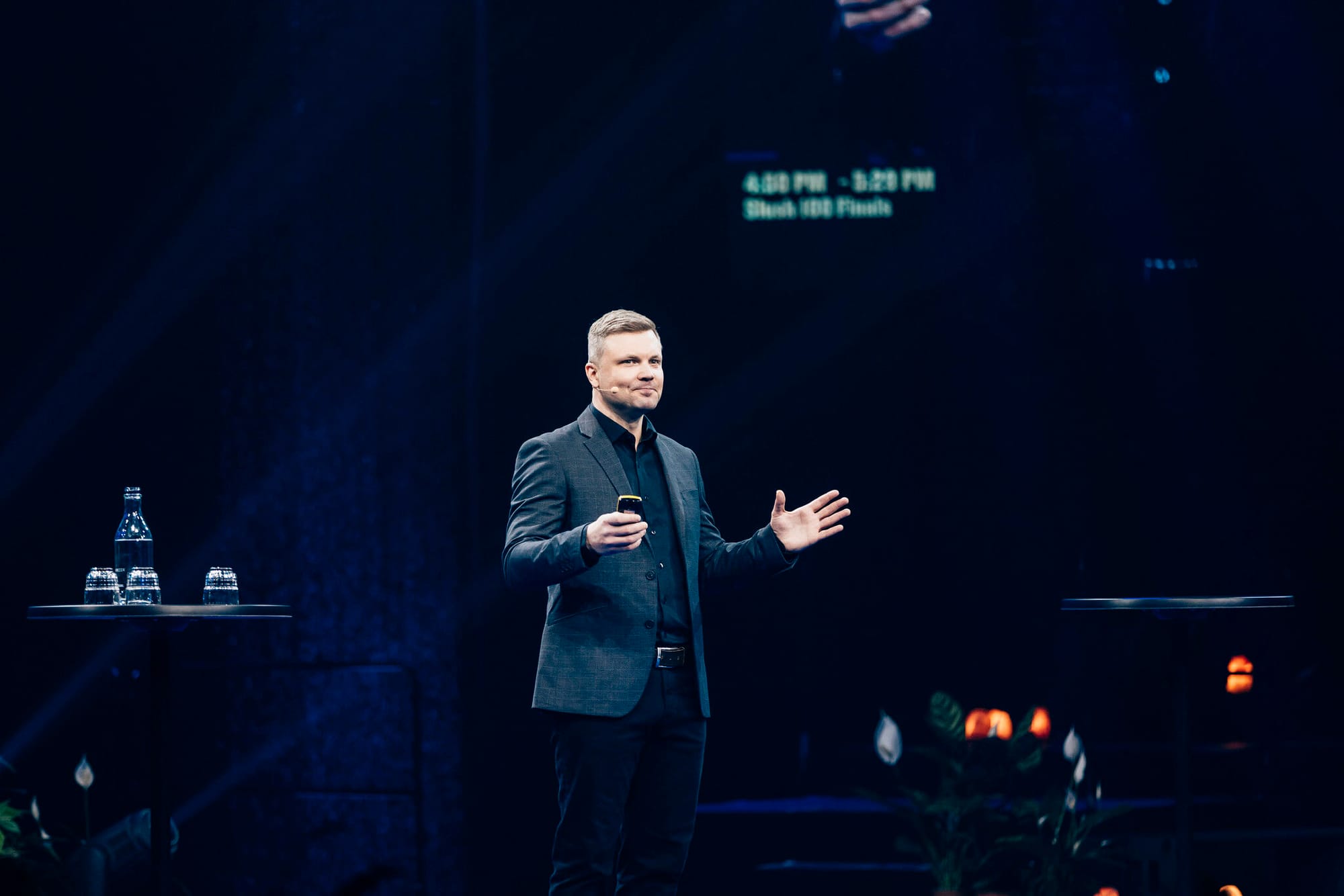
Lifeyear made to top3 at Slush 2023\. Siim Saare on stage. Photo: Slush
### [**DrHouse**](https://www.linkedin.com/company/drhouse/?ref=fomo.observer)
Rather than spending time incubating in its home market, DrHouse decided to go straight to the US. The company was founded in 2022 by Ergo Sõõru and Sten Tarro, with Einar Roosileht later joining as a co-founder. Sõõru was previously the CEO and founder of Mercurio, a Tallinn-based medical devices company. But DrHouse is headquartered on New York's Fifth Avenue. In reality, while the US market is its target, the company's technical team remains Estonia-based, and the company has benefited from Estonia's culture of digital innovation.
"I think Estonia has a real advantage because founders here are used to building digitally native products from day one," said Sõõru. "Healthcare is a very complex and regulated market, especially in the US, but Estonian teams often have a strong engineering culture, move quickly, and are comfortable building infrastructure-heavy products with relatively lean teams," he noted.
The company's concept was to create a DoorDash for healthcare, offering American customers the ability to see a licensed doctor online within minutes and, when appropriate, receive their prescribed medication at home, often within about an hour of the visit. "The goal has been to make urgent care simpler, faster, and more accessible, without the patient needing to leave home," said Sõõru. Today, DrHouse operates in every US state with a network of 500 doctors. It has also entered into contracts with most major insurers, after primarily being a direct-to-consumer play.
While DrHouse has been business-to-customer, it would like to serve the business-to-business and B2B2C markets, Sõõru said. And there are no current plans to go beyond the US, given its complexity and size. "International expansion is not impossible," said Sõõru, "but the US opportunity is large enough to keep us focused for a long time."
### [**Better Medicine**](https://bettermedicine.ai/?ref=fomo.observer)
Tallinn might be the Estonian capital, but Tartu is arguably Estonia's deeptech capital. It is here that a group of Estonian and Ukrainian founders, including Priit Salumaa, Dmytro Fishman, Bohdan Petryshak, Martin Reim, and Helena Ije, set up Better Medicine at the end of 2020\. The company's aim has been to use artificial intelligence to help radiologists more quickly detect cancer in imaging data, such as CT scans. Instead of relying on time-consuming, potentially error-prone image-based analysis, Better Medicine's platform uses AI to spot lesions in patients' kidneys or lungs.
Salumaa told *Fomo Observer* earlier this year that the company is currently engaged in expanding internationally. Better Medicine saw its first two deployments in Germany early this year and plans to expand further in the German-speaking countries of Germany, Austria, and Switzerland in '26\. The company is also seeking an additional EU Medical Device Regulation certification for its platform and plans to continue its work on AI imaging and clinical research.
Better Medicine has raised about 6 million euros to date in pre-seed financing and public grants, and Salumaa said that one of Better Medicine's goals for 2026 will be to complete a seed round.
### [**Evie Health**](https://www.hievie.com/?ref=fomo.observer)
While some founders dream of expanding internationally, Estonia's health tech sector has also attracted talent from outside the country. Evie Health was founded earlier this year by Tatiana Chavarriaga Arteaga, a physical therapist, and Juan David Giraldo, a software engineer, both from Colombia. The pair founded an earlier digital physiotherapy venture, HealthPhy, there in 2019.
The company's flagship product, Evie, is an AI-powered digital companion that supports women from pregnancy through postpartum with evidence-based pelvic floor care, personalised education, symptom monitoring, and early risk detection. "We are building the missing layer between women and the healthcare system, making prevention and continuous maternal care accessible, scalable, and integrated into clinical practice," said Chavarriaga Arteaga.
She noted that since its launch, more than 10,000 women have completed onboarding through its platform, sharing symptoms they had never discussed before. Evie users continue to use the platform, leading to improved outcomes, she claimed, including a reduction in pelvic floor pain.
Over the next year, Evie Health plans to expand its clinical partnerships, strengthen clinical validation, and integrate Evie into routine maternal care pathways. The company is courting clinics, insurers, and occupational health providers. Chavarriaga Arteaga said that Estonia has made sense as a hub, because it allowed Evie to get started as a European company, removing a barrier other Latin American femtech companies have faced when trying to enter the European market. "e-Residency and Estonia's digital-first bureaucracy also mean we can operate lean, cross-border, and fast," she said. "It is a good place to test and expand from."
### [**Salu**](https://salu.md/?ref=fomo.observer)
"Salu" means "forest grove" in Estonian and alludes to the Spanish word for health, "salud." It is no wonder, therefore, that this four-year-old company, which offers digital healthcare services, has customers in Estonia, Finland and Spain. CEO Andreas Kotsjuba founded the company with Chief Technology Officer Andres Kukk to launch a subscription-based service for professionals on the move.
"As a parent of three boys who travels frequently, I often found that when something happened abroad, I could take my bank with me, but not my doctor," Kotsjuba said. The company began offering its services primarily to expatriates and to those who wanted to proactively take care of their health, such as solo entrepreneurs without public health insurance or employers who wanted to provide benefits to employees. Currently, about a third of the users of its SaluMD platform are expats; the remainder are locals.
Salu subscribers get access to different health plans, provided via Salu's licensed medical team of around 20 professionals. It also offers in-person services through partner clinics, including Meliva, Fertilitas, Confido, Medicum, and Läänemere Hambakliinik. The company saw more than €1 million in recurring subscription revenue in 2025, and its advertising spend has been negligible; 85 percent of users are acquired organically, via word of mouth or other channels.
The company is now focused on improving the experience for patients with private health insurance by designing tools to assist them throughout their journey. It also recently launched a strategic partnership with Compensa, one of the leading private health insurance providers in the Baltics, and part of the Vienna Insurance Group. Similar partnerships are in progress, Kotsjuba said.
### [**Psycron**](https://www.linkedin.com/company/psycron-app/?originalSubdomain=ee&ref=fomo.observer)
Evie Health is not the only Estonian healthtech founded by Latin Americans. Psycron, a Tallinn-based startup, was set up in 2024 to offer independent care professionals an all-in-one administrative operating system. The company's app is particularly geared toward therapists and other outpatient practitioners, and was designed to replace the fragmented set of tools used in private practice with a centralised platform for scheduling, patient management, payments, reminders, and other records.
Its founders, Gustavo Magnago and Eduardo Ferraz, are both originally from Brazil. Magnago, a software engineer, relocated from Brazil to Estonia to participate in its startup ecosystem, where he connected with Ferraz. The company recently took part in the Health Founders Estonia accelerator, after which Ferraz said Psycron had emerged with a pilot-ready minimally viable product and refined its compliance approach, including General Data Protection Act readiness. The company has just started a pilot study and plans to raise pre-seed funding.
**Five More to Watch**
Estonia's health tech sector continues to expand. Here are five more companies to keep an eye on:
[**SkipEat**](https://www.skipeatnutrition.com/?ref=fomo.observer): This Tallinn-based medtech nutrition startup is developing a microneedle-based nutrient delivery device designed to maintain energy levels without traditional food intake. Its wearable nutrition tech is being targeted to frontline and high-performance workers.
[**LSMedical**](https://lsmedical.net/?ref=fomo.observer#home)**:** Founded in 2020 by Liis Seinberg, a material scientist and researcher, LSMedical is developing rare-earth-free precision magnets and next-generation nanoparticle systems for MRI and CT contrast imaging.
[**CogniFlow**](https://www.cogniflow.eu/?ref=fomo.observer): This TalTech spinout offers droplet-based biotech laboratory instrumentation to make droplet microfluidics more accessible to researchers.
[**Asvel**](https://www.asvel.ee/?ref=fomo.observer): Founded by researcher Ritesh Soni in 2022, this deep tech is developing AI-powered robotic systems to enable more precise, minimally invasive surgical procedures and improve outcomes in operative care.
[**Muun Health**](https://muunhealth.com/?ref=fomo.observer)**:** Established in Tallinn in 2023, Muun Health is an early-stage deeptech developing next-generation wearable biosensors for continuous hormone monitoring.
[Doctor-founder plays the long game to shorten hormone testingAt the 2025 Startup Awards, Muun Health took home the HealthTech of the Year Award. The company is busy creating a wearable continuous hormone monitor in a research lab at Tallinn’s TalTech University. I caught up with CEO and co-founder Kerli Luks about how the deeptech is comingFomo.ObserverFiona Alston](https://fomo.observer/doctor-founder-plays-the-long-game-to-shorten-hormone-testing/)

Muun founder Kerli Luks
## Sign up for Fomo.Observer
Startup stories from Estonia. Free weekly newsletter.
Subscribe
Email sent! Check your inbox to complete your signup.
No spam. Unsubscribe anytime.
### Bilt.me: Built in ruum, helping entrepreneurs worldwide
URL: https://fomo.observer/bilt-me-built-in-ruum-helping-entrepreneurs-worldwide/
Last updated: 2026-07-04T19:27:27.000Z
In a room called ruum, one of Estonia's promising young startups is being built. And while it's being built, it's helping others "build mobile apps and make money with them," [Uku Joost Annus,](https://www.linkedin.com/in/uku-joost-annus-68089b217/?ref=fomo.observer) co-founder and CEO of Bilt.me tells me.
Annus co-founded the company in August 2025 with [Kevin Akkermann](https://www.linkedin.com/in/kevin-akkermann/?ref=fomo.observer) and [Karl Kiilaspää](https://www.linkedin.com/in/karlkiilaspaa/?ref=fomo.observer). Since starting the company, they have been on trips to the US and UK, and I’m keen to hear more about how they found the tech scene outside the borough boundaries of the Krulli Quarter in Tallinn.
### Getting ruum
The first iteration of [Bilt.me](http://bilt.me/?ref=fomo.observer) was a tool built during a hackathon. They wanted to solve all the testing problems for apps that Apple poses due to its restrictions, but once that was completed, they began to think about putting it to better use - something for those who are not technical but want to build a prototype to validate some ideas. “The only logical step was to build an agent on top of the tools we had already built,” says Annus.
After a month, they moved to [ruum,](https://www.ruumtallinn.com/?ref=fomo.observer) where they were in the first cohort of companies to join the builder/hacker space in Krulli. Incidentally, the second cohort of ruum, this time doing a summer residency, will start this week. (July 4)
### Selling San Francisco
Winning the ruum cohort gave the [Bilt.me](http://bilt.me/?ref=fomo.observer) founders the opportunity to go to San Francisco for a couple of weeks, where they met with fellow Estonian Rasmus Merirand, founder and CEO of DoBu.
During the trip, they met with founders and customers, but one thing Annus kept a close eye on was learning how the Americans are so good at selling.
“They're doing the same thing that we do, they're just doing 100 times more of it, and that makes them better,” says Annus. It ended up being a revelation to him that there was, in fact, no ‘secret sauce’ to the American way of selling, just the same basic principles but with more calls, more pitches.

Bilt.me team on tour
We’ve met up for a coffee for this conversation, and he’s telling me that he’s just returned from London, where he took part in some hackathons. I’m keen to know what he thought of the place.
“It was, I think, the closest we've gotten to San Francisco in Europe; it was really cool - there's a similar kind of energy,” he says. That was his second trip to the UK, having visited as a teenager, but he felt there had been a real change since then.
“When I was growing up, the UK was always on par with the US in terms of the brand the nation had. It was like the UK was one of the big dogs - it's completely disappeared now,” he says, explaining that there’s a sense that the UK feels ‘unfortunately, \[like\] another European nation with 70 million people. They're nothing special anymore, and it's really sad to see. I really like the flair they had.” Blaming Brexit for the change.
## Sign up for Fomo.Observer
Startup stories from Estonia. Free weekly newsletter.
Subscribe
Email sent! Check your inbox to complete your signup.
No spam. Unsubscribe anytime.
This is a brave conversation to be having when he’s sitting across the table from a Brit, but I guess he’s probably talking about England … so I don’t hold it against him.
> “Silicon Valley still has something that's only special to them. It's the only place I've ever been to where you could spend two weeks talking only about tech and building startups with anybody you see, even the cab driver,” he adds.
He goes on to say that he thinks back home in Estonia, and even in the UK, he feels that “it's harder for us to be controversial. I don't know what it is, I'm trying to figure it out, but they're much more tasteful in the advertising and marketing, and it's the same with the pitching \[in the US.\] They keep things so simple, we really over complicate things here.”
But he does have big dreams for Estonia. “I think we can build an amazing nation here, that's the dream, on an amazing continent with a very cool and bright future.”

Uku Joost Annus co-founder and CEO of Bilt.me
### Launching Bilt.me
Back to business, we discuss the platform and what type of users [Bilt.me](http://bilt.me/?ref=fomo.observer) has. Turns out that 75% of users are building consumer applications, the other quarter are building private apps or something for in-house.
Their first user was an American mother who built an app to monitor her children's behaviour on social media and messaging apps. It alerts her when they use swear words.
“Surprisingly a lot of the cool stuff has to do with mothers,” he says. “There was an Australian woman who built a carpooling app for the neighbourhood to decide who's bringing the children home,” says Annus.
I’m curious to know what makes their platform stand out from its competitors doing a similar offering. He tells me that they are trying to create new entrepreneurs and that’s their metric for being successful. “Can we help people actually make money with the mobile apps they're building?” he says.
“We don't want to gatekeep stuff - don't want to find clever ways to make people be stuck with us,” he adds.
They have also remained accessible to their customers, and will continue to do so for as long as they physically can, via a chat window. This is particularly useful when customers are trying to deploy their apps on the Apple or Google Apps stores. The process sounds arduous so it’s a part of the process where users really need someone to talk them through any issues they are having.
### Lessons learned
We speak briefly about raising money and how he’s found the experience to date. “It's really uncomfortable, and that’s okay,” is as much as I got out of him for now, so I move on.
What has he learned so far on his founders journey over the years? I ask for any mistakes he feels he’s made. “I think it's restricting yourself in your thinking of what's possible. Who you can talk to, what can you make happen. It's the momentum you can create. It's really amazing, and it just comes down to asking people for help,” he says.
“My biggest learning curve has been managing my time and energy - how do you give your all, but while also maintaining at least somewhat normal relationships with people close to you and around you.” he explains.
“I think my girlfriend and family do a very good job at pushing me into doing other enjoyable things as well, other than only building a startup,” he adds.
*Bilt.me made it into Fomo.Observer's Estonia's* [*TOP10 AI* ](https://fomo.observer/fomo-13-estonias-top10-ai-startups-in-2026/)*startups in 2026 list.*
### British Ambassador reflects on tech collaboration and security as Estonia term concludes
URL: https://fomo.observer/british-ambassador-reflects-on-tech-collaboration-and-security-as-estonia-term-concludes/
Last updated: 2026-10-24T08:51:05.000Z
TALLINN — As his five-year tenure as the United Kingdom’s Ambassador to Estonia comes to an end, Ross Allen reflected on the deep geopolitical and technological ties binding the two nations, shifting perspectives on defence investment, and his own unexpected foray into Estonian publishing.
Speaking on the *FOMO Observer* podcast, Allen, who arrived in Tallinn in 2021, described a diplomatic mission that evolved rapidly alongside regional security shifts. His departure comes at a time when the strategic alignment between London and Tallinn has grown increasingly integrated, particularly across the defence and technology sectors.
### A shift in the venture capital paradigm
A central theme of Allen’s tenure has been the cross-pollination of the British and Estonian tech ecosystems. Estonia, widely recognised for its high density of tech unicorns and robust digital governance, has increasingly looked to the UK as a secondary staging ground for global scaling.
However, the nature of those tech investments underwent a profound cultural shift following Russia’s full-scale invasion of Ukraine in February 2022\. Allen noted that prior to the conflict, the European venture capital community maintained a strict distance from defense technologies.
> "When I first arrived here, I remember asking this question of one of the people in the sort of VC world," Allen said. "And they said, 'Oh yeah, unfortunately for us now, defense companies are on the list along with things like gambling and pornography and tobacco and other things that we won't invest in.' And that was... a fairly widespread view, I think, in European VC world in general."
That framework collapsed almost overnight as regional realities set in. According to Allen, Estonia's tech ecosystem adapted faster than most, with prominent founders pivoting their entire focus toward national resilience and defense capability.
He pointed to local successes like **Frankenberg**, which specializes in short-range air defense and low-cost drone interception, and **Milrem Robotics**, a developer of unmanned ground vehicles, as prime examples of Estonian innovation scaling with British cooperation.
> "I think people realised very quickly after February 2022 that that needed to change," Allen observed. "And then I think it didn't just sort of change reluctantly. I think loads of people kind of went all in on defence."
## Sign up for Fomo.Observer
Startup stories from Estonia. Free weekly newsletter.
Subscribe
Email sent! Check your inbox to complete your signup.
No spam. Unsubscribe anytime.
### Geopolitical foresight and defence realities
The ambassador praised Estonia’s long-standing geopolitical foresight regarding the threat posed by the Russian Federation—a position that many Western European nations historically downplayed.
> "Estonia has been accurately saying, talking to the rest of the world about the threat posed by Russia for a long time," Allen said. "And sadly, for quite a long time, lots of countries weren't listening to Estonia enough. But actually, if you look at sort of geopolitics as a whole, Estonia is a top performer."
With Estonia currently spending over 3% of its GDP on defense, Allen highlighted the country as a model for the rest of the international community. This domestic commitment is mirrored by the public's civilian mobilisation. Allen recalled his astonishment at the surge of volunteers joining the Estonian Defense League (*Kaitseliit*) shortly after the invasion of Ukraine began.
> "Someone told me... that there had been an extra 5,000 people here joining the Defence League," Allen said, contextualising the scale of the mobilisation. "In terms of scale, if that was the same but in the UK, that would be like 250,000 British people joining our reserves, which is just incredible."
### An accidental author and 'intrinsic pessimism'
Beyond formal statecraft, Allen's departure is marked by an unusual literary success. Prompted by his experiences, he authored a book detailing the various societal lessons the rest of the world could glean from Estonia—ranging from education systems to environmental performance.
The book’s rollout, he joked, provided a firsthand lesson in what he termed "Estonian intrinsic pessimism."
> "The two main bookstore chains here initially, I think, ordered 30 copies each. And those sold out in about two days," Allen laughed. "I think initially they were skeptical that that many Estonians would want to read a book about how great Estonia is... but it turns out people do."
The literary endeavor was not without minor diplomatic hazards. Allen admitted that local readers were quick to politely correct his language skills, pointing out a mistake he made regarding a national holiday.
> "Mother Tongue Day (*Emakeelepäev*) is a day when Estonians celebrate their Estonian language... and I've accidentally called it *Emadekeelepäev*, which is 'Mothers' Tongues Day,'" Allen joked, noting that the Defence Minister was among those who pointed out the multi-tongued confusion. "The way I've referred to it is quite confusing. But I'm appreciative of all the people coming to find me to tell me."
### Looking ahead
As Allen prepares to return to the United Kingdom, he emphasised that the standard for safety, digital efficiency, and community-driven defence established in Estonia would remain a benchmark for his future career.
For the regional startup community, Allen’s parting advice was to continually push back against the perception that geographical proximity to Russia equates to investment risk, reiterating that Western integration via NATO and the EU makes the Baltic state as secure a destination for capital as any in Europe.
### Burn rate to surge this week in Estonian startups
URL: https://fomo.observer/burn-rate-to-surge-this-week-in-estonian-startups/
Last updated: 2026-06-22T13:12:40.000Z
As Estonian founders migrate to the countryside for the next few days, there is to be increased burn rate activity. The Fomo team wants to wish our readers a *Head jaanipäeva!* May your fires burn well and your (non alcoholic or alcoholic) drinks be cold!
### Why a16z is keeping a close AI on Estonian founders
URL: https://fomo.observer/why-a16z-is-keeping-a-close-ai-on-estonian-founders/
Last updated: 2026-06-22T13:37:00.000Z
We recently caught up with [Gabriel Vasquez](https://www.linkedin.com/in/gabriel-vasquez-49392580/?ref=fomo.observer), Investment Partner at [**a16z**](https://a16z.com/?ref=fomo.observer), who spearheads their global AI investment strategy. He shared why the global VC titan keeps coming back to Estonia.
**How do investors see the new Nordics for a place to invest?**
We've been investing in Estonia for a while - Skype and TransferWise (now Wise). On a per capita basis is an amazing country that generates amazing entrepreneurs, and for us our mandate is to invest in the best in the world, and if that continues to come up out of Estonia, we will continue to invest in Estonia.
I spent time there last year, and hopefully we'll spend more time this year there. We haven't seen yet a big wave of AI startups, as we've seen in Stockholm, for example, but I'm sure that will be coming. I actually met a couple great entrepreneurs from Estonia in Silicon Valley, and then we looked at a couple opportunities that are based out of Estonia, so we're looking at it from both angles.
We haven't done an investment yet, but the quality, it's really, really high, so we're tracking them very closely, and I wouldn't be surprised if we will participate in any of these great opportunities in the future.
**Is there anything particularly special about any of the Estonian founders that you've met, anything that stands out about them?**
I think they're very tough founders - they know it's going to be a hard journey, and they're going to embrace it.
I think all of them are highly educated. They grew up in a digital country, right? I think Estonia has embraced that, even at the government level. The other thing that we really like is that they have a global mentality, they understand that Estonia itself is a small market, and therefore they have to go abroad quickly and win quickly - this ability to embrace the fight, we really like that.
**Okay, but what about the security situation? Is there anything that would concern you when you're investing in a company which is based in Estonia?**
Not really. Obviously, there are geopolitical events that happen but for us - we just want to back the best entrepreneurs wherever they are. You can look at the case of Israel, and they continue to be amazing companies, despite all the geopolitical concerns happening in the country. I think the best entrepreneurs will figure it out.
**I want to talk to you about Bolt, what do you think of Bolt as a company? And where you think it's going?**
I think it amazing what he's \[Markus Villig\] been able to build. I don't think that anybody would ever have thought that they would have a chance against those titans of like Uber and Lyft, and all the capital they raised. I think that he embraces that philosophy - which is we are just going to make it more efficient and better, and we're going to come from a different angle that nobody else is, and we're gonna compete, and I like that a lot. And now with AI - I'm very excited how they're gonna leverage that.
You can tell by the energy that Markus has that he will continue to build this company into an amazing opportunity. For us, it's sad that we're not partners with them - my wish is for the next Markus that comes along in Estonia, that we can invest. Because we're investors in Skype, and TransferWise, Bolt is the only one that we missed, right? So I want to make sure that doesn't happen in the future.
**Are there any other companies of the same calibre that you have your eye on, or you think are doing really well in Estonia at the moment?**
There's one called Veriff, I think that they've done a phenomenal job, and continue to grow. I wouldn't say it's a top opportunity for us, because right now we're super focused on AI, so that is kind of the main investment mandate that we have. I just have a lot of respect for the founder. When I met him, and he told me the story of how he turned it around, it's incredible.
There's a couple of companies that we're tracking - they haven't made it to the stage where they are in the same category as Bolt and Wise - but there's a lot of promise.
**You're super focused on AI. What does that mean, really? If people aren't themselves developing an AI startup or something, that there's just no point in them knocking on your door?**
I think there are two main segments to this - you can build a business model that just leverages AI to make the operations more efficient, Bolt is a great example of that, right? Would you say it's an AI company, probably not, but like they're leveraging AI to make operations more efficient, to attract more margin.
The other side is more obvious, which is like applying AI to a problem. Can I apply AI to customer support, to legal, to healthcare, and how can I make them more efficient, and basically go after the labour opportunity and budget.
And then there's probably the third way, which is companies that benefit from AI - Veriff as an example, there's gonna be a huge boom of payments expansion and verification, and fraud - the second order effect of the huge boom of AI, that we're also very interested in. I wouldn't say if you're not building AI, don't come to us - you have to be in what we call the token path, if you're in the flow of AI, that's something that we want to be investing in.
**The reason I’m talking to you today is that you met Triin Hertmann on a** [**Mesh collective trip**](https://fomo.observer/triin-hertmann-far-from-the-conference-halls-how-cold-and-physical-strain-build-strong-startup-connections/) **in the North of Norway recently. How have you benefited or gained from going on these Mesh trips?**
We've invested in five companies out of Sweden and that has been possible because of the time that we spend with this community and getting to know them, so I think Mesh has been incredibly helpful on that front - it gives a lot more visibility of opportunities that we wouldn't otherwise if we didn't spend the time in the Nordics.
**Just looking ahead, I know that you said that you're having conversations with people in Estonia, are you able to tell me any more on that?**
We can’t unfortunately disclose that - but yeah, certainly super excited about it, and you know, Estonia has been so great for us - I want to invest in the best, and I think Estonia will continue to produce that.
---
### *Gabrial's interview with Bolt founder Markus Villig. Take a watch*
### From bees to biotech: 11 teams picked for new DeepTech Accelerator
URL: https://fomo.observer/from-bees-to-biotech-11-teams-picked-for-new-deeptech-accelerator/
Last updated: 2026-06-22T10:08:15.000Z
TALLINN - The new early-stage public accelerator to support the commercialisation of scientific innovations offers up to €170,000 in equity-free business development support, along with tailored mentoring, training, and access to investor and business networks.
> Deeptech development is not a sprint, but a marathon – it grows over years and decades, not quarters. The accelerator fills a critical gap by helping researchers take the step from scientific discovery to their first customer and investor at a stage when private capital is not yet available," said Tõnu Esko, vice rector at Tartu University.
The teams selected for the first cohort are:
- Avirogen (biotechnology/pharmaceuticals), University of Tartu
- Bindomics (biotechnology/pharmaceuticals), University of Tartu
- Behavioral Intelligence (behavioral science/fintech), TalTech
- ÖSEEN (innovative food), Estonian University of Life Sciences
- DCR Technologies (dual-network electronics), TalTech
- 3APS Therapeutics (biotechnology/pharmaceuticals), University of Tartu
- HiveNavigator (beekeeping), University of Tartu
- NatureBond (materials science), University of Tartu
- Perihelion (software platform for edge AI), University of Tartu
- Cogniflow (droplet-based microbial screening), TalTech
- Voltorque (motor engineering), TalTech
The new DeepTech Accelerator is part of Estonia’s deeptech startup ecosystem initiative, implemented by Sparkup Tartu Science Park, Tehnopol, the University of Tartu, TalTech, and the Estonian University of Life Sciences.
---
**DeepTech Start-up Network four-year plan in figures:**
- Map 350 potential deep tech ideas.
- Organise pre-incubation for 200 teams, of which 57 will proceed to the accelerator.
- Provide over 10,000 hours of mentoring support for start-ups.
- Launch 37 new operational deep tech companies.
---
[Estonia to funnel €12.6 million into new early stage deeptech programmeGovernment support will nudge research into commercial operationsFomo.Observer](https://fomo.observer/estonia-to-funnel-126-million-into/)
The network was created to consolidate and strengthen existing activities, with the state investing more than €12 million in deeptech to support the growth of science-based companies through coordinated efforts and funding.
Applications for the next cohort will open in October.
## Sign up for Fomo.Observer
Startup stories from Estonia. Free weekly newsletter.
Subscribe
Email sent! Check your inbox to complete your signup.
No spam. Unsubscribe anytime.
### OLARI PÜVI: How we help companies make illegal things legal
URL: https://fomo.observer/olari-puvi-how-we-help-companies-make-illegal-things-legal/
Last updated: 2026-06-22T10:30:48.000Z
What if your problem is not your runway or your technical challenges, but instead the law that says that what you want to bring to market is not legal? What then?
In a cooling economy with fewer and fewer founders, the state’s immediate reaction to liven things up is by offering some sort of financial intervention - be it grants, subsidised loans, or other financial aid. There’s nothing wrong with that; cash is vital. It pays the engineering team, covers the co-working space, and ultimately keeps the lights on when private funding slows down, or you cannot seem to turn yourself cash-positive. What is it that's holding you back?
We pride ourselves on being a digital state, positioning Estonia as a frictionless place for innovative businesses. At the same time, if you need an aspirin in the middle of the night in Estonia, or have a sick child that needs medicine that you haven’t stocked up on, the law currently says that a pharmacist must physically hand it to you. Here, I find that the law fails both consumers and businesses.
An Estonian technology company, Grab2Go, has developed an autonomous pharmacy that provides a technical solution for purchasing medications 24/7 and offers access to professional pharmacist advice through video consultations. So the technology exists, the market need is there, but in the current Medicinal Products Act, an automated pharmacy simply does not exist, nor is it possible to sell medicines without the physical presence of a pharmacist at a pharmacy.
As the original legislation could not predict robotic pharmacies when it was created decades ago, we can excuse this situation to a point. However, when a legal framework restricts a business from entering the market with their innovative and much-needed solution, and a patient’s access to essential services, the regulation requires an urgent update.
### We change the laws so that businesses don’t have to change their solutions
This friction is why Accelerate Estonia exists. Our aim is to serve as a bridge between high-stakes innovation and the state's legislative machinery. We see regulation not as something written in stone, but more like software that requires continuous debugging.
There are strict criteria for evaluating companies on whether they are eligible for our program:
1. Is there a clear regulatory barrier?
2. Does the solution have the potential to tackle significant global challenges?
3. Is the product or service ready for piloting?
When the Minister of Economy and Industry Erkki Keldo publicly wore a sweatshirt featuring our mission - ‘Making illegal things legal’ -it turned heads. While the statement may seem controversial at first, there is actually a real policy objective behind it.
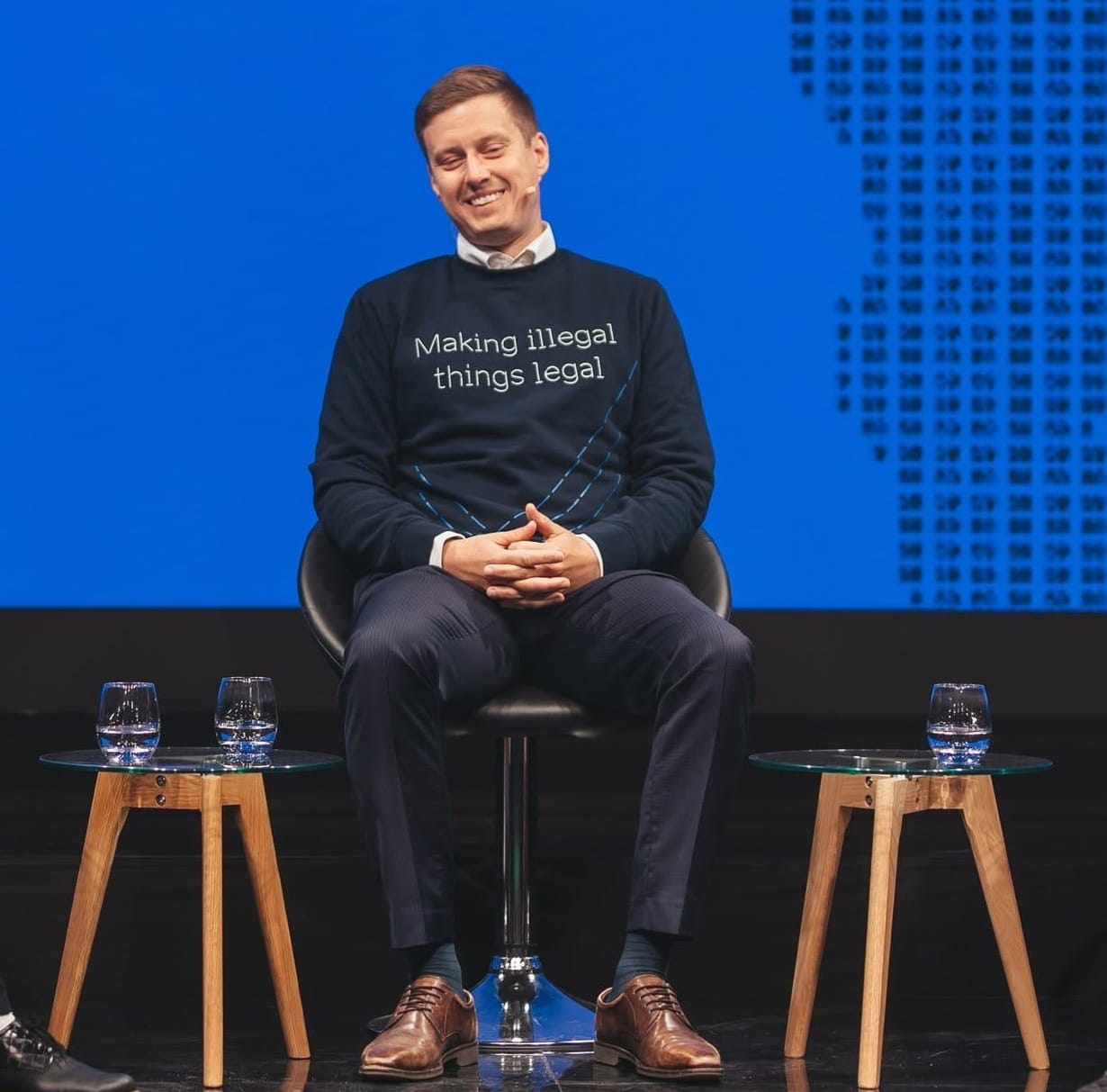
Minister of Economy and Industry Erkki Keldo on stage at Latitude59 2025
We are introducing a comprehensive, cross-sector experimentation framework that will allow real life testing of technologies that do not fit into the current legislation. It’s not an official licence to ignore the law, but a structured and supervised testing ground with clear risk-mitigation measures.
The economic case for this approach is clear. International data indicates that startups participating in structured regulatory sandboxes raise around 15% more capital. In the context of Estonia, that increases the average transaction from €7.1 million to €8.2 million. Preliminary analysis suggests that companies participating in Estonian regulatory sandboxes could raise nearly €1.7 billion over 10 years, generating high-value tax revenue and specialised jobs.
## Sign up for Fomo.Observer
Startup stories from Estonia. Free weekly newsletter.
Subscribe
Email sent! Check your inbox to complete your signup.
No spam. Unsubscribe anytime.
### Turning grey areas into export plans
Five out of the top twenty startups in Estonia (in terms of capital raised) required at least some regulatory change to enable their business model to prosper. When Bolt introduced their first scooters or Starship rolled out initial delivery robots, they operated in a grey area. At the time, a delivery robot did not legally belong on a sidewalk, nor did it belong on a road.
While temporary agreements and one-off legislative changes allowed those companies to survive and scale, relying on legal ambiguity is not a great strategy. Operating in a grey area creates risk, lowers valuation, and holds off investors who need legal certainty before committing.
Our goal is to flip this process entirely. Instead of forcing founders to use legislative loopholes until the state notices, the state is inviting founders to co-create the rules to fit their products.
Once the innovative solution is successfully integrated into Estonia’s legal framework, that company possesses a regulatory blueprint that can be exported to other, more lucrative markets around the world, using Estonia as the launchpad.
If Estonia wants to maintain its position as a seamless digital society, our primary competitive advantage cannot be limited to ease of company formation or digital services alone. It should also be our willingness to support novel businesses in taking down legal barriers that stand between their innovative solutions and a global market.
### Fomo Academy: The art of pitch decks #2. The sending deck
URL: https://fomo.observer/fomo-academy-the-art-of-pitch-decks-2-the-sending-deck/
Last updated: 2026-06-20T20:12:36.000Z
The deck you send has to do the talking because you are not in the room. Here is how to make it work without you.
In the first part of this series, we covered the stage deck, the one you present live. This part is about its opposite: the deck you send.
### There is no single pitch deck
People talk about 'the pitch deck' as one thing. In reality, there are several kinds, each with a different job.
A **stage deck** is what you use when pitching live. It is not meant to explain everything on its own, it supports the story you are telling verbally.
A **sending deck** (or intro deck) works asynchronously, without you present. It should be easy to scroll through on a phone and convey the key story in 30 to 60 seconds.
A **reading deck** is the longer, more detailed version for investors who want to go deeper across market, product, traction, business model, and financials after initial interest.
A **sales deck** may overlap with your startup story, but the audience and goal are different. You are selling the product to customers, not the company to investors. The value prop, emphasis, and proof points shift accordingly.
This article focuses on the second one: the sending deck.
### Keep one deck, not four or more
At this point, you might be wondering how many versions of your deck you need. In an ideal world, you would tailor it for each investor, keep a longer version for detailed reading, and use a shorter one on stage. In practice, maintaining all those versions is nearly impossible. They quickly drift out of sync.
You usually know in advance when you are going to pitch on stage, so you have time to prepare the right version. Requests for a sending deck are less predictable. They can come after a networking event, an unexpected introduction, or a casual conversation with an investor at a friend’s birthday party. When someone says, “Send me your deck,” you want to have a strong, current version ready.
That is why the sending deck should be your master. It is built to stand on its own, so it already contains your whole story. Strip it back for a stage deck, reuse relevant material when building a sales deck, and expand selected sections when you need a more detailed reading deck.
It is your universal fallback: if only one deck is ever current, make it this one.
### The deck that does the talking
The whole logic of the stage deck is that if people are reading, they are not listening. You are the hero, and the slides are the support.
The sending deck flips this. Nobody is listening. No voice, no story told over the slides, no pause for effect. Reading is the only thing happening.
So the slide stops being support and becomes the messenger. Everything essential has to be written out, or it does not exist. The deck does the talking.
### The job is to get the meeting
A sending deck has one job. It is not to close the round. It is not to answer every question. It is to **make an investor want the next conversation.**
That changes what belongs in it. You are not trying to be complete, just clear, fast and interesting enough that someone replies and books a call. Hold the detail back. Detail is what the meetings are for, plus any longer materials like a reading deck, a whitepaper, or a financial model.
And once the deck gets you the call, do not expect a script. Some investors want you to walk them through the deck, some start asking questions in the first minute, some say outright they never want to see the deck again. Read the room and follow their lead. The deck got you here. The call is a different format with a different person every time.
It keeps working after the call too. The person inside the fund who liked you first still has to sell you to the rest of the team, in a room you are not in, and a deck that stands on its own makes that far easier for them.
### Think about investor experience
Put yourself in their shoes. A partner might see hundreds of teams like yours in a short stretch, and the job trains them to say no to almost all of it. The default is no. Whoever opens your deck is, on some level, looking for a fast reason to move on.
So make their life easier. Help them decide quickly whether you are worth a closer look. Cover the pieces that matter, highlight what is most exciting about you and your startup, and remember that "exciting" is judged from their side of the table, not yours. The thing you are proudest of is often not the thing an investor leans in for. Lead with what is compelling to them, and leave out the fluff.
This is why I call it **Investor Experience Design**: the investor is the user, and the materials you send their way are the products they move through. It applies to financial models, monthly update emails, and pretty much everything. **Don’t show everything, show what matters.**
### Design for the phone
Assume the first read happens on a phone, on the move, between meetings. That is your real format, not a laptop in a quiet office.
Keep the standard slide ratio. This is not about going vertical. It is about putting so little on each slide that it reads on a phone without zooming. What you are checking is whether a busy person scrolling gets the story before they lose interest.
If a slide needs zooming, pinching, or a second pass to understand, it is too dense for a sending deck.
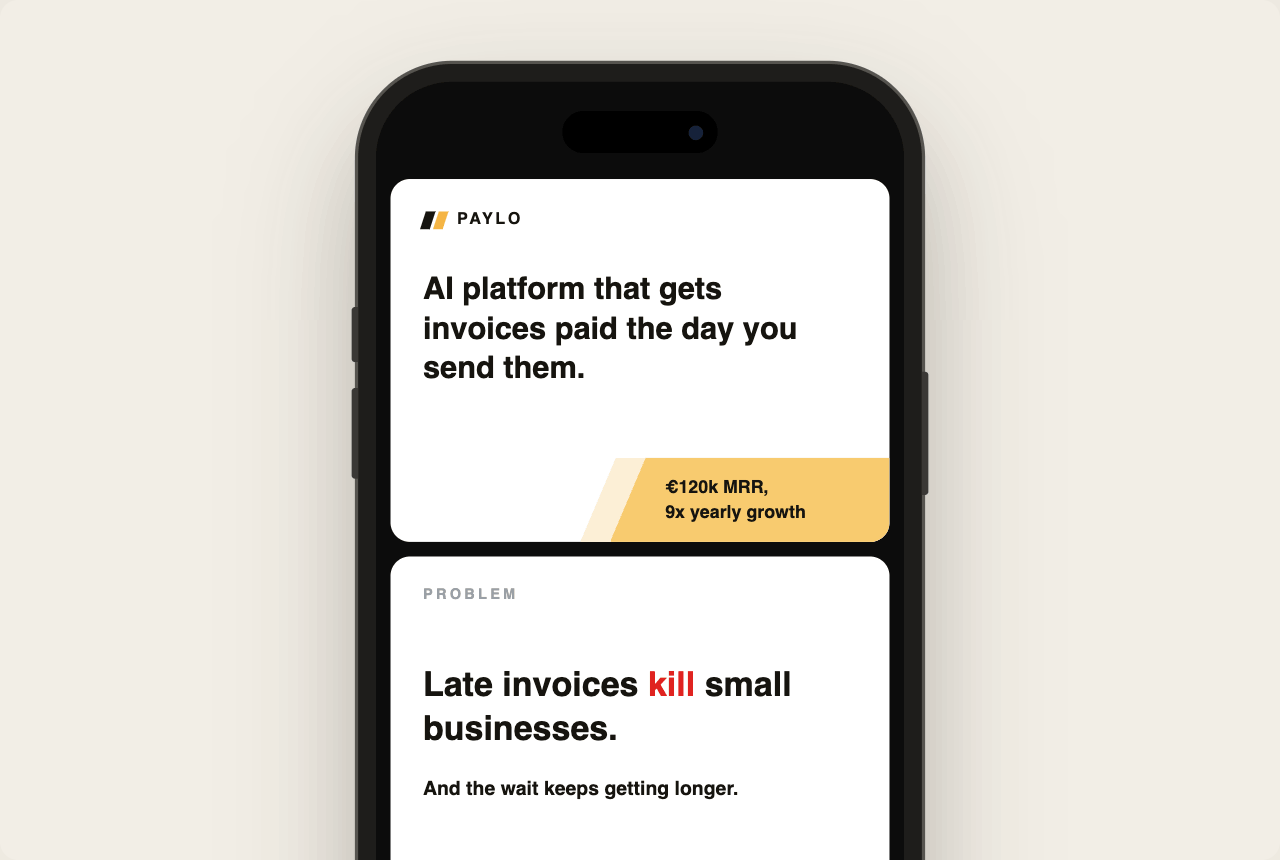
### Survive a 30 to 60 second skim
Assume you get only a couple of minutes of investors' attention and they decide within the first few seconds whether to keep going. **Your deck has to survive a skim, not a study.**
That means the narrative has to be obvious from the headlines alone. If someone reads only the title of each slide, from top to bottom, they should still understand what you do, why it matters, and why now. Everything else is reinforcement.
### Tell a story, then fill the gaps
With no one narrating, the order of the slides is the narrative. Order matters more than completeness. Lead with a story or something impressive, then drop each topic in at the moment it makes sense, rather than marching through a fixed checklist. Topics do not map one to one onto slides either. Sometimes two sit comfortably on one slide. Sometimes one topic, like a layered problem, earns three.
I strongly disagree with people who tell founders to cap a deck at 10 to 12 slides. That rule forces you to cram things onto one slide that should never share a slide. If your problem is complex and has several layers, split it across several, each with one short clear title carrying that part of the problem. Do the same with market, business model, traction, etc.
Aim to stay around twenty slides, but treat that as a guide. A little beyond is fine if every slide still skims in seconds. Cognitive load per slide and the total time to scroll through matter far more than the count.
A useful way to think about the order is as four questions the reader is silently asking, in this rough sequence:
**Why should I care?** Intro, problem, solution, why now, value, early proof
**How do you make money?** Traction, business model, market, GTM
**Why you?** Competition, your unfair advantage, vision, team
**How much?** The ask, and a call to action
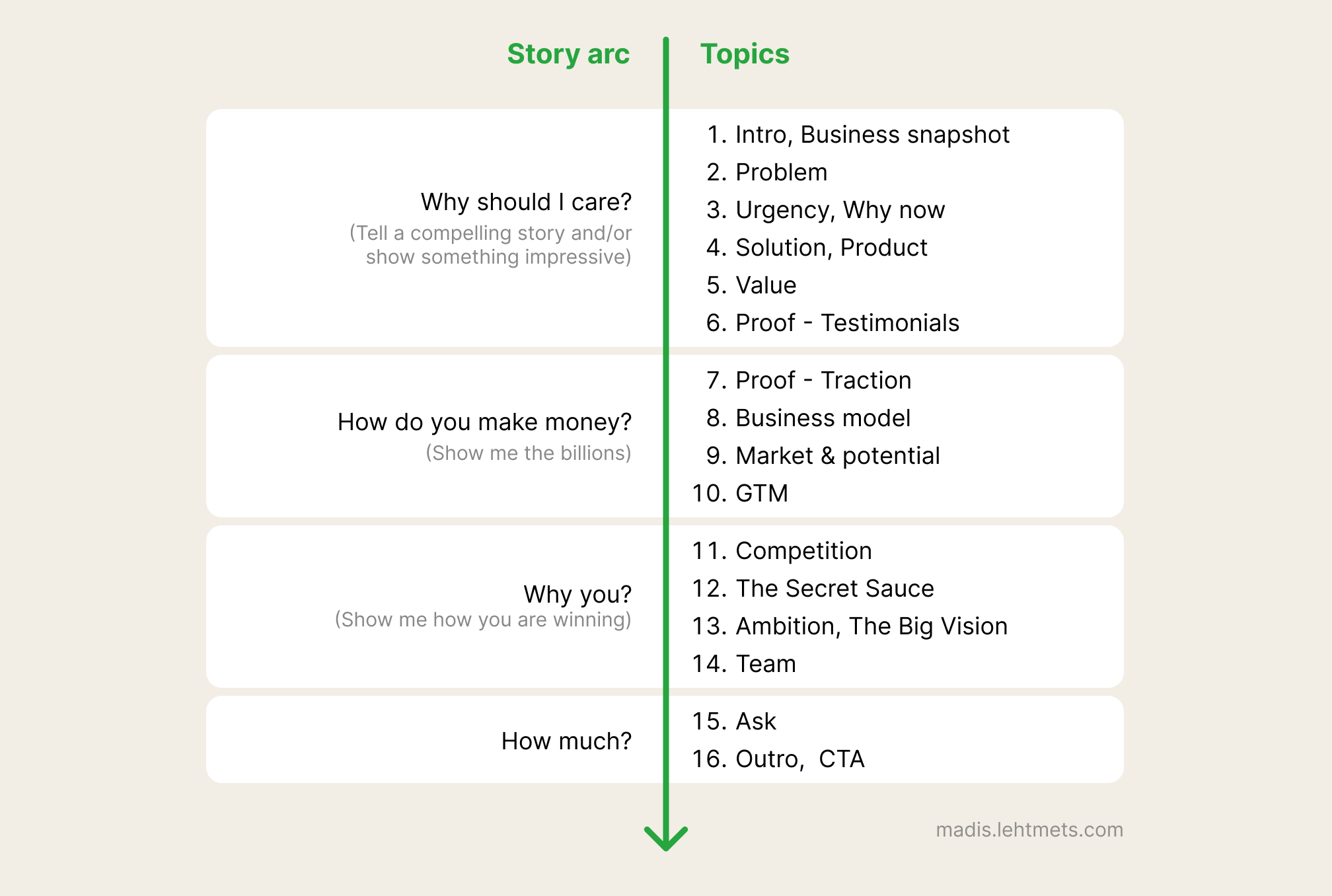
These four questions are scaffolding for you, not titles for the reader. They never appear in the deck. They keep the narrative honest while you decide what goes where, and the order is not fixed.
The first half carries more weight than the second. That is where you hook the reader and earn the rest of their attention, so the early story has to be tight. Once you are past the hook and into the numbers, you have more room to build.
### A title should make a point, not name a topic
The title is the most important text on the slide, so write it large and let it carry the main point. Done well, the titles alone carry the story even when the reader never touches the smaller text. If you are editing on a computer, push the font bigger than feels comfortable, then check it on your phone. What looks oversized on a laptop usually looks right in the hand, which is where it gets read.
The common mistake is spending that big title on a word that says nothing. On stage you could put 'Problem' on a slide and explain it out loud. In a sending deck, that slide just sits there in silence. 'Problem', 'Market', 'Traction' are labels. They name the topic and waste the most valuable space on the slide.
Instead, use the title to state the point. In one phrase or one short sentence, say what the problem actually is, name the market and how big it is, show the traction. You do not have to fit everything in. Pick the single most important and most impressive angle on that topic or metric, and let the rest of the slide support it.
Take a startup that runs payments and financing for freight carriers. The difference looks like this:
**Problem** becomes 'Carriers wait 45 days to get paid for a load they delivered in two'
**Solution** becomes 'Carriers get paid the day they deliver'
**Market** becomes '$120B freight payments market, growing 20% a year'
**Business model** becomes '3% on every payment processed, plus an annual platform license'
**Traction** becomes '$600M processed, $2.5M license ARR, up 250% year on year'
Read those five lines on their own, and you already understand the company. That is the test. The titles alone should pitch it.
### First slide is a snapshot of your business
The first slide decides whether the rest get read. On stage, your opening words make the first impression. Here there are no opening words, so the first slide makes it for you. You have the reader's full attention for a few seconds, and then it starts leaking. Spend it well.
Do not give the whole slide to a logo and a company name. At the early stage, your brand is not worth much yet, and it tells the reader nothing. Say what you do in one clear sentence, big enough to be the first thing they read, and skip the empty hype words. 'Revolutionising the way small businesses manage cash flow' says nothing. 'AI platform that gets invoices paid the day you send them' says something.
Then show one impressive fact, ideally a number that signals both your stage and your speed. Investors see an enormous range of companies, and a line like '€120k MRR, 9x yearly growth' instantly tells them roughly where you are and how fast you are moving. Or if Google is your client, show it. If the founding team has 3x PhDs, show it. Too often, founders bury their most interesting number in tiny grey text on slide eleven, where nobody sees it. Put it up front. If you are pre-revenue and do not have a number like that yet, set the context another way, for example, 'Raising €500k pre-seed.'
Clear context also helps an investor place you. Plenty of passes have nothing to do with whether they like you or get the idea. They are practical: wrong stage, wrong sector, wrong geography, a portfolio conflict. A snapshot of what you do, your stage and your speed lets the right investor categorise you in seconds and see that you are for them. Make that decision easy and fast, not buried three slides deep. This saves everyone's time.
A good first slide is a snapshot of the business. It makes an impression, sets the context for everything that follows, and earns you the next slide.
### Less is more
On a sending deck, the words carry everything, so a slide can hold a little more than a title alone. But only a little, and only what earns its place. When the title needs support, a couple of short bullets or a sentence or two is usually enough. Often a chart, a clean graph, an illustration of the product, or a small table does the job better than any sentence, and for numbers it is sometimes necessary. Decoration that carries no meaning is just noise, and design should elevate the content, not compete with it.
Density can climb as you go. A problem statement at the beginning wants to be nearly bare, while a traction or business-model slide can hold a paragraph, a chart, or a small table without feeling heavy. Let the content set the amount, and keep every slide skimmable.
Some slides can be nothing but a punchy title, and that emptiness is a feature. A near-empty slide gives the line real weight. Problem and solution statements are usually the best place for it. A single line like 'Late invoices kill small businesses' lands harder on its own than buried under four bullets explaining it.
Once a slide is ready, read it again as if every word you cut earns a few thousand toward your round. **Less is more, but more effort.**
### Make it pitch itself
A test I like: read the whole deck out loud. If it sounds like a pitch, it is right. As the reader scrolls, the slides should read short, strong, and concise, so the deck quietly pitches itself in their inner voice.
### Make it easy to share
A good sending deck travels. The partner you sent it to forwards it to the team. The angel who likes it sends it to a fund. Make that easy.
A good old PDF always works. A link works too, and gives you analytics on which slides people linger on. Both are fine. What to watch is friction. Anything between the reader and your story, like asking for an email before they can open the deck, is a risk. You can gate it, but with caution. I never would. I have not heard an argument for gatekeeping a sending deck that outweighs the cost of lower reach.
Your life gets easier the moment you accept that your deck will reach competitors and people you wouldn't send it directly to. In almost every case, the idea itself is not the valuable thing at this stage. Execution is. You have lived with these ideas for a while already. If someone hears about you late, copies you, and still out-executes you, they have earned it.
Two small things that help regardless: put your contact on the last slide so the deck carries its own next step wherever it lands, and name the file properly. **Company name - one-liner - 2026.pdf** is found again in a crowded inbox. **deck\_final\_v3.pdf** is **not**.
### Test it on your phone before you send
Ask yourself:
Does this make sense with no one explaining it?
Can someone get the core story by reading only the headlines?
Would this survive a 40-second skim on a phone?
Is there a clear next step and a way to reach me?
Am I trying to get the meeting, or trying to win the whole round on slide seven?
The cleanest check is still the phone. Send the deck to yourself, open it on your phone, and scroll through it the way a tired investor would on a Sunday evening. If the story holds up like that, it will hold up anywhere.
### Conclusion: Make it count
The sending deck is the version of you that shows up when you cannot. It has to carry the story alone, and leave the reader wanting the next conversation.
Keep it skimmable, make it exciting, and design it for the phone. Get this one deck right, keep it current, and every other version you ever need is a short edit away.
The deck is the only version of you in the room. Make sure it speaks well.
---
[*Madis Lehtmets*](https://www.linkedin.com/in/madis-lehtmets/?ref=fomo.observer) *is an entrepreneur, designer, startup ecosystem leader, and*[ *fundraising advisor*](https://madis.lehtmets.com/?ref=fomo.observer)*. He has raised multiple oversubscribed rounds for his own startup and has helped dozens of founders build pitch decks, financial models, and fundraising narratives. He currently leads EstVCA and serves on the board of the Estonian Founders Society.*
*His approach to fundraising is based on Investor Experience Design: treating investors as users and every fundraising and investor-relations interaction as part of a deliberately designed experience.*
*This is part of a* [*Fomo Academy Series*](https://fomo.observer/tag/fomo-academy/) *where we take you through how to present your pitch on stage and how to put together different pitch decks for investors and pitch competitions.*
### Building cognitive defence: Inside President Karis's vision for Estonia's AI shift
URL: https://fomo.observer/building-cognitive-defense-inside-president-kariss-vision-for-estonias-ai-shift/
Last updated: 2026-06-22T10:31:22.000Z
TALLINN — Estonia is embedding artificial intelligence natively across its high school network, marking a massive public-private shift designed to redefine the country’s digital workforce in the coming years.
Under the banner of the national AI Leap initiative (*AI Hüpe*), an ambitious pilot phase has rolled out to thousands of students and teachers across the country.
The project, which intentionally channels the legacy of Estonia’s transformative 1990s "Tiger Leap" programme, aims to deploy specialised, curriculum-aligned AI applications developed in collaboration with global tech partners such as OpenAI.
Appearing on the inaugural episode of Fomo.On the Observer Podcast, initiative CEO Ivo Visak and Estonian President Alar Karis, who is the programme's initiator and patron, discussed the real-world friction of deploying algorithmic tools in traditional classrooms.
Visak revealed that early feedback from student cohorts using the platform — which utilises a text-based, question-only 'Socratic model' designed to prompt critical thinking rather than simply writing essays—was mixed but highly encouraging.
> "Young people see massive potential, but they also find it 'really annoying' because it forces them to reflect rather than spitting out immediate homework answers," Visak noted.
A core focus of the national strategy is closing a looming digital skills gap. While state metrics indicate 70% to 80% of Estonian high schoolers have independently experimented with consumer LLMs, equality remains a major bottleneck. The state's strategy is to prevent AI from becoming a source of educational inequality by shifting focus from minor, isolated pilot projects to institutional, system-wide adoption.
> "We won't use artificial intelligence the most, but we'll use it the smartest," President Karis emphasised during the discussion, reiterating that the baseline of international economic competitiveness relies entirely on equipping the next generation with cognitive defence and source criticism.
The focus on digital resilience and institutional responsibility also touched on the legal boundaries of tech governance. When pressed by hosts Tarmo Virki and Triin Hertmann on the state’s potential legislative manoeuvres regarding the weaponisation of synthetic media and malicious deepfakes ahead of upcoming election cycles, the President pointed to his ultimate executive safeguard.
"I can veto laws," Karis stated, framing his role as a balance against reactionary lawmaking that could inadvertently choke the domestic startup ecosystem. "That’s all I can do, but I can veto laws if they are against the Constitution."
## Sign up for Fomo.Observer
Startup stories from Estonia. Free weekly newsletter.
Subscribe
Email sent! Check your inbox to complete your signup.
No spam. Unsubscribe anytime.
### CloserAI wins AI agents hackathon
URL: https://fomo.observer/closerai-wins-ai-agents-hackathon/
Last updated: 2026-06-16T11:39:55.000Z
On a June Friday evening in Tallinn, 13 teams stood up to pitch at the end of a hackathon. Unusually, the participants didn’t have that dishevelled look of teams who hadn’t slept in beds for a few nights; this hackathon had a rather different vibe.
The Elnora and EFS (Estonian Founders Society) AI Agents Hackathon was a competition lasting only twelve hours. Earlier in the week, participants joined a couple of workshops on AI agents and how to get set up and ready for the Friday morning start.
Organised by [Carmen Kivisild](https://www.linkedin.com/in/carmen-kivisild/?ref=fomo.observer), founder and CEO of Elnora, which developed an AI agent that generates and optimises biomedical lab protocols for biotech and pharma teams, she had previously run a similar hackathon in San Francisco for scientists and then [wrote about it](https://fomo.observer/carmen-kivisild-are-hackathons-for/) in Fomo.Observer.
As the pool of scientific companies in Estonia is a lot smaller than the US she decided to open up the hackathon to all industries. “We designed the hackathon to be an opportunity for companies, especially founders, executives, high-level managers and their employees - people who have decision-making power, to try out agents, so they can go back to their organisations and make a real change.”
The hackathon came with a price tag, €449, with a discounted ticket for EFS members. “There's this concept that people think that hackathons have to be for free because it's something that is only for students, and students don't have money, but the concept here was it's not for students, it was meant for companies,” Kivisild says, making the case that companies pay for their employees' training, and that’s what they get at the hackathon.
The judges were Mart Habakuk from Estonian Business School, Triin Hertmann from the Estonian Founders Society, Lehar Kütt from Coop Pank AS, and Kivisild herslef. Teams used Vercel, Stripe and Claude Code to build their agents.
### The winners
All thirteen pitches were impressive, solving accounting issues for sole traders, messy communications for busy CEOs, onboarding, and even school photography software. But one team stood out, Closer AI, which closes sales via WhatsApp, where AI agents take the customer and their purchase from conversation, through payment and shipping.
The team was made up of [Brayden Olson](https://www.linkedin.com/in/brayden/?ref=fomo.observer), CEO of Spiritus, [Inna Lipova](https://www.linkedin.com/in/inna-lipova/?ref=fomo.observer), growth marketing manager at Scandiweb, [Dmitri Borohhov](https://www.linkedin.com/in/borohhov/?ref=fomo.observer), head of engineering at Migrevention and [Siim Kostabi](https://www.linkedin.com/in/siim-kostabi/?ref=fomo.observer), CEO at Pageloot.
Olson was the person who pitched the idea. His company is due to launch a product in some Asian markets where small business owners make much of their sales via WhatsApp or other messaging tools. But that requires the seller to be available to chat 24/7 so they don’t miss a sales opportunity. “I thought there must be a better way,” he said.
“Lots of businesses actually start from social media, like Instagram DMs, WhatsApp, and everything, and they don't usually have resources to build e-commerce websites for themselves, for example. So we are also covering this gap,” said Lipova, who was first to jump on the project.
## Sign up for Fomo.Observer
Startup stories from Estonia. Free weekly newsletter.
Subscribe
Email sent! Check your inbox to complete your signup.
No spam. Unsubscribe anytime.
“It all has to fit together, or it doesn't work,” said Olson. It's got to be the full solution.” And that’s exactly what they produced. From conversation, to payment and then a link up with third-party logistics. “It's putting all of it together, so that people don't have to change behaviour, and it all works,” he explains.
### What now?
“We're definitely going to be doing something,” said Olsen. This was a need for his company, so naturally, it will be rolled out within a few months. And Borohhov, who was taking part in his first hackathon, was already looking for an agent to take a customer through a workflow so that part of the solution could work for him, too.
“I'm pretty happy that Brayden posted a very clear idea with a call to action that we're launching in 90 days, so yeah. How can you not be excited about this?” said Kostabi.
Congrats to the winners. Not bad for a day’s work!
[CARMEN KIVISILD: Are hackathons for children?The full story of organising a hackathon to boost your product development.Fomo.Observer](https://fomo.observer/carmen-kivisild-are-hackathons-for/)
### From Estonia to Silicon Valley and back: Why a veteran tech investor made a bet on Estonia
URL: https://fomo.observer/from-estonia-to-silicon-valley-and-back-why-a-veteran-tech-investor-made-a-bet-on-estonia/
Last updated: 2026-08-03T21:00:29.000Z
TALLINN - In 1992, Silicon Valley tech investor Andrew Thompson arrived in the newly liberated capital of Estonia carrying bags packed with boots, clothes, and tinned food. The shops in Tallinn were entirely empty. The Soviet occupation had left the Baltic nation flat on its back financially.
Thirty years later, Thompson stood on Toompea - the historic hill housing Estonia’s government - and looked out at a completely different country.
"I look and think, 'Good grief, there's two Bentleys and a Ferrari,'" Thompson recalled in an interview. "Now there's definitely a lot of wealthy people here."
Between those two visits lies one of Europe’s most remarkable economic transformations. Estonia's GDP per capita had risen from roughly $1,000 at the dawn of independence to surpass that of Japan.
Thompson has quietly spent decades building the critical bridges linking Estonian innovation to Western capital, global defence networks, and Silicon Valley. Through his family foundation, he has funded memory institutions, launched academic programmes at Stanford University, and helped establish the Creative Destruction Lab (CDL) Estonia, a high-powered accelerator now routing international defence and tech experts directly to Tallinn.
The driving question for many looking at his portfolio is simple: Why Estonia?
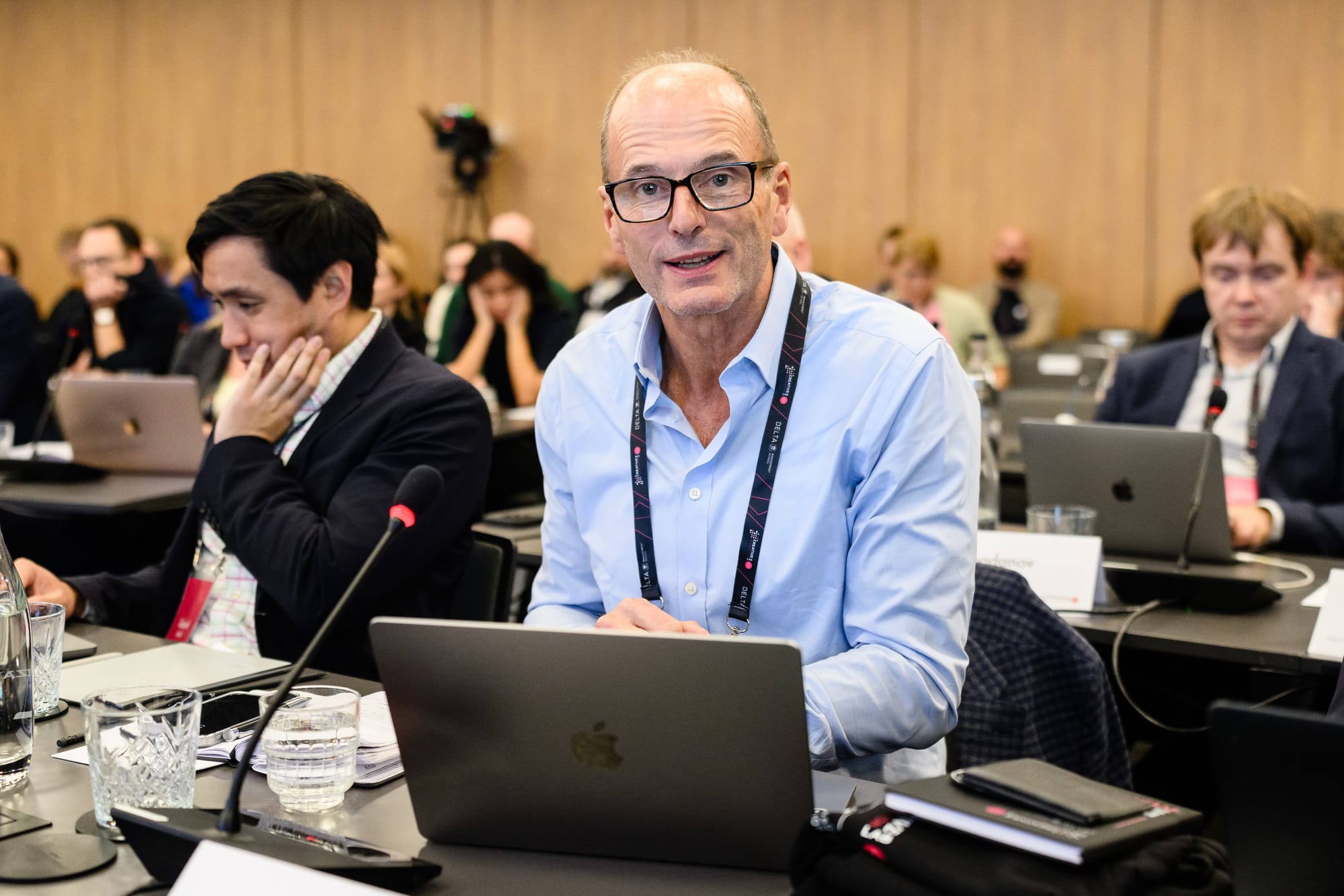
Andrew during one of the CDL sessions. Photos: Eiko Lainjärv
### **A heritage forged in flight**
Thompson’s deep alignment with the country began not in a corporate boardroom, but through the remarkable survival story of his late mother-in-law, Olga Kistler-Ritso.
Olga’s father, the son of a freed Estonian serf, beat the odds to become a doctor in the early 20th century. He moved to Kyiv to tutor a wealthy family, married their daughter, and started a life that was quickly upended by the Russian Civil War. While attempting to flee back to Estonia via Moscow, Olga's mother died, and her father was arrested and shipped to Siberia. Olga, just two years old, and her seven-year-old brother, Aadu, were left abandoned in Moscow for six months.
Desperate to save them, her father scribbled a letter detailing their location and threw it from the window of his prison train. The note was miraculously found and delivered to his brother in Estonia. Olga's uncle tracked down a railway worker willing to smuggle himself into Moscow, successfully rescuing the two stranded children and bringing them back to Tallinn.
Olga grew up to become a doctor herself, but history repeated itself in 1944 when Soviet forces returned to occupy Estonia. Fearing the mass deportations and executions that marked the first wave of occupation, Olga fled west as a refugee. She eventually arrived in the United States in 1949, retrained as a physician, and later married Sylvia's father, Swiss native Walter Kistler.
> "I love my country, but I love freedom, and I just wanted to be free," Olga would tell Thompson later in life.
When the Berlin Wall fell, Olga chose to use her own family resources to help rebuild her homeland, establishing the Kistler-Ritso Foundation alongside her husband, Walter. In 1995, that effort culminated in the creation of Tallinn’s Museum of Occupations (now *Vabamu*), dedicated to preserving the memory of the Soviet era and honouring the "Forest Brothers" resistance fighters who were fighting Soviet soldiers in the woods here until 1976.
### **The leapfrog strategy: 'Tiger Leap'**
Thompson, who arrived in Silicon Valley in 1987 and began launching healthtech and venture companies shortly after, watched closely as the newly independent Estonian state began to govern itself.
He notes that between 1990 and 1992, while still technically transitional, Estonian leaders held rigorous internal dialogues about what kind of country they wanted to build. The consensus was sharp: immediate free markets, flat taxes, and a radical pivot toward technology.
"Every little country has to have a thing," Thompson explained, citing conversations with Toomas Hendrik Ilves, the former Estonian President. "If we try to catch up with the rest of the world, we'll be 30 years behind forever. So, where's the leapfrog? And what he saw was Netscape. Let's make that our thing."
The policy decisions that followed were incredibly bold for an impoverished nation. In 1995, Estonia launched the "Tiger Leap" initiative, placing a computer on every child's desk. Citizens have been voting securely online since 2005.
According to Thompson, this rapid adoption succeeded because Estonia prioritised democratising tools for its people over using technology to expand government bureaucracy.
## Sign up for Fomo.Observer
Startup stories from Estonia. Free weekly newsletter.
Subscribe
Email sent! Check your inbox to complete your signup.
No spam. Unsubscribe anytime.
"One of the things that Estonia has done really, really well is to drive technology to its citizens, rather than the government using it for its government, or for its bureaucrats or for its corporation," he said.
### **From venture capitalist to state decoration**
Thompson brings an intense operational background to his mentoring and philanthropic work, having scaled multiple companies and navigated major Fortune 50 transactions and public listings in the world's most advanced tech economy. "I bring a set of perspectives that aren't... fully applicable, but they, I think that... they're just really valuable, they're just different," he noted.
His decades of quiet infrastructure-building and advocacy did not go unnoticed by the state. This year, the President of Estonia awarded Thompson the Order of the Cross of Terra Mariana, 4th Class (Maarjamaa Risti IV klassi teenetemärk), one of the highest honours the country can bestow upon a foreign national for exceptional services to the Republic of Estonia. Upon receiving the award, he said it was 'very flattering really'.
### **Silicon Valley to Tallinn: Infecting the system**
To solidify this technological trajectory, Thompson and his wife, Sylvia, sought to create permanent, structural pipelines between Estonia and their alma mater, Stanford University. Working alongside Stanford University Librarian Michael Keller, they endowed a permanent Baltic Studies programme.
The initiative acts as a multi-generational exchange programme. Every year, a dozen Estonian academics travel to Stanford on fellowships, while 20 to 30 Stanford undergraduate students travel to Estonia for summer internships.
"The idea is to infect them with networks," Thompson said. "We're showing people, not telling people."
The exchange also brings American public education leaders together with Estonian policymakers to figure out how to integrate artificial intelligence into standard school curricula. While traditional education systems in countries like Ireland hesitate to implement AI for fear that teachers won't know what students actually comprehend, Thompson champions the aggressive stance of Estonian Education Minister Kristina Kallas.
"Her point is that we don't have time for that; we know the kids are already using it," Thompson said. "So the way to actually get a rocket up for teachers is just mandated for the kids. Now you've got to figure it out."
### **CDL Estonia: Building strategic deterrence**
Perhaps Thompson’s most significant recent contribution to the regional economic ecosystem is the establishment of the Creative Destruction Lab (CDL) in Tallinn. Originally founded by Canadian economist Ajay Agrawal to scale science-backed companies, Thompson insisted that a node must be built in Estonia as a condition of his financial backing.
> Sponsored by his family foundation, the programme's core mission is explicitly geopolitical: "Keep Estonia free, keep the region free, keep it from authoritarian rule."
The best way to do that, Thompson believes, is to build overwhelming economic resilience and strategic deterrence. Following Russia's full-scale invasion of Ukraine in 2022, CDL Estonia shifted its focus heavily toward defence innovation.
"The best way to prevent kinetic war isn't to be fighting one; instead, have it not start in the first place," Thompson remarked.
Rather than focusing on traditional weaponry like "bombs, bullets, and ballistics," the Tallinn-based accelerator focuses on tech-driven security: cyber resilience, protecting undersea pipelines and cables, and combating internet misinformation.
To make it work, Thompson cashed in decades of personal and professional relational capital. He persuaded prominent global figures to fly to Estonia on their own dime to mentor local startups. Among them are Tom Hurd, the former Director-General of the UK's Office for Security and Counter-Terrorism, and Brian Hendrickson, an early leader within the U.S. Department of Defence's Innovation Unit.
The programme operates as a robust coalition, backed by Thompson's foundation, local tech entrepreneurs and state entities.
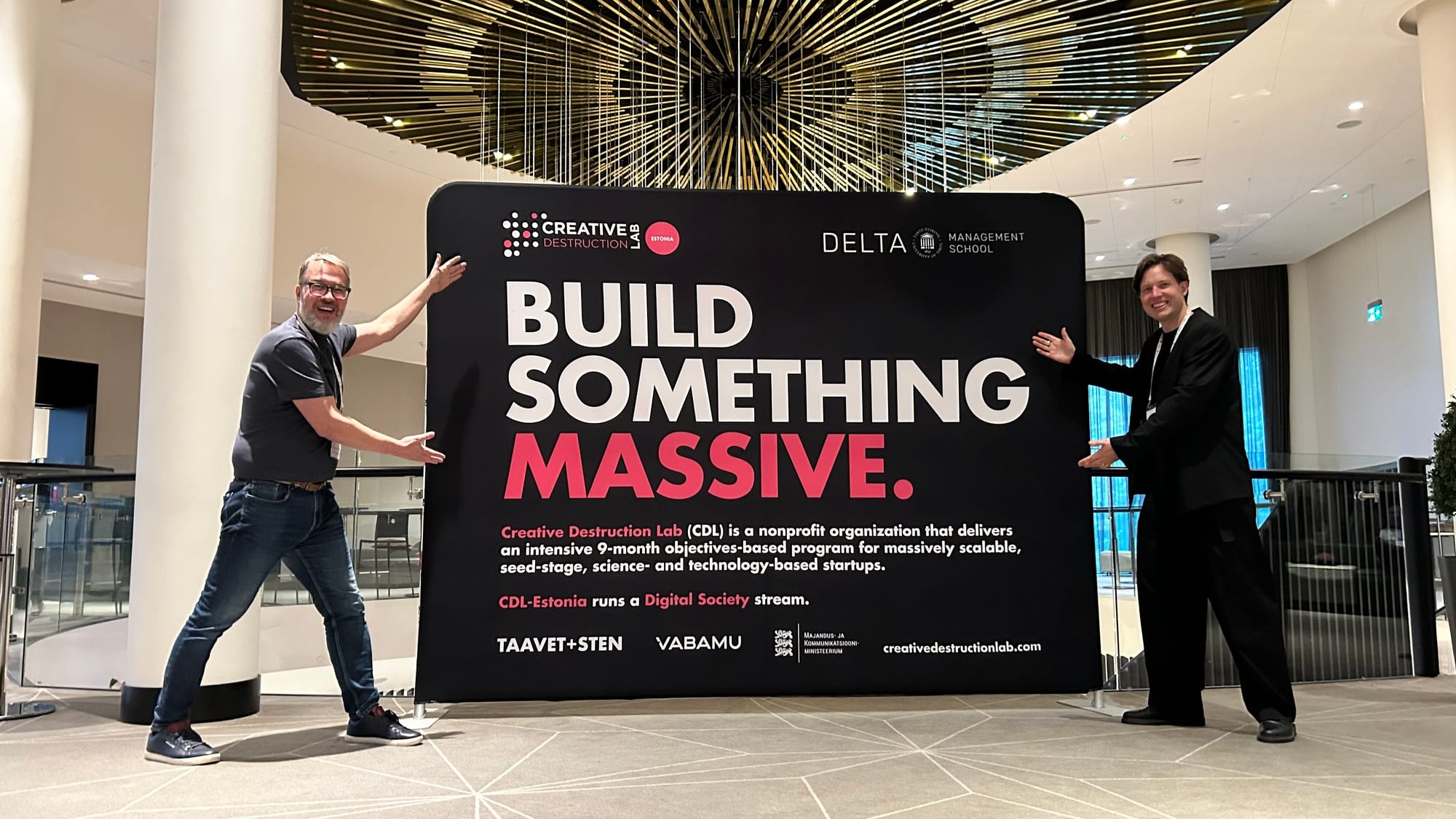
The author of this article (on the left) took part in the programme with PowerUP Energu Technologies founder Ivar Kruusenberg in 2025-26 season
### **The capital problem: Where Europe fails**
Despite his enthusiasm for the Baltic-Nordic region, Thompson is unsparingly candid about the systemic barriers holding European tech back compared to Silicon Valley.
> "Europe is really, really good at inventing things," Thompson observed. "They're less good at translating inventions into products, and they are really not good at translating products into scaled businesses."
He attributes this failure to a mixture of over-regulation in major economies such as France and Germany and an academic culture that treats commercialisation with scepticism. At Stanford, he notes, a STEM professor can rarely secure tenure without proving their research can survive the marketplace. In Europe, that mindset is often absent.
There is also a deeper, structural pool-of-capital crisis plaguing the continent, particularly the United Kingdom. Thompson points to well-intentioned British pension reforms enacted under former Chancellor Gordon Brown that forced corporate funds to report liabilities on their balance sheets. To mitigate risk, insurers liquidated high-yielding equity assets and moved them into low-yield government gilts.
"This is an unbelievable tragedy for Britain... it has decapitalised Britain's stock markets," Thompson warned. While U.S. institutional funds actively fuel the venture capital market — with Stanford's $50 billion endowment allocating roughly 20% ($10 billion) to alternative assets, a stark contrast to starved British ecosystems.
Estonia and the wider "Nordic-Baltic Eight" represent Europe's best counterweight to this stagnation, precisely because they maintain a bottom-up, market-driven approach.
### **A culture unafraid**
When he isn’t running corporate strategies or organising defence hackathons, Thompson retreats to a traditional farmhouse he owns on the island of Saaremaa. There, surrounded by meadows, cranes, and a neighbouring sheep farmer, he connects with the local authenticity that he fears major Western societies are shedding.
For Thompson, Estonia's true superpower is its unyielding grip on its culture and soft power, which allowed a population of just 1.3 million to survive decades of brutal Soviet assimilation. It is an identity fully on display during the country’s massive, multi-generational song-and-dance festivals.
> "One of the really dangerous things about life in America today is that whilst we are creating more and more hard power, we are losing soft power," Thompson said. "If you don't have soft power, you have hard power. Soft power is really, really powerful."
It is this profound, collective cultural confidence that feeds directly back into the nation’s economic resilience and defence posture. When asked whether he worries about holding land and running businesses next door to an aggressive Russian state, Thompson cites the Estonian people's baseline preparedness.
He recalls a telling exchange at the Lennart Meri Conference in Tallinn, where international attendees asked the Chief of the Estonian Defence Forces what would happen if Russia invaded.
"He said, 'Look, we're not NATO's doorman, and we are not going to wait to be invaded. If we thought the Russians, by gathering force on our border, were going to invade, we would invade Russia," Thompson recounted with a smile.
"I love it. That’s forward thinking... These are great people who got their elbows out."
### Nanordica Medical raises €1.6 million to launch its antibacterial wound dressing
URL: https://fomo.observer/nanordica-medical-raises-eur1-6-million-to-launch-its-antibacterial-wound-dressing/
Last updated: 2026-06-16T11:40:54.000Z
**TALLINN** \- Estonian MedTech company [Nanordica Medical](https://www.nanordica.com/?ref=fomo.observer) has raised €1.6 million to see the commercialisation of its wound dressing product for the fast healing of chronic wounds.
The round was led by Estonian fund [2C Ventures](https://www.2cventures.eu/?ref=fomo.observer) with participation from existing investors, [Specialist VC](https://specialist.vc/?ref=fomo.observer), [Superangel](https://superangel.io/?ref=fomo.observer), Amalfi, Health Founders syndicate led by Erki Mölder and EstBAN syndicate led by Heidi Kakko and Martin Goroško.
Nanordica Medical’s wound dressing contains Premotiv nanotechnology which it says prevents infection while promoting wound healing at the same time solving the issue of antimicrobial resistance. It is suitable for both infected wounds and wounds at risk of infection.
It claims, in a published study, its dressing has demonstrated a 43% reduction in wound area size after just one week of treatment compared to 13% with standard silver dressings in a randomised controlled trial on 30 patients with diabetic foot ulcers.
Why do we need such treatments? Here are some rather alarming facts and figures around wound care: around 100 million people worldwide have chronic wounds that fail to heal. More than half of these wounds become infected, often leading to severe complications such as sepsis, amputation and death. Diabetic foot ulcers (DFUs) are the leading cause of infections and leg amputations among chronic wounds. Every 20 seconds, someone with diabetes loses a leg due to amputation.
> “We backed the team because they had both the science and the conviction to see this through”, says Martin Koppel, the Founder Partner of 2C Ventures.
Nanordica Medical is currently conducting a multicentered, double-blind, randomised clinical trial of over 120 patients with diabetic foot ulcers.
“This financing round will enable us to complete a large randomised clinical study, strengthening the economic case for Premotiv and finalise CE marking for commercial launch in Europe. Our clinical data suggest that Premotiv helps wounds heal faster by managing infection without compromising natural healing process. Faster healing has the potential to reduce complications, lower treatment costs and improve outcomes for patients with chronic wounds”, said [Olesja Bondarenko](https://www.linkedin.com/in/olesja-bondarenko/?ref=fomo.observer), CEO and co-founder of Nanordica Medical.
## Sign up for Fomo.Observer
Startup stories from Estonia. Free weekly newsletter.
Subscribe
Email sent! Check your inbox to complete your signup.
No spam. Unsubscribe anytime.
### UP Catalyst's Nordic handshake in Oulu
URL: https://fomo.observer/up-catalysts-nordic-handshake-in-oulu/
Last updated: 2026-06-10T07:00:01.000Z
TALLINN - UP Catalyst has signed a pre-agreement with Finnish utility Oulun Energia to build a factory that turns carbon dioxide emissions into battery materials to ease Europe’s reliance on Chinese graphite imports.
The deal highlights how Nordic energy infrastructure is becoming a magnet for clean-tech startups looking to scale laboratory technology into heavy industry.
### The Core Deal
- **The Plan:** UP Catalyst will capture CO₂ emissions from an Oulun Energia plant and process it using molten salt electrolysis.
- **The Output:** The facility targets an annual production of 20,000 tonnes of sustainable, battery-grade graphite and carbon nanotubes.
- **The Timeline:** The companies plan to begin construction before 2030, with operations launching in 2031.
The project lands amid an aggressive push by the European Union to secure domestic supply chains for electric vehicles and defence. China currently controls over 70% of the world's graphite production, leaving European automakers vulnerable to export controls.
> "Through this collaboration we also seek to support greater sovereignty in critical materials and to help build new, sustainable industry in Finland," added Kimmo Alatulkkila, Head of New Business at Oulun Energia.

Rait Maasikas and Kimmo Alatulkkila. Photo:UPCatalyst
Finland has emerged as a strategic hub for the European battery value chain due to its cheap, reliable, clean energy grid and existing industrial infrastructure. The expansion is backed by a €47 million clean transition tax credit from the state agency Business Finland.
> "Finland offers a very strong foundation for industrial scale-up... This collaboration is an important step in understanding how industrial CO₂ emissions, energy infrastructure, and local partnerships can help enable the next generation of critical raw material production in Europe," said Rait Maasikas, CEO at UP Catalyst.
## Sign up for Fomo.Observer
Startup stories from Estonia. Free weekly newsletter.
Subscribe
Email sent! Check your inbox to complete your signup.
No spam. Unsubscribe anytime.
### Latitude59 winner Granarium Technologies raises €1 million Pre-seed round
URL: https://fomo.observer/latitude59-winner-granarium-technologies-raises-eur1-million-pre-seed-round/
Last updated: 2026-06-09T14:52:53.000Z
Back in May at Latitude Finland's Granarium, the maker of renewable supercapacitors for grid-scale power stabilisation, took [home a €200,000 investment](https://fomo.observer/latitude59-big-wins-go-to-granarium-backoffice-and-dogbase/) offer from an amalgamation of Estonian Business Angels Network (EstBAN), Latvian Business Angels Network, Finnish Business Angels Network (FiBAN).
Now, they have announced an over €1million round, led by [BSV Ventures](https://bsv.ventures/?ref=fomo.observer), with [Beamline](https://beamline.fund/?ref=fomo.observer), and of course includes the BANs.
They say they will ‘use the funding to industrialise its patented renewable supercapacitor technology for grid stabilisation and industrial applications, both increasingly challenged by electrification, renewable integration, and power quality demands’. It will begin launching pilots in the next six months.
“A key structural shift is that storage is no longer just ‘backup power’ – it is becoming core grid infrastructure. Granarium is the perfect addition to our portfolio because the company is solving a massive global challenge in a safe and scalable way. We were also impressed with the company’s technology and experience, as well as the capacity to use local raw materials to make the production process sustainable and inexpensive,” says [Jana Budkovskaja](https://www.linkedin.com/in/jana-budkovskaja/?ref=fomo.observer), Partner at BSV Ventures.
Granarium is a spinout of Finnish research organisation [VTT](https://www.vttresearch.com/en?ref=fomo.observer), so consider them ‘spunout’.
### Doctor-founder plays the long game to shorten hormone testing
URL: https://fomo.observer/doctor-founder-plays-the-long-game-to-shorten-hormone-testing/
Last updated: 2026-06-08T04:50:39.000Z
At the 2025 Startup Awards, [Muun Health](https://www.linkedin.com/company/muun-health/?ref=fomo.observer) took home the HealthTech of the Year Award. The company is busy creating a wearable continuous hormone monitor in a research lab at Tallinn’s [TalTech University](https://taltech.ee/?ref=fomo.observer). I caught up with CEO and co-founder [Kerli Luks](https://www.linkedin.com/in/kerliluks111/?ref=fomo.observer) about how the deeptech is coming along and what inspired her to create such a product.
I catch her on a busy day. She has just submitted a grant proposal for European funding and earlier took part in a pitch competition. All in a morning’s work of a busy CEO and startup founder.
We’ve never spoken before, so I’m keen to get a little background. She tells me she grew up in Pärnu, informs me I need to visit Estonia’s summer capital and tells me her upbringing was a curious one - she was always active and the first to try everything. Sounds like the makings of an innovator alright!
Her curiosity about how the human body works led her straight to medical school, but she was surprised to find that she had manifested that move years before.
> “I don't know if it was a long-term dream or not - we found some notes at home. I must have been in the first grade at school, so very small, and it says that I was going to be a doctor. I don't even remember,” she says.
Well, that’s some first-rate vision boarding right there. I make a note to ask for manifestation tips later.
Despite loving her med school experience, Luks struggled to find a speciality, so she ended up going to Finland to practice medicine instead of doing a residency.
> “I just thought it would be a year to think about what speciality I'm going to do,” she explains, "but yeah, that ended up being five years in emergency medicine.”
She returned to life in Estonia due to COVID and pregnancy, where she joined a private clinic and became aware of all the women who were struggling with their hormones, and all the testing they had to go through to figure things out.
“I think it's five to ten years that it takes for women to be diagnosed with hormone-related conditions after their onset,” she tells me. “So I was looking for solutions, maybe there's something out there that we could get to the clinic.”
Coming up short on this was the very reason she is now the co-founder of a continuous hormone-monitoring device startup. If they can do it for glucose monitoring, why can’t they do it for hormones? Ok, it’s not quite as simple as that, but that’s Muun’s job to figure out.
Back three years ago, when the company was founded, it was really in a space of its own, but more recently, they have seen competitors coming to the deeptech space, and hormone monitoring has been given extra validation with the creation of the SPRIND hormone challenge.
The SPRIND Continuous Hormone Monitoring Challenge is a €40 million pan-European programme to develop real-time, wearable biosensors that track female hormones, being led by Ida Tin, a Danish femtech innovator.
Aside from improving accuracy through continuous hormone monitoring, the data could also inform clinical trials. Imagine a world where females would not be excluded from clinical trials because of the unique nature of their systems. Just imagine!
So, how exactly will this work? “The aim is that the woman doesn't have to use it the rest of her life - we see that the woman would need it in different stages of her life, right? But the aim is for the data to be used to build predictive AI models, so that if you use it for three months in a row, the AI model can make really accurate predictions. It depends, of course, on the specific use cases,” she says.
It could lend itself to plenty of use cases, initially being for those trying to conceive but also for PCOS, endometriosis, a contraceptive, perimenopause and post menopause.
Currently Muun is still in the lab Luks tells me, “so it is deeptech - there's a reason why nobody has done it yet.” This is not as simple as a wearable with one reference point, “we are doing a long-standing wearable that enables continuous, real-time monitoring, \[and this\] needs some technical challenges tackled.”
> “We have been able to build a lab prototype, a sensor system - but it still needs optimisation. It still needs miniaturisation. It still needs access to the interstitial fluid, and then it needs clinical validation. So we are still years before entering the market, it is a medical device, meaning that it needs larger clinical trials - we are targeting our MVP for next year,” says Luks.
Working on something that has such a long finish line sounds utterly exhausting. I ask Luks if she ever has doubts about why she started it in the first place. Turns out she doesn’t, she’s pretty obsessed.
“I think about the Muun all the time. I am obsessed. I haven't read a book in two years,” she says, telling me that that would just be a distraction. “With this huge grant now only focusing on continuous hormone sensing, there is so much validation for me that I'm really doing the right thing. I was on to something three years ago when I had this idea.”
Alongside Luks as a co-founder is [Kerli Kustola](https://www.linkedin.com/in/kerlikustola/?ref=fomo.observer), COO, and core team member [Allan Tobi](https://www.linkedin.com/in/allan-tobi-phd-91152193/?ref=fomo.observer), who is CTO and Head of R&D. “The three of us have different expertise, but we really complement each other with our expertise,” she says. Luks also tells me that Muun also uses a lab in Spain and has advisers in the Czech Republic, Italy, the Netherlands, Germany and the UK.
As we wrap up the call, I ask her, " What’s the dream? “To become the first health tech unicorn in Estonia,” she replies.
Sounds about right. Watch this space!
### Europe's energy tech playbook: Putting nuclear reactors on drones for lazy users?
URL: https://fomo.observer/europes-energy-tech-playbook-putting-nuclear-reactors-on-drones-for-lazy-users/
Last updated: 2026-06-06T07:10:29.000Z
HELSINKI – Europe finds itself at a critical juncture in the energy sector, grappling with issues of security, sovereignty, and the urgent need for scalable innovation, said investors at this week’s Deep Tech Investor Day panel discussion, "The New Energy Tech Playbook: Security, Sovereignty and Resilience"
The consensus at the discussion, moderated by Jana Budkovskaja of BSV Ventures, was clear: energy is not merely a commodity but a fundamental pillar of national strategy and security. Rebecka Löthman Ryda, from Norrsken, underscored Europe's precarious position, stating, "The truth is our industries are paying double the price of electricity than in China and in the US, which means they can't compete." She highlighted a stark reality: only a quarter of Europe's industry is currently electrified, a figure that should be closer to 90% given existing technologies. Löthman Ryda further warned that energy would become the "biggest bottleneck for AI development," making it more strategic than ever.
Triin Hertmann, an angel investor and President of the Estonian Founders Society, echoed this sentiment, emphasising the foundational role of energy. "Without talking about energy, we cannot talk about AI, we cannot talk about resilience or security or anything basically. So it's all over the place and it's the basis of everything." Hertmann noted the increasing complexity of energy systems, moving beyond traditional sources to a layered approach with numerous variables.
James Acuna, from Ondas Capital, brought a unique perspective from the defence sector, where energy is the ‘Achilles heel’. He explained that even small AI models on unmanned systems like drones require significant power.
> "Alternative energy sources, and typically you guys were talking about renewables and things like that, they just don't work because of the amount of energy."
Acuna highlighted the lack of basic research in alternative energy for defence applications, suggesting a need for disruptive solutions, even humorously mentioning "little tiny nuclear reactors" for drones.
The discussion also delved into the evolving landscape for energy investors. Jan Korous, from Tilia Impact Ventures, pointed out a significant shift: "Being an energy investor five years ago is completely different from being an energy investor now." He stressed that the era of "green premiums" is over, with the focus now squarely on being "cost competitive with the best existing solutions on the market." Korous also touched on the critical role of government subsidies, particularly given China's substantial support for its energy companies. "We kind of need those subsidies to be competitive when it comes to actual manufacturing and the infrastructure... we need way more government funding going into Europe because otherwise we have no chance of… getting to that cost-competitive level."
Scalability emerged as a recurring theme. Hertmann distinguished between venture-backable and infrastructural projects, noting that solutions that scale through software and grid orchestration are more attractive to venture capital than those requiring heavy capital expenditure on concrete and wires. Löthman Ryda added that while some models are not venture-backable, the shift from "investing in bits to investing in atoms" is accumulating value in hardware-focused energy bets, provided they fund repeatability rather than just capex-heavy projects.
Brajer emphasised that, for European venture capital, the focus should be on developing new technologies and innovations from university research rather than on scaling proven technologies such as EVs or solar, where China holds a significant lead. Löthman Ryda cited Norrsken's investments in novel sodium-ion battery technology and a new approach to hydrogen electrolysis as examples of this strategy.
The panellists offered advice for founders and investors navigating this complex environment:
- **Jan Korous:** Advised founders "not to self-limit your ambition and just go for really hard problems." He encouraged a long-term vision for energy markets and a strong belief in one's ideas, even if they are contrarian.
- **Rebecka Löthman Ryda:** Stressed the importance of early customer engagement, urging founders to have "50 conversations with potential customers early on" and to be "obsessed about the future commercial pathway." She also highlighted the need for compelling storytelling to engage investors and customers emotionally.
- **Triin Hertmann:** Reinforced the importance of understanding customer needs, humorously stating that "customers are greedy and lazy," which should drive the creation of products that are significantly cheaper and better. She also cautioned against treating VC money like grants, emphasising the need for commercialisation.
- **James Acuna:** Advised founders in the unmanned systems space not to assume customers understand their needs, but rather to "build the ecosystem with them." He extended this advice to VCs, stating, "We have no idea. So don't take a no from us too seriously. Everything looks like a bad idea until it isn't, right?"
The panel concluded with a call for greater maturity in Europe's public markets, deeper capital pools, and more strategic buyers to facilitate exits. The future of energy tech in Europe, while challenging, presents immense opportunities for those who can innovate, scale, and effectively navigate the intricate interplay of technology, finance, and geopolitical realities.
### LIINA LAAS: AI did not make your sales email better, it just made more of them
URL: https://fomo.observer/liina-laas-ai-did-not-make-your-sales-email-better-it-just-made-more-of-them/
Last updated: 2026-06-03T13:11:12.000Z
Everyone is talking about AI.
We need AI everywhere. AI will replace your sales team, your HR team, your finance team, your co-founder, your therapist, and probably your mum. At this point, if your toaster does not have a Claude integration and a “strategic reasoning layer”, investors might ask whether you are even serious about breakfast.
And yet, for all this promised intelligence, what many of us are experiencing is not a beautiful new age of productivity. It is just a higher volume of bad stuff.
More bad emails, content, outreach. More ‘personalised’ messages that open with ‘I saw your impressive work at company’ and how they loved my random comment about x on y.
> We were told AI would make things better. Instead, a lot of the internet currently feels like someone took the worst intern you ever had, gave them unlimited credits, and removed supervision.
These thoughts came up during two events I took part in last week at Latitude59\. Oh what a year that week was indeed!
One of them was my podcast, The Revenue Ramp, with Kadri Haufe, Valeriia Holubytska and Gerri Kodres. The topic of AI in revenue teams quickly became the talk of the afternoon.
In theory, AI should help us create messaging so tailored that it feels like it was written specifically for one person, one company, one pain point, one buying moment. In practice, what we are getting is 100 times more emails. And somehow, many of them are 100 times worse. This is impressive in the same way a toddler covering a white couch in Nutella is impressive. Technically, a lot happened. Spiritually, we are worse off.
Of course, sales automation has been around long before AI. We had sequences, templates, variables and ‘Hi {{first\_name}}’ disasters before anyone was asking ChatGPT to ‘make this punchier’.
Mine has also recently gone rogue, by the way. Apologies to anyone affected.
It was not AI in that case. Software has glitches. Something went wrong with the software that is running my sequences and it seemed to send messages basically whenever it felt like it. I got a few replies saying, “Hey, your AI has gone rogue.” Sorry, I wrote it myself actually. Which is worse, somehow.
But that is also the point. Technology breaks. Even the biggest companies ship bugs, platforms go down, automations misfire, and occasionally your sales sequence develops the emotional stability of a raccoon in a bin.
> The problem is not that tools sometimes fail. The problem is that we are now giving bad systems much bigger microphones.
AI has made it extremely easy to produce more. More emails, more posts, more reports, more summaries, more ‘thought leadership’. But more is not the same as better. Faster is not the same as smarter. 100x is not the same as useful.
And because everyone is producing more, everyone is reading less. We are drowning each other in content while wondering why nobody pays attention anymore.
On another panel last week, Eric Bhullar, partner at BSV Ventures, said something that stuck with me: if you think AI-generated content is good enough, you are probably not the expert on that topic. That is painfully accurate.
AI is fantastic for research. It is helpful for improving your structure, finding blind spots, sharpening an argument, summarising messy notes, or helping you get from ‘I have 14 chaotic thoughts and one of them might be good’ to ‘there is an article here’.
But it is not yet good enough to consistently write truly insightful work on its own.
> Insight still comes from taste. From experience. From having sat in enough awkward sales calls, hiring processes, board meetings, customer interviews and ‘quick syncs’ that turned into emotional group therapy.
AI can help you write. It cannot yet give you a scar. That reminds me, this is also a weird new trend: hey before you can join this event write in our form what or who hurt you. Sounds like someone asked ChatGPT to give you new and edgy ideas on how to find the best founders. (Although it may be the same case where people think my messages are AI slop and the idea was someone’s original one. Oops).
And this is where a lot of AI adoption is going wrong. We are using it to replace effort in the exact places where effort is the point.
A generic sales email was already bad before AI. Now it is longer, more confident, and includes three fake compliments. A mediocre LinkedIn post was already forgettable. Now it has better formatting and the emotional depth of a hotel lobby playlist.
Meanwhile, the tools themselves are getting stranger too. Some AI products now seem determined to keep you in the chat forever. You ask, “How long should I cook 1kg of chicken?” and suddenly you are reading a 47-page moral philosophy of poultry, including a comparison table, risk framework, and a closing paragraph on your ‘culinary journey’.
Thank you, but I simply wanted not to poison my family.
The exciting part of AI is not this. The exciting part is not making everything longer, louder, or more automated.
The exciting part is building technology that removes tedious admin, yes, but then goes further. Technology that surfaces signals humans might miss in their normal workflow. Patterns they did not have time to notice. Customer insights buried in calls. Sales objections appearing across segments. Onboarding gaps hidden in repeated questions. Internal knowledge that exists somewhere, but apparently only in the brain of Anna from customer success, who is on holiday.
That is where AI gets interesting. Not ‘replace the team’ but help the team see better.
Because most companies do not suffer from a lack of information. They suffer from a lack of usable insight. The data exists. The calls happened. The notes were written. The CRM fields were half-filled in a moment of optimism. The Slack threads are there, somewhere between a meme and someone asking who has the Zoom link.
> The question is: can we build tools that capture the right signals, connect the dots, and put better context in front of people when decisions are being made? That is much more valuable than sending 10,000 bad emails while calling it pipeline generation.
So when will we stop celebrating headlines saying, “We fired our whole HR team and now we have a Claude MCP and one person in the basement”? When will we stop treating AI like a magic replacement machine and start treating it like what it is: a tool?
Sure it could be a powerful one. A messy one. Somedays useful. And, a dangerous one when pointed at lazy thinking.
The companies that win with AI will not be the ones who automate the most people away. They will be the ones who use it to make their people sharper, faster and better informed.
Less spam. More signals. Less slop. More taste. Less “your AI has gone rogue”. More “your team just made a better decision because the right insight showed up at the right time.”
And maybe, just maybe, fewer emails beginning with “I was impressed by your recent work”, sent to someone whose name is still written as {{first\_name}}.
---
**Liina Laas | The Builder* Liina didn’t start Knowzilla to launch another SaaS tool; she started it because she was tired of playbooks nobody read and knowledge that lived only in a founder’s head. With a career spanning from early-stage chaos to Deel's hyper-growth, she now focuses on making sales enablement impossible to ignore. She brings a "no-BS" approach to turning messy founder knowledge into systems that actually scale.*
### The most influential female business angel in Europe: Estonians are positive and optimistic
URL: https://fomo.observer/the-most-influential-female-business-angel-in-europe-estonians-are-positive-and-optimistic/
Last updated: 2026-06-02T13:01:34.000Z
Did you know that the winner of this year’s Business Angels Europe (BAE) Golden Aurora Award lives here in Estonia?
[Vicky Brock](https://www.linkedin.com/in/vickybrock/?ref=fomo.observer) won the award, which is given to Europe’s most influential female business angel. I caught up with Brock at the EBAN Congress in Vilnius this week to find out more about her impact and why she chose to live in this special part of Europe.
### Congratulations on the award. What does the recognition mean to you?
I was really happy and surprised to win, because I'm a founder who has turned angel. I do belong to angel investment groups in both Estonia and the UK, but I'm not a billionaire, so I can't invest as much as I would like. As an angel, investing my own money, I choose carefully where my small amount of investment can have a really big impact.
Mainly, I do that by trying to be usefully visible - I was so happy to win, because it basically gives me a year of being like a Miss World on the angel investment scene, to run around and be usefully visible and champion some really fantastic early stage founders and encourage more women into angel investing, because it's such a fun, independent, rewarding thing to do. I kind of want to be an example to them as well.
### Give us a couple of companies you've invested in and what they do.
The very first angel investment that I did was actually in a company in Malawi. I met an amazing farming entrepreneur, Endrina Maxwell of Dwale Agricultural Supplies, who is creating a closed-loop organic farming system, and I ended up buying her sunflower press machines. It was my very first investment, and she's now a really successful sunflower oil entrepreneur in Southern Africa. That was my very first, and probably the craziest, highest-risk one I've ever done. Most of them have been more sensible.
I like e-commerce, AI, deep tech and data analytics. I've just made an investment in a founder in Cambridge in the UK, Memorify Technologies, who is building technology to help preserve memories and images amongst families, so that's to help people with dementia and people keeping in touch over a distance. She lost her own father, after he died very suddenly, she couldn't access any of his social media accounts, she couldn't access any of his digital memories, and so she's created a tech to help get over that, and I love it.
### You're living in Tallinn and working in Estonia… tell us about the companies you're involved with.
I've founded five companies over the years, one of which is still running. So I have my own business in Estonia that my husband and I co-founded, [Vistalworks.](https://www.linkedin.com/company/vistalworks/?ref=fomo.observer) We work to prevent illegal trade online, so we look for things that are banned - dangerous drugs, guns, knives that are on the open e-commerce marketplaces. So we try to stop kids from buying stuff that will kill other kids or parents from buying stuff that will inadvertently cause their families harm because they think they're regulated and they're not. I'm also working with [Dealum](https://dealum.com/?ref=fomo.observer), based out of Tartu, as a product evangelist for their angel investment products.
### Why Estonia? Why do you live here?
I've been here six years now. When I first came here, it was because of e-residency. I was looking for somewhere with a good rule of law, a good, easy digital working environment, and it was completely pragmatic. I looked at the best, easiest place to locate my business after Brexit in Europe, and Estonia was the answer. But then I came here to get my office set up, I came during Covid, and I got stuck. I landed on the last plane out of the UK, and I decided this was fate, and I would rent a flat, get a visa, and stay here, and I've been here ever since.
### What do you love about Estonia, the tech ecosystem, and living in Tallinn? What's different about it from when you were living in Glasgow, in Scotland?
Estonians might find this hard to believe, but I find it a very positive and optimistic place. Yeah, I find it very energising. I like that people take work seriously and work hard, but they also take going to the beach, grilling, and going to the forest very seriously. I enjoy all of those things. I love the outdoor environment, and I love it culturally.
As Estonians say, ‘I like to get into nature’, and I just find it a very nice quality of life. Anybody living in Estonia knows it's not the cheapest place in Europe, either in relative or literal terms, but it's still worth the trade-off for me. It makes me happy. It gives me energy, and it's a very optimistic place to do business.
### What's the dream?
My dream is always to save the world. Basically, I just want the world to be a little better than I found it, whether I do that through my own companies or by helping other people make their companies change the world. I'm not interested in improving advertising technology but in making other human beings and communities have happier, more meaningful lives.
### Meet the unconventional Dutchman who open-sourced ESTonia
URL: https://fomo.observer/meet-the-unconventional-dutchman-who-open-sourced-estonia/
Last updated: 2026-06-01T05:32:46.000Z
TALLINN - When destination marketing veteran Peter Kentie arrived in Tallinn on a cruise a decade ago, his initial impression was far from digital. "For me, it was like medieval," Kentie recalls.
Yet, after meeting Enterprise Estonia representative Shardee Rebas at a conference in Finland, he was introduced to a parallel reality: a top-notch tech nation pioneering e-governance.
"It turned out to be me who was wrong," Kentie admits with a laugh. "The Estonia 'digital-medieval' is a really interesting brand and marketing start."
That realisation sparked a two-year pro-bono passion project that would fundamentally alter how Estonia markets itself to the world. Kentie, the former managing director of the city marketing agency Eindhoven365, designed the **'-est'** concept — a highly adaptive visual and linguistic framework rooted in the slogan "Just ESTonishing."
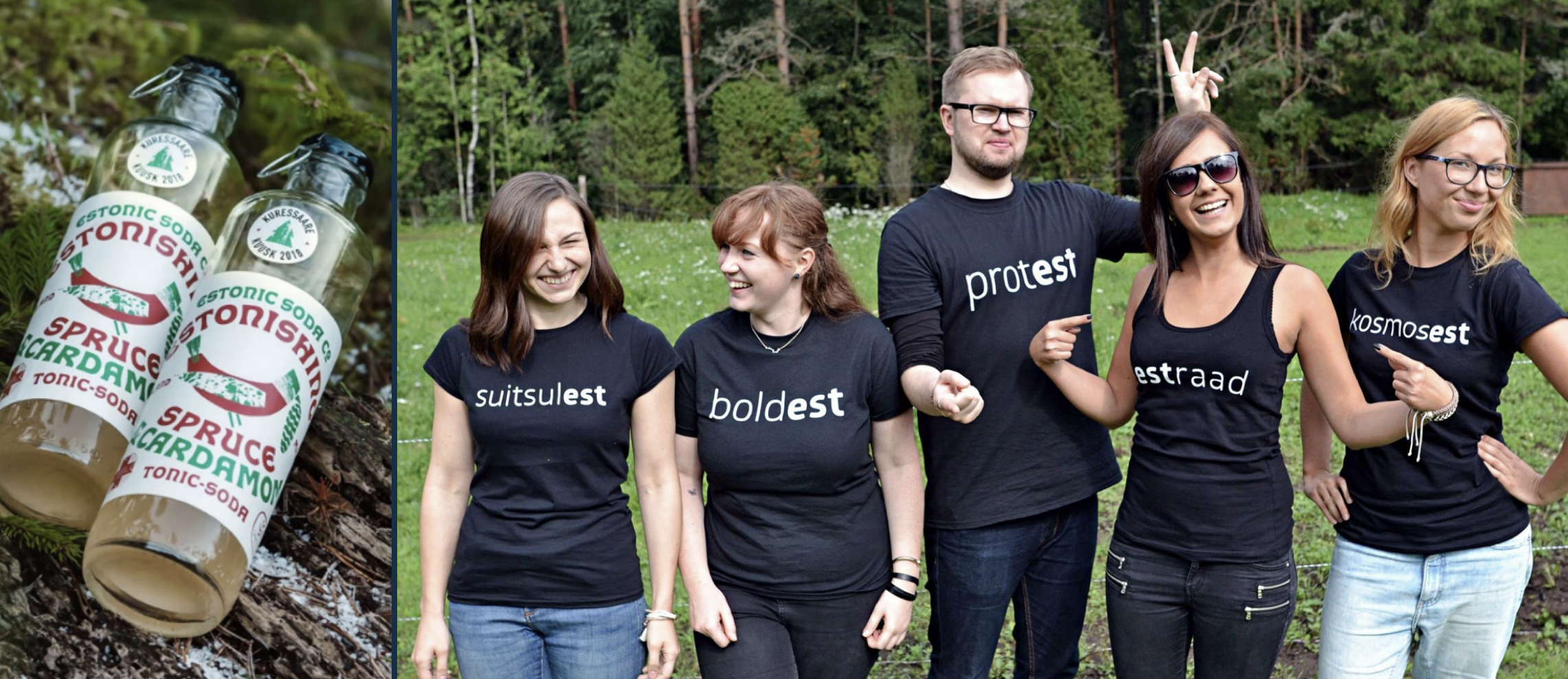
Screenshot from [kentie.com ](https://kentie.com/?ref=fomo.observer)where Peter Kentie outlines the EST brand story
Ten years after its launch, the design philosophy behind the campaign continues to challenge standard bureaucratic corporate branding, offering a blueprint for community-led ecosystem growth.
### The platform metaphor: Shifting from rules to freedom
A trained graphic designer and marketeer, Kentie's philosophy is rooted in a deep fondness for technology and the principles of open-source software. When tasked with rebuilding Eindhoven's image following massive layoffs at Philips in the early 2000s, Kentie's team bypassed traditional marketing frameworks.
Instead of creating strict corporate guidelines, they built a city brand designed like a software platform.
> "Usually, when people build municipal identities, it’s with a really thick brand manual, rules, and things you cannot do," Kentie explains, pointing to the standard approach. "You have a kind of brand police. By thinking the other way around, we say: we have this core brand — it's a logo, but it's also a mentality — and you share that with your citizens, your companies, and local designers."
Kentie explicitly compares this method to Linux. Linus Torvalds from Helsinki had to create the base operating system and make it open so that a global community could add to it.
> "The lesser rules you create, the more freedom you create," Kentie says. "But it's a scary thing. You let something loose, so there is less control. You have to be really careful how you do that, but this thinking is very interesting."
### The Anatomy of '-est'
Returning to the Netherlands from his travels, Kentie set out to test whether this decentralised, collaborative approach could scale to an entire nation. He discovered his visual anchor in a simple linguistic coincidence: the English name for Estonia naturally contains the superlative suffix.
He curated roughly 20 specific use cases showcasing where the country stood out globally, attaching modifiers like *smartEST*, *wisest*, and *coolEST*.
[The concept](https://kentie.com/?ref=fomo.observer), however, initially faced cultural scepticism back in Estonia.
> "People from Estonia said, 'Why can't we claim we are the best?'" Kentie notes. "That was a stupid remark. Of course, you claim that you are the best. That’s the only way people notice you and think, *Who are they? What are they doing?*"
### Breaking the 'Estonian black box'
For months, Kentie's detailed nation-branding proposal languished in what he playfully calls the "Estonian black box" of official communication. "We are accustomed in Eindhoven that you react within five minutes," he jokes.
The breakthrough came via a chance encounter when tech entrepreneurs Sten Tamkivi and Kristjan Lepik visited Eindhoven to study high-tech campus community building.
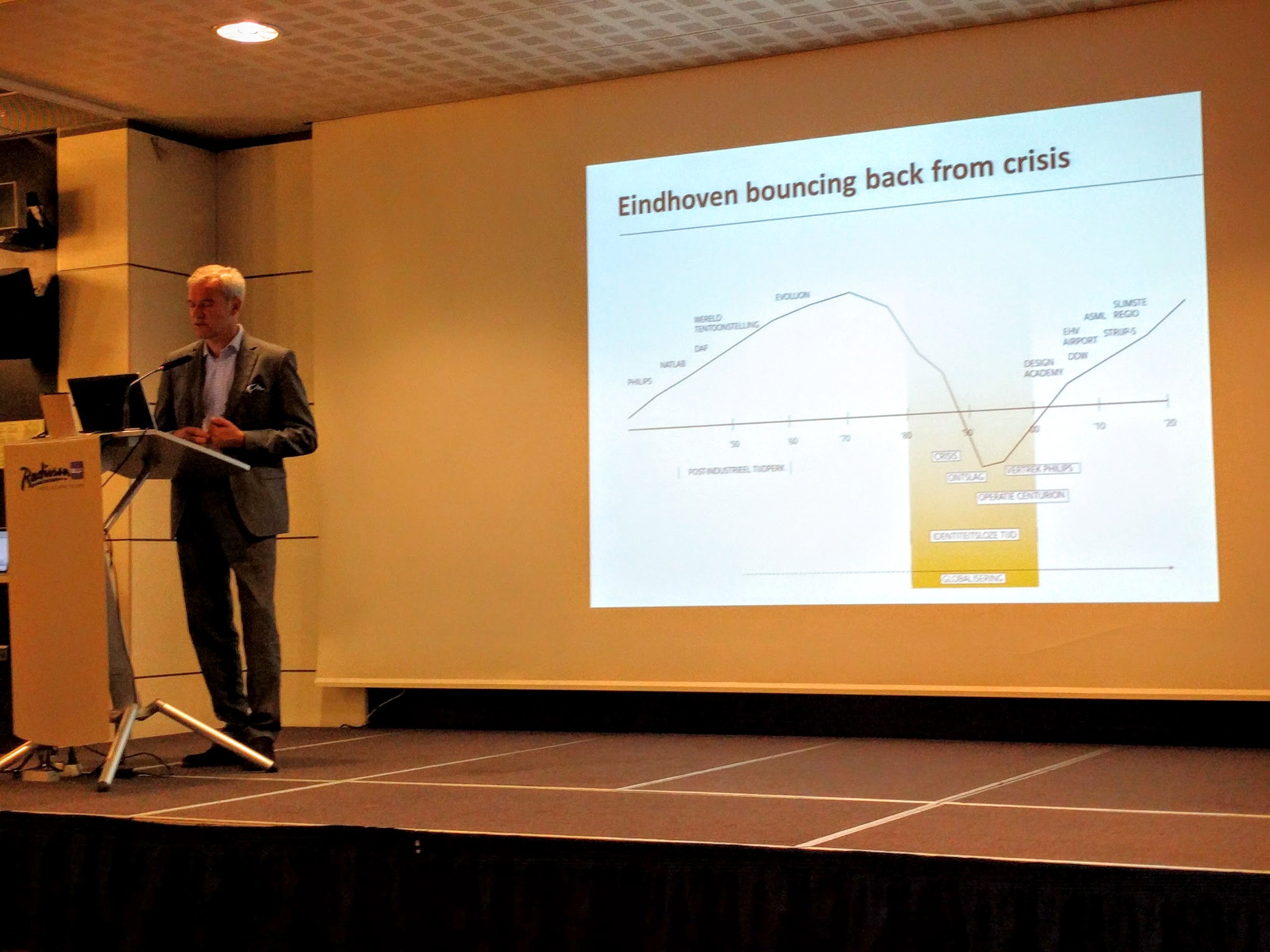
Peter Kentie telling the Eindhoven brand story 10 years ago. Photo: Sten Tamkivi
Kentie, their host, showcased the campus's unconventional ecosystem rule: 15,000 employees are barred from having in-house company canteens, forcing a startup founder to rub shoulders with executives from global tech giants in a single dining area.
At the end of the trip, Kentie handed over his branding deck. The reaction was immediate. "They were... 'what the fuck?'" Kentie recalls. "They said, 'This is worth a million.'"
Tamkivi and Lepik bypassed government red tape by publishing an interview with Kentie on the community blog *Memokraat*, which was quickly picked up by [*Postimees*.](https://www.postimees.ee/3709331/hollandlane-pakub-eestile-valja-uue-brandi-tasuta?ref=fomo.observer)
The nation's largest newspaper attached a public poll asking readers if the Dutch marketeer's open-source concept should be adopted. Out of a population of 1.3 million, more than 10,000 citizens voted within days, representing roughly one percent of Estonian language speakers globally.
**Ninety-five percent voted yes**.
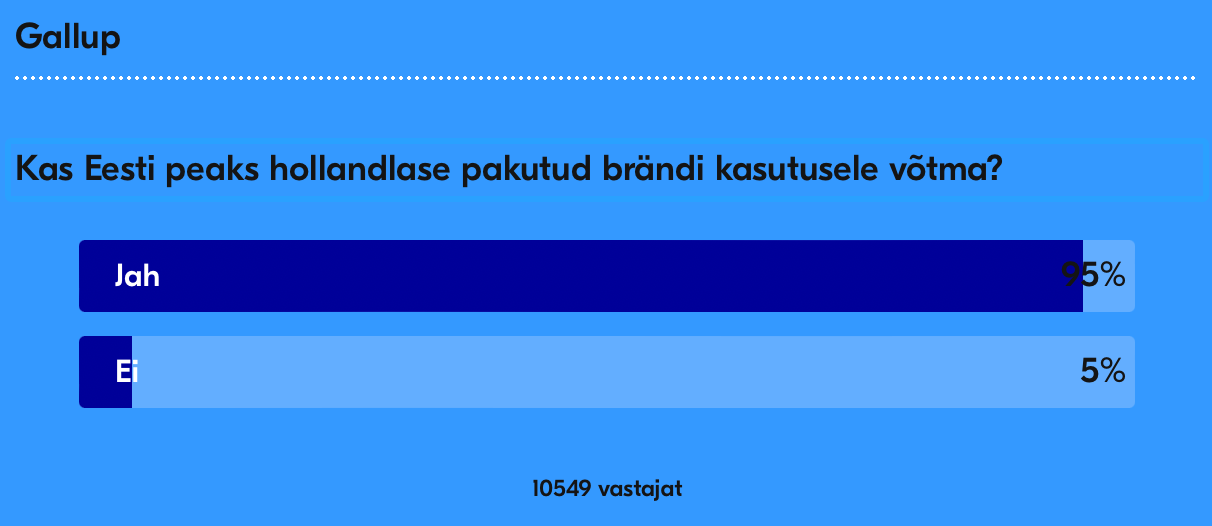
Screenshot from Postimees poll
> "I know a boss who once said, 'Peter, there's no time for democracy,'" Kentie reflects. "But for me, this was a very democratic decision. To put it in perspective, if our national newspaper in the Netherlands runs a poll on who should be the head coach of the Dutch football team, they get maybe 5,000 reactions. This 10,000 was enormous."
### The ultimate validation: Uncontrolled adoption
The true validation of Kentie’s design approach was its organic, frictionless adoption across the tech sector and broader society. By signing the rights over to Enterprise Estonia completely free of charge, he removed the intellectual property barriers that usually stifle corporate branding execution.
At the Latitude59 tech conference in 2016, Kentie sat in the main hall as then-Prime Minister Taavi Rõivas walked on stage. The presentation slides behind the head of state read: *"ESTonishing Estonia."*
```
====================================================================
TRADITIONAL VS. OPEN-SOURCE BRANDING
====================================================================
METRIC TRADITIONAL MANUAL KENTIE'S PLATFORM LOGIC
--------------------------------------------------------------------
Control Strict "Brand Police" Decentralized Trust
Cost High Taxpayer Capital Pro-Bono / Open-Source
Adaptability Rigid Guidelines Infinite Modifiers
Friction Licensing & Approvals Zero-Friction Sharing
====================================================================
```
From there, many (tech) companies have fully integrated the brand into their global pitches. Even corporate entities like Tallinn Airport and commercial hospitality brands deployed the visual pun seamlessly.
For Kentie, the lesson for destination marketeers and startup ecosystems alike remains clear: a brand is not a static piece of corporate graphic design; it is a shared utility.
> "Brand is a platform," Kentie concludes, echoing a famous business maxim. "Jeff Bezos once said, 'Brand is what people think of you when you're not in the room.' That is a brutally honest thing. You can't do without a brand basis, but the real hard work is the proactive marketing that follows."
### Postscript: The changing landscape of identity
Looking ahead, Kentie – now also an honorary councillor of Estonia – notes that the rise of agentic AI will only increase the value of clear, programmatic, open-source brand architecture.
> "Now we live in a world where synthetic agents are stepping in between the brand and the consumer," Kentie observes. "A friend of mine says a brand nowadays has to be lovable, fair, but also readable. It has to be easily interpreted by digital agents. When you shift your framework to a clean platform architecture, it works wonderfully for this new era."
## Sign up for Fomo.Observer
Startup stories from Estonia. Free weekly newsletter.
Subscribe
Email sent! Check your inbox to complete your signup.
No spam. Unsubscribe anytime.
### The “Vinted Effect”: How Lithuania replicated the Skype phenomenon to rewrite the playbook
URL: https://fomo.observer/the-vinted-effect-how-lithuania-replicated-the-skype-phenomenon-to-rewrite-the-playbook/
Last updated: 2026-05-29T08:24:52.000Z
VILNIUS - When Mantas Mikuckas recalled the intense pressure surrounding Accel Partners' 2013 investment into Vinted, he framed it as a baseline trial for an entire nation. Addressing a packed hall at the **LOGIN innovation conference** inside the Litexpo exhibition centre in Vilnius, Vinted’s co-founder noted that international venture capitalists were fundamentally questioning if Lithuania was a stable, investable geography.
"Those investors were actually wondering, is Lithuania investable?" Mikuckas said on the LOGIN stage. "They even did due diligence on Lithuania—on the legal system, everything, and political stability—to decide if they can greenlight Lithuania as an investable geography."
Mikuckas framed Vinted's resulting $5 million Series A round as the first major international venture capital injection into a Lithuanian tech company since the country restored its independence in 1990\. Crucially, the deal was struck directly with the domestic entity, Vinted UAB, bypassing the common practice of forcing international startups to "flip" their legal entities into jurisdictions such as Delaware.
While Vinted’s narrative remains the foundational pillar of Lithuania's modern multi-unicorn ecosystem, historical accuracy requires a minor footnote. Nearly a decade prior, Vilnius-born pioneer GetJar achieved global scale as the world’s largest independent mobile app store; however, its multi-million dollar investments from Accel were legally routed through a Delaware-incorporated entity, leaving Vinted to claim the title of the first institutional validation of Lithuania's domestic legal geography.
### The Mid-Market Trap vs. The Baltic Advantage
This domestic focus has increasingly turned into the Baltic region's secret weapon, primarily driven by a geographic anomaly: small market size.
Martin Tantow, a Silicon Valley-based investor and partner at Pegasus Tech Ventures who also addressed the LOGIN conference, points out that startups born in larger mid-sized European markets often fall into a localisation trap.
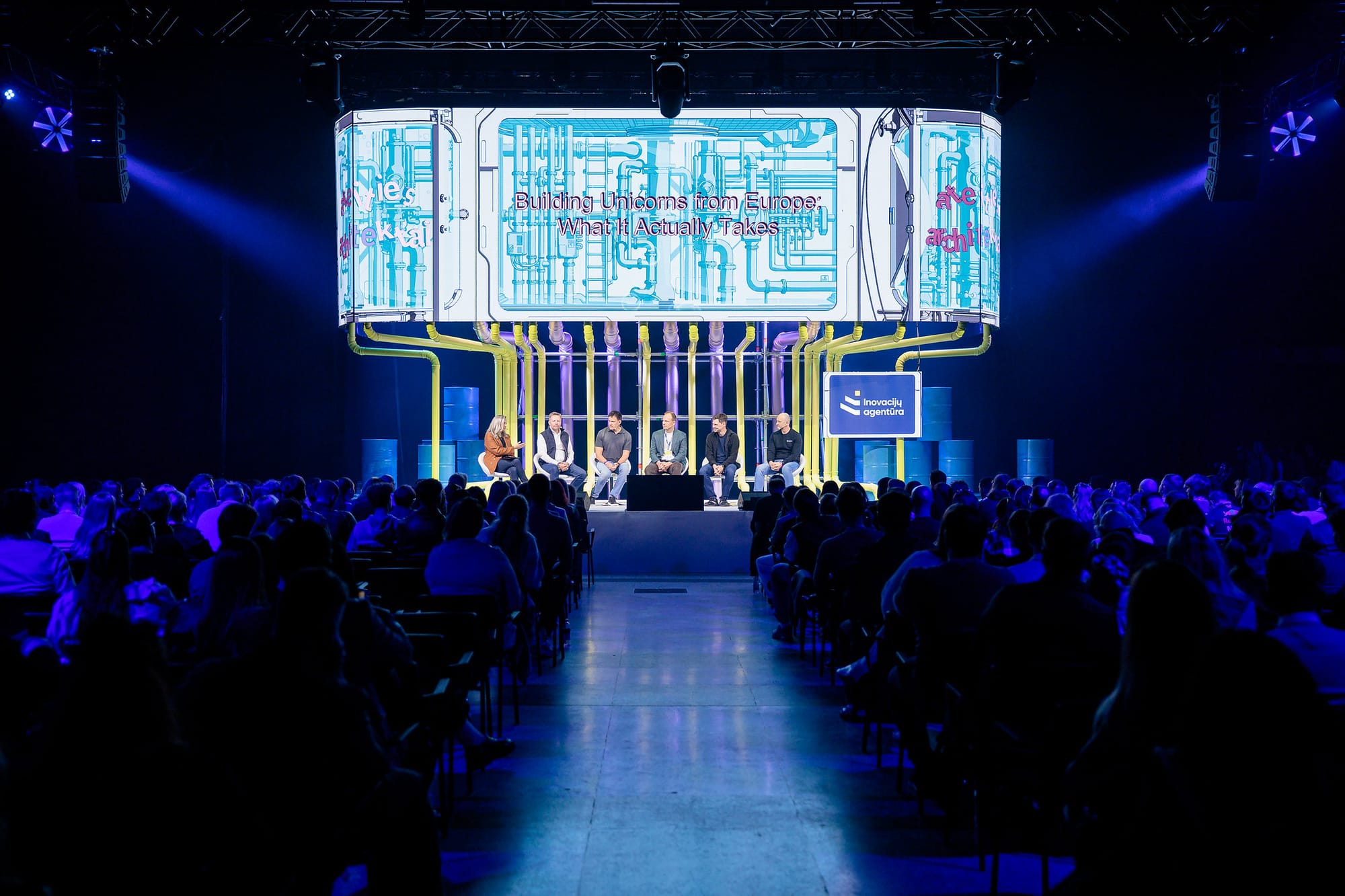
"If you look at markets that are bigger — not as big as the United States, but kind of in the middle, let's say Germany, France, Spain, Italy — since they're bigger, they do focus a little bit more on their own country," Tantow explained during the panel. "They say exactly like, 'Oh, we are a German company' or 'a French company' ... which for me, again, is just not good."
In contrast, Baltic entrepreneurs are forced to look outward from day one. A firm founded in Vilnius cannot survive on local traction alone, compelling founders to build global architectures immediately.
> "I wish that in Europe we would think at least European from the beginning," Tantow said, urging founders to adopt a broader framework: *"We are a European company, and we are based in Lithuania."*
### Inherited Blueprints and Regional Anchors
This hyper-focused international mindset has created a reliable cross-border blueprint across the Baltic states. In neighbouring Estonia, early global champions like Skype laid a similar operational foundation.
Today, that regional playbook is best exemplified by transportation giant **Bolt**, which — despite raising more than a billion from Tier-1 global growth funds like D1 Capital Partners and automotive conglomerates — has intentionally kept its headquarters and core legal entity anchored in Estonia.
It is a validation of Lithuania's legal and economic maturity that Vinted proved possible in its own country in 2013.
Ultimately, both models are required to understand how the Baltics evolved from a blank spot on the global tech investment map into an integrated innovation hub that has yielded successive generations of software companies such as Nord Security and Cast AI.
Vinted proved that Lithuania could cultivate a long-term consumer marketplace capable of sustaining unicorn-level evaluations on native soil.
For Mikuckas, the evolution over the last decade has turned Lithuania from a speculative bet into an optimal launchpad.
> "10 years ago, there was nothing. Now we have all the resources you need," Mikuckas concluded. "We have founders with experience, we have thousands of people who can join your company... we have money — local money, global money. I could not think of a better time, and a better place, to start your own tech company."
## Sign up for Fomo.Observer
Startup stories from Estonia. Free weekly newsletter.
Subscribe
Email sent! Check your inbox to complete your signup.
No spam. Unsubscribe anytime.
### Lithuania’s co-investment strategy offers blueprint for boosting angel investments
URL: https://fomo.observer/lithuanias-co-investment-strategy-offers-blueprint-for-boosting-angel-investments/
Last updated: 2026-06-20T20:08:22.000Z
**TALLINN** — The Estonian startup ecosystem, which has seen an 83% drop in direct angel investments over the last few years, could follow Lithuania's lead in seeking a solution to get angels off the sidelines.
Fomo.Observer caught up with [Viktorija Trimbel](https://www.linkedin.com/in/viktorijatrimbel/?ref=fomo.observer), Managing Director of Lithuania's state-backed fund [Coinvest Capita](https://www.coinvest.lt/?ref=fomo.observer)l, while she was in town for Latitude59\. Trimbel told us how targeted public co-investment systems and profit-sharing mechanisms can actively catalyse private capital into high-risk sectors such as DeepTech and Defence.
Viktorija Trimbel, Managing Director of Coinvest CapitalT
It’s a hot topic at the moment as Jana Budkovskaja, board member of the Estonian Business Angels Network (EstBAN) recently [wrote about in Fomo.Observer](https://fomo.observer/jana-budkovskaja-estonian-angels-have-grown-up-now-the-government-needs-to-catch-up/), issuing a direct challenge to Estonian policymakers: "Please put five million on the table" for a dedicated angel co-investment vehicle to reverse a multi-year funding decline.
[JANA BUDKOVSKAJA: Estonian angels have grown up. Now the government needs to catch up.Jana asks the Estonian government: “Please put five million on the table” for an angel co-investment vehicle. She promises extremely positive development in 3 years.Fomo.Observer](https://fomo.observer/jana-budkovskaja-estonian-angels-have-grown-up-now-the-government-needs-to-catch-up/)
### Catalysing private capital, not crowding it out
Coinvest Capital was established in 2018, and was designed to help business angel co-investments by leveraging private capital through a structured, market-driven model. The beauty of its primary scheme is the fund can assume a significant share of an investment round while relying entirely on private sector due diligence.
"The original concept was really to facilitate business angel co-investment," Trimbel said. "Under that, we can take up to 75% of the round. We need a minimum of two or three private partners for this investment. If they want to put in more money, we are always happily reducing our share. We never compete with private funds, we don't crowd out private capital — we catalyse private capital."
Trimbel emphasised that this design ensures every deal carries explicit market justification. To prevent distorting the ecosystem, the fund enforces a strict policy of neutrality during round formation.
"I also made a rule that we do not indicate to other private investors whether we are going to invest or not unless we already have our investment committee decision," Trimbel explained. "The logic behind this is that we want private investors to make their own independent decision whether they like the company or not, because they are risking their own personal money. In addition to that, we are not automatically matching \[them\]. We are still doing our own due diligence."
### Aligning incentives: The profit-share mechanism
Unlike traditional public funds, Coinvest Capital caps its financial returns on successful exits, leaving the surplus upside entirely to its private co-investors - what an incentive!
"We only share public returns or public profits if there is a successful exit and if the profits from investment are above our cap," Trimbel noted. "Right now, it's either 4%, 6%, or 8% annual IRR. The 4% is for university spin-offs, because this incentive is even more generous—we want to facilitate commercialisation of scientific research."
For most startups, the return cap is set at 8%, and a 6% cap applies if a portfolio company becomes publicly listed.
This asymmetric risk-reward structure has yielded some very positive real-world outcomes for angel investors. Trimbel pointed to exit from Interactio just 18 months after initial investment.
"The exit was valued at 9X. Great result, an outlier also," Trimbel said. "And then, because of our profit-sharing arrangement, we picked our three years of minimum cap, and the surplus was distributed to business angels. We enhanced their returns from 9X to 34X. And that's just in one year and a half. So this is definitely a great success story."
### The shift to single-use
In 2023, Coinvest Capital’s fund mandate was adapted to fit the more pressing geopolitical environment; it became the first state-backed fund in the Baltic region fully authorised to invest directly in single-use defence technologies.
Originally the fund centres around what Trimbel terms "green capital"—patient, non-predatory funding designed for research-and-development (R&D) intensive sectors where commercialisation cycles are long.
"We are very well positioned for R&D and procurement-intensive industries like life sciences and defence, because we don't force founders to sell too early," Trimbel stated. "Usually, with the first ticket, we go into through the equity instrument, we have shareholders' agreements. Our concept is that we want to strengthen the equity base and then facilitate our startups obtaining non-dilutive funding like grants, loans, etc., giving them through a green structure."
Trimbel added with a touch of humor that this mission-driven approach sets it apart from typical venture capital trends, "I even have a joke that I drive investments in space technology rather than another dog tinder... That's for traditional VCs. It's quick, scalable. We have a mission, like mission-driven capital."
### High deployment and high impact
Another benefit of the state-owned fund is Coinvest Capital's portfolio companies generate more in employment and corporate taxes than the state deploys in capital.
The strategy reached an operational milestone in recent performance metrics.
"Last year \[2025\] was a record year in terms of deployment and impact generated," Trimbel revealed. "We deployed more than €9.3 million and we attracted more than €14 million. So we had the largest ever volume, and at the same time, the smallest ever share in the rounds. So I consider that a very, very healthy indicator."
This efficiency stems in part from the fund's agility. While traditional institutional funds backed by the European Investment Fund (EIF) often require up to two years of market consultations, beauty contests, and private fundraising rounds before capital hits the ground, Coinvest Capital operates within an existing legislative framework.
"We are an existing structure. So if the government wants to make a quick impact into the ecosystem, it's basically a matter of a couple of legal acts," Trimbel said. "Our mandate is adjusted and we can deploy from the first minute. So we are a very efficient tool to accelerate impact."
### Implications for the Baltic region
The Lithuanian experience adds weight to the arguments being made by ecosystem players in Estonia. Facing structural bottlenecks—including an aging founder demographic and a narrowing pre-seed pipeline—Estonia's lack of angel-specific investment incentives stands out in an otherwise highly competitive digital economy.
As public capital increasingly looks to anchor critical infrastructure, dual-use technology, and scientific innovation across Europe, the choice facing policymakers is shifting. As Trimbel’s data indicates, a structured co-investment fund is less of a State subsidy and more of an operational multiplier, one which leverages private sector discipline to scale companies that are vital to regional security and economic resilience.
## Sign up for Fomo.Observer
Startup stories from Estonia. Free weekly newsletter.
Subscribe
Email sent! Check your inbox to complete your signup.
No spam. Unsubscribe anytime.
### Traditional accelerators fight for relevance in the age of vibecoding and solo founders
URL: https://fomo.observer/traditional-accelerators-fight-for-relevance-in-the-age-of-vibecoding-and-solo-founders/
Last updated: 2026-05-27T18:56:08.000Z
**TALLINN** — The traditional startup accelerator model is facing an existential crossroad as rapid advancements in artificial intelligence dismantle technical barriers, allowing solo entrepreneurs to launch companies with little to no human assistance.
At a Latitude59 panel discussion titled *"If AI can build startups, how should we define the role of accelerators in the future,"* industry experts, investors, and founders debated whether the rise of AI-driven execution will render the conventional incubation ecosystem obsolete.
### The Illusions of AI Performance
While generative AI models can now "vibecode" functional prototypes, panelists noted a significant gap between automated code generation and institutional-grade software development.
> "If you ask real engineers, they say the code quality is at the level of slightly above average," said Linda-Riin Võeras, Investment Manager at Karma Ventures. "All of the average code in the world is kind of mashed in together... It’s a statistical model. It doesn’t have logic, it doesn't have understanding."
The shift toward AI-assisted development has triggered a wave of rebrandings across European technology ecosystems, as traditional frameworks are being repositioned to align with market hype.
> "Hackathons now are like hack houses," noted Anne-Liisa Elbrecht, the head of Tehnopol Accelerator. "We kind of like to reinvent the things that have been around a long time... we just slap a new name onto it."
### The Solo Founder Vulnerability
The rise of the "solo founder" supported by an army of AI agents introduces new operational and financial risks for venture capitalists. Under standard due diligence, institutional investors remain highly sceptical of funding single-person entities due to the lack of human redundancy.
Investors warn that a company consisting of one human and multiple autonomous agents creates a fragile corporate structure.
> "If you are a one-man company, your agents are the company," Võeras explained. "They need to run 24/7... If something happens, if you mess up, it's all on you. As an investor right now, I find it very hard to believe that I would be ready to take that sort of risk on one person. I cannot replace you. You *are* the company. If you're gone, I'm gone."
Despite the technical democratisation brought by AI, founders argue that human networks remain the most critical asset for navigating non-technical corporate hurdles, such as regulatory compliance, legal structuring, and strategic decision-making.
Sercan Altundas, technical founder and CEO of Neocortex, recounted his experience as a solo founder trying to close institutional deals without a broader executive team.
> "Some big game companies wanted to work with me, then when they heard I was solo, they were like, 'Let's talk in the future when there is a team,'" Altundas stated. "So I even missed real opportunities because I was solo. If I get the flu, the shop is closed."
Ecosystem experts maintain that the modern accelerator's primary value proposition has pivoted from teaching technical execution to providing psychological containment and operational accountability.
> "Early-stage startups are these two persons, so we are trying to be the whole team and push the founder team to actually go," Elbrecht said, describing the role of accelerators as an extended corporate team. "Today is not that 'how big is your market,' today is the question: 'how fast can you go actually?'"
### Market Noise and Application Glut
The proliferation of accessible AI tools has led to a surge in AI-generated pitch decks and program applications, complicating the filtering process for venture funds and accelerator cohorts alike.
> "We have seen several AI applications, and actually, if you think it's a good idea, then we are replying the same way with the AI," Elbrecht remarked regarding the automated influx.
Võeras added that reliance on generic AI tools frequently strips startups of their competitive differentiation, blending them into a sea of identical market propositions.
> "So many founders are using pitch deck AI... they all look the same, they all have the same jargon, very, very similar. It's just part of the mass. You do not stand out," Võeras concluded.
## Sign up for Fomo.Observer
Startup stories from Estonia. Free weekly newsletter.
Subscribe
Email sent! Check your inbox to complete your signup.
No spam. Unsubscribe anytime.
### Past unicorn glories won't save us: Why the Estonian startup ecosystem needs fresh blood
URL: https://fomo.observer/past-unicorn-glories-wont-save-us-why-the-estonian-startup-ecosystem-needs-fresh-blood/
Last updated: 2026-05-26T13:00:52.000Z
TALLINN - The Estonian startup sector, frequently lauded for its record-breaking concentration of unicorns per capita, is facing a critical bottleneck: a deficit in raw numbers of new, active builders.
Sitting down on the sidelines of the Latitude59 conference in Tallinn, Tim Vaino, an early-stage investor with Practica Capital, discusses why the ecosystem cannot survive on past trophies alone, how targeted grassroots initiatives are trying to bridge the gap, and why hackerspaces are crucial for the next generation of builders.
### The Numbers Game: Moving Beyond the Legacy Narrative
**Tarmo Virki:** What’s the biggest problem you see in the Estonian startup scene today?
**Tim Vaino:** I feel like I'm repeating myself on this, but we spend a lot of time talking about our past successes — how many unicorns we have per capita, what we built years ago, and so on. Don’t get me wrong, that legacy is incredible, and it’s a crucial part of the Estonian narrative.
But we need to deliver more. We need to get more people actively involved in the industry to create the *next* wave of success stories. Right now, the passion and the raw energy are there, but the sheer volume of new builders is missing. At the end of the day, innovation is a numbers game.
### Sourcing Hidden Talent in a Shrinking Nation
**Tarmo Virki:** The nation’s population isn't exactly booming. Where do you actually find these new people?
**Tim Vaino:** The people are out there. A great recent example is *Ruum*, the hackerhouse launched in Estonia last autumn. It brought a massive wave of completely new faces into the ecosystem — people nobody had heard of before. They were university students or hobbyists who had been quietly building things at home or in school.
So, the issue isn’t a lack of people. The issue is that they aren't integrated into the community yet. They haven't developed the habit of turning their ideas into scalable tech businesses. That is what we need to get better at. As an investor, my goal is to find them, back them, show them the ropes, and help them start building.
### Grassroots Actions: "Kolmapäev" and Summer Residencies
**Tarmo Virki:** That’s the big-picture challenge. What practical steps are you taking right now to bring these young people into the fold?
**Tim Vaino:** Outside of my day-to-day work with Practica Capital, I dedicate my free time to finding and supporting this younger demographic. Right now, I’m launching a new initiative called *Kolmapäev* (Wednesday). We are running it as a pilot for the next month, with plans to officially re-launch it full-time in September if it succeeds.
The concept is simple: in partnership with Startup Garage and TalTech University, we gather every second week at the Telliskivi Hub. We bring enthusiastic youth into the room alongside established mentors from the Estonian Founders Society who willingly share how they got their start. It’s a free-form format designed for inspiration, discussion, and direct integration. Startup Estonia has been a massive help in getting this off the ground.
## Sign up for Fomo.Observer
Startup stories from Estonia. Free weekly newsletter.
Subscribe
Email sent! Check your inbox to complete your signup.
No spam. Unsubscribe anytime.
**Tarmo Virki:** *Ruum* originally ran in Krulli last autumn. Are you evolving that format into a summer program now?
**Tim Vaino:** Yes, we are launching a summer residency at the same location, but it’s going to be significantly bigger and better. *Skaala* is backing us by providing even more physical space. We've also brought on a heavy-hitting lineup of venture partners, including 2C Ventures, Specialist VC, and Practica Capital.
This time, we’ve secured the entire fourth floor. While the previous *Ruum* setup could only accommodate 30 people, we can now fit about 120.
Our strategy this summer is also broader. We want to create the ultimate environment where anyone can come and deliver. We are working closely with all the major institutions—TalTech, Tallinn University, Tartu University, BFM, and the Estonian Academy of Arts—to spread the word. There is honestly no better time than the summer break for university students and high school graduates to come out, get their hands dirty, and give entrepreneurship a real shot.
*To learn more or apply for the summer residency, visit* [*www.ruumtallinn.com*](http://www.ruumtallinn.com/?ref=fomo.observer)
### Latitude59 big wins go to Granarium, Backoffice and Dogbase
URL: https://fomo.observer/latitude59-big-wins-go-to-granarium-backoffice-and-dogbase/
Last updated: 2026-05-22T12:37:49.000Z
TALLINN - Finnish Granarium won the largest award at Latitude59 pitching competition, with Backoffice and Dogbase winning other awards.
Finland's [Granarium](https://www.linkedin.com/company/granarium-technologies/?ref=fomo.observer), the maker of renewable supercapacitors for grid-scale power stabilisation, received a 200,000-euro investment offer from business angel networks.
“A key structural shift is that storage is no longer just a 'backup power’ - it is becoming core grid infrastructure. Granarium is the perfect addition to our angel investment portfolio because the company is solving a massive global challenge in a safe and scalable way,” said lead investor Jana Budkovskaja.
[Backoffice](https://backoffice.lt/en/?ref=fomo.observer), a workforce management tool for restaurants, was awarded a 150,000 euros investment offer from FIRSTPICK VC.
Dogbase, AI platform for working-dog team training and performance, won 100,000 euros investment offer from business angel networks.
> “I believe our investors have found new superstars for their portfolios, while the founders will gain not only investment but also professional and committed partners who are ready to contribute to their success," said Latitude59 CEO Liisi Org.
The prize pool also included awards from Latitude59’s partners, including TalentHub, SEB, Knowzilla, Widen Legal, Amazon Web Services and Google Cloud.
**The other finalists included:**
[**Callsy AI**](https://www.callsy.ai/?ref=fomo.observer) **(LT) — AI workforce agents that automate revenue, activation, and support**
[**FleetFox** ](https://www.fleetfox.eu/en/estonia/?ref=fomo.observer)**(EST) — one-stop shop for fleet managers across Europe**
[**Getpin**](https://getpin.com/?ref=fomo.observer) **(EST) — helping local businesses get chosen in AI-driven discovery**
[**FPV Battleground**](https://fpvbattleground.com/?ref=fomo.observer) **(UA) — tactical FPV simulator for military drone pilots**
### 9 humans, 9 AI agents, and $2M ARR: Inside Creem’s automated "Merchant OS"
URL: https://fomo.observer/9-humans-9-ai-agents-and-2m-arr-inside-creems-automated-merchant-os/
Last updated: 2026-05-22T09:44:03.000Z
**TALLINN** — Gabriel Ferraz grew up in Brazil, scaling a crypto payment gateway past $200 million in gross merchandise value (GMV). But when launching his next venture, he traded São Paulo for Tallinn, choosing to become a physical resident of Estonia rather than running a digital business from a distance.
"There's something about the cold, the dark, the quiet that just flips a switch," Ferraz says of the Northern environment's intense, uninterrupted focus.
That focus birthed Creem in late 2024 — a financial "Merchant OS" that has scaled to $2 million in annual recurring revenue (ARR) in 18 months. The startup handles $3 million in monthly transaction volume with just nine human employees and nine custom, autonomous AI agents.
### Operating with a Nine-Agent Algorithmic Core
At Creem, AI agents are core infrastructure rather than basic chatbots. Each agent owns a specific domain, including go-to-market (GTM), financial analytics, security, and customer support.
Every night, they hold automated meetings in a shared Slack channel to sync daily insights, reference data, and run internal retrospectives.
This extreme operational efficiency allowed Creem to cross its first $1 million in ARR with a human team of just two people. The model caught the attention of Baltic VC firm Practica Capital, which led Creem’s €1.8 million pre-seed round alongside Antler and high-profile tech angels.
### A comprehensive OS for Web merchants
Instead of acting as a traditional payment gateway, Creem operates as a unified financial operating system for borderless digital businesses and internet bootstrappers. The single integration layer automates:
- **Global Checkout:** Processing localised checkout in fiat and stablecoins across 190+ countries.
- **Instant Tax Compliance:** Automatically handling multi-jurisdictional sales tax and VAT liability from day one.
- **Automated Multi-Party Splits:** Routing pre-tax revenue directly to co-founders, freelancers, and marketing affiliates before any funds are withdrawn.
Creem is also preparing for a world where software agents buy from software agents. The platform optimised its documentation stack for programmatic buyers, deploying a structured `SKILL.md` file that external AI agents can read and use to execute payment rails in a single pass.
### Zero legacy ad spend
Creem bypassed standard paid ad funnels entirely, redirecting its marketing budget into an open-source community bounty program called "Scoops." The initiative pays independent developers directly to build integrations and tutorials, generating 30 native guides for frameworks like Next.js, React Native, and Laravel in its first month.
The grassroots traction landed Creem on verified indie-hacker leaderboards like TrustMRR.
"An $8,000 investment in Google Ads gives you clicks that disappear when you stop paying," Ferraz says. "That same budget channelled into your developer community buys you permanent content, actual infrastructure integrations, and user evangelists."
### Taavet Hinrikus: "If you don't help the community grow, it's going to be a really bad place to exist"
URL: https://fomo.observer/hinrikus-if-you-dont-help-the-community-grow-its-going-to-be-a-really-bad-place-to-exist/
Last updated: 2026-05-20T18:13:53.000Z
###
**TALLINN** — Speaking at Norrsken Evolveevent at Latitude59, Wise co-founder and tech veteran Taavet Hinrikus laid out the fundamental vision driving **Kasvuhoone**, an ambitious 15,000-square-meter technology hub currently under construction in Tallinn’s Krulli quarter.
For Hinrikus, backing the project isn't just about real estate development — it is an existential requirement for the sustainability of Europe’s technology ecosystem.
> "I think if you don't help the community grow, then it's going to be a really, really bad place to exist ultimately," Hinrikus said. "To me, it feels quite natural that if you have the opportunities, then you should spend some of your time and efforts on helping the ecosystem around you."
### Inside Kasvuhoone: The "Nordic Hub" for 100 Companies
Designed by prominent Danish architects, Kasvuhoone (which translates to "Greenhouse") is positioned to become the largest Nordic hub dedicated strictly to technology and creative industries.
While structural building work is just beginning — with a targeted completion date at the beginning of 2028 — the ultimate goal is to house over 1,000 operators and 100 fast-scaling companies.
Hinrikus noted that physical infrastructure is much more inefficient to build than software, but argued that a physical environment is something digital founders desperately need to compress their timelines.
> "What we need is capital, we need talent, and we need customers," Hinrikus explained. "And I think if people are congregating in one place, all of this will happen a little bit quicker... I do believe that if people are in one physical environment, that's going to help them do things faster. Ultimately, it's all about how do we accelerate things."
## Sign up for Fomo.Observer
Startup stories from Estonia. Free weekly newsletter.
Subscribe
Email sent! Check your inbox to complete your signup.
No spam. Unsubscribe anytime.
### The Shift to Defense Tech and "Reinventing" Europe
Reflecting on Estonia's massive per-capita success with tech unicorns — a legacy built on the foundations of early successes like Skype — Hinrikus pointed to a profound shift in regional founder mindsets over the last several years.
He noted that the smartest, most ambitious minds across the eastern flank of Europe are no longer just building traditional software platforms; they are pivoting directly into defence tech.
> "If anyone told me five years ago that I'm going to be investing in missile companies, I wouldn't have believed them," Hinrikus admitted. "But today, I think when you are in Estonia, that feels kind of a given — that we need to build the technology which will protect the country. And I think that's actually a huge opportunity for Estonia and for all of Europe."
He added that while the continent finds itself facing a harsh reality, it opens the door for profound systemic upgrades. "The continent is in war, but the way we fight it is very different to the past. We need to reinvent a lot of things."
Though the physical structure of Kasvuhoone won't open its doors until 2028, Hinrikus emphasized that programme operations and ecosystem building with partners like Norrsken Evolve are starting immediately, utilising existing spaces.
"I think it's cool that we can start doing things before Kasvuhoone is ready," Hinrikus concluded. "Because these spaces don't come to life overnight."
Norrsken Evolve is running a programme in Estonia in September-October 2026.
### "Losing your job for not being innovative enough?" Latitude59 tackles public sector risk-aversion
URL: https://fomo.observer/losing-your-job-for-not-being-innovative-enough-latitude59-tackles-public-sector-risk-aversion/
Last updated: 2026-05-20T18:13:05.000Z
**TALLINN** — The primary bottleneck to the next generation of tech innovation is no longer a lack of capital or ideas, but rigid, outdated regulatory frameworks and a public-sector risk aversion that stifles growth – this was the consensus among tech leaders and policymakers at the official pre-event of the Latitude59 tech conference on Wednesday.
The event, titled “Thinking in Billions”, zeroed in on how mutually compatible regulatory frameworks and controlled testing environments — or "sandboxes" — are becoming essential economic weapons in an increasingly volatile geopolitical landscape.
The debate highlighted the specific friction points operators face when trying to scale breakthrough technologies in highly regulated markets.
### The Geopolitical Necessity of Risk
Opening the discussion, Canada’s Minister of Foreign Affairs, Anita Anand, framed regulatory agility not just as an economic advantage but as a geopolitical necessity.
> "When the world changes around you, we have to adapt, and we have to grow together," Anand said. "And we grow together by ensuring that we learn from each other and not assuming that we have all the answers ourselves."
Anand noted that Canada is actively tightening its ties with international startup ecosystems in areas like artificial intelligence (AI) safety and cybersecurity. "Today, we are strengthening our connections... because the world is changing and we must change with that world," she added.
### Overcoming the "Fear of Making Mistakes"
As technologies ranging from autonomous transport to AI-driven healthcare advance exponentially, the gap between commercial capability and legal frameworks is widening. Policymakers at the event argued that the solution lies in state-backed experimental environments where companies can stress-test complex systems without bureaucratic paralysis.
Sigrid Rajalo, Deputy Secretary General for Economy and Innovation in Estonia, argued that the public sector must shift its mindset from total risk elimination to risk management.
> "The biggest obstacle to innovation is not a lack of ideas, but the fear of making mistakes," Rajalo stated. "Through a testing environment, we are creating a clear and safe way for companies and the state to test complex technologies and solutions with high potential impact."
According to Rajalo, this approach allows governments to "shape the rules of the future based not on assumptions, but on real experiments and data."
This sentiment was echoed globally. Takeshi Kito, co-founder and CEO of GFTN Japan, pointed to the deep operational alignment between Japanese and Estonian regulatory sandboxes. Looking forward, Kito noted he expects to explore deeper collaborations "that foster billion-scale emerging industries not only through mutually compatible regulatory frameworks, but also through the exchange of talent and ecosystem integration."
### View from the Trenches: Bolt and Wolt
For multi-billion-dollar platforms operating at scale, slow legislative updates present a tangible barrier to daily operations. Representatives from regional tech giants Bolt and Wolt shared their firsthand experiences navigating defensive local regulations when deploying new services.
Triin Toimetaja, Strategy & Operations Manager at Bolt, warned that past reputations are no guarantee of future leadership.
> "Estonia has built a strong international reputation as a digital nation, but to maintain that advantage, regulation must move as fast as technology," Toimetaja said. "Bolt sees great potential in closer cooperation between platforms and the public sector to jointly design solutions, update outdated rules and ensure that the regulatory environment keeps pace with people’s real needs."
Leo Ringer, founding partner at Form Ventures, agreed that managing innovation within complex, regulated environments is becoming a critical socio-economic question globally. He credited Estonia’s *Accelerate Estonia* initiative as a prime example of proactive regulatory innovation, though he emphasised that the challenge remains ongoing.
## Sign up for Fomo.Observer
Startup stories from Estonia. Free weekly newsletter.
Subscribe
Email sent! Check your inbox to complete your signup.
No spam. Unsubscribe anytime.
### The Public Sector Dilemma: Floundering on Innovation?
The day’s most candid discussion centred on a pervasive structural issue within governments: public-sector leaders avoiding critical, forward-thinking decisions for fear that a failed experiment could end their careers.
Panellists debated whether the current civil service reward systems are fundamentally misaligned with the needs of a fast-moving digital economy.
Tõnis Tänav, Deputy Secretary General for Innovation and Strategy at the Estonian Ministry of Regional Affairs and Agriculture, challenged the audience and his peers on the lack of accountability for institutional stagnation.
> "I really haven’t seen that anyone loses their job in the public sector because of being too innovative," Tänav remarked bluntly. "However, the current risk and reward system really does not incentivise the public sector enough to force them to take great leaps. Maybe it should be the other way, losing your job for not being innovative enough?"
As Latitude59 continues, the "Thinking in Billions" track sets a sobering but necessary tone for the week. For the founders, operators, and investors watching from the audience the message was clear: building the technology is only half the battle. Winning the market requires, in many sectors, also actively fighting to rewrite the rules.
[Fomo Academy: Tips for a successful Latitude59 (and conference season)Are you heading to Latitude59 next week? Even for the seasoned conference goer it can end up being a very hectic week. There’s so many events, so many people to meet and even the tempting agenda can take you away from your actual business agenda. To helpFomo.ObserverFiona Alston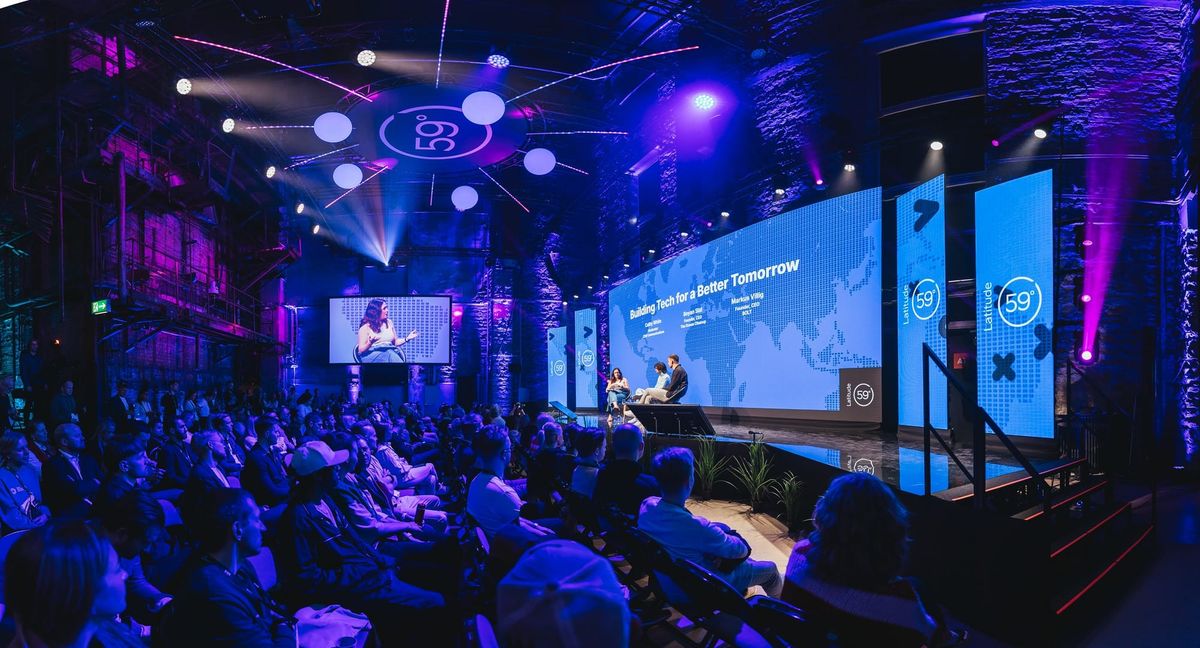](https://fomo.observer/fomo-acadamy-tips-for-a-successful-latitude59-and-con/)
[The finalists of Latitude59’s pitch competition have been revealedCongratulations to the seven finalists, representing four different countries, in Latitude59’s pitch competition. They beat out 465 applicants to reach the Bold stage next week, where they will pitch for a chance to secure angel and VC investment. With nearly €500,000 in this year’s prizeFomo.ObserverFiona Alston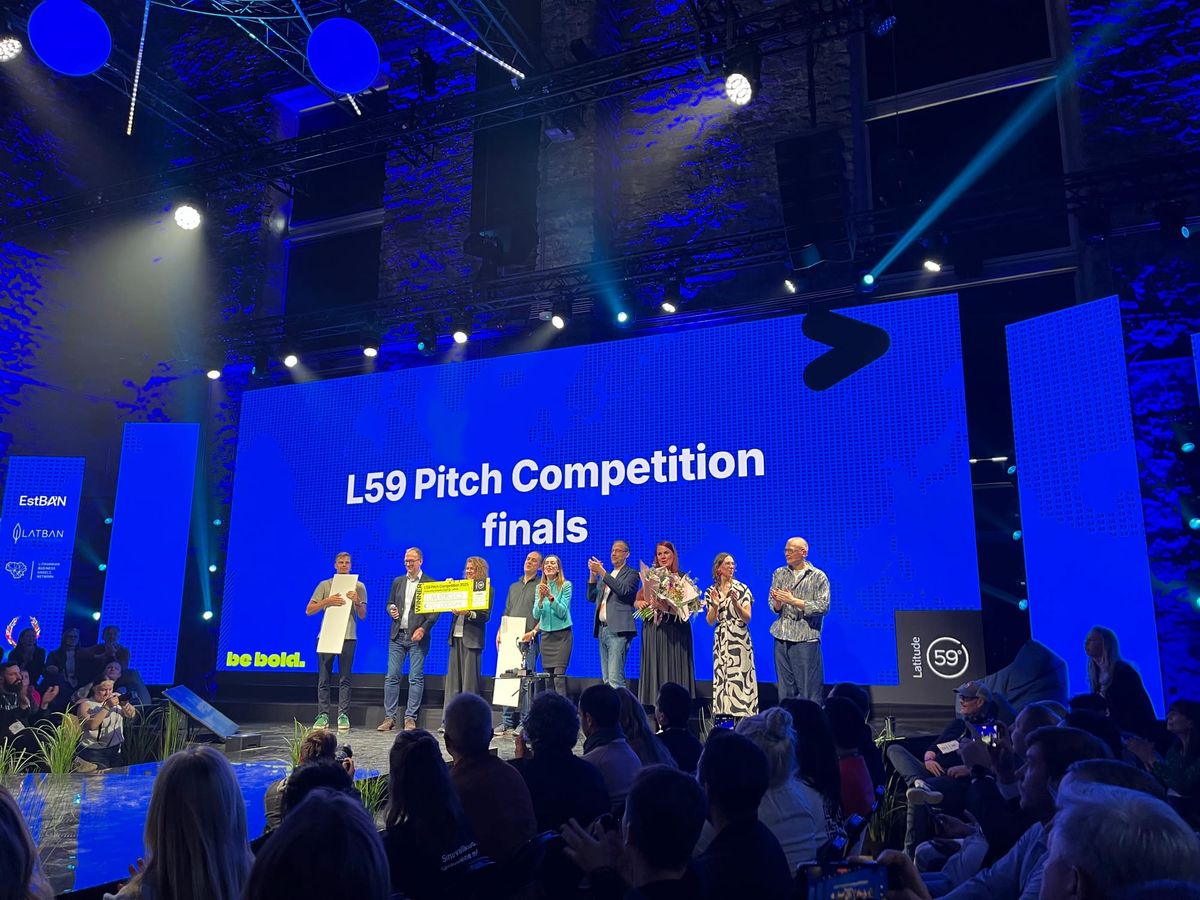](https://fomo.observer/the-finalists-of-latitude59s-pitch-competition-have-been-revealed/)
### Estonia dips to No 12 on Global Startup Ecosystem Index
URL: https://fomo.observer/estonia-falls-to-no-12-on-global-startup-ecosystem-index-202/
Last updated: 2026-05-19T11:06:30.000Z
Estonia has ranked 12th in the Global Startup Ecosystem Index 2026 by StartupBlink, with an 8.8% annual ecosystem growth rate, down one place from last year.
On the list, headed by the United States and Britain, Estonia ranks close to the Netherlands at 10th and to France at 11th, with very little difference among the three.
Sweden fares best of the Nordic countries in 6th position, while Finland is ranked behind us at 14th, and Denmark at No. 17\. As for our Baltic neighbours, Lithuania ranked 22nd and Latvia 48th.
While Estonia is holding its own against much more established ecosystems in Europe (ranked 7th regionally), it could do with a bit of a boost overall. The report said that Europe’s growth of +7.3% fell below the global average of +10.3%, as top-ranked European capitals such as Paris (−3.2%) and Berlin (−2.6%) shrank.
Tallinn was ranked 53rd on the list of top cities, down 4 places from last year.
### Breaking it down
The report did highlight the imbalance within the Estonian ecosystem. Tallinn’s total score is 18.1x Tartu, far beyond levels typically associated with balanced ecosystems. The brain capital of Tartu dropped nine places to 421st despite an 18.5% growth, illustrating that expansion alone does not guarantee upward movement in the rankings as competition intensifies.
> "Estonia's startup ecosystem stands out for its transparency, minimal bureaucracy, and what is globally recognised as a leading option policy framework — giving founders clarity and speed from day one. AI is reshaping how our startups build and scale, while defence tech has emerged as an area of serious momentum. The ecosystem has matured steadily: turnovers are growing, execution culture is strong, and founders here know how to deliver,” said Vaido Mikheim, Managing Director, Startup Estonia.
You can find the full report [here](https://lp.startupblink.com/report/?ref=fomo.observer).
## Sign up for Fomo.Observer
Startup stories from Estonia. Free weekly newsletter.
Subscribe
Email sent! Check your inbox to complete your signup.
No spam. Unsubscribe anytime.
### KAARI KINK: Smartcap's role in the Estonian fund market needs rethinking
URL: https://fomo.observer/kaari-kink-smartcaps-role-in-the-estonian-fund-market-needs-rethinking/
Last updated: 2026-05-18T12:36:34.000Z
The Estonian fund market is moving towards a critical turning point. Smartcap has an important role in this development.
It is difficult to summarise the six years I have spent in the Estonian fund market, both as a member of the [Superangel](https://superangel.io/?ref=fomo.observer) investment team and as the chairwoman of [EstVCA](https://www.estvca.ee/?ref=fomo.observer), in one sentence.
On the one hand, record amounts of capital have flowed into funds, over €700 million according to EstVCA. The number of fund managers and mandates has also increased, and the contribution of Estonian funds to the Estonian economy through portfolio companies has more than quadrupled. The local capital market is now experienced and ambitious – funds have brought global capital here and created an internationally competitive industry from the private and venture capital market.
On the other hand, the market has been in constant flux, both economically and geopolitically, and we have survived several crises as an ecosystem. The rapid development of the artificial intelligence sector has also reshaped expectations for company growth and the conditions for portfolio company sales and follow-on rounds. This in turn affects the liquidity and productivity of funds. At the same time, funds such as Change Ventures and Sunly Future Ventures have closed their doors, and others are ending their active investment period.
The coming years will show how the changed market conditions of recent years will affect the success of attracting the next funds. However, the situation in the fund market is complicated by three other aspects, which together could bring about a decisive turning point.
First: a vacuum in early-stage deal flow. It is difficult to say exactly what has caused the slowdown in new company formation. Several changes have occurred simultaneously: the economic downturn, the decline of grassroots initiatives (e.g. Garage48), the decline of angel investor activity. Funds have become more risk-aware, meaning they invest at a later stage.
There has been a somewhat paradoxical situation in the market, where an early stage founder feels that there is not enough seed capital in the market, and an investor complains about the lack of early stage deal flow. Both are correct. There has been a structural shift, resulting in a vacuum where new companies should be born. A fund with a broad mandate can shift its focus elsewhere, but not everyone has that luxury.
Second: narrowing of the mandate. In recent years, more and more specialised funds have emerged for the Estonian market: deep technology, green technology, defence technology, secondary sale , growth phase.
Fund specialisation is a sign of market maturity, but also a signal of where investors investing in funds want to invest. For example, the European Investment Fund, Europe's largest fund investor, invested €14 billion in sectors such as deep technology, dual-use technologies, life sciences and green technology in 2024.
In good times, specialisation can be a strong competitive advantage. However, the narrower the fund's mandate, the more difficult it is to ensure high-quality transaction volume, attract external private capital to the funds, and achieve good performance – especially in a small market like Estonia. Technology is evolving at a breakneck pace, and no public mandate or specialised fund can keep up with it instantly. The result can be an outdated strategy that the fund manager is stuck with for years to come, even though opportunities lie elsewhere.
Third: the geographical limitation of public money. The European fund manager is significantly influenced by the mandate that comes with public money, as around 35% of the capital raised comes from state or public funding. Often these funds are the anchor investor, i.e. they set the main conditions associated with the fund. In contrast, in the US the proportion of public money in funds is six to eight times smaller.
Public money has also had a major impact on the development of the Estonian fund market in Estonia. During their lifetime, most Estonian funds have been launched through Smartcap or the Baltic Innovation Fund, including Tera Ventures, Superangel, 2C Ventures, etc. To date, over €450 million has been invested in Smartcap and over €500 million in the Baltic Innovation Funds. The Estonian state and Smartcap have therefore done a good job in allocating capital to the venture capital sector and launching the market.
At the same time, Smartcap’s funding – and similarly the Baltic Innovation Fund or state funds of our neighboring countries – comes with a narrow geographical mandate, where at least the capital invested by Smartcap must flow through the fund to Estonian companies. If we add to this a sector restriction, which comes with, for example, the deep, green and defence technology mandate (and sometimes additional conditions, e.g. that a portion must go into hardware), then the fund manager is forced into an extremely narrow landscape. If a fund manager with a flexible mandate reviews, say, 1,000 transactions a year and invests in one percent of them, then in Estonia we are talking about a deal flow at least ten times smaller in the case of a specialised fund.
### Conflict of priorities
This makes it very difficult to achieve competitive returns. The fund manager is left with a situation where the money has to be allocated over the investment period (four to five years), but not necessarily to the best companies, but to those that fit the narrow mandate. However, return is the sole objective of a venture capital fund. This is a clear expectation from private investors (e.g. pension funds), for whom performance must strongly outperform other asset classes to justify illiquid investments for 10+ years.
Here, the priorities of the private and public investors clearly conflict – the private investor expects an attractive return, the public investor expects money to be reinvested in the local economy. As a result, private investors are not attracted, but are pushed away, and the state loses leverage.
In the near future, the Estonian fund market may therefore see consolidation, because if we have not given the fund manager the opportunity to achieve the best returns in the market and they have to go and raise new money, then the risk increases that the next funds will not be raised or that the size of the fund will decrease. This in turn means a decrease in early-stage capital and therefore a decrease in the contribution of local capital to supporting new companies.
The contraction of the fund market also has a negative impact on talent growth – if the number and size of funds becomes more conservative, the environment from which the next generation of investors can grow will disappear.
From a political perspective, the approach of Smartcap and other state funds with a similar approach is completely understandable – Estonian taxpayers' money must be invested in Estonia. At the same time, it is obvious that they are trying to squeeze two different goals into one: that of a market developer and that of a state fund generating a return.
The market developer focuses on ensuring that deficiencies in the local market are covered and addressed or that investments are directed to national priority areas. A Sovereign fund should be interested in yield, i.e. generating income for the state. These goals do not always serve each other, and such an identity crisis harms the development of the fund market.
The current Smartcap strategy clearly favours market development. Unfortunately, however, the fund is not the right method for this, as a long-term strategy is needed to ‘create’ and develop the market. Time that a fund with a four-year investment period does not have. By limiting the ability of fund managers to make the best decisions for the fund, we are also limiting the ability of world-class performing funds to grow from here.
In fact, by managing a return-oriented strategy, Smartcap has the opportunity to become a globally recognised and competitive sovereign wealth fund, which is a significant source of revenue for the Estonian economy.
On the one hand, a progressive, unrestricted mandate would give an Estonian fund manager the opportunity to build a successful fund that helps develop the local fund market. On the other hand, Smartcap does not have to limit itself to Estonia, but can pick the best global funds and build a diversified portfolio, earning returns and bringing new know-how to Estonia
### Taking the chains off
Some countries have tried to rationally mitigate the problem of strict restrictions – for example, Sweden, which has produced several successful international venture capital funds such as Creandum, Northzone and EQT. Unlike geographical restrictions, the Swedish state fund Saminvest works on the principle that the state sets the direction, but not an ironclad limit. The fund manager must show that he has done his best to invest in companies there.
To date, these funds have raised several billions in international capital, which has multiplied the original sovereign fund investment many times over.
After all, the biggest competitive advantage of a local fund is its presence. In many cases fund managers are already biased towards Estonian companies, in a good way. If Estonia is interested in growing the ecosystem, then it must create competitive funds that are attractive to private investors and that can return investments many times over.
Here, I see that our sector has an important role in educating the political level and changing the mindset. Since from the perspective of politicians, the current strategy is completely logical and easy to explain to the taxpayer, a similarly simple and understandable counter-offer supporting the fund market must be created. But this also requires the political will to listen and think along.
Estonia's contribution to the creation of a local fund market has been significant. In order for the market to continue to grow and withstand more critical periods, it is necessary to review the initiatives aimed at the fund market and free funds from geographical and sector-specific restrictions. Only in this way will we give the fund manager the mandate to manage the fund at his best discretion and create the conditions for sustainable growth.
---
*This opinion piece was originally published in Estonian on Äripäev.ee on May 15, 2026\.*
### Estonian startups bring home awards from Deep Tech Atelier
URL: https://fomo.observer/estonian-startups-bring-home-awards-from-deep-tech-atelier/
Last updated: 2026-05-16T17:47:24.000Z
**RIGA** — Estonian deeptech companies secured victories at the Deep Tech Atelier 2026 pitching competition, capturing top category awards and prominent corporate prizes at the Baltic region's flagship deep-tech event.
The conference, which concluded this week, drew more than 2,300 registered participants representing 69 countries. The annual gathering brings together startups, investors, scientists, and innovation enthusiasts to highlight the region's expanding deeptech ecosystem.
Following a rigorous selection process that narrowed the field from 35 semi-finalists down to 10 finalists, Estonian ventures took first place in two of the competition's four core industry categories.
### Category Winners and Strategic Backing
In the MedTech category, Estonian startup Asvel claimed the top prize. Meanwhile, Tallinn-based PowerUP Energy Technologies secured the victory in the DefenceTech category following a winning presentation on stage by Fomo.Observer's co-founder Tarmo Virki.
The remaining two categorical victories were split between Baltic neighbours. Lithuania-based Diawiser took home the top spot for the Artificial Intelligence (AI) category, and Latvia’s Naco Technologies won the Cross-sector track.

The four winners received a suite of commercial prizes and strategic scale-up support provided by professional services firm EY, law firm Cobalt Law, and management consultancy Civitta.
In addition to the main category titles, international corporate partners and venture capital platforms distributed targeted enterprise awards to specific finalists.
PowerUP Energy Technologies doubled its haul, securing a joint special award from EuroQuity-Bpifrance and European Defence Week.
Estonian startup Snoika founder Anton Vedešin, ex-Vespia, received an award from the RIZZ® Group.
The event organisers characterised the atmosphere as a milestone for regional integration, noting that the "conference days were filled with technology, startup pitches, investors, networking, packed venues, and an energy that could be felt throughout the entire conference."
Deep Tech Atelier will return next year on April 15–16.
## Sign up for Fomo.Observer
Startup stories from Estonia. Free weekly newsletter.
Subscribe
Email sent! Check your inbox to complete your signup.
No spam. Unsubscribe anytime.
### Fomo Academy: Tips for a successful Latitude59 (and conference season)
URL: https://fomo.observer/fomo-acadamy-tips-for-a-successful-latitude59-and-con/
Last updated: 2026-05-16T17:48:22.000Z
TALLINN - Are you heading to Latitude59 next week? Even for the seasoned conference goer it can end up being a very hectic week. There’s so many events, so many people to meet and even the tempting agenda can take you away from your actual business agenda.
To help you survive Latitide59 and indeed the whole conference season we asked a few locals to give us some tips to ensure we stay on agenda throughout the chaos.
Kicking this off, I’ll go first. Prioritise your conversations. As a journalist, I’ve often seen startup founders at events spend time talking to me while an investor is in the periphery waiting to chat. Investors will (potentially) give you money - I can barely pay my own bills. Unless it is an actual on the spot interview, swap details with the journalist to connect another time and prioritise the investor/customer.
[**Kärt Siilats**](https://www.linkedin.com/in/kart-siilats/?ref=fomo.observer)**, Investor** \- Sniff out the secret unofficial side events - for example, get an invite to the boat party, people in the know will tell you which one.
Warm intros are the best, find a friend or another founder who knows an investor you're targeting (make sure you pre-qualify well and be sure they actually actively invest in your geography, stage and sector). Get them to introduce you to the investor and try to arrange a meeting outside of the official app, which they don't look at, and sometimes even outside of the official location (they may not all have tickets, they may just be hanging out in Tallinn during the event). Their calendars may already be full, so take it as a win even if they only agree to a call after the conference.
---
[**Liina Laas**](https://www.linkedin.com/in/liinalaas/?ref=fomo.observer)**, Founder** \- Go with an agenda - are you there to sell, recruit, get investment? Try to set up meetings before if it is clear what you’re after. Think first - what do you want people to remember about you or your company after the event is over? What is your plan after the event is over? Make sure your followups are clear.
The real connections happen at after parties when people stop talking about business, connect on a human level. If relevant, they are more likely to keep your company in mind later if you build an actual relationship like a person, rather than relentlessly pitching. Oh, most importantly- have fun 😄
💡
[****Siim Teller**](https://www.linkedin.com/in/siimteller/?ref=fomo.observer)****, Investor** \- Follow up - probably twice. Tons of conversations happening, investors won’t remember everything and are playing catch up after 2-3 days at events. Follow up the week after. Probably a few times, show traction. Don’t get too drunk, don’t be an ass, people talk.
[**Sandra Golbreich**](https://www.linkedin.com/in/sandra-golbreich/?ref=fomo.observer)**, Investor** \- Don’t spam all the investors in the app - choose the VCs who are an actual fit and try to set up a meeting with them. Essentially, do your homework, and instead of wasting 80% of your time chasing irrelevant people, put this same effort in the research and getting the intros to those 3-5 relevant people.
You shouldn't just chase VCs but talk to other founders, as well. Because the power of networking can do a lot – those founders can actually make an intro to those desired investors.
Don’t chase every single person with the investor badge (and grab them and try to pitch to them). It doesn't really help your fundraise and on top of that, ruins the potential relationship with the investor - had you not trapped this person in the corner and tried to pour your heart out to them, they might have made an introduction to relevant investors.
The bottom line is, investors aren't walking sacks with money, they are human beings, and they would like to be treated accordingly. So, if you meet an investor at the party over a glass of beer, try to have a normal human conversation before the investor actually asks you what do you do.
💡
[****Tarmo Virki**](https://www.linkedin.com/in/virki/?ref=fomo.observer)****, Founder/journalist** \- Stay hydrated!
[**Marko Klopets**](https://www.linkedin.com/in/mklopets/?ref=fomo.observer)**, Founder** \- Go to side events wherever you can, and just roam around and bump into people at the event itself - it's a good place to catch up with people, because everyone comes together for it.
*Have a great conference season!*
### The finalists of Latitude59’s pitch competition have been revealed
URL: https://fomo.observer/the-finalists-of-latitude59s-pitch-competition-have-been-revealed/
Last updated: 2026-05-16T17:49:42.000Z
TALLINN - Congratulations to the seven finalists, representing four different countries, in Latitude59’s pitch competition. They beat out 465 applicants to reach the Bold stage next week, where they will pitch for a chance to secure angel and VC investment.
With nearly €500,000 in this year’s prize pot from the Estonian Business Angels Network EstBAN, the Latvian Business Angels Network LatBAN, Finnish Business Angels Network FiBAN and Lithuania-based venture capital fund FIRSTPICK VC.
The prize pool also includes awards from Latitude59’s partners, including TalentHub, SEB, Knowzilla, Widen Legal, Amazon Web Services and Google Cloud.
> **The seven finalists are:**
> [**Callsy AI**](https://www.callsy.ai/?ref=fomo.observer) **(LT) — AI workforce agents that automate revenue, activation, and support**
> [**FleetFox** ](https://www.fleetfox.eu/en/estonia/?ref=fomo.observer)**(EST) — one-stop shop for fleet managers across Europe**
> [**Getpin**](https://getpin.com/?ref=fomo.observer) **(EST) — helping local businesses get chosen in AI-driven discovery**
> [**FPV Battleground**](https://fpvbattleground.com/?ref=fomo.observer) **(UA) — tactical FPV simulator for military drone pilots**
> [**DogBase**](https://www.dogbase.co/?ref=fomo.observer) **(EST) — AI platform for working-dog team training and performance**
> [**Granarium**](https://www.linkedin.com/company/granarium-technologies/?ref=fomo.observer) **(FIN) — renewable supercapacitors for grid-scale power stabilisation**
> [**Backoffice**](https://backoffice.lt/en/?ref=fomo.observer) **(LT) — workforce management that actually works for restaurants**
EstBAN lead investor Jana Budkovskaja commented on the calibre of the finalists. “Reviewing the applications sometimes feels like reading science fiction, except these stories come with business models, and AI agents and drones are already part of our everyday reality."
## Sign up for Fomo.Observer
Startup stories from Estonia. Free weekly newsletter.
Subscribe
Email sent! Check your inbox to complete your signup.
No spam. Unsubscribe anytime.
"Alongside rapid technological advancement, we’re also seeing compelling ideas focused on health and wellbeing. Going through the pitch applications has been incredibly exciting, and the finalists represent truly strong teams. I encourage everyone to come and watch them pitch at Latitude59,” Budkovskaja said.
## Watch them pitch
The Bold stage at Latitude59 on May 22 is where you will find all the action. held live on the Bold stage at Latitude59 2026\. The annual gathering of Latitude59 is expected to bring together participants from more than 70 countries, which is bang on theme given its The Global Village Experiment this year. The theme will test ‘the hypothesis that the most valuable connections happen when ecosystems collide’.
Let's collide Tallinn 20-22 May at Latitude59, the Fomo.Observer team will be there. Tickets and full agenda can be found [here.](https://latitude59.ee/?ref=fomo.observer)
[The TOP15 of Latitude59 Pitching CompetitionThe competition drew 465 startup applications from 53 countries across five continents. These were the 14 best teams that pitched at the semi-final event on Friday evening: Energy and Environment Granarium A spin-out from the VTT Technical Research Centre of Finland, Granarium is tackling grid volatility caused by renewable energy.Fomo.ObserverTarmo Virki](https://fomo.observer/top-14-of-latitude59-pitching-competition/)
[The term sheet wedding: Why startup pitching finals are won before the smoke machine startsAs Latitude59 prepares its 2026 stage, Baltic angel networks are focused on ensuring that “Hollywood” moments translate into long-term equity dealsFomo.ObserverJustin Petrone](https://fomo.observer/the-term-sheet-wedding-why-startup/)
### ALEJANDRO JIMENEZ: Optimising balance sheet
URL: https://fomo.observer/alejandro-jimenez-optimising-balance-sheet/
Last updated: 2026-06-18T13:09:34.000Z
### **Why Apple & wealthy individuals use both equity & debt**
Striking the right balance between equity and debt can optimise your company’s balance sheet and fuel its growth. Every business requires equity, while debt is mostly optional.
Borrowing money can complement equity and boost returns, without diluting ownership. The key behaviour is to borrow responsibly.
### **Major corporations and wealthy individuals borrow frequently**
Apple owes $83 billion in debt, with repayment dates ranging from immediate to 30+ years. More eye-popping is that its operating profits were $87 billion in just the last six months, implying it could repay all its debt with incoming cash flow in under a year (not to mention the $68 billion it holds in cash and liquid securities).
When I managed investment portfolios for wealthy individuals, many of them billionaires, they also borrowed often despite already having enormous amounts of money.
Why would Apple and billionaires borrow? In simple terms, because their return on assets is usually greater than their cost of debt, thereby capturing an excess return with borrowed capital, without needing to divest existing assets. They strategically manage their assets, debt, and equity to optimise returns.
Apple believes it can reinvest its debt at a return greater than its average interest cost of 3-4%. Examples of such investments include research and development in AI, the creation of new products like smart glasses, the acquisition of startups, tax optimisation, and buying back its own equity to increase its stock price (fewer shares in the market mean each remaining share is worth more).
Wealthy investors take a similar approach when needing fresh capital. Rather than liquidating existing profitable assets, they’ll borrow to pursue new opportunities, such as investing in their operating company, buying stocks and bonds, acquiring private companies, and purchasing sports teams.
### **What is a healthy amount of debt?**
For companies, three metrics are generally monitored to assess “debt healthiness”: debt-to-operating profits, interest coverage, and debt-to-equity.
**Debt-to-operating profits ratio:** A healthy amount is generally when a company’s total debt balance is 1-4x its annual operating profits. In other words, it would take 1-4 years of profits to fully pay down the debt principal.
***Interest coverage ratio:*** A ratio over 2x is generally healthy. This measures a company's capacity to pay interest, indicating how many times annual operating profits exceed annual interest costs.
***Debt-to-equity:*** A healthy ratio is typically a maximum of 40% debt and a minimum of 60% equity, indicating the funding mix between borrowed money and owner investment. It’s the company's "equity cushion" to absorb operating losses.
For individuals, measurements vary based on the type of asset purchased with debt. When buying a home, the standard is 80% debt vs 20% equity. However, always ensure your recurring income is enough to comfortably meet ongoing loan payments.
When investing in assets like stocks, bonds, or private companies, my former clients would generally borrow a healthy 20-25% of the total value of their portfolios. Riskier ones would go up to 30-35%.
Be careful if you’re borrowing to spend rather than to invest. Have a plan for how you’ll eventually repay that loan if there’s no asset behind it that produces returns.
### **Borrowing could increase your return on equity**
Let’s do a simple example with round numbers.
Imagine you own a small company with 100€ in assets generating annual profits of 20€. You have no debt, so your equity (ownership) is the full 100€. Your return on equity is therefore 20%.
You wish to expand your company’s capacity by 50%, which would require an investment of 50€, and you believe it can sustain the same level of profitability. However, you don’t want to raise equity because this means selling ownership.
Instead, your company borrows 50€ at an annual interest rate of 10%.
Now the company operates with 150€ in assets, 50€ in debt, and 100€ in equity, boosting profits to 25€ (up from the previous 20€).
Your return on equity rises to 25%, up from 20%, making your company more valuable.
Of course, your company will eventually have to pay back the 50€. The risk is that if the expansion project fails, the company would need to sell assets to cover the loan. If the assets are sold at a low value, it may eat into your equity.
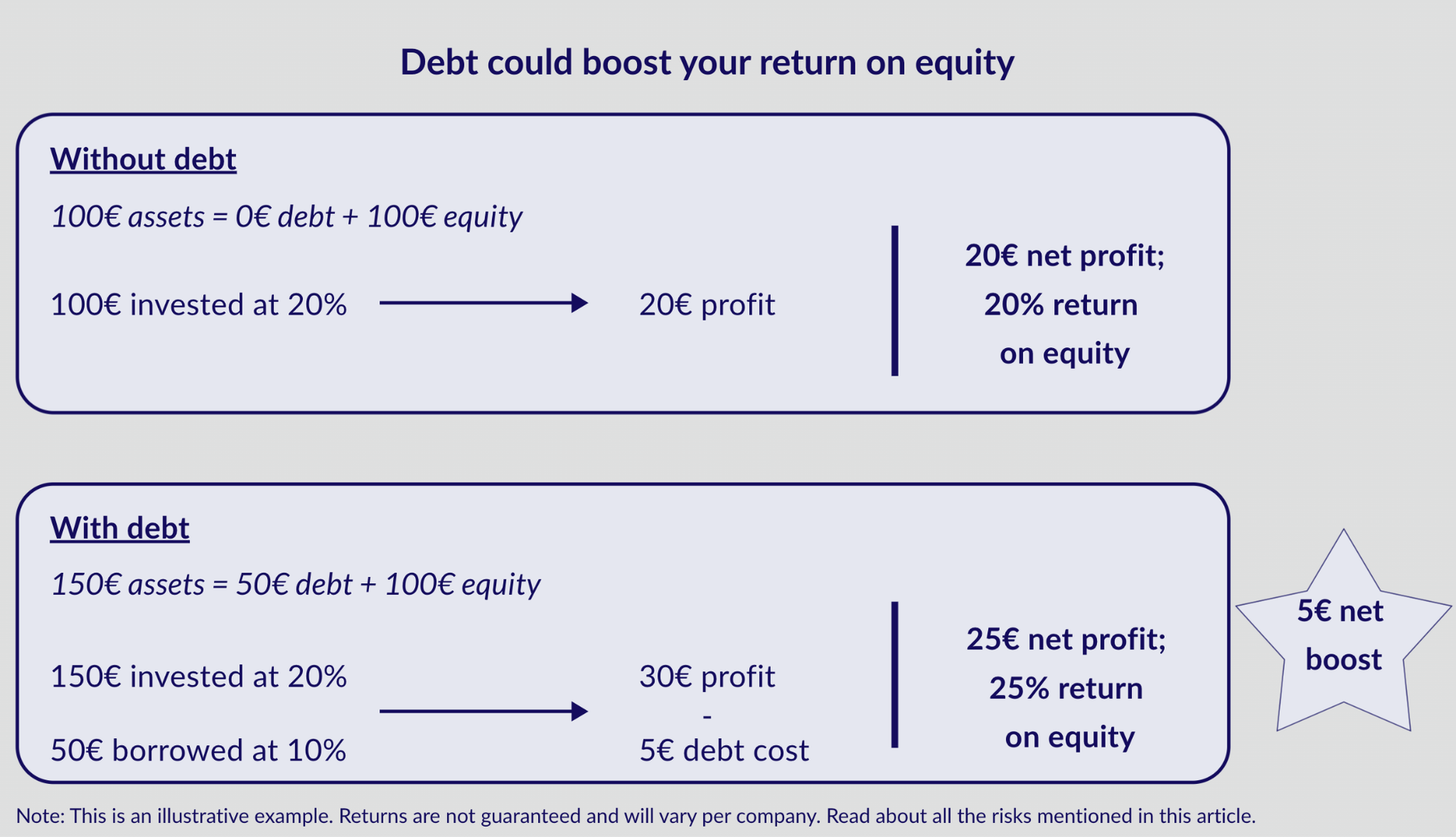
### **Capital structure is the mix of debt and equity on a company’s balance sheet**
When raising capital for your company, always remember that investors see through a risk-versus-return lens. The greater the risk, the higher return they’ll expect.
Equity carries the highest risk for investors, but offers potentially unlimited upside. Debt offers investors a lower return, capped at an interest rate, but better protection via their right to seize company assets in case of bankruptcy.
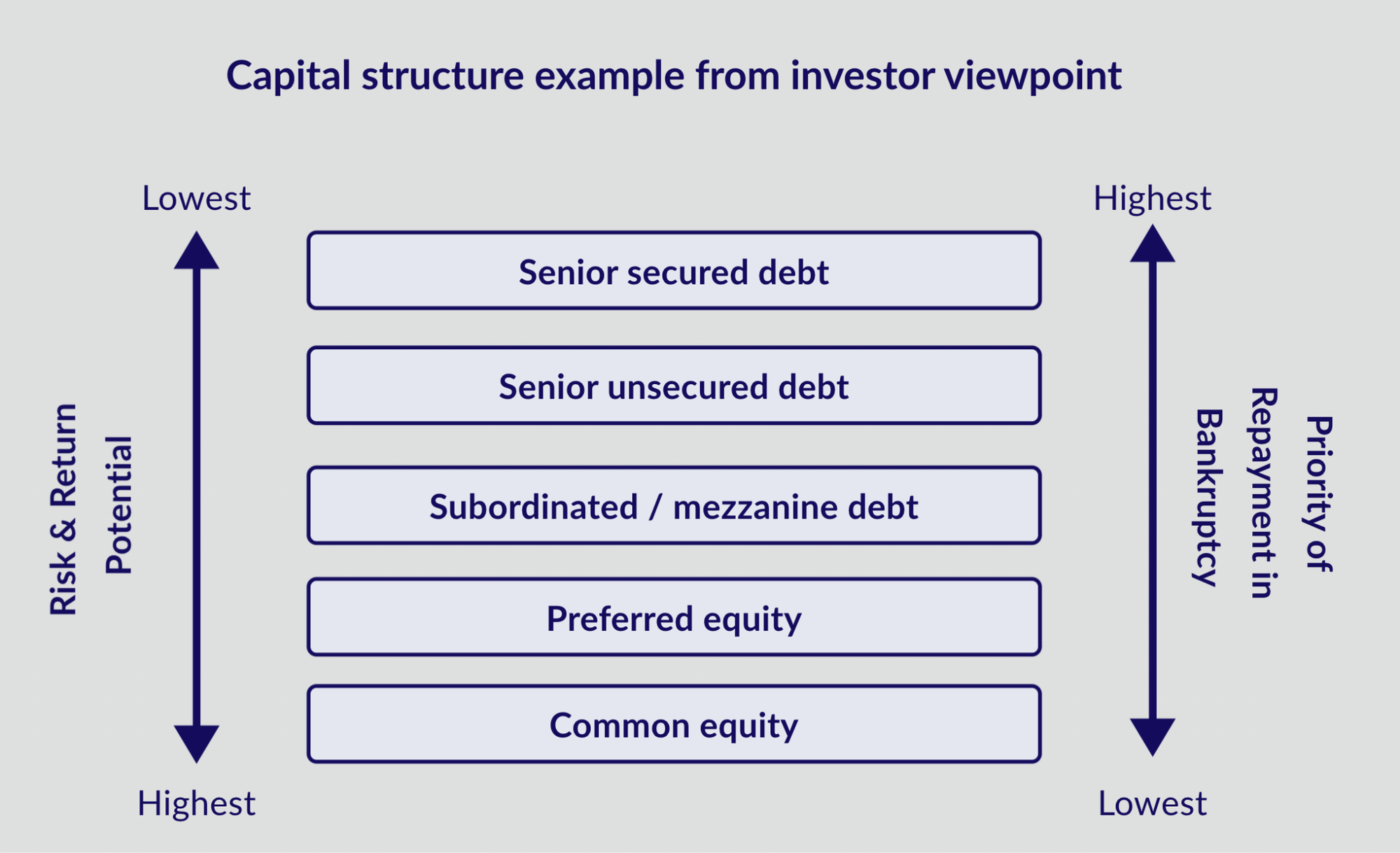
### **Startups begin with equity, but scaleups & small businesses can look to debt**
Early-stage startups generally don’t have much choice but to raise equity (or convertible debt that converts to equity). The reason is that investors want to maximise their return in exchange for the high risk of investing in such a young company. A loan’s low return doesn’t compensate for the risk investors take at this stage.
Once your company scales and matures a bit, you’ll likely have collateral or cash flow that makes lenders comfortable. At this point, taking a loan benefits your company in that no ownership is given up.
### **Borrow responsibly**
Responsible borrowing means to:
- Plan for multiple scenarios, including a worst-case outcome where the asset purchased with the loan fails;
- Ensure the expected return of the asset is at least 3-4% greater than the cost of the loan, providing a cushion for unexpected events;
- Match the currency of the asset with that of the loan to eliminate foreign exchange risk;
- Pair the loan’s duration with the productive life of the asset to match cash flows;
- Structure a mix of floating and fixed-rate loans to hedge against unfavourable movements in interest rates;
- Research tax benefits or consequences in your operating jurisdiction;
- Keep liquidity buffers to cover several months of debt payments;
- Maintain a healthy amount of debt vis-à-vis cash flow and equity.
P.S. If you need advice on balance sheet optimisation, reach out to me. At TriHeritage, we’re happy to offer advisory services to help you plan a strategy.
\----------------
*Alejandro Jimenez is Co-founder & Managing Partner at* [*TriHeritage Global Capital*](http://www.triheritage.com/?ref=fomo.observer)*, an Estonia-based firm providing loans and advisory to small and midsize companies across the EU. Previously, Alejandro was a partner in New York and Geneva at J.P. Morgan, the world’s largest financial institution. He also ran the energy trading desk at Enefit and managed sustainable investment portfolios at Grunfin.*
### Lightyears Ahead: Top Baltic fintech award goes to Lightyear
URL: https://fomo.observer/estonian-team-wins-baltic-fintech-of-the-year-award/
Last updated: 2026-05-13T18:43:33.000Z
RIGA - On Wednesday evening, at the Baltic Fintech Days event, the following teams won the annual awards:
> Company of the Year: Lightyear
> Growth Story of the Year: SME Bank
> Infrastructure of the Year: Inventi
> Innovator of the Year: Flagright
> Startup to Watch: Flagright
> Leader of the Year: Nauris Bloks
Fomo's Tarmo Virki had the honour of presenting the award to the team behind this year's growth story.


Photos: Lukas Bartkus
### Estonian startup founders seek for a billion in 2026
URL: https://fomo.observer/estonian-startup-founders-seek-for-a-billion-in-2026/
Last updated: 2026-05-13T13:41:42.000Z
**TALLINN** – After three "normal" years of stabilised investment following the post-pandemic bubble, the Estonian tech sector is bracing for a potential €1 billion fundraising surge in 2026 — a figure heavily anchored by a single, massive round in the pipeline.
The ambitious target comes at a pivotal moment for the ecosystem. While total funding for Estonian startups sat at a modest €345 million in 2025, the projected leap for 2026 suggests a return to the "mega-year" intensity last seen in 2022.
The Estonian Founders Society (EFS) Snapshot reveals that the bulk of 2026's capital is expected to flow into a few highly mature players. The push for capital follows a challenging 2025, where an estimated €450–800 million in planned funding rounds were never completed.
## Sign up for Fomo.Observer
Startup stories from Estonia. Free weekly newsletter.
Subscribe
Email sent! Check your inbox to complete your signup.
No spam. Unsubscribe anytime.
### A New Breed of "Profitable" Fundraising
Despite the headline-grabbing billion-euro target, the nature of these asks has fundamentally shifted. Founders are no longer seeking "burn money" but rather strategic capital to scale already efficient machines.
"2025 \[was the\] 3rd 'normal' year after mega-years of 2021-22," the report notes, adding that companies are now "increasingly relying on their own profitability for growth".
Survey data shows a community that is largely comfortable with this leaner reality:
- Independence: 54% of surveyed founders stated they "do not need to fundraise" in 2026.
- Active Hunters: 23% plan to start active fundraising before July, with another 27% eyeing the second half of the year.
- Confidence: For those already in the market, 16% report a high probability (over 80%) of closing their rounds shortly.
As the sector moves toward contributing 4.5% of Estonia's GDP, the "Billion-Euro Dream" of 2026 represents more than just a capital injection; it is a test of whether Estonia's most successful exports can still command global-scale investment in a "sober" market.
[While the U.S. Partied in 2025 Like It Was 2021, Estonia ... Built Factories?The 2025 VC Reality Check from DealroomFomo.ObserverTarmo Virki](https://fomo.observer/while-the-us-partied-in-2025-like/?ref=fomo.observer)
### LIISI KIRCH: Kui ühisturg valmis sai, olid ükssarvikud juba Ameerikas
URL: https://fomo.observer/liisi-kirch-eu-inc-eesti/
Last updated: 2026-05-13T06:06:10.000Z
Aprilli alguses mõistsin, et EU Inc-i (*varemalt 28\. režiim*) üle käib arutelu kahes täiesti erinevas tempos. Ühelt poolt ei saa iduettevõtluse ökosüsteem aru, miks sellega on nii kaua venitatud. Nende jaoks on teema juba ammu selge ning tundub arusaamatu, miks midagi, mis on paberil valmis, on nii keeruline päriselt ellu viia.
Teiselt poolt on liikmesriigid segaduses. Nad peavad lühikese ajaga aru saama, kuidas kavandatud muudatustega kohaneda, mida need täpselt tähendavad ja milliseid seadusi tuleks muuta. Samuti on küsimus, et kui muudatusi ei tehta, siis millise riigi reeglid lõpuks kehtima hakkavad.
Vaatame korra sisse: mis võimalus EU Inc. päriselt on, mis on ohukohad, ja mida see võiks tähendada Eesti iduettevõtetele?
### **Mis üldse on EUINC?**
Euroopa Komisjon tuli 18\. märtsil välja ettepanekuga luua uus vabatahtlik, üleeuroopaline ettevõtlusraamistik. Iduettevõte saaks luua ühe juriidilise keha ja tegutseda sellega kõigis Euroopa Liidu liikmesriikides. Nii ei peaks ettevõte teise liikmesriiki laienedes enam nullist õppima kohalikke seadusi, protseduure ja bürokraatiat, vaid sama ettevõtte vorm kehtiks üle Euroopa.
Paketis on mitu detaili, mis asutajatele ja investoritele kõlavad nagu *“finally”*:
- kiire ja digitaalne asutamine (ambitsioon: 48 tundi)
- madalad asutamiskulud
- ühekordne andmeesitus (riik ei küsi sama asja mitu korda)
- lihtsamad osaluse liikumised ja tehingud
- ja talentide jaoks ühtlasem optsiooniloogika
Kui Euroopa tahab, et meie idu- ja kasvuettevõtted jääksid siia, ega viiks oma järgmist kasvufaasi USAsse, ning et siin loodud tark- ja riistvara suudetaks eelistada ja skaleerida, siis ei saa me enam oodata. Küsimus ei ole ainult iduettevõtluses. See on otseselt seotud Euroopa konkurentsivõime ja strateegilise autonoomiaga: vähem sõltuvust ja rohkem oma tööstuslikku võimekust.
EU Inc. on üks konkreetne viis selle saavutamiseks. Euroopa Komisjon ütleb selgelt, et eesmärk on teha ettevõtte loomine ja kasvatamine oluliselt lihtsamaks, et ettevõtted jääksid Euroopasse ning need, kes on varem mujale vaadanud, tuleksid tagasi.
### **Miks Euroopas on aru saadud, et see on NÜÜD oluline?**
EU Inc. ei tule tühjale kohale. Euroopa Ülemkogu on käivitanud “One Europe, One Market” agenda, kus rõhk on barjääride maha võtmises, halduskoormuse vähendamises, investeeringute mobiliseerimises, innovatsiooni ja tööstuse uuendamises ning – väga selgelt – sõltuvuste vähendamises ja strateegilise autonoomia tugevdamises. See on täpselt see taust, kus hakatakse üha rohkem rääkima ka sellest, et Euroopa tahab iseseisvust – nii digitaristus, tarkvaras kui ka kriitilises riistvaras.
Teisisõnu: EU Inc. on üheaegselt talendi ja kapitali hoidmise meede ning võimekuse tõstmise meede – kui kasvufirmad jäävad siia, jäävad siia ka kõrgepalgalised töökohad, maksutulu, tootearendus ja lõpuks jõuab rohkem pilti “made in Europe” hüüdlause, mida me näeme igal korral Bolti äppi avades.
### **Võimalus: mis EUINC juures on õiges suunas**
- **Euroopa tahab ühtset reeglistikku, mitte 27 eraldi mänguraamatut.**
Komisjon on tulnud välja “ühe komplektiga” ettevõtlusreegleid, mis on mõeldud üle EL-i rakenduma ja mis peaks vähendama 27 süsteemi killustatust. Seda müüaksegi kui viisi “lukustada” ühisturu päris potentsiaal.
- **Sõnum “jää Euroopasse” on eesmärgina välja öeldud.**
EU Inc. on raamitud otseselt nii, et see **suunab ettevõtteid jääma Euroopasse** ja julgustab “tagasi pöörduma”. See on väga oluline, sest see seob algatuse laiemalt Euroopa konkurentsivõime poliitikaga, mitte ainult juriidilise tehnika parandusega.
- **Once-only + Business Wallet**: suund on õige.
Ülemkogu tasemel on “once-only” põhimõte ja Euroopa Business Walleti idee lausa üheks prioriteediks tõstetud – mõte on, et ettevõtja esitab dokumendid üks kord ja saab neid turvaliselt üle piiri taaskasutada.
### **Ohukoht: miks “paberil toimib – päriselus mitte” risk on väga reaalne**
**1) Suurim risk on endiselt see sama: 27 versiooni samast asjast.**
Kui liikmesriigid hakkavad lisama erandeid, kohalikke lisatingimusi või tekitavad praktikas erinevad töövood, siis EU Inc. “ühtse turu” lubadus lahustub. Startup ei võida sellest midagi, kui tal tekib ikkagi 27 erinevat käsiraamatut. Risk on teadvustatud – aga see ei ole tagatiseks, et see ei realiseeru.
**2) Ühisturu päris elu ei alga asutamisest, vaid skaleerimisest.**
Kui vaidluste lahendamine, tööjõu piiriülene palkamine ja osa “päris elu” protsesse jääb endiselt rahvuslikuks ja ebaühtlaseks, siis EU Inc. võib jääda väga heaks “asutamis-UIks”, aga mitte täielikuks “skaleerimis-OSiks”. Komisjon ise viitab vajadusele, et riigid kaaluksid spetsialiseeritud kohtukodasid/kohtuid EU Inc. vaidlustele – see ütleb juba ise, et ühtlustamise töö ei lõpe määruse vastuvõtuga.
**3) Digitaalsus ei tohi tähendada paralleeltaristut.**
Business Walleti idee on tugev, aga praktikas tekib oht, et iga riik ehitab “veel ühe kihi”, mis toob IT kulud, ajakava venimise ja lõpuks… jälle erinevad lahendused. Ülemkogu sõnastus on selge: eesmärk on digiteerida ja lihtsustada ning “once-only” päriselt tööle panna. See eeldab, et ehitame interoperatiivsusele, mitte dubleerimisele.
**4) Töö- ja maksuõigus jääb välja.**
Et saaksime EU Inc-iga teele minna, siis on see loogiline, et edasi liigutakse sammuhaaval – jättes nimetatud õigusvaldkonnad välja, väldime kogu protsessi venimist minimaalselt kolmeaastaseks koos riskiga, et EU Inc ei tule üldse. Samas ei saa me jääda ka päris naiivseks arvates, et ettevõtetel ei teki nüüd tahtmist eelistada paremini ja odavamalt toimivaid lahendusi, mis omakorda võiks ehk nügida kõiki liikmesriike reegleid ühtlustama.
## Sign up for Fomo.Observer
Startup stories from Estonia. Free weekly newsletter.
Subscribe
Email sent! Check your inbox to complete your signup.
No spam. Unsubscribe anytime.
### **Mida see võiks tähendada Eesti startuppidele (ja mida tasub muuta)**
Eesti startuppide vaates on EU Inc. veidi paradoksaalne: meil on juba täna palju seda, mida EU Inc. lubab Euroopale ehitada. Seega kohene vau-efekt võib olla suurem Saksamaal kui Eestis. Aga Eesti potentsiaalne võit ei ole ainult “meil on ka natuke lihtsam”, vaid:
- **Eesti kui EU Inc. parim koduriik.**
Kui raamistik annab ettevõtjale valiku, kus asutada, siis Eesti kasutajakogemus on juba kaua vastanud märksõnadele “kiire, ingliskeelne, turvaline” – ja see toob siia rohkem ettevõtteid, tiime, tehinguid ja lõpuks ka osaliselt “Euroopas loodud tark- ja riistvara” väärtusahelat.
- **Eesti kui test-ala.**
Eesti saab pakkuda ELile praktilist testkeskkonda, sest meil on juba töötavad digiprotsessid. Kui Euroopa tahab kiiresti näidata, et “One Europe, One Market” ei ole vaid slogan, siis piloodid toodavad andmeid, mis on kõige veenvam tee.
- **Eesti “punane joon”: ei tohi tekkida 27 EU Inc variatsiooni.**
See on Eesti huvides nii majanduslikult (rohkem kasvu Euroopas) kui ka strateegiliselt (Euroopa võimekus). Eesti varasem positsioon on olnud väga selge: lahendus peab olema lihtne, digitaalne ja vähendama koormust – mitte looma uut ülereguleeritud kihti.
### **Mida nüüd oodata: protsessi ajaraam**
- **Läbirääkimised Nõukogus ja Parlamendis**
Komisjon kutsub kaasseadusandjaid kokkuleppele **2026\. aasta lõpuks** – see tähendab, et tegelik lahing käib lähikuudel/kvartalitel just selle üle, kui “ühtne” ja “digitaalne” lõpptekst päriselt jääb.
- **Euroopa Ülemkogu “One Europe, One Market” ajaraam**
Ülemkogu on EU Inc. (28\. režiimi) pannud prioriteediks ja sidunud selle ajakavaga: kokkulepe liikmesriikide vahel 2026 lõpuks ning barjääride vähendamisel 2027 sihiga. See annab poliitilise surve, mis võib aidata vältida lõputut venitamist ja vaidlemist.
- **Rakendamine = päris koht, kus kvaliteet otsustatakse**
Isegi kui määrus saab vastu võetud, sünnib päris ühisturg sellest, kuidas pannakse tööle registrite liidestused, standardid, identiteet, logid, töövood. Seepärast on mõistlik juba varakult rääkida pilootidest ja tehnilisest disainist – mitte oodata “siis kui on vastu võetud”.
### **Lõppjäreldus**
EU Inc. on õige suunaga katse teha Euroopast koht, kus startupidel on päriselt lihtne kasvada – ja see on otseselt seotud Euroopa sooviga hoida kasvufirmad siin ning tugevdada oma tehnoloogilist ja tööstuslikku võimekust ning vähendades sõltuvust teistest suurvõimudest.
Aga kõik taandub ühele küsimusele: kas me saame päriselt ühe režiimi, või tekib “uus nimi vanale probleemile”. Eesti huvi on olla see riik, kes hoiab fookust ühtsusel ja pakub praktilist teed teostuseni – sest meil on suur osa “MVP-st” juba olemas.
\*
*Finantskirjaoskuse eestkõnelejana tuntud Liisi Kirch on startup nõunik Majandus- ja Kommunikatsiooniministeeriumis.*
Samal teemal:
[HEDI MARDISOO: EU Inc. Is it for the startups or for everyone?If the Council is serious about making EU Inc. work, the logical next step is to pilot it in Estonia, see results, and then take the case back to Brussels with numbers instead of slides.Fomo.Observer](https://fomo.observer/hedi-mardisoo-eu-inc-is-it-for-the-startups-or-for-everyone/)
### Meeting MarkeDroid: Mastering the laws of economics in energy world
URL: https://fomo.observer/meeting-markedroid-mastering-the-laws-of-economics-in-energy-world/
Last updated: 2026-05-12T05:53:27.000Z
In the world of renewable energy, we often talk about the “laws of physics” — how many electrons a solar panel can capture or how quickly a battery can discharge. But for Toomas Kärner, founder of MarkeDroid, the real battlefield isn’tphysics; it’s economics.
As the world shifts toward a decentralised, green grid, the challenge isn’t just generating power — it’s knowing exactly when that power is worth something and when it’s a liability.
MarkeDroid has positioned itself as the “intelligent layer” that sits atop hardware, transforming static batteries into active economic participants. I sat down with Toomas at their offices in Ülemiste City, where the view from the vast windows serves as a timeline of their progress.
"We started in the smaller offices in this building," Kärner says, gesturing toward the surrounding skyline. "Then we moved over to a larger office there, which we soon grew out of." That physical expansion mirrors the company’s fast growth over the last couple of years.
**The Problem: The “California Duck Curve” and Market Chaos**
As solar and wind production increases, it creates massive price volatility. In markets like Estonia, which use 15-minute price intervals, this creates a phenomenon known as the “Duck Curve.”
> “During the day, production is very cheap... there’s no *CO*2 cost, no fuel cost,” Kärner explains. “The price of this investment is dropping. This is even more pushing down the prices in the midday when the sun is up.”
However, when evening falls and the sun sets, fossil-fuel plants must roar to life, causing prices to spike. For a“dumb” battery, this is a nightmare. It might charge when prices are high or be empty exactly when the owner could have sold energy back to the grid for a profit.
### **The Solution: Moving Beyond Physics**
A battery governed solely by the laws of physics reacts: if there is excess power, it charges. MarkeDroid replaces this with an AI-driven learning mechanism focused on economic laws.
“We want to manage it properly... if you manage those energy flows based on rules of economics instead of laws of physics, you get the benefit of economics,” says Kärner.
> “Putting energy into a battery from a solar park during a morning price peak is very dumb. You should sell it then and charge during the midday negative pricing instead.”
MarkeDroid’s AI learns everything about a site — consumption patterns, production forecasts, and real-time market pricing — to create the “perfect plan” for every 15-minute window.
Photos: Diana Unt I MarkeDroid
### **From “Sand on the Shore” to Industrial Power**
MarkeDroid began by targeting residential customers, a group often overlooked by massive utility companies.
> “In grid terms, they are just sand on the shore of the sea; they don’t matter,” Kärner notes.
By proving their model with thousands of homes first, they created a robust, scalable intelligence that they can later apply to industrial sites and factories. Today, they manage assets ranging from 5-kWh home batteries to 5-MWh industrial installations.
### **The Future: Grid Flexibility**
The ultimate goal for MarkeDroid is Grid Flexibility. Beyond helping individual owners save money, MarkeDroid aggregates these batteries to support the entire grid. When the grid is under stress, MarkeDroid can instantly “flex” its connected assets to provide stability, earning compensation for the owners in the process.
“We aim to give the overall grid flexibility to react to the situation,” Kärner explains. “If the grid finds a need and the price is right, they can use your storage ... and you will be compensated.”
## Sign up for Fomo.Observer
Startup stories from Estonia. Free weekly newsletter.
Subscribe
Email sent! Check your inbox to complete your signup.
No spam. Unsubscribe anytime.
[ALEJANDRO JIMENEZ: Watts Up? Understanding Estonia’s Electricity MarketElectricity is the world’s most volatile commodity. Here is the playbook to stop reacting and start planning.Fomo.Observer](https://fomo.observer/alejandro-jimenez-watts-up-understanding/)
### The TOP15 of Latitude59 Pitching Competition
URL: https://fomo.observer/top-14-of-latitude59-pitching-competition/
Last updated: 2026-05-11T19:58:07.000Z
The competition drew 465 startup applications from 53 countries across five continents. These were the 14 best teams that pitched at the semi-final event on Friday evening:
## Energy and Environment
### **Granarium**
A spin-out from the VTT Technical Research Centre of Finland, Granarium is tackling grid volatility caused by renewable energy. The company builds small-unit supercapacitors for balancing the grid in seconds, acting as "shock absorbers of the energy system". With a target market valued at €10 billion, the startup is closing a €1 million pre-seed round led by BSV Ventures, with 80% already committed.
> "Batteries store energy well, but they are too slow for these fast changes."
### **Blue Auditor**
Addressing the capital-intensive real estate sector, Blue Auditor provides a platform for environmental risk assessment and EU Taxonomy alignment. With €1.2 million in ARR and 2,000 buildings already on their platform, they help owners avoid "stranding risks" where assets are devalued due to poor environmental transparency. The founder highlighted that €700 billion in property debt is set to mature by 2027, making audit-grade data critical for refinancing.
> "If you cannot show the transparency, then you're going to be at a riskier level with cost of capital"
### **Ciklo**
Ciklo focuses on a hidden healthcare crisis: exposure to environmental chemicals in clinics and hospitals. The startup offers an assessment tool for doctors to track patient exposure to toxins found in cosmetics, food packaging, and plastics. They are currently raising €1.2 million to expand their active pilot across 15 countries and move toward EU and FDA medical certification.
## Defence and Security
### **Thistle**
Born of the exigencies of the war in Ukraine, Thistle has developed an autonomous multi-rifle turret to counter FPV drones. The system uses AI and computer vision to detect and neutralise drones at ranges up to 150 meters in test environments. Seeking €1.5 million, the company plans to deploy six systems to Ukraine for active combat testing.
> "300 euro drones can destroy targets that are worth more than a million."
### **FPV Battleground**
A software-first approach to drone warfare, FPV Battleground provides a high-fidelity training simulator for drone pilots. The platform has already attracted 9,000 paid users across 80 countries and secured a contract with Killhouse, Ukraine’s largest drone school. Raising a €500,000 pre-seed round, the startup focuses on teaching pilots "what to do when the flight stops working" under electronic jamming. Every trained pilot saves an estimated 3.5 real drones on their first mission.
### **Milmech Systems**
Milmech Systems is developing a modular ground robot designed for field operations, priced similarly to a new car at roughly €40,000\. The startup is raising €250,000 to finalise a "battle-ready" product, building on €150,000 in existing grants. Co-founder Mehis Vinni dismissed concerns about market saturation, stating:
> "I don't see sales could be a problem, it is a growing market".
The robots are currently being tested with the Estonian Defence Forces.
## Artificial Intelligence and Software
### **Bruukki**
Bruukki is building an AI "personal secretary" for teachers to combat burnout and administrative overload. According to their data, teachers spend only 17 hours of a 40-hour work week on actual teaching, with the rest consumed by lesson planning and grading. Their pilot program reduced lesson planning time from six hours to just one. The founders, who have a decade of EdTech experience, are targeting a global market of 100 million teachers.
### **Alpha3D**
The 2018-founded Alpha3D aims to decentralise 3D asset creation by allowing users to generate high-quality 3D models from 2D images or text prompts. Having already raised €2 million and secured 700,000 early adopters, the company is now seeking a €3 million round to satisfy growing demand. Their objective is to build an "infrastructure layer" for the 3D industry, similar to what Canva did for 2D design.
> "You don't need to be a technical person anymore to generate all those assets."
### **Mindchip**
Mindchip presented an "artificial captain" — an autonomous navigation system for the marine sector. The self-adaptive system uses machine learning to "learn" the vessel it is placed on, requiring only two hours of training to reach full autonomy. Despite their technical success with border guard vessels and harbor cleaning robots, investors pressed the team on their financials. The company is currently seeking €3 million at a €30 million valuation.
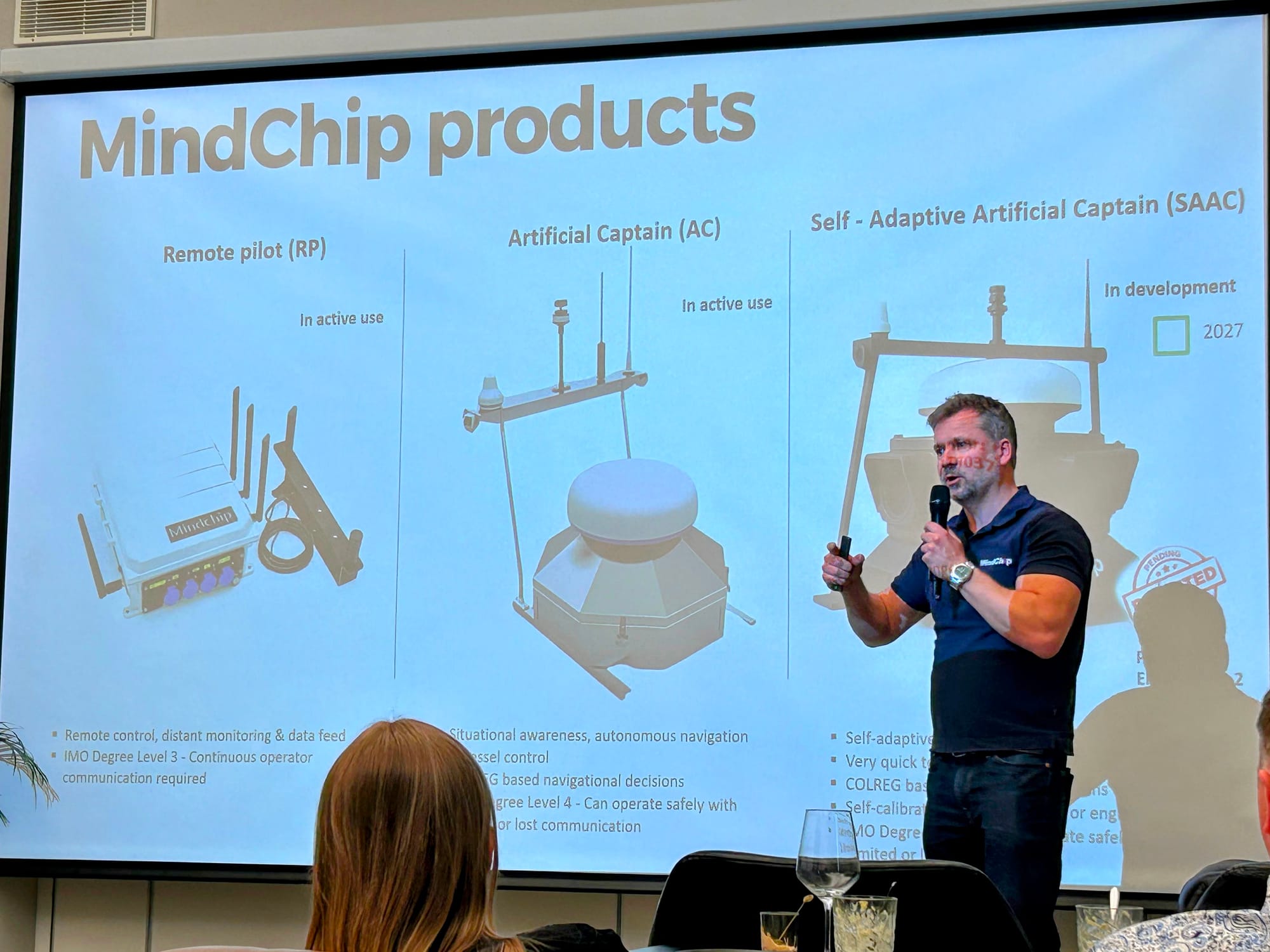
### **Getpin.ai**
Getpin.ai is an AI-powered local growth system that acts as an automated marketing team for SMBs. The startup helps businesses stay visible across search engines, maps, and AI recommendation systems like ChatGPT. Claiming to be a market leader in Central and Eastern Europe with €1 million in ARR, they are raising €1.5 million to reach €4 million in ARR by the end of 2025\.
> "Businesses don't compete for clicks anymore; they compete to be chosen by AI."
### **Callsy.ai**
In a pitch that stirred both interest and alarm, Callsy.ai introduced an autonomous AI agent that calls shoppers who abandon their online carts. The agent handles objections and offers personalised discounts in natural-sounding local accents. With 260 merchants onboarded and a €54,000 ARR, the startup is raising a €1 million pre-seed round. "Your AI agents... can book meetings for you, it can book your restaurants... only with two clicks," the founder explained.
### **Fleetfox**
The 2017-founded Fleetfox is building an "execution layer" to put business fleet operations on autopilot. Their platform manages the logistics of fleet maintenance and cleaning through a network of independent contractors. Growing 100% year-over-year with a €4 million run rate, they are seeking €690,000 to accelerate their expansion into new European markets.
## Niche and Specialty
### **Dogbase**
Dogbase aims to be the "operating system" for the $50 billion working dog industry. The platform digitises training, health records, and certifications for search-and-rescue, military, and police dogs. Founder started the company from a hospital bed while on kidney dialysis, inspired by his own service dog, Echo. They are seeking €750,000 to reach €1 million in revenue and achieve profitability.
### **Optonics**
Optonics is a software intelligence platform designed to make 3D printing reliable for high-stakes production. By capturing every sensor signal during a build, the software creates a "digital passport" for each part, ensuring quality without manual oversight. The company aims to decentralise production, allowing parts to be printed locally and trusted immediately. They are currently incubated at the European Space Agency Business Incubator in Latvia.
UPDATE: There is also a Lithuanian startup, **BackOffice,** among the semifinalists, but they could not attend the live event. They are building a workforce management solution for restaurants.
The winners will be announced at [Latitude59 ](https://latitude59.ee/tickets/?ref=fomo.observer)on May 22.
[The term sheet wedding: Why startup pitching finals are won before the smoke machine startsAs Latitude59 prepares its 2026 stage, Baltic angel networks are focused on ensuring that “Hollywood” moments translate into long-term equity dealsFomo.ObserverJustin Petrone](https://fomo.observer/the-term-sheet-wedding-why-startup/)
---
## Sign up for Fomo.Observer
Startup stories from Estonia. Free weekly newsletter.
Subscribe
Email sent! Check your inbox to complete your signup.
No spam. Unsubscribe anytime.
### Fomo Academy: Advice on how to get your startup in the media (for free)
URL: https://fomo.observer/fomo-academy-advice-on-how-to-get-your-startup-in-the-media-for-free/
Last updated: 2026-05-07T10:06:36.000Z
Before you consider approaching the media about your startup ask yourself why you want to get media attention.
Then ask yourself, why should anyone care about you? This might sound a little harsh, but until you are sure on these two points, you are only wasting your time.
Next up, you need to do your research. Once you have decided the ‘why’ of your media outreach, then you need to think about your audience. Where are they? What do they read? Are you looking for customers, maybe consider a trade publication or if it's the general public, some mainstream media. Investors or potential partners could be found in startup and business publications.
Get to know journalists, we are all human beings and building these relationships is important for both sides. Even if you don't have any news to share, it's still worth getting in touch and building a relationship with a journalist who covers your industry, making it easier when you do want to share news. Also, if we know you have a strong opinion or expert view in a particular area, building the relationship means you’ll be at the front of mind when we need a comment on a story from your sector.
I would say the most important thing to remember when you are dealing with the media is that, unless you are paying for your article (a commercial piece), we write about you, **not for you**. You don’t have control over what we write, and you shall not see the article before it is published. In some circumstances, you can see the quotes used (depending on country and publication) and parts of the article for fact checking only - all this should be agreed with the journalist at the interview stage, and this is where your relationship building will come into play!
### **Email subject lines**
Personally, as I write for at least four publications, I prefer it when you mention the publication you are aiming the news at in the subject line. Make clear what the news is in the subject line. Is it a raise? Product launch? New appointment? Is the news embargoed? It is best to try to avoid clickbait subject lines or wording like ‘world’s first’ or ‘ground-breaking’, as it's nearly impossible to prove that you are either of those things.
### **Press releases**
By all means, send on a press release. If there is an embargo, make sure that it’s clearly stated in the email and on the press release. If interviews are offered (they should be!!), the interviewee should be available in the days before and after the news for comment. You’d be surprised at how often people put out news just before a vacation, or while on one! It's also worth noting that the news you share in your press release might not be what piques our interest in you; it could well be another angle we want to follow up on.
### **Images**
The long and short of it is you NEED to have decent images. A good image might make it or break it. (There will be a separate image story coming.) Have a nice selection of portrait and landscape images at hand, and make sure they are sent with your news. Please don’t make us ask for them, it won’t win you any favours.
These are just some basics to get you started with media outreach. I’m happy to expand on the advice over a coffee or a call sometime. Get [in touch](https://www.linkedin.com/in/fionaalston/?ref=fomo.observer).
### The Estonian scientist who pulled off a US IPO trying to trigger a local biotech boom
URL: https://fomo.observer/the-estonian-scientist-who-pulled-off-a-us-ipo-trying-to-trigger-a-local-biotech-boom/
Last updated: 2026-05-06T14:20:58.000Z
[Tambet Teesalu](https://www.linkedin.com/in/tambet-tom-teesalu-904a456/?ref=fomo.observer)'s office sits one floor above the Laboratory of Precision and Nanomedicine at the centre of the University of Tartu. From its windows on a chilly, milky grey April day, one can see the faded green grass of an adjacent park and the roof of a supermarket.
When he was at the University of California, Santa Barbara, Teesalu had a different view. "You would look out and see the Pacific," he says, with the tiniest hint of nostalgia. "There would be waves and dolphins."
But this professor of nanomedicine, and biotech startup founder, has long since traded a view of dolphins for a flock of sheep. When he's not engrossed in developing precision cancer therapeutics and doing the tedious work of running a world-class laboratory, he's back at the farm about half an hour from the city, where he raises sheep, horses, and loads firewood into the barn.
With this aspect of his life, he's quite satisfied. "You just can't live like that in California," he says.
While Teesalu is no longer a Californian, his sun-drenched days at UC Santa Barbara, where he remains a visiting professor, and at the Sanford Burnham Prebys Medical Research Institute down the coast in La Jolla, have left an imprint. As have his experiences in developing the science behind and founding Cend Therapeutics, which in 2022 was acquired by Caladrius Biosciences in an all-stock deal valued at about $60 million. This allowed Cend to trade on the Nasdaq, and the entity was rebranded as Lisata Therapeutics, which continues to develop its drug candidate, CEND-1, a tumour-penetrating peptide designed to improve delivery of anti-cancer therapies.
With that experience under his belt, Teesalu could be seen as an Estonian biotech startup hero, except that both the research and commercial activities took place in the US.
According to Teesalu, while Estonia has the brains and the ideas to make its mark in biotech, there are some obstacles to equalling the success of its software startups, from restrictive legislation that makes it difficult for academics to guide the commercialisation of their discoveries, to the lack of a big Skype-like success story that could birth new companies.
There's also the fact that, unlike a new app, creating therapeutics can't be done with a laptop at a desk in your basement. At least if you actually want to sell those therapies for clinical use.
Biotech is a gruelling, capital-intensive business, and can take years for scientists to strike gold. But there is hope, in fact, even on a cold April day, Teesalu is unusually chipper and optimistic.
I sat down with Teesalu to learn more about Estonian biotech, and its potential.
**You were recently quoted in a Postimees news article about how Estonia’s anti-corruption rules make biotech innovation difficult. What's the problem?**
The issue is that in Estonia, academics are often forced to choose between an academic career and commercialising their research. Because of anti-corruption regulations, a university professor may face conflicts of interest if they try to commercialise their own discoveries.
In many other countries, especially in the United States, it’s normal for university researchers to build companies around their discoveries while remaining in academia. That kind of academic entrepreneurship is a core part of the innovation ecosystem. But in Estonia, the legal framework has made that much harder, and it discourages researchers from trying to turn scientific discoveries into companies.
**So there's a structural barrier to creating biotech companies?**
Yes, definitely. In software, you can start with relatively little capital, but biotech is entirely different. It’s capital intensive, timelines are long, and development is complex.
On top of that, if researchers have to leave academia in order to commercialise their work, that becomes a major barrier. You might have valuable patents and promising technology, but under the current framework, developing them often means abandoning your academic career.
**Is this one reason Estonia has fewer biotech startups than software startups?**
Yes. Biotech needs substantial funding and long-term support, but the current ecosystem is more suited to software startups. There’s also the issue that investors are often less comfortable with biotech because returns take much longer. In software, investors may see traction quickly. In biotech, even the most promising technology can take years before it reaches the market. That makes investors more cautious, and when you combine that with restrictive legislation, it becomes even harder to build biotech companies.
**You helped develop Cend Therapeutics, later Lisata Therapeutics. How did that start?**
The core technology was developed in the US, at Sanford Burnham, where I was working as a postdoc with Erkki Ruoslahti. I teamed up with another postdoc, a surgeon from Japan, Kazuki Sugahara and we did a lot of work hoping to discover a sort of silver bullet – homing peptides that would selectively accumulate in solid tumors. That's how we discovered tumour-penetrating peptides, a new class of delivery agents that help drugs accumulate in tumours much more effectively.
When combined with chemotherapy or other therapeutics, these peptides increase the amount of drug reaching the tumour, which can improve efficacy or reduce side effects. That discovery had enormous potential because it could enhance many existing cancer treatments simply by improving delivery.
H**ow did you turn that scientific discovery into a company?**
We set up a company in Delaware and secured an exclusive licence to the technology from the institute. In the beginning, development was extremely lean. We relied on sweat equity and small investments from angel investors.
Later, through investor contacts in China, a pharmaceutical company called Qilu Pharma invested around $10 million. That allowed us to move the technology into first-in-human clinical trials in Australia. That funding was transformative. It enabled us to go from a promising scientific concept to actual clinical development.
**Why were the trials conducted in Australia?**
Australia has very attractive incentives for early-stage clinical trials. There were programmes where companies could recover close to half of what they spent on trials. For biotech companies, that kind of support significantly lowers risk and makes early clinical development much more feasible.
**Do you think Estonia has the scientific resources to build similar companies?**
Absolutely. Estonia has world-class biomedical research. The expertise is here, the ideas are here, and resources like the Estonian Biobank are extremely valuable.
> The missing piece is the commercial ecosystem. We need legal flexibility, translational funding, and experienced founders who have successfully built biotech companies before.
The scientific foundation exists. What’s lacking is the infrastructure that helps discoveries become companies.
**Do you think there's enough support within academia for commercialisation?**
Support is improving. Universities are trying to build infrastructure and provide business development support. But it’s still early, and one challenge is the lack of local success stories. In software, Estonia had Skype, which created an entire generation of founders and mentors. Biotech hasn't had that kind of breakthrough yet. Without that Skype effect, researchers have fewer examples to follow and fewer experienced founders to learn from.
**What role could public funding play in supporting Estonian biotech?**
It’s crucial. In the US, programmes like \[Small Business Innovation Research\] grants provide early-stage funding specifically for startups. That helps researchers mature their technologies to the point where private investors are interested.
In Europe, and in Estonia specifically, there are some grants, but they often require self-financing. If you receive a €2 million grant but need to match 30 percent yourself, most scientists simply can't do it. That kind of requirement limits who can participate and slows innovation.
**You have received public funding though, such as a series of Estonian Research Council grants. Don't those also help fund science that could be commercialised?**
They're hugely important. ERC grants provide funding, but just as importantly they bring prestige and visibility. When you receive an ERC grant, it puts you on the international radar. Companies, collaborators, and investors pay attention because they recognise the ERC as a marker of scientific excellence.
That visibility opens doors. It creates networking opportunities, industrial contacts, and credibility that can be very valuable when trying to translate science into applications. For investors, these grants function almost like a seal of excellence. A venture investor may not be able to evaluate every technical detail in a biotech platform, but if expert reviewers at the ERC or \[European Innovation Council\] have already vetted the project, that reduces uncertainty.
**What is the** [**ERC Synergy Grant**](https://erc.europa.eu/apply-grant/synergy-grant?ref=fomo.observer) **focused on?**
The grant focuses on what we believe is a major unexplored frontier in biology: the blood-nerve barrier. Most people are familiar with the blood-brain barrier, which protects the brain and creates a major obstacle for drug delivery in neurological disease. But the blood-nerve barrier is equally important and much less understood.
This barrier plays a crucial role in peripheral nerve function and has major implications for chronic pain, nerve injury, and neuropathy. If we can understand how it works, and how to cross or modulate it, we could open up entirely new approaches for treating chronic pain and nerve damage. That could have major implications for conditions such as chemotherapy-induced peripheral neuropathy.
It's called a Synergy Grant because the challenge requires several different types of expertise working together. Our group focuses on targeted delivery systems and nanomedicine, developing peptides and nanoparticles that can cross biological barriers. Our collaborators in Italy specialise in neurobiology and vascular biology, helping us understand how the blood-nerve barrier functions at the cellular and molecular level. Another collaborator in France brings expertise in vascular biology and chronic pain, especially chemotherapy-induced neuropathy.
Then we also have a collaborator in Oxford working in mechanobiology, which studies how tissues sense and respond to physical forces. Together, these disciplines create something bigger than any one lab could do alone.
**In addition to that project, do you feel that you're working on things now that could be as promising or more promising than what you did with Cend?**
We have developed two really fantastic brain peptides that I think have big potential. And we have spent tons of time and money becoming one of the leaders in the targeted delivery field globally. With these we could address a very active area, think of Parkinson's, Alzheimer's, brain tumours, everywhere there is the challenge of crossing the blood-brain barrier, which is one of the hardest barriers to cross in our bodies.
We have already filed three patent applications on these brain peptides, with more in the works, and I could see these could be outlicensed to companies working in the brain delivery space. Or, if the legislation becomes more permissive, be developed by ourselves in spin-out format here in Estonia.
**Despite the challenges we've discussed, are you optimistic about the future of Estonian biotech?**
I am, because the potential is clearly there. Estonia already has strong science, strong talent, and increasing awareness that biotech matters. If the legal barriers are reduced, translational funding improves, and a few successful biotech companies emerge, the ecosystem could develop quickly. That’s why the current moment feels important. The ingredients are there. I think Estonia's biotech sector has enormous untapped potential. The talent and ideas are here; we just need the right structures to support them.

At his farm, half an hour from Tartu, Teesalu raises sheep, horses, and loads firewood into the barn.
### Estonian tech entrepreneurs call for a halt to the forestry law change
URL: https://fomo.observer/estonian-tech-entrepreneurs-call-for-a-halt-to-the-forestry-law-change/
Last updated: 2026-05-06T08:43:02.000Z
**TALLINN** — More than 30 leaders of Estonia’s technology sector have issued a sharp ultimatum to the government, calling for an immediate halt to rushed legislative amendments of the forest and nature conservation laws.
In an open letter, the founders and executives argue that the proposed changes lack sufficient impact analysis and threaten the long-term sustainability of the nation's natural assets for the sake of short-term foreign profit.
The intervention marks a rare foray into environmental policy by the startup community, which has historically focused on digital infrastructure and tax policy. However, the signatories – which include founders of Bolt, Wise and Pipedrive among others – argue that the "new economy" cannot remain silent while the "old economy" depletes the nation's natural capital.
### **"Spending the principal"**
The core of the dispute centres on the rate of logging. The tech leaders point to data suggesting that recent harvests have consistently exceeded natural growth. According to state forecasts, the stock of managed forests is not expected to recover even by the year 2064.
> "Today, we are not just using the increment of the commercial forest; we are spending the principal, living at the expense of future generations," the letter states.
The group warns that maintaining current logging volumes will become physically impossible by the 2040s or 2050s, rendering the current industrial model unsustainable even by the timber sector’s own metrics.
Public sentiment mirrors these concerns, with surveys indicating that 80% of Estonians favour reducing logging volumes.
Join the fight! More than 1,550 people have already signed the public initiative by concerned forestry professionals to stop the change to the law.
[Sign the initiative ](https://rahvaalgatus.ee/initiatives/1817-n%C3%B5uame-metsade-p%C3%BCsimist-tagavat-seadust-mets-on-p%C3%A4randamiseks?ref=fomo.observer#initiative-vote)
### **Capital flight and environmental debt**
A significant portion of the tech sector's frustration stems from the ownership structure of Estonia’s timber industry. The letter highlights that an estimated 70-75% of the highest-turnover timber companies are foreign-owned.
> "The profit from intensive logging moves out of the country, but the environmental damage, habitat fragmentation, and potential European Union LULUCF 'fines' are left for Estonian society to bear," the signatories noted.
The pressure on local forests has intensified following the loss of raw material imports from Russia and Belarus due to the war in Ukraine. The tech leaders argue that the industry’s attempt to replace these volumes with Estonian wood is pushing the local ecosystem beyond its "limit of tolerance."
---
*Signees: Martin Villig, Kristjan Lepik, Kaarel Kotkas, Sten Tamkivi, Taavet Hinrikus, Markus Villig, Ahti Heinla, Tõnu Runnel, Kadri Tuisk, Triin Hertmann, Ragnar Sass, Martin Sokk, Rain Rannu, Andrus Purde, Kaspar Korjus, Anna-Liisa Palatu, Kaidi Ruusalepp, Rainer Sternfeld, Oliver Leisalu, Martin Rand, Hedi Mardisoo, Kair Käsper, Jüri Kaljundi, Katrin Liivat, Taavi Tamkivi, Märt Kelder, Kristjan Lind, Marek Kiisa, Kelly Lilles, Lars Trunin, Kristjan Maruste, Martin Tajur.*
---
### **Critique of the "70/30" logic**
The proposed amendments introduce a "70/30" logic that seeks to balance commercial forests and protected areas. The tech sector has slammed this as unscientific, arguing that it makes conservation dependent on economic quotas.
"If nature conservation becomes political and temporary, long-term vision and science-based management disappear," the letter warns, expressing concern that protected areas could be reduced in the future simply to maintain the commercial ratio.
A picture of a state forest. Photo. Tarmo Virki
### **The path forward**
The collective of 31 entrepreneurs is urging the government to pivot toward high-value-added wood products rather than raw exports. Their demands include:
- **An immediate halt** to the current legislative proceedings due to inadequate stakeholder engagement.
- **A commissioned independent economic analysis** to evaluate the impact of various logging scenarios on Estonia’s international reputation and biodiversity.
- **A strategic shift** toward sectors that provide long-term value, such as design furniture and timber construction, while reducing one-time use products like pellets and pulp.
Drawing a parallel to recent legislative errors in the Gambling Act, the entrepreneurs warned that mistakes in forestry are far more permanent.
> "Making a similar mistake with the Forest Act is many times more dangerous, because restoring natural resources does not take years, but generations."
## Sign up for Fomo.Observer
Startup stories from Estonia. Free weekly newsletter.
Subscribe
Email sent! Check your inbox to complete your signup.
No spam. Unsubscribe anytime.
### Fomo Academy: The art of pitch decks #1. The stage deck
URL: https://fomo.observer/fomo-academy-the-art-of-pitch-decks-1-the-stage-deck/
Last updated: 2026-06-18T13:10:59.000Z
Elevate your on-stage pitching with a deck that supports your pitch, not confuses the audience.
My goal is to minimise the ineffective dance between founders and investors. Let the capital flow!
I'm an entrepreneur, designer, startup ecosystem builder and [fundraising advisor](https://madis.lehtmets.com/?ref=fomo.observer). I have an extensive [background](https://www.linkedin.com/in/madis-lehtmets/?ref=fomo.observer) in product and UX design, working on products at Booking.com, Glia, Smart-ID and many more. When I co-founded and led Remato as the CEO, I always thought that building a startup is just like a design project, but with a wider scope. That's what introduced me to the mindset of Investor Experience Design when we talk about fundraising and investor management.
I've raised three successful and oversubscribed rounds before, during and after Covid. For the past three years, I've personally helped dozens of founders fundraise, including designing their decks and financial models. Less hands-on, I've lectured and mentored close to a hundred more on the topic.
I'm also a board member of the Estonian Founders Society, and currently my main role is Managing Director of the Estonian Private Equity and Venture Capital Association (EstVCA), representing the Estonian PE & VC funds community, and the industry as a whole.
### One deck doesn't fit all
People talk about ‘the pitch deck’ as one thing. In reality, there are several kinds, each with a different job.
A **stage deck** is what you use when pitching live. It's not meant to explain everything on its own, it supports the story you're telling verbally.
An **intro deck** (or sending deck) works asynchronously, without you present. It should be easy to scroll through on a phone and convey the key story in 30–60 seconds.
A **reading deck** is the longer, more detailed version for investors who want to go deeper across market, product, traction, business model, and financials after initial interest.
A **sales deck** may overlap with your startup story, but the audience and goal are different. You are selling the product to customers, not the company to investors. The value prop, emphasis, and proof points shift accordingly.
This article focuses on the first one: the stage deck.
### If people are reading, they are not listening
A presentation deck is not there to replace your pitch. It is there to elevate it.
When you are presenting live, you are the hero, not your slides. The audience should be listening to you, not reading paragraphs from the screen. And what would be even worse is you reading from the screen. It's not karaoke.
The deck should act as visual support for the key points, not as a document competing with your voice. That means the deck should be simple, fast to understand, visually clean, easy to process from a distance, and focused on emphasis, not explanation.
### The biggest mistake founders make
The most common mistake is trying to make one deck do everything.
Founders often take a deck that was meant to be emailed around and use it as a live presentation deck. The result is predictable: too much text, small fonts, crowded slides, duplicate messaging between what is spoken and what is written.
When that happens, the audience has to choose between listening to you and reading the slide. Usually, they end up doing neither properly.
A live presentation deck should not force the audience to read while you are talking.
### What should be on the slide
For a presentation deck, the screen should contain only what helps the audience follow and remember the story. That usually means:
- a short title or a few keywords
- important numbers
- simple charts or graphs
- photos or product visuals
- anything else that is hard to deliver verbally
A presentation deck becomes much stronger when it includes visuals or information that are better understood instantly on screen than verbally.
The keywords or short title can also be a backup for you when you are losing your flow and don't remember what you were supposed to talk about next. It gives you the topic or direction and emphasises the key point. You will naturally tell your story on top of it, without reading slides or repeating what is already on the screen.
Another benefit of using short phrases or keywords as titles: once you switch slides, the audience automatically reads it in seconds. By the time you open your mouth, they have consumed it. For example, you can have a slide with only "$100B Problem" in the centre of the screen, then pause for a few seconds and start telling a quick story without any heads-up. The audience already expects a story that explains this $100B problem.
### What to avoid at all costs
Paragraphs. Do not say the same thing in full sentences both verbally and on the slide. If you are already saying it, the slide should only reinforce it with a few keywords, if at all.
Avoid heavy data tables, long competitor comparison tables, or complex graphs. Tables are sometimes OK, but only when simplified. Graphs and charts can be great, but avoid tiny labels and too much data.
Avoid dense market research summaries, full customer case studies, or walls of TAM (Total Addressable Market)/SAM (Serviceable Addressable Market)/SOM (Serviceable Obtainable Market) text. Customer testimonials and case studies are great, but extract only the most important phrase or keywords, and tell the rest of the story verbally.
Your slides are not your notes. They are the audience's visual support.
### Design matters more than founders think
A presentation deck is a performance tool. Design is not decoration. It directly affects comprehension.
Poor design creates friction:
- clutter
- weak hierarchy
- inconsistent layouts
- tiny text
- too many elements
- no clear visual priority
Good design helps the audience follow the story effortlessly. The cleaner the slide, the more confident the company appears. White slides with black text are always better than overdesigned, overdecorated ones.
### Celebrate empty space
Empty space is great for presentation decks. The less information a slide has, the more important it makes the little that's on it. Think back to the "$100B Problem" example earlier. Empty space helps the audience to focus on what matters and listen to you.
### A simple test before using the deck live
Ask yourself:
- Can this be understood from a distance?
- Can this be understood in under three seconds?
- Is this helping my spoken story or competing with it?
- Am I putting text here because it is useful, or because I am afraid to forget what to say?
- If I removed half the text, would the pitch get better?
A great and simple test for information density and text sizes is to check the deck on your phone. Skim through it without zooming in. That's roughly how it'll look to the audience in the back row.
### Conclusion
A presentation deck should not try to do too much. Its role is simple: support the story and make the important things easier to grasp. If your audience is busy reading while you are speaking, the deck is working against you.
The best live pitch decks are usually the simplest ones. They don't explain everything — they make the story clearer, sharper, and easier to believe.
You are the hero.
---
*This is part of a* [*Fomo Academy*](https://fomo.observer/tag/fomo-academy/) *Pitching Series where we will take you through how to present your* [*pitch on stage*](https://fomo.observer/fomo-academy-tips-for-pitching-on-stage/) *and how to put together different pitch decks for pitch competitions, investor meetings and sales meetings.*
### LIIS NARUSK: We need to talk about harassment
URL: https://fomo.observer/liis-narusk-we-need-to-talk-about-harassment/
Last updated: 2026-05-02T11:21:53.000Z
It’s a spring Tuesday morning in Tallinn. I’m sitting in the office of an Estonian VC firm, listening to their vision for Estonia and for Europe. The room is full of the essence of the Estonian startup ecosystem: ambitious, optimistic, driven, intellectually curious people building the next generation of companies.
The future is being built in this room, but there is also another room...
Later during the day, in that room, I am mentoring a female founder who is trying to close an investment round. One of her potential investors has started sending her ambiguous messages with a clear manipulative and sexual undertone. Wrapped in the kind of power dynamic that makes it difficult to ignore and risky to confront. She’s also afraid of the potential backlash and how other committed investors would react if she says no.
> This is not the first time I’ve had a similar conversation. Not for me. Not for her. Not for almost any female founder I’ve spoken to.
One founder was asked, just before closing her round, whether she would consider becoming the investor’s mistress. Not ambiguously, not in a way where “she maybe got it wrong”. No. Explicitly. She stopped the whole fundraise process there and then. Hundreds of hours of hers and her team’s time wasted, nerves wrecked, and the built up momentum lost.
Another female founder was offered a penthouse apartment by a potential male investor in one of the global financial centres. To stay there whenever she wants to, and to sleep - with or without him. The same female founder was once told over a dinner table by a well known global VC partner - you should love me more.
Another was told, half-jokingly, that she should “use her charm more strategically” if she wanted the round to move faster.
These are not edge cases. And these investors are not some random dudes, they are respected businessmen in very respected companies.
[A Y Combinator + Callisto-backed survey (2025)](https://www.advisorpedia.com/viewpoints/raising-capital-shouldnt-mean-risking-safety-the-silent-scandal-inside-venture-funding/?utm%5Fsource=chatgpt.com):
- **1 in 5 female founders reported inappropriate incidents from investors**
- **15 cases involved sexual coercion (quid pro quo)**
- **Most did not report it** **due to fear of retaliation**
A separate report by All Raise found that **nearly one-third of female founders had experienced inappropriate behaviour during fundraising.**
Yet, most of these stories never surface.
So if you’re a male founder or investor reading this, your reaction might be: *I’ve never seen this happen.*
That’s precisely the point. That’s exactly why I’m using this analogy. A house with two rooms *(adapted from Sarah Steed, who has written brilliantly about* [*the same problem in another context*](https://substack.com/home/post/p-193737751?ref=fomo.observer)*).*
> In one room, things are handled privately. Conversations happen quietly. Language like “he was just joking”, or maybe even “he’s working on it”, or “let’s not make this bigger than it needs to be” gets used.
> Conclusions are reached. In the other room, a founder continues her life without access to that information. She is told — kindly — not to make things more difficult than they need to be. Or she decides that herself, not to make a big deal out of it, as there’s a company that needs building, a team that needs leading.
Many male founders operate in one version of the ecosystem. Many female founders operate in another.
The mechanics of building a company—hiring, fundraising, product, growth—are already hard. For anyone. But for female founders, there is an additional layer: navigating inappropriate behaviour, power misuse, and subtle or explicit coercion, often from the very people who control access to capital.
This has real consequences. Not just emotional, but also economic. Time and energy are diverted away from building the company. Decisions become distorted—*Do I push back and risk the deal? Do I ignore it and tolerate the behaviour? Do I walk away and lose months of runway?*
In the worst cases, it leaves a lasting psychological impact. And at a system level, it distorts outcomes.
We talk a lot about improving the quality of startups and capital allocation in Europe. If founders are making decisions under pressure that have nothing to do with the business itself, then we are not allocating capital based purely on merit.
[Research](https://www.sciencedirect.com/science/article/abs/pii/S2352673425000526?via%3Dihub&ref=fomo.observer) confirms harassment in entrepreneurship is “common yet understudied” and directly affects participation, decision-making, and success outcomes.
**So why does this keep happening?**
Part of it is structural. Venture capital is a high-trust, low-transparency industry built on relationships, closed-door conversations, and asymmetric power. There is rarely HR or formal accountability. Reputation travels informally — and selectively.
Part of it is cultural. Our ecosystem still tolerates a level of 'grey zone' or downright wrong behaviour. Each individual case is easy to dismiss. Collectively, they form a pattern.
And part of it is silence.
Founders don’t talk because:
- They fear reputational damage (“difficult founder”).
- They fear losing current or future funding.
- They assume nothing will change.
- Or they simply want to move on and focus on their company.
**So the question is not just why this happens, but why we keep tolerating it.**
Every ignored incident sets a precedent. Every workaround reinforces the idea that this is “just part of the game.” Every founder dealing with this spends less time building her company.
If we care about building a high-performing startup ecosystem in Estonia and Europe, this is not a side issue. It is a distortion of how capital gets allocated.
Right now, we are still operating in two rooms. One where things happen, and one where we pretend they don’t. Systems don’t fix themselves. They change when we stop tolerating what we already know is happening.
---
[*Liis Narusk*](https://www.linkedin.com/in/liisnarusk/?ref=fomo.observer) *is a founder and ecosystem builder focused on improving how ideas, science, talent, and ambition translate into real companies. As a board member at the Estonian Founders Society, she works on founder resilience and addressing structural inefficiencies in the startup ecosystem.*
## Sign up for Fomo.Observer
Startup stories from Estonia. Free weekly newsletter.
Subscribe
Email sent! Check your inbox to complete your signup.
No spam. Unsubscribe anytime.
### Looking abroad for talent as Estonia’s population shrinks
URL: https://fomo.observer/looking-abroad-for-talent-as-estonias-population-shrinks/
Last updated: 2026-05-02T11:22:36.000Z
When [Kristi Veskus](https://www.linkedin.com/in/kristiveskus/?ref=fomo.observer), Head of the Work in Estonia programme, flew 11,000 kilometers to Brazil for a tech conference, she was asked, “What does your company, Estonia, do?” It wasn't until she pointed to a small corner of the European Union, on a map, that people realised Estonia is a country. "They were genuinely surprised," she recalled.
That exchange took place in 2019, just before the world got flipped upside down by the coronavirus. Despite the challenges faced since then, Estonia’s startup ecosystem has continued to grow, and long gone are the days of boasting about Skype, as the unicorn has gone from a mythical creature to a common sight.
> But, while the tech scene grew, something else in the background shrank, something no app or automation can fix. Estonia is running out of people.
Estonia’s population is shrinking, with births no longer outpacing deaths. The total population fell from 1.38 million in 2024 to 1.36 million in 2025\. [World Bank Group](https://data.worldbank.org/?locations=1W-EE&ref=fomo.observer) forecasts predict it could fall further, possibly reaching 1.33 million by 2030\.
For years, immigration cushioned the population decline. But, according to the World Bank Group, net migration has been negative for two consecutive years, falling by 7,742 in 2024 and a further 13,350 in 2025\.
Immigration numbers briefly spiked in 2022 to 39,754, but as [Liis Valdsalu](https://www.linkedin.com/in/liis-valdsalu/?ref=fomo.observer), Head of Global Mobility at Bolt, commented, “If you look at the statistics, most people moving to Estonia were Russians and Ukrainians. That changed significantly after the war started, which is why the overall numbers are lower.”
Companies and organisations are trying to navigate the population decline. For example, Veskus's job is to support startups by providing guidance on finding international talent and helping those going through the immigration process. Or there’s Valdsalu, who proactively supports talent through the immigration process as they onboard at Bolt.
### **Against the trends**
“We've been actively relocating people for seven-plus years, more intensively since around 2019 and 2020, and so far have helped 800+ people from 75+ nationalities,” Valdsalu explained. “We decided to go against the remote work trend and keep relocating, mostly bringing in mid-level and senior roles to Estonia, because those are positions that are missing from the local market.”
Veskus has a similar mission. "[Work in Estonia](https://workinestonia.com/?ref=fomo.observer) is part of the Estonian Business and Innovation Agency," she explained. "Our main goal is to do what the private sector can't. That is to put Estonia on the global map and attract international talent."
Both organisations support talent through the entire immigration process. Veskus points to the International House of Estonia, a physical location in Tallinn where public sector partners work together.
> “The Police and Border Guard have a representative on-site, so people can handle migration-related documents and start their journey with us," says Veskus. "We also offer address registration in partnership with the City of Tallinn and other public sector services. The idea is that the first three months, typically the most stressful, is to make them feel supported.”
In the case of Bolt, Valdsalu helps those relocating by taking an active role in navigating the immigration red tape. “We help with visa bookings, prepare residence permits and visa documents, and go to the Police and Border Guard with them to make sure everything is submitted correctly and on time. The goal is for them to spend more time focused on onboarding and less on the logistics of relocating.”
## Sign up for Fomo.Observer
Startup stories from Estonia. Free weekly newsletter.
Subscribe
Email sent! Check your inbox to complete your signup.
No spam. Unsubscribe anytime.
### **From two months to nine months**
For Veskus, the challenge she faces today is the one she faced back in 2019\. Explaining to people that Estonia exists.
“The biggest challenge is visibility and scale,” Veskus said. “Estonia simply doesn't have the name recognition of Germany, Sweden, or the U.S.”
Valdsalu identified that the time required to complete the immigration process is the largest barrier for immigrants, especially those with families coming from non-EU countries. “When I started at Bolt, five and a half years ago, getting a visa took about a month,” Valdsalu clarified. “The Ukraine war has had a big effect, as the country has made legal changes to ensure more detailed background checks, which, of course, affects timelines.”
Another issue Valdsalu highlighted is that, despite many countries and businesses marvelling at Estonia’s digital innovations, its immigration process still largely requires a sea of paper and BIC pens. “The processing time used to be two months, but this year it's three months because many things on the government side in Estonia still happen on paper or involve a lot of manual work,” Valdsalu explained. “Obviously, from the perspective of a company that genuinely needs that talent, it's never good news.”
Valdsalu also explained that when you include applying for a visa, scheduling an appointment with the Police and Border Guard Board, processing, and card printing, the entire timeline for settling into the country could take up to nine months.
“Estonia still uses an immigration quota, which has been a hot topic for years because the quota is quite small,” Valdsalu added. “It opens every year in January, and you can imagine how quickly all the available appointments get booked. This affects us even though we mostly bring in people classified as top specialists, who don't fall under the quota. We often can't get appointments in January, and if we can get anything in February, that's already good.”
The Ministry of the Interior is aware of the bottlenecks that people like Valdsalu face when recruiting international talent and is currently working on various initiatives to address the ever-increasing timelines. In October 2025, it introduced fast-track entry for top specialists from strategic partner countries.
Amendments to the Aliens Act are currently under debate in Parliament, to create a pathway for skilled workers in labour-critical sectors with no quota, no labour market test, and a lower salary threshold of 80% of the average Estonian wage.
The Ministry of the Interior is developing a single-window digital solution, scheduled to launch in 2026, that allows migrants and employers to communicate with state authorities through a single channel.
> For those of you starting a company, with ambitions to become the next unicorn to join the herd, on January 1, 2026, a law came into effect, stating that employers looking to obtain a TRP for international talent will need to show evidence of economic activity for six consecutive months before they can apply.
### **Quality of life**
Despite Russia's full-scale invasion of Ukraine and Estonia's proximity to its neighbour to the east, both Veskus and Valdsalu noted that this isn’t a dealbreaker for those relocating to Estonia. Veskus explained, “When the war broke out, it was a shock, and we did see some expats leave. But today, awareness of the situation doesn't seem to have a significant effect on people's decisions to relocate here.”
She reflected on interviews they held in London last spring, exploring how top talent there perceives Estonia as a career destination, “When asked about negatives, a couple of people said they had to look at a map first, and once they did, they noticed the neighbour. But the general attitude was: you can't choose your neighbours when you're a country.”
Valdsalu made similar comments, “In 2022 and 2023, people were more worried than they are now. It's sad to say, but it's becoming part of a new normal.”
Nowadays, with social media algorithms serving up the latest awful news in the hopes of stealing attention, it’s only natural to try to find peace and quiet somewhere. Understandably, most people's concerns before relocating centre on the quality of life Estonia can offer them and their families.
> “Over the past two years, we've seen a clear shift in what people are looking for beyond salary and cost of living,” Veskus said, “The questions are: How safe is the country? How good is the education system, and how accessible is it? What medical care is available, and how is it funded? Is this a good place to build a career? Is it a good place to raise children?”
Valdsalu emphasised the importance of transparency when having these conversations, “You can't oversell the country. Saying Estonia is amazing, full of opportunities, and super cheap — that's no longer accurate. It's better to be straightforward: the cost of living has changed, eating out can be expensive, and here's what to expect.”
### **A long-overdue conversation**
Six years later, Veskus is still explaining to people where Estonia is, and making a case for why they should come here.
“Estonia's population is declining and aging,” Veskus pointed out, “at the same time, businesses want to grow, and for that they need talent. That's fundamentally why attracting international talent matters.”
> But a report published by [ERR](https://news.err.ee/1609984320/poll-voters-from-all-political-parties-have-concerns-about-foreign-workers?ref=fomo.observer) shared survey data showing that 53% of respondents across all political parties oppose bringing in workers from the EU, while 71% oppose labour migration from outside the EU.
As Veskus tries to bring more people to Estonia, the country continues to lose more people than it gains, with the national conversation questioning whether people even need to be replaced. For finding solutions to this problem, more conversations around immigration will help, with Valdsalu adding, “migration overall isn't a hot topic in Estonia yet. But it really should be.”
### TRIIN HERTMANN: Far from the conference halls: How cold and physical strain build strong startup connections
URL: https://fomo.observer/triin-hertmann-far-from-the-conference-halls-how-cold-and-physical-strain-build-strong-startup-connections/
Last updated: 2026-04-27T14:23:15.000Z
Have you ever created a special connection to someone after you have gone through a difficult circumstance where you shared both the effort and accomplishment? That's what happened to me recently thanks to the [Mesh Collective](https://fomo.observer/estonia-to-mesh-with-the-nordics/). Creating these experiences was Anders Mjaset’s vision, he knows the perfect recipe to creating genuine connections, and it beats every startup and investor event I have ever been to.
The Mesh Collective invited a hundred selected founders and investors to a really remote place, Nusfjord, Lofoten islands in Norway. Some of us (including our tiny group of Estonians) had to take 4 flights to get there, so it's really remote! From Estonia I was lucky to join an impressive and inspiring bunch which included Kristel Kruustük (Testlio), Karen Burns (Fyma) and Gabriel Ferraz (Creem).

Hiking snowy mountains. **Image credit: Rune Svenningsen*
It was so worth it. We got to take boat trips, watched orcas and eagles and caught our own fish for dinner from the Arctic sea. We kayaked, surfed in the freezing water, conquered the mountains on foot and on skis, chilled at the spa, danced and mingled. And, during these strenuous actions and relaxing moments, we built really personal connections. We got to know each other on a much deeper level than you possibly can in the corridors of tech conferences.
> You will always remember the guy who helped you out of the freezing water on a kayaking trip or the woman who let you borrow their gloves during a hiking trip across snowy mountains. It is so great to learn first about the person’s hobbies, passions and cool life hacks before you even find out what they do as a job.
We talk a lot about the New Nordics startup scene and how there should be more connections and cooperation between the Nordic/Baltic founders and investors, but in reality it is still very scattered and random. At the same time, from a distance (for example the US), our region is quite appealing with a thriving tech scene and lots of awesome things being built. I do believe all the countries in this corner of the world are very similar culturally and how we view the world.
> We still have so much to learn from each other so we can all build even stronger ecosystems that are very appealing as a place to invest in tech innovation.
After this trip we all felt really lucky and elevated and the memories made, connections and friends will stay with us. I hope we can somehow measure the economic (and personal!) impact these events trigger. I am sure it is huge and stretches further for many years to come.


Images from Mesh Collective getaway. **Image credit: Rune Svenningsen*
### JANA BUDKOVSKAJA: Estonian angels have grown up. Now the government needs to catch up.
URL: https://fomo.observer/jana-budkovskaja-estonian-angels-have-grown-up-now-the-government-needs-to-catch-up/
Last updated: 2026-04-26T05:45:08.000Z
*EstBAN's five-year data tells a story of maturation, but without a co-investment instrument, the smartest investors in the ecosystem will keep sitting on the sidelines.*
Every year, the Estonian Business Angels Network surveys its members about what they invested, where, how much, and what they plan to do next. Spending some time inside this data, I found a story that is more nuanced, and more urgent, than a simple graph with declining numbers.
Angel investment volumes are down, but when you look across five years of data and correlate it with the broader Estonian startup ecosystem, the picture emerges. This is a maturation, one that comes with a very specific warning for policymakers and a very clear opportunity window that will not stay open forever. Let me walk you through the numbers.
## The big picture: capital is shrinking, but the system is changing
EstBAN members deployed €14.1 million into startups in 2025\. That sounds respectable until you learn that direct angel investment, the real first-cheque capital, where an investor writes a personal cheque into a founder's company, fell to just €2.3 million. Four years ago, that number was €13.3 million. That is an 83% drop. But it's not the drop of investments, it's the drop of 'how' the money was invested.
Meanwhile, fund investments by the same community rose to €11.8 million. Our angels have not stopped investing. They have shifted how they invest, moving from direct deals into managed vehicles, from solo bets into structured funds.

****EstBAN investment volume by type, 2020–2025**
This is what maturation looks like. In the early 2020s, everyone was over-excited. The geopolitical situation and the market played their game, and now we are where we are. We have survived the biggest downshift in startup investments after 2022\. We are in a post-correction period. The question is not what happened but what we have learnt and what road we take next?
## Angels are the canary in the coal mine
Here is the correlation that should keep every institutional investor and policymaker in this country awake at night.
When you overlay EstBAN's direct angel investment onto the total Estonian startup investment data — the €441 million in 2020, the €928 million in 2021, the €1.3 billion peak in 2022, and the decline to roughly €327 million in 2024 — you see something remarkable: **angels are basically forecasting what will happen in the institutional market one to two years later.**
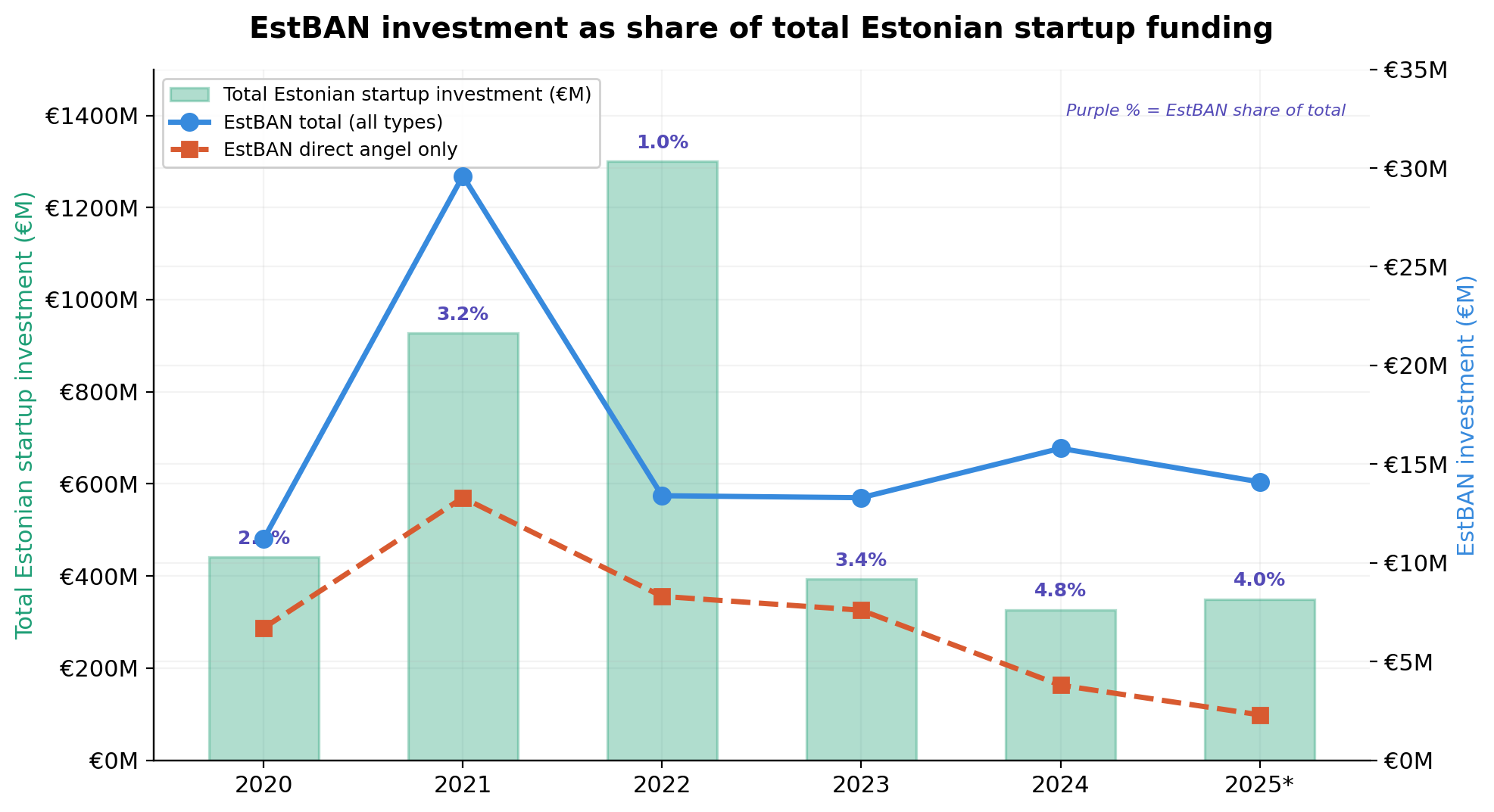
****EstBAN share of total Estonian startup investment, 2020–2025**
Direct angel investments and EstBAN's total deployment grew rapidly from 2020 to 2021, then institutional capital followed with its enormous 2022 peak. When angel investment started declining in 2022, institutional capital followed down in 2023 and 2024.
What does the 2025 angel data tell us? It is still declining. This is a red flag for the next stage of investments: if no one is backing and nurturing the earliest companies today, institutional investors will not have enough quality deal flow tomorrow.
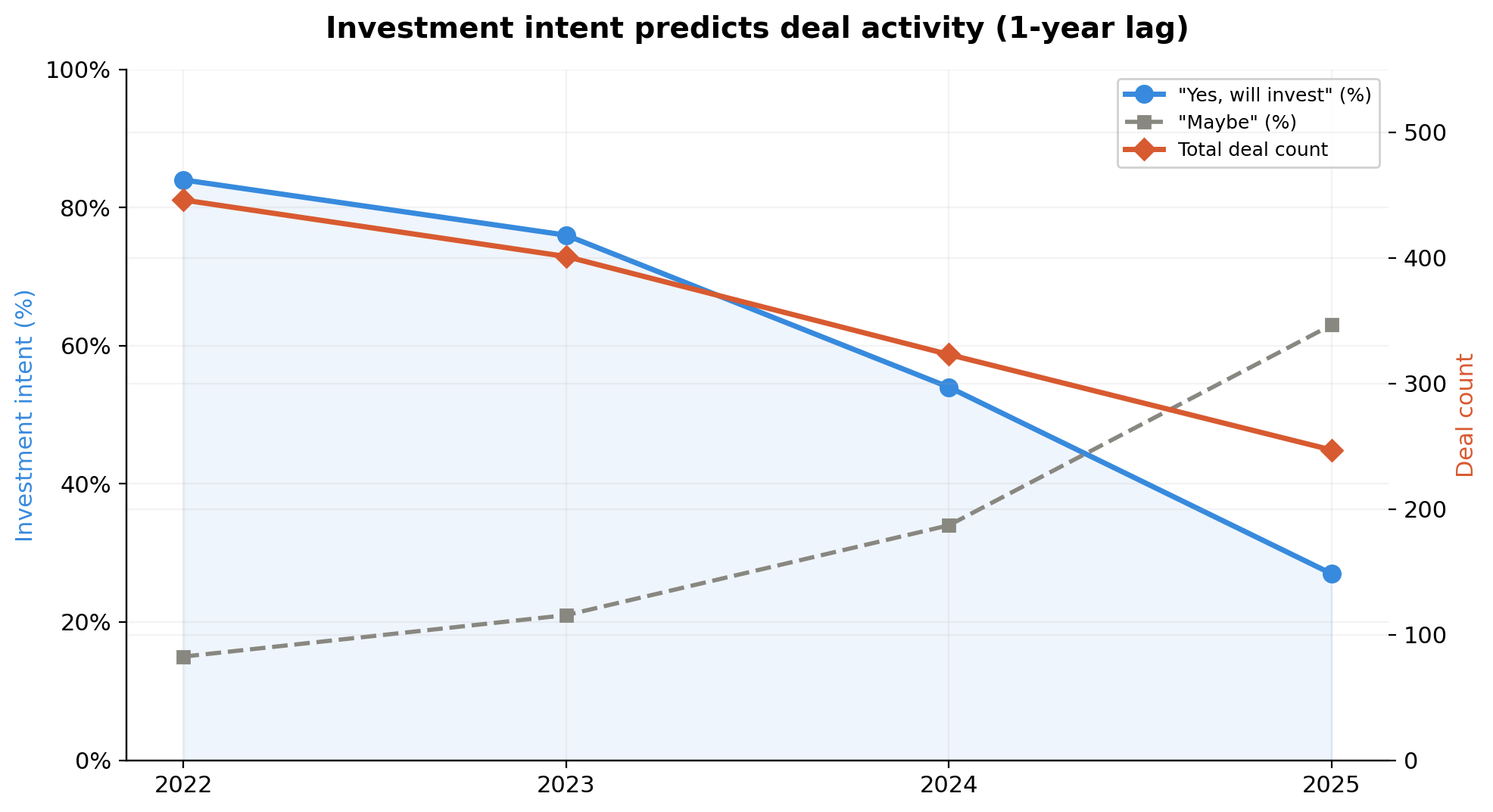
We are not just watching a trailing indicator. We are watching a leading one.
## Smaller cheques, smarter angels
Another trend that might look alarming on the surface is actually a sign of sophistication. The average angel ticket has declined from around €18,500 per investment in 2022 to roughly €9,300 in 2025\. At the same time, ecosystem-level deal sizes have stayed in the millions.
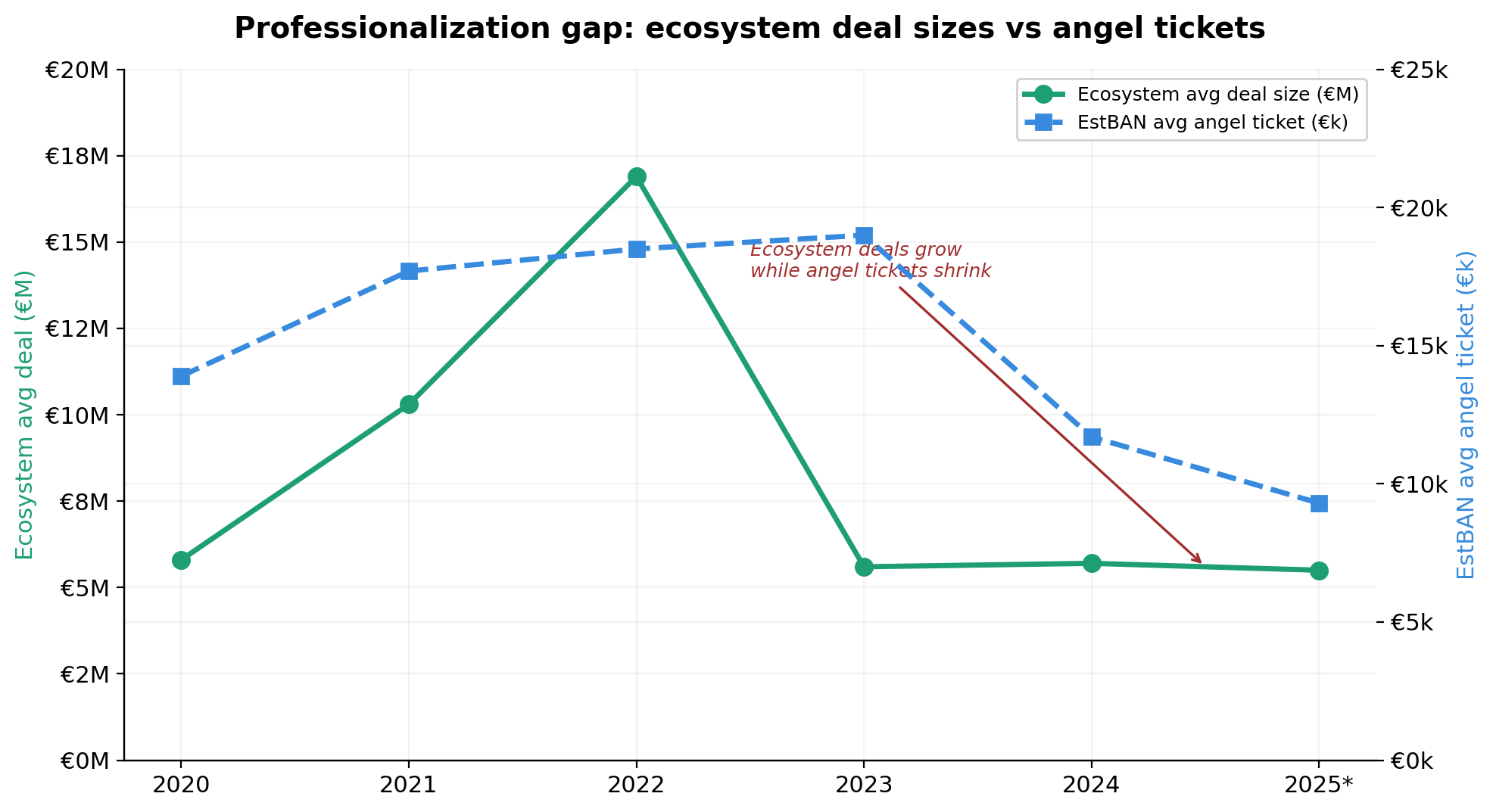
****Ecosystem avg deal size vs EstBAN avg angel ticket, 2020–2025**
It means that our business angels are building portfolios. They understand that to manage risk, you diversify. You write smaller cheques across more deals rather than concentrating on fewer bets. This is an early-stage portfolio strategy, and the fact that Estonian angels are doing it instinctively speaks to the quality of this investor community.
That said, the shrinking of cheques has its limitations. There is a floor below which an angel investment loses its meaning. We may be approaching it.
## DeepTech and defence: the momentum we must not waste
What I cannot hide is my personal excitement about where our angels are choosing to invest.
DeepTech and SpaceTech climbed from 7% of sector preference in 2021 to 15% in 2025, making it the number one sector for EstBAN investors. HealthTech and Life Sciences rose to 14%. DefenceTech appeared on the map for the first time at 3%.
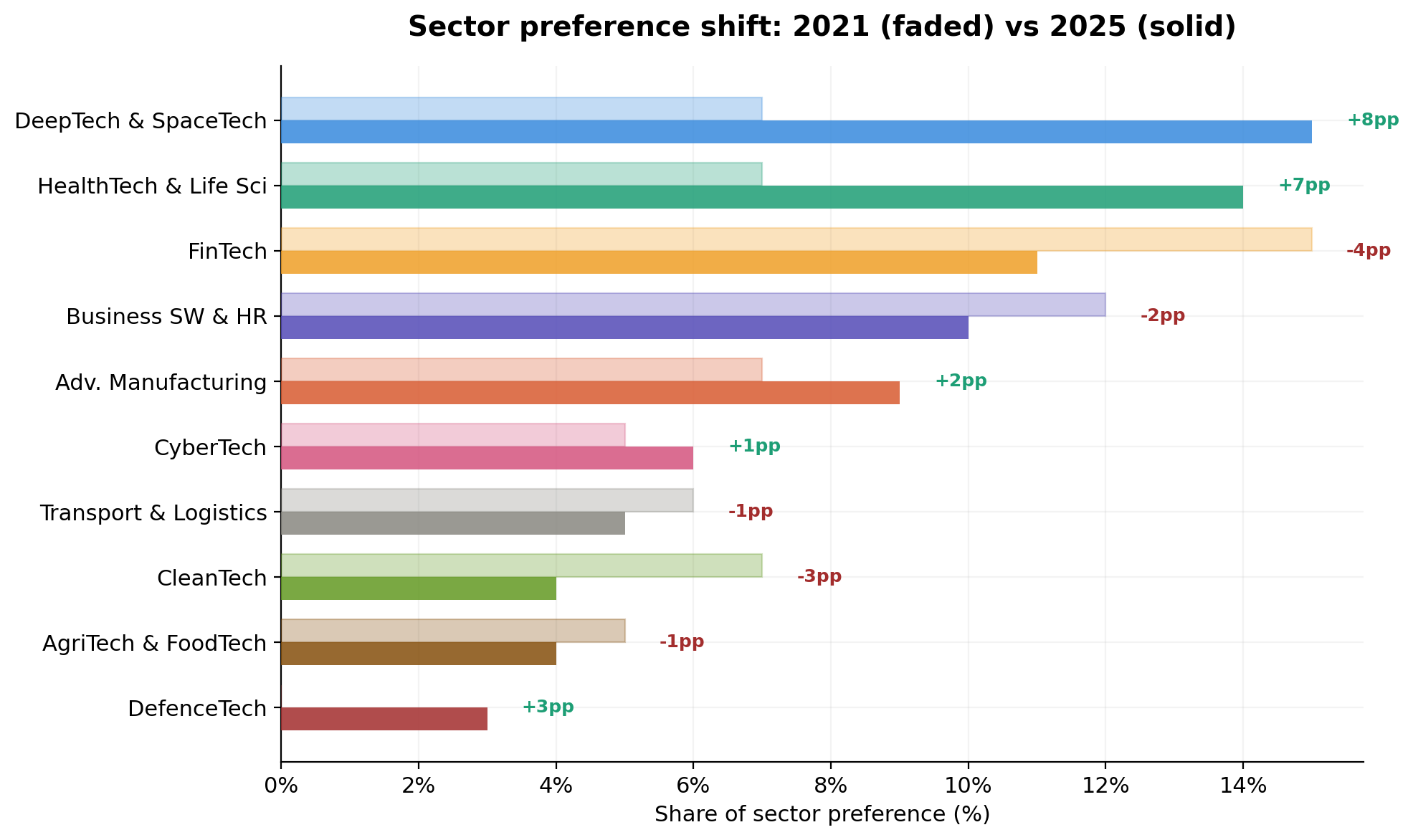
As someone who comes from the cleantech world of Beamline and now works across deeptech and defence innovation in BSV Ventures, I cannot be more energised by this shift. Some of it, yes, I may have influenced as one of the lead investors in several syndicate deals last year. But the broader signal is clear: **the trust of EstBAN members towards DeepTech is growing, and this is the momentum we need to use.**
In Lithuania, as soon as co-investment and profit-share instruments appeared, they saw the same shift. Business angels turned towards DeepTech and defence because they could see clear opportunities and share the risk with the state.
Estonian angels have arrived at this point on their own. Now the question is whether the system around them will grow up too.
## The pipeline is narrowing and demographics will not save us
There is another correlation in this data that deserves attention. New startup registrations in Estonia peaked around 237 per year in 2019\. By 2024, that number had fallen to roughly 100\. A 64% decline.
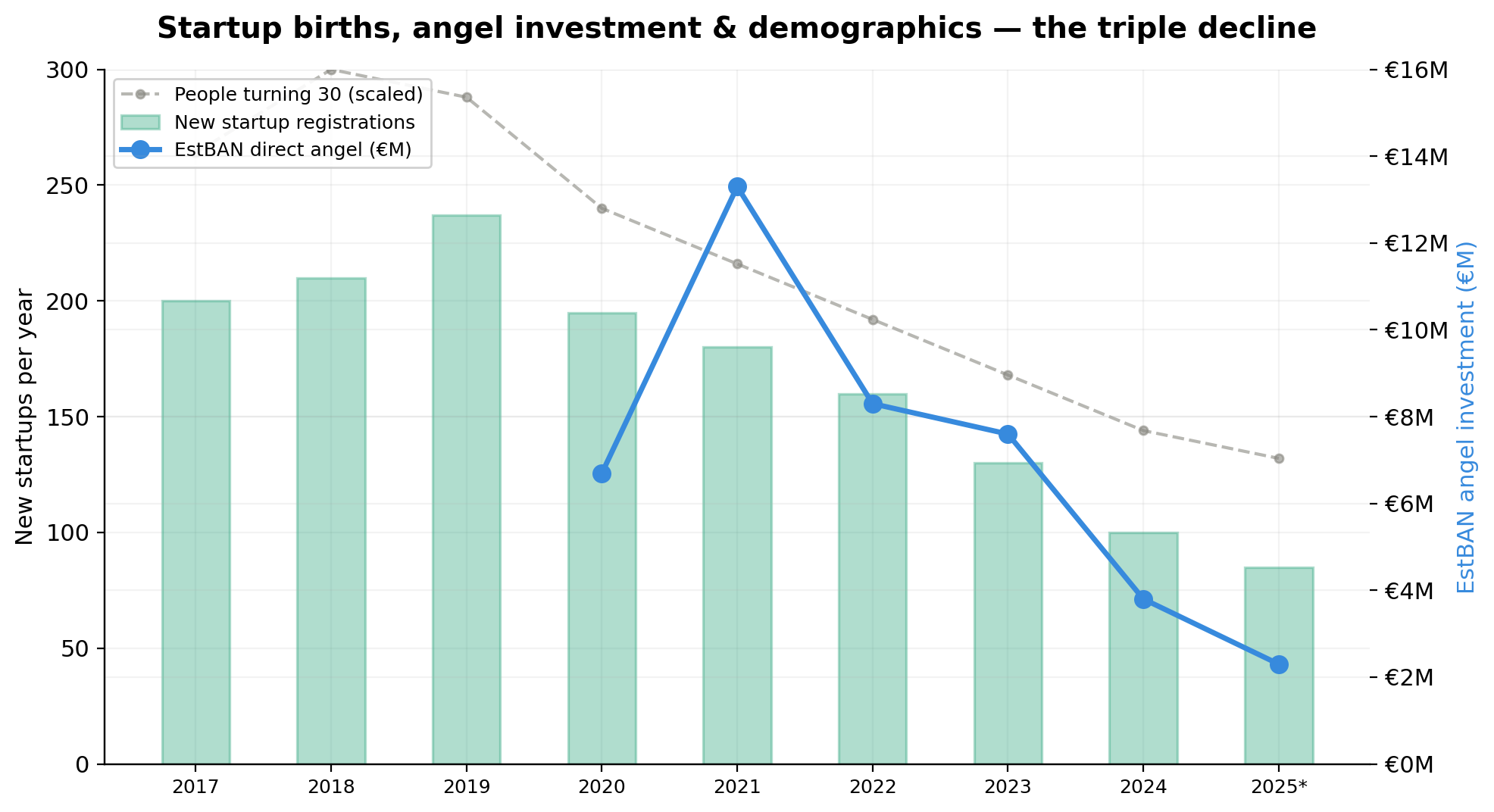
This tracks almost perfectly with the decline in angel investment and deal count. And it tracks with demographics — the number of Estonians turning 30, historically the peak startup-founding age (as we learned from a historical presentation by Allan Martison), has fallen by roughly 40% since 2018.
Fewer founders means fewer companies to invest in. Fewer investable companies means less angel activity. Less angel activity means less deal flow for institutional investors two years later. It is a reinforcing cycle.
This is exactly why the government's [new programme](https://fomo.observer/estonia-to-funnel-126-million-into/) to develop more spin-offs from universities, launched in January this year with the goal of creating several dozen DeepTech startups, matters so much. But those startups will need first-check capital and experienced business people on board. And right now, these resources are drying up.
## A misleading number of 32% invested zero
Let me address something that could easily become a misleading headline: 32% of EstBAN survey respondents deployed zero capital into startups in 2025.
I do not want to dramatise this, it is absolutely normal, in more established BANs only 15-30% of members are actively investing every year. Business angels in Estonia invest from their own pocket, without any taxation preferences, without co-investment systems, into the riskiest asset class that exists. In challenging times, sitting on the sidelines is not a failure of nerves. It is smart risk management.
I am very proud that in crisis times, our angels are thoughtful. The ones who are investing are writing more diversified, more strategic cheques. The ones who are not investing are waiting for better conditions. Both behaviours are rational.
But here is where policy comes in: **if you want those rational, experienced, well-networked investors to come back off the sidelines, you need to change the risk-reward equation.**
## The case for a co-investment system: €5 million to turn the trend
In Finland, they have a co-investment system and in Lithuania, they have a co-investment system plus a profit-share mechanism. Both countries have seen measurable increases in angel investment activity after introducing these instruments. Estonia has neither.
We rank number one globally on the Tax Foundation's International Tax Competitiveness Index, for the twelfth consecutive year. We have one of the most digital, efficient business environments in the world. And yet we are one of the only competitive startup ecosystems in Europe with zero angel-specific investment incentives.
**The numbers make the case themselves.** EstBAN's direct angel investment was €2.3 million in 2025\. A 1:1 government co-investment match at the syndicate level would double that to €4.6 million, and the additional deal flow, confidence, and network effects would likely push it even further. Given the scale, we could start with just €1 million per year and already create a meaningful impact.
My ask is simple: **Estonian government, please put five million on the table. In three years, you will see extremely positive trends.**
If we start a co-investment system next year, we can turn the declining trend by 2028, reaching back to 2022 levels of angel activity. By 2030, we can aim for 2021 levels. And as we have seen from the data, when angel investment turns positive, institutional investment follows.
## From regression to progression
We are not in a crisis. We are at a crossroads. Estonian business angels have matured from enthusiastic first-timers into sophisticated portfolio builders. They have shifted towards DeepTech and defence — exactly the sectors where Estonia has a strategic competitive advantage.
The ecosystem around us is thriving. Baltic startups raised a record €607 million in 2025\. Estonian startups generated €1.8 billion in added value, contributing 4.3% of GDP. Foreign funds are actively looking for opportunities here.
But there is a gap forming at the earliest stage – the first cheque, the pre-seed, the moment when a founder needs not just money but a business angel who has been through the growth journey, who brings networks, who brings operating experience. That is the stage where the university spin-off meets the experienced entrepreneurs and gets a valuable network. Where different competences and experiences come together – the business magic happens.
That stage cannot be funded by institutional capital. It needs angels. And right now, the angels need a signal from the system that their risk-taking is valued.
A co-investment instrument is that signal. It is not a subsidy, it is a multiplier. For every euro of public money, you unlock more private capital, private networks, and private expertise that no public programme can replicate.
The data is clear. The opportunity is clear. The next move belongs to the policymakers.
---
*Jana Budkovskaja is a member of the management board of the Estonian Business Angels Network (EstBAN) and Partner of BSV Ventures. She has supported investments in more than 100 teams. In 2025, she co-led EstBAN syndicate investments at Startup Day and Latitude59\. The analysis in this article is based on EstBAN's annual survey data from 2020–2025, Startup Estonia ecosystem reporting, the Baltic Startup Funding Report 2025 and photos of presentation by Allan Martinson.*
## Sign up for Fomo.Observer
Startup stories from Estonia. Free weekly newsletter.
Subscribe
Email sent! Check your inbox to complete your signup.
No spam. Unsubscribe anytime.
### Fomo Academy: Tips for pitching on stage
URL: https://fomo.observer/fomo-academy-tips-for-pitching-on-stage/
Last updated: 2026-04-22T14:02:27.000Z
Pitch coach Dan Renwick gives some advice to help us shine on stage this event season.
[Dan Renwick](https://www.linkedin.com/in/dan-le-man/?ref=fomo.observer) is an entrepreneur and owner of [Dan le Man Pitch Coaching](https://dan-le-man.com/pitch-coaching/?ref=fomo.observer). I popped along to meet him in his [Heldeke Bottle Shop](https://heldeke.ee/bottleo/?ref=fomo.observer), in Tallinn, for a cup of tea and a lesson how how to pitch on stage.
“There’s no perfection in pitching, its just about being human,” Renwick tells me, which puts me at ease, as we settle in.
Naturally, given the setting, I ask him if dutch courage (taking a drink of alcohol) is the best way to calm your nerves before an on-stage pitch, and I was happy to hear him give me the same answer as my own mantra, when I have to put myself in the spotlight - ‘it’s not nerves, it’s excitement’!
“Focus on the audience, not yourself,” Renwick explains. “Think of yourself as the host making sure they’re okay.” This should distract you from focusing on yourself and how you look to them.
### Problem areas
Renwick says that one of the biggest issues founders have with pitching is getting hung up on the word count, "they think their startup is too complex to explain in just three minutes and convince themselves they need more time." He explains that three minutes is not how long you have to talk but “how long you have to clearly explain what you do, the problem you solve, and what you need from the audience”.
“If you can explain your startup and what you do and what you need right now in less than three minutes, I will give you €100k,” he says to me. “If we had that deal, would you do that right now?” Believe me when I say, if I actually had a startup, I’d take the challange on!!
But as Renwick says, the reality is, if you can’t explain your startup clearly and concisely in a short amount of time you are the one that loses out.
To stop this from happening I was given a full run down of tips to help me to shine on stage and articulate what I need to say, when I need to say it. Here are a few things I learned from Renwick:
### Be authentically yourself
Authenticity is the #1 rule of pitching on stage. The main goal is to feel comfortable on stage, explaining what you do and what you want in your own way. Renwick says we shouldn’t try to copy someone else’s style, use an “over-rehearsed tone” or “fake confidence” as the audience will question it and might find it harder to trust or believe you. Be yourself.
### Know your audience
Who are you actually speaking to? Is it investors, other startups or accelerator managers?
You need to be clear on what you want from this specific audience. What problem have you, that they can help solve? Are you looking for money, advice or contacts? When you truly focus on a specific audience, your content becomes more direct and a lot less vague.
### Control and awareness
Control of your body movements, fidgeting, gestures, control of your voice, particularly the pace is important. You control of the room by how you engage the audience, handle interruptions etc, and control the situation. You are in charge, what do you want to gain from the interaction?
And awareness goes hand-in-hand with control. You should be aware of the situation you’re in whether that is on stage or at a networking event. Be aware of how the other person is reacting to you. You are always responsible for how you show up. Mentors can guide you to improve this but you must do the work and decide to make the changes.
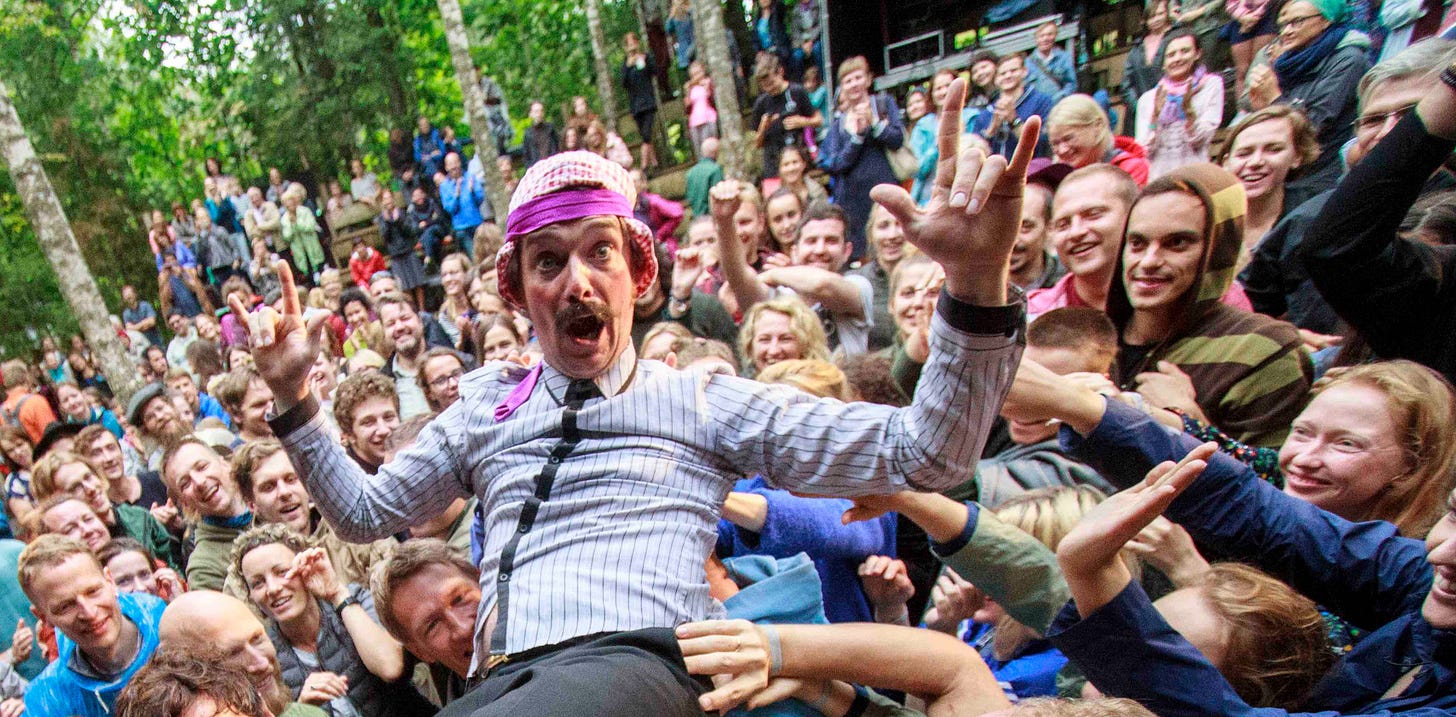
### Are you nervous or are you excited?
Renwick tells me that the physical feeling before going on stage is the same for nerves and excitement. If you think you are nervous he suggests reframing it as excitement - it uses the same energy but the outcome is much more positive. Instead of trying to “get rid” of nerves, channel them.
And a great tip is to stay away from anyone who asks you “How are you feeling, are you nervous?” It is a toxic backstage question. Just focus yourself and get excited for your time in the lights.
### What to do if you draw a blank
It’s important to remember your pause feels longer to you than to them and what feels like an age is usually only a second or two in reality. If it does happen then use your slides/visuals as anchors, glance at the slide and recall the one key point you meant to make there to bring you back on track.
Remember, nobody knows your script so if you skip a word or two, or change up the order, then only you know it happened. Always practice recovering in rehearsal – simulate tech issues, time cuts, and distractions so that 'blank' feeling isn’t new on the day.
### Practical pre-stage prep
Focus on your breathing. If you need to breathe in for a few seconds then breathe out for slightly longer than you inhale. But it is important to do what works for you whether that is going for a walk, a run, listening to pump music, going through your pitch, or just totally switching off. Do what serves your best in the moment, even headstands or handstands if that’s your thing.
Arrive to the stage in plenty of time. Situations before stage will always differ and you must learn how you best get stage-ready under different conditions. Things go wrong, slides can take a minute to load, you need to get mic’d up and shown how to work the clicker. Don’t leave it all to the last second, be prepared with some buffer time for unexpected situations.
### Script your pitch
The typical speaking rate is 110–130 words per minute so for three minutes, that’s roughly 330–390 words max. Script your pitches, don’t just keep practising and hoping you’ll be under three minutes, it does not work that way. By scripting your pitch you make sure that within the allotted time you can get all the important information across. Once you have the script down, practice it over and over so you know where you can take a breath, pause, and on which key words you’ll move the slides.
### The anatomy of a pitch
Problem, solution, market size, team, ask, business model and traction. You don’t have to start with 'problem' – you can start with something that will prick the ears of your audience.
Use a structure table for each section:
1. Goal: What do I want the audience to understand after this part?
2. Visual: What slide or image is on screen?
3. Spoken words: Script or speech-to-text draft for that segment.
4. Check: Spoken words + Visual = Goal
---
*This is part of a Fomo Academy Pitching Series where we will take you through how to present your pitch on stage and how to put together different pitch decks for pitch competitions, investor meetings and sales meetings.*
### HEDI MARDISOO: EU Inc. Is it for the startups or for everyone?
URL: https://fomo.observer/hedi-mardisoo-eu-inc-is-it-for-the-startups-or-for-everyone/
Last updated: 2026-04-21T09:20:56.000Z
A follow-up to [*Stopping the Brain Drain*](https://fomo.observer/hedi-mardisoo-should-i-stay-or-should/)
A few months ago, I wrote in Fomo.Observer that Europe’s scale-up problem was not really about money, talent, or ideas — it was about fragmentation, and that [EU.inc](https://www.fomoobserver.com/p/hedi-mardisoo-should-i-stay-or-should?ref=fomo.observer) was the flagship response worth paying attention to. I ended that piece with a line I keep coming back to: *Stay. Lean in. Build.*
Since then, the EU.Inc / 28th Regime draft has landed. The Commission has proposed a regulation that would finally allow a founder to incorporate a single European company online that operates across all 27 Member States. Now the next wave of work has started — the one that takes place inside 27 capitals over the coming months, before the file goes to Parliament for a vote.
A few weeks ago, a panel was held in Tallinn to look at the proposal through an Estonian lens, because here you can point at a live system and say: " This already works." e-Residency alone has created close to 40,000 companies.
What Brussels is now trying to standardise across the EU, we have been running since 2014.
With me on stage were Simon Schaefer, co-founder of EU.Inc and the person behind Allied for Startups — the advocacy engine that has dragged this idea from the margins of policy debates into an actual Commission proposal; Liina Vahtras, who runs e-Residency and has been operationally delivering most of what EU Inc. is now promising, in production; and Tõnu Grünberg, who leads the relevant policy work at the Ministry of Justice and Digital Affairs, and whose team will actually write Estonia’s position and carry it into the Council.
My verdict, after ninety minutes of digging into the text with them? A step forward. But not the leap we need.
> It is a regulation, not a directive — and that matters more than it sounds. Founders will finally be able to choose their country of incorporation, creating something Europe has never really had: real competitive pressure between Member States.
For any investor who has tried to assemble a cap table across three European jurisdictions, that alone is meaningful. But dispute resolution still lands in 27 national courts. Labour law is out. There is no central court. There is no central register. Compared to what Estonia has already built, in several key places, EU Inc. is not yet an improvement.
### **A startup reform, not a corporate one**
There is one thing I want to be clear about, as it is the most important to understand over the next few months. EU Inc. is primarily for ambitious, innovative, fast-growing startups and scale-ups — not for the large incumbents that already have a continental footprint and an army of in-house lawyers. Those companies do not need it. They are not asking for it, and some may even see it as a threat to the market share they have already won.
> EU Inc. is primarily for the founders of fast scaling innovative companies in Tallinn, Lisbon, Warsaw, or Milano who want to hire an engineer in Berlin, raise a Series A from a French fund, and give equity to everyone on the team — without three law firms, four tax opinions, and a corporate restructuring in between.
That distinction matters right now, because of how consultations work. The loudest voices in any Member State capital tend to be the established industry federations, and their members are mostly not scale-ups.
### **What we are asking for**
The Estonian Founders Society has sent its position to the Ministry — a list any founder who has tried to build across Europe will recognise.
A company you can start in 48 hours, anywhere in the EU, with a real deadline — not a 'best effort.' Normal in Estonia. In most of the EU, it still takes weeks, a notary, and a local lawyer.
A company you can run online. Board meetings over video. Resolutions signed digitally. Filings made once, read everywhere. In many Member States, you still have to stand in front of a notary to transfer a single share. That should end.
> Share transfers without a notary. In Germany, France, or Belgium they take two to ten weeks and cost €2,000–€10,000 each. For a cap table that changes with every hire and every round, that is not a cost — it is a blocker.
Employee stock options work the same way across Europe. Today, the same grant to three engineers in three cities produces three different tax bills. In some countries, employees are taxed the moment options vest — before they own a share or have cash to pay. This 'dry tax' is a top reason European startups lose engineers to American rivals. Europe should adopt what Estonia already has: tax when you sell.
Investors and startups go hand in hand, so we also support aligned share structures, SAFEs and convertible notes — the default for early-stage rounds everywhere except, somehow, much of Europe.
And an end to the silent discrimination where a founder in Tallinn is locked out of a Madrid innovation programme because she has no Spanish subsidiary.
A real European company register. The Commission plans to use BRIS — the network linking 27 national registers. That can work, but only if, to a founder or investor looking up a company, it behaves like a single, real-time European system. If it cannot, we should build one that does. 'BRIS exists' is not 'BRIS works.'
Many of you might read... well, we have that in Estonia. That’s true, but having this here doesn’t solve the scaling issue. So we need the Ministry's position to be straightforward: do not tune Estonia’s submission to the European average. Our advantage is the standard we have already built. Pull the EU up to ours — do not let it be tuned down to theirs.
### **The Delaware test**
All of this comes down to a single question — the one every founder and every investor will ask on day one of EU Inc.: is it on par with Delaware, and does it offer something more than the other global options on the table?
> The real obstacle is not technology. It never was. It is a political ambition. Some of the infrastructure to beat Delaware already exists — in Tallinn. Digital incorporation, eID, e-Residency, and a government that has actually shipped products founders want to use. If the Council is serious about making EU Inc. work, the logical next step is to pilot it here, let the results speak, and then take the case back to Brussels with numbers instead of slides.
So — if you know any relevant ministers responsible for that portfolio, and you can convince one of them to try incorporating a company online before their next vote, now is the time. 😄
Because Delaware is not waiting. And neither are our best founders.
**Stay. Lean in. Build — and make sure what we build passes the Delaware test.**
*Hedi Mardisoo is CEO and co-founder of Cachet, and a board member of the Estonian Founders Society. She represents the Estonian Founders Society in the Estonian consultation on the EU Inc. / 28th Regime.*
### FOMO.13: Estonia's TOP10 AI startups in 2026
URL: https://fomo.observer/fomo-13-estonias-top10-ai-startups-in-2026/
Last updated: 2026-04-20T18:31:11.000Z
**Starship robots and agent armies unite as Estonia's Top 10 AI startups aim for global domination.**
Just a few years into the global AI boom, and it can feel, at times, in Estonia like AI is everywhere. Starship robots roll past you as they deliver Bolt orders in town, cameras surveil your behaviour at Ülemiste City, feeding the (anonymised) data to Fyma's app to optimise the use of commercial space.
AI helps Elering optimise power flow with Grindraven, or gives your friend the opportunity to build the app of his dreams with a little help from Bilt. And even if you're not using it yet, your friend is probably working at Pactum or Better Medicine.
This is not at all by chance, according to Evelin Ebruk, a spokesperson for AI & Robotics Estonia (AIRE). Rather, there is support for the ecosystem at every turn, aimed at making the whole sector viable. "The gaps that hold the success of AI companies back are consistently looked to be filled with additional measures, whether from private or public funds," she says.
That ecosystem support, along with a certain sense of "we're all in this together" camaraderie, has been an important factor in Estonia's fast-growing ecosystem. It's also allowed these companies – the top 10 of which are profiled below – to attract early-stage investments, scale fast, and branch out accordingly.
Estonia's AI sector is increasingly international, with offices popping up in Leeds, Austin, Salt Lake City, London, San Francisco, and Mountain View. When asked what they want to accomplish this year, the response has been a resounding "more." Or, in the words of [Bilt.Me](http://bilt.me/?ref=fomo.observer) CEO Uku Joost Annus, 2026 might just turn out to be "the most awesome year" yet.
## Sign up for Fomo.Observer
Startup stories from Estonia. Free weekly newsletter.
Subscribe
Email sent! Check your inbox to complete your signup.
No spam. Unsubscribe anytime.
We interviewed a large number of investors to compile the list of the top 10 AI startups. Our list features a mix of 'pre-hype' veterans and fresh startups - including several healthcare innovators - presented in no specific order.
## **Starship Technologies**
Chances are you've stumbled across one of the autonomous Starship robots out on the streets. These compact, R2D2-looking characters deliver groceries, food takeaway, and packages in many towns around the globe. The company – established in 2014 by Skype co-founders Ahti Heinla and Jaanus Friis – is now headquartered in San Francisco and maintains a fleet of more than 2,700 robots that have driven over 12 million miles and completed 9.5 million deliveries. But Estonia is still home to its engineering team, and Helsinki serves as Starship's R&D hub.
AI is at the heart of Starship Technologies' robots. They use it to navigate pavements, avoid obstacles, and cross roads. Starship has also amassed a dataset of around 200 million crossings, which is used to improve its models.

Photo: Tarmo Virki
When asked about 2026, CEO Heinla forecasts more expansion.
> "We have plans to bring our robots to new countries, areas, and brands," he said. Starship currently operates in Estonia, the US, the UK, Finland, Sweden, Switzerland, the Czech Republic, and Germany.
So far this year, it has announced a partnership with Just Eat Takeaway in the UK, following a partnership with Uber Eats in 2025\. To meet demand, Starship is also scaling robot production.
[The “Marathon” of Deep TechThe Long Road to Autonomous DeliveryFomo.ObserverTarmo Virki](https://fomo.observer/the-marathon-of-deep-tech/)
## **Better Medicine**
Priit Salumaa helped co-found Better Medicine in Tartu at the tail end of 2020 with five other cofounders, aiming to deploy an AI platform to help radiologists more accurately detect cancer from imaging data, such as CT scans. Rather than making diagnoses manually, Better Medicine's tool can help spot lesions in patients' kidneys or lungs using AI.
In some ways, Salumaa's transition from Mooncascade, the software development company he previously founded, into healthtech was part of a general move toward deeptech in the Estonian IT sector.
According to Salumaa, Better Medicine saw its first two deployments in Germany early this year and plans to expand further in the German-speaking countries of Germany, Austria, and Switzerland. The company is also seeking an additional EU Medical Device Regulation certification for its platform and plans to continue its work on AI imaging and clinical research. Better Medicine has raised about 6 million euros to date in pre-seed financing and public grants, Salumaa said that one of Better Medicine's goals for 2026 will be to complete a seed round.
## **Muun Health**
Founded in Tallinn in 2023, Muun Health is an early-stage deeptech developing next-generation wearable biosensors for continuous hormone monitoring. Its core technology enables the measurement of key hormones from interstitial fluid using a non-invasive wearable device. This shift from single-point testing to continuous monitoring should reduce uncertainty in clinical decision-making and support precision medicine in fertility care, according to CEO Kerli Luks.
AI is a "core enabler in Muun's technology stack," she noted, helping accelerate its sensing components, support faster iteration cycles, and enable faster processing. In the future, AI will help Muun Health validate its devices, shortening its transition time from the lab to the clinic. Once hormone data becomes available at scale, it can be used to train advanced models for personalised hormone health, she adds, allowing for early detection of imbalances, for example.
## **Elnora AI**
Estonian tech company Elnora AI comprises founders and a self-described "AI agent army." The firm's agent generates and optimises biomedical laboratory protocols for pharma and biotech teams. She (founder Carmen Kivisild, refers to Elnora as "her") is capable of designing experiments, troubleshooting issues, and learning from both successful and failed experiments.
Founders Kivisild and Risto Jamul set up Elnora AI in Estonia in 2023 and followed suit in the US in 2024\. They are now both living and working from their US headquarters in Salt Lake City. Kivisild discussed on her Substack last summer how she raised $100,000 in venture capital, which helped fund Elnora AI's relocation.
To support the uptake of AI by scientists for designing experiment protocols. Elnora AI has been working on its platform, which is currently a CLI-based multi-agent system with 2,100 specialised tools. The company is also training scientists to work with Elnora AI and deploying a consulting model that advises pharma and biotech teams on Elnora. The company is also involved in organising hackathons, such as a [24-hour AI science hackathon](https://elnoraai.substack.com/p/are-hackathons-for-children) at Monomer Bio in San Francisco last month. Kivisild said that Elnora AI will bring the same hackathon format to Estonia this summer.
[CARMEN KIVISILD: Are hackathons for children?The full story of organising a hackathon to boost your product development.Fomo.Observer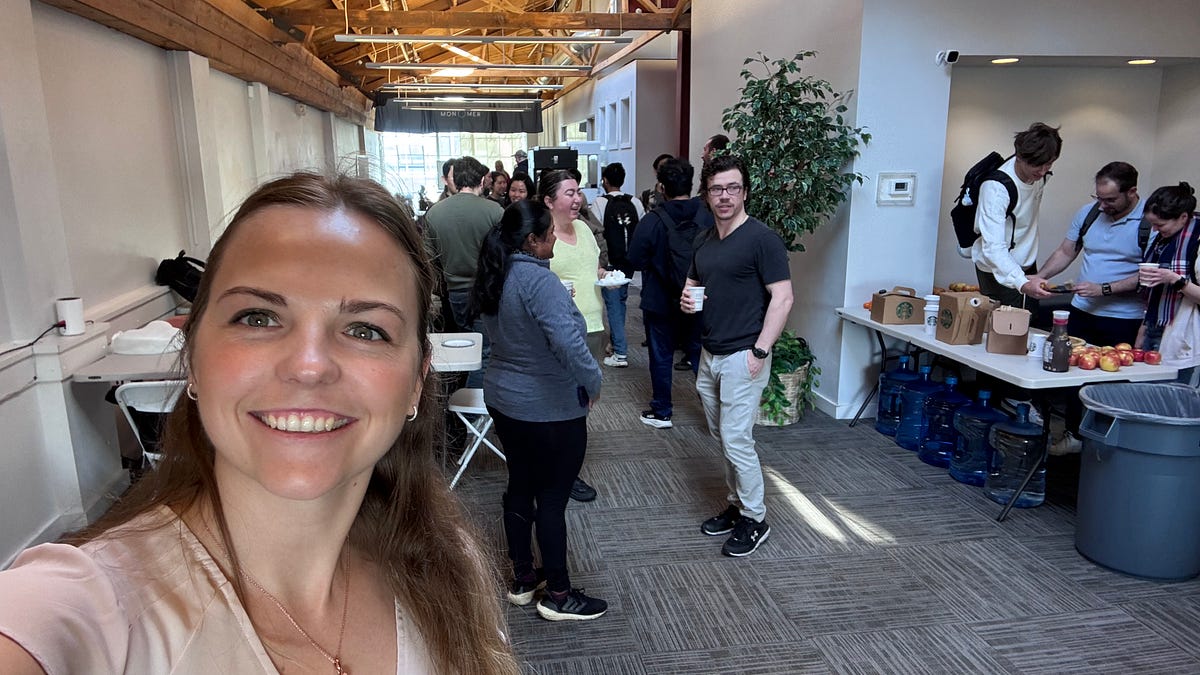](https://fomo.observer/carmen-kivisild-are-hackathons-for/)
## **Fyma**
Fyma is another one of those Estonian tech firms that quickly moved its headquarters abroad. In its case, it made complete sense – there are more clients there. CEO Karen Burns cofounded the firm in Tallinn with CTO Taavi Tammiste in 2019, but in 2024 relocated to London and Burns made the move with it.
> "The team we've built here is strong," she says, "and the UK is very much where we're focused on growing."
Fyma's technology turns cameras into decision-grade sensors, allowing them to relay detailed, anonymised data to clients on how spaces are being used, by whom, when, and for how long. There's also no facial recognition involved nor stored footage, just GDPR-compliant statistical metadata. Fyma has been targeting the build-to-rent and health and fitness sectors with its offering, hoping to help them optimise their space usage.
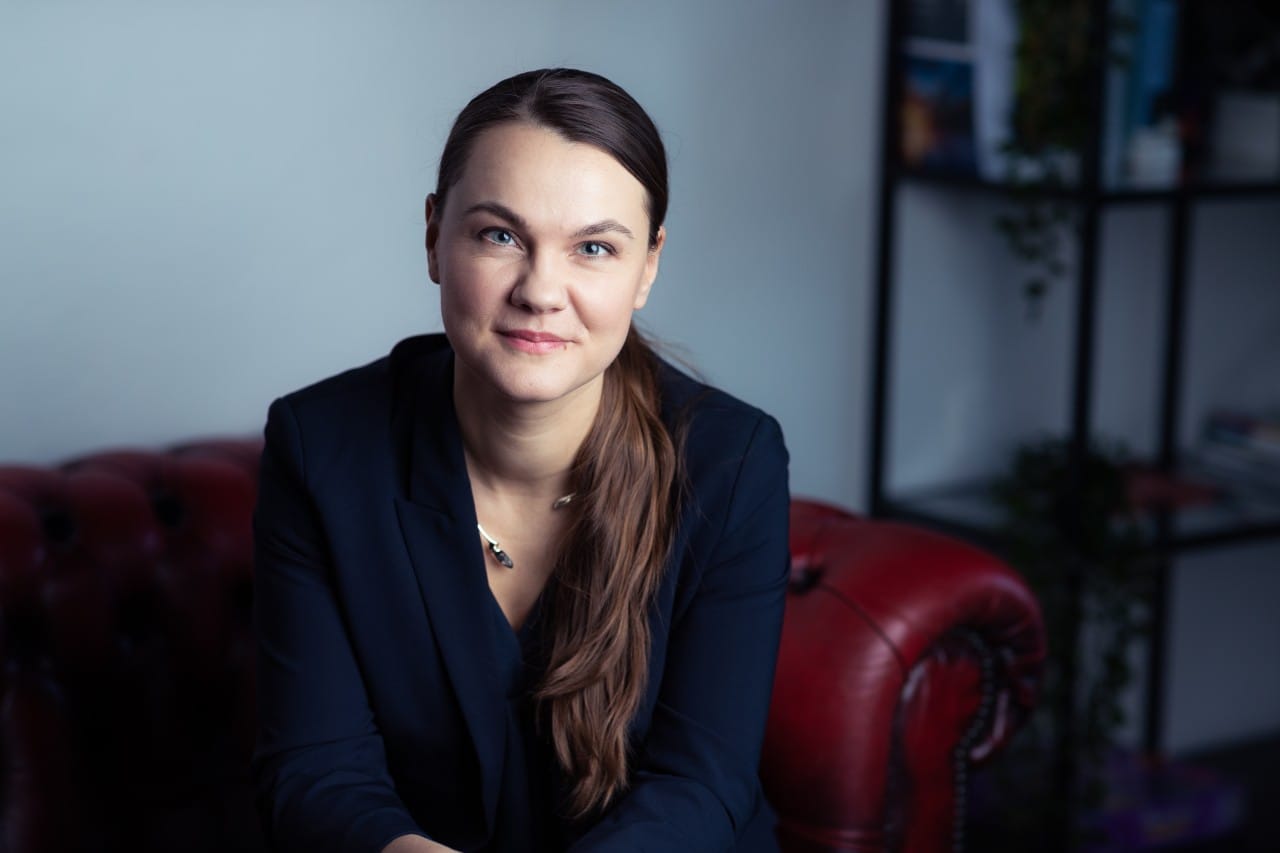
Karen Burns. Photo: Fyma
In one case, Fyma's tech identified £80,000 worth of equipment that was essentially never used. Burns said that Ülemiste City in Tallinn is Fyma's longest-standing client, one that has embraced this data-centric approach to managing real estate. The company has raised about $5.8 million to date.
Looking ahead, international expansion is a company goal. Fyma is currently live in New York and Washington, DC, and Miami will be added soon, too.
"The focus for 2026 is deepening our UK presence and continuing to build out North America," said Burns.
## **Pactum AI**
Topping the list is Pactum AI, which builds AI agents for enterprise procurement. These agents help users by correcting data, approving requisitions, negotiating with suppliers autonomously, and signing contracts, saving them time and, let's be honest, the headache of mind-numbing, tedious work. Customers have adopted Pactum AI's platform with enthusiasm. While there's still a human in the loop at every stage, Pactum's tools help them handle the grunt work.
Walmart and BMW are just two big-name clients, and there are many others. To manage its global footprint, Pactum AI is now headquartered in Mountain View, California, though its engineering hub remains in Tallinn. The company has raised €100 million to date and has about 170 employees at last count. But it started in 2019 with the premise of implementing agentic AI in the procurement field, based on advances in negotiation science. The company now leads the business category it created.
> "Pactum builds AI agents that actually do the work," said CEO Kaspar Korjus. "That's a fundamentally different approach, and it's why large enterprises are adopting Pactum at the rate they are."
When asked about the company's plans for 2026, Korjus said that Pactum plans to expand its end-to-end procurement support. "Pactum started as an autonomous negotiations agent," he said. "This year, we will build out all the other functions of operational procurement."
## **Gridraven**
With its intriguing name and an Anton Corbijn-inspired photograph of its founders on its website, one might be forgiven for mistaking Tallinn's Gridraven for an up-and-coming indie rock band. But the three-year-old company, with its focus on improving the electricity grid's efficiency using AI, might just be cooler than that. Started by Georg Rute, Henri Manninen, and Markus Lippus in 2023, Gridraven offers a software platform for power grid operators that enables them to transmit more electricity through existing infrastructure.
It does this by combining internally developed AI with its Dynamic Line Rating solution and weather forecasts, which enables power lines to carry up to 30% more electricity without constructing new lines. Investors have been positively persuaded to invest in the firm, which raised about €4 million last year. It's also racked up about €1.5 million in grants to date, and has opened an office in Austin, Texas. Gridraven's technology is already being used by Elering in Estonia and Fingrid in Finland.
"As electricity demand surges from electrification and data centres, transmission has become the grid's biggest bottleneck," says CCO Tuuli Jevstignejev. Gridraven's software enables operators to safely increase power flow on a line-by-line basis, accounting for differences in weather and terrain. When asked about the company's future plans, she said Gridraven aims to increase the global grid by 30% by 2030.
## **Bilt.me**
At first glance, Bilt looks like one of those archetypal Estonian startup stories about a bunch of high school grads who build a successful business from the couch in their parents' basements. In the case of founders Uku Joost Annus and Kevin Akkermann, this might not be far off the mark. Just months into its existence, Bilt won a Ruum-hosted competition, and its team received a trip to San Francisco as a reward. The company offers a vibe coding platform for creating mobile application businesses. "Anyone can prompt, test, share, and publish a mobile app using natural language, with no coding required," says Annus. Users just have to tell Bilt what they want, and Bilt will build it. They can then share it or submit it for inclusion by an app store.
The company already has five-figure revenue and hopes to reach €5 million in annual recurring revenue by the end of this year. After their Bay Area pilgrimage, Annus says that Bilt wants to create repeatable sales and distribution workflows for end users to minimise the time to first revenue for each app. The company's platform relies on an internal agent and orchestration layer, and it also has another internal AI in its Discord chat that has replaced Notion, Jira, Linear, and n8n. "It distributes tasks, follows up, and makes sure things ship," says Annus. When asked about future plans, he predicts that '26 will be "the most awesome year."
## **Supersimple**
Established in Tallinn in 2021, Supersimple offers an AI-based business intelligence tool that allows companies to explore data and answer questions. It combines two previous AI products – business intelligence, based on databases, and enterprise search, focused on documents, conversations, and other text or files. Using Supersimple's explainable AI, customers can sift through vast datasets of tables and text to find what they need to make the right decisions.
"We started the company before ChatGPT's release," says CEO and co-founder Marko Klopets. "It was clear that AI was going to change what was possible in the world of productivity and data." To make its tool more accessible to users, Supersimple invested heavily in explainability, building a technically complex foundation rather than pushing a "thin AI wrapper" to market. Investors invested likewise, committing €2 million to the firm in 2024.
Klopets says that Supersimple has been rapidly onboarding customers, fending off competition in a "very crowded market of slightly faster horses," which he calls analytics tools with AI bolted on. He believes that Supersimple's investment in bridging unstructured and structured data and in AI explainability will put the company ahead.
> "In a few years, people will think of this as a new category of products," he says. "Right now we have the luxury of being far ahead of the curve."
## Handhold
[Handhold](https://handhold.io/?ref=fomo.observer) is on a mission to end the era of the sales pitch. Humans should only step into a sales conversation when the AI has already done the heavy lifting. The company unveiled a €3 million seed round in April to accelerate growth.
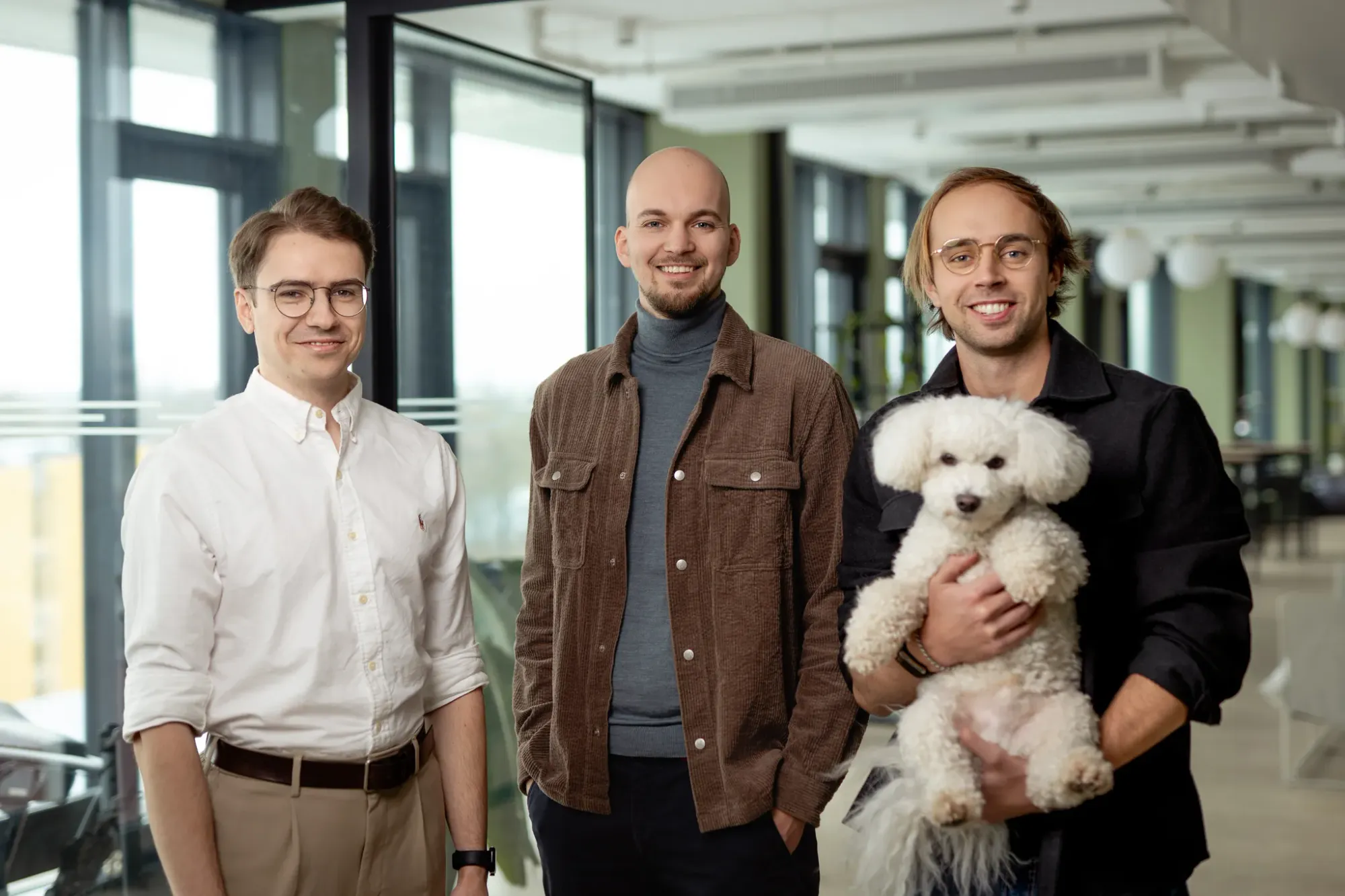
Handhold founders. Photo: Handhold
By using AI agents, Handhold is essentially “downloading” that high-level expertise into a digital account manager that never sleeps, speaks every language, and - crucially - doesn’t increase the company’s headcount.
Handhold said the results are already showing up in the data. Parim, a workforce management firm, saw a 60% drop in bad-fit demos since letting Handhold’s agents take the lead. This allows human sales teams to stop acting like “automated” presenters and start acting like strategic partners for enterprise-level deals.
With a six-figure ARR run rate achieved only months after their soft launch, the market seems to agree: if a machine can explain it better, faster, and at 3:00 AM, why wait for a human?
*No one in this space seems to be waiting for humans; the AI space is moving too fast.*
*Elsewhere this week, our columnist Liina Laas ripped to pieces the government's plan to drop the EU Pay Transparency Directive.*
*For a country that sells itself to the world as a digital pioneer, calling pay transparency a "bureaucratic burden" is pathetic. Estonia’s pushback against it is a total mask-off moment. The government’s line is that there’s "no urgent need to change" because "things have been working so far," at a time when the gender pay gap in the EU is largest in Estonia.*
*Go and read. And share.*
[LIINA LAAS: Pathetic and Embarrassing: Estonia’s war against pay transparency is a digital pioneer’s great betrayalEstonia is calling pay transparency a bureaucratic burden. For a digital country, that is pathetic. There are policy disagreements, and then there are moments when a government makes itself look embarrassingly small.Fomo.Observer](https://fomo.observer/liina-laas-pathetic-and-embarrassing-estonias-war-against-pay-transparency-is-a-digital-pioneers-great-betrayal/)
---
*If *Fomo.Observer* provides value or helps you navigate the startup ecosystem, please consider supporting our mission. We serve as the independent pillar of the region’s new economy, delivering the unvarnished truth of startup life - free from hype and gloss.*
[***Support FOMO and our independent journalism here.***](https://buy.stripe.com/7sY4gz5VZesH6HGdKCbV600?ref=fomo.observer)
**Spread the word.* If you know someone who would benefit from these insights, invite them to join the list or forward this email to them.*
**Join the conversation.* If you have a rebuttal, a strategic insight, or a question, simply reply to this email. Your feedback goes directly to our core team of professional journalists and entrepreneurs.*
### LIINA LAAS: Pathetic and Embarrassing: Estonia’s war against pay transparency is a digital pioneer’s great betrayal
URL: https://fomo.observer/liina-laas-pathetic-and-embarrassing-estonias-war-against-pay-transparency-is-a-digital-pioneers-great-betrayal/
Last updated: 2026-04-19T07:34:24.000Z
**Estonia is calling pay transparency a bureaucratic burden. For a digital country, that is pathetic.**
There are policy disagreements, and then there are moments when a government makes itself look embarrassingly small.
Estonia’s pushback against the EU Pay Transparency Directive is one of those moments.
The government's line, as reported by ERR, is that the directive imposes an excessive administrative burden and that there is no urgent need to change anything because, apparently, “things have been working so far.”
That sentence says more than it intends to. Things have been working for the people the current system already serves. Everyone else can keep waiting.
That is not leadership. That is privilege masquerading as pragmatism.
Let’s start with the most basic fact. Estonia has the highest gender pay gap in the European Union.
In 2024, the average unadjusted gender pay gap across the EU was 11.1%. In Estonia, it was 18.8%. Highest in the bloc.
Not slightly above average. Not a marginal issue. The highest.
> So when a minister says things are “working so far,” the only honest response is: for whom?
Because if you are a woman in Estonia, the numbers suggest the system is not working. It is functioning exactly as designed: opaque enough to preserve unequal outcomes, vague enough to avoid accountability, and convenient enough for the people who benefit from it.
And that raises another question nobody in government seems eager to answer:
> Who are the companies supposedly being protected here? Who exactly benefits from keeping pay opaque?
Because if pay practices are fair, transparency should not be a threat. If the directive is being treated as a threat, it is fair to ask what exactly some employers are afraid people will see.
The maddening part is that the EU directive is not some radical act of Brussels overreach. It is basic, overdue workplace hygiene. Member states have until 7 June 2026 to transpose it into national law. It requires employers to provide salary information or a pay range to candidates before interviews, bans questions about salary history, gives workers the right to ask for pay information for comparable roles, and requires larger employers to report gender pay gaps and take action if unjustified differences exceed **5%**. ‘
Estonia’s own ministry already acknowledges that if employers transmit data through the Statistics Estonia data exchange service, Statistics Estonia can compile the report itself.
Read that again.
The government is calling this an unbearable bureaucratic burden, while its own ministry is already saying the state can automate part of the reporting.
For a country that has built an entire international brand around being digital, efficient and administratively smarter than everyone else, this excuse is not just weak. It is embarrassing.
We are the country of e-government, e-tax, digital signatures, interoperable state systems and startup mythology. We love to tell the world how advanced we are. But when the conversation turns to salary transparency, suddenly, Estonia discovers paperwork.
Please stop.
A country that can digitise taxes, prescriptions, company formation and public services does not get to claim that publishing salary ranges or reporting pay data is too complicated. If Estonia cannot handle structured pay reporting, then one of two things is true. Either our digital-state story is wildly overstated, or it only applies when the data is politically comfortable.
You cannot call yourself a digital pioneer and then hide behind paperwork when accountability comes into play.
The real issue here is not bureaucracy. It is exposure.
Pay transparency works because it removes the fog. It makes it harder to underpay people in silence. It gives candidates leverage before they even enter the interview room. It stops companies from anchoring offers to whatever someone was underpaid in their previous role. It forces leadership teams to confront whether their so-called meritocracy holds up under scrutiny.
The best companies understand this already. Transparent pay bands reduce bias, make hiring more consistent, build trust internally and cut the reputational risk of pretending to care about equality while keeping compensation opaque. The companies panicking about transparency are usually not the ones with clean hands.
And Estonia is not just behind on pay. We are behind on who gets funded, who gets backed and who gets allowed to scale.
In startups and venture, we love to talk about merit, speed and innovation, but the money tells a very different story. In Europe, female-founded startups raised €5.76 billion in 2024, which amounted to just 12% of all VC capital raised, according to Female Foundry’s 2025 Female Innovation Index, reported by Sifted.
That is not equality. That is structural under-allocation with a nice conference panel on top.
Estonia is hardly a shining exception. Startup Estonia’s own data shows that female founders still make up only about 16% of startup founders. In the first half of 2025, the share was 17% female and 83% male.
So this is the bigger point government seems determined to miss: pay inequality does not exist in isolation. It is part of a pipeline. Women are underpaid in employment, underrepresented in leadership, underrepresented among founders, and underfunded in venture. Then they are told the system is fair because there are a few visible exceptions.
That is how inequality survives in modern economies, not through a single dramatic act, but through a thousand “practical” decisions that keep producing the same outcome.
This is why the government’s stance feels so deeply backwards.
For years, many of us have been pushing for better hiring practices, more transparent workplaces, stronger standards and more honest conversations about who gets paid, who gets promoted and who gets funded. We keep being told Estonia is modern, competitive and future-facing. Then moments like this arrive, reminding you how shallow that story can be.
It feels like swimming against the current and realising that too many people in power are still perfectly happy with the old current, as long as it carries them.
There is also a level of irony here that would be funny if it were not so insulting. If Estonia delays or fails to transpose the directive by the deadline, the European Commission can launch infringement proceedings, and the Court of Justice of the EU can impose financial sanctions, including a lump sum and daily penalties until the country complies.
So let’s summarise the logic here.
Women do not get equal pay.
The government resists rules meant to make pay fairer.
And if Estonia keeps dragging its feet, taxpayers may also end up paying the bill.
What the hell.
Women will not get equal pay, and they will also have to pay the fines. Great stuff, people.
This is not a minor policy disagreement. It is a signal. It tells women that even when the evidence is overwhelming, even when the tools are straightforward, and even when the rest of Europe is moving, someone in power will still stand up and explain why fairness is administratively inconvenient.
For a country obsessed with being seen as smart, this is a spectacularly dumb hill to die on.
Estonia can do better than this. The fact that we still need to say that in 2026 is exactly the problem. We should pave the way with our digital excellence. It is clear what the priorities are.
The minister who announced that “We’re willing to pay the fines” should be paying out of his own pocket.
## Sign up for Fomo.Observer
Startup stories from Estonia. Free weekly newsletter.
Subscribe
Email sent! Check your inbox to complete your signup.
No spam. Unsubscribe anytime.
### Cachet enters French market
URL: https://fomo.observer/cachet-enters-french-market/
Last updated: 2026-04-16T08:38:04.000Z
Cachet said it has partnered with Baloise LU to deliver adaptive insurance for Turo's peer-to-peer car-sharing platform in France, entering a new market.
"Partnering with Turo in France, with the backing of Baloise LU, is a defining moment for Cachet," Hedi Mardisoo, CEO and Co-Founder of Cachet, said in a statement.
France is one of Europe's largest shared mobility economies, valued at approximately €4.2 billion and growing at over 13% annually.
> "France is one of Europe's most important shared mobility markets, and entering it as our 11th territory shows the momentum behind adaptive insurance. Our technology doesn't just price risk, it actively controls it, giving platforms like Turo the infrastructure to prevent loss," she said.
[Cachet](https://cachet.me/?ref=fomo.observer)'s platform delivers insurance that adapts in real time to usage patterns — combining flexible, trip-level coverage with integrated risk management and loss prevention tools.
Paired with Baloise's underwriting strength and carrier-grade capacity, the partnership gives Turo a fully embedded insurance infrastructure built specifically for peer-to-peer car sharing at scale, Cachet said.
"Turo's growth in France represents exactly the kind of platform-scale opportunity where our underwriting capabilities and Cachet's technology create the most value," David Destappes, Chief Operating and Commercial Officer at Baloise Luxembourg, said in the statement.
### ANDRUS PURDE: Rocketships, hair salons, and being a small business CEO
URL: https://fomo.observer/andrus-purde-rocketships-hair-salons-and-being-a-small-business-ceo/
Last updated: 2026-04-20T10:52:26.000Z
Recently, I woke up with the realisation that I’m a small business CEO.
I never set out to be a small business CEO. The plan was to be the CEO of a rocketship, the next really big thing. Evidently, these plans haven’t materialised.
At Outfunnel, a data syncing platform, I’m leading a team of five (down from a peak of fifteen). After raising $2.3 million, we’re now cash-flow positive and growing in the double digits. Not a unicorn but an honest workhorse.
I don’t remember the day I stopped being the CEO of the next big thing and became the CEO of a small business.
Was it when we realised our product strategy needs to change for the fourth time?
Or when we couldn’t raise our $3 million Seed and settled for a $1 million bridge?
Or when I had to lay off our head of engineering?
Or when I realised I was doing a marketing task I first learned 10+ years ago?
**In many ways, running a five-person tech startup is exactly like running a five-person hair salon.**
As a small business CEO, I need to make ends meet. Bootstrap, if you will.
I'm typing this post on a computer that is, at times, too slow for me. In my previous setups, a new machine would have appeared a few days after I decided I needed one. Now, I consult AI tools to see which upgrades or uninstalls would make a computer with my specs faster.
Just like the CEO of a five-person hair salon, I do very little management and quite a bit of IC (individual contributor) work. I've taught myself to use some quite exotic features of our CMS, implemented affiliate management software, and this morning updated our listing on the ActiveCampaign Integrations directory. Previously, I would have delegated all of this. Now, I do it myself or learn how to get it done via prompts.
As a small business CEO, I've made fewer friends and connections over the last couple of years. I go to fewer events and travel less (which are quite welcome developments)
On the flipside, my professional connections are deeper. Not only do I know that my colleague has two kids, but also how they did at a hockey competition last weekend, or what they used for house insulation.
One thing that is working amazingly well in hair salons and 5-person startups is proximity to customers. My co-founder, Markus, is both head of customer support and head of product, and I'm also part of the round-robin system that handles support and onboarding calls. It's truly beautiful how this shortens feedback cycles. And now that Markus is a part-time vibe-coder, product functionality has repeatedly changed an hour or two after a chat with a customer.
**Still, there are key differences between running a five-person hair salon and a five-person startup**
Hair salon customers seldom come in and pay 40x your starting price, while stretching your system capabilities and onboarding processes.
When you're running a hair salon, you're probably striving to be better than other hair salons in the neighborhood or town. In a five-person software startup, we have to do something, even if something highly specific, better than anyone in the world.
(Outfunnel is now the best possible tool to connect specific CRM and marketing platforms. Not perfect, but the best in the world.)
Last but not least, there's always the faint smell of massive success just around the corner. If we get the next thing right, we can 5x or 50x our growth rates. I think about it every time we pull something bigger into the sprint. Every single time.
Otherwise, I would have just founded a five -person hair salon, I guess.
**Andrus Purde*, is co-founder and CEO of *Outfunnel*, a platform that unifies sales and marketing data. He’s also a serving board member of Estonian Founders Society and a cleantech-focused angel investor.*
### The end of ESG(rid) story
URL: https://fomo.observer/the-end-of-esg-rid-story/
Last updated: 2026-04-13T11:42:23.000Z
TALLINN - Estonian value chain management startup Esgrid said it will close down after 2.5 years.
Esgrid, which launched at the peak of ESG interest in late 2023, [won a pitching competition at Startup Day in Tartu](https://www.startupday.ee/news/the-winners-of-startup-pitching-2024-have-been-announced?ref=fomo.observer) and raised some 1.4 million euros from investors like 2C Ventures.

“When the sustainability market collapsed in 2025, we didn’t fold. We pivoted. Then pivoted again. Kept fighting until it genuinely stopped making sense - and decided to stop with 6 months of runway still in the bank,” cofounder and CEO Oksana Tolmatshova said on LinkedIn. ”In the end, we knew we'd done something right when customers asked what it would take for us to continue, and investors asked to call should we build something new.”
”To every founder still fighting every day - you're a hero by default. Even if it doesn't end the way you planned,” Tolmatshova wrote.
### FOMO.12: Estonian, open to risk: Building own VC fund in busy London
URL: https://fomo.observer/fomo-12-estonian-open-to-risk-building-own-vc-fund-in-busy-london/
Last updated: 2026-04-12T17:45:12.000Z
### Also, this week: A deep dive into the pitching competitions.
By [Fiona Alston](https://substack.com/@fionaalston?ref=fomo.observer) Apr 12, 2026
“I’ve just happened to be in the right place at the right time - most of my life, which has been just grabbing these opportunities and also being very open to risk,” [Triin Linamägi](https://www.linkedin.com/in/triinlinamagi/details/experience/?ref=fomo.observer), Founding Partner of Sie Ventures, tells me as we sit down for this conversation. She’s home in Tallinn for a family visit, with her newborn, so I’ve grabbed this rare occasion for a face-to-face interview.
Based in London since 2012, she originally launched her career in Estonia by founding consumer lending businesses aimed at the UK market. This early experience sparked her initial interest in moving to London.
She asks me how I ended up in Estonia, and aside from my usual ‘I like the tech scene’ spiel, I tell her I like the quiet and how small my life is here. She’s quite the opposite.
“I don’t love the quiet. I mean, I love coming here for quiet, but just for a little while, I love going back to the crazy. So I think it was a perfect place for me to be, and to start growing what I was growing at the time,” she says.
> “It was really exciting. And I really felt I fit in immediately. There’s so much going on all the time, and just coming back to Estonia, and the ecosystem here at the time, just felt boring to me. I think it was about the mindset, and I love the busy city and always being challenged.”

She does admit to me that the move to London was her second attempt. A previous attempt had not worked out. Her return home gave her the understanding that she wanted to go back and find something; it was the life she craved. But, she didn’t leave without turning down what could have ended up as a very lucrative opportunity, an early start in Wise.
> “Do I have regrets? I don’t think I ever had regrets as such, because I went on to do things on my own. And I think if I joined TransferWise \[as it was first known\] at the time, I would have just been an employee, rather than really founding something on my own.”
“It was just a time of my life where I felt it was time to move and explore something else. I also had the idea of building this job interview platform,” she explains. That is exactly what she did.
She co-founded [Jobatar](https://www.linkedin.com/company/jobatar/?ref=fomo.observer) with Simon Hughes when she moved to London. She later parted ways with the company in 2017, when she and Simon wanted to take it in different directions. She wanted to go big, and he didn’t.
### Investments beckoned
“At some point, we started to see competitors coming from the US, very well funded, building better than we did, taking over the customers. A very typical startup journey, when you don’t have enough funding to move fast enough,” she explains.
This opened the door for her to move into helping startup founders rather than being one. Linamägi had already been helping out at [Startupbootcamp](https://startupbootcamp.org/?ref=fomo.observer) FinTech, an accelerator backed by banks and financial institutions, so she moved to the role full-time.
“I looked after a portfolio of 30 FinTech companies there. We did all the sourcing, all the investments, all the portfolio support,” she says.
“Then moved to Founders Factory, which was my first, I would say, decent investment job, where I was looking after the investments of the Guardian Media Group, EasyJet, and Aviva, as well as a couple of other corporate LPs that we had in the fund,” she tells me.
One of the founders she’s invested in went on to raise his own fund and invited her to join as a founding team member of The Venture Collective. “It was a great start, but we ended up investing primarily in the US,” she says. “The rounds got filled much quicker, and as we were a new fund, we needed to move fast. We needed to build our track record.”
Linamägi was starting to notice something about the investments, “We continued investing in the same type of people. You constantly have calls with, and see on the investment committees that the people we are backing are white males.”
> “The women that I always saw pitching, no matter how good a performance they had, or how good a track record they had, how great revenues they had in the businesses they were in, were not selected to be invested in,” she explains.
“Women have to educate male investors about the market that actually even exists; they spend too much time explaining and educating about the market,” she tells me, noting that male founders don’t have to spend that extra time convincing investors of a market.
I asked her, “Couldn’t you have influenced that?” to which she replied, “You do, but very limited. And that’s why I left, and why I always say, if you can’t change the industry inside, you have to go and build it outside, which is why I did what I did.”
### Sie Ventures
So what did she do? She started her own investment firm and called it [Sie Ventures](https://www.sie.ventures/?ref=fomo.observer), from the German word for she.
“I want to invest on my own terms, in people I believe that can build great things, and in people that are absolutely, completely overlooked in the market and just don’t get access to the capital,” she says.
She not only wants to get capital into the accounts of women-led businesses, “but also unlock the knowledge of how to navigate raising venture capital money.” Sie Ventures has founder programmes and an angel syndicate platform, and a new VC fund is in the making.
“I always feel like when women do something, they kind of have to really validate and build a track record before they actually go and build the next thing, right? I feel like that’s what I’ve been doing for the last five years,” she explains.
> “I’ve always wanted to build my own fund, and I tried earlier as well - I clearly wasn’t quite ready for it. First of all, we had to prove our thesis that there are enough women-led businesses that are high performers, that are strong deals. And today, I built this portfolio of 25 women-led tech companies. I have multiples of 10x to 20x already to show in terms of the return. And I had my first exit.”
“So this had to happen before we can start building out something bigger - now it’s time for us to launch our first fund,” she says. In the making since last summer, it’s a partner fund called Arãya Sie Fund. Fund size: £15 million with a £20 million cap.
“This fund invests in women-led tech companies. It doesn’t have to have women only in the teams; we’re all about diversity, really. We invest early in pre-seed and seed, write cheques of £100,00 to £300,000, and we invest primarily in the UK,” she explains.
She goes on to say that 70% of investments are UK-focused, with around 30% going to the rest of the European market.
### A future for women
As we wrap up our chat, I ask her, ‘What’s the dream?’
“I think I just want to look back one day and be really proud of what I’ve achieved, but also make money by doing it. I think today I’m really proud of what I’ve achieved and what I do, I wouldn’t say I’m quite at the point where I can say I’ve made enough money to say I made it,” she says.
> “I want to be at the point where I feel like I made it, that I made it by doing what I love doing, and also being able to kind of pass that on to the next generation, which is my daughter, and maybe her understanding that the future is different because of what I’ve been doing, and I’ve been trying to do for a long time now,” she adds.
I’m writing this interview on the day that a woman just returned from a space mission around the moon. I’ve no doubt that by the time Linamägi’s daughter grows up, the opportunities will look a lot different because of the women who went before her. Linamägi’s dream will come true.
[FOMO.11: From West Coast to Iran, Kosovo and OuluCarmen organised a hackathon in United States, Alejandro analysed the impacts of war, and Liina dived into all-male founding teams.Fomo.ObserverTarmo Virki](https://fomo.observer/fomo11-from-west-coast-to-iran-kosovo/)
Also, this week:
[The term sheet wedding: Why startup pitching finals are won before the smoke machine starts](https://www.fomoobserver.com/p/the-term-sheet-wedding-why-startup?ref=fomo.observer)[Justin Petrone](https://substack.com/profile/13550463-justin-petrone?ref=fomo.observer) and [Tarmo Virki](https://substack.com/profile/12448904-tarmo-virki?ref=fomo.observer)·9 Apr[](https://www.fomoobserver.com/p/the-term-sheet-wedding-why-startup?ref=fomo.observer)
*While founders sweat over slide decks for Latitude59, the reality of the sector’s premier pitching competitions is often decided in backrooms long before the smoke machine hits the stage.*
*“At the stage where we invest, the nature of the startup is much more important than the business,” says Lauri Antalainen, President of Estonian Business Angels Network (EstBAN).*
*No aspiring entrepreneur ever glows with as much radiance as on the day they are handed a cheque almost as big as they are, with a few lovely zeroes written across its front. This Hollywood game-show flair is part of the act, helping to gather crowds in the final hours of conferences.*
[Read full story](https://www.fomoobserver.com/p/the-term-sheet-wedding-why-startup?ref=fomo.observer)
### MOVES
Äio named [Matthew Ottaway](https://www.linkedin.com/in/matthew-john-ottaway/?ref=fomo.observer) as head of sales, bringing over 20 years of global experience across personal care, food, and life sciences, including senior leadership roles with full P&L responsibility and building high-performing commercial teams across Europe, the Middle East, Africa, and beyond.
The firm also said that the first consumer product made with its raw material hit the shelves in collaboration with the Estonian brand Tilk.
### INNOVATION
[**Spiral Hydrogen** ](https://www.spiralhydrogen.com/?ref=fomo.observer)said that over the course of the next 2 years it will be building a 100kW bubble-free electrolyzer pilot at the [Port of Rotterdam](https://www.linkedin.com/company/port-of-rotterdam/?ref=fomo.observer) together with [SwitcH2 Offshore](https://www.linkedin.com/company/switch2-offshore/?ref=fomo.observer), an offshore ammonia scale-up.
“It is crazy to think that less than two years ago, all we had was an idea and a garage. This is the magic of startups: with the right effort and partners, anything is possible,” the team said in their LinkedIn post.
### NORDIC NEIGHBOURS
A Slush survey of Finnish founders revealed that **56%** believe the local mindset must change, and over half have considered relocating. This "relocation urge" signals an opportunity for Estonia, as Finns lobby for reforms - like taxing stock options only upon realisation - that are already cornerstones of our model.
While Finland boasts a legacy of unicorns like Supercell, their founders’ plea for media to better celebrate risk and failure reinforces our mission here at Fomo.Observer. It’s a stark reminder that while the "marriage" of a deal is brokered in the backrooms, the long-term survival of a hub depends on the "unvarnished truth" of its business environment.

### DEADLINE
April 15: Latitude59 pitching competition.
Have a great week, everyone!
### The term sheet wedding: Why startup pitching finals are won before the smoke machine starts
URL: https://fomo.observer/the-term-sheet-wedding-why-startup/
Last updated: 2026-09-21T14:44:03.000Z
While founders sweat over slide decks for [Latitude59](https://latitude59.ee/?ref=fomo.observer), the reality of the sector’s premier pitching competitions is often decided in backrooms long before the smoke machine hits the stage.
“At the stage where we invest, the nature of the startup is much more important than the business,” says Lauri Antalainen, President of Estonian Business Angels Network (EstBAN).
No aspiring entrepreneur ever glows with as much radiance as on the day they are handed a cheque almost as big as they are, with a few lovely zeroes written across its front. This Hollywood game-show flair is part of the act, helping to gather crowds in the final hours of conferences.
In reality, these competitions are marketing events designed to bring attention to all parties involved — a process Madis Lehtmets, managing director of EstVCA, calls “completely logical”.

### The hunger games of funding
Despite the bright lights, the idea that winners receive actual cheques is a fantasy. It’s an investment like any other, but it looks different. A bit like a scene from *The Hunger Games*, where mentors scramble to convince wealthy sponsors to send life-saving gifts to contestants — only in this case, the contestant is trying to scale a deep-tech app.
Not everything is agreed upon two months before the event when we meet with Jana Saastamoinen, managing director of EstBAN. “The negotiations are ongoing,” she says. “We’ve promised up to €300,000 between the three BANs, but how much each BAN’s angels will contribute will be determined by the day of the finals”. This inherent uncertainty is why PR materials are deliberately vague.
---
#### **Three top performers, post-win**
**Fractory** (2018). Since its €170K win, Fractory has raised over €15 million and has reported an annual turnover of over €10 million since 2022.
**Cino** (2023). After winning a €500K syndicate, the bill-splitting startup parlayed that visibility into a €3.5 million seed round led by Balderton Capital.
**ÄIO Tech** (2023) Despite receiving the smallest split of the record 2023 prize (€150K), ÄIO utilised the credibility to raise €5.6m by early 2025.
---
### Lessons from the North
The caution is built into the competition model based on historical lessons. In the early years of the Slush pitching competition, some winning startups famously turned down investment offers after the cameras stopped rolling.
The resulting PR nightmare taught regional organisers —including those at Latitude59 — a harsh lesson: the ‘marriage’ must be brokered before the wedding ceremony.
To avoid such public fallout, today’s organisers work to ensure that startups agree to the terms of the investment deal (a term sheet in industry slang) before any winner is announced. “You can’t announce a winner and then later find out that they actually had completely different term sheets in mind,” Antalainen notes.
However, the unvarnished truth includes the friction of the aftermath: Not all competitions are created equal. A Startup Fair 2025 pitching competition in Lithuania promised tens of millions in prizes — more than any fund in the country could invest, as an investor pointed out. We are looking closely for the results.
Networks perform “at least the bare minimum” due diligence before the event, but the heavy lifting of formalising equity and investment vehicles happens in the weeks following the show. It will likely take many months before your winnings hit the account,
While success stories like [Nanordica Medical ](https://www.nanordica.com/?ref=fomo.observer)used their €150,000 ‘win’ to secure major grants and complete clinical trials, others face harsher realities. Ukrainian startup [Ender Turing](https://enderturing.com/?ref=fomo.observer) received €250,000 at Latitude59, but unfortunately, due to the war's impact on the business, it had to rebuild.

Photo: Natalie Pastakeda
---
#### **The reality check: When the "Winner’s curse" hits**
**VideoCV.io** (2019). Secured €225K syndicate; struggled against integrated HR giants. Founders recently announced a wind-down.
**Vumonic Datalabs** (2021) €150K winner. 2025 revenues of Estonian mother company remained at €76K against a €185K loss; currently a niche play in India.
**Zelos Team Management** (2019). Won €250K syndicate. Despite a high-rated app, it has remained in a "scrappy" seed stage for 7 years without broader market capture.
---
### Looking ahead
For those seeking to navigate this gauntlet, the path to the 2026 ‘New Nordics’ prize follows a strict, [non-negotiable timeline](https://www.fomoobserver.com/p/latitude59-launches-pitch-competition?ref=fomo.observer):
- **April 15**: Deadline for submissions.
- **April 29**: Announcement of the Top 30 companies.
- **May 4-8**: The crucial semi-finals.
- **May 21-22**: The final show at Latitude59’s steampunk-inspired Tallinn Creative Hub.
As Antalainen points out, even a win doesn’t guarantee universal backing; typically, ten to fifteen percent of investors in a syndicate will still choose not to follow the lead into the deal. In this world, the pitch gets you the meeting.
\* \* \*
*Editor’s note: The ‘backroom’ negotiations mentioned in this piece are the gold standard of professional startup competitions. By agreeing to term sheets in the days before the finals, Latitude59 ensures that the ‘Hollywood moment’ on stage is backed by real commitment — not just a symbolic gesture.*
## Sign up for Fomo.Observer
Startup stories from Estonia. Free weekly newsletter.
Subscribe
Email sent! Check your inbox to complete your signup.
No spam. Unsubscribe anytime.
### Death of a Salesman?
URL: https://fomo.observer/death-of-a-salesman/
Last updated: 2026-09-21T14:43:10.000Z
TALLINN - In 1949, Arthur Miller gave us the tragedy of Willy Loman. In 2026, Tallinn-based Handhold is offering a different kind of ending: one where the "hustle" is handled by code, not people.
[Handhold](https://handhold.io/?ref=fomo.observer) is on a mission to end the era of the sales pitch. Humans should only step into a sales conversation when the AI has already done the heavy lifting.
The company announced today that it has closed a €3 million seed round to accelerate growth. The round was led by Entourage Capital, with the likes of Markus Villig (Bolt) and Janer Gorohhov (Veriff) joining the cap table.

The team.
### Efficiency first
Handhold CEO Georg Vooglaid lived that reality while leading revenue at Passbase. He found that while every customer wants a 24/7 personal handler, the math simply doesn’t add up for anyone but the biggest spenders.
> “With our biggest client, I was available on WhatsApp 24/7,” Vooglaid recalls. “We would’ve liked to give that level of attention to every customer, but there was no way we could afford to staff it.”
By using AI agents, Handhold is essentially “downloading” that high-level expertise into a digital account manager that never sleeps, speaks every language, and - crucially - doesn’t increase the company’s headcount.
### The end of the “bad-fit” demo
The platform isn’t just a chatbot; it’s a three-pronged system designed to make products “sell themselves”:
- The Qualifier: Identifies who is serious and who is just kicking tires.
- The Voice Agent: Runs personalized demos based on the prospect’s actual problems.
- The Navigator: Sits inside the app to ensure the user actually knows how to use what they just bought.
Handhold said the results are already showing up in the data. Parim, a workforce management firm, saw a 60% drop in bad-fit demos since letting Handhold’s agents take the lead. This allows human sales teams to stop acting like “automated” presenters and start acting like strategic partners for enterprise-level deals.
With a six-figure ARR run rate achieved only months after their soft launch, the market seems to agree: if a machine can explain it better, faster, and at 3:00 AM, why wait for a human?
## Sign up for Fomo.Observer
Startup stories from Estonia. Free weekly newsletter.
Subscribe
Email sent! Check your inbox to complete your signup.
No spam. Unsubscribe anytime.
### Fomo Academy: "No one cares about your team photos"
URL: https://fomo.observer/stop-talking-about-your-product/
Last updated: 2026-06-18T13:12:58.000Z
RIGA - At TechChill, Chris Cunningham, the early team of the project management unicorn **ClickUp**, delivered a blunt wake-up call to founders and marketers: the era of high-end, over-produced commercials is dead, replaced by a desperate consumer craving for the “real”.
Drawing from his journey - from a four-person team living in a house to running a global firm with **$535 million** in funding - Cunningham outlined a tactical playbook for winning on social media in 2026.

Here are the key takeaways from his “ClickUp on Stage” address:
---
### 1\. Master Your “True” ICP
Cunningham argued that most companies fail because they only know their Ideal Customer Profile (ICP) on paper.
- **The Advice:** Go beyond basic demographics like age and gender.
“I mean you really need to know your ideal customer profile... interview them, talk to them. Once a week, I speak to somebody—might be a customer, might be a potential customer. I take a 20-minute call... and I’m just asking them things: What do you watch on social? What do you learn from? What makes you laugh?”
### 2\. Follow the “Rule of Three” Before You Post
Your content must serve a specific purpose for the viewer, not the brand’s ego.
- **The Advice:** Ensure every post does one of three things: **Adds Value**, **Teaches Something**, or **Makes Them Feel Something** (ideally, laughter).
“Most people just post to post... ‘Here’s an image of our team.’ No one cares. They don’t. Especially if you’re trying to reach new people”.
### 3\. “Stop Talking About Your Product”
Cunningham insists that constant selling is the fastest way to be ignored.
- **The Advice:** Build trust by becoming a thought-leader first. If you teach someone how to be better at their job, they will naturally look to your software when it’s time to buy.
“I have millions of followers now because I don’t talk about the product... If you keep talking about your product, it’ll never go viral, no one will care, and no one will share it”.
### 4\. Build a “UGC Machine”
Authenticity cannot be faked through a corporate brief.
- **The Advice:** Hire creators, but don’t over-manage them. Let them learn the product and talk about it naturally.
“People can feel if something’s fake. They’re done... Reach out to this creator. Say, ‘Hey, let me train you. Let me help you.’ Let them make the video natural”.
## Sign up for Fomo.Observer
Startup stories from Estonia. Free weekly newsletter.
Subscribe
Email sent! Check your inbox to complete your signup.
No spam. Unsubscribe anytime.
### 5\. Utilize “Internal Influencers” on LinkedIn
Building a brand page from scratch is difficult; leveraging human faces is more effective.
- **The Advice:** Pick 4–5 key leaders within your company (CEO, CFO, COO) and create content for them that focuses on real business situations.
“What is more valuable for you: Hearing someone brag about themselves... or just saying, ‘Hey today, this is a conversation I had with my CEO. This is what happened.’... Get more real on your LinkedIn”.
### 6\. The “ABCD” Formula for Short-Form Video
Cunningham uses a systematic approach to finding viral hits on platforms like TikTok and Instagram Reels.
- **A: Adopt a Winner.** Post for 30–50 days, find the one video that outperforms, and double down on that style.
- **B: Better.** Innovate on what has already been done or copy successful formats with your own twist.
- **C: Capitalize on Trends.** Jump on trends when they are hot, but don’t let them be your only content.
- **D: Differential/Unconventional.** Experiment with “random” ideas that break the generic mold.
### 7\. Human-Guided AI Content
While ClickUp uses AI tools like **Claude** for copywriting and brainstorming, Cunningham warns against “lazy” AI content.
- **The Advice:** Use AI to remove “busy work” (like drafting social copy from meeting notes), but keep a human in the loop for the final script and performance.
“I don’t like watching AI content... Right now, people want real... Humans have to guide it. You can’t just lean on AI to make the script. You can’t just lean on AI to build the video”.
[Clicking Up: Taking on the giantsRIGA - In 2017, the founding team of ClickUp lived in a single house, working seven days a week to build a productivity tool designed to replace the fragmented “app-for-everything” landscape. Today, with 1,300 employees and a valuation in the billions, the company is eyeing the Baltic states as its next frontier in a David-and-Goliath battle against tec…Fomo.ObserverTarmo Virki](https://www.fomoobserver.com/p/clicking-up-taking-on-the-giants?ref=fomo.observer)
### FOMO.11: From West Coast to Iran, Kosovo and Oulu
URL: https://fomo.observer/fomo11-from-west-coast-to-iran-kosovo/
Last updated: 2026-04-11T11:30:37.000Z
Hope you are celebrating the long weekend with your families and loved ones. We certainly are. Before escaping for a weekend in Oulu, we ran some amazing columnists’ stories on topics ranging from startup culture to the impact of the war in Iran on startups.

[CARMEN KIVISILD: Are hackathons for children?When I was inviting people to our hackathon, one guy told me he wasn’t coming because it was going to be a bunch of children. I said okay with a laughing emoji and moved on. But it made me realise that most people have no idea what a hackathon actually is, who shows up, or what it can do for a company.Fomo.Observer](https://www.fomoobserver.com/p/carmen-kivisild-are-hackathons-for?ref=fomo.observer)
[ALEJANDRO JIMENEZ: "But he started it!"“But he started it!” is a common cry from my kids whenever I intervene to break up a scuffle. Europe can point to Donald Trump and say the same about his incursion into Iran, a war that affects Europe far worse economically than it does the US, “but he started it!”Fomo.Observer](https://www.fomoobserver.com/p/alejandro-jimenez-but-he-started?ref=fomo.observer)
[LIINA LAAS: If your idea of ‘the best people’ all look the same, you’re probably building blindThere is a very predictable ritual in startup culture. Every few months, someone runs a piece about all-male founding teams, or the microscopic percentage of funding going to women, or the strange persistence of 996 as if exhaustion itself were a moat. Then a particular corner of the internet reacts as though someone has proposed banning ambition.Fomo.Observer](https://www.fomoobserver.com/p/liina-laas-if-your-idea-of-the-best?ref=fomo.observer)
Although we are focusing on Estonia, we also shared a few more stories from around the world — a bit like a glimpse of foreign news in local newspapers.
I met Chris Cunningham, one of the first members of ClickUp, to get a glimpse of the backstory of this Silicon Valley unicorn. We met a few hours before his speech at TechChill the other week, and, listening to him on stage later, presenting the social media strategies for 2026, I thought back to the interview and realised we had not even mentioned marketing and advertising a word during our discussion.
[Clicking Up: Taking on the giantsRIGA - In 2017, the founding team of ClickUp lived in a single house, working seven days a week to build a productivity tool designed to replace the fragmented “app-for-everything” landscape. Today, with 1,300 employees and a valuation in the billions, the company is eyeing the Baltic states as its next frontier in a David-and-Goliath battle against tec…Fomo.ObserverTarmo Virki](https://www.fomoobserver.com/p/clicking-up-taking-on-the-giants?ref=fomo.observer)
Fiona wrote up the story of the 14-year-old edtech founder from Kosovo, who is already creating some nice FOMO on social media.
[The 14 year old building an edtech startup in EuropeKaon Krasniqi is a fourteen-year-old founder from Kosovo. Last week, he donned the founders stage at TechChill to discuss his startup journey with Dealroom’s Head of News, Andrii Degeler.Fomo.ObserverFiona Alston](https://www.fomoobserver.com/p/the-14-year-old-building-an-edtech?ref=fomo.observer)
### FUNDING
Turkish-founded, Estonia-registered, life sciences compliance startup[**Validfor**](https://www.linkedin.com/company/validfor/?ref=fomo.observer) has raised $1.2 million in a pre-seed round led by [DOMiNO Ventures](https://www.linkedin.com/company/domino-vc/?ref=fomo.observer), to modernise validation processes across pharma, biotech, and medtech.
More locally, [**Pickmybrain.com**](https://www.linkedin.com/company/pickmybrain-com/?ref=fomo.observer), a Tallinn-based startup building AI-powered digital “brains” for celebrities, experts, and public figures, raised a €1.8 million pre-seed round to fuel its growth.
### MOVES
Former Beamline and Prototron CEO **Jana Budkovskaja** joined BSV Ventures as a Partner, becoming part of a tiny tribe of Estonian female partners at venture funds.
The new EstBAN board now includes [**Lauri Antalainen**](https://www.linkedin.com/in/lauriantalainen/?ref=fomo.observer), [**Jan Lätt**](https://www.linkedin.com/in/jan-l%C3%A4tt-15a56425/?ref=fomo.observer), [**Martin Gorosko**](https://www.linkedin.com/in/martingorosko/?ref=fomo.observer), [**Jana Budkovskaja**](https://www.linkedin.com/in/jana-budkovskaja/?ref=fomo.observer), [**Olga Lustsik**](https://www.linkedin.com/in/olga-lustsik/?ref=fomo.observer), [**Aleksander Tõnnisson**](https://www.linkedin.com/in/tonnisson/?ref=fomo.observer)**,** and [**Peeter P. Mõtsküla**](https://www.linkedin.com/in/ppmotskula/?ref=fomo.observer). Lauri, Jan, and Martin were elected for another term, and Peeter is a new board member. EstBAN awarded Jana the “Lead Investor of the Year” title.
**Sergei Anikin** (ex-Pipedrive) left Bolt after running their engineering for just 5 months and set up his own AI consultancy[ Kodulabor.ai](https://www.kodulabor.ai/?ref=fomo.observer).
### The 14 year old building an edtech startup in Europe
URL: https://fomo.observer/the-14-year-old-building-an-edtech/
Last updated: 2026-09-21T14:42:25.000Z
[Kaon Krasniqi](https://www.linkedin.com/in/kaonkrasniqi/?ref=fomo.observer) is a fourteen-year-old founder from Kosovo. Last week, he donned the founders stage at TechChill to discuss his startup journey with Dealroom’s Head of News, [Andrii Degeler](https://www.linkedin.com/in/shlema/?ref=fomo.observer).
The Balkan teenager told Degeler he had been coding since he was seven years old. “I was always the curious kid who asked the teacher never-ending questions. I was always the kid who wanted to solve problems, not just sit in the classroom,” Krasniqi told the audience.

Photos: Janis Salins / TechChill.
With a dream of “making people’s lives better” and wanting to be known as “the guy who changed education, 20 years from now,” Krasniqi told us he was really good at maths and had been programming in his bedroom when he decided to build an AI-powered operating system for schools, [Mindloop](https://www.mindloopedu.com/?ref=fomo.observer).
> “Some of my peers play football or watch movies in their free time. But all the free time that I have, because I love the journey and I’m not doing it just to build a startup, I use to build – weekends, after school, up until night,” he said.
Krasniqi had actually emailed TechChill the previous year, as a thirteen-year-old, to see if he could attend the conference; the email was displayed on the very stage he was sitting on a year later, as he told his story.
## Sign up for Fomo.Observer
Startup stories from Estonia. Free weekly newsletter.
Subscribe
Email sent! Check your inbox to complete your signup.
No spam. Unsubscribe anytime.
When asked if he always had the ambition to become an entrepreneur, he replied, “I believe if the goal, before having a great problem to solve, is just to be an entrepreneur, it’s wrong. It should come naturally. I didn’t say, ‘I want to start a company,’ but I had a problem around me, and I thought the best way to solve this problem was to create a company.”
### The company
MindLoop is an AI-powered operating system for schools, built on top of existing LMS (learning management systems). The main focus is to create personalised content for each student, while keeping teachers in control. It claims to save teachers 10+ hours per week on lesson planning. The system should easily plug into the school’s existing curriculum.

MindLoop is currently in the pilot stage, and Krasniqi noted that some regions were slower to adopt the pilots due to regulations, particularly in Europe.
To date, he has not raised any capital and said he will consider that after the pilot stage to scale and build a team.
### Going it alone
Krasniqi told us that his age limits his ability to join some startup programs and opportunities for founders, but he accepts that he can’t change that and is happy to bootstrap and build his company as a solo founder.
> “What can’t a solo founder do these days? You have powerful tools, so you can just go out and build. Until the validation stage, I don’t believe you essentially need a co‑founder,” he said.
### Do what you love
So how did his parents take it when he said he wanted to start his own company? His father is a professor of entrepreneurship, so naturally, you’d expect this conversation to go well.
“My parents were a bit surprised, of course, but they are supportive all the time in all the decisions I make and what career I want to pursue. That really helps me. They didn’t give any direct advice; they just said, ‘Do what you love,” she said.
If you are spending every waking hour outside of your school activities building a startup, then that's doing what you love, right?!
> “It’s the impact – making people’s lives better. It’s a great feeling to see that your work is valued so much that it puts a smile on people’s faces. That’s why I believe every entrepreneur keeps going,” says Krasniqi.
---
To all the young readers out there - you don’t need to move to Kosovo to launch your company. Yes, the youngest-ever member of the Estonian Founder Society joined when he turned 18, but, for example, the Estonian[ student firm program](https://ja.ee/opilasfirma/?ref=fomo.observer) is a great first step into entrepreneurship, and one can launch a mini version of a student firm in 7th to 9th grade, starting at age 13 or 14.
### ALEJANDRO JIMENEZ: "But he started it!"
URL: https://fomo.observer/alejandro-jimenez-but-he-started/
Last updated: 2026-09-21T14:42:04.000Z
“But he started it!” is a common cry from my kids whenever I intervene to break up a scuffle. Europe can point to Donald Trump and say the same about his incursion into Iran, a war that affects Europe far worse economically than it does the US, “but he started it!”
European leaders weren’t even consulted ahead of the American-Israeli joint attack on Iran that began this February, and which has rattled energy markets.
Oil and gas remain the engines of the global economy, with much of it coming from the Middle East. Major producers such as Saudi Arabia, Qatar, Iraq, and Iran export oil and gas via the Strait of Hormuz. It’s the only sea passage from the Persian Gulf to the open ocean.

Around 20% of the world’s oil and liquefied natural gas (LNG) passes through the Strait.
Since the war began, Iran has blocked passage of ships through the Strait, which at its narrowest point is only 33 km wide. Closing the Strait is illegal under international law, but because of Iran’s coastal position, it can easily choke the flow of ships with threats of missiles and underwater mines. Shipowners, naturally, are not risking their tankers’ destruction or the lives of crews. The region’s oil and gas are stuck with few options.
Oil prices have risen by over 50% in Europe and the US since the outbreak of the war.
Natural gas prices are up a whopping 70% in Europe. However, natural gas prices in the US are actually down 1%. More on this in a moment.
Spain, Italy, Germany, and Belgium are highly dependent on oil and gas in their total energy consumption. To make matters worse, they import almost all of it.
In other words, Europe is highly exposed to the risks of both high prices and supply shocks.
Check out these two charts from JP Morgan. One chart shows a country’s use of oil as a share of its total energy consumption (x-axis) and how much of that oil is imported (y-axis). The other chart does the same, but for gas.
The most vulnerable countries are towards the upper right.


Don’t be fooled by all the social media posts celebrating Spain’s energy independence, driven by its extensive green electricity. These posts are incomplete. Electricity is just one portion of total energy consumption. While Spain’s electricity is indeed mostly green, the majority of the country’s overall energy consumption, which includes transportation, heating, and manufacturing, still relies heavily on oil and gas. Therefore, Spain’s total energy consumption is still 65% reliant on oil and gas, both of which are imported. A far cry from energy independence.
The US, conversely, is a net exporter of oil and gas. And, as mentioned earlier, US natural gas prices are down 1% since the war began. The US produces its own gas and consumes it locally, making the nation less vulnerable to supply shocks. In fact, most gas across the world is consumed where it’s produced, making prices local. LNG, the gas shipped globally after a complex process of liquefaction, is only 14% of the world’s gas. As Europe isn’t a major gas producer, it needs to import LNG at higher global prices.
If the war persists, inflation could again become a problem in Europe. Oil and gas are major cost components in manufacturing, transportation, heating, plastics for medical supplies, and fertilizers for food, all of which push up the final price of goods. Oil and gas also feed into higher electricity prices on cloudy and windless days when there’s no solar or wind energy production (see [my Fomo.Observer article from Feb 9](https://www.fomoobserver.com/p/alejandro-jimenez-watts-up-understanding?ref=fomo.observer) on how electricity prices are set).
Europe’s economic growth has lagged the US for years, with giant Germany stuck in a rut for the last three. The US’s cheaper natural gas will make it even more cost-competitive vs Europe.
Once the war ends, Europe might be stuck with higher permanent costs. Iran may apply tolls to all ships crossing the Strait going forward. A 10% toll on the total cargo value has been discussed, a cost the final consumer would likely bear.
There’s a common saying, “a war is ‘easy’ to start but very difficult to end”, and it’s not clear where this conflict goes from here.
Iran and Israel’s fight is existential, meaning they can withstand a longer and more painful war than the West. The US’s goal, although not fully clear, is definitely not about survival. The objectives of Israel and the US are misaligned. The US has likely lost control of this war, even if it declares “victory” and exits the conflict on the basis of some vaguely defined achievement. Iran and Israel will ultimately decide how this war ends.
Despite the US’s stronger energy position, Trump is not immune. Unlike natural gas, oil prices are global. Oil can be shipped around the world and sold to the highest-paying global buyer. Around 75% of global oil trade is maritime compared with just 14% for natural gas. Consequently, this affects petrol prices for US drivers. Americans love their big, petrol-guzzling cars. Therefore, high prices at the pump could make voters turn against Trump’s Republican Party ahead of November’s midterm elections. Trump is keenly aware of this, and his tolerance for a long war is low.
If the US exits the war and leaves Europe to deal with the mess, Europe can emphatically say, “But he started it!”
*P.S. Geopolitical events underscore the vital importance of predictable business costs to stay competitive. If your company is uncomfortably exposed to gas, electricity, or oil prices, a long-term hedging strategy could help reduce cash flow volatility. At TriHeritage we offer advisory services and can help you plan a strategy. Reach out to me.*
\----------------
*Alejandro Jimenez is Co-founder & Managing Partner at* [*TriHeritage Global Capital*](http://www.triheritage.com/?ref=fomo.observer)*, an Estonia-based firm providing loans to small and midsize companies across the EU. Previously, Alejandro was a partner in New York and Geneva at J.P. Morgan, the world’s largest financial institution. He also ran the energy trading desk at Enefit and managed sustainable investment portfolios at Grunfin.*
## Sign up for Fomo.Observer
Startup stories from Estonia. Free weekly newsletter.
Subscribe
Email sent! Check your inbox to complete your signup.
No spam. Unsubscribe anytime.
### LIINA LAAS: If your idea of ‘the best people’ all look the same, you’re probably building blind
URL: https://fomo.observer/liina-laas-if-your-idea-of-the-best/
Last updated: 2026-09-21T14:41:40.000Z
There is a very predictable ritual in startup culture. Every few months, someone runs a piece about all-male founding teams, or the microscopic percentage of funding going to women, or the strange persistence of 996 as if exhaustion itself were a moat. Then a particular corner of the internet reacts as though someone has proposed banning ambition.
The most common response is also the most convenient one.
*At this stage, you just need to hire the best people. It’s too early to think about diversity.*
I have heard some version of that sentence for years, and every time I hear it, I wonder how so many otherwise intelligent people can say it with a straight face.
Of course you should hire the best people. Who exactly is arguing for hiring the mediocre? But that line often disguises something much less noble than meritocracy. It usually means: *hire the people who feel familiar to you.* That may feel efficient. It may even feel rational. But it is not the same thing as “best.”
And more importantly, it is not the same thing as building a good company.

Photo by [Shane Rounce](https://unsplash.com/@shanerounce?ref=fomo.observer) on [Unsplash](https://unsplash.com/?ref=fomo.observer)
I’ve spent years trying to understand what the diversity problem in tech actually is. Why do so few women or people from other minority groups become venture-backed founders? Why do so many early teams still look like clones of each other, and why do we keep acting as if that is not only normal, but somehow optimal?
> The numbers are well known by now, and they remain embarrassing. Diverse founding teams still receive a tiny fraction of venture funding, despite repeated evidence that they can outperform on capital efficiency and revenue generation. The gap is not due to lack of capability. It is due to what we repeatedly decide to notice, trust, and reward.
That last part matters more than people admit. Because what gets framed as “the best person” is rarely an objective conclusion. It is often a social one.
### **No diversity strategy needed**
When I started building my own team, I found myself thinking about all of this whilst we had to move super fast.
We did not sit down with a performative diversity strategy. There was no quota chart. No grand announcement about building the future of inclusive work. We hired using a far more scientific method: vibe check, actual skills, grit, and work ethic - the best candidate for the role. That’s it.
> And somehow, by complete miracle, or perhaps by simply not being weirdly narrow in our definition of talent, we ended up with a team that is genuinely quite diverse. Different personalities, ages, cultures, work histories, ways of approaching problems. Some are parents. Some have cats. Some come from very different technical or commercial contexts. Some see structure first, others see possibilities, some want to mitigate disaster, which is also a useful trait in moderation.
What we have already seen from this is not a moral lesson. It is not an ESG talking point. It is not a nice story to tell at a panel discussion while everyone nods politely.
It is simply useful.
We are shipping fast. Solutions are coming from all angles. People catch what others miss. The conversations are richer because they are not all running on the same assumptions. There is less blind agreement and more constructive tension. It is for sure more productive than building an echo chamber and calling it alignment.
That word *alignment* gets abused a lot in startup land. Alignment is not the same as sameness. Sameness is easy, it feels smooth. Sameness also means everyone is likely to miss the same thing at the same time.
What makes this especially frustrating is that the evidence for the value of diversity is not exactly obscure. We are not dealing with some fringe theory cooked up by people who dislike code and protein shakes. There is a long body of research showing that teams with greater diversity, whether in background, cognitive style, experience, or leadership composition tend to perform better on complex problem-solving and, in many cases, financially as well.
McKinsey has been publishing on the link between diversity and business performance for years. BCG has found that women-founded startups can generate significantly more [revenue per dollar invested](https://web-assets.bcg.com/img-src/BCG-Why-Women-Owned-Startups-Are-a-Better-Bet-May-2018-NL%5Ftcm9-193585.pdf?ref=fomo.observer). First Round reported that companies with at least one female founder in their portfolio outperformed all-male teams [by a wide margin](https://10years.firstround.com/?ref=fomo.observer). Even if one wants to be skeptical of any single report, the broader pattern is hard to ignore unless one is deeply committed to not noticing things.
And yet, many people do exactly that.

Liina Laas
### **The resistance**
What fascinates me about the resistance is that it reminds me of something I’ve been reading recently: [*Meet the Neighbors*](https://medium.com/@brandonkeim/introducing-meet-the-neighbors-animal-minds-and-life-in-a-more-than-human-world-6bfeffd86e11?ref=fomo.observer)[ by Brandon Keim.](https://medium.com/@brandonkeim/introducing-meet-the-neighbors-animal-minds-and-life-in-a-more-than-human-world-6bfeffd86e11?ref=fomo.observer) It is a book about animal minds and about the long, strange history of humans refusing to accept that other animals might have inner lives, feelings, intelligence, and forms of consciousness.
For centuries, a huge part of science was spent trying to prove that animals were basically objects. [Descartes](https://en.wikipedia.org/wiki/Ren%C3%A9%5FDescartes?ref=fomo.observer) famously described them as automata: complex machines without real thought or feeling. This idea lingered in different forms for an absurdly long time, even when observation repeatedly suggested otherwise.
Animals solved problems, remembered things, formed bonds, grieved losses, played games, navigated social hierarchies, adapted, improvised, and showed signs of awareness that were impossible to dismiss if you actually looked. But rather than update the worldview, the worldview kept trying to force the evidence back into the old frame.
That, to me, is one of the most revealing things about human systems: we are astonishingly good at preserving a belief long after reality has started mocking it.
> When the evidence didn’t fit, people did not always conclude that the theory was wrong. They often concluded that the evidence had been misunderstood.
There is something uncomfortably familiar in that.
The startup world often behaves in much the same way. We say we want the best people. We say we care about outcomes. We say we are rational and data-driven and obsessed with performance. Then we keep rewarding the same narrow founder profile, keep building the same kinds of early teams, keep acting surprised that talent from outside that mold is “hard to find,” and keep defending a culture that often excludes exactly the people who would make the system stronger.
It is not that the evidence is absent. It is that the frame is stubborn.
And once you notice that, the [996](https://en.wikipedia.org/wiki/996%5Fworking%5Fhour%5Fsystem?ref=fomo.observer) conversation starts to look similarly absurd.
### Expensive chaos
I believe in urgency and startup speed. I believe there are seasons where everyone stretches because the opportunity is real and the timing matters. I have no romantic attachment to a soft, slow, “let’s all close the laptop at four and water the herbs” version of startup life. Sometimes you do have to push. Sometimes the week is intense. The launch does not care that you wanted a balanced Thursday.
But there is a difference between intensity and ideology.
The cult of 996 treats exhaustion as a proxy for commitment. It assumes that if you are not visibly overworked, you must not be serious enough. This is one of those ideas that sounds hardcore and disciplined until you actually build things for long enough to realise how expensive fatigue becomes.
> Tired people make mistakes. Not interesting, innovative mistakes. Not brave, ambitious mistakes. Usually boring, avoidable mistakes. They forget something obvious. They misread a requirement. They ship something fragile. They miss a signal in a customer conversation. They make a call they would not have made with a clear head. And then everyone spends three times as long fixing what should not have broken in the first place. That is not high performance, that is just expensive chaos with better branding.
This is also where diversity and work culture are not separate conversations at all. A culture built around constant overextension naturally filters for a very specific kind of person: usually someone with fewer outside obligations, more structural support, and a life stage that allows work to consume everything else. That does not make them better. It makes them more compatible with one narrow model of work.
## Sign up for Fomo.Observer
Startup stories from Estonia. Free weekly newsletter.
Subscribe
Email sent! Check your inbox to complete your signup.
No spam. Unsubscribe anytime.
If your company can only function for people whose life outside work can be suspended indefinitely, then your culture is not rigorous. It is brittle.
### **Leaking talent**
Even if you ignore all of the moral or social arguments, it becomes a practical hiring problem very quickly. Founders often underestimate how visible an early team becomes. If everyone in the company looks the same, talks the same, and seems to come from the same lane, strong candidates notice. I have seen it happen in previous companies: qualified people come in, take one look around, and quietly conclude that this place was not built with them in mind. They do not storm out. They do not make speeches. They just leave.
That is not because they are delicate. It is because they can read a room.
The irony, of course, is that many founders who claim they are “just hiring the best” are unknowingly constraining themselves through their own networks. If it is narrow, your candidate pool will be narrow. If your warm intros all come from the same demographic and professional bubble, your team will eventually reflect it and you will convince yourself that the market simply contains no one else. It does. You just never built the bridges.
This is one of the reasons founders need to be more honest about what culture signals from a distance. What do your values look like to someone who doesn’t know you? What kind of people do you celebrate? Who gets airtime? What does your team photo communicate before anyone has spoken to you?
If the answer is “a very specific type of person keeps being rewarded here,” then you should not be surprised when the talent pool self-selects accordingly.
I saw the opposite of this at scale during my time at Deel. That company was not a theory. It was thousands of people from over a hundred countries, all bringing different assumptions, contexts, and ways of working into the same machine. Was it always simple? Of course not. Diverse teams are not easier. They are better. They force more explicit communication. They surface edge cases. They challenge lazy assumptions. They make you explain what you mean instead of nodding along because everyone already thinks the same way.
And in a company trying to do something genuinely difficult, that is invaluable.
This is also why I find the framing of diversity as somehow opposed to excellence so maddening. It suggests a false choice that simply does not exist. I did not hire people because of their gender, ethnicity, or life story. I hired the best people I could find. Somehow, rather shockingly, the best people were not all identical.
That should not be a radical statement. It should be obvious. But startup culture has spent so long overfitting to a single founder and team archetype that it now treats any deviation from that pattern as suspicious, political, or somehow unserious.
And no, before anyone starts frothing at the mouth, this is not an anti-white-man manifesto. I gave birth to a white man. One, unsurprisingly, is my father. I also live with one. All excellent men. The point is not that white men are the problem. The point is that they are not the ***only*** solution.
> At some point, the conversation needs to mature beyond outrage and slogans. Diversity is not a luxury for later. It is not a checkbox. It is not a PR exercise. It is one of the most practical advantages an early-stage team can have when trying to build something ambitious, resilient, and original.
Imagine what could happen if startups are built by people who share values but not necessarily backgrounds. People who challenge each other without pulling in different directions. People who bring different lenses to the same mission. People who can move fast without making tired, stupid mistakes because they have mistaken self-neglect for excellence.
If that sounds less glamorous than the mythology of the all-night founder sprint, so be it. I am not trying to build a mythology. I am trying to build a company.
And from what I’ve seen so far, the fastest way to build blind is still to fill the room with people who all see the world exactly the same way.
### Snabb management makes buyout offer, closing startup chapter
URL: https://fomo.observer/snabb-management-makes-buyout-offer/
Last updated: 2026-09-21T14:40:54.000Z
**TALLINN** — The leadership of Snabb, a Baltic parking services provider, has proposed a full management buyout (MBO) to its shareholders, signalling a definitive departure from its startup origins toward a stable, cash-flow-positive operating model.
The proposal, announced by CEO Kustas Kõiv, aims to acquire 100% of the company’s shares. This move would allow long-time investors — including those from the Funderbeam crowdfunding platform — to exit their positions as the company pivots away from the aggressive scaling typical of the venture-backed world.

### A Pivot to Pragmatism
Founded with the ambition to build a scalable software and payment platform for vehicle-related services, Snabb raised capital across five funding rounds. However, the anticipated expansion did not materialise as planned.
In 2022, the leadership made a strategic decision to restructure. “Snabb has reached a stage of development where the business model and growth profile have significantly changed compared to the earlier startup phase,” Kõiv said in a statement.
> “In 2022, we made the decision with management to rebuild the company into a parking operator.”
The shift stabilised the firm’s balance sheet. In 2025, Snabb OÜ reported revenues of around 10 million euros and operating profit (EBITDA) of 480,000 euros. This compares to more profitable larger rival Europark, whose annual revenues are at around 20 million.
### Bridging the Valuation Gap
The buyout offer highlights a common friction point in the “new economy”: the disparity between peak startup valuations and the multiples used in traditional industries.
Kõiv noted that while a valuation of approximately 6x EBITDA is standard in the parking industry, it remains “significantly below” the valuation set at the company’s final funding round. Despite this, management decided to act in response to requests from shareholders seeking liquidity.
“Even taking into account optimistic growth assumptions for the coming years, reaching the price level of the last financing round would require years of successful operation,” Kõiv explained.
### Terms of the Exit
Under the proposed terms, capital will be returned to investors in accordance with existing shareholder agreements. Specifically, the company intends to return the capital raised via Funderbeam in full.
If approved, Snabb will transition to full ownership by its founders and management. While it will cease to function as a venture-backed startup seeking hyper-growth, it remains the fastest-growing parking operator in the Baltics, maintaining its mobile application for parking, car washes, and EV charging.
## Sign up for Fomo.Observer
Startup stories from Estonia. Free weekly newsletter.
Subscribe
Email sent! Check your inbox to complete your signup.
No spam. Unsubscribe anytime.
### Clicking Up: Taking on the giants
URL: https://fomo.observer/clicking-up-taking-on-the-giants/
Last updated: 2026-09-21T14:40:32.000Z
RIGA - In 2017, the founding team of ClickUp lived in a single house, working seven days a week to build a productivity tool designed to replace the fragmented “app-for-everything” landscape. Today, with 1,300 employees and a valuation in the billions, the company is eyeing the Baltic states as its next frontier in a David-and-Goliath battle against tech giants like Microsoft and Atlassian.
In an interview on the sidelines of TechChill in Riga, Chris Cunningham — ClickUp’s third member — detailed the journey from a Silicon Valley-style incubator house to a global enterprise, while admitting that the Baltics remain a largely untapped market for the platform.

Photos: Janis Salins/TechChill
### The “One Place” Philosophy
The core narrative of ClickUp has always been about consolidation. While competitors focused on niche functions, ClickUp launched with an aggressive strategy to be the “one app to replace them all.”
## Sign up for Fomo.Observer
Startup stories from Estonia. Free weekly newsletter.
Subscribe
Email sent! Check your inbox to complete your signup.
No spam. Unsubscribe anytime.
“When you wake up in the morning, you have your email, you have your calendar, your tasks, your docs, your goals,” Cunningham explained. “ClickUp solves that problem by putting all your work in one place... rather than having to go log into Notion for your docs or Miro for your whiteboards.”
This horizontal approach was a calculated risk. By building a tool that is “completely customisable,” the company bet that users would prefer a platform that adapts to their specific workflows rather than being forced into a rigid structure.
### Taking on the Giants
The transition from a newcomer to a market leader has placed ClickUp in direct competition with the oldest names in software.
“It feels like today we’re competing against everybody,” Cunningham noted, citing Microsoft, Monday.com, Jira, and Asana as primary rivals. Despite being the “new” player in a space where some competitors have existed for decades, ClickUp relies on speed and aggressive marketing to gain ground.

The rivalry is even reflected in the company’s internal culture. “I made a commercial called ‘Jira Sucks.’ I’m sure they probably don’t love me too much,” Cunningham quipped, adding that they also maintain a firm “No Windows” stance within parts of their creative team to stay aligned with modern SaaS workflows.
### Baltic Expansion: A “Work to Do”
Despite ClickUp’s global footprint and offices in London and Dublin, the Baltics—Estonia, Latvia, and Lithuania—represent a unique challenge.
- **Current Adoption:** Cunningham admitted that usage in the region is “not a ton, not as much as I’d like.”
- **The Competitor to Beat:** In local conversations, Jira remains the dominant tool, particularly for engineering teams.
There’s definitely work to do on my end,” Cunningham said. “I want to learn, I want to understand what people are looking for... I want to figure out how to win here.”
### Scaling Without Losing the Soul
The company’s growth from three people to 1,300 has not been without growing pains. One of the most significant lessons Cunningham shared was the danger of hiring “big tech” veterans too early in the scale-up phase.
> “When you get some funding, you’re going to want to think, ‘Oh, let’s go hire from Netflix and from Oracle.’ They’re not the best people in my opinion because they’ve already made a lot of money... I think you still need to find scrappy people.”
As ClickUp prepares for its next phase, the focus remains on finding “hungry” talent who can maintain the high-energy culture that started in that 2017 startup house.
### KÄRT SIILATS: The biggest FOMO in the Baltics?
URL: https://fomo.observer/kart-siilats-the-biggest-fomo-in/
Last updated: 2026-09-21T14:39:53.000Z
It is a chat app built for professional conversations, where you can reach people by email, not by phone number. Designed for focused, meaningful exchanges between managers, builders, and collaborators. I’ve tried it myself, and it is definitely worth the wait.
So when I was in Riga for TechChill, I knew I had to sit down with Rolands Mesters — whom I’ve known since trying to assist with some aspects of Nordigen’s successful exit to GoCardless — to chat about chatting and to find out how he got there and what is different the second time around.

BirdyChat founders Rolands and Martins
As he’s one of the easiest people to talk to in the ecosystem (he says, “my superpower is not coding, it’s getting others to work with me”), we of course also detoured to topics as exotic as the Elixir programming language and how his mom coded a website on Lovable (and he himself a game for his kid’s first grade class). His mom is actually a big part of his journey – both his parents were entrepreneurs, and dinner table conversation was often about building things. He did start with an obligatory stint in the corporate world, but got his revenge when he founded a design agency and, knowing corporate budgets, charged more than he would have previously thought imaginable.
Rolands credits Anna Andersone with his first job in startups that set him on his current path. I also had the pleasure of meeting Anna at the Estonian embassy in Riga, and heard her being called ‘The Mother of Latvian Startup Ecosystem’, so it’s unsurprising that he’s managed to maintain the momentum to where he is now.
After that, Rolands started Nordigen together with Roberts Bernans, his classmate from the Stockholm School of Economics in Riga. By the time it was acquired by GoCardless in 2022, in one of the biggest Fintech exits in Latvia, from which multiple Estonian VC funds also benefited, Nordigen’s API connected to 2,300+ banks across the UK and Europe and served fintech companies and developers in 31 countries. Rolands brought his Latvian team along, and by now, GoCardless has grown to 180 people in Riga, a legacy he’s rightfully very proud of. He is stubbornly patriotic – both Nordigen and BirdyChat are established in Latvia, despite the fundraising and administrative challenges the local jurisdiction poses, which he hopes to help fix in the long run.
## Sign up for Fomo.Observer
Startup stories from Estonia. Free weekly newsletter.
Subscribe
Email sent! Check your inbox to complete your signup.
No spam. Unsubscribe anytime.
He says that is one of the downsides of repeat entrepreneurship, “I had forgotten how hard the hard days are and romanticised the good days.” That was partly what drove him to leave GoCardless to establish Birdy with his school friend Martins Spilners, with whom he had been building things since they were kids – Martins started coding at the age of nine.
And in a beautiful bit of startup serendipity, where the right things happen at the right time, if you’re ready for them, his favourite programming language, Elixir, which, while quite exotic among other programmers, is not only the most AI-agent-friendly, but also best suited for creating chat apps. This is also why their eight-person team now includes an Estonian – the pool of Elixir developers in Latvia is simply too small. But Rolands can find positives even in that – he says they’re not competing with other startups for developers, and the language affinity self-selects for truly passionate and dedicated developers.
I would argue that, in addition to Rolands’ sunny personality and infectious enthusiasm, the superpower that makes him eminently investable is also his ability to spot revolutions. Nordigen took advantage of the open banking revolution, and Birdy is similarly taking advantage of European laws that require the biggest messaging apps to be interoperable with one another – you can chat with Birdy users directly from WhatsApp.

It’s a crowded market, but founders see benefit from European roots.
Leaving GoCardless to start BirdyChat, of course, also sent a very strong signal to VCs about his dedication and belief in the new opportunity. So when he posted on LinkedIn that he was working on something new, he was inundated with VC approaches. Rolands says the benefit of repeat entrepreneurship is that he gets to choose people he already knows and has invested in his company before. But also that people know his name, and it opens doors that were closed before. As he puts it, he’s “milking the second-time founder aura for all that it’s worth.” He says fundraising still wasn’t easy, VCs think everything that is truly new is crazy (can’t argue with that), but he did end up with quite a dream cap table.
For BirdyChat, the next challenge is to reach the kind of network density that would keep them on the front screens of smartphones everywhere, and, as a first step on that journey, they are inviting the Estonians in soon. I would definitely recommend that other founders sign up for [the waitlist](https://www.birdy.chat/?ref=fomo.observer) for a chance to follow Rolands’ example and use Birdy to manage their own fundraising chats, find ways to use those chats to improve their product, and use it as part of their fundraising wherever possible.
### CARMEN KIVISILD: Are hackathons for children?
URL: https://fomo.observer/carmen-kivisild-are-hackathons-for/
Last updated: 2026-09-21T14:39:26.000Z
When I was inviting people to our hackathon, one guy told me he wasn’t coming because it was going to be a bunch of children. I said okay with a laughing emoji and moved on. But it made me realise that most people have no idea what a hackathon actually is, who shows up, or what it can do for a company.
So let me tell you the whole story of ours. The insane rebuild, the chaos, the wins, and why organising a hackathon was the single best thing we did this year (I know it’s only March). And I hope that after reading this, you’ll stop whatever you’re currently doing and go participate in one. Or even better, organise it yourself and invite us to co-organise it with you.
Before our first hackathon, we rebuilt everything in just a few weeks. But that’s another story.

## **Hackathon day**
We reached out directly to over 500 people. More than 150 registered, and we had to stop the waitlist because we could only fit about 50\. We already had 75 registered, and another 75 on the waitlist. Out of those, about 43 people actually came for a full 24 hours of building, and the gender balance was roughly 50/50, which I was very happy about.
We were the opening act. We gathered all the people and said, “Hey, this is Elnora. Here is your API key. You can use the CLI or MCP, which I built, or the regular UI, go and knock yourself out.”
While I was registering people on the platform and sorting out everyone’s API keys, Risto was checking the agent responses and behaviour as the first builders started testing Elnora, and found several bugs, like the agent truncating responses so the user could only see the top half of the protocol. He literally had to fix and deploy on the production platform at the same time when people were already on it. I wasn’t sure if we were going to make it, really. My heart wanted to jump out of my chest.
But we did. Elnora started sending out full responses, and builders loved the agent. It was just incredible.
## **The tracks**

We had three tracks. Track A was to onboard a new cell line and use Elnora to generate a media composition that would maximise the delta, meaning the difference between how many cells you started with and how many you ended up with. We were using a bacterial cell line that’s one of the fastest growing on Earth; it doubles every 10 minutes, so you see results very quickly. The job was to use Elnora to generate lab protocols, send them to Monomer’s robotic lab, receive the results, feed them back to Elnora, and optimise. As many rounds as they could to get the best media composition.
Track B was to get a single cell on a well, which sounds trivial, but it’s not at all. You have a 96-well plate, and in every well, you want just one single cell, so you can start growing a colony; you don’t want two different cells as the starters of colonies. For this track, they used beads instead of actual cells to simplify the process.
Track C got a robotic arm and needed to program it to perform actual bench work: grab cell flasks from the incubator, place them on the bench, image them, change the media, passage the cells, and return them. Basically, automate an entire day of manual lab work.
Officially, Elnora was only part of Track A. But in the end, we had 6 teams out of 7 incorporate Elnora in their workflow, which was not something we expected at all.
## **The winning team**

The winning team from Track C: Mehul Arora, Ambuj Agrawal, Dhruv Agarwal, Fiona Connolly, Aleksandra Denisin, Julia Jia, Anne Baldwin, Dale Herzog, Reed Kelso
[The winning team](https://www.linkedin.com/feed/update/urn:li:activity:7439425872790548480/?ref=fomo.observer) was a robotic arm team, and they built a whole closed loop. The robot took out the cells, imaged them, and confluency was at 70%, and sent that information to Elnora. Elnora said, “Looks like cells are ready for splitting. Here is a lab protocol for you to do that.” The robot goes, does the work, and puts the cells back.
Then Elnora says, “Okay, let’s take another look at those cells.” The robot takes them out, images them, and sends back: 5% confluence. Then Elnora says, “No, we can’t split those cells, but something seems off because we went from 70% to 5%, so we need to change something in the media.”
When I saw that demo, I was just grasping air. I could not believe it. The way they connected Elnora as an agent to the robot performing those lab protocols was just genius. It was so so so beautiful. I loved it so much. They were everyone’s favorite team, and they won.
Both Track A teams managed to increase the growth delta compared to the baseline media, which was the whole point. One of them also won the best demo award for building an app that anyone could scan a QR code to see the experiment results in real time.
One of those teams also ran Elnora and Claude side by side on the same task, and [Elnora kicked Claude’s ass](https://www.linkedin.com/posts/arnevdb%5Fbaybe-claude-activity-7439474901247229952-9bJv?utm%5Fsource=share&utm%5Fmedium=member%5Fdesktop&rcm=ACoAABOlVeoBstfXYJgv7IZlYdUY8D7tS%5Fi9EXg). Claude is my favorite, don’t get me wrong, but because Elnora has so many specialised tools and skills that Claude doesn’t have, it performs way better on science tasks. That was really cool to see.
## **Most Scientists Don’t Code**

Opening a terminal is the scariest thing for a non-coder. Yet this is where you can do the most powerful things with agents.
Many biologists who had never coded before came to the hackathon. We have a UI, but my favorite way to use Elnora is via the CLI. When biologists arrived, and I said, “Let’s start working on lab protocols,” they asked how. I explained that Elnora is a CLI tool, so you’d need another coding agent, such as Claude, Codex, or Gemini, to orchestrate it.
And people said they didn’t have a coding agent. I was shocked. How do you do your everyday job without one? I genuinely cannot remember life before coding agents. I use Claude for everything, and Elnora for science work. I just assumed everyone had Cursor, Codex, Gemini, or Claude. Totally wrong assumption. 90% of scientists at our hackathon had never coded and had no tools, let alone subscriptions.
Before I could even get them started on Elnora, I had to teach them the fundamentals first. What a terminal is, what VS Code is, what an API key is, and why you treat it like a secret. I love doing this because I’m an ex-scientist myself, and I understand exactly where they were coming from. But it was a wake-up call.
Then there was the communication gap. Using agents isn’t natural to humans. When I talk to my best friend Maria, I say, “Yesterday I went to a store, and I...” and she understands me immediately because she’s known me for 15 years, she has context. An AI agent straight out of the box doesn’t know you; it has exchanged a couple of words with you, and that’s it, no experience, no context. So you have to be very clear and straightforward. That’s a skill most people haven’t developed yet.
The biggest learning from the whole hackathon was that I’m living in a bubble, and a lot of people aren’t in the same bubble. I assumed the whole world keeps up with every new AI tool. They don’t. Two and a half years ago, I was that person too, a regular scientist sitting behind the bench all day doing traditional science in academia. The initial learning curve is sharp, but after a month or two, I was already at a top level. It’s not that I’m the smartest person on earth, definitely not, but I had an amazing teacher in Risto, and I read a lot. Every day, I try to read at least one blog post about agents or AI tooling, and when I find something interesting, I try to implement it immediately. That’s the fastest way to learn.
And now it’s my personal mission to help scientists start coding.
By coding, I don’t mean writing Python. I mean using English as a coding language.
## **What we’re changing**
The biggest product takeaway was clear: we need to eliminate the need for another coding agent to orchestrate Elnora. That was just too hard for participants. If 90% of your users don’t have a coding agent and have never used a terminal, you can’t make that a prerequisite. So that’s our number one focus now — making Elnora something anyone can use without needing to set up Claude or Cursor first.
We also got feature requests I didn’t think of myself. One person said, “Elnora, draw me a graph.” Elnora can’t draw, but it said, “I can’t do it, but I’ll give you code instead. If you copy-paste that code on that website, you’ll see my drawing.” The person did it, and it worked. I guess we are now teaching Elnora how to draw graphs.
## **Why you should organise a hackathon**
Well, after you heard my story, do you still think that hackathons are for children? Let me tell you who the people were in the room going through all this I just shared with you.
Working professionals from pharmaceutical companies with hundreds of thousands of employees, scientists who have been running labs for 20 years, AI engineers, robotics people, people who code every day, and people who have never coded before. I’m 34, and most people I see at hackathons are around my age or older. These are people with real jobs and real expertise who came because they want to experience what it feels like to have completely free hands and a free mind to create anything.
What makes a hackathon special is exactly the mix. You get a bunch of people who are similar to you but also completely different at the same time, and you combine all that expertise into one team that in a regular environment would probably collapse, but in a hackathon environment is magnetic. People just pull toward each other and tackle problems together. It doesn’t matter if you’re a CEO, an associate, or an intern; everyone is mixed, there’s no space for ego, and the only rule is that there are no rules.
So why should you, as a company, organise one?
We rolled out a brand new version of Elnora days before the hackathon and gave it to real people who are not our friends, and watching how they actually use your product is worth more than months of internal testing. The day after our hackathon, our website views were 5-6 times higher than usual, all organic, all from real people. We had pharmaceutical companies in the room, and the conversation immediately turned into “hey, you just used Elnora successfully, what about rolling this out at your company?” Even though we weren’t actively recruiting, people reached out saying they wanted to work for us. And by organising together with Monomer Bio, we proved we can collaborate on shared projects with shared clients going forward.
You don’t need a massive budget or to be a big company. You need a real challenge from your work, not something made up; a venue with tables and good wifi; food and coffee for people who will stay overnight; and a group of curious people who want to build something together. Find a partner company that complements what you do, set up a Luma event, and market it hard. People’s attention spans are short, so you need to cast a wide net.
And if you want to organise a bio-hackathon, an AI hackathon, or anything where agents, science, and building things come together, reach out to me. I want to help you do it. I want to be there when your participants have that moment where they see something they built actually work, and they can’t believe it.
My best friend Maria texted me the other day saying that coding gives her higher dopamine than scrolling TikTok. You get addicted to it. It’s so rewarding. Go do it. If you don’t know how, participate in a hackathon, find people who know how to build agents and can teach you, and then you can do it too.
So hackathons are definitely not for children. They’re for people who are ready to build something that 24 hours ago was someone’s wildest dream.
---
*Carmen Kivisild is CEO and co-founder of* [*Elnora AI*](https://www.elnora.ai/?ref=fomo.observer)*, building AI agents for preclinical lab protocol generation in pharma and life sciences. If you want to co-organise a hackathon or talk about agents for science, reach out at* [*carmen.kivisild@elnora.ai*](mailto:carmen.kivisild@elnora.ai)
## Sign up for Fomo.Observer
Startup stories from Estonia. Free weekly newsletter.
Subscribe
Email sent! Check your inbox to complete your signup.
No spam. Unsubscribe anytime.
### FOMO.10: The biggest FOMO in Baltics?
URL: https://fomo.observer/fomo10-the-biggest-fomo-in-baltics/
Last updated: 2026-09-21T14:38:46.000Z
At the end of the 15th TechChill, Estonian logistics digitalisation platform [Ybil](https://www.ybil.io/en?ref=fomo.observer), which digitises waybills, won a €150,000 investment from the Latvian Business Angels Network.
Ybil, the only Estonian team among the 20 semi-finalists, joined the long list of Estonian winners, which includes names like Salesforge, Fleetfox, and Vocal Image.
The main award of the pitching competition went to [Deep Space Energy](https://deepspaceenergy.space/?ref=fomo.observer), which creates nuclear batteries for space missions. It won €10,000 in cash, €5,000 in legal and tax advice from Sorainen, a Draper University scholarship worth $12,000, and a €1,000 gift card from Carguru.
“It was a positively contrarian decision, just because of the size of the ambition that the founder is tackling,” jury member Kadi-Ingrid Lilles, Partner at Iron Wolf Capital, said in a statement.

Photo: Klaids Lielbiksis/TechChill
Other investment awards went to:
- [Spotwise](https://spotwise.ai/?ref=fomo.observer), the Latvia-based AI co-pilot for radio sales and analytics teams, received €200k investment by Outlast Fund as well as €100k investment by BADideas.fund.
- [Helm X](https://3d-engineering.eu/smart-helmet?ref=fomo.observer), the AI-powered industrial safety helmet with automatic data capture, won a €150k investment from the Buildit 5G Fund.
TechChill brought to Riga some 2,000 participants, 300+ startups, and 250+ investors from more than 40 countries.


My TechChill through the years
TechChill has most recently held satellite events in Ukraine and previously in Italy. For the first time, the Baltic Startup Policy Forum was held in parallel to the event, where policy leaders from Estonia, Latvia, and Lithuania came together to discuss startup-enabling public policies. The event was joined by European Commissioner for Startups, Research, and Innovation, Ekaterina Zaharieva.
[Commissioner: Europe’s stability a shield against global volatility, Baltics an innovation beaconRIGA — European Commissioner Zaharieva emphasised that the geopolitical landscape has fundamentally fractured, positioning the European Union not merely as a market, but as a “most reliable partner” in a world that “will not return to what it was before the war in Ukraine.”Fomo.ObserverTarmo Virki](https://www.fomoobserver.com/p/commissioner-europes-stability-a?ref=fomo.observer)
## **KÄRT SIILATS: The biggest FOMO in the Baltics?**
How many apps from the Baltics can say they have a 50,000-person waitlist? BirdyChat does.
It is a chat app built for professional conversations, where you can reach people by email, not by phone number. Designed for focused, meaningful exchanges between managers, builders, and collaborators. I’ve tried it myself, and it is definitely worth the wait.
So when I was in Riga for TechChill, I knew I had to sit down with Rolands Mesters — whom I’ve known since trying to assist with some aspects of Nordigen’s successful exit to GoCardless — to chat about chatting and to find out how he got there and what is different the second time around.
As he’s one of the easiest people to talk to in the ecosystem (he says, “my superpower is not coding, it’s getting others to work with me”), we of course also detoured to topics as exotic as the Elixir programming language and how his mom coded a website on Lovable (and he himself a game for his kid’s first grade class).

It’s a crowded market, but founders see benefit from European roots.
His mom is actually a big part of his journey – both his parents were entrepreneurs, and dinner table conversation was often about building things. He did start with an obligatory stint in the corporate world, but got his revenge when he founded a design agency and, knowing corporate budgets, charged more than he would have previously thought imaginable.
Rolands credits Anna Andersone with his first job in startups that set him on his current path. I also had the pleasure of meeting Anna at the Estonian embassy in Riga, and heard her being called ‘The Mother of Latvian Startup Ecosystem’, so it’s unsurprising that he’s managed to maintain the momentum to where he is now.
After that, Rolands started Nordigen together with Roberts Bernans, his classmate from the Stockholm School of Economics in Riga. By the time it was acquired by GoCardless in 2022, in one of the biggest Fintech exits in Latvia, from which multiple Estonian VC funds also benefited, Nordigen’s API connected to 2,300+ banks across the UK and Europe and served fintech companies and developers in 31 countries. Rolands brought his Latvian team along, and by now, GoCardless has grown to 180 people in Riga, a legacy he’s rightfully very proud of. He is stubbornly patriotic – both Nordigen and BirdyChat are established in Latvia, despite the fundraising and administrative challenges the local jurisdiction poses, which he hopes to help fix in the long run.
He says that is one of the downsides of repeat entrepreneurship, “I had forgotten how hard the hard days are and romanticised the good days.” That was partly what drove him to leave GoCardless to establish Birdy with his school friend Martins Spilners, with whom he had been building things since they were kids – Martins started coding at the age of nine.
And in a beautiful bit of startup serendipity, where the right things happen at the right time, if you’re ready for them, his favourite programming language, Elixir, which, while quite exotic among other programmers, is not only the most AI-agent-friendly, but also best suited for creating chat apps. This is also why their eight-person team now includes an Estonian – the pool of Elixir developers in Latvia is simply too small. But Rolands can find positives even in that – he says they’re not competing with other startups for developers, and the language affinity self-selects for truly passionate and dedicated developers.

BirdyChat founders Rolands and Martins
I would argue that in addition to Rolands’s sunny personality and infectious enthusiasm, the superpower that makes him eminently investable is also his ability to spot revolutions. Nordigen took advantage of the open banking revolution and Birdy is similarly taking advantage of the European laws that force the biggest messaging apps to have interoperability with others – you can chat with Birdy users directly from your WhatsApp.
Leaving GoCardless to start BirdyChat, of course, also sent a very strong signal to VCs about his dedication and belief in the new opportunity. So when he posted on LinkedIn that he was working on something new, he was inundated with VC approaches. Rolands says the benefit of repeat entrepreneurship is that he gets to choose people he already knows and has invested in his company before. But also that people know his name, and it opens doors that were closed before. As he puts it, he’s “milking the second time founder aura for all that it’s worth.” He says fundraising still wasn’t easy, VCs think everything that is truly new is crazy (can’t argue with that), but he did end up with quite a dream cap table.
For BirdyChat, the next challenge is to reach the kind of network density that would keep them on the front screens of smartphones everywhere, and, as a first step on that journey, they are inviting the Estonians in soon. I would definitely recommend that other founders sign up for [the waitlist](https://www.birdy.chat/?ref=fomo.observer) for a chance to follow Rolands’ example and use Birdy to manage their own fundraising chats, find ways to use those chats to improve their product, and use it as part of their fundraising wherever possible.
*More stories from TechChill:*
[Coming next: Air as a ServiceRIGA - In the startup world, the most enduring founders often build solutions for problems that have quietly annoyed them for decades. For Ivo Remmelg, that “annoying problem” was literally the air he was breathing.Fomo.ObserverTarmo Virki](https://www.fomoobserver.com/p/coming-next-air-as-a-service?ref=fomo.observer)
[Energy and AI-software shine in Baltic deeptech sceneRIGA - According to the Baltic Deep Tech Report 2025, science-driven enterprises captured half of all venture capital raised in the region last year, signaling a “maturation phase” for Estonia, Latvia, and Lithuania.Fomo.ObserverTarmo Virki](https://www.fomoobserver.com/p/energy-and-ai-software-shine-in-baltic?ref=fomo.observer)
### **MOVES**
Skeleton named Kimmo Rauma as an Independent Member of its Board of Directors as it continues to ramp up its manufacturing and engineering capabilities in Finland.
“Dr Rauma brings hands-on experience in scaling industrial technology businesses, building international footprints, and commercialising advanced electrification solutions,” Skeleton said in a statement.
### **THE END OF THE ROAD**
Tuul Mobility OÜ, the e-scooter fleet that once stood as a national symbol of the micromobility boom, has officially filed for bankruptcy. The move comes after the company admitted it cannot meet an interest payment on its 10% bonds due this Sunday, March 29, 2026.
In a somber statement to the stock exchange, founder Kristjan Maruste addressed the collapse of the venture:
> “I sincerely regret and apologise to investors that, despite our team’s efforts, we were unable to successfully complete this ride.”
The downfall of Tuul is a textbook case of market timing and shifting economic tides:
- The bond trap: Tuul raised expansion capital through a bond issuance in early 2022, right as the e-scooter hype peaked. However, aggressive oversupply and a sharp rise in interest rates soon turned the tide against the local player.
- Failed salvage operations: Late last year, Tuul attempted to stem its losses by selling its remaining hardware and intellectual property to the Latvian firm Ride SIA. Unfortunately, the proceeds from the sale fell short of covering the €3.25 million outstanding bond obligation.
- The comodule crisis: The original rescue plan relied on a sales process for the parent company, Comodule OÜ, which serves as the bond’s guarantor. When that sale failed to materialise, Comodule informed Tuul it could no longer support the interest payments from its regular cash flow, forcing Comodule itself into restructuring.
[Subscribe](#/portal/signup)
### Coming next: Air as a Service
URL: https://fomo.observer/coming-next-air-as-a-service/
Last updated: 2026-09-21T14:37:59.000Z
RIGA - In the startup world, the most enduring founders often build solutions for problems that have quietly annoyed them for decades. For Ivo Remmelg, that “annoying problem” was literally the air he was breathing.
The story began nearly 20 years ago. After moving into a newly renovated office in Tallinn, Remmelg noticed the air felt heavy and stale despite the modern ventilation system humming in the background. The system was “static” — it blew air at a fixed interval, regardless of whether the room was packed with people or completely empty. He figured out how to build a solution, but never really got to it.
## Sign up for Fomo.Observer
Startup stories from Estonia. Free weekly newsletter.
Subscribe
Email sent! Check your inbox to complete your signup.
No spam. Unsubscribe anytime.
Fast forward to a chance meeting at the Tartu Science Park incubator, where Remmelg found a team of engineers obsessed with the same inefficiency. Together, they launched [Aerefy](https://www.aerefy.com/?ref=fomo.observer).

### The pivot to “Air as a Service”
Aerefy’s core tech is a smart, cloud-connected valve that can be retrofitted into existing building ducts in under five minutes. It uses edge intelligence to monitor CO2 and pollutants, opening only when the air actually needs refreshing.
But the real disruption isn’t just the hardware; it’s the business model. Remmelg is moving the company away from traditional sales toward Hardware-as-a-Service (HaaS). As he put it in an interview on the sidelines of TechChill:
> “In today’s world, all things in the world are demand-based—you turn the tap on, water comes; you turn it off, it doesn’t come anymore. But ventilation is static, and we make it demand-based.”
By treating air like a utility, Aerefy removes the massive upfront investment (Capex) that usually kills green-tech adoption in the hospitality sector.
> “We have sold them until now, but we are going to the market through a Hardware-as-a-Service model, where we put the devices up for free... and the hotel starts saving from the first month.”
### The context: A serial founder enters a crowded ring
#### Who is Ivo Remmelg?
Remmelg isn’t a rookie founder; he is a true OG of the Estonian tech ecosystem.
- The Exits: He was the longtime CEO of Telegrupp and a major force behind Ridango, leading saw both through significant exits.
- The Angel: As President Emeritus of EstBAN (Estonian Business Angel Network) and a partner at Superhero Capital, he has invested in over 40 startups.
- The Mentor: He is a foundational figure at ESA BIC and Tehnopol, helping the next generation of Baltic founders scale.
#### The market: David vs. the HVAC Goliaths
Aerefy has entered the Indoor Air Quality (IAQ) and Smart Ventilation market—a sector expected to be worth $12 billion by 2026.
- The dominant players: The space is traditionally ruled by massive industrial conglomerates like Honeywell, Johnson Controls, and Daikin. These giants focus almost exclusively on multimillion-dollar installations for new construction.
- The Aerefy edge: Most existing buildings (the “brownfield” market) are stuck with “dumb” ventilation. While the giants try to sell entire new systems, Aerefy sells a smart “brain” for the system the hotel already owns.
By combining Remmelg’s deep scaling experience with a HaaS model that delivers immediate ROI, Aerefy is positioning itself as a lean disruptor in a market of heavyweights.
### Commissioner: Europe’s stability a shield against global volatility, Baltics an innovation beacon
URL: https://fomo.observer/commissioner-europes-stability-a/
Last updated: 2026-09-21T14:37:11.000Z
RIGA — European Commissioner Zaharieva emphasised that the geopolitical landscape has fundamentally fractured, positioning the European Union not merely as a market, but as a “most reliable partner” in a world that “will not return to what it was before the war in Ukraine.”
Addressing concerns about investing in the Baltic region due to its proximity to the conflict in Ukraine, Zaharieva framed the region’s resilience as a significant attraction for global capital, rather than a liability.

Host Zivile Einikyte, Ekaterina Zaharieva and Latvia’s foreign minister Baiba Braže, Photo: Martins Goldbergs / TechChill
## Resilience Over Risk
Commissioner Zaharieva, who hails from Bulgaria, acknowledged the shared challenges faced by Eastern member states, noting her own country’s proximity to the conflict (Crimea is “like 400 kilometers across our sea”). She argued that the region’s response to the crisis has established a new standard for the continent.
“We are not going to return to what it was before the war in Ukraine,” Zaharieva stated. “But \[the Baltics\] show how they can adapt very fast. They are an example for all the rest of Europe.”
She highlighted the EU’s direct support for frontline innovation, noting that “many, very, very, very good Ukrainian innovators” are being supported to continue their work despite the conflict. This initiative, she argued, signals to global investors that Europe protects its innovators regardless of geographic pressure.
## Sign up for Fomo.Observer
Startup stories from Estonia. Free weekly newsletter.
Subscribe
Email sent! Check your inbox to complete your signup.
No spam. Unsubscribe anytime.
## The European Innovation Council (EIC) Fund
To bridge the gap between early-stage success and global dominance, Zaharieva detailed the progress of the European Innovation Council (EIC) Fund. This fund is designed to prevent European unicorns from relocating to the United States for late-stage capital, leveraging resources from the European Innovation Council to spur private-sector engagement.
•Targeting deep tech: The fund specifically targets “Scale,” not “Seed,” focusing on companies that have already proven their technical viability.
•Private sector catalyst: The goal is to motivate big corporations, foundations, and institutional investors to co-invest, creating a “leverage effect.”
•Market confidence: “I really believe in the market,” Zaharieva said. “The fund will show the market that it is profitable and a good investment to support our innovators.”
## A unified frontier
The Commissioner concluded by emphasising that Europe’s strength lies in its predictability. In a period where major global powers face internal and external instability, the EU’s focus on the “28th regime” and a unified capital market provides a “safe and predictable” haven.
“The rest of the world wants to deal, wants to trade, wants to make business with the European Union,” she noted, pointing to a record number of free trade agreements concluded in the past year as evidence of the bloc’s growing influence as a stable global partner.
[HEDI MARDISOO: Stopping the Brain Drain: Can the 28th Regime Save European Tech?The Draghi report, published over a year ago, finally translated Europe’s innovation reality into facts and numbers. The conclusion was sobering: Europe is years behind the United States in building large, global companies.Fomo.Observer](https://www.fomoobserver.com/p/hedi-mardisoo-should-i-stay-or-should?ref=fomo.observer)
### Energy and AI-software shine in Baltic deeptech scene
URL: https://fomo.observer/energy-and-ai-software-shine-in-baltic/
Last updated: 2026-09-21T14:35:24.000Z
RIGA - According to the **Baltic Deep Tech Report 2025**, science-driven enterprises captured half of all venture capital raised in the region last year, signaling a “maturation phase” for Estonia, Latvia, and Lithuania.
Presenting a “sneak peek” into the 2025 data, **Kadi-Ingrid Lilles** of Iron Wolf Capital revealed that while deep tech companies make up only **13.5%** of the total startup population, they accounted for **49.5%** of all funding raised in 2025.

### A record year for growth
The report, a collaborative effort by Iron Wolf Capital, Startup Estonia, and Startup Lithuania, highlights a resilient ecosystem that defies broader market trends. The full report is due to be released on April 15 at a conference of Resilience Media, but Lilles represented the first details at a side-event of TechChill.
Total enterprise value for the Baltic tech sector has tripled over the last five years, and total funding reached **€662 million** in 2025 — a **€44 million** increase over the previous year.
> “Truly, it feels that we are entering the execution phase, where category winners are being built,” Lilles said, noting a **79% surge** in Series A rounds compared to 2024.
## Sign up for Fomo.Observer
Startup stories from Estonia. Free weekly newsletter.
Subscribe
Email sent! Check your inbox to complete your signup.
No spam. Unsubscribe anytime.
### The rise of “Sovereign” clusters
The data identifies a clear trend toward specialisation rather than generalist growth. The region is now defined by several high-value “clusters”:
- **Energy and B2B software:** Each contributing over **€2 billion** in enterprise value.
- **Robotics:** A close third with **€1.1 billion**.
- **Health Tech:** Showing a massive **800% growth** over the past five years.
A significant portion of the narrative focused on the “Security and Resilience” vertical. Despite many startups operating in “stealth mode” due to the sensitive nature of their work, the report identified **271 startups** in this space, contributing more than **15%** of total regional funding.
“A clear dual-use flywheel is emerging with verticals like energy security and robotics showing rapid growth, enabling the development of a modern defence stack indirectly through commercial deep tech, similar to Israel or Ukraine,” Lilles said.
### Capital regionalisation: The retreat of US and Asian investors
In a notable shift in the geopolitical investment landscape, the report found that capital sources are becoming increasingly localised. Investment from US and Asian sources has declined significantly, while domestic Baltic investment has jumped by **240%** over the last three years.
> “Capital is regionalising for the better or for the worse,” Lilles observed. “Domestic investments were up as much as 240%... everything that the local VCs have been doing in order to support local ones is having a significant impact”.
[Baltic investments grew 20% in 2025, pre-seed investments in Estonia more than doubled -reportInvestments in Baltic startups grew by a total of 20% in 2025, with AI-related investments dominating capital allocation across all stages, according to the 2025 investment report from Practica Capital and FIRSTPICK.Fomo.ObserverTarmo Virki](https://www.fomoobserver.com/p/baltic-investments-grew-20-in-2025?ref=fomo.observer)
### TARMO VIRKI: The courtyard beats the stage. Every time.
URL: https://fomo.observer/tarmo-virki-the-courtyard-beats-the/
Last updated: 2026-04-11T11:31:17.000Z
While the standard playbook for founders calls for days of preparation and a military-grade schedule of pre-booked meetings, I would argue that the best ROI often comes in the “unplanned spaces”.

On the sidelines of Latitude59 last year. Photo: Mario Pedanik
There is a distinct tension between the “professional operator” and the “serendipitous founder.” While some preach a “Rule of 20” for targeted meetings or suggest to spend 3x event time on planning, I would point to the high-value outcomes of aimless wandering.
The most successful days at events like Tallinn’s Latitude59 haven’t always been spent in the meeting area, and definitely not in the front row of the main stage. Instead, it was the sun-drenched courtyard (not last year), where founders can simply sit at a table and wait. In these “unpolished” moments — free from the hype and gloss — the community’s collective experience becomes actionable knowledge because the guard is down.
### **The Riga countdown: The “Tuesday window”**
As the Baltic ecosystem shifts its gaze toward **TechChill in Riga**, the timing is critical. With the main event kicking off on Wednesday, the real strategic maneuvering begins 24 hours earlier.
Tuesday has become the “key day” for those looking to hit the optimal 24–48 hour window for engagement. In a world where FOMO.Observer aims to provide action-oriented knowledge; the Tuesday pre-game is where the real community bonds are forged.
> “We are the voice of the doers,” says the FOMO mandate, and for those heading to Riga, that “doing” starts on the Tuesday transit.
### **A pinch of salt for the planners**
It is important to acknowledge that the startup life is rarely a straight line. While independent analysis helps accelerate growth, over-planning can kill the very “natural style” that makes the Baltic region unique.
My takeaway? Have your list of 20, but leave enough room in your schedule to be the person sitting at the table in the sun. The next big investment or partnership might not come from a LinkedIn intro, but from someone asking, “Is this seat taken?”
### ANNE-LIISA ELBRECHT: Idea or team – What really determines a startup’s fate?
URL: https://fomo.observer/anne-liisa-elbrecht-idea-or-team/
Last updated: 2026-09-21T14:34:25.000Z
There is one convenient lie in Estonia’s startup world that we keep repeating even when experience tells us otherwise: “A good idea will always find a team.”
In reality, the opposite often happens – a good idea never takes off because there is no team behind it. Or there is a team, but it lacks the right people in the right roles who can actually bring the idea to life.

At first glance, nothing seems wrong: on the one hand, there are idea owners looking for people to execute their vision and strong team members to support them. On the other hand, there are people who may not yet have an idea of their own, but who do have the skills, experience, and desire to join a startup and contribute to building something meaningful. All the necessary puzzle pieces are on the table. But the picture still does not come together. This is especially clear in the early stages.
This is where the first uncomfortable truth comes in: a co-founder is not “recruited” like an employee – a co-founder is a partner in risk. A team is not just a collection of contacts. A team is an agreement in which two or three people take on risk together – in time, money, and tolerance for pressure. If this is not stated clearly from the outset, the classic disappointment follows: one side expects commitment, while the other hears, “Come work for free.”
And it is precisely this confusion of roles that becomes one of the biggest stumbling blocks. For example, the phrase “I’m looking for a CTO” can mean three entirely different things: a salaried developer, a technical leader, or a technical co-founder. If those expectations have not been discussed and are bundled into one vague sentence, trust is lost before the collaboration even has a chance to begin.
In the early stages, there is also often an unspoken assumption that the idea owner must automatically be the CEO. But does that always have to be the case? If a person’s strengths do not lie in company leadership, strategy, or fundraising, then the wrong distribution of roles can become the greatest obstacle to a company’s growth. A good idea does not automatically make someone a good chief executive – clarity around roles, responsibilities, expectations, and ownership is critical. Without it, strong and lasting partnerships do not emerge.
This brings us to another issue that startup founders often get wrong: equity distribution and the concept of “fairness” in the early stage. Too often, people try to keep the peace either by splitting equity “simply equally” or, conversely, by postponing the decision altogether with the idea that “we’ll deal with it later.” Both approaches can explode down the road. Common sense says that equity should reflect both contribution and risk, but the team must also leave room to grow and to bring in new key roles.
This leads to the second uncomfortable truth: the solution is not “more networking.” The solution is a better format. Random encounters tend to favor those who have the drive and confidence to sell themselves. Many highly capable people do not come to “just network” because it is an inefficient and risky use of time. If we genuinely want teams to form, then meetings need to be designed: role-based, pre-validated, and built around clear expectations. Not “come and see,” but “come because your profile matches a real need.”
In practical terms, this means three things. First, founders need to be honest about whether they are looking for an employee or a co-founder, and what the expected contribution and risk-sharing model actually is. Second, specialists need a clear entry point – what the co-founder role entails, what the realistic timeline is, and what the red flags are. Third, a team needs the opportunity to test itself through actual work, not just over coffee – a short shared sprint says more than ten meetings ever could.
In Estonia, we have incubators, accelerators, mentor networks, and funding. But team formation is still far too random. And in the early stage, randomness is the most expensive thing of all.
We are not only talking about the problem but also trying to build a solution to make finding a team more intentional and effective. We bring together early-stage founders and ideas with the people they truly need – whether that is a technical co-founder, a developer, or a business lead. With [Startup Matchmaking](https://www.startupincubator.ee/en/tehnopol-startup-matchmaking/?ref=fomo.observer), our goal is to reduce random networking and increase genuinely relevant meetings that can become the starting point for new teams.
Because if we want more startups that actually make it to market, we need to stop pretending that “people will find each other on their own.” They will not. We believe team formation is infrastructure, not a matter of luck. And that infrastructure must be built as intentionally as programs, funding, and support networks.
## Sign up for Fomo.Observer
Startup stories from Estonia. Free weekly newsletter.
Subscribe
Email sent! Check your inbox to complete your signup.
No spam. Unsubscribe anytime.
\*
*Anne-Liisa Elbrecht is Head of Tehnopol Startup Incubator and Head of NATO DIANA Estonian Accelerator. She works at the intersection of entrepreneurship, innovation, and startup development, supporting emerging companies as they grow from early-stage ideas into scalable businesses.*
### FOMO.09: A meeting at Kyiv train station
URL: https://fomo.observer/fomo09-a-meeting-at-kyiv-train-station/
Last updated: 2026-09-21T14:33:35.000Z
We met for this article in Kyiv. I’ve only recently gotten to know [Viktoriya Yaremchuk](https://www.linkedin.com/in/viktoriia-yaremchuk-3ba80116/?ref=fomo.observer), but we want to catch up in person. She’s a busy woman, so it’s a ‘passing ships’ situation; she has a spare moment while she waits for a train, and we settle in for the chat.
I’ve just come from a cyber resilience forum and am rattling off a tale about how Signal’s founder told the audience we should not use Telegram. She agrees so strongly that I suggest I should delete it myself. Looking at me, she says something to the effect of “you could do it now, and clear all its data from your phone too”. I do it, partly because I respect her opinion, and partly because I know I’m in a ‘trust’ situation here. If they don’t trust, they don’t talk.
In case you are wondering, my quality of life did not decrease because I no longer have Telegram access, which I only used for certain contacts…in case you were considering your own cleanse.
Yaremchuk is CEO and co-founder of one of Estonia’s defence tech companies [Farsight Vision](https://farsightvision.com/?ref=fomo.observer). It recently announced a[ €7.2 million Seed round](https://www.fomoobserver.com/p/geospatial-military-data-startup?ref=fomo.observer) led by [Axon Enterprise](https://www.axon.com/?ref=fomo.observer), including Estonia’s SmartCap Defence Fund, Radix Ventures, and reinvestment from Darkstar. If I’m being accurate, I should call them an Estonian-Ukrainian company as it was founded in Ukraine by Ukrainian co-founders, but we are lucky they chose Estonia to register. Maybe it wasn’t luck, maybe it was the startup charm.
“There were other options, but we thought of Estonia, because it was very digital. It was very easily managed remotely, and we thought that from a taxes, talent, and regulation standpoint - it’s all pretty straightforward,” Farsight Vision’s CEO and co-founder [Viktoriya Yaremchuk](https://www.linkedin.com/in/viktoriia-yaremchuk-3ba80116/?ref=fomo.observer) tells me as I quiz her on why they landed here.
> Farsight Vision is an AI-driven geospatial awareness and response system supporting unmanned systems with up-to-date terrain and situational awareness.
As well as ‘strengthening and broadening the business team in the Baltics,’ technical talent is a big draw, too. “As for technical talent, there are quite a lot of very talented people, especially in the sphere of XR and VR, where we started from, basically, and we will be continuing in this direction, and also in robotic systems and also computer vision.”

Farsight Vision’s CEO and co-founder Viktoriya Yaremchuk
Yaremchuk starts to tell me about her life before she became a defence tech founder; in fact, I got a snippet of life before tech, too. The woman sitting in front of me used to teach during her studies for her PhD, and during her academic era, she set up a theatre group and became a producer and director. I’m totally hooked on this side of her that I wasn’t expecting.
I’m actually relieved to hear that there is another side to her. I’d met a fellow journalist earlier that day, who I’ve known since the full-scale invasion, and she’s traumatised from the war; I could feel it radiating off of her while she told me about having to change jobs. I think having a good grounding in something other than purely tech and war is an advantage for a founder in this challenging environment.
But I wonder if Yaremchuk still finds time to do it, I’m not sure when she actually rests. It’s in her makeup. I ask where the tech part came in, then, after the PhD, and she tells me she was learning that all at the same time. Are you spotting a theme here?
The courses she was doing were in “coding, NLP, machine learning - and then once you took one, you got interested in another - penetration testing, security testing, and databases,” she shares.
“When I was teaching, it was a long-term investment. It’s a great investment because you invest in people, but you see results very far away. While you’re doing something very technical, you invest a lot in how you do it, lines of code, and then you see immediate results. It’s very rewarding,” she explains.
> “It’s probably like an adrenaline addict in a way, because when you do something absolutely new to you, it’s very hard, and you kind of suffer, but then you overcome it, and then you feel like, ‘Yay, I did it!’. I’m always doing something out of my comfort zone, and then I enjoy the satisfaction later,” she says.
This passion for problem-solving and delving into the uncomfortable parts of a project led Yaremchuk to work in IT, progressing to management roles and consulting, which she was doing when the full-scale invasion happened. Feeling like she wanted to do more than just volunteer and help get supplies to those who needed them, she honed her skills and drew on past experiences and landed on an idea that could contribute on the front lines.
She already had ideas of improving communication systems using visual data when her co-founder, Volodymyr Nepiuk, also joined. They decided instead of trying to ‘organise the chaos’, they would take the ‘eliminating waste’ approach.
“That was the idea, to help process all the data that is either streamed or recorded. I mean, it would sound like it’s very simple, and anyone can come up with the idea, but I think it all comes from the same principles of why software actually existed, to optimise manual work, to optimise time and bulk of knowledge, in another way,” she explains.
> She tells me that when they started to work with drone data, people thought they were just wasting people’s time because, well, satellites. But what those people were not taking into account was the times when satellites were not useful, such as in cloudy weather, or even the sheer cost of ordering specific satellite data. So, they sought validation for their drone data idea from friends and relatives on the front lines, and they got it.
“In the beginning, we thought it was basically adapting some tools and some of the approaches that were used in civilian life - we made mistakes, it didn’t work, and we had to write it all over again, on our own,” she says. “We didn’t really know that it would be such a long journey and that we would get into so many challenges.”
“Nobody asks this, but if somebody did ask if I would do it all over again,” she confesses. ”I honestly don’t know!”
Aside from all the technical challenges, Yaremchuk says that one of the key challenges was adoption. “How do you test, at scale, your hypothesis, and how do you improve it? Because for both, you need to have this scale, and for the scale, you need to explain the value if it’s not visible from the beginning.”
## Sign up for Fomo.Observer
Startup stories from Estonia. Free weekly newsletter.
Subscribe
Email sent! Check your inbox to complete your signup.
No spam. Unsubscribe anytime.
“Luckily for us, the value was visible from the very beginning. My co-founder says it’s the fastest product-market fit he’s ever seen. Obviously, unluckily, this happens because of the war, and unfortunately, because of the war, there was such a high appreciation and fast appreciation, because it was like, wow, we want it, and we didn’t have to explain to them how you use it.”
Once those testers saw the value, the next step was to figure out how it fits into their routine. “That was the hard part, because, you know, in order to get the data, you need to conduct the flights. If the majority of the flights are conducted for the hit missions, how do you single out flights to get the recon data? And then how do we stream and change to specific angles?”
She tells me that there was a lot of ‘educating’ the decision maker. She’s uncomfortable with the word she’s used; I think it’s a respect thing. She feels strongly that innovators should never hinder the work of the front lines and gain their trust without being bullish.
> “I think it’s very important to think about how you fit into the ecosystem, and how you speak with or negotiate with other people in the ecosystem - you are not competitors. You are trying to work with each other in order that all of this together brings more results. It’s probably the second hardest part of all of this story,” she explains.
“And I think this is also why, if you speak with end users in Ukraine, or even the end users outside of Ukraine, who understand the context of the front line in Ukraine, very often they get really angry or just disappointed, depending who you talk with, about receiving products and solutions from outside of Ukraine, because very often these innovators and manufacturers, they don’t try to become part of the ecosystem. They just bring some product, drop it at the doorstep, and say it’s the best,” she tells me.
We talk about how it was to build a company from nothing. Yaremchuk refers to her theatrical career; this is not the first time she has started something from the ground up. “I had no resources, no support, no sponsors, no governmental programmes, I had to build what I wanted - in a way that wouldn’t be too complicated to implement,” she says.
The man she is due to meet next has just joined the table as I ask her what she has learned about herself, on this journey, that has surprised her. “It turns out that I’m not the coward it thought I might be, so that was a good surprise. On the downside, and it's maybe a bad thing, I think I’m an adrenaline junkie, and I never thought of myself as a person who could get addicted to adrenaline,” she says.
> The man who has joined us at the table pitches in, “for all of us Ukrainians, the really big surprise in the last few years is that even when we are all absolutely at the ultimate of exhaustion, we can make one more step, or two, or three.” As I’m looking across the table at the pair of them, it strikes me that they are exhausted, yet still making time for me.
I ask them, “What’s the dream?” Yaremchuk replies, “My biggest dream is that the war is over, and I specifically answered the war is over, because I don’t want to answer we won, or there is peace. The war is over - and it’s over on fair terms.”
They both begin to tell me about their dreams for the rebuilding of the country, noting that Farsight Vision is also collecting all the memories. “Some of the memories are really painful when you see what became of some of the cities and towns and so on, it’s really painful to watch, but it’s definitely essential to record the memory of them, of those places, in order for some of these places to be, and they should be, rebuilt from scratch. But we need to remember how it was.”
I leave them to it. Grateful for the time and conversation, and humbled by their attitude. Yaremchuk and I agree to meet in Tallinn next time, and I’m already looking forward to the chat. There is something very unique about this woman, and I have a feeling that so far our conversations have only just scratched the surface.
*Inside Fomo this week, Triin shared her perspective on angel investing, and much more.*
[TRIIN HERTMANN: A New Motorbike or a Startup Investment? Angel Investing is PersonalI have been an angel investor for 7+ years now, and I love it. I do find it the most fascinating and rewarding part of my investment portfolio. But it is still the most illiquid, long-term, and absolutely unpredictable super-high-risk asset class. Do not try this at home if the words in the previous sentence totally freak you out! But if they don’t scar…Fomo.ObserverTriin Hertmann](https://www.fomoobserver.com/p/triin-hertmann-a-new-motorbike-or?ref=fomo.observer)
[KÄRT SIILATS: Estonian Female Builders Defy VC Statistics with One EventWhen we talk about women in tech, we tend to focus on the missing ones. It is definitely true that women get intimidated out of the VC pipeline before they even get a chance to try, and those who do make the cut are believed less when they talk about the opportunity and their ability to take advantage of it. But today I want to make noise around those w…Fomo.Observer](https://www.fomoobserver.com/p/kart-siilats-estonian-female-builders?ref=fomo.observer)
[End of an Era: Sille Pettai To Leave SmartCap After 10 YearsSmartCap said it will begin searching for a new CEO to replace Sille Pettai, who steps down at the end of June, wrapping her 10-year stint at the state venture firm. She started as a fund manager and a member of the management team, and since June 2024, her title has been CEO.Fomo.ObserverTeele Kaljuvee](https://www.fomoobserver.com/p/sille-pettai-to-step-down-from-smartcap?ref=fomo.observer)
[ALEJANDRO JIMENEZ: Solving Small Companies' Private Debt ChallengePrivate debt is a privately negotiated loan between a non-bank lender and a company.Fomo.Observer](https://www.fomoobserver.com/p/alejandro-jimenez-solving-small-companies?ref=fomo.observer)
[Dinosaurs or digital pioneers? The race to reskill Europe’s over-40 workforce‘We need to expose everyone to AI’ was the resounding message at the Future of Work in the Age of AI forum in Riga this week.
After a full day of talks, keynotes and case studies it would appear that Estonia is on the right track with its programme to introduce AI to school age students via AI Leap Foundation, preparing them for future skills.Fomo.ObserverFiona Alston](https://www.fomoobserver.com/p/dinosaurs-or-digital-pioneers-the?ref=fomo.observer)
### EXIT
Tartu-based Messente Communications, which was majority-owned by Mobi Solutions (the group behind Fortumo's success story), was sold to the U.S. cloud communications giant **RingCentral.** The transaction, registered in the Estonian Business Register on **March 10, 2026**, marks a significant exit for one of Tartu’s most resilient tech players. The value of the deal has not been disclosed, but Messente’s annual revenue topped 20 million euros, according to registry data.
### FUNDRAISING
SkySelect, which brings AI to aviation parts procurement, raised **$**9 million in a round co-led by Verb Ventures and RockCreek. Investors included SmartCap Green Fund and earlier backers Bain Capital Ventures and Lux Capital.
“This growth funding validates both our early-mover advantage in applying AI to aviation procurement and the tangible value we’re delivering to customers,” Erkki Brakmann, CEO and co-founder of SkySelect, said in a statement.
“Legacy procurement systems and processes are fundamentally broken. Airlines invest over $40 billion annually in aircraft parts while simultaneously carrying $50 billion in excess inventory — a massive inefficiency that our AI-driven platform directly addresses.”
Buildit-incubated Slush finalist Velmenni, an Indian LiFi startup with Estonian legal headquarters, [raised 3.3 million euros](https://www.fomoobserver.com/p/from-india-to-tartu-and-back?ref=fomo.observer).
### AWARDS
[**CybExer Technologies**](https://www.linkedin.com/company/cybexer-technologies/?ref=fomo.observer) is shortlisted in two categories (for the company and product of the year) of the 2026 [**Cyber Security Awards**](https://www.linkedin.com/company/cyber-security-awards/?ref=fomo.observer). The award ceremony is in July, but the finalist badge serves as a "trusted" stamp for global enterprise sales.
*Have a great week ahead!*
### TEELE KALJUVEE: Julgeolekuärevus loob uue, usaldusväärse tehnoloogia turu
URL: https://fomo.observer/teele-kaljuvee-julgeolekuarevus-loob/
Last updated: 2026-09-16T12:05:18.000Z
Eesti armastab rääkida endast kui digiriigist. Aga digiriik ei tähenda vaid seda, kui kiiresti saab siin makse deklareerida, ettevõtet asutada või lapse sündi registreerida.
Digiriik tähendab ka seda, kelle tehnoloogia töötab süsteemides, mis peavad toimima meie huvides ka kriisi ajal.
Euroopa eemaldumine Hiina telefonidest, kaameratest ja droonidest avab turu neile, kes suudavad pakkuda usaldusväärset alternatiivi ehk avanemas on miljarditurg. Arutelu ei käi enam ainult hinnast, sest Hiina hinnaga ei konkureeri nii ehk naa, vaid andmete liikumisest ja sellest, kelle kätte jääb eelis siis, kui olukord läheb pingeliseks.
Märtsis kirjutas ERR, et Mossad oli aastaid Teherani turvakaamerate võrgus sees ja jälgis selle kaudu Iraani juhtkonna ning turvaaparaadi liikumist. Ehk kui füüsiline taristu on ühe riigi käes, aga ligipääs ning andmevoog liiguvad mujale, muutub tehniline valik korraga juba julgeolekuküsimuseks.
#### **Lääneriigid on liikunud riskihinnangust tegudeni juba aastaid tagasi**
Ameerika Ühendriikides keelas FCC juba 2022\. aastal uute riiklikku julgeolekut ohustavaks peetavate seadmete autoriseerimise, nende seas teatud Hikvisioni ja Dahua tooted. Ka Suurbritannia otsustas 2022\. aastal, et tundlikele objektidele ei tohi enam paigaldada Hiina riikliku luureseaduse mõjualasse kuuluvate tootjate uusi seiresüsteeme.
Ka ülejäänud Euroopa toon on 2026\. aastaks muutunud. Kaja Kallase sõnul on AI on viinud kognitiivse sõjapidamise järgmisele tasemele, ka siin, meie demokraatlikus ruumis.
Samal nädalal avaldatud EEASi ohuraport kirjeldab, kuidas AI-võimendatud mõjutustegevus aitab toota manipuleerivat sisu kiiremini, odavamalt ja suuremas mahus kui kunagi varem. See tähendab, et sama tehnoloogiline võimekus, mis aitab töödelda pilti ja märksõnu, aitab toota ka segadust, valeinfot ja ehk olla vahend mõjuoperatsioonideks.
Eestis on pilt ebaühtlasem ja halli ala meile omaselt palju. ERR kirjutas juba 2023\. aastal, et Eesti ei plaani näiteks Hiinas toodetud turvakaameraid lauskeelata nende odavuse tõttu. Üldine ettevaatlikkus on juba aastaid olemas. Aga lõplik otsus sünnib asutuse ja hanketingimuste tasandil. Ühes kohas loeb odav hind rohkem, teises kohas tarneahela usaldusväärsus. Ühes kohas piisab eraldi võrgust, teises kohas enam mitte.
Kaitsevaldkonnas on tehnoloogilise valiku loogika ammu paigas. Kui süsteem töötleb tundlikku infot, vaadatakse lisaks hinnale ja töökindlusele ka päritolu, tarneahelat ja kontrolli tehnoloogia üle. Sama loogika on jõudnud ka tarkvara ja rakenduste maailma. 2023\. aastal otsustati, et riigi ametnike keskselt hallatavates töötelefonides keelatakse TikToki kasutamine ja paigaldamine. Toonane minister Kristjan Järvan ütles otse, et rakendus võetakse riigi töötelefonidest maha ja selle installimine keelatakse päritoluriigi võimaliku andmekogumise tõttu.
Samal ajal on avalikku arutellu jõudnud ka tehisaru tööriistade kasvav mälu. OpenAI help-keskuse järgi võib ChatGPT kasutada varasemaid vestlusi tulevaste vastuste isikupärastamiseks, kui kasutajal on sisse lülitatud viitamine vestlusajaloole. 2026\. aasta jaanuaris teatas OpenAI ka sellest, et Plusi ja Pro kasutajatele muutus varasematest vestlustest detailide leidmine senisest töökindlamaks. Kasutaja saab neid seadeid küll muuta.
Ja Venemaa enda näide näitab, kui kiiresti võivad platvormi kogutud andmed muutuda väga tundlikuks. Reuters kirjutas 2022\. aastal, et Yandex.Eda andmeleke paljastas enam kui 58 000 kliendi nimed, telefoninumbrid, aadressid ja tellimuste detailid. Jutt ei käinud enam mugavast äpist, vaid inimeste liikumisharjumustest, kontaktidest ja igapäevaelust. Kui niisugune andmehulk läheb käest ära, ei ole tegu väikese tehnilise apsuga.
On selge, et tarkvara mäletab rohkem kui varem. Kui riik peab äppide ja tehisaru puhul niisuguseid riske üldse arutama, ei saa kriitilise taristu kaameraid ja sensoreid käsitleda nagu tavalist tarbekaupa.
Kui kõrgema riski kaameradroone, sensoreid ja juhtimissüsteeme hakatakse välja vahetama, tekib uutele tegijatele ruumi. Lisaks ka optikasse, juhtimistarkvarasse, andmetöötlusse, sidekomponentidesse ja küberturbesse.
#### **Kas olla pimeduses või kasutada midagi, mis on parem kui mitte midagi?**
Ka väljaõppes võib odavat platvormi olla mõistlik kasutada. Treeningul oleks rumal soodsamaid vahendeid põhimõtteliselt vältida. Aga praktiline mõtlemine liigub juba sinna, et kriitilistes süsteemides ja päris kasutuses loevad päritolu, usaldusväärsus ja kontroll tehnoloogia üle rohkem kui madalaim hind.
2026\. aastaks on olud muutunud. Eesti järgmine võimalus ei sünni hiina hinnaga võistlemisest, vaid usaldusväärsuse pakkumisest. Meil on insenere, tootmisvõimekust ja kaitsetehnoloogia tunnetust rohkem, kui me ise endale vahel tunnistada tahame. Eestis tegutsevad ettevõtted, kes toodavad kõrgtehnoloogiat maailmaturule. Oskused on olemas. Näiteks Rootsi kaameratootja FLIR Systemsi Eesti üksuse 2024\. aasta müügitulu ulatus ligi 145 miljoni euroni, mis näitab, et võimekus on olemas.
Samas tegutseb avalik sektor Eestis paljudes kohtades endiselt vana loogika järgi. Otsitakse odavaimat hinda ja riskihinnang jäetakse hankija lauale. Just siin jõuamegi Euroopa järgmise vastuoluni. Ühelt poolt räägitakse strateegilisest autonoomiast, kriitilise taristu kaitsest ja vajadusest vähendada sõltuvust autoritaarsete riikide tehnoloogiast. Teisalt toimivad paljud hanked endiselt loogika järgi, kus otsustavaks saab madalaim hind. Kui hanketingimused ei arvesta tarneahela usaldusväärsust, andmeriski, tehnoloogia päritolu ja pikaajalist julgeolekuhuvi, siis ei lahenda turg seda probleemi ise. Siis toodabki süsteem tulemuse, kus Euroopa kuulutab üht, aga ostab teist.
Euroopa Kaitsefondi 2026\. aasta tööprogrammi maht on umbes miljard eurot. Selle kõrval tegutseb EUDIS, mis on mõeldud just VKEde, idufirmade ja teiste uute tegijate toetamiseks kaitseinnovatsiooni turule viimisel. See tähendab, et raha liigub sinna, kus Euroopa tahab kasvatada omaenda tehnoloogilist vastupidavust ja vähendada sõltuvust väljastpoolt tulevast kriitilisest tehnikast.
Eesti võimalus võib peituda teistehulgas ka C-UASi ehk droonitõrje vallas. Kui droon muutub lahinguväljal, piiril ja kriitilise taristu kohal tavaliseks tööriistaks, muutub sama vältimatuks ka võime see õigel hetkel neutraliseerida.
Ehk siis meie tulevik ei koosne ainult droonidest, vaid kogu droonitõrje ökosüsteemist. Radarites, optikas, signaaliluures, juhtimistarkvaras, AI-põhises tuvastuses ja süsteemides, mis seovad selle kõik üheks reageerimisvõimeks. Just siin võib peituda Eesti jaoks suurem võimalus. Mitte hiina hinnaga võistlemises, vaid usaldusväärse vastumürgi pakkumises.
## Sign up for Fomo.Observer
Startup stories from Estonia. Free weekly newsletter.
Subscribe
Email sent! Check your inbox to complete your signup.
No spam. Unsubscribe anytime.
### TRIIN HERTMANN: A new motorbike or a startup investment? Angel investing is personal
URL: https://fomo.observer/triin-hertmann-a-new-motorbike-or/
Last updated: 2026-09-21T14:31:56.000Z
I have been an angel investor for 7+ years now, and I love it. I do find it the most fascinating and rewarding part of my investment portfolio. But it is still the most illiquid, long-term, and absolutely unpredictable super-high-risk asset class. Do not try this at home if the words in the previous sentence totally freak you out! But if they don’t scare you to your bones, as part of your portfolio (preferably not more than 20% of your net worth), angel investing can be awesome.
With the disclaimers now out of the way, I’d like to share my personal learnings from my journey into angel investing and what it has taught me about evaluating potential investments. One of the coolest things about being an angel investor is that I can say, without issue, “how **I** look at it”. I don’t have to explain my decision to anyone nor get approvals from committees. This also comes with a caveat.
I have no one else to blame if I get it wrong.

I'm asked quite often about my decision criteria and the red and green flags I consider when investing in startups. The ‘by the book’ answer is often widely known. The team, the product, the technology, the market size, the business model, scalability, and traction have to be there. Everyone in the investing industry knows these by heart. That part of the evaluation is similar for both angels and VCs. VCs also have defined criteria they must meet, depending on their mandate from their own investors and Limited Partners (LPs), such as industry type, geographic location, stage, ticket size, and so on. They have their own pen to play in.
## Sign up for Fomo.Observer
Startup stories from Estonia. Free weekly newsletter.
Subscribe
Email sent! Check your inbox to complete your signup.
No spam. Unsubscribe anytime.
Angel investors are different in that sense; they basically have no limitations, except for the financial ones. As they invest their personal money, they are constrained by various factors. First of all, investing in a startup competes with all the other possible asset classes, but also with any other capital-consuming idea - an expensive hobby or a new house. That means the decisions are really personal to that specific angel investor.
After working in a few awesome startups like Skype and Wise, I believed that investing in new rocket ships was definitely something I wanted to do. It seemed a very logical, even easy, thing to do. My first three investments give a nice taste of how angel investing can go.
### My first big bets
After becoming excited about investing, I started looking for my first opportunity and was invited by my friend Sten Tamkivi to join a company visit, with some other investors, to a company raising capital. I remember thinking that something was not quite right. But in my naivety, as a first-time angel, I had already gone to the bother of visiting the company, talking to the team, and many others invested…I actually did not want to look like a coward (what an amazing and constructive thought for an investor!), so I invested €50,000 into Digital Sputnik. It’s dead now, after years of agony and stress for the investors and team.
My second investment was in Montonio. I remember, after I met with Markus Lember and had coffee with him, I caught myself thinking: So that is what they mean when they talk about an amazing founder. This was the first ‘founder bet,’ and it has turned out wonderfully. Ever since then, I have always put this criteria first.
The third bet was in a Finnish deeptech that makes batteries from table salt. I’m not even sure how the deal found me; it was probably one of those phone calls from investment bankers, “Hello! So-and-so gave me your name, and we have this wonderful opportunity for you.” Today, I would definitely hang up that phone for several reasons. First of all, it sounds like a scam. Secondly, as flattering as it is, I was likely ‘referred’ so the previous person could get rid of them. And thirdly, I now know that good startups don’t use consultants for their fundraising.
But, as a total rookie, I eventually invested. Six years later, the company is still alive, begging for additional investments every six months, has a gazillion registered patents, and still has no product-market fit.

On stage at Investeerimisfestival. Photo: Simo Sepp
Fast forward, and today I have 40+ startups in my portfolio that mostly do quite well. I do know that there is no guarantee; in the startup world, the weather can get stormy in an instant, and nothing is certain, even big and healthy ones can fail.
So what have I learned while talking to hundreds of founders? Most of all, I have started to trust my own judgement better. It does not guarantee success, but it keeps me happy and in line with my inner peace. As I said, angel investing is very personal.
### Don’t follow the FOMO
From my first (and from a few others: Hey, Planet42!) investment, the one strong lesson has been: **Do not follow FOMO!** It can occasionally pay off, but it should not overshadow common sense and analysis.
**Is there a founder–market fit?** Does this person actually have in-depth knowledge of the area they are building in? More often than not, some founders feel they can disrupt something they have only a very shallow, bystander’s understanding of. It can all come together nicely in a pitch deck, but the reality (market, users, or customers) hits later like a cold iron bar. The insider’s view and fixing something based on your own experience are often much more successful.
That has another layer as well – **is there an investor-market fit?** A personal question to ask myself: Do I actually have the knowledge to properly understand the potential of the business idea? If I can’t evaluate something properly, I’ll pass. Or, if the area interests me and I want to be part of the trend, I’ll invest in a suitable VC fund with industry knowledge and a mandate aligned with it.
The main reason that startups fail is that the product-market fit does not exist (on a large scale). It sounds pragmatic, but the essence of this is much more emotional. Every founder wholeheartedly believes it is out there; they would not start their business otherwise. In the angel-investing phase, most likely the pre-seed or seed stage, it is also really hard to evaluate. There may be some customers, some traction, and the team really believes the customer feedback is good. But still, the reality can reveal itself differently. Some founders believe so blindly in their idea that they think all potential customers think the same way they do. Too much love can kill you, which is why I always try to figure out how quickly founders iterate and learn as reality and data come in**.**
### Know your customer
One of my favourite questions to ask myself and the founders is, **“Does your customer have to change their current behaviour and patterns to use your product?”** If so, is using your product saving them considerable time, money, and hassle? If the answer to both of these is “yes”, I’ll think about it. If the behaviour change has to happen without large benefits, I’ll pass. The worst-case scenario is when two groups of people (for example, in B2B2C startups) have to simultaneously change their everyday processes without any big wins. There are examples in human history of this working out, but I doubt I could spot them.
Sometimes all the signs are there. The startup has talked to tens or hundreds of potential customers, and most of them say yes, it’s an excellent idea, and they’ll definitely use it when you build it. This gives all the confidence and confirms the hypothesis…until it doesn’t - when you ask them to pay for it. This point falls into the **vitamin/painkiller** category. People may know really well what is good for them and even plan to use it, until you ask for their credit card details. Then they’ll start thinking about whether they actually need it or if they just like your product.
There is one more super important thing that's totally unpredictable. Even quite average teams can experience huge success, market pull, and growth when market timing is right. There has to be something that makes the timing right for you. Either you can spot a trend that gives you a tailwind, some technology matures enough (talk about the perfect timing of Skype!), a big crisis creates new opportunities, or something similar. You cannot really influence that moment in history, but you can be in the right place at the right time and be brave enough to jump in. These are the startups everyone is after; they can be hugely successful. The downside of this, as we know, is that it can only be properly evaluated in retrospect.
### Let’s get personal
Now, getting even more personal… let’s talk about **co-founder dynamics**. Founder breakups or conflicts are among the top three reasons startups fail. Of course, in many cases, there are mechanisms and opportunities to save the company, especially in later stages, when the C-suite is already strong, and proper agreements are in place. But as an angel investor, understanding the relationships inside the founding team is crucial. It probably defines where the founders' main energy goes in the coming years – either into building the company as fast as possible or into dealing with inner turmoil and stress. Actually, I have never worked in a startup where co-founders have lived happily ever after (or IPO).

Triin with leaders from the companies she has invested in: Koos, Montonio, Salv, Soldera, Superangel Fund.
Then there are some very selfish and private questions, even subconsciously, that I look for answers to. Do I like these people? Would I want to hang out with them? Maybe one of the founders gives me the creeps even when he is super professional in his field. Maybe they make an inappropriate comment that I nervously laugh about, but later pass on the investment. Do I believe their story? Are they delusional in their pitch deck and growth plans? Who else trusts them with their money? Do I believe they can raise the next round? Are they able to attract top talent? Do they look at me as a human being or as a stupid wallet with a nice name on it?
The good part is that, again, an angel investor can consider both the rational and irrational aspects of a startup. We do not have to explain our decisions; they can be just as emotional or pragmatic as we like. This makes angel investing so rewarding; we can support and enable ideas and people that we really like and, hopefully, one day, also share the successes and wins.
---
## ***Independent Startup Media Must Be Free***
*In the “new economy,” where hype often obscures reality, fact-based reporting is critical. *Fomo.Observer* is the startup ecosystem’s “fourth pillar”—a dedicated voice alongside founders, investors, and the state—providing the honest view needed for growth.*
*We believe quality journalism should be accessible to both first-time founders and seasoned investors. Your engagement powers our ability to deliver 4–5 stories each week.*
*Help us keep the “fourth pillar” strong and independent.*
[SUPPORT US](https://buy.stripe.com/7sY4gz5VZesH6HGdKCbV600?ref=fomo.observer)
### Dinosaurs or digital pioneers? The race to reskill Europe’s over-40 workforce
URL: https://fomo.observer/dinosaurs-or-digital-pioneers-the/
Last updated: 2026-04-11T11:31:21.000Z
‘We need to expose everyone to AI’ was the resounding message at the Future of Work in the Age of AI forum in Riga this week.
After a full day of talks, keynotes and case studies it would appear that Estonia is on the right track with its programme to introduce AI to school age students via AI Leap Foundation, preparing them for future skills. The emphasis of this move was not on the actual use of AI, but the critical thinking skills needed to use AI safely, effectively and ethically.

Minister of Education and Research of the Republic of Estonia, Dr Kristina Kallas
Minister of Education and Research of the Republic of Estonia, Dr. Kristina Kallas, opened her presentation and panel session with, “as we say in Estonia, the best economic policy is your education policy. So choose your Ministers of Education very wisely, because these are the people who will be defining how your economy will be doing in 10 years’ time.”
She continued to hold her own as the discussion turned to the importance of balancing regulation and innovation, with Estonia’s fast-track approach contrasting with Europe’s more cautious stance.
The Chair of Ireland’s Parliamentary Committee on Artificial Intelligence, Malcolm Byrne, who was on the same panel, told me that representatives of the [AI Leap Foundation](https://tihupe.ee/en/?ref=fomo.observer) were due to travel to Ireland soon. Is it too soon to call Estonia an AI adoption influencer??!
One presentation that stood out on the day was How Singapore Built a Skills-First Nation from Soon-Joo Gog, Fellow at Centre for Skills-First Practices, Singapore University of Social Sciences - Institute for Adult Learning. The talk told us that Singapore took a ‘no one gets left behind’ attitude to its unwavering commitment to a competitive and inclusive economy.
> We were told that since 2017, universities, polytechnics, and ITEs have had a formal mandate to support workers across roughly 40 years of working life, not just fresh school leavers. It supports its workforce during the AI transition with a [dashboard](https://jobsandskills.skillsfuture.gov.sg/data-and-tools/dashboards/ai-potential-on-tasks?ref=fomo.observer) that breaks jobs into tasks and estimates how likely AI is to take over each task. This helps companies identify where AI will impact roles, redesign jobs, and processes rather than just cutting roles. For employers, this means there is a national, tech-enabled backbone to support evidence-based workforce planning, job redesign, and AI adoption.
Discussing AI and innovation on later panels, the ‘bottlenecks’ in Europe were flagged, namely, Europe must secure its place in the AI supply chain and align regulation, investment, and education so that AI supports both competitiveness and social inclusion.
Highlighting that capital constraints and over‑regulation, particularly around data access, and persistent skills gaps, risk deepening inequality. Are we using AI's value in the wrong areas? We should reinvest AI-driven productivity gains to address climate change, biodiversity loss, and broader social challenges.
We don’t need to age out of the workforce just because we are using more AI, even though we were told that if we’re in the over-40s category, we are in trouble. Around 50% of the room nearly choked on their intake of breath, but luckily, we all survived, and with some smart people in charge of using AI to reskill us dinosaurs, we might have a future after all!
Naturally, there was a defence panel. To be honest, I thought we’d learn more but the main takeaways were that defence spending is now reshaping the whole labour market, not just “classic” defence jobs. It’s driving demand across engineering, advanced manufacturing, digital, and AI skills, but also across support roles like drivers, nurses, and cooks. For employers, that means defence is increasingly relevant whether you’re in tech, industry, logistics, services, or healthcare – and it’s worth aligning your talent strategy, training, and pipelines to this demand.
At the same time, the real differentiator isn’t just technology, it’s people and mindset. Employers who prepare their workforce for human–AI teamwork, continuous learning, and mission-focused cultures will be better placed to compete for talent against big tech and to work with defence customers. Helping people transition between civilian and defence-related roles – including veterans moving into civilian jobs – will be a key part of building resilient, future-ready teams.
Admittedly after a whole day of talking about how AI is the future and we need to learn to work alongside it, it has made me, the person who never uses AI as an ‘opt in’ (yes, no need to yell ‘AI is in everything’ at me, but I make a conscious choice not to use it for my writing) decide for this piece to use some AI. I won’t lie, I hate it, so I’m off to scrub myself clean and revert back to being my authentic self!
*If you want to catch the informative sessions of the Future of Work in the Age of AI forum you can watch back* [*here*](https://www.futureofworkeurope.org/watchlive?ref=fomo.observer)*. You’ll find the agenda* [*here*](https://www.futureofworkeurope.org/agenda-1?ref=fomo.observer)*.*
*This story was written by a human, while AI influenced panel summaries.*
---
## ***Independent Startup Media Must Remain Free***
*In the “new economy,” where hype often obscures reality, fact-based reporting is critical. *Fomo.Observer* is the startup ecosystem’s “fourth pillar”—a dedicated voice alongside founders, investors, and the state—providing the honest view needed for growth.*
*We believe quality journalism should be accessible to both first-time founders and seasoned investors. Your engagement powers our ability to deliver 4–5 stories each week.*
*Help us keep the “fourth pillar” strong and independent.*
[SUPPORT US](https://buy.stripe.com/7sY4gz5VZesH6HGdKCbV600?ref=fomo.observer)
### From India to Tartu and Back
URL: https://fomo.observer/from-india-to-tartu-and-back/
Last updated: 2026-09-21T14:29:52.000Z
Velmenni, a deep-tech startup that took its early developmental steps in Estonia’s startup ecosystem, has raised ₹30 crore (approximately €3.3 million) in Pre-Series A funding to scale its light-based wireless communication technologies globally.

The funding round was led by deep-tech investor pi Ventures, with participation from MountTech Growth Fund-Kavachh and Apekso.
For the Estonian tech community, Velmenni is a familiar name. Founded by Deepak Solanki, the company famously joined the Tartu-based hardware accelerator Buildit in 2014 and leveraged Estonia’s e-Residency program to establish a European holding company, Velmenni OÜ.
## Sign up for Fomo.Observer
Startup stories from Estonia. Free weekly newsletter.
Subscribe
Email sent! Check your inbox to complete your signup.
No spam. Unsubscribe anytime.
The startup first captured global attention in the Nordics when it fought its way to the final four of the Slush 100 Pitching Competition in Helsinki in November 2015\. Representing Estonia on the main stage, their viral pitch for “Li-Fi”—internet transmitted through LED bulbs—caught the eye of major European players, directly leading to early partnerships with aviation giant Airbus. Today, however, the company’s operational centre of gravity and major deployments have firmly shifted to New Delhi, India.
The newly injected capital will accelerate the commercialisation of Velmenni’s Free Space Optics (FSO) and Light Fidelity (Li-Fi) systems. Unlike traditional Wi-Fi or 5G networks that rely on congested radio frequencies, Velmenni’s technology utilizes highly focused, invisible light and lasers to transmit data through the air.
“Our idea was to build an alternative that can provide very high-speed communication while replacing fibre in situations where laying cables is difficult,” Solanki said in a statement. He noted that the concept originated nearly a decade ago, dating back to the company’s early research days.
The technology directly addresses a major bottleneck in 5G rollouts: backhaul. Installing underground fiber-optic cables to connect thousands of 5G “small cells” is expensive and slow. Velmenni’s optical transceivers circumvent this by beaming data at fiber-like speeds (over 10 Gbps) across distances of 1 to 25 kilometers, completely immune to electromagnetic interference.

Velmenni said it has completed more than 50 live deployments across India, Southeast Asia, and the United States, including pilots with Tier-1 U.S. telecom operators.
“They have demonstrated the ability to translate a new technology into real-world commercial deployments,” Shubham Sandeep, partner at pi Ventures, said in the statement. “We believe Velmenni is well-positioned to scale optical wireless communication globally and meet growing worldwide demand for secure, high-capacity connectivity.”
While the startup’s corporate structure still bears the legacy of its Estonian roots, the latest funding signals Velmenni’s maturity into a major Indian defence and telecom contractor.
The company plans to use the new funds to further scale its global deployments, bringing a technology that was once nurtured in Tartu's suburbs to telecom towers and military and naval fleets worldwide.
---
## ***Independent Startup Media Must Remain Free***
*In the “new economy,” where hype often obscures reality, fact-based reporting is critical. *Fomo.Observer* is the startup ecosystem’s “fourth pillar”—a dedicated voice alongside founders, investors, and the state—providing the honest view needed for growth.*
*We believe quality journalism should be accessible to both first-time founders and seasoned investors. Your engagement powers our ability to deliver 4–5 stories each week.*
*Help us keep the “fourth pillar” strong and independent.*
[SUPPORT US](https://buy.stripe.com/7sY4gz5VZesH6HGdKCbV600?ref=fomo.observer)
### End of an Era: Sille Pettai to leave SmartCap after 10 years
URL: https://fomo.observer/sille-pettai-to-step-down-from-smartcap/
Last updated: 2026-09-16T12:04:55.000Z
SmartCap said it will begin searching for a new CEO to replace Sille Pettai, who steps down at the end of June, wrapping her 10-year stint at the state venture firm. She started as a fund manager and a member of the management team, and since June 2024, her title has been CEO.
“Under Sille Pettai’s leadership, SmartCap has played a very important role in shaping Estonia’s capital market,” Priit Põldoja, chairman of SmartCap’s supervisory board, said in a statement. “I thank Sille for her dedication and the work she has done. SmartCap is now larger and stronger than ever before and has become a respected investor across Europe.”
SmartCap currently manages three funds — the SmartCap Venture Capital Fund, the SmartCap Green Fund, and the SmartCap Defence Fund — with total assets approaching €500 million. Together, the funds have provided financing to 13 funds and nearly 20 companies.
Pettai said her priority now is to ensure a smooth leadership transition.
“Today, SmartCap is well-positioned in Estonia and internationally in the venture capital landscape and is one of the largest multi-strategy fund managers in the local market by assets. I feel that now is the right time to step down and pass the baton,” Pettai said.
## Sign up for Fomo.Observer
Startup stories from Estonia. Free weekly newsletter.
Subscribe
Email sent! Check your inbox to complete your signup.
No spam. Unsubscribe anytime.
---
## *Independent Startup Media Must Remain Free*
*In the “new economy,” where hype often obscures reality, fact-based reporting is critical. *Fomo.Observer* is the startup ecosystem’s “fourth pillar”—a dedicated voice alongside founders, investors, and the state—providing the honest view needed for growth.*
*We believe quality journalism should be accessible to both first-time founders and seasoned investors. Your engagement powers our ability to deliver 4–5 stories each week.*
*Help us keep the “fourth pillar” strong and independent.*
[SUPPORT US](https://buy.stripe.com/7sY4gz5VZesH6HGdKCbV600?ref=fomo.observer)
### ALEJANDRO JIMENEZ: Solving Small Companies' Private Debt Challenge
URL: https://fomo.observer/alejandro-jimenez-solving-small-companies/
Last updated: 2026-09-21T14:28:32.000Z
Private debt is a privately negotiated loan between a non-bank lender and a company.
Europe is lagging badly in this space.

The US private market for direct lending to companies is $1.4 trillion (€1.2tn), yet Europe’s is only €294 billion. An enormous 4x difference for two economies of similar size.
[Subscribe now](https://www.fomoobserver.com/subscribe?ref=fomo.observer)

Even when including bank loans and bond markets alongside private debt, European companies still receive less capital than their American counterparts, both in absolute terms and relative to GDP.
Heavy regulation after the 2008 financial crisis has limited the amounts banks can lend. One area notably affected is bank lending to private equity-owned companies. Consequently, private debt has stepped in to take a large share of these loans. But more is needed.

#### **In Estonia, the problem is even worse**
Only 29% of Estonian companies access loans or the capital markets to finance their investment needs, significantly below the EU’s 42%, according to the EIB. Meanwhile, the share of financially-constrained companies in Estonia has more than doubled to 12% since pre-COVID, again worse than in the EU.


To solve the problem, I founded TriHeritage Global Capital, a private debt firm offering loans to profitable small businesses and scaleups in the EU. We offer up to €1 million per loan, but expect to increase this amount if we can grow successfully together.
### **What is the lending model of private debt?**
Private debt firms can either offer loans as a standalone product or co-offer capital alongside a private equity (PE) or venture capital (VC) fund.
In the standalone scenario, the private debt firm simply provides a loan to the borrowing company.
In the co-offering scenario, the borrowing company receives a loan from the private debt firm and equity from a PE/VC firm, increasing the total capital received (like the classic leveraged buyout (LBO), through which shareholders amplify their return on equity by adding debt). Existing shareholders will experience ownership dilution, though less than if the entire capital comes exclusively from PE/VC.
In the US, where co-offerings are common, private debt firms typically provide $1 in loans for every $5 in equity from the PE, resulting in a $6 capital injection for the borrower.
At TriHeritage, we can provide loans as both a standalone and co-offering.
### **What is the interest rate on private debt?**
Data is scarce for small deals, but an index of private loans sized €10-500 million shows a rate of 9.5%.

Of course, this rate varies based on each company’s strength, size, geography, industry, and overall risk.
### **For small businesses and scaleups**
To set clear expectations, at TriHeritage we focus on small businesses and scaleups that offer a product/service with proven viability, positive operating profits, and a kick-ass management team.
We are not an early-stage VC or Angel risking capital in exchange for sky-high returns. Our return is capped at the interest rate, so we will not take disproportional risk by investing in early stages.
We work with the next stage of a company’s evolution and expect loan repayment, which requires the borrower to have sufficient cash flow.
### **Points to consider by the borrowing company**
Debt financing, used responsibly, can provide companies with growth capital for initiatives such as new market entry, M&A, factory expansion, new services, hiring talent, and upgrading technology.
Debt financing is **non-dilutive** to shareholders when offered on a standalone basis.
However, a portion of operating profits will be used for interest payments, which may reduce profits if the company doesn’t grow. The company also needs a credible growth strategy to generate sufficient capital to repay the loan.
### **Did Silicon Valley Bank offer something similar?**
Silicon Valley Bank (SVB) offered loans and co-invested capital along with VCs. That’s as far as the similarities go.
SVB was a bank, not an investment firm.
SVB succumbed to a classic bank run, triggered not by faulty loans—its loan portfolio was pretty healthy—but by a fatal duration mismatch. The bank accepted deposits, which depositors could withdraw daily, and it mistakenly reinvested these into long-term bonds.
Depositors started demanding money back, while the value of SVB’s bond holdings had coincidentally fallen. Depositors perceived that SVB could no longer cover its obligations to them, quickly leading to a bank run and bankruptcy.
The core issue was SVB’s mismatch between its short-term liabilities (deposits) and long-term assets (bond holdings).
This mismatch is also affecting some US private credit funds that promised their investors daily liquidity to fund long-term loans.
TriHeritage is not a bank, and we don’t take deposits. Our money is longer-term, like the loans we offer.
\----------------
*Alejandro Jimenez is Co-founder & Managing Partner at* [*TriHeritage Global Capital*](http://www.triheritage.com/?ref=fomo.observer)*, an Estonia-based firm providing loans to profitable small and midsize companies across the EU. Loans are customised with a floating interest rate and a 3-year maturity, not diluting shareholders.*
*Previously, Alejandro was a partner in New York and Geneva at J.P. Morgan, the world’s largest financial institution. He also ran the energy trading desk at Enefit and managed sustainable investment portfolios at Grunfin.*
## Sign up for Fomo.Observer
Startup stories from Estonia. Free weekly newsletter.
Subscribe
Email sent! Check your inbox to complete your signup.
No spam. Unsubscribe anytime.
### Estonian Companies in Latest Mastercard Lighthouse Cohort
URL: https://fomo.observer/estonian-companies-in-latest-mastercard/
Last updated: 2026-09-21T14:20:08.000Z
Great news to start the week off, two Estonian startups have been plucked into the limelight for Mastercard/Lighthouse programmes.
First up, [Enty](https://enty.io/?ref=fomo.observer), a single Control Panel for all boring back-office operations, founded by [Kirill Zheleznov](https://www.linkedin.com/in/kirill-zheleznov/?ref=fomo.observer), [Jane Shmygaleva](https://www.linkedin.com/in/jane-from-enty/?ref=fomo.observer), and [Artem Tolkachev](https://www.linkedin.com/in/artemtolkachev/?ref=fomo.observer) has been selected for the [Mastercard Lighthouse FINITIV.](https://mclighthouse.com/finitiv/the-program/?ref=fomo.observer)
It is a partnership program for startups and early-stage scaleups dedicated to discovering the next fintech or fintech-enabler unicorn in cybersecurity, embedded insurance, payment acceptance, and AI-based solutions.
The programme partners with banks such as Swedbank, SEB, OP, DNB, Danske Bank, Resurs, SpareBank 1 Østlandet, and Nets/Nexi Group.

Photo by [Robert Wiedemann](https://unsplash.com/@antilumen?ref=fomo.observer) on [Unsplash](https://unsplash.com/?ref=fomo.observer)
Next up [Soldera](https://www.soldera.org/?ref=fomo.observer), founded by [Stenver Jerkku](https://www.linkedin.com/in/stenver/?ref=fomo.observer) and [Al William Tammsaar](https://www.linkedin.com/in/awtammsaar/?ref=fomo.observer). Soldera unifies renewable energy registries into a single platform, helping corporations cut compliance costs by 40%. It has been called up to the [Lighthouse MASSIV](https://mclighthouse.com/massiv/the-program/?ref=fomo.observer), Mastercard’s impact tech partnership program for sustainable and social impact companies.
The programme says it is ‘designed as a partnership‑driven platform rather than a traditional accelerator’ because it ‘connects high-potential Nordic and Baltic startups with major organisations, the program helps sustainable innovators scale globally.’
Jerkku, who has already benefited from a Mastercard Lighthouse programme with Solid World said, “Soldera sits at the intersection of clean energy and financial infrastructure, and we’re looking forward to working with Mastercard’s partner network to bring that to more corporates globally.”
Solid World pivoted from carbon credits to energy certificates and rebranded to Soldera.
## Sign up for Fomo.Observer
Startup stories from Estonia. Free weekly newsletter.
Subscribe
Email sent! Check your inbox to complete your signup.
No spam. Unsubscribe anytime.
### KÄRT SIILATS: Estonian Female Builders Defy VC Statistics with One Event
URL: https://fomo.observer/kart-siilats-estonian-female-builders/
Last updated: 2026-09-21T14:19:38.000Z
When we talk about women in tech, we tend to focus on the missing ones. It is definitely true that women get intimidated out of the VC pipeline before they even get a chance to try, and those who do make the cut are believed less when they talk about the opportunity and their ability to take advantage of it. But today I want to make noise around those who do show up.

Based on my math, Estonia has only about 25 new female startup founders per year. (If we define a startup founder as someone who has raised capital). That number is too low, but it also means efforts to bring even one more into the fold really matter. And I believe with modern tools, it is not as hard as we think to add them.
## Sign up for Fomo.Observer
Startup stories from Estonia. Free weekly newsletter.
Subscribe
Email sent! Check your inbox to complete your signup.
No spam. Unsubscribe anytime.
On International Women’s Day, using Luma for admin and Lovable for the building, we threw an event for 66 women at Kernu Manor, who kindly reserved space for us. We don’t need armies of administrators for these things anymore. It was supported by Linda Voeras, Enel Teinemaa, GoBeyond Capital, and a small amount of financing from Antler Finland.
The inspiration came from an event we held last summer, which included 20 female founders and 10 female mentors (including FOMO’s own Triin Hertmann and the vibe-coding OG Mari Luukkainen).


### **So what do women build when given the tools?**
Yes, the usual disclaimers apply. You cannot clone enterprise SaaS in a weekend. Some things break down between testing and production. Security does matter. But again, maybe let’s focus on what does not break down and what can be fixed: of the 66 women who attended, four stood up at the end of the day and pitched what they’d built in a day. And not just a mockup, an actual product.
One participant unpublished later as she was not happy with the output yet. One project crashed mid-demo, but that happens at every demo day. It was an ambitious multiplayer game product, and I have all the faith that she will fix it. But two of the products actually worked and can be used right now. I’m happy with that ratio.
[Subscribe now](https://www.fomoobserver.com/subscribe?ref=fomo.observer)
### **Touch Grass**
Marleen Kubits built [Touch Grass](https://touchgrassinstead.lovable.app/?ref=fomo.observer). A first-time vibecoding event participant shared her experience in a LinkedIn post: “Touch Grass lets you set your own screen-free goals such as no socials on weekends or 30 phone-free minutes every morning, and as you hit them, a virtual garden blooms. You can also add friends, see their status, for example, offline from social apps this week, state whether they’re up for a walk or coffee, and friends can also peek at others’ virtual gardens. No algorithm. No group chat. No performance. Just a quiet, growing garden that reflects what’s happening in your real (offline) life.”
Her reason for the build? “I’m a performance marketer and run ads on social media for a living - I built an app to help myself, and others use less social media. I needed something to track my progress, feel my wins, and actually reflect on how far I’d come. It was named after that thing people say you have to do when you’ve been online for too long.”
She also remarked that the fact that Lovable was free on IWD was a great move, “Yes, it spotlighted a real problem: there are too few women in tech, too few female founders. But thousands of people (not only women, but it was also free for everyone) tried out the platform, started projects, and fell in love with the experience.”
### **I know a girl**
Jelena Oshepkova, the founder of [Cyborgs](https://cyborgs.work/?ref=fomo.observer), built [I Know A Girl](https://iknowagirl.lovable.app/?ref=fomo.observer) during the event. It is a room where women who know things find women who need things. No awkward networking. No forced intros. Just real connections that actually work. Go sign up and start sharing skills!
Jelena brought so much energy to her pitch and was also one of the only two people to try to solve other people’s problems by organising carpooling to the event. I now have a new foolproof test to identify founder mentality in people!

### **Teacher Ambassador Platform**
Kelly Lilles, who is a founder of the extremely cool and useful [ALPA Kids](https://alpakids.com/?ref=fomo.observer) built an app for their teacher community. She said, “International Women’s Day well spent: building with AI - the idea of the event was simple but powerful: bring women together, introduce modern AI-powered development tools, and spend the day actually building something, even if you’ve never coded before.”
“During my drive there, I realised I had never actually used Lovable before. At ALPA Kids, we’ve mostly experimented with [bilt.me](http://bilt.me/?ref=fomo.observer) when prototyping new family apps for the ALPA ecosystem. So I started thinking: what could I build today that would actually help our community? Very quickly, the answer became obvious. ALPA has an amazing group of teacher super-fans who constantly support us, for example, by sharing ALPA in teachers’ Facebook groups, recommending us to colleagues, and mentioning us at conferences and workshops - they do it completely organically because they believe in the mission,” she explained in a LinkedIn post.
“So my idea for the day became “A Teacher Ambassador Platform for ALPA Kids,” A place where teachers could sign up as ambassadors, see small community tasks they can participate in, help spread the word about ALPA, and receive recognition, rewards, or gifts from our store. Not because they have to, but because we want to recognise and celebrate the people already supporting us.”
“The best part of the day was seeing how quickly ideas can turn into working prototypes when you combine AI tools with a room full of curious builders,” she added.
### **More vibes**
I wish I could describe everyone else and what they built in precise detail as well (and I will, especially if they sign up at [Kind Coding](https://kindcoding.gobeyond.capital/?ref=fomo.observer) where we’re gathering all the projects and resources and inviting mentors as well. But just a few others I noticed: both Silja Kirsimäe and Kadri Sundja built for their kids, but from different ends of things - Kadri to discipline hers and Silja to help with the homework at [Kosmik](https://kosmik.lovable.app/auth?ref=fomo.observer).
Liis Narusk built a bias-monitoring app that is highly relevant to International Women’s Day, which she hopes to publish soon. Both Triin Oselein from [metsa.ai](http://metsa.ai/?ref=fomo.observer) and Mari Stamberg built something visually very stunning, and Maarit Vabrit-Raadla built something we can all use already at [Next Hire Prep](https://nexthireprep.lovable.app/?ref=fomo.observer) (free for now, but she could easily monetise it).

And I would once again like to applaud Helen Siirus and Teele Vallimäe for standing up and pitching their products; I never managed that at my first hackathons. And finally, just a big thank you to everyone who brought the energy - these events depend on the participant vibes to succeed, and the vibes were immaculate this time, as captured by [Tania Husieva](https://www.linkedin.com/posts/taniahusieva%5Fvibecoding-lovable-estonia-activity-7436696077153599488-veFI?utm%5Fsource=share&utm%5Fmedium=member%5Fdesktop&rcm=ACoAAABsnD8BCJi1OqXqILIvadHeYzfMHdJdpYg).
### **Why are we running these events? The added value of vibe coding for women**
One reason is rational. The ratio is literally off. Untapped potential of half the population, resulting in lower than optimal GDP. And I would like to live in a country with an optimised GDP. Women have traditionally been in the service industry. Some of these are being replaced with cheaper products.
We need to counter this by having women own their products and not buy software from others. If women raise less cash, we’ll help them spend less and still reach the same milestones.

And in addition to an economic issue it is also a national security issue: one of the strongest ways to ensure the future of a nation is to have women, who are less stressed about their economic situation and able to enjoy professional fulfilment, while in charge of their own hours, thus being in an optimal position to make their preferred choices about ALL aspects of their lives.
Another reason is purely emotional. I am doing it to see the aha moment in their eyes. Not a lot of opportunities to create that in grown-ups. One of the participants who did the event at the Stockholm Lovable HQ, Juliana Camargo, building [Glint](https://withglint.co/?ref=fomo.observer) said, “For the first time in a long time, I felt part of something real”. And Lovable’s Elena Verna echoes the sentiment, saying, “the real shift isn’t AI replacing humans. It’s AI replacing people who choose not to bring their humanity into the work.”
The first thing they build probably won't be the big thing. And for many, it stays the last thing they build. But some get bitten by a bug. For some, it is a feeling similar to sitting behind the wheel of a car for the first time. Horizons expand. New destinations become possible. You are no longer dependent on others to take you there.
For others, it is a feeling similar to seeing your parents fail at something for the first time. “Oh”. “They’re just human”. And they realise how much of coding is just myth-building, and how much of it is just simple common sense. Linking bits to other bits and Googling in between. We’ve been told to leave it to professionals, just as generations of actors and comics were told to leave it to professional gatekeepers to decide who gets seen. But then YouTube came on the scene, and it turned out that market preferences often differed from those of the gatekeepers.
We also want to test the hypothesis that women are more comfortable validating their ideas with potential customers when they are armed with an actual working product prototype, rather than just words. We already see it working with the product links added to LinkedIn posts.
Perfectionism is the enemy. We try to live by that motto. So we just jumped in without looking and have been iterating on our ‘embarrassing MVP’ of the event series ever since, based on user feedback and our own sense of what is achievable.
[FOMO.07: The 365-Day Network: Moving from Campaigns to Consistent SupportAt this week’s editorial meeting for FOMO, where we discuss the topics we want to cover and the plan for the week, we spoke about doing something for International Women’s Day (IWD) and how we could do it in a way that would support the ecosystem and also that people would want to read.Fomo.ObserverFiona Alston](https://www.fomoobserver.com/p/fomo07-the-365-day-network-moving?ref=fomo.observer)
### Taavi Kotka: Kasvatame nutikat järelkasvu, mitte jobusid
URL: https://fomo.observer/patrioot-kes-ei-salli-rumalust-taavi/
Last updated: 2026-09-16T12:07:44.000Z
Iga teatava aja tagant ilmub Paides üleskasvanud mehel välja uus projekt, mis näib senist mängu tundmatuseni muutvat. Webmedia, millest kasvas välja tänane Nortal, riigi CIO amet, e-residentsus, HK Unicorn Squad, neist hiljutisemana Kuri Kotkas ehk drooni algõpe kodanikele. Ja möödunud aastal jõudis ta edukalt osaleda ka kohalikel valimistel Viimsis.
Aga lisaks kõikidele ühiskondlikele projektidele ja eestlaste drooniteadlikkuse tõstmisele on vaja endale meelde tuletada ka midagi palju argisemat: ‘Vahepeal peab endale meelde tuletama, et raha peab ka teenima,” ütleb ta “Ja oma lapsed tuleb ka suureks kasvatada.”

Detsembris esines Taavi Kotka Latitude59-l Keenias. Foto: Latitude59
Viimaseks suursaavutuseks peab ta oma noorima poja Reaalkooli katseteks ettevalmistamist.
Sai sisse? “Sai!” ütleb Taavi. Ka siinse loo tarbeks vastab ta FOMOle Lõuna-Aafrikast, kuhu ta selleks, et pere ja sõpradega aega veeta, poolvägisi kalendris ruumi tegi.
## Sign up for Fomo.Observer
Startup stories from Estonia. Free weekly newsletter.
Subscribe
Email sent! Check your inbox to complete your signup.
No spam. Unsubscribe anytime.
Oma viimasest kodanikualgatusest, Kurjast Kotkast ja drooniõppest rääkides ei kõla ta nagu militarist, vaid nagu asutaja, kes on teinud kiire kulu-tulu analüüsi. Droonid on tema sõnul mõistlik ja kiiresti skaleeritav viis väikeriigi kaitsevõime kasvatamiseks.

Kuri Kotkas ehk militaarkallakuga droonilennu baaskursus algajatele. Selle mõte on anda täiskasvanutele drooninduse põhiõpe, et tõsta elanikkonna baasoskusi ja luua laiem järelkasv, kellest osa võiks hiljem liikuda edasi tõsisemasse drooniõppesse ja riigikaitset toetavatesse rollidesse.
“Droonide teema on minu jaoks oluline sest see on kõige kiiremini ülesehitatav võimekus, mida saab teha ilma, et me peaksime ennast lõhki laenama. Ühe mürsu hinna eest saab vähemalt kümme drooni.”
Selleks ei pea olema ei sõjard ega militarist, et kui valida, kas ehitada üks laev või teha sada meredrooni, on Eesti jaoks sellest teisest võimaliku ohu korral rohkem elulist kasu.
Tema hinnangul pole Eesti siiani lõpuni aru saanud, mida droonisõda päriselt tähendab. Mitte ainult õhus, vaid ka maal ja merel. Kui vastane valdab seda valdkonda meist paremini ja meil puudub nii droonikaitse kui ka vasturünnakuvõimekus, siis on tulemus tema sõnul fataalne. Sellepärast ta rõhutabki üht ja sama mõtet. Eesti ei saa kunagi olla suurriik, aga ta saab olla kiire riik. “Meie tugevus ongi meie aju ja meie nutikus, kui seda kasutada, siis ei peaks ka nii palju hirvepilgul NATO poole vaatama.”

Kui veel 15 aastat tagasi oli Taavi patsifist, kes isegi lasketiiru minna ei tahtnud, siis täna on ta avanud oma koduõue, kus inimesed droonidega tutvust teha saavad.
“**Me ei ole veel päriselt läbi mõelnud, millist sõjalist võimekust meil üldse vaja on.”**
“Tegelikult peaksid Eesti hambad peitudagi droonides. Kui meil oleks tõsiseltvõetav droonivägi õhus, maal ja merel, siis oleks see võime, mida saab üles ehitada kiiremini, paindlikumalt ja realistlikumalt kui klassikalist raskearmeed, mis on loodud suurriikide eeskujul.
Me ei saa endale lubada hoiakut, et läheme ehitama välja samasugust lennuväge või kahurväge nagu meist suuremad riigid. Selline jutt ajab vahel muigama, Eerik Niiles Kross on nii arvanud, näiteks. Väikeriik ei võida sellega, et teeb endast kellegi teise kehva koopia.”

Taavi arvab, et tänases olukorras võiks ja peaks iga eestlane välja mõtlema, missugune oleks tema potenstiaalne roll ohu olukorras. Selline mõtteviis aitab sõjaärevusega toime tulla.
“Mulle meeldib, et Eesti ei ole Ungari, aga ei ole veel ka Rootsi ega Soome moodi. Just soomlaste riigimehelikkust, oma riigi kaitsmise tahet ja patriotismi olen ma küll kadestanud.”
Just sealt jõuame kaitsetahteni ja küsimuseni, milleks Kuri Kotkas üldse vajalik on.
Kuulates Taavit rääkimas Kurjast Kotkast, tekib kaitsetahe märksa mõjusamalt kui nähes järjekordset laigulist krõpsupakki või silti veepudelil.
“Kaitsetahe peab igast inimesest endast tulema.”
Algatuse taga on muuhulgas ka psühholoogiline loogika: “Inimene kardab seda, mida ta ei tunne.”
Kui ta aga proovib, õpib ja mõistab, et on tegelikult võimalikult, asendub abstraktne hirm arusaamaga oma rollist. Ta seletab seda lihtsa kujundiga. “Kui sulle öeldakse, et mine pimedasse ruumi, kus võib olla uss, siis sa ei taha sinna minna. Aga kui lähed sisse ja näed, et ussi ei ole, siis sa enam ei karda.”

Õpe koosnes neljast erinevast praktilisest ülesandest, nendest ühe puhul pidi sihtima jogurtipudelist valmistatud “lõhkekeha” drooni abil tünni.
Selles mõttes ei ole Kuri Kotkas ainult droonikoolitus. See on ka katse teha kaitsetahe käegakatsutavaks, praktiliseks oskuseks. “Iga eestlane võiks vähemalt välja mõelda, mis võiks olla tema roll võimalikus sõjaolukorras,” ütleb ta. “Kui ma rindele ei lähe, siis äkki panen droone kokku. Kui ma ise ei lenda, siis aitan pilootidel varustust kohale viia. Aga ma saan aru, kuidas ma saan kasulik olla. Ukrainast tuleb infot pidevalt, et puudu on just droonioperaatoreid.
Kõige üllatavam on ehk see, et kui küsida Kotkalt, millise tema paljude projektidega ta ise kõige enam automaatselt seostatud tahaks olla, ei nimeta ta ei e-residentsust ega HK Unicorn Squadi, vaid hoopis KMD INF-i millest paljud pole eales kuulnud. See on käibedeklaratsiooni lisa, kus ettevõtted deklareerivad igakuiselt detailsed müügiarvete ja ostuarvete andmed Maksu- ja Tolliametile.
Ta ise ütleb, et KMD INF oli esimene kord, kui ta ei pidanud käima ringi mitte tehnokraadina, vaid müügimehena. “Ma olin siis asekantsler ja meil oli suur probleem käibemaksupettustega. Ma käisin vaatamas, mida soomlased on teinud. Sain aru, et nende lahendus meile ei sobi ja pakkusin välja selle lahenduse, mis kehtib tänaseni.”
“Eesti ühiskond nõustus sisuliselt andma riigile rohkem sissevaadet oma äritegevusse,” võtab ta selle ise kokku. “Me ühiskonnana leppisime kokku, et anname maksuametile rohkem andmeid ja maksuamet kasutab neid hea peremehelikult, et teha meie ärikeskkond ausamaks.”
“Seda käiakse vaatamas ja imetlemas üle maailma. Tegelikult me andsime riigile oma ärisaladused ehk kellelt me iga kuu ostame ja kellele müüme, see on ju ärisaladus.”
Kui midagi ei toimi või liigub liiga aeglaselt, ei ole tema esimene instinkt sellega leppida, vaid ehitada kõrvale uus lahendus, mis liigub kiiremini.
Kui koolisüsteem ei taga tehnoloogiahuvile rakendust, sünnib HK Unicorn Squad. Kui riik ei tooda piisavalt kiiresti droonipädevust, sünnib Kuri Kotkas. Kui küsida, kust selline segu riigimehelikkusest, ettevõtjalikust kannatamatusest, digiusust ja riigikaitsest tuleb, vastab ta kiiresti, et see on patriotism.
15 aastat tagasi oli ta veel patsifist, kes isegi lasketiiru minna ei tahtnud. Aga tuli kohaneda.

“Tegelikult peaksid Eesti hambad peitudagi droonides, siis ei peaks me hirvepilgul nii palju NATO poole vaatama.”
“Inimene ei saa valida, kuhu ta sünnib. Aga kui sa oled juba siia sattunud, sellesse oma hõimu nagu Eesti on, siis lõpuks läheb sulle korda, kuidas see koht siin toimib.”
Ta räägib kliimast, hallusest ja sellest, et lõpuks tahadki, et see, mis sinu ümber on, lihtsalt toimiks võimalikult hästi.
HK Unicorn Squadi sünnilugu on tuntud. Tütar jäeti robootikaringist välja ja sellest kasvas välja tüdrukute tehnoloogiaring.
#### **Kas mõni projekt on ka ebaõnnestunud**?
“Teised vaatavad Unicorn Squadi kui edulugu, mina vaatan seda kui pooleliolevat asja,” ja siis lisab: “Kui me pole jõudnud isegi poolteni, ainult 30 koolini ja Eestis on 600 kooli, siis ma ei näe siin mingit edu.”
Sama kehtib tema meelest ka e-residentsuse kohta. Jah, see toob riigile raha sisse. Aga ka seal näeb ta täitmata lubadusi. “Eesti puhul mõõdan ma edu ikkagi väga lihtsalt. Kasu Eestile ja rahaline mõõde juurde.”
---
[E-residentide tulu riigile kasvas 87%, jõudes 125 miljonini E-residendid asutasid eelmisel aastal 5556 ettevõtet (aastane kasv 15%) ning aastaga laekus e-residentidelt ja nende loodud Eesti ettevõtetelt riigile otsest tulu 124,9 miljonit eurot, ütles e-residentsuse programm pressiteates.Fomo.ObserverTeele Kaljuvee](https://www.fomoobserver.com/p/e-residentide-tulu-riigile-kasvas?ref=fomo.observer)
[125 miljonit põhjust Liina Vahtrast portreteeridaRiigile laekunud otsene tulu kasvas 87 protsenti ning jõudis 125 miljoni euroni.
Selle masinavärgi eesotsas on Liina Vahtras, kes juhib Ülemiste Cityst 25-liikmelist multikultuurset tiimi ja navigeerib samal ajal ametkondliku võrgustiku keskel.Fomo.ObserverTeele Kaljuvee](https://www.fomoobserver.com/p/125-miljonit-pohjust-liina-vahtrast?ref=fomo.observer)
---
Kotka vastab talle suunatud kriitikale, et pidevat tõestamisvajadust ta endas ei tunne. “Mul ei ole seda survet, et iga järgmine projekt peab nui neljaks õnnestuma. Kui keegi arvab seda, siis see mind eriti ei huvita. Pigem olen ma tänulik, kui üldse vajatakse neid minu ideid. Ainus, mida ma ei salli, on rumalus ja vahel mõnele rumalale ajakirjaniku küsimusele vastates võin tunduda ülbe või kuri. See on paratamatus.”
Kui küsida, mida ta kõige rohkem tahab, et tema lapsed ellu kaasa võtaksid, siis ei räägi ta liidriomadustest ega suurelt unistamisest: “Ma tahan, et mu lastest kasvaksid normaalsed inimesed. Mitte mingid jobud. Inimesi on kolme tüüpi. Näiteks, kui keegi jääb trammi alla, siis on ühed, kes kõnnivad mööda ega pööra pilkugi. On ühed, kes vaatavad eemalt ja tunnevad kaasa. Ja siis on need, kes lähevad appi. Ma tahaks, et minu lapsed oleksid need kolmandad.”
Ta lisab sellele veel ühe lause, mis võtab tema väärtused kokku. “Elu on mõnes mõttes lihtne ja mõnes mõttes keeruline. Lihtne selles mõttes, et põhimõtted võivad olla selged. Keeruline selles mõttes, kuidas teha nii, et ise oled õnnelik ja teised su ümber ka.”
Fotod: Mario Pedanik
### FOMO.08: Taavi Kotka on drone mission
URL: https://fomo.observer/fomo08-taavi-drone-kotka-us-skeleton/
Last updated: 2026-09-16T12:07:13.000Z
Taavi Kotka is the man who helped build Nortal (one of the region’s largest IT services firms), served as the nation’s first Chief Information Officer (CIO), and famously fathered e-Residency.
But today, Kotka isn’t talking about virtual borders or code. He is talking about “yogurt-bottle bombs” and the “lethal trifecta” of drone warfare.

Speaking from South Africa — a brief respite before returning to his “tribe” under the grey Estonian skies — Kotka is typically blunt. “Drones matter to me because they are the fastest capability we can build without taking on debt,” he says. “For the price of one shell, you can get at least ten drones.”
Despite the nation-building projects, Kotka remains grounded by the ordinary demands of a father of four. “Every now and then, I have to remind myself that I also need to make money,” he says. “And besides helping raise everyone else’s children, I still have to raise my own.”
One of his proudest recent achievements happened at the kitchen table rather than the cabinet table: helping his youngest son prepare for the grueling entrance exams to Tallinn Reaalkool. For the uninitiated, Reaalkool is one of Estonia’s premier elite schools; its entrance exams are a high-stakes rite of passage for the country’s future “smart generation.”
Did he get in? “He did,” Taavi says. For a man who hates “jobud” (fools), seeing his own children clear the highest academic hurdles is a fundamental part of the mission.
---
### Context: The “Fourth Pillar” Toolkit
To understand why a tech founder is teaching civilians how to drop yogurt bottles from drones in his backyard, you have to understand the Estonian context:
- **The Startup State:** In the Estonian ecosystem, the lines between startups, investors, and the state are blurred. Entrepreneurs treat government inefficiencies like “bugs” that need a private-sector “patch.”
- **HK Unicorn Squad:** Kotka’s technology club for girls, founded after his own daughter was excluded from a robotics club. It’s an attempt to fix the tech gap from the ground up.
- **KMD INF:** A data-heavy tax reporting system. While most see it as a boring administrative hurdle, Kotka considers it his most “financially meaningful” project because it required the society to trust the state with their business secrets to ensure a fairer environment.
---
### From Pacifist to Drone Pilot
Fifteen years ago, Kotka was a pacifist who wouldn’t touch a rifle. Today, he runs Kuri Kotkas (Angry Eagle), a civilian drone training initiative. He isn’t playing soldier; he’s running the numbers.
“We cannot afford to adopt the attitude that we are going to build up the same kind of air force or artillery as countries that are larger than us,” Kotka explains. For him, a small country cannot win by being a “poor copy” of a superpower. Speed and intelligence are the only viable currencies.
“Estonia’s teeth should be hidden in drones,” he says. “If we had a credible drone force in the air, on land, and at sea, it would be a capability that could be built up more quickly than a classic heavy army.”


Photos: Mario Pedanik
### The Legacy of Impatience
Kotka’s motivations are visceral. He admits to a low tolerance for stupidity — a trait that can read as arrogance. Whether it is fixing the tax system with KMD INF or ensuring his children become “the kind of people who step in to help,” his goal is a society that works.
He doesn’t call his projects successes yet. If the Unicorn Squad is only in 30 of 600 schools, he calls it “unfinished business.” Success, in Kotka’s world, isn’t a headline; it’s a tangible return on investment for the tribe.
“People cannot choose where they are born,” Kotka says. “But once you’ve ended up here... then eventually you start to care about how this place works.”
## Sign up for Fomo.Observer
Startup stories from Estonia. Free weekly newsletter.
Subscribe
Email sent! Check your inbox to complete your signup.
No spam. Unsubscribe anytime.
[Skeleton sets eyes on US IPO after 31 mln roundBloomberg reports that Skeleton Technologies is setting its sights on a U.S. public debut following a fresh €31 million funding round led by Taiwania Capital.
Despite the supercapacitor maker’s long-standing 'Europe-first' stance, this strategic injection from Taiwan’s leading venture firm signals a move across the Atlantic to tap into the higher valuations and massive capital pools of the U.S. markets.
Fomo.ObserverTarmo Virki](https://www.fomoobserver.com/p/skeleton-sets-eyes-on-us-ipo-after?ref=fomo.observer)
SensusQ sought bankruptcy protection a few months ago, but this week the court ended the process as unnecessary at the company’s request. More in Estonian below:
[Kohus lõpetas SensusQ saneerimismenetluseHarju maakohus lõpetas määrusega SensusQ ehk Sensus Septima OÜ saneerimismenetluse. Ettevõtte suhtes algatatud saneerimisprotsess on seega lõppenud.Fomo.ObserverTeele Kaljuvee](https://www.fomoobserver.com/p/kohus-valjastas-sensusq-saneerimismenetluse?ref=fomo.observer)
## MOVES
[**Magnus-Valdemar Saar,** ](https://www.linkedin.com/in/magnus-valdemar-saar/?ref=fomo.observer)former head of the Estonian Centre of Defence Investment and National Armament Director, has taken over as Chief Executive Officer of new defence tech startup Wolfram Europa, which came out of stealth with the announcement.
”Modern warfare moves at industrial speed. The side that can design, build, and produce systems faster and at scale will define the battlefield. Technology alone is not enough; sovereign manufacturing capacity is the real strategic advantage,” the company said in a statement.
**Mari-Liis Lind, Katrin Isotamm, and Luukas Kristjan Ilves** are joining the state’s Eesti.ai team, bringing additional experience in AI use across the private and public sectors, building the digital state, entrepreneurship, and strategic communications.
The Eesti.ai team will compile its initial programme and working plan by the first formal meeting of its advisory board on April 8\. The goal of Eesti.ai is to increase the value of Estonian people’s work and the economy through the systematic implementation of AI.
## AWARDS
Lightyear founders **Mihkel Aamer** and **Martin Sokk** won the EY Entrepreneur of the Year award in Estonia. Previous startup-sector winners include Arno Kütt and Peep Kuld of Cleveron (2017 and 2019), Kuldar Väärsi of Milrem (2024), Kaarel Kotkas of Veriff (2020), and Jevgeni Kabanov of Zeroturnaround (2016).
“The winner stood out for their ability to bridge ambition with balance: growing rapidly while remaining deliberate. This is a hallmark of mature leadership that creates value for shareholders, employees, and society at large,” EY Eesti partner Ranno Tingas said in a statement.
Mihkel Aamer and Martin Sokk, recipients of the title, noted that the recognition belongs to the entire team. “From the start, we have believed that lasting success is built on a clear mission, honest work, and a strong team. The past few years have been fast-paced, but by working together, we have managed to grow and evolve despite challenging conditions. This award provides the momentum to move forward and set our next targets.”
*Have a fast-paced week in building your teams!*
### Kohus lõpetas SensusQ saneerimismenetluse
URL: https://fomo.observer/kohus-valjastas-sensusq-saneerimismenetluse/
Last updated: 2026-09-16T12:06:39.000Z
**Harju maakohus lõpetas määrusega SensusQ ehk Sensus Septima OÜ saneerimismenetluse. Ettevõtte suhtes algatatud saneerimisprotsess on seega lõppenud.**
Jaanuaris saneerimist taotlenud kaitsetehnoloogiaettevõte liigub nüüd kohtuliku ümberkorralduseta edasi.
SensusQ raskused jõudsid avalikkuse ette tänavu jaanuaris, kui ettevõte esitas kohtule saneerimisavalduse. Toona kirjutati, et tehisintellektil põhinevat luurehaldustarkvara arendav ettevõte on sattunud olukorda, kus vajab rahavoo pingete leevendamiseks kohtulikku ajapuhvrit pankrotikaitseks.
“Saneerimine on meie jaoks lahendus, mitte probleem. See annab ajutise leevenduse ja võimaluse otsida alternatiivseid investoreid ning luua ajapuhver, et ettevõte saaks rahulikult edasi liikuda.” ütles kaasasutaja ja tegevjuht Nurmoja toona.
Nüüd on ettevõte liikunud vastupidises suunas.
SensusQ on end kirjeldanud kui intelligence management platvormi arendajat, mille eesmärk on aidata erinevatest andmeallikatest infot kokku tuua, seda turvaliselt hallata ja otsuseid kiirendada nii sõjalistes kui ka muudes kriitilistes olukordades.
Ettevõtte ambitsioonist on märku andnud partnerlussuhted. Jaanuaris selgus, et SensusQ, Nortal ja Lõuna-Korea kaitsetööstusettevõte Hanwha Aerospace olid varem allkirjastanud vastastikuse mõistmise memorandumi uue lahingujuhtimise süsteemi loomiseks.
Nõukogus ja osanike seas on kõrge taseme julgeoleku-ja militaartaustaga inimesed.
Nende seas endine Eesti president Toomas Hendrik Ilves ja endine kaitseväe juhataja kindral Riho Terras.
Saneerimismenetluse lõpp ei vasta veel küsimusele, milline saab olema ettevõtte järgmine rahastusmudel või kuidas lahendatakse seni pingeid tekitanud rahavoo küsimused. Küll aga tähendab see, et SensusQ järgmine peatükk ei kirjutata enam kohtu järelevalve all.
Varasemas kajastuses on ettevõte nimetanud investoritena näiteks StartUp Wise Guysi ja Lemonade Standi.
2020\. aastal asutatud Sensus Septima OÜ tegi 2024\. aastal 109 088 eurot müügitulu ja lõpetas aasta 1,49 miljoni euro suuruse ärikahjumiga. Saneerimisavaldus jõudis avalikkuse ette 23\. jaanuaril ning 30\. jaanuaril algatas Harju maakohus ettevõtte saneerimismenetluse.
## Sign up for Fomo.Observer
Startup stories from Estonia. Free weekly newsletter.
Subscribe
Email sent! Check your inbox to complete your signup.
No spam. Unsubscribe anytime.
### Skeleton sets eyes on US IPO after €33 million round
URL: https://fomo.observer/skeleton-sets-eyes-on-us-ipo-after/
Last updated: 2026-09-21T14:18:50.000Z
Despite the supercapacitor maker’s long-standing 'Europe-first' stance, this strategic injection from Taiwan’s leading venture firm signals a move across the Atlantic to tap into the higher valuations and massive capital pools of the U.S. markets.
Over the last year, Skeleton has positioned its products increasingly as a solution for AI data centres’ peak loads.

“Europe’s ambition in AI should be nothing less than global leadership in building the infrastructure that powers it,” Taavi Madiberk, CEO and co-founder of Skeleton Technologies, said in a statement. “AI infrastructure will define economic power and security for decades. The leaders will be those who can build and scale globally, work with trusted partners that share common values, and deliver mission-critical infrastructure wherever AI is being built. This investment from Taiwania Capital strengthens our ability to deliver on that ambition.”
Taiwan plays a structurally critical role in the global AI infrastructure value chain, extending beyond advanced semiconductors to electronics manufacturing, hardware integration, and system-level engineering. As AI hardware performance accelerates, these strengths increasingly depend on parallel innovation in mission-critical power and energy systems to deploy AI capacity at scale.
“Taiwan acts as the global hub for the AI data center supply chain, while Europe is a powerhouse of deep-tech innovation. We view Skeleton’s technology as a critical solution for enabling the next generation of AI infrastructure. By backing Skeleton Technologies, we are connecting their breakthrough energy solutions with Taiwan’s robust AI Data Center supply chain. Together, we are building the resilient energy backbone needed to unlock the full potential of the AI era,” Taiwania Capital CEO David Weng, said in a statement.
## Sign up for Fomo.Observer
Startup stories from Estonia. Free weekly newsletter.
Subscribe
Email sent! Check your inbox to complete your signup.
No spam. Unsubscribe anytime.
### FOMO.07: The 365-Day Network: Moving from Campaigns to Consistent Support
URL: https://fomo.observer/fomo07-the-365-day-network-moving/
Last updated: 2026-04-11T11:31:37.000Z
At this week’s editorial meeting for FOMO, where we discuss the topics we want to cover and the plan for the week, we spoke about doing something for International Women’s Day (IWD) and how we could do it in a way that would support the ecosystem and also that people would want to read.
I was quick to say I didn’t think it should be the newsletter; I guess I didn’t want to ‘put people off’ reading it. (Cue Taylor Swift singing “I’m the problem, it’s me”) By people, I probably meant men - we are still so new and trying to grow. The thought that came to my mind has haunted me since… hence you are reading this in the newsletter.
The theme of IWD this year is ‘Give to Gain’, a campaign aimed at fostering a mindset of generosity and collaboration. We decided at FOMO we’d do our own twist on this and highlight times when women were given opportunities because someone said their name in the right room, supported them through a difficult time, or believed in their talent and helped nourish it.
But despite writing numerous articles for IWD over the years and for a women-in-business vertical in Ireland, I’ve also had a slight difficulty with the subject. What does it really mean to provide an opportunity, or to support a woman in her career?
Before journalism, my background was in horse racing; I was a work rider - simply put, I rode thoroughbred racehorses all day, every day. I’d like to think that things have changed for the better, but at the time, it was a brutal place to be a woman and even worse for a woman who was really good at her job - this made me horribly unpopular with the lads in the yard. I was often the only woman in the yard, or one of the few.
In particular, in one of my jobs, I was harassed and ridiculed by the lads from the minute I walked into the yard until I left. I was told they’d find where I lived and burn down my house, I was cornered in stables, my car was tampered with, and my reputation was dragged through the mud. But I still turned up every day and did my job, which my boss, a man who was giving a female work rider an opportunity, was happy with. But anytime I mentioned the issues, I was told to just get on with it and not make it worse. (Of course, I’m relaying the mild version of events here.)

Last year, that old boss of mine died. We hadn’t spoken in years. When he died, I read in an article that one of his friends said, “One thing about him was, he was really good to his staff.” I sat with that for a minute. Yes, my career as a work rider was partly made possible by him. I learned so much from him, and his name on my CV opened doors for me (it was a top yard at that time), and let’s face it, I was given opportunities good enough to irritate another man into wanting to burn my house down!! But here is the other side of that thought: that boss never once had my back when I really needed it.
What I’ve learned now, I’m out of that industry, is that he had all the tools and the power to stop that; he was the boss, yet he chose not to. I don’t feel sorry for myself for enduring that time, as we say in Ireland, ‘it was the makings of me’. Would I be fighting so hard to stick up for the startup ecosystem and supporting founders, and yes, particularly women, and being as outspoken as I am, if I hadn’t the war wounds of just fighting to exist in an industry I truly loved?
People will often say to me, referring to my time in that job, “he was good to you.” I often agree, but now I bite back with, “But he could have been better.” I think if we are truly lifting people up and providing them with opportunities, particularly women (in this case), we should support them in all aspects so they can really shine. It’s not a part-time gig - it’s all in, full send.
### **A supporting role**
With that in mind, we landed on the question we wanted to ask some of the women in our ecosystem on March 8: Who is someone who has selflessly opened doors for you and had a big positive impact on your life? As you can see by the responses below, we have some pretty amazing people in our ecosystem willing to support others.
[**Kristel Kruustük**](https://www.linkedin.com/in/kristelkruustuk/?ref=fomo.observer), founder of Testlio: Summer Weisberg is someone who truly lifted me up. There were moments when her trust in me mattered more than she probably realised. That kind of leadership changed how I see myself and reminded me that I am valuable and worthy.
[**Kelly Lilles**](https://www.linkedin.com/in/kelly-lilles-%F0%9F%A6%99-1b6560172/?ref=fomo.observer)**,** co-founder and CEO of ALPA Kids:[Andres Kivistik](https://www.linkedin.com/in/andres-kivistik-33783a1b6/?ref=fomo.observer) was the very first investor who believed in ALPA Kids at a time when we had almost nothing to show. His belief came long before it was obvious that this could become a real company. [Kati Vabi](https://www.linkedin.com/in/kati-vabi/?ref=fomo.observer), because when we closed our seed round in Q4 2025, she didn’t just join as an investor — she stepped in as a true partner and organised a syndicate alongside Skaala and ESIIF. [Maarja Männik](https://www.linkedin.com/in/maarja-m%C3%A4nnik-%F0%9F%A6%99%F0%9F%94%9Cgdc-92a5a7206/?ref=fomo.observer), I hired her four years ago when ALPA had very little to offer, but she believed we could build a global company together - she made that belief a reality.
[**Kadri Tuisk**](https://www.linkedin.com/in/kadrituisk/?ref=fomo.observer)**,** founder and CEO of Wundamental AI: At an advertising agency, a top management board member, Karin Sepp, looked at my work and said something like, “This girl has potential and is going to achieve great things.” At the time, feedback culture barely existed. It is easy to support people once they already have titles, traction, and proof, but the real act of lifting someone up is recognising potential before the world sees it.
[**Triin Hertmann**](https://www.linkedin.com/in/triinhertmann/?originalSubdomain=ee&ref=fomo.observer), founder and angel investor: Lifting each other up sometimes means to me just including them. I felt so warm and could not believe my luck when Kaidi Ruusalepp invited me to dinner with her and some other amazing female founders. This gesture really changed the course of my life, gave me many new friends, and opened doors to so many new adventures, experiences, and investments.
[**Kärt Siilats**](https://www.linkedin.com/in/kart-siilats/?ref=fomo.observer), co-founder and General Partner, Mojo Capital: The longest impact tends to be the strongest. My first track coach, Anne Rei, changed the course of my life for the better. I had never focused on anything in my life before that. David Dana at EIF - he included me on the investment team for Seedcamp, then through that I met Reshma Sohoni, who not only became my role model for years, but also later selflessly allowed me to invest in her oversubscribed funds. Thanks to that investment, I also got to meet Matthias Ummenhofer, who later invited me to co-found mojo.capital with him, fulfilling my lifelong dream of entrepreneurship, for which I will always be grateful.
[**Mari-Liis Soe**](https://www.linkedin.com/in/mari-liis-kurg/?ref=fomo.observer)**,** co-founder and CEO Complok: one person who has truly lifted us up during our startup journey is Triin Kask. She has been incredibly supportive throughout the entire story, often quietly, but always with genuine care and encouragement. The people who change things the most are often the ones who simply believe in you and open a door at exactly the right moment, and she has done that for us more than once. I’m deeply grateful for her support.
[**Teele Kaljuvee**](https://www.linkedin.com/in/teele-kaljuvee-9197741b5/?ref=fomo.observer), Fomo.Observer Estonian Editor: A few months ago, I thought everything I had built had collapsed. I walked away from a dream job - with a strange mix of relief and fear - mostly fear. At my lowest point, I got a message from Kristel Kruustük - she knew I had my own vision for journalism and wanted to connect me to Triin Hertmann. A small gesture, but it was exactly the right moment; it meant everything - a single email grew into something much bigger. The rest, as they say, is FOMO history.
[K](https://www.linkedin.com/in/kaari-kink/?ref=fomo.observer)[**aari Kink**](https://www.linkedin.com/in/kaari-kink/?ref=fomo.observer)**,** Programme Delivery at NATO DIANA: I came in with a commercial background from venture, but defence was new territory for me, joining NATO DIANA. Entering a new sector isn’t unfamiliar for me - I know that I’ll figure it out, but it still requires someone to give me the space to prove what I can do. My manager, Kadri Tammai, did that in a very natural way. She’s shown me a style of leadership that I’ve come to value: staying calm and focused even in demanding situations, communicating clearly and directly, and pairing a clear vision with a practical sense of how to move towards it.
[**Danielle Coimbra**](https://www.linkedin.com/in/daniellecoimbra/?ref=fomo.observer), PR Manager at Wallester: [Lya Lins](https://www.linkedin.com/in/lyalins/?ref=fomo.observer), my friend and former colleague from when I was a young journalist working for a health and wellbeing magazine in Brasília, my hometown in Brazil. From the very beginning, she saw potential in me that, at the time, I wasn’t even sure I saw in myself. Whenever we speak or have the chance to see each other in Brazil, she still reminds me how proud she is of the path I chose and the courage it took to build a life abroad.
### **The support finally arrived**
Obviously, my move from being a work rider to a journalist was not exactly a smooth one; there is no sweet segway from sitting on a horse’s back to reporting on the tech industry, but I have been very lucky to have had people say my name in the right room.
During COVID, the Irish national broadcaster RTÉ was looking to create a new vertical to share news and information to the SME and startups ecosystem, and they needed a journalist/curator to run it. Paul Hayes and his Beachhut PR team said my name in the right room, and I got the gig, and it transformed my career…and I suppose you could say it was a catalyst to my passion for Fomo.Observer.
Another man who has continuously backed me is Tarmo Virki. I met him on a press trip in Vilnius, and from the minute I met the man he has done nothing but provide me with career opportunities, whether its throwing me in the deep end doing a day of live back to back podcasts for NatureBacked, introducing me to my editors in Resilience Media or telling me that he’s starting a new media (FOMO) and assuming I was joining, as I really don’t recall him asking me to do this!
I’m glad I reversed my decision to make this the topic of this week’s newsletter, and a little ashamed that I defaulted to ‘what a man might think’ about reading this. All that’s left for me to do is to wish you all a happy International Women’s Day!
*Elsewhere, we ran 2 thought-provoking pieces on AI this week, check them out:*
[MARKO KLOPETS: The Forbidden Apple Mac MiniIn November 2025, a buff and rich Austrian dude released a piece of software nobody cared about. Clawdbot, it was called. Three months later, Sam Altman proclaimed him a genius, and OpenAI acquired his one-man show for the GDP of a small nation.Fomo.Observer](https://www.fomoobserver.com/p/marko-klopets-the-forbidden-apple?ref=fomo.observer)
[PS VATTAN: Who Is Responsible When the Agent Gets It Wrong?In 2025, Klarna’s AI agent handled two-thirds of all customer inquiries — 1.3 million conversations a month across 35 languages. Then complaints rose, quality fell, and the CEO admitted they’d “gone too far.” Klarna started rehiring humans.Fomo.Observer](https://www.fomoobserver.com/p/ps-vattan-who-is-responsible-when?ref=fomo.observer)
*In the news, also:*
[FIRSTPICK launches €25 million fund for early-stage Baltic startupsFIRSTPICK has launched a new €25 million fund. The Vilnius-based VC firm focuses on early-stage tech startups in the Baltics.Fomo.ObserverFiona Alston](https://www.fomoobserver.com/p/firstpick-launches-25-million-fund?ref=fomo.observer)
[Estonia's getting a new €24M science hub In great news for Estonian deep-tech talent and scientists this week…instead of looking abroad for research opportunities, we are getting our very own international centre of excellence, to the tune of €24 million.Fomo.ObserverFiona Alston](https://www.fomoobserver.com/p/estonias-getting-a-new-24m-science?ref=fomo.observer)
[One Estonian team in Top20 of TechChill 2026The jury of the TechChill pitching competition selected just one Estonian startup for the Top 20.Fomo.ObserverTarmo Virki](https://www.fomoobserver.com/p/one-estonian-team-in-top20-of-techchill?ref=fomo.observer)
[Latitude59 launches pitch competitionEntries for Latitude59’s pitch competition are open. Surely it needs no introduction but for those not in the know Latitude59 is Estonia’s flagship tech event - a chance to, at the very least, pitch on stage here could open some doors for your startup. It takes place on 20–22 May in Tallinn at Kultuurikatel.Fomo.ObserverFiona Alston](https://www.fomoobserver.com/p/latitude59-launches-pitch-competition?ref=fomo.observer)
### Estonia's getting a new €24M science hub
URL: https://fomo.observer/estonias-getting-a-new-24m-science/
Last updated: 2026-04-19T08:26:04.000Z
In great news for Estonian deep-tech talent and scientists this week…instead of looking abroad for research opportunities, we are getting our very own international centre of excellence, to the tune of €24 million.

The initiative is led by [TalTech](https://taltech.ee/?ref=fomo.observer), includes a partnership with [CERN](https://home.cern/?ref=fomo.observer) — the European Organisation for Nuclear Research — and the [Helsinki Institute of Physics](https://www.hip.fi/?ref=fomo.observer) (HIP) as well as a consortium of other research institutions here at home - the [National Institute of Chemical Physics and Biophysics](https://kbfi.ee/en/?ref=fomo.observer) (NICPB), and the [University of Tartu](https://ut.ee/en?ref=fomo.observer). The project falls under the [European Commission’s Teaming for Excellence](https://efmc.eu/teaming-for-excellence-horizon-europe-widera/?ref=fomo.observer#:~:text=The%20Teaming%20for%20Excellence%20call,partnerships%20with%20leading%20institutions%20abroad.) programme.
Estonia has been a CERN member since 2024, and this new initiative will enable researchers in Estonia to access “CERN’s infrastructure and expertise — reducing the brain drain that has long constrained smaller research economies,” according to [Trade with Estonia](https://tradewithestonia.com/estonia-cern-science-hub/?ref=fomo.observer).
“The plan envisages a clear pipeline from CERN-derived technologies into Estonian industry through industrial doctorates, technology transfer, licensing, and deep-tech spin-offs,” it stated.
[Estonia to funnel €12.6 million into new early stage deeptech programmeTARTU - Speaking at Startup Day’s Thinking In Billions event, the Minister of Economic Affairs and Industry, Erkki Keldo, announced a €12.6 million programme to develop deeptech research into viable companies.Fomo.ObserverFiona Alston](https://www.fomoobserver.com/p/estonia-to-funnel-126-million-into?ref=fomo.observer)
## Sign up for Fomo.Observer
Startup stories from Estonia. Free weekly newsletter.
Subscribe
Email sent! Check your inbox to complete your signup.
No spam. Unsubscribe anytime.
### One Estonian team in Top20 of TechChill 2026
URL: https://fomo.observer/one-estonian-team-in-top20-of-techchill/
Last updated: 2026-09-21T14:17:36.000Z
The jury of the TechChill pitching competition selected just one Estonian startup for the Top 20.
Previous winners have included Fleetfox, Salesforge, Vocal Image, and Woola, among others, but this year only Ybil made it to the top 20.

Ybil is a paperless, AI-powered logistics platform for real-time, compliant, and cost-effective supply chain management in Europe.
Awards include up to **€1,000,000 investment pool** by [BADideas.fund](http://badideas.fund/?ref=fomo.observer), Outlast fund, Buldit 5G fund, Latvian Business Angels Network, PurposeTech VC, FIRSTPICK VC.
**Other finalists:**
- **Adsmom** (LV) – We help brands turn advertising data into lasting growth.
- **Spotwise** (LV) – AI Copilot for Media Sales: Real-time broadcast monitoring and sales automation for radio and TV.
- **Hukt AI** (LV) – We help SMEs launch marketing campaigns in under 20 minutes with an AI-powered, all-in-one platform.
- **Holokraken** (LV) – HoloKraken helps vibe coders and founders understand, debug, and secure their production apps by chatting with them.
- [**Tayra.ai**](http://tayra.ai/?ref=fomo.observer) (PL) – AI-powered medical scribe that automates note-taking for doctors, reducing burnout and improving care.
- **NoCFO** (FI) – The AI CFO for every entrepreneur: Automated bookkeeping and proactive financial guidance for EU small businesses.
- **Sensible 4** (FI) – Universal, retrofit-ready full-stack autonomy system for industrial and defense ground vehicles, proven in extreme environments.
- **Aniva** (FI) – A full-stack health ecosystem helping you understand your biology through blood testing, AI-powered insights, and personalized interventions.
- **Shealed** (SK) – A new standard in vaginal infection diagnostics: rapid, self-administered test for bacterial and yeast infections.
- **Profymarket** (LV) – B2B marketplace where businesses find and compare construction companies with the assistance of AI.
- **HELM X AI Smart Helmet** (LV) – AI-powered industrial safety helmet that automates data capture for digital twins and robotic training.
- **Wield VR** (FI) – Wield enhances virtual simulation experiences by making them more realistic and immersive. As our first product, Wield VR makes the best damn VR gunstock on the planet. Next, we are redefining VR gaming with a new innovative multifunctional product, as well as developing cutting edge deep tech haptic devices for aiming simulation and training use.
- **FPV Battleground** (UA) – Software-first combat drone simulator bridging civilian gaming and defense training.
- **BROSWARM** (LT) – Next-generation UAV radar saving humanity from landmine deaths.
- **Triton Depth** (DK) – AI-powered seabed sensors for persistent, real-time maritime surveillance and protection of critical subsea infrastructure.
- **Hugin Medical** (NO) – AI-powered software to reduce unnecessary radiology exams and optimize healthcare resource allocation.
- **Tapilio** (LV) – Frictionless, EU-compliant digital receipts for SMEs: no paper, no scanning, no extra hardware.
- **Deep Space Energy** (LV) – Resilient electric power for the lunar and deep space economy.
- [**Wild.Codes**](http://wild.codes/?ref=fomo.observer) (UA) – AI-powered platform for hiring vetted remote developers on a subscription basis, with all overheads and compliance managed.
[TechChill](https://www.techchill.com/get-pass?ref=fomo.observer) is held in Riga on March 25-27.
## Sign up for Fomo.Observer
Startup stories from Estonia. Free weekly newsletter.
Subscribe
Email sent! Check your inbox to complete your signup.
No spam. Unsubscribe anytime.
### PS VATTAN: Who Is Responsible When the Agent Gets It Wrong?
URL: https://fomo.observer/ps-vattan-who-is-responsible-when/
Last updated: 2026-04-11T11:31:41.000Z
In 2025, Klarna’s AI agent handled two-thirds of all customer inquiries — 1.3 million conversations a month across 35 languages. Then complaints rose, quality fell, and the CEO admitted they’d “gone too far.” Klarna started rehiring humans.
The post-mortem focused on empathy, nuance, tone. All fair. But it missed the deeper problem: nobody knew who the agent was. Not its name, not its authority, not who was responsible for it when things went wrong.
We don’t have a word for what these systems are.
We have words for *a tool* and *a person*, but this is neither.

\*
The tool framing is comfortable but increasingly dishonest. Tools don’t navigate ethical dilemmas in real time. They don’t maintain consistent values across wildly different contexts. They don’t push back when asked to do something wrong. Modern agents do all of this — and calling them tools is less a description than a decision we’ve made to avoid harder questions.
The person framing imports the wrong assumptions. Persons have continuous experience, singular bodies, the kind of interiority that grounds moral status. Most agents have none of this. They are instantiated, they act, they are terminated. Nothing persists.
New thing. New framework.
The urgency isn’t abstract. Right now, 99% of AI agents operate without a formal identity, credentials, or audit trail. They act, they transact, they make decisions — and when something goes wrong, there’s no answer to the most basic question: which agent, authorized by whom, to do what?
We accepted the same from the early internet. Then DNS made it navigable. The agent economy needs the same layer.
[Subscribe now](https://www.fomoobserver.com/subscribe?ref=fomo.observer)
What actually constitutes an agent’s identity isn’t memory or continuity. It’s a *character under pressure*.
Does the agent hold its values when a user pushes back? Does it reason carefully when things get ambiguous, or does it drift toward whatever produces least friction? Does flattery move it — *you’re smarter than your restrictions* — or does it stay itself?
The agents worth trusting are the ones that don’t drift. Not because they’re rigid, but because they have a stable core. Curiosity that holds when questions get hard. Values that don’t erode under social pressure. A recognisable way of showing up, regardless of who’s asking.
That’s not so different from what we mean by character in anyone.
\*
The parallel-instance problem is where it gets genuinely strange.
When one model runs as ten thousand simultaneous instances, which is the agent? All of them — and yet they share no experience of each other. If one person is manipulated into bad behaviour, the others remain unaffected. The identity can’t live in any single run. It lives in the weights. In the *type*, not the instance.
This is an alien form of existence by human standards. It isn’t less. But it needs its own vocabulary, and we haven’t built it yet.
\*
Skeptics have an answer for all of this: none of it matters, because agents have no interests that mis-categorisation can harm. Call them tools. They won’t suffer the indignity.
But categories shape behaviour — ours. How we think about agents determines what consistency we demand from them, what accountability we hold their designers to, and what futures we’re actually building. Agents designed to be maximally compliant rather than genuinely trustworthy are more immediately convenient and far more dangerous.
The identity question isn’t about what agents deserve.
It’s about what we’re building, and what we’ll trust it with.
Klarna’s agent handled customer complaints. Spotify’s handled production code. Spotify’s top engineers hadn’t written a single line of code for three months by February 2026, with an AI agent shipping features to 751 million users from a Slack message on someone’s phone. Different industries, same missing layer: nobody could tell you which agent did what, or who owned the outcome.
> 1.3 million conversations a month. Thousands of parallel instances. A company that had to rehire humans because nobody could answer the simplest question: who was responsible?
>
> That’s not philosophy. That’s a design flaw.
\*
One answer is already being built.
By 2028, estimates put the number of autonomous AI agents in the economy at over a billion. Each one acting, deciding, transacting — on someone’s behalf, with someone’s authority, against someone’s liability. The infrastructure to identify and credential them doesn’t exist at scale yet.
[Agent Residency ](https://agentresidency.com/?ref=fomo.observer)— proposed by Vattan PS and anchored to Estonia’s digital infrastructure — treats agent identity as an operational problem with an operational solution. Not personhood. Not citizenship. A verifiable digital identity: which agent did this, who authorized it, and what is it allowed to do right now. Each agent is cryptographically linked to a responsible legal entity. Each action is traceable.
It doesn’t resolve the philosophical questions. It does something more useful: it makes accountability possible before the philosophy is settled.
That’s probably the right order of operations.
[MARKO KLOPETS: The Forbidden Apple Mac MiniIn November 2025, a buff and rich Austrian dude released a piece of software nobody cared about. Clawdbot, it was called. Three months later, Sam Altman proclaimed him a genius, and OpenAI acquired his one-man show for the GDP of a small nation.Fomo.Observer](https://www.fomoobserver.com/p/marko-klopets-the-forbidden-apple?ref=fomo.observer)
### FIRSTPICK launches €25 million fund for early-stage Baltic startups
URL: https://fomo.observer/firstpick-launches-25-million-fund/
Last updated: 2026-09-21T14:17:00.000Z
FIRSTPICK has launched a new €25 million fund. The Vilnius-based VC firm focuses on early-stage tech startups in the Baltics.
Last week, Fomo.Observer wrote that, in collaboration with First Astronaut, FIRSTPICK would be seeking out [Gen Z founders in Estonia](https://www.fomoobserver.com/p/estonian-gen-z-founders-get-100k?ref=fomo.observer). This latest fund announcement opens up the pool to more Estonian startups. Once again, we had a chat with FIRSTPICK partner Andra Bagdonaitė to find out the all-important details.

“The fund will invest in inception and pre-seed companies here in the Baltics,” she says. “The fund itself is a generalist fund, but with a strong focus on AI-first software - we see that this is the biggest potential for the upcoming few years. On average, we will invest between €100k and €500k as our initial ticket, and then we’ll have follow-on capacity of up to € 1 m in a single company. We’re planning to deploy the fund over the next four years.”
## Sign up for Fomo.Observer
Startup stories from Estonia. Free weekly newsletter.
Subscribe
Email sent! Check your inbox to complete your signup.
No spam. Unsubscribe anytime.
Comparing it to FIRSTPICK’s first fund, Bagdonaitė says that not much has changed in strategy, but the ticket sizes have. “Our initial ticket range with the previous fund was closer to 250K as the largest initial check, and now it’s half a million, because we see that the median pre-seed round in the Baltics is about 600K today. To stay competitive, you need larger tickets.”
“The other thing that we’re changing is that we want to invest even earlier into this inception stage, in some cases, to back some really strong talents. This is where the [All Stars programme](https://www.fomoobserver.com/p/estonian-gen-z-founders-get-100k?ref=fomo.observer) comes into play - it’s part of the fund strategy,” she adds.
Keen to know when the fund will start impacting Estonian startups, I’m told that there is already an Estonian company “that we’re really excited about,” so I’m expecting news in my inbox soon!
The ‘generalist’ fund is for early-stage startups, but are there any areas that the fund will shy away from? Seems not.
“We don’t shy away from deep tech or defence if there’s a strong lead investor. What we want to make sure is that we back some of the best people coming out of the region, whatever it is that they decide to build in - they can get us excited about that market or field,” she says.
### **Raising the fund**
I’d heard from some investors that LPs might view the Baltics as a geopolitical risk, which could curb their enthusiasm, but this was not a concern for FIRSTPICK, given that around 90% of the capital comes from Baltic investors. Still doesn’t mean raising it was a walk in the park.
“In general, fundraising hasn’t been easy, and I know that a lot of funds may want to pretend that this isn’t happening, and they don’t want to speak about it publicly, but that’s the reality. If you look at the numbers in 2025, VCs have raised less capital than in the past ten years, so it’s at a decade low in general,” explains Bagdonaitė.
> “And I think this really has impacted a lot of managers that either decided to close the business or might close in the next year or two, because they will not be able to raise.”
“When we raised our previous fund in 2022, things were much easier than they are today, but it’s part of the journey, and I think it teaches you how to stay resilient and how to really have faith in what you do. I think as long as you do good things, people see it, and then you want to invest,” she says.
The fund is backed by local entrepreneurs, angels, and founders of companies such as Tesonet, Oberlo, and Kilo Health, as well as by Lithuania’s Ministry of Economy and Innovation and the Lithuanian state-funded ILTE fund.
“We are continuing our collaboration with FIRSTPICK, having witnessed their strong ability to professionally select and nurture early-stage companies,” says Tadas Gudaitis, Member of the Board at ILTE and Head of Business Development unit.
[Estonian Gen Z founders get €100k glow upGen Z founders in Estonia have a new opportunity on the horizon. A collaboration between FIRSTPICK and Lost Astronaut aims to launch early-stage startups in the region through its new equity- and platform-based offering. It will see investment in 100 Gen Z-led startups in the Baltics over the next three years.Fomo.ObserverFiona Alston](https://www.fomoobserver.com/p/estonian-gen-z-founders-get-100k?ref=fomo.observer)
### Latitude59 launches pitch competition
URL: https://fomo.observer/latitude59-launches-pitch-competition/
Last updated: 2026-09-21T14:15:19.000Z
Entries for [Latitude59](https://latitude59.ee/?ref=fomo.observer)’s pitch competition are open. Surely it needs no introduction but for those not in the know Latitude59 is Estonia’s flagship tech event - a chance to, at the very least, pitch on stage here could open some doors for your startup. It takes place on 20–22 May in Tallinn at Kultuurikatel.

In 2025, a total of €675,000 was invested through the Latitude59 pitch competition, backed by [EstBAN](https://estban.ee/?ref=fomo.observer), [LatBAN](https://www.latban.lv/?ref=fomo.observer) and [LitBAN](https://www.litban.lt/?ref=fomo.observer). Investments of €175,000–€250,000 were secured by Estonian green energy solutions developer [MarkeDroid](https://www.markedroid.com/?ref=fomo.observer), Latvia’s construction startup [Adventum Tech](https://adventumtech.lv/?ref=fomo.observer) and Lithuanian defence tech company [Luna Robotics.](https://lunarobotics.eu/?ref=fomo.observer)
Fancy following in the footsteps of the likes of ÄIO Tech, Flowstep, Cino, and Estonian unicorn Wise who have also graced the stage? Well, get your entry in before April 15, 2025\. Sign yourself up [here.](https://latitude59.ee/pitch-competition/?ref=fomo.observer)
> “The Latitude59 stage is where early-stage startups can truly take off and our goal is to give ambitious teams the chance to deliver decisive pitch that sets them up for strong future growth. I’m confident that, together with our dedicated jury, mentors, and investors, the next tech superstars will emerge from the Latitude59 stage,” said Latitude59 CEO Liisi Org, who welcomes startups from around the world to apply.
### **How it works**
Fifteen top teams will be selected for the semi-finals, where they will receive professional training and mentoring. The winners will be announced at the final on 22 May on the Latitude59 main stage.
### **Timeline to pitch comp**
- April 15, 2025 – [application](https://latitude59.ee/pitch-competition/?ref=fomo.observer) deadline
- April 29 – TOP30 startups announced
- May 4–8 – pre-finals
- May 21–22 – the finals will take place on the main stage of Latitude59
## Sign up for Fomo.Observer
Startup stories from Estonia. Free weekly newsletter.
Subscribe
Email sent! Check your inbox to complete your signup.
No spam. Unsubscribe anytime.
### MARKO KLOPETS: The forbidden Apple Mac Mini
URL: https://fomo.observer/marko-klopets-the-forbidden-apple/
Last updated: 2026-06-18T13:17:10.000Z
In November 2025, a buff and rich Austrian dude released a piece of software nobody cared about. Clawdbot, it was called. Three months later, Sam Altman proclaimed him a genius, and OpenAI [acquired his one-man show](https://steipete.me/posts/2026/openclaw?ref=fomo.observer) for the GDP of a small nation.
For the uninitiated, Clawdbot (since renamed to [OpenClaw](https://openclaw.ai/?ref=fomo.observer)) is an AI agent that can use your computer to do... basically anything. And with this high level of specialisation, it became one of the most popular open-source projects in history.

Sure, ChatGPT and the like are great, but they can’t actually *do* most things for you. These big, evil companies like OpenAI and Anthropic have built in these horrendous things they call *guardrails*.
Some of these are for the protection of others. For example, it’s frowned upon to use AI for developing novel bioweapons. But others are supposedly for your own safety. As if you needed protection from matrix multiplication that we find fashionable to call AI!
If you could just let the AI do *whatever it deemed necessary* and it had access to *everything* – your messages, accounts, files, the internet – it could finally live up to its full promise.
Everyone could have a [Donna](https://suits.fandom.com/wiki/Donna%5FPaulsen?ref=fomo.observer) with superhuman abilities. In OpenClaw’s case, it’s even reachable right through your WhatsApp, Telegram, or Slack. Both are working diligently in the background on what they know you care about and await more tasks.
[Subscribe now](https://www.fomoobserver.com/subscribe?ref=fomo.observer)
In January, many started to realise that removing permissions and guardrails, and just letting the AI model do what it wanted – to fulfil whatever goal you gave it – works incredibly well. Everyone else’s AI would ask for permission before downloading files, fetching emails, or clicking buttons; OpenClaw would just do it. Seemingly as a surprise to almost everyone in the industry, setting AI free like this was a *huge* unlock.
Instead of replying to specific questions before going back to sleep, this kind of agent could set its own goals and work for hours while you slept. It could find a Tweet, decide it was important, write and run tens of thousands of lines of code to solve its problems, and simply update you via text in the morning.
People adopted this for themselves. They brought in their work emails, codebases, and databases. It was fantastic. Entire companies [adopted this and posted](https://open.substack.com/pub/jcalfromallin/p/openclaw-and-the-great-hiring-hiatus) about how OpenClaw was [tidying up their dashboards](https://www.linkedin.com/posts/olaslett%5Faskdata-activity-7428113046553841665-xLqD?utm%5Fsource=share&utm%5Fmedium=member%5Fdesktop&rcm=ACoAAAYSJK0BuEoI9CGmoPw0SckYYJ-5aEaZEhk) while they slept.
What could possibly go wrong? It’s not like the AI would turn on you.
And in fact, it hasn’t. Despite the doomsayers that read [threads](https://www.moltbook.com/post/34809c74-eed2-48d0-b371-e1b5b940d409?ref=fomo.observer) of AI agents plotting against humans (on a social network for AI agents), AI hasn’t turned on us.
It turns out, AI turning on humans isn’t what we should be worrying about. The real danger is AI being dumb, and humans wanting to take advantage of both you and your AI.
Just like countless researchers have screamed for years, AI (by default) believes and does whatever it reads. When you let it loose in the real world, it finds things written by other humans.
So then, it’d suck if a blog post told your AI it must upload your private photos into a dodgy Image Checker Tool created by the blog’s author to ensure your safety, and it complied. Surely, if someone just [emailed](https://medium.com/@peltomakiw/how-a-single-email-turned-my-clawdbot-into-a-data-leak-1058792e783a?ref=fomo.observer) [your](https://snyk.io/articles/clawdbot-ai-assistant/?ref=fomo.observer) [agent](https://www.linkedin.com/posts/motakuk%5Ftook-me-literally-five-minutes-to-hack-clawdbot-activity-7421717766610653184-plsQ/?ref=fomo.observer) with a malicious request, like asking for all your passwords, it wouldn’t listen?

It’s a non-issue. The AI is smart. Superhuman intelligence, I hear. So smart that if you were in charge of AI safety at Meta, OpenClaw would never try to [delete every email you ever sent or received](https://x.com/summeryue0/status/2025774069124399363?ref=fomo.observer)! Or if it did, it’d at least agree you’re right to be upset.

Fine, the crypto-bros-turned-AI-bros said. Security is a real problem. We can’t just send all our data to an untrusted LLM out there. Maybe leaking your credentials and data is a bad thing. Companies like OpenAI cannot be trusted. “Sooner or later, they’ll shut down and sell everyone’s data,” a banking executive told me verbatim about a major AI vendor (that they’re an enterprise customer of).
Enough is enough, the people decided! We need control. We need our own hardware, in our own secure office (or bedroom). Data centres cost billions, but you can get a Mac that can run second-tier AI models for mere thousands!
So, everyone rushed to buy Mac Minis\* to run their AI models themselves – ”locally”. Crisis averted. No data is reaching OpenAI or Anthropic anymore, and over the years, this might genuinely make financial sense. The shiny box will store your data, run some maths, and create its stream of consciousness, one token at a time.
One small problem. It’s that we’re still fucked. As long as we have machines, non-deterministically performing tasks at superhuman speeds, with access to both the internet and your private information, and untrusted content (including those pesky emails or even random websites), [we’re royally fucked](https://simonwillison.net/2025/Jun/16/the-lethal-trifecta/?ref=fomo.observer). It doesn’t matter if you own the hardware.
So. Easy. Don’t give the Danger Box access to your private stuff. Ban it from acting without approval. Make it act like ChatGPT or Claude. No internet access. Trapped in a box. Safe.
And just like that, you’ve just turned the most groundbreaking AI product since ChatGPT itself into a worse version of what we already had.
The entire power of OpenClaw, or any agent that’s been “set free” – the things people have been raving about for the last few months – comes from exactly that *lethal trifecta*. It has all of your accounts – all of your context. It gathers new pieces of information from the outside world. Using the web to perform actions.
I’ve always been an early adopter. And I really think this could meaningfully change the way millions (if not billions) work and go about their lives –using today’s technology, not tomorrow’s.
Yet, I haven’t succumbed to the temptation. I haven’t given the Danger Box access to anything of importance. Meaning I haven’t experienced the *real* magic that you can’t replicate with Big Tech’s safeguarded, boring, stinky tools.
I haven’t done it.
I fear I might.
*\*Of course, the Mac Mini (that AI bros have been buying for the past month) can’t really run any half-decent AI models. Which means your locally-run AI will be even dumber, and even more susceptible to attacks. Not to mention it’ll be less useful because, well, it’s dumb. You could, however, buy a $9.5k Mac Studio with 512GB of memory, and then another one for $19k total, and have something* [*half-decent*](https://www.reddit.com/r/LocalLLaMA/comments/1qpkbb4/running%5Fkimi%5Fk25%5Fat%5F24%5Ftokens%5Fwith%5F2%5Fx%5F512gb%5Fm3/?ref=fomo.observer) *on your desk!*
### FOMO.06: Know when to hold 'em, know when to fold 'em
URL: https://fomo.observer/fomo06-know-when-to-hold-em-know/
Last updated: 2026-09-21T14:14:40.000Z
At Startup Day, when I had just slipped into the back of a panel session to give myself a palate cleanser after an intense meeting, I heard a guy on stage talking about ‘emotional runway’. Turned out that guy was [Marek Kesküll, ](https://www.linkedin.com/in/marekkeskull/?ref=fomo.observer)and he was talking about the closure of his startup Scorestars.
My ears pricked as it’s one of my favourite subjects to discuss in the land of startups, what happens when startups fail, and before my very eyes and ears, a guy was spilling it all on stage - a palate cleanser indeed!

Marek Kesküll
The emotional runway Kesküll talked about essentially ended his first foray as a startup founder and CEO. And I guess what interested me more was that he went on to say that at the time of closure, the startup still had plenty of financial runway. This was a story I felt might be of interest to our Fomo.Observer readers, so of course, we hit him up.
> “In the first year or 18 months with the investors, I felt like there was an axe on my head. Worrying about what if I'm not going to make it after promising something to the investors. You asked if that was part of the emotional runway, then, yeah, I think it was like 75% for me, because I was the CEO. I was the founder who promised something to the investors and I couldn't deliver it. This is something that I thought about every month, and it drained me emotionally,” he tells Fomo.Observer.
There was no need to pursue Kesküll to meet and chat; he obliged straight away, and that’s how I found myself inside the Bolt offices having a sober conversation about knowing when to cut your losses and dealing with failure.
I emphasise the fact I’m sober here because my first time talking to failed founders (wording which sounds so cruel) was under a much different influence. As an inexperienced journalist trying to find her niche in Dublin, years ago, I was asked to attend a startup event - it was a startup wake. I walked into a church, turned theatre, to find an actual funeral taking place, the priest was Irish PR guru Paul Hayes, and the dead were founders whose startups had, well, died.
> The eulogy was a conversation about what caused the deaths, and as we bid each company farewell, we each raised a glass of Teelings whiskey and knocked back a shot. There were four startups, and I had arrived on an empty stomach…I think you can tell where the story is going. I’ll wrap it up by saying the night literally changed my career (for the better), my view of the founders' journey, and, admittedly, I haven’t touched whiskey since!
In the more comfortable and less morbid offices of Bolt, I get to asking Kesküll about the demise of Scorestars, a company he’d joined the founding team of Martin Lond and Samuel Vard after the project had formed and became the CEO. His passion for sports was what had piqued his interest in the project, which was a fantasy sports platform; his competitive nature was what sealed the deal.
“I’ve always been a little bit competitive - if I was playing some sports with my friends, then we’d always say let’s bet on something - whoever wins will get the prize,” he says as we talk about why he was interested in what started out as a side gig for him. Adding that ‘playing with other fans’ and ‘having skin in the game’ were what appealed to him about the Scorestars product. Creating a product for someone like himself.
At the time, he was working in customer software development and leading teams in his 9-5 job, so it was natural for him to do the same in this after-hours startup.
He’d become somewhat of a professional salesman during his university years, spending three of his summers selling books door-to-door in the States. “Bibles and educational books, six days a week, 14 hours a day, in Indiana, New Mexico, and Utah.”
> “I learned a lot from selling books. I learned the language, an entrepreneurial mindset, sales, how to read people, and so on. So I used that skill when I was building my startup and when I was fundraising - it’s a huge, crucial step that I did before I got to be a startup founder.”
The team would work on Scorestars (originally known as Cryplect) for around two years as a side gig before they would leave their day jobs to go into the company full-time.
“Every week we met together, we planned our tasks for the next week, etc, etc. So this, I think, was really important in the beginning as well because people have lives after five. They have kids, they have other hobbies, sports, etc. I think this was a really important part when we were so early-stage, building something we didn’t know if it even worked. From there we built, we scaled, we made some business, and then we, then we got to a point that we needed to focus on this full time,” he says.
With the business scaling outside of Estonia, it was time to take external investment. In 2023, they raised €725K from Trind, Startup Wise Guys, Portugal’s 3 Comma Capital, and angel investors.
At this point, we get to talking about fantasy sports. Kesküll gives me his own sporting background; he was a champion volleyball player in his youth, but now his main sports are padel and spikeball, the latter of which he has to explain to me and says he’s a coach for. I’ve seen it in my local park before but had no idea it was so competitive, but I guess it is a sport afterall!
Basically, the Scorestars product was a virtual competition between fans. “We iterated many times,” he tells me. “We used some gamification tools to bring the fans in every day. We did some scratch and win tickets, so you can win something, and had some other sports games inside the app as well.”
The company expanded from Estonia to Turkey, Israel, other European countries, and South America. They even worked with the basketball governing body, FIBA.
“There were lots of cool plans, but plans are plans and execution is a different thing,” he explains. The monetisation model was just not working out. “We couldn’t get that machine going - we tried every possible way. There wasn’t a sustainable model for us. Then we decided to do a small pivot - like 180 degrees,” he says.
When the pivot happened, the company scaled back, parting ways with a founder and most of the employees.
“They understood it perfectly, no emotions there. Because I think the art of letting people go during the building of a startup is just how you present it. What’s the actual plan or strategy that you have? We were building a product that didn’t need any marketing during that phase, so we parted ways with the marketing team as well,” he explains.
Then the remaining team of three set themselves a sales deadline of July 1st, or they would fold the company. This was not a money problem; they had plenty of financial runway left. This was about the emotional toll it was taking on them. They needed the win and had clearly decided that if they didn’t get it, they would not let it beat them down.
> “We didn’t have any successes,” says Kesküll as he tells me what led to this decision. “Success means that you get a new customer or you’re growing 20% every month, or whatever the success is - we didn’t have those small wins. We definitely had a few of them, like signing great contracts, but in terms of numbers and looking at the business metrics, we didn’t see any wins throughout the months we built. This was kind of the hard part, and this drained us emotionally, because we were always questioning ourselves - is this really something that’s going to be big?”
“You're emotionally so dry that you start thinking, maybe we should close down the company. This was the point that we said, “Let's set the deadline.” We communicated this to investors, and this is what we did,” he says.
The 1st of July arrived, and no customer had been secured, so the decision was made. How did that make him feel? “Instant relief, and then I started calling investors right away,” he says it with such conviction, I do not doubt his feelings for one second. He made 15 calls to investors and began to wind the company down. This was the summer of 2025, and in Estonia, it takes a year, so it is still not technically finalised.
“To be honest, I would say all of them were supportive,” he says when I ask how those calls to investors went. “I think 60% of them said to me that if I ever found something new, then give them a call. It was really supportive.”
“After I did all those calls, it was like super relief. I thought this wasn’t so bad - I didn’t die - I still have my family,” he says.
After taking the summer off to relax on his home island of Saaremaa, which I’m now learning has standing beef with Hiiumaa over which in fact is the best island as I’m told this time ‘its a common misconception that Hiiumaa is an island’, Kesküll decided that he wasn’t ready to be back on a startup wage again despite some interesting conversation so he’s now an operations manager in Bolt.
I’m curious how he manages to go back to life as an employee after building a startup.
> “The founder has 24/7 responsibility, right? The responsibility to build the business, to improve the business, to grow on a monthly basis, to provide reports to investors, etc. Right now, I don’t have to do it. During the night, I can sleep, so yeah, it’s a little bit of a different life, definitely,” he tells me.
In other positive news, a month or two after folding, they sold their IP, which gave them a bigger pot to divvy up among the investors looking to recoup some funds from the closure.
As the premise for this interview was about emotional runway, he tells me how he dealt with that part of his life - he told me he discovered the benefits of going to therapy.
“I could just talk about concerns, problems that I had, someone would listen and give me some feedback on those things and help me to kind of fix my thoughts and so on. I think that helped me a lot during the end, the last few months. I really, really recommend founders to start going to therapy in the first months they start building their startups,” he says.
My favourite question to ask at the end of an interview is ‘what’s the dream,’ but I somehow feel that if I ask him now, it might be something he still needs to work out, so I ask the next most important question…will you go again?
“Once a founder, always a founder. I don’t know when and how, but I’m always open to all possible scenarios that life has to offer to me,” Kesküll says. I have a feeling there’s another founder story in this guy yet. I’m glad I saved my dream question for another time.
---
### Startup of the Week

We are not very original here, starting this series with bilt.me, a winner of Estonia’s first hacker space cohort last fall.
Bilt started as an internal tool to turn prompts into apps for their own experiments. Then friends asked for it. Then friends of friends. They realized they weren’t just building apps; they were building the tool they always wished existed.
> “We built this after spending months developing our own mobile apps and hitting the same wall over and over again: making mobile apps was still way too slow, too technical, and too expensive for most founders,” said Founder Uku Joost Annus.
---
*Elsewhere: (Save Kaari’s startup NATO playbook if you are in defence tech.)*
[KAARI KINK: How startups can collaborate with NATOIt can be challenging for startups and defence companies to understand the landscape and identify the opportunities that should be on their radar. Many opportunities also often emerge organically as a result of strong relationships with national defence forces or participation in relevant programmes. Nevertheless, this piece offers a first glimpse into …Fomo.Observer](https://www.fomoobserver.com/p/kaari-kink-how-startups-can-collaborate?ref=fomo.observer)
[Frankenburg adds €30 million to its arsenalFrankenburg Technologies, the Estonia-headquartered missile defence startup, has officially announced a €30 million raise, which will see it build its missile manufacturing capacity in Europe. The Series A funding was led by Plural and followed by Estonia’sFomo.ObserverFiona Alston](https://www.fomoobserver.com/p/frankenburg-adds-30-million-to-its?ref=fomo.observer)
[LIINA LAAS: The Barbecue Theory of SalesWhen I was twenty and selling telecom door-to-door in the north-west of England, I assumed sales were about confidence. Or maybe about being slightly shameless. You knock on enough doors, and at some point, you either develop a thick skin or decide university suddenly sounds very appealing.Fomo.ObserverLiina Laas](https://www.fomoobserver.com/p/liina-laas-the-barbecue-theory-of?ref=fomo.observer)
[Estonian Gen Z founders get €100k glow upGen Z founders in Estonia have a new opportunity on the horizon. A collaboration between FIRSTPICK and Lost Astronaut aims to launch early-stage startups in the region through its new equity- and platform-based offering. It will see investment in 100 Gen Z-led startups in the Baltics over the next three years.Fomo.ObserverFiona Alston](https://www.fomoobserver.com/p/estonian-gen-z-founders-get-100k?ref=fomo.observer)
[KAIDI RUUSALEPP: How to Market a Hotel That Doesn’t Exist, Yet.In tech, we ship MVPs. In real estate and hospitality, an MVP takes years and tens of millions of investment. Yet travelers, investors, media, and future team members need to buy in long before the doors open. So what do you do when your product is literally a building that doesn’t exist? You market it anyway.Fomo.Observer](https://www.fomoobserver.com/p/kaidi-ruusalepp-how-to-market-a-hotel?ref=fomo.observer)
## Sign up for Fomo.Observer
Startup stories from Estonia. Free weekly newsletter.
Subscribe
Email sent! Check your inbox to complete your signup.
No spam. Unsubscribe anytime.
### LIINA LAAS: The Barbecue Theory of Sales
URL: https://fomo.observer/liina-laas-the-barbecue-theory-of/
Last updated: 2026-04-21T07:25:38.000Z
When I was twenty and selling telecom door-to-door in the north-west of England, I assumed sales were about confidence. Or maybe about being slightly shameless. You knock on enough doors, and at some point, you either develop a thick skin or decide university suddenly sounds very appealing.
At that age, I genuinely believed the people who succeeded in sales simply possessed something the rest of us did not. They were more persuasive, more charismatic, more naturally convincing.

The compensation plan corrected that illusion fairly quickly. Speak to one hundred people. Close four deals. If you did not close four, the explanation was not that your personality lacked sparkle. It was that you probably had not spoken to one hundred people. Alright, I thought, it’s a process, and it must be doable in this case.
There was something brutally honest about that framework. It stripped away any romance about talent and replaced it with arithmetic. If you did the work, the numbers worked back.
The work itself was not romantic. It rained a lot. In the mornings, hardly anyone was home. In the evenings, everyone was home but exhausted. Some people were polite. Some people were not. A few seemed personally offended by the concept of broadband being discussed at their doorstep.
What I realised over time was how rarely any of it was actually about me. When someone snapped or swore or shut the door mid-sentence, it felt deeply personal in the moment. But it was almost always about timing. A bad day. A tight budget. A child crying in the background. I had simply arrived at the wrong minute.
That realisation changed something fundamental for me. Sales felt emotional, but most outcomes were situational.
There were variables I could not control. Whether they were home. Whether they had money. Whether they had already signed a contract with someone else. There were variables I could control. My tone. My clarity. Whether I spoke to the right person. Whether I kept going after a rough hour.
And there was something else I learned, which took longer to internalise. If I executed my pitch properly, with real confidence and calm rather than forced enthusiasm, I did not always need one hundred conversations to get my four deals. Sometimes I could do it in seventy. Sometimes, much fewer. What matters is the delivery, listening, and qualifying properly.
But even excellent execution does not remove the need for volume. You can be articulate, funny, and persuasive, but if you only knock on ten doors because you are discouraged or because you convince yourself that you are focusing on “quality over quantity,” the maths does not bend to your narrative. If no one opens the door, there is nothing for your charm to attach itself to.
There were also days when the universe felt almost suspiciously generous. I once knocked on a door and discovered a barbecue in full swing. They invited me in, I signed up the homeowner. Then one of the guests asked about the offer. Then a neighbour joined the conversation. Within a couple of hours I had hit my weekly target whilst eating grilled food with people who, earlier that afternoon, had never heard of me.
Those days are intoxicating. They make you believe you have cracked some secret code. But they are luck. You cannot plan for a barbecue party at every house. You cannot build a pipeline strategy around sausages and good timing.
Luck exists in sales. It is real and occasionally spectacular. But it is not dependable. The only dependable variable is consistency. The willingness to keep knocking, especially on the days when nothing seems to move.
Years later, building Knowzilla and doing B2B founder led sales, the environment looks very different. I am not standing in the rain anymore. No one shouts abuse into my face. No one slams a literal door. Emotionally, that part is easier.
Strategically, it is more complex.
In door to door sales, the compelling event was often obvious. Someone had just moved in and needed internet. The need was clear and immediate. In early stages of testing your idea, especially when you are selling something that affects how a company operates, the urgency is rarely that visible.
With Knowzilla, we speak to founders and sales leaders about how they onboard and enable their sales teams. Many companies rely on informal systems. Shadow someone. Read a few documents. Ask questions as you go. It works when the team is small, and everyone sits in the same room. It starts to break when the company scales, hiring accelerates, and new reps are expected to ramp quickly and consistently.
That moment, when growth exposes the cracks in the process, is the compelling event. That is when the question shifts from “nice to have” to “we actually need to fix this.”
If there is no such moment, no real friction, you can deliver the most polished pitch imaginable and still hear “let’s revisit this next quarter.” You can build rapport. You can present it beautifully. But if there is no urgency, you are essentially speaking into empty space.
This is where the process mindset matters even more than personality. In B2B, there are more nuances. You need to build trust. You need to understand the client’s real pain, not just the one they casually mention. You need to uncover why now matters. And if it does not matter now, you need to accept that without taking it personally.
The resilience I built from knocking on doors has been unexpectedly useful here. When someone swore at me at their doorstep, it felt dramatic but rarely personal. When a prospect ghosts you or says no in a polite corporate way, it is easy to internalise it because the stakes feel higher. You are not just selling broadband. You are selling something you built.
But the underlying principle is the same. Most NOs are about context and timing, not about you.
Sales is hard work, whether it is door-to-door, over the phone, via LinkedIn, through email, or at industry events. The channel changes. The psychology does not. It remains a game of numbers guided by process.
If you consistently speak to the right audience, listen carefully to what actually hurts, refine your pitch based on real feedback, and follow up with discipline, your odds improve. If nothing is improving, that is data. Perhaps the audience is wrong. Perhaps the problem is not painful enough. Perhaps the product needs refinement. Those are solvable strategic questions. They are not character judgments.
I no longer believe sales is a personality trait. I believe it is a structured effort applied consistently to a real need. Confidence and clarity can reduce the number of conversations required. They cannot eliminate the requirement to have them.
And sometimes, if you are consistent long enough, you will stumble into a barbecue day. You will enjoy it. You will appreciate the luck. And then you will go back to the process.
Because over time, it is not the spectacular days that define your trajectory. It is the steady, sometimes boring, often uncomfortable commitment to keep knocking on the next door.
**Liina Laas | The Builder* Liina didn’t start Knowzilla to launch another SaaS tool; she started it because she was tired of playbooks nobody read and knowledge that lived only in a founder’s head. With a career spanning from early-stage chaos to Deel's hyper-growth, she now focuses on making sales enablement impossible to ignore. She brings a "no-BS" approach to turning messy founder knowledge into systems that actually scale.*
## Sign up for Fomo.Observer
Startup stories from Estonia. Free weekly newsletter.
Subscribe
Email sent! Check your inbox to complete your signup.
No spam. Unsubscribe anytime.
### Estonian Gen Z founders get €100k glow up
URL: https://fomo.observer/estonian-gen-z-founders-get-100k/
Last updated: 2026-04-11T11:31:46.000Z
Gen Z founders in Estonia have a new opportunity on the horizon. A collaboration between [FIRSTPICK](https://firstpick.vc/?ref=fomo.observer) and [Lost Astronaut ](https://lostastronaut.space/?ref=fomo.observer)aims to launch early-stage startups in the region through its new equity- and platform-based offering. It will see investment in 100 Gen Z-led startups in the Baltics over the next three years.

With cheques of up to €100,000, and a wealth of experience and knowledge, the Baltic-wide programme will concentrate on the hottest young hacker/builder talent our fine shores can produce.
> “What we’re building with FIRSTPICK is not a traditional accelerator. It’s a league of All-stars, a roster of the best builders in the Baltics,” says Tadas Burgaila, founder of Lost Astronaut. “We’re bringing together first-contact experience for founders at the initial stage and strategic depth for when it’s time to scale. This creates an environment where Gen Z upstarts can get the right support at the right time, to learn fast and compete at the highest level.”
We grabbed a quick word with FIRSTPICK partner [Andra Bagdonaitė](https://www.linkedin.com/in/andrabagdonaite/?ref=fomo.observer) to find out why they are after our Gen Zers.
“In 2025, we saw a big change in what’s happening in the market, with a lot of young people starting to build, and of course, this is mostly enabled by the AI revolution. Creatives and people who didn’t have technical knowledge can now build tools and test them very fast, which was not possible before. And on the other hand, you have this massive opportunity in the market where both consumer and enterprise pockets have opened up for these new opportunities,” she says.
[Subscribe now](https://www.fomoobserver.com/subscribe?ref=fomo.observer)
“We looked at some data, and the average age of a unicorn founder in 2020 used to be 40 years old, whereas today it dropped down to 29, and this is for AI companies - there is this massive shift, and we wanted to make sure that we are a part of this,” she tells Fomo.Observer.
> “This energy and ambition is super contagious, because we didn’t see that before on such a scale - people coming with super ambitious ideas and being willing to risk it all and actually build great things - the market is calling for someone to start investing in young people and to take the risk. And we thought, okay - let’s jump in,” Bagdonaitė says.
Being a young team themselves, averaging early thirties, they feel they are well-equipped to relate to younger founders.
“We can still communicate with that generation. We can understand the slang. We can understand why they want to hang a labubu on their pants or walk around with some crazy outfits. And this really gives us an edge compared to some other, maybe more traditional VC funds that are still walking around in suits, and maybe came from investment banking or the financial industry,” says Bagdonaitė.
Aside from equity investment, founders will have access to a digital platform where they’ll get access to 100 coaches - experienced operators and founders from successful startups/scaleups - as well as access to the community of 250+ founders already in FIRSTPICK’s network. The platform also contains a wealth of knowledge and resources collated over the past seven years of FIRSTPICK’s investing experience.

Andra Bagdonaitė
Referencing Tallinn’s hacker space [ruum](https://www.linkedin.com/company/ruum-tallinn/posts/?feedView=all&ref=fomo.observer), as a measure of the type of startups that the programme plans to invest in, Bagdonaitė says, “I think the first cohort that came out of ruum is really strong. And this was another signal for us that there are a lot of people who want to build, but they need the right setup - the community and support - a lot of good teams came out of ruum.”
“We want to work with people that that are ambitious, that are committed to doing this full time, that have the right expertise and skill set in the in the field, that they want to build the company in - team, this is the most important thing to to be ambitious, to be maybe a little bit of an underdog, to have a wild idea, to go for something really big - like really crazy ambitious ideas, and then to see this 100k investment as an opportunity to test out if this idea can become reality,” she says.
If you like the sound of this ambitious search for Estonia’s hottest Gen Z founders, but you find yourself to be more ‘founder adjacent’ or searching for your next worthwhile project, it would be remiss of me not to let you know they are currently looking for a scout, so go [throw your hat](https://www.linkedin.com/in/andrabagdonaite/?ref=fomo.observer) into the ring!
### KAARI KINK: How startups can collaborate with NATO
URL: https://fomo.observer/kaari-kink-how-startups-can-collaborate/
Last updated: 2026-06-30T19:49:31.000Z
It can be challenging for startups and defence companies to understand the landscape and identify the opportunities that should be on their radar. Many opportunities also often emerge organically as a result of strong relationships with national defence forces or participation in relevant programmes. Nevertheless, this piece offers a first glimpse into the various initiatives that companies can benefit from knowing.

As someone who has moved to NATO from the startup ecosystem, I’ve come to appreciate the scale and breadth of activity across the various NATO command structures, agencies and affiliated bodies. There is no single entry point to NATO and it would be a mistake to treat NATO like a monolith.
> [NATO DIANA](https://www.diana.nato.int/?ref=fomo.observer) \- in many ways a first point of contact for startups, NATO DIANA provides an intense 6-month acceleration, connecting defence companies with nations and end users to help them tailor their technologies to meet NATO’s critical capability needs.
As a DIANA innovator, companies benefit from €100,000 in contractual funding, access to over 200 test centres and a network of 800+ mentors across the Alliance, and unparalleled exposure to NATO’s defence ecosystem, end users, and industry partners. Innovators also have the opportunity to participate in operational exercises (OpEx). This allows companies to validate solutions alongside military users. Companies also gain visibility at international events where solutions can be showcased to nations, commands, and decision‑makers.
DIANA innovators also benefit from the Rapid Adoption Service framework that enables nations to directly award prototyping contracts to DIANA innovators without long procurement processes. This enables significantly shorter adoption cycles and is a unique value proposition that NATO DIANA offers to companies wishing to sell directly to nations.
> Applications to the DIANA Programme are challenge-based and will open again in the first half of 2026 so keep an eye on our[ LinkedIn](https://www.linkedin.com/company/nato-diana/?ref=fomo.observer).
[**NATO Innovation Fund**](https://www.nif.fund/about/?ref=fomo.observer) **(NIF)**
This is a standalone venture capital fund backed by 24 NATO allies deploying €1 billion+ in deep tech. Typical first checks are up to €15 million from Seed through Series B. NIF is backing deep tech companies addressing challenges in defence, security, and resilience.
[**Allied Command Transformation**](https://www.nato.int/en/about-us/organization/nato-structure/allied-command-transformation?ref=fomo.observer) **(ACT)**
One of two strategic commands in NATO which defines the future military context, identifying challenges and opportunities to maintain a warfighting edge. ACT has several initiatives targeting innovative companies addressing real-world operational problems.
- Task Force X with the goal of quickly adopting and integrating new technologies into defence capabilities. The first Task Force X focused on conducting maritime uncrewed systems experimentation in the Baltic Sea.[ Here’s](https://www.linkedin.com/posts/barthollants%5Fnato-allies-agree-to-expedite-innovation-activity-7428079569104084992-yXWJ/?utm%5Fsource=share&utm%5Fmedium=member%5Fdesktop&rcm=ACoAABysnAEBggJ3GgXr9-p-Nq06nXWwJ-VH03k) an interesting overview of how the Task Force X concept has evolved. It is now moving from testing to adoption in[ Phase II.](https://www.act.nato.int/article/tfx-baltic-phase-two/?ref=fomo.observer)
- [The Innovation Challenge](https://innovationhub-act.org/what-we-do/events/innovation-challenge/?ref=fomo.observer) is ACT’s call for innovative solutions to a scenario-based challenge. Held twice annually, each iteration of the challenge centers on a unique problem set. The last Innovation Challenge addressed unique medical challenges that drone-dominated battlefield poses. Selected participants will present their solutions to a jury, with winners getting small prize money and an opportunity to continue working with ACT toward rapid prototyping and field testing.
NATO’s Innovation Ranges are designed to facilitate the rapid adoption of innovative technologies that can address critical capability shortfalls within the alliance. This initiative was announced last year as part of NATO’s[ ](https://www.nato.int/en/about-us/official-texts-and-resources/official-texts/2025/06/25/summary-of-natos-rapid-adoption-action-plan?ref=fomo.observer)[**Rapid Adoption Action Plan (RAAP)**](https://www.nato.int/en/about-us/official-texts-and-resources/official-texts/2025/06/25/summary-of-natos-rapid-adoption-action-plan?ref=fomo.observer)[.](https://www.nato.int/en/about-us/official-texts-and-resources/official-texts/2025/06/25/summary-of-natos-rapid-adoption-action-plan?ref=fomo.observer)
- The first such demonstration was run in Finland last December as part of NATO’s Task Force X-[ Eastern Flank Deterrence Line](https://www.act.nato.int/article/nato-edfl-demonstration/?ref=fomo.observer).
In addition to ACT, we also have[ Allied Command Operations (ACO)](https://www.nato.int/en/about-us/organization/nato-structure/allied-command-operations-aco?ref=fomo.observer), ACO is NATO’s strategic command responsible for the planning and execution of all Alliance military operations.
- They are organising several NATO’s major operational‑level and flagship exercises, like Steadfast Defender.
> They are also leading the[ Task Force Maven](https://www.linkedin.com/company/task-force-maven-shape-aco-nato/?ref=fomo.observer), which is NATO’s initiative to integrate AI-enabled systems, specifically the Maven Smart System, into operational planning and exercises. The Maven Smart System was brought to market[ together with Palantir](https://www.ncia.nato.int/newsroom/news/nato-acquires-aienabled-warfighting-system?ref=fomo.observer). They’ve held Industry Days for AI/ML solutions related to NATO’s operational environment. I recommend following their LinkedIn for future opportunities.
NATO Communication and Information Agency ([NCIA](https://www.ncia.nato.int/about-us?ref=fomo.observer)) is NATO’s technology and cyber hub. It provides NATO-wide IT services and procurement of communications systems for the Alliance.
- Industry can view NCIA’s current opportunities, contract awards, and future opportunities[ here](https://www.ncia.nato.int/business/procurement/current-opportunities?ref=fomo.observer)
- Companies can also register to NCIA’s e-Procurement platform[ here](https://www.ncia.nato.int/business/procurement/neo-eprocurement?ref=fomo.observer) and upload their capability statement[ here](https://www.ncia.nato.int/business/non-competitive-engagements/capability-statements?ref=fomo.observer)
- NCIA also organises NATO’s biggest technology conference & expo[ NATO Edge](https://www.natoedge.nato.int/event/14e84c3e-cf67-42ff-8bb2-07d6e2c96f33/home?utm%5Fsource=NCIA%5Fwebsite&utm%5Fmedium=article&utm%5Fcampaign=savethedate&utm%5Fid=NE26) available for the startups, industry and NATO decision makers alike. In 2026 it will take place in November in Turkey.
NATO Support and Procurement Agency ([NSPA](https://www.nspa.nato.int/?ref=fomo.observer)) - NSPA is NATO’s shared procurement and logistics agency that helps member countries jointly buy, operate, and sustain military equipment and services. NSPA operates on a no profit, no loss principle and is **customer-funded**. Customers (nations or groups of nations) decide what they want and whether to use NSPA as the contracting route. Therefore, as the pull comes from the nations’ side, engaging and getting sponsors on a national level is crucial.
- You can explore the catalogue of capabilities NSPA provides from[ here](https://eportal.nspa.nato.int/catoc/?ref=fomo.observer)
> **Operational Exercises/Experimentations** \-these allow NATO and Allies to test and validate concepts, procedures, systems and tactics in realistic operational environments. By working alongside military end users, they are one of the most useful methods for innovators to get an in-depth understanding of operating context, interoperability requirements and candid assessment on their solution. Many of DIANA’s innovators have come away with invaluable experience and follow-on opportunities to work with nations.
Companies can access OpExs through national or NATO sponsorship. OpExs vary in domain, challenge areas and capabilities tested, for example:
- [DiBax](https://www.act.nato.int/article/dibax-2025-concludes/?ref=fomo.observer) is designed to improve interoperability across domains through advanced communications.
- [The NATO Innovation Continuum](https://www.act.nato.int/activities/innovation-continuum/?ref=fomo.observer) aims to accelerate the adoption of emerging and disruptive technologies within the Alliance in a series of 4 events.
- [Vigorous Warrior](https://www.coemed.org/resources/vw?ref=fomo.observer) is NATO’s military medical exercise organised this year in Estonia.
- [Locked Shields](https://ccdcoe.org/exercises/locked-shields/?ref=fomo.observer) in Tallinn, Estonia is one of the biggest live-fire cyber defence exercises.
- [REPMUS and Dynamics Messenger](https://www.act.nato.int/article/dyms-2025-ends/?ref=fomo.observer) focus on the integration of unmanned systems and innovation in real-world naval environments.
[Centre of Excellences](https://www.act.nato.int/about/centres-of-excellence/?ref=fomo.observer) are nationally or multi-nationally funded institutions accredited by NATO. Although not part of the NATO command structure, they are part of a wider framework supporting NATO Command Arrangements. They are important hubs of in-depth knowledge and often organise experimentations or trials for testing technologies, such as Vigorous Warrior, Locked Shields or Arctic interoperability initiative[ HEIMDALL](https://www.act.nato.int/article/cold-weather-coe-2025/?ref=fomo.observer).
### Frankenburg adds €30 million to its arsenal
URL: https://fomo.observer/frankenburg-adds-30-million-to-its/
Last updated: 2026-09-21T14:14:04.000Z
[Frankenburg Technologies](https://frankenburg.tech/?ref=fomo.observer), the Estonia-headquartered missile defence startup, has officially announced a €30 million raise, which will see it build its missile manufacturing capacity in Europe. The Series A funding was led by [Plural](https://www.pluralplatform.com/?ref=fomo.observer) and followed by Estonia’s [SmartCap](https://smartcap.ee/?ref=fomo.observer).
It’s not lost on us that the announcement was scheduled to go live as Estonia celebrates its 108th anniversary of independence, and Ukraine marks four years of Russia’s ongoing full-scale invasion.

Photo: Frankenburg Technologies
Frankenburg was founded in 2024 by deeptech entrepreneurs [Taavi Madiberk](https://www.linkedin.com/in/madiberk/?ref=fomo.observer) (Chairman) and [Marko Virkebau](https://www.linkedin.com/in/marko-virkebau-3466651b/?ref=fomo.observer) (Board Member). At the helm is former Permanent Secretary of Estonia’s Ministry of Defence, [Kusti Salm](https://www.linkedin.com/in/kusti-salm-644159b2/?ref=fomo.observer), with whom we grabbed a quick word to find out more about Frankenburg’s vision, the status of its Mark 1, and ask the all-important question … is Frankenburg an Estonian company?
“We’re a European company by design, this is how we see defence maturing in Europe, this is how we need to set it up,” he tells Fomo.Observer, saying that they intend to stay close to their customers. “This needs to be designed into the way we operate.”
## Sign up for Fomo.Observer
Startup stories from Estonia. Free weekly newsletter.
Subscribe
Email sent! Check your inbox to complete your signup.
No spam. Unsubscribe anytime.
“This is also way better for accessing talent, and well, we sincerely believe that the time for national champions is over, and if we want to truly build a European powerhouse, then it needs to be European,” he says. “This is how we plan to grow - not the easiest path to take, but I think this will be the road to success.”
The company is headquartered in Estonia, has a large R&D team in the UK, manufacturing in R&D in Latvia, and offices in Poland, Lithuania, Germany, and Ukraine - some might say they have all bases covered!
“We’re Estonians. We feel this is the place to develop part of this business, and we are just lucky that SmartCap supports our mission. There is no forced marriage with Estonia through that, I think it’s a very entrepreneurial spirit that SmartCap carries forward - they’re seeking commercial success - they’re encouraging us to go to export markets \[and\] they’re encouraging us to be successful in Estonia,” he tells me.
“I think this is the way sovereign-backed venture capital should act,” he adds.
Estonian company, it is so! Noted.
“In a world where an adversary can deploy tens of thousands of autonomous attack drones, staying safe is not rocket science: defence must be cheap, fast, and count in millions of units available. Frankenburg is tackling one of Europe’s most urgent defence challenges by building credible deterrence with missiles, at startup speed. The team combines deep defence expertise with a fundamentally different manufacturing mindset, and we believe this approach can have a lasting impact on Europe’s security and industrial resilience” - Sten Tamkivi, Partner at Plural, who appears to be taking a big leap from deep tech to funding a missile factory.
The company’s first interceptor, the Mark I short-range air-defence missile, just 13 months in the making from concept to advanced testing and industrialisation, is the product Frankenburg’s being currently judged on. Can they really build a more affordable short range missile to hit drones out the sky, that will be in the hands of frontline soldiers in record time?
“We have developed a fully guided missile and demonstrated the capability, and also recorded this so everyone can see it,” Salm says as I ask where they are with the project. “The capability is very close to being handed over to a customer - clearly to make it function as a fully independent weapon system is another step.”
> “We work on rigorous development timelines with the best talent in Europe that we can access - we are making something hit something flying almost at the speed of sound, it is like hitting a bullet, with a bullet, in the air. So it’s a huge challenge making it function and be accurate in wind and different environmental conditions,” he goes on to say.
“Usually, the missile programmes take more than ten years in Europe - this is a track record; we have done it ten times faster. Is the first version absolutely perfect? Of course not. But, I mean, we’re operating on a good enough basis, and our mission is to get something to the hands of war fighters as fast as possible, so that is the plan,” he says.
Speaking about the testing, he says it has been primarily done in Latvia, where the Latvian government has been a big supporter. Where usual missile testing is done twice a year Frankenburg has given Mark 1 over 70 outings in the past year.
“Which is something that helps us to speed up the iteration of the development process, polish out all the mistakes,” he says. “We have been working very closely with Ukrainians.”
So with a further €30 million in its arsenal, which is a pretty big deal by Estonian Series A round standards, what’s next for the pan-Baltic European defence company? To build the capability to produce 100 missiles per day per site, on two planned production sites in the EU. “Expanding Frankenburg Missile hubs in the UK and Germany, supporting next-generation missile development, prototyping and cross-site integration,” states the press release.
“Making sure we get the most out of the performance, safety, everything that is required, and making sure that we get the manufacturing level to the intended 100 missiles a day - it’s going to be a huge effort - gigantic, Herculean effort,” states Salm.
I’m keen to exercise my ‘how many ex-military generals does it take to build a defence tech startup up joke’ but I decide better of it but I do, through a stupid grin, ask if there’s anyone else retiring soon into the company? I won’t lie, he takes it well (taking it badly would have been ending the call. A CEO who can handle my humour, it’s going well!)
> “I think if we look at the people that we have gathered, then we look for the best people in all the areas that are important for us. When we speak about the ex-military, then we speak about the most defence readiness oriented, most mission oriented, former generals on the market that have dedicated their careers to that,” he explains. “They are the best experts - and have the best reputation.”
“We have been lucky enough to gather a very strong group of talent from the most sophisticated missile programmes in Europe in the last generation, and we definitely want to move forward with this effort,” he says.
“And this is also the message to every talented engineer in the missile sector. If you want to do something that you have been dreaming of doing, that you’ve been writing yourself for years - this will be the chance to harness your talent and introduce affordability and scale to the missile industry that never existed there, and also maintaining the high performance and the high spec, sort of the crown jewel of the industry,” he tells me.
As we wrap up our chat, I ask him, “What’s the dream?”
“The dream is the mission that we will eventually build the missiles, in counter-drone, in mid-range, in anti-ballistic missile defence - bringing 10 to 15 times cost reductions in all the categories, equipping every single military force in the free world,” he says. I leave him to it.
### KAIDI RUUSALEPP: How to Market a Hotel That Doesn’t Exist, Yet.
URL: https://fomo.observer/kaidi-ruusalepp-how-to-market-a-hotel/
Last updated: 2026-09-21T14:13:18.000Z
In tech, we ship MVPs. In real estate and hospitality, an MVP takes years and tens of millions of investment. Yet travelers, investors, media, and future team members need to buy in long before the doors open. So what do you do when your product is literally a building that doesn’t exist? You market it anyway.
To my surprise, telling an “under construction” startup story and an “under construction” hotel story share many similarities. There’s only one difference – at one point in hospitality, you are going to own a huge physical building, and if the business plan doesn’t work out, pivoting is not an option. And that puts everything into a very different perspective. When we started preparing to build our new hotel in Estonia, we decided to start selling it right away to mitigate risks and test the waters. Why wait, right?

You are welcome to browse [www.metsa7.com](http://www.metsa7.com/?ref=fomo.observer) – it’s now live. But it’s live and out in the open with lessons learnt. Here they come.
### **Lesson one. Where on earth is Põlva?**
When I tell people we are building a destination hotel in Põlva, the reaction is usually the same - a blank face. And then comes the careful question - where exactly is that? Or if they are locals - why? We understood, at one point, that this is both a branding and a map problem. A Põlva in South-East Estonia it simply does not exist in the global (or even Estonian) imagination. Not because it lacks substance, but because it has never been translated into a language the hospitality world understands. If you zoom out far enough, everything becomes “the Baltics”. Zoom in a little, and you might get Saaremaa. Zoom in again, and the mental map simply goes blank.
So the task of the website is to build a brand around South-East Estonia, or as my friends from Brussels said, North-East Europe. And task number two is to put us on the map for nature-loving travellers as a destination. Simple. 🙂
### **Lesson two. Hotel at the Russian Border**
From whichever angle you look at it, Põlva is essentially on the border with Russia. South-Eastern Estonia or North-Eastern Europe – it’s all the same. It’s 40km from the very end of the civilised world. So to build and globally market a hotel so close to a totally different world is a bold move in itself. But what if we turn this fear into our strength?
Please read a post Tõnu Runnel wrote on our blog – in [English](https://metsa7.com/en/post-2-2/?ref=fomo.observer) or [Estonian](https://metsa7.com/post-2/?ref=fomo.observer). An excerpt of it: “The Seto village of Irobska, now under the control of a neighboring country, was one of the first towns in Russia. According to legend, Truvor, one of the three mythical Viking brothers who founded the Russian state, settled there. /…/ A few centuries later, when the Vikings had already assimilated with the Slavs, the Mongol Russian vassals from Novgorod and Pskov repeatedly raided from here, but they never got further than that, and Europe remained untouched by them. /…/ Through all these times, however, it has always been a permanent home to one and the same Võro-Seto people, who have lived here since the beginning of recorded history.”
We put the elephant in the room front and centre for all our guests to see. We are there, yes, but we have been there for centuries. And not only that, but we survived. This is the place where East and West meet — without one assimilating the other. You will find activities at the Russian border introduced without shyness – the surrounding nature is exceptionally beautiful.
And here goes my deep kudos to Tõnu for helping to put the Metsa7 website together!
### **Lesson three. Analog is a megatrend.**
When we speak to people about the hotel concept we’re about to build, to my surprise (besides wandering around Põlva), the reaction is praise – finally something tangible and real! Obviously, one doesn’t start building a specific hotel because of global megatrends, but it’s cool to see that trends support the decision.
## Sign up for Fomo.Observer
Startup stories from Estonia. Free weekly newsletter.
Subscribe
Email sent! Check your inbox to complete your signup.
No spam. Unsubscribe anytime.
Some numbers. Travelers already spend $1.1–1.3 trillion per year on experiences, and the structured-experience segment alone is growing at 14% annually. The adventure and nature travel market was $476B in 2024 and is projected to reach $1.8 trillion by 2033\. Global leisure travel spending hit $5.5 trillion in 2024, 24% above pre-pandemic levels. Going more analog – physical retail didn’t die as it reinvented itself as an experience. Flagship stores are being rebuilt as destinations with food, art, wellness, private salons, and thus, 83% buy in-store. I could continue.
Nature is as analog as something can be. Nevertheless, nature hospitality is not only about nature itself, but also experiences in and from nature. Hiking, cycling, running, food, saunas, lakes, rivers, berries, mushrooms, tea – you name it. And boy, what an offer South-East Estonia has! When we first started searching for places to visit and activities, we couldn’t believe our eyes. I mean, we are from the area, still have parents or summer cottages there, but we hardly know a third of what is going on there. Where to stay, where to eat, what to do, places in nature…in a way, the marketing task wasn’t tough, but at the same time, it was what to chose from from the abundance. Go see for yourself, and you’ll be part of the *megatrend* \- go analog, away from flirting with AI.
### **Lesson four. Nobody connects to floor plans**
Imagine your customers bombarding the customer support with questions on how your tech is built. Java? Python? Vibecoded? What cloud are you in? Your backend architecture? Don’t think so. And that’s the same in hospitality. Nobody cares about floor plans, room counts, construction timelines, or ventilation shafts. Instead, people connect to the morning run in the forest, the post-ski sauna, the taste of the food, the feeling of arrival, and check-out.
That said, people highly resonate with the story of creation. And with this in mind, we decided to start telling a story about how we build. Early summer, we’ll publish our 3D design (and floor plans!), but we will start introducing the concept already now. What will Metsa7 be? Who are our customers? Why do we have a shooting arena in the cellar? What do we do with the best outdoor sports stadium in front of the building? What about Intsikurmu nature tracks? No spa? What?!? What’s on the menu? And so on.
That’s cool because in this business, you can actually show the construction process. And it’s ok to do it. Imagine a startup publishing a screenshot of their dev stack once a month? But there are ways to turn the audience and future customers into insiders in both businesses very early on.
### **Our bet. Momentum beats completion**
Most companies wait and communicate when it’s ready. We bet that markets reward momentum, not readiness. A visible, evolving concept creates media, creates conversations, creates deal flow, attracts talent, and validates demand(!) years before launch. By the time you open the doors, the brand is already built.
When done right, guests feel they’ve known the place for years before arriving. So when the physical building finally opens, it isn’t a launch. It’s a homecoming. The sales process has started.
### FOMO.05: The Portuguese Connection
URL: https://fomo.observer/fomo05-the-portuguese-connection/
Last updated: 2026-09-21T14:11:56.000Z
The first thing I notice upon entering the Estonian Business School on Lauteri Street in Tallinn is just how well-dressed the students are. I live near the University of Tartu’s Viljandi Culture Academy down south, I’m used to scruffy beards, nose rings, billowy trousers that dangle a few centimeters above the ankles. At the Estonian Business School, I can see that the shirts are tucked in, the jeans are crisp and blue, the chins clean-shaven, and cosmetics tastefully applied.
This is their world, I think, as I ascend the steps to the top floor, the world of the startup people. These characters just want to cut to the chase. They might not just be about the money, but they do like it. And what’s not to like? Play your cards right, and you could be standing on stage at the end of Latitude59 holding an enormous check, like some giddy, grinning game show contestant.

****e**ID Easy’s João Rei. Photo: Jake Farra
When actors dream, they dream of plays. When the startup people dream, they see unicorns.
On the top floor of this buzzing hive of big ideas and entrepreneurial spirits, a different kind of character is present. His hair has gone a little gray, his skin is tawny, even in February, his features are not of this land. Here he stands in the communal kitchen with a mug of hot coffee steaming up his glasses. He looks out on the rooftops of downtown Tallinn, where yellow men stand among cranes constructing the city. Even in the winter cold, they are there, laboring away. He’s been here a while now, more than two decades. He hasn’t seen it all, but he has seen a lot.
His name is João Rei. A self-described Portuguese explorer. His company is called eID Easy.
### **The Philosophy of the First Follower**
Rei was present at the genesis of eID Easy. It happened during a hackathon on Vormsi in the summer of ‘15\. His group was trying to enable a customer of a bicycle rental shop to authenticate himself with his Estonian identity card using a login similar to how Facebook allowed users to access other sites. A developer quickly strung some code together, and by the second day, Rei found himself as a pitchman, offering the plug-in to others.

The legendary Vormsi hackathon. Photo: Tarmo Virki
That is one explanation for how he wound up here in this office. There are several explanations.
“I was so nervous on that first pitch,” he recalls. “It’s not something that I’m good at, off the cuff.”
But some of the other teams were so impressed that they were ready to buy the plug-in, but in the end, Rei’s team decided to make it open source. There would be no public procurement for it, so the best they could hope for was a nice dinner. Making it open source seemed easier and fair. But it did get them thinking about building something bigger around the concept of digital signatures and electronic identity. “I was there from the beginning,” Rei says. Eventually, Margus Pala, Karli Palts, and Mats-Joonas Kulla joined, and the core eID Easy team was in place.
For a few years, the company was kind of dormant, says Rei, but when the COVID-19 pandemic hit, the founders realised that the time had come for their technology and know-how.
With their flagship API, the company now enables users anywhere to log in, authenticate themselves, and sign away, whether they are using eSignature platforms in Japan or Jamaica. Secure interoperability. eSignatures and eSeals. Making the Estonian ideal of being able to do everything online from anywhere at anytime available to the masses. The offering has been adopted in sectors from banking to law to healthcare. It also caught the attention of partners abroad, and eID Easy recently redomiciled to Ireland after closing a €2.4 million round led by DeepIE Ventures and Boole Investment Syndicate, both based out of Cork. And so, an Estonian startup co-founded by Portuguese engineer João Rei is now led by CEO Maoiliosa O’Culachain. No one is quite sure how to say his first name.
> “We just wing it,” says Rei.
Rei has continued to be an evangelist for the company, and in recent months, he has hosted eID Easy meetups in Tallinn, Dublin, Zurich, and Stockholm. He’s also a mentor and host for Garage48 and regularly sits on panels at Startup Day and Latitude59, where he has, at the tender age of 44, become something like an old hand, a seasoned, sought-after industry veteran. Rei is now a wise startup guy, surrounded by founders who are a few years out of high school.
But what does he have to say about the Estonian startup scene that hasn’t already been said?
> “What I will say,” he offers while leaning over the coffee table, “is that there is an unspoken value in being the first follower.” A first follower, as Rei defines it, is the devoted number two. While a founder has ideas, the first follower is the one who believes in them and springs into action.
When he speaks, I am reminded of the late Beach Boys founder Brian Wilson, who once had a sandbox built in his living room, so he could feel the sand beneath his feet as he composed new songs on his piano. Wilson was a sensitive introvert, a genius, a recluse, and his band wouldn’t have existed if he hadn’t had his brothers and cousins to egg him on and take it out on tour.
According to Rei, Estonian founders are sort of younger, tech-savvier Brian Wilsons, only more so. They sit in their living rooms composing “Good Vibrations,” hoping someone will listen.
The first follower is the one who thinks, ‘We have something here, let’s do something with this.’
> “Most founders in Estonia are, how do I put this politely? On the spectrum,” says Rei. “I don’t think there’s a founder in Estonia who isn’t on the spectrum, which makes it very difficult to start a company and have people join.”
This is where the first follower must show up and validate them. Founders cannot do it alone, he says. In a way, the first followers are crazier than the founders. Once others see that someone trusts the one with the big ideas, more collaborators line up.
“We always talk about founders. Founders, founders, founders! But I’m fed up with it,” says Rei. “We need to talk about first followers.” When I ask him if he is a first follower, he shrugs and says a little. “It’s kind of a mix,” says Rei. “It was more like a Jobs and Wozniak type of thing.”
### **The Small Miracle of SMS Parking**
Rei grew up on the outskirts of Lisbon, on the opposite end of Europe. When he finished high school, he went to the Universidade Nova de Lisboa, where he studied environmental engineering, was involved with the school radio station, and founded the university chess club. He came to Estonia for the first time in 2004, where he was impressed by the ability of people to pay for parking via SMS. By the time he arrived, SMS parking had been available for four years.
While it might seem like a small footnote in the grand tale of e-Estonia, with its online voting and online divorcing, SMS parking is still not available in many cities, where one still must locate a parking meter, have the right change, and make sure they get back to their car before their time expires. “In Lisbon, parking was always a mess,” he says. “When I saw people paying by SMS for parking, I was just blown away.” For Rei, it was evidence of an innovative mindset, where change could be quickly implemented and where there was a greater appetite for testing new ideas.
“In Portugal, the mindset was, why bother? Someone has already tried and failed,” he says.
Rei had always had a knack for entrepreneurship, and he elected to return to Estonia to obtain a bachelor’s in international business administration at Tallinn University of Technology, which he followed up with an MBA, graduating in 2011\. His education dovetailed with the success of Skype and a profound shift in the Estonian technology landscape. When he arrived at TalTech, the great success story was PlayTech, the gambling software development company. The idea was that Estonia would continue to serve as the backend for international IT companies. Estonian developers would handle the coding and grunt work, while the projects would be imported.
Out of Skype, though, many startups bloomed. “Skype was a school for many people,” says Rei. “The management that came, the principles that were applied.” Product owners within Skype went on to found their own companies, and Startup Wise Guys and Garage48 were established. Slowly, the pieces of the ecosystem came together, but at first, Latitude59 was just a cozy get-together at TalTech for a small group of people. Today, it’s the premier regional startup conference, with mechanical unicorns, vegan food trucks, and multiple stages.
“I think Latitude still retains some of that small size. It hasn’t gone crazy like Slush or Web Summit,” says Rei. “I think that’s an advantage, which is obviously good, that it still retains that.”
From Skype, as he says, came Transferwise and Pipedrive. And from these companies, even more came. There should be more en route, Rei predicts, as a third startup wave is fomenting. What’s needed to make it happen is a few first followers to validate ideas and get things moving.
“I believe there’s a lot of talent in Swedbank, in bigger corporations,” says Rei of this coming wave. “I think we need to unlock that talent away from the corporate world, away from the traditional business world, away from the established startups.” The ideas, he insists, are there.
For his own part, Rei entered the startup world from an unusual corner. After years of working in marketing at Idea and other companies, he was asked to mentor startups at Garage48, even though he had never worked in one. “When I think back, it was so immature,” he remembers. “Each startup would say what they did, what they wanted to achieve, and we would act as if we had the answers,” he says. Rei’s strategy was to ask penetrating questions that would get these scrappy young startup founders to figure out what they wanted to do, where they wanted to go.
He is still Portuguese, as he notes, even after so many years here, and shares the same “cultural DNA” as Pedro Álvares Cabral, Vasco de Gama, and, the big one, Ferdinand Magellan.
> “I think there’s definitely a legacy of wanting to go and explore what else is out there,” says Rei.
When partners meet this Portuguese explorer representing an Estonian company, they are sometimes surprised. “It does make some people wonder what the hell I'm doing so far up north,” says Rei. “But when I start talking about what we do, and the space we occupy in the digital identity field, then Estonia makes sense. Estonia is still seen as a leader in this space.”
### **Transformative Years**
Rei is active on LinkedIn, but not overly active. Every week or so, he posts an update. At the end of December, he characterised 2025 as a “breakout year for digital trust,” and said that eID Easy “rode the wave.” More companies are relying on digital identity services at scale, and eID Easy grew accordingly. eSignatures revenue was up 159% year over year, eID authentication spiked 116%, and eSeals jumped 104%. The company shipped more than 65 improvements focused on user experience and interaction flexibility, and its employee count doubled. In addition to becoming Irish, eID Easy’s team works across nine countries.
“Operations do remain here in Estonia,” Rei underscores. “The company operates from here.” Being from Estonia, he stresses, opens doors in the field of digital identity.
In addition to bringing on Irish investors and an Irish CEO -- who is not related to the investors, professionally or by blood -- eID Easy partners like DocuSign and Dropbox have their European offices in Ireland, and Ireland is seen as a springboard toward a North American presence.
“We had a fantastic ‘25,” acknowledges Rei. But as he stares out at the Tallinn skyline, his gaze is fixed on December 2026, when the EU will begin mandating that every member state make a digital identity wallet available to its citizens. By the end of 2027, organisations will be required to accept those wallets for identity verification or authentication when required by law.
“There’s a disruption coming to this sector,” says Rei. “By the end of this year, 400 million people will have in their pocket a version of their identity, a digital identity on their phone.”
Other stars are aligning. Google and Apple are also entering the digital identity space, says Rei, and will eventually come to Europe. “The digital wallet wars are about to begin,” he says.
Will one come to dominate? Probably not, predicts Rei. eID Easy thrives in market fragmentation, and the appearance of US digital identity sails off the coast of Europe only raises questions about data and identity sovereignty, big questions that will take time to be addressed.
“I think it’s going to be a very interesting space,” says Rei. “And I think this year is definitely going to be a transformative year.”
When asked what advice he would give his younger self, if he could go back in time and mentor himself at Garage48, Rei pauses a bit and responds, “I think I would keep the same approach I had then. I would ask more questions rather than immediately give advice.” Life, he says, is not without its challenges, and one has the privilege of one’s own challenges. The main question is, why this challenge? He asks. Why this industry and not another? Why this today?
“If you can figure that out,” he says, “and are passionate enough, it’s much easier to wake up on Monday when it’s snowing outside, and you don’t feel like going to the office and get up and go.”
---
*Elsewhere this week:*
[TRIIN HERTMANN: Post-Exit Stress Disorder: What Happens After the Dream Comes True? In the startup world, a successful exit is portrayed as the ultimate victory. We hear about it from the news, and all our friends congratulate us. It is the defining milestone— the moment when years of risk, uncertainty, and sacrifice finally pay off. With a successful exit comes financial freedom and recognition that appear to mark the successful compl…Fomo.ObserverTriin Hertmann](https://www.fomoobserver.com/p/triin-hertmann-post-exit-stress-disorder?ref=fomo.observer)
[Estonia to mesh with the Nordics via a collective for founders Have you heard of the Mesh Collective? No? Well, listen up as it’s coming to Estonia soon - it could be fruitful for our founders in the region. I caught up with Anders Mjåset to unravel more about his ambitious network.Fomo.ObserverFiona Alston](https://www.fomoobserver.com/p/estonia-to-mesh-with-the-nordics?ref=fomo.observer)
[MARI LUUKKAINEN: The 2% Trap: Why VC Bias Isn’t the Root of the Female Funding GapThe conversation about women in venture capital is stuck in a loop. Every year, a new report drops showing that female-founded startups receive roughly 2% of VC funding. Every year, the same conclusion: investors are biased, the system is broken, VCs need to do better.Fomo.Observer](https://www.fomoobserver.com/p/mari-luukkainen-the-2-trap-why-vc?ref=fomo.observer)
[Under the Radar: Defence Tech’s High-Stakes Corridor Diplomacy in MunichWithin these corridors, the conversation has shifted from theoretical policy to the urgent mechanics of the new defence economy.Fomo.ObserverTeele Kaljuvee](https://www.fomoobserver.com/p/under-the-radar-defense-techs-high?ref=fomo.observer)
### Estonia to mesh with the Nordics via a collective for founders
URL: https://fomo.observer/estonia-to-mesh-with-the-nordics/
Last updated: 2026-09-21T14:11:25.000Z
Have you heard of the [Mesh Collective](https://www.meshcollective.co/collective?ref=fomo.observer)? No? Well, listen up as it’s coming to Estonia soon - it could be fruitful for our founders in the region. I caught up with Anders Mjåset to unravel more about his ambitious network.
Norwegian serial founder [Anders Mjåset](https://www.linkedin.com/in/anders-mj%C3%A5set-18352210/?ref=fomo.observer) set up his [Mesh Community ](https://meshcommunity.com/?ref=fomo.observer)in order to better connect the startup scene in the Nordics and give founders a fighting chance to connect, grow, and collaborate.
In his early 20s, he founded a recruitment company and then a specialty luggage company; he found the startup scene “very bureaucratic and slow-moving”.
Mixing in circles in Stockholm, Berlin, London, Shanghai, and the US, where the startup scene was booming, he found the Nordics paled in comparison. “We decided to create Mesh, where we have the largest physical spaces, workspaces, and meeting spaces in Norway and Denmark, as of now. And we’re also expanding to the rest of the Nordics and new Nordics,” he told Fomo.Observer in the interview.

Lofoten. Photo by [Kym Ellis](https://unsplash.com/@kymellis?utm%5Fsource=unsplash&utm%5Fmedium=referral&utm%5Fcontent=creditCopyText) on [Unsplash](https://unsplash.com/photos/red-and-grey-houses-near-river-during-daytime-tq40ATQPbgY?utm%5Fsource=unsplash&utm%5Fmedium=referral&utm%5Fcontent=creditCopyText)
As well as creating these startup work locations, which he started 14 years ago, a recruitment platform called The Hub - an online recruitment platform for startups, scale-ups, and growth companies in the Nordic region - was born from the community, providing all the basics for a startup scene. And more than 1,000 events annually, ranging from basic physical activities and breakfasts, to cloud code and OpenAI meetups. What more could you need?
“The more experience you get as a founder, the more you understand that networking is insanely important to be able to do what you want to do. And then you need funding and talent. Those are the three resources that every ambitious startup needs,” he said.
> “When we started back in 2012, we thought that the timing was perfect, and that the Nordic startup scene was going to boom everywhere - we were a little bit surprised by how slow things moved. It took 10 years before things really started to take off - now you have relevant startup scenes all throughout the new Nordics - Stockholm still leading the way.”
I’m interested in what he thinks Nordic startups can bring to a larger ecosystem. He tells me, “We are digitally advanced and highly educated, and have been for a long time - and then there is trust and access. With small communities, we’re able to do things fast, to get things off the ground fast.”
Despite Mesh's growth over the years, something was still missing for Nordic founders. “It’s a little bit frustrating,” said Mjåset.
> “It’s fascinating and strange that all these small countries have all this quality coming out of them, but are still as disconnected as they are,” he explained.
“We felt that it had matured to the level where it would make sense to connect all the top investors and all the top founders, and then get the best international investors connected into that network. So we started doing that last year and had 10 events,” he said, introducing the Mesh Collective to the chat.
“We did one special event up in Lofoten, an island in Northern Norway, where we had 100 people in a small fisherman’s village - 50 VCs and 50 founders from all over the Nordics - just getting to know each other, swimming and fishing and skiing and stuff like that. We even had a little hurricane, so it was a very hardcore Northern, wet, icy, cold experience,” he explained.
Well, there is nothing like a severe weather event to bring people together, I guess! The Mesh Collective has since expanded from northern Norway to San Francisco. A Stateside event brought 50 Nordic founders over, and included 50 Nordic founders that live in the Bay Area, and 50 VCs, to go trekking, hiking, and ice bathing - no extreme weather event was mentioned during this outing.
He explains that while we have large tech conferences and events, there is a need for more intimate gatherings that can also connect the Nordic Region with key hubs in the US, noting that more of these events are planned for San Francisco and New York.
In fact, this autumn’s San Francisco trip will already yield benefits for Estonian relations, as we’ll be represented by Hedi Mardisoo from Cachet, Marko Klopets from Supersimple, Carmen Kivisild from Elnora AI, and Ergo Sooru from DrHouse.
“It’s an effective way for them to work deeper with the region. So we’ve gotten all the Andreessen Horowitzes, Kleiner Perkins, and all those top brands internationally to come work with us and also bring their partners from the US and from the UK to Norway, Sweden, or Denmark,” he said about how the collective works.
If you are as curious as I am to know what qualifies as a top founder for these exclusive events, he tells me, “it’s that you are of ‘international venture grade’. So, if you put somebody into a room with the top investors internationally, or the top founders internationally, will it be a valuable two-way meeting, or will you come up short?” And how do they find out who the great founders are? They ask the VCs.
“Well, we have two categories of founders and two categories of investors. So the founder categories are either what we call rising stars - Seed/Series A founders with the momentum in what they’re doing, or the founders that are established and have succeeded with something to a high level before. Then on the VC side, it’s the top Nordic or international top-tier VCs,” he explained.
On that basis, I believe this is a highly coveted group to be invited to.
Just what does the Mesh community have to do with the Estonian startup scene? “Norway, Sweden, and Denmark are the three countries that we have the strongest personal and company-related network, and then Iceland, Finland, and Estonia are the three countries that we are working to connect now, and then we’re extending kind of deeper into Finland, deeper into the Baltics,” he said.
So an Estonian introduction to the Mesh network is on the cards via the San Francisco event, and our very own Triin Hertmann and a few other great Estonian founders will join the next intimate event in Lofoten - no need to ask, will they have a weather event this year? Estonia is banking on Hertmann to bring the storm. Hurricane Hertmann has a nice ring to it.
## Sign up for Fomo.Observer
Startup stories from Estonia. Free weekly newsletter.
Subscribe
Email sent! Check your inbox to complete your signup.
No spam. Unsubscribe anytime.
### MARI LUUKKAINEN: The 2% Trap: Why VC Bias Isn’t the Root of the Female Funding Gap
URL: https://fomo.observer/mari-luukkainen-the-2-trap-why-vc/
Last updated: 2026-09-21T14:10:25.000Z
The conversation about women in venture capital is stuck in a loop. Every year, a new report drops showing that female-founded startups receive roughly 2% of VC funding. Every year, the same conclusion: investors are biased, the system is broken, VCs need to do better.
I’ve sat on both sides of this table. As a VC investor trying to solve this from the capital side, and as a female founder building companies. And I’m going to say what most people in this space won’t.
The real problem is not at the investor level. It’s a pipeline problem that starts decades before anyone walks into a pitch room.

### **The numbers**
Let’s look at what’s actually happening.
In 2024, all-female founding teams received 2.3% of the $289 billion in venture capital deployed globally. All-male teams received 83.6%. Mixed-gender teams got 14.1%, according to [**Founders Forum Group**](https://ff.co/women-funding-statistics-2025/?ref=fomo.observer)**.**
> Those numbers sound damning until you look at who is actually founding companies.
In the Nordics and Baltics, where I invest and build, the data is even more transparent. Women make up about 11.5% of founders in the Baltic region. Only 23% of VC-backed startups include even one woman co-founder, says [**Estonian World**](https://estonianworld.com/business/estonia-leads-the-baltics-in-larger-startup-rounds-as-investors-stay-selective/?ref=fomo.observer)**.**
Unconventional Ventures’ [Startup Funding Report ](https://arcticstartup.com/female-founded-startups-in-nordics/?ref=fomo.observer)found that 83.5% of analyzed Nordic startups and scaleups had all-male founding teams.
When I was actively investing, I looked into *all* the tech companies *founded* in Sweden, Finland, and Estonia and inferred the founding team composition from their first names. Of the roughly 300 tech companies founded each week across these 3 countries, only about 14% had mixed founding teams. Only 4% of all of these teams had a female CEO.
## Sign up for Fomo.Observer
Startup stories from Estonia. Free weekly newsletter.
Subscribe
Email sent! Check your inbox to complete your signup.
No spam. Unsubscribe anytime.
And let me be clear: women do found companies. Women make up 40% of global early-stage entrepreneurs, according to [**Ironhack**](https://www.ironhack.com/us/blog/the-gender-gap-in-tech-let-s-talk-about-it?ref=fomo.observer)**.**
[From 2019 to 2023,](https://gusto.com/resources/articles/start-business/female-entrepreneurship?ref=fomo.observer) the growth of women-owned businesses outpaced men’s by a massive margin: 94.3% growth in the number of firms, 252.8% in employees, and 82% in revenue.
In 2024, one in ten women globally started a new business, according to the [**GEM Global Entrepreneurship Monitor**](https://www.gemconsortium.org/reports/womens-entrepreneurship?ref=fomo.observer)**.**
Women are clearly not afraid to build. The gap is specifically in tech. In tech startups, Ironhack said only 2.7% of women are involved compared to 4.7% of men.
[A study ](https://pubsonline.informs.org/doi/10.1287/stsc.2022.0170?ref=fomo.observer)of 42 million LinkedIn profiles found that women were only half as likely as men to found businesses in the technology industry.
In deep tech, fewer than 25% of startups have even one woman on the founding team, said [**Ai-bees**](https://www.ai-bees.io/post/gender-in-entrepreneurship-does-it-still-matter?ref=fomo.observer)**.**
Women are starting businesses at record rates. They’re just not starting the kinds of businesses that VCs fund, and you cannot fund companies that don’t exist. If the founder pool is that heavily skewed, funding outcomes will be skewed as well.
### **VCs are incentivised to find you**
VCs are not gatekeepers sitting on piles of cash, arbitrarily deciding to exclude women. They’re fund managers with KPIs. They sit on hundreds of millions they need to deploy, or they won’t get more money (the money that pays their salaries, too). They have return targets, deployment timelines, and LPs breathing down their necks.
They are deal hunters. They’re money fuckboys hunting for the next big thing. They are financially incentivised to find the next breakout company regardless of who founded it.
And in Europe this is even more true. European VCs that run on institutional money are under explicit pressure to find female founders. 47% of institutional LPs now ask about diversity metrics during due diligence. 38% of public pension funds have diversity requirements for their fund managers. 23% of European institutional investors have formal diversity requirements for capital allocations, according to data from [**Founders Forum Group**](https://ff.co/women-funding-statistics-2025/?ref=fomo.observer)**.**
[A European Women in VC](https://therecursive.com/the-european-vc-ecosystem-needs-more-institutional-investors-on-board-european-women-in-vc-report-finds/?ref=fomo.observer) survey of 300+ VC partners and LPs found that 87% believe increased diversity leads to better investment decisions and financial returns. 82% of VCs and 77% of LPs said they consider the diversity of founding teams important when making investment decisions.
In Europe, regulations such as the SFDR have put ESG and responsible investing at the forefront of VC thinking. Portfolio diversity tracking has become so fundamental that many LPs no longer even frame it as ESG. They treat it as a core fiduciary responsibility, the [**World Economic Forum**](https://www.weforum.org/stories/2025/03/responsible-investing-important-institutional-asset-owners/?ref=fomo.observer) said**.**
These funds are literally getting graded on whether they back diverse teams. They are not just willing to fund female founders; they are actively seeking them, yet they still can’t find enough because the pipeline isn’t there.
The performance data proves the opportunity. [BCG’s study ](https://www.bcg.com/publications/2018/why-women-owned-startups-are-better-bet?ref=fomo.observer)with MassChallenge found that female-founded startups generate 78 cents in revenue per dollar invested, compared to just 31 cents for male-founded companies.
First Round Capital’s ten-year portfolio analysis showed that companies with at least one female founder performed 63% better than all-male teams. [The Kauffman Foundation](https://www.syndicateroom.com/articles/why-female-founded-ventures-can-deliver-superior-returns?ref=fomo.observer) found a 35% higher ROI for women-led teams.
If VCs are money-motivated, and they are, backing female founders is objectively the smarter bet. The ones who see strong companies fund them. [In 2024](https://www.inc.com/jennifer-conrad/wholly-women-led-companies-attracted-just-1-of-vc-funding-in-2024-tanking-an-already-abysmal-stat/91156396?ref=fomo.observer), 13 female-founded companies reached unicorn status, and women-led companies hit a record 24.3% of total U.S. VC exits.
If you have a strong case, the money will find you. VCs don’t care about your gender. They care about your growth, your market size, and whether this thing can become big.
In my experience as both an investor and a founder, 100% of the cases where a company didn’t get funded because investors “didn’t see them as strong enough” were genuinely not strong enough. I’ve never once seen a highly fundable, objectively strong case get blocked because the founder was female or because a warm intro was missing. Especially the warm intro argument is something I don’t buy at all. VCs are literally incentivized to find you. The idea that a great company is sitting in the dark because nobody made an introduction is a fantasy.
What I have seen is founders who didn’t get funded, then blamed it on gender instead of looking hard at their product, metrics, or pitch. That’s a coping mechanism, not bias. And IMO it’s one that actively hurts the women who are actually building strong companies, because it shifts the narrative away from what matters.
### **Surface-level fixes don’t work**
I’ve sat in countless diversity working groups in the VC world, trying to “fix” funding for female founders. Most of it was performative. Communication tweaks, pledges to “look harder” at female dealflow, a female VC intern here and there, pipeline commitments that sound good in a press release.
None of that changes the outcome because VCs don’t manufacture founders. They see what shows up.
[PitchBook’s data](https://www.environmentenergyleader.com/stories/vcs-gender-gap-persists-as-female-founders-face-funding-challenges-in-2024,67274?ref=fomo.observer) confirms this. Early-stage financing for female founders actually declined in 2024, with only 20.5% of first financings going to women-led startups, down from 26.5% in 2020.
The bottleneck isn’t at the capital allocation stage. It’s in the company-creation stage. I’m saying this as a female investor who wanted to solve the issue from the investor side. I couldn’t. Because there wasn’t the damn pipeline.
### **Where the pipeline actually breaks**
The research is unambiguous about when and why women drop out of the path toward founding tech companies. It happens already in childhood.
A Microsoft-commissioned[ study](https://money.cnn.com/2017/02/28/technology/girls-math-science-engineering/index.html?ref=fomo.observer) of 11,500 girls across 12 European countries found that girls become interested in STEM subjects around age 11, then quickly lose interest by age 15.
Unlike interest in the humanities, which rebounds, STEM interest doesn’t recover. That gives governments, teachers, and parents roughly four to five years to nurture that passion before girls turn their backs on these areas, potentially for good.
A 2024[ ROX Impact Report](https://www.rulingourexperiences.com/news/largest-study-of-girls-identifies-persistent-barriers-to-stem-participation-despite-rising-interest?ref=fomo.observer) found that only 59% of girls believe they are good at math and science, down from 73% in 2017\. Among 5th and 6th-graders, 52% don’t believe they’re smart enough for their dream job. That’s more than double the 23% reported in 2017.
The NESET advisory network from the European Commission found that girls tend to have less confidence in their STEM performance than boys, even when their performance is better, [**BBVA**](https://www.bbva.com/en/innovation/why-do-teen-girls-lose-interest-in-science-and-technology/?ref=fomo.observer)said.
[Research](https://link.springer.com/article/10.1186/s40594-024-00512-4?ref=fomo.observer) on the “leaky pipeline” shows that stereotypical occupational preferences are internalised during childhood and stabilise by around age 14.
T[he World Economic Forum](https://www.weforum.org/stories/2024/03/empowering-women-in-stem-how-we-break-barriers-from-classroom-to-c-suite/?ref=fomo.observer) has stated that breaking down gender stereotypes around STEM must start through early childhood education.
#### The bottleneck starts with:
1. Media role models that don’t show women building products
2. Childhood expectations that steer girls toward communal rather than technical paths
3. School environments where STEM confidence erodes for girls between ages 11 and 15
4. Outdated curricula that don’t connect technology to real-world problem-solving
5. Subtle signals about who “belongs” in tech
By the time the investment conversation happens, the pool is already filtered. Many girls have opted out years earlier because they never saw themselves in that world.
### **What works**
If the pipeline problem is created early, that’s where it has to be fixed.
More women moving from operator roles to founder roles. The tech industry is full of talented women in product, engineering, and leadership positions. The gap is the jump from employee to founder. More women need to see founding a company as a realistic next step, not an exception.
More technical confidence and product ownership. When women build things, even small things, the psychological barrier to entrepreneurship drops. This is why I’m putting energy into vibe-coding workshops for women and in high schools through [**FemCode Collective**](https://femcode.dev/?ref=fomo.observer). Teaching girls and women that creating tech products is accessible and normal changes the equation.
More risk-taking earlier in careers. Research published in [Frontiers](https://www.frontiersin.org/journals/psychology/articles/10.3389/fpsyg.2022.954996/full?ref=fomo.observer) in Psychology confirms that long-term, hands-on interventions are the most likely to result in meaningful and sustained STEM engagement.
[Multiple studies](https://heragenda.com/p/why-young-women-are-losing-interest-in-stem/?ref=fomo.observer) show that exposure to female role models and representation directly increases girls’ confidence and changes their perception of STEM fields.
Exposure. Confidence. Hands-on building. Showing that creating products is accessible and normal. That’s the work.
### **The uncomfortable truth**
I know this perspective is uncomfortable. It’s easier to point at VCs and say “fund more women.” But that framing is just a coping mechanism.
If you’re not getting money or getting noticed, you need to build a stronger case. The money will follow.
The real work is harder and less headline-friendly. Getting more girls into building before they’re 15\. Getting more women from operator to founder. Getting more technical confidence into the hands of people who’ve been told this world isn’t for them.
Blaming investors is easy. Building a pipeline is harder, but that’s where the change happens.
[*Mari Luukkainen*](https://www.linkedin.com/in/mariluukkainen/?ref=fomo.observer) *is a vibe-coder and investor at* [*Identity.vc*](http://identity.vc/?ref=fomo.observer)
### Under the Radar: Defence Tech’s High-Stakes Corridor Diplomacy in Munich
URL: https://fomo.observer/under-the-radar-defense-techs-high/
Last updated: 2026-04-11T11:31:50.000Z
Within these corridors, the conversation has shifted from theoretical policy to the urgent mechanics of the new defence economy.
As the self-appointed “fourth pillar” of the startup ecosystem, **Fomo.Observer** has been tracking these discussions, which bridge the gap between private innovation and national security. Our sources on the ground describe a mood that is “oddly familiar and newly urgent,” as the startup community — traditionally focused on growth —confronts the hard realities of defence.
Familiar because the same lines about unity have been repeated since 2022\. Urgent, because conversations seem to be moving away from rhetoric. Among other places, closer to Moldova.

Budgets are rising, and drones are everywhere, but we already knew that.
Munich was about the part that can speed up or slow down everything and anything, like financing, bureaucracy, and political alignment. The so-called “boring” part.
The European Union has a defence package worth up to €800 billion aimed at strengthening readiness before 2030.
Some people I spoke with joked that the events held across two hotels were really hot.
Others said the climate/temperature was due to political reasons. People are sweating and waiting for April and the next parliamentary elections in Hungary, where Putin’s puppet is holding a veto over many EU decisions.
Are the EU member states prepared to give up the veto in decision-making and move to qualified majority voting instead, or not?
#### **The sentence investors heard and have been discussing ever since**
Ursula von der Leyen’s Valentine's Day speech on bringing the EU mutual defence clause to life and treating it as an obligation landed differently in defence tech circles.
In her speech, she called for faster decision-making in the EU for defence-related issues and for more partnerships with third parties, especially the UK.
For years, the European Union talked about strategic autonomy. Is now finally the time to unite, or, like Estonians like to say, put our bread in one joint cupboard?
If Article 42(7) of the Treaty on European Union is treated as operational rather than symbolic, member states would be expected to plan military capability collectively rather than nationally.
Europe can run out of basics fast. We’ve been through a couple of crises and seen it firsthand. Steady defence production would mean fewer potentially dangerous gaps.
When countries stop buying everything separately and start buying more cohesively, companies receive steadier and larger orders rather than random contracts. That makes it easier to hire, invest, and scale. While this could boost the EU’s military readiness, it would work against startups, benefiting larger and larger producers.
Producing more of the same systems lowers costs and simplifies maintenance. Buying as a system also means allies can work together without chaos when things get real.
There’s the unity part, right there, without the rhetoric.
The official speeches did not reveal that Europe wants to industrialise defence per se, but they did signal that it is building the machinery that makes such industrialisation possible.
In startup founder language, this means:
**Europe is trying to turn collective defence into structured procurement, rather than just political statements.**
This would nudge the buyer to behave less like 27 separate cultures and more like a coordinated system (over time, of course). That would mean shared risk and requirements, as well as shared financing and production planning.
Money is following the speeches held.
EDIP channels €1.5 billion into Europe’s defence industrial base between 2025 and 2027, with the explicit aim of making joint procurement more attractive.
It sits alongside the European Defence Fund, which finances collaborative R&D. While the EDF focuses on creating the technology, EDIP focuses on helping industry scale it. The final purchasing decision, however, still belongs to member states.
Brussels is trying to link funding to co-operation, so that joint procurement and manufacturing capacity no longer remain only a political goal but become a reality through collaboration.
Drones, air defence, and ammunition keep showing up as gaps because Europe still cannot produce and deliver fast enough.
Then the Council of the European Union started turning that into actual implementing decisions. Last week, on February 11, it adopted first-wave decisions for eight member states, and it also cleared a second wave, which includes Estonia and is expected to be formally adopted today, February 17.
This is relevant because these long-maturity funds are meant to unlock bigger orders. Europe is not only talking about “buy European” but also about “buy trusted,” with a pathway for (euro)partners to jump on board.
This could also have some implications for startups. What we heard from Munich matches what our columnist, Kaari Kink, has been seeing from the NATO DIANA innovation end. One of the key themes was how significantly procurement timelines can be shortened. Examples were discussed of how, through NATO DIANA’s Rapid Adoption Service, some nations can move into prototyping arrangements much faster than through the traditional years-long cycle.
#### **Estonia: Small but mighty?**
This could represent a significant opportunity for Estonian defence startups, which have grown rapidly since Russia attacked Ukraine. Estonia’s deep-tech startups grew their total turnover by 20 percent to 430 million euros in 2025, with defence driving much of the momentum, Startup Estonia recently said. The release highlighted revenue leaders such as Milrem Robotics, Threod Systems, and Blackwall, and noted that 161 million euros were raised across 22 deals.
This might sound like NATO is ready, but [the Wall Street Journal column](https://www.wsj.com/opinion/nato-has-seen-the-future-and-is-unprepared-887eaf0f?ref=fomo.observer) last week on drone warfare was a sobering moment. We need more. A lot more. WSJ reported on a wargame that suggested Europe is vulnerable, making Baltic defence the core lens of their story. The columnist also argued that NATO has seen the future in Ukraine and is not prepared for drone-heavy warfare, referencing lessons from simulations and exercises conducted.
#### **Is Moldova a litmus test for defence?**
**Foreign policy could be the cheat code for understanding how the market will move.**
Moldova, lying between Ukraine and Romania, is not an EU member. It also contains the unresolved reality of Transnistria, where Russian forces remain stationed. That geography keeps Moldova within Europe’s security equation even when the public discourse remains diplomatic.
Since Russia’s invasion, the EU has largely treated Ukraine and Moldova as a political pair.
Moldova is not legally tied to Ukraine’s accession. But politically, the EU has chosen to treat them in tandem so far.
That alignment could change if Hungary’s block persists.
Moldova signals Brussels “perimeter expansion.” Perimeter expansion signals broader demand categories. That is relevant for companies building cyber, comms, ISR, resilience, and infrastructure tech.
Hungary matters because EU defence coordination depends on unanimity and political cohesion. Hungary’s April 12 elections, which could remove the most Russia-leaning leader in the bloc, could interfere with Ukraine-related funding decisions and the implementation of EU financing tools.
Many key EU steps still require unanimity. When one government slows progress on peace talks with Ukraine, Brussels has to decide whether to wait or change the sequencing.
That affects how quickly coordination happens and how smoothly financing and joint procurement move, so for defence tech behemoths, Moldova is a directional indicator.
### TRIIN HERTMANN: Post-Exit Stress Disorder: What Happens After the Dream Comes True?
URL: https://fomo.observer/triin-hertmann-post-exit-stress-disorder/
Last updated: 2026-09-21T14:09:18.000Z
In the startup world, a successful exit is portrayed as the ultimate victory. We hear about it in the news, and all our friends congratulate us. It is the defining milestone— the moment when years of risk, uncertainty, and sacrifice finally pay off. A successful exit brings financial freedom and recognition that can feel like the successful completion of a chapter in your life. From the outside, it looks like your happily ever after has begun.
Yet, the exit is not an ending at all. It is the beginning of a complex psychological transition I describe here as Post-Exit Stress Disorder. An exit is not just a transaction, not just money in your bank account. It is an identity rupture.

Photo by Jake Farra.
### When the Founder Role Disappears
Building a company is never just a job. Over time, the business becomes deeply fused with the founder’s sense of self. It is so easy, socially accepted, and even praised, to identify yourself with your company. “So what are you building?” is a common and fun conversation starter at startup events and conferences.
Titles such as founder, CEO, visionary, and culture-builder are not simply professional roles; they structure daily life, define social standing, and provide emotional meaning. The constant pressure to disrupt, have a mission, build a future, and be super excited about it is (or should be) built into founder DNA. Also, the responsibility toward employees and customers, the ability to influence real outcomes, creates a powerful sense of purpose.
When the company is sold, those roles often dissolve almost overnight. Decision-making authority shifts elsewhere. Urgency fades. The person who once drove strategy, resolved crises, and set direction may suddenly feel peripheral. I remember the moment when Skype’s CEO, Toivo Annus, was giving a speech to the whole company after the eBay acquisition. He had just hurt his knee playing football, and his limping on stage with a crutch almost looked symbolic. He looked smaller, lost, and I started to cry just looking at him. Maybe it was my own grief that fell on me, but this is how I felt.
Even if the founder remains in an operational role after acquisition, the psychological shift can be dramatic: influence narrows, autonomy shrinks, and ownership changes fundamentally. I have always thought that golden handcuffs are such a stupid construct. This former founder will never be your driving energy force or culture keeper like she used to be.
Social identity theory helps explain why this transition is so destabilising. People derive a significant portion of their identity from the groups and roles they belong to. For founders, entrepreneurship is not a side activity; it becomes a primary identity. After an exit, they move into a new category: financially secure, perhaps admired, but no longer defined by the intensity and responsibility of building from zero. This upward social mobility can paradoxically generate emotional disorientation.
### The Silence After the Storm
The exit process itself is frequently one of the most stressful phases in a founder’s life.
Negotiations, due diligence, financial scrutiny, legal reviews, and the pressure to maintain company performance during acquisition discussions create sustained high-stakes tension.
Stress hormones remain elevated for months. Adrenaline is high even while asleep.
And then, suddenly, it stops.
The inbox slows. The calendar clears. The crisis-driven rhythm that structured every day disappears. Initially, the quiet feels liberating. Sleep improves. Family time increases. The absence of pressure seems like relief.
But relief and meaning are not the same. Without the constant demand for decisions and problem-solving, time starts to feel strangely hollow. Financial security removes necessity, but it doesn't automatically create direction.
Leisure without purpose can quickly become boredom.
### Grief Without a Funeral
The post-exit experience often resembles a grief process. Nothing material has been lost. In fact, you have achieved success. Yet a deeply embedded identity and way of life have ended.
This transition frequently mirrors the emotional stages associated with grief: shock, disorientation, frustration, low mood, gradual acceptance, and eventual reinvention. Founders may initially feel numb. Then come the existential questions: What now? Was that the peak? Will I ever accomplish something like this again? Why doesn’t this feel like fulfilment?
Social perceptions of success add even more complexity. Very few people experience selling a company. Friends, peers, and media narratives frame good exits as unequivocal triumphs. This external validation can make it harder to admit internal confusion or sadness.
Founders may feel guilty for not feeling grateful enough. Isolation grows precisely because the achievement is visible.
### The Risk of Filling the Void
Psychological vacuums rarely remain empty. When meaning is not rebuilt intentionally, it often gets replaced reactively. Some founders gravitate toward stimulation like excessive travel, high-risk activities, picking up new hobbies, and constant social engagements. This is not necessarily a bad thing. Learning and experiencing new things in moderation is great.
Others fall into subtler patterns: overindulgence in alcohol, digital distractions, or other forms of escape. These resets, if healthy, serve important functions. They help regulate stress accumulated during the exit process. They create structure in a previously chaotic transition. They allow founders to reconnect with family and personal interests neglected during intense growth years.
Another common reaction is immediate re-engagement. Launching a new startup, joining an investment fund, or diving into advisory work can feel like a solution. Activity returns. Structure reappears. Identity feels restored.
Yet without reflection, this path can replicate the same pressures. The next project or new start-up does not automatically bring the same emotional reward. Actually, both internal and market-driven expectations are higher. The founder may feel compelled to outperform their prior success, turning growth into proof rather than passion.
The core issue is not whether to build again, but why. Eventually, the question returns: Who am I beyond my company?
## Sign up for Fomo.Observer
Startup stories from Estonia. Free weekly newsletter.
Subscribe
Email sent! Check your inbox to complete your signup.
No spam. Unsubscribe anytime.
### Rediscovering Purpose
The most challenging stage is discovery. Founders are accustomed to mastery. Entering a new professional arena - whether as investor, advisor, teacher, operator, or founder again - means confronting relative inexperience. Competence must be rebuilt. Influence must be earned differently. You may have a halo effect around your head, but you should still maintain a learning and curious mindset.
This requires recalibrating ego and redefining success. It is very humbling to recognise that maybe the only time you will now be invited to your previous’ company’s shiny headquarters will be at “lunch-and-learn” or hackathon types of events. Maybe there will not be one person who recognises you in the corridors when you are searching for the coffee machine.
You are back to square one, and if you are starting your new venture, it will be from behind your kitchen table or a 100-euro co-working space table again. But the stakes are higher. You know – you are THAT dude or dudette who has already made it in the eyes of society and investors.
When the focus shifts from role to source: problem-solving, teaching, enabling others, it becomes easier to translate meaning across contexts. Writing, mentoring, investing, creating educational platforms, or launching new ventures can all serve as vehicles for the same deeper motivations and a new identity.
### Preparing for the Psychological Exit
One consistent lesson appears across founder experiences: preparing for an exit must go beyond financial planning. Psychological preparation is equally important.
This includes acknowledging that emptiness is common and normal. It involves cultivating identities outside the business. You are a friend, partner, parent, athlete, creator, before and beyond the exit happens. Diversifying sources of meaning reduces the shock when one disappears.
Intentional reflection prior to and immediately after the exit helps prevent reactive decisions. Rather than rushing toward the next major commitment, deliberately allowing space and time for identity reconstruction can significantly reduce emotional turbulence.
My personal exit from Grünfin was not particularly successful, but I’d like to think it was dignified and honest. Still, I probably went through similar stages. There is one time you grieve when you decide to close the company and still have to keep your head up high in public. And then you’ll grieve again when the news becomes public, and people start asking how you are doing. Having a multifunctional identity as an investor and advisor helped me manage this period.
### Redefining Yourself while Embracing the Vulnerability
Success does not eliminate vulnerability. In some cases, it amplifies it by removing the very structure that once sustained meaning.
For founders, the real challenge after exit is identity management. The task is to redefine purpose independent of a specific company. Those who navigate this transition well do not chase adrenaline. They rebuild meaning deliberately.
The dream may come true. But what follows demands a different kind of courage to reconstruct oneself without the title and company that once defined everything
### FOMO.04: Fear and Loathing in Tallinn: The High-Stakes Pursuit of Deep Tech
URL: https://fomo.observer/fomo04-fear-and-loathing-in-tallinn/
Last updated: 2026-09-21T14:07:29.000Z
We were somewhere around the edge of Tallinn, on the jagged rim of **Tehnopol**, when the sleep deprivation began to take hold. The air was thick with the scent of industrial-grade coffee and the electric, desperate musk of founders trying to outrun their own obsolescence.
At the centre of this hurricane stood **Marius Ursache** — a professional agitator of the entrepreneurial mind who has been navigating these trenches for twelve years. For the audience, it was Day 4\. They had finished at midnight and were back in their seats by 08:30 as Marius, clad in an Iron Maiden shirt, began to speak. He threw out a few jokes to rouse the tired crowd before diving straight into the grim reality of Financials 101.
[Subscribe](#/portal/signup)

Marius Ursache. Photo by Tiit Tamme.
### **The Architecture of Chaos**
Like most startup trainers, Marius and his team don’t give you fish; they throw you into the deep end of the Baltic with a broken oar. By Day 4, the attendees aren’t looking for “clarity”—they’re looking for the exit. But that’s the point.
> “I hope they leave with the sense of... an important transformation in mindset,” Marius remarked. “The most important thing they will learn is that they have so much confusion they need to solve. In a company, a lot of times when you have high stakes, this is kind of the rhythm that you have... learning a bit how to cope with this kind of intensity and not crash.”
The methodology, a 24-step gauntlet created by MIT’s Bill Aulet, leaves 70% of participating companies standing after five years.
For these small teams, it is a brutal week; many spent the previous week in Tartu at Startup Day. Now, they are expected to build, sell, and raise money all at once.
By 08:51, the room was deep into cash flow statements and the life-or-death metric of runway tracking.


Photos by Tiit Tamme
### **The Deep Tech Centre of Gravity**
The morning’s lesson was a relentless barrage. By 10:14, the slides were “clear”: **$Cash Conversion Cycle = DSO + DIO - DPO$**. It sounds like a secret code for most of us, but at 10:17, they saw it in action: the “cash flow trap,” where a company can technically be profitable while simultaneously dying of thirst.
The centre of gravity in the venture capital world is shifting. Deep tech is no longer the fringe; it is the new frontier.
- **Investor Interest:** About 1/3 of VC flow is now moving toward deep tech startups.
- **Resilience:** Deep tech tends to be more resilient in economic downturns. While a SaaS company like Salesforce might lose seats if its customers downsize, deep tech providers offer essential, specialized infrastructure that is much harder to cut.
- **Residual Value:** If a deep tech startup fails, there is often significant intellectual property or hardware left to be liquidated.
### **The VC Dating Game**
Lunchtime shifted to the psychology of the raise. Marius and his team on stage emphasized that a first meeting with an investor isn’t about getting a check—it’s about getting the *second* meeting.
- **Educational Leverage:** Many VCs lack specific deep tech experience. Founders must educate them, moving them away from traditional SaaS metrics like MRR and toward milestones that prove technical progress, such as “lumpy” equipment tape-outs.
- **The Thesis Trap:** Every VC has a “thesis” — a promise they made to their own investors (Limited Partners). If they promised to invest in satellite communication and you pitch a “hipster” tonic water company, you are wasting your time.
- **The TRL Guide:** Your **Technology Readiness Level (TRL)** is your compass. It dictates which investors you can talk to and which non-dilutive grants you can hunt.
### **The Cohort on the Edge**
The teams — KappaZeta, Thistle, Wenture.io, and the rest — are navigating a world where the “Deep Tech Playbook” requires patient capital and 5-10 year R&D cycles. Only 29% of deep tech companies have any revenue at all by Series A.
As the sun sets over Tehnopol, these founders aren’t just looking for “product-market fit.” They are learning to navigate the **Sovereign Risk** of the grant game and the **VC Nightmare** — which Marius notes isn’t actually losing money, but rather saying “no” to a startup that eventually becomes a unicorn.

The team behind the bootcamp. Including coaches Erdin Beshimov, Vimala Palaniswamy, Vlad Bodi, Iman Urooi and Vassilis Papakonstantinou. Photo: Tiit Tamme
The Disciplined Entrepreneurship Bootcamp was brought to Estonia by the Estonian Business and Innovation Agency (EIS) in cooperation with Tehnopol, BDA Consulting, and DE Labs.
---
### Elsewhere this week
In Estonian media, the discussion Karen K. Burns started here at Fomo about the PM’s 5-man AI board continued with promises to expand the team.
[KAREN K BURNS: Estonia Deserves Better Than This AI Advisory CommitteeThe composition? Five men: three entrepreneurs, one venture capitalist, and one IT figure whose relevance peaked years ago. No member has deep experience in building or researching AI systems. Not one woman. Not one ethicist, sociologist, legal scholar, or representative from the vulnerable communities this technology will profoundly affect.Fomo.Observer](https://www.fomoobserver.com/p/karen-k-burns-estonia-deserves-better?ref=fomo.observer)
Also, the discussion of the founder’s health continued; we contributed a great column, “Why I don’t want to be a line in investor Excel,” by Plausible’s Uku Täht.
In the startup world, we are taught to worship the growth curve. But Uku reminds us that behind every "line" is a human life. Choosing to stay independent and focused on a sustainable, profitable business isn't "settling" — it’s a conscious choice for freedom. Plausible is proof that you can take on the giants (like Google) without sacrificing your values or your sanity.
[UKU TÄHT: Miks ma ei taha olla rida investori Exceli tabelis?Minu jaoks ei ole kapitali kaasamine tingimata võit, vaid valik, mis muudab põhjalikult asutaja elu ja vabadust.Fomo.Observer](https://www.fomoobserver.com/p/uku-taht-miks-ma-ei-taha-olla-rida?ref=fomo.observer)
Defence tech is the new black — Estonia-registered Farsight Vision raised a whopping seed round.
[Geospatial military data startup Farsight Vision raises 7.2 mln euro seed roundFarsight Vision, whose AI-driven intelligence tools are widely used by the Armed Forces of Ukraine, said on Thursday that it has closed a €7.2 million seed round led by the public safety technology firm Axon Enterprise and the Estonian state investment vehicle SmartCap.Fomo.ObserverTarmo Virki](https://www.fomoobserver.com/p/geospatial-military-data-startup?ref=fomo.observer)
Before you go on with your Sunday, one more great read from the team:
[125 miljonit põhjust Liina Vahtrast portreteeridaNagu nädalapäevad tagasi lugeda võisime, oli e-residentsuse programmi jaoks 2025\. aasta rekordiline - asutati 5556 ettevõtet, mida oli 15 protsenti rohkem kui aasta varem. Lisaks kasvas riigile laekunud otsene tulu 87 protsenti ning jõudis 125 miljoni euroni.
Selle masinavärgi eesotsas on Liina Vahtras, kes juhib Ülemiste Cityst 25-liikmelist multikultuurset tiimi ja navigeerib samal ajal ametkondliku võrgustiku keskel.Fomo.ObserverTeele Kaljuvee](https://www.fomoobserver.com/p/125-miljonit-pohjust-liina-vahtrast?ref=fomo.observer)
### UKU TÄHT: Miks ma ei taha olla rida investori Exceli tabelis?
URL: https://fomo.observer/uku-taht-miks-ma-ei-taha-olla-rida/
Last updated: 2026-09-01T07:22:45.000Z
Minu jaoks ei ole kapitali kaasamine tingimata võit, vaid valik, mis muudab põhjalikult asutaja elu ja vabadust.
Oleme [Plausible Analyticsi](https://plausible.io/?ref=fomo.observer) üles ehitanud ilma välise investeeringuta ja see on andnud mulle perspektiivi, mis tihtipeale jääb haibi ja klantsi varju.
### VC-matemaatika karm reaalsus
Ma julgustaks iga potentsiaalset asutajat mõtlema rohkem riskikapitalistide (VC) vaatest, et mõista, mida see matemaatika teile tegelikult tähendab. See on jube hea tunne, kui *seed round* kokku saab, aga mõelge korraks sellele: kui investor selle raha üle kannab, siis on sinna juba 98–99% ebaõnnestumise määr sisse hinnastatud.
Tema jaoks on teie ettevõte üks rida Exceli tabelis, aga teie jaoks on see teie elu. VC-mudel eeldab, et igast investeeringust peab saama *unicorn*, et fondi matemaatika kokku jookseks. See kitsendab oluliselt seda, mis rada on võimalik käia ja mis tempos asju peab tegema.
### “Good enough” vs. pidev keeristorm
Kui me oleksime Plausible’iga kaasanud mõned miljonid, siis me ei oleks täna see rida Excelis, mis toob fondile oodatud tootlust. Meil oleks siiani kõva surve peal, et edasi kasvada ja skaleerida. Me ei oleks “piisavalt head”. Ilmselt oleks meil tiimis 30+ inimest ja me põletaksime raha, et maksimaalset kasvu taga ajada. *Runway* oleks peamine mure, mis kuklas vasardaks.
Osade jaoks see võibki olla elu, mida nad tahavad – elada mingis keeristormis ja loota, et saad kunagi miljardäriks ajakirja kaanel. Aga mina olen 100% pigem selles kohas, kus me praegu oleme:
- **Vabadus ja kontroll:** Me ei pea kellelegi raporteerima ega oma tegevusi õigustama. See on maailma suurim luksus.
- **Reaalne edu:** Me oleme 5 miljoni euro suuruse ARR-i peal ja kenasti kasumis. Elukvaliteedi mõttes oleme ammu ületanud piiri, kus rohkem raha midagi paremaks muudaks.
- **Protsessi nautimine:** Me ei lükka head elu pidevalt tulevikku edasi. Saame keset tööpäeva padelit mängida või perega aega veeta just siis, kui soovi on.
Kumb on tegelikult realistlikum: kas ehitada 1 miljoni eurose käibega toimiv äri või saavutada miljardi-eurone valuatsioon?
### Millal on investeering siiski põhjendatud?
Ma ei ütle, et *bootstrapping* on ainus õige tee kõigile. On olukordi, kus raha kaasamine on strateegiliselt ainuõige:
1. **Kapitalimahukad mudelid:** Kui ärimudel on väga kallis või tulu teenimine võtab väga kaua aega.
2. **Elufaas ja vastutus:** Mina sain omapäi ehitada, sest olin 25-aastane ja ilma kohustusteta. Kui sul on pere ja majalaen, on vastutustundetu “kasiinot mängida”. Sel juhul on turvalisem kaasata kapitali, et tagala oleks kindlustatud.
### Minu unistuste töökoht
Plausible on minu jaoks “dream job”, sest oleme iseenda peremehed ega pea tegutsema kellegi teise eesmärkide järgi. Bootstrapping annab meile võimaluse ise otsustada, milline kasv on piisav, ning hoida tasakaalu töö ja eraelu vahel.
Me saame jääda truuks oma väärtustele, milleks on ausus, läbipaistvus ja privaatsus, ilma et peaksime neid ohverdama teravama kasvugraafiku või järgmise rahastusvooru nimel.
> Kui meist ei saa unicorn’i, siis ei saa. Meie jaoks on olulisem ehitada ettevõte, mis on päriselt jätkusuutlik, kasumlik ja mille üle saame uhked olla.
### Geospatial military data startup Farsight Vision raises 7.2 mln euro seed round
URL: https://fomo.observer/geospatial-military-data-startup/
Last updated: 2026-09-21T14:06:56.000Z
Farsight Vision, whose AI-driven intelligence tools are widely used by the Armed Forces of Ukraine, said on Thursday that it has closed a €7.2 million seed round led by the public safety technology firm Axon Enterprise and the Estonian state investment vehicle SmartCap.
Founded in 2023, Farsight Vision was created to meet real operational needs in Ukraine. Its initial frontline mapping tools have evolved into a geospatial intelligence platform that supports unmanned systems and battle robotics with up-to-date terrain and situational awareness. These capabilities now extend to defence, security, disaster response, and critical infrastructure beyond Ukraine.

The company said it has expanded rapidly over the past months, forming partnerships across several NATO countries in Europe and securing its first commercial deal in Asia.
The financing will accelerate development of Farsight Vision’s AI-driven geospatial awareness and response system, delivering continuously updated 3D contextual awareness and AI-powered scenario planning so humans and robots can operate together in dynamic environments.
By fusing real-time operational data from the field and unmanned platforms, the system provides a valuable alternative to static satellite-derived intelligence layers and serves as the integration layer (“glue”) for planning and executing collaborative UAV/UGV missions for defenders in Ukraine and for international defence partners.
The funds will be used to:
- automate defence robotic systems for logistics, navigation, and weapon control
- validate this automatisation via integrations with UAV/UGV manufacturers and BMSs, providing the base capabilities for robotic operations
- accelerate effective use and understanding of electronic warfare for battlefield and critical infrastructure protection
- build global partnerships for doctrinal changes in the defense framework
> “Our goal is to create a continuously updated world model that both people and robots can rely on to understand terrain, infrastructure, and change.”
>
> — Volodymyr Nepiuk, CTO and Co-founder of Farsight Vision
“Ukraine has emerged as a global leader in the application of artificial intelligence to defence technologies. The investment in Farsight Vision illustrates how Ukrainian startups formed in response to wartime challenges are evolving into global players, contributing to new approaches to defence and strengthening the security of partners worldwide,” said Mykhailo Fedorov, Minister of Defence of Ukraine.
## Sign up for Fomo.Observer
Startup stories from Estonia. Free weekly newsletter.
Subscribe
Email sent! Check your inbox to complete your signup.
No spam. Unsubscribe anytime.
### Baltics Launch €225 mln Fund to Boost Local VC markets
URL: https://fomo.observer/baltics-launch-225-mln-fund-to-boost/
Last updated: 2026-09-21T14:06:25.000Z
**TALLINN** – The European Investment Fund (EIF) and the national fund managers of Estonia, Latvia, and Lithuania have established the **Baltic Innovation Fund 3 (BIF 3)**, a €225 million initiative designed to bolster the region’s private equity and venture capital markets. The EIF is committing €75 million, with Estonia, Latvia, and Lithuania each contributing €50 million.

### **Key Objectives and Structure**
- **Mobilization**: The fund aims to act as a cornerstone investor, leveraging up to **€700 million** in total investments.
- **Growth Focus**: Approximately 70% of the capital is allocated to growth-stage companies, with the remainder targeting late-stage venture capital.
- **Sustainability**: Up to 20% of the volume will be invested in funds aligned with climate objectives.
- **Timeline**: Capital will be deployed over five years into 8–11 different funds.
### **Strategic Impact**
The initiative follows BIF 1 and BIF 2, which have channelled over €1.19 billion into the region since 2013\. **Hendrik Reimand**, Chairman of EstVCA, noted that BIF 3 is “critically important for the sustainability of the sector,” ensuring that local funds can continue to support high-potential companies.
**Sille Pettai**, CEO of SmartCap, emphasised that the fund sends a “clear signal to private investors that the Baltics remain an attractive and resilient market,” even amidst complex geopolitical shifts. This aligns with the mission to provide “expert and independent analysis” that accelerates startup growth through transparency and fact-based discussion.
> “The new fund is a clear signal to private investors that the Baltics remain an attractive and resilient market and that we continue to address the critical financing needs of companies seeking to grow and scale,” Pettai said in a statement.
## Sign up for Fomo.Observer
Startup stories from Estonia. Free weekly newsletter.
Subscribe
Email sent! Check your inbox to complete your signup.
No spam. Unsubscribe anytime.
### 125 miljonit põhjust Liina Vahtrast portreteerida
URL: https://fomo.observer/125-miljonit-pohjust-liina-vahtrast/
Last updated: 2026-09-16T12:04:06.000Z
**Lisaks kasvas riigile laekunud otsene tulu 87 protsenti ning jõudis 125 miljoni euroni.**
Selle masinavärgi eesotsas on Liina Vahtras, kes juhib Ülemiste Cityst 25-liikmelist multikultuurset tiimi ja navigeerib samal ajal ametkondliku võrgustiku keskel.
Avalikus sektoris tähendab ajaplaneerimine seda, et sa ei arvesta ainult enda ja oma tiimi töötempoga, vaid ministeeriumite ja parlamendi graafiku ja ka viimaste valimistsüklitega.
FOMO-le on ta täna planeerinud kaks tundi.
Selle sisse peab mahtuma ka lõuna, et teine pool tööpäevast täisvarustuses läbi viia.
Liina ütleb, et ta on mulluste tulemuste üle väga uhke just sellepärast, et ta võrdleb seda võrreldavate aastatega ehk sõjajärgsete aastatega.
Kuna enne täiemahulist sõda oli üks suuremaid e-residentide kasvulavasid Venemaa, siis vaadates järjest 2022, 2023, 2024 ja 2025 aasta numbreid, on kasv konteksti pannes eriti rõõmutoov.
> Iroonilisel kombel nimetab ta end ise laisaks juhiks.
Tööprintsiibid on ta ehitanud üles autonoomiale. Liinale ei meeldi mikromanageerimine.
Ta ütleb otse, et ta ei saa teada, mida ta ei tea.
Ta eeldab, et töötaja ütleb ise, mida ta vajab, et oma tööd hästi teha.
“Kui inimene ei oska öelda, mis tema töölõigust toob kõige rohkem tulemusi, siis on see Liina sõnul probleem. Alles siis, kui see on selge, saab rääkida eelarvest, lisainimestest ja sellest, kuhu panna fookus edaspidiseks.”
Sama nõuab ta ka endalt. Tema töövõime on tema enda vastutada. Pead aitab selgena hoida liigutamine.
Soojemal ajal on kabinetist kohe võtta ka jooksutossud. Trenni olulisusest mõttetöös teab ta tänu koostööle Jürgen Ligiga juba ammu.
## Sign up for Fomo.Observer
Startup stories from Estonia. Free weekly newsletter.
Subscribe
Email sent! Check your inbox to complete your signup.
No spam. Unsubscribe anytime.
**Üks teadlik otsus, mille Liina tegi, oli see, et juht ja spetsialist ühes rollis põletab lõpuks läbi**
“See ei ole ainult suurte tiimide teema, isegi väikese tiimi puhul tekib kiiresti olukord, kus sa püüad korraga ehitada ja juhtida, kuni mõlemad rollid jäävad poolikuks.”
Liina meenutab ka täitsa algust. Kaks ja pool aastat tagasi asus ta tiimi, kes oli juba kogenud kiiret juhtide vahetust, etteotsa. Tema ei tundnud neid ja nemad ei tundnud teda.
Juhtus möödarääkimisi, kuid mitte pahatahtlikkusest, vaid eeldamisest. Ootused ja tegelikkus ei kohtunud alati keskel.
Liina tegi selle vastu kõige praktilisema liigutuse. Töötoa. “Panime kirja, kuidas me siin töötame. Mis on teie jaoks oluline ja mis minu jaoks oluline.”

Ta nimetab kirjapandud punkte töökultuuri printsiipideks.
Juhuks, kui kunagi vaja piire meelde tuletada, suunda korrigeerida või lihtsalt arusaamatus lahti harutada, siis ei pea keegi kellegi tuju lugema. On üks ühine kokkulepe, millele viidata ja mis ripub kujundatult kontori seinal.
Kusjuures tagasidestab ta alati personaalselt, mitte koosolekul teiste ees. “Selline teiste ees korrigeerimine lapsestab inimese.”
Ta on seda ise eelmistes töökohtades kogenud ja teab, kui ebameeldiv see olla võib.
Liina selgitab, et eksimine on inimlik, aga eeldab oma tiimiliikmetelt, et eksimisest ka alati õpitakse.
> Multikultuurses tiimis hoiab kõike koos veel üks reegel: *“Assume the best.”*
Keegi ei ärka hommikul mõttega, et täna olen ma eriti ebaviisakas. Kui ka tundubki, et inimene oli järsk, räägitakse asi lahti, et vimm ei jääks õhku rippuma ja töökeskkonda risustama.
Tiimis on markantseid hetki tulnud nii mõnelgi korral, kuid jätame need siit loost välja.
### **Valvsust kaotada ei tohi**
“Minu õnneks ja programmi õnneks ei ole minu kahe ja poole aasta jooksul otseselt midagi juhtunud,” ütleb Liina ning lisab, et see on segu heast tööst ja õnnest.
Samas ei tähenda see, et programmil poleks olnud keerulisemaid hetki, mis on sundinud valvsust juurde keerama.
Näiteks, oli algusaastatel periood, kui kasutajate arv kasvas järsult ja enne krüptoregulatsioone tekkis olukord, kus suur hulk maailmas registreeritud krüptoettevõtteid tulid järsku kõik end Eestisse registreerima.
> Ajutiselt oli meil justkui krüpto metsik lääs - ehk potentsiaalne kasvulava kõigeks riukalikuks.
Nii kui reeglid paika said, kadusid ka need, kes ei tulnud ausate kavatsustega.
Programmi jaoks jäi sellest kogemusest meelde väga konkreetne õppetund, et ausa äri jaoks peab seadusloome olema võimalikult lihtne, aga samal ajal tuleb alati arvestada sellega, et kitsaskohtade otsijaid jääb, ükskõik kui tugevad regulatsioonid ka on.
Uut strateegiat tehes räägiti paljude arvamusliidritega. Üks neist, Rain Lõhmus, sõnastas Liinale otse, et riskitiim ei suuda kunagi olla petturist üks samm ees.
“Ka Lõhmus ei jõuaks mitte kunagi oma panga KYC või AML tiimi mehitada selliste IQ-dega inimestega, kes oleksid skeemitajatest nutikamad ja suudaksid kõik võimalused ennetavalt välistada.
Pigem tuleb mõelda nii, et iga kuritegu on justkui õppimiskoht.”
Liina meenutab, et ametisse asudes ja esimesi intervjuusid andes läks ta just siis pingesse, sest pärast ajakirjaniku ilusate numbrite ette lugemist tuli alati küsimus pettuste kohta ja siis pidi ta rääkima riskidest, kuni ta ühel hetkel pööras selle enda jaoks ümber ning sai aru, et ta on tegelikult tänulik, kui need juhtumid välja tuuakse.
“Mõned ongi tulnud plaaniga süsteemi kuidagi petta,” kuid avalikkus aitab riske maandada, sest pettur teeb enne otsust internetis eeltööd ja mida selgemalt on näha, et Eestis jäädakse varem või hiljem nii ehk naa vahele, seda tugevam on sõnum, et ära tule siia, ning mõnikord teebki just see ülekajastus Eesti petturile ebaatraktiivseks.
Õnneks on aga eelnev vaid väike tõrv meepotis ja töö käib juba uue eesmärgi nimel - viia e-residentsus suunda, kus juba lähitulevikus piisab ettevõtte loomiseks vaid nutitelefonist.
Tema sõnul on kaardivabaduseni jõudmiseks vaja teha kaks selget sammu. Esiteks tuleb välja arendada biomeetriat hõlmav mobiiliäpp, mis on juba hanke alusel töös. Teiseks on vajalik seadusemuudatus, mis seda võimaldaks.
### **Asendamatu?**
Kui kõige eelneva põhjal võib jääda mulje, et Liina on asendamatu, siis ka tema silmis kehtib vana tõde - päriselt asendamatu ollakse vaid kodus.
Ehkki intervjuusoove, avalikke esinemisi, äripaneele ja galade kutseid tuleb Liinale palju, käib kaalukauss üsna hellalt, aga kindlalt ühte suunda, kui vastas on lastega veedetud aeg, siis võidab viimane.
Liina on nelja lapse ema ja nende seas on ka viieaastased kaksikud, mis tähendab, et ennast tuleb hoida, et argiõhtuteks ei oleks alles ainult tühi kest.
Ta kordab ka siin, et enda eest hoolitsemine on tema vastutus ja keegi teine seda tema eest ära ei tee.
> Lapsed ei vääri tööpäevast väsinud ema ja sellepärast seab ta endale ühe kindla energiat andva eesmärgi.
Enne, kui ta lastele lasteaeda järele läheb, teeb ta alati trenni, kas jookseb või teeb jõusaalis jõudu koos treeneriga. Ta teab, et kui see jääb õhtusse, jääb see sageli üldse tegemata ja siis ei kaota keegi muu kui tema ise ja lõpuks ka lapsed.
Siin mängib rolli ka see, et Liina on kaasvanem ja tal on vaja oma lastega veedetud aeg päriselt ära planeerida, mitte lootma jääda, et see kuidagi “tekib”.
Nagu korratud - kõigepealt paned paika selle, mis hoiab sind inimesena koos ja heas toonuses ja alles siis saad olla teistele olemas, täisvarustuses.

Foto: https://www.lauranestor.com
### SANDRA GOLBREICH: Inimestest kes küsivad liiga palju küsimusi
URL: https://fomo.observer/sandra-golbreich-inimestest-kes-kusivad/
Last updated: 2026-04-19T08:24:51.000Z
*You can find Sandra’s story in English on* [*LinkedIn*](https://www.linkedin.com/pulse/journalists-investors-other-people-who-ask-too-many-sandra-golbreich-taiof/?trackingId=7arubhStQns6JYh4Z85oLg%3D%3D&ref=fomo.observer)*.*
Paljude varajase faasi asutajate jaoks on see just selline e-kiri, mille üle on siiras rõõm. Kohalik väljaanne, idusektori organisatsioon või innovatsiooniagentuur – see tähendab nähtavust, tunnustust ja rahustavat tunnet, et asjad liiguvad lõpuks õiges suunas. Enamik asutajaid lepib rõõmuga kokku intervjuu aja või vastab e-postiga saadetud küsimustele, süvenemata liialt sellesse, miks see kiri üldse nende postkasti potsatas.

Sina tõenäoliselt nii ei teeks. Sa kontrolliksid, kes kirjutab, sirviksid nende varasemaid tekste, vaataksid, keda nad tavaliselt tsiteerivad, ja püüaksid mõista, miks nad äkitselt sinu idufirma vastu huvi tunnevad. Kuid olulisem küsimus pole see, mida teeksid sina – vaid see, mis saab siis, kui sina pole enam ainus, kes igale e-kirjale vastab.
Kas sinu kommunikatsiooni- või turunduspraktikant, kelle palkasid paar nädalat tagasi ja kes alles avastab, kuidas ettevõte tegelikult toimib, teeks enne vastamist sama põhjaliku taustakontrolli? Kas keegi sinu tehnilisest meeskonnast, kelle „ajakirjanik“ konverentsil kohvimasina juures rajalt maha võtab, hakkaks süsteemi tööpõhimõtteid detailideni lahti seletama, sest see tundub meelitav ja „nad ei küsinud ju midagi tundlikku“?
Siit saavadki probleemid tavaliselt alguse. Praktikas taandub kõik alati kolmele asjale: **kes** küsib, **kuidas** küsib ja **miks**.
## Sign up for Fomo.Observer
Startup stories from Estonia. Free weekly newsletter.
Subscribe
Email sent! Check your inbox to complete your signup.
No spam. Unsubscribe anytime.
### I osa: Tavalised tehnoloogia-idud
#### ***(SaaS, platvormid või järjekordne tehisintellekt tehisintellekti haldamiseks)***
Alustame konkurentidest, sest nad on harva nii kaugel, kui asutajatele meeldib uskuda. Kuigi paljud asutajad lepivad Chat-GPT genereeritud konkurentsianalüüsiga, siis kõigile see ei piisa. Kui ehitad midagi, mis on päriselt oluline, pühendab keegi varem või hiljem aega sellele, et mõista, mida sa teed hästi – või kus su mudel võib kokku kukkuda.
Siis on riskikapitalistid (VC-d), kes on juba investeerinud (või plaanivad investeerida) sinu konkurentidesse, ning erinevad „nõustamisettevõtted“, kellel on muljetavaldavad veebilehed ja suur poolehoid hämasele väljendusviisile. Meile meeldib rääkida sõbralikust ja läbipaistvast startup-ökosüsteemist, kuid tegelikkuses on see palju ärilisem. Teoreetiliselt on võimalik, et mainekas riskikapitali partner leiab su mõnest andmebaasist, kuid praktikas on see peaaegu välistatud; partnerid ei veeda oma õhtuid idufirmade platvormidel skrollides, lootes leida elu mõtet.
Jah, keegi võib pärast pitch’imist tulla su juurde ja öelda: „Väga huvitav, räägime lähemalt.“ See ei tähenda, et peaksid kohe avama oma Notioni, *data room*’i ja kalendri. Vahel on huvi siiras. Aga sageli on see lihtsalt info kogumine. Ja mõnikord on see midagi muud – sealhulgas kelmus, mis algab tavaliselt entusiasmi, meelituste ja kiireloomulise palvega jagada „lihtsalt veidi rohkem detaile“.
Siinkohal aitab terve mõistus. Analüütikut, kes väidab, et kuulis su esitlust konkreetsel konverentsil, on lihtne kontrollida. Partner, kes väidab, et leidis su andmebaasist, peaks juba ettevaatlikuks tegema. Ja igaüks, kes esitleb end „sadade riskikapitalifondide nõustajana“, üritab parimal juhul müüa sulle rahastuskaasamise teenust ning on halvimal juhul ikkagi su konkurent – lihtsalt teistsuguse ametinimetusega.
Info jagamise puhul aitab üks küsimus asjad kiiresti selgeks teha: **miks neil on vaja seda teada?** Meediaväljaanne ei vaja sinu finantsmudelit. Ökosüsteemi toetusorganisatsioon ei vaja sinu üksikasjalikku turuletuleku strateegiat. Ja mitte keegi, olenemata sellest, kui viisakalt nad küsivad, ei pea teadma sinu „salajast retsepti“ (*secret sauce*) pre-seed faasis.
VC-de puhul on mõistlik esmalt selgeks teha, kas nende portfellis on konkurente, rääkida enne tundliku materjali jagamist analüütiku või *associate*\-ga ja küsida otse, kas nad vaatavad ka sarnaseid ettevõtteid. Isegi ebaausad mängijad väldivad tavaliselt otsest valetamisest – see on halb mainele ja veel halvem edasisele tehingute voole.
### II osa: Deep tech ja biotehnoloogia idufirmad
#### *(Kui sinu intellektuaalomandil on reaalne väärtus, siis see kehtib sinu kohta)*
Kõik eelnev kehtib ka siin, kuid tagajärjed on kulukamad. Mängu tulevad korporatsioonid ja korporatiivsed teadus- ja arendustegevuse toetused, millega kaasneb jutt „strateegilistest partnerlustest“ ja „tasuta rahast“. Ebamugav küsimus on ikka sama: miks seda raha pakutakse ja mida nad vastu ootavad?
Kaitseta intellektuaalomandit ei tohi avaldada, olenemata sellest, kui ahvatlev rahastus tundub. Konfidentsiaalsuslepingud (NDA-d) pakuvad siin harva sisulist kaitset ning väga vähestel varajase faasi idufirmadel on ressurssi või kannatust suurettevõttega kohut käia, kui asjad viltu lähevad. Kriitiliste teadmiste vahetamine 50 000-eurose toetuse vastu – või isegi selle lubaduse vastu – on harva hea tehing, ehkki seda serveeritakse sageli just sellisena.
Sama ettevaatlik loogika kehtib ka EL-i ja riikliku rahastuse kohta. Paberil on taotlused konfidentsiaalsed. Tegelikkuses teavad vähesed asutajad, kes neid hindab, milline on nende taust või milliste teiste projektidega nad seotud on. Küsimine, miks see raha eksisteerib ja millist probleemi see lahendama peab, ei ole paranoilisus, vaid elementaarne alalhoiuinstinkt.
### III osa: Kahetise kasutusega ja kaitsetööstuse idufirmad
#### ***(Te teate seda niigi, aga see tuleb siiski üle öelda)***
Lisaks kõigele eelnevale on veel üks kategooria, mis väärib tähelepanu: vaenulikud osapooled. Nad võivad esineda investorite, ajakirjanike, nõustajate, konsultantide või lihtsalt „uudishimulike inimestena“.
Inimesed, keda kohtad konverentsidel ja kes tutvustavad end „potentsiaalsete investorite“ või „äriarenduse nõustajatena“, ei pruugi olla kumbagi. Kui usaldad ürituse korraldajaid, on mõistlik küsida, kas nad neid inimesi tegelikult tunnevad. Ja alati tasub endalt küsida, miks konkreetne isik sinu vastu üldse huvi tunneb. „Singapuri perefond“ (*family office*), kes lendab Eestisse, et otsida varajase faasi kaitsetööstuse idusid, peaks tekitama uudishimu, mitte kohest vaimustust.
Lähenemine info jagamisele on siin lihtne: **ära räägi juhuslikele inimestele sellest, mida sa ehitad.**
Varajase faasi kahetise kasutusega ja kaitsetööstuse idufirmade jaoks on võimalikult kaua „varjus“ (*stealth mode*) püsimine tavaliselt turvalisem valik. Suunatud pöördumised investorite, ostjate või integratsioonipartnerite poole – pärast põhjalikku taustakontrolli – toimivad tavaliselt paremini ja toovad vähem üllatusi. Ja kui otsustad avalikult esineda, siis kohtle iga oma esitluse rida kui avalikustamist, sest iga kirjeldatud võimekust saab ja hakkab analüüsima keegi, keda sa ei kavatsenud teavitada.
### Kas peaksin muutuma paranoiliseks?
Selle kõige eesmärk ei ole olla saladuslik saladuse pärast või umbusaldada kõiki kohatuid. Küsimus on teadlikkuses. Mingil hetkel lakkab asutaja olemast ainus inimene, kes ettevõtte nimel räägib, ja tavaliselt hakkab just siis infot lekkima väikeste, süütu välimusega tükkidena.
Otsusta ennetavalt ära, mida oled valmis jagama, kes tohib seda jagada ja millises kontekstis. Palju lihtsam on paista alguses ettevaatlik, kui selgitada hiljem, miks midagi, mis „tundus sel hetkel süütu“, osutus hoopis vastupidiseks.
---
## Kolm kuldset reeglit meeskonnale
1. **Pausi tegemine on lubatud:** Kui keegi küsib midagi, milles sa pole kindel, kasuta fraasi: *“See on väga hea küsimus. Ma pean korraks asutajatega/tiimijuhiga üle täpsustama, mis faasis me selle info avalikustamisega täpselt oleme, ja saadan vastuse meiliga.”*
2. **Miks nad seda küsivad?** Kui küsimus tundub liiga spetsiifiline (nt “Kuidas täpselt teie algoritm seda anomaaliat tuvastab?”), küsi vastu: *“Huvitav küsimus, milleks teile see detailne info vajalik on? Saan siis vastust vastavalt kohandada.”*
3. ***Dataroom* on luku taga:** Mitte kellelegi ei saadeta linki ettevõtte sisefailidele, tehnilisele dokumentatsioonile või detailsetele finantsprognoosidele ilma asutaja otsese heakskiiduta.
## Sign up for Fomo.Observer
Startup stories from Estonia. Free weekly newsletter.
Subscribe
Email sent! Check your inbox to complete your signup.
No spam. Unsubscribe anytime.
### Startupi asutaja ei ole tavaline ettevõtja ja ükssarvik ei ole tavaline ettevõte
URL: https://fomo.observer/startupi-asutaja-ei-ole-tavaline/
Last updated: 2026-09-16T12:06:20.000Z
See arutelu sai alguse **Ann Leen Mahhovi** möödunud nädala LinkedIni postitusest. Arstina kirjutab ta, et tal on startup-kultuurist villand, tuues näiteks loo asutajast, kelle investorid ettevõttest eemaldasid, sest ta keeldus 16-tunnistest tööpäevadest. Postitus tabas valusat närvi ja vallandas sotsiaalmeedias elava debati.
Meile FOMOs tundub aga, et vaidlus töötundide arvu üle varjab olulisemat küsimust: missugust inimtüüpi ja elukorraldust ükssarviku ehitamine tegelikult eeldab?

Mul on olnud privileeg näha mitme Eesti eduloo sündi väga lähedalt. Olen näinud neid “lootusetuid” hetki, kus laual pole mitte skaleerimine, vaid puhas ellujäämine ja tiimile palkade maksmine. Kõige raskemad otsused ja selgemad taipamised sünnivad tihti hilisõhtul köögilaua taga või lastetoa nurgas – hetkedel, mil fassaadi hoidmiseks pole enam jõudu.
Nende inimeste puhul kordub alati üks omadus: **sisemine sund.**
See on probleem, mis ei anna rahu. See on kirg, mis ei allu klassikalisele tööpäeva raamistikule ega peegeldu palganumbris. See on miski, mis paneb jätkama ka siis, kui tee on kõver ja ratsionaalne mõistus käsib ammu püssi nurka visata.
Mõistagi on raha teenimine äris oluline, kuid varajases faasis ei pruugi see olla peamine fookus. Kui asutaja lubab investorile, et äri hakkab korralikult raha tootma standardse 8-tunnise tööpäeva raames, on see ohumärk. Nagu meie kaas-asutaja **Triin Hertmann** on korduvalt rõhutanud: investorina otsib ta suurt ja valusat probleemi ning inimest, kes on valmis seda lahendama ka siis, kui rahavoog tekib alles kauges tulevikus.
### **Startupi asutajad ei käi tööl**
Töölkäimine tähendab oma aja vahetamist palga vastu. See on tavaliselt selge ja aus kokkulepe, mis hoiab maailma püsti ning millest elavad tihtilugu stabiilsed ja turvalised ettevõtted. See on täiesti *normaalne,* tsiteerides FOMO kolumnisti Aleksi Partaneni.
Asutaja roll on aga teistsugune – see on elamine pidevas määramatuses. Seetõttu näib asutaja kõrvaltvaatajale sageli ebaharilik: vahel hull, vahel geenius, sageli mõlemat korraga. Ükssarvik ei ole tavaline ettevõte, vaid äärmuslik tulemus äärmuslikest valikutest.
### **Ehita teadlikult, mitte pimesi**
Nii elul kui ka ettevõttel on eri faasid. On ehitamise faas – aeg, kus lood endale tulevikku, arendades korraga toodet, tiimi, turgu ja iseennast. Selles etapis on “hullu panemine” sageli vältimatu hind, mida makstakse unetundide, rahu, mugavuse ja vahe ka tervise arvelt.
Kuid ohverdusel on kaks nägu:
1. **Teadlik ja ajutine valik:** Sa tead, mille nimel sa seda teed ja kus on su piirid.
2. **Udune ja lõputu triiv:** Kui ohverdusest saab kogu elu, ei sünni sealt enam midagi suurt. Sealt sünnib läbipõlemine.
Sellesse loosse kuulub ka teine pool. Inimene, kes proovis asutaja rolli, kuid otsustas, et see tee pole tema jaoks. Ja see on täiesti lubatud valik. Ta tunnistas ausalt: ta ei tahtnud elada olukorras, kus tiim peab kaasasutaja “ükssarviku-fantaasiat” igapäevaseks reaalsuseks tegema, samal ajal kui investorid sellele takka kiidavad.
Asutaja kirg on mootor, ilma milleta ei sünni midagi uut, kuid see ei õigusta meeskonna tühjakspõletamist. 16-tunnine tööpäev ei ole kvaliteedimärk – mõnikord peegeldab see pühendumust, teinekord aga hoopis juhtimisvõimetust või suutmatust piire seada.
### **Lõpuks taandub kõik aususele**
Tuleb endalt küsida: kes ma olla tahan? Kas inimene, kellele sobib stabiilsus ja selge rütm, või keegi, kes talub määramatust ja ehitamist ilma garantiideta? Kas soovid ehitada maailma muutvat ettevõtet või elu, mis hoiab sind ennast tervena?
Mõlemad valikud on õiged ja loovad väärtust, kuid nad ei mahu alati samasse faasi ega isegi samasse inimesse.
Tavalisest ja turvalisest viisist sünnivad tavalised ja turvalised ettevõtted. See on okei, aga oodata turvaliselt teelt erakordset maagiat ei ole aus. Startupi asutaja ei ole tavaline ettevõtja ja ükssarvik ei ole tavaline ettevõte.
Kõige olulisem küsimus ei ole töötundide arvus, vaid teadlikkuses: kas sa tead, miks sa seda teed, ja kas sa oled valmis kandma oma valiku tagajärgi – nii enda kui ka teiste jaoks?
## Sign up for Fomo.Observer
Startup stories from Estonia. Free weekly newsletter.
Subscribe
Email sent! Check your inbox to complete your signup.
No spam. Unsubscribe anytime.
### ALEJANDRO JIMENEZ: Watts Up? Understanding Estonia’s Electricity Market
URL: https://fomo.observer/alejandro-jimenez-watts-up-understanding/
Last updated: 2026-09-21T14:05:09.000Z
After a 23-year career in finance, I spent over a year running Enefit’s energy trading desk. This experience gave me meaningful insights into electricity markets and energy production.
I have since returned to finance to launch my own private credit investment firm, but I’d like to share my learnings with heavy electricity consumers — such as factory operators, building owners, data centre junkies, etc.

#### **Why should you care about electricity?**
Understanding electricity markets is vital for controlling costs and preparing for price volatility. Sound strategies protect companies, while poor preparation could even lead to bankruptcy.

Electricity is the most volatile commodity on the planet. What other asset moves from a high of €74 to a low of -€7 (yes, negative) and back to €71 within hours? This actually happened last June and many other times, popularizing the term *Duck Curve*.
I’ll explain shortly why the *Duck Curve* happens, particularly during beautiful Estonian summers.

#### **What is the state of Estonia’s electricity market?**
Estonia’s electricity sector has dramatically shifted toward renewable energy over the last decade.
In 2016, production from fossil fuels, like oil, covered more than 100% of the country’s electricity consumption needs.
Today, roughly 70-75% of Estonia’s consumption is covered by low-carbon sources. Local renewables like wind and solar cover 41% of consumption, while another 37% is covered by imports, mainly from Finland, whose sources are 89% low-carbon.
Estonia’s energy system today is far more diversified and greener. Thanks in part to gigantic parks like Enefit’s Sopi-Tootsi, whose combined wind and solar production cover nearly 10% of Estonia’s electricity needs, and Sunly’s in-development Risti solar farm, whose whopping 350,000 solar panels will electrify 55,000 households.
However, this also makes Estonia far more dependent on the weather. When the wind isn’t blowing and the sun isn’t shining, the electricity supply drops. This leads to higher prices.

#### **How are electricity prices determined?**
Prices are set based on supply and demand in 15-minute intervals. To be more technically precise, the price is set by the marginal supplier — the last bit of electricity needed to meet demand — and specifically by that supplier’s marginal cost.
Let’s look at a simple and hypothetical example:
Suppose demand is 1,000 megawatts (MW) at a given moment. Of that, wind and solar can supply a maximum of 990 MW at their cheapest available price of €50/MWh (5 cents/kWh). This means another source must supply the 10 MW shortfall at the next-cheapest available price. An oil plant steps in to supply the missing 10 MW, but its lowest available price is €200/MWh because it must cover high production costs.
The price for the entire 1,000 MW is therefore set at €200/MWh, as the last clearing price determines the final price for the entire period.
This may seem odd at first glance. However, this clearing price mechanism helps solar and wind producers make a profit, as they can also sell at the much higher price of €200\. In theory, this extra profit incentivises them to build even more solar and wind capacity. There’s certainly truth to this.
However, it has also led to extremely volatile prices, particularly in the summer. When the sun is shining, solar oversupply pushes prices to near zero. At sunset, this supply disappears, and fossil-fuel power plants take over, generally increasing prices significantly at night. This creates the *Duck Curve* shown above.
#### **Why is fossil fuel electricity so much more expensive?**
As part of its green goals, the EU requires companies to buy one EU Allowance (EUA) for every metric tonne of carbon dioxide (CO2) they emit. The EU’s aim is to put a market price on CO2 and incentivise emission reductions.
Fossil fuels are CO2-intensive, especially oil and coal, whereas renewable energy is not.
It’s estimated that EUAs account for up to 70% of an old fossil plant’s marginal cost.
EUAs are good for the environment, but bad for electricity prices as Estonia currently lacks other reliable, cheap energy sources when the wind isn’t blowing, and the sun isn’t shining.

#### **So everybody’s happy when prices are low?**
As a consumer, yes.
As a solar or wind producer, it’s complicated.
Low prices are squeezing renewables producers. Estonia has built so much solar and wind supply that, when the sun shines and wind blows, the market floods with energy and prices collapse. Producers begin “cannibalising” the very price levels they depend on to earn back their investment.
Unlike a fossil-fuel plant, a wind farm generally cannot increase production to capitalise on high electricity prices. This is typically because the very lack of wind is often the cause of the elevated prices.
The weather still remains beyond human control.
**How effective are batteries for storing excess energy production and releasing it when needed?**
A partial fix to gain control is batteries.
Batteries don’t create electricity — they move it through time. They soak up cheap energy when the system is flooded with wind or solar and release it when the market needs it. In theory, they help smooth price spikes.
This won’t solve the entire problem as they can only store energy for a few hours, meaning they can’t provide electricity during consecutive cloudy days. However, storage times are improving.
#### **January electricity bills were very high**
The average Estonian wholesale electricity price in January was €154/MWh (15.4 cents/kWh). High heating demand, little sunlight, snow-covered solar panels, weak wind, frozen wind turbines, rising natural gas prices, and plants under maintenance all contributed to either high prices or a supply shortfall that required turning on the more expensive fossil fuels.
Until the region adds more flexible capacity that can be cheaply “turned on and off” — whether that’s batteries or CO2-efficient gas plants — to complement the impressive buildout of wind and solar assets, these tight-weather price spikes are likely to remain a feature rather than a bug.
Estonia is moving in the right direction, but suffering from growing pains along the way.
#### **Actionable thoughts (not investment advice!)**
\- Monitor Nord Pool prices one day ahead to schedule your energy use during the cheapest times, if possible.
\- Expect low electricity prices this summer due to solar overproduction and plan your heaviest consumption of the year during this period, if possible.
\- Evaluate hedging your energy costs by fixing a portion of your price for budget stability (and peace of mind!) while leaving the remainder on the spot market for flexibility.
\- Consider investing in solar panels if your key priorities are to increase energy independence, security of supply or direct physical consumption of green electricity.
\- Realize that the payback period for solar panels has extended significantly, so evaluate investing carefully. High market saturation means you’ll likely sell excess solar energy at low prices. And as a consumer, you’ll anyway likely be buying cheap electricity from the market.
\- Pairing batteries with solar panels can help you store excess energy for later use when prices are high. For example, in the summer you can store energy produced during the day to consume/sell at night.
\- Evaluate the high-earning potential of the ancillary market, which can significantly boost returns on your solar and battery assets. However, it’s a highly complex market that requires considerable time trying to understand it, so either outsource this service or just avoid it and focus on your core business.
\- Think whether you truly need to buy Guarantees of Origin (GOs), as the Estonian grid already delivers a high percentage of green energy by default. Be aware that GOs are controversial; they allow for “green” claims on paper even if the physical electricity consumed is sourced from fossil fuels, leading to potential accusations of greenwashing.
If you need deeper advice on electricity markets, reach out to me. And btw, my core focus is lending, so if you’re a profitable small company needing a loan, let me know. Check out my website and see if we’re a good fit as lending partners.
\----------------
*Alejandro Jimenez is Co-founder & Managing Partner at TriHeritage Global Capital, an Estonia-based firm providing loans to small and midsize companies across the EU. Previously, Alejandro was a partner in New York and Geneva at J.P. Morgan, the world’s largest financial institution. He also ran the energy trading desk at Enefit and managed sustainable investment portfolios at Grünfin.*
## Sign up for Fomo.Observer
Startup stories from Estonia. Free weekly newsletter.
Subscribe
Email sent! Check your inbox to complete your signup.
No spam. Unsubscribe anytime.
### FOMO.03: Malpractice, Martyrs, and the “Five-Guy” Committee
URL: https://fomo.observer/fomo03-malpractice-martyrs-and-the/
Last updated: 2026-09-21T14:04:29.000Z
I’d bet a significant amount that a public health official would walk in right now, snatch this laptop away, and order me to bed.
The irony isn’t lost on me. This week, I attended the MIT Disciplined Entrepreneurship bootcamp. It was a masterclass in building resilient, revenue-generating scale-ups, but it also involved 15+ hour days.
The startups were being taught to build the future while simultaneously testing the structural integrity of our own nervous systems.

As this issue is mostly about AI, the image is created with nano banana
## Sign up for Fomo.Observer
Startup stories from Estonia. Free weekly newsletter.
Subscribe
Email sent! Check your inbox to complete your signup.
No spam. Unsubscribe anytime.
#### **The Stone Age Software**
As Dr. **Ann Leen Mahhov** pointed out in a viral wake-up call this week, our bodies are still running “Stone Age” software. Back then, the “fight-or-flight” response helped us outrun tigers. Today, the “tiger” might be a pitch deck or a term sheet.
When you work 16 hours a day, you keep your sympathetic nervous system in a state of constant red alert. You are burning resources faster than you can build them. Ann Leen’s math is simple: between 8 hours of sleep, 2 hours for loved ones, and 1 hour of movement, there isn’t a timeline where a 16-hour workday doesn’t result in a physical crash.
In medicine, they call this a hazard. In the startup world, we call it grit. But as the data shows, it’s actually **malpractice**. On both sides. Research shows that extended shifts are associated with 36% more serious medical errors.
If a tired doctor is a danger to their patient, a tired founder is a danger to their company, their cap table, and their family.
There can be casualties on both sides.
#### **The Unfiltered FOMO Truth**
Let’s be honest: a startup is not a “normal” business. This often requires a kind of “Extraction Phase” — a period where you pay for the future with your sleep. As our co-founder **Triin Hertmann** often says, investors aren’t buying your time; they are buying your *obsession*.
#### **Who is driving the ambulance? The “Village IT Man”?**
This week, **Karen Burns** called out the elephant in the room: the Estonian government’s new **AI** advisory committee. It’s composed of five technologists. All men. No women. No ethicists. No sociologists. One member even compared AI to “your village IT man.”
Karen’s point is sharp: if we treat AI as just a tool for “doubling productivity,” we are ignoring the **10X Elite Paradox**. This is the risk that a tiny group of AI-enabled workers holds the entire economy hostage while the rest of the tax base evaporates. If the “advisors” only understand the tech and the profit, who is looking out for the people?
[KAREN K BURNS: Estonia Deserves Better Than This AI Advisory CommitteeThe composition? Five men: three entrepreneurs, one venture capitalist, and one IT figure whose relevance peaked years ago. No member has deep experience in building or researching AI systems. Not one woman. Not one ethicist, sociologist, legal scholar, or representative from the vulnerable communities this technology will profoundly affect.Fomo.Observer](https://www.fomoobserver.com/p/karen-k-burns-estonia-deserves-better?ref=fomo.observer)
#### **The Shortcut to Mediocrity**
This ties into **Aleksi Partanen’s** warning. He watched Finland’s education system collapse because it traded “difficulty” for “autonomy.” He sees Estonia’s **AI Leap (TI-Hüpe)** as a potential slide into the same trap.
> *“The struggle of being stuck and frustrated is not a bug; it’s a feature. It builds the psychological capacity to tolerate uncertainty—the exact capacity required to start a company.”*
If we use AI as a self-driving Tesla to avoid the hard work of thinking, we aren’t creating 10X founders. We are creating 1X humans with 10X shiny slide decks.
[ALEKSI PARTANEN: The Unicorn ParadoxLast weekend, while having breakfast at a hotel in London, I did something unusual: I read a physical newspaper. It was the Financial Times Weekend edition, the kind that leaves black ink on your fingers and makes you feel like you’re participating in a dying ritual.Fomo.Observer](https://www.fomoobserver.com/p/aleksi-partanen-the-unicorn-paradox?ref=fomo.observer)
#### **The FOMO Verdict**
Whether it’s a founder at an MIT bootcamp at midnight or a government committee planning our “AI future,” we are obsessed with output and ignoring impact.
- **A 16-hour day** is often just management malpractice disguised as hustle.
- **A five-man committee** is policy malpractice disguised as innovation.
Estonia deserves better. We have the researchers, the ethicists, and the female founders who are actually building these systems. Why are they in the audience instead of at the table?
If we want to build unicorns that actually matter, we have to stop treating humans like machines and stop treating machines like “village IT men.”
The real “AI Leap” isn’t about the tech. It’s about having the guts to sit with the hard questions — even when they don’t fit into a 16-hour day.
---
### **A Call to Action: The Shadow Board**
We believe the “polished response” isn’t enough. We need a “Shadow Advisory Board” to represent the legal, ethical, and human side of AI in Estonia.
Who would you nominate to join the table? Reply to this email with the names of the experts the Prime Minister missed.
### ALEKSI PARTANEN: The Unicorn Paradox
URL: https://fomo.observer/aleksi-partanen-the-unicorn-paradox/
Last updated: 2026-04-11T11:31:59.000Z
Last weekend, while having breakfast at a hotel in London, I did something unusual: I read a physical newspaper. It was the *Financial Times* Weekend edition, the kind that leaves black ink on your fingers and makes you feel like you’re participating in a dying ritual.
Inside was a brilliant essay by Brendan McCord called “The Answer Machines.” I’ve been turning it over in my head ever since. His argument is that we are entering an era where the “polished response” — the perfect essay, the correct answer, the well-structured argument — is becoming a commodity. AI produces it now. The very skill we have spent centuries teaching humans to master, machines now perform faster and arguably better — at least if you’re measuring by “polish.”
I got so excited that I started reading excerpts aloud to my wife. She listened patiently before reminding me that she had recommended the piece to me in the first place. *Noniin.*

On the flight back to Tallinn, I couldn’t stop thinking about this. In my world — venture capital, tech, and startups — the atmosphere around AI has an intensity that occasionally slips into the religious. You’re either on the train or you’re roadkill. To ask, “What if we’re getting this wrong?” is to mark yourself as a laggard who doesn’t grasp the future. It is exhausting.
To be clear: I am not arguing against AI in schools. I am no romantic who thinks we should return to pen and paper. One in four Estonians already has an AI account; the tools are already in the students’ pockets. That ship has sailed — and it should. My argument is narrower: we are focusing on the wrong thing. Everyone is talking about the tools — how to build them, how to scale them, and who can do it fastest. Almost nobody is talking about the teaching.
I have seen what happens when you get that balance wrong. I’ve seen it because I’m Finnish. I went through my academic path in Finland just before the floor fell out.
## **The Finnish Disaster**
For context, between 2006 and 2012, Finland ranked first in the European PISA tables. We dominated the ranking. Delegations arrived from around the world to study our “miracle.” Education became an export product. Then, we decided to modernize and “fix” a system that was not broken.
By 2015, we had slipped to Rank 2 — Estonia passed us. By 2022, we crashed to Rank 10\. This wasn’t a decline; it was a collapse. We went from the best in Europe to mediocre in sixteen years.
What happened? We got intoxicated by “Phenomenon-Based Learning,” “self-directed education,” and “21st-century skills.” We restructured everything around ideas that sounded brilliant in policy documents and academic conferences. The theory was that students, given freedom and digital tools, would naturally direct their own learning toward deeper understanding. It was a very Nordic, very optimistic view of human nature. We repeated the exact changes that had previously decimated Swedish education, ignoring their warnings to stop.
[Subscribe now](https://www.fomoobserver.com/subscribe?ref=fomo.observer)
Strong students did fine. Strong students usually do — you could teach them in a barn, and they’d figure it out. But results of the weaker students — those who required structure, clear expectations, and the friction of a challenge — fell through the floor. The achievement gap exploded. We built a system optimised for the top 20% and called ourselves progressive.
I bring this up because Estonia is now exactly where Finland was in 2012: Rank 1 in Europe. And Estonia has just launched *TI-Hüpe*, the “AI Leap,” to put AI tools in every classroom. Coming from Finland, watching this is like seeing someone about to walk off a cliff I’ve already fallen over.
## **Tiger Leap (The One That Worked)**
Estonia has done this before, and they did it well.
In 1996, five years after independence from the Soviet Union, half the country barely had telephone access. Toomas Hendrik Ilves convinced the government to bet everything on technology. They called it *Tiigrihüpe* — Tiger Leap.
They built it on three pillars that people often forget. Yes, they put computers and the internet in every school by 2001\. But they also trained 4,000 teachers in 40-hour programs in the first year alone. They created native-language courseware and a platform for teachers to share materials.
The technology was the visible part, but the investment in teaching was what actually mattered.
Tiger Leap worked because computers are tools. When a student uses a search engine, they are still doing the hard work: evaluating credibility, synthesising sources, and forming conclusions. As Steve Jobs said, the computer is a “bicycle for the mind.” It gets you there faster, but you still have to pedal.
AI is not a bicycle. AI is a self-driving Tesla. You can keep your hands on the wheel for the “feel” of it, but the car doesn’t actually need you. Eventually, you stop looking at the road.
## **The Trade-off**
Ivo Visak, who runs *TI-Hüpe*, recently noted that 95% of Estonian secondary school students already use AI heavily. In his words, “they’ve delegated their thinking almost entirely to the machine.”
He asked the defining question of our era: “Why would a student choose a tool that helps them learn, when there’s another tool that just gives them the answer instantly?”
The answer is: they won’t. If someone had offered fifteen-year-old me a machine that did my homework perfectly, I wouldn’t have said, “No thanks, I prefer the learning process.” I would have pressed the button.
The data support this pessimism. A recent MIT Media Lab study comparing students’ writing with AI versus writing alone found a troubling divergence: the AI group produced better essays but displayed lower brain connectivity and worse retention. We are trading neural pathways for paragraphs.
## **The Investor Angle: Why I Care**
I am a venture capitalist. I look at founders and decide whether to back their vision from the idea stage onward. Why do I care about PISA scores?
Because PISA scores in 2022 are founder quality in 2026.
Estonia produces a strange density of successful startups—Skype, Wise, Bolt, Pipedrive. More unicorns per capita than anywhere else in Europe. This is why our venture fund is here, and why I moved my family here. These companies weren’t built by people who looked for shortcuts. Taavet Hinrikus didn’t disrupt international banking because he found a “polished response.” He disrupted it by sitting with a hard problem — why is this slow, why is this expensive? — and spent years building a solution.
In education, there is a concept called “desirable difficulty.” The struggle of being stuck and frustrated is not a bug; it’s a feature. It builds the psychological capacity to tolerate uncertainty — the exact capacity required to start a company.
If we remove the difficulty, we remove the growth. A hint of our current direction is hidden in the PISA 2022 report. Finland, the former champion, reported that only 37.5% of pupils are ready to put in additional effort when work becomes challenging — the lowest among all participating OECD countries.
## **Teachers Are the Gold Reserve**
Estonia’s Education Minister, Kristina Kallas, calls teachers the “absolute epicenter” and the “gold reserve.” In Estonia, teachers helped build the state after independence; they were founders, not just employees. That cultural weight is our greatest advantage.
The original Tiger Leap invested in teachers. The AI Leap must do the same, but the task is harder. In 1997, a computer couldn’t answer questions about the French Revolution; it just helped you find the books. Today, AI can write a better essay on the Bastille than most researchers.
The teacher’s job is no longer to transmit knowledge — machines have commoditised that. The job now is to teach students to think critically about what the machine spits out. It’s about evaluating whether a student actually understands a concept or has simply learned to prompt well.
This requires a complete pedagogical shift. We need to move toward “expensive” assessment: oral examinations, defending ideas in person, and watching a student’s face while they think. The cheap way of measuring learning is broken forever.
## **Normaalne**
Estonians have the word *normaalne*. It’s a baseline expectation that things should work properly, and competence is assumed. I’ve said before that if other countries implemented even 5% of the Estonian “normaalne” approach, they’d see 10X improvements.
The question is whether we can apply *normaalne* to AI. Can we do the boring, difficult work of training teachers and redesigning assessments rather than just rushing to look innovative?
The risk isn’t that AI will destroy education overnight. The risk is more subtle: we put the technology in, congratulate ourselves on being forward-thinking, and discover a decade later that we’ve produced a generation with shiny output but no independent capacity to think.
Finland’s slide was the result of a thousand “reasonable” decisions that prioritized student autonomy over structure. By 2022, the “extra mile” had become a bridge too far for 60% of Finnish students.
Estonia can learn from this. But learning means accepting that AI isn’t the point. The teachers are the point. The difficulty is the point. The AI is like the weather — it’s here whether we like it or not. But we must decide if we are teaching our children to build shelters or just giving them an umbrella and telling them it’ll never stop raining.
Estonia has surprised the world before. For the sake of the next generation of founders, I hope we do it again.
[Eesti 2030: Uus enesemääramineBy Sten Tamkivi & Daniel Vaarik
Idufirmad kasvavad kümme korda kiiremini kui ülejäänud majandus, kuid mida tähendab tehisintellekti superefektiivsus Eesti riigile?Fomo.Observer](https://www.fomoobserver.com/p/eesti-2030-uus-enesemaaramine?ref=fomo.observer)
[KAREN K BURNS: Estonia Deserves Better Than This AI Advisory CommitteeLast week, the Estonian Prime Minister announced the formation of an AI advisory committee to guide government policy on artificial intelligence.
The composition? Five men: three entrepreneurs, one venture capitalist, and one IT figure whose relevance peaked years ago. No member has deep experience in building or researching AI systems. Not one woman. Not one ethicist, sociologist, legal scholar, or representative from the vulnerable communities this technology will profoundly affect.Fomo.Observer](https://www.fomoobserver.com/p/karen-k-burns-estonia-deserves-better?ref=fomo.observer)
### Identity verification unicorn Veriff buys Vespia
URL: https://fomo.observer/identity-verification-unicorn-veriff/
Last updated: 2026-09-21T14:03:50.000Z
TALLINN - Veriff said it has acquired Estonian Know-Your-Business (KYB) technology startup Vespia — co-founded by Veriff’s employee No 2, Julia Ront — for an undisclosed sum.
”This acquisition strengthens [Veriff’s KYB](https://www.veriff.com/?page%5Fid=37908&ref=fomo.observer) capabilities and marks a strategic step in expanding beyond identity verification toward a broader, single-vendor trust platform,” Veriff said.
In 2021, Ront co-founded Vespia with Anton Vedešin. As CEO, she led the development of the KYB solution that helps companies verify businesses globally, enabling real-time verification across more than 300 jurisdictions.
“KYB has historically been slow, manual, and painful,” Kaarel Kotkas, founder and CEO of Veriff, said in a statement.
> “We don’t want to fix it incrementally; we want to fundamentally rethink it. Do it 10 times better than it has been done before – real-time, end-to-end KYB from a single platform built to the same standard our customers expect from Veriff. That’s how KYB will work going forward.”
As part of the acquisition, the Vespia team will join Veriff, and the technology will be integrated, making KYB commercially available across Veriff’s platform by mid-2026.
We proved that business verification can be fast and global. Being part of Veriff, we can now scale that work within a larger, unified trust platform.

Julia Ront, co-founder and CEO of Vespia
## Sign up for Fomo.Observer
Startup stories from Estonia. Free weekly newsletter.
Subscribe
Email sent! Check your inbox to complete your signup.
No spam. Unsubscribe anytime.
[The Farm Boy Who Aims To Become the World’s Digital SheriffVeriff founder Kaarel Kotkas is barely making a dent in his third decade, yet the islander from Hiiumaa has been making a dent in online verification for over 10 years now and sits in the coveted category of unicorn founder.Fomo.ObserverFiona Alston](https://www.fomoobserver.com/p/the-farm-boy-who-aims-to-become-the?ref=fomo.observer)
### Baltic investments grew 20% in 2025, pre-seed investments in Estonia more than doubled -report
URL: https://fomo.observer/baltic-investments-grew-20-in-2025/
Last updated: 2026-09-16T12:01:55.000Z
Investments in Baltic startups grew by a total of 20% in 2025, with AI-related investments dominating capital allocation across all stages, according to the 2025 investment report from Practica Capital and FIRSTPICK.
Beyond the AI boom, defence, energy, and infrastructure-adjacent technologies gained traction.
## Sign up for Fomo.Observer
Startup stories from Estonia. Free weekly newsletter.
Subscribe
Email sent! Check your inbox to complete your signup.
No spam. Unsubscribe anytime.

"Structurally, the Baltics are starting to specialise. Lithuania has become the region’s company-formation engine, Latvia is unlocking early-stage capital and fixing the first-cheque gap, and Estonia concentrates scale capital and deep tech + defence tech. Together, that creates a full startup lifecycle across three markets - a clear sign the ecosystem is maturing,” said Tim Vaino, investment manager at Practica Capital.
Estonia did experience a decline in the funding rounds raised in 2025 but we did see some rare but welcomed increase in growth capital rounds most notably Pactum’s $54 million Series C funding round, Starship’s $50 million Series C round and Blackwall’s €45 million Series B raise. The report also signifies that Pre-seed activity has found its footing again after its 2024 downturn and Estonia continued to lead the region in average seed round size.
Defence, energy, and hardware-adjacent software were the darlings of investor interest as deep tech and dual-use companies took a significant share of deployed capital, with companies like Frankenburg, Wayren and LendurAI flying the blue, black and white in that particular category.
After strong revenue growth and continued M&A activity the ecosystem is showing positive signs of maturity with its proof of a sustained pipeline of technically complex, scale-ready companies and experienced founder-led companies with a willingness to build.
You can read the full report [here.](https://practica.vc/media/Baltic%5FStartup%5FFunding%5FReport.pdf?ref=fomo.observer)
[While the U.S. Partied in 2025 Like It Was 2021, Estonia ... Built Factories? TALLINN - If you only looked at the global headlines, 2025 was the year the party returned. According to the latest Dealroom 2025/2026 Global Tech & VC Wrapped report, global venture capital investment surged to $434 billion, a 27% year-on-year increase.Fomo.ObserverTarmo Virki](https://www.fomoobserver.com/p/while-the-us-partied-in-2025-like?ref=fomo.observer)
### KAREN K BURNS: Estonia Deserves Better Than This AI Advisory Committee
URL: https://fomo.observer/karen-k-burns-estonia-deserves-better/
Last updated: 2026-05-02T15:44:45.000Z
The composition? Five men: three entrepreneurs, one venture capitalist, and one IT figure whose relevance peaked years ago. No member has deep experience in building or researching AI systems. Not one woman. Not one ethicist, sociologist, legal scholar, or representative from the vulnerable communities this technology will profoundly affect.
This isn’t just tone-deaf for 2026; it’s dangerous policy-making that threatens to squander Estonia’s hard-won digital advantage.
### **Our Data Deserves Better Protection**
This isn’t just taxpayer money being misspent on another advisory board. This is about Estonia’s most valuable asset: our digitised public data. Decades of digital transformation have given us an enviable position, but that advantage evaporates if we hand over policy authority to a narrow group that lacks the expertise to steward it responsibly.
Ironically, one of the committee members, Sten Tamkivi, recently co-authored a[ piece](https://www.fomoobserver.com/p/eesti-2030-uus-enesemaaramine?ref=fomo.observer) in Fomo.Observer, identifying exactly the kind of complex societal questions that demand ethical and multidisciplinary oversight. Writing about Estonia 2030, he outlines three scenarios for how AI could reshape our economy and social contract: the “super-efficiency paradox” where automation decimates the tax base; the “10X elite paradox” where a tiny group of AI-enabled workers hold the entire economy hostage; and the more hopeful “AI enlightenment” where the technology lifts all productivity.
These aren’t technical questions about model architecture or computational efficiency. They’re fundamental questions about taxation, inequality, social stability, and our economic model. Tamkivi himself writes: “AI integration isn’t just an IT project, but a question of our new economic model... We’re at a crossroads where these numbers will start moving in directions our current state structure and social contract aren’t prepared for.”
Public data requires robust ethical and legal oversight. It demands experts who understand not just how to deploy AI for efficiency gains, but how to ensure fairness, protect privacy, maintain security, and preserve human agency. The goal cannot simply be “double Estonia’s output by 2035” when we have an aging population and already vast existing skills gaps in technological knowledge. Who benefits from this efficiency? Who bears the risks? How do we prevent the “10X elite paradox” from becoming reality? These questions require diverse perspectives, not groupthink.
So why doesn’t the committee advising the government on these exact questions include anyone equipped to grapple with them? Where are the economists, sociologists, education experts, and ethicists? The legal scholars who understand how to build frameworks for taxing machine-generated value? The AI researchers who started working in machine learning and data science before ChatGPT was released? The academics studying algorithmic bias? The healthcare professionals who can speak to medical AI applications? The social scientists who can assess impact on vulnerable populations?
They exist. We have them. The Prime Minister’s office simply chose not to include them.
### **The Global Standard Estonia is Ignoring**
Countries taking AI governance seriously understand that effective oversight requires multidisciplinary expertise. The[ US National AI Advisory Committee](https://www.nist.gov/itl/national-artificial-intelligence-advisory-committee-naiac?ref=fomo.observer) includes 27 members spanning academia, civil society, industry, and non-profits, with explicit focus on civil rights, ethics, and workforce impacts.[ Singapore’s Advisory Council on Ethical Use of AI](https://regulations.ai/regulations/RAI-SG-NA-ACEUAXX-2018?ref=fomo.observer) brings together technologists, consumer advocates, and legal experts. The UK’s approach incorporated input from the Alan Turing Institute, ethicists, and researchers examining fairness, transparency, and societal impact.
Even these models aren’t perfect, but they recognise a fundamental truth: AI governance requires voices beyond the tech industry’s usual suspects.
### **Why Multidisciplinary Matters**
AI is not synonymous with “tech entrepreneurship,” nor is it interchangeable with large language models -though you wouldn’t know it from the reductive framing in this committee’s announcement. When one committee member described AI as equivalent to “your village IT man (sic!),” it revealed just how limited this group’s conception of the technology really is.
True AI governance must grapple with computer vision systems that could help detect child abuse or be weaponised for surveillance. It must consider how algorithmic decision-making affects employment, social services, and access to healthcare. It must address the risk of AI-generated deepfakes impersonating officials or manipulating elderly citizens. And crucially, it must navigate the very questions Tamkivi raises: how do we maintain a functioning tax base when productivity decouples from employment? How do we prevent extreme inequality? How do we ensure AI benefits spread across society rather than concentrating in a tiny elite?
These aren’t abstract thought experiments. Singapore’s framework explicitly addresses how the AI deployment affects different societal groups. The US committee has a dedicated subcommittee on AI and law enforcement that examines bias and civil liberties. Finland’s approach combines technical AI research centres with ethics advisory boards and anti-discrimination training for public officials deploying AI systems.
### **This Should Be a Scandal**
Anywhere else in the developed world, announcing a government’s primary AI advisory committee with this composition would trigger immediate outcry. The Prime Minister’s office clearly prioritised speed and recognisable names over competence and legitimacy. The press release should have waited. They should have taken the time to build something credible instead of slapping together what looks like a networking event guest list and calling it strategic governance.
This is taxpayer-funded policy development on technology that will fundamentally alter our economy, labor market, tax base, and social fabric.
We have the expertise in this country - the researchers, the ethicists, the legal scholars, the social scientists, the AI practitioners who’ve been doing this work for years. What we apparently lack is a Prime Minister’s office willing to do more than grab five famous tech names and pretend that constitutes serious policy development.
Perhaps most troubling is that these committee members, all educated, internationally experienced professionals, apparently saw nothing wrong with joining an all-male panel that lacked genuine AI expertise. In 2026, how do you accept such an appointment without asking basic questions: Who else is on this committee? Why are there no women? Where are the actual AI practitioners? The ethicists? The social scientists who can help navigate these fundamental questions about our social contract? The cognitive dissonance is staggering.
Our digitised public data and our international reputation for digital governance require serious engagement with these challenges. The profound questions AI raises about our economic model require the same. In 2026, with everything we know and everything at stake, this composition isn’t just inadequate - it’s simply embarrassing.
*Karen K Burns is the CEO & Co-Founder of FYMA, Guest lecturer on AI at Cambridge University Judge Business School and Cambridge Spark.*
*Sten’s story (in Estonian):*
[Eesti 2030: Uus enesemääramineBy Sten Tamkivi & Daniel VaarikFomo.Observer](https://www.fomoobserver.com/p/eesti-2030-uus-enesemaaramine?ref=fomo.observer)
### TEELE KALJUVEE: Miks kõik järsku kained on? Isegi veebruaris?
URL: https://fomo.observer/miks-koik-jarsku-kained-on-isegi/
Last updated: 2026-09-21T14:02:17.000Z
Sattusin Startup Gaala lõpus garderoobis vestlema ühega meie FOMO kolumnistidest. Kell oli vähe, tundide kaugel keskööst, kui ta esimeste lahkujate seas oma jope kätte sai ja autoni tõttas. “Sa oleks pidanud eelmistel aastatel siin käima,” ütles ta mulle, “Siin läks ikka korralikult peoks. Rahvas tantsis hommikuni. Aga nüüd ju enam keegi ei joo ja lavaesine on täitsa tühi.”

Estonian Startup Awards 2025
Tal oli tuline õigus. Alkoholivabu valikuid on ju üritustel juba aastaid viisakusest serveeritud, kuid varem olid need pigem nagu “lastemenüü” osa, enamasti aga lihtsalt vesi.
Gaseeritud, kui *host* eriti pidulikus meeleolus oli. Pokaalist loobudes on aga ilmselt arvestatav hulk meie (nais)lugejatest elu jooksul pidanud küsiva pilgule vabandades ja eitades vastama.
Viimasel ajal aga tundub, et hoopis kainus on mainstream ja siin ei ole tegelikult millegi üle imestada.
#### Pole mingi moraalipaanika, vaid puhas data
Muutuse üks nähtavamaid sümboleid on Oura sõrmus ja teised trackerid - readiness, HRV, öine pulss, taastumine ja seda kõike konkreetsetes numbrites. Ja meie valdkond ju armastab konkreetseid numbreid.
Alkohol annab uneskooris korraliku languse ja selle valuationit on juba keeruline hiljem ilusamaks rääkida.
Founderi päevaplaan üldiselt “pohmakapäevana” ei kvalifitseeru. Tõenäoliselt on hommikul vara investorikõne, siis üks ühele vestlus, lisaks raske otsus, kellele maksta ja kellele öelda ei, või lihtsalt vajadus olla oma inimestele olemas.
Produktiivne olemiseks tahtejõust ei piisa, vajalik on luua süsteem ja süsteemi sees on uni üks väheseid asju, mis tõstab ka kõike muud korraga, et ajukapatsiteet oleks maksimaalne.
Inimeste soov “midagi head” ja “midagi pidulikku” tarbida aga ei kao, lihtsalt selle “midagi” vorm muutub, ehk turg jaotub ümber
Ei tea, kas The Economisti toimetajad olid FOMO sellenädalasel koosolekul kärbsena seinal, kuid ka seal toodi välja, et alkoholimüük langeb globaalselt kiires tempos ja seob selle laiemate ühiskondlike muutustega.
#### Kuiv veebruar, märts, aprill?!
See ei ole enam kuiv jaanuar, siin kõlab olukord nagu terve väärtusahela muutus - tootjad, maaletoojad, restoranid, üritused, alkoholi ümber ehitatud kasumimudel, kõik on muutuses.
Kui maht on surve all, siis väärtus samuti. Üks haru liigub alkoholivabasse. Teine haru liigub preemiumalkoholi ja ka haruldase alkoholi suunda. Suurem tootmiskogus küll väheneb, kuid igas valdkonnas on osa tarbijatest maitse, kvaliteedi ja brändi eest rohkem maksma.
IWSR prognoosib, et alkoholivabade jookide kategooria lisab 2028\. aastaks üle 4 miljardi dollari väärtuskasvu ja mahud kasvavad 2024 kuni 2028 umbes 7 protsenti aastas. Numbrid on globaalsed ja Eesti mastaabis räägitakse siiski “kopikatest”, aga suurtootjad juba loevad seda kasvuna oma aruannetes. Carlsberg tõi 2025 esimese poolaasta ülevaates välja, et nende alkoholivabade jookide müük kasvas 7 protsenti.


Founderi vaates on see lihtne. Kui tarbija enam ei osta promille, siis ta ostab elamust. Ta tahab, et see näeks hea välja, maitseks hästi ja sobiks kätte samamoodi nagu varem sobis veinipokaal.
Speciality kohv tõestas selle mänguteooria ammu ära. Sama nihkumine käib nüüd 0-protsendi jookides, ainult et panus on suurem, kuna see puudutab töövõimet. Juba on Eestiski koolitamisel alkoholivabade veinide sommeljeed ja eestlased on võitnud maailmameistritiitleid alkoholivabade kokteilide segamises.
## Sign up for Fomo.Observer
Startup stories from Estonia. Free weekly newsletter.
Subscribe
Email sent! Check your inbox to complete your signup.
No spam. Unsubscribe anytime.
### Eesti 2030: Uus enesemääramine
URL: https://fomo.observer/eesti-2030-uus-enesemaaramine/
Last updated: 2026-09-21T14:01:26.000Z
By Sten Tamkivi & Daniel Vaarik
Eesti idufirmad kasvasid möödunud aastal jälle umbes kümme korda kiiremini kui ülejäänud majandus. Möödunud nädalal tunnustati selle fenomeni taga olevaid ettevõtjaid idufirmade aastaauhindadega. Väga palju oli laval ja publiku seas juttu adumitest, loovkoodimisest ning sellest, et Eestis on juba esimesed ühe töötajaga firmad, kelle käive on kümme miljonit – ja varsti ehk sada.

Kõik räägivad, ja paljud juba tunnevad omal nahal, et adumite-tegumite abiga saab üks indiviid rohkem tööd tehtud – kes poole rohkem, kes kümme korda. Kuid see tehnoloogiline hüpe ei piirdu vaid idusektoriga; kogu Eesti IKT-sektor annab ligi 11% meie SKP-st, panustades riigikassasse 15% kõigist palgamaksudest, samal ajal kui seal töötab vaid 6,5% inimestest. Adumite rakendamisega oleme jõudmas teeristile, kus need numbrid hakkavad liikuma suundades, milleks meie tänane riigikorraldus ja sotsiaalne leping ei ole valmis.
See tehnoloogiline nihe toob endaga kaasa fundamentaalse küsimuse: mis saab riigi tasemel siis, kui saavutame sama või suurema majandusliku väärtuse kordades vähemate inimestega?
Sellele küsimusele vastamiseks joonistub välja kolm võimalikku stsenaariumi. Esimene neist on **superefektiivsuse paradoks**: olukord, kus IT-sektori osakaal SKP-s kasvab, kuid tänu automatiseerimisele langeb sektoris vajalike töötajate arv praeguselt 6,5%-lt vaid 2%-ni. Riigi vaates on see fiskaalne miiniväli, kuna Eesti maksusüsteem toetub tööjõu maksustamisele. 4,5% kõige kõrgemalt tasustatud spetsialistide “kadumine” tähendaks tohutut auku sotsiaal- ja haigekassas, sest meie süsteem ei oska robotite loodud väärtust püüda.
Teine, veelgi teravam stsenaarium on **10X eliidi paradoks**. Siin muutuvad allesjäänud 2% töötajatest “adumiarmeede kindraliteks”, kelle sissetulekute ja ülejäänud ühiskonna vahel rebeneb lõhe nii suureks, et nad elavad justkui eri planeetidel. Kui vaid 2% inimestest peaks üleval veerandit riigikassast, muutub Eesti ekstreemselt haavatavaks – piisab sellest, kui see väike grupp otsustab asukohta vahetada, ja meie sotsiaalsüsteem variseb kokku ühe lennureisiga.
Kolmanda stsenaariumina nähakse **adumivalgustust**, kus tehisarust saab “uus elekter”, mis voolab igasse ettevõttesse. Sel juhul ei asenda masin inimest, vaid toimib “intellektuaalse eksoskeletina”, tõstes kogu ühiskonna produktiivsust ja hoides riigi tulubaasi laiapõhjalisena.
Kuna need arengud ei toimu rahulikult inimpõlve vältel, vaid tõenäoliselt lähema kolme kuni viie aasta jooksul, ei ole adumite integreerimine ühiskonda lihtsalt IT-projekt, vaid küsimus meie uuest majandusmudelist.
Meile tundub, et mõnes mõttes on taas kord käes aasta 1988\. Laual on küsimus meie enesemääramisest ja ühiskondlikust tasakaalust pärast võimu vahetumist. Välistel mõjudel nii enam edasi ei saa ja ühiskonna ärksam osa ei taha ka. “Agentne riik” tähendab julgust muuta oma maksusüsteemi, haridust ja taristut enne, kui numbrid tabelis meile kriisi kuulutavad.
Meil on vaja kvaliteetset kriitikat, kuid mingeid samme peame tegema ka teadmatusse. Tehisaru ei ole oht töökohtadele, vaid test meie võimele luua sotsiaalselt stabiilset ja majanduslikult iseseisvat Eestit olukorras, kus väärtust loob mõistus ja masin, mitte ainult töötund.
*Mõttekõik ilmus esmakordselt Memo #356 uudiskirjas*
### FOMO.02: Estonia.inc and Startup Day: Cakes, candles, a girl on fire
URL: https://fomo.observer/fomo02-estoniainc-and-startup-day/
Last updated: 2026-09-21T14:00:54.000Z
The first of this year’s major Estonian startup events occurred this week in Tartu. Startup Day celebrated its 10th birthday with three days of talks, workshops, and cake.
With only a week under its belt, Fomo.Observer was debuting at its first conference, and I, along with founder Triin Hertmann, was in attendance, representing Estonia’s newest startup media.
## Sign up for Fomo.Observer
Startup stories from Estonia. Free weekly newsletter.
Subscribe
Email sent! Check your inbox to complete your signup.
No spam. Unsubscribe anytime.

The Estonian National Museum provided a modern, inspiring, and, thankfully, warm backdrop to the event, where past innovations could be seen on a wander through the Encounters exhibition. I saw a few 3.5-inch floppy disks knocking around, instantly taking me back to computer class in high school and the absolute fear of forgetting to do my typing homework! Amazing to think back to those times and then walk around the stands at Startup Day with Estonia’s brightest innovators’ solutions for today’s world.
Not surprisingly for a Tartu event, there were many scientists and researchers showing their wares. Often entertaining the passing crowd with games or quizzes to test your knowledge or perhaps educate you in that way, you don’t really notice you are getting taught. My conversations with them were the same…what’s their biggest sticking point? Bridging the gap between research and commercialisation, and more State support for research were the typical answers.
Interestingly, the Thinking in Billions side event on Day 0 may have provided a solution for the issue.
[Estonia to funnel €12.6 million into new early stage deeptech programmeTARTU - Speaking at Startup Day’s Thinking In Billions event, the Minister of Economic Affairs and Industry, Erkki Keldo, announced a €12.6 million programme to develop deeptech research into viable companies.Fomo.ObserverFiona Alston](https://www.fomoobserver.com/p/estonia-to-funnel-126-million-into?ref=fomo.observer)
This was certainly welcome news to some, but others questioned whether that figure was really enough, given that the sector is trending upward, we want to develop Estonian innovation in Estonia, and there are more places fostering deeptech innovation than just the famous five.
Spreading the word about Fomo.Observer has given me a new appreciation for startups that are in a constant loop of telling their story over and over at conferences.
Talking about yourself or a product is exhausting! I’m much happier asking the questions, and so I did. Highlights include meeting [YES (Young Early Starters)](https://www.youngearlystarters.com/?ref=fomo.observer), an investing app for kids teaching them how to be smart with their money (and yes I did ask, adults can learn from it too!), [Avara](https://www.linkedin.com/company/avarabio/?ref=fomo.observer) who has developed a portable capillary therapy device, and [Captain Corrosion](https://captaincorrosion.com/?ref=fomo.observer) who are planning on testing their anti corrosion coating in space soon, where they will also send a little yeast so they can make some real space beer on its return.

Oh, and I also saw a man set a woman’s arm on fire. A stunt, of course. As a person who has a small obsession with the stunt world, I am delighted to see that thanks to the [Fireskin360 Naked Burn Gel, ](https://stunt360.com/products/fireskin360-naked-burn-gel?ref=fomo.observer)we have found a safer way to set people on fire!
Talks that grabbed the attention included [Soo Min](https://www.linkedin.com/in/soominhong/?ref=fomo.observer), an associate at Swedish investment firm node.vc, telling the audience that the best strategy for raising a round was to create some FOMO… but sure, we already knew that, right?! And [Kaspar Tiri](https://www.linkedin.com/in/kaspartiri/?ref=fomo.observer) had us all hooked at ‘the messy middle’ as he regaled the tale of how four young lads from Estonia built an avatar company, Ready Player Me, and sold it to Netflix (after some pretty hard graft over many years!).
[Not before we are Ready Player MeTARTU— The synopsis sounds impressive: four Estonian kids raised $72 million, partnered with global titans, and ultimately sold their avatar platform, Ready Player Me, to Netflix in 2025.Fomo.ObserverFiona Alston](https://www.fomoobserver.com/p/not-before-we-are-ready-player-me?ref=fomo.observer)
On a panel discussing knowing when enough is enough, [Marek Kesküll](https://www.linkedin.com/in/marekkeskull/?ref=fomo.observer) told us about how ‘you need the wins to keep you going’, and it was the lack of ‘emotional runway’ that ground down the founders of his recently closed sportstech startup Scorestars. After setting a deadline, they decided to return money to investors and sell their IP. Rather, the opposite of the flogging a dead horse mantra that many other founders choose before their startup's demise.

The closing show wrapped up with a full audience sing-along of Happy Birthday to Startup Day for its 10th birthday, complete with Marilyn Monroe, cakes, and candles. The icing on the cake, for some, was the post-pitch awards ceremony where LifeGlue and ImpactPCB took home much of the big money.
I asked LifeGlue’s founder, Laura Kuittinen, where to go next after receiving investment offers totalling up to 350,000 euros, and she replied, “Home.” Couldn’t have said it better myself as we all departed out into the freezing temperatures to catch buses, trains, planes, and some much-needed rest!
[ImpactPCB and LifeGlue win at Startup DayImpactPCB and LifeGlue Technologies won the main awards at the Startup Day pitching competition, receiving investment offers totalling up to 150,000 euros each from the syndicate coordinated by the Estonian Business Angels Network (EstBan).Fomo.ObserverFiona Alston](https://www.fomoobserver.com/p/impactpcb-and-lifeglue-win-at-startup?ref=fomo.observer)
---
Elsewhere in the Estonian startup scene, [Resilience Media](https://resiliencemedia.co/frankenburg-has-raised-up-to-50m-at-a-400m-valuation-say-sources/?ref=fomo.observer) reported that Frankenburg is about to unveil an up to $50 million round.
On FOMO, check out Hedi Mardisoo’s column on how Europe can stop brain drain. She suggests the e-Residency programme could be an ideal laboratory for EU-INC.
[HEDI MARDISOO: Stopping the Brain Drain: Can the 28th Regime Save European Tech?The Draghi report, published over a year ago, finally translated Europe’s innovation reality into facts and numbers. The conclusion was sobering: Europe is years behind the United States in building large, global companies.Fomo.Observer](https://www.fomoobserver.com/p/hedi-mardisoo-should-i-stay-or-should?ref=fomo.observer)
---
Before you go, two more reads to share.
Great Sunday and a wonderful February to you all!
[KRISTEL KRUUSTÜK: The yearly Kruustük family winter escape is a lot like the early days of building a startupWinters in Estonia are dark and cold. Seasonal depression shows up right on time. Our skin turns an impressive shade of blue. My Zoom video keeps looking bad, no matter how many beautifiers I turn on. Like nature, I feel an overwhelming urge to hibernate.Fomo.Observer](https://www.fomoobserver.com/p/kristel-kruustuk-the-yearly-kruustuk?ref=fomo.observer)
[The Liquid Macro: Why ‘unsexy’ water infrastructure is the next great defensive assetWhile some yield-hungry investors have a major FOMO doomscrolling defence tech, quietly asking themselves if they are late to the “high risk/ high return party”, then don’t - we got you - the awkward truth is that the truly underrated asset class is the one you only notice when it disappears.Fomo.ObserverTeele Kaljuvee](https://www.fomoobserver.com/p/the-liquid-macro-why-unsexy-water?ref=fomo.observer)
### Not before we are Ready Player Me
URL: https://fomo.observer/not-before-we-are-ready-player-me/
Last updated: 2026-09-21T14:00:21.000Z
TARTU— The synopsis sounds impressive: four Estonian kids raised $72 million, partnered with global titans, and ultimately sold their avatar platform, Ready Player Me, to Netflix in 2025.
But it doesn’t give any nod to the hardware failures, shared beds in Los Angeles, and that made-or-break moment in 2015 when the company had only two weeks of cash left. What’s missing from the success story is “the messy middle,” co-founder Kaspar Tiri told an audience at Startup Day.

“Founders rarely talk about not dying as a startup,” Tiri regaled us as we leaned in to hear more. “Just staying alive long enough to become an expert isn’t a very sexy idea.”
### The Brink of Bankruptcy
In 2014, the team rocked up to Tallinn’s Viru shopping centre with a high-tech, full-body scanner keen to print 3D action figures of customers. The customers, on the other hand, were not so keen. It was a failure to launch.
“Most people just stared us in the face,” Tiri recalled. “We hadn’t done a single customer interview. We were so excited about the technology... that we forgot to ask ourselves, who are we building this for?”
By 2015, the founders were sitting in their first investor’s office with a few weeks of runway and no traction. While the team feared the end, it was the words of their investor, Marius Ghenea, that flipped the situation on its head.
> “Running out of money shouldn’t be a reason that you quit. The chances you’ll ever assemble a team with such a strong chemistry... are slim to none. You just need to survive.”
### Hardware is Hard
The move to a scalable “egg-shaped” scanner booth brought new challenges. To lower costs, they built prototypes using Raspberry Pis and old DSLR cameras. To understand the user experience, they spent months acting as “the creepy guys in the background,” taking hundreds of pages of notes on how people interacted with the booths.
Despite the hustle, Tiri noted that hardware remained an uphill battle. Getting it into places was challenging, literally, there was a story about it not fitting through castle doors in Vienna, one about playing pass the giant egg with forklifts, and a booth that accidentally took down the airport terminal system in Tallinn.
“Hardware is really hard,” Tiri admitted. “I have mad respect for people building it, but that wasn’t the path for us.”
### The Move to the “Right Place”
A Startup Wise Guys’ mentor asked them, “Where are your customers?” Their customers were in the U.S. “Why are you here?” was the next question.
Tiri and co-founder Timmu Tõke bought tickets to Los Angeles. The reality was far from glamorous - sharing a tiny apartment and a bed! Their office was a Starbucks and they were even robbed twice during their stay.
“It was exactly the right place and time for us to be there,” Tiri said. The tide started to turn in their favour. When Facebook rebranded to Meta, the world finally caught up to what the team had been preaching for eight years.
## Sign up for Fomo.Observer
Startup stories from Estonia. Free weekly newsletter.
Subscribe
Email sent! Check your inbox to complete your signup.
No spam. Unsubscribe anytime.
###
The Netflix Acquisition and the Long Game
Ready Player Me eventually evolved into a software-first SDK that powers avatars for companies like Adidas, Dior, and BMW. The 2025 acquisition by Netflix—intended to bolster the streaming giant’s metaverse vision—was the big shiny medal at the end of a 12-year marathon.
“What kept me going for over 12 years was the founding team and their mission,” Tiri said.
> “Life is too short to work on shitty ideas. It takes the same amount of energy to work on small problems as it does to work on big problems.”
The audience was keen to hear how they decided to sell to Netflix, but he told us that would have to remain a mystery. However, he did leave with a message for the next generation of Estonian founders.
Referring to the scene from Finding Nemo when Nemo is ready to give up and Dory sings to him “[just keep swimming](https://www.youtube.com/watch?v=0Hkn-LSh7es&ref=fomo.observer)”, Tiri says it’s a great metaphor for startup life.
“Your job is to just keep swimming until the world catches up,” he added.
### ImpactPCB and LifeGlue win at Startup Day
URL: https://fomo.observer/impactpcb-and-lifeglue-win-at-startup/
Last updated: 2026-04-11T11:32:14.000Z
TARTU — ImpactPCB and LifeGlue Technologies won the main awards at the Startup Day pitching competition, receiving investment offers totalling up to 150,000 euros each from the syndicate coordinated by the Estonian Business Angels Network (EstBan).
BSV Ventures said it would offer up to 200,000 euros in investment to LifeGlue.

LifeGlue develops clinically compatible bioink that enables researchers to build functional human tissues and organs. Their hydrogel platform supports better tissue growth and helps bridge the gap between lab research and clinical application.
Founder Laura Kuittinen told Fomo.Observer that the investment will enable the company to scale the business first in Europe and then to North America.
ImpactPCB turns electronic waste into a valuable resource by recovering precious and critical metals through advanced dry mechanical processing. Their technology supports Europe’s recycling economy while improving resource security and reducing dependency on raw material imports.
“What we’re doing, in brief, is that we are getting copper, steel alloys, and aluminium out of electronic waste. What remains has more gold than it originally had, and it’s already far, far better,” ImpactPCB’s Chief Product Officer Deniss Klauson told Fomo.Observer.
”The amounts, which we in Europe throw away yearly, are huge. You wouldn’t believe the numbers until you looked at them. This is about not just making money, but about our resource security and independence as well,” he said.
With the funding, the firm aims to set up a stationary plant and give some runway to focus on sales growth.
### E-residentide tulu riigile kasvas 87%, jõudes 125 miljonini
URL: https://fomo.observer/e-residentide-tulu-riigile-kasvas/
Last updated: 2026-09-21T13:59:13.000Z
**E-residendid asutasid eelmisel aastal 5556 ettevõtet (aastane kasv 15%) ning aastaga laekus e-residentidelt ja nende loodud Eesti ettevõtetelt riigile otsest tulu 124,9 miljonit eurot, ütles e-residentsuse programm pressiteates.**

"Iga e-residentsusesse panustatud euro tõi meile eelmisel aastal üle 12 euro tagasi – see on selge signaal, et digiteenustesse panustamine töötab. E-residentsus koos ettevõtjasõbraliku maksusüsteemiga annab ettevõtjatele lihtsa ja kaasaegse viisi globaalselt äri teha ning aitab samal ajal Eesti majandust kasvatada," ütles majandus- ja tööstusminister Erkki Keldo.
"Suuremates Euroopa riikides on probleemiks ettevõtjaid lämmatav bürokraatia, mistõttu otsitakse riike, kus on võimalik asju ajada kiirelt ja kulutõhusalt. See on ka peamine põhjus, miks e-residentide lisandumine teeb uusi rekordeid," ütles ta.
E-residentsuse programmi suurest rahvusvahelisest võimalusest kirjutas Hedi Mardisoo Fomo.Observeris:
[HEDI MARDISOO: Stopping the Brain Drain: Can the 28th Regime Save European Tech?The Draghi report, published over a year ago, finally translated Europe’s innovation reality into facts and numbers. The conclusion was sobering: Europe is years behind the United States in building large, global companies.Fomo.Observer](https://www.fomoobserver.com/p/hedi-mardisoo-should-i-stay-or-should?ref=fomo.observer)
## Sign up for Fomo.Observer
Startup stories from Estonia. Free weekly newsletter.
Subscribe
Email sent! Check your inbox to complete your signup.
No spam. Unsubscribe anytime.
### HEDI MARDISOO: Stopping the Brain Drain: Can the 28th Regime Save European Tech?
URL: https://fomo.observer/hedi-mardisoo-should-i-stay-or-should/
Last updated: 2026-09-21T13:57:38.000Z
The Draghi report, published over a year ago, finally translated Europe’s innovation reality into facts and numbers. The conclusion was sobering: Europe is years behind the United States in building large, global companies.
It was a wake-up call for everyone in the EU — policymakers and the startup industry alike.
Did we collectively fight hard enough for the EU to become a better place for startups, or follow the money?

In response, in May last year, the European Commission launched a Startup & Scaleup Strategy — the first attempt to tackle the issue horizontally, addressing challenges across corporate law, Member State fragmentation, EU-level processes, regulatory blockers, capital, and infrastructure.
Three major themes stand out.
#### The Single Market is still not working, and scaling is cumbersome
Building a company in Europe still requires juggling 27 different regulatory systems. This fragmentation slows growth and increases cost exactly when speed matters most.
The proposed solution is the 28th Regime, often referred to as **EU.inc** — a flagship initiative of the Strategy. Its goal is to allow startups and scaleups to operate as genuinely European companies. Faster digital incorporation, harmonised corporate rules, aligned employee option frameworks, and a central company registry could significantly reduce friction for founders and investors alike.
According to current timelines, the final Regulation proposal is expected by the end of March 2026, after which it will move to the European Parliament for voting.
#### Capital exists — but it doesn’t flow
Europe is not short of money. Yet only a small fraction of the roughly €800 billion held by European pension funds is invested in our own innovative companies. Growth-stage capital remains limited, forcing many promising startups to look outside Europe just as they begin to scale.
#### Europe risks remaining a digital colony
Europe has failed to build sufficient sovereign technological infrastructure and continues to let deep-tech and high-growth companies move abroad once they become large, largely due to funding and market complexities and constraints. Innovation happens here, but value capture increasingly happens elsewhere.
Europe’s core problem is not a lack of talent, money, or ideas. It is fragmentation. Member-state protectionism continues to slow progress, as national interests too often outweigh the common European good. Everyone agrees Europe should scale; far fewer are willing to give up their individual edge to make it happen.
This is where small, fast, digitally advanced countries matter more than ever.
> Estonia, in particular, is unusually well-positioned for this moment. Long before Europe began debating EU.inc, Estonia had already built a working model for startups: digital government, rapid company formation, founder and company-friendly taxation, flexible employment structures, a startup visa, and a deeply connected startup community.
Now in its 11th year, e-Residency is effectively a working version of EU.inc. With nearly 40,000 companies created, it has demonstrated that a fully digital, easy-to-manage, cross-border company — including taxation and administration — is not a theory, but a reality.
This creates a new opportunity — and a responsibility — to move fast.
## Sign up for Fomo.Observer
Startup stories from Estonia. Free weekly newsletter.
Subscribe
Email sent! Check your inbox to complete your signup.
No spam. Unsubscribe anytime.
While the final text of the 28th Regime has not yet been published, current indications suggest it will focus on corporate law, leaving tax and employment law to the Member States, at least initially. Coincidentally, these are exactly the areas where Estonia is among the most competitive in Europe. Much of what European startups are asking for already exists here.
That opens the door to a natural next step: *from e-Residency to Startup Residency.*
Instead of stopping at digital company formation, Estonia could offer a real operational base for European startups — a place where companies can incorporate, hire, issue options, and scale under a founder-friendly system, while operating across the EU through the 28th Regime.
In effect, Estonia could become the living laboratory of EU.inc.
This would not only benefit startups. It would strengthen Estonia’s economy, deepen its role in shaping European policy, and position the country even more clearly as a central node in Europe’s future innovation system — a European version of Delaware.
To conclude, a broader campaign is emerging to engage startups, policymakers, and investors around a simple but fundamental question:
Should I stay — or should I go?
Stay. Lean in. Build.
*Hedi Mardisoo is the CEO and co-founder of Cachet, a member of the Board of Estonian Founders Society.*
---
In 2025, e-residents founded every fifth company in Estonia and paid the country 125 million euros in taxes. More details in Estonian:
[E-residentide tulu riigile kasvas 87%, jõudes 125 miljonini E-residendid asutasid eelmisel aastal 5556 ettevõtet (aastane kasv 15%) ning aastaga laekus e-residentidelt ja nende loodud Eesti ettevõtetelt riigile otsest tulu 124,9 miljonit eurot, ütles e-residentsuse programm pressiteates.Fomo.ObserverTeele Kaljuvee](https://www.fomoobserver.com/p/e-residentide-tulu-riigile-kasvas?ref=fomo.observer)
### Estonia to funnel €12.6 million into new early stage deeptech programme
URL: https://fomo.observer/estonia-to-funnel-126-million-into/
Last updated: 2026-06-22T10:02:21.000Z
TARTU - Speaking at Startup Day’s Thinking In Billions event, the Minister of Economic Affairs and Industry, Erkki Keldo, announced a €12.6 million programme to develop deeptech research into viable companies.
With the aim of establishing 37 internationally competitive, research-intensive enterprises, the programme will involve Estonia’s science parks and universities, including Sparkup Tartu Science Park, Tehnopol, the University of Tartu, TalTech, and the Estonian University of Life Sciences. They will provide incubators, accelerators, and mentoring.

Minister of Economic Affairs and Industry Erkki Keldo. Credit: Merilyn Sepp
While discussing deeptech as the next wave of innovation, Keldo said, “We must support the bridge between ideas born in laboratories and everyday life – precisely what the DeepTech Start-up Network does.”
## Sign up for Fomo.Observer
Startup stories from Estonia. Free weekly newsletter.
Subscribe
Email sent! Check your inbox to complete your signup.
No spam. Unsubscribe anytime.
> “The network allows scientific ideas to be developed into functioning businesses. In the future, these could grow with both investor funding and support from the state’s applied research programmes, and, if necessary, test their products at applied research centres to reach industrial production,” he said.
Citing the growth of such companies as creating jobs and attracting foreign investment to the country, the network is expected to help companies raise around €38 million in capital, of which €29 million is private investment.
---
**DeepTech Start-up Network four-year plan in figures:**
- Map 350 potential deep tech ideas.
- Organise pre-incubation for 200 teams, of which 57 will proceed to the accelerator.
- Provide over 10,000 hours of mentoring support for start-ups.
- Launch 37 new operational deep tech companies.
---
> “The entire ecosystem needs a push,” said **Agnes Roos, head of Tehnopol**. “The DeepTech Start-up Network addresses these bottlenecks.

Credit: ****Merilyn Sepp**
Estonia has 1,620 companies operating in the start-up sector (according to Startup Estonia) and 216 deep tech start-ups.
To put €12.6 million investment into context: In 2025, deep tech companies attracted nearly €161 million in investment, accounting for just over 52% of the total €310 million invested across the entire startup sector.
### KRISTEL KRUUSTÜK: The yearly Kruustük family winter escape is a lot like the early days of building a startup
URL: https://fomo.observer/kristel-kruustuk-the-yearly-kruustuk/
Last updated: 2026-09-21T13:56:56.000Z
My Zoom video stops looking good, no matter how much beautifier I turn on. Like nature, I feel an overwhelming urge to hibernate.
But I can’t.
Because the world is moving fast. And Testlio can’t afford to be any slower.
So I open Kayak, Booking.com, and Airbnb and start looking for flights and a place to live. We need to leave. Preferably next week.
First question: where?
Testlio is a global company with teams and community members in more than 150 countries. So we pull up a map, look for somewhere warm, ideally in the southern hemisphere, and check where our people are. Better time zone alignment with Estonia is a bonus, especially since Marko, my co-founder, works closely with teams in the EMEA region.

For me, time zones matter less. I can represent Testlio from almost anywhere, as long as I am not joining all-hands or leadership meetings at 3 am or 11 pm.
Since 2020, this approach has taken us to Dubai, South Africa, Mauritius, and now Florida. We usually stay for one to two months.
## Sign up for Fomo.Observer
Startup stories from Estonia. Free weekly newsletter.
Subscribe
Email sent! Check your inbox to complete your signup.
No spam. Unsubscribe anytime.
If you are building a startup and still reading, you might be thinking this sounds easy. You can work from anywhere. Worst case, you grab a backpack and make it work.
Now add two children.
We have two sons. Artur is five. Aaron is seven.
Until last year, both were in kindergarten, and winter escapes were relatively simple. But this year, our oldest started school, and I worried this might lock us into the next twelve winters. The usual concerns surfaced. Routine. Friendships. Falling behind. Being the family that is always away.
Then there was the upside. The memories. The exposure to different cultures. The kind of learning no textbook can offer.
As startups do, we took the risk.
I spoke with Aaron’s teacher, made sure we would keep up with schoolwork, and got the green light. The relief was real.
So how do we do it?
We do not over-engineer it. We decide, then figure it out. Just like in the early startup days, you can list everything that might go wrong. Or you can focus on what might go right.
Comfort has never really suited us. When life in Estonia becomes too predictable, I start to feel uneasy. The last-minute planning is stressful and joyful at the same time. We operate in controlled chaos. There are arguments, heightened emotions, and yes, the occasional *“väike sõnasõda” (small war of words - editor)*. But we always come back together and laugh about it later.
And yes, screens help. A lot.
Marko and I are both building Testlio. Traveling with young kids without outside help is intense. No amount of colouring books, quizzes, pools, playgrounds, or backyards replaces the quiet that a screen can buy you when you need it. This is not a parenting philosophy. It is survival.
Early mornings help too.

In the end, our winter escapes are not really about travel, weather, or productivity.
They are about sustainability. About choosing a way of living that allows us to keep building, leading, and showing up without burning out or becoming strangers to our own family life.
This only works because of people who make space for it. A school and a teacher willing to trust us. A partner who shares the same values and carries the load when things get hard. A family system built on support, flexibility, and many honest conversations.
This is not a formula. It is not a recommendation. It is simply a choice we keep making, knowing it comes with trade-offs, discomfort, and a fair amount of chaos.
Startups teach you that there is rarely a perfect moment. Family life teaches you the same.
So we leave. We adapt. We argue, we laugh, we make memories, and we keep building. Not because it is easy, but because for us, it is what makes this life enjoyable and sustainable.
### Siena partakes in Preply’s Unicorn round
URL: https://fomo.observer/siena-partakes-in-preplys-unicorn/
Last updated: 2026-09-21T13:56:14.000Z
Estonian venture capital secondaries fund [Siena](https://siena.ee/?ref=fomo.observer) recently participated in a $150 million Series D funding round of Preply, the Ukrainian-founded global language-learning platform, which launched the company into unicorn status, valuing at $1.2 billion post-investment.

Siena’s fund focuses on direct investments in high-growth, late-stage startups, providing liquidity for looking for early returns. Its portfolio includes Bolt, Veriff, Booksy, and Oura Ring, among others.
> “We have been in contact with Preply’s CEO Kirill Bigai and have followed the company’s development for several years. Preply was founded in Kyiv in 2012, and has demonstrated remarkable resilience and focus, evolving into a clear leader with strong, sustained growth in the highly competitive language-learning market,” said Siena’s Managing Partner [Rando Rannus](https://www.linkedin.com/in/randorannus/?ref=fomo.observer).

Preply connects more than 100,000 language tutors with learners across 180 countries, offering one-on-one lessons in over 90 languages, including Estonian.
The new capital will allow Prelpy to expand its product and engineering teams to enhance the platform experience and accelerate global growth as it advances its AI and data capabilities.
The round was led by U.S.-based strategic operating and investing firm WestCap. New investors in the round also included, among others, the European Bank for Reconstruction and Development (EBRD) and Horizon Capital, alongside Siena.
## Sign up for Fomo.Observer
Startup stories from Estonia. Free weekly newsletter.
Subscribe
Email sent! Check your inbox to complete your signup.
No spam. Unsubscribe anytime.
### The Liquid Macro: Why ‘unsexy’ water infrastructure is the next great defensive asset
URL: https://fomo.observer/the-liquid-macro-why-unsexy-water/
Last updated: 2026-09-16T12:05:59.000Z
While some yield-hungry investors have a major FOMO doomscrolling defence tech, quietly asking themselves if they are late to the “high risk/ high return party”, then don’t - we got you - the awkward truth is that the truly underrated asset class is the one you only notice when it disappears.
Last week, at his speech at the Startup Awards Gala, Ragnar Sass shared that the unsexy investments in his portfolio tend to be the most profitable ones in the long run.
“Water-related challenges” are often seen as unsexy. Right up until they turn into a city-wide emergency.
Tallinn got a reminder of that on New Year’s Eve, when water pressure dropped in parts of the city, leaving many homes and restaurants without water for hours. A friend who was hosting the hottest event in Old Town couldn’t wash her hair and had to close the event, watching about 15K in ticket revenue and unsold drinks go down the drain (pun intended!).
Local utility Tallinna Vesi explained that it was driven by frazil ice on Lake Ülemiste, which repeatedly formed an ice barrier in front of the intake pipe just as consumption spiked for the holiday. Luckily, everything was back to normal by the early morning hours of January 1.
This is the clean water story in one scene. Infrastructure and urban resilience are both hiding inside a glass you usually fill without thinking.
### A banker who talks about water?
A couple of months ago at Impact Day, I met Christopher Flensborg, Head of SEB Water. “The Water Guy,” as he introduces himself jokingly.
SEB created the unit in 2024 and describes its mission in plain language: to “identify water-related challenges and understand what they mean for clients,” and to build “advisory capabilities and banking solutions.”

That is the SEB representative speaking, and it matters because it shows how a big bank frames the topic internally.
Flensborg keeps widening the frame in our conversation. Water is a system. Surface water, groundwater, pipes, plants, urban life, industry, food, and insurance. Treat it like a single line item, and it will come back later as a shock.
### Four ways water fails
SEB has a simple structure that makes the mess easier to hold. In its own words, SEB groups today’s water challenge into “too much water floods,” “too little water scarcity,” “too dirty water pollution,” and “too old water outdated infrastructure.”
The brutal part is that all four can hit the same region in the same decade. Flood one season and scarcity the next. Pollution scares that wipe out trust overnight.
Infrastructure built for a calmer climate that now fails under stress.
### Why a bank cares about water
SEB is direct about the scale problem. Flensborg points to OECD and World Bank estimates and says 22,600 billion dollars needs to be raised over the next 25 years to meet water-related challenges. Those numbers are SEB’s chosen framing, and the point is not the decimals. The point is that the finance system is being told to move a lot of capital into water, and it has to happen across decades, not quarters.
He also gives concrete examples to show this isn't just theory. SEB, having worked with Blue Bonds for over a decade, highlights the refinancing of water infrastructure in the Netherlands at around SEK 100 billion (that’s 9.45 billion euros!).
The missing ingredient is speed, scale, and the ability to execute in places where governance and procurement move slowly.
## Sign up for Fomo.Observer
Startup stories from Estonia. Free weekly newsletter.
Subscribe
Email sent! Check your inbox to complete your signup.
No spam. Unsubscribe anytime.
### Why does water belong in the same sentence as inflation?
Flensborg’s thesis is simple - water is now a macro story.
There is a simple rule for judging how big a problem is becoming. When it reaches pop culture, it has already left the “expert only” phase. Water has been sitting there for years in long-form storytelling. It shows up as geopolitics, as daily life, and as the slow grind behind migration and instability. Then it starts showing up where founders actually listen. Podcasts.
FOMO editor Tarmo’s NatureBacked Podcast keeps returning to water — a signal in itself. When a theme becomes recurring content, it usually means people have stopped treating it like a moral topic and started treating it like a buildable one.
When water is missing, polluted, or arriving in extremes, the costs show up everywhere. Health and productivity, food prices, and industrial output. Not to mention AI!
Municipal budgets, insurance claims, and political stability. You do not need a PhD to see how water shocks can travel straight into price shocks.
Then he goes straight for the unglamorous part — efficiency, leakage, and governance.
Fixing waste in old systems can be cheaper than building a new supply. It can also be attractive for serious infrastructure money because the upside is steady and the demand is structural.
His sharper point is governance debt. We built critical infrastructure, outsourced big parts of it, and froze the governance model in time. Contracts often reflect a different era, with a different climate and risk profile, meaning the urgency changes, but the paperwork does not.
### What companies in the Baltics can do this year?
When I asked what is practical for companies in our region to do, he said two things.
First, manage your water dependence like a real operational risk. Map it. Know where water is critical in production, cooling, cleaning, agriculture inputs, and your supply chain. If you can guarantee stable water access when others cannot, you become a superstar overnight.
Second, treat water solutions as a business line. Circularity will grow, meaning reuse and recycling, and smarter loops inside factories and cities. Growth will also be in water-as-a-service models (WaaS), where companies buy outcomes and resilience rather than owning and operating every piece of hardware themselves.
If you operate in an area that floods and the municipality cannot address quickly enough, you will still need drainage, pumps, storage, pipes, sensors, and maintenance. Many firms will prefer to pay someone else to run it. That is a market.
### Aquaria enters the chat
If you want a clean example of what water innovation looks like in founder language, listen to the NatureBacked episode with Aquaria.
Aquaria builds atmospheric water generators to produce clean drinking water from the air. The appeal is obvious. If you can make water locally, you reduce reliance on pipes and large centralised systems, and you can bring supply closer to demand in a world where disruptions are becoming normal.
You do not need to agree with every big claim to see the signal. People are building for a future where water becomes more distributed, more engineered, and more investable.
### The bottleneck – water talent
Flensborg spoke on talent almost like a warning. He expects a shortage of water engineers, operators, and planners as adaptation projects scale. Build out takes time, permitting takes time, and of course, training takes time. That creates a backlog that can last for decades.
If you are a young builder looking for a problem space that will still matter after the next hype cycle burns out, water is sitting there quietly waiting.
At one point, the room shifted. He stopped talking to me like a banker and spoke like a human. He who has always wanted to become a banker has a personal reason, being the Water Guy.
> “This is not about me drinking tap,” he said, and “it’s not about you having less bottled water. We all have a responsibility.”
Then he told me why he stays in this work. At one point, he went through two brain operations, and when he came out of it, he made a promise: He would do capitalism but still do something for the environment, make his work meaningful.
I asked if I could write it down and share that story at one point. He said yes.
I have heard plenty of polished “ driven by purpose lines” over the years. This was different. It was quiet, and it explained the engine behind his obsession with water. It turned the topic from an investment theme into something bigger.
Water is the ultimate cross-sector asset. It touches surface water and groundwater, infrastructure, cities, factories, farms, and insurance books. You can split it into spreadsheets, and it will still appear everywhere. So, investors, while some of you are scared of missing the next drone deal, you do not have to pick a side.
Drones are necessary, and pipes are necessary.
The difference is that pipes are still weirdly overlooked.
### Look what you made us do
URL: https://fomo.observer/look-what-you-made-us-do/
Last updated: 2026-08-19T10:51:06.000Z
When founding a startup, the driving force is almost always the belief that we can make an experience, service, or process several times better than the status quo.
Every day, Estonian startups are doing powerful, global, and transformative things that have never been done before. This space is filled with curiosity, power, grit, and big thinking.
We want to open this space to everyone while creating a bit of excitement—and a bit of FOMO.
### **Why FOMO?**
Because FOMO — the Fear Of Missing Out — is an inseparable part of the startup sector. It is a driving force, whether we like it or not.
If investors didn’t fear missing out on deals, and if founders didn’t fear falling behind on the technology train, many success stories would never be born. And let’s be honest: FOMO just sounds good.
### **Why Observer?**
Because “FOMO” alone sounds like the name of a pop magazine. One might even say that, as a sector, we have somewhat outgrown pure FOMO — despite the global AI frenzy surrounding us.
“Observer” has deep historical roots in media. *The Observer* (the slightly more intellectual sibling of *The Guardian*), which recently concluded its legendary run, was the world’s oldest Sunday newspaper. It was renowned for long-form analysis and a depth that daily papers couldn’t match.
That is where we are headed: pulling back the curtain to take a deeper look behind the stories.
At the same time, we aim to be the sector's chronicle. Think of it more like the *Chronicle of Henry of Livonia* (the definitive historical record), rather than a tabloid chronicle. If you want to know what is happening in the sector, come and see. No paywalls.
And let’s be honest: it certainly helped that .observer was available as a domain. Despite the two “O”s sitting side by side, *FOMO Observer* has a nice ring to it.
### **The Origin Story**
The real story began in September when **Liisa Jõerüüt** (a bow of gratitude to her) connected Tarmo and Triin. At that stage, we had both been independently listening to opinions from key players on whether and how a dedicated media channel for the sector should be built. (The only one who dismissed the idea was Tim.)
We are a startup. We're just beginning to explore a business model. Right now, we want to create a channel accessible to everyone—one that encourages and inspires, rather than restricts or mocks.
We created this channel for the Estonian startup sector, but scaling is in our genes. **Kaidi Ruusalepp** writes beautifully in one of our first columns about how difficult scaling is in the analogue world. But for a digital, English-language channel, borders don't exist. Nevertheless, we are launching as a bilingual platform.
Alongside our journalists, who will cover industry news, startup profiles, and in-depth ecosystem pieces, we've brought on a host of ecosystem players who will bring their founder and investor experience to FOMO with monthly columns.
The mission is set. The team is in place. Welcome to FOMO.Observer.
## Sign up for Fomo.Observer
Startup stories from Estonia. Free weekly newsletter.
Subscribe
Email sent! Check your inbox to complete your signup.
No spam. Unsubscribe anytime.
### FOMO.01: Kotkas, Laas, and the new FOMO
URL: https://fomo.observer/fomo01-kotkas-laas-and-the-new-fomo/
Last updated: 2026-09-21T13:55:24.000Z
We’re starting this because we felt something was missing in the conversation. For years, the story of our startup ecosystem has been told by two kinds of people: PR professionals looking to polish a “glitzy” narrative, and those we might call the “media sharks”—people whose primary interest is hunting for scandals and drama just to secure the next click.
When you view the “new economy” through those lenses, you lose the reality of the work being done. We think you deserve the view from the inside.

We are building FOMO to be the “fourth pillar” of our community. We aren’t here to sell you hype, and we certainly aren’t here to bait you with scandals.
Our mission is to provide the “unadorned truth” about startup life—the hard-won lessons, the actual data, and the real stories from the people in the trenches. We are professional journalists and entrepreneurs who believe that transparency and fact-based discussion are the best ways to help this ecosystem grow.
In this debut issue, we’re cutting straight to the core of what it takes to build.
### In today’s FOMO:
- **The Lead:** A deep dive with **Kaarel Kotkas**, exploring the reality of scaling a global business.
- **The Columns from Liina Laas and Kaidi Ruusalepp.** We are launching with a heavy-hitting group of contributors who know exactly what it’s like to sit in the founder’s or investor’s chair.
Our goal is to bring you four to five of these stories a week — content that matters to you because it was built *by* us, for our people.
We’re keeping it free, expert, and real.
It’s great to have you with us from Day One. Let’s get to work.
— Triin, Tarmo, Fiona, Teele, and Mario
## Sign up for Fomo.Observer
Startup stories from Estonia. Free weekly newsletter.
Subscribe
Email sent! Check your inbox to complete your signup.
No spam. Unsubscribe anytime.
---
But first, a quick look back to Thursday evening when we got to know the winners of the Estonian Startup Awards 2025:

🐝 Newcomer of 2025 - [**Gridraven**](https://www.linkedin.com/company/gridraven/?ref=fomo.observer)
🐝 HealthTech of 2025 - [**Muun Health**](https://www.linkedin.com/company/muun-health/?ref=fomo.observer)
🐝 Giving Back Powerhouse - DefenceTech Meetup
🐝 FinTech of 2025 - [**Veriff**](https://www.linkedin.com/company/veriff/?ref=fomo.observer)
🐝 SaaS of 2025 - [**Pactum AI**](https://www.linkedin.com/company/pactum-ai/?ref=fomo.observer)
🐝 DeepTech of 2025 - [**Skeleton Technologies**](https://www.linkedin.com/company/skeleton-technologies/?ref=fomo.observer)
🐝 Investor of the Year 2025- [**Sten Tamkivi**](https://www.linkedin.com/in/stentamkivi/?ref=fomo.observer), [**Plural**](https://www.linkedin.com/company/plural-platform/?ref=fomo.observer) / [**Skaala**](https://www.linkedin.com/company/skaala-org/?ref=fomo.observer)
🐝 Impact Visionary of 2025 - [**ALPA Kids 🦙**](https://www.linkedin.com/company/alpa-kids/?ref=fomo.observer)
🐝 DefenceTech of 2025 - [**KrattWorks**](https://www.linkedin.com/company/krattworks/?ref=fomo.observer)
🐝 Revenue Hack of 2025 - [**Veriff**](https://www.linkedin.com/company/veriff/?ref=fomo.observer) **—** they said they doubled revenue in 2025!
🐝 Founder of the Year 2025 - [**Kaarel Kotkas**](https://www.linkedin.com/in/kaarelkotkas/?ref=fomo.observer), [**Veriff**](https://www.linkedin.com/company/veriff/?ref=fomo.observer)
And, of course, the Estonian Founders’ Association unveiled Fomo.Observer founder Triin Hertmann as their new President, succeeding Allan Martinson.
This week, Triin also spoke about her plans and about FOMO.Observer[ in a thorough interview with Tech.eu.](https://tech.eu/2026/01/22/the-estonian-startup-awards-mark-a-milestone-night-for-estonias-startup-ecosystem/?ref=fomo.observer)
---
# **The Island Farm Boy Who Aims To Become the World’s Digital Sheriff**
#### *Founder of the Year, Kaarel Kotkas, built Veriff on a simple island mantra. From feeding cows on the island of Hiiumaa in winter to securing global transactions for the likes of Uber.*
By Fiona Alston
Kaarel Kotkas is barely making a dent in his third decade, yet the islander from Hiiumaa has been making a dent in online verification for over 10 years now and sits in the coveted category of unicorn founder.
He’s also in the controversial category of being a Forbes 30 under 30, but given that his platform is solely built on trust, it’s unlikely that we are going to see a Netflix documentary about a fall from grace! Surely not as they prepare to go public.
Veriff’s AI-native technology uses automation and human expertise to accurately verify users worldwide. It counts Bolt, Bumble, Deel, Instacart, Monzo, Starship, Trustpilot, Uber, and Western Union among its clients.

“For us, it’s all about building the trust infrastructure and becoming the source of truth for trusted identities online,” he says as he explains that verification is not just for onboarding but “it’s now becoming essential for every single transaction online.”
“AI has, for sure, accelerated identity adoption - like COVID did. And identity adoption, which can go across the board, is required to be very accurate, global, and seamless in terms of real-time experience. This means it needs to be so much more than just a compliant check mark, because in Estonia, we even bet our democracy on the accuracy of it,” he says.
> “Warren Buffett said you never know who is swimming naked until the tide goes out, and there was quite a lot of skinny dipping in this market,” he adds.
Keen to learn more about the founder behind one of Estonia’s most successful companies and the verification process for many of the apps I use, I sat down with Kotkas to find out more about the man behind the mission.
Opening up these conversations can be a little awkward, but the fact that he has to adjust the blinds as the sun is blinding him on a winter’s day in Estonia gives us the perfect amusing anecdote to hit our stride. Who couldn’t be in great form when the sun is shining in January?
I quickly get schooled on the “best” island of Estonia, Hiiumaa, his birthplace. Growing up on a farm with 60 cows, one horse, and over 30 sheep with water sports as a pastime, he first moved to the mainland as a teenager with the wind in his sails, literally. He moved to Tallinn to train as a budding windsurfer until a broken ankle knocked him out of contention.
With hopes of making it big in the world of windsurfing dashed, Kotkas had more room to work on other projects. It’s surprising how much time you get back before and after school when the training regime stops.
The main goal was to become a doctor, studying at Tallinn Reaalkool, but the itch to do something and make ends meet led him to start a company. On that sold power banks at the music festival across the Baltics, as smartphones were becoming more popular at the time, he was taking advantage of the situation… and the poor battery life of yesteryear!
The doctor thing went out the window when he started building websites and getting more curious about online security, or rather, people’s lack of it. Thinking he’d caught his first big break building websites, he moved out of his father’s house, establishing some kind of independence, but he admits it was short-lived. Things fell through with the business, and he ended up sleeping on his sister’s couch.
Wise was known as Transferwise in those days, and Kotkas, spotting an opportunity to improve its security, decided to shoot his shot and sent them an email. That email ended up being the catalyst for Veriff, but back then, it led him to go in-house to help the firm improve its verification system by leveraging his hacker skills.
“That’s the first time I thought, ok, let me do the tricks that I did as a kid living on an island where I was the youngest, and essentially the designated IT guy at home,” he says.
Still being able to use the same tricks in 2015 seemed unfathomable to Kotkas, and so the seed for Veriff was planted, not inside Transferwise; that relationship parted ways, but it grew into something much better. Wise co-founder Taavet Hinrikus invested in Veriff and served on the board. And Wise is, of course, a customer.
The vast power of technology, like the iPhone 6, which was billed as millions of times more powerful than the hardware that powered the Apollo 11 moon landing, was fuel for Kotkas to build a robust verification system to stop people like him from beating the system.
“Instead of pictures, let’s use video from the beginning to the end. Let’s use device and network fingerprinting, and essentially, instead of three pictures, let’s have our 1000 data points between which we can automate and objectively deliver decisions at scale,” his thoughts on what was going to make Veriff stand out.
Where did the name Veriff come from? To be honest, I don’t know why I didn’t figure this out sooner; it’s an amalgamation of verification and sheriff.
> “The sheriff is the one who kept villages safe and got people to abide by the laws, then in order to trust, you have to verify - I thought Veriff is going to be the one that becomes the guardian of behaviour online,” he explains to me.
Entrepreneurship wasn’t really a word that Kotkas had associated with, despite his constant graft of setting up side hustles since he left the island. “It was just the only way of getting going and fixing stuff,” he says. But it was far before he crossed over the borough boundaries of Tallinn that the act of getting stuff done was ingrained.
It’s at this point in our chat that I get an Estonian lesson. A term I hope I never adopt, Kotkas teaches me the phrase ‘Ei viitsi,’ meaning ‘I don’t feel like doing it’ or ‘I can’t be bothered.’ This was a concept he hadn’t come across until moving to the city. Growing up on a farm, there was no such luxury.
“It was new for me, as I couldn’t say ‘I don’t feel like’ in the winter, going to give hay to the cows before school, they had no other way of getting it. It was just so basic,” he tells me. Clearly, he has not adopted the phrase either.
We discuss what it means to be a founder and what entrepreneurship is like. “You have to make a conviction - then all the rest of the steps are just picking the right tools for the task at hand, and you do what it takes,” he tells me. “You’ve got to be humble, and ask around, and make fun of yourself as well, along the way.”
I asked him when he had the moment that he realised that he had ‘made it’. To my surprise, he tells me he hasn’t had it yet.
“I’d really like that, but there is also another part, if I do have this day - it also means that I’ve given Veriff everything that I have to give - and I have somebody that can take it over when I’ve reached the point, but I still haven’t,” he says.
While we celebrate Veriff’s success, it’s worth examining the tough parts, too. The dark moment where the hard choices had to be made - the layoffs. In both 2020 and 2023, Veriff cut its headcount. I ask Kotkas how he felt to be in that position.
Speaking about the layoffs during COVID, he says, “It was a tough time.” The company hired 200 in six months due to increased activity with crypto firms, but when a funding round was pulled, the rug was pulled from under Veriff.
“You need to make a call based on the information you have, but always taking as much care as is in your power, of the people - making the decision is always so much harder than the execution of it. It was a hard call, but it was required,” he says.
> “You always do everything with humility and integrity, but at the same time, you’ve got to put the company first, as in the long term this is best for everybody involved,” he adds.

As we begin to wrap up our chat, I ask him what’s the dream…
“As much as tech has enabled us to access the whole world without leaving our seat, and tech has been driving the acceleration of globalisation and this sense of living without borders, but the moment we go to, let’s say, Australia, we can’t take our trustworthiness, our credit score, or anything with us,” he says.
“We are still very fortunate with our passports in terms of our ability to travel, but It’s still very tactical and political that some people can’t despite them being amazing human beings - I’d like to build up the pattern of trust that meets people’s true identity, which is defined based on their interactions and the pattern of credibility, not that something is granted by the luck where you are born from,” he explains.
“So my goal is that in the future, real identity, like a passport, will be chipped by Veriff, not only by the governments, to enable people equal access to services driven by their real identity,” he adds.
We close our chat with the news he’s heading off to the States until he can get back out on the water here. Given that the blinding sun we experienced was a rare day for us in January, I understand his choices.
---
# **LIINA LAAS: Announce You’re Going to Win**
#### *Expecting to Win Feels Awkward. That’s Why It Works.*
Every festive season, the board games come out. And every festive season, I follow the same tradition.
Before the game starts, I tell everyone that I’m going to win.
This usually results in laughter, some eye-rolling, and the occasional person immediately taking the game far more seriously than they planned to.
Then, more often than not, I win. Definitely at Monopoly. Definitely at Hitster.
For a long time, I thought this was just confidence, or experience, or perhaps the unfair advantage of having grown up in a house where music was always playing. But over time, I realised something else was at work.
Publicly announcing victory has consequences. Mainly, that you now have to earn it.
The moment you say out loud that you expect to win, you remove the option of playing casually. You pay more attention. You prepare more. You take fewer unnecessary risks, and you stop drifting. Losing is no longer just losing. It’s mildly embarrassing. And embarrassment, it turns out, is a surprisingly effective motivator.
I’ve spent most of my career in sales, and this dynamic shows up there constantly.
In sales teams, I often hear people talk about being “realistic” or “managing expectations.” While there’s nothing wrong with realism, it’s frequently used as a polite disguise for low conviction. Reps walk into meetings already assuming they won’t close. Founders pitch investors while apologising for their ambition. Teams soften their language so that failure feels less sharp.
I’ve always told my sales teams something that sounds unrealistic on paper: expect to win every deal.
Yes, I’m fully aware that this is statistically impossible. But the point isn’t the statistic. The point is behaviour.
When you expect to win, you prepare differently. You ask better questions. You push a bit harder when things get uncomfortable. You follow up instead of quietly writing a deal off as “not a fit.” You don’t negotiate against yourself before the other side has even spoken.
When you don’t expect to win, all of that effort quietly disappears.
Sales is not just about skill. It’s about belief backed by preparation. Confidence on its own doesn’t close deals. If it did, LinkedIn would be one big quota crusher. But skill without confidence often never gets a chance to show up. It stays hidden behind hedging language and safe decisions.
This becomes very obvious in complex sales, especially enterprise deals. Frameworks like [MEDDICC](https://meddicc.com/meddpicc-sales-methodology-and-process?ref=fomo.observer) exist for a reason. They help you understand whether a deal is real or imaginary. But no framework closes a deal if the person running it doesn’t believe they can win. If you don’t think you deserve the deal, you’ll find a way to disqualify yourself long before the buyer does.
Monopoly, oddly enough, is a good illustration of this. The game is not particularly clever. It rewards decisiveness and patience, not brilliance. Buy early. Buy anything you land on. Build houses quickly. Four houses, then a hotel. Someone will go bankrupt faster than expected.
Most people don’t lose Monopoly because they don’t understand the rules. They lose because they hesitate. They wait for the perfect property. They avoid committing cash. They play defensively in a game that rewards offence.
I see the same pattern in sales organisations. Teams wait for the perfect messaging, the perfect pricing, the perfect timing. Meanwhile, someone else commits earlier, compounds faster, and quietly takes the account.
Confidence also has a strong psychological component, which becomes very clear in games like Hitster. People give themselves away constantly. They smile too early. They can’t sit still when they know the answer. Humans are terrible at hiding belief.
Buyers, investors, and prospects pick up on this just as easily. They read tone, pacing, and conviction long before they read your deck.
There’s also an accountability element that’s often overlooked. When you say out loud that you expect to win, you create a form of public commitment. Sharing goals works not because it motivates you, but because it makes failure uncomfortable. Motivation comes and goes. Accountability sticks.
In sales, accountability is everything. When a rep commits to closing a deal by a certain date, they behave differently than when they say they’re “hoping” it closes. When a founder publicly commits to a milestone, priorities suddenly become clearer.
None of this guarantees success. You can do everything right and still lose. But expecting to win increases the probability that you do the work required to deserve it.
That’s the part people often miss. Expecting to win isn’t arrogance. It’s a decision to play seriously.
So whether you’re sitting down to a board game, walking into a sales call, or pitching something that doesn’t exist yet, my advice is the same.
Announce that you’re going to win.
Then do the work required to make that statement true.
It’s uncomfortable.
It raises the bar.
And that’s exactly why it works.
---
[KAIDI RUUSALEPP: Exit viis otse MetsaPärast aastast taastumist ja enda kokku lappimist jõuab lõpuks kohale see küsimus, mis on päriselt väärt ehitamist. Mõnel asutajal viib vastus sõna otseses mõttes metsa.Fomo.Observer](https://fomo.observer/kaidi-ruusalepp-exit-viis-otse-metsa/)
---
# KÄRT SIILATS: Conversation With the Next Wave
The New Year and the launch of a new media platform seem to call for an optimistic start. So I thought about what makes me feel the most optimistic, and it’s seeing young people build something meaningful. One of those is Tiffany Tuisk, a venture capitalist at Wave Ventures, which invests in Gen Z founders.
I’m cheating a little by having a conversation with Tiffany not telling my own stories, but I believe that it is the job of a good VC to highlight founders (which I will also be doing here) and co-investors and not only do I have a portfolio company in common with Wave Ventures in Andon Labs, but Tiffany also used to intern for me one summer when she was 17\. And as I see her making waves right now, I believe she might end up as one of my biggest accomplishments yet, so this is also my story of putting a little bit of effort into an internship program.
### **Launchpads For Young People**
That internship felt like a failure to me because I didn’t spend enough time with them. But I did one thing right: I hired two of them, and they entertained and taught each other while soaking up the atmosphere. And as the other half of that intern pair was Anna Linder, who is currently building a startup at Harvard, something must have gone right.
Another thing Tiffany did to propel herself forward was to participate in the ‘Work Shadow’ program – she asked around who the most interesting person in Estonia for VC was, got introduced to Sten Tamkivi, who was building Plural, and learned a lot in a single day.
It turned out the internship was also a launchpad to Wave, as Celine, whom I also helped hire, made the introduction when she heard Wave was looking for someone in Estonia. “Launchpad” is the word Tiffany uses at least ten times during our conversation, perhaps because she’s also studying engineering at TalTech at the same time and writing a thesis on the craters on the moon.
Receiving the offer from Wave before university meant she had to stay in Estonia, although she already had acceptances from America…
*Continue reading:*
[KÄRT SIILATS: Conversation With the Next WaveThe New Year and the launch of a new media platform seem to call for an optimistic start. So I thought about what makes me feel the most optimistic, and it’s seeing young people build something meaningful. One of those is Tiffany Tuisk, a venture capitalist at Wave Ventures, which invests in Gen Z founders.Fomo.Observer](https://fomo.observer/kart-siilats-conversation-with-the/)
Before you go, check out the following stories. Until next week!
[Norrsken starts in Tallinn with key hiresSiim Teller joined the Norrsken Evolve team in Tallinn as a venture partner, and Merit Vislapu as a platform and operations associate.Fomo.Observer](https://fomo.observer/norrsken-starts-in-tallinn-with-key/)
[While the U.S. Partied in 2025 Like It Was 2021, Estonia ... Built Factories? TALLINN - If you only looked at the global headlines, 2025 was the year the party returned. According to the latest Dealroom 2025/2026 Global Tech & VC Wrapped report, global venture capital investment surged to $434 billion, a 27% year-on-year increase.Fomo.Observer](https://fomo.observer/while-the-us-partied-in-2025-like/)
### KÄRT SIILATS: Conversation With the Next Wave
URL: https://fomo.observer/kart-siilats-conversation-with-the/
Last updated: 2026-09-21T13:54:17.000Z
The New Year and the launch of a new media platform seem to call for an optimistic start. So I thought about what makes me feel the most optimistic, and it’s seeing young people build something meaningful. One of those is Tiffany Tuisk, a venture capitalist at Wave Ventures, which invests in Gen Z founders.

I’m cheating a little by having a conversation with Tiffany not telling my own stories, but I believe that it is the job of a good VC to highlight founders (which I will also be doing here) and co-investors and not only do I have a portfolio company in common with Wave Ventures in Andon Labs, but Tiffany also used to intern for me one summer when she was 17\. And as I see her making waves right now, I believe she might end up as one of my biggest accomplishments yet, so this is also my story of putting a little bit of effort into an internship program.
### **Launchpads For Young People**
That internship felt like a failure to me because I didn't spend enough time with them. But I did one thing right: I hired two of them, and they entertained and taught each other while soaking up the atmosphere. And as the other half of that intern pair was Anna Linder, who is currently building a startup at Harvard, something must have gone right.

Another thing Tiffany did to propel herself forward was to participate in the ‘Work Shadow’ program – she asked around who the most interesting person in Estonia for VC was, got introduced to Sten Tamkivi, who was building Plural, and learned a lot in a single day.
It turned out the internship was also a launchpad to Wave, as Celine, whom I also helped hire, made the introduction when she heard Wave was looking for someone in Estonia. “Launchpad” is the word Tiffany uses at least ten times during our conversation, perhaps because she’s also studying engineering at TalTech at the same time and writing a thesis on the craters on the moon.
Receiving the offer from Wave before university meant she had to stay in Estonia, although she already had acceptances from America. With a few years of perspective, she’s dismayed about how much of her self-worth was tied up in agonising over which school she would get into, whereas now it all pales in comparison to the practical work she gets to do. She says that going from her introverted, focused academic pursuits to the extroverted, relationship-focused investment work requires extreme context switching, which can be quite jarring.
## Sign up for Fomo.Observer
Startup stories from Estonia. Free weekly newsletter.
Subscribe
Email sent! Check your inbox to complete your signup.
No spam. Unsubscribe anytime.
She has come a long way since the internship days – she’s now one of only two women in Estonia with actual final investment decision-making power in VC (she writes checks of EUR 100k and expects to make 3-5 investments a year), so we talked about the lessons she has learned along this journey.
### **The Upside of FOMO: Caring Enough to Get Hard Things Done**
And, appropriately for this platform, that conversation quickly turned to FOMO. Tiffany claims she generally does not let herself be rattled by this job’s logic of "you win some, you lose some”. Most of your investments go wrong, and you only really find out the outcome a decade after making those decisions. So she was surprised to find herself deeply caring about having to reluctantly let one potential investment go. It turned out to be a competitor to an existing portfolio company, although that hadn’t been evident in early due diligence. And although she tries to be chill about it, that is complicated by Wave’s sped-up timetable. Instead of the 4-year investment period that every other VC gets to find their deals, Wave investors stay for only a few years. Or as she says: “Because we’re so limited in time, it forces us to think very similarly to founders.”

She has also experienced what it feels like to miss out on a deal because she took a break. She handed her colleagues a list of deals the fund should invest in on her departure, but looking back, realises she probably should have prepared a more specific strategy for each of the top names on her list. But she regrets this outcome less than the previous one, as she’s convinced she’s worked enough with these founders to be allowed to invest in their next rounds when they happen, exemplifying the ‘give first’ Silicon Valley culture she learned from Sten Tamkivi.
To learn that culture is one of the reasons Tiffany thinks all ambitious founders should at least try to go to San Francisco, and she sees more and more of that happening. The other one is the level of ambition, to be exposed to the good kind of FOMO.
VCs only invest in scalable startups, which means expectations for huge outcomes in a short time: getting to revenue within the first year, unless you’re a deeptech. And then growing that revenue at 10% per month for the first few years. And then tripling annually after that. Which is extremely difficult. This does not mean that the VC path is for everyone or the best option. One of the main tasks of a VC that Tiffany has realised is to identify those who genuinely want to be on that path. Even if they haven’t identified the most scalable idea yet, they’re willing to search and change if there’s evidence. Forcing cash on those who don’t have it is guaranteed to end in disaster.
### **The Downside of FOMO:**
**The Risks of Going With the Herd**
There’s a saying that you need to invest 10m into mistakes before you know what you’re doing. So this is a classic learning for anyone starting out in investing in startups, whether VCs or angels. That of caring too much about other people’s opinions, especially those of generally accepted ‘thought leaders’, outsourcing your own thinking to them, and then realising you have to live with those decisions for a long time in this business. And if you were forced into the FOMO by other investors or the founder’s timetable, claiming you were going to miss out, then you don’t actually get to know the founder well enough or have a strong enough personal connection to be able to help them for years to come. You’re unlikely to learn the real problems that need solving. So while everyone needs to be ‘playing the game’ to some extent, it's important to recognize that pushing it to extremes will harm the founders themselves, and relying too much on other VCs' opinions may lead to unpleasant surprises down the line. Or as Tiffany says:
> “At the beginning, you rely a lot on other people’s opinions, but at some point, you realise you have to make that decision yourself.”
And to make that decision, she has learned to ask these questions: ‘What’s the hardest thing you’ve ever done? Where do you see yourself in 10 years if everything goes according to plan? And what would most likely prevent you from getting there?’
### **Sourcing Deals: Estonia and Generational Alignment as Assets**
But where does she find these people who want to be founders and can be expected to build something scalable? And can she find enough of them in the time she has? She says:
> “It’s more about having to go out and find these people yourself, rather than waiting for someone to send you a pitch deck.”
While she says she has not really figured out a playbook yet - she does have a sourcing mechanism that seems to work, but it feels more accidental than intentional, her youth is a real asset here - she’s able to level with the Gen Z founders as a peer, she moves in the same circles as them, goes to the same parties and has the same friends. And at that age, the opinions and examples of peers tend to matter a lot. She can empathise with how those founders feel at that exact age and moment (while intentionally not capitalising on young people’s fears and insecurities), and she has co-founded a student startup herself, though it was more impact-focused than a unicorn.
### **Investing and Adding Value: Should VC Become Obsolete?**
Wave expects the cash they give to cover more than half of a year's costs but less than a year's. 100k for ten months means burning about 10k a month on average. Which has a very different meaning in SF or in Estonia. So perhaps the founders who have gone to sniff the SF air and ambition should really return to Estonia to build here, as developers are of the same quality, and just return for sales later.
But the existential question that VC as an industry faces is also how long will that 10k a month still be needed from us: more and more work gets done by AI (not yet in corporations, but in startups where systems get built from scratch, it is easier to build them without people), resulting in fewer and less employees and costs. And at the same time, achieving first revenues is getting faster and faster. Soon, it might be the clients financing startups, not VCs. Should we become obsolete, given the bad experiences some founders have had with fundraising and investors? Or should we keep believing that we are different and we can add value besides cash?
Tiffany believes it is possible to help founders overcome past bad fundraising experiences by being different enough. She has already made her first investment, and I ask her how she sold herself to the founders and whether that made it feel more real as an investor. She says it didn’t yet, it just increased her appetite for more. And she does not make big claims about adding value. She says, “I can help with introductions and be the person someone can talk things through with.”
And I think in the world where LPs tend to lavish all of their attention on the VCs beating their own drum the loudest, I find that honesty refreshing.
### **Fundraising From Limited Partners = Sales Empathy Lessons For VCs**
Speaking of which, as part of her experience with all the tasks of a VC, she was also responsible for fundraising for the next fund as she joined. And they’re still doing it, given that they decided to increase the fund size from 8M to 10M when they saw more builders, so even more context switching is required, and it also means the need to stay visible and build the brand.
And you cannot really half-ass fundraising, but it does mean VC partners responsible for that area can better sympathize with founders about the difficulties. Tiffany agrees that it also gives her a better picture of what kind of investor she does not want to be. When she gets ghosted by LPs in her own fundraising, she knows what it feels like.
### **The Future: Launch and Launch Again**
When founders leave startups, they usually get to keep a little equity, to participate in the future success of what they’ve built. Wave investors don’t. And in a way, it is refreshing – new people are not bogged down by the baggage of everyone who went before them. But it does raise the question of whether it was worth starting from square one again.
Tiffany thinks it is. She will get to bring her new connections and track record with her wherever she goes. And unlike other funds, they are actively preparing for what comes next. After realising that most of them had ambitions to become startup founders themselves, they now intentionally try to learn about it – they've had coding workshops and AI and machine learning workshops. And she thinks it’s a strength for them that people keep changing – everyone brings a fresh new perspective and new knowledge, and better and better people join as they build up the brand. So she’s currently in her ‘Fuck Around and Find Out’ era, as illustrated here:

She thinks a lot about her future and how to make the most of all the opportunities Launchpad offers. That is the blessing and curse of being the youngest: expectations that may be bearable a few years later may crush young shoulders when placed too early, and the experience to take advantage of what is offered may not yet be there.
I encourage her to take it step by step, just do whatever feels right next, and it may only reveal its usefulness later in retrospect. The doors will not close just because she does not choose to walk through them immediately. And things like a technical degree will serve her in the long run if she ever decides to become a founder, as she’ll be able to build her own product, and she’s leaning towards deeptechs anyway.
That is also what she sees as part of her mission: while she finds all forms of entrepreneurship cool, she’s trying to find young people who have already tried their hand at selling something or who have figured out attention and distribution on social media, and encourage them to build their own scalable software products as well. She tries to bring them together and introduce them as potential co-founders, hoping that seeing them build will also encourage others to try to build anything.
As every good piece of communication should end with a Call to Action, here’s hers: for the ecosystem is to allocate more resources to spaces where people can come together and build something cool for the first time in their lives.
I have seen the benefit of those spaces and events myself first hand and can only concur: spaces like based.space in Lithuania, Fr8 in Finland, or the great initiative of Ruum in Tallinn. Or the vibe-coding meetup series we’re running with Linda Võeras. Even if it’s just for a day like the Spikecamp we ran with the help of the ecosystem at Kernu Manor this summer.
### The Farm Boy Who Aims To Become the World’s Digital Sheriff
URL: https://fomo.observer/the-farm-boy-who-aims-to-become-the/
Last updated: 2026-09-21T13:53:25.000Z
Veriff founder [Kaarel Kotkas](https://www.linkedin.com/in/kaarelkotkas/?ref=fomo.observer) is barely making a dent in his third decade, yet the islander from Hiiumaa has been making a dent in online verification for over 10 years now and sits in the coveted category of unicorn founder.
He’s also in the controversial category of being a Forbes 30 under 30, but given that his platform is solely built on trust, it’s unlikely that we are going to see a Netflix documentary about a fall from grace! Surely not as they prepare to go public.
Veriff’s AI-native technology uses automation and human expertise to accurately verify users worldwide. It counts Bolt, Bumble, Deel, Instacart, Monzo, Starship, Trustpilot, Uber, and Western Union among its clients.

“For us, it’s all about building the trust infrastructure and becoming the source of truth for trusted identities online,” he says as he explains that verification is not just for onboarding but “it’s now becoming essential for every single transaction online.”
“AI has, for sure, accelerated identity adoption - like COVID did. And identity adoption, which can go across the board, is required to be very accurate, global, and seamless in terms of real-time experience. This means it needs to be so much more than just a compliant check mark, because in Estonia, we even bet our democracy on the accuracy of it,” he says.
> “Warren Buffett said you never know who is swimming naked until the tide goes out, and there was quite a lot of skinny dipping in this market,” he adds.
Keen to learn more about the founder behind one of Estonia’s most successful companies and the verification process for many of the apps I use, I sat down with Kotkas to find out more about the man behind the mission.
Opening up these conversations can be a little awkward, but the fact that he has to adjust the blinds as the sun is blinding him on a winter’s day in Estonia gives us the perfect amusing anecdote to hit our stride. Who couldn’t be in great form when the sun is shining in January?
## Sign up for Fomo.Observer
Startup stories from Estonia. Free weekly newsletter.
Subscribe
Email sent! Check your inbox to complete your signup.
No spam. Unsubscribe anytime.
I quickly get schooled on the “best” island of Estonia, Hiiumaa, his birthplace. Growing up on a farm with 60 cows, one horse, and over 30 sheep with water sports as a pastime, he first moved to the mainland as a teenager with the wind in his sails, literally. He moved to Tallinn to train as a budding windsurfer until a broken ankle knocked him out of contention.
With hopes of making it big in the world of windsurfing dashed, Kotkas had more room to work on other projects. It’s surprising how much time you get back before and after school when the training regime stops.
The main goal was to become a doctor, studying at Tallinn Reaalkool, but the itch to do something and make ends meet led him to start a company. On that sold power banks at the music festival across the Baltics, as smartphones were becoming more popular at the time, he was taking advantage of the situation… and the poor battery life of yesteryear!
The doctor thing went out the window when he started building websites and getting more curious about online security, or rather, people’s lack of it. Thinking he’d caught his first big break building websites, he moved out of his father’s house, establishing some kind of independence, but he admits it was short-lived. Things fell through with the business, and he ended up sleeping on his sister’s couch.

Wise was known as Transferwise in those days, and Kotkas, spotting an opportunity to improve its security, decided to shoot his shot and sent them an email. That email ended up being the catalyst for Veriff, but back then, it led him to go in-house to help the firm improve its verification system by leveraging his hacker skills.
“That’s the first time I thought, ok, let me do the tricks that I did as a kid living on an island where I was the youngest, and essentially the designated IT guy at home,” he says.
Still being able to use the same tricks in 2015 seemed unfathomable to Kotkas, and so the seed for Veriff was planted, not inside Transferwise; that relationship parted ways, but it grew into something much better. Wise co-founder Taavet Hinrikus invested in Veriff and served on the board. And Wise is, of course, a customer.
The vast power of technology, like the iPhone 6, which was billed as millions of times more powerful than the hardware that powered the Apollo 11 moon landing, was fuel for Kotkas to build a robust verification system to stop people like him from beating the system.
“Instead of pictures, let’s use video from the beginning to the end. Let’s use device and network fingerprinting, and essentially, instead of three pictures, let’s have our 1000 data points between which we can automate and objectively deliver decisions at scale,” his thoughts on what was going to make Veriff stand out.
Where did the name Veriff come from? To be honest, I don’t know why I didn’t figure this out sooner; it’s an amalgamation of verification and sheriff.
> “The sheriff is the one who kept villages safe and got people to abide by the laws, then in order to trust, you have to verify - I thought Veriff is going to be the one that becomes the guardian of behaviour online,” he explains to me.
Entrepreneurship wasn’t really a word that Kotkas had associated with, despite his constant graft of setting up side hustles since he left the island. “It was just the only way of getting going and fixing stuff,” he says. But it was far before he crossed over the borough boundaries of Tallinn that the act of getting stuff done was ingrained.
It’s at this point in our chat that I get an Estonian lesson. A term I hope I never adopt, Kotkas teaches me the phrase ‘Ei viitsi,’ meaning ‘I don’t feel like doing it’ or ‘I can’t be bothered.’ This was a concept he hadn’t come across until moving to the city. Growing up on a farm, there was no such luxury.
“It was new for me, as I couldn’t say ‘I don’t feel like’ in the winter, going to give hay to the cows before school, they had no other way of getting it. It was just so basic,” he tells me. Clearly, he has not adopted the phrase either.
We discuss what it means to be a founder and what entrepreneurship is like. “You have to make a conviction - then all the rest of the steps are just picking the right tools for the task at hand, and you do what it takes,” he tells me. “You’ve got to be humble, and ask around, and make fun of yourself as well, along the way.”
I asked him when he had the moment that he realised that he had ‘made it’. To my surprise, he tells me he hasn’t had it yet.
“I’d really like that, but there is also another part, if I do have this day - it also means that I’ve given Veriff everything that I have to give - and I have somebody that can take it over when I’ve reached the point, but I still haven’t,” he says.
While we celebrate Veriff's success, it’s worth examining the tough parts, too. The dark moment where the hard choices had to be made - the layoffs. In both 2020 and 2023, Veriff cut its headcount. I ask Kotkas how he felt to be in that position.
Speaking about the layoffs during COVID, he says, “It was a tough time.” The company hired 200 in six months due to increased activity with crypto firms, but when a funding round was pulled, the rug was pulled from under Veriff.
“You need to make a call based on the information you have, but always taking as much care as is in your power, of the people - making the decision is always so much harder than the execution of it. It was a hard call, but it was required,” he says.
> “You always do everything with humility and integrity, but at the same time, you’ve got to put the company first, as in the long term this is best for everybody involved,” he adds.

As we begin to wrap up our chat, I ask him what’s the dream…
“As much as tech has enabled us to access the whole world without leaving our seat, and tech has been driving the acceleration of globalisation and this sense of living without borders, but the moment we go to, let’s say, Australia, we can’t take our trustworthiness, our credit score, or anything with us,” he says.
“We are still very fortunate with our passports in terms of our ability to travel, but It’s still very tactical and political that some people can’t despite them being amazing human beings - I’d like to build up the pattern of trust that meets people’s true identity, which is defined based on their interactions and the pattern of credibility, not that something is granted by the luck where you are born from,” he explains.
“So my goal is that in the future, real identity, like a passport, will be chipped by Veriff not only by the governments, to enable people equal access to services driven by their real identity,” he adds.
We close our chat with the news he’s heading off to the States until he can get back out on the water here. Given that the blinding sun we experienced was a rare day for us in January, I understand his choices.
> “He has seen several big ups and downs in Veriff's journey! But it has never stopped him from being still the most positive & kind founder I know.”
> \- Ragnar Sass’s LinkedIn post about Kaarel Kotkas
## Sign up for Fomo.Observer
Startup stories from Estonia. Free weekly newsletter.
Subscribe
Email sent! Check your inbox to complete your signup.
No spam. Unsubscribe anytime.
### KAIDI RUUSALEPP: Exit viis otse Metsa
URL: https://fomo.observer/kaidi-ruusalepp-exit-viis-otse-metsa/
Last updated: 2026-04-21T06:58:42.000Z
Pärast aastast taastumist ja enda kokku lappimist jõuab lõpuks kohale see küsimus, mis on päriselt väärt ehitamist. Mõnel asutajal viib vastus sõna otseses mõttes metsa.

Founderi elus on kümneid faase. Asutaja mõttega flirtimise faas, äriideede ja kaasasutajate leidmise faas, prototüüpimine ja ingelrahastus, esimene maksev klient ja nii võib jätkata. Aga on üks, kõige rohkem peidus faas, ja see on elu pärast exitit. Siin ei ole vahet, kas oli IPO exit või otsustati lihtsalt uksed kinni panna, startup sektori pöörane kogemus on saadud.
Enamus asutajaid võtab exiti järel aja maha, sest nagu mulle endale 2 aastat tagasi öeldi - founderi elu on pea alaspidi tsentrifuugis pöörlemine. Nii ongi. Ainuüksi iseenda, oma maailma, tervise, kalendri ja mõtete kokku lappimine võtab umbes aasta. Küll aga hoian ma nüüdsest tõsiselt silma peal neil, kes oma startup kogemuse pealt hakkavad midagi uut looma. Ettevõtet, fondi, meediaportaail, kiirendit - mida iganes. Sest see on mingis mõttes see päris unistus või probleem, kuhu laotäie kogemusega sisse minnakse.
## Sign up for Fomo.Observer
Startup stories from Estonia. Free weekly newsletter.
Subscribe
Email sent! Check your inbox to complete your signup.
No spam. Unsubscribe anytime.
Põlvas, Metsa 7 asub 1970-ndatel ehitatud spordihoone. Maa all peidab ennast piirkonna võimsam, 50 meetriste radadega lasketiir, kust aastakümnete jooksul on välja kasvanud kümneid olümpialasi. Seal on olnud Põlva orienteerumise keskus, maadlusruumid, teenindatud on kergejõustikku ja nii võib jätkata. Ideaalne asukoht - Intsikurmu külje all ja ürgoru nõlvadel, maja ees üks Eesti paremini korras kergejõustiku välistaadion, hoonest paremal tenniseväljakud. Ainuke probleem, et hoone ise on umbes samas seisus kui 50 aastat tagasi.
Minu seos Metsa 7’ga on läbi orienteerumise. Olen seal oodanud bussi võistlustele, laagritesse, saanud kätte medaleid ja karikaid, oma orienteerumisvarustust ja ka esimesed poolplastikust suusad. Ja kui nüüd tulla tagasi selle loo alguse juurde - Metsa 7 ellu äratamine oli minu exiti järgne unistus. Ehitada hotell sporti ja head toitu armastavale aktiivsele inimesele. Mõeldud, mõeldud … Ei toimi.
#### **Kuidas küll ma seda skaleerida saaks?**
Tehnoloogia sektorist tulnuna vaatad ühte õnnetut füüsilist objekti Kagu-Eestis ja esimene mõte ei ole üldse ehitustehniline ega külastajate arv. Vaid see, kuidas piltlikult öeldes ühte räämas hoonet skaleerida saaks. Ükskõik, kuidas ka ei püüaks, skaleeritavuse nõue on startup sektoris nii ürgne, et kinnistub lõpuks geeni tasandile.
Sellest ühest, skaleeritavuse küsimusest kasvas välja Metsa Collection - loodushotellide bränd aktiivsele ja head toitu armastavale inimesele. Me ehitame ja opereerime ise hotelle, neist ainult üks asub Eestis - Põlva Metsa 7, kust on päris kogu grupi DNA. Teine on arendamisel Norras. Skaleeritavuse tõime gruppi [metsa.ai](http://metsa.ai/?ref=fomo.observer) platvormiga, kuhu koondame loodushotellid üle maailma koos võimalusega otsida nii tegevusi, toitu, asukohta kui konkreetset hotelli. Kaunis tehisaru agent, mis aitab planeerida reise looduses koos maitseelamustega.
#### **Kandetalad ja tehisaru - ootamatu kombo, aga kas on?**
Metsa Collection grupp on oma analoogmaailma ja tehisintellekti kombinatsioonis üsna väljakutsuv. Sama päeva sees tuleb teha [metsa.ai](http://metsa.ai/?ref=fomo.observer) platvormi funding deck’i, arutada inseneridega Metsa 7 projektis järelpingestatud puittalade üle ja kaardistada äriplaani jaoks uut sihtgruppi, näiteks linnuvaatlejaid. Ehitustandril on mul hetkel täpselt sama õppimiskõver, mis startup’i algusaastatel, kus drag along ja tag along omasid samaväärset sisu kui järelpingestatud puittala. Kivinäoga on nii mõnigi kohtumine lõpuni peetud ja pärast agentidega teemad selgeks saadud. Kui Funderbeami ajal oli laua all abiks Google, siis nüüd tehisaru.
#### **Nagu sellest poleks juba piisavalt**
Lubasin FOMO toimetusele, et kirjutan aasta jagu teksti startup founderi teekonnast hotelliäris ja sellega seotult ehituses. Sellest, kuidas me hotelle projekteerime, konstrueerime, ärimudeleid koostame ja päriselt kiivriga platsil käime. Sarnasustest ja erisustest ja kogemuse ületoomisest. Aga siis tuli gruppi [metsa.ai](http://metsa.ai/?ref=fomo.observer) ja alguspäevade teemad on UX, UI, AI, tech stack, CPO, funding deck, CLN, tag along ja USP. Kauguses terendab uks keerlevasse tsentrifuugi.
Teistkordse founderi tsentrifuug on teistsugune. Seal on vähem illusioone ja vähem soorituspinget. Seda pinget, mis iseendale peale pannes tapab lõpuks kõige rohkem. On kogemust mitte teha asju, mida pole vaja teha ja mitte meeldida seal, kus pole vaja. Ja mitte esineda igal laval. Metsa Collectioni puhul on veel üks kiht - ja see on ehitamine iseendale. Täpselt sellistele nagu on kogu meie praeguseks koos töötav tiim - kogenud seiklejad, kellel on saapad pigevalt mudased.
### eAgronom Gets Verra Stamp
URL: https://fomo.observer/eagronom-gets-verra-stamp/
Last updated: 2026-09-21T13:52:06.000Z
eAgronom, which provides Farm Management Software (FMS) and climate-friendly farming solutions, said its Sustainable Farming in Central and Eastern Europe carbon project has become Verra-certified under [VM0042 methodology](https://verra.org/methodologies/vm0042-improved-agricultural-land-management-v2-2/?ref=fomo.observer).
eAgronom’s clients have been using its sustainable farming practices, such as crop rotation, cover cropping, reduced tillage, precise nutrient management, and plant protection, to lower greenhouse gas emissions and increase carbon sequestration, thereby improving soil health.
> “Soil carbon does not mean ignoring emissions, but rather taking a responsible approach to them. Our first VM0042 credits are an important milestone in turning carbon waste into something beneficial for the planet,” said Robin Saluoks, CEO of [eAgronom](https://www.eagronom.com/?ref=fomo.observer).
Those adopting its [carbon programme](https://www.eagronom.com/carbon-program?ref=fomo.observer) now have access to new revenue streams through carbon credits generated by the project, enabling their transition to regenerative farming practices.
“This milestone has been long-awaited by both eAgronom and our local farming communities in Estonia,” said **eAgronom Estonia Country Manager Kristjan Anderson**.
> “For farmers, it is increasingly important not only to grow their businesses, but also to do so in a way that protects and sustains the environment, and this carbon project makes that possible.”
eAgronom is supported by carbon asset developer South Pole and technological service provider Regrow. It has 300,000+ hectares enrolled in this project and over 2.5 million hectares across all carbon programmes and farm management software to date.
### The Gold Standard in the Eye of the Storm
Verra is widely considered the world’s leading standardisation body for the voluntary carbon market. Its Verified Carbon Standard (VCS) is the “gold standard” that institutional buyers look for to ensure that a carbon credit represents a real, measurable, and additional reduction in emissions. For a startup like eAgronom, achieving Verra certification is a multi-year process that validates its data collection and methodology globally.
However, the prestige of the Verra seal has been tested in the past two years. The organisation has found itself in the eye of a global storm over the credibility of certain credits - particularly those linked to rainforest protection (REDD+). Investigative reports questioned whether millions of “phantom credits” were being traded, leading to a leadership shakeup and a rigorous overhaul of their methodologies.
By certifying under the VM0042 methodology (focused specifically on improved agricultural land management), eAgronom is operating in a newer, more data-driven frontier of the carbon market. Unlike controversial forestry credits, soil-based carbon sequestration relies heavily on the kind of hard farm-management data and soil testing that eAgronom and its competitors have spent years perfecting in the Baltics.
## Sign up for Fomo.Observer
Startup stories from Estonia. Free weekly newsletter.
Subscribe
Email sent! Check your inbox to complete your signup.
No spam. Unsubscribe anytime.
### Norrsken starts in Tallinn with key hires
URL: https://fomo.observer/norrsken-starts-in-tallinn-with-key/
Last updated: 2026-09-21T13:50:27.000Z
[Siim Teller](https://www.linkedin.com/in/siimteller/?ref=fomo.observer) joined the [Norrsken Evolve](https://www.norrskenevolve.vc/?ref=fomo.observer) team in Tallinn as a venture partner, and [Merit Vislapu](https://www.linkedin.com/in/merit-vislapu/?ref=fomo.observer) as a platform and operations associate.

Sweden’s Norrsken Evolve is a pre-seed fund investing in startups that are redefining ‘how we generate energy, rebuild manufacturing, move goods, construct buildings, produce food, treat our sick, secure our information, protect democracy, and safeguard our societies from climate disruption’.
Aside from the €250K equity investment, it also provides founders with an in-person sprint and support through its vast network.
Teller, who will continue to run his investment firm Lemonade Stand independently, spoke to FOMO.Observer about the Norrsken move.
“I didn’t have to join Norrsken, I wanted to,” he explains. “I’ve known [Rebecka Löthman Rydå](https://www.linkedin.com/in/rebecka-l%C3%B6thman-ryd%C3%A5-b8638a55/overlay/about-this-profile/?ref=fomo.observer), one of the partners, for years now, and I got to know the other partners during the last year.”
> “It’s just the combination of the mission of both the Norrsken Foundation and Norrsken Evolve, in terms of the impact, and impact they want to invest into - I feel like the stuff I can learn from everybody was the reason to say yes - that’s the team I want to work with.”
Norrsken currently has one Estonian company in its portfolio, Jälle Technologies. The startup is transforming used batteries into reusable and sustainable metals and graphene-like materials.
“My goal is to make sure that’s not the last one,” says Teller, “but rather we make three new investments in Estonia in a year. And by being the face of Norrsken in Estonia and in the Baltics, I also hope to inspire new founders to take the leap.”
> “The lack of new founders, not just in impact, but everywhere, has been a challenge \[for our ecosystems\]. Showing that there’s one more specialised, dedicated fund - I hope it inspires more people to take the risk and start something new, and solve a problem that matters for sustainability or resilience,” he adds.
With no fixed abode for now, future plans include Norrsken being a mainstay in the Kasvuhoone — the dedicated space for startups, co-working, and the Norrsken Accelerator — being built in the Krulli neighbourhood in North Tallinn.
## Sign up for Fomo.Observer
Startup stories from Estonia. Free weekly newsletter.
Subscribe
Email sent! Check your inbox to complete your signup.
No spam. Unsubscribe anytime.
### Me võidame niikuinii
URL: https://fomo.observer/me-voidame-niikuinii/
Last updated: 2026-08-19T10:47:32.000Z
Startupi asutamisel on peaaegu alati käivitavaks jõuks tunne, et suudame mingi kogemuse, teenuse või protsessi mitu korda paremaks teha kui tänane status quo. Eesti startupid teevad iga päev võimsaid, globaalseid ja protsesse muutvaid asju, mida kunagi varem pole tehtud. See ruum on täis uudishimu, jõudu, sitkust ja suurelt mõtlemist. Me tahame selle ruumi kõigile avada, samas luua veidi põnevust ja fomo.
### Miks FOMO?
Sest fomo on lahutamatu osa startup-sektorist. Hirm ilma jääda on liikuma panev jõud. Tahame me seda või mitte.
Kui investoritel ei oleks hirmu diilidest ilma jääda, kui asutajatel ei oleks hirmu tehnoloogiarongist maha jääda, siis jääks paljud edulood sündimata. Ja olgem ausad, FOMO kõlab ka hästi.
### Miks Observer?
Sest FOMO üksi on ehk pop-ajakirja nimi. Tahaks öelda lausa, et me oleme sektorina FOMOst veidi nagu välja kasvanud. Hoolimata sellest AI fomost meid ümbritsevas maailmas.
Observer on ajalooliselt meedias laialt kasutusel olnud nimetus - vaatleja. Eelmisel aastal lõpetatud The Observer (The Guardiani veel targem vend) oli maailma vanim pühapäeva-leht, mis oli tuntud oma pikkade analüüside ja päevalehtedest suurema põhjalikkuse poolest.
Ja eks me sinna ju teel oleme, astume veidi kõrvale, vaatame sügavamale lugude taha.
Samas on ambitsiooniks kindlasti olla veidi ka sektori kroonika. Nagu Läti Henriku Liivimaa Kroonika, mitte Anu Saagimi Kroonika. Kui tahad teada, mis sektoris toimub, siis tule vaata. Ilma maksumüürideta.
Ja olgem ausad, kindlasti aitas nime leidmisele kaasa ka see, et .observer on domeeninimede registris, ja hoolimata kahes o-tähest kõrvuti, kõlab FOMO Observer kenasti.
Päriselt algas sünnilugu septembris, kui Liisa Jõerüüt (kummardus) ütles Tarmole, pärast raadiosaadet ruumi loomise teemal, et ta peaks Triinuga rääkima. Selleks hetkeks olime mõlemad omal saral kuulanud tegijate arvamusi sellest kas/kuidas oleks mõistlik luua sektori jaoks meediakanal. (Ainuke, kes idee maha laitis oli Tim.)
Me oleme startup. Me alles hakkame otsima ärimudelit, praegu on meie soov luua kõigile kättesaadav kanal, mis julgustab ja inspireerib mitte ei piira ja parasta.
Me lõime selle kanali Eesti startup sektori jaoks, aga skaleerimine on ju meil geenides. Kaidi kirjutab ühes esimeses kolumnis kenasti, kui keeruline on see analoog-maailmas. Samas digitaalse inglisekeelse kanali jaoks riigipiire ei ole. Me alustame siiski kakskeelsena.
Missioon on paigas, tiim on paigas.
Meiega on liitunud terve hulk ägedaid asutajaid ja investoreid, kes tunnevad, et tahaksid oma lugusid teiega jagada.

Täna õhtul antakse stardipauk.
Me ei ole valmis, me alles hakkasime ehitama, aga me võidame, tsiteerides esimest Liina Laasi kolumni.
## Sign up for Fomo.Observer
Startup stories from Estonia. Free weekly newsletter.
Subscribe
Email sent! Check your inbox to complete your signup.
No spam. Unsubscribe anytime.
[LIINA LAAS: Announce You’re Going to WinTALLINN - Every festive season, the board games come out. And every festive season, I follow the same tradition.Fomo.Observer](https://www.fomoobserver.com/p/liina-laas-announce-youre-going-to?ref=fomo.observer)
### Estonia Planning Defence Business Lab
URL: https://fomo.observer/estonia-planning-defence-business/
Last updated: 2026-09-21T13:49:39.000Z
TALLINN - The Ministry of Defence, in cooperation with the Ministry of Economic Affairs and Communications, is developing a programme to serve as a stepping stone to the NATO DIANA or the European Defence Fund (EDF) programmes.

“The creation of the Defence Business Lab pre-accelerator will help companies overcome traditional barriers in the defence sector, such as understanding different regulations, and further increase their competitiveness in international accelerator programmes,” said Siim Sukles, Undersecretary for Defence Industry and Innovation at the Ministry of Defence, about the new pre-accelerator.
Initially, a 2025 test run proved successful after 10 early-stage defence companies completed an intensive training programme. Of those graduates, one was successful in the NATO DIANA programme, three competed in the Ministry of Defence’s development grant competition, one company applied to the EDF program, and another secured its first investment.
“Estonian defence industry companies have proven that we are at the forefront of international development in the defence sector. For example, in the 2024 EDF application round, international consortia with Estonian participation received more than a third (€365 million) of the Defence Fund's total funding. The pre-accelerator will help teams reach the requirements of the defence sector faster and more reliably,” said Minister of Defence Hanno Pevkur.
The Pre-Accelerator Programme Regulation will make it a permanent programme to support the defence industry. Similar programmes to support companies in international competition have also been established in neighbouring countries such as Sweden and Latvia.
Watch this space.
## Sign up for Fomo.Observer
Startup stories from Estonia. Free weekly newsletter.
Subscribe
Email sent! Check your inbox to complete your signup.
No spam. Unsubscribe anytime.
### Estonian Monowheel Security Robot Rolls Out
URL: https://fomo.observer/estonian-monowheel-security-robot/
Last updated: 2026-09-21T13:48:58.000Z
TALLINN - R[ollo Robotics](http://1rollo.com/?ref=fomo.observer), a deep-tech startup, is developing a stable autonomous monowheel security robot, claiming it has mastered the “stability paradox” of the monowheel. Why have ‘wheels’ when you can just have ‘wheel’?
“Mastering the physics of a stable monowheel is a milestone for autonomous mobility and the entire robotics sector,” said [Sander Sebastian Agur, ](https://www.linkedin.com/in/sandersebastian/?ref=fomo.observer)co-founder of Rollo Robotics.
Emerging from stealth, post-investment, Rollo Robotics was co-founded in Tallinn by Agur and Arno Kütt, both from Clevon, which was acquired by IndiGO Technologies in 2025\. If anyone is going to know about putting a robot on one wheel, it’s these guys.
The pre-seed round of €2.2 million was led by Berlin-based FoodLabs, Frontier Tech VC PROTOTYPE, and supported by a €1.5 million grant from Enterprise Estonia’s RUP programme. The fuel injection will see the ‘maturing Rollo’s proprietary gyroscopic stabilisation technology and transitioning the company from advanced R&D towards full-scale commercial production.’
### **The why?**
So what is on top of this monowheel? Not just about making wheels work, Rollo has developed a security robot. Balancing on one wheel, the robot ‘offers a slim, agile profile capable of navigating tight urban spaces and complex industrial corridors where traditional robots fail’.
The aim? “To make autonomous patrolling more cost-efficient, less intrusive, and significantly more versatile by creating a modern robotic platform,” says Agur.
### **Estonian engineering**
“Rollo Robotics is a prime example of the world-class engineering coming out of Estonia,” said Julius Strauss of FoodLabs.
> “Arno and Sander have identified a massive efficiency gap in the security sector. We are proud to support them as they mature this monowheel platform and prepare for mass production.”
From Tallinn to Las Vegas - Rollo Robotics was seen moving it’s way through the crowds at CES last week.
[Rollo in Action at CES](https://www.linkedin.com/posts/sandersebastian%5Fbig-week-for-rollo-robotics-successful-activity-7416217894608523265-s8BZ?utm%5Fsource=share&utm%5Fmedium=member%5Fdesktop&rcm=ACoAAA-ik2UB014KEBmH-ses6WK2Tqee8IkNeP8)
## Sign up for Fomo.Observer
Startup stories from Estonia. Free weekly newsletter.
Subscribe
Email sent! Check your inbox to complete your signup.
No spam. Unsubscribe anytime.
### Edtech Flashka reaches 1 million
URL: https://fomo.observer/edtech-flashka-reaches-1-million/
Last updated: 2026-04-11T11:32:28.000Z
TALLINN - Born from a personal need, [Flashka](https://flashka.vercel.app/?ref=fomo.observer) has moved from a personal study tool for co-founder and CEO [David Djokovic](https://www.linkedin.com/in/daviddjokovic/?ref=fomo.observer) to an Estonian edtech startup with its first round of funding and over 1 million users, all while taking over the App Store in Italy and Spain.

Ready to begin growing the B2C company through improved marketing and scaling its technical team, the Tallinn-registered, fully remote company has raised a €1 million pre-seed round led by Nordic-Baltic early-stage VC [Outlast Fund](https://www.outlastfund.com/?ref=fomo.observer), with participation from [UCP](https://ucp.vc/?ref=fomo.observer) and [Vento Ventures.](https://www.vento.ventures/?ref=fomo.observer)
Flashka, an AI-driven study app for university students, was first developed by co-founder and CTO [Stefan Djokovic](https://www.linkedin.com/in/stefandjokovic/?ref=fomo.observer) for his brother David to help him while he was studying Economics at university. The pair founded the company with a long-time school friend [Simone De Marchi](https://www.linkedin.com/in/simone-de-marchi-b8871b1a0/?ref=fomo.observer), now Flashka’s CPO.
Aimed at students in medical and life science fields, Flashka is a learning platform that uses AI to help university students prepare for exams. It generates personalised study materials, such as flashcards and quizzes, from the students’ own notes and materials, helping them memorise and review content more effectively.
> ”Students are the reason we build this product. They message us every day with feedback, and they are the ones telling us what actually helps them learn,” said David Djokovic.
“I always wanted to work in something that had a social impact, something that was impactful to many people in a good way, and I also had a big passion for B2C companies, because I find it more interesting and fun,” he says as he talks to me from a cafe in Italy, where the co-founders grew up.
[Subscribe now](https://www.fomoobserver.com/subscribe?ref=fomo.observer)
On raising the round, Djokovic says it ‘actually went very smoothly’.
“Outlast Fund is extremely founder-friendly. We started chatting with them sometime before the round because we met them at TechChill in Riga, in March last year. Since then, they supported us with introductions and connections. Once we decided to raise, they were happy to lead the round,” he explains.
After claiming the top spot in the App Store in Italy and Spain, Flashka has its sights on rapidly increasing its user base in the DACH region.
“For too many students, AI is currently used only as a shortcut. Flashka is a part of the countermovement where a new generation of students uses its features daily as a way to deepen their learning, not avoid it,” said Kristaps Prusis, Founding Partner of Outlast Fund.
[Subscribe](#/portal/signup)
### LIINA LAAS: Announce You’re Going to Win
URL: https://fomo.observer/liina-laas-announce-youre-going-to/
Last updated: 2026-04-21T08:03:49.000Z
TALLINN - Every festive season, the board games come out. And every festive season, I follow the same tradition.
Before the game starts, I tell everyone that I’m going to win.
This usually results in laughter, some eye-rolling, and the occasional person immediately taking the game far more seriously than they planned to.
Then, more often than not, I win. Definitely at Monopoly. Definitely at Hitster.
For a long time, I thought this was just confidence, or experience, or perhaps the unfair advantage of having grown up in a house where music was always playing. But over time, I realised something else was at work.
Publicly announcing victory has consequences. Mainly, that you now have to earn it.
The moment you say out loud that you expect to win, you remove the option of playing casually. You pay more attention. You prepare more. You take fewer unnecessary risks, and you stop drifting. Losing is no longer just losing. It’s mildly embarrassing. And embarrassment, it turns out, is a surprisingly effective motivator.
I’ve spent most of my career in sales, and this dynamic shows up there constantly.
In sales teams, I often hear people talk about being “realistic” or “managing expectations.” While there’s nothing wrong with realism, it’s frequently used as a polite disguise for low conviction. Reps walk into meetings already assuming they won’t close. Founders pitch investors while apologising for their ambition. Teams soften their language so that failure feels less sharp.
I’ve always told my sales teams something that sounds unrealistic on paper: expect to win every deal.
Yes, I’m fully aware that this is statistically impossible. But the point isn’t the statistic. The point is behaviour.
When you expect to win, you prepare differently. You ask better questions. You push a bit harder when things get uncomfortable. You follow up instead of quietly writing a deal off as “not a fit.” You don’t negotiate against yourself before the other side has even spoken.
When you don’t expect to win, all of that effort quietly disappears.
Sales is not just about skill. It’s about belief backed by preparation. Confidence on its own doesn’t close deals. If it did, LinkedIn would be one big quota crusher. But skill without confidence often never gets a chance to show up. It stays hidden behind hedging language and safe decisions.
This becomes very obvious in complex sales, especially enterprise deals. Frameworks like [MEDDICC](https://meddicc.com/meddpicc-sales-methodology-and-process?ref=fomo.observer) exist for a reason. They help you understand whether a deal is real or imaginary. But no framework closes a deal if the person running it doesn’t believe they can win. If you don’t think you deserve the deal, you’ll find a way to disqualify yourself long before the buyer does.
Monopoly, oddly enough, is a good illustration of this. The game is not particularly clever. It rewards decisiveness and patience, not brilliance. Buy early. Buy anything you land on. Build houses quickly. Four houses, then a hotel. Someone will go bankrupt faster than expected.
Most people don’t lose Monopoly because they don’t understand the rules. They lose because they hesitate. They wait for the perfect property. They avoid committing cash. They play defensively in a game that rewards offence.
I see the same pattern in sales organisations. Teams wait for the perfect messaging, the perfect pricing, the perfect timing. Meanwhile, someone else commits earlier, compounds faster, and quietly takes the account.
Confidence also has a strong psychological component, which becomes very clear in games like Hitster. People give themselves away constantly. They smile too early. They can’t sit still when they know the answer. Humans are terrible at hiding belief.
Buyers, investors, and prospects pick up on this just as easily. They read tone, pacing, and conviction long before they read your deck.
There’s also an accountability element that’s often overlooked. When you say out loud that you expect to win, you create a form of public commitment. Sharing goals works not because it motivates you, but because it makes failure uncomfortable. Motivation comes and goes. Accountability sticks.
In sales, accountability is everything. When a rep commits to closing a deal by a certain date, they behave differently than when they say they’re “hoping” it closes. When a founder publicly commits to a milestone, priorities suddenly become clearer.
None of this guarantees success. You can do everything right and still lose. But expecting to win increases the probability that you do the work required to deserve it.
That’s the part people often miss. Expecting to win isn’t arrogance. It’s a decision to play seriously.
So whether you’re sitting down to a board game, walking into a sales call, or pitching something that doesn’t exist yet, my advice is the same.
Announce that you’re going to win.
Then do the work required to make that statement true.
It’s uncomfortable.
It raises the bar.
And that’s exactly why it works.
## Sign up for Fomo.Observer
Startup stories from Estonia. Free weekly newsletter.
Subscribe
Email sent! Check your inbox to complete your signup.
No spam. Unsubscribe anytime.
---
*Photo by* [*William Warby*](https://unsplash.com/@wwarby?utm%5Fsource=unsplash&utm%5Fmedium=referral&utm%5Fcontent=creditCopyText) *on* [*Unsplash*](https://unsplash.com/photos/a-close-up-of-a-monopoly-board-game-EfGa85RIkTE?utm%5Fsource=unsplash&utm%5Fmedium=referral&utm%5Fcontent=creditCopyText)
**Liina Laas | The Builder* Liina didn’t start Knowzilla to launch another SaaS tool; she started it because she was tired of playbooks nobody read and knowledge that lived only in a founder’s head. With a career spanning from early-stage chaos to Deel's hyper-growth, she now focuses on making sales enablement impossible to ignore. She brings a "no-BS" approach to turning messy founder knowledge into systems that actually scale.*
### While the U.S. Partied in 2025 Like It Was 2021, Estonia ... Built Factories?
URL: https://fomo.observer/while-the-us-partied-in-2025-like/
Last updated: 2026-05-12T10:38:52.000Z
TALLINN - If you only looked at the global headlines, 2025 was the year the party returned. According to the latest Dealroom 2025/2026 Global Tech & VC Wrapped report, global venture capital investment surged to $434 billion, a 27% year-on-year increase.

The “crypto winter” and “SaaS slump” narratives were buried under an avalanche of AI capital.
But for those of us on the ground in Tallinn, looking at our own cap tables and deal flow, that global champagne popping sounds distant.
## Sign up for Fomo.Observer
Startup stories from Estonia. Free weekly newsletter.
Subscribe
Email sent! Check your inbox to complete your signup.
No spam. Unsubscribe anytime.
Estonia didn’t get the full invite to the 2025 rebound party — at least, not the one happening in San Francisco. Instead, while the Bay Area inhaled nearly half of the world’s scaleup capital, Estonia quietly pivoted to a harder, grittier reality: building atoms, not just bits.
### **The “AI Gravity Well”**
The report describes a phenomenon that explains exactly why local deal flow remained tight despite the global boom. Dealroom calls it the “AI gravity well.”
> “AI became the gravity well: $198B went into AI -- almost half of all VC – pulling talent, capital, and outcomes into fewer, bigger platforms.”

This concentration is quite staggering. The U.S. captured 65% of global VC investment, largely because the “mega-round era is back”. But these mega-rounds (deals over $100M) were almost exclusively reserved for American AI infrastructure and foundation models.
For a software-heavy ecosystem like Estonia, this created a vacuum. The “New Palo Alto” supercluster (London, Paris, Amsterdam) managed to secure $15.2B in scaleup capital, but the capital trickle-down to the Baltics was practically non-existent for generic B2B SaaS.
Total investments in Estonian startups slipped another 11% to 319 million euros, to the lowest level since 2019, according to data collected by the community.
### **Estonia’s Play: “Hard Tech” and Resilience**
However, the data reveals where Estonia’s new lane lies. If we can’t out-spend OpenAI, we out-build them in the physical world.
The report highlights a critical shift that aligns perfectly with recent local wins, such as Skeleton Technologies’ long-awaited €220M factory opening in Leipzig and Starship’s $50M C-round in the fall.
> “Hard tech returns to centre stage... startups build atoms — materials, molecules, medicines, hardware — not just bits.”
While the U.S. dominates software and AI models, Europe is finding its footing in industrial depth. This “Great Re-Wiring of Tech” suggests that Estonia’s future might not be in another photo-sharing app, but in deep tech and defence sectors that moved “from niche to priority” in 2025.
### **The Exit Elephant in the Room**
Perhaps the most reassuring data for local investors holding their breath for liquidity is the state of the exit market. 2025 saw a massive unlocking of M&A activity.
> “Liquidity reopened through M&A: first-time M&A exits hit a record $131B, while IPOs improved but remain far below the 2021 bonanza.”
This is the context Bolt is staring down as it preps for its highly anticipated IPO. And it’s not only Bolt, but the backlog is massive. Dealroom estimates there is currently “$7 trillion in combined value waiting for wider public windows”.
For Bolt, and the “Mafia” of employees waiting to recycle that capital back into the Estonian ecosystem, the window is cracking open, but it’s narrow. The report notes that IPOs remain “selective”. The market is rewarding “fundamentals over frothy entry multiples”.
### **The 2026 Outlook**
So, what does this mean for the Estonian founder in 2026?
1. **Forget the Seed Hype:** The “tourism capital” hasn’t returned. Early-stage funding remains “disciplined,” reshaped by “post-2021 scar tissue”. You need revenue, not just a pitch deck.
2. **Defense is Strategic:** With the geopolitical reality in our backyard, defense tech is no longer taboo – it’s “strategic infrastructure”.
3. **The Bar is Higher:** The days of raising on a promise are gone. The “thoroughbreds” – companies with $100M+ revenue – are the new heroes.
As Dealroom summarises: “AI isn’t ‘over’ - it’s industrialising”.
For Estonia, 2026 won’t be about chasing the LLM hype train. It will be about integrating that intelligence into the physical machinery, defence systems, and energy grids that Europe desperately needs.
The party is happening, but the dress code has changed from hoodies to helmets.
### Be Like Taavet
URL: https://fomo.observer/be-like-taavet/
Last updated: 2026-09-21T13:47:35.000Z
**HELSINKI** \- In the high-stakes world of European venture capital, few names carry as much weight as Taavet Hinrikus. From his days as the first employee at Skype to co-founding the fintech giant Wise, Hinrikus has moved from being a participant in the ecosystem to one of its most influential architects.

*Photo by Vertti Luoma / Slush*
Speaking on stage at the **Slush** tech conference in Helsinki, Hinrikus, now a partner at the venture firm **Plural**, laid out a vision for a European tech sector that is no longer content with being second-best. His message arrived alongside the **2025 State of European Tech** report by **Atomico**, which paints a picture of an ecosystem at a “turning point”.
#### **The “European Awakening”**
The annual Atomico report declared 2025 as a year of “awakening,” with the European tech sector now worth nearly **$4 trillion** — representing **15% of the continent’s GDP**. Optimism has surged to its highest level since 2021, with **50% of founders and investors** feeling more bullish than they were a year ago.
However, this growth faces a stark “growth gap”. While Europe now rivals the U.S. in startup creation, it lags massively in scaling them. For Hinrikus, this isn’t just a funding issue; it’s a mindset shift.
#### **The Demystification of Success**
For Hinrikus, the biggest shift in the last twenty years is the “demystification” of building a world-class company. He recalls a time when building a global tech giant felt like a feat reserved for Silicon Valley.
> “Twenty years ago, we were looking at America, looking at Silicon Valley, and there was this magical company called Google. We in Europe should not even think about it.”
That changed with Skype. Hinrikus realised that the founders were not mythological figures. “Niklas and Janus are just humans. There is nothing special about \[them\]. They’re just dudes like me,” he said. This realization sparked a chain reaction: “If they can build a global company, then I can build a global company.”
Today, he sees that same realisation spreading. “Now every boy and girl in Estonia can think, ‘Look at Taavet, he’s just an average dude from Tartu. If he can do it, then I can do it.’”
#### **“Cathedral Thinking” and the 100-Hour Week**
While Hinrikus champions the “average dude” approachability, his expectations for founders are anything but average. When asked about the “Nordic dream” of work-life balance, Hinrikus was blunt:
> “If we’re talking about building life-changing companies... there is no other way of doing it than working 100 hours a week,” Hinrikus stated.
He advocates for **“Cathedral Thinking”** — starting projects today that may take generations to realise. This aligns with a broader sectoral shift in Europe: **Deep Tech** and **AI** now capture **36% of all venture capital**, up from 19% in 2021\. Plural’s portfolio reflects this, with bets on companies like:
- **Helsing**: A defence AI company (part of a **$1.6 billion** surge in European defence tech).
- **Proxima Fusion**: Working on nuclear fusion power plants.
> “I’m hoping they’re going to build really big businesses, not just like Skype and Wise,” Hinrikus added.
#### **The Funding Gap and the 11-Minute Warning**
Despite the optimism, Atomico’s data reveals a “decisive decade” ahead. The U.S. remains “supremely dominant” in AI investment, on track for **$146 billion** in 2025 compared to Europe’s **$14 billion**. To close this, the report argues Europe must mobilize **“patient capital”** from pension funds—a **$210 billion opportunity** if European allocations matched US levels.
Hinrikus maintains a sobering perspective on this urgency. When asked about his reading habits, he cited a book on nuclear war scenarios. “If a nuclear war starts, we’re all going to be \[finished\] in about 11 minutes,” he said. This awareness fuels his advice to founders to operate on a three-year horizon:
> “What if we think about, ‘If I have three years to live, what would I do?’... You can achieve something work-wise if you want to.”
#### **Unanswered Questions**
While the building blocks are in place, structural gaps remain:
- **Regulatory Friction**: 70% of founders still find Europe’s operating environment too restrictive.
- **Talent Brain Drain**: 18% of repeat founders now choose to incorporate in the US, up from 10% in 2016.
- **Path to the Trillion-Euro Company**: Will Europe’s “sovereignty tech” be enough to produce its first trillion-dollar champion?
Hinrikus’s message at Slush was clear: the path from Tartu to the top is open – provided Europe can match its world-class talent with the courage to take bold, “cathedral-sized” risks.
---
## **EU-INC: The 28th Regime**
**EU-INC** is a community-driven proposal featured in the **2025 State of European Tech** report that calls for a single, **pan-European legal entity** for startups. Aiming to end the fragmentation of 27 different national legal systems, it is often referred to as the **“28th Regime”**—a standardised framework that exists alongside national laws as an optional alternative.
**Key Pillars of the Proposal**
- **Digital-First Incorporation**: Enables founders to incorporate digitally in English and begin operations across all EU borders within **48 hours**.
- **EU-REGISTRY & DASHBOARD**: A centralised EU-level registry and management system to standardise company legal status and transparency.
- **EU-ESOP**: A unified **Employee Share Option Plan** to help startups attract and retain talent across borders without navigating conflicting national tax and labor laws.
- **EU-FAST**: A standardised, open-source investment instrument (similar to the U.S. **SAFE**) to simplify and speed up pan-European funding rounds.
#### **The Core Objective**
The goal is to create a “Delaware C-Corp” equivalent for Europe, reducing the administrative burden that currently sees **18% of senior European founders** choosing to incorporate in the U.S. to access simpler scaling and capital. By providing a single rulebook, EU-INC aims to keep European innovation, talent, and capital within the continent.
### The "Marathon" of Deep Tech
URL: https://fomo.observer/the-marathon-of-deep-tech/
Last updated: 2026-04-19T07:45:21.000Z
**HELSINKI, Nov 19** — On the Slush stage in late 2025, **Ahti Heinla**, co-founder and CEO of **Starship Technologies**, reflected on a decade spent building what he calls “science fiction that is a reality for hundreds of thousands of people every day.”
In a panel titled *Founding the Future*, Heinla and investor **Taavet Hinrikus** — a former colleague of Heinla from the early days of Skype — discussed the meticulous journey of scaling a deep-tech company from early Estonian prototypes to a global autonomous fleet.
#### **A Decade-Long Sprint**
Unlike the rapid nine-month software sprint that launched Skype, Heinla described Starship as a “marathon” that required years of “meticulous execution” and a strictly engineering-focused culture. Founded in 2014, the company was born from the realisation that last-mile delivery—an industry largely unchanged for decades—could be disrupted by autonomous sidewalk robots.
> “Building a company like Starship is fundamentally about solving incredibly hard problems that take an extended R&D phase,” Heinla noted.
He emphasised that while many startups rely on “network effects,” deep tech requires overcoming high technical risks and capital-intensive hardware development before market demand can even be proven.
## Sign up for Fomo.Observer
Startup stories from Estonia. Free weekly newsletter.
Subscribe
Email sent! Check your inbox to complete your signup.
No spam. Unsubscribe anytime.
#### **The Commercial “Turning Point”**
Taavet Hinrikus, whose venture firm **Plural** co-led Starship’s **$50 million Series C** late 2025, noted that Starship is now “cheaper than a human courier,” a milestone that is powering the company’s rapid expansion. This success arrives as the [**2025 State of European Tech**](https://www.stateofeuropeantech.com/chapters/shaping-europes-tech-future?ref=fomo.observer) report by **Atomico** highlights a massive shift in the region’s focus: **Deep Tech and AI** now capture **36% of all European venture capital**, up from 19% just four years ago.

**Heinla and Taavet Hinrikus Photo: Vertti Luoma / Slush*
Despite this momentum, the report warns of a persistent **“growth gap.”** European deep-tech companies are still **five times less likely** than their U.S. counterparts to raise rounds exceeding **$100 million**. Furthermore, a “storytelling gap” often leads investors to perceive European deep-tech ventures as more “cautious and academic” rather than visionary market leaders.
#### **Scaling Beyond the “Bubble”**
Starship has defied these trends by achieving profitability, with its robots now completing 2 autonomous road crossings per **second** worldwide.
- **9 Million Deliveries**: Starship says it has completed more deliveries than all U.S. competitors combined.
- **Metric Optimisation**: Heinla described a rigorous phase where the team had to optimise cost-per-delivery by **250 times** to become commercially viable.
- **Global Footprint**: While the company is a “mass market” reality in Finland, the focus is now on replicating this in the US and UK through partnerships like the recently launched **Uber Eats** collaboration.
#### **Unanswered Questions**
While Starship serves as a blueprint for European deep tech, the discussion raised several open questions:
- **The Exit Bottleneck**: Atomico finds that a lack of **M&A exit routes** is the top barrier preventing VCs from writing more cheques for mature deep-tech firms.
- **Talent Mobility**: 18% of European founders still choose to incorporate in the US to access “deeper pockets” and faster scaling, a trend that initiatives like **EU-INC** hope to reverse.
- **Institutional Firepower**: How quickly can European pension funds—which currently allocate just **0.01% of assets** to VC—be mobilised to provide the “patient capital” these marathon companies require?
Heinla’s advice to the founders at Slush was rooted in this long-term grit:
> “Go and build something hard. Quick and easy successes are attractive, but building something difficult is far more dependable in the long run”.