FOMO.03: Malpractice, Martyrs, and the “Five-Guy” Committee
It’s midnight. Most sensible people are asleep or recharging.
I’d bet a significant amount that a public health official would walk in right now, snatch this laptop away, and order me to bed.
The irony isn’t lost on me. This week, I attended the MIT Disciplined Entrepreneurship bootcamp. It was a masterclass in building resilient, revenue-generating scale-ups, but it also involved 15+ hour days.
The startups were being taught to build the future while simultaneously testing the structural integrity of our own nervous systems.
The Stone Age Software
As Dr. Ann Leen Mahhov pointed out in a viral wake-up call this week, our bodies are still running “Stone Age” software. Back then, the “fight-or-flight” response helped us outrun tigers. Today, the “tiger” might be a pitch deck or a term sheet.
When you work 16 hours a day, you keep your sympathetic nervous system in a state of constant red alert. You are burning resources faster than you can build them. Ann Leen’s math is simple: between 8 hours of sleep, 2 hours for loved ones, and 1 hour of movement, there isn’t a timeline where a 16-hour workday doesn’t result in a physical crash.
In medicine, they call this a hazard. In the startup world, we call it grit. But as the data shows, it’s actually malpractice. On both sides. Research shows that extended shifts are associated with 36% more serious medical errors.
If a tired doctor is a danger to their patient, a tired founder is a danger to their company, their cap table, and their family.
There can be casualties on both sides.
The Unfiltered FOMO Truth
Let’s be honest: a startup is not a “normal” business. This often requires a kind of “Extraction Phase” — a period where you pay for the future with your sleep. As our co-founder Triin Hertmann often says, investors aren’t buying your time; they are buying your obsession.
Who is driving the ambulance? The “Village IT Man”?
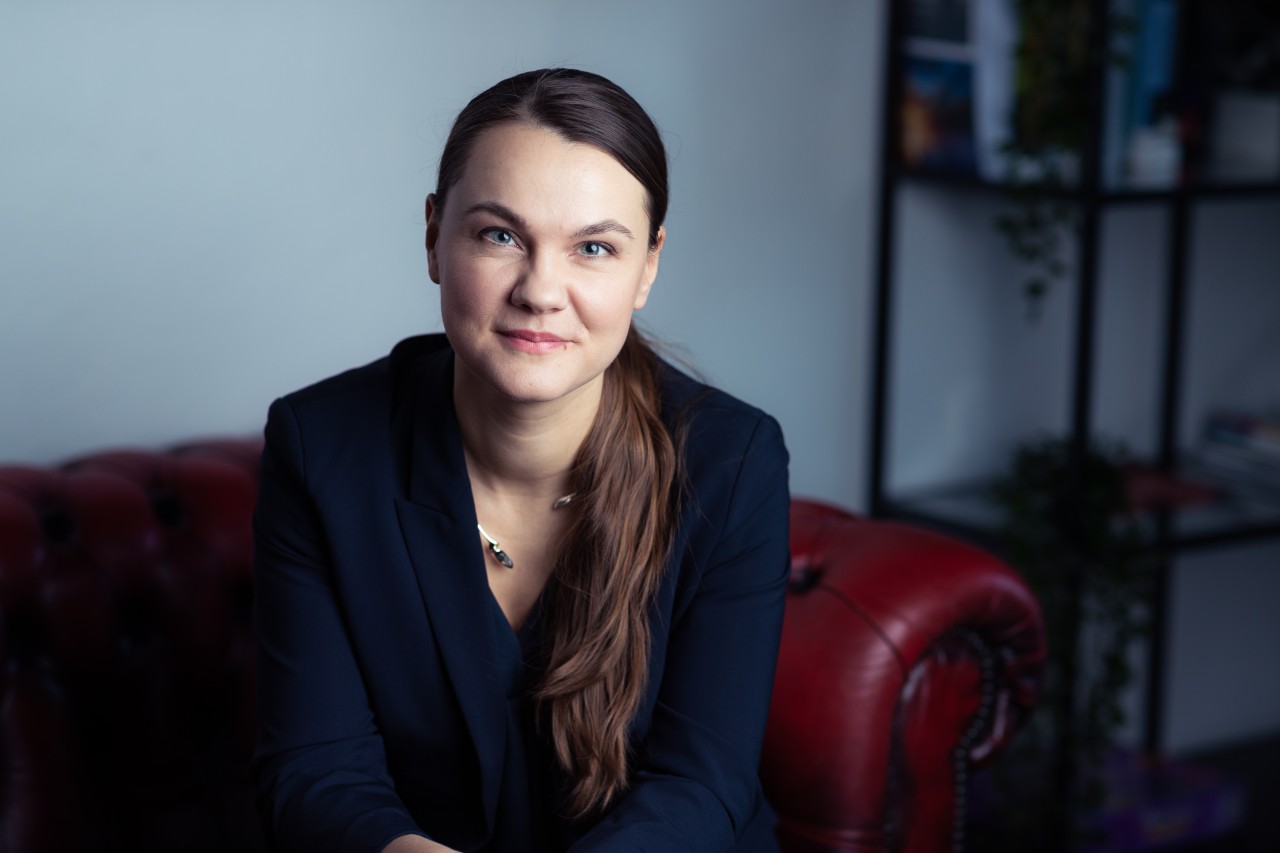
This week, Karen Burns called out the elephant in the room: the Estonian government’s new AI advisory committee. It’s composed of five technologists. All men. No women. No ethicists. No sociologists. One member even compared AI to “your village IT man.”
Karen’s point is sharp: if we treat AI as just a tool for “doubling productivity,” we are ignoring the 10X Elite Paradox. This is the risk that a tiny group of AI-enabled workers holds the entire economy hostage while the rest of the tax base evaporates. If the “advisors” only understand the tech and the profit, who is looking out for the people?

The Shortcut to Mediocrity
This ties into Aleksi Partanen’s warning. He watched Finland’s education system collapse because it traded “difficulty” for “autonomy.” He sees Estonia’s AI Leap (TI-Hüpe) as a potential slide into the same trap.
“The struggle of being stuck and frustrated is not a bug; it’s a feature. It builds the psychological capacity to tolerate uncertainty—the exact capacity required to start a company.”
If we use AI as a self-driving Tesla to avoid the hard work of thinking, we aren’t creating 10X founders. We are creating 1X humans with 10X shiny slide decks.

The FOMO Verdict
Whether it’s a founder at an MIT bootcamp at midnight or a government committee planning our “AI future,” we are obsessed with output and ignoring impact.
- A 16-hour day is often just management malpractice disguised as hustle.
- A five-man committee is policy malpractice disguised as innovation.
Estonia deserves better. We have the researchers, the ethicists, and the female founders who are actually building these systems. Why are they in the audience instead of at the table?
If we want to build unicorns that actually matter, we have to stop treating humans like machines and stop treating machines like “village IT men.”
The real “AI Leap” isn’t about the tech. It’s about having the guts to sit with the hard questions — even when they don’t fit into a 16-hour day.
A Call to Action: The Shadow Board
We believe the “polished response” isn’t enough. We need a “Shadow Advisory Board” to represent the legal, ethical, and human side of AI in Estonia.
Who would you nominate to join the table? Reply to this email with the names of the experts the Prime Minister missed.